
In the last Joinery 101 post, we took a look at joining boards using clamps and glue. Dowels are a simple way to make glued joints even stronger by using small pegs to keep things together.

In the last Joinery 101 post, we took a look at joining boards using clamps and glue. Dowels are a simple way to make glued joints even stronger by using small pegs to keep things together.
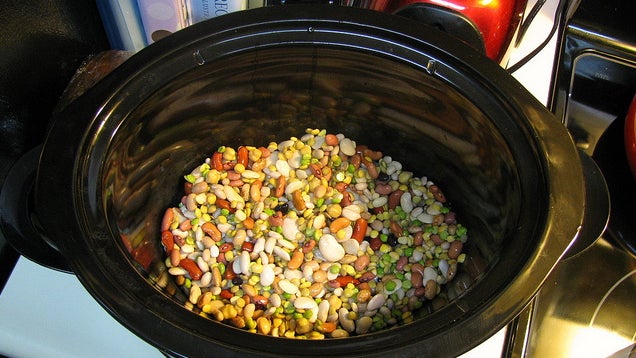
Beans are an inexpensive ingredient, but often need soaking and boiling. Throw them in the slow cooker in the morning and by the time you get home they'll be ready to eat.


When it's hot outside, the last thing you want to do is cook over a hot stove. Of course, you'd also like to use those juicy tomatoes you got from your garden or the farmers' market. Try a grating the tomatoes for instant fresh sauce.

 If you went out for your morning coffee today, whether you paid for it or got a freebie from McDonald’s, did you think to yourself, “this disposable paper cup is nice, but it’s so wasteful”? That is probably a common thought, but other than re-using a mug, what can you do about it? One cafe owner is blazing a path forward…with chocolate-dipped ice cream cones.
Ice cream cones? For coffee? Hot coffee? It seems like only a delicious, melty dream, but the café owner has the cones bade by a local confectioner. No venti pumpkin spice lattes in your cone: they’re only four ounces, enough for a tiny espresso-based beverage.
Of course, the cutting edge of caffeine isn’t cheap. While an espresso drink from Alfred Café only costs $3, the cone itself costs $5. Many customers are tourists visiting a nearby farmer’s market who are happy to pay for the novelty factor of a coffee cone, and surely there are people in Los Angeles who will happily pay $8 for a daily macchiato with extra crunch, but the cost and nutritional profile of a daily waffle cone mean that this should really only be a “sometimes” treat.
LA Cafe Serves Coffee in Chocolate-Dipped Ice Cream Cones [ABC News] (Thanks, Sarah!)


Eating good food that's both healthy and cheap seems to be an unattainable golden trifecta to most people. Student author Leanne Brown took up the challenge to find a way to eat well for $4 a day. The result is a a cookbook that you can download for free.


If you live in a rental, your landlord may be reluctant to spend money on expensive upgrades, even if they're necessary. But a few simple, and cheap, steps are all it takes to make a huge improvement.


Some say you should never lend money to friends or family members. But in desperate times, it can be hard to say no. If you've ever lent money to someone close to you, we want to know, what are your rules?


Moving houses (or apartments) is exhausting. Make your life easier on the first night in your new place by packing a separate box of essential items.

YouTuber ssgrey might have stumbled upon the easiest way to squeeze lemon juice, and thankfully he's sharing it with us. You won't get any seeds with this method, and you don't need anything but a knife.


Employers tend to find all sorts of ways of restricting your activities after you leave the company. Watch out for a non-solicit clause in your next employment contract.

When you get that call or email offering a new job, your first instinct may be to say yes. You might want to reconsider and make sure all the details are in writing before you accept that offer.

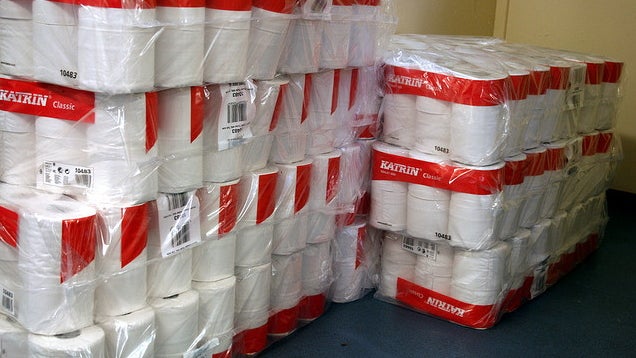
The next time you run out of toilet paper or need some coffee, your first instinct may be to go to the grocery store. Check out a non-traditional retailer for these things and you might save some money.


Nothing can ruin a vacation like having your wallet or purse stolen. Minimize the hassle of being without a credit card by carrying different cards than your spouse.


Your grill: it’s the quintessential outdoor cooking vessel, and yet it can be so much more . From cleaning your grill to upgrading its features, here are some of the best tips and hacks we’ve seen to maintain your grill and take it to the next level.
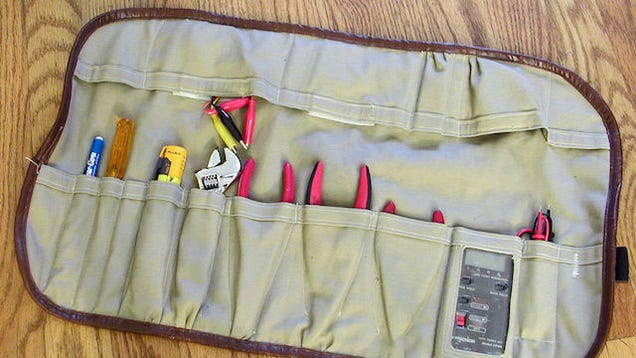
Not everyone needs to carry around a big toolbox. If you need something a bit simpler, Instructables user nomuse shows off how to make your own roll that's easy to carry everywhere.

A new report [PDF], commissioned by ProPublica and compiled by payroll provider ADP, found that more than 1-in-10 (around 7%) of all employees between the ages of 35 and 44 had their wages garnished last year.
With debt associated with student loans, credit cards, and medical bills rising, experts say they have seen a shift in the types of debts being garnished.
Unpaid child support was the most frequently given reason for garnishing wages, accounting for 41.5% of all seizures. Around 35.4% were made for student loan and court-ordered consumer debt repayments on things like credit cards and medical bills. Additionally, 18.3% of garnishments were deducted for tax levies and 4.9% for bankruptcy.
When the statistic is expand beyond the 13 million employees in the study to the nation’s entire population it reveals that about 3% or 4 million workers had wages garnished for consumer debts.
Who’s Being Garnished?

Consumers aged 35 to 44 were far more likely to have wages seized for debts than those in other age groups.
Perhaps unsurprisingly the report found that wage seizures were most common among middle-aged, blue-collar workers and lower-income employees. Nearly 5% of American’s earning between $25,000 and $40,000 per year have a portion of their wages deducted to pay for consumer debt.
The analysis found that the manufacturing sector had the highest rate of companies that had to garnish employees’ wages (48%), compared to the education and health services sector, where only 23% of companies garnished workers’ wages

Blue-Collar workers were more likely to have wages garnished than those in other sectors of employment.
Varying Laws, Varying Impacts Of Garnishments
Laws regarding garnishment varies significantly from state to state, which means some regions were more affected by the wage deductions than others.
The Midwest recorded the highest rate of garnishments with more than 6% of employees, or one in 16, who earned $25,000 to $40,000 having had their wages seized for consumer debt in 2013.
The high figure in the Midwest, may be a result of the relatively creditor-friendly laws in some states. Missouri, for example, creditors are allowed to seize 25% of an employee’s after-tax paycheck and can continue to charge high interest rates even after judgement is awarded.

Garnishments varied significantly in each section of the United States because each state’s laws regarding pay seizures are different.
Kevin, of Springfield, MO, found his paycheck was 25% lighter after Capital One began garnishments for his $15,000 in credit card debt leftover from the recession. While the 58-year-old has paid more than $6,000 toward the debt through the garnishment, he still owes more than $10,000 because the high interest rate allowed in Missouri.
Other states, such as Texas, Pennsylvania, North Carolina and South Carolina, largely prohibit wage garnishment for consumer debts.
How Garnishments Start
Although state law governing the amount and frequency of garnishment varies, the process to commence deductions begins much the same way, with creditors filing suit against the debtor in local courts.
A review by ProPublica of court records in eight states found that the bulk of suits are filed by major credit card lenders, medical debt collectors, payday and installment loan lenders and debt buyers – those companies that purchase unpaid credit card bills.
While most creditors and collectors are represented by lawyers, debtors – who are usually in tough financial situations or unfamiliar with the court system – generally aren’t. That means the debtors often don’t show up and the creditor or collector asks for a default judgement which paves the way for pay seizures.
And once the judgement has been handed down, collectors and creditors have the ability to pursue garnishment for the life of the debt; meaning that even judgements from years ago can be pursued if the debt is still owed.
An associate circuit court judge in St. Louis tells ProPublica that the court system is designed to give debtors a chance to dispute allegations, but most don’t take the opportunity.
He says this is because most debtors don’t think they have a reason to attend since they owe the debt or they think that handling the case without an attorney is “beyond their sophistication.”
So most cases end with the debtor losing significant chunks of their paychecks each pay period.
A Last Resort
Still, collectors and creditors tell ProPublica that pursing a lawsuit against a debtor is always the last recourse used.
“Litigation is a very high-cost mechanism for trying to collect a debt,” Rob Foehl, general counsel at the Association of Credit and Collection Professionals, tells ProPublica. “It’s really only a small percentage of outstanding debts that go through the process.”
ADP reports that employers can often assist workers in avoiding costly garnishments by offering financial counseling, budget education and preventative financial wellness training.
Additionally, consumer advocates tell ProPublica that more needs to be done to protect already vulnerable consumers.
“States and the federal government should look on reforming our wage garnishment laws with some urgency,” Carolyn Carter of the National Consumer Law Center tells ProPublica, calling the level of wage garnishment identified by the report “alarming.”
Unseen Toll: Wages of Millions Seized to Pay Past Debts [ProPublica]

 Last year, we brought you news that Pepsi finally had its answer to the Coke Freestyle super-fountain, and it was called the Pepsi Touch Tower. Over a year later, these machines finally made their way out into the wild, and have been renamed the Pepsi Spire. There aren’t many in operation: only 76 in the United States as of this writing. We were fortunate enough to encounter one while grabbing a slice of pizza.
Sure, there are other videos of the Spire in action, but those are generally earlier versions, with a public relations staffer or the Pepsi CEO looking over a reporter’s shoulder (warning: auto-play video at that link). How are these machines working out in the wild?
I’ve used the Coke Freestyle before, and was mostly surprised at how small the Spire setup is. It really feels like a tablet with a spout underneath. That’s it. Unlike the Freestyle, there’s no built-in ice machine, which makes it more compact. On the other hand, you then need a separate ice machine for customers who prefer ice.
It was very simple to make a strawberry Dr Pepper, then later a beverage that was 1/3 raspberry Sierra Mist and 2/3 club soda. Here’s a terrible video of the process, but if you’ve ever used a touchscreen tablet, you’ll get the idea. Tap, tap, beverage. Yes, I needed at least one more hand to do this.
Pepsi Spire from Laura Northrup on Vimeo.
One possible problem with the Spire: it’s not set up like a traditional soda fountain. Yeah, that’s part of the appeal, but that leads to a problem I wouldn’t have anticipated. Customers are used to soda fountains with a row of spouts and an ice machine in the center. More importantly, there’s a big drain at the bottom, which the Spire in use at this pizzeria doesn’t have. If a customer doesn’t like their concoction, they’re in the habit of tossing it into the drain. If there’s no drain, then they’re just throwing the soda back on the counter.
That’s why there’s a handwritten note in this video that you won’t see in Pepsi’s own promos. It instructs customers to please toss their unwanted drinks into the ice machine.
PREVIOUSLY:
Vanilla Mountain Dew, Strawberry Pepsi Made Possible By New Soda Fountains


(via @paleofuture)
In a statement posted to Twitter, Urban writes:
Urban Outfitters sincerely apologizes for any offense our Vintage Kent State Sweatshirt may have caused. It was never our intention to allude to the tragic events that took place at Kent State in 1970 and we are extremely saddened that this item was perceived as such. The one-of-a-kind item was purchased as part of our sun-faded vintage collection. There is no blood on this shirt nor has this item been altered in any way. The red stains are discoloration from the original shade of the shirt and the holes are from natural wear and fray. Again, we deeply regret that this item was perceived negatively and we have removed it immediately from our website to avoid further upset.
Around the same time as UO was apologizing, the leadership at Kent State were declaring their disgust.
“We take great offense to a company using our pain for their publicity and profit,” reads a statement from the school. “This item is beyond poor taste and trivializes a loss of life that still hurts the Kent State community today.”
Urban has removed the shirt from its website, but at least one person claimed to be selling it on eBay, though that listing has since been removed.

 It’s official — Microsoft has decided it wants to play a lot of Minecraft, and it’s willing to pay $2.5 billion for the right to do so. The company announced today that it reached a deal to purchase Swedish Minecraft developer Mojang.
Microsoft believes the deal will be completed by the end of the calendar year, putting Mojang and its 100 million or so downloads of Minecraft — and all the users that come with those downloads — under its umbrella.
The game was already one of the most popular computer and mobile games ever when a console version of Minecraft finally launched on Microsoft’s Xbox 360 in 2012. Since then, Microsoft claims that players have spent a total of 2 billion hours on the game just on that console alone.
The game has subsequently been made available on the Xbox One as well as both the PlayStation 3 and 4 from Sony.
Some games owned by Microsoft, most notably the Halo series, are held back from competing platforms, but in spite of the Microsoft acquisition, the company says Minecraft will continue to be made available on all its current platforms.
One of the most important aspects of the Mojang acquisition is the loyalty of Minecraft users. Microsoft says that around 90% of paying Minecraft players on the PC have played the game within the past 12 months.
“‘Minecraft’ is one of the most popular franchises of all time,” said Phil Spencer, head of Xbox. “We are going to maintain ‘Minecraft’ and its community in all the ways people love today, with a commitment to nurture and grow it long into the future.”

Prince William County crime report Washington Post These were among incidents reported by Prince William County police. For information, call 703-792-7245. BRISTOW AREA. THEFTS/BREAK-INS. Brigstock Ct., 12900 block, 2:30 p.m. July 26 to 10:15 p.m. Aug. 31. Cash and jewelry were stolen from a ... and more » |
 If you’ve watched TV in the last year, you’ve likely caught one of the many, overly quirky ads for Sprint’s former “Framily” plans. Between the francophile daughter, random goth hanger-on Gord-on, and a hamster patriarch voiced by Andrew Dice Clay, the company’s new CEO admits that it was all just a bit too much for what was otherwise a cruddy group data plan on a really slow network.
“Dealers said it was hard to sell,” explains Marcelo Claure, who recently took over the reins of the beleaguered wireless company. “We are marketing a hamster talking to people… That’s very hard to sell.”
Claure, the billionaire founder of Miami-based Brightstar Corp. (which was recently acquired by Sprint’s majority investor, Japanese telecom biggie Softbank), says he was initially advised that he should not shake things up at Sprint until after his first 100 days on the job. But the Framily nonsense was such an obvious target that he apparently felt compelled to shelve it.
“I couldn’t help myself,” Claure told investors, according to FierceWireless. “There wasn’t a compelling value proposition here. We were more expensive and coming out of a traumatic network experience.”
He says the focus now is on trying making customers see the value in choosing Sprint. Claure replaced the Framily plans in late August with the Sprint Family Share Pack that offers significantly more data for your dollar than you might get from other carriers.
Claure followed that up almost right away with a $60 unlimited data plan, and then announced this week that it would be offering a special $50/month unlimited plan only for iPhone customers.
And while all of Sprint’s new plans give you a ton of data for a decent amount of money, the company faces some major hurdles in convincing customers to switch.
First, recent tests have shown that Sprint’s data network is much slower than the LTE networks for AT&T, Verizon, and T-Mobile. There is little point to having an unlimited data plan if you’re unable to do enjoy data-heavy services (like streaming video) that require decent network speeds.
Additionally, while Sprint has effectively slashed the price on data by increasing the amount customers have access to each month without increasing rates, most smartphone users in the U.S. don’t use more than 2GB of data per month on their wireless accounts. It’s like a restaurant that serves very filling food, meaning most diners won’t finish what’s on their plates. There is no real additional value if the restaurant says you can get a free second helping.
Claure says Sprint is actively working to improve its LTE network, and we hope the company is indeed committed to catching up to the data speeds and coverage offered by its competition. An industry with so few players desperately needs companies willing to shake things up to challenge the market leaders.

In Manassas, learning goes digital Inside NoVA A few days before school started, ninth and tenth graders at Osbourn High School were already having their first lesson: Hands-on instruction on how to use their new school-issued tablet computers. “Our goal is for all of the students to have their ... and more » |
