
By "as gently as possible," America's Test Kitchen means packing the ground meat as if you're "cradling a newborn baby."

By "as gently as possible," America's Test Kitchen means packing the ground meat as if you're "cradling a newborn baby."
Lighting is everything when it comes to Halloween. Flickering lights set in a dark room will get any kid's imagination going. Here's how to make any lamp lookhaunted.

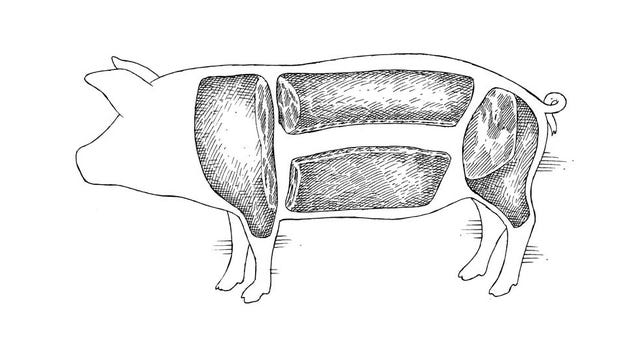
Shopping for pork at the grocery store can be tricky, and unless you already know the difference between a blade end roast and butt roast, you may not know which is best for your dinner plans. This handy visual guide from the folks at Cook's Illustrated demystifies pork cuts by part of the pig, price, and flavor.


We all tell little white lies all the time, but sometimes a much bigger lie is needed. So, we want to hear it, what's the biggest lie you've ever told?

Survival skills can save your life in an emergency. Prepare yourself for not having access to clean water by learning to distill dirty water.

No proper Halloween celebration is without cobwebs. Spread them into every nook and cranny of your haunted house with this glue gun cobweb shooter.

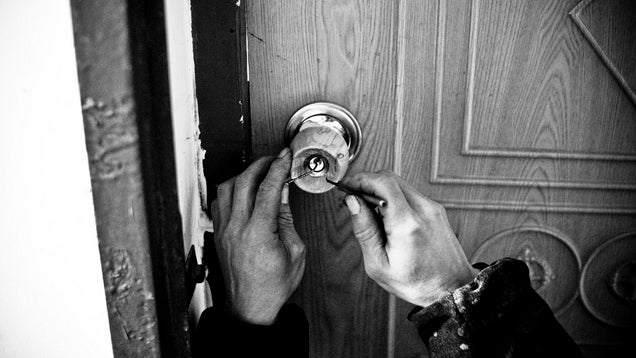
Learning to pick locks is a fun exercise in learning about locking mechanisms, honing a useful skill, and getting a better understanding of how locks work and protect—or fail to protect—you and your stuff.

ThinkProgress, a progressive political site, also has an anti-Brown Thursday stance, and they’ve already started compiling a list of chain retailers that will be closing their doors during the holiday. It includes Dillard’s, Burlington [Coat Factory], REI, and American Girl. The latest addition is Costco, which also made a point of staying closed on Thanksgiving Day of last year, along with warehouse club competitor BJ’s.
Last year, retailers waited to announce their plans, even to their own employees, which threw many workers’ holiday plans into disarray. While experts have made predictions, most malls and stores haven’t announced their Thanksgiving plans yet.
Costco Will Be Closed On Thanksgiving Because Employees ‘Deserve The Opportunity’ To Be With Family [ThinkProgress]
Take Our Poll
As Ars Technica reports, the chips in question are in adapters that allow newer, USB-based hardware to connect with older machines that have serial ports. (Serial ports are the ones that use little pins that you have to line up on both ends, and they have gone rapidly out of use as other technology, like USB, has become widely adopted.)
Most of the chips are made by a Scottish company called FTDI. The FTDI chips are a widespread standard. But just like anything else on earth that gets to be a popular choice, knockoffs abound and can be hard to spot.
The company that makes an adapter may or may not know whether they put real or fake FTDI chips into it, but the customer on the end who buys and uses the adapter will have absolutely no way to tell. It would be like trying to inspect every hose inside of a washing machine before you buy it to be sure they came from the right factory before Whirlpool put them together. Realistically, end users can’t really do it.
The chips in these adapters need software system drivers to work in the same way that your printer needs the right system driver to work. The driver comes from FTDI but, as with most modern devices, Windows can grab and update the driver for you when you do a Windows Update.
In August, Ars Technica explains, FTDI — apparently sick and tired of all the counterfeit chips — changed their driver and the end-user license agreement for it. So the new driver deliberately scrambles knockoff chips, making them unusable.
The new EULA even says: “Use of the Software as a driver for, or installation of the Software onto, a component that is not a Genuine FTDI Component, including without limitation counterfeit components, MAY IRRETRIEVABLY DAMAGE THAT COMPONENT.”
In other words, updating the software on your adapter will completely brick your adapter if the chip inside it is fake. The chip that you have no way of tracing the provenance of. And because of the way that Windows Update can pull drivers down for you, you don’t have to go looking to update the driver on purpose. Your computer will helpfully do it for you.
End result? Run Windows Update, and suddenly discover some of your hardware is broken. And from the looks of it, very intentionally so.
As Public Knowledge points out, “The fact that disabling countless devices without warning can harm millions of innocent users and manufacturers should be a screaming sign that this is the wrong thing to do.” And not just “bad service” or “ethically questionable” wrong, either, but, if intentional, straight up illegal-wrong.
IP infringement does not give the infringed rights to destroy others’ property. Public Knowledge writes:
So whether or not FTDI has any trademark rights, copyrights, or other rights in whatever the knockoff chips are copying, the actual physical chips themselves are the property of their users, and FTDI doesn’t have the right to break them. A French vintner can’t stroll down the aisles of an American wine store with a hammer, shattering bottles of “California Champagne.” Roving gangs of Nike enforcers can’t rip fake Jordans off the feet of passing kids. And we don’t have Givenchy shock troops marching down Canal Street taking flamethrowers to fake handbags.
“If your IP rights are being infringed,” Public Knowledge concludes, “the proper course of action is to go to court, not take the law into your own hands.”
A Microsoft representative told Ars Technica that since the issue became widely reported, those two drivers have been removed from Windows Update. They added, “Our engineering team is engaging with FTDI to prevent these problems with their future driver updates via Windows Update.”
Windows Update drivers bricking USB serial chips beloved of hardware hackers [Ars Technica]
IP Rights Aren’t a License to Kill Devices (And No, Fine Print Doesn’t Make It OK) [Public Knowledge]


(Sh4rp_i)
The battery brand pulls in about $2 billion in global sales, but the market for disposable batteries is dwindling, as consumers look to more sustainable options like rechargeable batteries, reports the Wall Street Journal.
Total battery sales fell 4.3% in the U.S. over the last year, which made it the worst performer among the Top 25 categories in the household products and personal care market.
The Duracell dump is just one of the recent cuts P&G has made as it tries to slim down its consumer offerings, as it’s already gotten rid of 25 brands in the last five quarters, and might end up ditching as many as 100 when all is said and done.
There are just better things to sell, P&G explains.
“While Duracell is a very attractive business, we’ve chosen to focus our efforts on more attractive opportunities,” Chief Financial Officer Jon Moelle said in announcing the decision to reporters.
Duracell won’t be the first battery company to go solo after being part of a consumer product family — Energizer Holdings announced plans in April to spin its battery business off as a separate company from its other personal products business.
P&G to Unload Duracell As CEO Lafley Focuses on Best Sellers [Wall Street Journal]

The Federal Trade Commission announced today that at the agency’s request a federal court shut down a New York-based tech support scam business that allegedly tricked older consumers into paying nearly $2.5 million for technical support services they didn’t need and for software that was actually available for free.
According to the FTC complaint, Pairsys, Inc. often cold-called consumers selling services and support while pretending to be representatives for Microsoft or Facebook.
Additionally, the company purchased deceptive ads online that led consumers to believe they were calling the technical support line for legitimate companies.
Once consumers were on the line, they were presented with a high-pressure sales pitch that typically involved scammers asking for remote access to the individual’s computer in order to assess a supposed issue.
Once the representative had access to the consumer’s computer they would allegedly lead the consumer to believe that the computer’s operating system had been affected by viruses or malware. In many instances, it was implied that the computer was severely compromised and had to be “repaired” immediately.
Consumers were then allegedly pressured into paying $149 to $600 for bogus warranty programs and software that was freely available elsewhere.
According to the preliminary injunction approved by the court, Pairsys and its operators are prohibited from making misrepresentations to consumers about the company and whether or not viruses are present on their computers.
The FTC will continue to seek the permanent closure of the company and refunds for consumers.
At FTC’s Request, Court Shuts Down New York-Based Tech Support Scam Business [FTC]


(WBIR.com)
He also gets to add “saved by a bunch of firefighters” to the story, reports WBIR.com (warning: link has video that autoplays), after he managed to wiggle his way inside the toy machine at a coin laundromat this week.
His grandmother says she looked away from the 18-month-old for just a second to check a text message, and by the time she was done, the tot was on his way into the belly of the toy beast.
“All I could see was his feet. He had already crawled in,” she said. “I grabbed his feet and he kicked my hand and got in. Climbed up over the glass partition and sat down in the toys.”
She adds that he loves crawling into and onto everything he can, so she wasn’t that worried once he was ensconced among the plush toys. But she was concerned that he’d hurt himself if he tried to climb back out, as he’d have to climb over a cracked, broken plastic partition.
Firefighters managed to free him in just a few minutes, with the rescuers’ presence causing quite a bit of excitement for the little guy. They even let him pick a toy from the machine to keep.
Welcome to your future, kid. You’ll be telling the story of How I Climbed Inside A Toy Claw Machine When I Was A Kid at parties for years to come, and it’ll never get old. Because all of us secretly would’ve loved to be in there, too. Heck, it’s not even a secret, we’re all jealous.
Toddler climbs into toy machine, gets stuck [WBIR.com]


A few weeks ago, we all heard that Facebook — the site where your real name and offline social connections are meant to rule supreme — was planning to launch an app that supported anonymous use. Today, Facebook announced their new product for real… and it sounds an awful lot like a phone-focused version of the chat rooms and message boards AOL brought into our living rooms 20 years ago.
The new app is called Rooms, and in a sense, it does exactly what it sounds like, GigaOm reports: users can create chatrooms on a theme and then invite others to participate.
Of course, it’s now 2014, not 1993, and times have changed. Plenty of other discussion forums have sprung up in that time, and Rooms, says GigaOm, takes cues from them, too. Room founders can determine their room’s look, feel, and rules and then invite others to join. And the streams of conversation can include images, sounds, and videos, because nobody wants to live in a world where you can’t answer a question with exactly the right *.gif.
Room links are shared by QR code, because long URLs are a pain in the butt on mobile devices. If someone shares the QR code more widely — say on Twitter or even on Facebook — then a room can attract a wide audience and become a major chattering hub. If the codes are kept private, then your book club can theoretically use the room without any random strangers jumping in.
If that sounds like a phone-focused AOL by way of Reddit, that’s apparently the right idea.
The app is also anonymous in the sense that nothing in it ties to your real (or at least Facebook-real) identity. When you join a room, you enter a username for that room, and that username is tied only to that room. If you want to be “John Smith” in a room with professional contacts, and “Lord Fartface” in a room about bad jokes, that’s up to you.
Anyone who has been on the internet for longer than about three minutes will no doubt guess that the service will rapidly and immediately develop a metric ton of rooms devoted to, shall we say, adult activity. Facebook says all rooms must abide by the Facebook community standards policy, which includes “a strict policy against the sharing of pornographic content.” Somehow, though, that seems like a standard that will be impossible for the company to enforce.
So are mobile chat rooms and message boards the social network that users have been clamoring for? That’s another question entirely. It’s true that there’s definitely a place in the world for discussions that don’t fit on Twitter — too public and too truncated — or on Facebook — where your coworkers and your grandma are. (At least, my coworkers and grandma are.) But whether an updated take on the original online talking tool is indeed the next big wave of the future remains to be seen.
Meet Rooms, Facebook’s semi-anonymous app and first real attempt to fix the broken problem of social [GigaOm]

The company no longer announces rounds of store closings, instead releasing that information to local news outlets. Investment research site Seeking Alpha instead combed through local news reports, contacting reporters and Sears and Kmart employees on the ground to figure out how many stores will close by the end of this calendar year.
Sears Holdings isn’t about to release a definitive list: “We disclose our store counts at the end of each quarter,” a spokesman told Seeking Alpha. That isn’t helpful when you’re trying to figure out which stores will close in the future, so the site made its own list. You don’t need to register to see it.
Depending on how you count, either 76 or 107 Sears outlets are going to close. The discrepancy is because 31 Sears Auto stores are also slated to close: the total depends on whether you consider these to be separate from a Sears store or not. Some locations are closing while the Sears they’re attached to remains open, but no Sears Auto locations that we know of are staying open while the associated Sears store closes.
Pennsylvania will lose seven Sears and Sears Auto locations and one Kmart, and Indiana reverses that pattern, losing seven Kmarts and one Sears and Sears Auto. In Michigan, there are two Sears and Sears Auto locations closing, but notably six Kmart stores. Michigan, specifically the Detroit area, was the ancestral home of the S.S. Kresge company, the variety-store empire that eventually became Kmart. The first Kmart in Garden City, Michigan remains open for now.
Seeking Alpha estimates that more than 5,000 people will lose their jobs once all of these stores have liquidated and closed.
Exclusive: Sears Laying Off 5,000, Closing Over 100 Outlets [Seeking Alpha]

The Washington Post’s Brian Fung investigated this very question and concluded that there are several reasons why Tesla wants to avoid the traditional middle man format.
Primarily, it’s about retaining control of the brand. This is particularly important to Tesla since the electric vehicle market is still relatively new. Why take the risk of handing your product over to a franchised dealership whose primary goal is making his/her own profit?
Tesla does operate a small number of storefront businesses where consumers can see and learn about the cars and their features, but the company’s VP of business development says these “stores are as much education venues as retail venues — in fact, probably more so… We don’t think that we would succeed using an intermediary model where we sell a product that someone else sells to the public.”
Then there is just the thrill of being an upstart company founded by a tech billionaire Elon Musk who seems to revel in the prospect of disrupting an established sales model.
After all, if Musk can succeed in reaching consumers through direct sales, he will have done what other, much bigger players have previously failed to do.
For example, Ford dipped its toes into the direct sales waters in the 1990s, only to be chased off the idea when Texas threatened the carmaker with fines of $10,000/day for allegedly violating the same state law that currently prevents Tesla from selling directly to Texas residents.
Car dealers and legislators who back these laws banning direct sales often claim that they benefit consumers by allowing for pricing competition. If you don’t like the price being offered by one Chevy dealer, you can go to another and see if you’ll do better there. Same goes for all the other major carmakers.
And it’s a valid point; reloading the Tesla website is probably not going to result in a lower price than when you put in your desired specs a few minutes earlier.
But Tesla is not trying to change the law to outlaw car dealerships. It is just trying to see if it can be successful without them. Additionally, if Ford, GM, Chrysler or others decided to give direct sales another try, that doesn’t mean they would eradicate all their existing franchise relationships.
Instead of asking why Tesla wants to avoid going the dealership route, a better question might be: If the dealerships truly love the spirit of competition, why are so many of them actively trying to use the law to minimize it?


(Emily)
The report [PDF] from our colleagues at Consumers Union, along with groups like the National Resource Defense Council, U.S. Public Interest Research Group, and the National Physicians Alliance, looks at the results of a survey of 500 internal medicine and family practice physicians in the U.S.
Some 97% of doctors surveyed are at least fairly concerned about the growing problem of antibiotic resistant infections, with 59% of all respondents saying they were “extremely” concerned.
And when you look at how many of these physicians have treated patients with drug-resistant infections, it’s no surprise why there is such widespread concern.
According to the survey, 85% of these doctors have treated at least one patient in the last year with a bacterial infection that was resistant to multiple antibiotics.
Of those physicians, 35% have had one of these patients die or suffer significant complications as a result of these drug-resistant bugs.
Many doctors say they are taking steps to reduce the overuse of antibiotics in their practices. This includes refusing to prescribe antibiotics that are not medically necessary, even when patients ask for the drugs.
81% of physicians surveyed say they are now doing this, but that doesn’t necessarily mesh with recently released numbers from the Centers for Disease Control, which found that — as recently as 2010 — some 70% of U.S. doctors were still prescribing antibiotics for acute bronchitis, even though it’s been clearly demonstrated that antibiotics are not effective in treating that illness.
Another way in which doctors say they are trying to combat drug resistance is by prescribing the least broad spectrum antibiotic available (72%); and prescribing antibiotics for the shortest duration needed (68%).
In all, 80% of the physicians surveyed claimed that their practice, group, or hospital is actively working to minimize inappropriate prescribing of antibiotics.
But doctors’ offices and hospitals are only a slice of the antibiotics pie. Around 70% of medically important — and around 80% of all — antibiotics sold in the U.S. go into animal feed for non-medical growth-promotion of livestock and poultry. 93% of the doctors in the survey expressed concern about this practice.
The survey concludes with several policy recommendations for lawmakers, regulators, and private businesses.
This includes asking the FDA to strengthen its current stance on antibiotics in animal feed, by using its authority to restrict the use of these drugs only to cases of animal sickness or direct disease exposure, and to require proper veterinary oversight when antibiotics are used on farms.
Currently, the only tracking done of antibiotics in animal feed is the gross volume sold to farmers. The tracking doesn’t account for how much is actually being given to the animals or for what reason. The report asks the U.S. to adopt a robust tracking system to document the sale, use, and impacts of antibiotic use in livestock production.
It also includes a plea to private businesses like grocery stores, restaurants, and hospitals, asking them to adopt a policy to procure and sell only meat that is produced on farms that restrict the use of antibiotics except for animals that are actually sick, for a limited period of time–just as antibiotics are used in humans.

After 49 years, Kline's Freeze in Manassas is closing Inside NoVA Kline's Freeze, a popular ice cream parlor on Va. 28 near Manassas Park, could soon be demolished, its owners said. “We have been informed by our landlord that the Kline's Freeze property is being sold,” owners James and Lorraine Kline Croushorn wrote ... |
If you're a member of the "no iron" club, there are plenty of methods to keep wrinkle free. This trick speeds up the classic spray bottle technique.


We’ve all been there at some point: anxiously trying to find a wall stud while you’re in the process of hanging a picture, shelf or TV mount. Most stud finders are inconsistent at best, and I’ve found the more I learn about how houses are built, the easier it is to find a stud through logic instead of equipment. In…
Younger generations of Americans are turning against frozen and processed food in general, and even the pseudo-foodie makeover couldn’t rehabilitate the image of Hot Pockets. However, Bloomberg Businessweek points out another problem for low-cost frozen foods like Hot Pockets: at the end of last year, temporary increases to the Supplemental Nutrition Assistance Program (SNAP), what were once called “food stamps,” began in 2009 and expired at the end of 2013. Hot Pocket sales fell when recipients’ SNAP allowances did.
“For our Hot Pockets brand, it was not surprising to understand the value our products offered to the SNAP consumer,” a Nestle spokeswoman told Businessweek, and a Nestle executive specifically mentioned SNAP recipients as a factor in Hot Pocket sales during a recent sales call.
Every Food Trend Goes Against Slumping Hot Pockets, Even Government Spending [Bloomberg Businessweek]

Yes, the idea of falling in love with a dog in a pet store is so ingrained in our national ideas about pets that there was even a popular song about it.
Adopting a pet on impulse is rarely a good idea, even if you’re not drunk. However, that’s not why the industry is moving away from selling dogs in stores. Years of campaigns by animal welfare organizations have turned many pet lovers against the large commercial dog-breeding facilities required to keep stores nationwide supplied with puppies. While the U.S. Department of Agriculture does inspect these facilities, that doesn’t mean that they’re where you picture the parents of your family’s beloved Maltese living.
“The regulation of breeders is so poor that all it really does is give consumers and the general public a false sense of security that their dogs are coming from a humane environment when they’re not,” Cori Menkin of the American Society for the Prevention of Cruelty to Animals explained to NPR.
That doesn’t mean buying puppies is out of fashion. NPR spoke to the owner of two Petland stores in Florida who has one store that sells nothing but puppies and supplies for new puppies, and another full-service pet store that still makes 85% of its revenue from puppy sales and puppy supplies. Yet some municipalities, including one of the towns where she has a store, have proposed bans on the sale of puppies. Some of these bans have passed.
Large national chains like Petsmart and Petco have moved to a model where they do not sell dogs or cats, though, instead opening up space in their stores to house animals from local rescue groups, and having rescue clinics on store grounds. These happen to drum up business for pet supplies, too: why not pick up some food for your new cat, since you’re already inside a pet store?
In More Cities, That Doggie In The Window Is Not For Sale [NPR]


Consumerist reader Michael noticed that his “22 oz.” Arby’s cup only holds 21 ounces of liquid. A quick look at the underside of the cup (see below) confirms that this cup can’t possibly hold the amount of liquid advertised.
Consumerist reader Michael recently bought a small drink from an Arby’s in Ohio. And printed right on the Arby’s-branded paper cup it clearly states “22 oz.”
But then Michael noticed some text on the underside of that same cup that states “21 oz.”

Since you can’t put 22 ounces of liquid into a 21 oz. cup, Michael busted out the old measuring cup to confirm that the cup does indeed hold the smaller volume of liquid.
Michael says he’s not terribly upset about the shortchanging — after all, 21 oz. is still quite a bit of drink for a small size — but it does bring up the question of how widespread this particular apparent mislabeling might be, and how long Arby’s has been selling drinks in these particular cups.
To see if this issue was relegated to just the franchise visited by Michael in Ohio, we sent a Consumerist reporter to buy a small soda at an Arby’s in Arlington, VA.
Lo and behold, these cups also stated 22 oz. on the outside of the cup and 21 oz. on the underside. And the measuring cup test confirmed that the Arby’s cup could only hold 21 ounces.
We also looked at other sizes of drinks available from Arby’s, but only the “22 oz.” cups were different from the size printed by the manufacturer on the underside.
When reached for comment on this issue, a rep for Arby’s would only tell Consumerist, “Thank you for bringing this to our attention. We are looking into the matter.”
Fast food customers already get less than they pay for at the soda fountain thanks to the huge volume of ice used to water down most soft drinks; no company should be using mislabeled cups — which could be in violation of the law — to give customers even less value.
We have brought this story to the attention of the offices of the Attorneys General for Ohio and Virginia to ask which, if any, state laws might apply to the labeling/size of fountain sodas and where consumers in these states can go if they believe they are being shortchanged. If we hear anything back, we will update.


(KGW.com)
A lone bear cub was spotted hanging out around Ashland, OR, reports KGW.com, visiting a hotel first.
That proved uninteresting to our protagonist, who hopped out a window and headed across the street to check out the Rite Aid.
Once in the store, shoppers snapped pics of his wanderings, as he walked the aisles solo, until police were able to scoop him up in a shopping basket.
His mother wasn’t spotted nearby, and it’s doubtful she’d take him back now that he’s got the stink of humans on him. Je’s now in the care of the Oregon Department of Fish and Wildlife who will keep him until he can be moved to a rehab center or zoo.
Hope that trip to Rite Aid was worth it, buddy — he’ll never return to roaming in the wild, due to his sojourn into the world of humans.
Bear cub ventures into Rite Aid store in Ashland [KGW.com]


(SkyMall)
Touting bouncing toys as therapy tools used to develop balance and coordination skills, SkyMall points out that this way, “hot dogs can finally be healthy” (though who wants a healthy hot dog if you can’t even eat the darn thing?).
I’m also curious as to what makes this inflatable bouncing toy a hot dog — sure, it’s got a vague hot doggish color, but what kind of a hot dog has to label itself as HOT DOG”? And where’s the bun? Not to mention condiments. It might as well be a bouncing slug, for all that it’s got that very portly, un-hotdoglike shape and little nubbins on the top.
Consider my jumping hot dog dreams unfulfilled, until there’s a more realistic version, at least.
*Thanks to Jenny, lover of all things hot dog related, for the tip!


This cat isn’t thrilled about paying monthly rent, either. (Melisa Bernard)
The Associated Press reports that pet security deposits and monthly pet rent has become the norm for the millions of pet owners living in apartments and rental properties across the nation.
Pet security deposits can reach into the hundreds of dollars, while rental payments range anywhere from $10 to $50 per month. In many cases, the fees are non-refundable.
Some pet owners, like Los Angeles-based Fred, say they’re feeling the pinch and are often faced with choosing between their pets and a place to live. He recently moved out of an apartment that was charging $50 a month for him to keep his Pomeranian.
“They are exploiting the fact that more and more people have pets,” he said. “First they ask for a deposit, then rent. How much more are they going to try and squeeze out of us?”
Tammy Kotula, a spokesperson for online listing subscription service Apartments.com, says just two years ago the pet rents were rather unheard of.
According to a renter surveys from Apartments.com, 78% of renters say they paid a pet deposit, up from 63% that paid one the following year. Of the residents who paid deposits, 29% reported paying monthly pet rent this year, another increase from 20% that paid last year.
While many rental and property management companies use the funds brought in from pet deposits and monthly rentals to pay for things like dog-poop picker-uppers and cleaning services when a resident moves out, others have added the cost to boost their bottom-line.
A manager of over 400 properties in Oregon tells the AP she added a monthly fee and deposit after she was told the charge was becoming the norm and that it could help boost revenue.
“One out of 50 people will say, ‘I can’t believe you charge pet rent,’ but most accept it,” she says.
The woman’s properties charge a $500 deposit and $20 a month for dogs, while cats have a $10 monthly fee and a $400 deposit.
A rental company in Maple Grove, MN, charges $40 per month for dogs, with a deposit between $400 and $600.
A quick survey of my Consumerist brethren found a mixed bag when it comes to pet policies in the areas we call home.
Like I previously mentioned, I’d love to have a cat (or 9), but pet ownership has been vetoed for now.
But if we do join the club, we’ll have to abide by our Arlington, VA, apartment company’s policy, which only allows cats. Residents can have a maximum of two cats for which they must pay $30 per month per cat, and that’s after forking over a $300 initial pet fee.
Kate, who also live in Arlington, recalls paying a flat fee of $150 to her property management company when her family adopted a cat five years ago. The one-time, flat-rate fee, which covers up to two cats, has since increased to $200. No dogs are allowed in her building.
Mary Beth in New York says she’s never paid a monthly fee or deposit for her cat. Lucky!
Fido will cost you: Pet rents become apartment fad [The Associated Press]

Fairfax County Animal Watch Washington Post No incidents were reported by the Animal Control Division of the Fairfax County Police Department. For information, call 703-246-2253. FAIRFAX CITY. The following incidents were reported by the animal control section of the Fairfax City Police Department. and more » |


