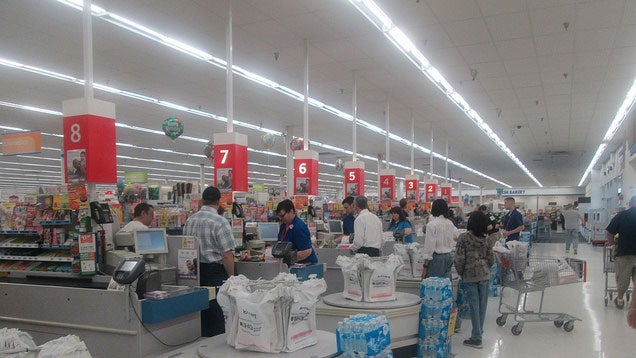
No one likes waiting on line, especially when it seems like everyone else's line is moving faster . If you have to choose a direction—left or right—you might have better luck going to the left, where lines tend to be shorter.

No one likes waiting on line, especially when it seems like everyone else's line is moving faster . If you have to choose a direction—left or right—you might have better luck going to the left, where lines tend to be shorter.
Tired of the same old, boring salads? While there are nearly endless ingredient combinations you can try, this graphic suggests tried-and-true flavor pairings that balance primary tastes .


You don't have to excel at Excel to make the most of the spreadsheet app. Download free templates to use Microsoft's program to manage your schedules, budget your money and much more.


I'm not going to lie: I'm pretty delighted that I (and my partner) won Audi's TDI Challenge, where nine Diesel A3s attempted to drive from Albuquerque to San Diego on a single tank of Diesel. Part of why I'm delighted is because winning means it's over, since it was a pretty miserable process . Here's how we did it.

The harsh cold of winter can do a number on your yards if you don't take the proper precautions. This handy graphic has tips for preparing your lawn, trees, shrubs, and garden, so everything comes back bright and healthy next spring.


Evil comes in many forms—some greyer than others. Today, we want to talk about a tricky kind of evil: when are loopholes, exploits, and "gaming the system" okay?


When you're joining two boards with glue , you might get a little glue overflow along the joint. Avoid that problem with a bit of tape and a razor blade.


A recruiter will invariably ask you "Why did you leave your last job?" or "Why are you looking for a new job?" when they interview you. Prepare a short and sweet answer, and stick to it. Over-explaining your previous employment is a major turn-off.

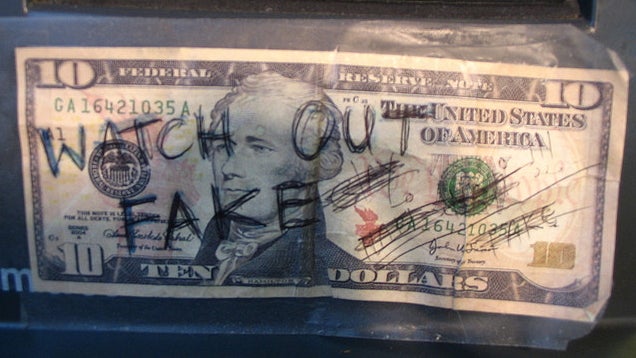
Counterfeit money sucks, but it happens to the best of us. The person who gave it to you might not even know it's counterfeit. You'll find out you've got a bogus bill when you try to use it at the store or at the bank, though. Thankfully, your insurance company might cover your loss.

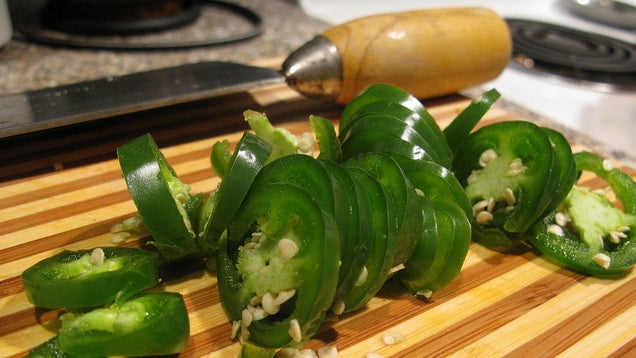
If you aren't careful with hot peppers like jalapeños, you'll get the burning oils on your hands. Ouch. Once on your hands, they'll transfer anywhere. Double ouch. Clean up those hands with some baking soda.

 A team at our parent company, Consumer Reports, is working on a project that needs your help. Click over to Crowdsignal.org and take a short quiz about your mobile phone carrier’s performance to contribute.

Depending on the type of food, “organic” could mean that a packaged product has no genetically modified ingredients, that a vegetable was grown without synthetic fertilizers, or that a meat animal was raised without the use of growth hormone injections or antibiotics. For other products, what it should mean is clear: organic cotton fabric, for example, comes from cotton plants grown using organic agriculture methods.
When it comes to shampoo or dry cleaners, though, how do you know that something marketed as “organic” really meets the standards? What are the standards for organic shampoo, anyway? There is no government body regulating what that word means and certifying products. Industries have their own certifications, but the average consumer doesn’t know what “NSF/ANSI 305” means, or know to look for that on the label of their soap.
The Associated Press reports that this leaves consumers in a difficult spot, and end up depending on retailers. Whole Foods, for example, set its own standards for body care products in the absence of any government agencies overseeing that industry. They have a list of ingredients that are banned, like triclosan and microbeads.
The meaning of ‘organic’ hazy for nonfood items [Associated Press]

With limited options, the Pennsylvania clerk says she chose Raid wasp and bee killer after a woman dressed all in black with a mask over her face walked into the store late Sunday night.
“That’s a heads up anyway,” she deadpanned to WJACTV.com about the mask. “Then she throws this black bag on the counter and tells me, ‘Put the money in the bag,’ and I’m like, ‘What?’ So she says it again and I’m like, ‘Excuse me?'”
That’s when she grabbed the can of bug spray and waited, giving the woman a chance to leave, as seen in the surveillance footage. After she stayed put, PFFFFFFFT out comes a spray of insecticide, shooting the suspect right in the face.
“She just stood there and then started walking out the door and I kept spraying her as she was walking,” the clerk said.
Although authorities warn others in similar circumstances not to confront someone who could be armed, the clerk says that’s the very reason she reached for the only weapon she could find.
“When she pulled her hands back towards herself, I didn’t know if she had anything on her and I wasn’t letting her get to it first,” she explained. “I just got mad. I’ve got better thing to do with my night than that.”
She described the woman as having a deep voice, with long brown hair and thick eyebrows, and someone who will definitely be avoiding Raid for a while.
Stinging surprise: Would-be robber thwarted with bug spray [WJACTV.com]

It also left behind a sac filled with hundreds of spider eggs, reports the Daily Mail, eggs that would’ve eventually hatched and turned just as deadly as their apparent parent. Though who knows, the giant spider in the bananas might’ve just been the babysitter.
In any case, the family says it was “deeply traumatized” by the unexpected arachnid delivered to their South London home by a company called Waitrose.
The father managed to trap the spider at one point, pinning its leg in the fruit bowl, it just chewed that appendage off and escaped.
The family called supermarket and the Royal Society for the Prevention of Cruelty to Animals, but both said they weren’t equipped to deal with the spider, whose venom can kill within two hours. The police were no help either, but Waitrose eventually sent a pest control expert, who was able to corral the spider with a three-foot stick and lock it into three boxes, calling the thing “hardcore.”
He also found the sac of spider eggs, and stuck them in the freezer to kill them.
The dad managed to take pictures of it, though the family fled the house for the evening, unable to rest easy with the beast in the house.
“We were terrified. We got ourselves and our kids out of the house straight away,” he said.
“The safety of our customers is our absolute priority,” Waitrose said in a statement. “We did everything we could to look after our customer during what was a distressing incident and we’ve apologised personally. Although this is highly unusual, we’re taking it very seriously and will be working with our supplier to minimise the risk of this happening again.”
The chain offered the family £150 of shopping vouchers and a family day out to make up for the scary experience. I would probably demand a new brain so I could forget what had just happened.
Family’s terror as they find world’s deadliest spider trapped in Waitrose home delivery… and it gnaws its own leg off to escape [The Daily Mail]

Here at Consumerist, we pretend to hate holiday mashups while secretly loving them. Still, we have to admit that we were a little confused when we saw that Hallmark now has Halloween ornaments. Yes, it’s a long-established fact that the gift chain puts its Christmas ornament collection out in July, but we thought they were just that. Christmas tree ornaments. Not so.
 Here’s the rather blurry photo that tipster Beth sent us of the display at her local Hallmark store. The ornament label is hard to read, but the one with the pumpkin is called “Happy Halloween.”
That raises many questions. “Is this a Halloween-themed ornament for Christmas, or a Christmas-style ornament for Halloween?” Beth asked. We were confused, too, so we took her question to Hallmark.
A Hallmark spokesperson explained that the ornaments are “intended for Halloween decorating.” Wait, Halloween trees are a thing other than at Hobby Lobby? Yes. Yes, they are. Hallmark sells Halloween ornaments, which make sense when you see them in context with the rest of the collection. Maybe not so much when they’re placed in a display among Christmas ornaments.

Their spokesperson explained:
Halloween is second to Christmas in holiday decorating, so we hear a lot from our consumers that they want this type of product. Some people like to decorate with “Halloween trees.” There may be some consumers who carry the Halloween ornaments over to Christmas, but the intent is for celebrating Halloween. Of course, people can use the ornaments however they’d like, and people do tend to get creative!
Well, we can’t disagree with that. People are entitled to use ornaments however they like. The pumpkin ornament makes sense in this context, and is adorable either way. That doesn’t mean I’m putting up a Halloween tree, though.

 Since it first began marketing stuffed-crust pizza, the flavor wizards oer at Pizza Hut have found some very strange things to stuff in there. Marmite? Sure. Fish eggs? Yum. Apple turnovers? Sounds great! Most of the more interesting variations have come out of Pizza Hut’s international branches, and maybe it’s no coincidence that these are doing better. Here’s another example: a pizza surrounded by dough-wrapped fancy sausages, available in Luxembourg.
Brand Eating reports that the sausage is called mettwurst, and is a smoked and cured pork sausage with origins in Germany. The pizza comes with mustard for dipping, presumably after you tear the part that looks like pigs in blankets off the rest of the crust. The mustard is also a regional specialty.
Pizza Hut has produced crusts stuffed with hot dogs, but with the hot dogs rolled up inside the crust lengthwise. This looks more like a combination pizza and appetizer tray, which isn’t necessarily a bad thing.
This Pizza Hut Pizza is Stuffed with Fancy Sausage [Brand Eating]

The outage started around midnight Pacific time. Calls routed through the Public Safety Answering Point (PSAP) in Colorado that couldn’t be routed were supposed to go through a PSAP in Miami instead, but a coding error meant that the system in Colorado had no idea that there was a problem. Instead of going to Miami, thousands of call went nowhere.
If you’re interested in the technical reasons for the outage, you can read up about it in the FCC’s full report, but the reasons for the outage are problems with the phone system as a whole. We really have two different 911 systems operating right now: the legacy systems that have run phone and emergency services for years tended to be located near their customers, not across the country. Now that telecoms are switching to an Internet Protocol-based phone system, emergency systems are switching as well.
April 2014 Multistate 911 Outage: Cause and Impact [FCC]
A preventable coding error knocked out 911 service for millions [The Verge]

Giantmicrobes Inc. has sold out of all three of its Ebola offerings, including the original plush toy as well as the gigantic Ebola Virus and the Ebola Petri Dish selections.
The company promotes the toys as “uniquely contagious,” as part of its roster of gag gifts that it says also serve an educational purpose.
“Since its discovery in 1976, Ebola has become the T. Rex of microbes,” the company says on the Ebola listing, reiterating that you do not want to get real Ebola. The toy, sure. But not the virus that has killed thousands of people in the latest outbreak, mostly in West Africa.
“You do not want to get Ebola,” warns the website. “A short incubation period of 2 to 21 days presages symptoms which include fever, aches, sore throat, and weakness, followed by diarrhea, stomach pain, vomiting, and both internal and external bleeding. And then, for between 50-90 percent of victims, death.”
There’s always Cholera or Norovirus to cuddle up with at night.

According to a new survey by CreditCards.com, nearly half of America is at least giving some thought to avoiding stores that have been the subject of a data breach.
The good news for the retailers, is that only 16% of survey respondents said they would definitely not shop at a store that had been recently hacked. That means that the overwhelming majority of Americans have not completely written these particular businesses off just yet.
Interestingly, those consumers with the most to lose from ID theft — people earning $75,000/year or more — were significantly more likely than shoppers earning $30,000/year or less to forgive retailers and try again.
Female survey respondents were also more likely than males to let breach bygones be bygones, with 56% of women saying they would either definitely or probably shop at a store where a security breach had occurred, compared to 48% of men.
In terms of age, the older the consumer, the less willing they were to be bitten by the breach bug twice. According to the survey 55% of people over the age of 65 would avoid a store with a recent data breach, compared to 41% for those in the 30-49 age group.
What will ultimately determine whether or not previous hacks keep shoppers away is how the 29% of shoppers who says they would “probably not” shop at these stores behave. A lot of people claim “never again,” but only a few ever hold true to that pledge when it comes to retail businesses, especially if they really liked that store before the hack.
“I’m guessing a lot of people have the initial emotional reaction of, ‘Wow, I don’t want to shop there anymore if they’re going to be that loose with that data,'” explains David Just, professor of applied economics management and director of graduate studies at Cornell University. “Your initial response is fear. You feel like you’ve been violated. You don’t know what’s going to happen to your credit.”
One’s decision to forgive a retailer for a data breach may be tied to how integral that store is to one’s shopping plans.
“It depends on the type of retailer,” says Jeff Foresman, information security compliance lead at Rook Security in Indianapolis. “A retailer such as Target where consumers have other options for shopping might lead people to shop elsewhere. But if a building contractor has a business account at Home Depot, he won’t necessarily go elsewhere after a breach.”
Let’s see if our readers’ reactions are similar to the survey results:


The best time to buy airplane tickets is Wednesday morning at 1am , but if that specific slot doesn't work for you, then stay up late and purchase airfare when everyone else is sleeping so you get a great deal.


Beyond "please" and "thank you," there are tons of etiquette "rules" kids have to learn so they can grow into well-mannered, decent people. Which ones are the most important?


Our pets are a source of joy and companionship. Sadly, though, our furry friends' greatest flaw is their limited life span. More likely than not, you'll outlive them. I recently had to make the difficult decision to euthanize my dog and grappled with many common questions. Here's what I learned from my experience.

There are many different types of saws out there, and it can be difficult to determine the best one to use unless you've seen them all in action. This video from Do It Best gives a good overview of common types of power saws and saw blades, and the applications they are designed for.


If you're headed back to campus this semester, your syllabus probably has a list of expensive books to buy. You can make your dollars stretch a little further if you buy used or secondhand, and this week we're looking at five of the best sites where you can score cheap textbooks without breaking the bank.


It's our civic duty to know the laws that govern our lives, whether we're traveling to a different city or just want to host a garage sale . Legal issues and our rights aren't always clear, though, so let's take a look at the most important ones that might affect you.


When we're nervous giving a speech, we often speak too fast. Slow yourself down by pausing on the vowels.


