Shared posts

04 Jun 12:59

Food court: Ruth Bader Ginsburg, Sonia Sotomayor dish on US Supreme Court’s food culture

by Rachel Nania

WASHINGTON — The law isn’t the only thing of importance on the U.S. Supreme Court. It turns out food has a place at the bench, too.

On Wednesday, June 1, Supreme Court Justices Ruth Bader Ginsburg and Sonia Sotomayor dished on the history and food traditions of the Supreme Court in a panel at the Museum of American History. The event was part of the Smithsonian’s ongoing Food History program.

In a discussion led by Clare Cushman of the Supreme Court Historical Society, Ginsburg and Sotomayor covered everything from mealtime rituals established on John Marshall’s court, to what today’s justices eat for lunch.

They gave examples of how breaking bread has helped bridge the divide among those overseeing the nation’s highest court of law, and how justices have used food to connect outside the courtroom.

The country’s first justices spent many meals together, often deliberating cases. Today’s justices still eat together regularly, only now there are stricter rules for the mealtime meetings.

“We don’t talk about cases. That is our absolute rule,” Sotomayor told the small crowd gathered in the museum’s Warner Bros. Theater. In fact, she said they try to avoid all subjects of controversy.

“The most common conversation [in the lunchroom] is about a fascinating book that one of the justices is reading,” Sotomayor said. Updates on the grandkids and museum exhibits are also welcome.

Ginsburg reminded Sotomayor that she left out one popular topic at the table: sports. “To which I don’t contribute,” she added.

“It’s just the normal type of conversation that people have who want to get to know each other as individuals rather than as justices,” Sotomayor said about lunch at the U.S. Supreme Court.

Ginsburg, who isn’t a regular in the lunchroom, said she prefers to keep her midday meals small and simple. Her late husband, Martin Ginsburg, was well-known for his culinary skills, so she grew accustomed to saving her appetite for dinner.

Sotomayor, on the other hand, said she needs variety. Often she’ll pack a salad or a sandwich, and every now and then she’ll order-in from a local sushi or Indian restaurant.

“For me, eating is sacred. You should not waste a meal,” Sotomayor said.

For the most part, meals in the court’s dining room are limited to the justices. However, a few guests have been invited to dine with the nine.

Only two have been repeat guests, including former chairman of the Federal Reserve Alan Greenspan and former president of the World Bank James Wolfensohn.

“And the reason is that those two have an uncanny ability to eat lunch and speak at the same time,” Ginsburg said.

Birthdays are another cause for culinary celebration on the court. Ginsburg explained the Chief Justice typically brings wine for a toast. Often, there’s a birthday cake (Ginsburg’s late husband made many of these), and there’s always singing.

“Truth be told, most of them can’t carry a tune,” Ginsburg said.

“I’m one of them who can’t,” Sotomayor added.

Elaborate dinners are held when a new justice joins the court, and also before each State of the Union. Ginsburg touched on the humorous moment when she dozed off during President Obama’s 2015 address, after which she told reporters she wasn’t “100 percent sober.”

Ginsburg shared that Justice Kennedy brought a couple bottles of Opus One wine to the dinner — and she was a fan.

“That was the first time I fell asleep during the State of the Union,” she said.

When it comes to cooking, both Ginsburg and Sotomayor admit they lack bragging rights. Ginsburg, whose husband used to make dishes such as veal tonnato for the court’s spouse lunches, admits that since her husband’s death, her daughter now sees to it that she’s well-nourished.

Sotomayor said her culinary chops don’t hold a candle to her mother’s and her grandmother’s.

“I’m not a bad cook, but I’m a horrible cook of Puerto Rican food,” she said.

“But I do cook a lot of other things.”

The post Food court: Ruth Bader Ginsburg, Sonia Sotomayor dish on US Supreme Court’s food culture appeared first on WTOP.

03 Jun 01:49

Paris bans pre-1997 cars from its streets during the week

by Jonathan M. Gitlin

Don't expect to see cars like this on Parisian streets after this summer (unless it's a weekend). (credit: Don O'Brien @ Flickr)

Parisians with cars built before 1997 are going to need to head to the nearest car dealership if they want to keep driving in the city after July 1.

The French capital has experienced quite horrific air pollution in the last few years, and there was a massive spike in March 2015 that saw the city's air quality drop lower than that of Beijing, China. After trying out temporary restrictions to vehicle traffic, Les Echos reports that the city has decided to implement new rules that will ban older and more polluting vehicles from its streets on weekdays. Those restrictions will also tighten over time; in 2020, only cars built since 2011 will be allowed.

The vehicle classification scheme means you get one of these window stickers based on which Euro emissions standard your vehicle complies with.

This announcement follows a decision by the French government to finalize a nation-wide scheme of ranking vehicle emissions (the system is based on the European emissions standards). Any vehicle made on or before December 31, 1996 was built to conform with Euro 1, the weakest of these standards, and it's these cars that are no longer allowed in the capital. Pre-2000 motorbikes and other two-wheeled vehicles are also on the hit list.

Read 2 remaining paragraphs | Comments

02 Jun 22:35

Tumor-killing virus nearly doubles survival time of brain cancer patients

by Beth Mole

An artist's rendering of a brain tumor that can be killed off with the help of a virus. (credit: C. Bickel / Science Translational Medicine (2016))

To defeat the deadliest of cancers, it's time to unleash the viruses.

In a small clinical trial with brain cancer patients, a tumor-seeking virus successfully invaded cancer cells and smuggled in molecular detonators, allowing doctors to selectively blast the deadly growths with a toxic drug. In the trial’s 45 participants, who were fighting the most aggressive forms of brain cancer known, the virus-drug combo nearly doubled their average survival time while showing no dangerous side effects. The finding, published Wednesday in the journal Science Translational Medicine, demonstrates the utility of such viruses and also provides a green light for the treatment strategy to move on to more trials.

These brain cancers usually have few treatment options and lead to “dismal clinical outcomes,” the authors wrote. However, this new viral therapy has “the potential to fill this medical need,” they concluded.

Read 7 remaining paragraphs | Comments

02 Jun 22:28

Saudi Arabia just invested a historic amount of cash in Uber

by Megan Geuss

On Wednesday afternoon, Uber said that it had received a $3.5 billion investment from the Saudi Arabia Public Investment Fund. That makes it the biggest investment ever raised in a single round by a venture-backed company. In exchange, a managing director at the Saudi fund, Yasir Al Rumayyan, will take a seat on Uber’s board, according to The New York Times.

Uber has been a presence in Saudi Arabia since 2014, and it has grown rapidly from there. In the country, women aren’t allowed to drive, and their travel is often restricted without the permission of a male guardian. To get around, women either hire private drivers or go through licensed taxi or limo companies to travel throughout the country’s major cities. Speaking to male strangers is also verboten, and according to Fast Company, Uber only works through those licensed limo companies that had been operating with the monarchy's permission for years before Uber’s arrival. The company has said that approximately 80 percent of riders in Saudi Arabia are women.

Uber’s value proposition is that it consolidates taxi and limo information, making it easier to order a car and reducing wait times for rides. The company also helps with residency and work permit paperwork for foreign drivers in the country.

Read 3 remaining paragraphs | Comments

02 Jun 22:20

Where do dogs come from? Genetic evidence offers a new origin story

by Annalee Newitz

Such DNA. Paleogenetic. Wow. Very archaeological evidence. (credit: Doge)

Dogs were some of the first animals that humans domesticated. These furry pals were living with people for thousands of years before we invented agriculture and started keeping other animals like goats and pigs. Though we have archaeological evidence of dog bones within human communities dating back 15,000 years, scientists still aren't sure where humans began the process of converting wild wolves into snuggly companions. Now, a new study suggests that dogs were domesticated twice—once in Europe and once in Asia, probably around the same time.

A large group of researchers with expertise in everything from archaeology to paleogenetics has collaborated on a paper in Science explaining how it reached this conclusion. The group began by sequencing DNA from ancient and modern dogs to measure genetic drift. The linchpin of the study was a well-preserved bone from a dog that lived 4,800 years ago in Ireland, roughly around the time that Stonehenge was being constructed. By comparing this dog's DNA with that of more than 600 modern dogs and snippets of DNA from other ancient dogs, the team could determine that this Western dog belonged to a genetic group that diverged from Asian dogs between 14,000 and 6,400 years ago.

Evolutionary biologist Greger Larson told Science's David Grimm, "I was like, ‘Holy shit!’ We never saw this split before because we didn’t have enough samples."

Read 5 remaining paragraphs | Comments

02 Jun 22:19

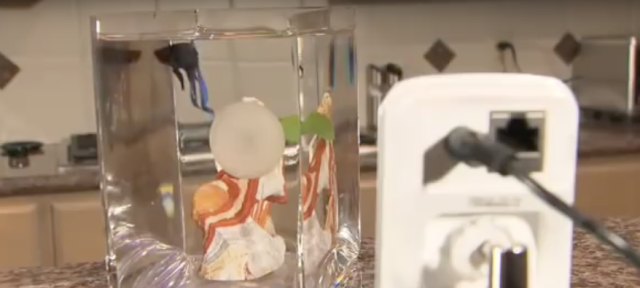
1-star Yelp review says “Gordy” the pet fish was overfed, attracts $1M lawsuit

by David Kravets

"Gordy" the betta fish survived his care and appears svelte. He's under surveillance cam watch. (credit: YouTube)

A Texas pet-sitting business is seeking up to $1 million in damages from a couple who gave a one-star review on Yelp and criticized the company's treatment of their tiny blue tropical Betta fish "Gordy" while the family was away on vacation. The company, Prestigious Pets of Dallas, claims the review is a breach of a non-disparagement clause and defamation.

Paul Alan Levy, a Public Citizen lawyer who is defending the couple, summarized the company's revised suit (PDF) targeting the couple.

The new lawsuit, however, specifies one statement from the review in particular: that the company’s assigned pet-sitter had potentially caused serious harm to the couple’s fish by putting too much food in a fish-bowl while the couple were away on vacation for a few days. The complaint alleges that a charge of overfeeding a fish is libel per se because it amounts to the criminal offense of animal cruelty under Texas law (if giving too much food to a pet fish were really a crime, I expect there would be thousands of Texas second-graders facing jail time every year!)

Levy's defense, filed Thursday in a local Dallas court, is that the family's review was truthful and protected by the First Amendment.

Read 9 remaining paragraphs | Comments

02 Jun 22:13

How to Get Value Out of Your Crappy Entry-Level Job

by Trent Hamm

During the summer of 1998, I worked a night shift for a research lab in which I shoveled and sifted dirt for eight hours at a time. I hung out in this little room in the basement of a greenhouse that had a chute in which dirt had been dumped. I’d set up a large tub on top of a pushcart, put a screen attachment on top of it, then scoop several shovelfuls of dirt on there. I would then sift that dirt, retaining a few specific items off of the top of the screen, and then do it again. And again. When the cart was full, I’d push it over to the elevator, take it up to the planting rooms, and then retrieve an empty cart and do the same thing again.

Read more...

02 Jun 21:01

Why Your Home Stinks and How to Fix It

by Kristin Wong

From fried fish to a filthy litterbox, most smells in your home are fairly easy to pinpoint. There are, however, more insidious aromas that linger and seem impossible to eliminate, no matter how many bottles of Febreeze you unleash. To keep these odors from taking over your home, first, you have to identify them.

Read more...

02 Jun 21:00

The Best Collar Types for Most Dogs (And Which to Avoid)

by Heather Yamada-Hosley

You want the best for your dog, and that includes finding the right type of collar for them. Since they’ll wear it often, you want something that is comfortable, but also safe and secure. Here are the best collars for most dogs as well as which collars you may want to stay away from.

Read more...

02 Jun 20:59

Yelp Is Awful for Everyone Involved

by Thorin Klosowski

“Your review on Yelp is destroying my business,” he says to me, clearly clenching his teeth, “How long do I have to suffer because of your negative review?” A few weeks ago, I got a phone call from a contractor because of a review I’d left. What ensued was a weirdly emotional conversation that ventured between harassment and a plea for empathy.

Read more...

02 Jun 20:59

These Wristbands and Pricey Gadgets Don’t Keep Mosquitoes From Biting You

by Beth Skwarecki on Vitals, shared by Andy Orin to Lifehacker

Nobody likes mosquitoes, but the mosquitoes sure do love us . Spraying your skin with DEET, picaridin, or oil of lemon eucalyptus keeps them at bay, but stores are full of wristbands, candles, clothing, and other products that claim to repel bugs without those nasty “chemicals.” Some of them might help, but none are reliable.

Read more...

02 Jun 20:53

Man who drove SUV into Silver Diner charged with murder

by Sarah Beth Hensley

WASHINGTON — The man who crashed his SUV into a Tysons Corner diner and then set himself on fire is facing new charges after a man died.

Fairfax County police said Samuel Abutoh intentionally drove a SUV into Silver Diner in Tysons Corner and then set himself ablaze on May 4. Andrew Sheren, 74, died two weeks after the crash from complications with injuries he sustained. Abutoh struck Sheren as he entered the diner.

On Tuesday, 59-year-old Abutoh was charged with second degree murder as a result of Sheren’s death. Abutoh also was charged with felony destruction of property and arson.

Abutoh was initially charged with malicious wounding.

Abutoh, of Springfield, had been on bereavement leave as the restaurant’s chef since early April when he intentionally drove the vehicle into the diner, police said. Abutoh was seen “pouring liquid on his body and lighting himself on fire” while he sat in the SUV after striking the building, police added.

The post Man who drove SUV into Silver Diner charged with murder appeared first on WTOP.

02 Jun 20:47

Accused war criminal found working at Dulles Airport

by Nick Iannelli

WASHINGTON — A man who is accused of committing atrocities while serving as a military commander in Somalia has been working in security at Dulles International Airport, a CNN investigation has revealed.

Yusuf Abdi Ali has been living near D.C. for about 20 years. He currently lives in an apartment in Alexandria, Virginia, with his wife and has been working as a security guard at Dulles, CNN found.

Ali is accused of committing war crimes, including torturing people, burning villages and conducting mass executions, during Somalia’s civil war in the 1980s and ’90s.

“He oversaw some of the most incredible violence that you can imagine,” Kathy Roberts, a lawyer with the Center for Justice and Accountability, told CNN.

The CJA filed a lawsuit against Ali on behalf of one of his alleged torture victims, calling Ali a “war criminal” who committed “crimes against humanity.”

“He tortured people personally; he oversaw torture,” Roberts said.

CNN reports Ali and his lawyer, Joseph Peter Drennan, deny all accusations listed in the CJA lawsuit.

In order to get the security job at Dulles, Ali had to pass a criminal history records check from the FBI and Transportation Security Administration. Following the CNN investigation, Master Security, the contractor Ali works for, placed him on administrative leave and withdrew his airport access.

Rep. Barbara Comstock, R-Virginia, issued a statement Wednesday saying she plans to dig deeper to learn how Ali passed security checks and was allowed to work at the airport.

“I am requesting a full, in-person briefing from the Department of Homeland Security and other relevant agencies,” she said.

U.S. Immigration and Customs Enforcement officials tell CNN Ali is known to the agency, but they would not clarify why he has been allowed to remain in the country.

All Master Security employees are subject to “the full, federally mandated vetting process in order to be approved for an airport badge,” the Metropolitan Washington Airports Authority told ABC News, noting the vetting includes a criminal history record check by the FBI and a security assessment by the Transportation Security Administration. Master Security employees working at Dulles must also be licensed by the Commonwealth of Virginia.

“We have verified that all of these processes were followed and approved in this instance,” MWAA said in a statement.

A judge has yet to rule on the case as the courts try to determine whether the U.S. legal system has jurisdiction over the lawsuit, according to the CJA. The circuit court dismissed the lawsuit’s war crimes claim on the basis that it lacked jurisdiction, it allowed claims of torture and attempted murder to go forward. The case is now awaiting a review by the Supreme Court.

After the alleged war crimes, Ali moved to Canada, but was deported two years later, the suit claims. He then moved to the U.S., where deportation proceedings were begun. He voluntarily left America shortly thereafter in 1994, and returned two years later, according to the suit.

Ali’s attorney, Joseph Drennan, denied all allegations and told ABC News that his client, who is still a citizen of Somalia, returned to the U.S. legally.

ABC couldn’t immediately reach the FBI, TSA or Virginia Commonwealth’s Department of Criminal Justice Service for comment.

ABC News contributed to this report.

The post Accused war criminal found working at Dulles Airport appeared first on WTOP.

02 Jun 20:46

Prince William County community calendar, June 2-8, 2016 - Washington Post


Prince William County community calendar, June 2-8, 2016
Washington Post
Manassas farmers market Thursday 7:30 a.m.-1 p.m., Loy E. Harris Pavilion, 9201 Center St., and Saturday 7:30 a.m.-1 p.m., Parking Lot B, West Street (next to the train station visitors center), Manassas. 703-361-6599. visitmanassas.org. Woodbridge ...

and more »
02 Jun 20:46

Driver dies in Manassas fiery crash - WUSA9.com


WUSA9.com

Driver dies in Manassas fiery crash
WUSA9.com
MANASSAS, Va. (WUSA9) -- A driver was killed in a fiery crash in Manassas, Va. Wednesday afternoon, according to Prince William County police. The accident happened around 3:46 p.m. in the area of Lee Highway and Lake Manassas Drive. Police say a ...
Prince William County adopt a petWashington Post

all 12 news articles »
02 Jun 20:46

Manassas Museum Summer Happenings - Prince William Living (press release) (blog)


Manassas Museum Summer Happenings
Prince William Living (press release) (blog)
Two new exhibits, summer camps, bike tours and more are being offered by the Manassas Museum this summer. Summer Camps Now Enrolling! Civil War Camp; June 28 – July 1; 9:00 a. m.-2:00 p. m.; $135/ages 9-13. For four days, children will immerse ...

02 Jun 20:45

Accused war criminal found working at Dulles Airport - WTOP


WTOP

Accused war criminal found working at Dulles Airport
WTOP
WASHINGTON — A man who is accused of committing atrocities while serving as a military commander in Somalia has been working in security at Dulles International Airport, a CNN investigation has revealed. Yusuf Abdi Ali has been living near D.C. for ...
Terrific: An Alleged Somali War Criminal Has Been Working as a Guard For Dulles Airport Near Washington DCTown Hall
Authorities Find Accused Somali War Criminal Working as Airport Security Guard in Washington, D.C.TheBlaze.com
Accused Somali war criminal worked security job at Dulles AirportNew York Daily News
WBAL Radio -TravelPulse -The Weekly Standard (blog)
all 38 news articles »
02 Jun 20:42

Please, Only One Car At A Time Through The Toll Gate

by Laura Northrup

NH_tollbooth_crashThe NH Department of Transportation would like to remind motorists that only one car at a time can go through the toll lane. This is because they are not wide enough for two vehicles, which the drivers of these two sedans know now. If you weren’t aware of that, now you know, too. [NH DOT/Facebook] (Thanks, Tom!)

02 Jun 20:41

Park Service: To Avoid Risk Of Animal Attack, Stop Trying To Get Up Close & Personal

by Mary Beth Quirk

It’s that time of year again: the weather is nice, and our nation’s parks are full of visitors who want to check out all that nature has to offer. But yet again the National Park Service finds itself forced to remind folks that if they don’t want to find themselves facing down, say, a charging bison, you shouldn’t try to get too close just for the sake of a souvenir photo.

After a woman visiting Yellowstone National Park last week was charged by an elk she’d crept up to — with her camera extended in front of her — in the hopes of snapping a better picture, the agency warned folks yet again that all your efforts to nab the greatest photo of all time/that day on your friends’ social media feeds could put you in danger, as well as wildlife.

“People generally are just so excited to be in a park and the next cool thing is if they can get a picture of wildlife and then the third thing is ‘Can I get a picture of me and the wildlife?'” a spokesman for NPS told ABC News (warning: link has video that auto plays).

You should stay at least 100 yards away from bears and wolves, he says, and 25 yards from all other wildlife, he adds. And don’t touch the animals — nature is not your personal petting zoo (and it’s illegal).

“If you’re going to do a selfie, you have to use the widest lens you can,” the spokesman added.

Besides, the agency has better things to do than keep telling people not to mess with wild animals.

“We would much rather be doing interpretive programs and answering questions about that mountain, that lake,” he said, “than writing tickets and hauling people to the hospital.”

After Elk Charged Woman Taking Selfie, National Park Officials Warn of Dangers [ABC News]

02 Jun 20:39

Walmart Brings Back Smiley Face Mascot, Had Emojis Before Emojis Were Cool

by Laura Northrup

Do you remember Walmart’s ’90s ads featuring the animated smiley face character? According to the company, the character first appeared in stores over 25 years ago, and later as an animated character in TV ads. Perhaps capitalizing on the popularity of emojis, the mega-chain is bringing Smiley back in its marketing after a 10-year absence.

walmart_always

For readers who don’t remember or who never caught the ads when they first blanketed the airwaves, here are a few memorable ones:

As animation became more sophisticated over the 16 years or so of the campaign, so did the ads.

Walmart is holding their annual shareholders’ meeting this week, and alongside that was a gathering of a few thousand employees, roughly one employee at the meeting for every two stores that Walmart has in this country. At the meeting, executives revived the “happy face” marketing and gave speeches about customer service. Oh, and some ordinary store workers played a Family Feud game with executives, hosted by Steve Harvey.

Employees also received special pins to wear on their vests and to bring back to their stores for a colleague.

What does the new version of Smiley say about how shopping has changed? Here’s a new digital ad that Walmart made available. The theme of the TV spots will be similar.

One big difference from the ’90s version, other than the changes in the store’s logo and branding: Walmart merchandise and its low prices pop up out in the real world to solve everyday problems. That’s in contrast to the ’90s version, where Smiley smashes into price signs, scattering numbers on the floor for someone else to clean up while attractive and ethnically diverse customers smile maniacally.

Wal-Mart revives smiley face image for price marketing [AP]
Why the (Smiley) Face? A Chat with Walmart’s CMO [Walmart]

02 Jun 20:39

The FDA Wants You To Eat Less Salt, Hopes The Food Industry Will Help With That

by Mary Beth Quirk

When it comes to salt, the U.S. Food and Drug Administration agrees with the Centers for Disease Control: we’re all consuming too much sodium, and the food industry should be helping us cut back by cutting it from their products.

Today the FDA announced a draft of new sodium-reduction targets for dozens of categories of foods, in the hopes that the food industry will voluntarily cut down on how much sodium they’re using.

The draft guidance “provides practical, voluntary sodium reduction targets for the food industry” for commercially processed, packaged, and prepared foods. That could mean anything from a bakery donut to a package of deli meat.

The FDA says the average sodium intake in the country is about 3,400 mg/day, which is far above the recommended 2,300 mg per day. With these targets — which are totally voluntary — the FDA hopes to help Americans gradually reduce sodium intake over the next 10 year or so, until we’re consuming that recommended level.

“Experts at the Institute of Medicine have concluded that reducing sodium intake to 2,300 mg per day can significantly help Americans reduce their blood pressure and ultimately prevent hundreds of thousands of premature illnesses and deaths,” Susan Mayne, director of the FDA’s Center for Food Safety and Applied Nutrition, said in a statement.

It’s tough out there for the average American — 75% of the salt we consume daily comes from restaurant and processed foods rather than the salt shaker, the CDC says, and it’s not always obvious where salt is lurking. Unless, that is, you live in New York City, where high-sodium warning labels will be slapped on food soon.

“Many Americans want to reduce sodium in their diets, but that’s hard to do when much of it is in everyday products we buy in stores and restaurants,” Health and Human Services Secretary Sylvia Burwell said in a statement announcing the draft targets, which are also meant to bolster efforts food companies have been making on their own recently.

Food behemoths Nestlé and Mars have both recently announced sodium reduction initiatives, so it’s no surprise they’ve come out in favor of the FDA’s draft guidance.

“Nestlé agrees with the FDA that broad adoption of the agency’s voluntary recommendations by the food industry can create a meaningful reduction in population sodium intake over time and help consumer taste preferences adjust,” the company said in a statement.

“FDA’s release of draft sodium-reduction targets will help us further support healthier options for consumers and promote additional participation by all food manufacturers,” Mars chimed in.

The National Restaurant Association, which opposes the salt warning labels rule in NYC, didn’t exactly come out swinging against the guidance, but instead was quick to note that the restaurant industry is already “taking a proactive role in helping Americans live healthier lives by offering a growing number of menu options and choices for customers.”

But that being said, it’s not so easy to just stop serving salt, the group’s vice president of food policy and industry affairs, Joan McGlockton, said in a statement.

“It’s important to note that as restaurants continue to develop lower-sodium items, these efforts are challenged by consumer preference, limited technology, and acceptable lower-sodium options that take into account taste, quality and safety,” she says.

And besides, she adds, availability and feasibility can depend on “many factors,” like consumer expectations, the type of food, the product’s taste profile, and the restaurant’s format.

“We are reviewing this draft guidance to assess next steps for our members,” the group’s statement says.

02 Jun 20:38

CDC Links E. coli Illnesses To Recalled Flour From General Mills

by Laura Northrup

Yesterday, General Mills announced a recall of 10 million pounds of flour because it was potentially linked to an outbreak of E. coli that affected 38 patients in 20 states. Today, the Centers for Disease Control and Prevention announced that they have linked Gold Medal and Signature Kitchens flour to illnesses in this outbreak.

In this case, the link came from a traceback investigation: out of the 21 people interviewed early on in the investigation, 16 of them said that there was flour used in their house in the previous week, and nine of them specifically remembered eating or touching raw dough at home or at a restaurant.

12 of the patients recalled using Gold Medal flour, and authorities used the packages of flour from their homes to trace the outbreak back even farther: to the Missouri General Mills plant that the flour came from. Patients identified so far in the outbreak range in age from one to 95 years old, and most of them are female.

flourmap

Since most things that you make with flour are cooked to a temperature high enough to kill E. coli, illnesses might be rare relative to the amount of food that’s already been eaten: not because they’re no fun, but because

If you have flour from the affected batch –– again, this is ten million pounds –– throw it away. If you put your flour in a jar or tub and throw the bag away, but know it was one of the affected brands, the CDC and General Mills recommend throwing it out anyway. Make sure to wash any bowls, tools, and containers that came in contact with the flour in hot, soapy water.

Here are the packages that you should look for on your shelf:

goldmedalflourrecall1

goldmedalflourrecall2

goldmedalflourrecall3

goldmedalflourrecall5

goldmedalflourrecall4

This is not the same strain of E. coli that was linked to meals eaten at Chipotle restaurants late last year. The ingredient that was the source of that contamination was never identified.

General Information: E. coli [CDC]

02 Jun 20:38

New Rules Aim To Rein In Predatory Payday Lending, But Will They Work?

by Ashlee Kieler

After nearly four years of studying the issue of high-cost, short-term financial products like payday loans, and auto-title loans, the Consumer Financial Protection Bureau has finally released its proposed rules intended to prevent borrowers from falling into the costly revolving debt trap that can leave people worse off than if they hadn’t borrowed money in the first place. 

The TL;DR Version

The proposed CFPB rules are intended to reduce the likelihood of borrowers falling into the trap of revolving debt associated with payday loans. There are two key aspects to the proposal:
1. Ability To Repay
Lenders would need to make sure in many cases that borrowers can not only repay the loan (plus fees and interest) in full and on time, but that they will have enough money remaining after repayment so that they don’t need another loan. However, this test is not applied to all loans, which some consumer advocates believe will create a loophole for predatory lenders.
2. Limiting Rollovers
Borrowers would need to demonstrate the need for a loan to be rolled-over or re-borrowed within a short period of time. Even approved rollovers would be limited to three in succession. Some critics are concerned that the 31-day window before re-borrowing will still allow borrowers to fall into a debt trap.

The proposed rules, which would affect lenders of payday loans, vehicle title loans, deposit advances, and certain high-cost installment and open-ended loans, build on the Bureau’s March 2015 report, which included options for reducing the likelihood of borrowers needing to take out new loans to cover the old ones, and falling victim to the often devastating cycle of debt associated with these financial products.

The Bureau is also taking aim at payment-collection practices that take money directly from bank accounts in a way that frequently hits the borrower with hefty fees.

“Too many borrowers seeking a short-term cash fix are saddled with loans they cannot afford and sink into long-term debt,” explains CFPB Director Richard Cordray in a statement. “It’s much like getting into a taxi just to ride across town and finding yourself stuck in a ruinously expensive cross-country journey. By putting in place mainstream, common-sense lending standards, our proposal would prevent lenders from succeeding by setting up borrowers to fail.”

Ending Debt Traps For Short-Term Loans

Image courtesy of Taber Andrew Bain

Short-term, high-interest loans offer borrowers quick access to cash (often at a maximum of a few hundred dollars per loan) to cover expenses. When a borrower takes out a payday loan, they are effectively making a promise to repay that debt with their next paycheck (or within 10-14 days, whichever comes first).

However, more often than not, payday loan borrowers — who tend to be among the country’s most vulnerable consumers with few other credit options — are unable to repay the full debt, plus the often triple-digit interest, by the due date; or repaying in full leaves them unable to pay the bills for the next few weeks.

That’s why many payday lenders allow the borrowers to roll their debts over for an additional two-week period, while tacking on more fees, of course.

In 2014, the CFPB found that only 15% of borrowers were able to repay their debt when it was due without re-borrowing. By renewing or rolling over loans the average monthly borrower is likely to stay in debt for 11 months or longer.

Under its newly proposed rules, the CFPB offers four protections to end debt traps: a test that companies must perform before extending credit; restrictions on rollovers; a payoff option for some products; and offering less-risky lending options.

Full-Payment Test

Image courtesy of Newton Free Library

Under the proposed rules, companies that offer short-term loans would be required to follow an “ability-to-repay” protection that includes a “full-payment” test.

This test requires lenders to determine upfront if the borrower can afford the full amount of each payment when it’s due and still meet basic living expenses and major financial obligations. So not only must the borrower be able to repay the loan, they must have enough left over so that they don’t need to take out another loan.

When it comes to payday and single-payment auto-title loans, the full-payment means the borrower can afford the total loan amount, all the fees and finance charges, as well as meeting all living expense during the term of the loan and for 30 days after paying off the loan or paying the loan’s highest payment.

For installment loans with balloon payments — which are often for a higher dollar amount, the full-payment test requires the lender to ensure a borrower can pay all of the payments when due, including the balloon payment, as well as major financial obligations and basic living expenses during the term of the loan and for 30 days after paying the loan’s highest payment.

For installment loans without a balloon payment, lenders would be required to determine that a borrower can pay all of the installment payments when due, as well as major financial obligations and basic living expenses during the loan’s term.

Loan Rollover Options

Image courtesy of (The.Comedian)

While some consumers may have a legitimate need to rollover their short-term loans, the CFPB’s rules are intended to prevent borrowers from falling into the trap of repeatedly taking out high-cost loans in quick succession.

To do so, the Bureau has created requirements for justifying additional loans, making it difficult for lenders to push distressed borrowers into re-borrowing or refinancing the same debt.

For payday and single-payment auto-title loans, if a borrower seeks to roll a loan over or returns within 30 days after paying off a previous short-term debt, the lender would be restricted from offering a similar loan.

Lenders could only offer a similar short-term loan if a borrower demonstrated that their financial situation during the term of the new loan would be materially improved relative to what it was since the prior loan was made.

So if a borrower is starting a new, higher-paying job in a couple of weeks, that may be a way for them to demonstrate that they won’t have to take out another loan after the rollover.

The same test would apply if the consumer sought a third loan. Even if a borrower’s finances improved enough for a lender to justify making a second and third loan, loans would be capped at three in succession followed by a mandatory 30-day cooling off period.

When it comes to installment loans, if the borrower is struggling to make payments, lenders would be prohibited from refinancing the loan into a loan with similar payment unless a borrower demonstrated that their financial situation would be materially improves compared to the 30 prior days.

However, the lender could offer to refinance if that would result in substantially smaller payments or would substantially lower the total cost of the consumer’s credit.

Principal Payoff Option

Image courtesy of eyetwist

For certain short-term loans, the CFPB’s rules would allow lenders to extend credit without first conducting the full-payment test. However, the option is restricted to only lower-risk situations that would require the debt to be repaid either in a single payment or with up to two extensions where the principal is paid down at each step.

Under the proposal, consumers could take out a short-term loan up to $500 without the full-payment test as part of the principal payoff option that is directly structured to keep consumers from being trapped in debt.

The specific parameters of the principal payoff option include:

• Restricted to lower-risk situations: Under this option, consumers could borrow no more than $500 for an initial loan. Lenders would be barred from taking auto titles as collateral and structuring the loan as open-end credit. Lenders would also be barred from offering the option to consumers who have outstanding short-term or balloon-payment loans, or have been in debt on short-term loans more than 90 days in a rolling 12-month period.

• Debt is paid off: As part of the principal payoff option, the lender could offer a borrower up to two extensions of the loan, but only if the borrower pays off at least one-third of the principal with each extension. This proposed principal reduction feature is intended to steadily reduce consumers’ debt burden, allowing consumers to pay off the original loan in more manageable amounts to avoid a debt trap.

• Debt risks are disclosed: The proposal would require a lender to provide notices before making a loan under the principal payoff option. These notices must use plain language to inform consumers about elements of the option.

Alternative Loan Options

Image courtesy of Joel Zimmer

In addition to restricting when and how short-term loans can be handed out, the CFPB would permit lenders to offer two longer-term loan options.

Under the first option, lenders could offer loans that generally meet the parameters of the National Credit Union Administration “payday alternative loans” program.

These loans would come with an interest rate capped at 28% and the application fee is no more than $20.

The second option would be for lenders to offer credit that is payable in roughly equal payments with terms not to exceed two years and an all-in cost of 36% or less, not including a “reasonable” origination fee.

Lenders of this loan option would be required to have a projected default rate of 5% or less. If the default rate exceeds 5%, the lender would have to refund the origination fees for that year.

Lenders would be limited as to how many of either type of loan they could make per consumer per year, according to the CFPB.

Collection Protections

Image courtesy of Robert Fairchild

While the proposed rule provides unique requirements for different lenders, the Bureau also tackled one of the more egregious and devastating aspects of small-dollar lending: collection practices.

Currently, both short-term and longer-term lenders often require access to consumers’ checking, savings or prepaid accounts before issuing credit. Such access allows the lender to collect payments directly from consumers in the form of post-dated checks, debit authorizations, or remotely created checks.

While this payment method may be convenient, it often leads to additional debt, as borrowers incur charges like insufficient funds fees, returned payment fees or account closure fees.

A recent CFPB study found that over a period of 18 months, half of online borrowers had at least one debit attempt that overdrafted or failed, and more than one-third of borrowers with a failed payment lost their account.

To alleviate these additional debt burdens, the Bureau’s new rules implement a debit attempt cutoff.

Under the proposal, lenders would have to provide borrowers with written notice before attempting to debit their account to collect payments for any loan covered by the rules.

This notice, which generally would be delivered at least three days before the withdrawal attempt, would alert consumers to the timing, amount, and channel of the forthcoming payment transfer.

The Bureau believes the proposed required notice would help to reduce harm that may occur from a debit attempt by alerting the consumers to the upcoming attempt in sufficient time for them to contact the lender or the consumer’s bank if there are any mistakes. It would also allow them time to make arrangements to cover payments that are due.

After two straight unsuccessful attempts, the lender would be prohibited from debiting the account again unless the lender gets a new and specific authorization from the borrower.

According to the CFPB, this protection would prevent the borrower from being assessed between $64 and $87 in overdraft or insufficient funds fees.

Will The Protections Work?

Image courtesy of Eric BEAUME

Consumer advocates, who have long pushed for payday-related rules, are taking a cautiously optimistic view of the CFPB proposal, with the National Consumer Law Center calling the proposal a “strong start,” but warning of potential loopholes.

NCLC associate director Lauren Saunders says she appreciates a common-sense approach to the ability-to-repay rule, but believes all loans should be held to that test. Similarly, NCLC raises concerns about allowing people to re-borrow in as little as 31 days, as that would still be an indicator of a “debt trap.”

Similarly, Mike Calhoun, president of the Center for Responsible Lending, warned that “the devil, as always, is in the details. There is still a great deal of work to be done on this proposal to ensure it truly protects consumers from the devastation wrought by high-cost, low-dollar predatory loan products.”

Hilary Shelton, NAACP executive vice president for policy, was more consistently positive in expressing her organizations’s support.

“This rule has the potential to make a significant and positive impact in the lives of ordinary Americans, particularly racial and ethnic minority Americans, by protecting them from financial predatory lenders,” said Shelton, who stressed the importance of making sure a strong ability-to-repay requirement makes it into the final version of the rule.

Speaking of which, advocates, lenders, and consumers will have the chance to weigh in.

More Work To Be Done

Image courtesy of Mike Matney

While the payday rules are almost finished, the Bureau will continue to explore other options and protections for consumers and financial products.

In addition to unveiling the proposed rules, the Bureau launched today an inquiry into other potentially high-risk products and practices not covered by the proposal.

The request for information focuses on two areas: concerns about risky products, such as high-cost, longer-duration installment loans, and concerns about risky practices that could impact a borrowers’ ability to pay back their debt, such a methods lenders use to seize wages, funds, and vehicles, as well as sales and marketing practices of add-on products.


02 Jun 20:37

Amazon Goes After Third-Party Sellers For Buying, Creating Fake Reviews

by Ashlee Kieler

Months after filing several lawsuits to block companies from selling fraudulent positive reviews on its site, Amazon is now turning its focus to those that purchase the fake reviews, taking action against one company and two individuals who sell on the e-commerce site. 

The Seattle Times reports that Amazon recently filed three cases with the American Arbitration Association, accusing third-party sellers — a California man, another man from Pennsylvania, and a Chinese company called CCBetter Direct — of creating or paying for fake reviews of their products.

According to Amazon, anywhere from 30% to 45% of the total reviews for these sellers’ products are fake.

Amazon contends that the sellers use one of two methods to raise the profile of their products on the site: create their own positive reviews by way of fake accounts, or pay others to praise their products.

With the cases, Amazon is seeking to ban the sellers from using its site to peddle their products or accessing Amazon services in the future. The complaints also ask for the profits the sellers made on the site, attorneys’ fees, and damages exceeding $25,000, TechCrunch reports.

While Amazon has previously said it had filed lawsuits against more than 1,100 people who posted fake reviews for cash and began suing companies offering such reviews in April 2015, the company is attempting to get at the root of the problem by targeting merchants to pay for the reviews.

“Our goal is to eliminate the incentives for sellers to engage in review abuse and shut down this ecosystem around fraudulent reviews in exchange for compensation,” the company said in a statement.

Amazon steps up pursuit of merchants who pay for fake reviews [The Seattle Times]
Amazon sues sellers for buying fake reviews [TechCrunch]

02 Jun 20:37

Let’s Check Out An Actual Store-Closing Sale At A Sports Authority Store

by Laura Northrup

We always tell readers not to rush out to store-closing sales until later on, if at all, since the deep discounts and brightly colored signs hide discounts that aren’t that great. Over the holiday weekend, Consumerist stopped by a Sports Authority store to find out how the store-closing sale is going. What we learned: there isn’t a big market for University of Georgia Christmas sweaters in upstate New York, especially in late May.

Is it true, though? Now that discounts have reached up to 60% off at the first stores slated to close, is it worthwhile to visit the store? Here are some random items photographed during a trip to the store at Destiny USA, a regional mall in Syracuse, NY. The store there is quite large, and was on the original closing list filed with the company’s bankruptcy papers. It’s a short walk down the hall from a Dick’s Sporting Goods, which seems like a bad idea.

The store is scheduled to close on June 19, but still crammed with merchandise, especially clothes. Especially winter clothes.

sa_victorinox_camo

First up: a basic Victorinox Swiss Army knife. A person can always use a pocket knife unless they’re about to get on a plane, right? There were two of these left on the shelf at 40% off the list price of $19.99: one in this neat woodland design, and one in camouflage.

I can’t locate the woodland design online, but the camouflage version is very easy to find. The best price we could find for a new knife was about $17.50 with free shipping from Amazon. If you don’t especially care about the color of your knife, you can get a new red one from an Amazon marketplace seller for $13.

Best Price: $14, Sports Authority

boot

Next up, these Alpine Design brand work boots. Savvy outdoorspeople probably know that Alpine Design is a Sports Authority house brand, which means that you won’t find these boots at other retailers.

However, you can order them from the Sports Authority website for $79.97, where you get a choice of size 11 or 12, so with the price apparently marked down to … 20% off? The store-closing sale wins again.

tsa_boots

The boots were in a 40% off section, making the price either the hand-written $41.98, or 40% off that price, $25.19. Or maybe a customer wrote that price in to mess with people. They’re all better than the online price.

Best Price: Whatever the physical store is charging. Not available elsewhere.

rask

This street hockey goalie set has an original list price of $149.99 and was marked 40% off, taking the price down to $89.99. Dick’s has what looks to be a similar set for $25 under the list price, and most other retailers are in that range for either the regular version, or this version featuring the pad design of Bruins goalie Tuukka Rask.

Amazon, however, has this same version for a dollar more. It depends on what kind of return policy you prefer (you can’t return things at a store-closing sale), and how soon your kid’s street hockey game is.

Screen Shot 2016-06-02 at 4.54.11 AM

Best Price: $89.99, Sports Authority, but not by much. Great deal for Bruins fans, probably. Similar equipment available from other retailers in different sizes and with different team licensing or no team licensing.

The verdict: if you have some very specific sporting goods needs, or want to get ready for next ski season, stop by the sale and browse. However, the early deals won’t be all that great, especially compared to sales at competitors or online deals.

If you find better or worse deals at your local Sports Authority, let us know: send them in at tips@consumerist.com.

The day was appropriately gray and rainy. They're going to either need more markdowns, bigger crowds, or a huge donation truck, since the store is still pretty full. Racks, shelves, and mannequins were also available for sale. Clearance cleats. A jumble of hockey skates. Kids don't ski in May, either. If you're in the market for snowpants... it doesn't appear that anyone else has been. There was a startling variety of college and pro team Christmas sweaters.
02 Jun 20:36

U.S. & Dutch Authorities Shut Down International Scam That Bilked Millions From Elderly

by Chris Morran

Simultaneous legal actions by both the U.S. Department of Justice and Dutch authorities seek to shut down an alleged mail fraud scheme that tricked elderly Americans into paying tens of millions of dollars with the false promise of winning valuable prizes in return.

According to the complaint [PDF], filed in a U.S. District Court in New York, since at least 2012 two companies based in Utrecht, Netherlands, operated “caging” services for multiple international mail fraud scams, meaning the companies receive and open responses from victims, and process payments for the scammers.

The scams themselves fell into three general categories:

Screen Shot 2016-06-02 at 10.05.37 AM

Screen Shot 2016-06-02 at 10.06.15 AM

Screen Shot 2016-06-02 at 10.05.03 AM

Screen Shot 2016-06-02 at 10.04.16 AM

• Letters that falsely claimed the victim had won some sort of lottery or sweepstakes, but that they must pay a processing fee to collect their winnings.

• Letters falsely stating that the victim had won a large sum of money, then tried to upsell them on buying a “guaranteed,” “secret” method for winning lotteries and other games of chance.

• Letters claiming to be from a person with psychic powers who promised to use their abilities to improve the victim’s financial and personal circumstances. These solicitations often stated that the psychic has seen the individual recipient winning large sums of money through the lottery. Of course, to actually make this vision come true, the victim would need to purchase some sort of bogus, supernatural good luck object or service.

The amount scammed from most victims was not huge — often between $15 to $55, according to the complaint — but the DOJ says that it added up. In just the few years that the defendants have been operating, the government estimates that U.S. citizens sent more than $18 million a year to the P.O. boxes operated by the defendants.

While the DOJ was bringing its courtroom actions against the two companies, getting a temporary restraining order and seeking injunctions, Dutch law enforcement agents executed search warrants on the defendants’ offices and the home of the companies’ owner. Dutch authorities took control of the P.O. boxes used by the defendants to receive victim funds.

“Schemes targeting elderly victims are increasingly international in scope, but geographic distance will not prevent us from seeking justice and holding bad actors accountable,” said Principal Deputy Assistant Attorney General Benjamin C. Mizer. “Dutch authorities have done a great service to U.S. residents and elderly victims worldwide by addressing fraud facilitated within their borders.”

02 Jun 20:35

Your Kids’ Lesson Plans Are Being Brought To You By Pfizer, WD-40, & Paul Blart: Mall Cop 2

by Chris Morran

It’s one thing for a huge drug company, manufacturer, trade group, or media conglomerate to use their considerable coffers to fund educational programs, but what about when the ultimate goal of those programs is to just advertise products, movies, and TV shows to kids and their parents under the guise of education?

While reading through a recent article on Statnews.com about the many ways that drug companies and medical device makers quietly market their products to kids, we stumbled upon the treasure trove of bizarre marketing/lesson plans distributed by a Connecticut company called YMI.

There’s the Pfizer-sponsored lesson plans to raise awareness of hepatitis B — which Pfizer tries to brand as simply “B” — a disease for which Pfizer just happens to market one of the two available vaccines.

Screen Shot 2016-06-02 at 11.44.43 AM

However, the Pfizer campaign is nothing compared to the more blatant advertising done in many of the other YMI lesson plans.

stepup2013_purchasingpork

We have no idea why your child would be taught an entire program about pork and all its amazingness, but the National Pork Board — the idiots who sent a 12-page cease-and-desist to ThinkGeek after it posted an April Fool’s joke listing for canned unicorn, aka the “new white meat” — has created teaching materials (read: pretty much recipes) “designed for students in middle/junior high school Family and Consumer Science classes.”

It even comes with a handy visual guide for “purchasing pork,” which is admittedly helpful for shoppers, but maybe not so important that it takes up classroom time?

Again, the Big Pork lesson plan doesn’t mention any particular brand — just pig parts… yummy pig parts. Other lesson plans available on the YMI site quickly toss away the veil of education.

Take WD-40’s curriculum, which seeks to “Turn everyday household problems into ‘teachable moments’ as students discover how versatile products like baking soda, duct tape, and WD-40 can provide innovative solutions for maintenance and repair.”

Because parents like to be made aware of what their kids are learning at school, WD-40 includes a take-home pamphlet, explaining that “Your child will learn some of the multiple ways that WD-40 and other common products can solve household problems and help your family save money,” and of course providing a list of 50 ways the spray lube can be of use around your house.

takehomewd40

Some “lesson plans” are literally nothing more than ads, like this one from IMAX that provides no more information than where students can go see a movie on an IMAX screen.

Many movies and TV shows market themselves to kids through YMI, including one for the Peanuts movie, one for the Steve Harvey-hosted Little Big Shots, the Will Ferrell movie Elf, but none so head-scratchingly odd as this lesson plan based on Paul Blart: Mall Cop 2.

Yes, your children could be getting safety lessons on stranger danger from the blustering manchild title character from a movie that Variety described as “possible evidence of a civilization in decline.”

Let’s just end this all watching Kevin James live up to his contractual obligation to portray the Paul Blart character in this marketing video that your kid may have watched as an actual school lesson:

02 Jun 20:33

Walmart Testing Drones To Help Manage Warehouse Inventory

by Mary Beth Quirk

As predicted, so it has come to pass: after asking the Federal Aviation Administration for permission to start testing drones for things like managing warehouse inventories, Walmart says it’s started that process, and could have the little guys up in the air and on the job in the next six to nine months.

At a media tour Thursday at a distribution center in its hometown of Bentonville, AR, Walmart says the drones would help make the warehouse inventory system more efficient, the Associated Press reports.

The drones will fly around capturing images in warehouses in real time, and flagging misplaced items, doing a job in a day or less that usually takes a month.

When the retailer asked the FAA for permission to go ahead with its testing program, it said it might consider using drones for things like home delivery and curbside grocery pickups, but it’s unclear if Walmart will be moving ahead on those drone plans as well.

Even so, it’s one more step on a path to compete with that ginormous e-commerce elephant in the room, Amazon, which is currently testing drones for home delivery.

Wal-Mart testing drones in warehouses to manage inventory [Associated Press]

02 Jun 19:27

How to Identify a Russian Blue

Have you ever come across a stunning blue cat but didn't know what kind of cat it was? The odds of it are low, but it could be a Russian blue cat. There are a few ways to help you identify a Russian blue cat when you find one.

EditSteps

EditRecognizing Russian Blue Characteristics

  1. Learn about the breed. The Russian Blue is a type of purebred or pedigree cat. The origins of the breed are unknown, but it is believed they originated in the Archangel Islands in North Russia. The weather there is extremely harsh in winter, which is why the Russian Blue developed such a thick, plush coat for insulation.
    Identify a Russian Blue Step 1 Version 2.jpg
    • The breed starting spreading to other parts of the world in the second half of the 19th century, and reached the US in the early 20th century.[1]
  2. Notice the cat's size. Russian Blues are around 10 inches in height to the shoulder. Their average weight is 12 lbs, although some individuals will be bigger or smaller than this, depending on their lifestyle, feeding habits, and how active they are.
    Identify a Russian Blue Step 2 Version 2.jpg
    • They have an average lifespan of 10 -15 years.[2]
  3. Recognize the cat's general appearance. Russian Blues give an overall impression of being a long, slender, elegant cat. They have a long graceful neck when stretched out, but the deep plush coat can disguise this and make the neck appear shorter.
    Identify a Russian Blue Step 3 Version 2.jpg
    • The body is lean with fine bones and generally with defined, lean muscles.[3]
  4. Notice the eye color. Russian Blues have a distinctive green eye color. This trait starts to develop from 4 months of age and manifests as a rim of green around the outside of the iris, which is the colored part of the eye. All kittens are born with blue eyes, but the color changes to the final adult shade once they get older.[4]
    Identify a Russian Blue Step 4 Version 2.jpg
  5. Look at the head shape. Russian Blues have a characteristic wedge-shaped or triangular face, which is often described as cobra like with seven distinct planes. Typical cats, in contrast, tend to have a rounder, more apple like skull. This sets Russian Blues apart.[5][6]
    Identify a Russian Blue Step 5 Version 2.jpg
  6. Examine the coloring of the fur, nose, and paws. The most striking and unique thing about a Russian Blue is the coat for which it is named. It appears silvery grey, though blue is a traditional description for this color. It should be dense, thick, plush, and double layered.
    Identify a Russian Blue Step 6.jpg
    • If you look carefully at individual hairs, you will find a grey shaft tipped with lighter grey or silver at the tip.[7][8]
    • The nose of the Russian Blues will be black and the paw pads will be mauve.
  7. Consider the character of the cat. Russian Blues tend to be shy with strangers, but affectionate once they get to know their owners. They are gentle and playful, which makes them very suitable for first time cat owners. One of their particular quirks is that the Russian Blues likes to play fetch, which is most unusual amongst cat breeds and more usually associated with their canine friends.
    Identify a Russian Blue Step 7.jpg
    • Russian Blues have a reputation for having a quiet voice, unlike some of the other breeds with an oriental appearance and pointed face, such as the Siamese or Havanese. These breeds can be extremely vocal and screechy.
    • They are great observers and love to actively watch what's going on around them, without necessarily joining in. Like many cats, they are lovers of peace and will prefer to retire to a quieter spot while noisy activities such as vacuuming take place.[9]
  8. Check the pedigree papers. Cats are not recognized to have a distinct breed unless they have the pedigree to prove it. You can not claim that a pretty blue cat is Russian Blue if you don't have the papers to prove it. If there are no paper, that cat is actually considered a Domestic Shorthair, which is the official term for no-breed felines.[10]
    Identify a Russian Blue Step 8.jpg
    • This doesn't make that cat any less worthy of a good home, of course, but it is definitely not considered a Russian Blue if you ask show judges or breeders.[11]
  9. Think about the costs. True Russian Blues are in fact rather rare, and often very expensive. The average reservation fee alone for one in Europe from a decent cattery is around 1000 euros as of 2012. The average cost of Russian Blue kittens in the US is between $400 and $600. Most so-called "Russian Blues" at shelters are in fact just Domestic Shorthairs, as cats of such an expense would not be abandoned.[12]
    Identify a Russian Blue Step 9.jpg
    • Breeders are also very strict about their standards and often refuse to sell Russian Blues to families that cannot commit to the cat.
    • All pet-quality Russian Blues are sold spayed or neutered to prevent them from reproducing and stop non-breeders flooding the market with Russian Blue kittens, which would make them less exclusive.

EditGetting a DNA Test

  1. Consider a DNA test. If you are not sure about your animal's heritage and you don't have papers, consider getting a DNA test. All animals have specific DNA, which provides codes for their parentage. The DNA is equivalent to a fingerprint that points to the genetic origins of the breed. These tests, which are the same technology that criminal and law enforcement agencies use, is now available for pets.
    Identify a Russian Blue Step 10.jpg
    • The tests look for genetic marker material that indicate the breed of the parents. Reputable sites compare this with data held by the International Society of Animal Genetics, for the best possible accuracy.[13]
  2. Chose your site carefully. A good indicator that the site is reputable is if it is run by veterinarians. The sites will typically offer genetic testing for health conditions and hereditary illnesses. Often these sites often have parentage tests that are to the same high standard.
    Identify a Russian Blue Step 11.jpg
    • You can also purchase tests on Amazon or online, but check out the seller carefully before purchasing. You want to make sure you are not wasting your money and that you will get correct results.[14]
  3. Collect a sample. The procedure to collect the sample from you cat is simple. The genetic test kit contains two brushes. Place one brush in the cat's cheek and swirl it around for five seconds. Remove the brush from the mouth and hold it in the air to dry for 15 seconds. Next, replace it in the packaging. Repeat with the second brush on the opposite cheek.
    Identify a Russian Blue Step 12.jpg
    • This should be done away from eating or drinking, so make sure the cat hasn't eaten for at least 15 minutes before taking the test.[15]
    • Send the test off to the lab. Once the lab has received the sample, which is usually via the mail, an average time to get the results is four to five days, either by email or letter.[16]

EditRelated wikiHows

EditSources and Citations


Cite error: <ref> tags exist, but no <references/> tag was found


02 Jun 19:20

Today's Best Deals: Anker Speaker, EAS Protein, Men's Watches, and More

by Shep McAllister

A waterproof speaker, men’s fashion watches, and EAS protein lead off Thursday’s best deals.

Read more...