Shared posts

07 Jun 11:15

Study that found cell phones cause cancer in rats is riddled with red flags

by Beth Mole

(credit: kaboompics)

Late last week, headlines blared that a new $25 million years-long US government study had finally found a clear connection between cellphone radiation and tumors in rats—striking fear in the hearts of gadget lovers worldwide. The finding—if true—would suggest we’re headed for an upsetting uptick in cancer incidence and death. Mobile phones, after all, are ubiquitous, and many among us have a near-religious devotion to them if not an unhealthy co-dependence.

Luckily for us, the study does not provide that clear link.

The study, which was not properly peer reviewed—despite what some outlets have reported—is chock full of red flags: small sample sizes, partially reported results, control oddities, statistical stretches, and a slim conclusion. In short, “there is nothing in this report that can be regarded to be statistically significant," Donald Berry, a biostatistics professor at the University of Texas MD Anderson Cancer Center, told Ars. "The authors should have used the 'black box warning.'"

Read 12 remaining paragraphs | Comments

07 Jun 11:13

Page Six says Disney wants reshoots on Rogue One: A Star Wars Story

by Megan Geuss

Ben Mendelsohn as an unnamed Imperial officer on the bridge of the Death Star. (credit: Disney)

Page Six, a gossip and culture spinoff of the New York Post, reported yesterday that Disney executives are unhappy with the current version of Rogue One: A Star Wars Story, the spinoff that’s supposed to tell the story in between Star Wars episodes III and IV. According to anonymous sources, the movie is now scheduled for an "expensive reshoot" over the summer, ahead of its December release.

A source elaborated that, "the movie isn’t testing well” and “Disney won’t take a back seat.”

Screen testing of a movie is common in Hollywood and tweaking the film according to the screen tester’s comments is routine, but the Page Six sources seem to suggest these alterations go beyond that.

Read 3 remaining paragraphs | Comments

02 Jun 20:45

Report: Carmakers Continue To Equip Vehicles With Defective Takata Airbags

by Ashlee Kieler

Fourteen automakers have recalled nearly 40 million vehicles equipped with more than 80 million defective Takata airbags that can deploy with enough force to shoot pieces of shrapnel at drivers and passengers, leading to 10 deaths in the U.S. and hundreds of injuries. While the Japanese parts maker, federal regulators, and carmakers have worked to replace these dangerous safety devices, a new report reveals that at least four carmakers continue to equip new vehicles with affected airbags. 

Fiat Chrysler, Toyota, Volkswagen, and Mitsubishi confirmed in a new report [PDF] from Florida Senator Bill Nelson that they are selling some new vehicles with defective airbags that must be recalled by 2018.

There currently is no law prohibiting the carmakers from using the Takata airbags in the vehicles and then selling them, as the recall isn’t technically effective for two more years.

However, Sen. Nelson and others are raising concerns that consumers may not be aware they are purchasing a vehicle that could contain a dangerous defect.

“What’s troubling here is that consumers are buying new cars not realizing they’re going to be recalled,” Nelson said in a statement. “These cars shouldn’t be sold until they’re fixed.”

According to the report, the four carmakers’ vehicle models contain Takata’s ammonium nitrate-based propellant in driver and passenger frontal airbag inflators without a chemical drying agent, also known as a desiccant.

Investigators’ previous determination that the root cause of the violent ruptures was a combination of three factors: time, environmental moisture, and fluctuating high temperatures contribute to the degradation of the ammonium nitrate propellant in the inflators.

Only two of the four automakers provided a list of new vehicles that contain the defective airbags. Those models are: 2016 Mitsubishi i-MiEV; 2017 Mitsubishi i-MiEV; 2016 Volkswagen CC; 2016 Audi TT; and 2017 Audi R8.

Toyota said it expects to produce approximately 175,000 unspecified vehicles with the defective Takata inflators between March 2016 and July 2017, while Fiat Chrysler stated that at least one of its current models contains a frontal passenger-side airbag that uses the non-desiccated ammonium-nitrate inflators. Neither carmaker specified the models affected.

Honda, which previously said it could produce as many as 17,000 new vehicles with the airbags tells Nelson’s office that no new models are or will be equipped with the inflators.

The National Highway Traffic Safety Administration previously ordered Takata and automakers to recall these airbags in phases. The airbags currently being used in new the Fiat Chrysler, Toyota, Volkswagen, and Mitsubishi models are earmarked to be recalled by 2018.

02 Jun 20:44

Former Trump University Managers Call Out “Dishonest” Program In Unsealed Testimony

by Chris Morran

Newly unsealed testimony from a lawsuit against the now-defunct Trump University appears to indicate that employees at the real estate training program were more focused on upselling students on additional seminars than they were on providing a bona fide education.

“Trump University would lure consumers into the initial free course based upon the name and reputation of Donald Trump, and then once they were there, Trump University personnel would try to up-sell consumers to the next course using high-pressure sales tactics,” reads the testimony [PDF] of a former events manager who worked for the school in 2007. “Far from providing a ‘complete real estate education,’ as advertised, Trump University personnel only provided enough information to get students to sign up for the next seminar or program.”

According to this former manager, the school’s speakers, instructors, and mentors — who were described in advertising materials as being personally selected by Mr. Trump — lacked any experience in the real estate market.

“Many of them did not even own houses, and had no experience buying or selling real estate,” she recalled in her testimony from Sept. 2012, pointing to one instructor whose previous experience was in jewelry sales.

Regarding the marketing claims of Mr. Trump handpicking the school’s instructors, the events manager alleges that this was far from the truth.

“I believe that in many instances Donald Trump had neither met the instructors or mentors, nor did he know who they were,” she explained, contending that the school hired most of its mentors and speakers through a third party based in New Hampshire.

Additionally, she says these outside hires appeared to have more training in high-pressure sales tactics than in real estate, claiming that two of them had to be fired “because they kept trying to get Trump University students to invest in their own personal businesses.”

She claims that instructors were trained to tell students in one $1,500 seminar to call their credit card companies and raise their credit limits two, three, or four times so that they would be able to invest in real estate.

“They would tell students to max out their credit card because they would make their money back,” says the former events manager. “I recall that some consumers had showed up who were homeless and could not afford the seminars, yet I overheard Trump University representatives telling them, “it’s ok; just max out your credit card.” I also witnessed representatives instructing consumers to charge the course to multiple credit cards if they lacked a high enough limit on one credit card to pay for the seminar. In fact, I recall representatives telling consumers to open up as many credit cards as they could to increase their credit score.”

In more damning testimony [PDF], a sales manager who worked for Trump University in 2006 and 2007 claims he left his job because he believed that Trump University was “engaging in misleading, fraudulent and dishonest conduct.”

He says he was reprimanded after he tried to advise a couple to not take the school’s $35,000 Elite program because they would have had to taken out a home equity loan and used the husband’s disability income to pay for the seminar.

Eventually, according to the former sales manager, another sales rep convinced the couple to take the pricey class. “I was disgusted by this conduct and decided to resign.”

“Based on my personal experience and employment, I believe that Trump University was a fraudulent scheme, and that it preyed on the elderly and uneducated to separate them from their money,” he concluded.

Another unsealed declaration [PDF] from a former Trump University sales executive echoes many of the other sentiments, labeling the instructors as “a joke” and claiming that sales staff were told to focus on getting people to sign up for increasingly expensive courses.

Additionally, he claims that Trump University “used testimonials that were false, misleading and fabricated. Testimonials were not expected results and were not realistic.”

While the former employees all claim that Mr. Trump had little to no involvement in the day-to-day running of Trump University, testimony from the Trump U. president Michael Sexton gives a better idea of the involvement of the program’s namesake.

Sexton, in testimony from Aug. 2012, recalled that he and his partners were initially going to license the Trump name for their program, but that Mr. Trump ultimately chose to take an equity stake in the University because “he thought it was a compelling concept” and didn’t want to be an “arm’s length” licensor.

According to the testimony, Mr. Trump was involved in approving marketing and ad materials because he “is protective of his brand and very protective of his image and how he’s portrayed… he wanted to see how his brand and image were portrayed in Trump University marketing materials. And he had very good and substantive input as well.”

This particular lawsuit against Trump University is expected to go to trial in November. Mr. Trump has repeatedly denied allegations of wrongdoing and has said he believes he will ultimately prevail.

02 Jun 20:42

Guy Who Threw Alligator Into Wendy’s Drive-Thru Window Gets Probation, Ordered To Stay Away From Wendy’s

by Mary Beth Quirk

Remember the guy who chucked a live alligator through the open window of a Wendy’s drive-thru? Of course you do, because who throws alligators? He’s now paying for his self-proclaimed “stupid prank” with a year of probation and an order to stay away from the chain restaurant.

Palm Beach County Judge Barry Cohen also slapped the 24-year-old Florida man with a $500 fine and 75 hours of community service, and denied a defense request to keep the convictions for unlawful possession of alligator or parts and assault off his record, reports the Sun Sentinel.

He came down hard on the man because “this type of thing is not a prank. It’s a crime,” the judge said, calling it one of the most bizarre cases he’s seen in his 25-year career.

“In my view there is absolutely no excuse for taking an animal, particularly an alligator, and throwing it through a window at a total stranger,” the judge told the man.

No one was injured in the October incident, where the customer threw a three-and-a-half-foot live alligator into the restaurant — including the gator, who was released back into the wild by officers with the Florida Fish and Wildlife Conservation Commission.

Nonetheless, a prosecutor urged the judge to keep the convictions on record, accusing the man of a history of mistreating alligators, saying the incident could have resulted in severe injuries.

The man’s attorney promised that he’s learned his lesson, however, and “he’s going to fly straight” from now on.

As for the gators of the world, let’s hope they aren’t flying anywhere, straight or otherwise.

Judge convicts, punishes man who threw gator into Wendy’s [Sun Sentinel]

01 Jun 12:39

Dog owner says kennel ‘killed my family member’

by Nick Iannelli

WASHINGTON — A woman whose dog died while in the care of a Maryland kennel says she has not received a full account of what happened to her pet, and she is demanding answers.

Kayla Roman says that Axiom Pet Resort, in Clinton, “killed my family member. … They honestly took away my baby.”

Roman’s 1-year-old Italian mastiff, Hugo, was found dead on the side of the road May 23, 12 miles from Axiom.

“This is a terrible incident that we take full responsibility for,” Axiom said in a statement.

The kennel says the dog escaped from an outdoor area sometime after being fed on the evening of May 22. An employee who broke protocol by leaving Hugo in that area rather than taking him inside has been fired, according to the kennel.

“We ask people not to judge us based on the poor decisions of a single employee who knew the protocols and regulations, and chose not to follow them,” the Axiom statement reads. “We are deeply saddened by this event as we fully understand that dogs really are members of our family.”

But Roman is skeptical about the sequence of events presented by the kennel, and she still does not know exactly how her dog died.

“I don’t really believe anything they have to say,” she told WTOP. “I feel like they are all lying to me.”

Roman is awaiting the results of a necropsy and says she has not yet decided whether she will take legal action.

Following the incident, Axiom Pet Resort was investigated and cleared by the Prince George’s County Animal Management Division.

“We believe it’s just human error,” said division chief Rodney Taylor. “At this point it’s a civil matter between the owner of the dog and the owner of the boarding facility.”

The post Dog owner says kennel ‘killed my family member’ appeared first on WTOP.

01 Jun 12:39

AT&T CEO Says He Can’t Deploy Robocall Blockers Without FCC Approval. He’s Wrong

by Chris Morran

On his personal phone line, AT&T CEO Randall Stephenson blocks unwanted, pre-recorded and auto-dialed robocalls. So why is Darth Randy not making this technology available for all of his customers? He claims it’s because he needs the FCC’s permission to do so, but the FCC says that just isn’t so.

Last week, in a surprisingly candid interview with the Dallas Morning News’ Dave Lieber, Stephenson admitted that he hates robocalls just as much as the rest of us.

“Let’s do a quick audit of Randall’s recent calls,” said the Sith Lord, speaking of himself in the third person. “You see all these numbers that don’t have a name attached to them? Those are robocalls I’m getting. All of those.”

While Stephenson does not describe how he blocks robocalls on his personal line, he says his company — under pressure from the hundreds of thousands of Americans who signed the Consumers Union End Robocalls petition — is looking at possible options for its more than 100 million customers.

“There are some solutions out there,” he said. “One was brought to me a couple of weeks ago. It’s a solution that’s on the handset. I said, ‘Timeout. Can we put it in the network, not the handset?’”

Now here’s where things get a bit confusing. When asked why AT&T isn’t just deploying these solutions — or at least giving subscribers the option to turn the blockers on if they so choose — the CEO points the finger at those pesky regulators in D.C., claiming AT&T needs the FCC’s approval to deploy robo-blockers.

“We don’t go in and just start discriminately blocking calls going to people without their permission, without the appropriate authority,” explained Stephenson. “I don’t want to be on the front page because we blocked somebody’s call, if it was a life-saving call of some kind, right?”

Let’s break down this statement a bit: No one is asking AT&T to just start blocking calls without telling anyone. They just want the ability to use a call-blocker.

Additionally, while services like Nomorobo work by using a user-defined, crowdsourced “blacklist” of suspected bad numbers, they also whitelist numbers for things like emergency services so that urgent calls don’t accidentally get blocked.

In January, Time Warner Cable gave its millions of landline phone customers the option to turn Nomorobo on or off at the click of a button, and Consumerist has learned that Verizon recently launched a similar easy-to-use integration of Nomorobo for its FiOS customers — and all of this was done without having to go through any FCC approval process.

Just to make sure that there wasn’t some sort of robo-blocking vetting process that was going on behind closed doors, we asked the FCC directly about Stephenson’s assertion.

“The FCC has made clear that there are no legal obstacles to carriers offering consumers Robocall-blocking services,” a rep for the Commission tells Consumerist. “The Chairman has repeatedly called on carriers to begin offering these services. We strongly encourage them to do so.”

In the interview, Stephenson said that “There will be rules” coming from the FCC regarding robo-blockers, but thus far the Commission has given no indication that it has any interest or plans in going through the rulemaking process.

The important thing, according to sources familiar with the FCC’s view on this issue, is that AT&T and other carriers make blocking services available, and that they inform subscribers about their options and any limitations these blockers might place on their phone service.

In a statement to Consumerist, a rep for AT&T clarifies what Stephenson really meant to say.

“Last year, the FCC gave us authority to implement technology to allow consumer-initiated robocall blocking. However, there are no technologies currently available that can accurately distinguish illegal robocalls from legitimate calls, which could include emergency calls,” reads the statement. “In fact, many robocallers even spoof legitimate phone numbers, making it even more challenging. As a matter of law, we don’t have permission to block legitimate calls – that is a violation of the Communications Act. We’re continuing our work to find a solution that can identify illegal robocalls 100% of the time. Until then, we cannot risk blocking legitimate calls from consumers. But in the interim, although not a perfect solution, consumers can use apps like Nomorobo to block these calls.”

What AT&T doesn’t mention is that it already offers a call-blocker on landline service… for $8.50/month. It’s limited, in that you can only block 10 numbers, but it also blocks all anonymous callers. Given that legitimate calls may be coming from anonymous numbers, that seems to contradict the idea at AT&T is holding out for some sort of pure 100% no-errors ideal.

Of course, even if AT&T screwed up and deployed a horrible call-blocker that caused you to miss only important calls, you couldn’t sue the company. The 2011 Supreme Court ruling in AT&T Mobility v. Concepcion upheld the use of forced arbitration clauses and class-action bans in customer contracts. So not only can’t you take AT&T to court if it breaks the law, you can’t enter into a group arbitration with other AT&T customers.

So when AT&T claims that it only wants to deploy a service that is 100% accurate, remember that this is also the company that also wants you to believe that forced arbitration “benefits consumers.”

01 Jun 11:41

What You Should Know About the New Social Security Rules

by Kristin Wong on Two Cents, shared by Andy Orin to Lifehacker

Social Security is already a hot-button issue, and recent changes have people really freaking out about it, which makes it tough to get past the outrage and just navigate the facts. Here’s what you should know about the changes.

Read more...

01 Jun 11:32

Inmates charged with inciting a riot inside Prince William jail - PotomacLocal.com


PotomacLocal.com

Inmates charged with inciting a riot inside Prince William jail
PotomacLocal.com
Jail guards broke up a riot inside the Prince William County Adult Detention Center in Manassas. More in a press release: "Did you know?" Top of site ad on Potomac Local. Inciting a Riot | Assault & Battery on a Corrections Officer – On May 16 at 9 ...

01 Jun 03:18

Apartment complex demands tenants give Facebook “like” within 5 days

by Joe Mullin

(credit: KSL)

Remember the Florida apartment complex that got a lot of attention for giving tenants a contract banning harsh online reviews? A Utah apartment complex is going one better: instead of squelching negative reviews, owners of the complex are trying to coerce tenants into giving positive feedback.

Last week, tenants at City Park Apartments, located in Salt Lake City, received a "Facebook Addendum" posted on their doors, outlining what's expected of them. Most jarring was a requirement that they "friend" the complex within five days.

The predictable results are already rolling in. Rather than a flood of "likes," the City Park Apartments contract became a story on KSL, a local TV station. By Sunday, The Associated Press picked up the story and made it national. The complex hasn't gotten the positive feedback it hoped for; instead, it has racked up more than 800 one-star reviews on an unofficial Facebook page.

Read 5 remaining paragraphs | Comments

01 Jun 02:19

The Differences Between Antibiotics, Antibacterials, and Antiseptics (and When to Use Them)

by Stephanie Lee on Vitals, shared by Alan Henry to Lifehacker

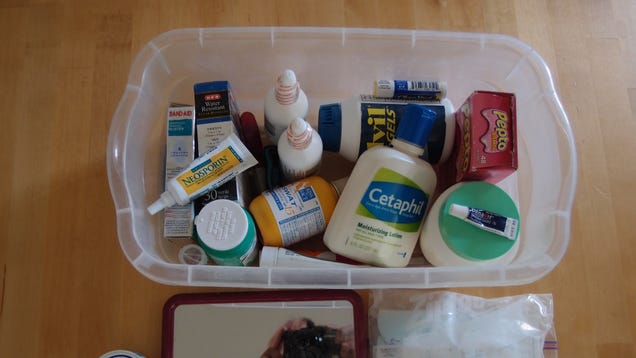
There’s a bit more to first aid than just cleaning a wound and slapping on a band-aid. Store shelves are littered with antibiotics like Neosporin, antiseptics like peroxide, and more. Let’s go over the differences.

Read more...

01 Jun 02:18

The Medical Screenings All Women Need, and When

by Caroline Weinberg on Vitals, shared by Alan Henry to Lifehacker

No matter how fast medicine moves us towards treatments, preventive medicine will always be the most effective and cheapest way to keep healthy. In this post, we’ll run down some common women’s health screening tests, when you should get them, and what you’re in for when you walk in.

Read more...

01 Jun 02:15

The Three Stages of Failure and How to Fix Them

by James Clear

One of the hardest things in life is to know when to keep going and when to move on. On the one hand, perseverance and grit are key to achieving success in any field. Anyone who masters their craft will face moments of doubt and somehow find the inner resolve to keep going.

Read more...

01 Jun 02:14

General Mills Recalls Flour Possibly Linked To E. coli Illnesses

by Laura Northrup

While you might associate infection with E. coli bacteria with meat and sometimes fresh vegetables, the bacteria can turn up in some unexpected places. Like flour. Yes, investigators checking out a multi-state E. coli outbreak have potentially linked it to flour from General Mills sold under its own labels and store brands.

So far, the outbreak includes 38 people in 20 states. Authorities made the possible link to General Mills flour products when about half of the patients remembered baking something from scratch before showing symptoms, and some of them in turn remembered that they used General Mills flour products.

While the link isn’t definitive and tests haven’t actually turned up any of the bacteria in flour, the company is recalling some products “out of an abundance of caution,” as companies always say.

E. coli lives in a variety of places, but the O121 variety lives inside the intestines of mammals, meaning that poop came in contact with the flour somehow. Flour, of course, comes from wheat, which is a plant, which is grown outside, and this is why you’re supposed to bake things before eating them.

People with long memories and a love of gobbling raw chocolate chip dough might remember when Nestle’s refrigerated dough was found to contain E. coli, which may have come from the flour used to make the dough.

Here’s the info on recalled items:

goldmedalflourrecall1

goldmedalflourrecall2

goldmedalflourrecall3

goldmedalflourrecall4

goldmedalflourrecall5

If you have any questions about flour products or about this recall, contact General Mills using their contact form, or at 1-800-230-8103.

General Mills announces flour recall [General Mills]

01 Jun 02:13

5 Things You Should Know About Uber’s Xchange Leasing Program & Its Costs

by Ashlee Kieler

Last summer, Uber launched a car leasing program that aimed to remedy the one big obstacle for anyone who wanted to sign up as a driver and hit the road — if you don’t have a car, you’ve got nowhere to put passengers. Nearly a year after Xchange Leasing began connecting would-be drivers with new vehicles, experts say the program may not be all it’s cracked up to be for already financially vulnerable drivers. 

Xchange Leasing, a wholly owned subsidiary of Uber that offers short-term leases to drivers by partnering with dealerships, recently received a $1 million credit from Goldman Sachs that aims to expand the program to more drivers, Bloomberg reports.

When the program launched last year, there were few details available aside from the fact that it would involve multi-year leases with the option for drivers to return their vehicles without penalty after 30 days.

While Uber contends that the program offers people who may otherwise be rejected by traditional lenders an option to obtain a vehicle and make a living, consumers advocates and financial experts express concerns that Xchange may be causing more harm to drivers than it is providing an outlet for them to make money.

Bloomberg spoke with several advocates, advisors, and drivers to glean a bit more understanding about the risks and benefits of Xchagne. Here are five things we learned from the report.

#1. The Terms — Leasing a vehicle can be a more expensive option for any consumer looking for a new set of wheels. Under an Xchange lease, which features 28 pages of terms and conditions, drivers pay a $250 upfront deposit and weekly payments to Uber over a three-year period.

The weekly payments are automatically deducted from the driver’s Uber earnings. If the driver wants to keep the vehicle after the three-year term is up, they must pay the residual value, Bloomberg reports.

#2. Returning The Car — After 30 days, an Uber driver taking part in the leasing program can return the vehicle to Uber with two weeks notice. The return doesn’t incur an additional fee but the driver is on the hook for the remaining payments.

#3. All-In-One Program — In addition to partnering with dealerships, Xchange handles advertisements to drivers, manages risks, and pays repo men to collect vehicles when drivers stop making payments.

In the case of Xchange, where payments are automatically deducted from Uber driver’s take-home pay, the lessee has stopped driving for the company.

#4. A Predatory Program? — Auto experts tell Bloomberg that while Uber contends the leasing program offers flexibility and option that otherwise wouldn’t be available, the costs are significantly higher than other leasing programs.

For examples, Experian estimates the average weekly payment for a new car lease is $96, while a 2013 vehicle through Xchange costs $130 a week.

“I’d say the cost is greater than the benefit for your average driver,” said Mark Williams, a lecturer at Boston University’s business school who reviewed the terms of a blank lease agreement provided by Uber, along with some average weekly lease payments and a driver-reported account. “The terms, the way they’re proposed, are predatory and are very much driven toward profiting off drivers rather than to facilitate an increase in drivers.”

After reviewing the terms of one lease, experts estimate that a driver would pay $25,210 plus $5,000 for the residual value for a 2015 Honda Civic, far more than the Kelley Blue Book fair purchase prive of $18,142.

#5. The High Costs — One driver tell Bloomberg that the high weekly cost, coupled with Uber lowering the cost of rides simply make his lease unaffordable.

The driver, who leased a 2016 Toyota Corolla, paid $155 a week for the vehicle. Two months after starting the lease, the company slashed prices and he began having trouble keeping up with payments.

“It got to the point that I would drive just to meet my payment,” he said. “If you were short on your payment for a week it would roll onto the payment for next week. It starts adding up.”

In the end, he stopped driving for Uber and asked Xchange to come get the car. However, he says it stayed in the parking lot for several months, until one morning it was gone.

Another driver tells Bloomberg that two weeks after entering a lease with Xchange, Uber deactivated his driver account with no notice.

While he has kept the vehicle, keeping up with payments has been difficult. If he continues with the three-year lease, he’ll pay $31,200 to Uber. And if he wants to keep the car after the term is over, he’ll need to pay an additional $6,000, Bloomberg reports. Conversely, the average purchase price for the car — a 2016 Chevy Cruze — is $16,419.

Inside Uber’s Auto-Lease Machine, Where Almost Anyone Can Get a Car [Bloomberg]

01 Jun 02:12

DC police resume tweeting crime news after backlash

by wtopstaff

WASHINGTON (AP) — District of Columbia police have resumed using Twitter to report breaking crime news after the department faced a backlash for discontinuing the practice.

The Metropolitan Police Department tweeted Tuesday afternoon that it would continue to tweet information about crimes as they occur. Police soon followed up with a tweet about a shooting in southeast Washington.

The Washington Post reported on Sunday that the department had scaled back its tweets. Instead, it was sending out crime updates with an alert system that people have to sign up for on the city’s website. Some activists and community members criticized the move as a setback to transparency, particularly as the city experiences an increase in violent crime.

The post DC police resume tweeting crime news after backlash appeared first on WTOP.

01 Jun 02:11

Endangered kiwi born at National Zoo research campus

by Sarah Beth Hensley

WASHINGTON — A newborn and endangered kiwi is under the care of the staff at the National Zoo’s research location in Virginia.

For the first time ever, an egg laid by a female brown kiwi at the Smithsonian Conservation Biology Institute in Front Royal, Virginia, hatched May 10. After the chick hatched, it was moved to an incubator for newborn chicks. It seems to be healthy and doing well, SCBI said in a news release.

The chick is the first for parents Ngati Hine Rua, the female, and Ngati Hine Tahi, the male. Its sex won’t be known for several weeks.

The location, which leads the National Zoo’s research programs, has previously hatched eggs laid at other zoos.

The nocturnal and flightless birds are endangered because of predators introduced to New Zealand, its native country, by humans. Dogs, cats and stoats are some of the kiwi’s biggest threats.

The post Endangered kiwi born at National Zoo research campus appeared first on WTOP.

01 Jun 02:09

Redskins mailbag: Why Josh Doctson isn't replacing Pierre Garcon, and more - Washington Post


Washington Post

Redskins mailbag: Why Josh Doctson isn't replacing Pierre Garcon, and more
Washington Post
The Washington Redskins this week hold their second round of offseason practices, and in so doing, they will continue to sort things out, learn the play book and lay the foundation for all of the position battles that will take place in training camp ...
Looks Like Someone Has a Sixpack of the MondaysHogs Haven
Kirk Cousins says Redskins' talent allows him to spread ball aroundESPN (blog)

all 17 news articles »
01 Jun 02:09

Bear sighted at Prince William County schools - Richmond.com


WJLA

Bear sighted at Prince William County schools
Richmond.com
GAINESVILLE, Va. (AP) — Police and school officials in western Prince William County are responding to bear sightings at a couple of schools. School system spokesman Phil Kavits said a bear was seen Tuesday morning at PACE West school in Gainesville.
Black bear spotted trying to break into cars at Va. elementary schoolWJLA

all 6 news articles »
01 Jun 02:08

Bear sighted at Prince William County schools - WTOP


Mashable

Bear sighted at Prince William County schools
WTOP
GAINESVILLE, Va. (AP) — Police and school officials in western Prince William County are responding to bear sightings at a couple of schools. School system spokesman Phil Kavits said a bear was seen Tuesday morning at PACE West school in Gainesville.
Black bear spotted trying to break into cars at Va. elementary schoolWJLA

all 13 news articles »
01 Jun 02:08

Fairfax firefighter's union wants Guy Morgan out - WUSA9.com


WUSA9.com

Fairfax firefighter's union wants Guy Morgan out
WUSA9.com
FAIRFAX, Va. (WUSA9) -- New concerns about the Fairfax County investigator on administrative leave from the Fire Department. Now, the firefighter's union president wants that fire investigator to receive "serious discipline," which may include termination.

31 May 19:09

JetBlue Passenger Says She Was Told Her Shorts Were Too Short To Fly

by Mary Beth Quirk

Air travel can be a mixed bag of fashion, as passengers of all different style sensibilities come together on a different kind of runway. Sometimes, those styles come into conflict with airline staffers, like in the case of a JetBlue passenger who was told her shorts were too short to fly, and that she’d have to change if she wanted to board the flight.

Earlier this month, a burlesque dancer from Seattle was waiting for a connecting flight home at Logan International Airport in Boston, after flying from New York that day wearing a long-sleeved sweater, thigh-high socks, and shorts, reports KIRO 7 News. She tells the news station she had been waiting by the gate for about 45 minutes when a gate agent approached her.

“[She] told me that she was really sorry for bringing this up but just what I was wearing was not appropriate and the flight crew had discussed it and the pilot had decided that I needed to put something else on or I would not be allowed to board the flight,” she said.

The problem was her shorts, she said, but she didn’t have any other clothing with her to change into. Instead, she asked if she could tie her sweater around her waist or use a blanket to cover up, but was denied. She ended up buying $22 pajama bottoms at an airport store so she could get home.

KIRO 7 News

JetBlue said in a statement to KIRO 7 that the gate and on board crew discussed the passenger’s clothing, and “determined that the burlesque shorts may offend other families on the flight.”

“While the customer was not denied boarding, the crew members politely asked if she could change. The customer agreed and continued on the flight without interruption,” the airline said, adding that it supports its crew members’ discretion “to make these difficult decisions,” and has reimbursed the customer for the cost of the replacement clothing she had to buy. She’ll also get a credit for a future flight “as a goodwill gesture.”

The woman tells KIRO 7 that she didn’t mention the fact that she’s a burlesque dancer before or after the confrontation.

She says she wants the pilot to apologize, for the airline to have a clear dress code for airline passengers, and offer cash or a larger flight credit.

“I was told it was the pilot’s final say so these are official rules that can be broken,” she said.

Seattle burlesque performer: Airline did not allow me to board plane because of my short shorts [KIRO 7 News]

31 May 19:07

YouTube Threatens Legal Action Against Service That Lets You Download Videos

by Chris Morran

Most of us are perfectly happy with going to YouTube and streaming that clip of Pookie being exhorted — in language that is not safe for work — to lay waste to his place of work, but some folks may want to watch this video offline, or do some tinkering with the clip. Some YouTube videos are available for download, but most are not, which is why people turn to services that allow you to get your own copy of a streaming video. YouTube, not surprisingly, is not a fan of such services and is dangling the threat of legal action against at least one.

TorrentFreak reports on a legal letter sent to the folks at TubeNinja, a service that lets users download videos from YouTube, Vine, Vimeo, and others.

Is it legal to download these videos? Depends on the video, why you’re downloading, what you’re going to do with the downloaded footage, and who you’re asking.

As we explained in an earlier story on services like PlayOn that allow you to record streams from Netflix, HBO Go, and others, the 1984 “Betamax ruling” by the Supreme Court held that making your own videotaped copy of a TV broadcast for your personal, non-commercial use is not copyright infringement.

Additionally, SCOTUS ruled that VCR manufacturers could not be held liable if their devices are misused to create bootleg copies.

While technology has developed well beyond the VCR, the Betamax ruling has been applied to subsequent devices, which is why PlayOn and others contend that they are not doing anything illegal; recording a movie as its streams from HBO Now is no different from recording it off a live broadcast from HBO, they argue, so long as you don’t go making copies for others, or using the recorded footage in any other commercial format.

Unlike PlayOn, which records a copy of the video as it’s being streamed, meaning it takes two hours to record a two-hour movie, services like TubeNinja download the entire file as quickly as possible. One could argue that this is different from the type of recording that is protected by the Betamax ruling. After all, your VCR could never perfectly replicate a full episode of Cop Rock in only a few minutes.

Aside from having an offline copy to watch at your leisure, there are several reasons why you could legitimately use an otherwise copyright-protected video.

The Fair Use doctrine holds that videos (and other copyrightable works) can be used in criticism, comment, news reporting, education, scholarship, or research, without violating copyright.

So if you’re giving a lecture on the cultural impact of viral videos, you should be able to download a number of the relevant clips and re-edit them together into a new piece for use at your lecture.

These gray areas around the use of downloaded videos, along with the fact that YouTube doesn’t own the copyright to the videos it hosts, explains why Google is dancing around the legal issue in its letter to TubeNinja.

Instead, that letter focuses on violations of YouTube’s terms of service, which prohibit the “downloading of any video from the site” unless it’s accompanied by a “download” button. Additionally, the letter accuses TubeNinja of violating the site’s developers’ terms of service which put restrictions on the use of YouTube’s API (application program interface — how the site interacts with other services).

While the YouTube user who downloads videos with TubeNinja may be — and probably is — in violation of their agreement with YouTube, TubeNinja’s owner says that’s not his problem.

“Our own ToS clearly states that the user is responsible for the legitimacy of the content they use our service for,” he explains to TorrentFreak.

As for claims of violating YouTube’s API, TubeNinja says it doesn’t use the API to obtain the videos, so it has no plans of ceasing the YouTube download functionality.

TorrentFreak notes that, YouTube made similar threats of legal action against another downloader service back in 2012, but that this service remains online and popular four years later.

31 May 19:05

Disney Not Happy About Snow White, Captain America Seen At Chinese Theme Park

by Kate Cox

Competition is great: when there are more options for something, consumers usually come out ahead. That applies to entertainment theme parks as much as to anything else: if there are more places to go, crowds will be mitigated, prices will be competitive, and amenities will probably improve. But “competing” doesn’t actually mean “duplicating the other guy’s stuff and displaying it at my place instead.” At least, it’s not supposed to.

And yet, Bloomberg reports, that’s exactly what seems to be happening overseas, as a fight between Disney and Chinese company Wanda heats up.

Disney has been building a new major resort in Shanghai, to join their list of international destinations in Paris, Tokyo, and Hong Kong. The Shanghai resort opens June 16, and will obviously be a big deal for the company in a major, growing, international consumer market. In short, there is money to be made in China, and Disney intends to use their existing, globally popular intellectual property to make that money.

But China is, as they say, a very competitive market — and Chinese business is competing. There are already hundreds of theme parks in China; Disney is far from alone. So Dalian Wanda opened up their own Wanda City giant theme park complex this weekend in Nanchang, about 450 miles southwest of Shanghai.

All would be well and good, but Wanda City’s kickoff opening ceremony weekend featured some very familiar costumed characters on hand to amuse crowds. Like archetypal Disney Princess Snow White, and square-jawed Avenger Captain America.

Disney, which is notorious for clamping down hard on its IP rights, is not pleased. “We vigorously protect our intellectual property and will take action to address infringement,” the company told Bloomberg in a statement. “Our characters and stories have delighted generations, these illegal and substandard imitations unfortunately disappoint all who expect more.”

Wanda representatives counter that the costumed characters were in a “non-ticketed area” of the complex, and said, “The non-Wanda characters were operated by individual stores within Wanda Mall. They do not represent Wanda.”

Bloomberg spoke with a lawyer who said that the hands-tied excuse out of Wanda was not likely to fly: “Legally, the bottom line is that the owner of a space is responsible for infringement that has occurred,” he said, “unless they argue that they cannot exercise control over their tenants — which would require thorough proof that they have done all they can to control the situation.”

At least, despite some barbs from Wanda top executives, Disney can feel comforted that it’s not personal: the characters were spotted next to Pokemon and King Fu Panda merchandise, neither of which are anything close to being Wanda properties.

Snow White Spotted at Wanda City Triggers Backlash From Disney [Bloomberg]

31 May 19:05

McDonald’s Customer Run Over By Her Own Car In Drive-Thru

by Mary Beth Quirk

Though the drive-thru at fast food restaurants serves a very simple, transactional purpose, sometimes what happens there is far from expected — and can even be dangerous. To that end, police in Pennsylvania say a McDonald’s customer ended up at the hospital after her own car ran over her in the restaurant’s drive-thru lane.

Pennsylvania State Police said a 76-year-old customer’s food had fallen to the ground after a McDonald’s worker handed it to her, reports WPXI.com. The woman opened her door and leaned over to pick it up, and her car accelerated forward.

As the car moved, the driver’s side door hit the building, and the woman fell out. The car didn’t stop until it crashed into a block wall in the parking lot… and then rolled backward and ran over the customer.

She was taken in an ambulance to a local regional airport and flown to a hospital in Pittsburgh with moderate to severe injuries, and was listed in serious condition as of Monday night.

Woman, 76, run over by own car at McDonald’s drive-thru [WPXI.com]

31 May 19:04

Lands’ End, Eddie Bauer Deny PETA Accusations Of Using Down Ripped From Live Geese

by Laura Northrup

If you yank the soft down feathers from the body of a goose that’s still alive, here’s the thing: the goose can grow that plumage back, and you can pluck it again. That’s apparently the inhumane practice on some poultry farms in China. A continuing investigation by People for the Ethical Treatment of Animals discovered live-plucking on farms linked to suppliers of well-known U.S. retailers Lands’ End, Eddie Bauer, L.L. Bean, Sears, and Amazon.

As anyone with hair might imagine, having feathers plucked while alive and awake is extremely painful and stressful for the birds. PETA sent camera-equipped investigators to farms that supply brands claiming to use responsibly-sourced down, and found bald birds as well as people who admitted that they pass off live-plucked down as being plucked after geese are slaughtered.

“We advertised that it’s all plucked after slaughter,” PETA says that one industry representative told an investigator. “Nobody dares to buy it if you say it’s live-plucked.”

That might come as a surprise to customers who buy items certified by the Responsible Down Standard or from companies that promote their down as otherwise cruelty-free.

Lands’ End has posted its response to this and similar accusations on their site, saying:

“Lands’ End does not use, purchase, or source live plucked down which is a barbaric practice that is completely out of line with our values… Our customers can be assured that we are fully committed to having a responsible, trustworthy, and ethical supply chain. We take all allegations extremely seriously and we vigorously investigate each one of them to ensure that all needed actions are taken, including suspending any supplier that does not live up to our high standards.”

We heard back from Eddie Bauer as well, which also denied PETA’s allegations.

“We take this issue very seriously,” a company representative said in a statement to Consumerist. “Eddie Bauer does not purchase live-plucked down, does not use live-plucked down in its products, and does not condone cruelty to animals.”

Eddie Bauer’s representative went on to explain that the company uses one supplier, Allied Feather and Down, and investigated the specific allegations from PETA that down from live birds could have been used in their products.

“AFD confirmed that they do not source from the factories PETA identified, as they are not [Responsible Down Standard] certified,” the company said.

We also contacted L.L. Bean, Sears, and Amazon, the other retailers specifically named in PETA’s allegations, and will update this post when we hear back from them.

If it’s true that suppliers pluck live birds in secret and lie about the feathers’ origin, that would make investigations back to the original source difficult. Global supply chains are complex and difficult.

Exposed: Despite ‘Responsible Down Standards,’ Farms Still Live-Plucking Geese [PETA]

31 May 19:04

SodaStream Wants You To Make Your Own Beer At Home

by Mary Beth Quirk

Though you probably know at least one at-home brewer who has gone to some lengths to buy all the equipment and materials necessary to whip up a batch of beer in their own kitchen, there are others who perhaps aren’t willing to go those lengths, but still like to be a bit DIY. For those folks, SodaStream has a new “homemade” beer system that brews beer much in the same way it makes soda — no knowledge of wort or hops required.

The Beer Bar only makes one beer so far, a light beverage called “Blondie,” which contains 4.5% alcohol by volume and has “a smooth authentic taste, and a hop filled aroma,” SodaStream says.

The system works by adding Blondie concentrate to sparkling water, resulting in about three liters of beer per one liter of Blondie concentrate.

beerbar

“We are excited to launch a brand dedicated to serving the global growing trend of home crafted beer,” Daniel Birnbaum, Chief Executive Officer of SodaStream said in a statement.

So far, the Beer Bar is available only in “some of Europe’s beer capitals,” the company says, including Germany and Switzerland. Other markets are expected to launch the Beer Bar in late 2016 and 2017.

31 May 19:03

Americans Apparently Don’t Hate Mobile Ads As Badly As Rest Of The World

by Chris Morran

If you’re using ad-blocking technology on your smartphone, you’re not alone. Some 2.5 million Americans are employing mobile browsers and other tech on their devices to avoid unwanted ads, but that’s nothing compared to the vast number of consumers blocking ads in China, India, and Indonesia.

This is according to new data from PageFair, which reports that the use of mobile adblocking browsers — which have a default setting of blocking all ads — grew by 90% in 2015 alone, with some 408 million people using them worldwide. That’s around 21% of all smartphone users.

adblockgraph1Thing is: Almost all of those users come from the Asia-Pacific region. According to the report, this area only accounts for 55% of all smartphones, but 93% of ad-blocking browsers.

The overwhelming majority of mobile ad-blocking is occurring in just a few countries: China, with 159 million ad-blockers; India (122 million); Indonesia (38 million); and Pakistan (10 million).

Granted, these are all among the world’s largest countries, but other large nations don’t even come close to the same level of adoption. The combined usage in Russia, Saudi Arabia, Brazil, Malaysia, and the U.S. only comes out to about 1/10 that of China, even though these five nations together have a population about half the size of China’s.

It’s not just a population or geographical issue. Asian countries like Japan and South Korea didn’t even make the list of countries with notable levels of ad-block adoption.

So why are users in developing countries clamoring for ad-blockers while others are not? The authors of the report theorize that it has something to do with the relative cost for data. Just like everything else you see on your phone, ads use up data, so if you can block the ads, it should free up more data for the content you actually want.

“Adblocking browsers will continue to grow wherever data costs are high,” reads the report. “Unless the bandwidth cost of current advertising is addressed, the ad-funded digital media industry will never get a chance to flourish in many developing economies.”

Though the U.S. is just testing the waters with regard to mobile ad-blocking the authors do note, that Western countries have a high rate of ad-block tech on their desktop computers, indicating a desire to keep these ads out of their lives, and this “may easily shift to mobile unless advertising practices change.”

31 May 19:03

South African Regulators Give Green Light To $107B Anheuser-Busch, SABMiller Merger

by Ashlee Kieler

Anheuser-Busch InBev has one more regulatory body to mark off on its “Places To Get Approval For $107 Billion Takeover Of SABMiller” checklist: South Africa’s Competition Commission gave its blessing to the mega-beer merger Tuesday after placing several conditions on the approval.

The SAB portion of SABMilller has its roots in South Africa. Though the parent company’s global headquarters has been based in London for more than 60 years, South African Breweries still operates out of the Johannesburg area.

According to Bloomberg, the South African regulators missed four deadlines for reviewing the merger before they finally signed off on the deal.

By acquiring SABMiller, AB InBev would gain significant market share in Africa, where beer sales are expected to grow in the coming years.

Of course, giving the green light to creating the largest beer producer in the world comes with a few conditions.

Under the approval, AB InBev must sell SABMiller’s 26% stake in local wine, cider, and spirits producer Distell Group within three years of closing the deal.

AB InBev might not have a difficult time finding a buyer for the producer. Remgro, which already owns a portion of Distell, has previously said it would be interested in taking over SABMiller’s stake.

Other conditions to approval include separating the combined company’s bottling operations with Coca-Cola and Pepsi Co., protecting jobs, and setting up a $64 million fund to support local farmers, Bloomberg reports.

“These conditions address issues that were raised by various stakeholders since the announcement of the acquisition,” Competition Commissioner Tembinkosi Bonakele said in the statement.

Approval in South Africa comes just a week after European regulators gave their blessing to the combination following AB InBev’s moves to sell off some of SABMillers brands overseas.

So far, AB InBev has agreed to sell the Peroni and Grolsch brands to Japan’s Asahi Group for $2.9 billion.

It also pledged to sell SABMiller’s eastern European business in Czech Republic, Hungary, Poland, Romania, and Slovakia for $8 billion. However, the company has yet to announce a buyer for those assets, which include brands like Pilsner Urquell in Czech Republic and Dreher in Hungary.

By selling off SABMiller’s assets, AB InBev will continue to have a small presence in Europe.

The betrothed companies previously reached a deal to sell SABMiller’s stake in the Miller/Coors brand to Molson Coors for $12 billion. The massive deal between the companies must still receive regulatory approval in the U.S. among other areas.

Here’s a look at the brands that are currently being sold off to pave the way for the merger:

Brand Owner Buyer Price
Miller/Coors SABMiller Molson Coors $12 Billion
CR Snow (Chinese brand) SABMiller China Resources $1.6 Billion
Peroni, Grolsch, & Other European Brands SABMiller Asahi Group $2.9 Billion
Eastern European Brands (Pilsner Urquell, Dreher, and others) SABMiller To Be Determined ~$8 billion
Distell (spirit, wine, beer producer in South Africa) SABMiller Remgro (rumored) To Be Determined

South Africa Regulator Backs AB InBev Takeover of SABMiller [Bloomberg]

31 May 19:01

National Zoo trains for events like boy’s gorilla encounter

by Neal Augenstein

WASHINGTON — Smithsonian National Zoo staff regularly trains to respond to the rare instances when animal inhabitants or human visitors stray past enclosures or safety barriers and to follow zoo protocols that include the use of lethal force as a last resort.

On Saturday, Cincinnati Zoo staff shot and killed a 17-year-old silverback gorilla after a 4-year-old boy slipped into its enclosure. The boy is fine, according to his family.

Although the shooting of the gorilla, named Harambe, angered some who criticized the decision to kill the animal rather than attempting to tranquilize it, the director of the Cincinnati Zoo said if the situation presented itself again, he would take the same actions.

Pamela Baker-Masson, associate director of communications for the National Zoo, said without firsthand knowledge, she could not comment about the Cincinnati incident beyond calling it “an absolute tragedy.”

Both the Cincinnati Zoo and the National Zoo are accredited by the Association of Zoos and Aquariums.

“All members are required to conduct four safety drills per year, as well as have an emergency response plan in place for dangerous animals,” AZA spokesman Rob Vernon said.

“Obviously, AZA cannot be on the ground at all of our members, so they make the difficult judgment calls on the ground.”

Baker-Masson said the zoo trains for different scenarios, including when animals escape into nonpublic passageways the animals traverse. In addition, zoos train for when wild animals completely leave their enclosures and wind up in public spaces.

“We have protocols for everything from birds, to small mammals, to our largest animals,” said Baker-Masson.

In addition to devising plans, the zoo also conducts animal escape drills.

“We drill in off-hours and peak hours,” said Baker-Masson, because the animals could potentially escape at any time.

Baker-Masson said the zoo is ready for the rare instances when an animal leaves its enclosure or a human breaches safety fences separating visitors from animals.

Escape response teams are made up of veterinarians, security staff and keepers who work closely with the affected animals, she said.

When animals are out of their enclosure, or when something unexpected — including if a human enters an animal’s home, the creature can experience a wide variety of responses from fear to agitation.

While National Zoo response teams train to use tranquilizing darts, sedation is generally most effective in cases where the animal is already in a contained environment, and under a veterinarian’s care.

In cases where a human life is in jeopardy or imminent danger, the National Zoo’s response teams are trained to kill the wild animal.

Preserving an animal’s safe and healthy habitat, as well as the safety of visitors is the zoo’s ultimate goal, said Vernon with the zoo association.

Vernon said National Zoo Director Dennis Kelly “has been a strong advocate for continued improvement of AZA’s safety standards as part of AZA’s accreditation process, and is one thing, I believe, he will focus on when he is AZA’s Board chair starting in October.”

The post National Zoo trains for events like boy’s gorilla encounter appeared first on WTOP.