Shared posts

10 Apr 00:18

As eaglets hatch, D.C. becomes new haven for nation’s bird

by wtopstaff

WASHINGTON — Go birding with Dan Rauch, a wildlife biologist with the D.C. Department of the Environment, and you’ll have a hard time keeping up with him. Within seconds he can catalog by sight and sound, palm warblers, pileated woodpeckers, yellow shafted flickers and more.

But on Thursday, the big news is that the bald eagles nesting at the National Arboretum have become parents. Rauch and a colleague from DDOE spotted the eaglets this week. He saw the father wheel in with a fish. Then the mother took off and the father picked the fish apart, then leaned in toward the nest.

“And here came the little head popped up. And it was so exciting,” says Rauch.

That meant there was one confirmed eaglet in the nest, but Rauch believes there are two. While he never saw them at the same time, he says it looked like the father was feeding in different places.

There are three nesting pairs of eagles in District of Columbia: the pair at the arboretum, another on the campus of St. Elizabeth’s and a third at the Metropolitan Police Department training center. Rauch says they’ve confirmed an eaglet at the nest at St. Elizabeth’s is just older than a month.

The presence of bald eagles, a national symbol, right in nation’s capital, is a signal that the big birds are thriving, even in an urban environment. While bald eagles appear to be fearsome creatures, they do have some competition from other birds. Thursday, when the male was feeding the eaglets, some unwelcome visitors showed up and alarmed the bird.

“Three crows did come in, and he let out a call. The female showed up and chased them right off. They’re great co-parents, they’re very protective.”

As Rauch pointed out the birds wheeling above the arboretum on a cold, cloudy afternoon, he spotted a red tailed hawk moving in on the eagles’ nesting area. As if on cue, one of the eagles took off and in the manner of a fighter jet scrambling when a threat’s been identified, the big eagle escorted the hawk from the area, away from the nest.

Rauch says cities like Washington, D.C. provide a great opportunity for anyone interested in wildlife to spot a huge range of birds.

“Right now is the beginning of spring migration. We have all these fantastically colored near-tropical migrants who are moving through.”

All anyone has to do, says Rauch, is step out their front door.

“Nature is right here.”

WTOP’s Kate Ryan contributed to this report. 

The post As eaglets hatch, D.C. becomes new haven for nation’s bird appeared first on WTOP.

10 Apr 00:17

Bald eagles make permanent home in nation’s capital

by John Aaron

WASHINGTON — Leaders in the nation’s capital are optimistic the nation’s bird has again found a permanent home here.

There are now three nesting pairs of bald eagles in Washington. “It symbolizes the environmental success and progress that we’ve made in this city,” says D.C. Councilwoman Mary Cheh. “It’s actually been very extraordinary over the last 10, 20 years.”

The birds disappeared in the 1940s but were reintroduced starting in the 1990s.  

“Ultimately it’s worked, but it had to work in tandem with cleaning up the Anacostia,” Cheh says.

Speaking outside the Wilson Building in an effort to raise awareness of D.C.’s bald eagles, Cheh also says she supports an effort to officially make June 20th Bald Eagle Day.

Cheh was joined by Challenger, a trained bald eagle called “the most famous eagle in the world” by handler Al Cecere, president of the American Eagle Foundation. He believes the region could be home to dozens more bald eagles.

“You’ve got plenty of trees, plenty of waterways, a lot of fish,” in addition to tall trees for the eagles to make nests in.

Dan Rauch, a biologist with the District Department of the Environment, thinks it’s especially impressive the bald eagles are coming back to louder areas of the city.

“If you go to a nest, you’re going to hear the Metro, you’re going to hear helicopters going overhead, you’re going to hear ambulances going by,” he says. “They’ve really urbanized in order to survive.”

Rauch says bald eagles are currently nesting near the National Arboretum, the Blue Plains police training academy and the St. Elizabeth’s campus.

The post Bald eagles make permanent home in nation’s capital appeared first on WTOP.

10 Apr 00:17

Healthy Paws: Traveling With Your Pet

by wtopstaff

Healthy Paws

Editor’s Note: Healthy Paws is a new column sponsored and written by the owners of Clarendon Animal Care, a full-service, general practice veterinary clinic. The clinic is located 3000 10th Street N., Suite B. and can be reached at 703-997-9776.

As the weather improves, more and more of us will be traveling with our pets. While having our pets along on trips and vacations can be very enjoyable, sometimes getting to the actual destination can be wrought with stress for both pets and owners.

By Car

Many dogs can be anxious and/or nauseous with car travel, and often these two can be interrelated. For dogs that get anxious in the car, sometimes starting with very short rides and progressively working up to longer and longer rides can help them adapt to the car. For dogs that get car sick, there are a number of medications that can help control motion-associated vomiting, talk to your vet about which may be best for your pet.

It’s also important to provide a safe and secure place for your pet while traveling in the car.  Dogs should ideally be crated or even buckled in a seatbelt, and cats confined in a carrier.  Frequent rest and “potty” breaks should be taken to let them stretch their legs and get a drink of water and a small snack.

By Plane

Many owners will need to fly with their pets at one point or another. It is very important to check with your airline at least a month prior to travel, as many airlines require a health certificate from your pet’s veterinarian within 10 days of travel.

For international travel, it is even more important to start the process several months prior to anticipated travel. We recommend checking with the embassy of your destination country to get the most up-to-date requirements for travel to your destination country. If traveling to Japan, the United Kingdom, or Hawaii, the process typically needs to be started at least six months ahead of time, as these are Rabies-free areas that require extensive documentation of Rabies vaccination prior to travel to avoid an extensive quarantine on arrival.

When traveling overseas, specific health certificates are often required. Be sure to check with your veterinarian in advance to make sure they are USDA-certified for international health certificates, and have a plan to get those certificates cross-signed by the USDA veterinarian.

Microchips

Microchips are recommended and, depending on the destination, may be required when traveling. This serves as a way for your pet to not only be identified in the airport here in D.C. but also internationally. And with domestic travel, the presence of a microchip can be the difference of finding your pet if they get lost hundreds of miles away from home or not.

Temperature

Never leave your pet alone in the car, even with windows rolled down, as cars can heat up very quickly and cause devastating elevations in core body temperature. Even when flying, it is important to take the temperature into account as animals in crates, left on the tarmac, can reach unsafe temperatures if it is too hot outside.  Your veterinarian can make recommendations on the temperature range that is acceptable for airline travel.

Sedation

Sedating your pet for travel is not generally recommended, but there are certainly cases where the pet may be so anxious without sedation that they may injure themselves while crated. Please discuss this with your veterinarian weeks in advance of the anticipated trip so they can help you find behavioral and (possibly) pharmaceutical solutions to keep everyone safe and happy for the trip.

We wish you happy and healthy travels with your pets!

The views and opinions expressed in the column are those of the author and do not necessarily reflect the views of ARLnow.com.

The post Healthy Paws: Traveling With Your Pet appeared first on WTOP.

10 Apr 00:16

Ticks, allergies, chemicals: How to keep your pet healthy this spring

by Rachel Nania

WASHINGTON — After a long and snowy winter, most Washingtonians are welcoming spring with open arms. But your pet may not be ushering in the season with the same enthusiasm.

Spring is the start of flea and tick season, and the bugs are back in full force. Veterinarian Dr. Katy Nelson says if you haven’t ordered your preventive flea and tick treatments, now is the time.

“Truthfully, around here, I recommend that no matter how cold it is, you do that flea and tick prevention year-round,” Nelson says. “I have seen tick infestations in February with snow on the ground.”

Ticks aren’t the only thing that can make your pet sick this time of year — the budding flowers and blooming plants can have an impact on your pet’s health too. For example, Easter lilies are “extraordinarily dangerous” for cats if they chew on them, Nelson says. Even flower bulbs can be hazardous.

“Not only for them chewing on the bulb and what the bulb may contain, but also because dogs tend to swallow things, and a big old bulb in a GI tract is not a great idea,” she says.

How do you know what plants are safe to bring into your home and to plant in your garden? Nelson says the ASPCA’s Poison Control website is a great resource. It has a list of plants that are safe, and those that are toxic, to pets.

If your pet has a runny nose or watery eyes, pollen may be to blame. Nelson says similar to humans, pets experience seasonal allergies, too.

“These guys can display very similar symptoms to us — everything from itchy, watery eyes to runny noses.”

Skin irritations and ear infections are also symptoms of seasonal allergies. If your pet is experiencing allergies, Nelson suggests talking to your veterinarian. Treatments range from a simple therapeutic bath to antihistamines and prescription medication.

“It’s definitely something you can get control of, but you’re going to need to work with your veterinarian on that,” Nelson says.

Spring is the time of year when people clean their homes from top-to-bottom. Before you break out the scrub brush, think about how the cleaning supplies you use may affect your pet.

Toxic fumes, liquids and the residues they leave behind can all be dangerous. So when it comes to cleaning, Nelson’s best piece of advice is to think green.

“You can find these products that are out there that are safe, not only for your pets but also for your children. So rather than bringing in these high-chemical products, try to find some that are more vinegar-based or something along those lines.”


The post Ticks, allergies, chemicals: How to keep your pet healthy this spring appeared first on WTOP.

09 Apr 23:55

NHTSA Closes Five-Year Probe Into 1.8M GM Trucks & SUVs With Brake Failure; Doesn’t Order Recall

by Ashlee Kieler

After five years of investigating why brake lines in some 1.8 million older trucks and SUVs have a tendency to fail, the National Highway Traffic Safety Administration failed to find a safety defect and plans to close the probe without ordering General Motors to replace the often rusted brake lines.

NHTSA’s investigation, which first began [PDF] in March 2010, covered nearly 1.8 million full-size pickup trucks and sport utility vehicles produced by GM’s GMT800 platform – including the 2002-3 Cadillac Escalade, the 1999-2006 Chevrolet Silverado and GMC Sierra pickups, the 1999-2006 Chevrolet Suburban, the 2000-2006 Chevrolet Tahoe and GMC Yukon, the 2000 GMC Yukon XL and the 2002-2006 Chevrolet Avalanche 1500 and 2500 – that were thought to be affected by an issue causing corrosion of brake lines, often leading to brake failure and subsequent crashes.

According to documents [PDF] posted by NHTSA, over the course of the five-year investigation regulators analyzed 3,645 consumer complaints of brake pipe corrosion failures, including 107 crashes and 40 injuries.

In addition to consumer narratives, the agency also conducted and analyzed field data regarding GMT800 vehicles.

NHTSA determined that while only 20% of all GMT800 vehicles were sold in the salt states – areas of the U.S. where road salt is used during the winter months – a disproportionate number of complaints came from those regions, leading investigators to make a strong correlation between the issue and the vehicle’s age and region of use. In all, 2,702 of the complaint, 88 of the crashes and 20 of the injuries were reported in those vehicles.

For vehicles with less than 8 years of service, the complaint rates were minimal for all regions. In the salt states the failure rates begin to climb as the vehicles advance in age, particularly in the Northeast corner of the United States. The complaint rates in the salt states go from less than 0.1 incident per thousand vehicles (IPTV) at 7 years in service to over 1.0 IPTV after the 12th year of service for the subject pickup trucks and utility vehicles.

Despite the connection, investigators did not identify any specific defect conditions that caused or contributed to the brake pipe failures.

Instead, the investigators determined that many of the brake corrosion failures appear to be a result of the normal expected wear out of pipe coating material used in the vehicles, and not due to a problem in production.

“The agency will monitor this issue and reserves the right to take further action if warranted by the circumstances,” NHTSA states in its closing documents [PDF].

In lieu of issuing a recall order, the agency encourages owners of model year 1999 to 2007 Chevrolet Silverados, Tahoes and Suburbans; GMC Sierras and Yukons, and Cadillac Escalades to have their brake lines inspected and to wash their underbodies after each winter season.

By closing the investigation without ordering a recall or finding a safety defect, NHTSA places the cost of maintaining and replacing the brakes squarely on the consumers.

Back in 2013, GM previously released developed a parts kit for the brake lines.

“These are available through dealers and the aftermarket,” a spokesperson for the company tells the Times. “Based on time studies, the repair including labor should cost about $500. We can only suggest how much labor time the repair should take.”

Still, some consumers continue to report that out-of-pocket costs to fix the issue can exceed $2,000.

Wednesday’s announcement by NHTSA brings to an end one of the agency’s longer running investigations. NHTSA began investigating the problem after receiving a formal defect petition [PDF] asking regulators to look into widespread stalling issues.

“In particular, our 2003 Chevrolet Silverado 2500HD 4WD pickup truck…experienced hydraulic brake failure at 51,848 miles due to corroded brake lines bursting. The lines burst in an area that was weakened by corrosion and field under normal usage and brake line pressure. There was no indication to the driver that failure was eminent and only fate precluded any injury, as the vehicle was traveling slowly with a load of hay in the bed.”

At the time the investigation was first opened, NHTSA reported receiving at least 110 owner complaints alleging loss of braking effectiveness due to brake line rupture because of corrosion. Three of those reports involved crashes. A preliminary evaluation was opened to determine the frequency, scope and safety consequences of the alleged defect. However, no recall was issued.

During the preliminary investigation, NHTSA reported that officials with GM said the vehicles were equipped with dual brake lines, meaning that “should a brake pipe suddenly fail for any reason, the affected vehicle would be capable of stopping with the pressure supplied by the remaining circuit.”

Additionally, the manufacturer said if any type of brake fluid leak were to occur the system malfunction indicator would illuminate.

However, consumer complaints continued to cast doubt on GM’s statements.

Nearly a year later, in January 2011, NHTSA opened an engineering analysis of the issue [PDF]. By that time the agency had received 890 complaints, 761 of which were located in the so-called “Salt Belt states” – areas in which salt is routinely used on roads during the winter months.

Again a majority of the complaints alleged the failure occurred suddenly with no warning to the driver and resulted in extend stopping instances. Twenty-six of the reports resulted in crashes, while in 10 other cases the vehicle was intentionally steered off the road or into another lane to avoid a crash.

09 Apr 23:52

Sabra Recalling 30,000 Cases Of Classic Hummus Over Listeria Fears

by Mary Beth Quirk

sabrahummusWhether you like to dip pita chips or veggies, pretzels or just your fingers, check that hummus package before you go snacking: Sabra is recalling 30,000 cases of its classic flavor of hummus sold nationwide over fears that the product could be tainted with listeria.

The potential for Listeria monocytogenes in several samples of hummus has prompted Sabra Dipping Co. to voluntary recall 30,000 cases of Classic Hummus, according to the U.S. Food and Drug Administration.

Inspectors for the Michigan Department of Agriculture and Rural Development discovered the possible contamination after a routine inspection March 30 at a Kroger store in Port Huron.

The recall only applies to five stock unit numbers (SKU) of Classic Hummus, with no other products included in the recall at this time. There have been no reported illnesses linked to the hummus products at this point.

Check the top of your product for the following codes and discard any packages that match — consumers can also return them for a refund. Questions? Call Sabra at 888-957-2272 weekdays.

RECALLED PRODUCTS:

040822011143/300067 – Sabra Classic, 10 oz. – 3-059/Best before May 11

040822011143/300067 – Sabra Classic 10 oz. – 3-060/Best before May 15

040822014687/300074 – Sabra Classic, 30 oz. – 3-059/Best before May 11

040822342049/301216 – Sabra Classic Without Garnish, 32 oz. – 3-059/Best before May 11

040822017497/301290 – Sabra Classic, 17 oz. Six Pack – 3-058/Best before May 11

040822017497/301290 – Sabra Classic, 17 oz. Six Pack – 3-059/Best before May 11

040822342209/301283 – Hummus Dual Pack Classic/Garlic – 3-058/Best before May 11

09 Apr 10:56

How to avoid attracting ‘nuisance’ coyotes

by Kristi King

WASHINGTON — Local wildlife officials want homeowners to take measures to avoid attracting coyotes. Those measures would include not leaving pet food outside, removing bird feeders and clearing away brush piles where rodents may live and attract coyotes.

Coyotes are considered a nuisance animal in Maryland and Virginia. They’re known to prey on small pets that are roaming free, have attacked pets that are on leashes, and Virginia’s Department of Inland Fisheries notes that coyotes in other eastern states have even attacked and severely injured small toddlers who were left unattended.

Coyotes are typically nocturnal and very shy, but they do hunt for food in urban areas, as seen in a video of a coyote jumping from rooftop to rooftop in Brooklyn, New York.

The post How to avoid attracting ‘nuisance’ coyotes appeared first on WTOP.

09 Apr 09:40

Fairfax County plans license plate crackdown

by Max Smith

WASHINGTON — Residents of Fairfax County who have kept license plates on their cars from Maryland or other states should prepare for a costly crackdown: County leaders are responding to complaints about the number of cars regularly parked in many neighborhoods overnight without Virginia plates.

The Fairfax County Board Tuesday asked for changes to a law that currently fines car owners who fail to properly register their cars a one-time $250 fee. The board wants that fine to be charged annually, on top of the existing $100 “no-plate tax” that was introduced in fiscal year 2010.

In addition, the board heard more details about plans for a crackdown by police and sheriff’s deputies to catch more residents with out-of-state plates, and charge them the fines and fees called for by the existing law.

Fairfax County Police Chief Ed Roessler says the effort will focus on “known neighborhoods that have this chronic problems,” including several areas in Supervisor Jeff McKay’s Lee district. The district covers the area south of the Beltway, west of the Fairfax County Parkway and Fort Belvoir North Area, east of U.S. Route 1 and north of the Interstate 95 interchange with the Fairfax County Parkway.

“This is one of those things where we can really generate revenue, and educate the public. Because there are instances where people just don’t know, and then there are instances where people are deliberately doing this,” McKay says.

An unscientific survey of a Springfield neighborhood on a recent Sunday morning revealed a “large number” of cars that were not properly registered in Virginia, McKay says.

“I regularly hear from constituents who are concerned that the display of out-of-state plates gives the inference that these residents may be skirting our local tax laws,” McKay adds.

There are exemptions, including for cars owned by members of the military and full-time college students.

“The intent behind this legislation was that the combined charge of $350 would provide an annual inducement to get owners to comply with Virginia law and properly display Virginia license plates,” McKay says.

Providence District Supervisor Linda Smyth sees a lot of Maryland license plates on cars that seem to be owned by people who live in the county.

“Even if we only get $250 once, it’s still $250 plus the (no plate tax),” she says.

Roessler says he met with county tax staff this week to coordinate the license plate checks with the sheriff’s office to make sure there are no overlapping efforts.

“We have a few volunteers that are willing to be trained with our traffic division to go out and target neighborhoods throughout the county,” Roessler says.

The sheriff’s office is also directing deputies to keep an eye out for any potential registration issues as they crisscross the county as part of daily duties.

D.C. has a similar, but more stringent, enforcement program focused on vehicles that park overnight on city streets without District plates. It can result in $100 tickets for each time a car is spotted parked overnight within 180 days after a warning ticket is issued.

Fairfax County does not ban repeated overnight parking by people who live out of state.

The post Fairfax County plans license plate crackdown appeared first on WTOP.

09 Apr 09:37

Latest White House feature: Gender-neutral restroom - Politico


Politico

Latest White House feature: Gender-neutral restroom
Politico
Most Read; Videos. The secret lives of Hillary and Bill in the White House · Why the Confederacy lives · Hillary's path to victory? The 'Face The Nation' shortlist: Who's on tap to replace Bob Schieffer? Rahm the screwup · White House, Dems seek to ...
White House Visitors and Staffers Will Have a Gender-Neutral Restroom OptionTIME
The White House's Executive Office Now Has Gender-Neutral BathroomAdvocate.com

all 5 news articles »
09 Apr 09:36

Prince William Dog Walk set for April 26 - Inside NoVA


Inside NoVA

Prince William Dog Walk set for April 26
Inside NoVA
Prince William County Dogs, a community support group that raised money to build the K9 Gunner Memorial dog park in Lake Ridge, is hosting its fourth annual Dog Walk fundraiser at noon on April 26 at Lake Ridge Park. The group has partnered with Prince ...

and more »
08 Apr 22:09

NHTSA Closes Probe Into 1.9M Chrysler, Dodge Minivans Without Determining Cause Of Stalling Issue

by Ashlee Kieler

Following months of analyzing data, reviewing a recall petition and assessing more than 720 consumers complaints, the National Highway Traffic Safety Administration decided to close a probe into nearly 1.9 million Chrysler minivans without finding a safety issue or determining why the vehicles stall.

NHTSA’s probe, which first began [PDF] in September 2014, centered on model year 2003 to 2007 Dodge Grand Caravans, Dodge Caravans, Chrysler Town & Country and Chrysler Voyager minivans that suffered engine stalls shortly after refueling.

The initial probe was initiated after the owner of a 2007 Dodge Grand Caravan submitted a petition [PDF] asking NTHSA to investigate widespread stalling complaints.

According to a recent notice [PDF] from NHTSA, the decision to not move forward with a formal investigation was made because investigators believed it was unlikely to result in a finding that a defect related to the vehicle exists.

The initial probe involved the evaluation of a consumer petition and the analysis of 161 consumer complaints submitted to the agency and 632 consumer complaints submitted to Chrysler.

“After filling my van with gas, it stalls, I will leave the station and within the first mile, the car sputters and stalls,” a complaint by one vehicle owner states. “This has been going on for years.”

“After fueling the vehicle, pulling out from the gas station, the van stall violently: loses power, lurches and surges,” another complainant writes. “This has become increasing severe, most recently nearly causing a collision.”

NHTSA also considered the analysis of field data, reviews of technical information provided by Chrysler and testing of minivans identified as experiencing post-refuel engine stalls before making the decision to close the preliminary probe into the vans.

NHTSA notes that the vehicle stalls occur only immediately after refueling and happen at low engine speeds and that the failure rate is low, even in vehicles that are eight to 13 years old.

Additionally, the agency is unaware any reports of crashes or injuries resulting from the stall condition.

“Given the need to allocate and prioritize NHTSA’s limited resources to best accomplish the Agency’s safety mission, the petition is denied,” the notice states.

08 Apr 22:05

Blue Bell Expands Recall Again After Tests Find Listeria Bacteria In Additional Products

by Ashlee Kieler
The latest testing of Blue Bell products found Listeria monocytogenes in the company's pint-size banana pudding-flavored ice cream.

The latest testing of Blue Bell products found Listeria monocytogenes in the company’s pint-size banana pudding-flavored ice cream.

It appears that grocers who removed all Blue Bell Creameries’ products from their shelves earlier this week may have had the right idea, as the ice cream company once again expanded the scope of its recall after further testing found a link between additional products and an outbreak of listeriosis.

The third expansion of Blue Bell’s recall comes after testing of products produced at a temporarily closed production facility in Broken Arrow, OK, found Listeria monocytogenes in pints of Banana Pudding Ice Cream pints, the Food & Drug Administration reports.

As a precaution, Blue Bell says it will recall all products produced at the facility from February 12 to March 27.

In all, the expanded recall covers ice cream pints in flavors such as butter crunch, mint chocolate chip, cookies ‘n cream, homemade vanilla, dutch chocolate and moo-ilennium crunch; three-ounce cups, pints and quarts of rainbow, orange, and mixed berry sherbet; as well as half gallons of homemade vanilla, pistachio and vanilla light ice cream.

Consumers should check the bottom of their ice cream containers for a code that would link their product to a specific Blue Bell Plant. [CDC]

Consumers should check the bottom of their ice cream containers for a code that would link their product to a specific Blue Bell Plant. [CDC]

The recently recalled products can all be identified by a code date on the bottom of the containers ending in either “S” or “T.”

Products being recalled are currently sold at retail outlets including food service accounts, convenience stores and supermarkets in Alabama, Arizona, Arkansas, Colorado, Florida, Georgia, Illinois, Indiana Kansas, Kentucky, Louisiana, Mississippi, Missouri, Nevada, New Mexico, North Carolina, Ohio Oklahoma, South Carolina, Tennessee, Texas, Virginia, and Wyoming.

So far, the FDA says it knows of no illnesses linked to the newest recalled ice cream products.

Blue Bell’s expanded recall comes just days after several major retailers, including Walmart, Kroger and H-E-B announced they would pull all items produced at the Broken Arrow facility from the sales floor. In some instances, the retailers pulled all Blue Bell products regardless of their manufacture location.

At the time, a spokesperson for Blue Bell said the company understood the retailers’ decision to stop selling the treats.

Blue Bell previously recalled several ice cream items in mid-March after tests linked the products to an outbreak of listeriosis that sickened five people in Kansas, three of whom later died.

A joint investigation found that certain Blue Bell brand ice cream products are the likely source of some or all of the people’s illnesses.

The five people who became ill in Kansas were confirmed to be infected with one of four strains of Listeria monocytogenes. All five people – older in age – were hospitalized at the same hospital for unrelated problems before developing invasive listeriosis, suggesting they were infected at the hospital, the CDC reports.

Investigators say the illnesses began between January 2014 and January 2015. Although some of the illnesses began more than a year ago, the listeria cluster identified earlier this month shows that some of the infections are indistinguishable, meaning they are likely from the same source.

Of the patients infected, four consumed milkshakes made with a single serving Blue Bell brand ice cream called Scoops while they were in the hospital.

Recalled products included three-ounce chocolate, strawberry and vanilla ice cream cups with tab lids served in institutional and food service areas, such as hospitals. The original recall also included widely sold products such as Scoops, Chocolate Chip Country Cookies, Great Divide Bars, Sour Pop Green Apple Bars, Cotton Candy Bars, Vanilla Stick Slices, Almond Bars and No Sugar Added Moo Bars.

Here’s a full list of the latest Blue Bell recalled products and the identifiable codes:

Screen Shot 2015-04-08 at 11.15.11 AM

Blue Bell Creameries Expands Recall of Products Produced in Broken Arrow, Oklahoma Due to Possible Health Risk [FDA]

08 Apr 22:01

Calling All Pet Owners: Enter Our Pet of the Week Contest

by wtopstaff

Angus, Pet of the Week

You love your pet. Why not tell everyone in Reston?

Reston Now has a weekly feature called Pet of the Week, which is sponsored by Becky’s Pet Care. We are ready for the spring round of our contest, so send in your entries.

You can shine the spotlight on your animal companion and win prizes as well. Here is what to do:

Send a 2-3 paragraph bio of your pet (e.g., his name, age, what he likes to do, his favorite places to go) and at least 3-4 horizontal photos to news@restonnow.com.

To see what the post will look like, see this previous post on Reston Now.

Each week’s winner will receive dog or cat treats from Becky’s Pet Care, along with $100 in Becky’s Bucks.

Becky’s Pet Care, the winner of three Angie’s List Super Service Awards and the National Association of Professional Pet Sitters’ 2013 Business of the Year, provides professional dog walking and pet sitting services in Reston and Northern Virginia.

The post Calling All Pet Owners: Enter Our Pet of the Week Contest appeared first on WTOP.

08 Apr 21:54

Search-and-Rescue Dog With Reston Ties Needs Help

by wtopstaff

Fiedler, an injured dog whose owner is a Reston firefighter/Credit: Go Fund Me

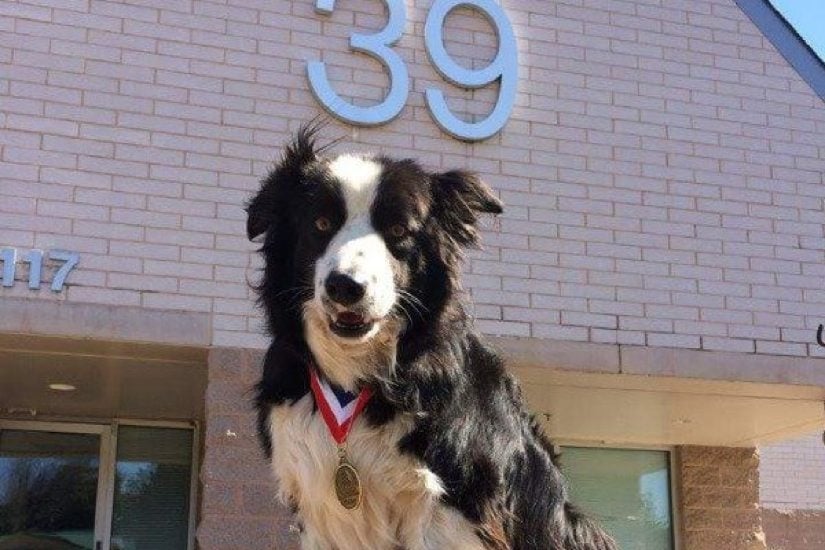
Fiedler, a search-and-rescue dog whose owner works at Fairfax County Fire Rescue Station 39 (North Point), has some big medical bills he needs to pay.

The dogsuffered a bad leg injury in training last week and needed surgery to repair a hind leg and associated ligament damage.

Fiedler specializes in human remains detection. Under the contract with the Federal Emergency Management Agency, handlers are responsible for costs associated with their dog, said Stephen Haines, who, along with Fiedler’s owner, Sally Dickenson, is a technician at Station 39.

Haines has set up a Go Fund Me page to raise money for Fiedler’s medical care.The surgery was successful and Fielder is expected to make a full recovery and return to duty, says Haines.

Wrote Haines on the fundraising page: “Fielder, a search-and-rescue K9 and my buddy, suffered a catastrophic injury during training on April 1st. He fell, hit a rock, and broke his leg, simultaneously disarticulating the joint. He may have to retire from searches.

His surgery was April 2nd and he is recovering. The bill for the operation will be around $5,000. I was hoping to help his owner with this expense if I could. This dog is a hero and has helped bring loved ones home many times, including several times for our military members. If you can help at all it would be appreciated, anything raised over this amount will be used for his rehab.”

Last year, Fielder was deployed to Oso, Wash., to look for mud slide victims. Fielder also went on a Department of Defense mission to Kyrgyzstan to help find a missing Americanairman’s remains following an aerial refueling tanker crash.

Photo: Fiedler/Courtesy Go Fund Me

The post Search-and-Rescue Dog With Reston Ties Needs Help appeared first on WTOP.

08 Apr 21:08

Prince William County community calendar, April 9-15, 2015 - Washington Post


Prince William County community calendar, April 9-15, 2015
Washington Post
Police security workshop The Prince William County Police Department hosts a workshop for faith-based organizations. 8:30 a.m.-noon. Montclair Tabernacle Church of God, 16120 Dumfries Rd., Dumfries. 703-670-8907. www.pwcgov.org. Free, reservations ...

and more »
08 Apr 21:07

Weems elementary wins education award in Manassas - PotomacLocal.com


PotomacLocal.com

Weems elementary wins education award in Manassas
PotomacLocal.com
Weems Elementary School in Manassas has been awarded the 2015 National Excellence in Urban Education award. According to a release, the criterion for the award includes rigorous curriculum, effective instruction, the ability to relate, and continuous ...

08 Apr 14:54

Oyster, The ‘Netflix For Books’, Aims To Take On Amazon With Launch Of E-Book Store

by Ashlee Kieler
Subscription e-book service Oyster launched a retail component Wednesday.

Subscription e-book service Oyster launched a retail component Wednesday.

When Oyster launched in 2013, it claimed to be the e-book version of Netflix, offering customers an all-you-can-read lending library of around 100,000 books for a monthly subscription of $9.95. A year and a half later, the company seems to have realized that a buffet of sometimes unheard of books isn’t exactly what consumers are looking for. So in an attempt to bring the latest and greatest titles to readers, the company now plans to secure its foothold in the e-book market with the launch of a retail component aimed to compete with Amazon, Apple and other online booksellers. 

New York-based Oyster announced the expansion Wednesday, saying it has inked deals to sell work from five of the largest book publishers including Hachette, HarperCollins, Macmillan, Penguin Random House, and Simon & Schuster.

The new retail store aims to allow consumers – including those without an Oyster subscription – to choose from what the company says is more than a million books, ranging in price from $9.99 to $14.99 per title.

“We know that readers want to see all of their options and access every book—subscription and retail—in one place,” Eric Stromberg, Oyster CEO, says in a statement. “With this launch, we’re pairing the best in subscription with the best in e-book retail to deliver a comprehensive offering for readers.”

Oyster’s move to include a retail option seemed inevitable from the start. In fact, fellow subscription-based operators like Scribd have offered books for retail for several years.

Shortly after the Oyster launched, questions began swirling as to whether or not consumers would find the need for a subscription book service that might not offer the newest and biggest literary titles.

The biggest roadblock for Oyster’s subscription service was – and continues to be – a lack of selection and variety.

According to Bloomberg, the service currently doesn’t offer any of the top 10 New York Times fiction best-sellers and has only two of the top 10 nonfiction best-sellers. Additionally, the company just recently gained access to the entire Harry Potter series.

Opening a retail function could prove to be a step in the right direction for Oyster and its subscription service. Already, the company has made strides outpacing those at the beginning of its subscription service by nabbing deals with Hachette and Random House – two publishers that still don’t currently offer titles through the Oyster’s subscription service.

Still, it remains to be seen whether or not Oyster’s rather low profile will be able to penetrate the stronghold Amazon currently has on the e-book market.

The Next Act for the ‘Netflix of Books’ Is Basically a Bookstore [Bloomberg]

08 Apr 14:50

HBO Now: Our Initial Hands-On Thoughts

by Chris Morran

IMG_0022Earlier today, HBO finally released its HBO Now standalone streaming service, and because we’d be remiss in not trying the service out for you, we gave it a shot.

Here are the most important things to keep in mind when deciding whether or not to consider HBO Now:

1. You Can Get It On Your TV Without Apple TV

While Apple TV is currently the only set-top streaming device authorized to bring HBO Now directly to your TV screen, we had no problem getting the stream running on the Consumerist Cave’s TV. Rather than use a mobile device, we accessed HBO Now through HBOnow.com, connected our laptop to the TV with an HDMI cord, mirrored the screens and changed the audio output on the computer to HDMI.

It wasn’t as crystal-clear as watching HBO from a pay-TV provider, but if you want to watch Silicon Valley on the big screen this Sunday, you don’t need an Apple TV or a cable subscription.

2. No Live Streaming

HBO has said since the service was announced that HBO Now would not offer live access to the premium network, but a number of reports have perpetuated the myth — especially in the wake of Sling’s announcement that it will carry live HBO access — that HBO Now would be a 1:1 replacement for the channel.

This probably won’t matter to many people, so long as HBO adds new content to HBO Now in a timely manner. If users have to wait too long for new episodes of Game of Thrones to be added, there will be very angry cord-cutters in King’s Landing.

We expect that, like HBO Go, HBO Now users can expect same-day posting of new episodes.

3. It’s Basically HBO Go

Speaking of HBO Go, anyone familiar with that service will not be surprised by anything they see here. The interface is nearly identical and we couldn’t find any differences in terms of available content. The library of HBO shows is there, as is the selection on non-HBO movies. Heck, even the “Late Night” content is included.

The only notable difference we encountered during our brief hands-on is the size of the in-browser player. If you’re watching HBO Now content on the HBOnow.com site, the player is much smaller than the one used in HBO Go. That said, both services allow you to go full-screen with a click.

4. Signing Up

We accessed HBO Now through iTunes. The app itself is free (so your kids can’t accidentally subscribe you to a $15/month plan just by knowing your password), but you’ll then have to provide some basic info for the purposes of registration.

It was painless, as such things go. We can’t comment on the Cablevision registration process as we didn’t go that route (because we don’t have Cablevision service).

In terms of accessing the service through the HBOnow.com website, users who registered through iTunes will just enter whatever e-mail address and password they used when they set the account up. Users who registered through Cablevision go through an authentication login process similar to the way HBO Go users login.

5. Cancellation

We haven’t cancelled the subscription yet, if only because we want to see how it holds up this weekend. However, the HBO Now terms confirm that subscriptions are sold on a month-to-month basis, so you can cancel whenever you want, though you won’t get any refund because you’ll continue to have access until the end of the month you’ve paid for.

You also can’t cancel your subscription through the HBO Now site; it has to be done through whichever provider sold you the subscription to begin with.

The Bottom Line

HBO Now is really exactly what most cord-cutters have been asking for since HBO Go launched — a version of that service that doesn’t require a pay-TV subscription.

What remains to be seen is how well the service will hold up under high demand. That test will come Sunday night when millions of people crash the Internet trying to watch the season premiere of Veep.

But considering that HBO doesn’t need to deal with those high-traffic concerns 99% of the time, the future of HBO Now will ultimately come down to whether or not all those millions of people who said they would pay for standalone HBO Go will part with $15/month for HBO Now.

08 Apr 14:47

Study: Which Commercial Diet Programs Are The Most Effective?

by Mary Beth Quirk

The world of commercial diet programs can be overwhelming, with this, that and the other company all flashing before-and-after photos and promising their regimens are the best. While we’ve all seen the “results not typical” disclaimer flash on the screen below weight-loss winners, how effective are these programs when it comes to really losing the weight and keeping it off?

Researchers publishing a study in the Annals of Internal Medicine looked into the efficacy of commercial diet programs, but found that beyond the popular Weight Watchers and Jenny Craig systems, there really wasn’t much evaluation of other programs’ long-term results available.

The study’s authors compared weight loss, how long people retained that weight loss and potential harms of weight-loss programs against a control of just being educated and receiving only printed materials or fewer than three sessions with a provider or behavioral counseling, among overweight and obese adults.

There were a total of 11 popular diet programs included in the results of 45 studies the researchers looked at, with Weight Watchers and Jenny Craig coming out on top of things like the Atkins Diet and Medifast. None of the diet companies were involved in carrying out the study.

After 12 months Weight Watchers participants had 2.6% greater weight loss than the control groups, while people on Jenny Craig’s system had at least 4.9% greater weight loss.

To put it another way, the researchers found that Weight Watchers dieters shed on average at least 8 pounds and kept it off for at least 12 months, while Jenny Craig participants lost at least 15 pounds and kept it off for a year as well.

“It’s a really important first step to reach,” even if it doesn’t meet patients’ expectations, study author Dr. Kimberly Gudzune, an internist and researcher at Johns Hopkins University’s medical school told the Associated Press.

Efficacy of Commercial Weight-Loss Programs: An Updated Systematic Review [Annals of Internal Medicine]
Weight Watchers, Jenny Craig get best marks in diet review [Associated Press]

08 Apr 14:47

NHTSA Advances Investigation Into Pedal Interference In Nissan Versa & Note, Adds Model Years

by Ashlee Kieler
A photo provided by NHTSA shows the area in which drivers' feet have become stuck. The arrow shows the actuator flap that interferes with the movement between the accelerator and brake.

A photo provided by NHTSA shows the area in which drivers’ feet have become stuck. The arrow shows the actuator flap that interferes with the movement between the accelerator and brake.

A years-long investigation into whether or not some 360,000 Nissan Versa and Note vehicles contain a defect that results in delayed brake application and unwanted acceleration gained momentum recently as the National Highway Traffic Safety Administration’s initial evaluation revealed enough issues to upgrade the scope and significance of the probe.

The preliminary investigation, which began last summer [PDF] and included model year 2012 to 2014 Nissan Versa hatchbacks, sedans and Note vehicles, was updated by investigators to an engineering analysis now covering only model year 2013 to 2015 Versa sedans and Note vehicles.

An engineering analysis is one step below a recall, and involves NHTSA investigators recreating the issue in a lab setting.

According to a notice [PDF] from NTHSA, investigators have received 11 complaints about the issue, including one that resulted in a crash with minor injuries.

A photo provided by NHTSA shows how a foot can become stuck because of a possible design flaw in the Nissan Versa and Note vehicles.

A photo provided by NHTSA shows how a foot can become stuck because of a possible design flaw in the Nissan Versa and Note vehicles.

As with the original probe, the upgraded investigation centers on allegations that the tunnel carpet cover trim panel (located near the vehicle’s pedals) can interfere with the driver’s ability to promptly release the accelerator and transition to the brake.

Additionally, NHTSA is now investigating the possibility that the HVAC relay actuator can also interfere with the driver’s ability to react quickly to apply the brakes.

When the agency first opened the probe in June 2014, it had received one complaint that alleged the driver’s foot became caught by the trim panel to the extent that he had to physically pull his leg to get the foot free from interference, nearly causing a crash.

Since then, NHTSA say it has received additional complaints surrounding the possible design flaw.

“The contact owns a 2014 Nissan Versa,” one complaint states. “While driving approximately 30 miles-per-hour, the contact’s foot became stuck when the accelerator pedal was depressed. The accelerator pedal was encased in plastic at the time of the failure. The failure recurred several times. The dealer stated that the vehicle was designed in that manner.”

“While driving 45 miles-per-hour, [the vehicle owner’s] foot became stuck preventing her from stopping the vehicle,” the complaint regarding a 2014 Versa states. “As a result, the contact crashed into the rear end of another vehicle. The contact sustained injuries to the right toe and scratches to the left shoulder.”

NHTSA reports that the updated scope of the investigation – which no longer includes the 2012 model year Versa – was initiated after regulators determined the model year 2015 Versa and Note vehicles to have the same panel design and actuator placement as vehicles involved in the consumer complaints.

Nissan tells Reuters that it is also analyzing the issue and cooperating with NTHSA.

08 Apr 14:46

Walmart Joins List Of Retailers Removing All Blue Bell Ice Cream Products From Shelves

by Ashlee Kieler

Yesterday, we reported that three major retailers removed Blue Bell Creameries products from shelves out of an abundance of caution following a link between the products and an outbreak of listeriosis. Now, the largest retailer in the country – Walmart – is following suit.

The Killeen Daily Herald reports that Walmart has joined the growing list of retailers such as H-E-B, Kroger and Sam’s Club pulling the ice cream products from shelves following recalls of several Blue Bell items.

A spokesperson for Walmart confirmed that the products had been removed, but says the company is working with Blue Bell to restock supplies. However, there is no timeline for when that might occur.

Walmart owns Sam’s Club, so it would make sense the larger retailer would eventually remove the products.

Grocers, now also including Albertsons and Tom Thumb, began pulling the ice cream products over the weekend after Blue Bell announced it would close a Broken Arrow, OK, plant linked to the outbreak of listeriosis.

A spokesperson for Blue Bell says the company understands that retailers chose to remove products out of an abundance of caution to protect consumers, but that many of the products being withheld haven’t been linked to the Oklahoma plant.

In addition to stores voluntarily pulling all or some of their Blue Bell ice cream products, the Centers for Disease Control and Prevention issued a recommendation that consumers not eat any products produced at the temporarily closed plant.

Products made at the facility can be identified by a code at the bottom of the container. If the letters “O,” “P,” “Q,” “R,” “S,” or “T” appear as the final character in the date code, then it would have been produced in the Oklahoma plant.

Consumers should check the bottom of their ice cream containers for a code that would link their product to a specific Blue Bell Plant. [CDC]

Consumers should check the bottom of their ice cream containers for a code that would link their product to a specific Blue Bell Plant. [CDC]

For example, if a Blue Bell product is labeled “021217S,” it was produced at the Oklahoma facility because the letter “S” follows the “code date.”

“Consumers should check their freezers for any of these products and throw them away, even if some of the product has been eaten and no one has become ill,” the CDC says. “Institutions and retailers should also carefully check their freezers or inventory for any of these products. These products can have a shelf life of up to 2 years.”

Blue Bell previously recalled several ice cream items in mid-March after tests linked the products to an outbreak of listeriosis that sickened five people in Kansas, three of whom later died.

A joint investigation found that certain Blue Bell brand ice cream products are the likely source of some or all of the people’s illnesses.

The five people who became ill in Kansas were confirmed to be infected with one of four strains of Listeria monocytogenes. All five people – older in age – were hospitalized at the same hospital for unrelated problems before developing invasive listeriosis, suggesting they were infected at the hospital, the CDC reports.

Investigators say the illnesses began between January 2014 and January 2015. Although some of the illnesses began more than a year ago, the listeria cluster identified earlier this month shows that some of the infections are indistinguishable, meaning they are likely from the same source.

Of the patients infected, four consumed milkshakes made with a single serving Blue Bell brand ice cream called Scoops while they were in the hospital.

Recalled products included three-ounce chocolate, strawberry and vanilla ice cream cups with tab lids served in institutional and food service areas, such as hospitals. The original recall also included widely sold products such as Scoops, Chocolate Chip Country Cookies, Great Divide Bars, Sour Pop Green Apple Bars, Cotton Candy Bars, Vanilla Stick Slices, Almond Bars and No Sugar Added Moo Bars.

Wal-Mart stores, commissaries follow H-E-B, pull Blue Bell from shelves [Killeen Daily Herald]

08 Apr 14:46

Here’s How You Get A Fast Food Chain To Foot The Entire Bill For Your Wedding

by Mary Beth Quirk

Want a fast food chain to sponsor your wedding, provide gifts and generally shell out a bunch of cash so you don’t have to? It’s simple! Just be born with one half of a chain’s name, meet and fall in love with someone who has the other half and voila! You’re getting hitched for free, courtesy of Burger King.

A couple with the last names of “Burger” and “King” in Illinois have been the darlings of the Internet after their engagement announcement last week for the “Burger-King” wedding hit the news.

Yesterday the brand added another proposal into the mix — to pay the expenses and provide gifts for the Illinois couple’s wedding on July 17, reports The State Journal-Register.

The twosome flipped the order of their last names for the engagement announcement (apparently the woman’s last name usually leads, for whatever old-fashioned reason), as they’ve been known as Burger-King since they were in the fifth grade together. After many twists and turns, they ended up falling in love and deciding to make the Burger-King thing official.

Their engagement photo featured the couple in front of their local Burger King, taking full advantage of the theme, which then caught the eye of news outlets all over the world.

The couple had already tried to reach out to Burger King, but once The State Journal-Register had run a column on them and reached out to the company’s media relations, the ball started to really roll. On Monday, Burger King surprised the couple with the news via Skype.

They were surprised, to say the least: “We were just blown away,” he said. “We were shaking,” she added.

The company is providing party favors, gift bags, Mason Jars and Burger King crowns, all personalized for the couple’s wedding. And then there’s the paying for the whole wedding part.

“When we heard about the happy, Burger-King couple, we felt an overwhelming urge to celebrate their upcoming marriage,” a Burger King Brand spokesman told the State -Journal Register. “On so many levels it felt like fate; they found each other and their story found us.”

“And now we hope we’ve swept them off their feet. All we ask in return is that they live happily ever after,” he added.

Burger King picking up tab for Burger-King wedding [The State Journal-Register]

08 Apr 01:42

How to Get Your House to Not Smell Like Your Pets

Even though you love your animals, pet ownership comes with unique challenges such as keeping your home smelling fresh and clean--and not like a barnyard. No matter how well you care and groom your animals, sometimes they can present an odor that may not convey your efforts. Regardless of whether they soil in the house or have an extra stinky coat, there are steps you can take to reduce and even eliminate pet odor.

Steps

Using baking soda

  1. Stock up on baking soda. A natural odor absorber, baking soda is man’s best friend for removing general pet odors. Not only can it be used as a natural air freshener (leave an open box on the counter), it can remove odors from fabrics, furniture and even inside litter boxes.

    Get Your House to Not Smell Like Your Pets Step 1 Version 3.jpg
    • Check fabric compatibility before using baking soda. Generally baking soda should not stain or hurt furniture or rug fabrics, but it’s always best to be safe rather than sorry. Sprinkle a little fresh baking soda in an inconspicuous area of your furniture or room and then vacuum or wipe clean.

      Get Your House to Not Smell Like Your Pets Step 1Bullet1 Version 2.jpg
    • Sprinkle baking soda on animal urine. As soon as possible, soak up urine with a white towel and sprinkle baking soda over the wet area. Allow to dry and then pat area gently with a clean towel. Vacuum the remainder once the area has dried completely.

      Get Your House to Not Smell Like Your Pets Step 1Bullet2 Version 2.jpg
    • Add baking soda to litter. You may need a few boxes of baking soda for a litter box. Sprinkle a layer of baking soda before adding litter to the box. Then, as long as your cat is not overly finicky about the litter, sprinkle another box of baking soda on top of the litter. This should absorb and defuse any additional odor.
  2. Make an odor neutralizing and fabric spray. This spray does not have any scent but it will neutralize odors.
    • Place 1 teaspoon of baking soda and 1 tablespoon of white vinegar into a spray bottle (preferably with a fine mist).

      Get Your House to Not Smell Like Your Pets Step 2Bullet1 Version 2.jpg
    • After the foaming action stops, add 2 cups water, then shake well.

      Get Your House to Not Smell Like Your Pets Step 2Bullet2 Version 2.jpg
    • Spritz the air. Also spritz any water safe fabric/carpet.

      Get Your House to Not Smell Like Your Pets Step 2Bullet3 Version 2.jpg

Using a neutralizing odor remover

  1. Use a neutralizing odor remover to eliminate odor and prevent the animal from soiling the area again. Although sprays and nice smelling candles may help mask animal odor, the only way to reduce the frequency or incidence is to eliminate the desire. Animals will mark or urinate in the same area again and again because they can smell their original scent. If you use a natural ionizer or neutralizer you will reduce the likelihood that the animal will revisit the area and take steps toward removing the odor.
    • Remove any trace of animal waste from the area. Don't just dump neutralizer on the furniture or carpet--you need to first ensure the animal waste has been completely removed (or as much as you can remove). Use fresh clean water and paper towels to clean the area.

      Get Your House to Not Smell Like Your Pets Step 3Bullet1 Version 2.jpg
    • Consider using a wet vac or extractor to ensure all trace of urine or waste is gone. Don’t go over the area with an in-home steam cleaner. This could just solidify the smell into the carpet or furniture instead.

      Get Your House to Not Smell Like Your Pets Step 3Bullet2 Version 2.jpg
    • Check the carpet pad or underneath the furniture. Pet urine will go beyond the surface, typically permeating the pad and any other material underneath. You’ll want to pull back the carpet and expose not only the pad but possibly the subfloor for cleaning.

      Get Your House to Not Smell Like Your Pets Step 3Bullet3 Version 2.jpg
  2. Use a high quality pet specific neutralizer. Purchase a product that is intended to remove animal odor specifically. This could include not only urine but other waste and vomit. Follow the directions on the bottle specifically in order to completely remove the odor.

    Get Your House to Not Smell Like Your Pets Step 4 Version 3.jpg

Using filters

  1. Use a HEPA filter and change the furnace and A/C filters frequently. Airborne pet odor can get trapped in your air filters and recirculate the stench on a continuous basis. In fact some pet owners become so used to the way their home smells, they may not realize that it wreaks of stinky dog or cat (or any other animal you own).

    Get Your House to Not Smell Like Your Pets Step 5 Version 3.jpg
    • Purchase an HEPA air filtration system to remove foul pet odors. Generally these filtration systems can cost as little as $100 but can run into the thousands depending on the size and capabilities. A small air purification system can remove odor from several rooms and requires the same general maintenance as a regular HVAC system (filter changes and periodic maintenance).
    • Change or clean your home's HVAC filters on a monthly basis. Not only will changing or cleaning your filters improve your HVAC system’s lifespan (and save money) doing so will help remove offending airborne odors.

Cleaning

  1. Run pet dishes in the dishwasher or clean with hot soapy water. Sanitize your pet’s dishes the same way you sanitize dishes for your family. Make sure the pet’s water bowl is also always clean and filled with fresh drinking water.

    Get Your House to Not Smell Like Your Pets Step 7 Version 2.jpg
  2. Wash toys in the washing machine if possible. If your pet loves stuffed animals you should be able to wash toys without damaging them. Inspect each toy before placing it in the washing machine for rips, which could allow it to leak stuffing or squeakers into your machine. Also, a ripped toy could pose a choking hazard for your pet and should be discarded. If you don't think his/her toys are machine washable, try gently washing them with the same waterless pet soap you use on him/her in between baths.

    Get Your House to Not Smell Like Your Pets Step 8 Version 2.jpg
  3. Wash bedding and areas within the home where he/she likes to lay or sit. Some pets love to lay in a certain area of the room or near a specific piece of furniture. Those areas should be washed and cleaned on a regular basis to remove pet odor. Use surface appropriate wash to ensure you can clean the surface but also won’t damage it.

    Get Your House to Not Smell Like Your Pets Step 9 Version 2.jpg
  4. Clean the area and object associated with the pet odor. Clean the animal’s toys, dishes and area at least once a week. In addition to squirting a little non toxic, fresh smelling spray on bedding and toys, give pet’s area a good scrubbing every week.

    Get Your House to Not Smell Like Your Pets Step 6.jpg


Tips

  • Paint the house. While drastic, using an enzymatic cleaner then repainting should completely remove offensive odours.
  • Hide fresh smelling dryer sheets inside pet’s bedding. Make sure that your pet cannot get to the dryer sheets so unzip his/her bed cover and slide two or three sheets in between washing.
  • Light scented candles or burn potpourri when you are home.
  • Use scented carpet freshener every time you vacuum your rugs (which should be frequently).
  • Visit the groomer or bathe your pets at least once a week. Consider using scented shampoo of your pet tolerates it. Also, waterless pet mousse provides a gentle way to remove odors from your pet in between baths.

Warnings

  • Avoid using harsh or toxic cleaners around pet areas. Harsh chemicals are not only poisonous they can create an eye irritant for your animal.

Related wikiHows

Sources and Citations

06 Apr 20:41

Sam’s Club, Kroger & H-E-B Remove All Blue Bell Ice Cream Products Amid Contamination Concerns

by Ashlee Kieler
(Steve)

(Steve)

Two weeks after Blue Bell Creameries expanded the recall of products linked to an outbreak of listeriosis that resulted in three deaths, several major grocery chains have taken things a step farther by removing all of the company’s products from the ice cream aisle.

The Minneapolis Star Tribune reports that Sam’s Club, Kroger and H-E-B stores pulled Blue Bell ice cream products out of an abundance of caution over the weekend.

The product removal comes just days after Blue Bell announced it would temporarily close its Broken Arrow, OK, production plant, which was previously connected to contaminated ice cream.

“We are taking this step out of an abundance of caution to ensure that we are doing everything possible to provide our consumers with safe products and to preserve the trust we have built with them and their families for more than a century,” the company said in a statement about the plant closing. “The Broken Arrow operations will be suspended so that our team of expert consultants can conduct a careful and complete examination to determine the exact cause of the contamination.”

Representatives for H-E-B say the decision to remove the treats from stores was a “precautionary measure due to food safety concerns.” However, the chain says it will work with Blue Bell to refill its ice cream offerings.

A spokesman for Blue Bell tells the Star Tribune that the company is aware of the grocers’ decision to pull products and respected the action.

Blue Bell previously recalled several ice cream items in mid-March after tests linked the products to an outbreak of listeriosis that sickened five people in Kansas, three of whom later died.

A joint investigation found that certain Blue Bell brand ice cream products are the likely source of some or all of the people’s illnesses.

The five people who became ill in Kansas were confirmed to be infected with one of four strains of Listeria monocytogenes. All five people – older in age – were hospitalized at the same hospital for unrelated problems before developing invasive listeriosis, suggesting they were infected at the hospital, the CDC reports.

Investigators say the illnesses began between January 2014 and January 2015. Although some of the illnesses began more than a year ago, the listeria cluster identified earlier this month shows that some of the infections are indistinguishable, meaning they are likely from the same source.

Of the patients infected, four consumed milkshakes made with a single serving Blue Bell brand ice cream called Scoops while they were in the hospital.

Recalled products included three-ounce chocolate, strawberry and vanilla ice cream cups with tab lids served in institutional and food service areas, such as hospitals. The original recall also included widely sold products such as Scoops, Chocolate Chip Country Cookies, Great Divide Bars, Sour Pop Green Apple Bars, Cotton Candy Bars, Vanilla Stick Slices, Almond Bars and No Sugar Added Moo Bars.

Sam’s Club, Kroger join H-E-B in pulling all Blue Bell Ice Cream products from their shelves [The Minneapolis Star Tribune]

06 Apr 20:40

NHSTA Complaints Show Rusted Floorboards In Older Nissan Altima’s Create Fred Flintstone Cars

by Ashlee Kieler
The owner of a 2002 Nissan Altima submitted photos of the vehicle's rusted-out floorboards to NTHSA.

The owner of a 2002 Nissan Altima submitted photos of the vehicle’s rusted-out floorboards to NTHSA.

The only time you want to see someone driving down the road with their feet hanging out of the bottom of their car is on an episode of The Flintstones. But for hundreds of Nissan Altima owners that scene could very well become reality as they continue to report that rusted-out floorboards in their vehicles put their toes entirely too close to the road.

NBC News reports that consumers have submitted more than 400 complaints to the National Highway Traffic Safety Administration regarding rusted-out floorboards in model year 2002 to 2006 Nissan Altima sedans, but have so far received little help from the agency or car manufacturer.

“This is not safe,” the owner of a 2005 Altima says. “I drive every day for a living. This is very nerve-racking for me to be driving now.”

Many of the consumer complaints posted to NHTSA’s database describe significant floorboard issues in the Altima vehicles.

“The front passenger floor board is rushed through with a hole approximately 10 inches by 20 inches,” the owner of a 2004 Altima writes in a complaint to the agency. “I took the car to [a local Nissan dealer] for an inspection. They states that these issues are not covered by warranty, recall or goodwill campaign.”

Other owners describe seeing the rust issue in a wide range of older Altimas, signaling what they believe is a possible manufacturer’s defect.

“Excessive premature rust on front passenger floor pan,” another owner of a 2004 Altima writes. “About 5″X10″ in size and consistent with most other Nissan Altima rust complaints for cars of similar age. Since noticing the ruse I have looked at dozens of similar Nissan Altimas in store parking lots all with the same premature rust pattern. It appears that Nissan designed the floor pans with a drain plug which allows water penetration above the floor pan where it cases rust… This is obviously a manufacturers defect and the rust in this one area around the drain plugs is consisted with the lack of rust everywhere else.”

Although some of the vehicles with rusted-out floorboards are located in states that use road salt – a component that has been linked to rusted vehicles – mechanics who spoke with NBC News say the pattern of rust could indeed be a design flaw that prevents water from draining, causing the floor pans to rot from the inside out.

For its part, Nissan maintains that corrosion in older vehicles isn’t all that unusual.

“This issue is not considered a safety defect by Nissan or the government agency that administers safety recalls,” the company said in a statement to NBC News.

NBC News reports that one injury has been submitted to NHTSA regarding the issue, but that mechanics warn more could follow if something isn’t done to address the rusting floorboards.

Because the manufacturer doesn’t consider the issue a safety defect and most of the cars are out of the company’s warranty period, consumers are left to foot the bill for repairs, which can cost thousands of dollars.

The owner of a 2002 Altima writes in a complaint to NHTSA that a local auto repair shop quoted repairs to both sides of the vehicle at around $3,200.

“NHTSA needs to force Nissan into a recall as it is a design flaw and a safety issue,” the consumer writes. “People are driving around in cars not knowing that the floor below them is rusting all the way through.”

Nissan Drivers Gripe About Rusty Floor Holes in Older Altimas [NBC News]

06 Apr 20:39

Judge Rules: Woman Can Serve Elusive Husband Divorce Papers Via Facebook Message

by Mary Beth Quirk

The times, they are completely and totally changing: Used to be serving someone with divorce papers required some sort of face-to-face interaction, which can be difficult if the other party gets squirrelly and tries to avoid the encounter. But now it seems repeatedly pinging someone’s Facebook inbox will do just as well.

Manhattan Supreme Court Justice Matthew Cooper ruled that a Brooklyn woman can use social media to make sure her former beloved knows he’s getting the ax, reports the New York Daily News.

He ruled that she “is granted permission serve defendant with the divorce summons using a private message through Facebook,” with the help of her lawyer through her account. with her lawyer messaging Victor Sena Blood-Dzraku through her account, Cooper wrote.

“This transmittal shall be repeated by plaintiff’s attorney to defendant once a week for three consecutive weeks or until acknowledged” by her husband, who seems to have no fixed address and isn’t the easiest to nail down.

He’s only been keeping in touch with his wife by phone and Facebook, and apparently doesn’t want a divorce.

The “last address plaintiff has for defendant is an apartment that he vacated in 2011,” the judge noted, adding that the woman “has spoken with defendant by telephone on occasion and he has told her that he has no fixed address and no place of employment. He has also refused to make himself available to be served with divorce papers.”

Even the post office had no forwarding address for him, he has no billing address listed on his prepaid cell phone account and he might as well not exist to the Department of Motor Vehicles.

He got his first divorce papers message last week.

“So far, he hasn’t responded,” the woman’s lawyer says.

EXCLUSIVE: Judge says Brooklyn woman can use Facebook to serve divorce papers [New York Daily News]

06 Apr 20:06

Pet of the Week: Percy Ann

by Rachel Nania

WASHINGTON — Meet Percy Ann, an American bulldog mix who cannot wait to find her new home.

At 2 years old, this beautiful girl is finished with her “puppy” phase. However, she still has plenty of energy to burn. Percy Ann loves to play with her humans,  take nice long walks – maybe even a run – and get her nose to the ground to check out her surroundings.  But she’s also up for a nice afternoon on the couch.

Percy Ann has a beautiful white, medium-length coat and green/hazel eyes, making her a real looker.  As with all WARL dogs,  Percy Ann has been spayed, microchipped and is up-to-date on her vaccinations — she just needs a forever home.  Stop by WARL today and meet Percy Ann!

About WARL: Founded in 1914, the Washington Animal Rescue League is the oldest animal shelter in Washington D.C. Its mission includes rescuing, rehabilitating and finding homes for animals who have no where else to go. The League also supports animals through affordable veterinary care, community outreach and education. Learn more about the Washington Animal Rescue League at www.warl.org.

If you are thinking of adding a furry friend to your family, check out these other great shelters in the area:

Maryland

Humane Society of Charles County
(301) 645-8181
71 Industrial Park Dr. PO Box 1015 Waldorf, Md. 20604

Humane Society of Charles County offers a low cost spay/neuter program to the public. Please call or visit our website for more information. The shelter is also looking for more foster parents to help its animals.

Prince George’s County Humane Society
(301) 262-5625
P.O. Box 925 Bowie, Md. 20718
Prince George’s County Humane Society is also looking for foster parents. For more information, contact the organization.

PAW – Partnership for Animal Welfare
(301) 572-4729
P.O. Box 1074 Greenbelt, Md. 20768

Paws Animal Kingdom
(301) 920-2318
P.O. Box 11531 Takoma Park, Md. 20912

Montgomery County Humane Society
(240) 773-5960
14645 Rothgeb Dr. Rockville, Md. 20850

The Animal Welfare League of Montgomery County
(301) 740-2511
12 Park Ave. Gaithersburg, Md. 20877

D.C.

Washington Humane Society
(202) 576-6664
1201 New York Ave. NE 20002

ASAP – Alliance for Stray Animals and People
(202) 331-1330
P.O. Box 65438 Washington, D.C. 20035-5438

Metropolitan Guinea Pig Rescue
(202) 575-2210
Approved applicants may attend monthly adoption meets that are usually held at the house of a volunteer in either Northern Virginia or Southern Maryland.

Lucky Dog Animal Rescue
(202) 741-5428
Lucky Dog is a foster home organization and does not run a dedicated housing facility.

Northern Virginia

A Forever Home
(703) 961-8690
A Forever-Home is a non-profit dog rescue group that operates in the Northern Virginia/Washington Metropolitan area.

Lab Rescue of L.R.C.P.
(301) 299-6756
Lab Rescue of the LRCP is a volunteer driven, non-profit organization that rescues, fosters and places homeless, abused, and/or abandoned Labrador Retrievers.

FOHA – Friends of Homeless Animals
(703) 385-0224
All visitors must speak to a Friends representative prior to receiving directions to their shelter location.

SPCA of Northern Virginia
P.O. Box 100220 Arlington, Va. 22210-3220
Animal Welfare League of Alexandria
(703) 746-4774
4101 Eisenhower Ave. Alexandria, Va. 22304

Animal Welfare League of Arlington
(703) 931-9241
2650 S. Arlington Mill Dr. Arlington, Va.

Lost Dog and Cat Rescue Foundation
(703) 295-3647
P.O. Box 223953 Chantilly, Va. 20153

HART – Homeless Animal Rescue Team
(703) 691-HART
P.O. Box 7261 Fairfax Station, Va. 22039-7261

King Street Cats Rescue and Adoption
(703) 231-7199
25 Dove St. Alexandria, Va. 22314

The post Pet of the Week: Percy Ann appeared first on WTOP.

05 Apr 23:23

Prince William County community calendar, April 5-11, 2015 - Washington Post


Prince William County community calendar, April 5-11, 2015
Washington Post
Dale City Farmers Market 8 a.m.-1 p.m. Dale City Commuter Lot, (behind Center Plaza Shopping Center), Dale Boulevard. 703-670-7112, Ext. 227. www.pwcparks.org. Free. Easter Egg Hunt Hunt for eggs and learn about the history of the Easter egg.

and more »
04 Apr 15:33

Why Is Food That Doesn’t Contain Any Grains Labeled ‘Gluten-Free’?

by Laura Northrup

In the last few years, you may have noticed two words appearing on the front of food packages in stores and in your own cupboard. “Gluten-Free,” they brag. That’s nice, but gluten is a substance found in wheat and some other cereal grains. Why do foods that never would have included wheat in the first place boast on their labels about their lack of gluten?

The answer is “both.” The reasons why people seek out gluten-free coffee and gluten-free canned fruit have to do with the facilities that our food comes from, and the reasons why people chose to avoid gluten in the first place.

Why does gluten matter?

Image courtesy of bunchofpants

Let’s start with what gluten is. Gluten is a protein present in wheat and other grains. You can separate gluten from wheat and create a meaty vegan dish called seitan, and it’s also added to some packaged foods to stabilize them. The main purpose of gluten on this planet is to make bread fluffy and delicious. When flour made from these grains is mixed with yeast and liquid, carbon dioxide bubbles form in the dough, and gluten forms the web of protein that traps the bubbles there.

There are several categories of people who seek out gluten-free food. Note that these categories are different from people who have an allergy to wheat or to grains: an allergy is a different sort of reaction that can be instantly fatal and involves the immune system.

People with celiac disease. The prevalence of this disease varies by country and even by ethnicity, but current estimates are that about 3 million people in the United States have it. People who have celiac disease have strong digestive distress when they eat food containing gluten, and can even react to trace amounts. When they eat gluten, their immune systems turn on their bodies but only attacks the lining of the small intestine. Celiac disease is diagnosed through various methods, including blood and genetic tests, and a biopsy of the small intestine to confirm that diagnosis.

People who are sensitive to gluten. They have digestive trouble or other problems when they eat food containing gluten, but they don’t meet the diagnostic criteria for celiac disease. This is a controversial category, even among gastroenterologists. It’s possible that people who are gluten-sensitive and feel better after eliminating grains from their diet are actually sensitive to carbohydrates called fermantable oligo-saccharides, di-saccharides, mono-saccharides and polyols, or FODMAPs. Wheat contains FODMAPs, but so do other foods like cow’s milk, onions, and blueberries. Unfortunately, food labels that say “FODMAP-free” are not yet popular.

People who think that eliminating gluten from their diets has mystical weight loss powers. Yes, we all know at least one person like this, and while their existence does hurt the reputation of gluten-avoiders, they help create more demand for gluten-free foods. Some people also might try out a gluten-free diet while trying to narrow down the cause of their illness.

The FDA Steps In

Image courtesy of L. Northrup

While diagnosis of celiac disease and of gluten sensitivity has been increasing, the disease wasn’t invented just in the last few years. Yet until 2013, there were no set rules for how much gluten a food could contain before manufacturers could slap a “Gluten-free” label on it. If people with celiac disease couldn’t rely on product labeling, why bother?

The FDA’s regulations went into effect in 2014 and define terms like “gluten-free” as well as other ways that manufacturers might phrase it, such as “no gluten,” “free of gluten,” or “without gluten.” To get this label, a food item must have fewer than 20 parts per million of gluten present. While they might contain exactly zero molecules of gluten, that’s the lowest amount that current methods are able to detect.

Cross-Contamination

Image courtesy of Paula S

People who don’t want to eat gluten can just go to the store and buy stuff that doesn’t have wheat in it, then, right? It’s too bad that they can’t eat a nice loaf of bread or order a pizza, but why does everything need “Gluten-Free” plastered on it?

Sometimes a gluten-free label is extra reassurance, such as for distilled spirits, which theoretically should contain no gluten or other proteins at all. There isn’t any good reason why a container of mashed potatoes, for example, would contain gluten.

Yet gluten and its derivatives are used as food additives and stabilizers. Making everything from scratch isn’t necessarily a protection from gluten, either: it’s possible for whole ingredients like oats and even fruit and vegetables to have some gluten. When our food is processed and packaged in places that also processes food made from gluten-containing grains. Cross-contamination is when a potential allergen that was processed on the same equipment or in a neighboring part of the factory contaminates a product that’s supposed to be free of that allergen.

The FDA “gluten-free” label sets the threshold for how much gluten a product can contain very low, as low as current testing methods are able to detect. It means there’s a consistent rule for what “gluten-free” means, which in turn has made the label more common.

The Ingredients of Your Ingredients

Normally, you’d assume that ingredients like cabbage, mustard, and vinegar would be gluten-free. Not so fast, person who eats food and makes assumptions! A condiment-maker explained to Consumerist that what seems straightforward enough may not be, and adding something as simple as mustard powder can add gluten.

“While mustard seeds are gluten-free, some commercial brands of mustard use a mustard powder that contains wheat,” explains Julie Busha, creator of Slawsa, a spicy cabbage-based condiment that has the words “Gluten-Free” on the label. The average person might not know this, but the savvy person on a gluten-free diet and food manufacturers would. “Those who are highly sensitive to gluten really need to watch which mustard is being used.”

That would make it important to label food like salad dressings and marinades that might contain gluten or wheat derivatives as gluten-free, too.

wegmans_bbq

Or even snack foods that one would think are inherently gluten-free.

kettle_potatoes

Sometimes a food manufacturer decides not to explicitly label their products as gluten-free, but markets them explicitly to the gluten-free community anyway. That’s the case for Barnie’s Coffee Kitchen, which sells coffee concentrate packets that can be used to make instant hot or iced coffee that is gluten-free. The company doesn’t label their products yet, but does plan to label them as gluten and allergen-free in the future. Instead, they’ve been reaching out at events for consumers who avoid gluten or other allergens.

“Based on consumer research we have recently conducted, we discovered there is confusion about coffee being gluten and allergen free,” Sonja Hardy, SVP of Marketing and Strategic Brand Relations explained. “Some other coffee companies do have additives in their coffee products, so many consumers are wary.”

Making life easier for shoppers

Image courtesy of Robert Couse-Baker

In the end, this is about the health and comfort of the people who have to avoid gluten. It’s really easy to laugh at a box of gluten-free cereal that’s made from rice, but a lot less funny if that product were cross-contaminated and made someone you care about sick. People with celiac disease who don’t avoid gluten don’t just have to deal with tummy aches: they risk malnutrition if they eat gluten, and even a higher risk of some gastrointestinal cancers.

Having the label simplifies shopping for people new to gluten avoidance, and for people who have to cook for them without having a deep knowledge of food sources and cross-contamination risk. “Those just starting out or those
wishing to purchase products for gluten-free family and friends would find the info helpful,” one gluten-free reader explained to Consumerist over e-mail.

“No matter how obvious it seems to some of us, [some people are] still
going to question whether or not the banana they’re eating has gluten or
not,” gluten-free living expert Danna Korn points out.

That’s what it should be about, isn’t it? Simplifying food labels in this way means not causing physical pain and potential long-term health consequences for friends, relatives, and other guests who might follow a gluten-free diet.

04 Apr 15:31

CFPB Releases Mortgage Toolkit Aimed At Making The Home Buying Process Easier

by Ashlee Kieler

In January, the Consumer Financial Protection Bureau released a report suggesting that many homebuyers spend more time looking for a TV than shopping around for the right mortgage. In an attempt to make things a little less daunting for prospective borrowers, the Bureau today released the “Know Before You Owe” mortgage shopping toolkit.

The CFPB’s latest mortgage-related initiative is meant to guide consumers through the entire home buying process by giving them access to new Loan Estimate and Closing Disclosure forms that lenders will soon be required to use.

The toolkit [PDF] includes a step-by-step template with interactive worksheets and checklists to assist consumers in understanding the nature and costs of real estate settlement services, defining what affordable means to them, and finding the best mortgage for their budget.

The CFPB's electronic version of its Know Before You Owe Mortgage Toolkit includes interactive forms to help consumer find the right mortgage for them.  [Click to Enlarge]

The CFPB’s electronic version of its Know Before You Owe Mortgage Toolkit includes interactive forms to help consumer find the right mortgage for them. [Click to Enlarge]

The “Know Before You Owe” toolkit is intended to replace an existing booklet currently provided to mortgage applicants by potential creditors.

Creditors must provide the toolkit to mortgage applicants as a part of the application process, and other industry participants, including real estate professionals, are encouraged to provide it to potential homebuyers.

In addition to the physical toolkit, the CFPB is making an electronic version available so that consumers can save and print their progress as they work though the mortgage process.

The CFPB says it chose to make the toolkit available well in advance of the August release of new disclosure forms to ensure that the mortgage industry is in compliance with new rules.

Previously, the Bureau released an Owning A Home Toolkit to help empower and inform consumers during mortgage shopping.

That guide, which includes information on loan options, terminology and costs, takes the borrower through the entire home-buying process.

A key feature of the new program is the Rate Checker tool, which sets out to help consumers understand what interest rates may be available to them by using the same underwriting variables that lenders use on their internal rate sheets.

The data behind the Rate Checker is updated daily and includes information from large banks, regional banks, and credit unions and covers about 80% of the mortgage market.

CFPB Announces New ‘Know Before You Owe’ Mortgage Shopping Toolkit [Consumer Financial Protection Bureau]