Shared posts

06 Apr 01:12

‘Miracle dog’ survives being hit by car, clubbed, abandoned

by wtopstaff

SPOKANE, Wash. (AP) — The stray dog was hit by a car, clubbed in the head and left for dead in a ditch in Washington state. Days later, the 1-year-old bully breed mix showed up sickly and covered in dirt at a nearby farm.

Now, the dog that defied death is recovering with the help of good Samaritans and veterinarians at Washington State University.

The dog used to roam the streets getting scraps of food from people in Moses Lake, a farm town about 100 miles west of Spokane.

About a month ago, she was struck by a car. Then things got worse: Someone cracked her in the head with a hammer and placed her in a box in a farm field.

But the dog somehow survived and was discovered at a nearby farm with a dislocated jaw, leg injuries and a caved-in sinus cavity.

The wounds helped veterinarians piece together what happened, including the hammer blow.

“I’m assuming that the person who did this meant to put her out of her misery,” said Sara Mellado, who learned about the dog’s plight on Facebook and took the animal into her Moses Lake home.

She named the dog Theia.

“Considering everything that she’s been through, she’s incredibly gentle and loving,” Mellado told The Associated Press. “She’s a true miracle dog, and she deserves a good life.”

Theia is receiving care at WSU’s Veterinary Teaching Hospital in Pullman.

A CT scan of her skull revealed a condition that constricts the nasal passages, restricting air flow into the lungs, said veterinary resident Andrea Sundholm, who’s assisting with Theia’s treatment. It was caused by multiple nasal bone fractures.

When Theia tries to draw air in through her nose, she’s forced to open her mouth to breathe instead. But with a dislocated jaw, that is challenging as well.

Theia’s jaw is healing on its own, but the nasal-bone fractures have caused lasting problems, Sundholm said. Fixing that will require surgery to insert a stent, she said.

The veterinary hospital’s Good Samaritan Fund awarded $700 to help pay for Theia’s early treatment.

Mellado has raised another $10,000 for the surgery through a crowdfunding website, and is planning to call WSU to schedule the procedure.

The university said despite her injuries, Theia is friendly and likes to kiss people’s cheeks.

Mellado said she has been deluged with calls from people seeking to help. Theia is staying with Mellado’s family until they find her a permanent home.

“She’s a puppy,” Mellado said. “She’s outgoing, lovable, up for meeting new people.”

The post ‘Miracle dog’ survives being hit by car, clubbed, abandoned appeared first on WTOP.

06 Apr 01:12

Arizona recycling truck driver saves kitten from the trash

by wtopstaff

PEORIA, Ariz. (AP) — A recycling truck driver in suburban Phoenix is being credited with saving a kitten from the trash.

Angelo Almendarez was collecting containers along his Peoria route Friday when he heard a strange sound coming from the back of his truck — a kitten’s meow.

A city spokeswoman says the kitten is a male orange tabby estimated to be less than 3 weeks old.

Phoenix TV station KPHO reports the kitten has been adopted by an employee of Peoria’s Streets Division.

This isn’t Almendarez’s first rescue. He recently saved a black kitten from the same predicament.

___

Information from: KPHO-TV, http://www.kpho.com/

The post Arizona recycling truck driver saves kitten from the trash appeared first on WTOP.

06 Apr 00:42

‘Miracle dog’ survives being hit by car, clubbed, abandoned

by wtopstaff

SPOKANE, Wash. (AP) — The stray dog was hit by a car, clubbed in the head and left for dead in a ditch in Washington state. Days later, the 1-year-old bully breed mix showed up sickly and covered in dirt at a nearby farm.

Now, the dog that defied death is recovering with the help of good Samaritans and veterinarians at Washington State University.

The dog used to roam the streets getting scraps of food from people in Moses Lake, a farm town about 100 miles west of Spokane.

About a month ago, she was struck by a car. Then things got worse: Someone cracked her in the head with a hammer and placed her in a box in a farm field.

But the dog somehow survived and was discovered at a nearby farm with a dislocated jaw, leg injuries and a caved-in sinus cavity.

The wounds helped veterinarians piece together what happened, including the hammer blow.

“I’m assuming that the person who did this meant to put her out of her misery,” said Sara Mellado, who learned about the dog’s plight on Facebook and took the animal into her Moses Lake home.

She named the dog Theia.

“Considering everything that she’s been through, she’s incredibly gentle and loving,” Mellado told The Associated Press. “She’s a true miracle dog, and she deserves a good life.”

Theia is receiving care at WSU’s Veterinary Teaching Hospital in Pullman.

A CT scan of her skull revealed a condition that constricts the nasal passages, restricting air flow into the lungs, said veterinary resident Andrea Sundholm, who’s assisting with Theia’s treatment. It was caused by multiple nasal bone fractures.

When Theia tries to draw air in through her nose, she’s forced to open her mouth to breathe instead. But with a dislocated jaw, that is challenging as well.

Theia’s jaw is healing on its own, but the nasal-bone fractures have caused lasting problems, Sundholm said. Fixing that will require surgery to insert a stent, she said.

The veterinary hospital’s Good Samaritan Fund awarded $700 to help pay for Theia’s early treatment.

Mellado has raised another $10,000 for the surgery through a crowdfunding website, and is planning to call WSU to schedule the procedure.

The university said despite her injuries, Theia is friendly and likes to kiss people’s cheeks.

Mellado said she has been deluged with calls from people seeking to help. Theia is staying with Mellado’s family until they find her a permanent home.

“She’s a puppy,” Mellado said. “She’s outgoing, lovable, up for meeting new people.”

The post ‘Miracle dog’ survives being hit by car, clubbed, abandoned appeared first on WTOP.

05 Apr 13:39

Found shaggy dog in Fairfax County gets make-over

by wtopstaff

WASHINGTON — Animal Control Officers responded to a report of a small shaggy dog running loose in the area of Rolling Road and Delong Drive on Tuesday.

They caught the dog with the assistance of several residents. He was transported to a veterinarian,  treated for a variety of ailments, and given a haircut.

The goal now is to find the owners of this three-year-old male Bichon Frise, who is described by the Fairfax County Police Department as “lovable, but afraid.”

Anyone with information regarding this dog or the owners, please contact Master Animal Control Officer D.L. Cook at the Fairfax County Police Department’s non-emergency number at 703-691-2131.

The post Found shaggy dog in Fairfax County gets make-over appeared first on WTOP.

05 Apr 13:39

AP WAS THERE: 150 years ago, Lee surrenders to Grant

by wtopstaff

EDITOR’S NOTE: When Confederate Gen. Robert E. Lee surrendered to Union Lt. Gen. Ulysses S. Grant in a farmhouse parlor in Appomattox Court House, Virginia, on April 9, 1865, standing with other war correspondents in the front yard was William Downs MacGregor of The Associated Press.

The names of many AP Civil War correspondents, along with their original manuscript reports, have been lost. But those like MacGregor, whose names were occasionally printed beneath their dispatches, are remembered for delivering disciplined and restrained accounts in an era when reporting was often laced with shrill and sectarian opinion.

The Associated Press had been organized as a newspaper cooperative in 1846, just two years after the first successful telegraph message had been sent. During the war, the AP and most big city papers utilized the thousands of miles of ever-expanding telegraph lines to revolutionize war reporting. For the first time, battlefield victories and defeats could be transmitted and even printed within a day.

Competition was often fierce: When Washington officially confirmed Lee’s surrender, one northern paper boasted it beat AP’s telegraphic report by 15 minutes. News of the Union victory spread within hours to most major cities in the North and was published there the following day. (Southern papers, for the most part, had by this time been taken over by Union loyalists, had their presses destroyed, or could no longer publish for want of ink and paper.)

But telegraph lines were wildly unreliable too, subject to storms and constant cutting by the combatants. Longer and more fully detailed accounts of the moment most associated with the end of the war didn’t appear until April 14, the day Abraham Lincoln was shot and Union troops re-entered Fort Sumter, South Carolina, the place where the war began.

Here are excerpts of some original AP dispatches sent 150 years ago, many filed by MacGregor, who was long attached to the armies of Grant and his predecessors:

___

FIGHTING IN VIRGINIA, March 29:

“… The (Union) column started at 3 o’clock this morning. A large cavalry force, under Gen. Sheridan, took the Halifax road toward Dinwiddie Court-house. The infantry column … met with no opposition until they reached within a short distance of the Boydtown plank-road, where the enemy’s pickets were found and driven back. Griffin’s division was sent up the Quaker road, and about three o’clock in the afternoon a division of the enemy made its appearance … formed in line and charged, but the rebels were repulsed with heavy loss. A number of prisoners were taken and brought in. They said the (Union) move had been a complete surprise to them … It is believed that the rebels were hurrying men toward the South Side Railroad all the afternoon, in the hope of being able to prevent its destruction .. If this should be accomplished, it is claimed that the evacuation of Petersburgh and Richmond must follow …”

___

LEE’S LAST GAMBIT, April 7:

“Lee had intended to fall back to Danville, but being cut off … he changed his course and started toward Lynchburg. Part of his force passed through Farmville on the morning of the 7th. After crossing the Appomattox the bridges were burned, and before our troops could get over the enemy had taken a position a mile from the river, where they erected works and made a stand in order to allow their wagon train to get out of the way … The (Union’s) 2d division, under General Crook, attacked them vigorously, driving them back some distance. But they had a force dismounted, lying in ambush, which poured a severe fire into our men as they advanced to the second attack, and they were compelled to fall back on their supports. The rebels soon after departed from this place, not being disposed to await another charge … “

___

SOLDIER-BY-SOLDIER SURRENDERS, April 8:

“Stragglers are found scattered all along the line of march, and as the troops pass they come in and surrender themselves, expressing their determination to fight no longer, as they consider the rebellion as good as over. Four guns were brought in this morning, besides a long train of ambulances, many containing wounded, who were placed in hospital and cared for.”

___

A FINAL SKIRMISH, April 9:

“Early this morning Sheridan attacked vigorously, and for some time a brisk engagement was carried on. About nine a.m. a flag-of-truce appeared in front of his line and he was informed that hostilities had been suspended in order to arrange terms of surrender. This was caused by an agreement … General Sheridan’s Adjutant … was allowed to come through the rebel column to communicate … that he knew of no such arrangement, and that he was about to move forward in accordance with his previous intentions. Gen’l Lee, however, sent another message, desiring to have an interview with General Grant, to arrange the terms of surrender, and General Meade was thus obliged to grant a two hours armistice in order to communicate with Gen’l Grant … The two hours expired without any result and the second corps … had commenced to advance, when word came to halt, General Grant consenting to see General Lee, and discuss the matter … greatest excitement prevailed throughout our lines, cheer upon cheer rending the air … “

___

THE SURRENDER:

“It was Palm Sunday. At four o’clock they shook hands.”

___

THE TERMS:

“It is understood that the men of Lee’s army are to be paroled and allowed to return to their homes. They gave up everything in their hands, but last night they destroyed large amounts of property in the shape of wagons, gun carriages, baggage, papers … The number of Lee’s forces is put down at about twenty thousand men. Very few guns are in their possession, as they have abandoned nearly all they did not lose in action … The rank and file of Lee’s army are said to be well satisfied to give up the struggle, believing that they have no hope of success, but say that if Gen. Lee had refused to surrender, they would have stuck to him to the last. … to-day they are at liberty to proceed to their homes or elsewhere as they chose …”

___

CELEBRATION ACCOUNTS PUBLISHED IN THE CLEVELAND MORNING LEADER, April 11:

“Associated Press Report. REJOICING. NEW YORK, April 10. The announcement of Lee’s surrender last night, created the greatest excitement in this city, and impromptu illumination of many private dwellings quickly followed; the streets were filled with people, hurrahing, singing and dancing with joy. We have to-day received dispatches from almost every city, village and hamlet in the country, showing that the same joy prevails throughout the land.

“CHICAGO April 10. The stores, courts and public offices are nearly all closed to-day. Business is entirely suspended and the day given up to rejoicing over the news … The enthusiasm to-night is at fever heat…

“CINCINNATI, April 10. By orders from the War Department two hundred guns were fired at noon today. The city is lively with excitement, and very little business is doing …

“WASHINGTON, April 10. The Departments are all closed to-day, and everybody is keeping the holiday. Secretary Stanton expresses the opinion that there will be no more heavy fighting …

“INDIANAPOLIS, April 10. A salute of 200 guns was fired here to-day. But little business has been done — the citizens generally celebrating the day.

“DETROIT, April 10. … At 3 o’clock thousands of people assembled … (and) sung the “Star Spangled Banner” and other patriotic airs … The city is most brilliantly illuminated.”

The post AP WAS THERE: 150 years ago, Lee surrenders to Grant appeared first on WTOP.

05 Apr 13:38

Photos: More Animal Tree Carvings Around Arlington

by wtopstaff

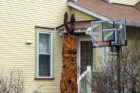
An owl tree carving in Maywood, on 21st Avenue N.
A bear, hawk and fox carving on 14th Street N. in Virginia Square
A woodland creatures carving in Douglas Park, on 19th Street S.

(Updated at noon) More and more dead trees are being turned into animals around Arlington.

Artist Andrew Mallon, owner of Potomac Tree Structures, drew attention for the bear he carved into a tree on 14th Street N. in Virginia Square last summer and business has only improved since then.

“I think it can get very big,” Mallon said. “I think that it is something that’s going to keep growing. I get more and more calls all the time.”

The Virginia Square tree has been completely transformed. Where was once a bear in the middle of a dead tree, there is now a complete statue, with a fox curling around the trunk and a hawk perched on top.

An Andrew Mallon original has popped up in Maywood, with an owl perched on top of a carved down tree with a “green man” etched in the middle. That sculpture, on the 3500 block of 21st Avenue N. is set back a little from the road — unlike the bear, hawk and fox tree, which is almost on the sidewalk.

South Arlington also has a bit of tree art. On the 4000 block of 19th Street S. in Douglas Park, Mallon took a stump and carved two dogs chasing two squirrels up a tree.

“Most people don’t even really know exactly what they want,” Mallon said. “They mostly say ‘you’re the artist, you tell me.’”

Most of the pieces he’s done — there are some in Fairfax County — take a week or so, but the bear, hawk and fox statue took longer because of payment issues. When Mallon returned to work on it, neighbors gushed to him about the art he added to their neighborhood.

“That’s probably my favorite thing about it,” he said. “Neighbors stop and thank me for bringing it to their neighborhood. The community really likes it, the kids all love it.”

Mallon can be reached at 703-919-4835 or at potomactreesculptures@gmail.com.

The post Photos: More Animal Tree Carvings Around Arlington appeared first on WTOP.

05 Apr 13:02

Arlington company tries to tow car with kids inside (Video)

by wtopstaff

WASHINGTON — An Arlington, Virginia towing company is coming under fire for trying to tow a car while two children were still inside.

Last Friday, Max Daout stopped by the CVS on Columbia Pike in Arlington to pick up some medicine for his 7-year-old son, Max, who waited in the car. Young Max was accompanied by his 17-year-old stepdaughter, Triysi Veliz, reports NBC Washington.

The pair then felt a jolt and realized the car was being towed.

“The car started to lift up,” young Max told NBC Washington. “I was like scared. I looked out the back and then saw the tow driver and then I opened the door a little bit and said, ‘Wait, wait wait.'”

An Advanced Towing driver heard the boy crying and stopped towing the vehicle. The tow truck was driving out of the parking lot when Daout says he left CVS, NBC Washington reports.

Daout says he was parked legally when his car was towed and he is “very upset.”

Daout complained to Advanced Towing, but he says the owner, John O’Neill, hasn’t followed up with him.

O’Neill sent a statement to NBC Washington saying the car was illegally parked because Daout walked off site before returning to CVS.

“The vehicle had tinted windows, however, before removing the vehicle from its parking space, occupants were noticed and the vehicle was never moved from its space,” O’Neill said in the statement.

This isn’t the first complaint aimed at Advanced Towing in recent months. In December, NBC Washington reported that the company towed a woman’s car while her dog was still inside.

Watch the NBC Washington report:

The post Arlington company tries to tow car with kids inside (Video) appeared first on WTOP.

03 Apr 22:08

Walmart Executive: Chip-And-Signature Credit Cards Not Enough To Protect Consumers

by Ashlee Kieler

The long-awaited move from traditional magnetic stripe credit cards to cards equipped with computer chips has been touted as a safer, more secure method of payment for consumers. But a top executives at the country’s largest retailers says all the hype surrounding the new cards will likely be a security letdown without the use of PIN requirements.

CNN reports that an executive in charge of payments at Walmart believes the move to signature and chip-enabled cards won’t provide the needed security measures that consumers are expecting.

Mike Cook, assistant treasurer and senior vice president at Walmart, told attendees at the Electronic Transaction Association’s Transact conference this week that so-called chip-and-signature credit cards don’t go far enough to protect consumers from thieves.

Instead, he said Walmart would have preferred that banks implement a chip-and-PIN system.

“Signature is worthless as a form of authentication,” Cook said at the conference. “If you look at the Target and Home Depot breaches … not a single PIN debit card needed to be reissued in those breaches. The card number was worthless to the individual thief and fraudsters, because they didn’t know the PIN.”

Under the chip-and-PIN system, also known as EVM, consumers use a smartcard embedded with a microchip and provide their PIN to complete a transaction. The chips make reproducing a card difficult for criminals. Even if the credit card information is gathered, without the chip the card is useless.

In contrast, chip-and-signature cards, which would still be difficult to reproduce, lack the extra safeguard of a PIN requirement.

Previously, the largest credit issuers – Visa and Mastercard – announced they would rollout chip-and-PIN cards by the end of 2015. However, that time frame was recently changed to the end of 2017.

Still, the credit card companies say that adding the chip aspect of the cards is tackling the biggest fraud issue head-on.

Part of the reluctance in moving toward a PIN method has to do with the costs and short-life spans of such programs with the onslaught of tap-to-pay systems.

“We don’t see a need for it,” Stephanie Ericksen, Visa vice president of risk products says. “[Chip-and-PIN] will have a shorter shelf life. We’re moving to new technologies and innovation.”

Additionally, banks have been reluctant to move forward with the PIN safeguard because of the cost associated with the special numbers. CNN reports that PIN numbers require millions of dollars worth of software upgrades.

For it’s part, Walmart has already been busy installing technology needed to process chip payment cards.

Walmart apparently isn’t alone in its disappointment in a lack of PIN usage. CNN reports that that other retailers have called the move a half-step in the right direction.

Wal-Mart exec: Credit card upgrade a ‘joke’ [CNN]

03 Apr 21:53

NHTSA Reviewing Petition To Open Investigation Into Ford Vehicle Lighting Issues

by Ashlee Kieler

The National Highway Traffic Safety Administration opened and closed an investigation into lighting issues in several models of Ford vehicles back in 2008 without demanding a recall. That decision apparently isn’t sitting well with a consumer group that has petitioned the agency to reopen the case after receiving additional complaints.

The Detroit News reports that NHTSA will review a petition to open another formal investigation into 517,945 model year 2003 to 2005 Ford Crown Victoria and Mercury Grand Marquis vehicles known to have lighting problems.

According to a notice [PDF] from NHTSA, the agency’s Office of Defects Investigation received a petition from the North Carolina Consumers Council Inc. requesting an investigation into an alleged defect that results in headlight and/or exterior lighting failure in the vehicles.

The potential defect centers on the lighting control module that powers the vehicle headlights, an unknown issue can result in the loss of vehicle headlights and all exterior lighting without warning while the car is in motion.

The North Carolina Consumers Council tells NHTSA it was recently contacted by the owner of a 2005 Mercury Grand Marquis that has been found to have a failed lighting control module by a Ford dealership.

The group says in its petition that consumers have provided 604 complaints on NHTSA’s website, seven of which included crashes following the failure of the lighting control module and subsequent failure of vehicle lighting while driving.

“This data indicates that the failure rates for the components is increasing with age,” the petition states.

“Due to the number of complaints, the information provided in the aforementioned Preliminary Analysis and the unavailability of replacement parts despite an extended warranty being in place, I am requesting on behalf of the Complainant and the motoring public that a new defect investigation be opened concerning this matter for the subject vehicles, to be expanded at your discretion to include other models that have the same design part,” Matthew Oliver, executive director of the North Carolina group, writes in the petition.

NHTSA previously opened an investigation into the issue in 2008. While that probe ended without a recall, Ford did set up a program in which it would offer an extended warranty for the subject vehicles for the lighting control module for 15 years or 250,000 miles.

However, the North Carolina Consumers Council states that Ford dealers have reported that replacement lighting control modules are not available for the vehicles and have not been available since May 2014.

NHTSA says it will evaluate the issue and make a decision whether or not open an informal investigation.

U.S. reviews 517K older Ford cars for lighting defect [The Detroit News]

03 Apr 21:49

Video Captures Lightning Striking Two Planes Approaching Seattle Airport During Storm

by Mary Beth Quirk


They say lightning never strikes twice — but one observant onlooker did catch two separate lightning strikes hitting planes approaching Seattle’s Sea-Tac Airport as they were landing. Both flights landed without incident, though those onboard say the moment the lightning hit the planes was a rough, albeit very brief experience.

A University of Washington student was outside trying to catch lightning on film while a thunderstorm moved into the area, reports KOMO News. He managed to capture two huge bolts of lightning as they moved through the planes.

“I was stunned for a second because I couldn’t believe what I just saw,” he said. “After the second (plane) got hit, I knew I was on to something spectacular!”

One plane was an Alaska Air flight coming in from Orange County, while the other was another Alaska Air plane heading in from Houston.

A passenger on the latter flight said she was sitting in the ninth row on the right side of the plane when the bolt hit.

“We were flying in and out of clouds, sunshine then darkness, sunshine then darkness,” she said. “I was looking out the window when I saw this bright flash and this streak of lightning hit the top-middle of the right wing near the engine.”

It appeared that the bolt exited below the wing she says, as there was a loud crack, lighting up the cabin for a brief second.

“There was this loud gasp in the cabin after it happened. The people behind me were starting to worry if it was going to affect the landing. It didn’t,” she said, adding that it was “startling.”

A passenger on the other plane from California said the moment the bolt struck the plane was probably “the worst turbulence you’ll ever feel for two solid seconds. It got people pretty shook up.”

Other than that, the flight was totally normal.

Scary as it sounds, lightning strikes on planes are pretty normal. The Federal Aviation Administration estimates that each plane gets hit by a bolt once a year. Planes are also built to withstand the effects of a big zap.

“Airplanes themselves are prepared for this kind of stuff and have the mechanics to manage lightning strikes,” Sea-Tac Airport public relations manager Perry Cooper told ABC News. “We did not receive any reports of precautionary landing alerts from any pilots Wednesday night either.”

Still, two planes in one storm? That, and the National Weather Service reported only five lightning strikes with the storm on its radar in Seattle.

Watch: Lightning strikes two jets on approach to Sea-Tac Airport [KOMO News]

03 Apr 21:47

Manassas police officer injured in Prince William Parkway crash - Inside NoVA


W*USA 9

Manassas police officer injured in Prince William Parkway crash
Inside NoVA
A Manassas city police officer was injured and a 79-year-old Maryland woman charged after a crash early Friday morning on the Prince William Parkway bypass near Va. 28. The officer had made a traffic stop just outside the city limits on the parkway ...
Officer Injured After Cruiser Struck During Traffic StopPatch.com

all 5 news articles »
03 Apr 15:39

From The Cranberry Institute To Pickle Packers International: A Guide To Food Industry Trade Groups

by Kate Cox

There are thousands of trade groups in America. Probably hundreds of thousands. And although we most often hear from the groups representing industries like cable, tech, or banking, pretty much everyone out there has another someone out there collecting their dues and writing to Congress on their behalf. In the world of food, those groups can get as specific as every ingredient in your evening dinner.

And all together, these organizations — literally hundreds of them, large and small — send an enormous amount of money through Capitol Hill and the politicians who work there.

“Food” may look like a coherent industry from the outside, but from the inside, well… markets fragment.

Agriculture and farming are of course vital to our survival and our economy, but we don’t just have one large trade group for agriculture. We also have specific groups for growers and sellers like the Almond Board, the Cherry Marketing Institute, the California Avocado Commission, the Apricot Producers of California, the National Onion Association, the California Pear Advisory Board, the American Soybean Association, and the Cranberry Institute (not to be confused with the Cranbrook Institute)… and these are just the start.

Cattle are big business, and so is everything dairy. Which is why there is everything from the Dairy Science Association, to the Dairy Products Institute, the milk-focused International Dairy Foods Association, the even more specific National Yogurt Association, and the high-society cheeseballs at the American Cheese Society.

We have trade groups for for specific breeds of bovine —  jersey, charolais, guernsey, hereford, brahman, and holstein among them.

And that’s without even really touching the plentiful groups representing beef and, well… just meat in general, as well as meat processing and other delicious animals.

We’re not even getting into the groups representing beers, wines, sodas, spirits, coffees, teas, bottled water, and any other liquid refreshment you can possibly think of. Or still dozens more organizations representing all parts of the delicious confections — from wheat to flour to sugar and eggs and baked goods, chocolate, and pie — that you can have with a nice cuppa.

But what we can do is have a look at who the biggest players are. And, for fun, the strangest.

Livin’ Large

Most of the biggest donors in each subcategory of food and beverage are specific companies — Anheuser-Busch, for example, or General Mills. But although the trade groups are not the largest overall donors, they’re still moving a significant amount of money to lawmakers. Food, farm, agriculture, grocery, and related businesses are big givers to politicians on both sides of the aisle as well as to SuperPACs.

In the 2014 election cycle — last year’s midterms — the biggest donors among the food trade groups were, according to the Center for Responsive Politics:

1.) National Cattlemen’s Beef Association, $853,165
The NCBA represents exactly who and what it sounds like: a group to advocate for cattle farmers and ranchers. They describe their mission statement as, “A dynamic and profitable beef industry, which concentrates resources around a unified plan, consistently meets global consumer needs and increases demand.”

2.) National Pork Producers’ Council, $419,094
Like the beef folks, the Pork Producers Council represents exactly who you think. The NPPC says the organization, “conducts public-policy outreach on behalf of its 43 affiliated state associations, enhancing opportunities for the success of U.S. pork producers and other industry stakeholders by establishing the U.S. pork industry as a consistent and responsible supplier of high-quality pork to the domestic and world markets.”

3.) Dairy Farmers of America, $411,750
Once again, this organization represents exactly who you’d think. The DFA does provide services and connections for its member farms large and small, but it also has a significant lobbying arm.

4.) National Chicken Council, $301,900
If you are sensing a theme in the clarity of names for food trade groups, well-spotted. The National Chicken Council represents all the businesses that farm and sell chickens that you eat, or the stuff you eat made from them (like nuggets). It does not, however, have anything to do with eggs or the chickens farmed for the laying of them.

5.) American Bakers Association, $285,500
Do you cook it in an oven, out of grain? Yes? Then you and your product are probably represented by the American Bakers Association. The ABA represents makers of both sweet and savory items, whole wheat bread to sugar-filled snack pies.

And rounding out the top ten, we also have:

  • National Turkey Federation, $234,100
  • International Dairy Foods Association, $228,355
  • Grocery Manufacturers Association, $209,110
  • American Meat Institute, $169,775
  • United Egg Association, $160,100

Narrow Scope

So sure, as far as food special interests go, cattle farmers have a long, long reach. They are the most special of the special interest trade groups, spending double what the hog farmers do.

But size, as they say, isn’t everything. Sometimes, you need a small, tailored group — an organization that really gets your trials and tribulations, and can hook you up with the people you need to see.

And so, although none of these organizations is donating the wads of cash needed to make a contributor top-10 list, the narrowness of their scope did tickle our fancy. In no particular order:

Pasta: If you love your spaghetti, well, the National Pasta Association loves you.

Dressings and Sauces: Whenever you pour some vinaigrette on your salad or save some marinade for your steak, spill out a drop for the Association for Dressings and Sauces.

Pie: America: we have a Pie Council. An entire organization “designed to raise awareness, enjoyment, and consumption of pies.” While pies probably don’t exactly suffer from a lack of awareness, most of us would be happy to agree to do our part to increase consumption. (Cherry, please.)

Pickles: Pickle Packers International is willing to play along, and provides, among other things, “A Peck Of Perfectly Plausible Pickle And Pickled Pepper Facts” on their website.

Country Ham: It’s not just pork. It’s not just ham. It’s very specifically salt-cured country ham, that which basically makes you feel like the roof of your mouth might fall off but is still mysteriously delicious. So of course it has its own advocacy group, the National Country Ham Association.

03 Apr 15:36

Manassas Airshow Bringing in the Big Jets - PotomacLocal.com


PotomacLocal.com

Manassas Airshow Bringing in the Big Jets
PotomacLocal.com
On May 2, 2015, from 10 a.m. to 4 p.m. the Manassas Airshow is bringing in Breitling Jet Team, the largest professional civilian flight jet team. This team demonstrates aerobatics with precision, speed, mastery and style. The Breitling Team coordinates ...

03 Apr 15:35

Prince William County crime report - Washington Post


Prince William County crime report
Washington Post
These were among incidents reported by Prince William County police. For information, call 703-792-7245. DUMFRIES AREA. WEAPONS. Swans Creek Lane, 17900 block, 2:06 p.m. March 21. Occupants of two vehicles were shooting at each other while the ...

and more »
03 Apr 01:34

How to Make Spaghetti Jellyfish

Easy to make and hilarious to serve, these spaghetti jellyfish may be your favorite dinner soon. They are better with slightly older children, as younger can choke on long noodles.

Ingredients

  • 8 ounces linguini spaghetti
  • Hot dogs, amount will vary

Steps

  1. Cut each spaghetti strand in half.

    Make Spaghetti Jellyfish Step 1.jpg
  2. Cut the hot dogs in 6 equal pieces. For "taller" jellyfish, make bigger pieces. It's best to make marks in one as a guide before fully cutting it, align it with a row of hot dogs, and cut it down the cutting board.

    Make Spaghetti Jellyfish Step 2.jpg
  3. Prick the hot dogs with about 5-7 spaghetti strands. To make jellyfish, do not go all the way through the hot dog piece.

    Make Spaghetti Jellyfish Step 3.jpg
  4. Boil them. Always follow the directions on the pasta as far as the timing goes to achieve al dente. The hot dogs only need a few minutes of boiling, however, you still need to cook the pasta inside the hot dog.

    Make Spaghetti Jellyfish Step 4.jpg
  5. Drain completely.

    Make Spaghetti Jellyfish Step 5.jpg
  6. Serve with your favorite cheese or pasta sauce.

    Make Spaghetti Jellyfish Step 6.jpg
  7. Finished.

    Make Spaghetti Jellyfish Intro.jpg

Tips

  • Have kids help you with putting the spaghetti strands in the hot dogs.

Related wikiHows

02 Apr 22:00

One group restricted from World Police and Fire Games

by Max Smith

WASHINGTON — Not all local firefighters, or all those who wear police or sheriff’s uniforms, will be able to compete in this summer’s World Police and Fire Games in Fairfax County.

The rules require that all competitors be “publicly employed as a full time Law Enforcement Officer or career Firefighter,” and that competitors’ “primary occupation” be Law Enforcement Officer or Firefighter. Volunteer firefighters, auxiliary police or reserve sheriffs are not allowed to compete.

While the rules have been in place for past editions of the games, Mark Bulla was planning to sign up this time because the games are local.

He has volunteered at the Burtonsville Volunteer Fire Department for nearly 35 years, and was “shocked” when he reached the registration page that described the eligibility rules.

“It’s keeping a class of people out for an unimportant reason,” he says.

Fairfax 2015 Director of Sports Tony Shobe says the California-based organizers of the games have always aimed to promote health and fitness among full-time public safety workers, and may also be concerned about the risk of “ringers” sneaking in if all volunteers were allowed. The California Police Athletic Federation did not respond to a request for comment.

Bulla said he believes there must be a better way.

“If you’re going to call it the World Police and Fire Games, you ought to invite anybody that’s associated with the police or fire department to participate,” Bulla says.

This is the 15th edition of the biennial games, which began back in 1985.

Shobe says it is not up to local organizers to make the rules, and that the eligibility requirements have made for some awkward situations.

“A lot of volunteers have had questions about it, because they feel that they should be included. I understand their feelings, [but] since the beginning, the rules are you have to be sworn,” Shobe says. “Even the Fairfax City Volunteer Fire Department, who is helping host one of the sports, the muster event, are not allowed to participate in the games.”

The Fairfax City department hosts a similar old-time firefighter event every year around July 4, and Shobe says explaining the situation was “difficult.”

Athletes who are eligible to compete, including retired police and firefighters, have at least a few more weeks to sign up. Registration for team sports and any others that require organizers to create brackets will close April 24; registration for some other sports is scheduled to close May 31, and registration for some sports that are more flexible, such as the half-marathon, will stay open until two days before the event actually happens. Teams that get the minimum number of required athletes registered on their rosters by April 24 will be able to add athletes beyond that date.

Fairfax 2015 organizers are still looking for volunteers to help make the games run smoothly. Everyone over 18 is able to apply to volunteer through the games’ website, whether they are connected to a public-safety agency or not.

The post One group restricted from World Police and Fire Games appeared first on WTOP.

02 Apr 21:56

Portland Bans Insecticide Blamed For Decline In Honey Bee Population

by Mary Beth Quirk

Out of concern for a depletion in the number of honey bees in recent years, the city of Portland, OR has approved a ban on the use of an insecticide that conservationists say is to blame for killing off the honeymakers, despite protests from some local farmers.

The Portland City Commission voted unanimously to suspend use of products containing neonicotinoids, effective immediately, reports Reuters. This makes the eighth U.S municipality to outlaw the insecticides as activists make the case that it’s the reason bees and other pollinating insects have been dying off.

Portland Commissioner Amanda Fritz’s quest to get the measure approved as a public health issue was successful on Wednesday, meaning neonicotinoids can’t be used in city parks, streets and gardens.

“I think we’re doing another good thing for the city of Portland, Oregon … and maybe the entire world,” Fritz said.

But opponents of the ban like Oregonians for Food and Shelter, a coalition of farmers, foresters and others who use the insecticides say some scientific research has refuted other findings that honey bees have been severely harmed by the pesticides.

“Farmers have a huge investment in honey bees but they also need insecticides to protect their crops from destructive pests,” said the group’s policy director, Scott Dahlman, in calling the decision one based on “fear and ideology” rather than sound science about bees and other pollinators.

Hopping on board the anti-neonicotinoid train is the federal Fish and Wildlife Service, which will ban the substance at national wildlife refuges by next January. The agency found that the insecticide was not preferred because it could be broadly distributed and potentially affect “a broad spectrum of non-target species.”

Portland bans insecticide to protect declining honey bees [Reuters]

02 Apr 11:58

Should Lawyers Be Held Accountable When Clients Sue Just To Punish Whistleblowers?

by Chris Morran

Deep-pocketed companies have a long history of filing frivolous lawsuits with the sole intent of putting defendants through the expensive legal wringer. This sort of courtroom bullying is known as a Strategic Lawsuit Against Public Participation (SLAPP) and several states have Anti-SLAPP laws to deter this type of abuse. Plaintiffs that file these lawsuits can face penalties, but one question being considered by a California appeals court is whether plaintiffs’ lawyers should be held accountable for allowing their clients to behave badly.

What follows is the story of Val, a California woman who was sued for defamation in 2010 simply because her boyfriend copied their elderly mother’s legal aid attorney on an e-mail to a nursing home — and who believes that both the nursing home and its law firm are responsible for setting off a five-year legal battle that may not end anytime soon.

The Squeaky Wheel… Gets Sued

THE TL;DR VERSION

• Val’s mom moves into nursing home; things don’t go well.

• Val and her mother, with advice from a legal aid attorney, file complaints with state officials about the home, many of them resulting in citations.

• As things continue to get worse at nursing home, Val’s boyfriend David copies the legal aid lawyer on a four-sentence e-mail to an administrator at the facility.

• A week later, the home sues Val and David, alleging defamation for simply cc’ing that lawyer on the e-mail.

• A court strikes the defamation claim because it was filed without probable cause. This ruling holds up on appeal.

• All other charges against the couple are eventually dropped at the urging of the court.

• Val and David file a malicious prosecution suit against the home and its law firm.

• A trial court initially allows the case to move forward against the law firm, but an appeals court says the judge either has to strike these claims against the firm or justify why they should not be stricken.

• The lower court decides to strike the claims against the law firm.

• Val has appealed that decision, and arguments in that appeal will be heard this week.

In March 2008, Val’s mother moved into a retirement nursing home in Reseda, CA; the same elder community in which Val’s grandmother had peacefully spent her final years.

Val, who had medical power of attorney for her mother, was also involved in the pre-admissions process with her mom and aided her in reviewing all contracts and other legally binding agreements. She claims that she also made it clear to the home that these sorts of matters were not to be discussed with her mother unless Val or her boyfriend David, a lawyer, were present.

Not long after moving in, Val’s mother — a retired school teacher with diabetes who had survived breast cancer — began reporting treatment at the home that appeared to be cause for concern.

For example, she says she was confronted in the lunch room by a nursing home staffer who allegedly demanded that she sign some documents without reviewing them. It was later revealed that this was a new resident’s agreement with the home that allegedly authorized the facility to intercept the mother’s mail and other parcels.

In all, the Dept. of Social Services found that at least a dozen of the complaints filed by Val or her mother were “substantiated,” with several resulting in citations against the home.

In July 2009, Val, her mother, and David all met with a lawyer at non-profit legal services group Bet Tzedek to discuss their concerns about the home. The Bet Tzedek attorney referred them to the California State Ombudsman’s office while also asking to be kept in the loop regarding further issues with the mother’s care at the nursing home.

The family and representatives for the home met with the Ombudsman. In that meeting and in a subsequent e-mail it was established that the attorney at Bet Tzedek was representing the family’s legal interests with regard to the home.

The ombudsman meeting did not, however, result in an improved relationship between the home and Val’s mother, with Val filing multiple grievances with the state’s Department of Social Services in the months that followed.

In Jan. 2010, the mother’s blood sugar level increased to 302. She and Val asked the home to page the mother’s endocrinologist, as per the instructions left with the home, but claim the home instead brought in a different doctor of their own choosing who prescribed a slow-acting insulin, allegedly without reviewing her charts or checking with her doctor, and without speaking to Val. When Val learned of this, she took her mother to the emergency room.

Five days later, the home instructed its lawyers at the well-regarded D.C.-based firm of Arent Fox to begin drafting a lawsuit against Val and David.

In the weeks that followed, Val — unaware of the impending complaint — made several visits to the home, some of them at the invitation of management to discuss matters involving her mother.

During a Jan. 26, 2010, Val and David’s meeting with the home’s director of nursing was interrupted by an administrator who accused them of trespassing and threatened to contact the police if they didn’t leave.

On Feb. 3, 2010 — but still before any lawsuit was filed — Val’s mother called to say that staffers were refusing to let her know her glucose levels. Val called the home and claims that a nurse explained to her that “They told me not to give you anything.”

That day, David wrote a four-sentence e-mail to an administrator at the home and copied the attorney at Bet Tzedek who had helped refer them to the Ombudsman’s office months earlier.

One week later — and the day after an on-site visit from the Dept. of Social Services that resulted in a pair of citations related to the mother’s complaints — Val and David were named as defendants in a suit that alleged trespassing, civil harassment, intentional interference with contractual relations, and — most bizarrely — defamation.

The alleged defamation didn’t involve any statements made to the media or anything published by either defendant. The only justification for this particular allegation was that David and Val somehow defamed the home by copying their legal aid lawyer on that Feb. 3 e-mail sent to the home, in spite of the fact that it’s a common practice to copy your attorney on message that involve legal matters.

Curiously, even though she did not write the e-mail in question, Val was still included as a defendant in that portion of the complaint.

Slapping Back

Image courtesy of Ash

Believing that the entire lawsuit was intended to punish them for blowing the whistle to state officials, Val and David asked the court for a quick dismissal of the complaint under California’s Anti-SLAPP statute.

With regard to the defamation claim, the court agreed, granting in April 2010 the motion to strike that cause of action from the lawsuit.

The home and its lawyers appealed that ruling, but in Nov. 2011 — more than a year after the original lawsuit was filed — an appeals court affirmed the lower court’s decision to strike the defamation claim.

“It is undisputed that seven months prior to the transmission of the e-mail in question, mother, daughter, and [David] all met with [the Bet Tzedek attorney] to discuss mother’s legal rights and remedies against the Home based on the ongoing disputes she was having with the Home,” wrote the court, adding that the very act of informing an elder rights attorney about the alleged violations “suggests that mother was considering her legal options against the Home at the time the e-mail was sent.”

Thus, the nursing home “could not show a probability of success on the defamation claim because it was barred as a matter of law.”

The home continued to pursue the other claims against Val and David before ultimately — at the urging of the trial court judge — dismissing all allegations in May 2013.

That means that Val and David spent more than three years — from Feb. 2010 to May 2013 — involved in a legal battle that was not even ultimately settled, but which was dismissed outright by the plaintiff.

Which is why, even before that lawsuit evaporated, Val and David filed one of their own in Jan. 2013, alleging malicious prosecution by both the home and Arent Fox.

In their original complaint [PDF] against the home and its attorneys, Val and David contend that the 2010 lawsuit filed against was “replete with knowingly false and misleading assertions,” like claiming that during the July 2009 meeting with the Ombudsman the couple admitted that the allegations against the home “were a bargaining tactic designed to secure a lower rent” for Val’s mom. They say no such statement exists on the audio recording of the meeting.

A Victory, However Brief

Image courtesy of Shawn Miller

Interestingly, Arent Fox’s response to the malicious prosecution complaint was to file an Anti-SLAPP motion of its own, pointing out that they were not the plaintiffs in the earlier lawsuit and arguing that Val and David had failed to make a prima facie case of liability.

But in Oct. 2013, the trial court denied the firm’s motion and allowed the suit to move forward with Arent Fox as a defendant.

“The causes of action alleged that defendants, including [Arent Fox] as attorney of record, brought the underlying defamation action without probable cause and with malice and that the action terminated in [Val and David’s] favor, wrote the judge at the time. “This is sufficient to state a cause of action.”

Arent Fox then filed a petition for a writ of mandate with an appeals court, which issued the writ in an expeditious manner, without giving the plaintiffs any opportunity to respond. The writ directed the trial court judge to either strike the claims against Arent Fox or explain why she should not be ordered to strike the claims. Rather than respond to the writ, the trial court agreed to strike the claims in question.

This had the effect of removing Arent Fox as a defendant in the case, though it did not impact the malicious prosecution lawsuit against the home.

Let’s Try This Again

Image courtesy of Renee Rendler-Kaplan

And so this decision has been appealed by Val [PDF], arguing that all that is required to make the prima facie case against Arent Fox is that “a reasonable attorney would not have filed and maintained the untenable defamation claim thinking it tenable, and/or would not have continued prosecuting this claim as further information became known.”

Additionally, the appeal contends that the state’s Anti-SLAPP statute should not apply to Arent Fox’s motion to strike as a matter of law. The section of the California code that allows for SLAPPback actions — like the lawsuit brought by Val and David — spells out that the “special motion to strike may not be filed against a SLAPPback by a party whose filing or maintenance of the prior cause of action from which the SLAPPback arises was illegal as a matter of law.”

“[C]onclusive evidence that a violation of any state statute has occurred is sufficient to trigger application of the illegality exception and bar a defendant from seeking the protection of the anti- SLAPP law,” contends the appeals brief. “Here, defendants violated the law codified in the Business and Professions code and State Bar rules by looking for any specious reason to sue [Val], and actually suing her for a communication to her attorney that she did not even make. Even worse — they claimed that a client’s communication to her own attorney could be ‘defamation.'”

Bigger Than Just A Single Case

Image courtesy of F Delventhal

This appeal contends that there is much more at stake here than holding a law firm accountable for its part in a case that should never have been brought.

“The answer here has broad implications regarding access to justice and advice of counsel,” reads the appeal. “Should clients be afraid of copying correspondence with an offending party to their attorney, because they can be sued for defamation? Do people have to be careful what they say or show to their attorney about another person because it could conceivably provide grounds for defamation?”

This is particularly problematic, argue the plaintiffs, because the original complaint involved a communication with a lawyer at a non-profit legal aid organizations. These groups frequently work with low-income and elderly clients who are unfamiliar with or overwhelmed by the complexity of the legal system.

“People seeking non-profit legal aid should have access to legal counsel and advice, and should be able to inform and communicate with their attorneys without fear of repercussions,” the appeal explains.

In an amicus brief [PDF] filed by the Legal Aid Association of California in support of the appeal, the organization says that the decision of the lower court to strike the claims against Arent Fox “has the potential to threaten the ability of LAAC’s members to serve their clients effectively.”

It concludes, “This case… has broad implications for the delivery of legal services to the thousands of Californians that access free legal help every day and for the court system that could be inundated with cases that legal aid lawyers might otherwise have resolved prior to litigation.”

Oral arguments are slated to be heard on this appeal today. Regardless of the outcome, it seems likely that whichever side comes out on the short side of the ruling will try to climb up the next rung of the appeals ladder.


02 Apr 01:51

Fairfax County Animal Watch - Washington Post


Fairfax County Animal Watch
Washington Post
No incidents were reported by the Animal Control Division of the Fairfax County Police Department. For information, call 703-246-2253. FAIRFAX CITY. No incidents were reported by the animal control section of the Fairfax City Police Department.

and more »
02 Apr 01:44

Nearly 7% Of Americans Say Their Smartphone Is Their Only Way To Get Online

by Ashlee Kieler

We may often joke that losing our smartphone would mean being cut off from the outside world. While that’s likely an exaggeration for many consumers, a new report from The Pew Research Center finds Americans’ reliance on smartphones to stay connected with the rest of the world is very real, especially when it comes to accessing the internet.

Pew’s latest report [PDF], based on a survey conducted in October 2014, focuses not only on American’s increased use of smartphones, but also their changing preference for connecting to the internet.

Today, nearly 64% of American adults own smartphones; that’s a substantial increase of 29% from just four years ago.

Seven percent of Pew survey respondents say they do not have broadband access at home, and also have relatively few options for getting online other than their cell phone. [Click to enlarge]

Seven percent of Pew survey respondents say they do not have broadband access at home, and also have relatively few options for getting online other than their cell phone. [Click to enlarge]

While most Americans once relied on actual computers to go online, that simply isn’t the case anymore, thanks in part to the availability of smartphones.

Of the consumers with smartphones, 10% tell Pew they don’t have broadband access at home, and another 15% say they have few other options to access the internet beyond their phones. When both factors are considered, 7% of respondents say that they do not have broadband access at home, and also have relatively few options for getting online other than their cell phone.

According to the report, consumers with low income and educational attainment levels, younger adults and non-whites are especially likely to fall into the category of smartphone dependent online users.

When compared to smartphone owners who are less reliant on their mobile devices to access the internet, those who fall into the smartphone dependent category are less likely to actually own some other type of computing device, less likely to have a bank account, less likely to be covered by health insurance, and more likely to rent or to live with a friend or family member rather than own their own home.

In fact, 13% of Americans with an annual household income of less than $30,000 per year are smartphone dependent, while just 1% of Americans from households earning more than $75,000 per year rely on their smartphones to a similar degree for online access.

These economic and social factors have led to nearly half of the smartphone dependent consumers to experience disruptive access, because their cell phone service was either shut off or canceled at some point.

Additionally, 30% of smartphone dependent Americans tell Pew that they “frequently” reach the maximum amount of data that they are allowed to consume as part of their cell phone plan, and 51% say that this happens to them at least occasionally.

While the report found that a majority of smartphone users – no matter their economic situation – use their devices to follow breaking news, conduct online banking and to share information about their community, those who are considered smartphone dependent also rely heavily on the devices for job searchers.

A majority of smartphone users say they don't find their devices "essential." [Click to enlarge]

A majority of smartphone users say they don’t find their devices “essential.” [Click to enlarge]

Consumers from households earning less than $30,000 annually are twice as likely to use a smartphone to look for information about a job and more than four times as likely to use their phone to actually submit a job application than consumers from households making $75,000 annually.

Although a growing number of consumers are smartphone dependent when it comes to the internet, Pew found that the most important features for many consumers include traditional uses.

Text messaging, voice and video calling and email were among the top cell phone features for all age groups of the Pew survey. However, among younger consumers – those 18 to 29 years of age – social networking, video consumption and the ability to listen to music or podcasts were especially popular features.

As for our earlier comment that losing our smartphone would be the end of the world, a narrow majority of consumers don’t actually see it that way.

Nearly 54% of the smartphone users say their phones are “not always needed,” but the other 46% say the devices are something they “couldn’t live without.”

02 Apr 01:43

Woman Who Chased Down Google Street View Car And Flashed It Could Now Be Facing Charges

by Mary Beth Quirk

(Google Maps)

(Google Maps)

While there are many people out there applauding the woman who chased down a Google Street View car so she could flash it and expose her chest to the world, thus, crossing that off her bucket list, local authorities in her Australian town aren’t quite so pleased with her public display.

Earlier this week, the South Australian woman admitted to local media that she’d exposed herself to the camera car so she could fulfill a dream of getting on Google Maps.

“I got to tick something else off my bucket list. I met Sam Newman and now I am on Google Maps,” reports ABC.net in Australia.

But the area’s superintendent says despite any fame she’s gained, showing off your private bits in public is not allowed, no matter where the picture ends up, calling her actions “the same as someone flashing their genitals, and the public expectation is that police take action.”

He noted that a man was recently arrested for exposing himself in public, and “this incident is no different.”

“It is not appropriate for anyone to expose themselves in public places,” he added. “Our community should be able to expect a bit of decency.”

She’s received a summons since the incident to appear in the local magistrates court at a later date.

Google Street View flasher from Port Pirie reported for exposing breasts to camera car [ABC.net]

02 Apr 01:43

Study: 38% Of Crab Cakes Tested At Maryland, D.C. Restaurants Don’t Contain The Local Crab Listed On Menus

by Mary Beth Quirk

(planethunt)

(planethunt)

What you see on the menu might not necessarily be what you get, which is especially disappointing if you’re into locally sourced, fresh ingredients. Conservation group Oceana released a new study that said after checking crab cakes at restaurants along the Eastern sea board that were supposed to be Chesapeake Bay blue crab, many of them contained imported impostors instead.

Out of the 90 crab cakes collected from 86 restaurants throughout Maryland and Washington, D.C., Oceana says DNA testing showed that 38% were mislabeled.

Instead of the locally caught blue crab on the menu, those crab cakes had imported substitutes, most of which were fished unsustainably, the group says.

“When diners purchase a Maryland crab cake, they don’t expect to get an imported substitute,” said Beth Lowell, senior campaign director at Oceana in a press release. “This type of fraud, species substitution, inflates the price for consumers, parades imported and sometimes illegally caught crab as local, prevents consumers from making sustainable seafood choices, and harms the livelihoods of local watermen and seafood businesses.”

Every city that Oceana tested crab cakes in had its share of poseurs, with 47% in Annapolis proving false, 46% in Baltimore, 39% in D.C. and 9% on the Maryland Eastern Shore.

A crab cake was considered mislabeled if it was described on the menu or confirmed by the server as containing blue crab, or crab sourced from Maryland/Chesapeake Bay region, but instead were made from a completely different crab species.

Those that were simply called “Maryland-style” weren’t considered mislabeled, because that could just mean the recipe or seasoning was similar to Maryland crab cakes, not that the crab was actually caught there.

Oceana wants a presidential task force that released an action plan last month to crack down on seafood fraud and illegal fishing to take action now, and “to require traceability for all seafood sold in the U.S., including blue crabs, to ensure that it’s safe, legally caught and honestly labeled.”

02 Apr 01:42

NFL Linebacker Files $20M Lawsuit Against Bank Of America For Alleged Fraud

by Ashlee Kieler

When looking to manage one’s money, it wouldn’t be unusual to seek advice from the financial professionals at one of the country’s largest banks. But an NFL linebacker says his decision to rely on Bank of America to manage his finances cost him millions of dollars and led to the closing of his budding restaurant business.

Seven-time Pro Bowl linebacker Dwight Freeney, who most recently played for the San Diego Chargers after a decade with the Indianapolis Colts, recently filed a lawsuit [PDF] against BofA and one of its executives, alleging that the bank aided and abetted a fraud scheme that ultimately cost him $20 million, CBS Los Angeles reports.

“This is a case of conspiracy, criminal fraud, theft and breach of trust in which the nation’s second largest bank, Bank of America, participated in and aided and abetted a scheme to defraud one of its clients,” the lawsuit states.

According to the 138-page lawsuit, Freeney authorized the bank’s Global Wealth & Investment Management Division to manage his assets, including his company Roof Group LLC in 2010.

At the time he joined the bank as a client, Freeney’s Roof Group owned and operated the Rolling Stone Los Angeles restaurant and had entered into a licensing agreement with Rolling Stone magazine to open several additional locations.

However, Freeney claims that over the next two years he was forced to abandon those plans when he became the victim of an “elaborate and malevolent scheme to defraud.”

The complaint claims that Bank of America was negligent in the scheme for using fraudulent representations, false promises and the concealment of material facts to convince Freeney to become a BOA client and then permitting the act of embezzlement by referred advisors.

The scheme was allegedly devised and carried out by present and former Bank of America employees acting with several outsiders that had been referred to Freeney.

Under the recommendation of a Bank of America executive, Freeney says he hired an outside individual as his private banker. Freeney alleges that his advisor failed to reveal the woman was unlicensed and unqualified to serve in that capacity.

The lawsuit further alleges that Bank of America lied to Freeney about the true identity of the man brought on as a financial advisor. The complaint claims the man used a false name to conceal the fact he was previously linked to real estate fraud, forgery and theft, among other accusations.

During the course of the scheme, Freeney says he was lied to, misled, manipulated and had more than $8.5 million misappropriated from his accounts by the bankers and advisors appointed to his team.

Actions related in the scheme included the breaches of fiduciary duty, the theft of millions of dollars of Freeney’s personal funds and conversion of Roof Group’s assets, the purchase of $55 million in worthless life insurance and payment of illegal kickbacks in connection with them, unauthorized disclosure and use of Freeney’s personal, financial, tax and account information, and money laundering transactions to promote and conceal the scheme.

In 2012, two of the scheme perpetrators were arrested after fraudulently wiring $2.2 million out of Freeney’s account. The scammers were hit with federal wire fraud charges. The FBI arrests were aided by information reported by Freeney and another informant.

A spokesman for Bank of America tells CBSLA that the bank did not play any role in the alleged scheme.

“The two people responsible for this wrongdoing have already been convicted,” the spokesperson said. “The primary wrongdoer never worked for the bank or any of its affiliates and the other person committed her criminal conduct after she left Merrill Lynch in 2010.”

In all, Freeney is seeking $20 million to compensate his loses and additional punitive damages.

NFL Linebacker Alleges Bank Of America ‘Aided & Abetted’ $20M Fraud Scheme [CBSLA]

01 Apr 12:04

15-year-old cheetah euthanized at Maryland Zoo

by wtopstaff

BALTIMORE (AP) — The Maryland Zoo says veterinarians have euthanized a 15-year-old female cheetah after the cat’s health declined.

Dr. Ellen Bronson, chief veterinarian for the zoo, said in an email that the staff euthanized Alix (pronounced Allie) on Tuesday. Bronson says Alix had kidney disease and arthritis.

Alix came to the Maryland Zoo from the Phoenix Zoo.

Cheetahs’ median life expectancy is 11.3 years. There are an estimated 7,500 to 10,000 cheetahs left in the wild.

The post 15-year-old cheetah euthanized at Maryland Zoo appeared first on WTOP.

01 Apr 12:03

How friends and family will honor Prince William's first fallen firefighter - PotomacLocal.com


PotomacLocal.com

How friends and family will honor Prince William's first fallen firefighter
PotomacLocal.com
The Prince William County Professional Fire Fighters Local 2598 group is working with George Mason University to host the 8th annual walk to honor Kyle Wilson on April 18. Wilson was the first career firefighter in Prince William County's fire and ...

01 Apr 00:53

Dogs attack and injure 2 children and 2 adults in Norfolk

by wtopstaff

NORFOLK, Va. (AP) — Police say three dogs are under quarantine after they attacked and injured two children and two adults in Norfolk.

Norfolk police say a 10-year-old boy was taken to a hospital for treatment of non-life threatening bite wounds. The other victims were treated at the scene and released.

The attacks occurred Monday evening. Police say all three dogs are pit bull mix breed.

One victim, Jarrod Holmes, tells media outlets that his neighbor and the neighbor’s girlfriend asked him for help after they heard screaming.

Holmes says the adults put themselves between the dogs and the children and two dogs bit him. The neighbor hit one dog with a bat.

Holmes says the dogs ran and attacked a man down the street.

Police say the dogs are under a 10-day quarantine.

01 Apr 00:51

Man charged in death of toddler found in backpack in creek

by wtopstaff

COLUMBUS, Ohio (AP) — A man suspected in the death of a 1-year-old Maryland boy found inside a backpack in a central Ohio creek has been charged with murder after the toddler’s mother agreed to cooperate with prosecutors.

Twenty-four-year-old Kurt Flood, of Columbus, also was charged Monday with felonious assault, endangering children, evidence tampering and abuse of a corpse.

Court records listed no attorney for Flood, who has been jailed on a suspected probation violation. His arraignment is Wednesday.

Prosecutors say Flood apparently believed the boy, Cameron Beckford, had demons and beat the toddler to get rid of them.

The mother, 25-year-old Dainesha (deh-NEESH’-uh) Stevens, had stayed with Flood at a home near where Cameron’s body was found Dec. 31.

Stevens pleaded guilty to involuntary manslaughter and evidence tampering last week.

The post Man charged in death of toddler found in backpack in creek appeared first on WTOP.

01 Apr 00:51

Local Woof: Is Your Dog Overweight?

by wtopstaff

Local Woof logo

Editor’s Note: The Local Woof is a column that’s sponsored and written by the staff of Woofs! Dog Training Center. Woofs! has full-service dog training, boarding, and daycare facilities, near Shirlington and Ballston.

More than half of the dogs in the U.S. are overweight. Much like with people, it is a result of too much processed food, large portion sizes, and just plain overeating.

What amazes me the most about this epidemic is the number of dog owners who simply do not know that their dog is overweight.  Check out this awesome chart at projectpetslimdown.com.  Once you know your dogs body condition score (BCS) you can make adjustments to their feeding.

The easiest way to tell if your dog is overweight is to feel for their ribs. I recommend placing your thumbs on your dogs back bone and using your fingers to feel for the ribs. You should be able to feel your dogs ribs through no more than about a 1/4 inch of skin, muscle and fat. If you cannot easily feel your dogs ribs, without having to push down, then your dog is likely overweight.

If you do find that your dog is overweight, simply cut down on the amount of food they get per day and increase their exercise. Sound familiar? A great way to supplement your dog’s meal is with green beans. Frozen or canned green beans help your dog feel full without adding too many calories.

Here are some common reasons our dogs end up overweight:

“But my vet says he’s fine”  If I hear this one more time… Please ask your vet for an honest opinion about your dog’s weight. I do not know why veterinarians are so afraid of talking about a dogs weight. I suspect it’s because it can be a touchy subject and they are afraid of losing your business. But in the interest of the health of our dogs (and cats), I implore vets to be more forthcoming and honest about talking about weight issues.

“The bags says to feed 4 cups a day” – I hate dog food bag instructions. The idea that every dog in a certain weight range should eat the same amount of food per day is ludicrous. A 12-year-old dog that weights 35 pounds should be eating nowhere near the same amount as a 35-pound dog who is 2 years old and hikes three times a week. In addition, keep in the mind that the goal of the company is to sell you more food. The faster you feed, the faster you buy another bag. The only measure of how much a dog should eat a day is their body condition. Just like people.

“She’s still just a puppy” – Where puppyhood ends can be debated, but the truth is that most dogs have reached 75 percent of their growth potential by the time they are 6 months old. The exception, of course, is large breeds (German shepherd size and larger), who may take up to 12 months to reach full size. That means that your dog’s growth will start to slow somewhere about 5 months of age. Most puppies start to pack on the pounds around 7 to 8 months of age because they are still being fed the same amount that they were eating when they were 5 months old.

“He’s not fat, it’s just his hair” – Yes, fluffy dogs can hide behind their fur more easily, but please don’t use it as an excuse. By palpating your dogs ribs you can just as easily asses the condition of a heavy-coated dog.

Bottom line, help your dog feel better and live longer by keeping them in shape. They’ll love you for it!

The views and opinions expressed in the column are those of the author and do not necessarily reflect the views of ARLnow.com.

The post Local Woof: Is Your Dog Overweight? appeared first on WTOP.

31 Mar 19:33

Amazon Introducing The Dash Button, A Branded Gadget That Reorders Household Products With A Push

by Mary Beth Quirk

Reaching for another roll of paper towels in the pantry only to find you’ve run out just when little Timmy has flung yet another bowl of pureed peas against the wall is annoying, as is realizing your roommate hasn’t bought toilet paper during your moment of need. In an attempt to solve that problem, Amazon announced a new line of branded buttons that reorder certain common household products with one push, using your home’s WiFi connection and a connected Prime account.

We first heard rumblings of Amazon testing out a one-button system for ordering things last fall, at which point it was still uncertain whether such a thing would make it market or not.

It seems that’s going to be a reality, as Amazon unveiled a line of free Dash buttons that can be stuck to say, the washing machine or the bathroom mirror, allowing Prime customers to simply push them when they need more Tide or Olay moisturizer.

From Amazon:

Dash Button comes with a reusable adhesive and a hook so you can hang, stick, or place it right where you need it. Keep Dash Button handy in the kitchen, bath, laundry, or anywhere you store your favorite products. When you’re running low, simply press Dash Button, and Amazon quickly delivers household favorites so you can skip the last-minute trip to the store.

Each brand included in the lineup — along with Tide and Olay there’s Clorox, Huggies, Bounty and more — has its own button. Once you’ve pushed it (or little Timmy has because you positioned it within his reach, sigh), an alert pops up on your smartphone so you can cancel the order if you need to.

Right now it’s only available by invitation for Prime customers, with Amazon’s site saying the Dash buttons will be available in a few weeks.

If you’re suspicious that this announcement is popping up pretty darn close to April Fool’s Day (the Consumerist team was), it does seem that the Dash button is for real. The Washington Post staffer who wrote about the product on the companys The Switch blog, Sarah Halzack, Tweeted that the button isn’t a joke — and she would very possibly know that, as Jeff Bezos owns the Washington Post as well as Amazon:

BTW, Amazon Dash is not an April Fool's joke.

— Sarah Halzack (@sarahhalzack) March 31, 2015

Timing the release of such a product this close to April Fool’s Day is actually kind of a genius move, as it gets people to talk about whether it’s real or not, thus creating free publicity for Amazon and all the brands involved.

31 Mar 19:32

You Can Now Turn Any Google Map Into A Pac-Man Game

by Chris Morran

Pac-Man eats his way through the Grays Ferry section of Philadelphia.

Pac-Man eats his way through the Grays Ferry section of Philadelphia.

Have you ever looked at a Google Map and thought to yourself, “It would be flippin’ awesome if I could play Pac-Man on this street grid”? Probably not, because that is not something that occurs to most people. But it did occur to some folks at Google who have incorporated, perhaps temporarily, a button that lets you Pac-Man-ize your Google Map.

It’s really simple, just go to maps.google.com, pick an area in which you would like to play Pac-Man, then click the button on the bottom-left of the screen (next to the one that switches between graphical maps and satellite maps).

Then you just play Pac-Man.

The functionality does limit the size of the street map maze. So if you’re zoomed out too far, or zoomed in too close, the screen will automatically adjust to a level that works with the game.

Two employee-friendly (but not employer-friendly) notes: It seems to default to muted sound, so you won’t have to worry about everyone in your office hearing you. And the game quickly aborts with a press of the Esc key, so you can get out quickly if needed.

[via The Independent]