Shared posts

16 May 12:55

Being Declared Dead By The Social Security Administration Is Very Inconvenient

by Laura Northrup

NOT_DEADBeing dead is very inconvenient, but having the government believe that you’re dead when you aren’t is even more inconvenient. Yet the Social Security Administration accidentally declares about 9,000 people living in the United States dead every year. Yet when this happens to someone, they struggle to find help and to get anyone to believe them so they can be brought back to life financially.

Errors happen everywhere, it’s true, and the Social Security Administration processes 2.8 million actual deaths per year. That relatively low error rate isn’t comforting when you’re the one locked out of your own bank accounts and not receiving your Social Security checks. CBS Sacramento’s Kurtis Ming followed the case of a 78-year-old woman who had exactly this happen.

She learned that she was dead when she received a letter from her bank. The bank expressed its corporate condolences, and locked her out of her account. The Social Security Administration also stopped her retirement checks, and her health insurance also stopped. That’s fine if you’re dead, but not if you are still alive and in need of your prescriptions.

Social Security maintains the Death Master File, which is very useful if you’re performing genealogy research on someone who died in the last eight decades or so, but may be less useful when it uses many sources of data to report deaths. Hospitals, hospices, funeral homes, families, and banks all The 78-year-old aspiring zombie in California learned that a mortuary had accidentally reported her dead. Why? Nobody knows. She can’t get a copy of her own death certificate for privacy reasons.

Call Kurtis Investigates: Social Security Erroneously Declares 9,000 Dead a Year [CBS Sacramento]

11 May 12:48

Records: Thousands too injured to enter Baltimore jail

by wtopstaff

BALTIMORE (AP) — Thousands of people have been brought to the Baltimore city jail in recent years with injuries too severe for them to be admitted, newly released records show.

The records, obtained by The Baltimore Sun (http://tinyurl.com/pdbu29k) through a Maryland Public Information Act request, show that correctional officers at the Baltimore City Detention Center refused to admit nearly 2,600 detainees who were in police custody between June 2012 and April 2015.

The records do not indicate how the people were injured or whether they suffered their injuries while in custody. However, they do suggest that police officers either ignored or did not notice the injuries. Suspects are constitutionally guaranteed health care before they are booked into jail.

Baltimore police are under scrutiny for their treatment of detainees following the death of Freddie Gray last month. Gray died of a broken neck that prosecutors said he suffered while riding in a Baltimore police van, and six officers involved in Gray’s arrest are facing criminal charges, including one charged with second-degree murder. Gray’s death sparked rioting and widespread protests in the city and came amid national scrutiny of how police officers treat suspects, particularly black men.

On Friday, the Justice Department announced that it is conducting a civil-rights investigation of Baltimore police.

The records obtained by The Sun showed that 123 of the detainees who weren’t admitted to jail had visible head injuries, the third-most common ailment cited by jail officials. Others had broken bones, facial trauma and high blood pressure.

Police did not comment to The Sun, and department spokespeople did not immediately return messages left by The Associated Press on Sunday.

___

Information from: The Baltimore Sun, http://www.baltimoresun.com

___

Information from: The Baltimore Sun, http://www.baltimoresun.com

The post Records: Thousands too injured to enter Baltimore jail appeared first on WTOP.

11 May 12:39

Scents, sounds, sights: Gardening in the city offers country setting

by wtopstaff

The first thing you notice about Carol Powell’s garden is the scent of boxwoods and lilacs. Then listen for the variety of birdsongs. If you can take your focus away from the chirping, your eyes then take in the carpet of green. Not just any green, but greens of many shades, from budding hosta, ferns, lilies, boxwoods and rhododendrons. All these plants fill the ground around your feet. The blooms of the bleeding hearts, the hellebores, the lilacs, the candytuft and the Virginia bluebells give the garden perennial color.

Along the path are pots of geraniums and other annuals waiting to be planted.

Powell’s garden is one of 10 being featured in this year’s Beyond the Garden Gates Garden Tour, sponsored by Celebrate Frederick. The tour is for anyone who gardens, or who wants to appreciate the beauty of other people’s gardens. Powell is a member of the host club, the Green-walled Garden Club.

Powell has spent 11 years creating her garden. The oversized city lot, at 11 W. Second St. in the heart of downtown Frederick, had the basics for a good garden — several tall shade trees, some old shrubs and beautiful neighboring yards. It also has the country’s oldest gingko tree, and a plaque to prove it.

But the yard was mostly grass. Powell has changed all that, from the alley to the front gate. She has planted numerous boxwoods, nandino, rhododendrons, azaleas and irises. The variety of ferns show the range of greens, from grayish to emerald. Along the back fence are arborvitae, and lilacs separate her driveway from the yard behind hers.

A tulip magnolia and the enormous gingko shade much of the backyard, while a Southern magnolia provides filtered light. Stone paths lead the Powells and visitors through the garden.

Birdfeeders, statues and other stone urns are placed strategically through the garden. The statues will be filled with pots of flowers for the tour. Hummingbirds flock to Powell’s feeders throughout the summer.

Powell lures many feathered friends into her yard with her numerous feeders. Once in the yard, there is plenty of cover. Feeding birds is something Powell has always loved, from her childhood in Pennsylvania Dutch country, to the years she and her husband spent outside Washington, to their first retirement home in Middletown, and now to downtown Frederick.

“I’m a country girl,” Powell said. “I never thought I could live in town.” That was until her husband, Realtor J.B. Powell, listed the house, once owned by the late Julia Etchison Hanna, a longtime supporter of the Historical Society of Frederick County, and her husband John. The house was built in sections, starting in the 1750s. Additions were put on in the early and late 19th century. Powell couldn’t resist the house, and the couple sold their first retirement home and moved into Frederick. After they bought it, they added on a modern wing to the back.

The yard, despite its downtown location, is quiet, even on a busy weekday. The sounds of the city are muffled by the trees and shrubs that make the yard feel like an oasis.

“I have cardinals and doves,” she said. She has mallard ducks that visit. She keeps her feeders full, and limits her pesticide use.

Her garden has mayapples, Virginia bluebells, trilliums, and other woodland flowers. Bleeding hearts are in full flower. Hostas are emerging, as are lily of the valley. Pachysandra carpets the ground beneath the gingko. A rose garden is near the patio, flanked by a carpet of bright white candytufts providing some spring color.

Every few years, foresters from the Maryland Forestry Office inspect and measure the gingko. The tree, with its enormous trunk, has lightning rods and is held together with cables. Special drains capture rainwater to water the tree, and an irrigation system keeps the tree’s roots watered, even in times of drought.

A large stone fountain in the front, surrounded by boxwoods, welcomes visitors to Powell’s garden. She turns the fountain on daily from early summer to fall. A pond with goldfish swimming in it is next to the stone patio. Netting protect the fish from hawks, but the netting will be removed during the tour.

On the weekend of the garden tour, Powell will have a large, creamy white wreath on her front door to welcome visitors. The geraniums will add splashes of color to her garden, along with lots of other annuals. The peonies should be blooming.

The irises should be in bloom. Powell and all the other garden hosts will eagerly discuss all things garden.

The post Scents, sounds, sights: Gardening in the city offers country setting appeared first on WTOP.

11 May 12:39

The Cat

by wtopstaff

It’s not that I disliked cats. It was more like they didn’t think much of me.

When I’d walk into a room where a feline was present, I’d say something like “Hi, kitty!” to show that I was an equal opportunity animal lover. But the critter would give me a brief “who are you?” stare, turn away and amble off as if to say my presence wasn’t even worth noting.

“Oh, don’t worry about her,” the tabby’s two-legged toady would tell me. “Missy is like that with everybody. You know how snobby cats can be!”

I did know, and it really didn’t bother me, because I was a dog guy. Be it a stalwart, stand-by-me German shepherd, be it a flop-eared, drooling mutt — dogs always seemed to like me and the other humans I know whether we deserved it or not. You could be St. Francis of Assisi or you could be the Boston Strangler, no matter — dogs understood that deep down (maybe deep, deep, deep down) there was something likeable, even honorable, about you.

Then along came The Cat.

The Cat lurked around the farm for many months before anybody really started paying any attention to her. She liked hiding out in the sheds at night, sitting in the sun watching us work in the day. She’d come a bit closer when someone unwrapped a sandwich or opened a bag of snacks. But she was shy and would sneak up on a little edible gift only after the giver had moved off a ways and feigned disinterest in the recipient.

She got chased high into a tree, twice, by a neighbor’s roaming dog, and twice was rescued by a brave farmhand named Robert who succumbed to her mournful meowing and climbed up to bring her down. Robert had pets of his own so The Cat stayed put here on the farm, banking on her other eight, then seven, remaining lives to see her through to whatever was in store for her.

What was in store was a really nasty winter, back in 2013-14, when the cold arrived early and stayed late. My wife and I were at first determined that The Cat was going to have to tough it out, since we were dog people and had no interest in adopting a member of another species. Our last pooch had died a couple of months earlier, but we had no intention of crossing over to the world of felines.

Nevertheless, as winter’s clutch tightened, we began to worry.

We put a big cardboard box on the front porch, stuffed it with blankets and created a little smorgasbord with a bowl of water, a dish of cat food and a handful of kitty cookies. The Cat moved right in. She even peeked out and gave longing looks when she needed refills. And to offer thanks, she began letting us scratch her behind her ears.

Before long we were hooked. But we weren’t ready to admit it.

Winter wore on, the water bowl froze several times a day and another stray showed interest in moving in with The Cat. But the would-be roommate was skittish and unfriendly, and The Cat tried to make it clear she didn’t need company. The visitor, however, persisted.

So we relented. We disassembled the cardboard kitty camp and brought our waif inside.

There was no question The Cat was accustomed to co-habitating with humans. She was no feral feline, no uncivilized ruffian. She was a lady, not a tramp. She immediately took over the big stuffed chair next to the stove for her daytime reveries, and before long the middle of our bed for her nighttime respites. She knew exactly what kitty litter was for, and didn’t hesitate to ask for more when the catnip was added to her daily routine.

She was obviously a drop-off or a lost soul, so we decided to stop calling her The Cat and give her a bona fide name. We chose Kitty.

As the weeks went by she developed an appetite rivaling that of any dog we ever owned. A checkup at the vet’s office revealed that she had been neutered and well cared-for in a previous life, and was, overall, fit as a fiddle. The slight limp she had was nothing to worry about, the doc said. Maybe it was a healed broken leg, he speculated, an injury suffered as a result of an undocumented third escape into the treetops, and a not-quite-successful, do-it-yourself descent back to the ground.

Kitty spent this past winter, almost as fierce as the one that opened our house to her, lolling around the house, napping by the fire, or meditating on the ceiling fan lazily going ‘round in the dining room. She got a new name, too, at least from me: Miss Puddles. With her increasing girth, she reminded me of a little round pond when she flattened out on the cool bathroom floor.

But never fear. I’m not going to write on and on, every week, about Miss Puddles. I’m not going to post new photos every day on Facebook. (She’s gray and white, with black streaks in her tail — that ought to be enough description, right?) Besides, I think I’m still a dog guy at heart. I miss all the jumping, the panting, the woofing.

But do you know what that silly cat did yesterday? You’re not going to believe this, but …

The post The Cat appeared first on WTOP.

11 May 12:20

Why you can't swim or boat on Lake Manassas - PotomacLocal.com


PotomacLocal.com

Why you can't swim or boat on Lake Manassas
PotomacLocal.com
You can look at it, and stand on its banks in and fish in it. But whatever you do, don't boat or swim in Lake Manassas. The lake remains closed to the public this summer, as it has for every summer since 2004. Manassas officials say they must do ...

09 May 02:43

Beyond Nine Lives: Socialization for a New Kitten

by wtopstaff

Beyond Nine Lives

This is a sponsored post by Elizabeth Arguelles, veterinarian and owner of Just Cats Clinic at Lake Anne Plaza.

Though cats come off as solitary creatures, they carry strong bonds to their humans and other household companions.

The process of acclimatizing naturally territorial cats at a young age to sharing space with other animals is called “kitten socialization.” It’s essential to get your new kitten accustomed to the sights, sounds and smells of people, babies and any other inhabitants of your feline’s permanent home.

Though kitten socialization requires some effort on the part of the cat parent, it’s an essential part of helping the kitten grow into a healthy and well-adjusted adult that is comfortable in its surroundings.

What is kitten socialization?

As was mentioned above, it is the managed process of getting a new cat used to its new environment and its other residents. An important part of this is “localization,” which refers to efforts to get a kitten attached to a particular place.

How can you help socialize a new cat?

There is a lot that you can do to ensure that a young cat grows up comfortable around humans and other household pets. Early handling, for example, not only gets a kitten used to being around people, it also aids in in its physical development. Here are some other steps you can take:

  • Make an effort to introduce the kitten to a variety of new people and situations.
  • Reinforce playful and inquisitive behavior with treats and affection.
  • Adopt a more gradual approach if the kitten is fearful or withdrawn.
  • When introducing the kitten to another pet, restrain the other animal to reduce the risk of a fight or an attack that can lead to a lifelong fear.

Please be aware that there might be a great deal of variation from cat to cat. While some cats will adapt quickly to new people and other pets, others might take longer to adjust. So be ready to tailor your approach to each kitten and talk to your veterinarian about different options before you begin the process.

When is the best time for kitten socialization?

As with human babies, kittens begin adapting their behavior to their surroundings at a very early age. So it is extremely important to start guiding that process as soon as possible. Studies have shown that kittens are the most receptive to socialization between the ages of two to seven weeks. If they are handled frequently, have pleasant interactions with other pets and enjoy generally positive experiences during that period, they are more likely to grow into friendly adult cats.

Conversely, if they have not had much social contact by seven to nine weeks of age, kittens are more likely to fear humans and other pets for the rest of their lives.

Though handling a kitten is beneficial to its development, it does not mean that it should be separated from its mother at too early an age. If possible, a kitten should stay with its mother for up to 12 weeks after birth. Taking a young cat away from its mother before this time not only can leave psychological scars but can also deprive the kitten of important skills. Young cats learn a lot from observing their mother, so seeing the mother interacting positively with the people and other pets in the house passes on an important lesson.

The post Beyond Nine Lives: Socialization for a New Kitten appeared first on WTOP.

08 May 23:14

Company Behind M&M’s, Snickers Endorses “Added Sugars” Label For Foods

by Chris Morran

Of all the companies to advocate for alerting consumers to added sugars, the country’s most famous candy maker would be probably be among the least likely. But yesterday, Mars Inc. — the company behind M&M’s, Snickers, Milky Way, and Twix — gave its corporate stamp of approval to the idea of limiting the use of added sugars and labeling those products that contain extra sugar.

In a letter [PDF] to the U.S. Department of Health and Human Services and U.S. Department of Agriculture, Mars gave its endorsement to recommendations from regulators to measurements for added sugars to products’ Nutrition Facts labels.

“The world’s leading health authorities — including the World Health Organization (WHO), the US Dietary Guidelines Advisory Committee, and the UK Scientific Advisory Committee on Nutrition — have recommended that people limit their intake their intake of sugars, particularly those added to foods, to no more than 10% of total energy/caloric intake,” writes Mars in a statement. “Mars supports this recommendation.”

Mars says it currently limits its products to 250 calories per serving, but that it will seek to add more products with fewer than 200 calories/serving.

Jim O’Hara, Health Promotion Policy Director at the Center for Science in the Public Interest, applauded Mars for publicly supporting these regulatory recommendations.

“Consumers need to know how much added sugar is in their food and beverages to make healthy choices,” says O’Hara. “The best way to do that is having an ‘added sugars’ line on Nutrition Facts panels to distinguish those sugars from the naturally occurring sugars in fruit or milk ingredients… As the process continues, we hope Mars will show continued leadership on other reforms such as expressing added sugars in teaspoons, not just in grams.”

08 May 13:59

Reston Pet of the Week: Sampson

by wtopstaff

sampson
sampson2
sampson3

This week’s Reston Pet of the Week is Sampson, a Collie in need of a home. If you are up for adopting him, let us know and we will reward you with treats and gifts from our sponsor, Becky’s Pet Care.

Here is what his people at Collie Rescue, Inc. has to say about him:

Meet Sampson! He’s a sweet boy who is 6 years old. He just came to CRI and we gave him a nice grooming and dental cleaning. We do know that this friendly guy has poor vision, so we are having a specialist check out his eyes. But so far, he seems to get around just fine.

He is super friendly, affectionate, and very sweet. He longs for attention and will sit on your feet and lean into you to ask for some hugs. Sampson loves to play with other dogs, both big and small. He is a wonderful big boy!

Our standard adoption fee is $350. This fee helps us to cover the expense of providing each dog with a health exam, Rabies/DHPP vaccines, heartworm test, heartworm preventative, flea and tick protection, microchip, neuter/spay, and a bath. Visit www.savecollies.org to learn more.

If you are interested in rescuing a collie, please complete this short adoption questionnaire. Our standard adoption fee is $350. This fee helps us to cover the expense of providing each dog with a Health Exam, Rabies/DHPP vaccines, Heartworm Test, Heartworm Preventative, Flea & Tick Protection, Microchip, Neuter/Spay, and a Bath. Thank you for your consideration in adopting a collie in need.

To see more on Sampson, visit his Petfinder adoption profile.

Want your pet to be considered for the Reston Pet of the Week?

Email news@Restonnow.com with a 2-3 paragraph bio and at least 3-4 horizontally-oriented photos of your pet.

Each week’s winner receives a sample of dog or cat treats from our sponsor, Becky’s Pet Care, along with $100 in Becky’s Bucks.

Becky’s Pet Care, the winner of three Angie’s List Super Service Awards and the National Association of Professional Pet Sitters’ 2013 Business of the Year, provides professional dog walking and pet sitting services in Reston and Northern Virginia.

The post Reston Pet of the Week: Sampson appeared first on WTOP.

08 May 12:37

‘Walk for the Animals’ Returns on Saturday

by wtopstaff

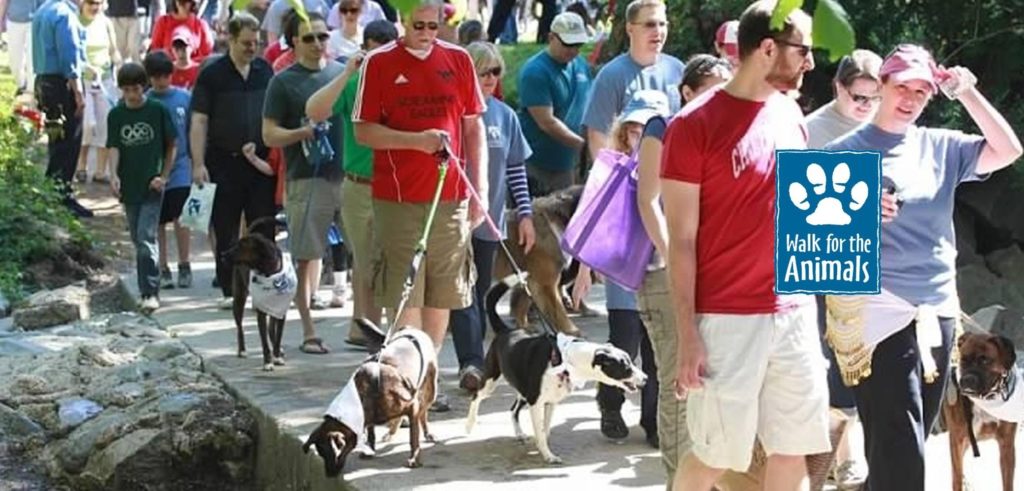
Walk-for-the-Animals-ImageThis Saturday marks the 20th anniversary of the Animal Welfare League of Arlington’s Walk for the Animals, and, in honor of the occasion, the nonprofit is adding a “Pet Fest” to the event.

The annual dog walk takes place in Bluemont Park (329 N. Manchester Street), with check-in at 9:30 a.m. and the 5K walk beginning at 10:30 a.m. There is also a one-mile “stroll” through park. After the walks conclude — you can register for them here for $30 or at the event for $40 — the Pet Fest will begin.

Owners are discouraged from bringing cats to the event.

The festival will last until 12:30 p.m. and include a “retail row,” with vendor booths from Dogma Bakery, KissAble Canine, Lazy Dog Art Studio and other pet-related local businesses. There will also be demonstration’s from Shirlington’s WOOFS! Dog Training and food from the CapMac DC truck.

With games like “bobbing for biscuits,” music from a local DJ and a “kids corner” where children can make pet-related crafts, there is no shortage of things to do when the walk is over.

“The Walk not only supports the thousands of animals the League cares for each year, but it is also a way for people to be a part of the solution for improving the lives of animals in our community,” AWLA CEO Neil Trent said in a press release. “We encourage people to walk with or without a dog, in memory of a beloved pet or in honor of their cat or other companion animal.”

The annual Walk for the Animals is one of AWLA’s biggest fundraisers. So far, the fundraising drive has generated $67,389 of its $100,000 goal. Even those who decide not to walk can still donate.

The post ‘Walk for the Animals’ Returns on Saturday appeared first on WTOP.

08 May 11:45

Pet of the Week: Cyress

by Rachel Nania

WASHINGTON — If big dogs are your “thing,” you really should meet Cyress.

This 3-year-old American bulldog mix found himself at the Washington Animal Rescue League because of a change in his human companion’s lifestyle. And although he’s trying to make the best of his current situation, he’d really much rather be in a home of his own.

Cyress is a happy-go-lucky boy; he loves to play tug and gives lots of sloppy kisses to show his affection. He enjoys canine companionship although his excited play style can be a bit overwhelming to some dogs.

Because of his size and energy level, he’d do best in a home without small children. If you’re looking for a large, friendly dog with great joie de vivre, Cyress could be your perfect match. Stop by the Washington Animal Rescue League and meet him soon.

The post Pet of the Week: Cyress appeared first on WTOP.

07 May 22:21

When Is A Treehouse No Longer Just A Treehouse?

by Mary Beth Quirk

But does it have a mini fridge? Not the house mentioned in the story, but pretty cool. (Spencer 77)

But does it have a mini fridge? Not the house mentioned in the story, but pretty cool. (Spencer 77)

Did the treehouse of your childhood dreams include WiFi, cable TV, a mini fridge, fireplace, deck and air conditioning? Maybe not, but does having the space to fit all those amenities in a homemade structure residing in a tree mean it’s still a treehouse, or is it more like an elevated guest house? One town is seeking to define what a treehouse is, to keep people from going overboard with their aerial retreats.

Town officials in Schaumburg, IL didn’t require one resident to get a permit before building his 112-square-foot sky castle with all those features and more seven years ago, reports CBS Local Chicago, but they’re now looking to outline the first-ever rules for future structures.

The village’s planning and development committee is meeting to work out proposed changes to the zoning code, including: Property owners are limited to one treehouse per lot, and any houses must be built in a home’s backyard; They can be no more than 25 feet high and 100 square feet, and be at least 10 feet from the property line; and prospective builders will have to get a $15 building permit before breaking ground… er, breaking tree?

Any larger than that, and it would seem that a treehouse would cease being a treehouse and just be a house, which means it’d fall under different zoning codes.

Far from holding secret club meetings, the treehouse owner currently rents out his treehouse on Airbnb for $195 a night or $1,200 a week. Though it’s more than the size proposed for future treehouses, he’ll get grandfathered in if the measure takes effect.

“I don’t think they’re anti-treehouse, and I don’t think they’re going to stop people from building treehouses, they just want to make sure they’re not too big,” he said of the village’s attempt at regulation.

Luxury Treehouse Prompts Schaumburg Officials To Seek Regulations [CBS Local Chicago]

07 May 22:20

Johnson & Johnson Creating An Independent Panel To Review Patient Requests For Unapproved Drugs

by Mary Beth Quirk

What’s a sick person to do when all the drugs on the market haven’t been able to help ease their ailment? Some of the seriously ill turn to medical trials held by drug companies to gain access to experimental drugs, but it’s not always easy to accomplish. A new system from Johnson & Johnson will employ an independent panel to review requests from seriously ill people who want to try an unapproved drug without participating in the actual testing of the drug.

According to a report by the Wall Street Journal, this committee of doctors, bioethicists and patient representatives will work under the umbrella of the New York University School of Medicine, and will field the hundreds of requests J&J receives each year from patients who want to try an experimental drug.

Physicians from J&J will first check if a patient could be included in a clinical trial or another early-access program, and if not, the request will be sent on to the independent panel. The company says while it might veer from what the panel advises, it expects it’ll take the committee’s advice.

At that point, the patient would still have to get what’s known as “compassionate use” clearance from the Food and Drug Administration. Regulators and companies have been getting more requests for this early access to unapproved drugs, with up to 1,809 such requests last fiscal year, according to the FDA.

But both the agency and drug companies have been accused of resisting requests, though the FDA says it’s allowed more than 99% of the compassionate-use requests it received in the last several years. Even after the FDA has approved a patient, it’s still up to the company to say yes or no.

The way it works now, it’s usually up to individual physicians working around the company on various drugs to decide if a patient should qualify. There are fears that if a patient tries an unapproved rug and it doesn’t work or they experience serious side effects, they could sue its makers.

“This really assures each request is handled in an objective and thoughtful manner,” said J&J Chief Medical Officer Joanne Waldstreicher.

Critics of J&J’s new panel include advocates for “Right to Try” laws like the Goldwater Institute that believe regulators shouldn’t have as much power over which drugs terminally ill patients have access to. The company’s CEO Darcy Olson tells the WSJ she doesn’t think the panel will make it easier or faster for patients to get their hands on the medicines they seek.

“What I think you have is J&J passing the buck on tough decision-making,” she said.

On the other hand, the chief medical officer of J&J’s Janssen pharmaceuticals unit says the system of having a single website and toll-free hotline for requests will be much easier for patients, instead of having them go through the myriad of entry points at J&J for its drug trials. He says he expects recommendations from the committee in a matter of day for urgent requests.

J&J Changes ‘Compassionate’ Care [Wall Street Journal]

07 May 02:21

Prince William County crime report - Washington Post


W*USA 9

Prince William County crime report
Washington Post
These were among incidents reported by Prince William County police. For information, call 703-792-7245. DUMFRIES AREA. ASSAULTS. Whitings Brigade Dr., 3000 block, 10 p.m. April 25. During an argument at a residence, a man armed with a kitchen ...
Electrical fire in Manassas causes $15K in damagesPotomacLocal.com
Handguns stolen in 3 Prince William Co. home burglariesW*USA 9
Fire Damages Manassas-Area Commercial BuildingPatch.com

all 5 news articles »
07 May 02:19

McDonald’s Brings Back The Hamburglar And We Aren’t Sure How To Feel

by Mary Beth Quirk

Is he telling us to be quiet or the burger?!?

Is he telling us to be quiet or the burger?!?

Upon hearing buzz that McDonald’s has brought back that scamp the Hamburglar to network TV after a 13-year hiatus, ostensibly in Burger Thief Jail, the image of the chubby-cheeked, one-toothed masked beef marauder might come to mind. But lo — the scamp is gone, replaced by a suburban dad with a full set of teeth, a five o’clock shadow on his chiseled jaw and a penchant for red leather high tops and trench coats.

“We felt it was time to debut a new look for the Hamburglar after he’s been out of the public eye all these years,” Joel Yashinsky, McDonald’s’ Vice President of U.S. Marketing said in a statement to Mashable. “He’s had some time to grow up a bit and has been busy raising a family in the suburbs and his look has evolved over time.”

leathershoes

Indeed, a teaser video posted today by McDonald’s on Twitter shows a guy expertly flipping burgers on a grill before apparently being unable to resist the lure of a fast food version of the thing he’s already making at home:

Wait, is this who we think it is??! https://t.co/rc9xhQrAUi

— McDonald's (@McDonalds) May 6, 2015

He’ll be showing up in spots for McDonald’s new Sirloin Third Pound Burger and online videos, among other things like live appearances, and is likely part of McDonald’s plan to turn business around in the face of struggling sales by creating “brand excitement.”

Fresh update to an old favorite or mildly horrifying? We can’t begin to process our feelings on this one.

Take Our Poll

Here’s more on Hamburglar’s origin story:

07 May 02:19

Privacy Advocates Sue Virginia Police Over Data From Automatic License Plate Scanners

by Kate Cox

By itself, your license plate doesn’t say much except in what state, month, and year you registered your car. But start tracking where and when that license plate goes, and you’ve suddenly got a whole huge pile of personal data about all the comings and goings in someone’s life. We’ve reported before that license plate scanning by public and private entities is both widespread and unregulated. Now, the ACLU is suing police in one state to get them to stop.

The ACLU of Virginia filed suit this week, on the behalf of one Fairfax County resident, against the Fairfax County Police department for unlawfully storing massive amounts of license plate data collected using automatic license plate readers (ALPRs).

The resident, the ACLU explains, learned that his license plate had been scanned twice in one year, and that the data had been saved in a database even though neither he nor his car are involved in any kind of police investigation. This, the suit claims, violates Virginia law.

That law itself has been the subject of much discussion in the commonwealth this year. During their last session, Virginia’s state legislature passed a bill that would have permitted law-enforcement agencies to keep using the optical readers, but with slimitations on how the data could be used, and for how long it could be kept:

[L]aw-enforcement agencies shall be allowed to collect information from license plate readers, provided such information (i) is held for no more than seven days and (ii) is not subject to any outside inquiries or internal usage, except in the investigation of a crime or missing persons report. After seven days, the information shall be purged from the system unless it is being utilized in an ongoing investigation.

However, Gov. Terry McAuliffe this month vetoed the bill and so those limitations will now not become law.

And that’s where this lawsuit comes in. Virginia already has an existing Government Data Collection & Dissemination Practices Act (PDF) — the vetoed bill was an amendment, not the whole. And the ACLU claims that the license plate data scanning, as currently done, is violation of the existing statute.

The law says, in part, that, “Information shall not be collected unless the need for it has been clearly established in advance,” and that, “Information shall be appropriate and relevant to the purpose for which it has been collected.” Blanket-collecting random citizens’ scanned license plate data, the ACLU posits, is neither.

ACLU of Virginia legal director Rebecca Glenberg added in a statement that active use — seeking specific tags to correspond with stolen cars, Amber alerts, fleeing suspects, and so on — is just fine by the ACLU. It’s the passive use of the tech, the indiscriminate hoovering up of data, that poses the problem: “We do not object to the real-time use of ALPRs to compare license plate numbers to a current ‘hot list’ of vehicles involved in current investigations,” Glenberg said. “The danger to privacy comes when the government collects tens of thousands of license plate records so it can later find out where people were and when.”

Referring to data-sharing agreements that the Fairfax County police have with other northern Virginia jurisdictions, as well as with nearby Maryland and the District of Columbia, Glenberg added, “The intrusion is magnified in the Washington, D.C. area, where multiple law enforcement agencies may access each other’s information.”

Claire Guthrie Gastañaga, the executive director of ACLU of Virginia, specifically called out McAuliffe’s veto as the source of the lawsuit, saying that he “had the opportunity” to clarify the existing law to protect Virginians’ personal information unless it was necessary and relevant, but instead left “no choice but to go to court to ensure that law enforcement follows the Data Act.”

As the AP points out, back in 2013 the Virginia Attorney General’s office advised the state police that keeping ALPR data unrelated to an investigation was indeed against state law. The state police stopped then, but cities and counties in Virginia, like Fairfax, continue to collect and share the information.

07 May 02:18

Here Is Comcast’s 10-Point Action Plan For Winning Over Customers

by Chris Morran

The full Comcast Customer Experience Action Plan is at the bottom of this post.

The full Comcast Customer Experience Action Plan is at the bottom of this post.

For years, Comcast’s plan to win over customers was to do absolutely nothing because they — just like most cable companies — were the only choice. But with its pay-TV subscriber numbers dropping, the company is realizing that can indeed lose customers by treating them horribly. In an e-mail obtained by Consumerist, Comcast leadership has outlined its optimistic plan to win back all those customers who hate being residents of Kabletown.

“As a company, we haven’t always put the customer first and we need to do a better job,” reads the e-mail sent out to employees by Comcast Cable CEO Neil Smit. “We need to look at everything we do through a customer lens.”

Smit then goes on to outline the plan — hiring most customer service staff; opening new call centers — we wrote about earlier, before reading the minds of just about every single person seeing this e-mail:

“There are a lot of skeptics who don’t believe we can do this,” he writes. “Impressions are lasting and it’s going to take time and proof to change their minds.”

At the same time as that e-mail went out, Comcast shared with employees its 10-point Customer Experience Action Plan. You can read the whole thing below, but here are some of the more salient points:

4. Being on Time, Every Time
As mentioned in the earlier story about Comcast’s customer service turnaround plans, if a Comcast tech is late for an appointment, the customer’s account will be credited $20. The company’s goal is to “always be on time” by the third quarter of this year. Comcast says it will be hiring hundreds of new techs and bringing its dispatch operations in-house, rather than relying on various subcontracted services.

5. Get it Right the First Time
No one likes calling customer service, and the dislike only grows when you get passed from rep to rep before (maybe) finding someone who can resolve your issue. Comcast says it is going to try to minimize call transfers and seek higher rates of “first call resolution.” Techs will also be performing Home Integrity Checks before leaving a house to hopefully catch any errors that might lead to someone having to come back.

6. Keeping Bills Simple and Transparent
“We are simplifying our pricing and making it more consistent across the company,” reads the plan, which says that bills will be completely redesigned for 2016 to “make them simpler and clearer.”

Comcast says it will also be giving receipts for all orders and returned equipment so that there should always be a paper trail when there’s a dispute.

8. Rethinking Policies & Fees
“We are reassessing all of our policies and fees and getting rid of ones that customers find particularly frustrating,” reads the plan, “like change of service and equipment return charges.”

10. Keeping Score
We’ve long heard from Comcast employees and contractors that the level of their success was based on things that had nothing to do with providing good service, but on metrics like how quickly the call was ended or how much you were able to upsell a customer on add-on products and services. Comcast now says that its employee scoring will measure “performance based on customer satisfaction.”

Here’s the full list crafted by Comcast:
page3

07 May 02:17

Self-Driving Semi Trucks Hit The Highway For Testing In Nevada

by Mary Beth Quirk

World Premiere Freightliner Inspiration TruckMaybe you’ve gotten used to the idea of seeing driverless vehicles perhaps one day casually cruising alongside your car on the highway with no one paying attention behind the wheel, but semi-trucks, well that’s a much different — and bigger — thing to get used to.

A company called Freightliner now has a license to test its autonomous tractor-trailer truck in the state of Nevada, it announced in a press release, and already has one of those trucks in operation already. It’ll begin test driving on public highways. Nevada is one of only a few states that has laws that allow for such licenses.

These won’t be ghostly visions of driverless, giant semis roaming the roads, as a licensed truck driver will be in the driver’s seat, though the Freightliner Inspiration is designed to drive by itself on limited access interestates. A human driver will then take control of the vehicle when it’s in city and suburban driving situations, notes CNNMoney.

Using radar sensors and cameras to stay in its lane and avoid hitting other cars, the Daimler AG-owned truck could help reduce driver fatigue, the company says, allowing them to be more productive while on the road. A driver could get paperwork done or plot out the next trip while the truck pays attention to the road.

“We don’t believe that everyone is going to jump on immediately,” Wolfgang Bernhard, head of Daimler’s commercial truck operations told CNN. “It’s a process.”

Self-driving semi hits the road [CNNMoney]

06 May 12:34

Crime rates down, response times up in Manassas - PotomacLocal.com


Crime rates down, response times up in Manassas
PotomacLocal.com
The city recently released their 2014 annual crime report and found that with a population of 41,830 residents, that there are areas that have greatly improved – and some that still need improvement. According to the report, there are around 21 crimes ...

06 May 12:33

A Bethesda Coyote? Neighbors Report Sightings - NBC4 Washington


NBC4 Washington

A Bethesda Coyote? Neighbors Report Sightings
NBC4 Washington
Some Bethesda residents say they've spotted a coyote in their yards and bus stops -- and there have even been reports of sightings along popular Bethesda Row. News4's Chris Gordon reports. (Published Monday, May 4, 2015). Updated 6 hours ago.

05 May 02:21

Manassas area thrift store struggles following slew of discount chains - PotomacLocal.com


PotomacLocal.com

Manassas area thrift store struggles following slew of discount chains
PotomacLocal.com
Community Thrift, a locally owned and operated thrift store on Sudley Road in Manassas, is struggling to compete with larger discount retailers in the area. According to Leslie Morris, manager of the store, the amount of donations has decreased in ...

05 May 02:21

Pentagon Accused of Withholding Sex Crimes Info - CBS Local


CBS Local

Pentagon Accused of Withholding Sex Crimes Info
CBS Local
WASHINGTON — In a scathing critique of the Defense Department's efforts to curb sexual assaults, a U.S. senator warned Monday that the true scope of sex-related violence in the military communities is “vastly underreported” and that victims continue ...
Sen. Kirsten Gillibrand: Pentagon is withholding sex crimes informationNew York Daily News
Senator: Pentagon underreports sexual assaults in militaryPhilly.com

all 160 news articles »
05 May 02:19

Are Front-Loading Washers Still Mold Machines?

by Laura Northrup

Newer front-loading washing machines have developed a reputation for growing mold. Lawsuits also sprouted in the front-loader market, but washing machine manufacturers were ultimately not found liable for inflicting moldy washers on the public. That might make you hesitant to buy a front-loading washer, even if you find them appealing. Should you

Our fungus-free colleagues down the hall at Consumer Report say that the problem isn’t as bad as it used to be, since manufacturers have made some improvements that prevent mold growth. However, it can be very valuable to read any user reviews that you can find for the model that you’re interested in, and for very similar front-loaders from the same manufacturer. (Consumer Reports offers reviews for subscribers, and you can also seek them out on retailer and manufacturer sites, or review megasites like Epinions.) If you’re going to use the appliance for years on end in real life, the experiences of other people who have done the same are valuable.

This is because the mold problem hasn’t been eradicated. You can take steps to prevent mold from growing in the first place, and keeping your machine clean and your laundry area dry are probably a good idea anyway.

That leaves the answer to the core question of “should I buy a front-loading washer?” as “maybe, as long as you do some research first.”

Do new front-loading washing machines still have mold problems? [Consumer Reports]

05 May 02:15

Kentucky Fried Chicken Started With An Iron Pan, Dining Room Table & A Gas Station

by Ashlee Kieler

When we imagine Colonel Sanders of Kentucky Fried Chicken fame, we see an older man with a white beard and neatly pressed suit. But that’s not really how the foray into feeding the masses started for Harland Sanders. Instead, things began on a much smaller scale for the entrepreneur, who was in his 60s by the time he started letting others sell his chicken recipe.

The Colonel’s journey into creating the “finger lickin’ good” chicken served at KFC started at the age of six in 1896 when he was put in charge of feeding the family shortly after his father died, according to a company historical account.

WAITING FOR THE RIGHT TIME

Although the Sanders quickly mastered his way around the kitchen, his passion for food wouldn’t turn into a business venture for another 30 years.

What we know as KFC began in the early 1930, when Sanders – by now in his 40s and not yet a Colonel – started offering dinner to hungry travelers at his service station in the southeastern Kentucky town of Corbin.

Because Sanders didn’t technically have a restaurant yet, the “home meal replacements” were served at his own dining room table. Shortly thereafter, he began selling travelers and busy families what he called “Sunday Dinner, Seven Days a Week.” Soon business was outgrowing the capacity of his station, and Saunders purchased a location across the street.

“Pretty soon I built three homemade family-style tables in the new place,” Sanders says in his autobiography [PDF] of Sanders Court & Café. “I painted them green and I took my big dining room table across and put it in my new restaurant. What with the little lunch counter that was already there, I really thought I was in the restaurant business.”

Over the next several years, Sanders’s meals became famous in Kentucky, and he was dubbed a Colonel of the state in 1935, added a motel to his small restaurant and continued his mission to perfect fried chicken.

PERFECTING THE RECIPE

Harland Sanders patented his adapted pressure cooker in 1962, it was finalized ing 1966.

Harland Sanders patented his adapted pressure cooker in 1962, it was finalized in 1966.

He says in his autobiography that at first he fried the chicken like his mother had: in an iron skillet. While the method was tried and true, it didn’t take long before it proved too slow for the number of orders coming in.

For the next several years, he used a Dutch oven and tediously made fresh vegetables to go with the meals. That is until he attended a demonstration in 1939 on a new invention that would forever change his recipe and set the course for the KFC empire: the pressure cooker.

While the pressure cookers that the Colonel bought were designed for quickly cooking vegetables, it wasn’t long before inspiration hit.

“Next I got to thinking about frying chicken with one of those things,” he says in his autobiography. “Here I was frying chicken and trying to keep pressure on it in my Dutch oven. Now that I had a pressure instrument one, I wondered why I couldn’t fry chicken in it.”

After making a few modifications and snatching up a larger pressure cooker a few years later, the Colonel had perfected a new, faster method of cooking his chicken. He eventually patented the process in 1962.

HITTING THE ROAD

But it was in 1952, when the Colonel has reached his 60s, that he took his recipe and his new cooking method on the road to develop a chicken franchising business.

The first franchisee turned out to be a friend of the Colonel’s, Pete Harman, who owned a drive-in restaurant, but didn’t serve chicken. The two men reached an agreement where Harman would sell what was now called “Kentucky Fried Chicken” in the state of Utah and pay Saunders a nickel per chicken sold.

After closing his own restaurant in 1955, the Colonel hit the road selling his recipe and pressure cookers to small restaurant owners.  (Vintage Ad Browser)

After closing his own restaurant in 1955, the Colonel hit the road selling his recipe and pressure cookers to small restaurant owners. (Vintage Ad Browser)

Four or five other franchisees then signed up, each paying the Colonel $10 or $12 a month for using the recipe and pressure cooker method.

“I hadn’t really been out to franchise regularly, but after that highway change in 1956 I had to choose a new direction, so I went into the franchising business in earnest,” he says of KFC after selling his original restaurant in 1955.

From there, Sanders traveled around Ohio and Indiana making his special fried chicken for small restaurant owners in the hope they would buy his recipe and pressure cookers.

Living off a $105 Social Security check, Sanders said he stayed many nights sleeping in his car to ensure he had enough money to buy his pressure cookers. But the traveling paid off and by 1960, Sanders had more than 190 KFC franchisees and 400 locations in the U.S. and Canada.

We’d be remiss not to mention that along his journey, Sanders met a man named Dave Thomas — better known as the founder of Wendy’s (we’ll get to the story of that restaurant’s birth in another post). He eventually managed four KFC restaurants before selling them back to the Colonel in the late 1960s.

“I must admit that I never thought the project I began so late in my life would get as big as it did,” the Colonel says in his autobiography. “However, the fried chicken business multiplied and got bigger and bigger until at last I put myself on a salary of $30,000 a year and dropped my Social Security check.”

SELLING THE BUSINESS

In 1964, seven years after the first bucket of KFC was sold, the company counted 600 franchised locations in the U.S. and Canada. It was that same year, that Sanders sold his interest in the company for $2 million to a group of investors. However, he remained the public spokesperson for the brand.

Under the new ownership, the company went public in 1966 and continued a rapid growth, reaching more than 3,500 franchised and company-owned restaurants worldwide by 1971.

Eight years later, the company had sold 2.7 billion pieces of chicken and opened 6,000 KFC restaurants worldwide.

The early and mid-’80s proved to be a time of change for the company. In 1982, KFC became a subsidiary of R.J. Reynolds Industries. It was once again sold in 1986 to PepsiCo, Inc. – the same company that scooped up the Taco Bell brand – and eventually spun its fast-food business into Tricon Global and then what we know now as YUM! Brands, Inc.

05 May 02:13

Taco Bell Is Testing Potato Chip Nachos For Some Reason

by Laura Northrup

taco-bell-potato-crisp-nachosSure, nachos made from thick-cut potato “crisps” are nothing new, but we are kind of surprised to see them at Taco Bell. Maybe they’re preparing themselves for a bleak dystopian future where there is no more corn or flour to make tortillas from. Or they’re trying to create new and more appealing junk foods.

Brand Eating reports that this new product is pretty much the same thing as the existing Nachos Bell Grande, except that those have a base of tortilla chips. The toppings are beef, refried beans, cheese sauce, tomatoes, and sour cream. Guacamole is also being tested, but that’s not standard on the Nachos Bell Grande.

The known test sites, if you find this idea too irresistible to wait around for the ‘tater nachos to reach your city, are Bellevue, Nebraska and Oklahoma City, Oklahoma. If you see them anywhere else, you know where to reach us.

The current pricing is $2.49 or $3.49 depending on toppings.

Taco Bell Testing Potato Crisp Nachos [Brand Eating]

05 May 02:13

Fire Department Called To Untangle Girl’s Fingers From Target Shopping Basket

by Ashlee Kieler

A trip to Target turned into quite the ordeal for a young Michigan girl over the weekend when the local fire department had to be called to unsnarl her fingers from a shopping basket.

The Detroit Free Press reports that a four-year-old girl’s fingers had become so twisted into a shopping basket that store employees had to call 9-1-1 for help.

The incident began Saturday night when a mother and daughter paid a visit to a Detroit-area Target. Sometime during the trip the little girl’s fingers became stuck in the holes of a shopping basket.

Store employees were unable to set her fingers free using soap, so they called the local firefighters and paramedics.

Authorities were able to free the girls fingers by cutting the basket with scissors and tin snips. The girl was uninjured.

The local fire department tells the Detroit Free Press that they were “happy to assist with this simple but unusual situation and glad that she is okay.”

It’s unclear how the girl’s fingers became so badly engaged with the basket, the fire department says.

Firefighters free child’s fingers from shopping basket [The Detroit Free Press]

04 May 11:35

Renowned Maryland dog trainer a pioneer for positive method

by wtopstaff

FAIRPLAY, Md. (AP) — Down a long lane surrounded by fields, the blue roof of a farmhouse marks a quiet place in Washington County that has made an impact across the globe.

The fields surrounding Peaceable Paws are scattered with strategically placed training materials, and if you are lucky, Pat Miller’s miniature horse, Olivia, might come near the fence to greet you.

While her love for animals has a far-reaching impact, it is her dog-training techniques that most recently won her national recognition with Dog Fancy, a monthly publication for those involved in the dog world, including owners and breeders.

In celebration of the magazine’s 45th anniversary, Dog Fancy published a collector’s edition in March and named “45 People who have Changed the Dog World.”

“I got a copy of Dog Fancy magazine in the mail,” Miller said. “I thought, ‘Oh, how interesting. I wonder who those people are.’ Lo and behold, there was my name in the middle of the list.”

There was no cover letter attached with the March 2015 issue of the magazine or any other notice to let Miller know she was in the magazine.

Miller still does not know exactly why she was chosen as someone who made such an impact on the dog world, but she has a few guesses that come from her background.

After working for 20 years in animal shelters, Miller left to start her dog-training business. Her training methods, however, were different than what the dog community was used to.

Miller said it was a time when training methods were transitioning from the old methods of using choke chains or punishing techniques in order to instill obedience. As trainers moved on to more positive methods, Miller quickly jumped onboard.

“Not only do (positive methods) work as well as the old-fashioned methods, but there are many cases in which (they) produce a far better outcome,” Miller said.

Those methods included praising dogs, using toys and treats, Miller said.

In 2001, Miller’s first book was published.

“The Power of Positive Dog Training,” served as an explanation of why many trainers felt that positive training methods surpassed the older ones. She said the book also served as a guide to other trainers.

Since that year, Miller has written five more books, with the most recent being published last year. Her books have been published in three languages.

While her books have gone worldwide, it could also be her training classes that have left such a mark on the dog world. Miller said trainers and students come from all around the world — Japan, United Arab Emirates, Sweden, Brazil and Australia, to name a few.

“Those are trainers or people who are volunteering for rescue groups or shelter staff who want to be able to take the information back with them,” Miller said.

While it is not quite universally recognized, students also are able to earn a Pat Miller Certification after taking part in a minimum of three of her training academies. The certification is known in the dog-training world and carries some significance, she said.

Since the time Miller left the animal shelter in California, her teaching and training methods have reached around the world.

After she left the shelter, Miller worried she wouldn’t be able to help her community anymore.

“I really felt like I was having an impact beyond the county and beyond the walls of our own shelter,” Miller said, explaining that shelter staff often was sent throughout the state to help animals when disasters struck. They also were invited to speak at conferences about their jobs.

Her career move, however, only expanded her impact on the animal world.

“I look back now at how ironic that was because now I do have a reach that goes far beyond the four walls of the training center here,” Miller said.

Her reach to find her perfect life, however, is as close as her front yard. Miller works with her animals and her husband, Paul, on their farm at Peaceable Paws in Fairplay.

“Having it all right here on the farm, and being able to do it, it’s my dream,” she said.

___

Information from: The Herald-Mail of Hagerstown, Md., http://www.herald-mail.com

The post Renowned Maryland dog trainer a pioneer for positive method appeared first on WTOP.

04 May 11:35

Experts: Convictions will be tough to win in Baltimore case

by wtopstaff

BALTIMORE (AP) — Baltimore’s top prosecutor acted swiftly in charging six officers in the death of Freddie Gray, who suffered a grave spinal injury as he was arrested and put into a police transport van, handcuffed and without a seat belt.

But getting a jury to convict police officers of murder and manslaughter will be far harder than obtaining arrest warrants.

Legal experts say the case is fraught with challenges. A widely shown video that captured the nation’s attention shows Gray, 25, being loaded into the van, but not what happened once he was inside. Other than the accused officers, the only known witness is a convicted criminal later placed in the van’s other holding cell, unable to see what was happening with Gray.

State’s Attorney Marilyn J. Mosby announced the charges Friday amid a backdrop of a city in turmoil — four days after public anger over Gray’s death triggered riots, with heavily armed troops enforcing a nightly curfew, and the day before protest marches that drew thousands.

By bringing charges less than two weeks after Gray’s death, Mosby, 35, said her decision showed “no one is above the law.”

“To the people of Baltimore and the demonstrators across America: I heard your call for, ‘No justice, no peace,'” the prosecutor said. “Your peace is sincerely needed as I work to deliver justice on behalf of this young man.”

Within hours, the city’s police union questioned the prosecutor’s impartiality, accusing her of a rush to judgment and demanding she recuse herself from the case.

Even some of those who support Mosby’s stand worry further violence might erupt if she fails to win convictions.

Alan Dershowitz, a well-known criminal lawyer from New York and professor emeritus at Harvard Law School, suggested that Mosby’s actions were motivated more by political expediency and short-term public safety than strong evidence. He called the charges “outrageous and irresponsible,” especially a second-degree murder count filed against the van’s driver under a legal principle known as “depraved heart.”

“The decision to file charges was made not based on considerations of justice, but on considerations of crowd control,” Dershowitz said Saturday.

A call Saturday to Mosby’s spokeswoman for comment was not answered, and her voicemail box was not accepting messages.

Regardless of the motivation, the announcement of the charges immediately shifted the prevailing mood on the city’s streets from one of rage to relief.

To win a conviction, city prosecutors will have to convince a jury that van driver Caesar Goodson acted so recklessly that he knew his actions could take Gray’s life. The classic example often taught in law schools is that a person who drops a flower pot off the balcony of a skyscraper onto a busy sidewalk below, or someone who fires a gun into a crowded bus.

“That’s really the sort of shocking charge,” said Andrew Alperstein, a Baltimore defense attorney and former prosecutor.

Across the nation, it is very rare for law enforcement officers to be charged following fatal encounters with suspects, much less convicted by jurors often predisposed to give extra weight and credibility to the accounts provided by police.

Mosby’s speediness in ordering the officers’ arrests stands in stark contrast to the slow pace of the investigations that resulted in no criminal charges against the officers involved in the deaths of Michael Brown in Fergusson, Missouri, or Eric Garner in New York City. Mosby also does not have the benefit of a video capturing a decisive moment where lethal force was used, such as a video showing a North Charleston, South Carolina, police officer shooting a fleeing Walter Scott multiple times in the back. Despite initial claims by authorities that the shooting was in self-defense, the officer was quickly charged with murder after the video was provided to the media.

In the Gray case, the video evidence is much murkier, with no visual evidence the officers purposely hurt him. Expert witnesses are likely to disagree on whether Gray was seriously injured when the officers pinned him to the sidewalk and cuffed his hands behind his back. Gray was recorded being hefted toward the waiting van, his feet dragging along the ground.

In her statement of facts, Mosby alleged the officers later also bound Gray’s feet together and placed him in the van face-down, rather than buckling him into a seat belt, as required by departmental procedures. That would have left Gray unable to brace himself as he slid around on the floor during the van’s travel through Baltimore. She also recounted the multiple stops made by the van, even after it likely became clear Gray was in distress. Nearly an hour passed before Gray received medical attention.

However, the prosecutor steered clear of specifically alleging Goodson took Gray on a “rough ride,” a term commonly applied in Baltimore to a practice of the driver making quick stops and sharp turns so as to slam the prisoner around in the back of the van.

Glenn Ivey, a defense attorney and the former chief prosecutor in Prince George’s County, Maryland, said Mosby’s prosecution would likely be considered successful if she were to secure any felony conviction against the officers that results in lengthy terms in prison. Second-degree assault carries a maximum sentence of 10 years.

“Typically in police cases, if you get a conviction on almost any of the charges, it’s viewed as successful, because police cases are hard to win,” he said.

Even in Baltimore, where juries tend to be skeptical of police officers, they can still make compelling defendants and persuasive witnesses, said Ivey, who is currently a candidate for Congress in Maryland’s Washington suburbs.

During his tenure as a prosecutor, Ivey secured a 45-year sentence against a county homeland security official and former police officer in the shooting of two furniture deliverymen at his home, a rare case in which a law enforcement officer was charged with murder. Keith Washington was convicted of involuntary manslaughter.

Andrew Levy, a longtime Baltimore defense attorney and adjunct professor at the University of Maryland School of Law, said lawyers could argue that their individual clients cannot be held responsible for Gray’s death.

“If you dissect this from the initial pursuit to the initial detention to the arrest to the transfer to the vehicle, that’s a pretty complicated timeline, and I think we’re going to hear lots of defense from individuals basically that will distill down to, ‘It wasn’t my job. I was just following orders,'” Levy said. “Those are not frivolous defenses in a context like this. Not everybody is necessarily responsible for everything.”

Defense attorneys for the officers will likely use Mosby’s public statements about the case against her in requests that the venue for the trial be moved outside of Baltimore. Though such changes of venue are relatively rare, there have been several examples of such motions being granted in cases that have garnered intense media coverage or where local officials are deemed to have made public statements that could unfairly influence potential jurors.

An example where that happened was the prosecution of the police officers acquitted in the 1991 video-taped beating of Rodney King. The trial was moved from Los Angeles to a much-less racially diverse suburb, where a jury acquitted the lawmen — triggering violent riots that left wide swaths of the city smoldering.

___

Follow Associated Press writer Michael Biesecker at http://Twitter.com/mbieseck

___

Follow Associated Press writer Ben Nuckols at https://twitter.com/APBenNuckols

The post Experts: Convictions will be tough to win in Baltimore case appeared first on WTOP.

04 May 11:33

D.C. Fire crews launch investigation into Watergate parking garage collapse - WJLA


MyFox Washington DC

D.C. Fire crews launch investigation into Watergate parking garage collapse
WJLA
WASHINGTON (WJLA) - Washington D.C. Fire and Rescue officials have launched an investigation into the cause of the Watergate parking garage collapse on Friday. Continue reading. More on this story. Watergate parking garage collapses, at least 1 hurt.
Search Resumes at Watergate; No Sign of CasualtyNBC4 Washington
Crews work to stabilize Watergate garage after collapseMyFox Washington DC
County Search and Rescue Teams Assist in Parking Garage Collapse in D.C.Montgomery Community Media

all 4 news articles »
01 May 23:10

IKEA Expands Crib Mattress Recall To Include Five Additional Styles

by Ashlee Kieler
IKEA expanded a recall of crib mattresses to include the SULTANA brand.

IKEA expanded a recall of crib mattresses to include the SULTANA brand.

All recalls are important to take note of, but ones related to baby products are often of the greatest concern. And IKEA’s expansion of a six-month old recall to include an additional 150,000 crib mattresses because of the risk of entrapment would fall into that category.

The Consumer Product Safety Commission announced today that IKEA will add four types of SULTANA mattresses to its January recall, bringing the total number of mattresses recalled to roughly 300,000.

IKEA initially recalled five styles of VYSSA mattresses after receiving two reports of infants becoming entrapped between the mattress and an end of the crib. Fortunately, the children were removed from the situation without injury.

The newly recalled mattresses include the BLUNDA, DROMMA, SNARKA and SUSSA models that are 52 inches long and 27 ½ inches wide and were manufactured on May 4, 2014 or earlier.

new_Product_recall_prodlabel1_043015

Mattresses can be identified by a label on the cover. [Click to enlarge]

Affected mattresses can be identified by a label on the cover that has the manufacturer date in Month-DD-YY format or YY-WW format and the SULTAN or VYSSA model name, the company says in a statement.

Consumers should inspect the recalled mattress by making sure there is no gap larger than the width of two fingers between the ends of the crib and the mattress. If any gap is larger, customers should immediately stop using the recalled mattress and return it to any IKEA store for an exchange or full refund.

The mattresses sold for about $20 to $100 at IKEA stores throughout the U.S. and online from October 2000 to May 2014.

Customers with questions or concerns can call IKEA at (888)966-4532.

IKEA Expands Recall of Crib Mattresses Due to Risk of Entrapment [Consumer Product Safety Commission]

01 May 23:09

Played With That Viral Age-Guesser This Week? You Just Gave Microsoft A Bunch Of Free Photos To Use

by Kate Cox
Time has apparently not been kind at all to those Cheerios.

Time has apparently not been kind at all to those Cheerios… and the baby didn’t need the extra year of aging, either.

If you use Facebook, Twitter, or basically any part of the internet at all, sometime in the last 24 hours you’ve seen Microsoft’s newest tool, the age-guesser. Everyone’s sharing it, using it, and laughing over (or feeling insulted by) the results. But the tool’s rapid spread also accidentally highlights one of the biggest challenges of the digital age: the fine print.

The tool, How-Old.net, has gone viral very fast because of how hilariously wrong it often is. The world-weary baby at the top of this post, for example, was 9 months old when the picture was taken, which isn’t too far off — but the Cheerios on her tray were neither sixteen, male, nor in fact human at all. Plug in fictional characters or politicians, and the results are jokes that basically write themselves.

Microsoft isn’t planning to make age guessing a fixture of its Office Suite anytime soon; the tool was put together quickly as a demo for the company’s Azure cloud platform and services. But buried in the fine print of the Azure terms and services, as Fast Company points out, is a clause that might give Microsoft more power than you want them to have:

[B]y posting, uploading, inputting, providing, or submitting your Submission, you are granting Microsoft, its affiliated companies, and necessary sublicensees permission to use your Submission in connection with the operation of their Internet businesses (including, without limitation, all Microsoft services), including, without limitation, the license rights to: copy, distribute, transmit, publicly display, publicly perform, reproduce, edit, translate, and reformat your Submission; to publish your name in connection with your Submission; and to sublicense such rights to any supplier of the Website Services.

In other words: Microsoft now maintains the rights to use any image you uploaded in basically any way they want. And that “public performance” bit is basically an out that prevents you from suing on copyright grounds if they do.

Are your dog, best friend, grandma, U.S. representative, worst nightmare, favorite baseball player, kid, cat, and Cheerios likely to end up being used in demos, ads, or other products? No, not really. Microsoft has gotten tens or hundreds of thousands of pictures submitted, and, frankly, they can afford better promotional images from real photographers when they need a pic or two. And given how quickly the page was thrown together, and how chancy the lightning strike of viral fame can be, it’s unlikely at best that the tech giant actually meant the service to be a giant free photo collection tool.

But the fine print should be a reminder to all of us: when it comes to data and privacy, the devil is indeed in the details.

Read the fine print before you use Microsoft’s viral age-guessing tool [Fast Company]