Shared posts

21 Jun 01:56

Couple face hundreds of charges over 276 dogs found in home

by wtopstaff

HOWELL, N.J. (AP) — A couple accused of having 276 dogs in their bi-level New Jersey home face more than 550 counts of animal cruelty.

The Monmouth County prosecutor’s office says Charlene and Joseph Handrik have been charged with 276 counts of animal cruelty for providing inhumane living conditions and 276 more for failing to get veterinary care.

The Handriks could face fines and penalties if found guilty.

Prosecutors say the dogs lived in deplorable conditions at the couple’s home in Howell but were in relatively good health.

The dogs were discovered June 3 after an animal control officer was called to find a dog that had gotten loose. They’re being cared for at shelters.

There’s no telephone listing for the couple, who can’t be reached for comment.

The post Couple face hundreds of charges over 276 dogs found in home appeared first on WTOP.

19 Jun 03:20

Cats may have a rudimentary grasp of physics, study finds

by Jonathan M. Gitlin

(credit: Jonathan Gitlin)

When it comes to cats and physics, most people don't get much further than Erwin Schrödinger and his gedankenexperiment involving a feline locked in a box. But research from Saho Takagi and her colleagues at Kyoto University in Japan suggests that cats don't just star in physics thought experiments, they may also have an innate understanding of (some of) the physics, too.

We're not suggesting that SpaceX or Blue Origin is looking to hire feline rocket scientists any time soon or that the cats know what to do with Schrödinger's wave function. But Takagi's study provides evidence that our furry little friends might have a better understanding of causal relationships than previously thought, and they may also have a "rudimentary understanding of gravity."

The study involved 30 Japanese cats—eight house pets and 22 residents of cat cafes. The researchers tested the cats using a plastic box containing some iron balls. Normally the balls were free to rattle around in the container, falling out when the box was inverted. But on the opposite side to the box's open end, they added an electromagnet. When turned on, the magnet stopped the balls from rattling or falling out.

Read 7 remaining paragraphs | Comments

18 Jun 01:10

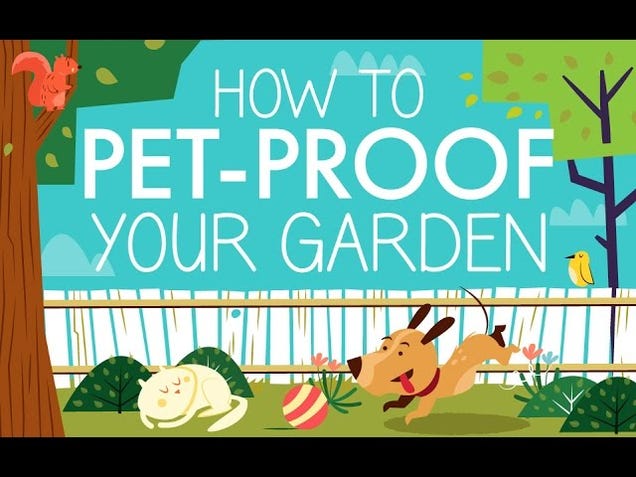
Simple Ways to Keep Pets Out of, or Safe Around, Your Garden

by Alan Henry

By now, your garden should be in pretty good condition, but if you need a hand keeping your furry companion out of it—or you didn’t plant this year because you were worried about it—these suggestions from HomeAdvisor can help.

Read more...

17 Jun 22:17

How to Teach Your Dog to Love the Crate

Crate training your puppy or adult dog is beneficial for both you and your dog. If you introduce your dog or puppy to the crate gradually and with lots of positive reinforcement, the crate will soon become a safe, den-like space that your dog enjoys resting in. You can either train your dog or puppy to love the crate slowly, over several days or even weeks, or in just a weekend, depending on what works best for your dog and your schedule. Adult dogs may take a bit longer to crate train than puppies, but be patient and your dog will learn to love the crate in no time.[1]

EditSteps

EditPreparing the Crate

  1. Choose an appropriately-sized crate. Your dog's crate should be just large enough for the dog to stand up in, turn around, and lie down comfortably. One of the reasons that crate-training is effective for housebreaking a dog is that dogs will not eliminate waste where they sleep. If the crate is too large, the dog may use one end for sleeping, and use the other as a latrine. [2]
    Teach Your Dog to Love the Crate Step 1 Version 3.jpg
    • If your puppy is still growing, you can buy a crate that will accommodate his adult size, and block off part of it with a divider (sold with some crates) to fill up the extra space.
    • Many humane societies and some veterinarian's offices rent crates, so you can get one that is the appropriate size for your puppy and trade up as the animal grows.
    • If you plan to use the crate for air travel, be sure to choose one that is approved by the FAA or your airline of choice.
  2. Choose the right kind of crate. There are many different kinds of crates you can buy, including wire, plastic, and soft-sided. Choose the best crate for your dog and circumstances.[3]
    Teach Your Dog to Love the Crate Step 2 Version 3.jpg
    • Wire crates are the most inexpensive and breathable, and usually come with dividers for walling off part of the crate to accommodate a growing puppy.
    • Plastic crates feel cozier to most dogs, and can usually be used for air travel. However, they aren't the best choice in hot weather, or for dogs that get hot easily.
    • Soft-sided crates are lightweight and portable, however many dogs can chew their way out of them, and they can be difficult to clean.
  3. Find a good spot for the crate. When you begin crate training, it is best to put the crate in a place where you and your family spend a lot of time during the day, like the kitchen or living room. Dogs are social animals, and like to feel that they are part of the pack. It is important not to put the crate in an isolated location, like the basement or garage. The crate should never feel like a punishment for your dog.[4]
    Teach Your Dog to Love the Crate Step 3 Version 3.jpg
    • You should plan to move the crate to your bedroom at night when training a puppy, so you can take the puppy out when it needs to go to the bathroom.
    • Some dog owners simply set up two crates, one in the living area of their homes, and one in the bedroom.
  4. Make the crate comfortable for your dog. Place a blanket or towel on the bottom of the crate for the dog to sleep on. If you are using a mesh or wire crate, you can also drape a breathable blanket or towel over the top of the crate to create a cozier, more den-like atmosphere that may help your dog feel more secure.[5]
    Teach Your Dog to Love the Crate Step 4 Version 3.jpg
    • Some dogs and puppies might mistake the bedding for something to chew on, or as bathroom material. If this is the case, remove the bedding and clean the cage, and proceed without bedding. You can add it back in later as your dog matures.[6]
  5. Be enthusiastic about the crate. As you set up the crate, your dog may come over to investigate it. Say positive things about the crate to show your enthusiasm for it, and allow your dog to explore. However, you should not try to force your dog into the crate or close the door right away if he goes inside. Getting used to the crate takes time and patience, and the more excited you seem about the crate, the more excited your dog will become.
    Teach Your Dog to Love the Crate Step 5 Version 3.jpg

EditCrate Training Gradually

  1. Open the door to the crate. Leave the door of the crate open and verbally encourage your dog to check it out. Your dog may go in to have a look see, or may not be so easily convinced. If your dog does enter the crate, be sure to give a lot of positive praise to let him know that you are pleased.
    Teach Your Dog to Love the Crate Step 6 Version 3.jpg
    • Do not shut the door on the dog if he does enter; wait until the dog is secure being in the crate before you close the door.
  2. Put some treats inside the crate. You can close the treats inside the crate for a few minutes to build your dog's interest, or let the dog get to them right away. It is OK if the dog just pokes its head in to get the treats at first. Gradually move the treats further and further back into the crate until the dog has to go completely inside to get them.
    Teach Your Dog to Love the Crate Step 7 Version 3.jpg
  3. Place a favorite toy inside the crate. If your dog is not responding well to treats, try placing a favorite toy, or a brand new and especially tempting chew toy inside the crate.
    Teach Your Dog to Love the Crate Step 8 Version 2.jpg
  4. Feed your dog meals in the crate. Once your dog will voluntarily enter the crate to retrieve a toy or treat, you can begin feeding him meals inside the crate. Put the food dish all the way back in the crate, and leave the door open while the dog eats his first meal or two in the crate.
    Teach Your Dog to Love the Crate Step 9 Version 2.jpg
  5. Begin closing the door. Once your dog seems content standing and eating in the crate, you can begin closing the door while he eats. Stay nearby where the dog can see you. At the first few feedings, open the door as soon as the dog is done eating. Then gradually leave the door shut for a few additional minutes after each feeding, until the dog is staying in the crate for 10 minutes at a time.[7]
    Teach Your Dog to Love the Crate Step 10 Version 2.jpg
  6. Get your dog used to longer stays in the crate. Once your dog is used to eating in the crate with the door closed, you can leave him in for longer periods of time. Call your dog to the crate and give him a treat. Then choose a command, such as "kennel up," point to the crate, and encourage him to enter. When he does, give him a treat and close a door. Stay near the crate for the first 5 to 10 minutes, then leave the room for a short time. Come back in the room, and let the dog out.
    Teach Your Dog to Love the Crate Step 11 Version 2.jpg
    • Repeat this process a few times a day for several days, gradually increasing the time your dog spends in the crate.
  7. Crate the dog while you leave the house. When your dog can successfully stay in the crate for 30 minutes without whining or showing signs of distress, you can leave him in the crate while you leave the house for short outings. Make sure to exercise your dog before you leave, and put him in the crate. You may want to leave a toy or two with him. The simply put him in the crate as you have been doing and leave without any extra fuss.[8]
    Teach Your Dog to Love the Crate Step 12 Version 2.jpg
  8. Crate your dog at night. It is best to keep the crate in your bedroom initially, especially if you have a puppy that may need to pee during the night. As the dog gets used to sleeping in the crate overnight, you can move the crate to a different location if you prefer.[9]
    Teach Your Dog to Love the Crate Step 13 Version 2.jpg
  9. Don't keep your dog in the crate for too long. Dogs need exercise and social activity to remain physically and emotionally healthy, and over-crating can lead to problems. Be aware of the following crate-time guidelines, and avoid leaving any dog in a crate for over 5 hours at a time, except at night.[10]
    Teach Your Dog to Love the Crate Step 14 Version 2.jpg
    • Age 9-10 weeks: 30-60 minutes.
    • Age 11-14 weeks: 1-3 hours.
    • Age 15-16 weeks, 3-4 hours.
    • Age 17+ weeks: 4+ hours (but never more than 6!).
  10. Respond to whining appropriately. Don't let your dog out of the crate because of whining, unless you believe the animal needs to eliminate. Otherwise, you are rewarding the whining and encouraging the behavior in the future. Ignore your dog's whines for a few minutes. If he does not give up, take him outside quickly and matter-of-factly to eliminate, and then return the dog to the crate. Make sure you do not teach the dog that whining = escape from the crate.[11]
    Teach Your Dog to Love the Crate Step 15.jpg

EditCrate Training Over a Weekend

  1. Make a schedule and train your dog over a weekend. Many people don't have time to spend weeks crate-training a dog. If you follow the prescribed steps here, and remain positive and patient with the dog, most animals can be conditioned to love the crate in a single weekend.[12]
    Teach Your Dog to Love the Crate Step 16.jpg
  2. Get the crate ready ahead of time. Purchase your crate and place it in the desired location. You can do this a few days ahead of time to get the dog used to the crate's presence. Leave the door of the crate open so your dog can explore.
    Teach Your Dog to Love the Crate Step 17.jpg
  3. Begin placing treats in the crate Friday night. Sneak a few treats into the crate on Friday evening, and replace them as your dog discovers them. You can continue to sneak treats into your dog's crate after the initial training period is over to help maintain the positive association with the crate.
    Teach Your Dog to Love the Crate Step 18.jpg
  4. Serve Friday night dinner in the crate. Put your dog's evening meal in a bowl in the back of the crate. If your dog is reluctant to enter the crate completely, slide the bowl closer to the door, but as the dog begins to eat, try to push it further into the crate. If the dog seems comfortable, close the door until he is done eating, but only if things are going well.
    Teach Your Dog to Love the Crate Step 19.jpg
  5. Begin active training on Saturday morning. For the first training session, sit down next to the crate and call your dog. Show the dog a treat, and give a command to enter the crate (for instance "go to bed" or "kennel up",) then toss the treat into the crate. When the dog goes into the crate to get the treat, give him enthusiastic praise, and another treat while he is inside. Give your dog another command (e.g. "come out" or "OK") to leave the crate, and then repeat.
    Teach Your Dog to Love the Crate Step 20.jpg
    • Repeat this process 10 times, then take a short break, and repeat another 10 times.
  6. Ask your dog to earn the treat. Later Saturday morning, do another session. Give the first few treats as before. After a few times, instead of just throwing the treat into the crate, give the command and don't give the treat until your dog has entered the crate. Then give the command to leave the crate and give your dog another treat when he comes out.
    Teach Your Dog to Love the Crate Step 21.jpg
    • Repeat this about 10 times, or until your dog appears to understand what is happening.
    • Take a short break, and then do another 10 repetitions.
  7. Close the crate door on Saturday afternoon. Begin by sending the dog into the crate and giving him a treat a few times as before. After a few repetitions, send the dog into the crate, give him a treat, and then gently close the crate door. Feed the dog a few treats through the door, and then open it. Give your dog the command to come out, and repeat.
    Teach Your Dog to Love the Crate Step 22.jpg
    • Do the exercise 10 times, leaving the door open a little longer each time. Try to build up to 10, then 30 seconds.
    • If your dog seems anxious, only close the door part way at first.
    • Using lots of positive reinforcement throughout this process will minimize your dog's anxiety.
  8. Increase the time in the crate. Take a break, then repeat the above exercise. This time, once you close the crate door, sit down near the crate for increasingly long intervals of time, until the dog is comfortable being in the crate for a minute at the time.
    Teach Your Dog to Love the Crate Step 23.jpg
  9. Accustom your dog to being in the crate alone. On Saturday evening, begin practicing leaving the dog alone in the crate for short periods. Begin with a few short stays in the crate as above. Next, send the dog into the crate, and then walk across the room or out of sight before coming back and rewarding your dog. Repeat this process 10 times. Then take a half hour break, and do it all again.
    Teach Your Dog to Love the Crate Step 24.jpg
  10. Practice longer crate times on Sunday morning. Get a chew bone, or a KONG toy stuffed with food, and ask your dog to enter the crate. Then give him the toy, close the door, and then relax in the same room reading or watching TV for half an hour while the dog chews the toy. When the time is up, give your dog the command to come out and open the door and take away the toy. Repeat the process an hour or two later.
    Teach Your Dog to Love the Crate Step 25.jpg
    • It is best not to celebrate the dog coming out of the crate too much. You want the dog to be excited going into the crate, not coming out.
  11. Give your dog a good workout. For the next session, you will want your dog to be well-exercised and ready to rest. Take him out for a long walk or play session, and get him tired out.
    Teach Your Dog to Love the Crate Step 26.jpg
  12. Leave the room. Send your dog into the crate, and give him his special chew toy. Close the door and then leave the room for 10 minutes. Come back and let him out for awhile, then repeat the process with increasingly longer times in the crate. Make sure to give your dog play and bathroom breaks in between, and build up to an hour of crate time for your dog.
    Teach Your Dog to Love the Crate Step 27.jpg
  13. Leave the house. On Sunday evening, it is time to try leaving the house. Send your dog into the crate and give him his chew toy. Then leave the house for 10 minutes. When your return, let the dog out of the crate and go about your evening. Do not celebrate or act excited about leaving or returning. You want to teach your dog that entering and exciting the crate is a totally normal event, and nothing to get excited about.[13]
    Teach Your Dog to Love the Crate Step 28.jpg
  14. Head out on Monday morning. After the weekend crate training, your dog should be ready to stay in the crate for several hours at a time, depending on the dog's age. Exercise your dog thoroughly in the morning, and then send him to the crate and give him a chew toy. Be sure not to make a big fuss about leaving, and only stay gone for a few hours before returning to give your dog a midday break. Remember to follow the age guidelines below, and don't leave your dog in the crate for too long:[14]
    Teach Your Dog to Love the Crate Step 29.jpg
    • Age 9-10 weeks: 30-60 minutes.
    • Age 11-14 weeks: 1-3 hours.
    • Age 15-16 weeks, 3-4 hours.
    • Age 17+ weeks: 4+ hours (but never more than 6 hours!).

EditWarnings

  • Do not use the crate as a form of punishment. You want the dog to love the crate, not fear it. Using the crate as a punishment will send the wrong message and teach the dog to hate the crate.
  • Never leave a sick dog in a crate. If your dog is vomiting, has diarrhea, or a fever, do not leave it in a crate, and do take the animal to the vet right away.[15]

EditRelated wikiHows


EditSources and Citations


Cite error: <ref> tags exist, but no <references/> tag was found


17 Jun 13:31

Chihuahua rescued from recycling truck (Photos)

by Megan Cloherty

WASHINGTON — He was about the last thing that the crew at Montgomery County’s Recycling Center was expecting to find at the end of the route, but somehow, a chihuahua survived and now has a new home.

On Monday morning, a packing truck dumped something unusual on the sorting line at Montgomery County’s Recycling Center — a chihuahua. Center Manager Mark Wheeler couldn’t believe he survived the trip.

“There wasn’t glass bottles or things in there that could have cut the dog. He must have found himself within a large cardboard box because sometimes cardboard doesn’t completely crush up,” Wheeler said.

Except for a scrape on his nose, the dog seemed unhurt from the packing truck loaded with paper products.

“Their routes are big and they’re trying to get everything they can picked up, so they’ll pack the daylights out of the trucks literally,” said Wheeler, questioning how the dog was able to get air.

While deciding what to do, Wheeler called his wife Johnna, a veterinarian and animal nutritionist.

“I called her and I said, ‘Do you think we could do another dog?’ And I told her the story real quick and she said, ‘Yeah. Sure. Bring him home,'” Wheeler recalled.

Wheeler and his wife already have two other rescued dogs in their Frederick house. He said the dog seemed skiddish around people and did not like to be handled.

The adult male chihuahua they named Packer then got a trip to the vet, where they could not find any sign of a microchip. The professional agreed with Wheeler’s wife — that based on his age and behavior, Packer was likely a stud in a puppy mill someone discarded.

“One of my friends said, ‘I get mad to think someone would throw it in trash.’ And I said, ‘He was thrown in the recycling so he’s a recycled dog,'” Wheeler said.

Wheeler has worked at the recycling center near the Shady Grove metro for 14 years and said he has never seen a dog come into the center before.

The post Chihuahua rescued from recycling truck (Photos) appeared first on WTOP.

17 Jun 13:17

Sloth bear at National Zoo euthanized

by Colleen Kelleher

WASHINGTON — Francois, the National Zoo’s 25-year-old sloth bear, had to be euthanized Wednesday.

Francois had degenerative disc disease in his spine.

The National Zoo said the decision to euthanize Francois came after the sloth bear’s condition deteriorated over the last several days.

Since the staff at the zoo discovered the spine issues last December, veterinarians have administered anti-inflammatories and nerve-pain medications. Staffers have been taking the sloth bear’s blood pressure weekly, and even posted a video of training Francois to take part.

The zoo added mulch to the sloth bear’s enclosure to make it easier for him to get around.

Sloth bears typically have a median life expectancy into the their early- and mid 20s.

More will be known about Francois’ condition after a pathology report is done in the coming weeks.

Francois was born at the National Zoo in 1991, but lived from 2003 to 2010 at the Little Rock Zoo in Arkansas where he sired four cubs.

After he returned to D.C. in 2010, he had a cub with the zoo’s female sloth bear Hana in 2012 and then three cubs with Khali, another sloth bear. Only one of the cubs, Remi, survived.

While male sloth bears normally don’t take part in raising their offspring, Francois did.

“Due to Francois’ sensitive and social nature, he not only showed interested in Remi when she was still being hand-raised, but readily became her companion and helped teach her how to be a bear,” a news release from the National Zoo said.

“It was important for Remi’s social and behavioral development that she spend quality time with members of her own species. Keepers described Francois’ overall disposition as genteel, and his interactions with the Zoo’s other female sloth bears were playful and positive.”

The post Sloth bear at National Zoo euthanized appeared first on WTOP.

17 Jun 12:29

Prince William County community calendar, June 16-22, 2016 - Washington Post


Gainesville Times - Northern VA News

Prince William County community calendar, June 16-22, 2016
Washington Post
“Visual Expressions” An exhibit of art work by members of the Four Seasons art group at the Four Seasons Active Adult Community in Dumfries. Weekdays through June 30. Manassas City Hall, 9027 Center St., Manassas. 703-257-8200. Free.
Coming AttractionsGainesville Times - Northern VA News

all 4 news articles »
17 Jun 12:23

Prince William County crime reports - Washington Post


Gainesville Times - Northern VA News

Prince William County crime reports
Washington Post
These were among incidents reported by Prince William County police. For information, call 703-792-7245. BROAD RUN AREA. THEFT/BREAK-IN. Thoroughfare Rd., 16100 block, 10 a.m. to 4 p.m. June. 2. An attempt was made to enter a residence by ...
Coming AttractionsGainesville Times - Northern VA News

all 4 news articles »
17 Jun 01:30

How to Deal With a Stray Dog

At some point, you've probably seen stray dogs. There aren't firm figures on the number of stray dogs in the United States, but they are a big problem. Stray dogs may forage for food, stake out territory, breed, and have unwanted litters with transmittable diseases. Many dogs become homeless when they are separated from their owners, get lost, or escape. Life for a dog on the street is difficult, especially if they're used to being cared for. If you see a stray dog, learn how to safely deal with the dog so that you're both protected.

EditSteps

EditCaring For a Stray Dog Immediately

  1. Examine the urgency of the situation. Seeing an unattended dog outside may instinctively move you to help, but you want to make sure that you are not making the situation worse. For instance, if you see a dog weaving through traffic, chasing after the dog could put you, other pedestrians, and motorists in danger. Wait until the dog is in a safe place before providing assistance.
    Deal With a Stray Dog Step 1 Version 2.jpg
    • If the dog is already in a safe place do not scare the dog. In this situation it is best to not approach the dog. Stray animals can act unpredictably, so be cautious.[1]
  2. Determine ownership. Before you whisk a dog a way to safety, make sure that the dog is actually alone and not simply separated momentarily from his owner. You can save yourself a lot of time, hassle and potential criminal charges by making sure the dog is actually lost. Simply wait to see if the owner comes to claim the dog.[2]
    Deal With a Stray Dog Step 2 Version 2.jpg
    • If the dog has a leash and collar on, you can try to safely grab the leash. This will keep the dog in one place while you wait for an owner to hopefully appear.
  3. Watch out for aggressive dogs. Dogs on the street will fall into one of two categories: a dog that has been separated from its owner or a stray dog without a home or loving family. There are some safety concerns with both types of dogs. Owned dog’s separated from their owners may be fearful or aggressive when approached by unknown people, including you. The dog may not be used to “street life” and may bite, scratch or run away in fear when you approach it.
    Deal With a Stray Dog Step 3 Version 2.jpg
    • Or, you may be dealing with an aggressive dog that broke loose from his owner’s home or yard looking for a fight.
  4. Check for obvious signs of disease. Since you're unsure what diseases the dog may be carrying, look for aggression, snapping, and biting at everyone and everything. This could indicate that the dog is rabid. If so, he'll also refuse water and salivate a lot. Or, another type of rabies will make the dog look very sick, prevent it from walking, but it will still salivate a lot. If you see any signs like this in a stray dog, call the police and animal control.[3] The dog may also be carrying any of the following diseases:[4]
    Deal With a Stray Dog Step 4 Version 2.jpg
    • Rabies
    • Distemper
    • Ticks, fleas, mange
    • Ringworm and other fungal diseases
    • Heartworms
    • Kennel cough
    • Intestinal parasites: roundworms, hookworms, tapeworms, whipworms
  5. Protect yourself at all times. Before finding a home for a stray dog, you'll need to catch and restrain him. This can be a little dangerous since dogs can sometimes be defensive or even hostile because of prior abuse, neglect, sickness, or his general temperament. You can approach the dog with a barrier, like a tennis racket or skateboard. This can keep the dog from biting you while you get closer to it. If you fear the dog at any time or think the situation is beyond your capabilities, retreat to a safe place and call animal control or the non-emergency police line for help.[5]
    Deal With a Stray Dog Step 5 Version 2.jpg
    • Remember that a barrier object is not meant to be a weapon for you to swing at the dog in an attempt to strike them. It is just a barrier for your own protection.

EditGetting Help For a Stray Dog

  1. Build rapport. If the dog seems open to being approached (he sits or stands without raised fur or bared teeth, and doesn't growl or snap at you), start to gain his trust. Offer something like a treat that builds trust and lets the dog know you have good intentions. Slowly approach him and offer the back of your hand with your palm down for the dog to sniff. Take your time and pause if he becomes frightened or hostile.
    Deal With a Stray Dog Step 6 Version 2.jpg
    • Pay attention to what triggers an emotional response from the dog and be sensitive. Pause and allow the dog to get more comfortable before starting to approach the dog again.
    • Never reach over the dog's head or body. The dog will see this as a threat and either run away or may bite you before retreating.
  2. Restrain the dog. Once you've gained the dog's trust and you can get close to him, restrain him. Quickly and quietly slip a leash or rope around his neck. This is important to control the dog and prevent him from running away.
    Deal With a Stray Dog Step 7 Version 2.jpg
    • If the dog twists and tries to get away after you've gotten a leash on him, try to verbally reassure him. For example, say, "Calm down, boy," in a gentle, but firm voice.[6]
  3. Find the dog's owners. If you take the dog to any veterinary clinic or the Humane Society, they can check for a microchip that locates the owners. If the dog has an owner, the owner will be notified and your job is done. If there's no microchip, you could still try to find the owners by doing any of the following:[7]
    Deal With a Stray Dog Step 8 Version 2.jpg
    • Post “found dog” flyers around the neighborhood where you found the dog. If the dog has a home, it is likely that he didn’t wander off too far from it.
    • Notify local veterinary clinics, animal shelters and animal control/police departments that you found a dog. Give a thorough description of the dog—color, gender, breed, weight, and any other distinguishing characteristics.
    • Call the local radio station to see if a lost dog has been reported or to see if they will mention it on the air. This is a good option in small communities.
    • Post found dog ads on-line and with local community newspapers.
  4. Take the dog to the vet. If you decide to bring the dog to your home, have him checked out at the veterinary clinic first. The dog will be examined for fleas and internal parasites. This will keep you from bringing these pests into your home or exposing them to your other pets.[8]
    Deal With a Stray Dog Step 9 Version 2.jpg
    • Talk with your family before bringing home a stray dog to make sure everyone agrees with the decision. You should also make sure your landlord is fine with another dog, if you rent.
  5. Foster your rescue. If a home has yet to be located for the dog, you might want to consider adopting it temporarily or perhaps permanently. If you take the dog to the Humane Society, they may not be able to take the dog in right away. But, if you are able to hold on to the dog for a quarantine period of up to two weeks, they may then take the dog and give it all of the necessary tests and vaccines.
    Deal With a Stray Dog Step 10 Version 2.jpg
    • Be prepared to pay for medical expenses and other costs. Some shelters may offer discounts for caring for strays.[9]


EditTips

  • Have your own animals spayed or neutered to prevent contributing to pet overpopulation which leads to dog homelessness.
  • Wash your hands well after being in contact with any stray dog. You can transfer diseases from one dog to another just by petting them and a few diseases can be transmitted to humans as well.
  • It's best to make sure the animal shelter is a no-kill shelter.

EditWarnings

  • Adopting a dog is a long-term commitment. Make sure you are ready to take on the responsibility of adding one to your family.
  • You should not drive with an unrestrained stray in your vehicle. If he is nervous, he can behave erratically and cause disturbances while you drive. Use a crate or restrain him with a leash well away from the driver.
  • Be aware that some canine diseases can be spread to humans, like rabies, ticks, fleas, or internal parasites. Because of this, you should be cautious when approaching a strange dog.

EditRelated wikiHows

EditSources and Citations


Cite error: <ref> tags exist, but no <references/> tag was found


17 Jun 01:30

How to Play with a Piglet

Almost everyone knows how to play with a puppy or kitten but, would you know how to play with a piglet if you had the chance? Like most young mammals, piglets are playful when they are young. You can play with a domesticated piglet or a farm pig as long as you're sure it is safe to do so.

EditSteps

EditInviting a Piglet to Play

  1. Crouch down so that you're on the piglet's level. Pigs are prey animals and may feel threatened by a human standing over them. Try to sit on the ground next to the piglet or even lay down in front of the piglet so that you are on the same eye level.
    Play with a Piglet Step 1.jpg
    • Make eye contact with the piglet and speak in a low calm voice. Piglets can be startled by a high pitched or sing song baby voice.
  2. Hold your hand out in front of you. Stick out your arm and hold your hand out with your palm facing up and knuckles facing down. Keep in mind that it might take your piglet a while to feel comfortable, especially if you just got him.[1]
    Play with a Piglet Step 2.jpg
    • Make sure that the piglet has all of his basic needs met before you try to get him to play. Check to see if he has water, a bed, and food to eat.
  3. Wiggle your fingers to get the piglet's attention. The piglet should be looking curiously at your hand, from a distance. You may also consider wiggling a treat or a toy in front of you to get the piglet’s attention.[2]
    Play with a Piglet Step 3.jpg
    • Try offering the piglet a piece of fresh fruit or a tennis ball.
  4. Call the piglet in a calm, playful voice. Use the piglet’s name if it has one and you know it, or just say, "here piggy-pig". You can also try snapping your fingers, and/or making kissing noises to get the piglet’s attention.
    Play with a Piglet Step 4.jpg
    • Keep in mind that many farm pigs are not named because they will eventually be slaughtered. If you are trying to play with a piglet on a farm, try to avoid giving it a name or you may become too attached.
  5. Keep it up until a piglet approaches. It might take some time for the piglet to feel comfortable enough to approach you, so try to be patient. If the piglet does not seem interested, leave him be and try again in a few hours.
    Play with a Piglet Step 5.jpg
  6. Let the piglet sniff your fingertips. He or she will probably try to nibble on your fingers. Be careful because it is possible that the piglet will mistake your fingers for food and bite them. If the piglet starts to nibble a little too hard on your fingers, pull your fingers away.
    Play with a Piglet Step 6.jpg
    • Keep a first aid kit handy that includes a bottle of betadine and peroxide just in case you get bit. Clean bites with peroxide then betadine (iodine). You should also make sure that you are current on your tetanus shots before playing with a piglet.
  7. Allow the piglet to circle you. If the piglet gets close to you, then he may want to investigate you further before deciding to trust you. Try to stay still while the piglet circles you. Keep in mind that the piglet may try to nibble on your clothes and shoes, especially if they smell like feed.
    Play with a Piglet Step 7.jpg
  8. Reach out slowly and put your hand on the piglet's back. Pat and rub the piglet’s back gently. If the piglet runs away, start again at the beginning and repeat the process until the piglet is comfortable being touched by you.
    Play with a Piglet Step 8.jpg
  9. Give the piglet a belly rub. Start at the sides of the piglet’s belly and then move in towards the center of his tummy. Rub the piglet vigorously on its stomach and if you're lucky, he or she will tip over in delight.
    Play with a Piglet Step 9.jpg
    • Remember to watch your fingers. Even if the piglet is comfortable with you, she may still try to nibble on your fingers if they smell like food or if she gets curious.
  10. Play with the piglet as you would play with a puppy. Once the piglet is comfortable with you, you can try playing games with her and introduce some toys as well. Piglets love to play lots of the same games that dogs enjoy.
    Play with a Piglet Step 10.jpg

EditFinding Creative Ways to Entertain a Piglet

  1. Create a rooting box. Pigs love to root around in the mud for roots and other tasty treats. If you have an indoor pig, then you can create a place for your piglet to root in your home by making a rooting box.[3]
    • To make a rooting box, place some fist-sized rocks into a large wide box and then add some treats, such as dry cereal and popcorn for your pig to root around and find. It is important to use only fist-size or larger rocks in a rooting box or your pig may accidentally inhale them.
  2. Make a mud pit. Pigs love to roll around in mud. If you keep your pigs outdoors, then you might consider making a small mud pit for your piglets to enjoy. Add some water to a patch of dry dirt to create mud and then lead you piglet over to the mud so she can investigate it.
    • You might also consider filling a kiddie pool with a bit of water for your piglet to cool off. Make sure that the water is not too deep. Your piglet may not know how to swim yet.
  3. Play fetch. Pigs enjoy interactive games such as fetch, so try tossing a stick, a tennis ball, or a Frisbee to see if your piglet will retrieve it. It might take him a few tries to get the idea, but once he figures out what you want him to do he should start to bring the item back again and again.
    • Piglets also enjoy pushing balls around with their noses. Try giving your piglet a big bouncy ball or beach ball to push around her pen or around the house if she is an indoor pig.[4]
  4. Give your piglet some newspaper. Pigs also like to shred paper, so your piglet might enjoy having a few sheets of newspaper now and then. Try laying out a few pages and then let the piglet investigate them.[5]
    • You can also try giving your piglet cardboard boxes, magazines, and other types of paper to shred.
  5. Swap toys often. Pigs are intelligent animals, so like dogs, they get bored by playing with the same toys over and over again. Try to swap out your piglet’s toys once every few days to ensure that she will always be entertained.[6]

EditTips

  • Piglets (and any animal, for that matter) are more likely to warm up to you if they think you've got food for them.
  • If it's a hot summer day, splash the piglet gently with water from a hose. Do so gently and start on the feet. If you do it too quickly it may cause shock which can lead to death.
  • Piglets absolutely love being scratched/rubbed on the soft skin behind their ears and also eating grass or any kind of plant
  • Pigs and piglets like to be rubbed in between their ears.
  • If you are going to give the piglet a treat, put it in your palm with your fingers extended as far back as they will go. This is the best way to do this, because the piglet may, in his hurry to gobble up the treat, accidentally bite your hand.

EditWarnings

  • The piglet may bite if s/he feels threatened. Make sure that the piglet warms up to you being near before you touch him/her.
  • Always wash your hands with antibacterial soap after you play with a piglet. Since pigs don't have sweat glands, they like to wallow in the mud to cool off. Mud can contain bacteria that you don't want to eat with your next meal, so wash up!
  • Most piglets will end up heading for the slaughterhouse, and you should always keep that in mind and try not to become too attached. However, while the piglet is alive you will have a duty to make her life as pleasant as possible. Not only do pigs enjoy human contact, but more importantly they have to be handled routinely so that vet checks and eventual slaughtering will be less traumatic for everyone, including the pig.
  • Make sure that the mother pig is secured in a pen before attempting to play with her babies. Mother pigs can be very protective of their Piglets and think that you're trying to have them for dinner. The last thing you want is a 300 lb. pig charging at you.

EditRelated wikiHows

EditSources and Citations


Cite error: <ref> tags exist, but no <references/> tag was found


17 Jun 01:30

How to Take Care of Goldfish

Goldfish can be rewarding and low-maintenance pets, and are often a favorite of beginners. However, goldfish require as much care and equipment as most aquarium fish; the old-fashioned "goldfish bowl" will eventually kill your finny friend. If you're looking to breed goldfish, have one as a pet, or are simply curious about what it might be like, here are instructions how to make your fish happy and healthy for years--and perhaps decades--to come!

EditSteps

EditTank Requirements and Care

  1. Get a large enough tank. The minimum tank size for one goldfish is 10-15 US gallons (56.7 liters)(Remember, they grow to about 10-12 inches (25.5-30.5 centimeters), and sometimes over!) and you will need to add 10 U.S. gallons (37.8 liters) onto that for each additional goldfish. Do your research about all different kinds of goldfish. Common goldfish, comet goldfish, and other single tail goldfish need ponds or huge tanks as they can grow up to a foot or more in length. Do not get single tails unless you have a 180 US gallon (681.4 liter) tank laying around or a pond into which you can transition them when they get too large.
    Take Care of Goldfish Step 1 Version 5.jpg
    • For decades goldfish were touted as being able to live in small bowls, and thus why they have a reputation of having short life spans. Without enough filtration, ammonia builds up quickly in such a small space and the environment becomes toxic.
    • Goldfish will grow to match the amount of space available. However, you are not required to grow them to their full potential. Your one-inch goldfish can potentially grow to the size of your arm--but would only likely to do that if you own a large pond or professional aquarium.
  2. Set up the aquarium first, before you buy the fish. It takes some time and care to set up a proper goldfish habitat. As mentioned below, there are quite a few steps to make sure the water and overall living conditions are good for the fish.
    • Fish are sensitive creatures that get stressed from going from one environment to another. Too much change too quickly can actually kill the fish even if the environment is ideal. Do not keep transferring your fish from one container to another.
    • Goldfish cannot live in small temporary environments (such as a plastic bag or small bowl) for very long. An hour is fine, several hours not very good, a day or so maximum for a small water container.
    • In an emergency, a large plastic bucket, rinsed well and with water treated with water conditioner works well.
  3. Use gravel that will not get stuck in your fish's throat. Goldfish are particularly prone to getting aquarium gravel caught in their mouths. Use either large gravel (too big to swallow) or very small gravel. Large gravel is better for goldfish because it will not get caught in their throat and because goldfish like to be able to dig into the gravel to search for fallen food.
    Take Care of Goldfish Step 2 Version 5.jpg
    • Be sure to clean your gravel before you put it into the tank. Many aquarium gravels require rinsing, or your aquarium will be cloudy or dirty. Even if you have just bought it, a good rinse and soak in some water for a day will draw out some of the impurities and help ensure that your goldfish are getting the best environment to flourish in. Make sure to not use soap.
  4. Make sure your tank has some scenery and light. Goldfish are diurnal which means they are active during the day. They need light to maintain a healthy wake/sleep cycle. There is also evidence that light is necessary to keep your fish's colors bright.[1][2] Fish that can't sleep well or aren't getting enough sunlight are going to lose their color and become dull. Keep your aquarium lit for around 8-12 hours each day to replicate a healthy day/night cycle if it does not receive natural sunlight. Never put your tank in direct sunlight, either, as this could cause large temperature fluctuations and contribute to rampant algae growth.
    Take Care of Goldfish Step 3 Version 5.jpg
    • Think about putting a rock or wood centerpiece with some artificial greenery into your aquarium. The rock or wood will give the goldfish nooks and crannies to explore and the artificial plants won't accelerate plant growth in your tank. Goldfish thrive with minimal decoration. They are typically chubby and poor swimmers, so having fewer obstacles means they can swim more freely. Consider having one medium to large statement piece in the center of the tank and a few plastic plants located outside of the swimming pattern to give your fish the most usable space.
    • Real plants are beneficial because they help absorb some of the ammonia, nitrites and nitrates that accumulates in the aquarium because of waste and natural wear and tear. However, goldfish are omnivores and voracious eaters. Stick with artificial plants until you have the time and resources to keep real plants safe from hungry goldfish.
    • Be sure that any decorations you choose aren't hollow (it's a breeding ground for potentially harmful bacteria) and that they don't have sharp edges (your fish might tear its fins).
    • Try using fluorescent lights for your goldfish. Halogen lights and incandescent lights will also do. Pay attention to how much light you give them — goldfish will appreciate 12 hours of light and 12 hours of darkness.
  5. Rig up a water filter. Goldfish need a filter. A water filter should have 3 stages: Mechanical, for removing large particles such as fish waste or excess food; chemical, for removing odors, discolorations, and other organics; and biological, to break down fish waste and ammonia with beneficial bacteria. It should also be rated for the size of your tank. If your tank is on the borderline between two sized filters, it is usually better to go with the larger filter. Having clean water and a functional, efficient filtration device will keep your goldfish content and healthy. There are three very popular kinds of filters:
    Take Care of Goldfish Step 4 Version 3.jpg
    • Hang on back (HOB) filters, which hang on the rim of your tank, and bring water in and filter water out. They are very popular, reasonably priced, and probably give you the most bang for your buck.[3]
    • Canister filters sit underneath your aquarium and use a series of tubes to filter water in and out. Canister filters tend to be almost silent, are a little pricier than HOB filters, but tend to be more efficient at filtering than HOBs.[3] Canister Filters are also typically made for tanks in excess of 50gal (About 189 Liters), and so are usually not available for smaller tanks.
    • Wet/Dry filters use an overflow box to filter out impurities. Wet/Dry filters, however, are significantly bigger than HOBs or canisters, and so generally only fit into aquariums that hold at least 50 gallons (189.2 liters).[3]
  6. Fill the tank with water. When you get your tank, fill it with tap water that has been treated with an appropriate water conditioning solution. Or, you could use distilled water.
    Take Care of Goldfish Step 5 Version 4.jpg
    • Untreated tap water or drinking water has chemicals and minerals that could harm the fish.
  7. Go through at least one fish-less cycle before introducing your goldfish. A fish-less cycle involves adding ammonia to a tank and keeping track of the nitrate levels to make sure the water is safe for your goldfish to live in. Sadly, many fish die once introduced into a new tank because of ammonia and nitrate poisoning. Make sure that you add dechlorinator, because the chlorine in tap water will kill your fish.
    Take Care of Goldfish Step 6 Version 3.jpg
    • Before you add your fish, you'll need to make sure the environment is fish-ready. Pick up a pH test kit and test the tank for the right amount of ammonia, nitrite, and nitrate levels. You want zero ammonia, zero nitrite, and less than 20 nitrate as your end result. Test strips can be difficult to use correctly, and tend to be more expensive, so get a liquid test kit like the API Master Test Kit.
    • What's going to happen is you'll start adding drops of ammonia continuously. That'll start the nitrite process going. If you keep doing what you're doing, eventually you'll see nitrates which are consumed by algae or plants. When you've done a lap, it's fish time!

EditUpkeep and Feeding

  1. Add your fish. Hopefully, if you have more than one goldfish, your goldfish are all the same type. Unfortunately, goldfish are known to eat other, smaller fish, and can overeat, keeping food from their peers. If another fish is smaller or slower, it doesn't stand a chance. You can use a commercially available tank divider to keep your “bully” or weaker fish apart from the other(s).
    Take Care of Goldfish Step 7 Version 3.jpg
    • Goldfish can be decent "community tank" fish. However, good roommates need to be selected carefully. White Cloud Mountain Minnows or Zebra Danios are good choices, and so are Plecos. However: These fish live in schools, so if you're buying extra fish, you need to at least buy an extra half dozen. So in short: Keep your goldfish with other similar goldfish.
      • Any new fish brought into an established aquarium should be quarantined for two weeks beforehand. If they have any diseases, you don't want those spread to your healthy fish!
      • Keep in mind that goldfish like colder water than most community fish, so any other species you add to the tank should be hearty. (You could also consider adding a goldfish to a tank with overly-productive livebearers to eat the unwanted offspring and keep your fish numbers in check.)
  2. Clean the aquarium at least once every week. even if it doesn't look dirty. Goldfish produce waste that even your water filter may not be entirely able to remove. A clean tank means happy, healthy goldfish. And a happy, healthy goldfish can live for decades![4] Soap is poisonous to fish and will kill them quickly, so don't wash your tank with soap. Also, don't use regular tap water to put in your tank. Drinkable water is not good for them because it takes out some of the minerals which are good for goldfish. Buy a water conditioner at a pet store and put in the amount it says on the label.
    Take Care of Goldfish Step 8 Version 3.jpg
    • Avoid removing the fish from the tank when you clean. Using a gravel vacuum to soak up debris can be done without extracting the fish from their habitat. If you have to remove the fish, for whatever reason, use a plastic container instead of a net, if possible. Nets can injure goldfish fins more easily than containers can. They are also scared of nets and can cause them stress.[5]
    • Perform a 25% water change weekly assuming you have stocked your tank properly. Do a 50% water change whenever the nitrates reach 20. It can help to have a few old towels around for this messy process. Just be careful not to vacuum up any teeny fish while you're changing the water.
  3. Measure for ammonia, nitrite, and pH. Remember that test you did before you added your precious little fish? You gotta keep that up! Ammonia and nitrite levels should be at 0. A range of pH 6.5-8.25 is fine.
    Take Care of Goldfish Step 9 Version 3.jpg
  4. Feed your fish 1-2 times daily. Be careful not to overfeed them, only feed them what they can eat in a minute, the label on the food is wrong. Goldfish can easily overeat and can die. Underfeeding is always preferable to overfeeding. If you use floating food, soak it in water for a few seconds before feeding so that it will sink. This reduces the amount of air the fish swallows while eating, which in turn reduces the risk of buoyancy problems.
    Take Care of Goldfish Step 10 Version 2.jpg
    • Just like humans, goldfish want diversity of nutrition. Feed your goldfish pellet food most of the time, live foods, such as brine shrimp, some of the time, and freeze-dried foods, such as mosquito larvae or blood worms, every once in a while. Remember to soak freeze dried food in a cup of aquarium water before you feed to your goldfish, freeze dried foods expand in a goldfish's stomach, causing to have problems swimming.
    • Feed your fish only what they can eat in one minute. Remove any excess food. More goldfish die from overeating than from anything else.
    • Feed your goldfish at the same time each day (once in the morning, once at night) and in the same spot in the tank.
  5. Turn off the light and let them get some sleep. They don't have eyelids and they don't really stop swimming, but their bodies sort of hibernate. You can tell when you notice a slight change in color and reduced activity (they'll stick to one side of the tank).
    Take Care of Goldfish Step 11.jpg
    • Goldfish like to "sleep" in the dark. You really only need an aquarium light if you're growing plants or if the room is particularly poorly-lit. But even if you don't have an aquarium light, it's good environmental practice to reduce unnecessary energy use by turning off the light.
  6. Let the water temperature change as the seasons change. Goldfish don't like temperatures over 75°F (24°C), but they appear to like seasonal changes where the temperature dips to the high 50s or 60s (15-20°C) in the winter. Understand that goldfish will not eat below 50-55°F (10-14°C).
    Take Care of Goldfish Step 12 Version 2.jpg
    • A good thermometer makes this pretty easy. There are two types to choose from: those that hang inside and those that hang outside. Both should be accurate enough, but I like the ones that hang on the inside better.
    • If you're not breeding your goldfish, a steady temperature all year-round of 74°F (23°C) is golden. If you are breeding your goldfish, simulate the seasons (goldfish spawn in the spring). Start off by lowering the temperature ("Hey, guys, must be winter!") to somewhere between 50°F (10°C) and 54°F (12°C). Then, when it's baby-making time, up it to between 68°F (20°C) and 74°F (23°C) gradually. The goldfish will be cued to then lay their eggs.

EditDealing with Potential Problems

  1. Check the oxygen level in the tank. If you notice your goldfish are congregating to the surface, odds are there isn't enough in the water. But good news! Oxygen levels will raise with a temperature reduction. So lower the temperature or get your aquarium out of the sun -- hopefully, crisis averted. or you can get a bubbler and an air pump to move the water.
    Take Care of Goldfish Step 13 Version 2.jpg
    • If you've read all of this page, you're aware of the most common problems -- so you can avoid them! As long as you maintain appropriate pH, ammonia, nitrate, nitrite, and oxygen levels, don't overfeed your fish, and clean the tank, you've answered 95% of your pets' possible problems. Good for you!
  2. Fix cloudy aquarium water. Sometimes even when we put forth our best efforts, things still go a bit awry. Water can turn yellow, green, or even white. If you notice it straight away, it's not a big deal. But do get to cleaning your tank!
    Take Care of Goldfish Step 14 Version 2.jpg
    • Each color of the spectrum signifies a different problem. It could be algae, bacteria, or even just decaying plant matter. Don't get too alarmed! With another cycle and a water change, your fish should be fine.
  3. Watch for goldfish ich. One of the most common goldfish diseases is Ich -- where the fish get little white spots on their bodies and fins and have difficulty breathing. It's a parasite that's curable. Move your fish to a hospital tank and use a commercially available fungicide.
    Take Care of Goldfish Step 15 Version 2.jpg
    • The important thing to do here is to isolate your fish from other living things, including plants. The parasite can spread to any plant or animal that's living.
    • If you notice white spots on your gravel or scenery, remove the chemical stage of your filter and treat the whole tank. Keep the sick fish separated, as it will likely need more medical care than your healthy fish.
    • You can also attempt non-chemical alternatives such as increasing the water temperature or adding high levels of aquarium salt. Temperatures of 85F (29C) will kill most strands of ich, as will about a tablespoon of salt per gallon.[6] Make sure to increase the temperature or add salt slowly over time, no more than 1-2 degrees F per hour or 1 tsp/gal per 12 hours, and continue treatment for at least 3 days after all signs of infection disappear. Once completed, perform frequent partial water changes to remove salt or reduce temperature. Be prepared for a loss of color or vibrancy in your treated fish.
  4. Monitor for Flukes. Another parasite that's a common culprit is Flukes. If infected, your fish will scratch against surfaces, develop an outer mucus, redden slightly, and possibly get a swollen belly.
    Take Care of Goldfish Step 16 Version 2.jpg
    • As with any fish parasite (just like with Ich), quarantine your fish. He can be back swimming with his finned friends in a few days if you tackle it head on from the beginning.
  5. Look for swimbladder disease. This one's pretty easy to identify, as your fish will be swimming sideways or even upside-down. You'd think he was up in fishy heaven, but no such luck. But there is luck in that it's not contagious and it can be readily fixed.
    Take Care of Goldfish Step 17 Version 2.jpg
    • For this one, you may not need to quarantine your fish. Swimbladder disease is not a parasite. However, if you'd like to err on the side of caution, do so.
    • Medication is usually not needed to cure swimbladder diseases as over- or improper feeding are typically the cause. Reduce the amount you’re feeding your fish, or better yet, put them on a fast for about 3 days. This gives your fish’s gut bacteria time to return to normal. If symptoms persist, consider changing their diet to include more high-fiber foods like peas or cucumbers, or using a medicated fish food specifically to treat internal infections.
  6. If a fish has died, take the proper measures. First things first, dispose of your fish in a way that won't stink up the house. You can bury it, or, if you feel so inclined, throw it in the compost heap. Do not flush the fish down the toilet! Grab it from the tank with a plastic bag around your hands, invert the bag, and tie it up. How you clean your aquarium depends on your situation.
    Take Care of Goldfish Step 18 Version 2.jpg
    • If only one fish died, hopefully it was a parasite that you saw quickly enough so as to avoid it spreading to the other creatures in the tank.
    • If all your fish are dying or dead, you'll need to clean out your aquarium entirely with a bleach solution. Just 1/4 of a teaspoon (a dash) for every gallon (3.8 liters) of water should do the trick. Let it soak for an hour or two to get rid of all the toxins. Then, remove the water and let it dry out.

EditTips

  • Healthy goldfish have bright scales and upright dorsal fins. When you go to purchase your goldfish, make sure he's bright and cheery!
  • Goldfish sometimes pick up gravel in their mouths. If you see them do this, don't worry! They usually spit it right back out! Just don't buy gravel small enough that they have a chance of choking.
  • Fish can go for a week without food easily - so if you forget to feed them for a day or two no harm will be done.
  • Fish don't actually have a 3 second memory. They remember a lot of things, and you can prove this by watching their immediate 'swim to the top' reaction when they hear the feeding flap open! Many fish are very intelligent.
  • If a goldfish looks unhealthy, clean the water a little bit more frequently. Feed it regularly. If the problem gets worse, do some research and read online forums for solutions or take the fish to your local pet store to see if they can help.
  • If floating food is used, soak it in water for a few seconds before feeding so that it will sink. This reduces the amount of air the fish swallows while eating, which in turn reduces the risk of buoyancy problems.
  • Watch your goldfish for signs that it is unhappy.
  • Never use a bowl with a narrow top for a goldfish. The circle shape makes the goldfish bump on the glass, and it is way too small for sufficient oxygen to get into the water. Don't just look at movies and say " Ok! That sounds easy! Just keep the goldfish in the bowl!" Nope. Not how it works.
  • Peas which have been in the microwave for 10 seconds give your fish a healthier body. Make sure you gently peel off the skin and squash the pea to make sure it's easy to swallow.
  • You need 20 gallons of space per fish. So if you have two goldfish, a 40 gallon breeder tank will be perfect for two fish for their entire lives. If you have more than that, consider getting a 75 gallon tank.
  • If your fish has white spots on most of its body this is a parasite called white spot. It is curable with a solution which is widely available from most pet stores.
  • Don't take your fish out of the tank just because you see it has its eyes open and doesn't move its body. Fishes sleep like that: they have no eyelids so they sleep with their eyes open.
  • Watch for goldfish that has ripped up skin.
  • When cleaning an empty tank, use baking soda. Baking soda will kill algae on artificial plant, sides of the tank, gravel, and the filter. Rinse well.

EditWarnings

  • Never put goldfish in a bowl or other small tank smaller than 20 U.S. gallons unless it's temporary. Bowls are not only much too small, but are difficult to filter, have poor oxygen exchange, can be especially prone to smashing accidents due to their rounded shape, and stunt the fish growth. Fish who live in bowls are exposed to deadly chemicals that aren't filtered out by a filter and terribly cramped conditions. This damages their immune system seriously, and either kills them outright or kills them slowly and painfully over a course of a few years. Living in a bowl decreases the lifespan of a goldfish by an average of 80%. That's like a human living to only 15-20!
  • Goldfish can and will try to eat nearly everything, so watch what you put in the tank!
  • Don't go by the stocking ideas it says on your tank's packaging; almost all of them show overstocked tanks that will be very prone to problems and restrict the fish living space significantly.
  • Goldfish get big (usually around 20cm, but fancy varieties normally get to a smaller size like 15cm) and can live 15-30 years. Sadly, millions die each year due to improper care and myths (goldfish bowls, etc). Be kind to your fish and your fish will live a long, long time.
  • Sand in the tank needs to be stirred when you do a water change to prevent it compacting and harmful gasses building up in it.
  • Be careful about the fish you put with them! Research and ask your pet dealer for information; the last thing you want is to find "Goldy's" skeleton floating around in the tank. Be careful when asking pet dealers for information - as most don't have a clue what they are talking about. This rule applies especially to some of the big US chain stores. Instead ask around on online forums or care sheets.

EditThings You'll Need

  • A tank/aquarium
  • Water
  • A goldfish
  • Goldfish food
  • Decorative items
  • Gravel
  • Filter
  • Thermometer
  • pH, Ammonia, Nitrite, and Nitrate water test kit. The API Liquid Freshwater Master Test Kit is a great test kit, it is recommended.
  • Net to grab fish (Never grab them with your hands always use a fish net)

EditRelated wikiHows

EditSources and Citations


Cite error: <ref> tags exist, but no <references/> tag was found


14 Jun 18:21

How Relaxed Return Policies Can Hurt Retail Workers

by Laura Northrup

Generous return policies are great for consumers, since they give us a long time to bring back items that might be defective or that don’t fit. They also give great opportunities to fraudsters, though, and can hurt employees who get some or all of their pay through commissions, since they lose the commission when their employer loses the sale.

Sometimes that’s a good thing: employees who sell something by lying to or misleading customers shouldn’t get to keep their commissions from those transactions. The same goes for employees who sell items to their friends or relatives, knowing that the items will be returned later on.

The New York Times interviewed one Macy’s saleswoman who recounted that a bottle of perfume was returned to her department almost empty, yet the store accepted the return and she lost the commission.

The question of when a commission should be reversed is one of the points that Macy’s and its the union that represents its New York City-area employees are negotiating in the employees’ new contract. An extension of their current contract would expire tomorrow, and employees are threatening to strike, though changes to their health benefits are a bigger issue in the negotiations.

Still, knowing that commissions could be taken from them at any point up to six months after a sale means that salespeople can’t necessarily depend on predictable paychecks.

“When you have a return policy that says ‘We’ll take anything back anytime,’ well, then returns go up,” explained the president of Local 1-S, the union that represents 5,000 employees at four Macy’s stores in and around New York City. The union connected the Times with the perfume-selling employee who they interviewed.

Liberal Return Policies for Consumers Can Reduce Retail Workers’ Pay [New York Times]

14 Jun 01:17

Prince William County community calendar - Washington Post


Prince William County community calendar
Washington Post
Author James C. Thompson A discussion of his book “George Washington's Mulatto Man — Who Was Billy Lee?” 1:30 p.m. Manassas Museum, 9101 Prince William St., Manassas. 703-368-1873. manassasmuseum.org. Free. Art Journaling Hosted by Yellow ...

and more »
14 Jun 01:03

Your Local Museum Can Get You Into Others for Free When You Travel

by Heather Yamada-Hosley

Tourist passes can save you money when you travel and want to visit local museums, but so can your membership to your local museum. Check with your museum, or the museums you want to visit, to see if your local membership will get you in abroad for free.

Read more...

14 Jun 00:29

Poach Sausages Before Grilling for Perfect Char and Juicy Meat

by Heather Yamada-Hosley

Grilling meat like sausages can be tricky—you want that delicious caramelization on the outside, but still want juicy, succulent meat inside. The Kitchn has a simple solution: poach your sausages before throwing them on the grill. It’s key to keeping them juicy and getting a perfect char every time.

Read more...

14 Jun 00:13

Dog Owner, Rescue Group Fighting City Ordinance Say Pooch Is An American Bulldog, Not A Pit Bull

by Mary Beth Quirk

What difference does it make if your dog is one breed or another? In cities that have breed-specific legislation on the books, it can mean the difference between keeping your pet and saying goodbye to a beloved pal.

A Michigan man and his rescue pooch who became famous last week for their matched happy grins are now, along with the Detroit Dog Rescue, having to prove to the city that the dog doesn’t violate an ordinance banning pit bulls and pit bull mixes, the Detroit News reports.

Waterford Township police officers were dispatched to the new home of Sir Wiggleton, renamed Diggy after his adoption last week, to follow up on “phone calls alleging the dog is a pit bull and therefore violates city ordinance,” Detroit Dog Rescue officials said in a statement. “Based on their visual inspection, they concluded he was a pit bull.”

The town has breed-specific legislation, or BSL, on the books [PDF] that prohibits dogs with characteristics that “substantially conform to the breed standards established by the American Kennel Club for American Staffordshire Terriers or Staffordshire Bull Terriers,” the Washington Post notes.

But the group and his owner maintain Digg isn’t a pit bull, he’s an American bulldog, and as such should remain home. The rescue organization says the owner “had registered and obtained a proper license from Waterford Township, explained [the dog] is an American bulldog and not a pit bull,” rescue officials said in a statement.

Detroit Dog Rescue says paperwork from the dog’s rescue, Detroit Animal Control, and the city’s veterinarian all indicate that Diggy is an American bulldog. If that turns out to be the case, Diggy can stay, a police rep told the Detroit News.

“If he can show that it’s not (a pit bull), then it’ll be fine,” he said. “He just has to keep those papers on him because his neighbors are gonna keep calling.”

14 Jun 00:10

Prosecutors: FedEx “Should Be Treated Just Like Any Other Drug Courier”

by Chris Morran

Two years after federal prosecutors charged FedEx with being criminally complicit in the transporting of illegal drugs from online pharmacies, the case is finally going to trial. In this morning’s opening statements, lawyers for the Justice Department urged the court to not be swayed by the famous brand name on the side of the planes.

The 2014 grand jury indictment [PDF] accused FedEx of Conspiracy to Distribute Controlled Substances, Distribution of Controlled Substances, Conspiracy to Distribute Misbranded Drugs and Misbranding Drugs, alleging that the express-shipping giant had deliberately ignored obvious indicators that it was transporting drugs for illegal online pharmacies.

FedEx employees claimed to have raised concerns with FedEx management after incidents like pharmacy customers stopping trucks on the road near the delivery address, indicating that the recipient did not actually reside there. Some customers would actually jump onto the trucks, demanding delivery, while some drivers say they were threatened if they insisted on delivering to the address on the package.

Additionally, drivers complained about bringing pharmacy parcels to delivery addresses that were nothing more than parking lots, or schools, or vacant homes where multiple recipients would park outside waiting for deliveries.

Yet according to prosecutors, FedEx management, rather than cease doing business with these pharmacy shippers, “adopted a procedure whereby Internet pharmacy packages from problematic shippers were held for pick up at specific stations, rather than delivered to the recipient’s address.”

During this morning’s open arguments, the federal prosecutor asked the court to not be swayed by the “air of legitimacy” that the government contends allowed FedEx to continue carrying these drugs with impunity for so many years.

“This drug courier should be treated in this court just like your honor would treat every other drug courier,” said the prosecutor.

The government says that internal FedEx emails will be entered into evidence at trial demonstrating that the company was turning a blind eye to pharmacies that employees referred to as “shady” and “on the run.”

One message cited in the indictment, written in 2004 by FedEx’s Managing Director of Revenue Operations, notes that “many of these companies are fraudulent and doing business outside Federal regulations.”

However, FedEx contends that it did nothing wrong; that it complied with the government’s investigations into illegal pharmacies, and that it is only as good as the information it receives from those tasked with regulating the pharmacies and the drugs they provide.

“We are a transportation company — we are not law enforcement,” has been FedEx’s response since the start of this dispute.

It is rare for these sorts of disputes to get to the criminal trial phase. Most end with enforcement actions where the company involved pays money and admits limited or no culpability. For example, in March 2013, UPS agreed to pay $40 million to end a DOJ probe into allegations that were very similar to those currently facing FedEx. If the court rules against FedEx, the company could be on the hook for around $1.6 billion.

[via Bloomberg]

14 Jun 00:08

Minneapolis Man Sues TSA For $500 Over Missed Flight

by Ashlee Kieler

For the better part of the spring, airlines, airports, and federal regulators have received the ire of consumers who say they have waited in endless security checkpoints. The back and forth between these groups and travelers has now reached another level: litigation, as one passenger has filed a federal lawsuit seeking to recoup the cost of a ticket for a flight he missed due to excessive wait times at security. 

A Minnesota man recently filed what was effectively a small claims court complaint against the Transportation Security Administration and the operators of Minneapolis-St. Paul International Airport, alleging that the 90-minute wait time he encountered before a March flight resulted in a missed trip.

According to the lawsuit — which is now in federal court, thanks to a statute that allows for any lawsuit against a federal agency to be removed to a U.S. District Court — the man arrived at the airport two hours before departure for a flight on March 19.

“MSP and TSA have done a very poor job of getting passengers through security,” the man alleges, noting the checkpoint was operating only one body scanner for the security line.

“Due to the amount of time he spent in an airport security screening line” he missed the flight, which took off nine minutes after its scheduled time.

He then says he had to purchase a new ticket and incurred additional transportation fees totaling $506.85.

The man notes in his suit that the issues with security at the airport occurred just days after the head of the TSA Peter Neffenger visited the Minneapolis-St. Paul International Airport, promising immediate improvements.

“The TSA failed in their promise resulting in my missing my flight eight days after this speech,” the man says.

The Minneapolis Star Tribune reports that while the TSA declined to comment on the specific case, a spokesperson for the agency says she had never encountered a similar lawsuit in which a passenger filed suit over a missed flight.

12 Jun 11:14

SodaStream Offering Free Sparkling Water Machines In Exchange For Customer Selfies With Discontinued Keurig Kold

by Mary Beth Quirk

Just in case Keurig wasn’t having a bad enough week after announcing it would be discontinuing its Kold soda-making machine and offering anyone who bought one a full refund, SodaStream has chimed in to rub a bit of salt directly into that carbonated wound.

The Keurig competitor says it will give Kold customers a free SodaStream Fountain Jet sparkling water maker — and all they have to do to get one is snap a photo of themselves with the soon-to-be obsolete machines.

“As the world’s largest home carbonation brand with more than 25 million users, we at SodaStream invite disappointed Kold users to enjoy fresh sparkling water at home every day,” said Doug Pritchard, president of SodaStream, North America in a press release. “SodaStream offers an environmentally friendly and economical solution that we’re certain these people will enjoy for many years to come.”

How to do it: Owners of Kold machines can email their photo with the machine, their name, address, phone number, and the Kold machine’s serial number to info@sodastreamsupport.com. SodaStream will then send them a promotional code that can be redeemed at http://www.sodastreamusa.com for a free SodaStream Fountain Jet machine.

The fine print: the deal is only open to adult residents of the contiguous USA, with a limit of one promo code per Kold machine, and it’s limited to the first 2,000 eligible applicants whose emails are received on or before June 17, 2016. It’s still unclear how many of the $370 machines Keurig sold.

Applicants can use the promo code against the purchase of one black SodaStream Fountain Jet sparkling water maker from http://www.sodastreamusa.com/inwithsodastream, and will only be responsible for paying shipping and handling.

Once you get the promo code, you’ll have to use it within 10 days of issue or it will expire and will not be replaced, SodaStream warns.

12 Jun 11:12

You Probably Just Shouldn’t Eat Anything With Sunflower Seeds In It For A While

by Laura Northrup

Sunflower seeds are a satisfying snack, and especially good to eat during a long drive. They’re also a common ingredient in cereals, granola, granola bars, protein bars, cookies, and you can even buy sunflower seed butter. We didn’t realize quite how popular they are until a company called SunOpta found Listeria monocytogenes contamination after routine testing of their bulk sunflower seeds. Since then, companies from supermarkets to sporting goods stores have been recalling their products that contain sunflower seeds, and those little seeds are everywhere.

With that, maybe it’s a good idea to just…skip eating anything with sunflower seeds in it for a while. The recall includes hundreds of items under dozens of brands. Food Safety News notes that some of the recall notices aren’t even being sent to the Food and Drug Administration, so consider checking the labels on any snacks that you eat for sunflower seeds, then checking the company website or even calling them to find out if the product has been recalled.

Avoiding Listeria illness is especially important for children, elderly people, pregnant women, and people with compromised immune systems, since they’re more likely to develop serious complications, which include septicemia, meningitis, stillbirth, and miscarriage.

Symptoms include fever, muscle aches, and diarrhea or other gastrointestinal problems. Other symptoms can include fatigue, headache, stiff neck, confusion, or seizures if the illness worsens. People who are healthy may not have any symptoms at all.

Recalls like this give you insight into how sprawling and complicated our food system is. One single recall announcement from a food packaging company near Buffalo, NY includes 15-pound bulk containers of snack mixes for re-packaging and re-sale, and then those items packaged for retail sale under the brand names Alpine Valley, Earth Fare, Flave Beach, Gonzo 2 Go, Foodhold USA, SSP, Stewarts, Tops, and Wegmans.

A company called Rucker’s Wholesale packages its snack products under the labels of a variety of farm and sporting goods stores, so it recalled bags of sunflower seeds as well as Cajun Hot Mix and Sweet ‘n’ Salty snack mixes. The stores these products sold in include Atwood’s Ranch and Home, Bass Pro Shops, Big R, Bomgaar’s, Cabela’s, C-A-L Ranch Stores, Coastal, F & S Trading, Family Choice, Farm & Home Supply, Fin Feather Fur Outfitters, Gebo’s, Jay’s Sporting Goods, Murdochs (Moo’d Food), Rural King, Sportsman’s Warehouse, Theisen’s and Uncle Buck’s.

That’s just two announcements from manufacturers, and there are dozens more of those covering hundreds more brands and retailers. You wouldn’t skim that entire list even if we printed it. Check your snacks for sunflower seeds and contact the manufacturer accordingly.

12 Jun 11:11

How to Clean a Betta Fish Tank

Bettas are extremely lovable and actually quite intelligent pets that are very easy to care for. However, they eat and excrete just like any living creature. That's why cleaning out their tank is very important. While a betta won't require walking or regular trips to the veterinarian, it does require that you keep its tank and water clean for it to stay happy and healthy.

[Edit]Steps

[Edit]Preparing to Clean a Betta Fish Tank

  1. Wash your hands! Take the time to make sure you don't have dirty hands. You want to make sure that you don't accidentally introduce germs or dirt into the tank while you clean it.
    Clean a Betta Fish Tank Step 1 Version 3.jpg
    • If you use soap, make sure to rinse it off thoroughly. Soap residue can kill fish.
  2. Unplug any heaters, filters, lights, and other equipment before you start. It is important to keep all electrical appliances unplugged and away from the tank while you are cleaning it. While these appliances should be made for use in a fish tank, you do not want them to accidentally fall into the tank or be otherwise submerged in water.
    Clean a Betta Fish Tank Step 2 Version 3.jpg
  3. Gather the tools and materials you will need. To clean the tank you will first need to set up a safe and clean place to stash your fish. Find a clean cup or bowl that you can put the fish in. Take some of the water from the Betta's existing tank and place it into the glass or bowl; You will need just enough water so that the fish will have a little room to swim around. In addition, you will need the tools to clean and refresh the tank's water.
    Clean a Betta Fish Tank Step 3 Version 3.jpg
    • You will also need: a sink, a plastic cup or net to scoop the fish and water, paper towels and a scrubber to clean the inside of the tank, water conditioner (which is available at most pet or aquarium stores), a sieve to use when cleaning tank gravel, and a plastic spoon.
  4. Scoop water out of the tank. Using a small cup, scoop out 50% to 80% of the water in the tank. Set it aside so that it can be used later on in the tank. This has to be done because you cannot change the water entirely, as it might put the betta into shock. Instead, you will put the water you set aside back into the tank, after it is cleaned.
    Clean a Betta Fish Tank Step 4 Version 3.jpg
    • If you are a new owner, you can start by 50% water changes and gradually increase it till you reach 80%.
    • Most of the filth in a betta's tank is in the gravel at the bottom. If you take the water off the top, then you will still be getting rid of most of the dirt and grime when you clean the gravel.
  5. Remove the fish from the tank. Once you have removed some of the water from the tank, scoop your fish with the same cup. Take your time and be careful of the fish's fins. If you go really slow, you may be able to get the fish to settle into the cup while it is underwater, and then you can simply lift it straight up.
    Clean a Betta Fish Tank Step 5 Version 3.jpg
    • Place the fish into the glass or bowl that you have already filled with tank water.
    • Keep in mind that while doing this you need to make sure the fish doesn't jump out. Bettas are known jumpers, so put a lid on whatever container you are keeping the fish in.

[Edit]Washing a Betta Fish Tank

  1. Empty the tank. Drain the remaining water out of the tank through a sieve into the sink. This will prevent any gravel from falling down the drain.
    Clean a Betta Fish Tank Step 6 Version 3.jpg
    • Remove any decor that is in the tank as well. You can simply set it on top of the gravel in the sieve.
  2. Run the gravel under warm water. Fold the gravel with your hand and shake it side to side to get the dirt, poo, and left over food out. Use your hands to do it really thoroughly.[1]
    Clean a Betta Fish Tank Step 7 Version 3.jpg
  3. Rinse the tank and decor with warm water. Use a soft scrubber to scrub the glass. Dry the decor well with a paper towel and put it to the side.
    Clean a Betta Fish Tank Step 8 Version 3.jpg
    • Never use soap on anything in a fish tank, including the tank itself.[2] The residue is likely to remain and hurt your betta.
  4. Refill the tank. Place the gravel and plants back into the tank before you refill it. Then pour new water into the tank and condition it. Follow the directions on the package of conditioner to determine how much conditioner to put in your fish's tank.
    Clean a Betta Fish Tank Step 9 Version 3.jpg
    • Use a plastic spoon to stir the water, making sure that the conditioner is mixed into the new water thoroughly.
    • Remember to reserve enough room for the original water that you took out of the tank. Pour the old water you reserved back into the tank once the new water has been conditioned. Stir it all together well.
  5. Wait 24 to 48 hours for the water to settle and come to room temperature. The tank water must be the same temperature as the water was before, and should be between .[3] Your fish WILL die from stress if you change the temperature too quickly.
    Clean a Betta Fish Tank Step 10 Version 3.jpg
    • Water coming to room temperature could take a while. Check the water after 24 hours using a thermometer to make sure the water temperature matches the ambient temperature in the room. If it is not room temperature, wait a few more hours and then check it again.
  6. Reintroduce the betta to its tank. Slowly put the cup (where you kept your betta) into the tank and tilt the cup a bit. Your betta will slowly come out of the cup by itself. Be gentle while you're doing this, as you might hurt it's fins.
    Clean a Betta Fish Tank Step 11 Version 3.jpg
    • Keep an eye on the betta. Once you let it go, it'll soon start exploring the tank. Set your tank back to where it was and enjoy as it swims around observing everything!

[Edit]Video

[Edit]Tips

  • Be sure to play and interact with your Betta daily as much as possible. Put it in a spot that will be visible, so that they will get to know you, and you will get to know them.
  • There shouldn't be any hard plastic plants in the tank, as they might hurt or tear the fish's fins. If you do get plastic pants, try the 'pantyhose test'. Rub them against a pair of pantyhose and see if they snag or tear it. If they do, they can tear your betta's beautiful fins and tail. It is best to use Silk plants or live plants, as live plants provide a place for the bettas to lounge on. Plus, live plants can also oxygenate the water.
  • If you do have a tank, you can change it every weekend. Bettas need a big tank. Don't get them a bowl or vase as they don't like small spaces. The bigger the better.
  • Make sure the tank is at least . If it is smaller, the fish might bite its fins from stress, and the water will get dirtier much faster.
  • Don't use soap. It can harm your Betta. Anything in your aquarium can be cleaned with warm water and a little scrubbing.

[Edit]Warnings

  • Always be careful while handling your betta. If you are not gentle, it could get hurt.
  • Never leave your betta alone when on a trip (for more than 3 days). Ask a friend to come over and feed it and change its water.
  • Change out 100% of the water if there is a problem or if you are temporarily keeping your betta in something less than 2.5 gallons.
  • Don't put your betta by any sunny windows or vents or dusty areas. Sunshine can promote algae growth and dusty or breezy areas can increase the dirt in the tank.[4]

[Edit]Things You'll Need

  • Sink
  • A plastic cup
  • Paper towels
  • Water conditioner
  • Sieve
  • Plastic spoon

[Edit]Related wikiHows

[Edit]References

[Edit]Quick Summary

10 Jun 18:44

Today's Best Lifestyle Deals: 50% Off at Perry Ellis, MAC Cosmetics, Towels, Victoria's Secret, and More

by Jillian Lucas

The Body Shop’s 75% off sale , fade-resistant towels, skincare and more lead today’s best deals.

Read more...

10 Jun 18:44

Why Clothes Always Shrink When You Wash Them

by Alan Henry

Everyone knows what it’s like to do the laundry and then wind up having to re-break in a pair of pants, or squeeze into a shirt or skirt the first time after it comes out in the wash—but why does this happen, and can it be prevented ? This video from DNews explains.

Read more...

10 Jun 18:31

The Car Brands With the Highest Maintenance Costs Over Time

by Kristin Wong on Two Cents, shared by Andy Orin to Lifehacker

The true cost of owning a car goes beyond the sticker price. Maintenance, for example, is an expense that can add up quite a bit over time. However, your mileage will vary depending on the car.

Read more...

10 Jun 18:30

Bookmark This Video Next Time You Go Through a Breakup

by Kristin Wong

A breakup can cloud your judgment and disrupt your life, making it difficult to get stuff done. If you’re in the middle of one, the School of Life offers some words of wisdom to cope with the feeling of rejection and loss.

Read more...

10 Jun 18:29

Twitter Resets Passwords Related To Possible Breach

by Ashlee Kieler

Following reports that the passwords for nearly 33 million Twitter accounts were breached and put up for sale on the dark Web, the social media network has notified potentially affected users and reset their passwords. 

Twitter announced the move in a blog post on Friday, noting that it was working to ensure users’ accounts were safe from ne’er-do-wells.

Michael Coates, Trust & Information Security Office for Twitter, says the company has cross-checked the leaked data from each purported hack with its own records.

“As a result, a number of Twitter accounts were identified for extra protection,” he writes. “Accounts with direct password exposure were locked and require a password reset by the account owner.” The company did not specify how many account passwords were reset.

Coates reiterated that the leaked passwords, which were found by LeakedSource earlier this week, did not come from a breach of Twitter’s own systems.

“The purported Twitter [user]names and passwords may have been amassed from combining information from other recent breaches, malware on victim machines that are stealing passwords for all sites, or a combination of both,” Coates says. “Regardless of origin, we’re acting swiftly to protect your Twitter account.”

While the site has taken steps to protect users, it also recommends they take extra precautions such as enabling two-factor authentication login verification, use strong passwords, and consider using a password manager.

“The recent prevalence of data breaches from other websites is challenging for all websites — not just those breached,” Coates wrote. “If a person used the same username and password on multiple sites then attackers could, in some situations, automatically take over their account.”

10 Jun 18:28

People Stranded On Multiple Rides After Amusement Park Suffers Power Outages

by Mary Beth Quirk

It’s bad enough when one roller coaster or ride malfunctions and strands a bunch of passengers, but the situation at an amusement park went beyond a single incident, with visitors stuck on multiple attractions after a series of power outages.

People were stuck on several rides last night Carowinds amusement park, in Charlotte, N.C. reports WYFF-4, after sporadic power outages. Reports of stranded visitors started around 8, with a park spokesperson confirming the power outages, but not confirming anyone was stuck until 9:45 p.m.

“Around 8 pm this evening, there was a power failure at Carowinds. As a result, there was a partial power outage in the park,” a statement read from the park at that time. “Several rides were stopped and safely evacuated. We are currently lowering WindSeeker to the ground. As always, the safety of our guests and associates is our highest priority.”

One visitor said he was stuck on the ride with his girlfriend and her family when the power went out — and it wasn’t fun.

“We have been stuck on the Windseeker ride at Carowinds for over two hours now. We finally slowly making our way down at what it feels like a couple inches every 4-5 minutes,” he wrote to WYFF. “It is making us mad that they’re taking this long and had a power outage to begin with. I won’t be coming back to Carowinds for a long time and recommend others shouldn’t either.”

A park representative told the station shortly before 11 last night that all the passengers had been safely unloaded from the rides, and utility crews were investigating a blown transformer.

Riders stuck on multiple rides at Carowinds after power outages [WYFF4.com]

10 Jun 18:27

Gawker Media Files For Bankruptcy; Ziff Davis Is Likely Buyer

by Chris Morran

Gawker Media — former home to Consumerist and former employer of two current Consumerist staffers — is filing for bankruptcy after being on the receiving end of a $140 million legal pile driver by wrester/reality star Hulk Hogan.

Bloomberg reports that Gawker filed for Chapter 11 bankruptcy protection this morning in a federal bankruptcy court in New York, unable to pay the huge jury award to Hogan and still remain operational.

Yet the Gawker brand and website will likely not go away, as publisher Ziff Davis — which already operates sites like IGN, PC Magazine, and Geek.com — has already expressed an interest in swooping in to buy up the remains of Gawker at a bargain.

In a letter to ZD staff, CEO Vivek Shah announced today that his company has agreed to purchase the Gawker flagship site, along with Gizmodo, Lifehacker, Kotaku, Jalopnik, Deadspin, and Jezebel — and that it will be making the purchase without absorbing any of the liability that Gawker currently faces for publishing a snippet of a private sex tape featuring Hogan and the then-wife of his friend Todd “Bubba the Love Sponge” Clem.

However, in order for ZD to acquire these sites, the court must first schedule and hold an auction, which Shah says will likely occur toward the end of July.

“In the event we become the acquirer, the additions of Gizmodo, Lifehacker and Kotaku would fortify our position in consumer tech and gaming,” he writes. “With the addition of Jalopnik, Deadspin and Jezebel, we would broaden our position as a lifestyle publisher.”

Earlier this year, but before losing the Hogan lawsuit, Gawker had taken on its first outside investor, Columbus Nova Technology Partners, which paid $100 million for a minority stake in the company.

At the time, Gawker’s founder and owner Nick Denton had reportedly put a value of around $250 million on the company, but following the outcome of the trial, during which a much lower $83 million figure was put on Gawker, that value has dropped.

Before Memorial Day, the company confirmed it had brought in an outside banker to help consider its options, including a sale. At the time, there were reportedly already informal offers for Gawker in the range of $50 million to $70 million.

10 Jun 18:20

Corey Stewart: Trump’s political tone ‘is just perfect’

by Neal Augenstein

WASHINGTON — Long before Donald Trump was the Republican presidential candidate, Corey Stewart knew a thing or two about the power of incendiary remarks.

When Stewart, as chairman of the Prince William Board of County Supervisors, chairman of Trump’s Virginia campaign, and a contender for Virginia governor in 2017, introduces Trump at a Richmond rally Friday night, both will be scrutinized for recent controversial comments.

Trump faces criticism from some in the GOP over remarks about a U.S.-born judge of Mexican heritage presiding over a fraud case against him.

Stewart has taken some heat for a Facebook post suggesting how he would deal with over-the-top protesters. Last week, as Trump supporters were assaulted by protesters, Stewart took to the social network:

“Time to put our foot down. These hoodlums attacked Trump supporters because they don’t like our views. These Trump supporters could have been you or your family. Are we going to tolerate this? If you tolerate thuggery, you will get more of it. When I am governor, thugs like these will be apprehended and, if they are illegal, we will kick their asses out of the country, just like we did in Prince William County.”

In a WTOP interview Friday, Stewart said he doesn’t anticipate problems for the rally at the Richmond Coliseum.

“We don’t expect a lot of protesters or rioters,” said Stewart. “We think we’ve got the situation under control.”

Stewart said he is excited to bring Trump onstage, saying he is a great candidate “and he’s got so much support in the commonwealth.”

Trump has been criticized by some in the GOP over comments about U.S. District Judge Gonzalo Curiel, who was born in Indiana to Mexican immigrants.

Trump has said Curiel is biased toward him because of his plan to build a wall on border between the United States and Mexico.

“Look, the mainstream media, the left wing, they’re going to attack Donald Trump over and over again,” said Stewart. “We’ve got to stand behind him. That’s what I’m doing and that’s what we have to do in order to win in November.”

Stewart said he doesn’t think Trump was actually referring to Curiel’s ethnicity, but was concerned about the judge’s relationship with La Raza, a Hispanic advocacy group.

“This judge has been an activist in supporting illegal immigrants and not wanting to deport illegal aliens from the United States,” said Stewart. “That’s antithetical to Trump’s position.”

In 2007 Stewart was instrumental in Prince William County adopting an illegal immigration enforcement policy that requires county police officers to check the immigration status of every person arrested.

Today, as opponents challenge Trump’s choice of words, as he readies for a battle with Democratic candidate Hillary Clinton, Stewart was asked about the tenor of the current political discourse.

“I think the tone is just perfect,” said Stewart. “I think that people are looking for a straight talker, somebody who is going to speak their mind — people find that refreshing.”

Stewart, like Trump, is standing by his words, despite those who are critical.

“They know that what they see with Donald Trump is what they’re going to get,” said Stewart.

The post Corey Stewart: Trump’s political tone ‘is just perfect’ appeared first on WTOP.

10 Jun 16:51

Maryland county panel votes again to keep Rebel flag statue

by wtopstaff

EASTON, Md. (AP) — A Maryland county council has voted to keep a century-old statue depicting a color bearer holding a Confederate flag on the courthouse lawn.

The Star Democrat newspaper reports (http://bit.ly/24FFQd5) the Talbot County Council’s unanimous decision Tuesday to keep the Talbot Boys Statue repeats one the council made in a closed session last fall. But that meeting, held in private, violated Maryland’s Open Meetings Act.

The statue has faced criticism, and in July the NAACP recommended its removal.

County Council President Corey Pack said Tuesday that the Talbot Boys statue doesn’t promote slavery, but the values of the Confederacy. He said it’s part of the county’s history.

Maryland was a Union state in the Civil War, but its Eastern Shore, where Talbot County is located, was a hotbed of Confederate sympathy.

___

Information from: The Star Democrat of Easton, Md., http://www.stardem.com

The post Maryland county panel votes again to keep Rebel flag statue appeared first on WTOP.