×You need to sign in to continue.

Shared posts

10 Jun 18:39

Be Extra Careful About Identity Theft During a Move

by Kristin Wong on Two Cents, shared by Andy Orin to Lifehacker

Identity theft rates are on the rise, so you should always be vigilant of the threat, and that means taking the necessary steps to protect yourself . As author Adam Levin points out, you should be especially careful to secure your personal information during a big move.

Read more...

10 Jun 18:34

Add a Bit of Butter to Your Yolks for Super Creamy Deviled Eggs

by Claire Lower on Skillet, shared by Alan Henry to Lifehacker

I don’t mind a fancy deviled egg, but at heart I am a bit of a purist. Mayo, mustard, maybe a little pickle brine or relish, and some paprika are really all you need. But even I am excited about the idea of adding a bit of soft butter to the filling.

Read more...

10 Jun 17:12

St. Louis school desegregation program may end in 2019

by wtopstaff

ST. LOUIS (AP) — A group that oversees the St. Louis school desegregation program is discussing an option that would end the nation’s largest and longest-running desegregation effort.

Superintendents and representatives of 12 participating school districts met Thursday to begin planning for the potential change to the program, which has allowed more than 60,000 black students in St. Louis to attend suburban schools during the last several decades.

It is a legal requirement that the program eventually end, according to David Glaser, executive director of the Voluntary Interdistrict Choice Corporation, which oversees city-county transfers.

If the board votes later this year to approve the change, it would start in the fall of 2019, the St. Louis Post-Dispatch reported (http://bit.ly/1XdPHaA ). All students who are currently in the program could continue through graduation.

Black students from St. Louis began attending predominantly white schools in St. Louis County in the early 1980s as the result of a federal school desegregation lawsuit. The program also allowed white students from the county to attend city magnet schools. About 4,583 black students from the city transferred last school year, while about 140 white students transferred to city magnet schools.

But several school districts have stopped accepting transfer students through the program: The Pattonville School District stopped because of its shifting demographics, while the Kirkwood School District began only accepting the siblings of students already enrolled last year because of a lack of classroom space.

“It’s sad that it’s ending,” Kirkwood schools’ superintendent Tom Williams told the newspaper. “For Kirkwood, having that diversity has been really rich for all our kids.”

The option to attend suburban schools continues to be popular among black families in the area, Glaser said, noting there are around 3,000 applications this year for about 650 open seats in county schools this fall.

“It’s done what it’s expected to do,” St. Louis Public Schools superintendent Kelvin Adams said of the desegregation program. “It’s given students in the city the chance to interact with students in the county. It’s a program that’s been around a long time and that benefits students in both places.”

A study released by the corporation in 2012 showed transfer students showed little academic advancement in elementary school, but steady improvement in high school in reading and math.

Earlier this year, the governing board of St. Louis Public Schools approved a contract with Jerome Morris, a professor of urban education at the University of Missouri-St. Louis, and its Public Policy Research Center to look into desegregation’s effects and recommend policies.

___

Information from: St. Louis Post-Dispatch, http://www.stltoday.com

The post St. Louis school desegregation program may end in 2019 appeared first on WTOP.

10 Jun 17:12

Cops: Woman who sabotaged fiance’s kayak said, ‘I’m free’

by wtopstaff

GOSHEN, N.Y. (AP) — A New York state trooper says a woman accused of fatally sabotaging her fiance’s kayak on the Hudson River told an investigator, “I’m free” after confessing to the crime.

The testimony came during a court hearing Thursday on whether statements 36-year-old Angelika Graswald made to police can be used during her upcoming trial on murder and manslaughter charges.

Police say she admitted removing a drain plug from Vincent Viafore’s kayak in April 2015 and pushing a floating paddle away from him after his kayak capsized.

Viafore drowned. Graswald has pleaded not guilty.

Investigator Anthony DaSilva said Graswald made the statement 10 days later as they were on a boat during the search for Viafore’s body. Graswald told investigators she and Viafore had problems and he had postponed their engagement.

The post Cops: Woman who sabotaged fiance’s kayak said, ‘I’m free’ appeared first on WTOP.

10 Jun 16:57

Yelp Ordered To Remove Allegedly Defamatory Reviews Of Law Firm

by Ashlee Kieler

Two years after a California lawyer won a default judgment against a former client accused of posting defamatory reviews of the law firm on Yelp, those reviews remained online. However, this week a California appeals court ruled that Yelp must finally remove these reviews. 

This case goes back to 2012, when a woman hired the law firm to represent her in a personal injury claim. That relationship only lasted a handful of weeks before the client and lawyer parted ways.

Shortly after the lawyer ceased representing the woman, she allegedly published a review on Yelp, giving the firm one out of five stars, and stating that her lawyer deserved an even lower rating than that. The review accused the lawyer of “making a bad situation worse,” and failing to speak with both the client and insurance company because “her mom had a broken leg.”

The law firm first asked the woman to remove the review, which they contend contained defamatory and false statements. In response, the woman refused to remove the Jan. 2013 review, and allegedly threatened to post an updated review, and to have another review posted by someone else.

The law firm alleged that the woman — or possibly someone she knew — subsequently posted a second review in Feb. 2013, which the firm also said was defamatory and false.

The lawyers then sued the woman, accusing her of defamation, trade libel, false light invasion of privacy, and emotional distress. In Jan. 20134, after the defendant failed to respond to the complaint or show up at court, the court awarded the law firm nearly $558,000 in damages and ordered that Yelp remove the reviews in question.

Yelp, which was not a party to the original defamation lawsuit, objected to the order, saying that the law firm had failed to actually prove that the reviews are defamatory. The site filed a motion to vacate the judgment, arguing that Yelp had standing to bring the motion as an “aggrieved party,” even though it was a nonparty in the lawsuit.

The court denied the motion in Sept. 2014, and Yelp appealed. This week, a state appeals court once again came down in favor of removing the reviews.

“Throughout proceedings in the trial court and on appeal, Yelp has endeavored to blur the distinction between the judgment entered against [the woman] which awarded Hassell damages and injunctive relief, and the removal order in the judgment which directs Yelp to effectuate the injunction against [the woman],” reads the order [PDF].

The judge disagreed with Yelp’s contention that removing the defamatory statements would “injuriously affect” the review website.

“Yelp’s claimed interest in maintaining [its] Web site as it deems appropriate does not include the right to second-guess a final court judgment which establishes that statements by a third party are defamatory and thus unprotected by the First Amendment,” the court ruled.

And, while the removal order may aggrieve Yelp, it did not impose liability on the company, as Yelp has never been accused of wrongdoing in this case.

A Yelp spokesperson tells Courthouse News that the ruling “undermines the free speech and due process rights of consumer reviewers and the online platforms that host their content.”

“It gives those who dislike certain speech — here, a lawyer who was upset at reviews from her clients — the ability to require their removal while denying the website hosting that speech the ability to defend its editorial rights to publish the speech or rebut the claims,” the spokesperson said.

Yelp Must Take Down Defamatory Reviews [Courthouse News]

10 Jun 16:21

Citi Is Suing AT&T Over The Word “Thanks”

by Chris Morran

Last week, AT&T launched a new loyalty program dubbed AT&T Thanks, offering rewards to customers, especially those who bundle together wireless and pay-TV services from the company. This morning, Citi fired back at the Death Star, alleging that AT&T is stomping all over Citi’s “ThankYou” trademark.

For several years, Citi has had trademarks protecting its “ThankYou from Citi” credit card rewards program, while AT&T more recently filed with the U.S. Patent and Trademark Office for its “AT&T Thanks” mark.

thankyoufromciti

atthanks2

That AT&T mark was published for opposition this week, and it looks like Citi has a problem with it. Citi has sued the telecom titan this morning in federal court seeking to block continued infringement of its trademark, along with damages.

While Citi has registered multiple variations of its “ThankYou” mark, we couldn’t find anything indicating that the bank has registered anything that that says “Thanks.”

Both the Thanks and ThankYou programs do involve loyalty rewards, though the ThankYou mark is more explicitly designated to cover credit and debit card rewards while the AT&T Thanks doesn’t make any mention of specific types of products or commerce; just “incentive rewards programs for customers for the purpose of promoting and rewarding loyalty.”

According to the complaint [PDF] Citi is concerned about confusion of, among other things, credit cards that are co-branded by AT&T.

For nearly 20 years, Citigroup and AT&T have issued co-branded credit cards, including the AT&T Universal Card and the AT&T Access Card. According to Citi, around 1.7 million customers currently have one of these cards.

“As a result of Citigroup and AT&T’s partnership and co-branding efforts and the marketing efforts associated therewith, consumers are accustomed to seeing the Citigroup and AT&T names and trademarks together and are familiar with the association between these two companies,” reads the complaint, later adding that “the likelihood of consumer confusion or mistake or deception is exacerbated by Citigroup and AT&T’s history of co-branding credit cards and services and the use of Citigroup’s THANKYOU marks in connection with those co-branded credit cards and services.”

The bank says it made AT&T aware of its concerns in April 2016, but that the telecom company went ahead and launched the Thanks program while discussions were ongoing.

We’ve reached out to AT&T for comment, but have not yet heard back from the company.

[via Reuters]

10 Jun 11:10

Mistake at Smithsonian’s Muhammad Ali exhibit comes to light after boxer’s death

by Meg Hasken

WASHINGTON — Millions of people have seen Muhammad Ali’s famous “rumble in the jungle” boxing gloves at the National Museum of American History, but it turns out those gloves were not used in the fight.

A current curator at the museum tells WTOP that the robe Ali donated was part of the fight, but the gloves that have been displayed on and off for 40 years, were not.  So why did the label say they were used in the fight?

The Smithsonian says the mistake goes all the way back to the donation in 1976. The original deed of gift states that the robe was used in training sessions both in Pennsylvania and Zaire, and that the gloves were used in the Ali-George Foreman fight in Zaire.

Pictures of the fight, however, clearly show the gloves used at the fight are not the same ones at the museum. The gloves in the fight were black, while the ones on display are red and white.

The Smithsonian says it is rare that their labels are wrong, but it can and does happen, and they are committed to maintaining historical accuracy in all presentations.

In addition, the museum says it has a practice of sending its major exhibition scripts to outside readers and for external scholarly review, as well as conducting internal reviews.

The Smithsonian says it has recently further strengthened its review process with the addition of a new editor to the staff — a former journalist and copy editor, who is also an experienced fact-checker.

The post Mistake at Smithsonian’s Muhammad Ali exhibit comes to light after boxer’s death appeared first on WTOP.

10 Jun 11:03

Manassas schools will serve breakfast, lunch as part of summer food program - PotomacLocal.com


Manassas schools will serve breakfast, lunch as part of summer food program
PotomacLocal.com
Manassas City Public Schools is participating in the Summer Food Service Program. Meals will be provided to all children without charge and are the same for all children regardless of race, color, national origin, sex, age or disability, and there will ...

10 Jun 00:51

The True Size Shows You How Big Countries and States Really Are

by Kristin Wong

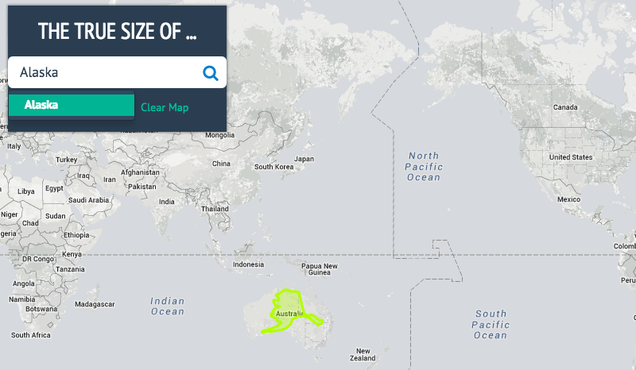
Most maps you see don’t show Earth according to its true proportions, so it’s easy to get confused over the size of different countries, states, and even continents relative to each other. The True Size is an interactive map that lets you see how big or small these places really are.

Read more...

10 Jun 00:51

Today's Best Deals: $40 Dress Shoes, Beach Umbrella, Brother Laser Printer, and More

by Shep McAllister on Deals, shared by Shep McAllister to Lifehacker

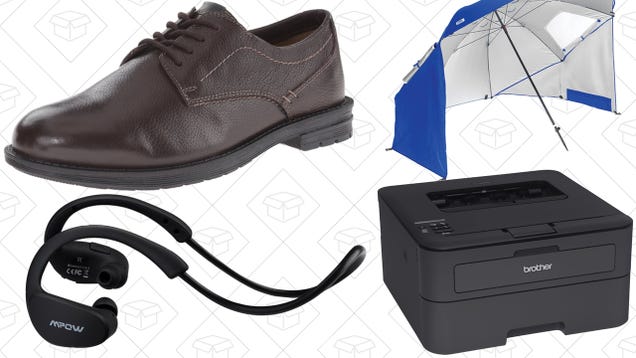
The best beach umbrella, $40 dress shoes, and a printer you won’t hate lead off Thursday’s best deals.

Read more...

10 Jun 00:50

The Container Your Berries Come In Can Tell You About Their Health

by Kristin Wong

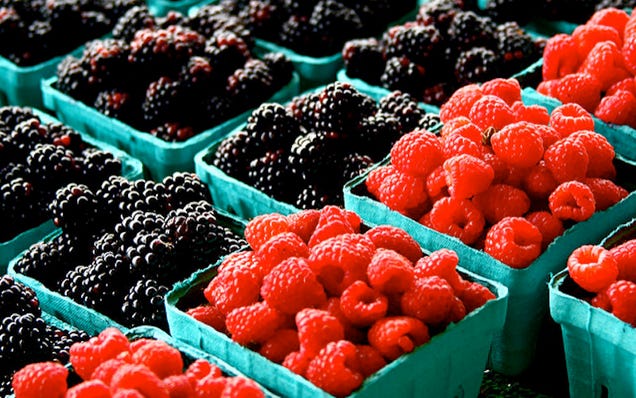
Unlike some trickier fruits, berries are relatively easy to judge for ripeness. Their color is a good indicator, but, as the Kitchn points out, there are some subtle signs that berries are about to spoil.

Read more...

10 Jun 00:47

Charcoal Grill Anything With This Visual Guide

by Claire Lower on Skillet, shared by Andy Orin to Lifehacker

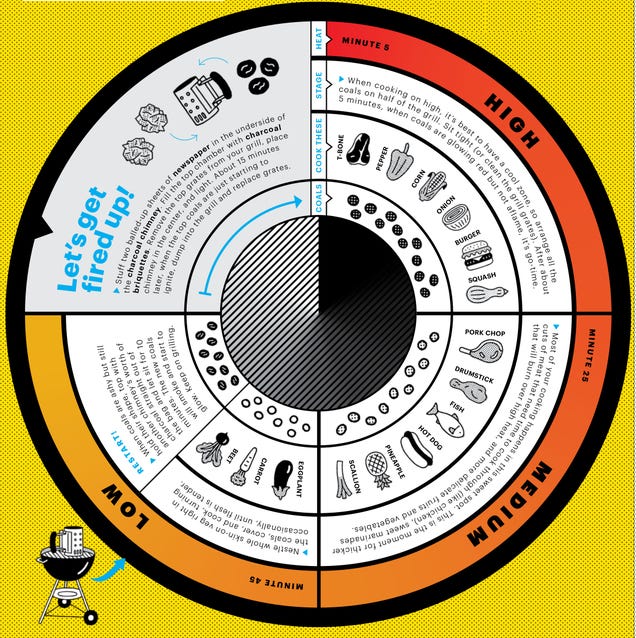
When it comes to grilling over charcoal, timing is everything, and it can be difficult to know exactly when to start cooking that juicy steak or ear of corn. To help solve this dilemma, the good people at Bon Appetit mapped out a grilling timeline, and put it on a handy printable graphic.

Read more...

10 Jun 00:47

“A Ship in Harbor Is Safe, but That Is Not What Ships Are Built For”

by Alan Henry

Getting out of your comfort zone is key to experiencing new things, broadening your horizons, and taking the risks that help us grow as people—to either achieve our goals and do the things we’ve always wanted to go, or at least say we tried to get there, even if we fell short.

Read more...

10 Jun 00:46

Avoid Using Hard Numbers When Haggling Your Way to a Deal

by Patrick Allan

Haggling isn’t just about being a smooth negotiator , it’s about not shooting yourself in the foot. Avoiding hard numbers gives a sales associate more wiggle room and increases your chances of getting a deal.

Read more...

10 Jun 00:45

The Best and Worst Sunburn Remedies, According to a Dermatologist

by Patrick Allan

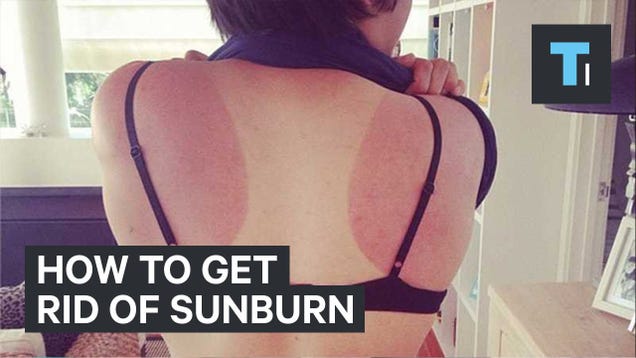
Everyone has their own preferred sunburn treatment , but some work better than others. Here’s what a dermatologist suggests you reach for, and what you shouldn’t, when you catch too much sun.

Read more...

10 Jun 00:43

The 90s Guilty Pleasures Playlist

by Eric Ravenscraft

If you turned on a radio at any point in the 90s—and you probably did since Pandora hadn’t been invented yet—you’ll know some of the songs on this guilty pleasures playlist. Even if you want to pretend you don’t.

Read more...

10 Jun 00:42

Number Of Wendy’s Restaurants Hit In Malware Attack Now ‘Considerably Higher’ Than 300

by Laura Northrup

Wendy’s, a fast food chain that serves burgers, fries, and salad experiences, has had some recent issues with malware. Specifically, they announced last month that about 300 franchisees had been hit with malware that breached customers’ card data. The investigation continued, though, and so did fraudulent charges. It turns out that there was another piece of malware lurking in payment systems. The number of stores hit is “considerably higher” than the company originally thought.

The company insists that the breached point-of-sale system was only still in use in franchised restaurants, and none of the restaurants that the company itself operates were affected. The company isn’t prepared to announce how many stores were affected yet, but security reporter Brian Krebs notes that his sources were certain that more than 300 restaurants had been affected because of the number of cards that had been breached.

The original breach may have happened due to the actions of a service provider: the company reports that its experts believe that the breach “resulted from certain service providers’ remote access credentials being compromised.”

Wendy’s is fairly sure that they’ve eradicated the malware, but warns that it’s sophisticated and difficult to detect. Maybe bring cash for your next salad experience, just in case.

There’s the Beef: Wendy’s Breach Numbers About to Get Much Meatier

10 Jun 00:37

Protect yourself during prime tick season in DC area

by Paula Wolfson

WASHINGTON — It is prime season for ticks in the D.C. area, specifically the deer tick that harbors Lyme disease.

“We’ve been seeing it already,” said Dr. Todd Templeman, an emergency room physician at Suburban Hospital in Bethesda, Maryland.

He says it is not unusual for patients to show up in the ER with an engorged tick still stuck to their body — an insect that must be carefully removed to prevent the spread of a potentially dangerous bacteria.

If caught very early, Lyme disease can be treated with antibiotics. But if ignored, it can cause severe health problems.

Templeman says the main way to prevent a tick from adhering to your skin in the first place is to cover up outdoors and use repellent containing DEET — the same stuff used to protect your body from mosquito bites.

“It’s very safe, effective and we recommend it, especially if you are going into the woods,” Templeman added.

He says it is important to remember that ticks can’t fly and are most often low to the ground, so dress accordingly, including tucking pant legs into socks.

But he says the most important thing to remember is to do a “tick check” as soon as you come inside.

“That involves looking at your own body, but also having a family member look at your body,” he said. That way you won’t miss places like the back of your neck.

Look carefully because ticks are very small and the young ones can be as tiny as a freckle. And remember, the longer they are attached, the greater the risk of trouble.

For some people, a rash that resembles a bull’s-eye is a sign of possible Lyme disease — while in others, the bad omen is a rash that seems to come and go.

Most of the time, a tick bite results in nothing more than an itch, easily treatable with an over-the-counter hydrocortisone cream or an antihistamine.

But if that tick carries Lyme, tougher treatment is warranted. It’s also important to seek medical help if you find a tick that appears to be enlarged.

“We want to remove it delicately so as not to spread the disease any further,” Templeman said.

The CDC has plenty of information about the signs of Lyme disease, along with a schedule of symptoms on its website.

The post Protect yourself during prime tick season in DC area appeared first on WTOP.

10 Jun 00:35

Here’s What’s Going On With The Rio Olympics & The Zika Virus

by Mary Beth Quirk

If you haven’t been living under a rock for the last few months, you’ve likely heard the words “Zika virus” and “Rio Olympics” paired together often, both in the media and everyday conversations. With the 2016 Summer Olympics set to start in August, you may be wondering what’s going on — is Zika a threat to tourists and athletes in Brazil? Will the games be postponed or moved?

Some background first: in February, the World Health Organization officially declared the Zika virus, a mosquito-borne illness that has been linked to birth defects in thousands of babies, an International Health Emergency. Brazil is one of almost 60 countries and territories which to date report continuing transmission of Zika by mosquitoes, according to the World Health Organization.

But because there’s this little event going on in August in Rio de Janeiro that’s expected to attract an estimated hundreds of thousands of visitors from around the world, some are worried that all many of those people could pick up Zika and bring it back to their home countries.

It’s important to note that the WHO advises pregnant women to stay away from any countries and areas with ongoing Zika virus transmissions, including Rio de Janeiro. Their sexual partners are urged to practice extra safe sex (or abstain entirely) for a few weeks after returning from trips to Zika-affected locations.

If you do travel to the Rio Olympics, the WHO recommends you:
• Follow the travel advice provided by their countries’ health authorities, and consult a health worker before traveling.
Protect yourself from mosquito bites by using insect repellents and by wearing clothing – preferably light-colored – that covers as much of the body as possible.
• Practice safer sex or abstain from sex during their stay and for at least eight weeks after returning from Rio, particularly if you’ve had or are experiencing symptoms of Zika virus.
• Choose air-conditioned accommodation (where windows and doors are kept closed to prevent cool air from escaping, and mosquitoes from entering).
• Avoid visiting areas in cities and towns with no piped water or poor sanitation (ideal breeding grounds of mosquitoes), where the risk of being bitten by mosquitoes is higher.

That brings us to the last few months, when experts have started weighing in on the potential risk of spreading Zika.

What do the experts say?

In April, a group of Brazilian scientists based at the University of Sao Paulo published a study in the journal Epidemiology & Infection that found the Olympics would result in no more than 16 additional cases of the disease, Reuters reports.

Then in May, more than 200 bioethicists and health experts signed a letter calling for the WHO to recommend postponing or moving the Olympics to keep the epidemic from spreading. The WHO responded by saying that that based on “current assessment, cancelling or changing the location of the 2016 Olympics will not significantly alter the international spread of Zika virus.”

The WHO noted that there are other countries out there reporting Zika transmission, but that “People continue to travel between these countries and territories for a variety of reasons. The best way to reduce risk of disease is to follow public health travel advice.”

This week, another study from another group of Brazilian researchers at the University of Sao Paulo seemed to support the earlier projection, Reuters reports, predicting that the Rio Olympics would result in no more than 15 Zika infections among the foreign visitors expected to attend the event.

What’s next?

This week, WHO announced that it would be convening a panel of experts next week to go over the Zika issue in general and its impact on the Rio Olympics specifically.

The emergency June 14 meeting will mark WHO’s third discussion of the Zika outbreak. Panels of this nature are required every three months in order to keep abreast of new evidence, and consider whether the virus should still be classified as an international health emergency.

The group of independent experts will “look at evidence around the Olympics and most likely review the travel guidance around that,” WHO spokesman Christian Lindmeier said.

“The role of the emergency committee is to review all new science and all new evidence which has come in over the past months and to review their own recommendations, to make new recommendations or give out new guidance,” he told reporters at a news briefing reported by Reuters.

10 Jun 00:32

In Most States, No Regulator Cares If A Merger Closes Your Local Hospitals

by Kate Cox

The consolidation of, well, everything in healthcare is kind of par for the course these days, really. Insurance companies, provider networks, and hospitals are constantly merging or buying each other out, all around the nation. Small, independent hospitals in every state are regularly bought by larger chains, and go from being “Smallville General Hospital” to being “HealthCoName Patient Care Center Of Smallville” all the time.

And all that is business as usual, really. Except when it happens… who’s watching out for all those folks in “Smallville” whose hospital is closing? Who’s making sure health care stays accessible to the Americans who need it? As ProPublica reports today, in 80% of states, the answer is: nobody in particular, actually.

When mergers or buyouts happen, the new, parent company is going to look for economies of scale and places to save costs. So if you now own two facilities in the same region that do the same thing and each operate at about 50% capacity, well, why not jam them together into one facility operating at 100% capacity and keep the extra cash you were spending, right?

But when that happens, actual would-be patients — anyone who needs to seek healthcare — is losing options. And what’s left for them may not be nearby anymore or, even if it is, may no longer provide the services they need.

That’s particularly true when the chain that swoops in to do the buying is faith-based instead of secular: women’s health care services and end-of-life care may no longer be offered at a hospital that once provided them, and if all the hospitals left in the region are of that chain, well, patients are out of luck for care.

But business rules even more than ideology, ProPublica reports: services like pediatrics, neo-natal care, obstetrics, and emergency rooms are also all really expensive, and may be offered in fewer locations when the expediency of a merger demands it.

That’s where merger review comes in: if a transaction is going to run against the public interest, or actively harm consumers, you would think some kind of review board would step in to prevent the merger, or set conditions. That’s what the FTC does for a wide array of transactions… but the way the U.S. operates, state-level review is even more important for mitigating local impact. And most states just aren’t doing that kind of review of hospital transactions.

The MergerWatch report finds that only 10 states require some kind of government review before hospital facilities or services can be shut down. That means 40 don’t. And when it comes to partnerships rather than actual mergers, only eight states and D.C. have any regulatory review in place before hospitals can shutter departments. Only six states require any kind of public hearing for the mergers pending review.

As ProPublica explains, this is in large part a legacy of the 1960s and 70s: for those states that have oversight, the programs are largely 50 years old and stem from a time when the issue was too many hospitals opening, not closing. When hospitals are spreading everywhere like wildfire, and crowding every block, who wants to spend time enacting regulations for how to make sure service stays available?

But decades after that proliferation, we’re going the other way. The MergerWatch report says that the number of hospitals providing short-term acute care has dropped by 240 since 2000. And in 2015 alone, 112 hospital merger, partnership, or buyout transactions took place — a 70% increase just since 2010.

ProPublica points out that when the transaction is large enough, it does trigger federal-level review, to make sure one hospital chain won’t hold an anticompetitive monopoly over a certain region. Likewise, transactions involving non-profit hospitals often trigger a review by the state’s attorney general because of the organization’s charitable or tax status.

You can check what the report says about your state’s grade on the MergerWatch website.

Who Makes Sure Hospital Mergers Do No Harm? Almost Nobody. [ProPublica]

10 Jun 00:31

Telemarketer Tricked People Into Believing They Were Buying Cleaning Products To Help Disabled

by Ashlee Kieler

Research has shown that shoppers may be more likely to purchase a particular product if they know that some of their money is going to a worthy cause, and some folks will take advantage of this tendency to trick people into purchasing thousands of dollars in household cleaning products under the guise of helping the disabled.

The Federal Trade Commission on Thursday announced that it had reached a settlement agreement with Adli Dasuqi and his companies, American Handicapped Inc. and American Handicapped and Disadvantaged Workers Inc. to resolve charges that the operation tricked people into buying products under the pretext they would help others.

According to the complaint [PDF], telemarketers working for the company cold-called individuals to sell them light bulbs, trash bags, and cleaning products.

The callers, who allegedly claimed to represent a charitable organization that employed disabled persons, would also tell potential customers that if they made a charitable donation they would receive a free gift in exchange.

“Defendants’ telemarketers appeal to consumers’ sense of charity by misrepresenting that consumers’ purchases will help handicapped or disabled people, including by misrepresenting directly or by implication that most wages paid by the [company] go to handicapped or disabled employees or that the person soliciting is handicapped or disabled,” the complaint states.

In reality, the FTC claims the company only paid a small portion of the total wages to handicapped or disabled employees, and the person making the call is usually not handicapped or disabled.

After making purchases, customers said the invoices they received were substantially higher than similar products at retail stores. For example, the company charged $30 for two light bulbs and $100 for 60 15-gallon trash bags.

In some cases, consumers tell the FTC that they received merchandise and invoices without their consent. Once this happened, they were contacted by the company, which claimed that the shopper owed a payment for the unordered merchandise.

Despite receiving notice of complaints filed by consumers, Dasuqi failed to stop the scheme, according to the FTC.

Under the company’s settlement, American Handicapped Inc., American Handicapped and Disadvantaged Workers Inc., and Dasuqi are banned from selling anything for the purported benefit of disabled persons, are prohibited from mischaracterizing their employees and their charity involvement, making untrue claims that anyone has ordered and agreed to pay for products, and barred from misrepresenting material facts about any good or service.

The order also imposes a $4 million judgment against the companies, but it was suspended due to inability to pay. Should the defendants fail to adhere to the settlement, the full judgment will be due.

10 Jun 00:30

Law Enforcement Agencies Using New Card Reader To Seize Prepaid Card Funds

by Ashlee Kieler

Millions of unbanked consumers unable to open a traditional bank account have turned to prepaid debit cards in recent years. But now these reloadable, and often untraceable, cards have also become a method of choice for criminals to transport a large amount of cash from one place to another. A new device aims to make it easier for police to seize these ill-gotten funds, but some advocates worry the card scanner could be putting legitimate prepaid card users’ civil rights at risk. 

Oklahoma Watch reports that the new portable card scanners are being used by police departments in Oklahoma with the aim of disrupting drug trafficking operation in the state.

The devices, made and sold by the ERAD Group Inc. (Electronic Recovery and Access to Data), are a new tool for police officials who, under state and federal laws, are allowed to seize property and cash believed to be involved in the drug trade.

The vehicle-mounted devices work when a police officer takes a prepaid card and runs it though the machine. At that point the information and cash on the card — which can be just about anything with a magnetic strip, not just prepaid cards — can be frozen, preventing withdrawal or use of the money in the account, or it can be seized and transferred to a law enforcement financial account, Oklahoma Watch reports.

Officers also have the ability to seize the funds from a financial institution holding the money loaded onto a prepaid debit card.

The device, while it doesn’t allow non-prepaid card funds to be frozen or seized, does provide officers with information such as the card number, name of the account holder, expiration date, and card issuer for traditional credit and debit cards.

All of this data is then stored in a case management database for future use.

So far the Oklahoma Highway Patrol says it hasn’t used the devices for seizures, but have been able to use the readers to uncover cases of identity theft. Should the departments seize funds, ERAD is entitled to a 7.7% cut.

While law enforcement officials say the readers are a welcome tool, advocates say the devices put law-abiding individuals’ rights at risk.

“I think this is likely to expand pretty radically the scope of civil asset forfeiture procedures,” Brady Henderson, legal director for ACLU Oklahoma, tells Oklahoma Watch of the possibility that the devices would violate the Fourth Amendment. “This is a capability that law enforcement has never had before and one that is very likely to land [them] in litigation.”

The departments using the devices contend that they will not be used to randomly swipe cards of every motorist stopped. Instead, they will only be used in cases in which the officer suspects criminal activity is taking place.

“If we have reasonable suspicion to believe there’s a crime being committed, we’re going to investigate that. If someone has 300 cards taped up and hidden inside the dash of a vehicle, we’re going to check that,” Lt. John Vincent, public information officer for the Oklahoma Highway Patrol said. “But if the person has proof that it belongs to him for legitimate reasons, there’s nothing going to happen. We won’t seize it.”

Still, Henderson says the new technology, which was actually created in 2012 for the science and technology arm of the U.S. Department of Homeland Security, is something he and other advocates have never seen before.

Typically, when the freezing or seizing of money is needed, officers have “all kinds of steps where courts get involved so that there’s a check and balance” system. With the new readers, that’s not the case.

Lawmakers in Oklahoma have also expressed concern over the devices, citing constitutional and due process implications.

“Until this, we didn’t even know these things were in existence,” Sen. Kyle Loveless, of Oklahoma City, tells Oklahoma Watch. “It’s scary to know that technology even exists and that government agencies are using it without an arrest without a warrant.”

New Front In Civil Forfeiture: Devices To Seize Funds On Prepaid Cards [Oklahoma Watch]

10 Jun 00:27

Sports Authority Prepares To Auction Off Its Name, Your Name, Broncos Stadium Naming Rights

by Laura Northrup

When a company files for bankruptcy protection and goes out of business, it sells off everything it owns with any value. That includes your name, if you’re on the retailer’s mailing list or part of their loyalty card program. Even the company’s own name goes up on the auction block. In the case of Sports Authority, the bankrupt company’s intellectual property includes the right to plaster their name on the field where the NFL’s Denver Broncos play.

All of this is part of an auction that will be held two weeks from today, and will be handled by Hilco Streambank, which specializes in selling intellectual property and domain names on behalf of other companies.

At the moment, for example, they’re selling some food and pet food brands that BJ’s Wholesale Club developed and apparently no longer wants, and they’re also selling the A&P brand, the supermarket’s house brand names, and its customer data to a qualified buyer.

What’s on the auction block from Sports Authority? Hilco Streambank lists the following trademarks:

  • Tommy Armour Golf®
  • Alpine®
  • Aspire Style®
  • bloom®
  • Bodyfit by Sports Authority®
  • Ram Golf®
  • S A Gear® and Design
  • Slalom®

The SportsAuthority.com URL is also for sale, and apparently the site received 125 million visits last year. It might be of use to an online sporting goods retailer that would set up a zombie retail operation, like what TigerDirect tried to do with CompUSA and Circuit City.

There are also “114 million customer files” on the block, and “25 million opt-in mailing addresses,” along with the store’s loyalty program that includes 28.5 million members. Eventually, the bankruptcy court will appoint a privacy ombudsperson to supervise the handling of this data if it’s sold to ensure it doesn’t fall into the hands of the lowest-bidding sneaker spammer.

Finally, there’s the naming rights to the Broncos’ field at Mile High Stadium.The Broncos object to this item being put up for public auction [PDF], partly because Sports Authority is behind on its payments.

Intellectual Property Acquisition Opportunity The Sports Authority, Inc. [Hilco Streambank]

10 Jun 00:26

How Well Do You Know The Real Names Of The Drugs You Take?

by Chris Morran

Ads for prescription and over-the-counter drugs are everywhere, so much so that we’ve become accustomed to hearing and seeing the brand name of a medication immediately followed by a parenthetical containing the generic name [ex: Valtrex (valacyclovir)], but how well have we been paying attention to these ads? Are we now so savvy that we immediately know that Chantix is the trade name for varenicline, or have we become so inured to these ads that we aren’t paying any attention?

If you think you’ve got a pretty good grasp on the real names of brand-name pharmaceuticals, then test your memory (or your ability to quickly check Wikipedia; we don’t have any way to stop you) with the latest Consumerist Quiz.

We’re not expecting most people to do well, as the drugs listed below cover a wide variety of ailments and hopefully not that many of you (outside the medical and pharma communities) are that well-versed on too many drugs — but have at it anyway. The only failure is in not trying, or something like that.

Take Our Survey
10 Jun 00:26

“Pinkwashing” May Soon Be A Marketing Ploy Of The Past

by Mary Beth Quirk

Splashing pink all over your products to signal that they’re meant to be used by women? “Pinkwashed” pens, electronics, and ethernet cables? Not trendy anymore, according to marketing experts who say the cool thing nowadays is to send an inclusive branding message.

Unless you’re raising money for breast cancer research, pink isn’t a strategy, Bridget Brennan, the author of Why She Buys, told The Washington Post in a new in-depth look at pinkwashing throughout the advertising ages.

“In 2016, marketing to women is all about being inclusive. That doesn’t mean excluding men; it means excluding stereotypes,” she explains.

While women do want products that are made with them in mind — like Skinnygirl Cocktails or Vixen Vodka — marketers will have better luck approaching women as one of them, instead of throwing products at them.

“Anything that says ‘you women’ is going to get a backlash,” Marketing to Women author Marti Barletta told WaPo, while using the “we women” angle might work better.

How did we get here? After years of advertisers appealing to women as homemakers, mothers, and wives, they realized that women were working and wearing jeans instead of dresses, or business suits instead of well, dresses. Women had purchasing power, and marketers started pushing products that used to be meant for men – but in pink, so no one would buy the wrong thing (please note sarcasm). That brings us back to pink pens and ethernet cords.

This eventually resulted in women often paying more for the same products as men, despite the fact that there’s no discernible differences in the same products besides scents, colors, and packaging.

Here’s the thing: making something pink doesn’t necessarily mean women will want to buy. Women, it turns out, like choices.

“When pink is a color women can choose, they will choose it. When it is the only color that isn’t the ‘normal’ one, women will not choose it,” Barletta told WaPo. “They don’t want it forced on them.”

The end of ‘shrink it and pink it’: A history of advertisers missing the mark with women [The Washington Post]

10 Jun 00:26

Can A McDonald’s Be The Center Of A Community?

by Ashlee Kieler

When thinking about a place that serves as the center of a community, you might think of a church, a community center, or even a park. You probably don’t think about a fast food restaurant. But for thousands of people in hundreds of cities around the country McDonald’s has become a gathering place of choice. 

While we’re keenly aware that a McDonald’s can be a great meeting place for groups of people to meet — you may recall the beef between a group of Korean and a New York McDonald’s that thought the group was lingering too long — but The Guardian shines a bit of light on just how integral the Golden Arches can be for communities.

With its ample seating, free WiFi, and inexpensive menu, the restaurants have become a safe and welcoming place for individuals to gather in low- and middle-income neighborhoods.

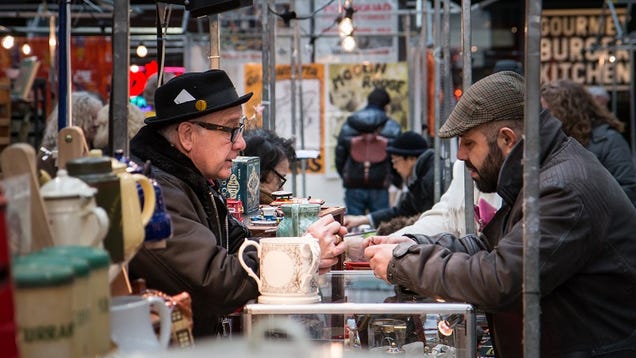
From the retired men — calling themselves the “Old Folks’ Home” who gather in corner of a New Mexico McDonald’s to the homeless woman who walks into a Louisiana location at 9 a.m. each day for hours of coffee and reading, the fast food eatery is now much more than a place to grab a quick bite; it’s become a place of common ground and acceptance.

“I love McDonald’s. People are so nice. My friends come here. I see everybody. Coffee is good, and cheap,” a man who meets at a the Louisiana location tells The Guardian.

Guests at a Texas McDonald’s say meeting at the fast food joint has helped them in ways they didn’t expect.

For example, retirees have become the regulators at a Sulfur Springs location, discussing their lives and their pasts.

Two of the last to leave are a man and a woman, one a widower, the other a widow. They tell the Guardian that meeting at the location has helped them support each other through the deaths and other hardships.

“I look composed on the outside,” the woman says. “Many of us do. But I struggle a lot on the inside. This community here gives me the support to get by.”

The homeless woman who visits the Louisiana McDonald’s every day says she’s drawn by the kind staff and camaraderie she often finds in other guests.

“I have had a very rough life. Been through a lot. My present situation leaves me without a home between 8 a.m. and 7 p.m., and McDonald’s is kind enough to allow me to sit here.” she says.

McDonald’s has also become a community meeting space for groups to discuss their cities or their religious beliefs.

In Kansas City, MO, a group gathers every Friday morning to discuss their city and the political environment. When The Guardian visited, the group was expressing its frustrations around the Black Lives Matter movement, all while the restaurant went about business as usual.

Across the country in New Mexico, a McDonald’s also serves as home to a bingo game on Tuesday nights and a Bible group that offers free Bibles and prayers to anyone who wants one on the weekends.

“We come here every Saturday, and set up in this corner,” the leader of that group tells The Guardian. “The McDonald’s offers us room for whoever shows up. We have the space to gather and pray.”

Take Our Poll

McDonald’s: you can sneer, but it’s the glue that holds communities together [The Guardian]

10 Jun 00:24

Death Of Yellowstone Tourist Prompts Renewed Warning To Stay On Park Paths

by Mary Beth Quirk

The death of a tourist at Yellowstone National Park has officials issuing renewed warnings to visitors to stay on pathways, no matter how enticing a temptation is waiting outside prescribed borders.

A Portland, OR man strayed from a designated boardwalk, slipped on some gravel and fell into the water in a geyser basin with boiling, acidic springs, authorities said.

He and his sister had walked 225 yards or so off the pathway to get closer to some thermal features in the Norris Geyser Basin, the Associated Press reports.

After the sister reported her brother’s fall, rangers attempted to recover his body, but halted the effort “due to the extreme nature and futility of it all,” a park spokeswoman said. No significant human remains were recovered.

Visitors have to stay on designated boardwalks when walking around the hot springs and geysers shooting steaming water, Yellowstone Superintendent Dan Wenk said, saying the tragedy is a reminder to follow those rules.

Since 1890, at least 22 people are known to have died from coming into contact with hot springs in and around Yellowstone, Park officials said. The ground in parts of Yellowstone can be “thin as a skiff of ice,” a park spokeswoman said, though it might not look particularly dangerous.

Attendance is up at the nation’s first national park, but along with that influx of visitors come increased chances of someone getting hurt. Wandering from pathways to get closer to wildlife is another dangerous tourist habit National Park Service officials have been trying to break, after several human run-ins with animals.

Death in boiling hot spring shows importance of park rules [Associated Press]

10 Jun 00:23

Inspector General: FDA Still Takes Too Long To Recall Tainted Food Products

by Chris Morran

Five years ago, the Food Safety Modernization Act granted the Food and Drug Administration the statutory authority to compel food producers to recall tainted products. However, a new report from a federal investigator shows that people are falling ill while the FDA sometimes takes months to issue recalls, even after it has evidence of contamination.

The preliminary report [PDF] comes from the Inspector General for the Department of Health and Human Services, whose office is auditing the FDA’s recall processes to determine whether the agency has an efficient and effective method for initiating food recalls “that helps ensure the safety of the Nation’s food supply.”

While the FSMA gives the FDA the authority to mandate food recalls, the agency must first provide food companies with the opportunity to issue “voluntary” recalls of tainted food; and almost all food recalls eventually fall under that voluntary umbrella.

In fact, according to the Inspector General’s report, the FDA has only used its authority to force two recalls: First, in Feb. 2013, to take salmonella-tainted pet food off the market; then in Nov. 2013, with a forced recall of adulterated dietary supplements. In both cases, it was months between the FDA learning of the adulteration and the recalls being issued.

Inspectors from Levinson’s office audited 30 voluntary recalls of human food from between Oct. 2012 and May 2015, and found that FDA policies and procedures provide no guidance for recall staff in terms of giving food companies a proper timeframe or manner in which to initiate a voluntary recall.

fdareport2

The report points to two examples of voluntary recalls in which the FDA identified potentially dangerous contamination in food products but waited months for finally pushing for a voluntary recall.

The first example involves the voluntary Aug. 2014 recall of various nut butters from a company called nSpired.

According to the Inspector General’s timeline (see image at left), FDA inspected the company’s facility in late Feb. 2014, and confirmed the presence of salmonella on March 7. Seventeen days later, the agency learned that this strain of salmonella matched samples taken from two people who had previously fallen ill.

In May 2014, the FDA found that samples from patients were “indistinguishable” from the samples found in the nut butter facility, yet no recall was issued.

It wasn’t until late Aug. 2014, after the FDA had considered using its authority to compel a recall, that a voluntary recall was initiated. In the 165 days between the FDA identifying the pathogen and the recall announcement, at least four people fell ill from consuming the tainted product.

fdareport

The second delayed recall cited in the Inspector General’s report involves cheese products from a company called Oasis Brands.

In July 2014, Virginia state officials notified the FDA that they had found listeria in an Oasis product, and that it had been linked to previous illnesses. Later that month, the company recalled the specific product, and subsequent FDA inspections in Aug. 2014 turned up bacteria samples that were indistinguishable from those found by Virginia authorities in the recalled product, indicating a likelihood of further contamination.

Then in Sept. 2014, an outside lab hired by Oasis also turned up listeria samples in cheese. A local recall was announced, but only for one product produced during a very limited timeframe.

It wasn’t until mid/late-October that a full-scale recall of all potentially contaminated products was initiated. In the nearly three months between the time when Virginia confirmed the tainted cheese was linked to earlier illnesses and that voluntary recall was announced, six illnesses — including the loss of two fetuses — were linked to these tainted cheeses.

“FDA does not have adequate policies and procedures to ensure that firms take prompt and effective action in initiating voluntary food recalls,” concludes the Inspector General’s report. “As a result, consumers remained at risk of illness or death for several weeks after FDA was aware of a potentially hazardous food in the supply chain.”

In response to the report, the FDA claims the instances cited by the Inspector General are outliers representing a “very selective sample.”

Deputy Commissioner Stephen Ostroff tells the AP that the FDA now has a group that meets weekly to review slow-moving recall cases.

“That way we will be able to take action much more quickly in circumstances where there seems to be some reluctance at the firm,” explains Ostroff.

10 Jun 00:19

In France, Uber And Executives Convicted Of Deceptive Commercial Practices

by Laura Northrup

Ride-hailing app Uber’s service that lets any safe driver with access to a new-ish car become a driver for hire is generally popular with the frugal public all over the world, but is less popular with regulators and with professional taxi drivers. That’s been the case in France, where the company was convicted today of deceptive commercial practices and illegal business activity, and with its executives fined a collective €850,000 ($962,689).

According to the Associated Press, that broke down to €800,000 for the company itself, which is based in San Francisco, with the regional executive fined €30,000, and the general manager for France fined €20,000. The court suspended half of each fine.

Taxi drivers were staging sometimes-violent protests during the period when the legality of the UberPop service (called UberX here in the United States) in France was in question, and sought 100 million euros in damages from the company in court. That makes the total of €1 million in fines seem modest in comparison.

Uber’s argument during the trial as that the two executives weren’t the legal representatives of Uber in the country, and are just salaried employees. The fines indicate that the court didn’t buy that argument.

You can use your Uber app in France, but it’s a licensed chauffeur who will show up at your doorstep and not an amateur driver looking to pick up a few extra bucks.

Uber convicted, fined in French trial over taxi practices [AP]

10 Jun 00:17

There’s More Money Loaded On Starbucks Cards Than Customer Deposits At Several Banks

by Mary Beth Quirk

While we’re used to the idea of people keeping money in places other than bank accounts — preloaded debit cards, sock drawers, comic book collections — there’s one way consumers are storing their cash that’s more popular than several financial institutions: Starbucks cards.

The Wall Street Journal recently looked at data from S&P Global Market Intelligence to see where people are putting their money, including banks, services like PayPal, and nonbanks, like Starbucks.

With $1.2 billion loaded onto its cards by customers, Starbucks beat out several banks’ total customer deposits, MarketWatch points out: California Republic Bancorp ($1.01 billion), Mercantile Bank Corp. ($680 million), and Discover Financial Services ($470 million). It also topped Green Dot ($56 million), one of the largest pre-paid card providers.

It’s not surprising, when you take into account the fact that Starbucks sold millions of gift cards on Christmas Eve alone. And they’re using them: customers whipped out a Starbucks card to buy stuff 41% of the time in the U.S. and Canada as of the second quarter of fiscal 2016, MarketWatch points out.

PayPal, however, is even more popular than Starbucks, with $13.02 billion in global customer account balances as of the first quarter of this year. That puts it just behind TD Bank, and Capital One Financial Corp.

PayPal Isn’t a Bank, But It May Be the New Face of Banking [The Wall Street Journal]
Starbucks has more customer money on cards than many banks have in deposits [MarketWatch]