
Fast food isn’t great for you, but it sure does taste good. This graphic has recipes for thirteen popular fast foods so you can split the difference and make the tasty goods at home.
Fast food isn’t great for you, but it sure does taste good. This graphic has recipes for thirteen popular fast foods so you can split the difference and make the tasty goods at home.

Unless the airline loses it, you probably don’t give much thought to what happens to your luggage after you check it in. If you’re curious about the process, though, this video breaks it down.
NEW YORK (AP) — A high-energy Hungarian herding dog is the latest new breed headed to the Westminster Kennel Club and many other U.S. dog shows.
The American Kennel Club is announcing Wednesday that it is recognizing the pumi, the 190th breed to join the roster of the nation’s oldest purebred dog registry. That means the pumi can vie for best of breed at Westminster for the first time next February.
With coats of corkscrew curls and ears that flop at the tips, the pumi (pronounced POOM’-ee) has a whimsical expression that belies its strong work ethic, fanciers say. The 20-to-30-pound breed goes back centuries in Hungary, where it herded cattle, sheep, and swine. It’s related to the puli, a breed already recognized by the AKC and known for its coat of long cords.
Like many herding dogs, pumis — the proper plural is actually “pumik” — are alert and active.
“They’re not for somebody who’s going to sit and watch TV all day long,” said Chris Levy, president of the Hungarian Pumi Club of America. But if provided with enough exercise and stimulation, “the pumi can chill out.”
Considered quick learners, pumis have done well at agility and other canine sports. Some in the U.S. also herd rabbits, chickens, goats and even cats in a cattery, said Levy, who breeds the dogs in Salem, Oregon. She and others have been working to build up the breed in the U.S. for two decades, but it’s still quite rare.
AKC recognition requires having at least 300 dogs of the breed nationwide, among other criteria. Two other new breeds, the American hairless terrier and an ancient North African hound called the sloughi, were recognized this past January and will also be eligible for Westminster for the first time next year.
Some animal-rights advocates say dog breeding is too appearance-focused and irresponsible when many mixed-breed animals need adoption. The AKC says conscientious breeding helps people and pets make happy matches by making the animals’ characteristics somewhat more predictable.
___
Reach Jennifer Peltz on Twitter @jennpeltz
The post American Kennel Club’s newest breed: Meet the lively pumi appeared first on WTOP.
BOISE, Idaho (AP) — For-profit medical schools are starting to pop up around the country, promising to create new family doctors for underserved rural regions.
Rural states like Idaho need more general practitioners, with the baby boom generation aging and expanded insurance coverage under the Affordable Care Act making health care more accessible. But critics of the new schools question whether companies can properly train the nation’s next crop of doctors.
“On face value, it looks like a pretty good deal” because for-profit schools promise to bring benefits without relying on taxpayer dollars, said Dr. Ted Epperly, who runs a family practice residency program in Boise, where a new for-profit school plans to start accepting students in 2018. “But it’s a little bit like Wal-Mart moving into a small community with mom-and-pop shops — it damages the existing workforce producers.”
Proponents contend challenges the new schools face are surmountable, and any stigma about for-profit medical training is born of fear, not fact. Dr. Robert Hasty, dean of the newly created Idaho College of Osteopathic Medicine, notes for-profit hospitals also were once stigmatized but now make up about a quarter of all U.S. hospitals.
“We have such a need for doctors, and if we have to make this investment, it’s worthwhile,” Hasty said.
Thirty-one new medical schools opened in the country between 2002 and 2014, according to an article in the New England Journal of Medicine. Most were nonprofit or public.
For decades, for-profit medical schools were relegated to foreign shores, with U.S.-based companies like DeVry launching medical schools in the Caribbean. But that changed in 2007 when Rocky Vista University College of Osteopathic Medicine opened in Parker, Colorado.
Several for-profit medical schools have opened in the years since, including California Northstate University School of Medicine and the Burrell College of Osteopathic Medicine in New Mexico. Rocky Vista recently announced plans to expand into Utah.
Justin Rose was part of the first group of students to graduate from Rocky Vista in Colorado. Though the Idaho native applied to several schools in the West, he wasn’t accepted to any state-run programs.
“The for-profit part never played a part in it,” Rose said of his decision to attend Rocky Vista. “The biggest concern was I’m going to a new med school that had no background affiliation or anything.”
In retrospect, he said, it was the best choice because the school was under pressure to prove its first crop of graduates would succeed.
“It made them especially motivated,” he said.
After completing an emergency medicine residency and an ultrasound fellowship at the University of Kentucky, Rose is preparing to begin his career as a doctor in Boise. He said the job will allow him to continue chipping away at his $350,000 in student loan debt.
That’s nearly double the average debt carried by medical school graduates, according to the Association of American Medical Colleges. And because Rose attended a for-profit program, he’s not eligible for many federal loan-forgiveness programs.
Even with the high debt load, the for-profit med school was worth it, Rose said.
Opening state programs is costly, and for-profit schools are a good answer for America’s rural health care shortage, Rose said. His one concern is that the number of schools will grow faster than the number of residency programs.
Like their public and nonprofit counterparts, for-profit med schools face pressure to ensure their graduates get the valuable residency positions. At least 98 percent of grads from an osteopathic school must be placed in a residency or equivalent program or the school risks losing accreditation, Hasty said.
Medical schools must make their residency placement numbers available to the public. That accountability — and the fact that would-be doctors must pass medical board exams and meet state requirements before they can start practicing — should help hopeful medical school students make good choices about where to attend, said Claudia Goldin, a Harvard economics professor who has studied for-profit education models.
“If they’re not providing the requisite training and hands-on work, then it’s going to be public information that these students didn’t pass those exams,” Goldin said. “It’s sort of a good thing to have some external review.”
The differences between for- and nonprofit schools aren’t always apparent, Goldin said. Salaries for staff at nonprofits and public schools often are higher than for-profits, for instance. And regulators have stepped in to stop some nonprofit schools from taking steps deemed undesirable, such as when Yale was told to stop plans for an online physician’s assistant school.
“I’ve always tried to think about for-profits without the jaundiced view of them that we all now seem to have,” she said. “I always try to enter this with the notion that there are good training programs all over the place, and the nonprofits have some pretty lousy places.”
The for-profit schools are not without risk. Dade Medical College in Florida abruptly closed last year amid major financial troubles, its 2,000 health care students arriving on campus to find doors locked. The school received more than $100 million in taxpayer-funded Pell grants and student loans since it opened in 1999, according to the Miami Herald.
Investors are looking for a return on their investment, said Hasty, dean of the new Idaho school. But the ultimate goal is to create safe, competent physicians.
He sees Idaho, Montana and other rural states in the region as the epicenter of a nationwide family physician shortage.
“It’s not a donation — I mean, I’d love for them to donate lots of money for our scholarships,” Hasty said. “This is really part of a social mission.”
The post New for-profit medical schools springing up across US appeared first on WTOP.

Whether you like to use mayo or not, a good tuna salad requires all the ingredients to come together. A little umami will help balance the flavor, and these two fishy ingredients are perfect for the job.
Historic Manassas 4th of July Fun to Include Watermelon Eating Contest Patch.com A watermelon eating contest will be held during the 4th of July festivities in Historic Manassas. Find out the details here. Manassas, VA. By Sharon Reed (Patch Staff) - June 21, 2016 5:12 pm ET. Manassas, VA - Want to show off your eating skills? Sign ... |
LONDON, Ohio (AP) — More than two dozen investigators are focused on solving the slayings of eight relatives who were found shot in southern Ohio two months ago, officials overseeing the top-priority investigation said Tuesday.
In terms of the manpower and resources devoted to the case, it’s shaping up to be the biggest in the history of the Ohio Bureau of Criminal Investigation, Attorney General Mike DeWine told The Associated Press.
“We’re here for the duration, whatever that is,” DeWine said.
Authorities have reviewed about 700 tips and 100 pieces of evidence and relocated the four mobile homes where the bodies were found to preserve the crime scenes, but they refuse to reveal how much closer they might be to identifying any suspects or a motive, saying they don’t want to jeopardize the chance to catch and convict whoever’s responsible.
Seven adults and a 16-year-old boy from the Rhoden family were found dead April 22 at four properties near Piketon. A newborn, another baby and a young child weren’t harmed. A coroner determined all but one of the victims had been shot repeatedly, and some had bruising.
“You can’t be in those scenes or meet with the family members and not be impacted,” bureau Superintendent Tom Stickrath said Tuesday in a joint interview with DeWine and Pike County Sheriff Charles Reader at the bureau offices in London.
Reader said he has spent nearly $150,000 on the case so far, including staff overtime and expenses for moving the four mobile homes to a secure site to help preserve them. But, he added: “We can’t put a price on eight bodies.”
The victims were 40-year-old Christopher Rhoden; his ex-wife, 37-year-old Dana Rhoden; their three children, 20-year-old Clarence “Frankie” Rhoden, 16-year-old Christopher Jr. and 19-year-old Hanna; Frankie Rhoden’s fiancée, 20-year-old Hannah Gilley; Christopher Rhoden Sr.’s brother, 44-year-old Kenneth Rhoden; and a cousin, 38-year-old Gary Rhoden.
DeWine said it’s difficult to explain the massive amount of information investigators are sorting through as they try to unspool how the victims lived for clues to why they died.
“Four crime scenes. Eight people. It is at least eight times more complicated than if you have one body and one crime scene,” DeWine said.
Investigators say they have stayed in touch as needed with surviving family members, who haven’t responded to messages from The Associated Press seeking comment through the county’s victim advocate.
Authorities said marijuana growing operations were found at three of the crime scenes. That’s not uncommon in the area, but it fueled rumors that the slayings are drug-related — one of numerous theories that have circulated.
“Right now, it really does feel like they don’t have a handle on who might’ve done that, but that may not be true,” said Michael Benza, who teaches criminal law and procedure at Case Western Reserve University. “Part of that is just what you do in the investigation. If you’re not ready to go make an arrest, you don’t want everybody to know you’re getting close because then they’re going to run.”
Investigators are maneuvering along a fine line, working to get answers for a concerned community while racing an invisible clock and knowing that as time passes, fewer clues will turn up and the likelihood of the case going cold increases, Benza said.
Still, it’s uncommon for a mass killing to go unsolved, whether it involves a family or unrelated victims.
Having multiple crime scenes complicates the investigation because there’s more space to search and more evidence to process, but it could benefit law enforcement because there are more places where useful clues might be found, Benza said.
In and around Piketon, people seem to feel safe — “almost normal” now, longtime Pike County Commissioner Harry Rider said. But he said many remain more alert about their surroundings, watching who’s around or checking more carefully when someone pulls into the driveway, just in case.
The post 2 months on, investigators plug away on Ohio family deaths appeared first on WTOP.
BARATARIA PRESERVE, La. (AP) — In the heyday of oil exploration on Louisiana’s coast after World War II, companies dug about 10,000 miles of canals as straight as Kansas highways through a natural world that’s unraveling today — due, in part, to those canals.
Soon, about 16.5 miles of canals are to be filled in the Barataria Preserve — making a small dent in a massive problem.
Interior Secretary Sally Jewell on Monday toured water plant-choked canals in the alligator-and-bird preserve by airboat and called the work crucial; she said filling in open canals can help fend off the Gulf of Mexico and its hurricanes.
“It can have an impact, not just restoring the National Park site, but also on buffering these communities from the impacts of climate change, sea level rise, of increasing storms.”
The National Park Service is using $8.7 million from penalties drawn from the catastrophic BP Gulf of Mexico oil spill in 2010 to do the work. The Barataria Preserve, established in 1978, lies about 10 miles southwest of New Orleans.
Long ago, oil companies abandoned the canals and spoil banks. Scientists say they have interfered with hydrology — trapping water in places and keeping water from flowing properly in others — and funneled salt water inland. Also, canals have widened and eroded the landscape.
The canals have long been considered a major problem for Louisiana’s coast, which experiences some of the fastest rates of land loss in the world. The state loses about 17 square miles of land each year — an area not that much smaller than Manhattan — and has lost about 1,900 square miles since the 1930s, an area the size of Delaware.
Restoring hydrology is critical, said Dusty Pate, the National Park Service’s natural resource program manager on the preserve.
“It’s the action of the river that created this entire landscape, and water movement out across the landscape is very important. The primary thing that you’re trying to do is remove barriers to (water) exchange,” he said as he surveyed the banks along the Gulf South Pipeline Canal. “It’s super, super flat and normally the way the water would move is in a big sheet or in a small natural channel.”
He added: “By taking down the spoil banks and shallowing out the canal we can’t necessarily restore all of that function, but we can do good things for sure.”
He said plans call for pushing the trees — many of which are invasive Chinese tallow trees — and brush along the spoil banks into the canal. Trees with value, such as cypress and oaks, would likely be kept, he said.
The canals won’t be filled in completely — simply because there’s not enough dirt in the spoil banks to do that, Pate said. But over time, they are expected to gradually become shallower and shallower.
Julie Whitbeck, a National Park Service ecologist, said the work to fill in the canals would be a model for future projects to backfill canals.
The preserve has become a leader in filling canals, said Eugene Turner, a Louisiana State University coastal scientist. He was not on the tour, but has studied the canals for a long time. The preserve previously filled in about 5 miles of canals. In all, about 30 miles of canals across the Louisiana coast have been filled in, Turner said.
The question whether oil companies should be forced to pay for damage caused by the canals has long been contentious. The oil industry says it was not required to fill in canals, but others argue that they should be forced to pay for that work.
Three coastal parishes — the equivalent of counties in Louisiana — are suing dozens of oil canals over damage by the oil industry to the coast. Recently, Gov. John Bel Edwards got involved in the litigation and has sought to broker a settlement.
The post Oil canals in national preserve in Louisiana to be filled appeared first on WTOP.
CHESTERFIELD, Va. (AP) — The Richmond Metro Zoo is celebrating the birth of two snow leopards.
Local media report that the cubs were born in May to their parents, 2-year-old Elsa and 3-year-old Nitro.
The cubs are the first of their kind to be born at the Chesterfield zoo. One of the newborns is a female and the other is a male.
Snow leopards are considered endangered species. Officials estimate there are only between 3,000 and 6,000 left in the world.
The cubs aren’t yet on display. The zoo says it will put them out on exhibit once they’re strong enough to follow their mother outside.
The post Pair of endangered snow leopards born at Richmond zoo appeared first on WTOP.

Infants, children, and teens all need more sleep than the average adult
. For years, we’ve heard varying but similar ranges from different sources, but now a recent consensus statement by the American Academy of Sleep Medicine (AASM) has helped put this debate to bed.
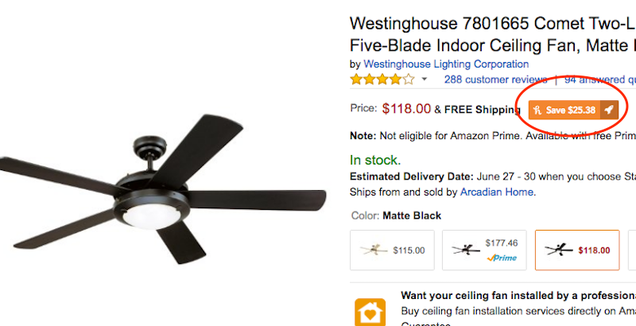
We’ve told you all about the couponing tool Honey, which automatically hunts for and applies coupon codes for your online purchases. The browser extension recently released a new feature that can help you find better prices on Amazon.

Vibrant, fresh salads are one of my favorite lunches, but I don’t always have the time to stop and make one in the middle of my workday. Traditional, leafy bases can get limp and slimy if you make them ahead, but The Kitchn has come up with five fresh salad bases that stay crisp all freaking week.
Nearly two months after CRF Frozen Foods set off a massive recall of vegetables thought to be contaminated with listeria and linked to at least two deaths and eight illnesses, a second frozen vegetable supplier — National Frozen Food Corp. — has initiated a separate recall over listeria concerns, and many of the recalled products are from the nation’s largest retailers.
The National Frozen Food Corp. announced [PDF] on Monday that it would voluntarily recall ready-to-eat frozen peas and mixed vegetables packaged for a variety of retailers after finding the products may be contaminated with listeria monocytogenes.
“The frozen green peas and frozen mixed vegetables are being recalled as a precaution with the health and safety of consumers as top priority,” the company says in a statement.
National Frozen Food Corp. initiated the recall after a sample tested by the company revealed that the finished products may potentially be contaminated with the bacteria.
So far, there have been no reported illnesses attributed to the recalled items to date.
The recalled products were sold under retailers’ store brands including Walmart’s Great Value and Target’s Market Pantry. Other affected brands include Bountiful Harvest, First Street, Live Smart, and Sprout.
The products were sold between September 2, 2015 and June 2, 2016.
Customers who purchased the vegetables should not consume the products and can return them to the place of purchase for a full refund.
The recalled products can be identified by the date codes printed on the back of the retail sized bag or the side of the master case. The following codes are affected:


Opaque Couché, described as looking like “death,” “filth,” and “lung tar,” is widely considered the world’s ugliest color. With a reputation like that you wouldn’t expect the hue to be used much, but it is — as a way to deter consumers from purchasing cigarettes in some areas of the world.
The New York Times reports that health authorities in Australia, U.K., France, and Ireland are using, or plan to use, the color on cigarette packages in hopes that it keeps the tobacco products out of consumers’ hands.
The use of the color as a deterrent began back in 2012, when market research company GfK Bluemoon was contracted by the Australian government to survey smokers on what the world’s ugliest color was.
Nearly 1,000 of those smokers said the most repulsive color was opaque couché, describing it as death, filth, and baby excrement, among other things.
Armed with this new information, the Australian government mandated that “plain packaging” be used for cigarettes. However, the Times reports that packaging isn’t exactly “plain.”
Instead, they employ the opaque couché as the background for photos of rotted teeth, tongues with tumors and dangerously tiny newborns, and warnings about smoking’s dangers printed in type larger than the brand names.
Australia says the campaign has been so successful in getting smokers to quit that other countries have jumped onto the bandwagon.
The Guardian reports that the plain packaging went into effect in the U.K. following the European Court of Justice rebuffing legal challenges from the tobacco industry.
Still, it doesn’t look like the distasteful packaging will be making a debut in the U.S. soon, as the Times reports that the American Tobacco industry has blocked all attempted to put the color and photos on packages sold in the U.S.
How to Get Smokers to Quit? Enlist World’s Ugliest Color [The New York Times]

At $99/year — or the recently announced $10.99/month — a subscription to Amazon Prime isn’t cheap, but for people who place regular orders with the e-tail giant, the free expedited shipping may be worth the cost. Now Amazon is offering “No-Rush Shipping Credits” to Prime members willing to temporarily waive their right to what had once been the main selling point of Prime. However, a closer look at the offer raises concerns that many customers may not benefit by being more patient with their purchases.
The shipping credit concept is not inherently bad. After all, if you’re paying an annual fee to get expedited two-day shipping, you should get some sort of compensation when you elect for delivery within five business days. Yet, Amazon’s execution of the concept appears to be more of an attempt to upsell Amazon services than actually provide compensation to patient Prime subscribers.
Amazon’s page describing the offer is vague about how the value of the credits is determined or how long they will last, though it does — by virtue of omission — seem clarify that you won’t be able to put whatever credits you get toward traditional Amazon purchases.
“Depending on the offer you can use your credits to shop for daily essentials on Prime Pantry, Kindle ebooks, Amazon Instant Videos, Digital Music, Amazon Appstore apps, Digital Video Games, Digital Software titles or more,” reads the website.
The actual terms of the offer shed some light on just how disappointed many customers may be.
“Credits are valid for a limited time,” reads one condition, “see detail page at checkout and promotion confirmation e-mail for credit expiration date.”
So you won’t know when your credit expires until after you’ve placed your order and it’s shipped.
“Offer only applies to products sold by Amazon.com or digital content sold by Amazon Digital Services, Inc. (other than limited digital content),” reads another condition, meaning you won’t be able to use any credits for any of the vast number of items sold by third parties — even if they are fulfilled by Amazon.
Since neither the promo page nor the terms explain how the value of credits is calculated, we tried it out for ourselves. Using three different Prime accounts, we filled and unfilled our shopping carts with eligible purchases, ranging from dog food to hammocks to drinking straws to high-end speaker systems.
Regardless of who was placing the order, or the total cost of the purchase, we inevitably were offered a $5.99 Prime Pantry credit, even though non of the three accounts used are active Pantry users.
One cart had items that were coming in two separate shipments, so the “Shipping Credits” reward was two $5.99 Pantry credits. However, that doesn’t mean a $12 discount on any upcoming Pantry order. A look back at those terms explicitly states that “For Prime Pantry credits, a maximum of $5.99 can be redeemed per eligible order.”
That means you’d have to make two Pantry orders in the future in order to enjoy the full benefit of signing away the very reason you might have signed up for Prime in the first place.
If Amazon is going to try to convince Prime members to wait a few extra days for their purchases, it should be more transparent about what subscribers are or aren’t going to get.

While talking to your doctor is the only way to get a definitive answer about medical issues, let’s face it, we all turn to the internet when we’re not feeling well and aren’t sure what’s going on with the rash that just appeared. That’s why Google is adding a “Symptom Search” feature that seeks to connect folks with more information what could be going on.
Simply searching symptoms, like a headache, can bring up a plethora of results, many of which could be confusing or use complicated medical terms. Or it makes you think you’ve definitely got something really, really bad.
To circumvent that scary feeling, and because about 1% of searches on Google — that’s millions — are symptom-related, Google is launching a Symptom Search feature that will show a list of related conditions when you type in what you’re feeling.
So for example, Google says, if you’ve had a headache all day and you’re not sure if it’ll go away on its own or if you should seek medical advice, and you type in “headache on one side,” a list of related conditions like “headache,” “migraine,” “tension headache,” “cluster headache,” “sinusitis,” and “common cold” will pop up.
If you simply type in “headache,” you’ll also get an overview of what that is, as well as information on self-treatment options and what might warrant a doctor’s visit.
“That said, symptom search (like all medical information on Google) is intended for informational purposes only, and you should always consult a doctor for medical advice,” Google notes.
Google created the list of symptoms by looking for health conditions mentioned in web results, and then checking them against medical information it’s collected from doctors for its Knowledge Graph.
“We worked with a team of medical doctors to carefully review the individual symptom information, and experts at Harvard Medical School and Mayo Clinic evaluated related conditions for a representative sample of searches to help improve the lists we show,” Google adds.
Symptom Search will be rolling out on mobile over the next few days, in English in the U.S. to start, with other languages and locations expected at a later date.

If you feel like you’re paying more for medication, you’re not alone. A new investigation from our colleagues at Consumer Reports finds that one-third of Americans are seeing higher prices for prescriptions, and one-in-six people chose to avoid getting a prescription filled because of the cost. So what’s behind the increased cost of staying well?
While it would be nice to have a single bogeyman to blame for higher drug costs, it’s a combination of drugmakers and insurance companies pushing the limits on what they can charge patients — and those patients not always fighting back or looking for alternatives.
“Consumers aren’t used to questioning prices for pharmaceutical drugs—nor are they used to shopping around and haggling,” explains Lisa Gill, deputy editor CR Best Buy Drugs, “but they could save themselves a lot of money if they do.”
According to the report, price hikes can generally be attributed to the five following factors:
1: Drug companies can charge whatever they want
While insurance companies and Medicare/Medicaid negotiate the prices they will pay to drugmakers for their products, those pharmaceutical companies are generally free to set their sticker price wherever they choose. Additionally, there are often few restrictions on how much a drug company can raise its price on an existing product. According to IMS Health, a group that tracks drug sales and marketing, the country’s biggest pharma firms made an additional $25.6 billion in 2015 from price increases on brand name drugs.
2: Insurance companies are also charging you more
According to data from the Kaiser Family Foundation, the number of employees enrolled in plans with deductibles over $1,000 has increased from less than 10% to almost 50% in just ten tears.
In addition to facing higher deductibles, Americans are increasingly paying higher monthly premiums, and higher co-pays for expensive drugs. Some plans now offer “co-insurance” on prescriptions, meaning the patient pays a percentage of the drug’s price rather than a flat co-pay.
3: Old drugs are reformulated as costly new drugs
You’ve probably heard stories of big-name drugs suddenly — after years on the market — realizing that their medication could be used for something slightly different than what it was originally intended for. The makers of OxyContin and Viagra have each toyed with the idea of making kid-targeted versions of their big-ticket drugs; not just to reach a new market, but because it can extend the patent on the original drug by several years.
It’s a tactic known as “evergreening,” and, deployed creatively, it could add more than a decade to the existing patent, meaning consumers won’t have the option of a lower-cost generic. Perhaps the most notorious example of evergreening is diabetes drug insulin, which was discovered in 1921 but is still unavailable as a generic in the U.S. because the brand-name companies that make it are granted patent extensions for each improvement.
4: Generic drug shortages can trigger massive price increases
While much of the price-increase issue has focused on brand name and specialty drugs, patients taking lower-cost generics can also be slammed by price increases, especially when there’s a shortage.
An arthritis patient profiled in the CR investigation went from paying $32 for a three-month supply of the generic hydroxychloroquine, to paying $500 for the same quantity. She’s been able to bring that down to $300 with the use of discount drug coupons, but that’s still nearly ten times what she was paying before the shortage — an increase that some patients would not be able to afford.
5: Specialty drugs are costing all of us
We’ve all heard of the sky-high prices for drugs like Daraprim, Solvadi, and Harvoni, and the defenders of the platinum-plated sticker prices on these drugs have brushed off concerns by saying they are for a niche, specialty market.
However, CR points to a report by the Congressional Research Service finding that very expensive drugs that account for fewer than 1% of prescriptions in the U.S. represent about one-third of total drug spending. The spending on specialty drugs is likely to grow, as more than half of the medications approved by the FDA last year were specialty drugs.
For more, check out the full investigation at Consumer Reports.

Imagine you’re sitting in your living room, watching some home-shopping show on QVC. The host is showing off some of the features on a laptop computer and — wait, did that just say “N****r”??
A Consumerist reader — we’ll call her Jane — says her sister spotted this, and other not-family-friendly language while watching a recent laptop demo on QVC.
“They were selling a cheap laptop, which I thought she wanted me to see,” Jane said. “I just said ‘no’ to her, I wouldn’t get it, then she said look at the text on the screen. So I did.”
And she wasn’t pleased.
The screen of the laptop, which was being sold for $289, appears to showcase a social media site of some kind that displays usernames and actions, perhaps a search.

Along with the aforementioned N-word, the screen displayed adult-oriented terms like “Porn” and “Sex.”
“This just floored me, I had a jaw drop moment,” Jane says. “I took the picture while my sister paused the screen.”
Jane hoped that the company would notice the issue and take down the offending content during a commercial break. But that didn’t happen.
“What they did was they kept the content up, went on selling their laptop,” she said.
The women emailed QVC with the photo, but according to Jane they only received an automatic response. She also posted it on social media, but it, so far, hasn’t garnered a reply.
After Consumerist reached out to QVC, the company issued an apology and claims to be looking into the matter.
“QVC is investigating an incident in which inappropriate social media comments generated from an outside source were momentarily and accidentally shown on our live programming,” Doug Rose, SVP, Brand and Communications, QVC, said in a statement to Consumerist. “We apologize to any viewers that were offended by this unauthorized content. The language shown was in direct contradiction to our values at QVC, and has no place in our broadcast nor anywhere else in our community. We are evaluating our screening procedures for live streaming social media content to prevent an incident like this from happening again.”

Despite opening a new, hipper version of its typical stores, Whole Foods doesn’t appear to be making much headway in turning around its slumping sales. In fact, customers are actually heading to discount retailer Aldi. But why?
Bloomberg reports that stores like Aldi and Trader Joe’s (who are strange corporate cousins through their Germany-based parent companies) are capitalizing on Whole Foods’ weaknesses — namely their expensive price points — and offering similar, more affordable products that garner the attention of shoppers, including the always coveted millennial demographic.
Aldi, for its part, takes an approach to shopping that is essentially a 180 from Whole Foods’ — and its new 365 store’s — approach: focusing on speed and price, not ambience and what’s hip.
The stores are also different from traditional groceries: shoppers rent a cart and receive their quarter back upon its return, and bags are a strict BYOB policy.
Aldi is also pushing back against the trend of offering customers every possible item and brand they could want. The majority of products it sells are from house brands, and you won’t get lost in endless aisles because there are significantly fewer of them.
“The customer doesn’t have to walk in the store and have so many options and take time to decide. We’ve done that work for them,” Liz Ruggles, Aldi’s marketing director, tells Bloomberg.
The retailer’s no-frills approach to shopping is a striking contrast to Whole Foods’ answer: 365, a new store that is intended to be a place where people want to hang out, not just shop.
But so far, it doesn’t appear the store in Silver Lake, CA, has recaptured the grocery sales of customers leaving traditional Whole Foods.
In fact, one shopper tells Bloomberg that he went to the new 365 store recently for breakfast and iced coffee. While he got the goods, he also “drank beers” and “treated it like a bar and pregamed before a Memorial Day party.” He has yet to actually buy groceries from the store.
The lack of grocery sales isn’t exactly worrisome for Jeff Turnas, president of 365.
“I’m not sure it’s a negative,” he says. “We didn’t set out to say we just want millennials in our store,” he says. “We set out to create a fun, new, fresh way to shop with amazing prices.”
Whole Foods Is Getting Killed by Aldi. Is a Millennial Grocery Chain the Fix? [Bloomberg]


Sometimes nature makes a local call while you’re exploring it. This illustrated guide explains the proper way to take care of business in the wilderness, and how to keep it from being a problem for others.
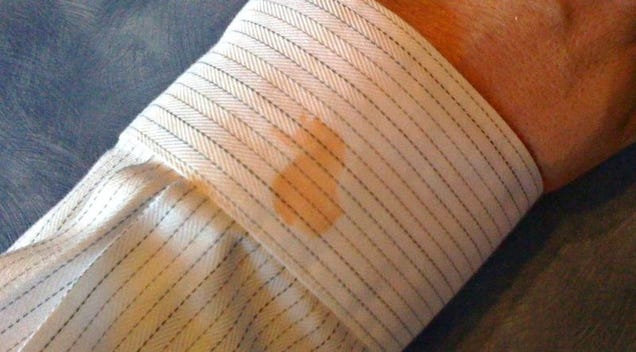
Listen, I know that not everyone has an issue with spilling pretty much everything they drink on themselves like I do, but don’t judge me. I just want to wear a white t-shirt in peace! On-the-go stain removers were a godsend when they first came out, but they’ve slowly lost their charm.

You’d think because I write about smart shopping, I wouldn’t have a price club “problem.” Yet as a new member, it took several visits to get my bulk shopping under control. Enough olive oil to bathe in? A lifetime supply of cheese puffs? C’mon, how can you stop yourself? Buying in bulk can be a cost-effective way to stock up on essentials, but there are pitfalls.

We did a vacuum Co-op, once, and Dyson swept the nominations. Don’t get me wrong, Dyson makes good stuff, but not everyone needs (or can afford) a $300-$500 cleaning appliance. So today, we’re looking to determine your favorite affordable alternatives that don’t suck (or do suck). If you can regularly purchase it for $150 or less, it’s eligible, so go sound off in the comments.
LOUISVILLE, Ky. (AP) — A judge in Louisville has given the city the go-ahead to remove an 1895 Confederate monument by dismissing a lawsuit that sought to keep it at its original site.
In a written ruling, Jefferson Circuit Judge Judith McDonald-Burkman said the city had the right to remove the stone obelisk near the University of Louisville that was built as a tribute to dead Confederate soldiers. Mayor Greg Fischer has pledged to have the monument cleaned and moved to a new location, though that site has not been chosen.
Burkman’s ruling Thursday echoed her orders after a May 25 hearing over her restraining order that temporarily halted the statue’s removal.
The judge noted the historical significance of the century-old monument but wrote that it’s also a divisive symbol in Louisville.
“The monument is a public object that is respected by many in the community. It is also reviled by many,” Burkman wrote.
Calls and an email to attorney Thomas McAdam, who represents the Sons of Confederate Veterans, were not returned Monday.
Burkman heard several hours of testimony during the May hearing from the monument’s supporters, who argued that the city does not own it and that it could be damaged or crumble if it is removed. After the hearing, Burkman lifted the temporary restraining order that barred the city from removing the monument.
Mayor Fischer and University of Louisville President James Ramsey have pledged to move the monument to “an appropriate historical venue in the near future.” Until then, it would be put in storage.
The statue was given to the city by the Kentucky Woman’s Monument Association in 1895. It includes three bronze statues of Confederate soldiers and an inscription that says it is a “tribute to the rank and file of the armies of the South.”
The post Judge dismisses lawsuit over Louisville Confederate monument appeared first on WTOP.
Prince William County community calendar Washington Post Summer Solstice Yoga Proceeds from the outdoor class benefit Transitional Housing Barn. 9-10:15 a.m. Loy E. Harris Pavilion, 9201 Center St., Manassas. 703-895-3176. bedrockyoga.net. $20. Living history demonstrations Park volunteers offer infantry and ... and more » |
It can be difficult to tell whether a dog is pregnant until the last few weeks of her nine-week gestation, when her belly's increase in size is hard to miss. The best way to find out is by taking her to a vet, but being aware of physical and behavioral changes that may take place is also useful. Pregnant dogs show some signs of being pregnant in the early, middle, and late stages of pregnancy.


Cite error: <ref> tags exist, but no <references/> tag was found
DENVER (AP) — Summoned by the sound of screams, a Colorado woman raced to her front yard to find a terrifying sight: A mountain lion was hunched over her 5-year-old son, biting him.
The woman charged the animal, yanked away one of its paws and discovered her son’s whole head was in its mouth. She didn’t back down.
“She was able to pry the cat’s jaws open,” Pitkin County Sheriff’s Deputy Michael Buglione said. “She’s a hero.”
The boy suffered deep cuts to his head, face and neck and was flown to a Denver hospital. His mother, who also was scratched and bitten, is credited with saving his life.
The ordeal started Friday evening when the 5-year-old and his older brother were playing outside their home near the resort town of Aspen, Buglione said.
When the woman ran outside, she found the lion crouched over her younger son, who was struggling to get free.
“The boy was completely under the cat,” Buglione told The Aspen Times.
The mother pried open the lion’s mouth with her hands, scooped up the child and ran away, the deputy said.
The boy’s father had just returned from a run when the attack occurred. He jumped in the car with his wife and son and called 911 as they sped to the Aspen hospital.
From there, the child was flown to Children’s Hospital in Denver in fair condition. On Saturday, a hospital spokeswoman told the Times she was not authorized to release any details on his condition.
The mother suffered bite marks on her hand and scratches on her leg, authorities said. She was treated and released. The family members’ names were not released.
The mountain lion was estimated to be about 2 years old and not fully grown.
“It wasn’t a big cat,” Buglione said. “Had it been a 110-pound lion – which I’ve seen around here – this would have been a much different story.”
Wildlife officials killed two mountain lions in the area within several hours of the attack. Both were being examined to determine if they were hungry, diseased or just in the wrong place at the wrong time.
Colorado is home to up to 4,500 mountain lions, and they sometimes wander into urban areas looking for food, according to state wildlife officials. Since 1990, mountain lions have killed three people and injured 18 in the state.
“They’re wild animals. They find habitat where they can forage for food,” Colorado Parks and Wildlife spokesman Matt Robbins said. “When you have bunnies, you’re likely to find foxes or coyotes. If you have deer, there is a good chance you’ll find mountain lions.”
The last known lion attack on a human in Colorado occurred in July 2015, wildlife officials said. A young lion attacked a man as he fished north of Dotsero, about 60 miles from where Friday’s attack occurred. The man suffered scratches and bites on his back and was treated at a local clinic and released.
The lion in that incident, described as a small, yearling male, was tracked and killed.
The post Woman rescues 5-year-old son from mountain lion’s jaws appeared first on WTOP.
NIANTIC, Conn. (AP) — After losing sight in his right eye from a 2013 rocket attack in Afghanistan, retired U.S. Army Maj. Dan Thomas recovered with help from an equine therapy program at Walter Reed National Military Medical Center.
Hoping to help other veterans, he and his wife traveled from their home in Alabama to Connecticut last week to purchase two massive, jet black carriage horses, animals that were put up for auction by the state after they were seized from a breeder in February as part of an animal abuse investigation and rehabilitated through a state program involving female prison inmates who help with the care.
Thomas said the two Friesian mares, among 32 emaciated and depressed horses taken from the farm, are the perfect animals to help veterans dealing with post-traumatic stress disorder.
“They know what it’s like to go through hell and come out the other side,” said Thomas, who plans to create a program similar to the one he experienced at the couple’s 160-acre ranch in Black, Alabama. The Friesians, 1,400-pound Francisca and 1,000-pound Rosalind, will join seven other horses the couple previously rescued.
Considered a “war horse” in the Middle Ages, Friesians are a highly sought-after breed, recognized for being gentle and intelligent. Thomas knows firsthand that such a demeanor in a horse can be a calming influence for returning combat veterans.
“I’ve been through lots and lots of things. After being blown up, it’s quite a traumatic experience for you. The horses are what works for me. So I know it’s out there and works for other people because I’ve seen it,” Thomas said, explaining how there’s peace in being around such a powerful creature that could hurt you but doesn’t.
The 32 horses seized by Connecticut officials in February from the Fairy Tail Equine breeding center in East Hampton have attracted great attention from across the country because of the type of horses involved. The Department of Agriculture received inquiries from as far away as Alaska about the sealed, monthlong auction. Besides Friesians, Andalusian and Gypsy Vanner horses were also seized.
Adam and Tracy Erickson, owners of Skywalker Stables in Jamestown, New York, were visibly thrilled to take home Voruke, another Friesian. The couple has rescued horses from the slaughterhouse, buying the animals from meat buyers at the eleventh-hour. They rehabilitate the horses and find them good homes. Tracy Erickson said she’s never come across a Friesian and plans to keep Voruke.
“It’s just a wonderful, gentle breed of horse,” she said.
Money raised from the state’s auction will help offset the cost of caring for the horses, which has exceeded $100,000, not including staff time. Raymond Connors, supervisor of the department’s animal control division, said winning bidders were screened to make sure the animals will go to a suitable place.
As the buyers coaxed their new horses into trailers, Connors remarked how the animals look “1,000 percent better” than the day when they were seized. The owners of the breeding center were arrested on animal cruelty charges. Their case is still pending in court.
Dan Thomas saw photos of Francisca and Rosalind after they were seized.
“I’m just really impressed with what the state of Connecticut has done here because these horses are beautiful now,” he said. “It looks like the state of Connecticut has saved some lives.”
The post Abused horses now rehabbed to help veterans with PTSD appeared first on WTOP.
Lovebirds are little parrots with colorful plumes and fun personalities. As pets, these little birds are devoted and playful with their owners. With the appropriate care and attention, a lovebird can live for 8 to 12 years, or longer.[1] One common myth surrounding keeping lovebirds as pets is that they need to be kept in pairs for their own wellbeing, otherwise they will suffer or die. In fact, most lovebird breeders argue for keeping lovebirds as single pets, with the owner acting as the lovebird’s flock.[2]


Cite error: <ref> tags exist, but no <references/> tag was found
Fire destroys Redskins Marching Band leader's Manassas home WTOP WASHINGTON — A Washington Redskins Marching Band leader was displaced from his home after a fire broke out in his apartment complex in Manassas, Virginia. Tony Cardenas, his wife and son woke to smoke alarms the night of Saturday, June 11, NBC ... and more » |