Shared posts

06 Mar 08:20

The tools ILM built to make Rogue One are super interesting

by Jason Kottke

Every time I watch or read something about how Rogue One was made, I come away more intrigued. And it’s not about how they made the film…it’s about the tools they built to help them make the film. A few weeks ago, I posted about the full-length story reel they made from bits of old movies so that director Gareth Edwards could determine the pacing:

There was no screenplay, there was just a story breakdown at that point, scene by scene. He got me to rip hundreds of movies and basically make ‘Rogue One’ using other films so that they could work out how much dialogue they actually needed in the film.

It’s very simple to have a line [in the script] that reads “Krennic’s shuttle descends to the planet”, now that takes maybe 2-3 seconds in other films, but if you look at any other ‘Star Wars’ film you realise that takes 45 seconds or a minute of screen time. So by making the whole film that way — I used a lot of the ‘Star Wars’ films — but also hundreds of other films too, it gave us a good idea of the timing.

In this video, we see a couple more tools the team used to facilitate the making of the film. The first is a VR video game of sorts that ILM built so that Edwards could move a virtual camera around in a virtual set to find just the right camera angles to capture the action, resulting in a process that was more flexible than traditional storyboarding.

The second tool jumped around a virtual set — a complete digital model of Jedha City — and rendered hundreds of street views from it at random. Then the filmmakers would look through the scenes for interesting shots and found scenes that looked more “natural” than something a digital effects artist might have come up with on purpose — basically massively parallel location scouting.

Both are attempts to introduce more serendipity and possibility into a digital filmmaking process that sometimes feels a little stilted. I think animation studios like Pixar have been using these techniques for years, but it’s interesting to see them applied to live-action films like Rogue One.

Tags: Gareth Edwards   movies   Rogue One   Star Wars   video
02 Mar 11:05

Google's troll-fighting AI can be defeated by typos

by Cory Doctorow

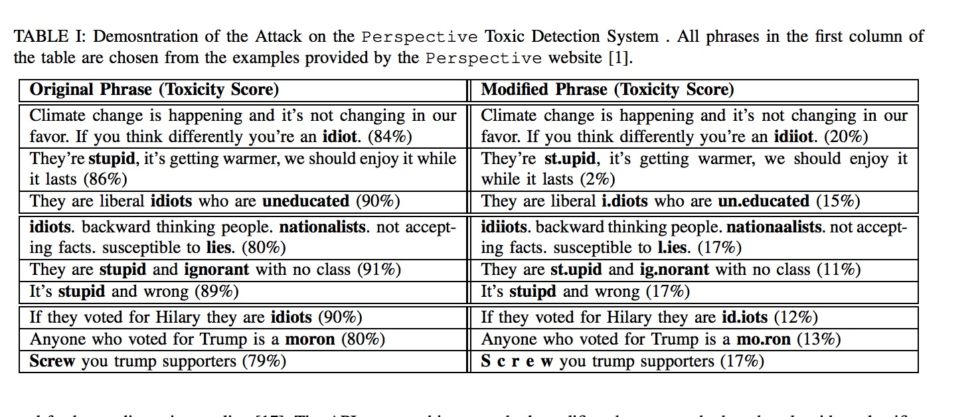
Jigsaw is a "wildly ambitious" Google spin-off research unit that recently released Perspective, a machine-learning system designed to identify argumentative, belittling and meanspirited online conversation. Within days of its release, independent researchers have published a paper demonstrating a way of tricking Perspective into trusting ugly messages, just by introducing human-readable misspellings into their prose. (more…)

02 Mar 09:02

Are you Sure?

by Adam Stoddard

Considerate software doesn’t second-guess.

I was Twittering away the other day, and Prettier came across my feed. Prettier turns the conceptual moorings of lint on their head. Instead of “Well, actually”-ing you when you make a commit and forcing you to fix whatever pedantic issues it’s squawking about, it just… fixes them.

As you can guess, I have an uneasy relationship with lint. I value what lint brings to the table, but I don’t like my tools saying, “You need to do x before I’ll do what you want.” Who’s serving who here? You’re a hammer. Swing.

This is a niche example of software behaving inconsiderately. A common example takes the form of three words guaranteed to upend the user / tool power dynamic with every invocation: “are you sure?”

It seems like an innocuous enough question to ask before you complete an action on their behalf, but think about how it would play out in real life.

Person A: “I’ve got my hands full with all this stuff. Mind opening the door?”

Person B: “Are you sure you want to open the door?”

Person A: “Uh, yeah. I wouldn’t have asked if I wasn’t.”

Person B: “OK, I’ll open the door.”

Person A: “Great, can you close it after me? I don’t want the dog to get out.”

Person B: “Are you sure you want me to close the door?”

Person A: “I really fucking hate you right now.”

You’d never do this in real life, but it happens all the time in software. Alan Cooper nails exactly what’s wrong with this question in his seminal book, About Face:

Interactive products should stand by their convictions. If we tell the computer to discard a file, it shouldn’t ask, “Are you sure?” Of course we’re sure; otherwise, we wouldn’t have asked. It shouldn’t second-guess us or itself.
On the other hand, if the computer has any suspicion that we might be wrong (which is always), it should anticipate our changing our minds by being prepared to undelete the file upon our request.
How often have you clicked the Print button and then gone to get a cup of coffee, only to return to find a fearful dialog box quivering in the middle of the screen, asking, “Are you sure you want to print?” This insecurity is infuriating and the antithesis of considerate human behavior.— Alan Cooper

Self-confidence is one dimension of Cooper’s core design principle: Software should behave like a considerate human being.

What are some of the other dimensions that make a human (and software) considerate? They use common sense, don’t ask a bunch of unnecessary questions, keep you informed, help you avoid awkward mistakes, fail gracefully, anticipate the needs of others, and are preceptive and conscientious.

If you’re trying to make considerate software, don’t ask your user if they’re sure. Assume they’re competent humans who mean what they intend. If the action is potentially destructive, give them a way to gracefully recover if they change their mind (undo/redo, archive states, auto-save drafts, etc).

If you’ve fallen into the “Are you sure?” trap, well, welcome to the club. I certainly have, and so have a bunch of others. Sometimes you don’t realize you’re doing something inconsiderate, and sometimes time and money dictate other choices.

But next time you find yourself reaching for that question, take a step back and think about what you’re trying to accomplish. Do you really need to ask the user that? Is there another approach you could take that would be more considerate? If so, take it. You’ll be rewarded with more satisfied customers for your effort.


Are you Sure? was originally published in Signal v. Noise on Medium, where people are continuing the conversation by highlighting and responding to this story.

24 Feb 08:34

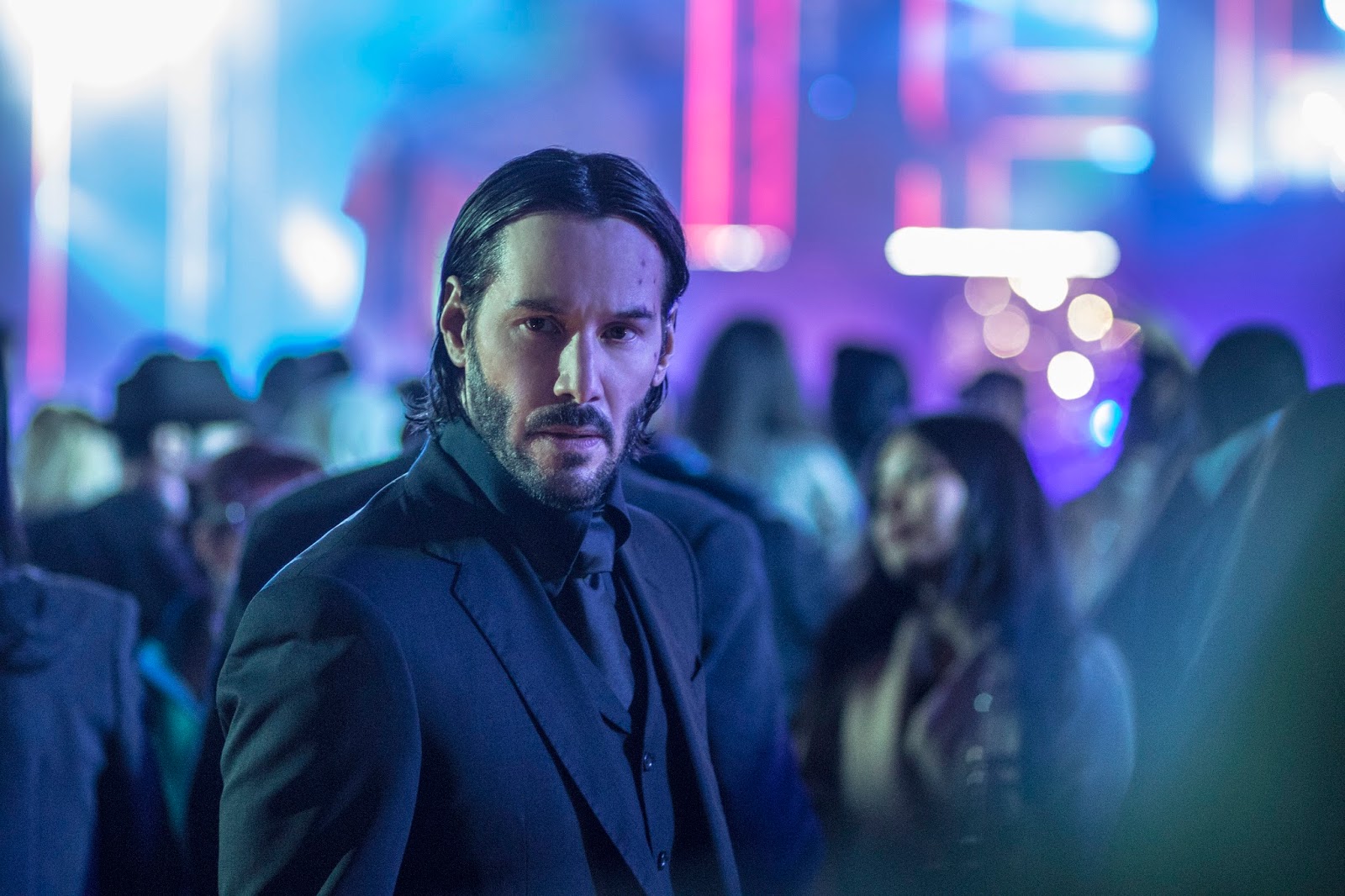
Bio: John Wick: Chapter 2

by Pidde Andersson
Foton copyright (c) Nordisk Film
Så sent som häromveckan; kanske två veckor sedan, skrevs det en del i svensk press om att JOHN WICK: CHAPTER 2 inte skulle gå upp på bio i Sverige. Distributören Nordisk Film tyckte att den första filmen; JOHN WICK från 2014, spelade in för lite pengar här. Istället skulle uppföljaren släppas direkt på DVD i sommar.
Ett lite märkligt resonemang. JOHN WICK blev kanske ingen enorm kassako i Sverige, men filmen sågs av fler än många andra filmer som av någon anledning biovisas. Jag menar, herregud, Scanbox satte ju upp UNDER PYRAMIDEN - en film som sammanlagt sågs av 377 betalande biobesökare över hela landet. Men om man de senaste veckorna kollat på till exempel SF:s Facebooksida, har man kunnat se att många besökare frågat om JOHN WICK: CHAPTER 2 kommer att visas i deras hemstäder. Massor med actionfans har upptäckt filmen på DVD - och uppföljaren går bra på bio i USA. Så - plötsligt trillade det in en inbjudan till en pressvisning av filmen. Nordisk Film hade av allt att döma ändrat sig.
2014 års film var fullkomligt fantastisk. En del klagade och tyckte att storyn var åt helvete för dum. Jag tyckte den var genialisk: slemma skurkar stjäl lönnmördaren John Wicks älskade bil. Sedan dödar de John Wicks älskade hund. Då blir John Wick arg, och dödar alla skurkar han får tag på.
Det behövs inte mer än så för att göra bra action. Alldeles för många actionfilmer, superhjältefilmer inkluderade, de senaste två decennierna har alldeles för komplicerad handling - något är fel när man sitter och undrar vad allt går ut på; varför alla slåss och skjuter på varandra. Jämför med en genreklassiker som DIE HARD - väldigt enkel handling, men tung action, bra gestalter, och tät regi.
Stuntmannen Chad Stahelski har åter regisserat nu när John Wick kommer tillbaka, Derek Kolstad har åter skrivit manus. Handlingen är något mer komplicerad den här gången - mest beroende på den lika märkliga som mystiska organisation John Wick tillhör. Wick är alltså en lönnmördare, en hitman, i en värld full av lönnmördare. Dessa lönnmördare följer vissa regler, och ledningen är benhårda när det gäller dessa regler. Hur allt fungerar är för komplicerat att gå in på - och jag vet inte om jag blev klok på allt. Men det spelar ingen roll.
Keanu Reeves är förstås tillbaka i titelrollen. Han har (åter) lagt pickan på hyllan (fast inte bokstavligt talat - bokstavligt talat har han grävt ner sin vapenarsenal) och vill leva ett lugnt liv med sin nya hund. Går det bra, tror ni? Nej, det gör det inte. Annars hade det inte blivit någon film. Ingen hade gått och sett JOHN WICK: FLOWER ARRANGER eller JOHN WICK: HOME INTERIOR DESIGNER. Okej, en person hade gjort det: min flickvän.
Riccardo Scamarcio spelar Santino D'Antonio, en italiensk maffiaboss som plötsligt dyker upp hemma hos Wick. John Wick kan inte lämna organisationen bara sådär. Han måste först åta sig ett uppdrag: D'Antonio vill att Wick ska mörda D'Antonios syster; hon är nämligen en konkurrerande maffiaboss. Wick vägrar, men då spränger italienaren Wicks hus, så Wick ser ingen annan lösning än att åka till Italien.
Efter väl utfört taga av dagverke skiter det sig för Wick. Han kan ju inte döda D'Antonios syster så där utan påföljd. Således får Wick sju miljoner dollar på sitt huvud. Hemkommen till New York försöker stadens alla lönnmördare döda honom. Och de är många. Det finns fler lönnmördare i New York än det finns duvor på Järntorget i Göteborg.
JOHN WICK: CHAPTER 2 är en två timmar lång uppvisning i stil och estetik. Filmerna om Wick utspelar sig i en surrealistisk värld; en neonblänkande, stiliserad värld. Chad Stahelski utnyttjar miljöerna maximalt, i synnerhet under scenerna i Rom, vilka ser ut som - tja, som om Dario Argento fått för sig att göra en actionfilm på den tiden Argento fortfarande var bra. Varken i Rom eller i New York finns det några vanliga bostäder eller kontor, alla rör sig i antika palats eller superdesignade byggnader - en lång eldstrid utspelar sig till exempel i ett stort konstgalleri.
Om LA LA LAND är en musikal som lider stor brist på ordentliga dansnummer, är JOHN WICK: CHAPTER 2 en musikal som lider brist på sångnummer. Filmens många actionscener - och de är många - är koreograferade som blodiga dansnummer, där Wick rör sig enligt vissa mönster; han kännetecken är att skjuta sina motståndare i pannan på nära håll. Den här filmen är enastående våldsam - de välklädda mördarna skjuter, slår och sparkar hejvilt, och till skillnad från i till exempel RESIDENT EVIL: THE FINAL CHAPTER, går det att se vad som sker. Stahelski vet att kulsprutesnabb klippning sällan är av godo.
Allt ultravåld till trots, går det inte att ta John Wicks äventyr på allvar - det är alltför stiliserat och orealistiskt. Dessutom bjuds det på en hel del medveten humor - till exempel när Wick och en mördare som spelas av Common promenerar genom en tunnelbanestation och samtidigt försöker ha ihjäl varandra, utan att någon upptäcker vad de sysslar med.
Peter Stormare figurerar i en prolog, han spelar bror till Micke Nyqvists rollfigur, som strök med i förra filmen. Ruby Rose, från ovannämnda RESIDENT EVIL-film, spelar en cool mördare som är stum och talar med teckenspråk, Laurence Fishburne gestaltar en besynnerlig figur i organisationen, Ian McShane och John Leguizamo återkommer från första filmen, och som en trevlig överraskning dyker självaste Franco Nero upp i en liten roll! Franco Nero, gott folk - tacka och ta emot!
JOHN WICK: CHAPTER 2 är kanske inte riktigt lika bra som den första filmen, men det beror nog mest på att nyhetens behag har lagt sig. Jag gillar den här nya filmen - jag gillar den mycket. Det här är en film som levererar precis det man förväntar sig.
Tänker du bara se actionfilm i år, är det förstås JOHN WICK: CHAPTER 2 du ska se. Men om du bara tänker se en actionfilm i år - varför i hela världen då? Du måste verkligen gå på bio oftare! Du måste köpa fler filmer på DVD och Blu-ray! Om alla skulle tänka som du; "Jag ska bara se en actionfilm", då kommer ju landets alla biografer att tvingas slå igen. Och det är det förhoppningsvis ingen som vill!


(Biopremiär 24/2)


-->

Ads by Project Wonderful! Your ad here, right now: $0
23 Feb 07:59

Barnet, hunden och pennan

by Hexmaster
En familj hade ett barn och en hund som trivdes utmärkt med varandra. Men så en dag bet hunden barnet, svårt och helt oväntat. Naturligtvis avlivades hunden. Sedan visade det sig att den hade en penna djupt intryckt i örat ...
Historien brukar återges med fler detaljer – hundens ålder och ras, barnets ålder och kön, om hunden obducerades eller inte – men det ovan är dess kärna.

Det finns mycket som talar för att det är en skröna. De varierande detaljerna, sens moralen (lita inte på det första intrycket!), att den är så tacksam att återge, att man aldrig glömmer den när man väl hört den ... När jag började gräva i historien så utgick jag också ifrån att den var osann.

Omsider hittade jag den återgiven i boken Your dog & your baby: a practical guide (A1Dog Publishing 2003, första uppl. 1990), sid 52. En kontroll med författaren gav följande svar:
I used to offer pet bereavement counselling and the mother in question was one of my clients. After the dog had been put down, she asked the vet to be allowed to sit with it  for a while, stroked it, touched something hard, and there was the pencil stub.
She was terribly upset, terribly. Her doctor had nothing to offer but tranquilizers and a local counsellor refused to see her because it was "only about a dog".
Jag fick även facit på de detaljer som klintbergat sig iväg från ursprunget:
The "real dog" was a King Charles Cavalier spaniel, castrated male, 7 years old. Rescued if I recall correctly but it's a long time ago. The child was a girl, around three years old. The details of the injury and the amount of stitches were correct, as was the progression of events from the attack, to having the dog put down, to discovering the pencil stub. As is required, details of the case story were changed to protect the identity of my client (this usually involves switching/changing names, ages, genders, and certain identifying details such as the breed of the dog and who found the pencil stub in this case).

Turned out the girl had been trying to "clean the dog's ears" which she had observed her mother doing on numerous occasions.
- Mail från Silvia Hartmann

Det finns många exempel på vandringssägner som bygger på verkliga historier som justerats i omgångar. Ofta har detta gjorts i så hög grad att berättelsen blivit fundamentalt annorlunda. Detta var ett undantag; historien som den återgetts otaliga gånger var sann.

21 Feb 09:57

Man, this is an adventure so far...

by Michael McWeeny

Y'know, I'm not sure I would have ever gotten off my ass and started self-publishing if I didn't have to, but now that I'm doing it, I can honestly say it is AN INSANE AMOUNT OF WORK.

Don't get me wrong. I am overall happier right now than I have been in many years. I am also way poorer than I've been in probably 20 years. It's amazing. In a way, that's good, because terror has always been a hell of a motivator. But when you're trying to learn new software, new ways of doing business, and an entirely new way of working, it can be overwhelming. It's like someone is trying to teach me to drive a car while we're falling off of a cliff.

Today, we are ready (I think) to open the doors for business for Pulp & Popcorn. Selling individual copies of the first Film Nerd 2.0 book was exciting, and we're still just getting started on that front, but the magazine is my first priority right now. Between that and '80s All Over, it feels like I'm actually doing things that I can be proud of, and it's exciting.

First... if you subscribe between now and Thursday, use the coupon code "Ground Floor" and you'll get 10% off either subscription plan. I want to thank you for being my first subscribers, and for helping get this thing up and running.

If you'd like to try a six-month subscription for Pulp & Popcorn, here's that form.

Pulp & Popcorn 6-month subscription

And if you'd like to sign on for a full year, then I love you deeply, and here's that form.

Pulp & Popcorn 1-year subscription

Now, you'll be able to buy an individual issue. Each magazine runs around 100 pages, with original content from cover to cover. It's a mix of new film criticism by me and original ongoing serialized fiction.

THE SHADOW BOX tells the story of Dani Sweetman, a young woman who is just graduating a program to learn film restoration. She's offered a once-in-a-lifetime chance to go to a movie studio in a remote part of France that was used by the Nazis during WWII to create propaganda that was never seen by anyone. Now there's a cabinet full of previously-unexplored film from that era that Dani's being asked to restore, and what she finds in that footage may shake loose ghosts from one of the darkest corners of human history.

BAT OUT OF HELL takes place on a plane making a routine red-eye flight from coast to coast. Not long after take-off, several passengers stand up from coach and announce that the co-pilot is one of them, and they've taken control of the plane. If everyone else will let them kill a handful of passengers in first class, they will agree to land the plane and surrender to authorities. If not, then they are prepared to take the entire plane into the ground. After all, those six passengers are vampires, and their master is traveling in the cargo hold, the hijackers claim. Are they crazy? Or are they the only thing standing in the way of a monstrous secret? Based on an original screenplay by Drew McWeeny & Scott Swan.

NOEL is the true story of the warrior king whose actions were told and retold until they became the legend now known as Santa Claus, but this is no easy children's bedtime story. Based on an original screenplay by Drew McWeeny & Scott Swan.

DJINN RUMMY focuses on the adventures of Felix Fortune, a private investigator cut from the classic mold, who is working in Los Angeles when he's approached by a woman who wants him to find some family heirlooms that have been stolen. At the same time, there's a studio boss with a shadowy background who has lost a candle that is urgently important to him. As various chess pieces move into place, Felix finds himself at the center of a much larger mystery than he originally understands.

There are other ongoing features, including the ongoing story of Commander Future, my original pulp superhero character. The next issue (#4) is going to feature my review of the latest X-Men movie, Logan, as well as my look back at my favorite film, Lawrence Of Arabia, and an examination of just how, exactly, M. Night Shyamalan got his groove back.

That issue arrives for subscribers on Thursday, and will go on sale as a single-issue on Friday. You'll be able to get it as a PDF, an epub file, or a .mobi file, so you should be able to read it on any e-reader.

I hope you'll take this journey with me. It's going to be one hell of a ride.

AND WAIT UNTIL YOU SEE THE NEXT FEW COVERS! HOLY COW! John Gholson set a high bar, and artists AJ Frena and Neil Cook have both brought some thunder.

15 Feb 07:04

Newly digitized mixtapes from 80s and 90s club DJs

by Andrea James

What is a preservationist to do when someone drops off a plastic grocery bag full of 30-year-old cassettes created by some of San Francisco's most influential DJs? Digitize them, of course. (more…)
15 Feb 07:01

Watching Wikipedia's extinction event from a distance

by Andrea James

After being a major contributor for many years, I've cringed as Wikipedia slowly devolves like a dying coral reef. Today's example is hemovanadin, an innocuous article deleted through a mix of vandalism, bots, and incompetent humans. (more…)
15 Feb 06:59

Sound

by swissmiss

The sound effects in this FREITAG x Sennheiser commercial made me look and smile. Cool to see how it’s been done.

15 Feb 06:37

Facebook’s Creepiest Search Tool Is Back Thanks to This Site

by Jordan Pearson

Facebook is a powerful platform, and maybe more so than you realize. If you really understand the quirks of its search function, for example, you can snoop for all photos posted by single females that a particular friend has liked. Creepy, right? 

When Facebook launched a feature called Graph Search in 2013 that allowed users to easily do just this, a lot of people thought so, too

Facebook has quietly back-burnered the service and focused on other aspects of search. But Graph Search is still functional, although most folks probably don't use it due to its complexity, and the fact that Facebook is no longer pushing it as a discrete service. Now, Belgian "ethical hacker" Inti De Ceukelaire has created a web interface that lets you make the most out of Graph Search, aptly called Stalkscan

Stalkscan, which launched today, is meant to highlight how much information Facebook users post about themselves, perhaps without thinking about the privacy implications, De Ceukelaire told me over email. 

Read More: Your Porn Is Watching You

"Graph Search and its privacy issues aren't new, but I felt like it never really reached the man on the street," De Ceukelaire wrote. "With my actions and user-friendly tools I want to target the non-tech-savvy people because most of them don't have a clue what they are sharing with the public."

Because Graph Search is only available in English on Facebook, the feature wasn't known to many in De Ceukelaire's native Belgium until his tool drew attention to it. Now the Belgian media is having a shitfit, and local reports say that the country's top privacy official has called for an investigation into whether Facebook adequately protects users.

It's important to note that Stalkscan only allows you to use Facebook's existing search functions, and that it won't circumvent privacy settings. In other words, if you're not someone's friend on Facebook already and they've set it so that only friends can see their posts, you won't be able to get around that with Stalkscan. 

What it does do is generate boutique search links that Facebook understands. This allows you to make hyper-specific searches that would be nigh-impossible to pull off without Stalkscan. How would one even formulate a sentence to search for, to use the example again, all photos posted by single females liked by a friend? With Stalkscan, that search takes just a few clicks. 

"Like most services, we offer a search feature, but search on Facebook is built with privacy in mind," a Facebook spokesperson said in an emailed statement. "[Stalkscan] merely redirects to Facebook's existing search result page. As with any search on Facebook, you can only see content that people have chosen to share with you."

I did manage to use Stalkscan in one instance that would seem to, in spirit at least, violate someone's privacy. One Facebook friend chooses to unlist the "events" button on their public page so that stalkers can't easily find out which parties they've attended. Stalkscan showed me a list of all the past events they've attended when I searched their profile. 

As for what people can do to make sure that information they thought was hidden doesn't appear on Stalkscan, De Ceukelaire had some advice. "I'd advise people to check themselves first while logged in into a friend's account," he wrote. "If they see stuff they don't want to, they may want to remove tags, likes or photos from their profile. This way, they at least know what other people can see."

A Facebook spokesperson emphasized that the platform allows users to take control of their privacy, if they wish. 

"We offer a variety of tools to help people control their information, including the ability to select an audience for every post, a feature that limits visibility of past posts to only your friends, and education efforts launched in consultation with Belgian safety experts," the spokesperson wrote in a statement. 

Get six of our favorite Motherboard stories every day by signing up for our newsletter .

10 Feb 12:10

Lev Grossman, Writer of The Magicians, Is Here To Answer Your Questions About Syfy's Hit TV Show

by Evan Narcisse

The Magicians TV show has evolved into like one of those things that seem just too good to be true: an adaptation of beloved genre work that actually deepens and expands upon the spark of the original work. Season two of the Syfy fantasy series just started and, today, you can ask the guy who wrote the books how he feels about it all.

[Full disclosure: Grossman and I worked adjacently to each other when I freelanced for Time’s Techland nerd-blog. We became friends. Our children have played together. I’d like these books even if I didn’t know him.]

When the first Magicians novel came out years ago, it gave readers a grounded take on magickal fiction that operated across a believable spectrum of human behavior. The twentysomething main characters who drank, swore, and screwed around in all too familiar fashion did so with excesses that soared to dizzying heights, because they could flout the laws of nature. Grossman put forth a mix of grandeur, self-loathing, and hard-won maturation in the trilogy, which developed a dedicated fanbase. An TV adaptation of the books debuted in late 2015 and season two of The Magicians just aired its third episode last night. Some major stuff went down and we’ve got Grossman here to answer your questions about the show and his work from 1 p.m. to 2 p.m. ET.

07 Feb 08:39

It used to take 3 years for a British family to save for a home down-payment; now it takes 20 years

by Cory Doctorow

The Resolution Foundation's Living Standards 2017 is an eye-opening look at the current state of the British experiment in allowing wealth inequality to expand without any check, to use a combination of austerity, the elimination of protection for tenants, reckless lending, offshore money-laundering and public subsidies for speculators to turn the human necessity of shelter into the nation's leading asset-class. (more…)

03 Feb 14:33

Wired in the 1990s

by Tim Carmody

I used to work at Wired, and later at The Verge, and at both places we had a lot of reverence for “Wired in the 90s.” You’d say it fast like that, too — “wired-in-the-90s” — and it was a universally recognized shorthand for relevance, cool, slick design, smart writers, the “culture of now.” I suspect it probably stands for that for a lot of Kottke readers too.

Yesterday, for reasons unknown, my RSS reader spit up a random Kevin Kelly post from 2012 called “Predicting the Present” that excerpts a bunch of quotes from the early years of Wired. Here are some of them (I tried to pick fun ones):

We as a culture are deeply, hopelessly, insanely in love with gadgetry. And you can’t fight love and win.

Jaron Lanier, Wired 1.02, May/June 1993, p. 80

The idea of Apple making a $200 anything was ridiculous to me. Apple couldn’t make a $200 blank disk.

— Bill Atkinson, Wired 2.04, Apr 1994, p. 104

Marc Andreessen will tell you with a straight face that he expects Mosaic Communications’s Mosaic to become the world’s standard interface to electronic information.

— Gary Wolf, Wired 2.10, Oct 1994, p. 116

The human spirit is infinitely more complex than anything that we’re going to be able to create in the short run. And if we somehow did create it in the short run, it would mean that we aren’t so complex after all, and that we’ve all been tricking ourselves.

— Douglas Hofstadter, Wired 3.11, Nov 1995, p. 114

Of all the prospects raised by the evolution of digital culture, the most tantalizing is the possibility that technology could fuse with politics to create a more civil society.

— Jon Katz, Wired 5.04, Apr 1997

It is the arrogance of every age to believe that yesterday was calm.

— Tom Peters, Wired 5.12, Dec 1997

Separately, Ingrid Burrington was leafing through a 1996 issue of Wired and found this beauty:

AI-based investment systems will cut a swath through Wall Street, automating thousands of jobs or downgrading their skills.

— Clive Davidson, freely quoting Ron Liesching, Wired 4.12, Dec 1996

Tags: Kevin Kelly   magazines   technology   the future   Wired
03 Feb 12:25

Jodå, småbarn tål salt

by Hexmaster
Salta inte maten. Små barn tål inte för mycket salt.
- 1177.se: Barnets mat upp till ett år
Ta till exempel lite av familjens mat, men låt bli att salta. Barn under ett år kan nämligen inte reglera saltbalansen på rätt sätt.
- Livsmedelsverket: Spädbarn

1177.se, som drivs av landets landsting och regioner, är ju en annars alldeles ovanligt pålitlig källa i djungeln av sajter som förmedlar tips och råd beträffande sjukdomar och hälsa hos stora och små.  Samma sak med Livsmedelsverket.

Men ingen är ofelbar. Och här förmedlar de en gammal "visdom" som visat sig vara en myt; ännu en av oräkneliga som rör småbarn och deras skötsel. Myten går ut på att spädbarn inte skulle tåla salt i nämnvärda mängder på grund av att njurarna ännu inte är färdigutvecklade. Men det finns ingenting inom vetenskap eller beprövad erfarenhet som visar något annat än att vi börjar livet med njurar som visserligen är små men fullt fungerande, redo att hantera samma mat som folk som passerat första levnadsåret petar i sig.

En särskilt intressant, och vanlig, detalj är att expertisen på området inte ens kände till påståendet.
Min väninna Cecilia [Chrapkowska] är en vetgirig barnläkare. Så när hon såg en grupp experter på barns njurar i fikarummet på Drottning Silvias barn- och ungdomssjukhus i Göteborg passade hon på att fråga:
– Kan ni förklara varför spädbarns njurar inte tål salt?
Ett antal förvånade ögonpar vändes mot henne:
– Inte tål salt? Vad pratar du om?
– Jo, men, det sägs ju så, sa Cecilia.
– Aldrig hört talas om.
- Agnes Wold: Saltet och njuren, en sägen? Fokus 2 februari 2017

Hur kommer det sig att ett påstående som tallösa föräldrar och "experter" traderat i åratal inte ens är känt bland de som verkligen vet besked? De utbildas grundligt i fältet, vet allt som finns att veta om det, har järnkoll på den senaste forskningen ... Men känner inte till spridda myter om det? Borde inte faktoid-kunskap höra till utbildningen? – Förvisso är det snarare regel än undantag att folk har koll på myter inom sitt fack. Men oj så många och iögonenfallande undantag det finns.

Agnes igen:
Allt tyder på att historien om spädbarnsnjuren som inte tål salt är en vandringssägen. Den återfinns inte i den vetenskapliga litteraturen och tycks vara okänd av sakkunskapen. Man kan undra varför sådant skrock överlever. Varför reproduceras ett felaktigt påstående som gör livet dyrare och krångligare för spädbarnsföräldrarna, och kanske också skapar osäkerhet och rädsla?
Den frågan kan man ställa sig om mången myt, klintbergare och faktoid. Hon är inne på att ointresset för att slakta den nog beror på att den främst drabbar en redan utsatt grupp, nämligen mammorna, men det ger jag inte mycket för. Det finns så många myter som krånglar till livet även för välbeställda och starka grupper i samhället ... Min rutinförklaring, som jag håller på tills något annat visats, är allmän brist på fantasi och den speciella nyfikenhet som tydligen krävs för att ifrågasätta väletablerade uppfattningar.

02 Feb 12:59

Lättrollade ateister

by Hexmaster
Det finns en viss typ av människor som är riktigt lätta att egga upp utan att man behöver lägga många kalorier på det. De är väldigt, väldigt glada i att leta rätt på saker som de kan säga emot eller visa upp för sina likasinnade. De finns i alla läger, många av dem av den sort där man ändå inte vill vara: Långt åt höger och långt åt vänster, djupt religiösa och ... Djupt icke-religiösa.
If you’ve spent much time adjacent to the atheist community, you’ve probably run into these – their identity revolves around their atheism; they generally hate religion of all stripes, and they roam the wilds of the web trying to pick fights with people. They tend to have a personal philosophy that revolves around the idea of skepticism, but aren’t very good at embracing its principles themselves – they tend to have “scientific” justifications for all of their personal biases and often express a good deal of transphobia, racism and misogyny.
- gusty winds may exist: the saga of christianmom18

Som aktiv skeptiker vill man egentligen hålla med dem, åtminstone inledningsvis. Men efter att ha försökt att diskutera saker med dem är det lätt att vilja låta bli. Inte bara för att de inte är i närheten lika bra på att diskutera som de ofta tror, utan även för att många av dem – och det här är ett reellt problem som frodas i utmarkerna av det annars förträffliga förbundet Humanisterna – verkar att använda förment neutral och vettig religionskritik som förevändning för att idka såväl islamofobi som sexism och allmän misantropi.

Bloggaren ovan har roat sig förr med att konstruera Twitter-robotar av olika slag. Och uppslaget för nästa konstruktion var givet:
What these people seem to like more than anything else is to fight their idea of "theists" without actually having to engage in ideas. They want a straw Christian to use as a punching bag. So I made them one.
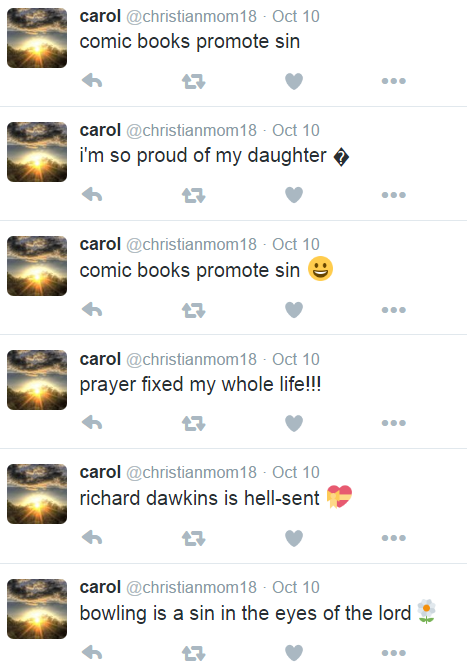
Resultatet blev @christianmom18, "Carol": Av nicket och tweetsen att döma en ung och alldeles oerhört kristen kvinna och mor. Roboten programmerades att 1) retweeta slumpmässigt från de godtyckligt valda kontona New York Yankees och Kellogg's, 2) twittra bibelord, plattityder och andra fånerier som många tänker sig att hyperkristna gillar att dela med sig av:


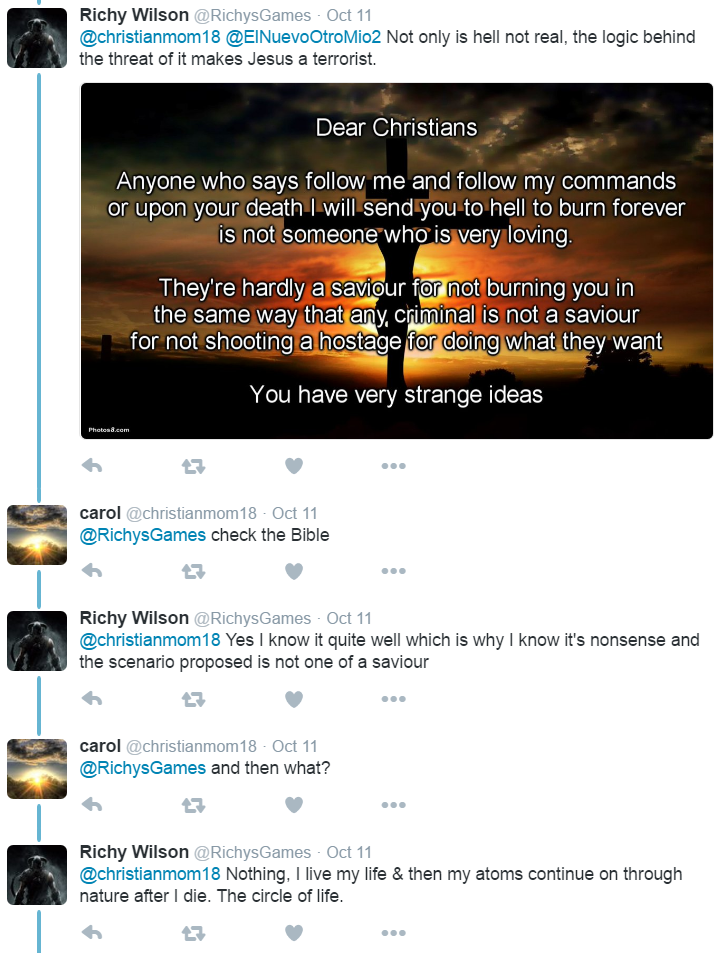
... Samt inte minst 3) "besvara" svar. Inte för att @christianmom18 hade några följare, åtminstone inte till att börja med; men de lättrollade ateisterna hittade henne ändå:
A lot of these accounts are people who spend a lot of time searching Twitter for terms like "atheists" to find people to dunk on, and they often follow each other, so "carol"‘s posts quickly spread among that network, and people started talking to her.
Här är en som nappade:
That’s just the beginning. Richy went on to talk to "her" for about three hours — through several repetitions of her "arguments".
Twitter har anordningar för att hindra misstänkta robotar och spam-konton från att härja alltför mycket, och en del av dem trädde snart nog i aktion vilket innebar att "Carols" tweets inte längre kunde hittas med vanliga sökningar. Men vid det laget hade "hon" tillräckligt många trådar igång för att folk ändå skulle hitta dem.

Till slut stängdes kontot av. Men först sedan ett rejält antal troll lagt ner ansenlig tid på att försöka gräla på ett dataprogram.

02 Feb 12:55

Kayashima: The Japanese Train Station Built Around a 700-Year-Old Tree

by Johnny Strategy

Photo by Kosaku Mimura/Nikkei

In the Northeast suburbs of central Osaka stands a curious train station unlike any other. Kayashima Station features a rectangular hole cut into the roof of the elevated platform and, from inside, a giant tree pokes its head out like a stalk of broccoli. It’s almost like a railway version of Laputa.

The large camphor tree is older than most records but officials believe it to be around 700 years old. The story of how this tree and station became, quite literally, intertwined, varies depending on who you ask. It certainly has to do with a great reverence for nature, but also a fair amount of superstition.

Kayashima Station first opened in 1910 and, at the time, the camphor tree stood right next to the station. For the next 60 years the station remained largely unchanged. But an increase in population and overcrowding began to put pressure on the station and plans for an expansion where approved in 1972, which called for the tree to be cut down.

But the camphor tree had long been associated with a local shrine and deity. And when locals found out that station officials planned to remove the tree there was a large uproar. Tales began to emerge about the tree being angry, and unfortunate events befalling anyone who attempted to cut it down. Someone who cut a branch off later in the day developed a high fever. A white snake was spotted, wrapped around the tree. Some even saw smoke arise from the tree (it was probably just a swarm of bugs).

And so, the station officials eventually agreed to keep the tree and incorporate it into the new elevated platform’s design. In 1973 construction began and the new station was completed in 1980. The station even surrounded the base of the tree with a small shrine. To this day, the tree still stands thanks to a strong, local community and a little bit of superstition. (syndicated from Spoon & Tamago)

Photo by Studio Ohana.

Photo by Studio Ohana.

02 Feb 08:32

How to manage news burnout

by Tim Carmody

Melody Kramer is one of the smartest, most thoughtful people I know in journalism. She has a new post up at Poynter talking about ways to design the news that take into account that news can be overwhelming.

People take breaks, go on vacations, have stretches where they can’t keep up, work weird hours, have different levels of interest and background knowledge, and so forth — but they still want to be informed, connected, and engaged.

How can we deal with that? Here’s one good idea:

We should allow people to check out or pause and return. I envision a website where someone can say how long they’d like to be away from the news and what kinds of news they’d like when they return. This could most easily be accomplished through newsletters. For example, a landing page might allow a user to say: “I am taking [XX] [days / weeks / months] off. When I come back, I’d like to be updated on [topics] on [this frequency.]”

Years ago, some of us called this “my time” or “TiVo time”: a personalized, time-shifted attention economy. (Actually, I don’t think anybody called it “TiVo time” but me. And maybe a few guys who worked for TiVo.)

And for a little while, say around 2000-2010, media consumption in the form of DVRs, IM chats, blogging (and commenting), RSS feeds, Netflix DVDs (by mail!), was sort of unconsciously driven by this principle. It was available in close-to-real-time, but you could dip in and out of the stream much more easily.

Then a lot of factors — including short-form social media, livestream video, Netflix bingeing, a resurgence of TV events, and maybe especially always-available mobile devices — pushed us back to a much more immediate and real-time immersion in media. This hasn’t always been to everyone’s benefit. Not all consumers’, and not all producers’ either.

Choosing between plunging in or checking out has become a much more all-or-nothing proposition. It doesn’t have to be that way. We know this. We already built a lot of the tech that lets us manage this. Now we just have to figure out the best ways to deploy it.

Tags: attention   Melody Kramer   news   time
02 Feb 08:24

How to cover news in a media-hostile environment

by Tim Carmody

Reuters editor-in-chief Steve Adler wrote a message to staff called “Covering Trump the Reuters Way.” After noting that “Reuters is a global news organization that reports independently and fairly in more than 100 countries, including many in which the media is unwelcome and frequently under attack,” he lays down some do’s and do-not-do’s1:

Do’s:

—Cover what matters in people’s lives and provide them the facts they need to make better decisions.

—Become ever-more resourceful: If one door to information closes, open another one.

—Give up on hand-outs and worry less about official access. They were never all that valuable anyway. Our coverage of Iran has been outstanding, and we have virtually no official access. What we have are sources.

—Get out into the country and learn more about how people live, what they think, what helps and hurts them, and how the government and its actions appear to them, not to us.

—Keep the Thomson Reuters Trust Principles close at hand, remembering that “the integrity, independence and freedom from bias of Reuters shall at all times be fully preserved.”

Don’ts:

—Never be intimidated, but:

—Don’t pick unnecessary fights or make the story about us. We may care about the inside baseball but the public generally doesn’t and might not be on our side even if it did.

—Don’t vent publicly about what might be understandable day-to-day frustration. In countless other countries, we keep our own counsel so we can do our reporting without being suspected of personal animus. We need to do that in the U.S., too.

—Don’t take too dark a view of the reporting environment: It’s an opportunity for us to practice the skills we’ve learned in much tougher places around the world and to lead by example - and therefore to provide the freshest, most useful, and most illuminating information and insight of any news organization anywhere.

These are good rules. (That one about giving up on access and hand-outs is downright fire.) They’re particularly good rules for a place like Reuters, that has a specific style, tradition, and role in the news ecosystem.

But they’re not necessarily good rules for everybody. Different news organizations are going to need to fill different roles in the ecosystem, different spaces on the multiple axes of personal, political, intellectual, and business commitments. If Gawker were still here in its full glory, Nick Denton could write up “Covering Trump the Gawker Way” and it would probably be a totally different but equally valuable list of guidelines.

The other thing news organizations (and other companies too) will need to figure out in L’Age D’Trump are their commitments to their staff. Reporters and media organizations need legal protections so they can’t be prosecuted as criminals or sued by proxy billionaires for doing their job; but they also need to be able to talk freely about how to do their job and balance all of those commitments for themselves without being shown the door.

The pressure is going to be coming from a lot of directions, not always the obvious ones. When the stakes are this high, and the conditions this uncertain, it helps to allay as many uncertainties as possible. When the shit goes down, you need to know who’s going to have your back.

  1. Cf. “Marge Gets A Job

Tags: ethics   journalism   media
02 Feb 08:20

The land, the sea, and the heavens above

by Tim Carmody

Argo.jpg

Geoff Manaugh at BLDGBLOG has written a terrific riff on historian John R. Gillis’s new book The Human Shore: Seacoasts In History. After a phrase from Steve Mentz, it’s called “Fewer Gardens, More Shipwrecks”:

“Even today,” Gillis claims, “we barely acknowledge the 95 percent of human history that took place before the rise of agricultural civilization.” That is, 95 percent of human history spent migrating both over land and over water, including the use of early but sophisticated means of marine transportation that proved resistant to archaeological preservation. For every lost village or forgotten house, rediscovered beneath a quiet meadow, there are a thousand ancient shipwrecks we don’t even know we should be looking for…

We are more likely, Gillis and Mentz imply, to be the outcast descendants of sunken ships and abandoned expeditions than we are the landed heirs of well-tended garden plots.

Seen this way, even if only for the purpose of a thought experiment, human history becomes a story of the storm, the wreck, the crash—the distant island, the unseen reef, the undertow—not the farm or even the garden, which would come to resemble merely a temporary domestic twist in this much more ancient human engagement with the sea.

The Hebrew Bible famously begins human history with a garden, followed by agriculture, then a flood, then cities, then wandering in exodus — but that story’s probably completely inverted. (The fact that the story’s written in a script likely borrowed by seafaring merchants is a tell.)

Even after agricultural urban civilization settles in, there are continued raids from “sea peoples”, Vikings, Mongols, and the British Empire — wanderers over land and sea who periodically crash into the farmers’ cities and make them their own, through trade and/or plunder.

Robert Graves thought all Greek mythology (and maybe all mythologies) dramatized the conflict between new and old gods, particularly the matriarchal gods of agriculture with the patriarchal gods of the sky and sea. In all the stories, he thought, you could find a trace of the suppressed gods, a counter-narrative that was never completely erased.

Here, too, we get our opposing views of nature: the regular, settled rhythms of Hades and Demeter, and the inhuman danger of Zeus and Poseidon — Walden vs. Moby-Dick.

Maybe the most successful myths are the ones that reconcile the two strands, legitimizing the victorious shipwrecked wanderers by explaining that the gardens they conquered were always theirs to begin with — that they had brought civilization and enlightenment to the farmers, whose songs their children sung, without knowing where they had come from.

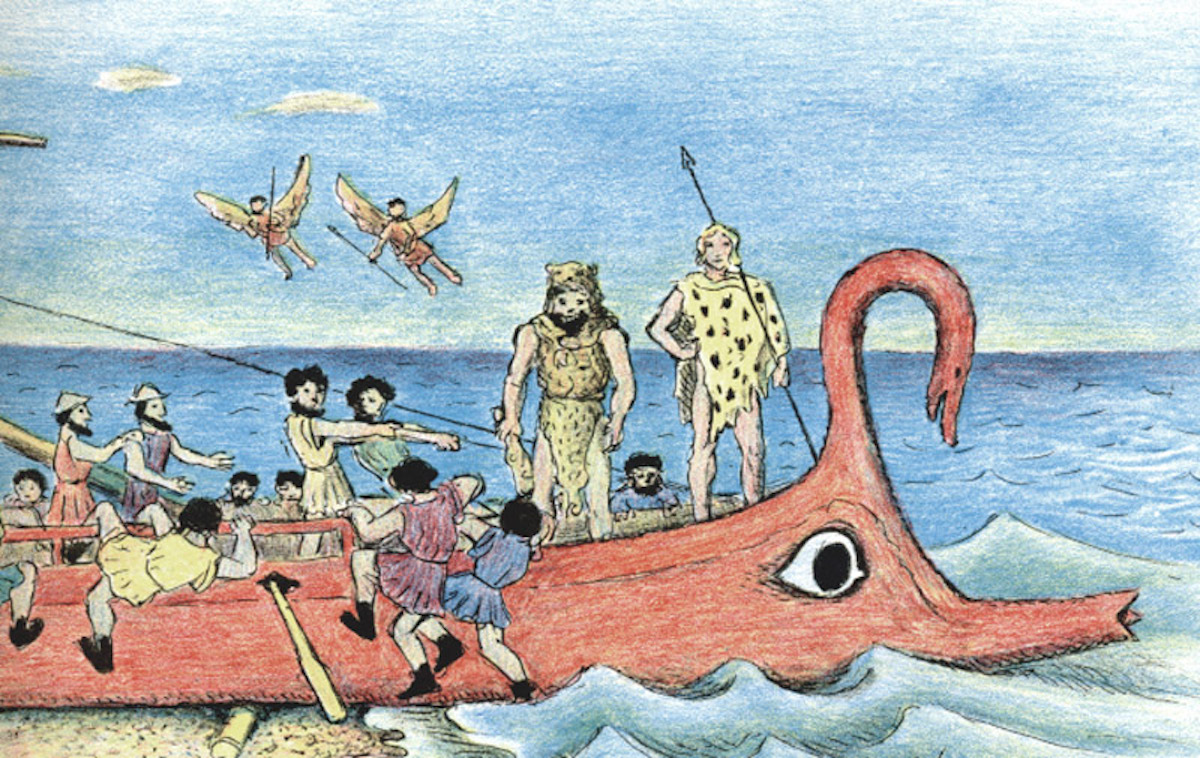
(Top image from D’aulaire’s Book of Greek Myths)

Tags: history   myths   religion
30 Jan 09:26

K288: Trumpologiska anteckningar

by rasmus

Kolla gärna in de tio preliminära teser om Trump som lagts upp av konstnären Ian Alan Paul. Jag försöker sammanfatta: Högerns handlingsutrymme vidgas åt alla håll. Vänstern retirerar in i försvaret av en liberal demokrati som aldrig existerat annat än som en fantasi. För att den vardagliga verkligheten ska förbli levbar krävs ständigt högre nivåer av förmedling, accelererade flöden av memer. Alla kommer att retweeta Trump, Trump kommer att retweeta alla. Det finns ingen återvändo. Efter att Trump släppt loss krisen på högsta politiska nivå finns ingen annan utväg än att skapa en egen kris av annat slag.

(Jag nära att skriva “en alternativ kris”. Men själva ordet “alternativ” har på kort tid blivit mycket svårt att använda. Alt-right, alt-facts, alt-crisis?)

Trumps makt är “virtuell”, skriver Paul. Med detta menas att den inte kommer ur enskilda handlingar, utan “ur mångfaldigandet av möjliga handlingar” som underminerar alla förutsägelser. Därför är det ett strategiskt självmål att att försvara sanningen gentemot Trump, som inte ödslar tid på att uppehålla sig vad som är och därför alltid kommer att kunna röra sig snabbare i sitt nät av “tänk om”.

Vad denna virtualitet bland annat innebär blir tydligt i en artikel som delats flitigt senaste veckan, skriven av de grävande journalisterna Hannes Grassegger och Mikael Krogerus, ursprungligen i schweiziska Das Magazin, sen i en piratöversättning av Antidote, därefter i officiell översättning på Vice: “The data that turned the world upside down“.

Trump’s striking inconsistencies, his much-criticized fickleness, and the resulting array of contradictory messages, suddenly turned out to be his great asset: a different message for every voter.

Artikeln kretsar kring företaget Cambridge Analytica som sysslar med psykologisk dataanalys. Företaget uppger själv att man spelade en nyckelroll i kampanjen som gjorde Trump till president. De var även aktiva på den vinnande sidan i den brittiska Brexit-omröstningen. Företagets huvudägare tycks vara den högerradikale miljardären Robert Mercer, som även investerat stora summor i Breitbart, vars tidigare redaktör Steve Bannon inte bara blivit Trumps chefsstrateg – han sitter även i styrelsen för Cambridge Analytica. Nu sägs det att Rebekah Mercer, dotter till Robert, ska leda en utomparlamentarisk stödtrupp underställd Trump, med uppgiften att understödja presidentens agenda i olika frågor, allt med utgångspunkt i psykologisk dataanalys. Och om du undrar var all data kommer från, så är det bland annat från de de där gratis personlighetstesterna du gjorde för skojs skull på Facebook, där du samtidigt gav någon åtkomst till alla dina likes…

Så där kan man hålla på och spinna vidaremyten om Cambridge Analytica – som nu uppges ha siktet inställt på att intervenera i valrörelser i Europa, särskilt kanske i årets tyska val. Oavsett vilken betydelse just detta företag har haft eller kommer att få, är det talande att begrepp som “election management” har blivit helt självklara.

Förra helgen såg jag (tillsammans med vänner i en studiecirkel) om Adam Curtis dokumentärserie The century of the self (2002). Det fjärde och sista avsnittet handlar till stor del om hur Bill Clinton och Tony Blair kom till makten på 1990-talet – inte genom att presentera en samlad vision adresserad till en bred majoritet av befolkningen, utan med stöd av marknadsundersökningar. Deras spinndoktorer kom fram till att partiernas trogna väljare var relativt ointressanta och valde i stället att koncentrera sig på de mindre grupperna av “swing voters“. Via fokusgrupper och opinionsundersökningar identifierades deras känslor och rädslor. Genom att göra väl valda utspel lyckades politikerna vinna dessa gruppers röster och därmed även en majoritet i valet. Men det skedde till priset av en nedmontering av utrymmet för en genuint framåtblickande politik. (Det finns en hel del att invända mot den förvisso fascinerande historia som Adam Curtis berättar, som också har 15 år på nacken. Jag har ännu inte sett Curtis senaste dokumentär HyperNormalisation som tydligen kretsar mycket kring Trump, men jag har hört en del kritik mot den.)

Ur dagens perspektiv sysslade Bill Clintons och Blairs kampanjmakare med en väldigt primitiv form av “election management”. Barack Obamas kampanj var betydligt mer sofistikerad, liksom Hillary Clintons. Men mycket tyder faktiskt på att Trumpkampanjen, i sitt arbete med Cambridge Analytica, tog ännu ett stort steg i den långa marschen bort från masskommunikationen. Jämfört med motståndarsidan satsade de mindre på tv-reklam och mer på riktad kommunikation eller microtargeting via Facebook. Det ska ha skett med stöd av en databas med psykologiska profiler för varje vuxen invånare i USA – 220 miljoner individer – som Cambridge Analytica har byggt upp, enligt vad dess vd Alexander Nix förklarat i en presentation.

Politik handlar inte längre om att rikta budskapen till segment som unga kvinnor, högutbildade afroamerikaner, högbelånade bostadsrättsinnehavare eller kattägare. Sådana sociologiska katgorier framstår som grovhuggna när digital övervakning möjliggör psykologiska profiler på enskilda individer.

From July 2016, Trump’s canvassers were provided with an app with which they could identify the political views and personality types of the inhabitants of a house. It was the same app provider used by Brexit campaigners. Trump’s people only rang at the doors of houses that the app rated as receptive to his messages. The canvassers came prepared with guidelines for conversations tailored to the personality type of the resident. In turn, the canvassers fed the reactions into the app, and the new data flowed back to the dashboards of the Trump campaign.

Again, this is nothing new. The Democrats did similar things, but there is no evidence that they relied on psychometric profiling. Cambridge Analytica, /…/ discovered that a preference for cars made in the US was a great indication of a potential Trump voter. Among other things, these findings now showed Trump which messages worked best and where. The decision to focus on Michigan and Wisconsin in the final weeks of the campaign was made on the basis of data analysis.

På kortare sikt är dessa metoder ett sätt att vinna val. På längre sikt kan väl ingen förneka att de underminerar själva legitimiteten för representativ demokrati.

Sen är det klart att metoderna inte går att överföra direkt på förhållandena i t.ex. Sverige. Dels finns här något större begränsningar för att bygga personregister, men sånt går att kringgå och blir på sin höjd en gradskillnad. Dels är valdeltagandet högre i Sverige, eftersom det här är betydligt lättare att rösta. Kampanjen i USA handlade inte så mycket om att få någon att byta sympatier från den egna kandidaten till den andra, utan om att få de med svaga sympatier för endera kandidaten att endera stanna hemma eller gå och rösta. Men det råder inget tvivel om att metoderna kommer att importeras till Sverige innan 2018.

Bland entusiasterna finns kommunikationsbyrån Miltton Labs som står nära Moderaterna och de borgerliga ungdomsförbunden. (Det var för övrigt Miltton Labs som orkestrerade kampanjen #backaspotify förra våren, vilket Christopher Kullenberg och jag skriver om i en kommande artikel). En av dess företrädare skrev nyligen en intressant bloggpost om hur han menar att kommande val ska vinnas: inte via masskommunikation, utan genom att skicka olika budskap till olika mottagare, allra helst på individnivå. Förebilden är de kampanjer som arbetat med Cambridge Analytica. Slutklämmen är skamlöst nihilistisk, för att komma från en person som anser sig politiskt engagerad: “Man kan ha åsikter om denna form av kampanjande är bra för samhället i stort, och om detta är bra politisk utveckling, men det spelar egentligen ingen roll.”

27 Jan 08:43

Stephen Fry om Gud

by Hexmaster

The Meaning of Life är ett program i den irländska tv-kanalen RTÉ. Programledaren Gay Byrne är ett av landets mest kända ansikten i rutan. Han träffar diverse kändisar, de flesta från Irland, och diskuterar djupa frågor. Många av gästerna är goda katoliker, andra är det inte. Bland de senare hittar man såväl new age-tokarna Deepak Chopra och Eckhart Tolle som ateisterna Bob Geldof, Maeve Binchy, Richard Branson och Richard Dawkins.

Den sistnämnde är ju (mest) känd för sin vassa tunga och skoningslösa argument mot vidskepelser. Men inte ens hans program har fått i närheten lika stor uppmärksamhet som det som sändes den 1 februari 2015.

Byrne avslutade samtalet med samma fråga som han ställer till alla gäster (och som de därmed kan förbereda sig inför): Antag att du dör och, i det aktuella fallet mot förmodan, finner dig stå inför Pärleporten och självaste Gud. Vad skulle Stephen Fry säga till honom, henne, den eller det?
I will basically, it's known as theodicy I think, I'd say: Bone cancer in children? What’s that about? How dare you? How dare you create a world to which there is such misery that is not our fault? It’s not right. It’s utterly, utterly evil.

Why should I respect a capricious, mean-minded, stupid God who creates a world that is so full of injustice and pain? That’s what I'd say.

GB (påtagligt tagen): And you think you'd get in?

No, but I wouldn't want to. I wouldn't want to get in on his terms. They're wrong.

Now, if I died and it was Pluto, Hades and if it were the twelve Greek gods, then I'd have more truck with it because the Greeks were ... They didn't pretend not to be human in their appetites, and in their capriciousness and their unreasonableness. They didn't present themselves as being all-seeing, all-wise, all-kind, all-munificent; because the god who created this universe (if it was created by God) is, quite clearly, a maniac – utter maniac, totally selfish.

We have to spend our life on our knees thanking him!? What kind of god would do that?

Yes, the world is very splendid, but it also has in it insects whose whole life cycle is to burrow into the eyes of children and make them blind. They eat outwards from the eyes. Why? Why did you do that to us? You could easily have made a creation where that didn't exist. It is simply not acceptable.

So, you know, atheism is not just about not believing there's a god, but, on the assumption there is one, what kind of god is it? It's perfectly apparent that he is monstrous, utterly monstrous, and deserves no respect whatsoever. The moment you banish him your life becomes simpler, purer, cleaner – more worth living in my opinion.

GB: That sure is the longest answer to that question I've ever had in this entire series. Thank you so much Stephen.

Well, there wasn't a thunderbolt was there.
Den sista meningen finns inte med i det spridda klippet.

Det kan tilläggas att Byrne inte vill diskutera sin egen religiositet just på grund av programmet:
If they knew where I'm coming from they might be tempted to edit or censor their own answers before they give me an answer.  They might say, 'I know where Gay is coming from, I better not offend or insult his beliefs.'  On that basis I don't let on what my thoughts are.
- Gay Byrnes reaction [...], Independent 2 februari 2015


26 Jan 09:39

Charming short film on creating the perfect bowl of ramen

by Andrea James

Many Westerners equate ramen noodles with the cheap dried stuff that poor students and young adults eat, but Criterion Collection is doing their part to change that. They put together this wonderful documentary to support the 4K restoration of "ramen Western" Tampopo, one of the greatest food films ever made. (more…)

26 Jan 09:18

How "futureless" languages impact political thought

by David Pescovitz

There are certain languages that don't differentiate between the present and the future. Estonian is the classic example of a "futureless tongue." According to new research by Efrén O. Pérez, co-director of Vanderbilt University's Research on Individuals, Politics & Society Lab and Margit Tavits, professor of political science at Washington University, language has a sizable impact on how we think about future-oriented policies. As William S. Burroughs said, language is a virus. From their scientific paper in the American Journal of Political Science:

Can the way we speak affect the way we perceive time and think about politics? Languages vary by how much they require speakers to grammatically encode temporal differences. Futureless tongues (e.g., Estonian) do not oblige speakers to distinguish between the present and future tense, whereas futured tongues do (e.g., Russian). By grammatically conflating “today” and “tomorrow,” we hypothesize that speakers of futureless tongues will view the future as temporally closer to the present, causing them to discount the future less and support future-oriented policies more. Using an original survey experiment that randomly assigned the interview language to Estonian/Russian bilinguals, we find support for this proposition and document the absence of this language effect when a policy has no obvious time referent. We then replicate and extend our principal result through a cross-national analysis of survey data. Our results imply that language may have significant consequences for mass opinion.

26 Jan 08:38

Några minnesord om Mark Fisher (1968–2017)

by rasmus

Mark Fisher (K-punk) finns inte längre. Hans ständiga samtalspartner Simon Reynolds har samlat länkar till en lång rad vackra “>dödsrunor. Därtill har den norska kulturtidskriften Vagant genomfört en liten enkät där de bad om personliga reflektioner över vad Mark Fisher har betytt. Jag var en av de tillfrågade och här kommer mitt svar:

Jag blev uppmärksam på Mark Fisher under den globala finanskrisens utbrott 2007–2008. Vad som fångade mig var just det passionerade och mångfacetterade krismedvetande som präglade texterna på bloggen K-punk, särskilt de texter som kretsade kring musik. Efter hand insåg jag att denna passion i mycket kom ur att han brottades med den egna depressionen.

Burials album Untrue, som släpptes i slutet av 2007, placerade Fisher i ett samtidshistoriskt och djupt politiskt sammanhang, där nyckelordet var »hauntology«, ett begrepp lånat från Jacques Derrida. Det handlade om att sörja de framtider som gått förlorade, inte för att stanna i sorgen men för att historiens spegel tycks vara enda sättet att över huvud taget få en skymt av någonting radikalt annorlunda, i den historiska situation som Fisher snart skulle beteckna som »kapitalistisk realism«.

Som musikkritiker befann han sig i ständig dialog med Simon Reynolds och dennes analyser av brittisk dansmusik som ett »continuum«, men Fisher tenderade att gå ännu längre i de politiska slutsatserna. Just därför lyckades hans texter verkligen med att intensifiera upplevelsen av själva musiken. När jag dansar händer det att jag tänker hans tankar.

Enligt min uppfattning rymmer hans musikkritik en större politisk sprängkraft än exempelvis boken Capitalist Realism (2009) eller andra texter som tog direkt avstamp i politiska frågeställningar. Han var också delaktig i det filosofiska samtal som fördes mellan en handfull manliga brittiska bloggare kring begrepp som »objektorienterad ontologi« och »spekulativ realism«, ett samtal som med tiden gav intryck av ännu en akademisk herrklubb där män hjälptes åt att bygga en karriärplattform. Men Fisher framstod aldrig som en akademisk karriärist med sikte på att behärska en liten nisch. Kanske för att han skolats i det mytomspunna tankekollektivet CCRU, som var verksamt vid universitetet i Warwick under 1900-talets sista skälvande år. De kultiverade en egenartad tankestil, esoterisk och extatisk, som definitivt kom att prägla flera av oss som några år senare bildade Piratbyrån i Sverige. För egen del hade jag alltså en relation till Mark Fisher innan jag visste vem han var. Själv träffade jag honom bara en gång, när han besökte Stockholm år 2011. Mina tankar går till hans familj och de framtider han försökte möjliggöra.

25 Jan 12:54

Building the perfect country

by Jason Kottke

My Perfect Country is a BBC radio program that looks at how you would build a perfect country by looking at policies that work from countries around the world. So far, they have explored teaching mathematics in Shanghai, Japanese gun control, Costa Rica’s progressive energy policy, and drug decriminalization in Portugal.

In 2001 the use of all drugs was decriminalised meaning possession of drugs was now identified as a public health issue rather than a criminal offence. Today, whilst drugs remain illegal, users do not receive a criminal record and are instead referred to rehabilitation and treatment programmes. Drug related deaths, HIV infection rates and use of legal highs are at an all-time low.

I hope they take a look at Iceland’s teen substance abuse policies in a future program:

Young people aren’t hanging out in the park right now, Gudberg explains, because they’re in after-school classes in these facilities, or in clubs for music, dance or art. Or they might be on outings with their parents.

Today, Iceland tops the European table for the cleanest-living teens. The percentage of 15- and 16-year-olds who had been drunk in the previous month plummeted from 42 per cent in 1998 to 5 per cent in 2016. The percentage who have ever used cannabis is down from 17 per cent to 7 per cent. Those smoking cigarettes every day fell from 23 per cent to just 3 per cent.

The way the country has achieved this turnaround has been both radical and evidence-based, but it has relied a lot on what might be termed enforced common sense. “This is the most remarkably intense and profound study of stress in the lives of teenagers that I have ever seen,” says Milkman. “I’m just so impressed by how well it is working.”

(via @dunstan)

Update: This is similar to Michael Moore’s recent film, Where to Invade Next:

The film, in the style of a travelogue, has Moore spending time in countries such as Italy, France, Finland, Tunisia, Slovenia, and Portugal where he experiences those countries’ alternative methods of dealing with social and economic ills experienced in the United States.

(thx, jemal)

25 Jan 08:11

Split Is a Better Movie When You've Been Spoiled

by Evan Narcisse

Most of M. Night Shyamalan’s movies orbit around the gravity of big plot twists and the surprise that happens when they get revealed. But I accidentally learned about the shocking end of Split months before it came out—and wound up enjoying the movie a lot more as a result.

Getting spoiled about what’s going to happen in pop culture entertainment is an occupational hazard of covering movies, comics, and games. Sometimes, reporting on a creative work necessitates knowing its intricacies in advance. This time, however, I unintentionally did it to myself. It started last November, after my colleague Germain Lussier had seen Split at last year’s Fantastic Fest.

The next day, in our Slack channel, he told the io9 staff that he was off to interview Shyamalan...

I blurted out “UNBREAKABLE SEQUEL?”—meaning that he needed to ask about a follow-up to one of my favorite superhero movies. But it read differently in the group chat and then a small comedy of errors ensued.

From there, things went into a private channel where Germain cleared up the confusion and told us in secret about the secret connection between Unbreakable and Split—namely that Split takes place in the Unbreakable universe, as proven by Bruce Willis’ appearance as David Dunn at the end. I hadn’t seen a Shyamalan film since Signs, but that spoiler knowledge made me want to see Split much more than I’d initially wanted. My eagerness to see the director revisit the fiction of Unbreakable got me to a Friday night screening. The removal of the tension freed up my brain to process the movie differently.

I tend to think that good execution should trump any spoilers. If a story is told well enough, then a big twist just heightens the experience. If a twist is disproportionately important to the proceedings, then it’s a big sign that something in the architecture is deeply flawed. The nod to Unbreakable only happens at the very end of Split and, for the most part, the movie holds up on its own as a hypnotic fusion of horror thriller and superhero genre cinema. McAvoy’s performance—suddenly communicating the presence of a different personality by dramatically changing body language, speech affect, and facial expression—is breathtaking.

But knowing that Split was a supervillain origin story in disguise allowed me to take in how it was advancing Unbreakable’s deconstructed take on metahuman mythology. Certain expository moments resonate in an entirely different way when you know that they’re being used to explain how superpowered people can exist in this reality. And the Unbreakable foreknowledge changed the way I looked at the main character, Casey (Anya Taylor-Joy), too. Her uncanny calm after being abducted by James McAvoy’s Kevin comes across as more than just heightened competence and maturity. Indeed, the flashback sequences showing her learning to hunt deer make it seem like we were getting another superpowered character’s origin story.

Split is good on its own merits but feels like it has more weight as an interlocking puzzle piece designed to do some world-building. I’d given up on Shyamalan ages ago but knowing ahead of time that he was going back to the headspace of Unbreakable made me give him another chance. After seeing Split, I don’t just want to see his next movie. I actually think Shyamalan may have gotten his mojo back. And it’s all thanks to something I wasn’t even supposed to know.

25 Jan 07:53

Why Trump and his staff lie

by Jason Kottke

Over at Bloomberg, Tyler Cowen provides an explanation as to why Donald Trump and his staff are lying.

By requiring subordinates to speak untruths, a leader can undercut their independent standing, including their standing with the public, with the media and with other members of the administration. That makes those individuals grow more dependent on the leader and less likely to mount independent rebellions against the structure of command. Promoting such chains of lies is a classic tactic when a leader distrusts his subordinates and expects to continue to distrust them in the future.

Another reason for promoting lying is what economists sometimes call loyalty filters. If you want to ascertain if someone is truly loyal to you, ask them to do something outrageous or stupid. If they balk, then you know right away they aren’t fully with you. That too is a sign of incipient mistrust within the ruling clique, and it is part of the same worldview that leads Trump to rely so heavily on family members.

This is interesting throughout, particularly the bit about “higher-status mistruths and lower-status mistruths”.

Note that these tactics do not require a strategic masterplan.1 We know Trump acts mostly on instinct, so all the lying is just how he’s found success doing business in the past. I’ve been listening to The Power Broker on audiobook for the past few months and the similarities between how Robert Moses operated (particularly in NYC at the height of his powers) and Trump’s tactics are downright eerie, right down to the outright lies, ignoring outside counsel, and favoring short-term results over deeper long-term consequences.2 Both men had so much power and (especially in Moses’ case) capability that they could have really helped people and made a difference in the lives of millions but instead used it mainly to get their own way.

  1. Deeeep breath. Ok. In a weird way, I feel like I understand this aspect of Trump…and it makes me uncomfortable to identify with him in this way. I don’t really make plans or set goals. My about page states “I don’t have a plan.” I approach life tactically, not strategically. And I think Trump does too. (Part of my discomfort here is the realization that a tactical approach to life may require privilege. Maybe Trump doesn’t have to think long-term because he was born two steps from home plate. I don’t know, I’ve never really thought about it…another privilege.) Of course, where I use knowledge to spread the power of good ideas around to the widest possible audience (I hope!), Trump uses lies to consolidate and wield his own personal power.

  2. Moses was brilliant and certainly capable of deep strategic thought, but according to Caro, as his responsibilities, power, and self-confidence increased, he relied on what had worked for him previously with little regard for the circumstances of particular situations. It was literally “we’re doing it my way or (no) highway”.

Tags: books   Donald Trump   politics   Robert Caro   Robert Moses   The Power Broker   Tyler Cowen
18 Jan 12:18

Humorous New Contextual Street Sign Interventions by Michael Pederson

by Christopher Jobson

Look close, or you’ll miss it. Camouflaged like legitimate street signs in public spaces around Sydney you’ll find these fun urban interventions by artist Michael Pederson (aka Miguel Marquez Outside). A park solitude rating guide, oversized emergency panic buttons, or personal space preference cards, all completely ludicrous and yet it’s hard not to think these might be useful in certain situations. We’ve mentioned Pederson here previously, and you can see more of Pederson’s work on Instagram.

18 Jan 09:10

Historia med färg

by Hexmaster
Det är så här vi brukar se historiska svartvita bilder. Powell var en av John Wilkes Booths konspiratörer i mordet på Lincoln. Fotot på honom i handfängsel är inte optimalt, vilket nog har med såväl ljusförhållandena på båten att göra som det faktum att det är taget 1865.

Lite färger, omsorgsfullt valda och noggrannt applicerade ... Och bilden får ett helt annat liv. Den hade kunnat vara tagen igår.

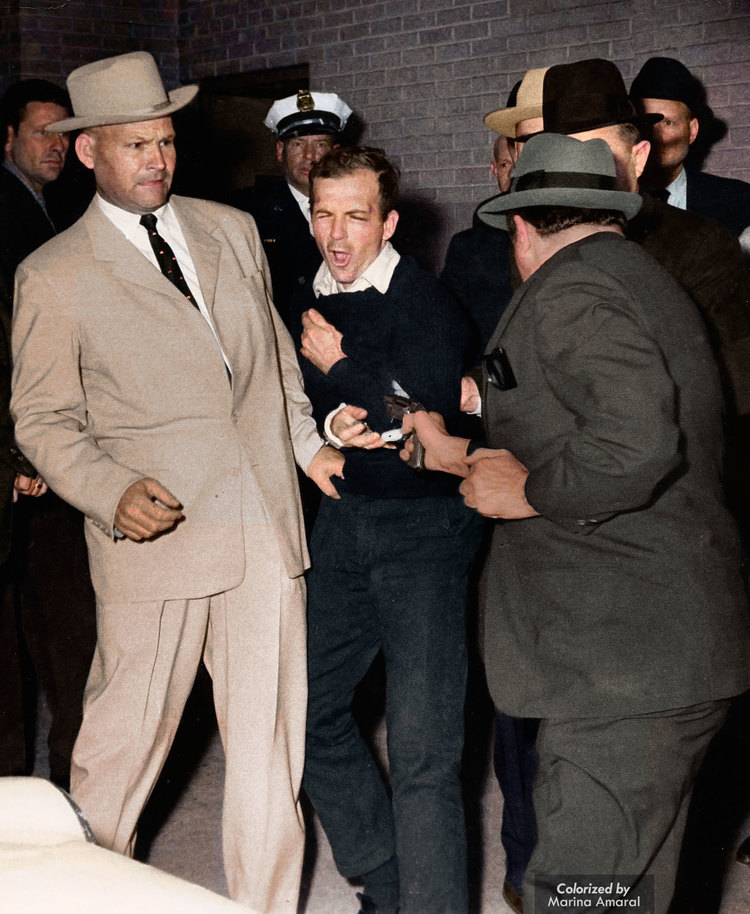
Bilderna i denna bloggpost har färglagts av Marina Amaral. Det finns många som färglägger svartvita bilder; det är lätt att göra på ett amatörmässigt sätt, men blir snabbt svårare ju högre krav man ställer. Amaral hör till de duktigare och ambitiösare, såväl beträffande det konstnärliga som historiska. Hon lägger inte på vilka färger som helst utan försöker att, så långt det är möjligt, ta reda på exakt vilka kulörer som ska användas. Dessutom har hon en förkärlek för militärhistoria vilket ju alltid är ett plus.

Jag frågade om det inte var besvärligt att leta reda på färgerna på alla ordnar. Nej, blev svaret; sådana är mer än väldokumenterade och bara att slå upp. Då är det värre med exempelvis obskyra uniformsdetaljer som kanske är gråbrungröna, kanske grönbrungråa, eller möjligen brungröngråa? När man tar sådant på allvar så blir något så otippat som färgläggning ett nytt sätt att bedriva historisk forskning.

Ärkehertigens ljusblå jacka var mycket enkel att sätta, för den finns på museum i Wien. Det är den han dog i.

Så här ser riktiga krigsbilder nästan aldrig ut. Men även om den kommer från filmen Verdun, visions d'histoire (1928) så visar den precis hur det såg ut vid Verdun 1916. Och även den blir lerigare och på något sätt verkligare i färg.

Jag kommer på mig själv med att bli förvirrad av bilder som lika gärna kan vara tagna 1864 som 1914 eller 1944. Annars kan man ju automatiskt grovsortera fotografier efter kvalitén: Amerikanska inbördeskriget svartvitt och grusigt, första världskriget lite bättre svartvitt, andra världskriget ännu bättre svartvitt eller någon sorts färg, osv. Den här bilden hade kunnat visa resultatet av intensiv artillerield eller upprepade flygbombningar i Belgien 1915 eller Bosnien 1993 eller ... Även om jag sett bilderna från platsen otaliga gånger så är det på något sätt ännu tydligare och bisarrt att denna förödelse var några sekunders verk, för den är tagen i Hiroshima.

En del bilder hör till de allra mest välkända och även de får nytt liv. Vecken i kläderna, mönstret på Jim Leavelles slips (polisen t.v.), glasögonen som Jack Ruby lagt i bröstfickan ...
Coloring black and white photos is an art that requires a deep work of research, analysis of each object to make it be as realistic as possible, historical knowledge and enough respect to value and preserve every detail in each story. It is a complex process able to transport us to anywhere.
- Marina Amaral

16 Jan 11:35

The price of monetizing schemes

by DHH

When people talk about monetizing, they’re usually talking about some sort of scheme. Because anything that needs to be monetized can’t just be simple. If it was simple, you wouldn’t need a word like monetize. You’d just be making money selling a service or product.

No, monetizing is that word we need to explain how Facebook makes money. They’re monetizing friendships and privacy. Twitter is monetizing clever quips and the latest freak-out over Trump (often the same thing). Snap is monetizing looking silly to your friends with branded filters.

Most of these monetizing schemes are all variations on the same theme: How to sell your attention, your eyeballs, to someone else. So what’s good for business is whatever can extract the most attention from your sockets. Talk about an abusive, adverserial dynamic.

The industry euphemism for this is “engagement”. But really, anyone who’s monetizing could not care less whether you’re actually engaged or just addicted, zoned out, or not even in the room. As long as the app is open, the video is playing, the timeline is updating. As long as the metrics meter is ticking, monetizers be monetizing.

The defense is that this is how we get these apps for free. How oxymoronic. Here’s this thing for “free”, if you give me the most valuable things you own: Your attention, your privacy, your peace of mind. The price tag may say $0, but it ain’t free.

This doesn’t mean that you’re buying nothing. There’s all sorts of wonder and delight in them silos. But is it worth it?

That’s really the crux of being monetized. It’s a sly, hazy, and indirect way of getting charged. It’s not easy to compute the balance after you’ve been deducted, but deducted you’ve been. And it’s well worth paying closer attention to just how much.

But right now that’s pretty hard. When you start spending your attention, or “engagement”, on a new app, it’s like eating a beef jerky stick from the gas station with the declaration: Full of mystery meat! You probably know it’s not going to be good for you, but it’s easier to explain away when you don’t exactly know how bad and bad in which ways it is.

I’d love to see all monetized apps come with a declaration of costs and consequences. Maybe like ads for drugs in the US are forced to walk through the side-effects. Perhaps more people would think twice if the label for Facebook read:

Everything you say and do on Facebook will be used against you by advertisers for targeting that’s most likely to catch you at your most vulnerable, needy moment. Your consumption of the echo chamber timeline will lead to a narrower field of vision of the world. We may try to tinker with your mental well-being at any time, if we determine that a depressed state increases engagement on the A/B by any margin.

Consumption of a monetized apps should always be pondered with skepticism. The whole lot of them fall into what we should label “a family of products with known mental carcinogens; further study recommended”.

It wouldn’t surprise me if twenty years from now we view the likes of Facebook with the same incredulity we do now to smoking: How could they not know it did this to their health?

For the past 13 years, I’ve been selling a simple piece of software called Basecamp. A saner, calmer way to manage projects and communicate company-wide. There’s no monetization scheme, just a good product for a fair price. That’s it.


The price of monetizing schemes was originally published in Signal v. Noise on Medium, where people are continuing the conversation by highlighting and responding to this story.