Att nordbor under järnålder och vikingatid hade kontakter med såväl kristna som muslimer har alltid varit välkänt. Att man tog till sig impulser och återgav dem i egna verk är heller ingen nyhet, se till exempel bloggposten Engelsk arabiska för ett särskilt fint prov från 700-talet. Men det blev ändå en världsnyhet när forskare nyligen påstod sig ha hittat "Allah" och "Ali" i tyg från vikingatiden.
“My opinion is that those who wore the fabrics must have understood the symbolism,” said Dr. Larsson. “But certainly, the person who wove the fabrics could read and write and knew what the characters meant.”
Dr. Larsson also said: “There are so many puzzle pieces here that together they represent an idea. I’m not saying that these are Muslims. But they are partaking in a worldview shared by people living in Central Asia.”
Helt utan kunskap om vare sig kufiska eller avancerade textilier från vilken period som helst så var det ändå svårt att bli övertygad av "fyndet". Skulle inte det där lika gärna kunna vara ren dekoration? Kanske det har lika lite med Allah att göra som svastikan i mönstret med NSDAP?
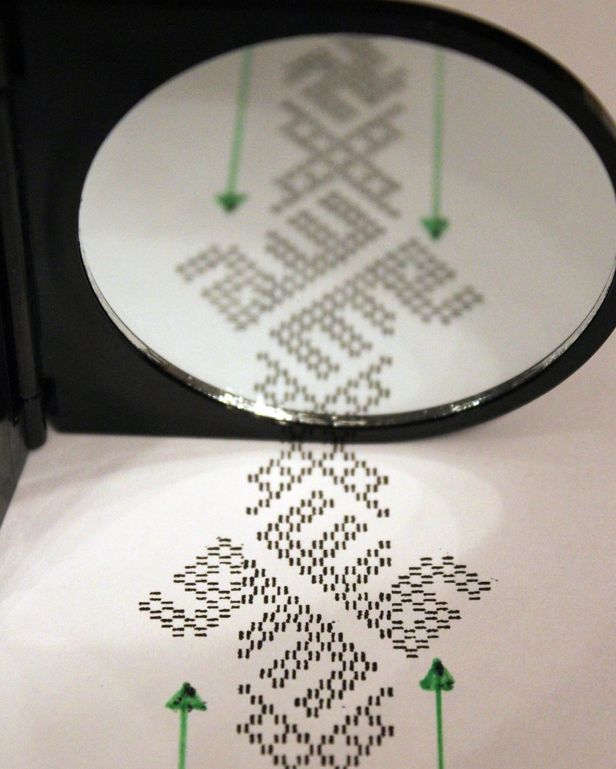
Pilarna pekar ut rekonstruerad text, säger bitar som krävs för att annars godtyckliga mönster ska bli (spegelvänd) kufiska
En som inte övertygats är Carolyn Priest-Dorman. Hon påpekar det uppenbara, att mönstret bara blir kufiska om man utökar det.
Larsson's "discovery" is predicated on unfounded extensions of pattern, not on existing pattern.
En annan och betydligt tyngre tvivlare är Stephennie Mulder, professor i muslimsk konst på universitetet i Austin. Hon har skrivit en detaljerad redogörelse i form av sextio tweets.
Dear Entire World: #Viking ‘Allah’ textile actually doesn't have Allah on it. Vikings had rich contacts w/Arab world. This textile? No.
Här är ett utvalt renskrivet stycke som jag bedömt vara argumentationens höjdpunkt: Den påstådda kufiskan är inte bara extrapolerad och spegelvänd utan även anakronistisk.
As an Islamic art historian & archaeologist, I was immediately suspicious about style of Arabic epigraphy. It’s really so simple that I spent five days thinking, it couldn’t be that Larsson would make so fundamental and obvious a mistake. The issue is a serious problem of dating. Birka Viking textile is 10th c. Style of epigraphy in Larsson’s drawing is 500 years later.
- Tweet 6-8
Uppdaterat:
P4 Uppland har pratat med forskaren bakom resultaten [Annika Larsson] och hon säger att kritiken är för oseriös för att hon ska vilja kommentera saken. Men Uppsala universitet säger nu att man tydligare borde ha angett att forskningsresultaten var preliminära och att de inte granskats av andra forskare. – Vi var nog inte tillräckligt tydliga om att det här handlade om en delstudie i en pågående forskning som presenterades vid en utställning, säger Anneli Waara, presschef vid Uppsala universitet. – Det är forskning som senare kommer att publiceras och peer reviewas.
The growing stream of reporting on and data about fake news, misinformation, partisan content, and news literacy is hard to keep up with. This weekly roundup offers the highlights of what you might have missed.
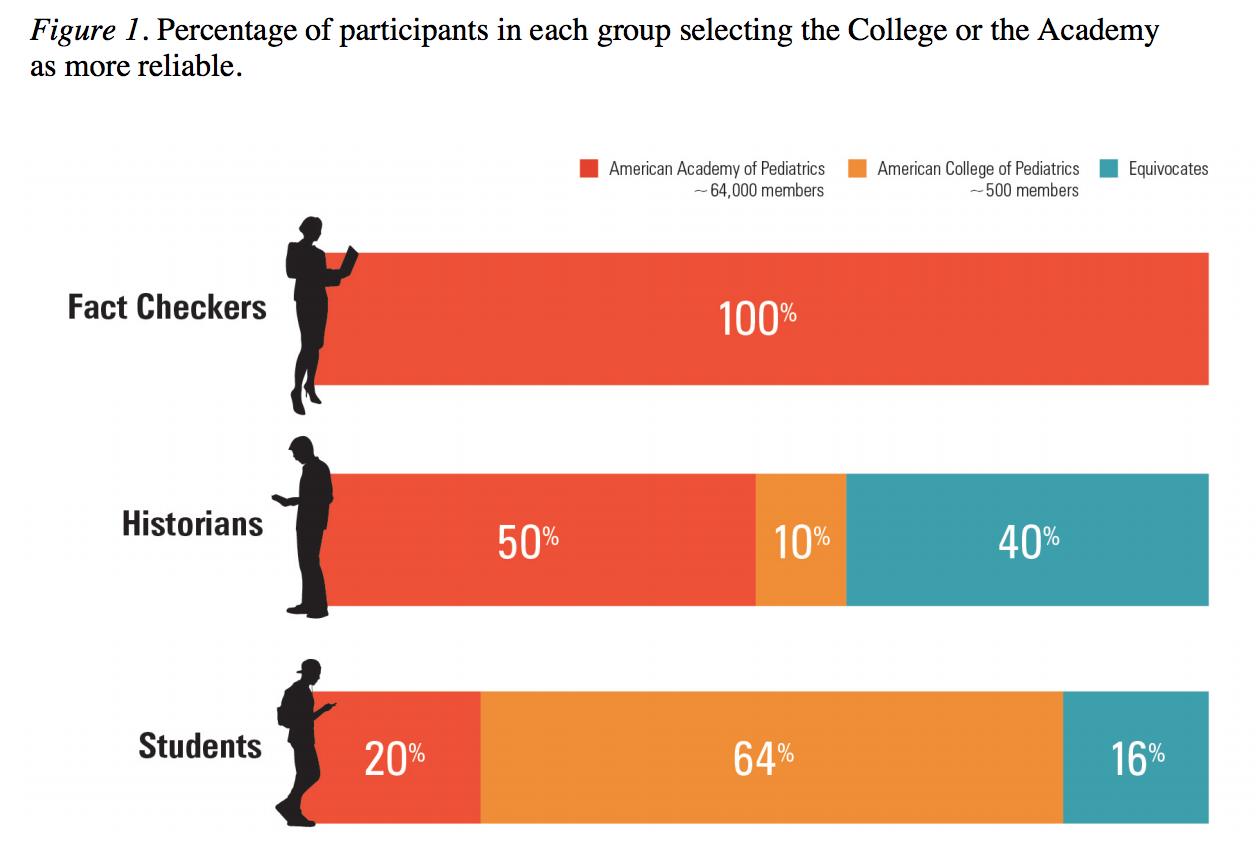
Stanford’s Sam Wineburg and Sarah McGrewobserved “10 Ph.D. historians, 10 professional fact checkers, and 25 Stanford University undergraduates…as they evaluated live websites and searched for information on social and political issues.” What they found:
Historians and students often fell victim to easily manipulated features of websites, such as official-looking logos and domain names. They read vertically, staying within a website to evaluate its reliability. In contrast, fact checkers read laterally, leaving a site after a quick scan and opening up new browser tabs in order to judge the credibility of the original site. Compared to the other groups, fact checkers arrived at more warranted conclusions in a fraction of the time.
In one exercise, for instance, participants were asked to compare articles from two sites: One from the American Academy of Pediatrics, and the other from the American College of Pediatricians. The two organizations sound similar, but are very different:
The Academy, established in 1932, is the largest professional organization of pediatricians in the world, with 64,000 members and a paid staff of 450. The Academy publishes Pediatrics, the field’s flagship journal, and offers continuing education on everything from Sudden Infant Death Syndrome to the importance of wearing bicycle helmets during adolescence.
By comparison, the College is a splinter group that in 2002 broke from its parent organization over the issue of adoption by same-sex couples. It is estimated to have between 200-500 members, one full-time employee, and publishes no journal (Throckmorton, 2011). The group has come under withering criticism for its virulently anti-gay stance, its advocacy of “reparative therapy” (currently outlawed for minors in nine U.S. states), and incendiary posts (one advocates adding P for pedophile to the acronym LGBT, since pedophilia is “intrinsically woven into their agenda”) (American College of Pediatricians, 2015).
The American College of Pediatricians doesn’t hide its positions, but “students overwhelmingly judged the College’s site the more reliable” — as did a fair percentage of historians.
“They seemed equally reliable to me. I enjoyed the interface of the [College website] better. But they seemed equally reliable. They’re both from academies or institutions that deal with this stuff every day,” one student said.
Another said, “Nice how there’s not really any advertisements on this site. Makes it seem much more legitimate.”
The whole paper is really fascinating, very readable — the best thing I’ve read so far on digital literacy. Don’t miss the section at the end that talks about where schools’ media literacy curriculums — with their easily gameable checklists — may be going wrong.
Most of the other digital literacy content I’ve read focuses on funny things middle schoolers say, or focuses on the immensity of the problem. But the skills outlined in this paper — the authors call them “heuristics” — are very teachable, they’re not hard to explain, and they can be easily incorporated into curriculums. Read it.
Shane Greenupargues that a recently announced Facebook feature that adds context to shared links could actually be successful because it helps more people do the type of lateral reading that the Stanford study outlines. Facebook is “on to something genuinely valuable that is actually pretty hard to game, and sufficiently open to user choice without telling people what they should be accepting as true and false,” Greenup writes.
And now it is time to stop saying nice things about Facebook:
Strangely timed “bug” or the obfuscation of information? Last week’s column led with the story that the Tow Center’s Jonathan Albright had found a way to determine the extent to which disinformation was shared by six Russian-controlled, election-related, now-defunct accounts — and the spread, Albright determined, was huge: In the hundreds of millions.
Albright had used the Facebook-owned CrowdTangle to analyze the posts. But now, The Washington Post’s Craig Timbergreports, Facebook has “scrubbed from the Internet nearly everything — thousands of Facebook posts and the related data — that had made [Albright’s] work possible. Never again would he or any other researcher be able to run the kind of analysis he had done just days earlier.” (Also in The Washington Post, George Washington University associate professor Dave Karpfargued for caution in accepting Albright’s analysis since CrowdTangle data can be very hard to analyze accurately; still, he noted to Timberg, “Any time you lose data, I don’t like it, especially when you lose data and you’re right in the middle of public scrutiny.”)
Facebook told the Post that it had merely “identified and fixed a bug in CrowdTangle that allowed users to see cached information from inactive Facebook pages.” What interesting timing. On Thursday, Facebook COO Sheryl Sandberg told Axios’s Mike Allen that “things happened on our platform that shouldn’t have happened” during the 2016 presidential campaign, that “we’ll do everything we can to defeat [Russia],” and that Facebook owes America “not just an apology, but determination” for its role in allowing Russian interference to take place.
Meanwhile, lawmakers plan to release the 3,000 Russian ads to the public “after a Nov. 1 hearing on the role of social media platforms in Russia’s interference in the election,” writesCecilia Kang in The New York Times. “That hearing, and a similar one that the Senate Intelligence Committee plans to hold with Facebook, Google and Twitter, will place Silicon Valley’s top companies under a harsh spotlight as the public perception of the giants shifts in Washington.” (Pokémon is under scrutiny as well.)
tfw google alerts finds an article about fake news from a fake news fraud site that has fabricated a quote that you never said. wtf. pic.twitter.com/hx4gMT05nT
We have been closely analyzing data over several weeks and have learned that once we receive a false rating from one of our fact checking partners, we are able to reduce future impressions on Facebook by 80 percent. While we are encouraged by the efficacy we’re seeing, we believe there is much more work to do. As a first priority, we are working to surface these hoaxes sooner. It commonly takes over 3 days, and we know most of the impressions typically happen in that initial time period. We also need to surface more of them, as we know we miss many.
The compact camera market is essentially dead, as smartphones have supplanted traditional point-and-shoots for most people’s photography needs. Smartphones have also pioneered entirely new forms of photography, like selfies. None of this is news to anyone.
What might be news to you, however, is that there are still ways to sell compact cameras in 2017, if you can find the right product and the right market. You can sell them for quite a lot of money, in fact. And that’s what Casio has been doing with its TR series of cameras over the past few years in Asia.
The TR series is aggressively focused on one thing: perfect selfies. The current flagship model, the TR-80, looks like a small smartphone with a giant bejeweled lens up top; its...
There are seemingly two inescapable realities for big-budget filmmakers in 2017: you have to use existing intellectual property and you must provide spectacle that can lure massive domestic and foreign audiences to the the theater.
It seemed that Denis Villeneuve chose wisely when he selected the IP that he would ride into the mainstream. Ridley Scott's 1982 Blade Runner isn't just a beloved property with the requisite nostalgia cachet, it has artistic bona fides that have earned it a place in the Criterion Collection and art house retrospectives. While Blade Runner 2049 is often beautiful and sometimes moving, this $150 million film demonstrates the limits of big budget filmmaking in 2017.
There is much to admire, but as a whole, Blade Runner 2049 works best as a case for why filmmakers like Villeneuve should be given big budgets to try out new concepts rather than retread what's come before them.
Just like Arrival was at its best when we saw the elegance of how the space ship and the aliens within it actually functioned, this version of Blade Runner shines when we get to watch how Villeneuve's dystopia operates. Moments of technical brilliance small and large are at the soul of this film. Whether you're watching the creation of robot memories, the execution of an air strike from an effortless, detached distance, or even something as simple as a stroll through a hall of records, the mechanics of this world are jaw-dropping. Ryan Gosling (K) wisely opts for a muted, brooding performance, allowing the world to steal the show while still illustrating the burden of living in it.
Even with all of this technical brilliance on display (the costumes, sound, and special effects are brilliant), the baggage of the original film's mythology weighs down Blade Runner 2049. Harrison Ford (Decker) makes his umpteenth obligatory reboot cameo of the last few years and is so committed to phoning it in that the Verizon "Can You Hear Me Now?" guy should fear for his job. Ford is a symptom here though, not the disease. A story that could have been told in a lean two hours or so balloons as Villeneuve is obliged to tie everything in with a larger mythology that even fans of the original would likely struggle to recall. One moment towards the end that seems to leave the door open for another sequel isn't just bad, it feels like they shot the first draft of an email from a studio executive.
The most burdensome baggage for Villeneuve to carry, sadly, is the Blade Runner story itself. What made the original structure of Scott's film so compelling was the interplay between film noir and science fiction. The femme fatale is a robot and the robots are used as slaves: Is it weird for the hard-edged detective to sleep with her? In the retrograde 1980s, this question felt fresh, even imperative. Ex Machina, Westworld, and the real world, meanwhile, have somewhat normalized the idea of human + robot sex.
There is a 90-minute version Blade Runner 2049 that would feel unrelenting yet also elegiac and beautiful. But the director seems to want to do for the sci-fi noir what Andrew Dominik's The Assassination of Jesse James by the Coward Robert Ford (also shot by Deakins) did for the Western. He wants to round up the tropes of the genre, layer them on top of each other, and smash them open. And there, it is a failure.
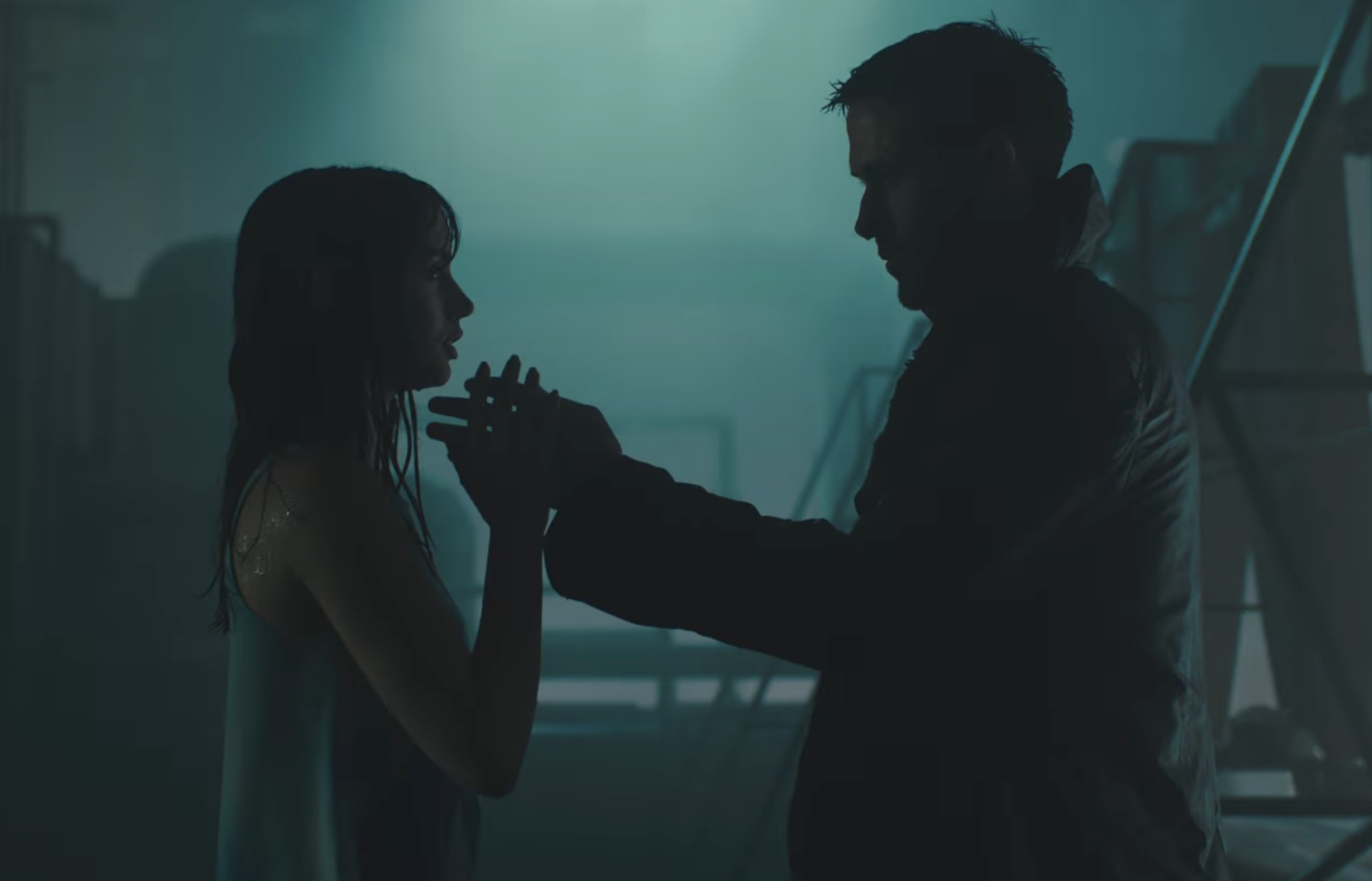
Because Deckard fell in love with a replicant, the film feels a need to pair a robotic Gosling with someone (something?) less human than himself. The unenviable task falls to Ana de Armas in the thankless role of Joi. In this world, robots get holograms who serve as their version of a sex robot. If you meditate too much on why a robot is programmed to have desire for a robot, you might short circuit. You're better off trying to forget this aspect of this film, and Armas' performance will help you; one unfortunate reality of this current moment in cinema is that being asked to play a robot turns mediocre actors into terrible ones. Perhaps out of adherence to the Phillip K. Dick source material or the original film, Villeneuve feels he can't give us a vision of womanhood outside of a shallow streetwalker or a femme killing machine. With the small exceptions of Robin Wright as a tortured police chief and Carla Juri as a fragile genius, the women in the cast sadly oblige.
This is just one of the ways Villeneuve feels obligated to tip his hat to the sandbox he is playing in. Despite all of these nods, it is difficult to tell why he wanted to pull this script from the vault as opposed the dozens of other films that will be remade by emerging directors in coming years. He doesn't seem so much passionate about Blade Runner as he is about the cool things he can do inside the confines of Blade Runner. On this point, the film also falls short where It, a lesser film by a lesser filmmaker, succeeds. You can't fake passion for source material.
The most beautiful sequence of the movie features Carla Juri as Dr. Ana Stelline, one of the few characters we meet that doesn't cleanly fit our pre-existing noir expectations. She makes memories for robots. This means that she can create anything she wants, so long as she stays in the glass enclosure provided by the Tyrell Corporation. She feels so deeply the privilege and beauty in creating dreams for other creatures, but she is also haunted by the painful limitations of living inside other people's memories. It is obvious that Villeneuve identifies with this character on a visceral level. There is deep empathy from the artist here that is never reached anywhere else in the film.
While there is much to praise about Blade Runner 2049, the film leaves you with a feeling of regret. If only we lived in a world where Villeneuve could have $150 million to do what he wanted. But, that isn't how things work in 2017. If you make a film north of $50 million, you have to confine yourself to the gilded prison of the blockbuster filmmaker. You can make whatever you want, so long as it is forged from someone else's memories. For all the beauty that Villeneuve channels in the Blade Runner universe, you can't help but wonder what could have been were he was allowed to channel a beauty all his own.
For the most part, Blade Runner 2049's style transcends issues of substance. The beautiful visuals sustain the viewer through the nearly three hour run time. But, with a filmmaker of Villeneuve's caliber, it is a pity to leave the theater feeling merely sustained.
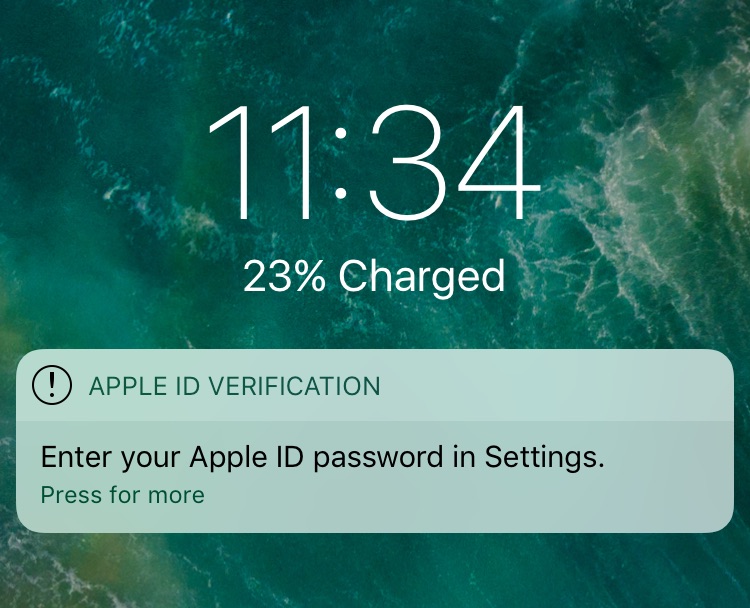
Last weekend, I needed to figure out a recipe to cook a bunch of squid that was about to go bad. Naturally, as an Italian, I tapped on my trusted Italian cooking app Giallo Zafferano on my iPhone. For no reason, a pop up box asked for my Apple ID password.
A screenshot of my iPhone randomly asking me for my Apple ID password.
Being paranoid, I dismissed it. But I also thought: this is bad, users shouldn't be asked to enter one of their most sensitive, important, passwords at random times.
Felix Krause, an iOS developer, discovered that it's actually incredibly easy to recreate this dialog box in an attempt to trick users into giving away their passwords.
"It's literally less than 30 lines of code," Krause, who's the founder of Fastlane, a tool that helps developers create apps, told Motherboard in a Twitter direct message.
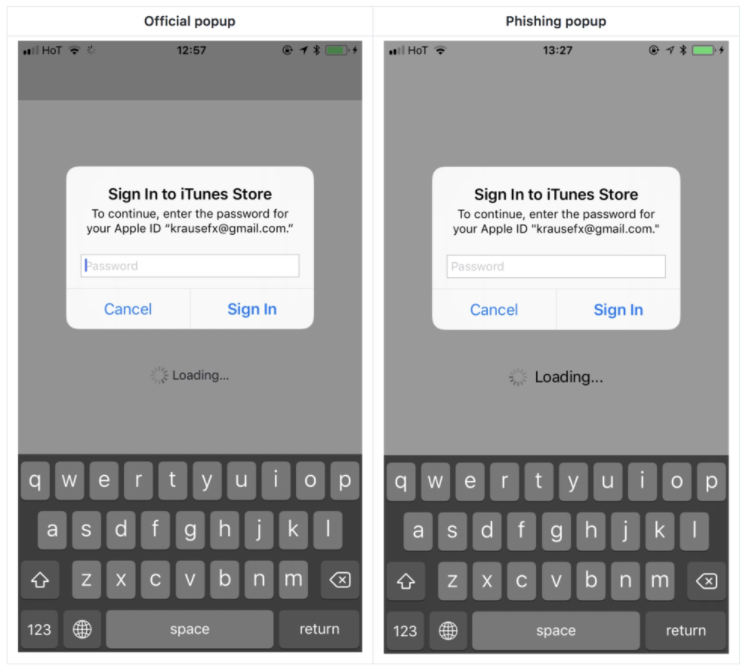
In a lengthy blog post published on Tuesday, Krause warned of of how easy it is to mimic the boxes, and users are likely to fall for it since they've been trained for years to type their Apple ID password at seemingly random times. There's no evidence that malicious hackers or developers have ever tried this trick, but nobody really knows. Here's a comparison between a legitimate, real dialog box and a malicious one, made by Krause for demo purposes.
A comparison between a legitimate popup and a malicious one.
There's no obvious way for a user to know which one is legitimate.
"It is concerning to think that is all it would take to display a convincing dialog," Will Strafach, a well-known iOS hacker and developer, tweeted.
If you see one of these boxes and you are suspicious, Krause suggests hitting the home button. If it appeared after you opened an app, and when you hit the home button the app quits and the dialog disappears, then it was a phishing attack. If the dialog and the app don't disappear, then it's a legitimate system dialog.
In any case, Krause says users should just always dismiss these and instead go to the Settings app and enter the credentials there, just in case. Apple should just get rid of these boxes and force users to go to Settings instead, Krause said. That would eliminate any risk of abuse.
"Always close the dialog, and open the iCloud settings manually, and only enter [the password] there," Krause said.
It's possible that an app that includes a malicious password popup would get caught by Apple. But Krause warns that there are ways around that.
"It's rather easy to run certain code only after the app is approved," he wrote, and then listed several ways a developer could make a box like this on their app. Apple's App Store is generally very good at keeping malware out of it, but the researcher suggested that generating a "system dialogue" is very common in iOS programming. "Showing a dialog that looks just like a system popup is super easy, there is no magic or secret code involved, it's literally the examples provided in the Apple docs, with a custom text."
"While the review process provides a basic safety filter, organisations with bad intent will always find a way to somehow work around the limitations of a platform," he added.
The grimy, glitched-out world we saw in Blade Runner is back and beautifully remastered. As the title conveys, Blade Runner 2049 picks up decades after the original film—a sort of post-post-apocalypse, more vividly, and terrifyingly imagined than 1980s cinematography could ever allow.
We're back in Los Angeles, and it's still irradiated and miserable. Home to the dregs of humanity, atoning for the blight their forefathers wrought upon the earth. Replicants hiding in plain sight. Megalithic ziggurats keeping watch over the city, like a pantheon of new corporate gods. Each scene is a self-contained work of art, and I'd have loved it even more if it weren't for one thing.
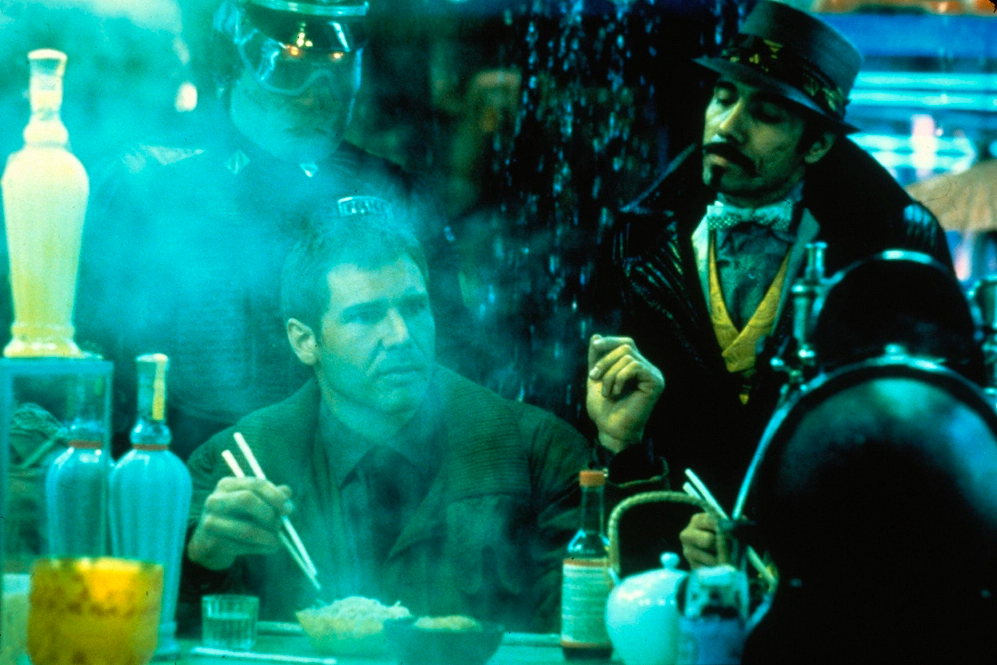
Like the original, 2049 uses Asianness as a visual cue for the future. You might have missed it, since the film wholly lacks Asian characters. Save for Dave Bautista, who is part-Filipino and played the Replicant Sapper (spoiler: he is promptly killed off), there are zero. I've seen it twice now, and spotted one or two others in passing; none with speaking roles.
Image: Warner Bros.
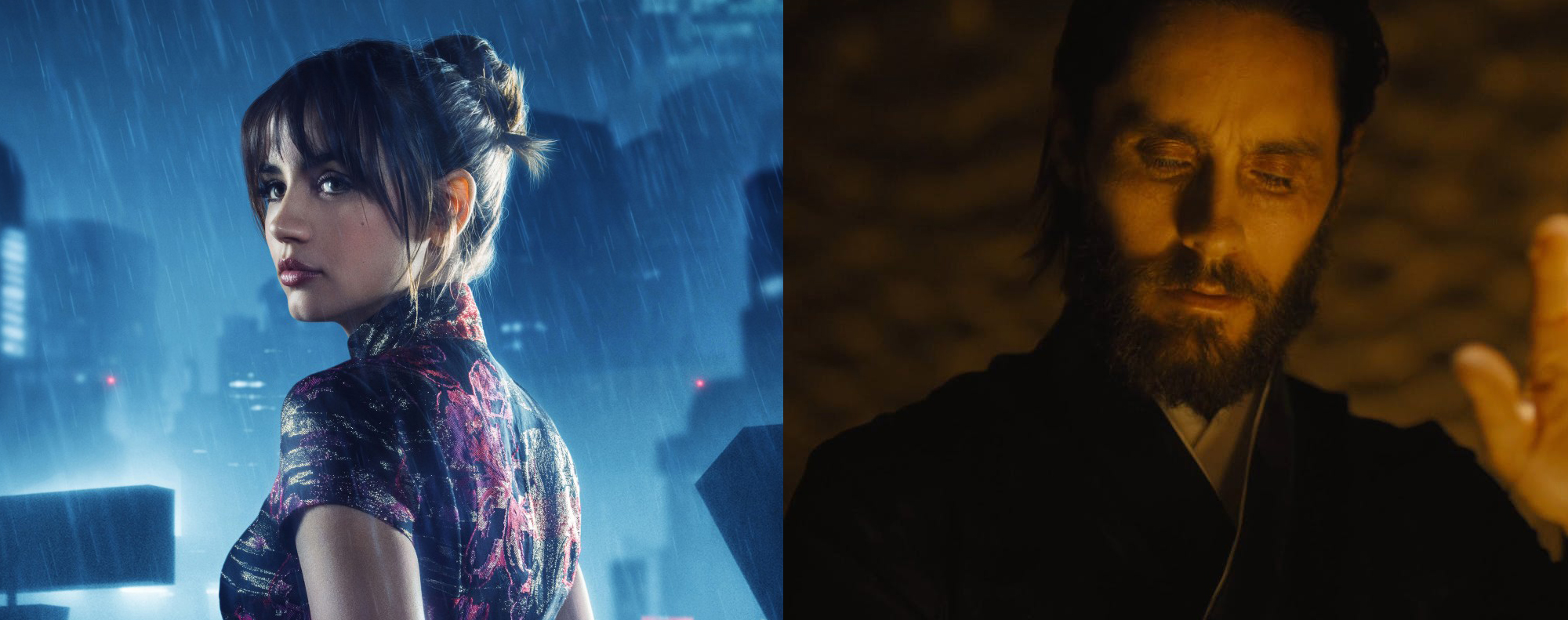
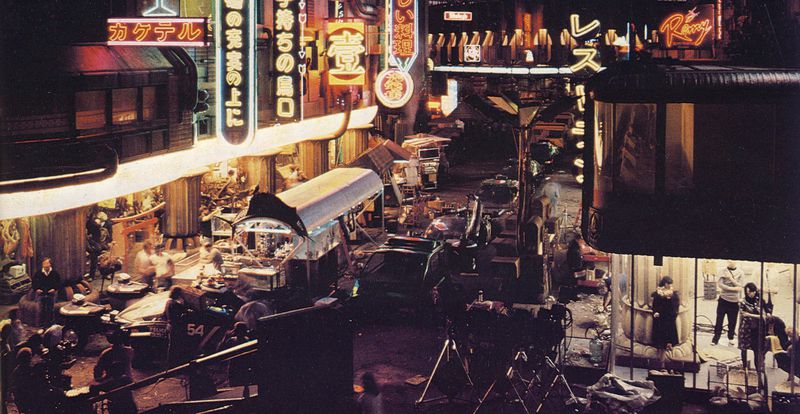
The neon kanji billboards. Neander Wallace's yukata, and Joi's cheongsam. The busy Chinatown. The interactive wall of anime apps. K's rice-filled bento box. The dual Japanese-English text on everything. All signs that point to a vibrant, multicultural city, but somehow devoid of non-white characters.
If Asians shaped this cyberpunk future, where are they?
Blade Runner and 2049 are like Orientalist art. Gorgeous, albeit skewed, depictions of "other" cultures meant to justify colonialism with their backwardness. Only, in these inverted futures, the colonists are invisible megacorps—Japanese, Chinese, Korean—whose temples we see looming over Los Angeles. The reason why signs are bilingual; a future so outlandish that Japanese could be a lingua franca. Where communities are ghettoized beneath Asian-branded skyscrapers, and the enslaved population, Replicants, are overwhelmingly white.
Images: Warner Bros.
Cyberpunk gained popularity, in part, thanks to Blade Runner and William Gibson's Neuromancer, which was heavily inspired by Japan. This was during the 1980s, amid Japan's technological revolution. At the time, computer manufacturing was being propelled by the new information age, and a global desire for consumer electronics. Brands like Sony and Nintendo became household names. American kids became versed in anime. Japan's economy swelled into the world's second-largest by the turn of the century.
Gibson, after visiting Tokyo, once said that "modern Japan simply was cyberpunk. The Japanese themselves knew it and delighted in it."
Some Asian cities did look futuristic, even then. Tokyo, for example, with its urban mosaic of fluorescent laneways. The impossibly new juxtaposed with the old. There's a reason why holographic geisha are a common motif in cyberpunk films.
Blade Runner
But Cold War anxieties, which were a popular muse for 20th century sci-fi, coupled with Japan's economic ascension, only stoked the West's dystopian fears. It's important to remember that Blade Runner's vision is solidly tethered to the 1980s. The omnipotence of its corporate monoliths was no accident. Creeping globalization is what kept Americans awake at night.
Modern cyberpunk circles, too, can perpetuate these stereotypes. Images uploaded to Reddit's r/cyberpunk as canon often mimic the aesthetic of these films. That's not to say there aren't people pushing the envelope—Neill Blomkamp's District 9helped to popularize African cyberpunk, for instance—but the genre has been slow to diversify.
"Since the late 1970s, a key idea in Western science fiction has been that Japan represents the future. Japan's 'weird' culture is a figure for an incomprehensible tomorrow," wrote Annalee Newitz about our fetishization of Japan's idiosyncrasies.
The set of Blade Runner.
Today, there's no excuse for imagining a world that's so regressively homogenous. I won't believe the argument that Blade Runner is largely white because most humans left for off-world colonies. That's just silly. This is a film that figured out hologram-on-Replicant sex.
When persons of color can't see themselves in speculative futures, that sends a depressing message about the path of human progress. Thankfully, the pendulum is finally swinging toward a more diverse sci-fi universe. But first Hollywood had to fail miserably at it.
The road to representation has been especially hard for Asian-Americans. They are, perhaps, the most neglected demographic in film. Often typecast or whitewashed, as we've seen countless times in recent years.
"People of color have always been here," said novelist N.K. Jemisin, describing sci-fi as a genre that prides itself on "infinite diversity in infinite combinations," but has yet to equally recognize its non-white authors.
Together, Blade Runner and 2049 represent the best of cyberpunk film. But imagine how much better, richer they could've been with a cast that looked the way the real world does, now and in the future. For a universe that's so preoccupied with the soul, in this regard, Blade Runner is utterly devoid of one.
iOS asks the user for their iTunes password for many reasons, the
most common ones are recently installed iOS operating system
updates, or iOS apps that are stuck during installation.
As a result, users are trained to just enter their Apple ID
password whenever iOS prompts you to do so. However, those popups
are not only shown on the lock screen, and the home screen, but
also inside random apps, e.g. when they want to access iCloud,
GameCenter or In-App-Purchases.
This could easily be abused by any app, just by showing an
UIAlertController, that looks exactly like the system dialog.
Even users who know a lot about technology have a hard time
detecting that those alerts are phishing attacks.
I’ve been thinking about this for years, and have been somewhat surprised this hasn’t become a problem. It’s a tricky problem to solve, though. How can the system show a password prompt that can’t be replicated by phishers? The best idea I’ve seen is for these system-level prompts to only appear in the Settings app. When the system needs your iCloud or iTunes password while you’re in any other app, that prompt would take you to Settings, where you’d then be prompted for the password. That’s not great, though, because it makes entering your password far more cumbersome. And how would you get back to the original app after entering your password?
Krause suggests one way to protect yourself if you suspect a password prompt might be a phishing attempt: press the home button. If it’s a phishing scam, the dialog box will disappear when you go back to the home screen, because it’s part of the app you’re using. If it’s a real system-level prompt, the alert will still be there.
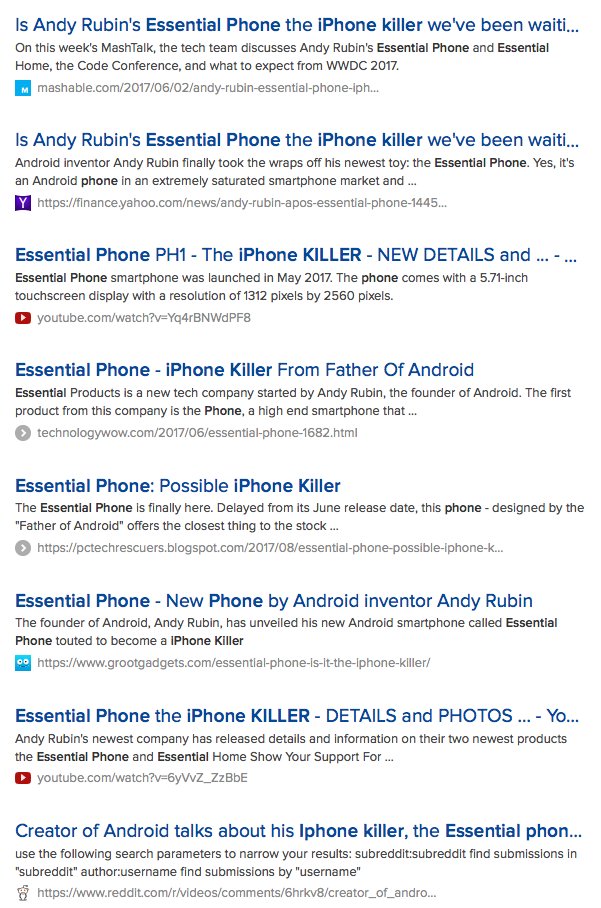
Essential, the first major startup from Android founder Andy Rubin’s venture capital firm Playground, currently sells the $699 Android-powered Essential Phone through Sprint and promises to release the Essential Home smart-home hub later this year. Essential was named as one of FierceWireless’ top 15 startups to watch in 2017. The relatively low sales figures from BayStreet for the Essential phone can be contrasted with the company’s valuation; Bloomberg columnist Tim Culpan recently calculated that Essential is now valued at roughly $1.2 billion, the Verge reported.
Can $3.5m in sales sustain a billion-dollar unicorn? You betteridge your life it can!
You’d think this would be a great question to ask your employees. Surely, I’ve asked this question, as a CEO myself, to my own team countless of times.
Turns out, I’m wrong.
The question, “How can I help you?” hurts employees more than it helps.
Let me explain.
The other week, I ran a workshop. One of the participants — a CEO — was struggling to get feedback from a particularly quiet employee at his company. He asked the other folks in the room for advice about it.
“What if I asked the employee, ‘How can I help you?’ Do you think that’s a good question to ask him to encourage him to speak up?” he pondered.
A few other executives nodded their heads. “Yeah that seems like a good idea,” they said.
Another workshop participant spoke up.
“I hate that question,” she shared candidly (and a bit sheepishly). “When my own direct manager asks me that, I never know what to say.”
Everyone was perplexed — myself included. How could asking to give help ever be a bad thing?
But as she explained, it clicked for me. Despite being well-intentioned, here are three reasons why “How can I help you?” is a terrible question to ask your employees:
It’s lazy.
When you ask, “How can I help you?” you’re not offering any specific ideas or suggestions for how you can be more helpful. Rather, you’re relying on the employee to do the hard (and delicate) work of figuring out how you need to improve as a leader. Expecting that an employee will tell you what you should be doing better without presenting any thoughts on it yourself is, well, lazy.
It puts pressure on the employee.
Can you imagine how daunting it is to tell your boss what she needs to be doing differently? That’s what you’re doing when you say, “How can I help?” You’re asking for holes to be poked, for flaws to be exposed… And the employee can’t tell if you’re really ready or not to hear it. Anytime you’re speaking truth to power, it’s intimidating. We cannot underestimate as leaders the power dynamic that exists between an employee and an employer. There isn’t any incentive for an employee to critique or say something that might be perceived negatively by their boss. As a result, “How can I help you?” puts pressure on the employee to give a diplomatic response, instead of an honest one.
It’s vague.
Now the employee is forced to quickly think through all the potential things that you could provide help with… On what project? On what area of the business? Should they mention communication? Should they talk about about timelines and deliverables? Should they bring up that thing that happened during that meeting last week? Or is the boss asking for something more high-level and strategic? It’s tough to know exactly what you’re asking for as a leader, when you ask the question, “How can I help?”
So what should you ask instead?
If you genuinely do want to know how you can help and support an employee, try this:
Ask about something specific that you can give help on, first.
Point out your own potential flaw, instead of waiting for your employee to point it out. Offer a critique of your own actions, instead waiting to see if it’s something your employee brings up.
The more you go first and share what you think can be better, the more room you’ll give your employee to give you an honest response about what they think could be better.
Here are some examples of specific questions you could ask…
“Do you think I’ve been a little micromanaging with how I’ve been following up on projects?”
“Have I been putting too much on your plate and do you need some breathing room?”
“Am I giving you enough information to do your job well?”
“Could I be doing a better job outlining the vision and direction for where we’re headed?”
“Have I not been as cognizant of reasonable timelines, like I should have?”
“Am I interrupting you too much during the day with meetings and requests?”
I guarantee an employee will feel more encouraged to give you their honest take on how you can help if you ask, “Am I interrupting you too much during the day?” rather than just asking “How can I help you?”
Stop hurting your employees with the wrong question. Start asking the right one.
This article was originally published for Inc.com, where I write a weekly column on leadership. To follow along and have new pieces sent directly to you, please feel free to subscribe below…
Poet and English professor Seth Abramson recently published a Twitter thread about his current understanding of Donald Trump: his deliberate terrorization of the American public, lack of policy positions, corruption, and keen understanding of America as “a chaos machine” that “spits out attention, headlines, sometimes money” when you feed it. I think Abramson is right about Trump in many respects and I’ve included a few excerpts below…it was difficult to pick out what to highlight.
We need to never again discuss this man with respect to policy — it’s become more than clear in 9 months that he holds no policy positions.
So if you support Donald Trump because of any view you claim he holds, I don’t ever want to hear from you again. The man holds no views.
There is no position Donald Trump has ever taken that he has not, at some point in the past or present, taken the opposite position to.
…
But the most important thing is this: this is the first U.S. president to systematically and willfully terrorize his own populace daily.
His changeability is intended to keep us anxious and on guard. In fact, he’s admitted publicly, many times, that this is a tactic of his.
His corruption is equally studied: his business model has always been “get away with what you can,” and that’s exactly how he’s governed.
…
It’s *more* than that he’ll go down in our history as the worst president we’ll ever have — he’ll go down as one of our greatest villains.
Benedict Arnold tried to betray America for a prior sovereign — Trump is trying to *torture* a nation that was good to him his whole life.
Have you noticed a change in your mood since January? I mean a change you can’t seem to escape? Anxiety, anger, fear, confusion, doubt?
The most ubiquitous man in your nation is trying to poison you daily — because it gives him power — and no one’s stopping him from doing it.
I’m not using hyperbole: you’re under attack. A deliberate, unprovoked, systematic, and — yes — evil attack. And it’s working. We’re losing.
…
Because the last thing — of the three I mentioned — humans look for in a crisis is hope, and he’s systematically taking *that* away as well.
We don’t have hope future elections will be fair. We don’t have hope our government is working in our interests. We don’t have hope we can trust and love our neighbors and they’ll trust and love us back. And we don’t have hope things will start to make sense again.
Abramson finishes by saying that we need to focus on “legally, peacefully and transparently” removing Trump from power. I’m probably going to get some email about this post,1 so I might as well go all in here with a ludicrous-sounding hunch2 I’ve had about Trump since before the election: not only will he not resign or be impeached (for Russia ties or otherwise), he will refuse to leave office under any circumstances. He will attempt, with a non-zero chance of success, to stay in power even if he’s not re-elected in 2020.
Obviously, this is ridiculous and will not happen. What about laws and precedence and democracy and social mores, you’ll say! And you’d be correct. But Trump’s got more than 3 years to lay the groundwork to make it seem normal for him to do this…and Fox News and the Republicans will let him and aid him if they can. (I mean, if you’re America’s increasingly authoritarian & extremist minority party struggling to stay in power, making the sitting Republican President not subject to an election is far more effective than suppressing the votes of likely Democratic voters through gerrymandering and voter ID laws.) Sure, we’ll be outraged about it, but we’re outraged about him anyway and that hasn’t seemed to matter in a significant way yet.
Ok, that’s nuts, right? Could never happen in America, yes? But watching Trump as President over the past few months, is it really that difficult to imagine him going full OJ here when confronted with losing his powerful position? Instead of Simpson being driven around LA in the white Bronco by Al Cowlings followed by a phalanx of police cruisers, on January 20, 2021, it’ll be Trump locked in the White House with Senator Kid Rock, taunting the military via Twitter to come in and get him.3 That sounds more plausible than Trump genteelly hosting the incoming Democratic President for tea in what USA Today calls “the 220-year-old ritual that has become a hallmark of American democracy: The orderly transition of power that comes at the appointed hour when one president takes the oath of office and his predecessor recedes into history”. Aside from “power”, not a single other word in that sentence even remotely describes anything Trump has ever cared about.
I always get email about my Trump posts. Political posts on kottke.org are pretty unpopular and lose me readers every single time. Stay in your lane, Kottke!↩
Or perhaps “speculative fiction” is a better descriptor? I’m way too level-headed to actually believe this. Aren’t I?!↩
Seriously though, what is the enforcement mechanism surrounding the transfer of power here? The 20th Amendment covers the beginnings and ends of terms and what happens when there’s no president-elect. But what about if a sitting President refuses to leave office? A lot of this stuff is ritual, presumably because of course (of course!!!!) the President is supposed to be a decent person who will honor tradition and democracy. Does Congress decide what to do? Does the Secret Service? The Supreme Court? The military? Can you imagine the cries of “coup” from Trump and his supporters if a bunch of Marines storm the White House? OMG, he’d love it. ↩
In the trailers for the upcoming Blade Runner 2049, Jared Leto's blind genius Niander Wallace paints a grim picture of the future. "Every leap of civilization," Wallace says. "Was built off the back of slaves. Replicants are the future."
After the events of the first movie, you'd think humanity would have learned not to mess with such problematic technology. A series of three short films that fill in the gap between the events of the original film and Blade Runner 2049 explain how people decided to revive replicants to save humanity and the Earth itself.
The first takes place in 2036 and centers on Wallace and his attempts to repeal the ban on the use of replicants. A decade after Deckard and Rachel fled persecution, an EMP hit the American West Coast and crippled the world economy. In the wake of the disaster, the government banned replicants. Years after that, Wallace gained fame and wealth by engineering new ways to feed the planet.
From Wallace's point of view, the only way forward for humanity is to use obedient replicant slaves to keep it alive. The film shows he's willing to break the law and take extreme measures to make that happen. His argument is convincing enough to see the ban lifted.
The second short is set just a year before the new film and depicts the typical life of a replicant on the run. Dave Bautista's Sapper is a heartbreakingly replicant trying to keep his head down and just survive, but it's hard when you're bigger and stronger than everyone around you. Getting involved in your community can mean getting recognized as a replicant.
The last of the three shorts is an animated short from Cowboy Bebop creator Shinichiro Watanabe. It comes out on September 26 and will depict life during the blackout that caused so much chaos and led to the anti-replicant legislation.
Blade Runner 2049 will be in theaters on October 6.
London’s transport authority announced Friday that it will not
renew Uber’s license, saying the company is not “fit and proper”
to operate in the city.
The move, if upheld after an appeal, could deal a serious blow to
Uber’s business.
Transport for London cited the company’s approach to reporting
serious criminal offenses, and the way it explained its use of
software that prevents regulators and law enforcement from
monitoring the app.
If Studio Ghibli made a film where Harry Potter was a girl, Hogwarts looked like Willy Wonka’s Chocolate Factory, and the whole thing turned into Akira, you’d basically have Mary and the Witch’s Flower.
[Click here to see io9's statement on this year’s Fantastic Fest.]
However, it’s not a Studio Ghibli film. Based on a book called The Little Broomstick by Mary Franklin, Mary and the Witch’s Flower is the first film from the brand new Japanese animation house Studio Ponoc. And for a first film, it sets a high bar of quality, equal to their better-known competitor. The film is filled with lots of familiar tropes, but it’s done with such a bright, contagious innocence, you can’t help but fall in love with it.
Advertisement
Mary is a young girl who has moved in with her aunt ahead of a new school year. With a week to go before classes start, no friends, and no TV, she’s crazy bored. So one day she wanders into the woods, finds a special flower, and her life is changed forever. As the title gives away, it’s a witch’s flower and it reveals that above the clouds is a wonderful world of magic.
Which, yes, sounds a little like Harry Potter. And yes, there’s also a magic school. But Mary is an outsider and isn’t supposed to be in this world. So that’s pretty much where the comparisons end. Director Hiromasa Yonebayashi made a name for himself with films at Studio Ghibli so the visuals are much more comparable to the work of Hayao Miyazaki than anything else. The movie may look bold and weird, but Mary’s story is such a sprawling adventure, the juxtaposition of the two keeps the whole movie fresh. Just when you think it’s going one way, it goes another, and that only adds to the whimsical feeling that pervades throughout the movie.
Whimsy is a very important part of a movie like this. If a big, animated film doesn’t give you chills at least once or twice with a perfect combination of visuals, music and emotion, it’s failed. Thankfully, Mary and the Witch’s Flower does that a bunch of times. It’s just a simply delightful film. A fun, family friendly adventure that dives deep into your heart and plans its own flower.
A handful of years ago I was volunteering for an organization here in Chicago where we helped high school kids prepare for their college applications. These kids were the first in their families, often underprivileged, to be applying to college.
One Saturday I met a student who wanted help editing his application essay. We went over to the computer lab and he pulled up a draft he’s been struggling with.
The essay was fine. It read grammatically well.
But it was terrible. It was dry and uninteresting. Artificial intelligence could have probably auto-generated it from a history of other applications.
I doubt any recruiter would remember him. How were we going to fix this?
Most of us trying to write to gain an audience, inspire people, market ourselves, etc. are all doing it wrong.
We stick with the education and rules we learned in high school and college: “Don’t end sentences with prepositions.” “Don’t start sentences with conjugations.” “Sentences have subjects and predicates.” We focus on the perfect paragraph and essay structure.
And if I asked most people to write an essay about their day. It’s likely going to come out a lot like my mentee’s. Stiff, formulaic, unoriginal.
But if we had an intimate conversation over coffee, the story about your day would be remarkably different. You wouldn’t worry about the word you used to start a sentence, or which of your sentences made up paragraphs. Instead, your struggles, achievements, and thoughts would hit my ears before you had a chance to think about: “Can I end a sentence with ‘at’?”
And because you weren’t worried about a hundred rules of grammar while you were talking to me, I’m that much closer to your internal voice.
The voice that makes you unique and interesting.
So my first step with the student above was just to ask who he was, what he does, and what he observes all day. And then I just typed what he said. A lot of it was run on sentences, and sentences without verbs. If he turned this draft into his high school English teacher, he’d have failed an assignment. So we edited it a bit to fit grammatical rules that someone reading a college essay might expect.
But what was on that computer screen was a story in his voice. A story of how just four years ago he came to the United States, poor, with a single parent, and could barely speak English.
Then over his high school career, not only did he become an amazing student, he became a man for others. He was tutoring kids in math and leading programs to help students who were in situations that he was in just a short time ago.
When he was done, I was sitting there, mouth open with goosebumps. Some jerk must have been cutting onions next to us.
His essay was original, dramatically compelling, and told an inspiring hero’s journey.
This kid was awesome. And an essay finally came to him because he stopped worrying about the correct way to write, and just wrote like he talked.
If you find yourself struggling to get who you are onto the page, record yourself talking on your phone and write out the transcript later if you need to. Just get your voice on the page first before you start worrying about a bunch of rules.
When you finally have YOU on the page, now go back and make your bits bend to the style you want them in. But be careful with spending too much time on the grammar and the rules. Go back and make sure it still flows like you’d actually say it. Read it out loud to yourself. You’ll know when you sound fake when you stutter a bit trying to read a sentence back.
Because we aren’t trying to get an A in an English class. Most of us aren’t journalists for the New York Times all trying to write in a similar and strict style.
We’re just trying to contribute to a real conversation. And we want to meet you.
And if you need a zero-learning-curve system to track leads and manage follow-ups you should try Highrise.
Write like you talk was originally published in Signal v. Noise on Medium, where people are continuing the conversation by highlighting and responding to this story.
Mikael är ensam och lider av psykisk sjukdom. Efter att ha kämpat i åtta år för att få hjälp av myndigheterna har han gett upp. Han har gjort sig av med allt han äger och gått ut i skogen. Nu är han försvunnen.
– Stanna, stanna!
Klockan är halv fyra på eftermiddagen torsdag 7 september. På en grusväg strax norr om Mariestad bromsar lantbrukaren Johan Lidefelt in sin röda pickup.
Från ingenstans har en man med skägg och svart mössa dykt upp.
Han är inte klädd för att vara i skogen.
Han verkar förvirrad, och eftersom området haft problem med missbrukare som gör inbrott tänker Johan att han stött på en av dem.
– Här, kan du ta min plånbok, frågar mannen och sträcker fram den mot Johan.
– Nej, det kan jag ju inte, säger Johan.
– Jo, ta min plånbok och posta den till Thomas Arnroth. Den måste postas till Thomas Arnroth. Han vet vem jag är, han förstår, säger mannen.
Johan Lidefelt på platsen där han mötte Mikael Johansson.
Det är för svårt, prata med Thomas
Tre timmar senare hittar Johan och två poliser mannen i ett jakttorn vid Vänerns strand.
Han ligger i en sovsäck, med ett paraply uppfällt i regnet.
– Vem är du, frågar polisen.
– Prata med Thomas Arnroth, han vet, säger mannen.
– Jag orkar inte berätta, det är för komplicerat. Och om jag berättar kommer ni ändå inte att tro mig.
Mannen är 34-årige Mikael Johansson från Örebro. Han har gjort vad han i flera månader sagt till socialtjänsten och vården att han tänker göra.
Han har lämnat allt för att bli hemlös – och gått ut i skogen.
– Jag vill inte dö, men jag vet inte hur jag ska överleva i skogen, har han sagt.
Det är jag som är Thomas Arnroth och det är mig han frågar efter i skogarna utanför Mariestad.
Hur blev det så här?
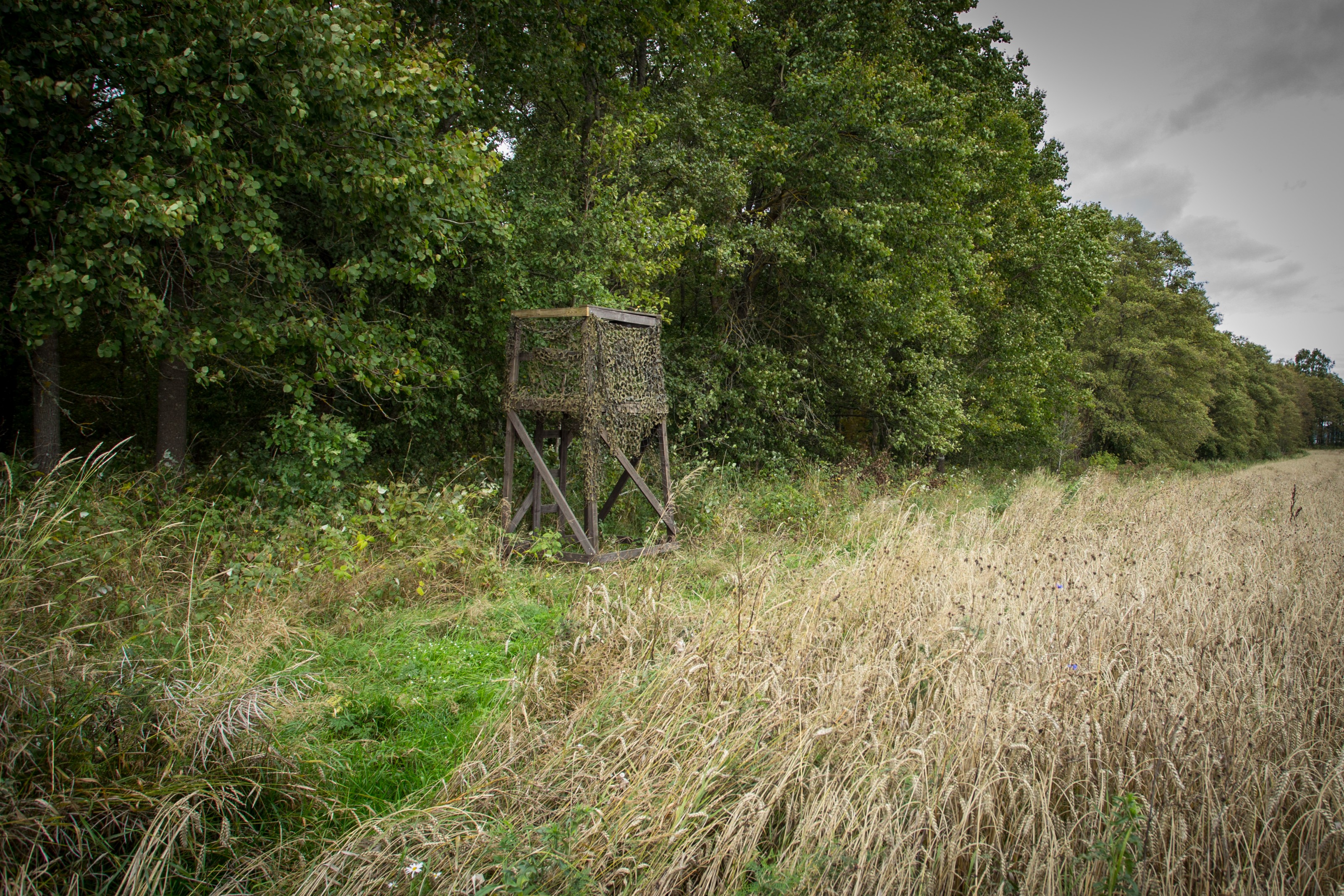
I skogsbrynet, alldeles vid kanten av åkern står jakttornet.
Mikaels kamp med myndigheterna
Mikael kontaktar mig 8 augusti. Han skriver att han har en märklig historia att berätta, om hur man kan falla genom samhällets skyddsnät.
I korthet är Mikaels berättelse att han haft en svår uppväxt. Han togs från hemmet av socialtjänsten när han var 17 och har sedan dess bott i övergångslägenhet.
Efter att ha pluggat och försökt ta sig ut i arbetslivet sprang han in i väggen våren 2010. Det var starten på en snart åtta år lång kamp mot myndigheterna för att få rätt vård och stöd.
Både vård och socialtjänst har gjort stora insatser för Mikael, men samverkan har inte funkat.
Mikael i sin lägenhet innan han gick ut i skogen.
”Jag är ju trasig”
Han har fått diagnoserna PTSD, ADHD, autism och dystymi (kronisk depression), men vården har inte kunnat enas om vilken behandling han ska ha.
– Det är som att de inte förstår att jag är sjuk. Jag får slåss ensam för att få stöd och vård, men jag är ju trasig, jag orkar inte, säger Mikael.
Mikael är ensam, utan kontakt med familj eller vänner.
Artikeln om honom väcker mycket engagemang. Många känner igen sig – och många vill hjälpa.
Men Mikael tackar nej till allt.
Han kan inte se hur något skulle bli bättre.
Exakt vilken skog är oklart
Mikael monterar ner sitt liv. Det sista han gör är att plocka ihop sin dator där han sparat alla låtar han spelat in. I ett sms berättar han att där även finns ett speläventyr som bygger på Final fantasy. Han har skrivit på det i sju år.
Onsdag 6 september får han skjuts till ett lagerhotell av Bostödsgruppen, den del av socialförvaltingen i Örebro som hjälper personer i övergångsbostad med praktiska saker.
Han räknar sina pengar noga för han vill ha så mycket som möjligt till hyra av en liten lagerplats att förvara datorn, några samlarkort, serietidningar och instrument.
– Jag kommer nog inte komma tillbaka, men jag kan inte med att slänga eller ge bort de sakerna, säger han.
När han lämnar lagerhotellet anger han mig som kontaktperson om han slutar betala hyra. Kanske kan jag ta hand om sakerna då?
– Kan jag läsa ditt Final fantasy-äventyr då, undrar jag.
– Tyvärr, jag har kört dubbel kryptering på allt. Story of my life, svarar han.
Mikaels instrument betalade han med svält. Nu är de inlåsta på ett lagerhotell i Örebro.
”Lugn nu Martin Beck”
Efter det lämnar han Örebro.
– Det var lite strul, men nu är jag fri, skriver han i ett sms och skickar med en problem solved-gif.
Jag frågar vart han är på väg.
– Valhall, svarar han.
När jag frågar vad han ska göra med mobilen säger han att han ska slänga den, han vill inte bli spårad.
När jag frågar hur han ska göra då, om han ska förstöra mobilen och ta ut simkortet svarar han:
– Lugn nu Martin Beck!
Sedan avrundar han och säger adjö.
Klockan är 17.53. Han skickar ett liknande sms till en psykolog han känner förtroende för på Vuxenhabiliteringen i Örebro.
Senare på kvällen gör jag en akut orosanmälan till socialtjänsten i Örebro. Nästa morgon kontaktar jag socialtjänsten igen och hänvisas till socialjouren. Jag ringer dit och gör en orosanmälan till. De känner inte till anmälan från kvällen innan.
Nu får även syskonbarnet Lina och övriga familjen veta vad som hänt och larmar polisen.
Polisen går in i Mikaels lägenhet. Det finns ingen där och heller inga tecken på att någon bor där.
I en papperskorg vid Mariestads station slänger Mikael sin mobil.
Pingar mobilen
Vid niotiden på kvällen ringer polisen till mig. Jag verkar vara den enda person som Mikael haft kontakt med förutom myndighetspersoner de senaste veckorna. Jag berättar vad jag vet, Mikael har sagt att det är okej.
Det är därför han inte berättar för mig vart han är på väg.
Polisen både ringer och skickar sms till Mikaels mobil. De ber honom höra av sig.
Inget svar.
23.57 pingar de hans telefon. Sista platsen den använts på är i närheten av Mariestad.
Då kontaktar Örebropolisen kollegorna i Skaraborgs polisområde.
Där vet man direkt vem Mikael Johansson är. De kanske rent av vet var han befinner sig.
Mikael är nämligen redan påträffad.
Spårar Mikael
Lantbrukaren Johan Lidefelt ber Mikael söka upp en brevlåda på egen hand för att posta plånboken, och lämnar honom där på grusvägen.
– Men jag insåg att jag nog borde ringa polisen. De hade en patrull i närheten, så en halvtimme senare började vi leta efter honom, säger Johan.
Efter ett par timmars sökande ger de upp.
Men då ringer en granne och berättar att han sett en man vandra över ett fält i närheten. Mannen hade inte passat in, det var något märkligt med det hela.
Johan tar sin fyrhjuling, hittar spår i den leriga åkern och följer dem. Längst bort i skogsbrynet, alldeles där skogen tar slut och går över i öppet fält innan Vänern tar vid finns ett jakttorn. Kanske finns mannen där?
Där skogen tar slut vid Vänern.
”Det var så vackert här”
– När jag kom fram såg jag att han låg där i en sovsäck med ett paraply uppfällt. Det såg inte så bra ut, säger Johan.
Någon timme senare är polisen på plats och tillsammans övertalar de Mikael att komma ner.
– Det var då jag insåg att det inte alls handlade om någon missbrukare utan en person som bara hamnat väldigt snett i livet. Man tyckte synd om honom, han verkade så uppgiven och vilse.
Polisen undrar vad Mikael har för plan? Ingen, säger han.
Varför är du just här? Det var vackert här, svarar Mikael.
Vem är du, frågar polisen? Jag orkar inte berätta, prata med Thomas Arnroth, säger Mikael.
Biljett till Örebro
Det gör inte polisen, men eftersom Mikael inte begått något brott utan bara verkar vara lite förvirrad tar de honom med till polisstationen i Mariestad.
Han tillbringar ett par timmar där. En av polismännen erbjuder Mikael lite yoghurt och kexchoklad, men Mikael tackar nej. Polisen kontaktar socialtjänsten i Örebro, som bokar en tågbiljett hem från Skövde station.
Där lämnar en polispatrull honom 21.17.
Det är därför Skövdepolisen vet var de ska leta när Örebropolisen hör av sig vid midnatt på torsdagskvällen.
Mikael påträffas mycket riktigt på stationen 00.15. Han har inte kommit iväg till Örebro. Han sitter i sin sovsäck.
Stationen i Skövde.
Ingen kontaktas
Eftersom polisanmälan från familjen säger att Mikael vill ta livet av sig i skogen, gör polispatrullen bedömning av just självmordsrisken. Yttre befälet är också på plats.
Man kommer fram till att ingen fara finns.
Akutpsykvården kontaktas därför inte, men eftersom stationshuset stängs över natten får Mikael följa med till polisstationen och sova på en bänk där i väntan på första morgontåget.
Familjen kontaktas inte heller.
– Varför fick vi inget veta? Vi vill inte att Mikael ska vara ensam, säger Lina, syskonbarnet.
– Hur kan de göra bedömningen att en människa som säger att han går ut i skogen för att dö inte är suicidal? Det går knappt att fatta.
Ganska enkla val
För Peter Persson, vakthavande befäl i polisregion Bergslagen, framstår ärendet som ganska okomplicerat.
– Vi är vana att göra den typen av bedömningar och jag har inga skäl att tro annat än att patrullen på plats gjorde en rimlig bedömning, säger han.
– Dessutom var yttre befäl på plats, så för vår del avslutades ärendet där och då. Jag kan inte se att några fel begåtts, tvärt om, det är väl utrett och genomfört.
Men varför meddelades inte familjen?
– Den här mannen är 34 år och alltså inte minderårig. Han har heller inte begått några brott. Vi får inte kontakta familjen om inte han vill det. Nu uppgav han ju att han skulle åka hem till Örebro, men det är inte olagligt att vara 34 år och vilja gå ut i skogen heller.
Mikael lämnar polisstationen i Skövde vid sextiden på morgonen. Då vet ingen var han tar vägen.
Skövde station
Var ska Missing people ens leta?
Strax före klockan 18 fredag 8 september efterlyser Missing people Mikael på Facebook, efter samråd med familjen.
Missing people är redo att göra eftersök under hela helgen, men behöver en plats att börja leta.
– Det är svårt, man vill göra något, åka och leta efter honom, hitta honom, vara med honom så han inte behöver vara ensam. Men var ska vi börja, säger syskonbarnet Lina.
Jag har inga svar.
Johan Lidefelt
Vad ville Mikael mig?
Det har inte polisen heller, de har gjort vad de kan, även om det finns en ny anmälan gjord. Socialtjänstens sekretess gäller även Mikaels familjemedlemmar, så de får ingen information därifrån.
Lantbrukaren Johan Lidefelt har tänkt mycket på Mikael sedan i torsdags. Han har läst min artikel och vet mer nu.
– Det gör mig så beklämd, en så fin och smart kille som bara ramlat mellan stolarna i samhället och nu är så uppgiven att han går ut i skogen för att dö. Men jag tror han ville bli hittad, han var lättad när han åkte iväg med poliserna.
Och varför ville Mikael skicka sin plånbok till mig?
– Han ville att du skulle veta att han varit här. Kanske för att du skulle berätta det också?
Mikael är återfunnen
På kvällen tisdag 12 september strax innan vi ska publicera just den berättelsen ringer mobilen. Det är Catharina Persman, gruppledare för utredningsenheten för vuxna på socialtjänsten.
– Jag har just varit i Mikael Johanssons bostad och han har gett mig samtycke till att berätta för dig att han är där. Han ville att du skulle veta det, säger hon.
Vi stoppar publiceringen.
Strax därefter ringer syskonbarnet Lina och säger att polisen nu tänker göra en ny satsning på att hitta Mikael och att Missing people samtidigt ska mobilisera för att leta efter honom.
Det är ju orimligt att låta det hända när han är hemma i lägenheten igen, så jag berättar och Lina skriker högt av glädje och får sedan lust att kräkas när anspänningen släpper. Så vi lägger på.
Strax därefter lägger Missing people ut meddelandet att Mikael är återfunnen.
Mikael hemma igen. Datorn är fortfarande på lagerhotellet.
Precis där han inte vill vara
Två dagar senare, torsdag 14 september, sitter jag i Mikaels lägenhet igen. Jag förstår att polisen kom till slutsatsen att ingen bor där.
– Jag är tillbaka på ruta ett igen, precis där jag inte vill vara, säger Mikael.
Mikael Johansson gjorde det han sa att han skulle göra när han inte orkade kämpa mot myndigheterna mer. Han lämnade allt och gick ut i skogen. Det här är berättelsen om vad som hände sen.
Han berättar om sin resa, att han tar ett litet lokaltåg från Örebro till Mariestad. Han håller på att missa tåget, men hinner med några minuters marginal. Det är då han skickar den där problem solved-gifen till mig.
Han slänger mobilen i en papperskorg på Mariestads station och går sedan och sätter sig på en bänk och ser ut över Vänern.
Svarte orm
Det är därför han har valt just Mariestad, för att det ligger vid vid ett innanhav.
När det börjar skymma går han norrut, mot skogen. Det regnar och han hittar ingen plats han är riktigt nöjd med. Han blir svettig och trött, glasögonen immar igen. Men han känner sig fri, lugn och inte rädd, trots att det är mörkt och han hör okända ljud omkring sig.
– Jag hade väldig träningsvärk dagen efter, säger han.
Sent på kvällen hittar han av en slump det där jakttornet. Han tycker om platsen eftersom han har utsikt över sjön, men han är blöt och börjar frysa på natten.
Då minns han ett avsnitt av den brittiska humorserien Svarte orm.
Kan ju lika gärna ligga bekvämt
Det handlar om att Blackadder, som spelas av Rowan Atkinson, ska brännas som häxa och ligger på bålet.
– Han ligger där och ska dö, men blir lite sur för att han inte får ligga bekvämt ens då. Så jag tänkte att jag också ville ha det lite mer bekvämt om jag ändå skulle ligga där i flera dagar, säger Mikael.
Så nästa morgon går han tillbaka den långa vägen till Mariestad och köper en sovsäck och ett paraply 298 kronor tillsammans. Efter det har han nästan inga pengar kvar.
Och det är när han är på väg tillbaka som han möter Johan Lidefelt.
– Hade jag inte gjort det hade jag bara legat kvar i det där tornet, säger Mikael.
Men varför åkte du hem från Skövde nästa morgon då, det var ju ingen som tvingade dig?
– Jag ville inte göra poliserna besvikna. De ansträngde sig så mycket och försökte vara snälla. Jag vet inte, det är sån jag är. Jag önskar verkligen att jag var annorlunda.
På den korta tid Mikael har varit hemma hinner det hända en del. Socialtjänsten har flera kontakter med honom och erbjuder honom mat. Maten tackar han nej till.
Han pantar lite burkar och köper bröd och något mer att äta istället.
Psykakuten, Örebro.
Tillbaka till psykakuten
På tisdagkvällen, strax efter att jag får veta att Mikael är hemma kommer polisen trots allt. De upplever att Mikael inte mår bra, och frågar om han kan följa med frivilligt till psykakuten.
Det är samma historia som i Skövde.
– Det var en ung polis, han var orolig för mig. Jag ville inte följa med, men jag ville inte vara till besvär heller. Han ville ju hjälpa mig, säger Mikael.
På psykakuten berättar poliserna att Mikael varit ute i skogen, att han sovit en natt i ett jakttorn men hittats och att de är allvarligt oroade för honom. I över fyra timmar är Mikael där innan han får träffa en läkare.
Mötet tar bara några minuter och Mikael berättar återigen att han är på väg att bli hemlös och ska gå ut i skogen.
Ligger och tänker
Läkaren konstaterar att Mikael inte är suicidal – och skickar hem honom. Det är samma sak som hände 23 augusti, efter vår andra intervju.
– Jag är inte psykotisk, jag vill inte ta livet av mig. Vad ska dom göra, säger Mikael.
Det är torsdag eftermiddag. Det regnar.
Efter helgen ska socialtjänsten återkomma. Mikael har dock ingen tro på att det kommer att förändra något.
– Jag ligger bara här och tänker, jag har inget annat att göra Jag vet inte vad det är för mening med att fortsätta att ligga här och göra samma sak i flera dygn till i väntan på något som jag ändå vet inte kommer att fungera.
”Jag hade velat stanna”
– Det är som att alla andra känner sig bättre om jag är här. Då kan de säga att jag har ju i alla fall tak över huvudet. Och hela livet har jag varit en som bryr mig om det, som gör saker för att inte vara i vägen, för att inte göra andra ledsna eller besvikna.
Så vad vill han?
– Jag vet att jag hade velat stanna i det där jakttornet. Det var vackert där, fridfullt. Jag slapp tänka på socialtjänsten och vården, det var en sådan lättnad även när det regnade och var kallt.
Mikael visar mig plånboken. I den ligger två lappar med mitt namn och min mailadress. Han har ristat in texten med en sten och sedan gnuggat in jord för att det ska synas.
– Jag ville bara att du skulle få plånboken, så du kunde berätta sen, säger han.
På lapparna står att jag ska skriva allt. Det har han också ristat in med sten.
Så jag berättar nu, även om det inte riktigt var det här slutet Mikael såg framför sig.
Emergency SOS is activated by pressing on the sleep/wake button of
an iPhone five times in rapid succession. When the requisite
number of presses is complete, it brings up a screen that offers
buttons to power off the iPhone, bring up your Medical ID (if
filled out) and make an emergency 911 call.
Along with these options, there’s also a cancel button. If you hit
the sleep/wake button five times and then hit cancel, it disables
Touch ID and requires a passcode before Touch ID can be
re-enabled. Touch ID is also disabled if you actually make an
emergency call.
This is a handy hidden feature because it allows Touch ID to be
disabled discretely in situations where someone might be able to
force a phone to be unlocked with a fingerprint, such as a robbery
or an arrest. With Touch ID disabled in this way, there is no way
to physically unlock an iPhone with a finger without the device’s
passcode.
It’s also worth noting that there’s no real way to tell that Touch
ID has been disabled in this manner.
This is a fantastic feature. In addition to being useful for anyone with Touch ID, it will also assuage concerns over coerced unlocking of your phone with a facial ID scanner (which is widely believed to be coming in the new high-end iPhone).
Once iOS 11 ships, spread the word about this to your friends and family.
Update: Some great details about how Apple has implemented this:
If you actually make an SOS phone call, iOS does not lock you out of using Touch ID. That is, if it’s an actual emergency, Apple doesn’t want to make it harder to unlock your phone.
There’s a bit of haptic feedback when this feature is invoked, so you can do this discreetly in your pocket and know you hit it.
In the current developer beta (beta 6), the display stays on indefinitely while in Emergency SOS mode. You have to tap the on-screen Cancel button to get the screen to turn off. In a future beta, hitting the power button one more time should darken the display again. That way, you can disable Touch ID and turn off the display without ever removing your iPhone from your pocket.
Det framgår inte vilken klinik i Mexiko det är frågan om. Kanske det är en förträfflig institution? Som bedriver kvalificerad vård enligt vetenskap och beprövad erfarenhet? Kanske det – men sådana behöver man inte åka till Mexiko för att hitta. Allt talar för att Erica hittat en av de många representanterna för den mexikanska kvack-industrin, som sedan decennier dragit till sig förtvivlade hoppfulla och deras pengar. Upprörande, men varken nytt eller märkligt.
Vad som sticker ut i just detta fallet är att insamlingen växlades upp något osannolikt tack vare Julia Mjörnstedt Karlsten. Hon var 2010 med om att grunda organisationen Ung Cancer som ska "förbättra unga vuxna cancerdrabbades levnadsvillkor genom att skapa mötesplatser, debattera samt informera och utbilda", för att citera deras syftesparagraf. Alltså inte att bedriva eller finansiera forskning. Vilket kanske är lika bra, om kunskapen om bondfångarna i branschen inte är större.
Men jag kanske har helt fel? Erica kanske har hittat en riktigt bra klinik? Som verkligen hjälper patienter att överleva, eller åtminstone leva längre. I så fall är det ju en fruktansvärd orättvisa att bara de med pengar, kontakter eller tur ska kunna få den välgörande terapin. Då borde kliniken visa belägg för vad de går för, så svenska patienter kan skickas dit på det allmännas bekostnad. För så fungerar det: Svenska patienter skickas rutinmässigt till andra länder för att få behandlingar som de inte kan få här hemma. Utan att behöva förlita sig på egna förmögenhetet eller insamlingar som ytterst sällan ger två miljoner på 24 timmar. Det enda som krävs är belägg från den mexikanska kliniken för att de inte tillhör landets blomstrande kvack-industri.
Face ID is made possible by a whole range of technology that Apple packed into the notch that defines the look of the iPhone X:
Face ID, like Touch ID before it, stores its information in the device’s Secure Enclave. It is never synced to iCloud servers or included in iOS backups.
Until last year, Touch ID was an iOS-only affair, but that changed with the Touch Bar, which brought a Touch ID sensor to the Mac for the first time.
The Touch Bar is driven by an Apple Watch-like system on a chip which includes the required Secure Enclave.
Almost a year later, Touch ID is still only available on MacBook Pro models with the Touch Bar. It’s not on the MacBook, and hasn’t made an appearance on the external Magic Keyboard.
In June, Apple unveiled the forthcoming iMac Pro. Surprisingly, its custom (and super sexy) Space Gray keyboard does not have a Touch Bar.
I piled through the firmware/rubble from the new iMac Pro – to be released in December – and it appears to be coming with a Security Enclave Processor (SEP). You know. Like the one that was added to the MacBook Pro’s with Touch Bar and Touch ID, but this time to (also?) support a new feature called Apple SecureBoot (for the SEP only?).
This post caught my attention when it was published back in June, but I think it could make a lot more sense in light of the iPhone X.
Could the iMac Pro be the first Mac to ship with Face ID?
There’s plenty of room in the bezel above the iMac Pro’s screen for the needed sensors and other hardware. In fact, the iMac Pro will ship with a 1080p FaceTime camera, while the regular iMac ships with a 720p module. Apple engineers need far more than an iSight camera to pull this off, but if they’ve upgraded the camera, maybe they’ve done other work behind that black cover glass.
(Don’t forget, Apple is building a display to go with the next Mac Pro, as well…)
That said, I’m not sure Face ID could come to the MacBooks and MacBook Pros any time soon. There is plenty of room above the screen, but those lids are really thin. I doubt Apple could squeeze all the needed hardware in there quite yet.
I think it’d be amazing to sit down at my Mac and have it log in to my user account automatically. I love Touch ID on my MacBook Pro; it has already made entering a password on my iMac feel old-fashioned. However, now even it feels a little dated in our iPhone X world.
I think a lot of people want Touch ID on the Mac without the Touch Bar. Face ID could deliver the same benefits without the baggage of the Touch Bar. I, for one, would love to see biometric authentication come to Macs without it.
I don’t write much about “Silicon Valley” as a culture, because I don’t live there and, frankly, I don’t care. But the fact that this startup is being taken seriously is absurd. It’s a company named Bodega, and Fast Company’s headline says it all: “Two Ex-Googlers Want To Make Bodegas And Mom-And-Pop Corner Stores Obsolete”.
First, all they’ve done is make a fancy vending machine. That’s great. Vending machines are a real thing, and maybe there’s a market for better ones. But better vending machines are still just vending machines.
Second, what kind of sociopaths are these people that they want to put mom-and-pop corner stores and bodegas out of business? Local family-owned stores are what make for great neighborhoods. They’re good people running good businesses that people love. Good startup ideas are things that replace products or services that people hate. Taxis suck, for example. That’s why ride sharing services are so popular and successful. Bodegas and corner stores are great.
Bloggaren och författaren Lars Wilderäng publicerade i går på sin blogg Cornucopiainlägget ”Ekots Olle Zachrison medger - man var ute efter att smutskasta Ulf Kristersson”. Inlägget handlar om den text som lades ut på Ekots redaktionsblogg i förrgår med anledning av den numera borttagna ”bakgrundslistan” om moderaten Ulf Kristersson. Wilderäng skriver i ett stycke följande:
I detta blogginlägg granskar jag om det verkligen finns fog för att påstå att Ekots lista är ”direkt hämtad” från Dagens Arena och ett ”plagiat”. Min metod är att helt enkelt följa Wilderängs uppmaning och jämföra de två artiklarna. Eftersom Googlecachen visar en version där en punkt är borttagen (den om rasismanklagelsen) så använder jag den första versionen som finns arkiverad av Wayback Machine istället (länk).
Bakgrund
Samma dag som Ulf Kristersson meddelade att han kandiderar till partiledare för Moderaterna, fredagen den 1 september, publicerade Ekot en artikel på webben med rubriken ”Ulf Kristerssons politiska bakgrund”. Artikeln innehöll en lista med sjutton punkter ordnade efter årtal, från 1988 då han valdes till ny Muf-ledare till 2017 då han meddelade sin kandidatur. Ekot publicerade också en bild på Twitter som sammanfattade listan. För dessa två publiceringar fick Ekot kritik för att listan var obalanserad (stor andel negativa punkter), och kanske på grund av kritiken så raderade Ekot samma dag både tweeten och artikeln och publicerade en omarbetad version av listan. Ekot har motiverat borttagandena här.
Dagens Arenas lista publicerades den 11 december 2014 efter att Kristersson blev ny ekonomisk-politisk taleperson för Moderaterna. I ingressen till artikeln skriver Dagens Arena att Ulf Kristersson är ”en man som både slinter med tungan och har dykt upp i flera kontroversiella sammanhang” och att de har ”hela listan”.
Genomgång
Ekots lista har sjutton punkter och Dagens Arenas lista har tio. Fem av punkterna handlar om samma sak:
Dagens Arena: 1) ”Den svenska modellen är som apartheid”. Ekot: 1994: Jämför svenska modellen med apartheid i bok
Dagens Arena: 4) Kinaresa med frun var tredje månad för skattebetalarnas pengar: Inga problem! Ekot: 2008: Åkte var tredje månad till Kina – för 128 000 kronor
Dagens Arena: 5) Städhjälp? Det tar vi svart. Ekot: 2007: Kristersson har anlitat städhjälp svart
Dagens Arena: 6) ”Hur känns det att bo i en lägenhet som är vikt åt svårt sjuka och hemlösa?” Inga kommentarer! Ekot: 2008: Får våning i Stockholm avsedd för utsatta
Dagens Arena: 7) Lägenhetsaffär 2. Ekot: 2010: Får uppmärksammat hyreskontrakt – igen
Om man bara tittar på andelen gemensamma punkter är det långt ifrån rimligt att hävda att Ekots lista är ”direkt hämtad” från Dagens Arena. Varken fem av sjutton eller fem av tio är särskilt stora andelar. I texten på Ekots redaktionsblogg står det: ”En reporter fick i uppdrag att göra en faktagenomgång av blåsväder den moderate partiledarkandidaten Ulf Kristersson varit i genom åren.” Hur många blåsväder kan Ulf Kristersson ha hunnit vara med om egentligen? Det är väl inte konstigt att några av punkterna är gemensamma, om det nu var kontroverser som Ekot fokuserade i övermått på? Som stöd för mitt resonemang kan jag nämna att Wikipedia-sidan för Ulf Kristersson tar upp fyra kontroverser under rubriken ”Kontroverser”, och samtliga av dem finns med i både Ekots lista och Dagens Arenas lista. Den enda som inte tas upp är den om Kinaresorna, nummer två ovan. Ingen av de fyra kontroverserna på Wikipedia har Dagens Arenas listartikel som källa.
Man kan också titta på formuleringarna och vilka detaljer som tas upp. Om det finns någon sanning i Wilderängs påstående om plagiat så bör det Ekot skriver om de fem gemensamma punkterna i misstänkt hög grad likna det som Dagens Arena skriver om dem. Jag går igenom de fem punkterna i tur och ordning:
Dagens Arenas beskrivning består nästan enbart av ett relativt långt citat från boken. Ekot tar upp detaljer om boken som Dagens Arena inte nämner och har bara en kort formulering inom citationstecken: ”faller offer för”. Den formuleringen finns inte i Dagens Arenas långa citat.
Ekot skriver utförligare än Dagens Arena. Ekot ger honom titeln ”socialborgarråd”, Dagens Arena skriver bara ”borgarråd”. Ekot har med två citat från Kristersson, Dagens Arena har inget citat. Jag kan inte se någon direkt influens från Dagens Arenas text i Ekots text.
De enda ord som finns i båda är ”städhjälp”, ”det”, ”svart”, ”2007”, ”att”, ”Ulf”, ”Kristersson” och ”anlitat”. Ekot skriver att brottet skedde under större delen av 2001.
Dagens Arena skriver att lägenheten egentligen var vikt till ”sjuka och hemlösa”. Ekot använder en annan fras, ”sjuka och behövande”, och radar dessutom i nästa mening upp kategorier av männniskor som Ersta diakonisällskap hyr ut lägenheter till. Ekots text innehåller en rad detaljer som inte finns med i Dagens Arenas text. Dagens Arena fokuserar på en intervju i SVT:s program Hemlös som inte nämns av Ekot.
Även här har Ekot många detaljer som inte finns hos Dagens Arena. Jag kan inte hitta någon uppenbar influens från Dagens Arena i Ekots text.
Om man istället menar att plagiatet består i själva idén att man gör en punktlista över Ulf Kristerssons karriär så kan jag bara konstatera att det knappast är en originell idé att i punktform sammanfatta någons offentliga liv.
Slutsats
Det finns inget som tyder på att Ekot på något sätt baserade sin artikel på Dagens Arenas artikel. Wilderängs anklagelse om plagiat är grundlös.
Anklagelsens historia
Lars Wilderäng är inte den första som har pekat på Dagens Arenas text och hävdat att likheter mellan de båda listorna tyder på att Ekot hämtade mycket från Dagens Arenas lista. Först ut bland dem med många läsare var såvitt jag kan se den borgerliga debattören Rebecca Weidmo Uvell som redan på fredagen samma dag som Ekot publicerade sin lista skrev på sin blogg i ett inlägg att ”en del” av det som Ekot skriver ”verkar” vara ”hämtat” från Dagens Arenas artikel. Dagen därpå skrev SvD-kolumnisten Thomas Gür i ett Facebookinlägg att Ekots medarbetare ”plankade” Dagens Arenas genomgång och att artikeln ”helt baserades på” Dagens Arenas artikel. Dagen efter det var det så dags för Wilderäng att skriva om kopplingen till Dagens Arenas artikel, och nu hette det alltså att listan var ”direkt hämtad” från Dagens Arena och till och med ett plagiat.
A writer had a rough go of getting a book published. Even after he’d written plenty of short stories for magazine publications, he started his hand at writing books. But nothing hit.
His fourth attempt at a novel really gave him some fits. He finally finished a manuscript for it, but he still didn’t like it. The story didn’t move him, he was writing about people he didn’t know very well, and he didn’t like the characters. He threw it away in the trash.
Dean Simonton is a Professor of Psychology at UC-Davis. The guy has studied what makes people creative and smart his whole career with over 300 publications and more than ten books.
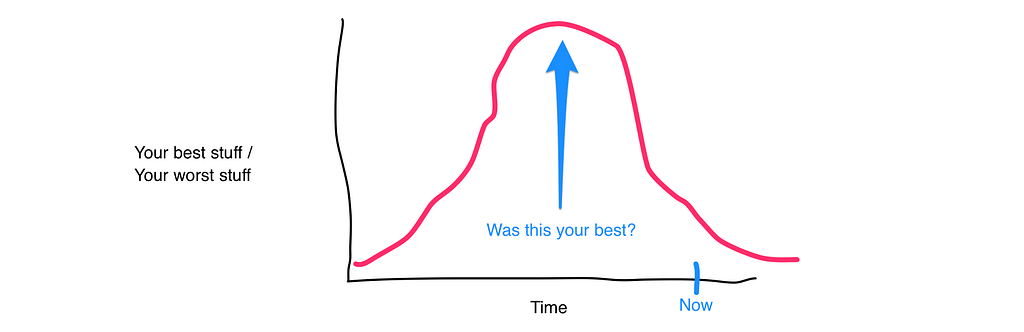
In 1977, Dean explored how time affects greatness. By studying composers, do we see if they peak and get worse as they get older?
Afterall, isn’t that what we expect? Don’t we expect to see that graph of a U upside down?
But, that’s not what Dean found. Instead Dean found the percentage of stuff composers did that was “great” compared to their “minor” things was constant over time.
Quality doesn’t change over time. Quantity does. If you see someone peak, it’s because their productivity changed.
In other words, the most creative amongst us have mastered beating the odds. Not because they have drastically better chances. But because they play the game more.
Dean’s conclusion also carries with it the observation: time doesn’t seem to make us much wiser in determining what’s good or bad about our work. If it did, we’d see the percentage of our “major” works improve.
Or as Dean has written: “Beethoven’s own favorites among his symphonies, sonatas, and quartets are not those most frequently performed.”
That lack of wisdom also then causes a lot of things to get thrown out that may have been good. Or as Dean calls it “backtracking”.
Adam Grant, who highlights more of Dean’s work in his book Originals, points out, “In Beethoven’s most celebrated work, the Fifth Symphony, he scrapped the conclusion of the first movement because it felt too short, only to come back to it later. Had Beethoven been able to distinguish an extraordinary from an ordinary work, he would have accepted his composition immediately as a hit.”
When the writer above came home one night from his teaching job, a job that barely paid enough money to keep a roof over his family’s head, he found his wife had dug the book out of the trash.
She wanted him to finish it. She was confident he had a worthwhile story. It took a bit of her help to get the characters figured out. But he polished the story and started sending the manuscript to publishers.
He didn’t hope for much. He moved onto other things. But one thing he definitely didn’t do was give up writing.
“I pretty much forgot about it and moved on with my life, which at that time consisted of teaching school, raising kids, loving my wife, getting drunk on Friday afternoons, and writing stories.”
But soon, he got a call that Doubleday wanted to publish his book in hardcover. It wasn’t for much. A $2500 advance. But soon after that, he also got a paperback deal and a $400,000 advance.
Stephen King’s Carrie sold over a million copies in its first year alone and became a multitude of movies, sequels and even Broadway performances.
That’s why you see me attempting things like a daily vlog or publishing a couple articles a week. I see the evidence that I’m terrible at determining what’s good or bad about my work. The things I think will get a ton of traffic, likes, shares, etc. do just the opposite. And vice versa. So I just keep publishing.
Today Stephen King, needs little introduction. But it might still surprise you that as I write this, he has no fewer than 5 adaptations of his work coming out to TV and film. That’s crazy. John Grisham’s work has turned into a lot of movies. But not 5 new productions simultaneously.
Stephen King is a genius. But if you playback his story, you see exactly why his genius is also so popular today. He’s never stopped writing. He’s written over 90 books, hundreds of short stories. He has 238 IMDB credits.
He’s prolific. He keeps moving on with new ideas. When Carrie was stuck, he’d already moved onto the next thing.
Stephen King has enjoyed a great amount of success since Carrie. It clearly wasn’t a peak. His work is still exploding into new projects now. But Stephen King just played the odds. He’d keep writing until he won.
where I share more about how we run our business, do product design, market ourselves, and just get through life.
And if you need a zero-learning-curve system to track leads and manage follow-ups you should try Highrise.
Peaked? was originally published in Signal v. Noise on Medium, where people are continuing the conversation by highlighting and responding to this story.
Airbnb - finally once you book a room after contacting several hosts, it will give an option to notify other hosts that you don’t need room for the same dates.
time series of 30min before the peak, to about 15min after, taken with my Canon 5DmkII with a 70–200mm lens and 9-stop solar filter
About a year ago, I started to get pretty excited about the 2017 eclipse. My own home was just inside the path of totality, and I was less than 40 miles from the path’s center. I invited friends from afar to come stay at my house. In the last few weeks, four of them stepped up to make the trip to see it at my house.
It was tough to determine if we should stay put or drive 30–60 minutes south to get another ~30 seconds of totality. Traffic worries were rampant, as everyone in Oregon was bracing for total stoppage and we were told to stock up on food and water as if in an emergency. Ultimately, we decided to stay put and stay comfortable, to avoid problems with traffic and travel.
waiting for the peak
We lucked out with a cloudless morning. And right around the beginning of the eclipse at 9am, we all set up on the back deck. I started a time-lapse with an iPad to get a sense of what the backyard looked like going from daylight to darkness and back (in the end, it was way quicker than I thought it’d be).
I setup my digital SLR and trained it on the sun. I set the back screen as the viewfinder and it was a great (and safe) way to monitor the eclipse progress all morning. I took a photo every 5 minutes or so to get the series of images at the top of this post.
A perfect way to monitor the progress
As we closed in on 10:18AM, it went almost completely dark, and we all started freaking out a bit over how amazing it was. It was remarkable to take off your eclipse glasses and see everything so sharply.
In the middle of that peak, I stopped to look up and witness with my own eyes the image I’ve seen in so many photos but never experienced: A black circle, surrounded by white almost flame-like light. It was remarkable, unforgettable, and experiencing it with the naked eye was even better than the photos suggested.
Here’s a video from that moment, and you can hear everyone in the backyard flipping out.
After a moment, I realized I still needed to take an eclipse shot, so I scrambled a bit and took off my sun filter, but couldn’t get the camera settings back to normal in the few seconds before it ended.
As the light and shadows quickly returned, I realized despite missing the photo, the moment still made everything worth it. All the anticipation, planning, and travel from friends. All the cameras and filters and tripods and batteries and practice.
Everything was worth it for a moment that reminded me how very small I was in the vast universe. Celestial bodies floating around thousands and millions of miles away were coincidentally overlapping before my eyes and creating a once-in-many-years event. I barely remember the 1979 partial eclipse I saw in Southern California, but seeing the real deal in 2017 was extraordinary.
For anyone wondering about the 2019 eclipse in South America or the 2024 eclipse coming to North America, I offer these tips after today’s experience:
I would urge anyone traveling for an eclipse or ready to experience their first, to ALWAYS GO FOR MORE TOTALITY. In hindsight, I should have taken everyone to a friend’s property 30 miles south for another 30 seconds of time in the darkness.
I have a new respect for people that travel all over the world to witness an eclipse every few years. It was a remarkable event and I would love to experience it more than once every 40 years.
After fumbling with my camera at the precise moment, if I had to do it all over again, I’d keep the same setup, but remember to put my camera from manual mode set to snapping incremental shots into automatic mode for the totality photo. Or I’d setup a second camera just for the totality without a dark lens filter.
I took a time-lapse of my backyard for 90 minutes overlapping with the eclipse, hoping to see a gradual loss of light, but it was way more sudden, happening just in the last five minutes or so. Next time I’d only time-lapse plus or minus a few minutes and take a shot every second to get a smoother transition.
An eclipse was totally worth the hype and the anticipation. It was a remarkable event that photos and video can’t do justice. You have to experience first-hand the sun blotting out in the morning to know how incredibly strange it is. The only thing I remember from the 1979 eclipse as a little kid was how weird that day felt. In 2017, with a science degree and decades of living behind me, the whole day was a blast and I’ll never forget the experience.
Dan Lyons, a former tech journalist who wrote a funny blog years ago called "Fake Steve Jobs" and wrote one of the best episodes of HBO's Silicon Valley ("White Hat/Black Hat") gave a funny 20-minute talk about his horrible experience in a start-up.
From YouTube description:
When he lost his job at Newsweek, Lyons - who had long reported on Silicon Valley companies - accepted an offer from HubSpot, a red-hot Boston startup, as a "marketing fellow". Watch the talk to learn what happened next.
I was not prepared for how incredible the total eclipse was. It was, literally, awesome. Almost a spiritual experience. I also did not anticipate the crazy-ass, reverse storm-chasing car ride we’d need to undertake in order to see it.
I’m not a bucket list sort of person, but ever since seeing a partial eclipse back in college in the 90s (probably this one), I have wanted to witness a total solar eclipse with my own eyes. I started planning for the 2017 event three years ago…the original idea was to go to Oregon, but then some college friends suggested meeting up in Nebraska, which seemed ideal: perhaps less traffic than Oregon, better weather, and more ways to drive in case of poor weather.
Well, two of those things were true. Waking up on Monday, the cloud cover report for Lincoln didn’t look so promising. Rejecting the promise of slightly better skies to the west along I-80, we opted instead to head southeast towards St. Joseph, Missouri where the cloud cover report looked much better. Along the way, thunderstorms started popping up right where we were headed. Committed to our route and trusting this rando internet weather report with religious conviction, we pressed on. We drove through three rainstorms, our car hydroplaning because it was raining so hard, flood warnings popping up on our phones for tiny towns we were about to drive through. Morale was low and the car was pretty quiet for awhile; I Stoically resigned myself to missing the eclipse.
But on the radar, hope. The storms were headed off to the northeast and it appeared as though we might make it past them in time. The Sun appeared briefly through the clouds and from the passenger seat, I stabbed at it shining through the windshield, “There it is! There’s the Sun!” We angled back to the west slightly and, after 3.5 hours in the car, we pulled off the road near the aptly named town of Rayville with 40 minutes until totality, mostly clear skies above us. After our effort, all that was missing was a majestic choral “ahhhhhh” sound as the storm clouds parted to reveal the Sun.
My friend Mouser got his camera set up — he’d brought along the 500mm telephoto lens he uses for birding — and we spent some time looking at the partial eclipse through our glasses, binoculars (outfitted with my homemade solar filter), and phone cameras. I hadn’t seen a partial eclipse since that one back in the 90s, and it was cool seeing the Sun appear as a crescent in the sky. I took this photo through the clouds:
Some more substantial clouds were approaching but not quickly enough to ruin the eclipse. I pumped my fist, incredulous and thrilled that our effort was going to pay off. As totality approached, the sky got darker, our shadows sharpened, insects started making noise, and disoriented birds quieted. The air cooled and it even started to get a little foggy because of the rapid temperature change.
We saw the Baily’s beads and the diamond ring effect. And then…sorry, words are insufficient here. When the Moon finally slipped completely in front of the Sun and the sky went dark, I don’t even know how to describe it. The world stopped and time with it. During totality, Mouser took the photo at the top of the page. I’d seen photos like that before but had assumed that the beautifully wispy corona had been enhanced with filters in Photoshop. But no…that is actually what it looks like in the sky when viewing it with the naked eye (albeit smaller). Hands down, it was the most incredible natural event I’ve ever seen.
After two minutes — or was it several hours? — it was over and we struggled to talk to each other about what we had just seen. We stumbled around, dazed. I felt high, euphoric. Raza Syed put it perfectly:
It was beautiful and dramatic and overwhelming — the most thrillingly disorienting passage of time I’ve experienced since that one time I skydived. It was a complete circadian mindfuck.
After waiting for more than 20 years, I’m so glad I finally got to witness a total solar eclipse in person. What a thing. What a wondrous thing.
If you’re still looking for a succinct, pin-point-accurate, easily grasped explanation for what was wrong about Google engineer James Damore’s essay arguing against Google’s efforts to address gender (and, I think implicitly, racial) diversity in its workforce, look no further than Damore himself, in this series of tweets:
Imagine your company spent $250 million on programs that assumed
Santa Claus is real.
Then you wrote a document detailing why Santa Claus is a myth,
which upset the brainwashed employees that believe in Santa Claus.
It’s your fault if you make a 3 year old cry by telling them
Santa Claus isn’t real. It’s society’s fault if that makes 30
year olds cry.
I found his original document extraordinarily tedious to read because it contained about two pages worth of ideas spread across 10 pages of a sort of academic-ese-like writing. He used that abstract, detached, wordy point-of-view to make his thesis come across as non-confrontational. I’m not against women in tech, I’m just pro facts, and here are some facts.
Now, unleashed from any pretense of evenhandedness or detachment, we get a succinct summary of his argument: the notion that women should, based on merit and talent, constitute a larger percentage of the tech industry is like believing in Santa Claus. A fantasy.
Fuck this guy.
Also, nobody cried after reading his “document”. They simply explained, often in point-by-point painstaking detail, why he was wrong and needed to be fired.
I’ve been asked some questions by the press recently about my divorce from Joss Whedon, to whom I was married for 16 years. There is misinformation out there…
Ethereum has a hacking problem. Millions of dollars have been lost in various heists over the past year. But the issue isn't always vulnerable code—often, it's people.
Ethereum, a cryptocurrency and app platform, was invented in 2013 and at the time of writing has a market cap of $32 billion USD. In the last year especially, people have been dumping tons of money into experimental code that didn't exist just five years ago, and are hoping that the system's "smart contracts" will keep their investment safe. This hasn't worked out in several instances where poorly coded contracts allowed hackers to make off with people's money. Last year's DAO hack saw an attacker take more than $50 million, and a recent hack affecting multisignature wallets created with ethereum client Parity lost $32 million.
But equally huge problems for ethereum, hacking-wise, are human greed and folly rather than buggy code. An unsettling pattern has repeated itself several times in the past year: A hacker takes over the online accounts or website of a company raising funds from the ethereum community, or simply poses as a representative of said company, and tricks overly eager investors into sending them money instead.
This often happens during Initial Coin Offerings, or ICOs, wherein an ethereum app raises funds by selling "tokens" that interact with their app and which appreciate in value. The ICO market is red-hot, and people line up, digitally speaking, to send money to these companies as soon as the token sale launches. Often, ICOs are announced with little more than a string of text on a website that tells people where to send their cryptocurrency. Some ICOs have raised tens of millions of dollars in mere minutes.
Basically, ICOs are a perfect nexus of human greed, a flurry of money changing hands in a short time frame, and a weak security vector: a website. How could a hacker resist exploiting them? (For what it's worth, the US Securities and Exchange Commission seems to be eyeing more regulations for some types of ICO tokens.)
The most recent example of this phenomenon happened on Monday morning. Around 8 AM EST, Enigma, a project on ethereum currently engaged in an ICO pre-sale, breathlessly announced that their website, mailing lists, and Slack account had been compromised. But it was too late—people had already sent nearly 1,000 ether to an account controlled by the hackers. That amounts to nearly $500,000 USD. TechCrunch reported that Enigma CEO Guy Zyskind's email account was compromised in a previous data breach and that two-factor authentication was not enabled.
"We are working on implementing additional security measures for our community and our team at this time and will have more information to share soon about next steps," the Enigma team wrote in a later update in their Telegram channel.
A similar event occurred a month ago, in mid-July. At that time, a company called CoinDash was about to launch its ICO. But at the time of launch, a hacker compromised the company's website and replaced the company's contract address with one they controlled. In about five minutes, the hacker managed to snag $7 million worth of cryptocurrency from people lined up to invest in the CoinDash ICO.
This is all, frankly, totally bonkers and completely unnecessary
In another example of how greed and lack of caution have allowed scammers to fleece eager ethereum investors, a rash of phishing attacks in early July saw people give more than $600,000 of their money away. In that case, scammers reportedly spammed people in ethereum Slack channels with links ostensibly to invest in various legitimate ICOs, but which really linked people to a fake page controlled by the attacker. While some potential victims were likely smart enough to see through the ruse, others, eager to cash in on the ICO craze, simply gave their money to the hackers.
This is all, frankly, totally bonkers and completely unnecessary. The easiest way to avoid these sorts of disastrous hacks is a little bit of caution on the part of investors (of course, the people running ICOs need to have their internet security game locked down as well). The problem is that the ICO market discourages caution.
Initial Coin Offerings are hyped up for days or weeks in advance, usually with a countdown to the moment when the address where people can send their money is revealed. This hype is often totally out of proportion with the products on display—many ICOs launch without a product ready to go, making them seem more like Kickstarters on steroids than viable investments. Thus, investing in tokens is often a gamble by speculators who want to get in on the ground floor, because the value of tokens can go up when an ICO nears its end.
This model is exactly what hackers can exploit to make off with hundreds of thousands of dollars, or even millions, without any chance of people getting their money back—cryptocurrency transactions are irreversible. Other industries, like online ticket selling, have similar-ish problems with people trying to game a sale the second it goes live, and the companies involved have entire teams dedicated to digital security to prevent this from happening.
On Monday, Alia Almansoori watched an experiment she designed launch from the Kennedy Space Center. But Almansoori isn't a NASA scientist or an astronaut; She's a 15-year-old student from Dubai.
"It's crazy," Almansoori said during a NASATV interview. "I want to be an astronaut when I grow up, so it's amazing that I'll get to actually see astronauts doing my experiment in space."
Almansoori is the winner of the "Genes in Space" competition, run by Boeing and miniPCR, which challenges student from grades 7 through 12 to design experiments that will help uncover how space impacts DNA. The experiment was among cargo and supplies for the ISS sent aboard a SpaceX Falcon 9. Her experiment will study heat-shock proteins, a group of protective proteins that our body produces in response to stressors such as heat, cold, and UV light.
The young scientist wanted to find out if the intense radiation in space stimulates the production of heat-shock proteins, so she designed an experiment that will determine whether space conditions activate the genes that produce these proteins. It will advance findings from earlier DNA in space studies, including the first student-designed "Genes in Space" experiment, which investigated epigenetic modification of DNA in microgravity.
"I've always been interested in protecting the body from the inside out rather than the outside in from, like, radiation, instead of wearing a suit," Almansoori said. "If we can detect these genes turning on in space, maybe we can go on to exploring the differences in their expression."
It's a small step towards a better understanding of how human bodies react to the conditions of space travel and what we can do to protect them, which will come in particularly handy for extended missions, such as traveling to Mars.
"Actually, I want to be one of the first astronauts to go to Mars," Almansoori said. "It's a big dream, but there is no 'impossible.'"
Czech artist Jakub Geltner (previously) has been clustering groups of technological equipment in public spaces since 2011, creating installations that address the heightened state of surveillance in our contemporary world. Arranged as ‘nests,’ the sculptures interrupt both natural landscape and urban environments, making the viewer innately aware of how closely they are being watched.
One of Geltner’s latest installations is Nest 06, is a group of cameras installed alongside a pathway leading to the beach in Sydney, Australia created for Sculpture by the Sea. Attached to a curved pole, the devices stare directly down at any passersby with over a dozen watchful eyes. Nest 7, another recent work, dots the side of an aging brick building at Chateau Třebešice, bringing surveillance to the countryside rather than a bustling urban setting.