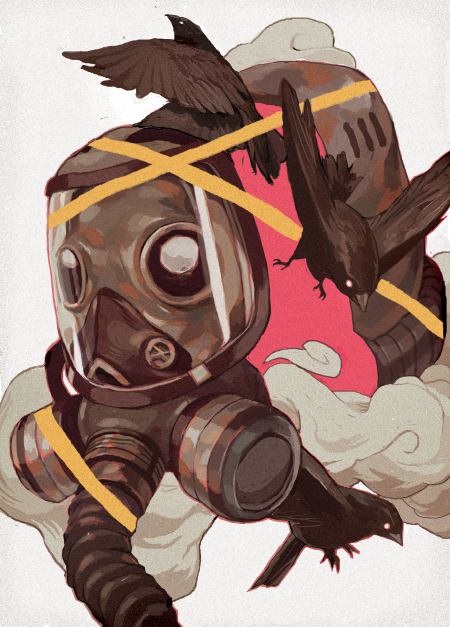

Artist: Sachin Teng

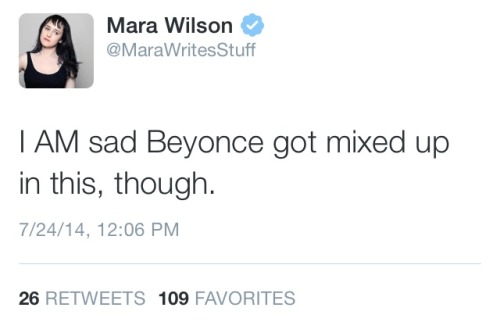
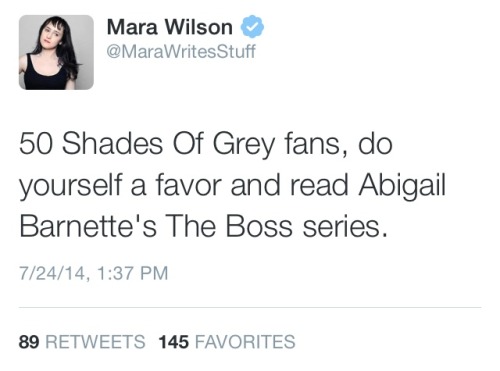
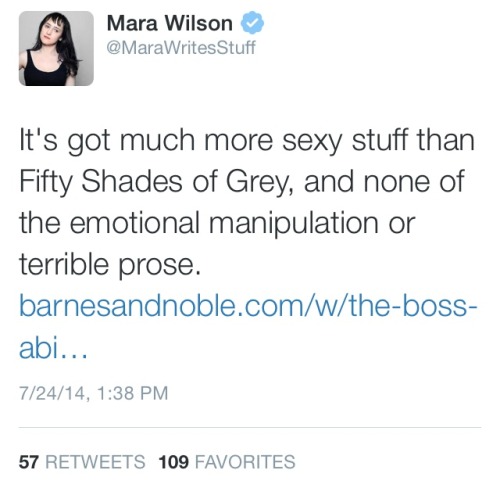
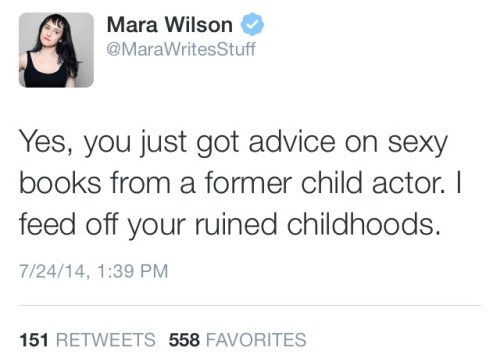
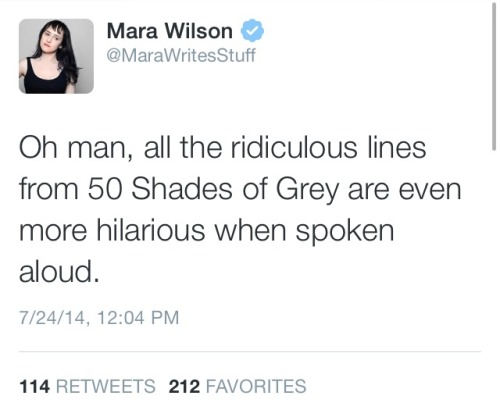
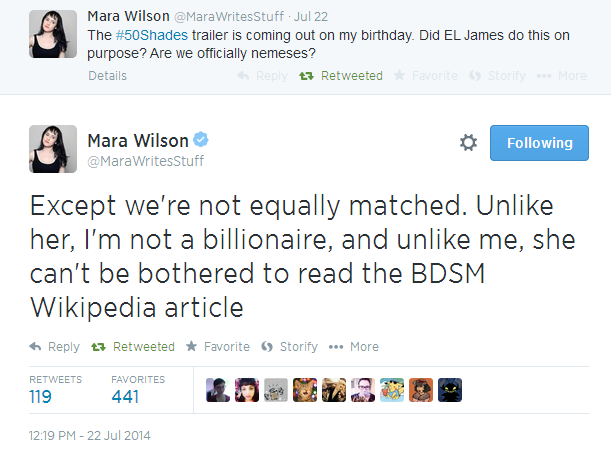
apparently e.l. james called former child star mara wilson (matilda) a “sad f**k” for critiquing the 50shades books a while ago and now there’s a feud. i love it.
You know what we need? More cyberpunk games. We also need more adventure games. It’s a good thing that Tim and Adrien Soret feel the same way. It’s a great thing that they did something about it.
I present to you:
A short, moody, cyberpunk adventure game in the spirit of Flashback & Blade Runner. It was originally a small flash game made in 6 days, which won the cyberpunkjam.
You can play the original version here.
MattalystWorking version:
https://www.youtube.com/watch?v=RzdRQCnDBlw
A++ would watch stoned again.

This video is absolutely absurd. It starts like a cheesy 80's sitcom and then makes a turn and another turn and another turn and keeps going until it creates a labyrinth of hilariousness and craziness. I mean, I don't know what's going on. I don't know why I kept watching. I don't know why I'm still laughing.

Einstürzende Neubauten’s new album “Lament” is released today.
Einstürzende Neubauten / Sag mir wo die Blumen sind
From the CD “Lament”
MattalystOld news, I know, but such fun bits of trivia. I have no regrets about re-watching this.

Spring Breakers
A24 FILMS
March 15, 2013 8:00 AM ET
When news first started trickling out about Spring Breakers – the gleefully debauched new movie about four sexy small-town coeds on a violent crime spree, starring Selena Gomez and Vanessa Hudgens and directed by indie provocateur Harmony Korine – it sounded like a classic case of mutual sexploitation. The wholesome ingénues would get their all-grown-up moment, and Korine would get to shoot cute Disney starlets doing bong hits on the beach. "Bikinis and big booties, y'all," as the movie's co-star, James Franco, says in character as a drug-slinging rapper named Alien, "that's what life is about!"
As it turns out, it's a lot more than that: a subversively conservative take on Girls Gone Wild culture, a look at the warping effects that reality TV and social networking have on kids, even in one memorable scene involving Franco and some nunchucks, a hilarious critique of late-modern capitalism. "It's a mash-up and a refiltering of all those things," says Korine. Not really one for clear-cut answers, he says he wanted the movie to feel "more like a drug experience than a traditional narrative" and calls it "ambiguous" and "post-articulation." But perhaps the best summary comes from his description of the Britney Spears ballad "Everytime," which scores the film's emotional climax: "I always thought that song was really catchy and poppy, but underneath there was a sort of menace to it."
Peter Travers: 'Spring Breakers' Proves Why James Franco Is a Star
It's a sunny morning in Nashville, and Korine is sitting at a courtyard picnic table, outside the cluttered apartment he uses for an office – not far from where he lives with his wife and daughter, half a mile from the house where he grew up, and just down the road from the park where he and his friends used to drop acid. He just got back from a week of European premieres – Paris, Berlin, Rome ("There were 7,000 kids screaming in the street. It's the closest I'll ever have to a Justin Bieber moment") – and he looks a little tired, with heavy eyes and flecks of gray in his beard. At one point he jogs over behind a tree to take a piss – a classic Korine move, one he wrote into his 1995 breakthrough, Kids – and on his way back he displays a slight limp, the lingering result of a broken ankle he suffered more than a decade ago, while shooting a never-finished movie, called Fight Harmduh, in which he picked fights with large, angry strangers while a friend filmed from across the street. "I just wanted to make the greatest comedy of all time," he says, flashing a wry smile. "There's a lot of reasons why it was a messed-up idea."
In a way, Korine has built his career on messed-up ideas – from his bizarre, polarizing indie cult classics, including Trash Humpers and Gummo, to more, um, personal matters, such as his affiliation with Leonardo DiCaprio's notorious late-Nineties "Pussy Posse"; a crack habit; taking refuge in the Panamanian jungle; and two accidental house fires. (To be fair, he wasn't even home for one of them, and he's been completely clean for more than a decade.)
While Spring Breakers features no shortage of wacked-out debauchery, either – including a bong made out of a baby doll, a threesome in a pool, a virtuosic, neon-lit shot of a violent robbery at a chicken shack, and a long, homoerotic fellating of a loaded pistol with a silencer – it also manages to be tender, even sweet, with a kind of girl-power camaraderie that could almost be called feminist. "People always say, 'Your films lack morality,'" Korine says. "But in the end I know my heart is pure. It was important to me the girls felt that too. That in the end the film was on the side of righteousness."
Korine, 40, grew up a day's drive from the Florida beaches he calls "the Redneck Riviera," but he was never one for spring break himself. "I spent my summers in San Francisco skateboarding and sleeping on rooftops," he says, "or jumping on Greyhound buses and going to Kentucky or Las Vegas." After coming up with the idea for the movie, he took several months collecting imagery from fraternity message boards and coed porn sites, then wrote the movie over 10 Diet Coke-fueled days in Panama City Beach, which happened to coincide with spring break.
"I checked into my hotel, and it was like ground zero," he says. "Kids fucking in the hallways, everyone vomiting on you, blasting Taylor Swift all night – it was unbearable. I went to another hotel and the same thing happened, so I drove 20 minutes to this Marriott on a golf course. I walk in and there's all these dwarfs everywhere. I was like, 'All right. This will work.'"
Korine got the idea to cast Disney stars after watching their shows with his four-year-old daughter, Lefty. But his secret weapon turned out to be his wife, Rachel, who also stars in the film, and who led by example and made it safe for the rest of the girls to follow suit. "I needed someone who could be bold and fearless," he says. "There was nothing I could throw at her that she wouldn't do" – including taking off her top and taunting some drunken frat bros with a singsong chant about her privates. Korine beams: "Actually, that came from her."
The movie was filmed in St. Petersburg during spring break, often on the run from paparazzi and thousands of beer-bonging extras. "The whole vibe was so furious and frenetic," Korine says. "It had a chaos to it. A kind of sinister mania." One key scene is set in a rough-looking pool hall that Korine found in the ghetto. "It was super-gnarly," he says. "Just pit bulls and cigarette butts and burnt mattresses. It was so beautiful." Mix in a trance-y, dubstep-y score by Skrillex and Drive composer Cliff Martinez, and a soundtrack featuring Rick Ross and Gucci Mane (who also co-stars as Franco's rival drug dealer), and it all makes for a looping, boozy fever dream of a movie that looks, as Korine says, "like it was lit with Skittles."
Though he's been making weird indie movies since he was Gomez's age, Korine is hoping Spring Breakers will be a turning point. "It's boring to just make films for the same audiences over and over again," he says. "I want to do the most radical work, but put it out in the most commercial way." He says he's already started researching his next project: "I wanna go full-on. Creatively, stylistically, I'm gonna go for it. My dream has always been to infiltrate the mainstream. I always thought that was the way to do some serious damage."
This story is from the March 28th, 2013 issue of Rolling Stone.
To read the new issue of Rolling Stone online, plus the entire RS archive: Click Here
MattalystShared for "the first online transaction a human made was for a bag of grass", which is a wonderful bit of trivia to know.
[body_image width='640' height='326' path='images/content-images/2014/11/07/' crop='images/content-images-crops/2014/11/07/' filename='silk-road-two-shut-down-mike-power-203-body-image-1415379630.png' id='2204']
Any coders out there fancy a new job? Working from home, you'll choose your own hours and, to a certain extent, set your own wages. It's a lean and agile start-up—minimal staff, operating in an incredibly hostile legislative environment, with hundreds of dogged, highly experienced cops working overtime to parade your sorry scalp on primetime.
The rewards, though, for running the latest iteration of the dark web's most notorious drugs bazaar, the Silk Road, are proportionately high: $300,000, tax-free, a month. The right candidate will have a vainglorious streak of political libertarianism and an enormous, misguided sense of self-confidence. Oh, and another tip—if you do end up becoming the world's biggest illegal Bitcoin businessman, it's probably best not to go splashing your virtual currency on expensive electric cars.
This was one mistake of Blake Benthall, the 26-year-old "rocket scientist" and "Bitcoin dreamer" who got arrested for running Silk Road 2.0, which was shut down yesterday by the FBI. Allegedly helming the site under the pseudonym "Defcon," Benthall reportedly cashed out $270,000 worth of Bitcoin and put down a $71,000 deposit on a Tesla Model S—a luxury electric car worth $125,000 in December last year. Did he not watch Goodfellas?
Mind you, I see where the temptation arose. According to the criminal complaint filed against Benthall—a Californian with facial hair, a floppy fringe, and a fairly awful singing voice (h/t @RasmusMunks)—the site was clearing $8 million in sales a month from its 150,000 users—figures any other startup would kill for. Commission ran at about $300,000 a month, according to the FBI.
If Benthall did do it, how did he think he'd get away with it? There's something strangely solipsistic in the hacker mindset. It's not clear what comes first: the isolated working environment with only code for company, or the outlook that finds such work enjoyable.
[body_image width='780' height='672' path='images/content-images/2014/11/07/' crop='images/content-images-crops/2014/11/07/' filename='silk-road-two-shut-down-mike-power-203-body-image-1415379563.jpg' id='2202']
Blake Benthall, Photo via Facebook
What is certain is that most people, after the shuttering of the original Silk Road last year—and the intricately detailed criminal case against alleged owner Ross Ulbricht—would not believe themselves smarter than the FBI's Christopher Tarbell, who busted Ulbricht and now works as a private consultant for a cyber-security firm. Of course, the "Defcon" persona that Benthall is said to have operated under speaks to the self-assured way he allegedly went about his business.
He's now facing one count of conspiring to commit narcotics trafficking (at least a ten-year stretch in prison), one count of conspiring to commit computer hacking (five years more), one fake ID charge (another 15 years) and one money laundering charge, which could get him another 20 years in the can if the judge is feeling uncharitable. The poor, poor bastard.
Long-term, this bust makes no difference. A new .onion website will be online in a few days selling drugs to anyone who wants them. In fact, there are dozens online already. There are even sites for individual vendors, which you can only use via personal introduction. You can now buy enough bulk LSD direct from the chemist to dose an entire festival. Kilos of MDMA can be yours by next-day delivery. People are growing weed to order.
The appearance of an online trade in illegal drugs will be seen, I believe, as a pivotal moment in legal history. Because what will police do when the market inevitably grows and we end up with drug-related criminality on an amazon.com scale?
[body_image width='686' height='505' path='images/content-images/2014/11/07/' crop='images/content-images-crops/2014/11/07/' filename='silk-road-two-shut-down-mike-power-203-body-image-1415381198.png' id='2207']The message displayed after the FBI seized SR2 (Screen shot via Reddit)
TheGrugq, a renowned computer security specialist, told me recently that a whole new sector of organized criminals are now involved in the online drug market.
"What I've been seeing is that a lot of the 'next gen' guys are not technologists [because, obviously, if you're a skilled technologist you make money by gambling on startups, not risking jail time]," says theGrugq. "They're using outsourcing sites to get an unwitting third-party developer to build the site for them. They are compartmenting themselves from the infrastructure component of the business and focusing on, presumably, the capitalization, marketing, and so on."
This game has been going on since the net first flickered into life. The first online transaction a human made was for a bag of grass, and it's Silk Road that's responsible for truly monetizing prohibition. But Silk Road 2.0 was the absolute proof-of-concept: Many people want to buy and sell drugs online, and there are fortunes to be made.
For some, it's just fun or convenient. For others—like one user who told me that the consistent delivery of high quality heroin took him away from the constant temptation of street dealers, therefore helping him control his smack and crack habit—it can be a lifesaver.
"It means I can live a normal life, go to work and avoid all the financial, social, and health problems that come with drug addiction," he said. "I'm able to be a responsible, contributing member of my family and the wider community around me, instead of being a burden and a social pariah, costing society through crime and treatment."
We might laugh snidely at the alleged site operators' adherence to the slightly incoherent principles of Agorism, or their beards, or whatever, but there's a chance these gung-ho hippy idealists—the latest of whom even repaid thousands of users millions of dollars following a hack—are actually some of the most forward-thinking and fundamentally revolutionary agitators of the 21st century.
Think about it: What have you ever actually done to end the war on drugs?
Mike Power's book, Drugs Unlimited, The Web Revolution That's Changing How the World Gets High, is out now.
Follow Mike Power on Twitter.

Fashion is coming
I have been googling to see if this is fake and so far all signs point to This Is A Real Thing That Has Happened
jon snow may not know a lot of things but he clearly knows about FASHION
the rainbow is a well-known symbol of gay pride that originated in the late 1970s in san francisco, when the gay community promised to never again destroy the earth by flood
This has not been a great year for Libya, and on Thursday, things got worse. Libya's Supreme Court announced the dissolution of the country's elected parliament in Tobruk, a city where the country's internationally recognized government has governed in exile since Islamist forces pushed them out of Tripoli. The parliament assumed office after a June 25 vote that brought Abdullah al-Thinni, a moderate, into power. The Supreme Court decision sparked both celebration and outcry.
"Lawmakers will not recognize a verdict decided under the gun," Tobruk-based parliamentarian Issam al-Jehani wrote on Facebook.
Libya has not had a central leadership since this summer, when the new parliament fled Tripoli shortly after being elected, while the old parliament refused to step down. Ever since, the country has had two different parliaments and two different prime ministers presiding over two different parts of the country.
Then there's Benghazi, Libya's second-largest city and the birthplace of the anti-Qaddafi revolution in 2011. There, a former pro-Qaddafi general named Khalifa Haftar is battling for control of the city with groups of Islamist militias, with neither thus far claiming full control. One of those militias is Ansar al-Sharia, a group aligned with al-Qaeda that pulled off the raid on Benghazi's U.S. Embassy in September 2012 that led to the death of Ambassador J. Christopher Stevens. Hundreds of miles to the south, fighters from the Tebu and Tuareg minorities have battled near the city of Owbari, located near Libya's Al-Shararah oil field. Oil production, a central source of revenue for the country, has fallen in recent months to around 800,000 barrels per day.
As Libya disintegrates from within, its neighbors in the Middle East have allied themselves with the country's competing factions. Qatar and Turkey have supported the unelected Islamist parliament in Tripoli, while the United Arab Emirates and Egpyt back the more secular regime in Tobruz. Last month, two Egyptian officials claimed that the country's warplanes, flown by Libyan pilots, had begun bombing Islamist positions in Benghazi, a claim denied by Egypt's foreign ministry.
Beyond the Middle East, interest in Libya's crisis has waned. Because of the violence and lack of central authority, few media outlets have full-time journalists stationed in the country, rendering it difficult to obtain accurate information. International policymakers and journalists have also been preoccupied with problems elsewhere in the Middle East, particularly with the rise of the Islamic State in Iraq and Syria.
Libya's problems seem a world removed from the late summer of 2011, when the country's successful overthrow of Qaddafi inspired hope that its best days were ahead. Visiting Benghazi in September of that year, British Prime Minister David Cameron told Libyans that their "friends in Britain and France will stand with you as you build your democracy."
Three years later, Cameron hasn't been back. And in Washington, where the Obama administration launched airstrikes in order to defend Libyan people from Qaddafi's charging army, the desire to intervene in Libya has evaporated completely.
"Libya's problems can really only be solved by the Libyans themselves," John Kerry, the U.S. secretary of state, said in August.
This article was originally published at http://www.theatlantic.com/international/archive/2014/11/libyas-downward-spiral-continues/382460/


Laurie Greasely, Illustrations.
I’m currently loving the illustration work of Laurie Greasely. See more below:


Laurie Greasely: Tumblr

On Wednesday, the Japanese heavy metal/teen-pop hybrid band Babymetal played a nearly sold-out show at New York City's Hammerstein Ballroom. I didn't go, and after watching a few of their videos this morning, I'm really, really regretting it.

Mattalyst"Oh, it's always on."

On Thursday, Amazon revealed the Amazon Echo, a tube-shaped device meant to work as a voice-driven home assistant. The device is priced at $199 and currently requires an invite to purchase. The Echo will come equipped with seven microphones, a downward-facing array of speakers, and a constant connection to the cloud so that it can listen to and respond to users' spoken questions and requests.
The device's debut video demonstration (below) came complete with a perky, suburban mom-dad-and-two-kids family, and it showed the actors using the Echo to do things like turn on music, tell the time, spell words, play morning news clips from NPR, set a timer, or add items to a shopping list—essentially, the kinds of commands users of Apple's Siri are already familiar with.
Users must say a "trigger" word to enable Echo's listening. As if to head off privacy concerns, the Amazon ad insisted that the Echo only begins listening and recording audio when it hears that word (in the ad, that word is "Alexa," though the product description didn't clarify whether users can pick their own trigger word or not; for now, we hope nobody in your family is named Alexa). Though the advertisement claimed that the always-on device can hear users at most any volume level, it also showed the Echo being moved and plugged into many different rooms in the actors' home, as if to indicate that users need to be close to the Echo for maximum effectiveness.
Read 2 remaining paragraphs | Comments


The Soft Machine, Ken Tackett