I have spoken to you before about inscriptions I find in books. But I don’t believe I’ve ever dealt specifically with inscriptions in children’s books. I don’t mean those “Happy 4th Birthday to Flopkins from Aunty Rabbit.” I mean what the kids write in their books to establish ownership.
Jdanehey
Shared posts
06 May 19:47
All Mine: Hands Off
by crawfordd
JdaneheyAw this is a good one. Click through to read. . .
06 May 19:42
Two Ambitious Midwestern Girls: Willa Cather and Mary MacLane
For my fifteenth birthday my mother gave me Willa Cather's My Ántonia, a novel I devoured and adored. The subject -- the life of immigrant homesteaders in early twenthieth-century rural Nebraska -- was curious and compelling for a girl...
02 May 19:44

Girls eat large swirls of cotton candy in Copenhagen, Denmark,...
Girls eat large swirls of cotton candy in Copenhagen, Denmark, January 1963.
Photograph by Gilbert M. Grosvenor, National Geographic
Martin likes this
02 May 18:44
The Mystery of Ciara's "He Reads," Explained
by Rich Juzwiak
One of my favorite things that has happened all year in music occurs during Ciara's "Body Party" video. Her gyrations are interrupted for an extremely stilted (even in the highly stilted medium of music-video acting) scene in which she and her real-life boyfriend Future meet and exchange awkwardly flirtatious dialogue. "You know you gonna be mine, right?" he asks her. They mutter weirdly and look at each other stiffly for a few seconds before Future tells her that he'll see her inside of the party they've just both stepped away from. When he's out of frame, Ciara gives her head a little shake, emits a wee, "Whoo," sticks up her finger and chirps, "He reads!" This both makes no sense and evokes drag queens. That is why I love it.
MuuMuse interviewed Ciara and asked her what the fuck she is talking about in more polite terms. Here is their exchange — Ciara still seems in highly unnatural video-acting mode:
I have to ask though: When you say “He reads,” what does that mean exactly?
(Laughs) I mean like, he reads! Like, that works. Like, that’s it. In that case, when I said “he reads”, it was just like…he reads! Like, he’s cute, he’s it, and he’s everything. It’s like that first reaction of when you meet somebody and he really like…he reads. Like…yes.
Translation: "He reads" means absolutely nothing. That it is confirmed nonsense only makes me love it more.

29 Apr 14:53

Boys exploring cave with flashlights look up in wonder near...
JdaneheyA good break: make up a few paragraphs about what is going on in this photo.
Boys exploring cave with flashlights look up in wonder near Harpers Ferry, West Virginia, March 1957.Photograph by Volkmar K. Wentzel, National Geographic
29 Apr 14:44
In Memoriam: E. L. Konigsburg
by Sadie Stein
E. L. Konigsburg’s death last week, at the age of eighty-three, provoked a special kind of reaction. The loss of a collective piece of our childhood can be hard to articulate, because the connection is primal, the feelings and memories intensely personal. You remember the thrill of hearing From the Mixed-Up Files of Mrs. Basil E. Frankweiler read aloud in fourth grade, and reading Father’s Arcane Daughter over the summer under a tree, or Jennifer, Hecate, Macbeth, William McKinley, and Me, Elizabeth in the school library. There is the delight of recalling her strong, interesting characters, many of them outsiders coping with realistic childhood situations. There is the unpreachy inclusion of history and culture. There are the shockingly uncommercial titles. And, of course, the bone-deep weirdness. (To anyone who disagrees, revisit Up from Jericho Tel. I did.) Like all great children’s writers, Konigsburg never patronized her readers. But she did even more than that: she not only encouraged breaking from the ordinary, but modeled it.
29 Apr 14:44
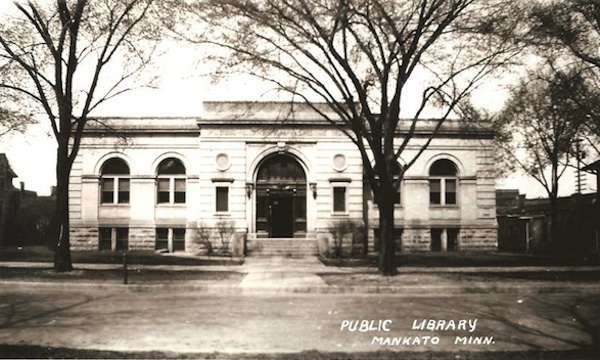
Happy Birthday, Maud Hart Lovelace
by Sadie Stein
Old Mankato, MN Public Library, aka Deep Valley Library.
“She thought of the library, so shining white and new; the rows and rows of unread books; the bliss of unhurried sojourns there and of going out to a restaurant, alone, to eat.”
—Maud Hart Lovelace, Betsy and Tacy Go Downtown
25 Apr 14:08
Diana Ross – Swept Away (US 12″)
by DjPaulT
BURNING THE GROUND EXCLUSIVE 1984


Re-Rip Remaster
Originally I posted this one back in April 2011. But for those who may have missed it or if you are a new reader just discovering BTG. I decided to give this one a new rip with my newer Ortofon 30 stylus. This 12″ is also being posted in 24 bit flac for the very first time!
“Swept Away” is a rock-flavored dance song written by Daryl Hall (of Hall & Oates) with Sara Allen, produced by Hall with Arthur Baker, and recorded by singer Diana Ross for her album of the same name. Ross released the song as a single on the RCA label in 1984.
The song talked about how the narrator thought she was in love with a special person only to find out that she had just been “swept away” after catching her lover cheating on her sending her into a rage and panic.
In the music video, directed by Dominic Orlando in Manhattan and on location in Long Island, Ross is seduced by a Frenchman and falls in love with him only to find out, after arriving unannounced in a bar, that he’s cheating on her with another French girl in a stylized Apache Dance. She then confronts the man hitting him repeatedly, and later fights with the French girl who ends up being knocked out unconscious by the singer. Later in the video, the Frenchman tries to fight his way back into her life only to have Ross accidentally push him from a lighthouse tower into the water. It was one of Ross’ most popular videos, and her first to air on MTV.
The music video was blown up to 35mm for projection during Diana Ross’ live performances at Caesars Palace in Las Vegas. There’s also an extended version of the video edited for the 12″ dance club remix.
Arthur Baker had been a club DJ turned remixer who was just breaking into production, and the twelve-inch version became one of Ross’ most successful, reaching number one on the Dance/Disco chart. The single also reached nineteen on the US pop singles chart and number three on the R&B singles chart.
SIDE A:
Swept Away (Long Version) 7:37
Backing Vocals – Daryl Hall
SIDE B:
Swept Away (Instrumental Version) 7:14
VINYL GRADE:
Vinyl: Near Mint
Cover: Near Mint
CHARTS:
| Year | Single | Chart | Position |
|---|---|---|---|
| 1984 | Swept Away | U.S. Billboard Hot 100 | #19 |
| 1984 | Swept Away | U.S. Billboard Hot Black Singles | #3 |
| 1984 | Swept Away | U.S. Billboard Hot Dance Club Play | #1 |
RELEASE INFORMATION:
Label: RCA Victor – PD-13865
Format: Vinyl, 12″, 33 RPM
Country: US
Released: 1984
Genre: Electronic, Funk / Soul, Pop
Style: Synth-pop, Soul
Credits: Edited By – Latin Rascals, The
Producer – Arthur Baker, Daryl Hall
Written-By – Daryl Hall, Sara Allen
NOTES:
From the album “DIANA ROSS SWEPT AWAY” AFLI 5009
Find the 12″ on DISCOGS

EQUIPMENT USED:
Turntable: Pro-Ject Debut III
Cartridge: Ortofon Super
Stylus: Ortofon OM Stylus 30
Bellari VP130 Tube Phono Preamp
Soundcard: ESI Juli@
VPI HW 16.5 Record Cleaning Machine
Brother MFC-6490CW Professional Series Scanner
SOFTWARE USED:
Adobe Audition 3.0 (Recording)
Adobe Photoshop CS5
ClickRepair
dBpoweramp
Playlist Creator
RESTORATION NOTES:
All vinyl rips are recorded @ 32bit/float
Downsampled to 24bit/96kHz and16bit /44kHz using iZotope RX Advanced 2
FLAC (Level Eight)
MP3 (320kbps)
Artwork scanned at 600dpi


PW: burningtheground
You can help show your support for this blog by making a donation using PayPal. Thank you for your help.

21 Apr 03:41

Bull City Summer
by Adam Sobsey

At Durham Bulls Athletic Park. Photo: Kate Joyce.
Unless you are a baseball adept, or familiar with Durham, North Carolina, your relationship to the words Durham Bulls may be an inverted one. Perhaps your mind flips the words to Bull Durham, the 1988 movie about life and love in the minor leagues. Kevin Costner stars as journeyman catcher Crash Davis (there was a real player by that name, long ago), who is sent to Durham to tutor the young, talented, and wild Nuke LaLoosh (Tim Robbins), a flamethrowing pitcher who is never sure where his pitches will go. Nuke spends the summer canoodling with Annie Savoy (Susan Sarandon), an aging baseball groupie, before he is called up to the “Show,” the major leagues. That clears the way for Crash and Annie to become the batterymates, as baseball argot puts it, they were destined to be. It is a mellow, even melancholy consummation, a sadder-but-wiser ending to an antic, shaggy, often profane baseball tale of getting all the way to the major leagues, or just to the end of summer—to the end of a dream.
Bull Durham gets a lot right, and real minor-leaguers approve of it—my multiyear polling of ballplayers in clubhouses shows it to be the truest baseball movie: they identify with the bus-ride scenes (the minors are still known colloquially as the bus leagues), with Crash lamenting the “dying quail” difference between hitting .250 and .300 (the difference that’ll get you to the majors), and with the lecture Crash gives Nuke on how to fob off sports clichés on reporters like me.
But Bull Durham does omit a crucial detail, one that the casual viewer will probably overlook. Read More »
18 Apr 18:27
Jane Eyre Round-Up: A Guest Review by CarrieS
by CarrieS
 In honor of Charlotte Bronte's birthday (April 21, 1816), I present you with a Jane Eyre film and television adaptation round up.
Of course there are many adaptations I haven't listed here. Interestingly, none of the adaptations I've seen or heard of seem very off the wall. While Pride and Prejudice seems to adapt well to different times and places, poor Jane is firmly regulated to the Victorian Age, except in adaptations that use her story as only the loosest of inspirations.
Got your popcorn? My apologies to Friends for blatantly ripping off their episode naming strategy, but I needed a way to keep all these straight.
SPOILERS ABOUND as I'm assuming you've read the book already, and if you haven't you will definitely want to do that first and then read on.
SERIOUSLY.
READ THE BOOK BEFORE YOU READ THIS.
MASSIVE SPOILERS.
Let's start with:
The One With Michael Fassbender and Mia Wasikowska, 2011: This movie is terrible! Even when I tried to view it as just a movie, with no relationship to the novel, it was dreadful - difficult to follow, stilted, and monotonous. Fassbender and Wasikowska are clearly charismatic actors, but everything that makes Jane and Rochester dynamic has been stripped away by the director, leaving them with nothing to do but speak in low, repressed voices and gaze at each other longingly. I'm suspecting that reviewers that liked the movie thought of Jane Eyre as "Wuthering Heights Part II". Otherwise I can't see why you'd like a movie in which Jane is given nothing to say but has to spend an extremely long time wandering the moors and whimpering.
Most damning of all: This was the first version of Jane that Dear Husband saw (he hasn't read the book, horrors!), and after watching this movie, DH could not tell me why Jane is an important literary character, or why she is important to me, personally. He also could not tell me why on earth Jane and Rochester would get involved with each other than the fact that there appear to only be two eligible men in all of England and she meets Rochester first. It's fine to make changes to a book in order to make it work cinematically, but to drain all the life and meaning from this story is inexcusable. D-
The one that is a black and white horror movie, 1943: Here's a classic that isn't called Jane Eyre; it is, fantastically, called I Walked with a Zombie. The deal is that back in the forties Producer Val Lewton (best known for Cat People) was told by RKO Studio executives that he could have total creative control if he would make movies for a stipulated amount of money (not very much) and use a title dreamed up by Studio Execs. So they called him up and said, "OK, Val, your next movie will be called I Walked With a Zombie", and he made an intensely brooding, artistic, subtle psychological thriller.
I'm reviewing it here because he famously asked his scriptwriters to use Jane Eyre for inspiration, but it doesn't really have that much in common with Jane. A nurse goes to the Caribbean to take care of a woman who has lapsed into a kind of ambulatory coma. She (the nurse) falls in love with her patient's rich and brooding husband. The strongest element this story shares with Jane Eyre is the sense of being literally and figuratively haunted by past mistakes. Although this isn't much of a Jane Eyre adaptation it is a fascinating movie, on many different levels, and I recommend it purely on that basis. B
The one with Toby Stephens and Ruth Wilson, Masterpiece Theater, 2006: Wow. This series was moving and romantic and beautiful, and fairly faithful to the book. This is a good example of an adaptation in which most of the changes augment the story and enhance its meaning instead of detracting from it. I liked that every character got to have some layers - even Blanche, who demonstrates mean girl nastiness but also genuinely hurt feelings. Stephens is much too pretty for the part of Rochester but his acting is flawless. Even though he is clearly handsome, you believe that he thinks he is not, and he does an amazing job of combining arrogance, cruelty, tenderness, humor, and above all intense loneliness and vulnerability.
Meanwhile Ruth Wilson is certainly not plain, but she has an unusual and fantastically expressive face. When she smiles, it is a transformative event. When she cries, I dare you not to cry along with her. It doesn't hurt that Wilson and Stephens have so much chemistry that I kept expecting them to just start ripping off each other's clothes at random. Incidentally, Wilson isn't actually a small person, but since everyone else in the film is enormously tall she seems teeny. So that works.
DH only saw the last third of this adaptation but said even a partial viewing made it much easier to tell why Jane was so important to me and why Jane and Rochester might want to be together (although to his credit he still maintains that there must be some nicer men somewhere in England). There are definitely some things here that didn't work, but I'm giving this one an enthusiastic: A-
The One with Ciaran Hinds and Samantha Morton, A&E, 1997: What in the name of all that is holy is this? Did a producer sleep with Cuthulu and pop this out like some sort of Elder God baby? I was all set to rate this movie an "F" but at the last minute I realize that I cannot do so honorably, because I turned the gibbering monstrosity off and fled, screaming, "My eyes! My eyes!" about halfway through. Poor Samantha Morton struggles gamely along in her part but Ciaran Hinds, who by all accounts is normally a terrific actor, seems to have contacted some particularly horrid form of rabies as Mr. Rochester. He yells, he screeches, his eyes bulge, he drools over Jane's hand "So little.... so [drool] delicate". It's at this point that I fled the scene. Mr. Rochester is supposed to be way too old for Jane and he's a manipulative, secretive jerk, but he isn't supposed to be a rageaholic shrieking pedophile.
Here's what I do think is good about this particular adaptation: it really forces you to look at just how dark Jane Eyre can be. In the book, Rochester is forty years old to Jane's eighteen (and their romance isn't a case of outdated values - even Mrs. Fairfax thinks Rochester is too old for Jane). Jane is completely dependent on him for her livelihood, a fact which he exploits every time he orders her to talk to him. She is good and honest and he loves this about her, and he rewards her for these virtues by playing vicious mind games with her and forcing her to be publicly humiliated by his houseguests.
After many attempts to explain to DH why I want Jane to be with Mr. Rochester, I realized that what it boils down to is this: I love and admire Jane and I want her to be happy. If the book were titled "Edward Rochester" instead of "Jane Eyre" I never would have finished it, much like I could not sit through this mess of a movie. DNF
The One with Timothy Dalton and Zelah Clarke, BBC, 1983: I had grave doubts about being able to believe in Timothy Dalton as Mr. Rochester because he's permanently marked in my brain as several hammy and delightful science fiction/fantasy characters (James Bond, of course, but also Neville Sinclair, Prince Barin, Alexei Volkov, and the gloriously named Mr. Pricklepants). Well, never underestimate Timothy Dalton, because as Mr. Rochester, he strikes just the right balance between subtlety and grandiosity and tenderness and crankiness. He's a more faithful-to-the-book Rochester than Toby Stephens (Toby is my personal favorite, but he's really Rochester-lite). I had a harder time warming up to Zelah Clarke, who is almost alarmingly quiet and timid as Jane, but I liked the contrast when she let herself be angry ("Do you doubt me?" "ENTIRELY!") and when she blossoms upon becoming part of a family. Her teasing of Rochester regarding St. John was all the more deliciously wicked given just how completely subdued she was earlier.
So, while Ruth Wilson is my favorite Jane, I can see why so many people admire Clarke's performance. In addition to the strong performances, this adaptation benefits enormously from being very faithful to the book. There were scenes where I actually signed in relief at being presented with a character or a speech that is usually cut (not that everything from the book is included - it's only fours hours long, after all). Alas, the production values are absolutely horrible. The look is painfully dated and the music is grating in the extreme. You will never forget for a moment that this is made for TV, but it's made very well in terms of acting and very faithfully in terms of script. B+
Last summer I did a Pride and Prejudice Round Up for Smart Bitches. This round-up was a very different experience, because while I did not have a strong attachment to P&P prior to viewing the adaptations, Jane Eyre is one of my favorite books. I feel very passionate about Jane so I was a tough customer with regard to adaptations. To see people butcher it was almost unendurable but to see it properly brought to life was a lovely experience. Here's some parting bonus points and awards:
Scariest Bertha Mason: It's a stretch to call her Bertha Mason since her character is actually named Jessica, but the wife in I Walked With a Zombie is scary as shit even though all she ever does is walk around.
Bonus points for Attire go to: Michael Fassbender, for wearing a nightshirt to bed in the burning bed scene. Nice legs!
Bonus Points for Attitude go to: Timothy Dalton, who, weirdly, seems to sleep in all his clothes including pants and vest, but who manages to make one undone button seem as sexy and revealing as complete nudity.
Best Hair: Zelah Clarke's severe hairdo was always getting messed up. Rochester could barely enter the room without messing up her hair. I thought it was adorable.
Best Overall: Although the Dalton/Clarke is the most faithful, the romantic in me is absolutely helpless before the powers of Ruth Wilson and Toby Stephens and all those multi-dimensional characters. Seriously, Toby, call me. Also, the director, Susanna White, deserves every award in existence.
And today's health tip: Helen, your death scene is always very sad, but for the love of Jesus could you cover your mouth when you cough, especially when your face is one inch away from that of your BFF? Seriously, Helen, you are grossing me out.
Categories: Fun And Games, General Bitching, Reviews
18 Apr 18:24
Mean Irishman
by Emma
JdaneheyOne of my random blogs -- something from the Newberry Library chronicling the processing progress of the Chicago, Burlington & Quincy Railroad Company records.
 As I process the Land Department’s delinquent contracts, I have been reading a lot of sad stories about the fragile nature of the agricultural economy in 1870s Iowa. Most of the correspondence is from men trying to feed half a dozen children on a bad crop, and having little to nothing left to pay their bills. Like Kelly, I’ve been intrigued by the women that have their name on land contracts, in particular Catherine Conway.
Each of the surveys from land agents includes a question about the delinquent’s standing in the community. I had been waiting for a response that was not a simple “good” for days as I waded through these surveys, and Catherine’s was the first. The words “Mean Irishman” are used to describe “her” standing in the community. The words appear to refer to Conway’s charming husband. The agent goes on to describe his interaction with Mr. Conway:
This man bought this in his wife’s name and when I went to see them he commenced cussing the company for making him pay too much for the land, and got on his car and would not say anything about his crops or pay. Think they will pay.
The optimistic land agent, J.H. Brown, may have responded not to Catherine’s husband with his final statement, but instead to Catherine herself, who appears to have written all of the correspondence to B&MR Railroad and had a firm handle on her farm’s finances, not to mention a more respectful and apologetic tone. Although it may be true, as Brown says, that the land was simply in Catherine’s name, it appears that she may have saved her grant from being canceled by virtue of handling her husband’s affairs with grace. Mean Irishman, perhaps, but not mean Irishwoman.
15 Apr 20:46

With a harbor view, a teataster samples from cups spread upon a...
JdaneheySpiff, this could have been your career in an alternate universe.
With a harbor view, a teataster samples from cups spread upon a table in Baltimore, Maryland, September 1964.
Photograph by Bates Littlehales, National Geographic
15 Apr 16:48

Bubbling Under: 50 '80s Songs I Still Can't Believe Didn't Hit The Top 40 On Billboard's Hot 100
by Matthew Rettenmund
JdaneheyA fantastic list of singles, not all of which I remember, but I will definitely look up. Some excellent contenders for inclusion on a summer mix. . .
Alphaville's Marian Gold by Shiraz Fuman
I recently ruminated about the fact that Debbie Harry has never had a Top 40 solo hit in the U.S., and had no problem at all coming up with 12 of her songs that deserved it.
Now, I've put together a list of 50 of my favorite songs of the '80s that failed to hit the Top 40 on Billboard's Hot 100. In some cases, these are the biggest songs of the decade, songs you simply can't believe were not bigger chart hits. In other cases, these are fantastic pop singles that simply failed to cut the mustard. And in still other cases, these are just songs that seemed squarely aimed at the Top 40 and were by acts who'd had not trouble breaking through earlier.
Enjoy, and please comment back with your own suggestions for songs I forgot...
**********
"Act of War" by Elton John & Millie Jackson (1985)
PERFORMANCE. Elton probably thought he could use his fame to educate the ignorant masses on the powerhouse that was Millie Jackson. In spite of the video playing during Live Aid and in spite of their spirited vocals, this War of the Roses set to music never took off. Great-sounding-on-paper duets between legends often fail, though...just ask Madonna & Britney, Whitney & Aretha and countless others.
**********
"Ain't Nothin' Goin' on But the Rent" by Gwen Guthrie (1986)
MUSIC VIDEO. I had never heard the expression "fly girl" until this amazing, undeniably catchy song that should have hit #1—and did, on the R&B and dance charts. Over on the Hot 100, it stalled at #42. Maybe it was scary hearing a woman demand that her man be self-supporting, like some kind of attack on manhood. Or maybe it was too black at a time when music stores not not "R&B" sections but "Black Music" sections. It's a shame, because this song is gold. Guthrie, who sang backup on Madonna's first album, died in 1999.
**********
"Ashes to Ashes" by David Bowie (1980)
MUSIC VIDEO. Only one of Bowie's most brilliant singles and a #1 hit in the UK, it was completely ignored in America. Not even its spooky, MTV-ready music video helped. Hope you're happy, America. The also awesome "Fashion" only hit #70 as a follow-up. Bowie only had eight Top 40 hits the entire decade, in spite of landing "Let's Dance" at #1 in 1983.
**********
"Baby Talk" by Alisha (1985)
MUSIC VIDEO. One of the most shamefully undervalued freestyle hits of the '80s, this eternally peppy number has the bassline from "Into the Groove" and Alisha's flinty-fabulous vocal going for it, plus that JAP-tastic video: The teased hair, the trashbag-chic evening wear, the unenthusiastic crowd (who's that stalker???), the blue eye shadow. I could listen to this song every day.
**********
"Bag Lady (I Wonder)" by EBN-OZN (1983)
MUSIC VIDEO. Great performance in the video by Imogene Coca as a JFK-loving bag lady. This song by the experimental musicans behing "A, E, I, O, U, Sometimes Y" (also a great song, but not hard to believe as a non-Top 40 resident due to its offbeat tune) was a fast-paced indictment of homelessness, but one whose lyrics dance-happy yuppies could ignore thanks to the awesome sound.
**********
"Big in Japan" by Alphaville (1984)
PERFORMANCE. The one song on this list I can't forgive America for confining to the 60s on Billboard is this one, which I'm going to go out on a limb and say is my favorite 1980s song along with Madonna's "Into the Groove." There is something about this relentless pop track with its on-the-verge-of-a-nervous-breakdown vocal that makes it evergreen to my ears. And a male singing about "waiting for my man tonight" (yes, yes, I've read all the excuses as to why it's not about that) didn't hoit. (P.S. American assholes didn't let Alphaville's "Forever Young" past the 60s either...twice! Tell me that song isn't infinitely more famous than the lion's share of Top 10 hits from the era.)
**********
"Bizarre Love Triangle" by New Order (1986)
MUSIC VIDEO. One of the most influential electronic singles ever, this inescapable emblem of the '80s bombed in the U.S. It didn't chart in a big way until a 1995 re-release, by which time it had been spun countless times on college radio and at every dance you ever attended.
**********
"Black Cars" by Gino Vannelli (1985)
MUSIC VIDEO. Vannelli probably thought he had a sure-fire Top 40 hit with this rollicking pop song, but he crested just outside the the chart. He does a great Miami Vice Elvis in the video, which is peopled by young and old women—and men—in Joan Collins drag. It's like Robert Palmer but with penises.
**********
"Burning Flame" by Vitamin Z (1985)
MUSIC VIDEO. I was obsessed with this song...and surprised more teenagers weren't. Its video was an MTV staple and the theme of the song and video (a girl throwing a guy over for his best friend/bandmate) was right up Adolescent Alley. I found it so stinging when the lead singer, Geoff Barradale, sang about the GF teasing him about his lovemaking skills. In fact, his righteous indignation really builds so effectively as the song wears on. Plus, any song that works in the word "anoint" without sounding pretentious is aces in my book.
**********
"Carmen (Danger In Her Eyes)" by Deborah Sasson & MCL (1988)
MUSIC VIDEO. This amazing, upbeat club hit featured the opera singer Deborah Sasson interweaving elements from Carmen with an Olivia Newton-John-esque pop song. So hard to imagine a woman could sing in the two wildly different voices present on this one. Are you telling me there was room in the Top 40 for Ray Parker Jr.'s "Girls Are More Fun" and not this gem?
**********
"Close (To the Edit)" by The Art of Noise (1984)
MUSIC VIDEO. Sure, it's as avant-garde as hell, but it was on MTV more often than J.J. Jackson to this day is catchier than bird flu. The bizarro video with the little "Hey!"-yelling girl should have helped raise its profile. But alas, it was too out-there. And yet TAON did score two Top 40 hits before it was all over: that cover of Prince's "Kiss" featuring Tom Jones and the Max Headroom-fueled "Paranoimia." No, they didn't land in the Top 40 with their outstanding "Peter Gunn," not even with Duane Eddy himself along for the ride. (Close, though: #50.)
**********
"Come Home With Me Baby" by Dead Or Alive (1989)
PERFORMANCE. Like Pet Shop Boys or New Order or Erasure, Pete Burns and Dead or Alive kept churning out variations on the same song throughout the '80s, yet each incarnation was pretty brilliant. This culminated, for me, with their best song since "You Spin Me Round (Like a Record)," this blunt pick-up song that I used to dance to at The Bistro and Rage in Chicago, always with the knowledge that I was too scared to be as direct as Pete. I did, in fact, go home with someone, baby, during the period in which I was obsessed with this song, and let's just say I was later the worse for wear, in both good and not so good ways.
**********
"Crazy Train" by Ozzy Osbourne (1980)
PERFORMANCE. Even if you're not into rock, you have heard of and probably like this staple of the format. Not only did it not hit the Top 40, it failed to scratch the Hot 100. In the ensuing 33 years, it's of course become one of the things for which Ozzy is best known, right above the bat and right behind the reality show.
**********
"Cry Wolf" by a-ha (1986)
REMIX. People tend to think of a-ha as one-hit wonders in the U.S. forgetting they had two big hits here (the other being "The Sun Always Shines on TV"). But as cute as they were and as infectious as all of their melodies were, it's amazing they didn't have a longer trail of single successes. This song's downfall may be its repetitiveness, but Morten's falsetto comes in handy during the howl-like chorus.
**********
"Do Ya Do Ya (Wanna Please Me)" by Samantha Fox (1986)
PERFORMANCE. Maybe following up the outrageously slutty "Touch Me (I Want Your Body" with another parenthetic pussy-pounder was a bit much for American radio, but I always thought this punchy little fuckfest was perversely feminist and, for those who didn't care, just plain fun to dance to. (P.S. Sam is lipping in the clip, but actually sings really well live. Who knew?)
**********
"Don't Let Me Be the One" by Nu Shooz (1986)
PERFORMANCE. I could never get a handle on this married duo. Their musical output was all over the map. But while "Don't Let Me Be the One" pales in comparison to "I Can't Wait," it's appealing '80s synth-jazz.
**********
"Don't Make a Fool of Yourself" by Stacey Q (1988)
MUSIC VIDEO. It came close to Top 40 glory, but pooped out in the 60s. Nonetheless, the Shep Pettibone-fueled "DMAFOY" is one of Stacey Q's most grown-up and satisfying singles, a great put-down song couched in her uncharacteristically velvety vocals.
**********
"Drama!" by Erasure (1989)
MUSIC VIDEO. I was tempted to include the sublime "Oh, L'amour," but "Drama!" was much better-positioned to have been a hit in the U.S., following hot on the cha-cha heels of the successful hits "Chains of Love" and "A Little Respect." I love the appropriately dramatic vocal by Andy Bell. One of the band's most fun singles to sing along with.
**********
"Everybody" by Madonna (1982)
PERFORMANCE. Madonna's only '80s single not to hit the Top 40, yet it's still hard to believe this one didn't break through: It's as good as "Lucky Star" and Madonna probably performed it a hundred times or more at track dates. But all the hard work did make it a dance hit, and that did lead to more singles, which led to...well, you know.
**********
"Give Me Tonight" by Shannon (1984)
MUSIC VIDEO. I don't care what anyone says—as amazing as "Let the Music Play" is, "Give Me Tonight" is even better. But whereas the former soared to #8 (besting its contemporary, Madonna's "Holiday," by eight notches), "Give Me Tonight" petered out at #46. The also sterling "Do You Wanna Get Away" made it to #49 the following year. Those three songs were the only Shannon tracks to kiss the Hot 100.
**********
"Goodbye to You" by Scandal feat. Patty Smyth (1982)
MUSIC VIDEO. I think this is one of the best songs of the 1980s, let alone 1982, and yet Smyth's heartfelt vocal and her band's giddy rock/pop jammin' (they look like those people hearing themselves for the first time after having cochlear implants in the video...priceless!) were only good for a Billboard stint in the 60s. It's awfully hard not to dance like Patty whenever I hear this number.
**********
"The Hardest Part" by Blondie (1980)
MUSIC VIDEO. Sandwiched between albums with #1 hits, Eat to the Beat was a low-key entry for Blondie, a band that never met a music style it didn't like. For some reason, the hard-driving "The Hardest Part," which had the urgency of "Dreaming" (previously released) and the defiance of "Rapture"'s rap (to be released later), missed badly at radio. I love it. I love the Downtown NYC '80s video, too.
**********
"Hold Me" by Menudo (1985)
MUSIC VIDEO. Where my Hispanic record-buying audience at??? How this song failed to go higher is a mystery, considering it had adorable Latino teenage idols-to-be romping in not very many clothes and pining over a gorgeous white girl. Even as they performed sold-out concerts, Menudo never scored a Top 40 hit in the U.S., and never rose above the mark made by this, their best stab at cross-over success.
**********
"Hole in My Heart (All the Way to China" by Cyndi Lauper (1988)
MUSIC VIDEO. Culled from her disastrous big-screen fumble Vibes (which I've always said is a really good movie for the first half), this song is vintage Cyndi. It even has a Blue Angel rockabilly feel. Just try to overlook the kitschy Oriental trill every time she says "China." When I interviewed Cyndi 15 years or more ago, she did say, "That was a good one," comparing it favorably to "The Goonies 'R' Good Enough."
**********
"Homecoming Queen's Got a Gun" by Julie Brown (1984)
MUSIC VIDEO. This hysterical pastiche/parody of melodramatic '50s/'60s teen songs would not play today, what with guns and schools being in the news every couple of months. But at the time, it was just silly and clever, with one of the most fun videos of the entire decade. It started life as a B-side to "I Like 'em Big and Stupid," but quickly became the focal point, making it a double A-side release. The best part is how, like, totally Val the singer/narrator is, especially when she pleads of her murderous BFF, "Stop it, Debbie—you're embarrassing me!" If I ever meet her, I'll tell her (in her good ear) how fucking brilliant she is. (P.S. I hope Julie made bank when she co-wrote Disney Channel's Jonas Brothers vehicle Camp Rock!)
**********
"I Melt With You" by Modern English (1982)
MUSIC VIDEO. I had to chop Shana's "I Want You" from the list when I was reminded she actually hit #40 with that shoulda-been-a-classic, so why not replace her with Kenneth's suggestion? "I Melt With You" is a quintessential '80s song that never got especially close to Top 40 status in spite of its grandiose (if macabre) take on love and a video that was on MTV more often than commercials for knock-off Desperately Seeking Susan jackets. The moody video (wait, was the lead singer Detox?), with its stoic dancers, had a noir-on-a-budget look that any one of us could probably recreate from memory to this day. Re-releasing it in 1990 didn't help its chart performance; the mistakes of history were repeated. Still, I bet the songwriters have made more off of this song than the songwriters of Top 40 hits "Live is Life" by Opus or "Vienna Calling" by Falco.
**********
"I Want Candy" by Bow Wow Wow (1982)
MUSIC VIDEO. I've said it about "Goodbye to You" and I'll say it here, too: This shouldn't just have been a Top 40 hit, this is one of the best songs to come out of the '80s, a cheery blend of punk and pop that was probably still too much of the former to do well on charts based on the latter. Annabella was maybe too sexually threatening for what the mainstream was after (licking that cone in the video was reminiscent of the infamous Gong Show popsicle incident), but I loved the shirtless drummer in the video...he was sex on the beach!
**********
"Imagination" by Belouis Some (1985)
PERFORMANCE. Though "Some People" was a great track, too, I was always bewildered by the non-40 status of this impressionistic '80s art-pop semi-hit. Loved his voice. Much better than Rod Stewart's "Infatuation" from the year before, don't you think?
**********
"It's Raining Men" by The Weather Girls (1982)
PERFORMANCE. The best novelty song of all time, this one works as fun-to-dance-to disco as well, and any song with huge voices like these deserves to be ushered into the Top 40, let alone a song that everybody in the world, 30+ years later, has since heard. But this one was a wash-out on the Top 40 (#46), perhaps retaining a bit too much disco for the '80s.
**********
"Johnny Are You Queer?" by Josie Cotton (1981/2)
UNRELEASED MUSIC VIDEO. Josie Cotton sang this camp track back when just asking the question was pro-gay, even if "queer" at the time was a slur. It's still a hilarious take on '60s girl-group songs and, for the record, Johnny...we're waiting for an answer. (Maybe this was the same Johnny who the Homecoming queen killed so many people for in Julie Brown's later song???)
**********
"Left to My Own Devices" by Pet Shop Boys (1989)
MUSIC VIDEO. A rip-roaring tell-off of a song, this art-house throbber killed in the clubs and had a statement video, yet the Boys were already considered to be fizzling out in the U.S. (they'd just had their final Top 40 hit with "Domino Dancing"). The Warhol-does-Broadway lyrics seemingly went over the heads of U.S. radio. Hard to believe, I know.
**********
"Love of a Lifetime" by Chaka Khan (1986)
MUSIC VIDEO. If this song sounds like "Perfect Way" by Scritti Politti, no wonder—that's who wrote it for her. It's probably her "This Time" in that it's a bubbly pop song aimed at the Top 40 from a diva previously more comfortable in other genres (R&B for Chaka, disco for Donna). It's so joyous and funky at once, I can't believe it failed at Tpo 40 radio. And don't even get me started on "Tight Fit."
**********
"One Step Ahead" by Split Enz (1980)
MUSIC VIDEO. Yet another stand-out from the decade that didn't go Top 40...or even Hot 100! Mesmerizing to this day, this song could still be repurposed in a thriller.
**********
"Reaction" by Rebbie Jackson (1986)
SONG. She was in the Top 25 with the weirdest good song ever, "Centipede" ("like a centipede that's hot"???), but this electrifying R&B/dance song from just a couple of years later was shrugged off by Top 40 radio. I personally always felt the chorus was as close to a female orgasm as I would ever hear, but that was before I got into straight porn.
**********
"Real Wild Child (Wild One)" by Iggy Pop (1986)
MUSIC VIDEO. Such a great pop/rock song, clearly aimed at Middle America, where The Stooges might not've played. I know why they might not've, but why didn't this one? No idea, but what can you say about a country that's never given Debbie Harry a solo Top 40 hit?
**********
"Rebel Yell" by Billy Idol (1984)
MUSIC VIDEO. Does it get any more Billy Idol than "Rebel Yell?" Nope. And yet this song lived just outside the Top 40 for no good reason. He'd had hits with "White Wedding" and "Hot in the City" and followed "Rebel Yell" with the gigantic Top 5 smash "Eyes Without a Face," and yet this amiable rocker just didn't cut the mustard.
**********
"Same Ole Love (365 Days a Year)" by Anita Baker (1987)
MUSIC VIDEO. This beautiful, mellow, fuzzy slipper of a song almost went Top 40 and really should have considering Baker had scored back-to-back Top 40 hits the previous year. But alas, both this and the equally awesome "No One in the World" stalled at #44.
**********
"Sendin' All My Love" by The Jets (1988)
REMIX. Following two Top 5 smash hits by the band, "Sendin' All My Love" sure sounded like a welcome change of pace that would capitalize on the family act's name and yet appease those of us who prefer to dance quickly vs. swaying while making moony faces to imaginary boyfriends. Shockingly, this dance-floor dynamite fizzled in the 80s on the chart in the '80s. Maybe it was too cool for the band's nerdy fanboys and fangirls?
**********
"Sexcrime (Nineteen Eighty-Four)" by Eurythmics (1984)
MUSIC VIDEO. Look, this song actually never had a chance, considering it was originally from a mess of a downer movie, not to mention all the brilliant music Eurythmics had done for said film was then stripped by the irate director. Oh, and then there is the little problem of expressing the them of Orwell's 1984 with the potentially offensive term "sexcrime" and singing about it. But it was such a fantastic, frozen anthem I fully believed it would hit. It did hit...#81. Which ain't bad, all things considered. Other Eurythmics songs from the '80s that were baffling bombs: "It's Alright (Baby's Coming Back)," "Thorn in My Side," "I Need a Man" (seriously, people, get with the program) and "You Have Placed a Chill in My Heart."
**********
"Should I Stay or Should I Go" by The Clash (1982)
PERFORMANCE. Hello, it's only their most famous song. But we in the U.S. preferred the unintelligible "Rock the Casbah," if only to give us something to argue about.
**********
"Showing Out (Get Fresh at the Weekend)" by Mel & Kim (1987)
PERFORMANCE. A smash in the U.K. in 1986, this saucy song was a U.S. dance hit...but failed miserably at Top 40. How the??? It's still so fun to listen to, even if it's hard not to think about Mel's shocking death from cancer only a couple of years into the sisters' success.
**********
"Slow Dancing" by Lindsay Buckingham (1984)
MUSIC VIDEO. A then-current, melodic pop hit following his crazily addictive Top 40 hit "Go Insane," this song failed to crack the Billboard Hot 100. I always loved it, especially sexy Lindsay in the romantic video.
**********
"Smalltown Boy" by Bronski Beat (1984)
MUSIC VIDEO. One of my biggest chart disappointments occurred when this explicitly gay song—and explicitly good song—with an effecting video to boot barely missed the U.S. Top 40. That whole first Bronski Beat album was filled with potential hits stunted by the group being so out. I'm glad they were anyway.
**********
"Summer of Love" by The B-52s (1986)
REMIX. After being New Wave darlings and before being frat-house kegger-enablers, the B-52s were kind of in-between, and put out Bouncing Off the Satellites, an agreeable, pop-oriented album that felt like a repositioning of them to make them more palatable to Top 40. It was unsuccessful commercially, but I really liked a lot of the songs, none more so than the cheerful "Summer of Love." Okay, maybe I liked "Girl from Ipanema Goes to Greeland" more, but no way in hell was that hitting the Top 40.
**********
"Summertime, Summertime" by Nocera (1986)
PERFORMANCE. God, I loved her thick accent on this, as well as the cat-toying-with-mouse intro, "Tek me away...tek me away..." Just a buoyant slice of freestyle pop that would've been an excellent song of the summer.
**********
"Tom Sawyer" by Rush (1981)
MUSIC VIDEO. This song was ubiquitous in my cousin's basement, so sue me for thinking it must've been a #1 smash. Still fondly remembered, it only hit #44...somehow. It's one of the few prog-rock songs I can listen to and enjoy, although I won't deny I'd rather listen to some freestyle bullshit B-side.
**********
"What I Like About You" by The Romantics (1980)
MUSIC VIDEO. As with "I Want Candy," this song has become so widely heard since its release (over 30 years ago!) it's hard to believe it didn't go Top 40, though listeners liked it enough to take it to #49. The '50s throwback vibe gives it a timeless quality that doesn't immediately scream early '80s New Wave. It should have been the song that made The Romantics famous, but that song would come soon enough (the more conventional "Talking in Your Sleep"), even if their fame didn't stick.
**********
"Why Me" by Planet P (1983)
MUSIC VIDEO. This sci fi-themed band, put together by Tony Carey, captured my imagination with the retro-kitsch video and spacey beats of "Why Me." I recall seeing it on MTV so often it's shocking it wasn't in the Top 40.
**********
"Words" by Missing Persons (1982)
MUSIC VIDEO. Recorded in 1981 and released as a single in 1982, this New Wave popper popped up to #42, just barely missing Top 40 distinguishment. From Spring Session M, one of my fave '80s albums, the song joins more Top 40 outcasts "Destination Unknown," "Windows" and "Walking in L.A." as songs that are far superior to much of the decade's far more successful pop songs. The best squeaky voice EVER, and without Dale Bozzio, what would Lady Gaga look like?
**********
"Your Love is King" by Sade (1984)
MUSIC VIDEO. By the time "Smooth Operator" became an international hit for Sade, I was seeing other videos by her/them on MTV and not getting that they'd been for failed previous stabs at single success. In particular, I can't believe to this day that "Your Love is King" failed to top the charts. Didn't they get that she was "dancing inside" and shouting "I'm coming?" What more did they want?
15 Apr 16:14
Shannen Doherty
by Tor Aarestad

Though she has appeared in such iconic teen films as Heathers and Mallrats, SHANNEN DOHERTY (born 1971) shines brightest on television. Tennessee-born Doherty got her start in the Michael Landon empire, in a prime-time era filled with deracinated moral conundrums on the American frontier. In 1986, Our House had Doherty living in the present (but with Wilford Brimley) as a Midwestern transplant to California. She got to do the role again to perfection as Minnesotan Brenda Walsh, a recent transfer to West Beverly High in Beverly Hills 90210. Doherty was never better than when she played Brenda, a nice girl but a striver. The long time-horizon of television gave us the chance to see Brenda’s kind Midwesterner turn nasty in the withering heat of California — and Doherty can do teenage fragility and aggrieved hostility better than anyone. Jennie Garth spent years struggling to match Doherty before Brenda was exiled to Paris to get Doherty off the show. I mean really, that Dylan chose Kelly over Brenda was less a knock on Brenda than a sign that Dylan really was the faux-intellectual James Dean poseur we always suspected he was. Recently Doherty produced a reality show about the planning of her wedding, Shannen Says for a women-targeted, reality-show-heavy cable network. Alas, Doherty is only half as credible being Shannen as she was playing Brenda.
PS: Doherty’s career is a history of television entertainment from the late 1970s to the present: Father Murphy, Little House on the Prairie, Our House, Magnum P.I., Airwolf, Beverly Hills 90210, Charmed, Shannen Says. Ontogeny recapitulates phylogeny, but in the recapitulation theory the teleological vector is presumed to slope upward.
***
On his or her birthday, HiLobrow irregularly pays tribute to one of our high-, low-, no-, or hilobrow heroes. Also born this date: David Cassidy, Henry Darger, Herbie Hancock.
READ MORE about members of the Reconstructionist Generation (1964–73).
15 Apr 13:23
DICKENS, DOSTOEVSKY, AND DUPERY.
by languagehat
JdaneheyOK, this is **fascinating** -- long, but worth it.
I don't think I've ever had so many people send me a single story before, and I can understand why: it's an astonishing piece of journalism and right up my alley. Go read Eric Naiman's "When Dickens met Dostoevsky" (TLS); it's long, but trust me, it just keeps getting better. And it starts off pretty darn good, with Michiko Kakutani getting duped in the very first sentence. Ah, Stephanie Harvey! Ah, humanity!
12 Apr 19:45
In Hot Pursuit of Boat Hair
JdaneheyHa! Came across this on the same blog, had to share --
by SB Sarah
We've joked before about the misplaced weather patterns on romance covers. To quote Candy, sometimes, the grass exhales. Forcefully. And in multiple directions! It's enough to stump even the most attentive of meteorologists. I bet Alabama weathermaster James Spann would be all kinds of sleeves-up, suspenders-on if actual wind patterns matched this cover:

The ocean! His hair! Her Hair! What the hell?!
Historical covers are full of windy confusion. But this week, I received a review copy of a book with a cover that just confounds me, wind-wise. It's clearly logical wind, and it's all headed in the same direction, except for this one part. Have a look:

First, who bounty hunts on a high-speed boat in jeans? (And wow, he must be the most bored bounty hunter, judging by the facial expression).
Second, pull your pants up, young man. Though my compliments to your aesthetician on a superb wax job.
Third, WHAT is UP with the WIND?!
If that boat is going fast enough to kick up that much spray - and they're not nose-down towards the bottom of the ocean, swamping the boat - it's probably pretty windy.
I mean, look. There's spray over here:

There's spray over here:

And no, I don't have any idea why his chair is glowing.
Hell, there might even be bubbles over here:

This boat is clearly flying at some high speeds. Bored bounty hunter moves fast.
But what about her?
She's cool:

OH, COME ON NOW. What the hell is that? BOAT HAIR, people. A boat traveling with that much spray would produce Epic Boat Hair.
When you google boat hair, you get some amazing results. Like poeple with their hair twisted into actual ships and bedecked with small crafts. Like you do.

There is even a Tumblr tag devoted to boat hair of that variety (of course there is. we are only moments away from fuckyeahboathair).
But this is not the Boat Hair of which I speak, the hair which should, normal weather and air current patterns prevailing, be affecting the woman on that cover.
This, my friends, is Boat Hair.

This is boat hair.

THIS is boat hair:

There's even a two-page boat hair website. If ever there was a site with huge hairy potential, it's that one.
But you know what boat hair is not?
It's not this.
That's standing in a studio to be photoshopped later hair. That is In-Romance-Novels-We-Never-Have-Morning-Breath-And-We-Don't-Have-Boat-Hair-Either-Fool hair.
That is ridiculous.
Categories: General Bitching
12 Apr 13:21
The First Move by Jennifer Lohmann
JdaneheySharing this, because the novel's author is a Durham County librarian. Last year she organized a weekend romance festival at the library for fans of the genre, with readings, book signings and chocolate. She's great, and it's so cool that now she's getting published, herself.
by SB Sarah
Grade: B+
Title: The First Move
Author: Jennifer Lohmann
Publication Info: Harlequin 2013
ISBN: 9780373718443
Genre: Contemporary Romance

The First Move is emotional, rich and difficult. It's also very good. The characters aren't thin or dispatches from Stock Characters R' Us. They are real people with real feelings - a LOT of feelings. Brimming with feels. Overflowing and making a mess, all these feels. They made my eyes sting -- I had a lot of empathy for the heroine and she followed me around for days after I finished.
Renia is the sister of the heroine from Reservations for Two, and she has a secret. A Big Ol' Secret. And while I'm trying my best to do the plot summary that fully captures the story, let me take a moment to snarl at the cover and the number of exclamation points in the cover copy:
An unlikely encounter…but he'll take it!
It seems like fate…or something! When Miles Brislenn spies the girl he had a crush on in high school—at his ex-wife's wedding, no less—he can't let the opportunity pass. He might not have had the courage to talk to Renia Milek back then, but he definitely does now. And that's not the only thing that's changed. Gone is the rebel Renia used to be. In her place is a beautiful woman who's reserved, cautious…and holding on to secrets.
For Miles, this second chance with Renia is too important to let her past stand in their way. He'll do whatever is necessary to help her accept her choices and move on—even if that means a salsa lesson or two! Because now that he's made the first move, he wants the second to be hers.
That is WAY too many exclamation points to represent this book. This book has ANGST. It is angst salsa dancing. Yes, there is dancing, but it is not just a thing they do. It is a Thing. That is Important. I feel like anyone who buys this book based on the cover and the back copy is going in expecting a breezy second changes love story, with "So You Think You Can Dance" romance massaged in, and it is SO not.
Renia has secrets, as I said. In high school, she lost her father and her brother in an accident, and that set young Renia into a spiral of Many Bad Decisions in a Row. When Miles knew her, she was wild and beautiful and out of control, and he was dumbstruck by her - but she was not going to notice him. Nor was she in any position to have a relationship with him or anyone.
Years later, Renia is the photographer at Miles' ex-wife's wedding. Miles is a guest because he and his ex-wife are on good terms, and he seems genuinely happy that his ex has found someone she wants to be with. The reader learns the full story of how they got to those good terms, but intially, it's not an impossibly perfect divorce of rainbows and flowers. Now, it's a functioning relationship, one that works for them and their teenage daughter.
Miles sees Renia and approaches her. She doesn't remember him, and she has no room for anyone or anything in her tightly controlled life. The wild and brazen person Miles knew years before is gone, and the adult Renia is cold, rigid, and focused on her career as a photographer - and on not letting anyone close to her.
One day a year, Renia locks herself away from everyone and hides. This year, she waits by the phone for a call that doesn't come. When it does, Miles happens to be there, and he sees the effects of one of the secrets she hasn't told anyone, ever. As Renia and Miles get involved - hesitantly and sometimes grudgingly on her part, eagerly on his - their pasts and secrets come out, one spinning after the other, and there's a lot to excavate and detonate before they have any hope of a smooth and possible future.
Here's where I struggle: the cover copy and the cover image don't represent the levels of powerful emotional exploration that go on in this book, but if I'm going to explain what I found so powerful, I'm going to either be vague and unsatisfying about the things I want to talk about, or I'm going to spoil things that are powerful as you realize them in the story. I think I can say this much: Renia left when she was in high school because she got pregnant. Her mother, still grieving for her husband and son, sent Renia to live with her aunt while she was pregnant, and when Renia gave birth, she signed all her rights away and placed the baby girl up for adoption. She has never looked back closely at that decision for any length of time, but she carries the knowledge with her, and the after effects of relinquishing a child, with the accompanying damage to her relationship with her mother and her sister.
Renia made me cringe and ache inside. She brings new layers to the idea of being standoffish, and there were moments when she treated Miles so coldly, and he was affable and flexible about it, eventually getting her to talk to him honestly instead of pushing him away.
Miles has some issues, too. His daughter is a teenager, and he worries about her and is terrified for her - and isn't sure how to take the knowledge that Renia as a teen did many of the things he fears his daughter might do. My frustrations with this book rest mostly on how Renia and Miles changed and grew, and to discuss that, I'll do my best not to give too many specifics away. I had to ask myself if I was being hypocritical in my reactions to Renia and Miles. I cringed but was tolerant when Renia was rude to Miles, when she tried to shut him out, and understood. But Miles has a similar problem - he becomes really hurtful and cruel when he's mad, and twice judges Renia really harshly when he's promised not to. I'm still mad at him for that. Renia had painful experiences that she personally endured that crafted her reactions. Miles just has a shit temper and is secretively judgmental when he pretends not to be, and that made me so angry.
I believed that by the end of the story, Renia had learned to change her ways and not be cruel to others when she's panicked, to not shut everyone out. In the beginning, for example, she was waiting for a phone call from her daughter, and shut everyone out of her life - even blocked their phone numbers. By the end, she'd learned to ask for help from her friends, to ask for someone to listen to her problems. But I didn't equally believe that Miles wouldn't be so cruel when he was angry or scared. Despite promising not to, he did the same thing again when he was upset and angry - and hurt Renia in the process. I wanted to hit him with things. Heavy things that would leave dents.
There's a lot of hurting to overcome in this story. I think Renia was in a much better place at the end of the book, and I had so much respect for how hard it was to change her habits, her way of thinking about herself. She had a delayed grief and processing of her emotions, but she was working on it. And she had so much to sort through, like a storm captured in a too-small space, sitting in the back of her heart all the time she was awake and breathing.
But Miles, I didn't see him working. I saw him fucking up. He was extremely mellow, friendly, and laid back, persistent guy who was determined to break through the protective barriers Renia had built between herself and everyone, until he lost his temper and became the type of guy who would cause those barriers in the first place. I saw him acknowledging his problem and saying he was sorry, but I never saw him say, "Shit, I have a problem that's still with me and I'm being a giant dickass about it. I need to fix this." I wanted Miles to have less of a massive behavioral gulf between laid back persistent friendly guy and angry jackhat assbeast. I believed in the changes that the heroine made, but not so much in the professed changes the hero said he was going to make. I wanted to believe him, and believe that he was going to change effectively, but I had a hard time talking myself into that belief when he kept screwing up so hugely.
That said, the emotional journey the reader takes with Renia is so powerful. So, so powerfully done. All of the Polish cultural and culinary elements from the first book reappear in this one, though not as much with the food since Renia is a photographer. There is a scene with Renia, her mom, Miles and his daughter and dinner and it was heartbreaking. I wish I could quote it but it would give so much away. But it's a tearing emotional look at parenting and being a good parent by choosing to not to be a parent and how little respect and honor is given to that decision. The book explores what it means when someone decides NOT to parent, and explores the long and short-term aftermath of deciding as a parent that you can't be a parent. Lohmann's use of mirroring to reflect Renia's decision in different characters adds layers to the question of parenting, and caused me to think about the questions in this book long after I thought about it. There are so many intricate pieces to this story, all of them sharp and some of them painful, but well worth reading.
This book is available from Goodreads | Amazon | BN | Kobo | iBooks | All Romance eBooks.
Categories: General Bitching, Reviews, Reviews by Author, Authors, L-P, Reviews by Grade, Grade B
10 Apr 14:42
http://www.bookslut.com/blog/archives/2013_04.php#020028
by Jessa Crispin
Outrage is not merely impotent, it is actively counterproductive, feeding the very enemy we claim to want to defeat. Thats because, firstly, outrage is part of the very currency of what Jodi Dean calls communicative capitalism, which depends not on content but on the sheer circulation of messages. Even when the Mail was vilified for its headline, such vilification only becomes the libidinal juice of the Mails communicative capitalism (there will be more messages, more posts, more tweets; we will read even if we dont want to; we will read because were not supposed to). Secondly, since there is an infinite supply of things to be outraged about, the tendency towards outrage indefinitely locks us up in a series of reactive battles, fought on the enemys territory and on its terms. (How many of us on the left, faced with our social media timelines when we wake up in the morning, dont feel a certain weariness, as we ask ourselves, what are we supposed to be outraged about today?).
From Mark Fisher, "The Happiness of Margaret Thatcher"
09 Apr 19:51
Why 'Accidental Racist' Is Actually Just Racist
by Ta-Nehisi Coates
JdaneheyLove this quote:
"Paisley wants to know how he can express his Southern Pride. Here are some ways. He could hold a huge party on Martin Luther King's birthday, to celebrate a Southerner's contribution to the world of democracy. He could rock a T-shirt emblazoned with Faulkner's Light In August, and celebrate the South's immense contribution to American literature. He could preach about the contributions of unknown Southern soldiers like Andrew Jackson Smith. He could tell the world about the original Cassius Clay. He could insist that Tennessee raise a statue to Ida B. Wells."
This new duet between Brad Paisley and LL Cool J, "Accidental Racist," is getting beaten up pretty badly on the intertubes. I confess to doing some of the beating, mostly because of laughable lyrics and the fact that there is actually a Rap Genius entry dedicated to the song. With that said, I think it's worth taking a second to analyze why the lyrics are in fact laughable. I think we can get to the root of this by seriously and directly engaging Brad Paisley and his stated motives for the song. Here is Paisley in his own words:


The du-rag/red-flag line Paisley cites at the end belongs to LL Cool J, one of the two guys "that believe in who they are." LL Cool J has enjoyed a kind of longevity with which very few rappers can compete. In the mid-'80s and early '90s, particularly, he was a dynamic MC. (I am still partial to the "I'm Bad"/"Radio"/"Go Cut Creator Go" era.) His career has blossomed beyond the record industry to include music and film. I can understand why an artist like Paisley would be attracted to an artist like LL Cool J. I can't for the life of me understand why he'd choose LL Cool J to begin "a conversation" to reconcile. Rap is overrun with artists who've spent some portion of their career attempting to have "a conversation." There's Chuck D. There's Big Daddy Kane. There's KRS-ONE. There's Talib. There's Mos Def. There's Kendrick Lamar. There's Black Thought. There's Dead Prez. And so on. In an artform distinguished by a critical mass concerned with racism, LL's work is distinguished by its lack of concern. Which is fine. "Pink Cookies" is dope. "Booming System" is dope. "I Shot Ya" is dope. I even rock that "Who Do You Love" joint. But I wouldn't call up Talib Kweli to record a song about gang violence in L.A., and I wouldn't call up KRS-ONE to drop a verse on a love ballad. The only real reason to call up LL is that he is black and thus must have something insightful to say about the Confederate Flag."At this point, after all these albums and all these hits, I have no interest in phoning it in, and I think that [the song] comes from an honest place in both cases, and that's why it's on there and why I'm so proud of it. This isn't a stunt. This isn't something that I just came up with just to be sort of shocking or anything like that. I knew it would be, but I'm sort of doing it in spite of that, really.
"I'm doing it because it just feels more relevant than it even did a few years ago. I think that we're going through an adolescence in America when it comes to race. You know, it's like we're almost grown up. You have these little moments as a country where it's like, 'Wow things are getting better.' And then you have one where it's like, 'Wow, no they're not.'
"It really came to a boil last year with Lincoln and Django, and there's just a lot of talk about it. It was really obvious to me that we still have issues as a nation with this. There are two little channels in each chorus that really steal the pie. One of them is, 'We're still picking up the pieces, walking on eggshells, fighting over yesterday,' and the other is, 'Paying for the mistakes that a lot of folks made long before we came.' We're all left holding the bag here, left with the burden of these generations. And I think the younger generations are really kind of looking for ways out of this.
"I just think art has a responsibility to lead the way, and I don't know the answers, but I feel like asking the question is the first step, and we're asking the question in a big way. How do I show my Southern pride? What is offensive to you? And he kind of replies, and his summation is really that whole let bygones be bygones and 'If you don't judge my do rag, I won't judge your red flag.' We don't solve anything, but it's two guys that believe in who they are and where they're from very honestly having a conversation and trying to reconcile."
The assumption that there is no real difference among black people is exactly what racism is. Our differences, our right to our individuality, is what makes us human. The point of racism is to rob black people of that right. It would be no different than me assuming that Rachel Weisz must necessarily have something to say about black-Jewish relations, or me assuming that Paisley must know something about barbecue because he's Southern.
It is no different than the only black kid in class being asked to explain "race" to white people, or asking the same question of the sole black dude in your office. The entire fight is to get white people to respect the fact that Mos Def holding a microphone is not LL Cool J holding a microphone, that Trayvon Martin is not De'Marquise Elkins, that wearing a hoodie and being black does not make you the same as every other person wearing a hoodie and being black.
Paisley wants to know how he can express his Southern Pride. Here are some ways. He could hold a huge party on Martin Luther King's birthday, to celebrate a Southerner's contribution to the world of democracy. He could rock a T-shirt emblazoned with Faulkner's Light In August, and celebrate the South's immense contribution to American literature. He could preach about the contributions of unknown Southern soldiers like Andrew Jackson Smith. He could tell the world about the original Cassius Clay. He could insist that Tennessee raise a statue to Ida B. Wells.
Every one of these people are Southerners. And every one of them contributed to this great country. But to do that Paisley would have to be more interested in a challenging conversation and less interested in a comforting lecture.
    
|
09 Apr 19:46


Death of a Revolutionary
by Robin Varghese
Susan Faludi in the New Yorker:
In some two hundred pages, “Dialectic” reinterpreted Marx, Engels, and Freud to make a case that a “sexual class system” ran deeper than any other social or economic divide. The traditional family structure, Firestone argued, was at the core of women’s oppression. “Unless revolution uproots the basic social organization, the biological family—the vinculum through which the psychology of power can always be smuggled—the tapeworm of exploitation will never be annihilated,” Firestone wrote. She elaborated, with characteristic bluntness: “Pregnancy is barbaric”; childbirth is “like shitting a pumpkin”; and childhood is “a supervised nightmare.” She understood that such statements were unlikely to be welcomed—especially, perhaps, by other women. “This is painful,” she warned on the book’s first page, because “no matter how many levels of consciousness one reaches, the problem always goes deeper.” She went on:
Feminists have to question, not just all of Western culture, but the organization of culture itself, and further, even the very organization of nature. Many women give up in despair: if that’s how deep it goes they don’t want to know.
But going to the roots of inequality, Firestone believed, was what set radical feminism apart from the mainstream movement: “The end goal of feminist revolution must be, unlike that of the first feminist movement, not just the elimination of male privilege but of the sex distinction itself: genital difference between human beings would no longer matter culturally.”
In one of the book’s later chapters, Firestone floated a “sketchy” futuristic notion that she intended only “to stimulate thinking in fresh areas rather than to dictate the action.” She envisioned a world in which women might be liberated by artificial reproduction outside the womb; in which collectives took the place of families; and in which children were granted “the right of immediate transfer” from abusive adults.
09 Apr 14:49
And, Having Writ
by crawfordd
I have not mentioned this before, because I thought it was unnecessary. A book that’s left near the telephone is in a danger zone. People WILL take notes and write down phone numbers on the nearest light-colored surface, and that’s all there is to it. But in most cases this means the phone book. So I….
03 Apr 19:03

A giant Olmec head discovered in 1946 gets a patch, San Lorenzo,...
JdaneheyI LOVE Olmec heads.
A giant Olmec head discovered in 1946 gets a patch, San Lorenzo, Mexico.
Photograph by Richard Hewitt Stewart, National Geographic
03 Apr 12:58
This post has been generated by Page2RSS%7Cutmcsr%3Dhttp%3A%2F%2Fweb%2Encf%2Eca%2Fek867%2Fwood%5Fs%5Flot%2Ehtml%7Cutmcmd%3Drss%3B%2B)

April 02, 2013
April 02, 2013
 from _______________________At the Edge of the Bed 
Dadaville
(....)_______________________
(....)_______________________  the illustrious forger of dreams
(....)_______________________
(....)TAB: The Journal of Poetry & Poetics space before text Vol 1, No 2 (2013) _______________________ 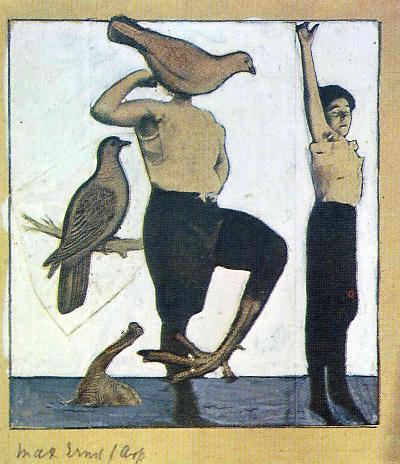
Switzerland, Birth-Place of Dada _______________________Three Seasons  photo - mw _______________________ from Metropole_______________________ 
The Bewildered Planet
The decision to withdraw from the United Nations Convention on Desertification is the latest but regrettably likely not the last move to distance Canada from the world body. There is a disappearing character to contemporary Canadian multilateral diplomacy. Like Lewis Carroll's Cheshire cat, soon all that may remain of our country at the UN is a grin or, more accurately, a scowl._______________________
(....)_______________________
permanent link |
This post has been generated by Page2RSS
02 Apr 15:30
Cardinal Dolan: Gays Are 'Entitled to Friendship'
by Rich Juzwiak
Jdaneheyhad a good talk last night with a friend of mine who is Catholic, and lives in Germany, about how sad it is to watch people get excited about the new pope, just because he isn't SUPER regressive, like Benedict. How easily people get their hopes up for big changes in the Church, against all evidence. This ties in somewhat with Spiff's previously shared article about how optimism can drown out common sense. Maybe especially Americans just can't *believe* that the Church won't change, because we are always tuned into a forward-motion-narrative. But that is *not* what the Catholic Church is about.
Supporting an institution (such as marriage) over actual human lives isn't a very Christian thing to do, but it is a very Catholic thing to do, and so Cardinal Timothy Michael Dolan upheld the Church's interest in protecting marriage from homosexual demons in an interview with George Stephanopoulos that aired Sunday on This Week. This is what a losing battle with a twist of internal conflict sounds like:
Well, the first thing I'd say to [a gay couple that feels unwelcome in the Catholic Church] is: "I love you, too. And God loves you. And you are made in God's image and likeness. And we want your happiness. But...and you're entitled to friendship". But we also know that God has told us that the way to happiness, that - especially when it comes to sexual love - that is intended only for a man and woman in marriage, where children can come about naturally. We gotta do better to see that our defense of marriage is not reduced to an attack on gay people. And I admit, we haven't been too good at that. We try our darnedest to make sure...we're not an anti-anybody, we're in the defense of what God has taught us about marriage, that it's one man, one woman forever to bring about new life. We gotta do better to try to take that away from being anti-anybody.
When Stephanopoulos asked how, Dolan said he didn't know. This is because it is impossible. Also when, "You're entitled to friendship" is trying your darnedest, your darnedest ain't good enough. For all gays still interested in patronizing the organized Catholic Church, have fun sitting at/under that table.
01 Apr 18:12

A haiku from the article: ‘Albrecht Dürer: Master Drawings,...
JdaneheyOoh, thank you Spiff for pointing me to this site on yer Twitter. I love it.
A haiku from the article: ‘Albrecht Dürer: Master Drawings, Watercolors, and Prints,’ at the National Gallery
28 Mar 12:35


Nevermind: The Concert That Wasn’t
by Amy McDonald
Hello again from the Duke University Union records! When last we met, I told you about a mysterious memorandum concerning CORE and the fact that it was not known to suffer from any communist infiltration. Now, I have an equally interesting tale, involving an unlikely cast of characters: President Keith Brodie, Coach K, and Nirvana.
This undated paper was in a folder titled simply “Concerts Lost.” It details the negotiations that apparently took place before it was decided not to book the willing-to-play Nirvana at Duke.

Notes about possible Nirvana concert, 1991? From the Duke University Union Records. (Click to enlarge.)
While the document more or less speaks for itself, I will highlight two of my favorite excerpts:
“Even [President] Brodie is unable to make Krzyzewski move practice.”
“If we could talk them into one of the other dates, Brodie would buy tix for senior class.”
Buried deep within the record is a notation that helps us to date the document as being from 1991: “talked to Brodie today; he’s excited about Nirvana because that’s one of the bands they tried for last year.” This is a key clue in dating the record for the following reasons:
- In May, 1990, Nirvana played both in Chapel Hill (at Cat’s Cradle) and Charlotte. Because of the proximity, it would be reasonable that Duke would have also tried to get a date on their first major headliner tour.
- Nevermind, Nirvana’s first major label success album was released in the fall of 1991. Based on the fact that Durham is not located in suburban Seattle, it seems like a safe bet that they were relatively unknown in the area until they started to play the college circuit in 1990, and then they were catapulted into the spotlight with the release of the international hit album Nevermind.
Nirvana, of course was a band that was riddled with both controversy and tragedy. Frontman Kurt Cobain famously battled a heroin addiction and, in 1994, committed suicide. However, Nirvana is also largely credited with expanding the grunge—and later, alternative—rock genre beyond the Pacific Northwest.
Unfortunately, the story of Nirvana at Duke is found only in records of the Duke University Union, in a folder entitled “Concerts Lost.” A final note about this record: Duke won the 1991-1992 seasons National Championship for men’s basketball. Apparently those unmoveable practices paid off that year.
Post contributed by Maureen McCormick Harlow, Drill Intern for the Duke University Archives.
25 Mar 23:48
http://www.bookslut.com/blog/archives/2013_03.php#019982
by Jessa Crispin
JdaneheyHere's hoping that James and Ben haven't come across "the day of blood" in their ancient religion revivals. . .
 So, how did you spend yesterday's Day of Blood?
Yesterday was the sacred day of Cybele, and it was traditionally celebrated by going into a frenzied state and castrating yourself. From Words as Eggs:
Cybele fell in love with Attis, selected him as her priest, and demanded of him the vow of chastity. When Attis broke his vow, she brought on him a frenzy during which he castrated himself. Subsequently, in the celebrated cults of Cybele, the Galli, or her priests, would flagellate and castrate themselves. This was popularly known as "The Day of Blood." Cybele is often pictured with a whip and a towered crown as emblems of her power.
Strangely, I spent yesterday reading a novel about a man with a castration anxiety that he talks about a lot. (Also, I had dumplings for lunch, which kind of look like... I wasn't reminded of the Day of Blood until this morning, and now all of yesterday seems like an unintentional day of devotion to Cybele.) Actually, I'm hoping Lucy Ellmann will agree to talk about her book, Mimi, because while I enjoyed the book a great deal, she outlines a solution to the problem of gender relations that is silly at best. (Give women all of the power.) I do not believe that women are inherently peaceful and men are inherently violent, but Mimi quite baldly puts forth this thesis. (And by constantly bringing up the man's castration complex, and then by showing him happy when his ambitions and career are destroyed, Ellmann seems to suggest that he is happier after he submits to his castration. I find this wildly problematic.) And yet there are parts of the book that are very, very good. I think it would make for an interesting conversation.
But in the meantime, let's celebrate the (day after the) Day of Blood with the upside of castration! Castrati. And the sex and opera romp Farinelli.
25 Mar 19:05
Happy Birthday, Flannery O’Connor
by Sadie Stein
“I don't deserve any credit for turning the other cheek as my tongue is always in it.” —Flannery O’Connor
25 Mar 17:09
Frances Glessner Lee
by Robert Wringham

Said to have inspired Murder She Wrote‘s Jessica Fletcher, FRANCES GLESSNER LEE (1878–1962) was a millionaire heiress who woke up one morning with an urge to revolutionize the field of Crime Scene Investigation. Her most famous contribution, The Nutshell Studies of Unexplained Death, were a series of eighteen training courses for police in the 1940s and ’50s. At the typical Nutshell Study, up to forty leading crime scene investigators would be presented with intricately constructed dioramas of real-life murder rooms — complete with doors, windows, functioning electric lights and realistic blood and guts. After granting the investigators ninety minutes to study the grisly-cute scenario, Glessner Lee would point out the myriad telling details they hadn’t spotted and what the implications of those details might be. After this humiliating wake-up call, the sexagenarian amateur sleuth would take them all for a slap-up dinner at the Ritz.
PS: The Nutshell Studies of Unexplained Death are on permanent loan to the Maryland Medical Examiner’s Office in Baltimore. Though they’re not open to the public, they can be seen in an illuminating documentary called Of Dolls and Murder.
***
On his or her birthday, HiLobrow irregularly pays tribute to one of our high-, low-, no-, or hilobrow heroes. Also born this date: Cecil Taylor, Flannery O’Connor, David Lean.
READ MORE about members of the Psychonaut Generation (1874–83).