Shared posts

02 Apr 22:30

Hotline Miami's Cactus on the price of freeware development

by Jessica Conditt
firehose

Cactus beat

Hotline Miami's Cactus on the price of freeware game development Hotline Miami designer Jonatan Söderström - perhaps better known by his prickly development alias, Cactus - began his career in freeware, developing smaller, experimental games that anyone with the appropriate hardware could download and play at any time, game-development hippie-communism style. Some of his games include Norrland, Shotgun Ninja, Psychosomnium, Minubeat, Clean Asia! and Keyboard Drumset Fucking Werewolf. That last one, created in three weeks in October 2011, features art by Hotline Miami co-creator Dennis Wedin.

Together, Wedin and Söderström form Dennaton Games, and they are part of the rising cult of indie superstars. But the draw of fame and fortune wasn't why Söderström stopped making freeware games.

"I didn't want to become homeless," Söderström told Joystiq at GDC. By February of this year, Hotline Miami clocked 300,000 PC sales, and PS3 and Vita ports by Abstraction Games are currently "pretty much done," expected to hit in May, Wedin said. Söderström isn't in danger of being homeless right now. Still, reverting to freeware development poses an interesting challenge.

"I kind of want to start doing freeware games again, but when you put so much work into something that turns out really good, it feels hard to do smaller things that won't be as good," Söderström said. It's all about "finding the inspiration to do something that seems worthwhile," he continued. "When you work on a big game for a long while, you start thinking in ideas that only work if they are big. It's difficult to turn to the other mindset, especially when you are still working on the next big thing."

Dennaton is digging into development on the sequel to Hotline Miami, a large game with parallel plots taking place in the early 90s, and after that Wedin and Söderström have ideas for fresh IPs. They'll probably be bigger games, even if Dennaton doesn't intend for them to be.

"Hotline Miami wasn't meant to be big," Wedin said.

JoystiqHotline Miami's Cactus on the price of freeware development originally appeared on Joystiq on Tue, 02 Apr 2013 18:00:00 EST. Please see our terms for use of feeds.

Permalink | Email this | Comments
02 Apr 21:35

Brown vs. Startup Over a Sandwich

by timothy
firehose

Brown beat

An anonymous reader writes "Crunchbutton, founded by Yale grads, is trying to replicate the success of its one-button food delivery service in and around Brown University. The controversy began when the startup delivered a popular Brown sandwich called the 'Spicy With' to students. Brown's lawyers sent Crunchbutton a cease and desist letter, demanding that the company remove any associations with the university or its name. The startup says it has complied with the demands, yet Brown has not backed off, and it expects to be served with a lawsuit. This tale illustrates the perils of encouraging entrepreneurship while protecting the interests of a big educational institution."

Share on Google+

Read more of this story at Slashdot.


02 Apr 21:35

Google Glass and Surveillance Culture

by timothy
Nerval's Lobster writes "Tech journalist Milo Yiannopoulos asks the question lurking in everyone's mind about Google Glass. 'It's an audacious product for a company no one trusts to behave responsibly with our data: a pair of glasses that can monitor and record the world around you,' he writes. 'But if Glass becomes as ubiquitous as the iPhone, are we truly to believe that Google will not attempt to abuse that remarkable power?' With each new eyebrow-raising court judgment and federal fine levied against Google, he adds, 'it becomes ever more clear that this is a company hell-bent on innovating first and asking questions later, if ever. And its vision, shared with other California technology companies, is of corporate America redefining societal privacy norms in the service of advertising companies and their clients.' He feels that Google will eventually end up in some sort of court battle over Google Glass and privacy. Do you agree? Does Google Glass deserve extra scrutiny before it hits the market?"

Share on Google+

Read more of this story at Slashdot.


02 Apr 21:31

Rock Band Weekly and the day the music died

by Alexander Sliwinski
firehose

RIP

Bye Bye, Miss Rock Band Last ever DLC song is American Pie A long, long time ago, I can still remember how that Rock Band Weekly used to make us smile. After 281 consecutive weeks, beginning in November of 2007, the impressively regular Rock Band updates conclude this week with Don McLean's "American Pie."

In the final tally, the Rock Band music catalog includes 1,400 artists and over 4,000 tracks, with more than 130 million songs sold. Bye, bye, RBW. We'll miss you. Now, what does Harmonix have up its sleeve for the next generation?

Continue reading Rock Band Weekly and the day the music died

JoystiqRock Band Weekly and the day the music died originally appeared on Joystiq on Tue, 02 Apr 2013 16:30:00 EST. Please see our terms for use of feeds.

Permalink | Email this | Comments
02 Apr 21:16

Please, No War: The War Z Catastrophically Hacked

by Nathan Grayson

By Nathan Grayson on April 2nd, 2013 at 9:43 pm.

Poor, innocent victims of the recent hacking and server downtime.

The astounding saga of The War Z continues, but this time, with a twist: the rank odor of awfulness isn’t coming from inside some fissure in the game’s rotting flesh. Rather, an external force – data-hungry hackers – decided to stir up trouble, and boy did it ever hit the jackpot. In short, if you ever signed up for The War Z, go change everything. Financial information, fortunately, is still safe and sound (except, you know, for the fact that it’s presumably being spent on The War Z), but far too many other crucial pieces of information have been compromised. As a result, the more-than-a-little wobbly zombie survivor’s been forced offline for the time being.

Publisher OP Productions released a rather urgent statement on the matter:

“We are issuing this Security Alert to all Survivors as a precaution so you can take some precautionary measures on your own. We have already taken a number of steps to increase security and are continuing to work with external advisors and investigators to identify and implement measures to minimize the chance of this happening in the future.”

“The data accessed included email addresses used to log-in to the forum, forum passwords which we encrypt, email addresses used to log-in to the game, encrypted game passwords as well as in-game character names and the IP addresses from which players log-in to the forum and to the game. If you posted other information to the forum it is likely that such data was accessed as well. We do not collect the names or addresses of our gamers so that information was not impacted unless you posted it on the forum. We are investigating whether additional information may have been obtained.”

So basically, your fleshiest e-bits are now flopping about in the breeze – or at least, they’re catching a chill in some hacker’s dank info-cellar. You should probably take care of that as soon as humanly possible, one way or another.

This whole episode is made all the worse by the fact that The War Z’s hardly proven impregnable in the past. This particular instance, however, is easily the worst, so – if for some reason you haven’t already – maybe consider living out your murderously misanthropic fantasies elsewhere.

For now, though, OP assures that it’s “undertaking a full review and update of our servers and the services we use and adding additional security mechanisms.” But honestly, if you’re still playing this one, how many strikes until it’s out? How close to the dust-and-duct-tape cliff side do you draw the line?

02 Apr 20:32

Comic artists razz Lichtenstein with the Image Duplicator show

by Mark Kardwell
firehose

iggsiwr

Carl Flint, after Overgard

Carl Flint, after William Overgard

You may have already heard about Orbital Comics’ Image Duplicator art show in London (probably via this piece at The Beat): This story is right in my wheelhouse, but I was resisting writing about it until there was a large enough stockpile of art from it to present here. The show is a reaction both to the recent Roy Lichtenstein exhibition at the city’s already-iconic Tate Modern gallery, and to the BBC’s coverage of the event (which I wrote about at the time elsewhere).

Dave Gibbons is a long-standing critic of Lichtenstein (you can find footage online of him complaining about what he calls Lichtenstein’s “dishonesty” from as far back as 1993). Gibbons appeared on the BBC’s documentary to put the case for the accusations of plagiarism that may always dog Lichtenstein’s reputation. The segment featuring Gibbons debating with presenter Alastair Sooke was filmed in front of the famous “Whaam!” canvas. Sooke was all too dismissive of Irv Novick, somewhat deriding his work in order to flatter Lichtenstein. It seems odd Sooke chose to criticize Novick’s compositional decisions and praise Lichtenstein’s, when every element of Roy’s piece was lifted from Irv’s. Anyway, these new perceived slights seem to have been enough to stir Rian Hughes, Jason Atomic, and the Orbital Gallery regulars into action.

One of the most persistent criticisms of Lichtenstein from comics artists was his consistent failure to accredit his sources, which instantly seems insulting and dismissive: as if comics are fair game for the fine art world to trample over and plunder at will. The Image Duplicator show seeks to redress and rebalance this, asking artists to return to Lichtenstein’s original sources, and then reinterpret them again, this time crediting the original. The show’s mission statement was drafted by comics polymath Rian Hughes (again, another long-standing critic of Lichtenstein):

“Pop artist Roy Lichtensein currently has a show on at the Tate. While the public is intimately familiar with his work, what they may be unaware of is how closely many of his images were “appropriated” from comic artists like Irv Novick, Russ Heath, Jack Kirby, John Romita and Joe Kubert, who received no fee or credit.

Is this an act of brilliant recontexturalisation? The elevation of commercial “low” art to “high” art? Art world snobbery? Artistic licence? Cultural annexation? Gallery shortsightedness? Or something else?

This show is a chance for real comic-book artists (and other “commercial artists” – illustrators, designers etc) to ask these kinds of questions and share their views, via their work.Every interested comic artist (or illustrator, graphic designer or other “commercial artist”) should “re-reappropriate” one of the comic images Lichtenstein used, and rework it, using some of their ‘commercial art’ drawing skills, to warp and twist it into something interesting and original, and in the process to comment on this type of appropriation.

The IMPORTANT thing to stress is that you’d be going back to the source material and re-reappropriating (sic) Coletta, Novick, Kirby et al – NOT copying Lichtenstein, as we don’t want copyright issues from the Lichtenstein estate …see this as a celebratory, positive show which aims to get the point across that the original artists deserve credit and respect …As suggested by Dave Gibbons, money raised from selling prints or originals will be donated to the Hero Initiative, which helps down-on-their-luck comics veterans: http://www.heroinitiative.org/ Again, a nice way to Give Back the Art.”

The deadline for submissions is getting close (Saturday, April 6), so entries are starting to pile up, both at Hughes’ Facebook page for the show, and contributor Steve Cook’s blog. Here’s some fine looking examples — Lichtenstein estate lawyers, start your engines!

Steve Cook, after John Romita

Steve Cook, after John Romita

Kevin "Strictly Kev" Foakes

Kevin “Strictly Kev” Foakes

Rian Hughes, after Tony Abruzzo

Rian Hughes, after Tony Abruzzo

Shaky Kane

Shaky Kane

Al Davison, after Jim Pike

Al Davison, after Jim Pike

Mitch O'Connell

Mitch O’Connell

Mark Stafford, after Tony Abruzzo

Mark Stafford, after Tony Abruzzo

Dave Gibbons, after Irv Novick

Dave Gibbons, after Irv Novick

02 Apr 20:31

Deus Ex Wii U improvements not planned for other platforms

by Alexander Sliwinski
firehose

shitcock

Deus Ex Human Revolution boss fights on Wii 'as they should have been' Eidos Montreal's Emile Pedneault, game designer on the Director's Cut of Deus Ex: Human Revolution, tells Penny Arcade Report the improvements planned for the Wii U version of the game aren't currently in the works for Xbox 360, PS3 or PC. Meanwhile, unused alternative headline to this article: "Square Enix passes on opportunity to sell Deus Ex twice."

The improvements include graphical updates, goodies like a strategy guide and - easily the most important tweak - a reworking of those abysmal boss fights. The farmed out boss fights have now been reworked in-house by Eidos Montreal, as was the case with "The Missing Link" downloadable content.

Gallery: Deux Ex: Human Revolution - Director's Cut

JoystiqDeus Ex Wii U improvements not planned for other platforms originally appeared on Joystiq on Tue, 02 Apr 2013 15:30:00 EST. Please see our terms for use of feeds.

Permalink | Email this | Comments
02 Apr 19:27

Broadcast Syndication: Black Annex

by Adam Smith
firehose

"2013 could be the year that bionic trousers, trenchcoats and absurd violence become fashionable again."

By Adam Smith on April 2nd, 2013 at 7:00 pm.

Will the Kickstarter controversies never end? Simon Roth stopped making his crowdfunded procedurally generated management game, Maia, for at least five seconds this morning. I know that it happened because he spent that time sending me a link to Black Annex, a one-man production built in QBASIC that will probably remind readers of a certain age that Syndicate used to be about controlling a squad of tiny, violent cyber(punk)men from afar rather than violently dismissing a first-person shooter from afar. The hot-off-the-presses trailer shows four agents infiltrating buildings, shooting enemies and hacking computers, and it looks wonderful.

The game’s official site contains a year’s worth of development blogs, covering everything from campaign structures to pathfinding, and reading the material, it becomes clear that an enormous degree of thought and effort have already gone into the game. The later parts of the video show mission selection, which includes tagging of optional objectives such as ‘No Alerts’ and ‘No Kills’, suggesting that the violence and gunplay will be optional, either last resorts or brute force entry points.

No indication of a release date yet but hopefully we’ll know more about future plans soon. With this, Gunpoint and (hopefully) Cartel, 2013 could be the year that bionic trousers, trenchcoats and absurd violence become fashionable again.

The description of the trailer contains these words:

“I’m not the best artist nor am I the best programmer in the world, but I just wanted this game to exist; I sat down exactly a year ago today and started working on it. I hope you get to enjoy it too, some day!”

I would very much like to enjoy this game some day.

02 Apr 19:25

Spoiling All His Fun

by Christopher Wright
Help Desk, by Christopher B. Wright
02 Apr 19:24

VICE Series on HBO Will Feature Groundbreaking Stories From Around the World

by Rusty Blazenhoff

VICE is an upcoming news magazine series on HBO that will feature “startling, groundbreaking stories from around the world.” The show is executive produced by Bill Maher, journalist Shane Smith and VICE’s chief creative officer Eddy Moretti and Fareed Zakaria of CNN will serve as its consultant. It premieres April 5, 2013 (trailer). Vice Media was recently featured in The New Yorker.

VICE smashes barriers of decorum to cover such stories as out-of-control political assassinations in the Philippines, the sumo/Mixed Martial Arts craze that has swept Senegal and the precarious nuclear stare-down in Kashmir. VICE’s fearless approach is like nothing else on television and will show some of the scariest, weirdest and most absurd customs and practices known to humanity.

…The show takes its name from the leading youth entertainment company operating in over 34 countries including vice.com; an international network of digital channels; a television production studio; a print magazine; a record label; an in-house creative services agency; and a book-publishing division.

via The World’s Best Ever

02 Apr 19:21

Adafruit launches educational show aimed at kids

by Mike Szczys

adafruit-kids-show

Adafruit Industries just posted the first episode in a new educational series aimed at teaching kids about electronics. The episode is entitled “A is for Ampere” and teaches the basic theory behind electrical current. The subject seems like a common one for A-to-Z themed electrical tutorials. [Jeri Ellsworth] did a similar episode but hers is aimed more at the electronics hobby crowd.

[Limor] and gang (that’s [Collin Cunningham] dressed up as [Andre-Marie Ampere]) seem to be all-in on this project. The episode features ADABOT, the blue puppet which takes on the role of the student in this episode. After demonstrating a mains circuit breaker tripping the episode goes on to discuss electron flow and how current is measured.

We’re all about this type of educational opportunity. The age group at which this series is targeted have never known a day without touchscreens, they should know at least something about how those devices actually work.


Filed under: how-to
02 Apr 19:20

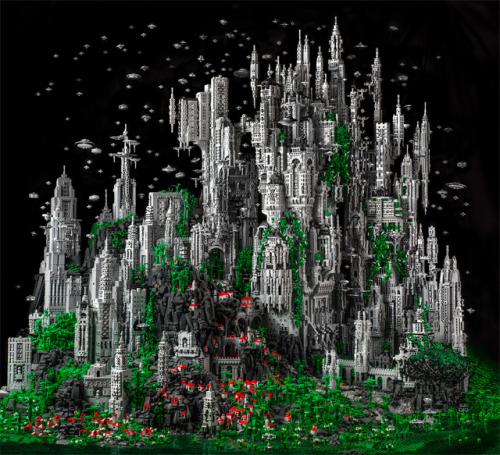
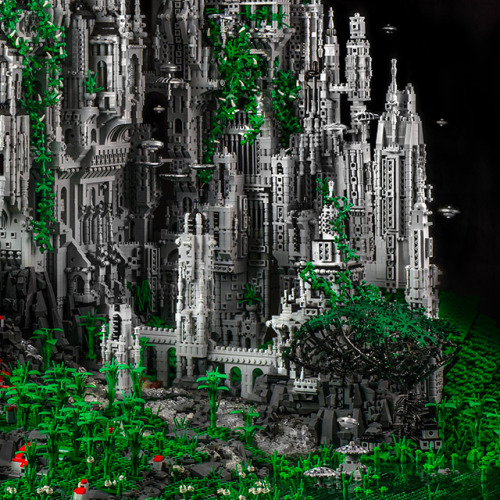
rurone: itscolossal: CONTACT 1: A 200,000 Piece LEGO...


rurone:

itscolossal:

CONTACT 1: A 200,000 Piece LEGO Masterwork by Mike Doyle.

Hooooooly fuck.

02 Apr 18:41

Kindleberry Pi the second

by liz

Did you get a nice shiny new Paperwhite Kindle to replace your old one? (I haven’t yet. I’m waiting until the inevitable moment when I drop my Kindle Touch and break the screen; I’m currently on my third.) If you did, you might be interested to learn that when you’re not using it to read books or jailbreaking it so you can change the wallpaper, you can use your Paperwhite as a wireless, ultra low-power display for your Raspberry Pi.

We featured the original Kindleberry Pi hack from Ponnuki back in September. That hack required cables, and only worked on the old Kindle 3 (the version with the keyboard), not any later versions – plus, it looked a bit odd because to keep the screen in landscape mode you had to turn the whole assembly on its side, so the keyboard was rotated by 90 degrees. The new Kindle 5 (the Paperwhite) has no keyboard, a faster refresh rate, and a backlight that can be turned on in dark conditions. So Max Ogden has polished Ponnuki’s original Kindleberry Pi idea, and produced a really tidy piece of kit: a Raspberry Pi with a Paperwhite display, a wireless keyboard and a tiny wireless router. He says:

The advantages of the Kindleberry are pretty desirable for me:

  • Week-long battery life: the Pi and the Kindle both have low power ARM processors so you can use any USB charger to power them
  • The Kindle screen is designed for use in direct sunlight
  • The whole setup is small enough to carry around in a pouch inside my normal backpack along with my normal laptop. I work from coffee shops in Oakland and often move around by bicycle during the day — now I can work from almost anywhere and still be at least a little productive.

Here at the Foundation, we’re watching the development of e-ink products with great interest. At the moment it’s nigh-on impossible to buy an e-ink display as a consumer unless it comes bundled as part of an e-reader like a Kindle or a Nook; and that makes them very expensive. The technology has all kinds of potential for applications we want to see the Pi being used for: the low energy requirement makes an e-ink screen a perfect choice for places where you’re off the grid or reliant on solar power. We’re looking forward to seeing prices come down and displays becoming more easily available to consumers.

Obviously, you’re not going to be watching video on an e-ink display any time soon; the refresh rates just aren’t there yet, and if they ever do get there, it won’t be for many years. But for everything else, e-ink’s a great choice. Max says that the Paperwhite’s refresh rate added to the tiny lag that you get using a wireless keyboard means that he sees a ~200ms screen delay when using the Kindleberry Pi, but that this is barely noticeable when typing.

Max has made code and a list of required hardware available at his website.


02 Apr 18:36

Power & Style: A World History of Politics and Dress (Guest Book Review)

by Heather

Today, I’m pleased to bring a book review of review of  Power & Style: A World History of Politics and Dress By Dominique Gaulme and Francois Gaulme (Translated from the French by Deke Dusinberre) from a dear friend. José Blanco F. is an Associate Professor in the Textiles, Merchandising and Interiors Department at the College of Family and Consumer Sciences and manager of the college’s Historic Clothing and Textile Collection. He is originally from Costa Rica and has a Ph.D. in Theater from Florida State University. His current research focuses on dress and popular culture in the second half of the twentieth century with an emphasis on male fashion. He is also interested in the fashion and visual culture in Latin America and the application of Jungian archetypal analysis to fashion. José is the Vice-president of Education for the Costume Society of America.

Here is his review:

Power & Style: A World History of Politics and Dress is a new book written by French journalist Dominique Gaulme and anthropologist and historian Francois Gaulme. It was translated from the French by Deke Dusinberre. This volume adds to the expanding literature discussing the history of dress and fashion from a global perspective. The authors emphasizes the role of dress as a symbol of power through history and discusses a variety of settings from tribal communities to monarchs and elected officials.

Hyacinthe Rigard, Full-length Portrait of Louis XIV, aged 63, in Full Royal Dress, 1702, Oil on Canvas, National Museum of the Chateaux of Versailes and Trianon, Versailes.

The work is organized chronologically in an easy-to-follow format with a vast number of illustrations for support. There are two main problematic issues with the authors’ approach. First, the authors almost exclusively discuss political power concentrating on individuals declared powerful by either a political system (Kennedy, Reagan) or themselves (Napoleon, Hitler).

The book, thus, equates power exclusively with politics and government institutions and ignores other power systems; not discussing, for instance, the impact of corporate power dressing and personal appearance management as well as the power achieved by celebrities in a variety of fields and how they exert a powerful influence through their wardrobe. Second, and more important, is the authors’ decision to include very little discussion on influential women and justifying the decision by stating that “… women’s access to legitimate political power is very recent.” Therefore the book virtually ignores women who have been powerful monarchs and rulers mostly casting aside an extensive list ranging from Cleopatra, Elizabeth I, and Queen Victoria to Golda Meyer and Indira Ghandi. These women, along with many others, held political power as appointed or elected rulers and cleverly used their appearance and dress to express and symbolize their authority. For instance, the authors choose to discuss the “Victorian” era by analyzing Prince Albert’s wardrobe in detail and just briefly mention Queen Victoria thus assuming that sartorial power at that time was mostly expressed through male dress.

So, the book would be better titled and promoted as what it really is: a history of men’s fashion told from the perspective of the connection between power, style, and dress. Once the reader accepts that limitation, then the work becomes an enjoyable read. The authors lay out a good case for the argument that dress plays functions that go beyond mere protection of the body and that decoration and indication of status are primary functions.

Anne-Louis Girodet de Roucy Trioson, Portrait of Jean-Baptiste Belley, Representative from Saint-Dominque, 1797, Oil on canvas, National Museum of the Chateaux of Versailles and Trianon, Versailes.

The authors develop connecting threads with pertinent examples in each chapter, easily capturing the attention of anyone new to dress history but they also provide a purposeful synthesis of the topic and a variety of relevant details for experts and students in the field.The book is lavishly illustrated in full color and often full page images in high quality reproduction that sometimes jump from the page almost as an actual canvas. There are numerous portraits of subjects discussed in the book, but in almost every instance the illustrations should be more directly related to and referred in the text with more specific descriptions of dress and sartorial symbols in the portraits selected to illustrate the chapters.

The historical research is thorough; the book is well organized and narrated in an appealing manner with elegant descriptive language that easily transports the reader to the places and periods described. The chronological approach cleverly and effectively carries the reader from what the authors call “naked societies” where the right to wear certain objects such as feathers was a symbol of power to ancient Rome and Byzantium. The authors, for instance, paint a clear image of Augustus in Imperial Rome, calculating the precise fullness of his toga as a way to manage the full transition of Rome from Republic to Empire, or Hitler rummaging in his mind about ways in which his adoption of modest forms of dress could distinguish him from the spectacular uniforms formerly used in Germany. It is then in the storytelling and sharing of anecdotes and factoids that the book is stronger.

Powerful male figures through history are highlighted as examples, including Constantine, Philip the Good, Louis XIV of France, and Charles II of England. Famous dandy Beau Brummell is one of the few men discussed in the book whose sartorial power did not arise solely from political power but from social power as Brummell promoted the idea of dressing as a moral exercise in simplicity and elegance.

Andrea Appiani the elder, Napoleon I, King of Italy, 19th Century, Oil on Canvas, Napoleonic Museum, Ille d’Aix.

Other notable figures discussed include Napoleon, Prince Albert, and Edward VII, who is portrayed as a man so passionate about clothing that he was often considered vain and wasteful. The book argues that Edward VII had a remarkable impact on the development of cosmopolitan wardrobe to accommodate twentieth century active lifestyles. Once the book reaches the twentieth century, however, it rushes in one chapter from Hitler to Mao emphasizing how totalitarian regimes and their leaders used dress as a symbol of power.

American style is discussed in one chapter, with John F. Kennedy marked as a leading figure in the casualization of the American look and the development of the country’s obsession with comfort and muscularity.  Most of the book emphasizes European and American trends and although one of the last chapters is titled: “The UN: Going Global” it still discusses current trends in men’s dress by analyzing two opposing schools of masculine elegance in the closing decades of the twentieth century: the English tradition with structured pieces and an air of formality, and the Italian tradition with lighter fabrics and cuts emphasizing the male body. The chapter also discusses the transition at the United Nations from representatives attending in their countries’ traditional or representative attire to a general acceptance of business attire.

The book closes with two chapters discussing current and future trends. The authors revert to the idea that women did not occupy positions of power until the twentieth century and expect the reader to be surprised upon receiving this information. Still, with a long list of powerful women in the twentieth century, the book devotes just mere sentences to some of them (Margaret Thatcher, Hillary Clinton, Benazir Bhutto, Angela Merckel) and ignores other powerful females such as Eva Perón and a long cast of female heads of state in Latin America and other areas of the world. The final chapter aims to predict how the relation between power and dressing will evolve in the future. The authors also include smaller sections at the end of each chapter discussing different elements of clothing and the function they have played throughout history in determining power and status for men. These sub-chapters include a wide range of objects such as the penis sheath, crowns, swords, cravats and neckties, top hats, whiskers, scepters, boutonnieres, and watches.

Overall the book is an enjoyable read and, as stated above, the illustrations are multiple and of high quality. It adds to the growing literature on men’s fashion and style. Perhaps to solve the issue of ignoring powerful women; the authors should compose a second volume addressing how women have used dress and style as a symbol and instrument of power through the ages.”

02 Apr 18:12

Jumpy the ‘Badass’ Dog Flips, Jumps, and Skateboards

by Kimber Streams

Jumpy the dog performs amazing flips, jumps, and even skateboard tricks in this video uploaded to YouTube by Omar Muller.

via Reddit, Daily Picks and Flicks

02 Apr 17:48

Writer’s advice from writers

02 Apr 17:47

You Can Bring A Knife On A Plane, But You Still Can't Bring Mustard

Penknives, corkscrews, golf clubs and hockey sticks are some of the items that airline passengers will soon again be permitted to carry aloft, but, so far, still no more than a dollop of my favorite sharp condiment: deli mustard.
02 Apr 17:41

Manual for Book Thieves

02 Apr 17:41

Matthew Day Jackson

firehose

ffgg

02 Apr 17:40

Capcom's 'Gaist Crusher' is a cross-media assault on Japanese kids' allowances

by JC Fletcher
Capcom's 'Gaist Crusher' is a crossmedia assault on Japanese kids' allowances
Capcom's newest IP, Gaist Crusher, is planned at the outset as an exercise in the company's "Single Content Multiple Usage" strategy. It's primarily a 3DS game designed for children, but it'll also be a manga series in Saikyo Jump and V-Jump magazines, an anime produced by Pierrot, music by Avex Entertainment, and "Gaimetal" toys by Bandai.

The new game combines Capcom's "expertise in producing content for children," gained through years of Mega Man games, and the "high-grade multiplayer capability that generated a strong response for the Monster Hunter series."

Whether this vaguely cynical, corporate-driven approach to creating a hit franchise will work or not remains to be seen, but, uh, the game looks pretty fun. It'll be out in Japan this winter.

JoystiqCapcom's 'Gaist Crusher' is a cross-media assault on Japanese kids' allowances originally appeared on Joystiq on Tue, 02 Apr 2013 13:30:00 EST. Please see our terms for use of feeds.

Permalink | Email this | Comments
02 Apr 17:24

Valve Starts Publishing Packages For Its Own Linux Distribution

by timothy
An anonymous reader writes "In preparation for the "Steam Box" game console that will make necessary their own Linux-based software platform, Valve developers have started publishing Debian packages for their platform which looks like their first-generation operating system will be derived from Ubuntu 12.04.2 LTS. So far the packages being published include a new "Plymouth" boot splash screen as the operating system loads, a Steam desktop wallpaper, auto-updating system scripts, and experimental NVIDIA Linux graphics drivers."

Share on Google+

Read more of this story at Slashdot.


02 Apr 17:24

Augmented hunting with a $17,500 Linux-powered rifle

by Jacob Kastrenakes
firehose

sharderron

A bullet loses six feet of height while flying across 1,000 yards, and a hunter firing such a shot must compensate by altering the weapon's aim. At that distance, fine adjustments would be difficult to estimate — but TrackingPoint has developed a Linux-powered hunting rifle that's capable of doing all of the calculations for the hunter. Ars Technica has an in-depth report on what it's like to look through the $17,500 rifle's scope when the target locks and the viewfinder tracks upward to locate the precise point where the weapon should be aimed. Building distance compensation into the hunter's view is only part of what the embedded ARM computer is capable of: it can also follow targets, determine the precise moment when to fire, and stream video from the viewfinder to a paired iPad app.

02 Apr 17:24

There Are Now Only 7 Senate Democrats Opposing Gay Marriage - National Journal


Politico

There Are Now Only 7 Senate Democrats Opposing Gay Marriage
National Journal
Until he changed his position this week, Sen. Tom Carper, D-Del., was one of only two Senate Democrats opposing gay marriage to represent a state President Obama carried in 2012. (AP Photo/Cliff Owen) ...
Sen. Tom Carper Announces Support For Marriage EqualityTPM
Petitions Pressure Final 8 Democratic Senators To Support Marriage EqualityThinkProgress

all 18 news articles »
02 Apr 17:21

Photo


02 Apr 17:20

Charlotte Latin girls give a TEDx talk

by liz
firehose

Skip the boring intro, go to 1:14

I met Tom Dubick about a year ago at Hackerspace Charlotte, NC. He teaches engineering to the girls at Charlotte Latin School, and we believe his class was the first to be using the Raspberry Pi in the United States.

He and a group of his 13-year-old pupils have just given a TEDx talk called How Girls Should Serve Raspberry Pi. The girls here are presenting the projects they’ve made with Raspberry Pi over this semester, but there’s another important message here: we know that STEM subjects are not just for boys, but we should recognise that not all girls are the same, so our teaching approach is doomed if we decide that the only way to get girls into engineering subjects is to “shrink it and pink it”.

Keep watching – the projects get better and better. (Rolling backpack indicator lights FTW!)

02 Apr 17:18

Murder, Transsexuals, And The Price Is Right: The Story Of The Dale Car Hoax

This is an entirely true story about a whole massive load of lies. It involves a car, a transgendered woman, a murder, and Bob Barker. It has everything.
02 Apr 17:13

Guess What? That Athlete's Charity Ain't Exactly Charity

An "Outside the Lines" investigation of 115 charities founded by high-profile, top-earning male and female athletes has found that most of their charities don't measure up to what charity experts would say is an efficient, effective use of money.
02 Apr 17:11

The painted desert


emmanuel coupe


emmanuel coupe


emmanuel coupe

The painted desert

02 Apr 17:08

Town Requires Citizens To Own Guns

Nelson, Georgia has passed an ordinance requiring gun ownership in an effort to make some sort of a point about gun rights.
02 Apr 17:06

Zeno Clash 2 takes a swing at Steam on April 30

by David Hinkle
firehose

ZENO CLAAASH

Zeno Clash 2, the sequel to Ace Team's bizarre blend of fantasy and pugilism, is ready to launch on April 30 for $20 through Steam. PSN and Xbox Live Arcade versions are also on the way, but Atlus has not confirmed their release dates.

Following the launch of the original Zeno Clash in 2009, Ace Team began work on the sequel and launched the Xbox Live Arcade port the following year. Zeno Clash 2 picks up where the first game left off, adding a co-op campaign for paired-up punchers. It's currently up for pre-order at 10 percent off on Steam.

Gallery: Zeno Clash 2 (4/1/13)

JoystiqZeno Clash 2 takes a swing at Steam on April 30 originally appeared on Joystiq on Tue, 02 Apr 2013 02:00:00 EST. Please see our terms for use of feeds.

Permalink | Email this | Comments