firehose
Shared posts
Glenn Beck Sees Media Conspiracy When They Label Him A 'Conspiracy Theorist'
firehosenice hed
Museum to Sell Replicas of Golden Phallus in its Gift Shop

A penis-shaped gold pendant from ancient Rome has become so popular at Norfolk's Lynn Museum that visitors will soon be able to purchase replicas of it at the gift shop.

    
|
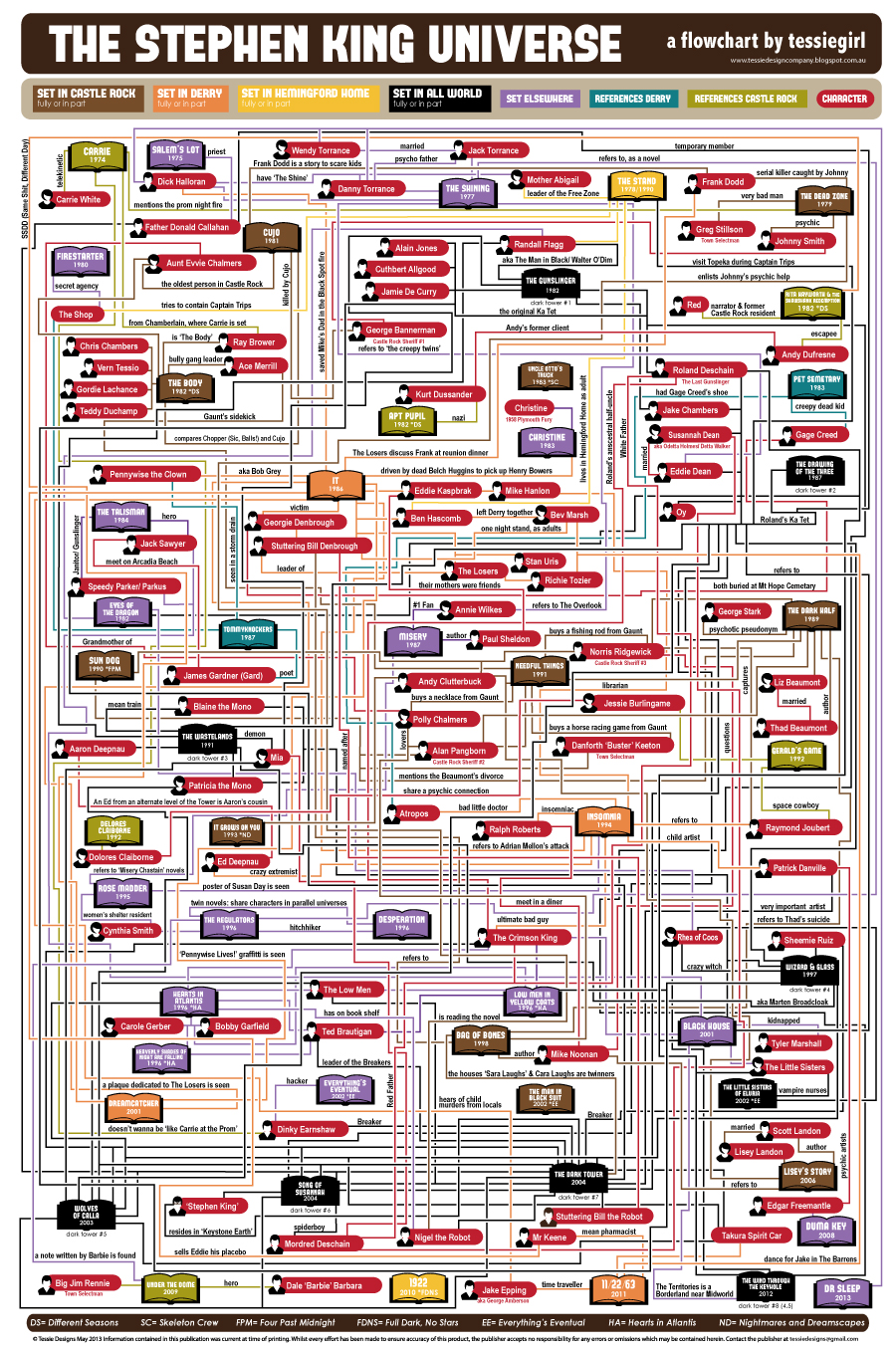
The Stephen King Universe, A Very Detailed Flowchart Linking His Books & Characters

(larger)
Australian artist and flowchart enthusiast Gillian James of Tessiegirl created “The Stephen King Universe,” a very detailed flowchart linking the vast collection of books and characters thought up by author Stephen King. Limited edition prints are available to purchase online.
When I was in Grade 5 (guess I was ten), my friend Tarnya Smyth brought her mum’s battered copy of Stephen King’s ‘Carrie’ to school. We broke it into about 4 pieces and passed them around, all taking turns reading each battered section. I told mum about it and she FLIPPED HER WIG and told me to ‘Stop reading that book immediately!!’ So I finished it.
Now, I TOTALLY do not recommend ten year olds reading Stephen King books (messed me up good), but this was when my life long relationship with Mr King began. My love for his books is based around his characters. They are so full. I love Stephen King dialogue. I love his sense of humour. And I love the links and connections between the books.

images via Tessie Girl
via I Love Charts
Music: Great Job, Internet!: Listen to an 8-bit mashup of every song from the new Daft Punk album

Joe Jeremiah has been covering songs in chiptune style on his YouTube channel for a while, but the latest in his “A Bit Of 8-Bit” series comes right on the heels of Daft Punk’s Random Access Memories, and it combines elements of every song on that album. As he cycles through the big melodies from each track, the names flash onscreen like a “Ready Player One” motif to track each song as it floats in and out of the track. He’s even got an 8-bit necktie and 8-bit-rimmed glasses to match the visual style to the music. Much like Daft Punk does on Alive 2007, the track blends elements of each song over one another to form a one flowing, cohesive performance. Only 8-bit style.
Read moreMissing man found, walks up to WMTW News 8 crew | York County - WMTW Home
BuzzFeed Writer Resigns In Disgrace After Plagiarizing ‘10 Llamas Who Wish They Were Models’
George W. Bush Having Trouble Finding Decent Cocaine Since Leaving White House
Infographic: Biggest Scandals Of The Obama Administration
firehose"August 1961: Obama born"
Track The CIA's Secret Rendition Flights With A New Interactive Map
A Legal Analysis Of The Conclusion Of 'The Dark Knight Rises'
firehosespoilers, obv.
Scottish Highlands To Ban Glass In Pubs
Was 'Doctor Who' Rubbish In The 80s?
Beer Pairings For Arcade Classics
firehosetoo easy/punny (mead with Golden Axe, Port Hot Rocks with Asteroids)


Swiss want their banks to break the law and reveal US tax evaders—for now

Switzerland’s strong laws protecting the secrecy of bank clients helped make it a famous name in world finance. But that secrecy is crumbling under the pressure of the US government. Swiss finance minister Eveline Widmer-Schlumpf announced plans today to give limited immunity to banks who negotiate with prosecutors who say they are hiding American income in the Alps.
There are $2.1 trillion in foreign assets in Switzerland, with the American share estimated at hundreds of billions of dollars (though not all of it tax-evading). Settling US charges could cost the Swiss banks currently under investigation, including Credit Suisse, Pictet, Julius Baer and HSBC’s Swiss subsidiary, fines in the billions of dollars for abetting tax evasion.
Since 2008, the Swiss financial system has faced escalating pressure on tax evaders from US authorities. In January, Wegelin & Co., the country’s oldest bank, pled guilty to hiding $1.2 billion from American tax collectors on behalf of 100 Americans. The bank paid $57.8 million in fines and announced it would close, selling its assets. The prosecution came about after Wegelin tried to pick up more offshore money business from UBS in 2008 and 2009, just before the top Swiss bank entered a deferred prosecution agreement (pdf) that included $780 million in penalties for helping US citizens shift their incomes abroad.
After the biggest and the oldest banks in the country got rapped by US authorities, the Swiss got pragmatic and decided it would be better for the financial sector to settle up, rather than engage in an expensive and embarrassing battle with the US. But negotiations for an umbrella settlement with the whole financial sector stalled. So the Swiss themselves decided to create a year-long window of opportunity to let banks share client information—though not names—that would allow the US to identify citizens illegally sheltering income abroad.
Sharing that information will be up to the banks themselves if the Swiss parliament passes some form of the law when it comes up in June. But if it fails—or when it expires—the United States will face the same problem of secrecy.
In February, however, Switzerland and the US agreed on a plan to share tax information that will resolve many of these problems. The deal, part of a landmark US law that requires foreign financial institutions to share tax information, depends on the US senate ratifying a treaty amendment that would essentially make the relaxation of Swiss secrecy laws permanent.
But that amendment is in jeopardy in the US because a single senator, Rand Paul of Kentucky, has exercised his individual right to block it (along with tax transparency agreements with Luxembourg and Hungary) from being ratified by US lawmakers. Paul argues that the treaty, and the new tax transparency law, threaten constitutional protections against unreasonable searches, although US courts have approved similar measures. Tax attorneys and foreign trade groups worry that holding up the amendment is creating uncertainty for financial institutions and hurting US credibility, and anti-tax evasion advocates say the move simply makes it easier for people to break the law.
However, it’s not clear what the Obama administration or Democrats in the Senate can do to force Paul to relinquish his hold on the amendment. And thanks to recent scandals, it’s a tough political environment to argue for more IRS scrutiny, even if it’s for offshore banks. If the stalemate continues, and the Swiss government’s year-long window closes, it could signal a return to opacity as usual for Americans banking in Geneva, Zurich and Bern.

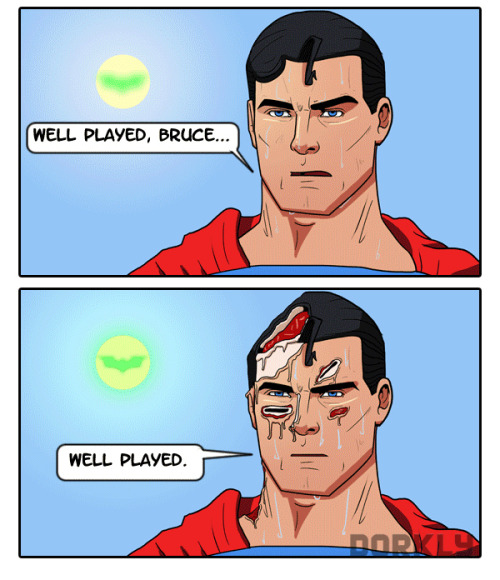
Always have an exit strategy. dorkly: Injustice: Gods and Rich...
firehosevia Jonmunger
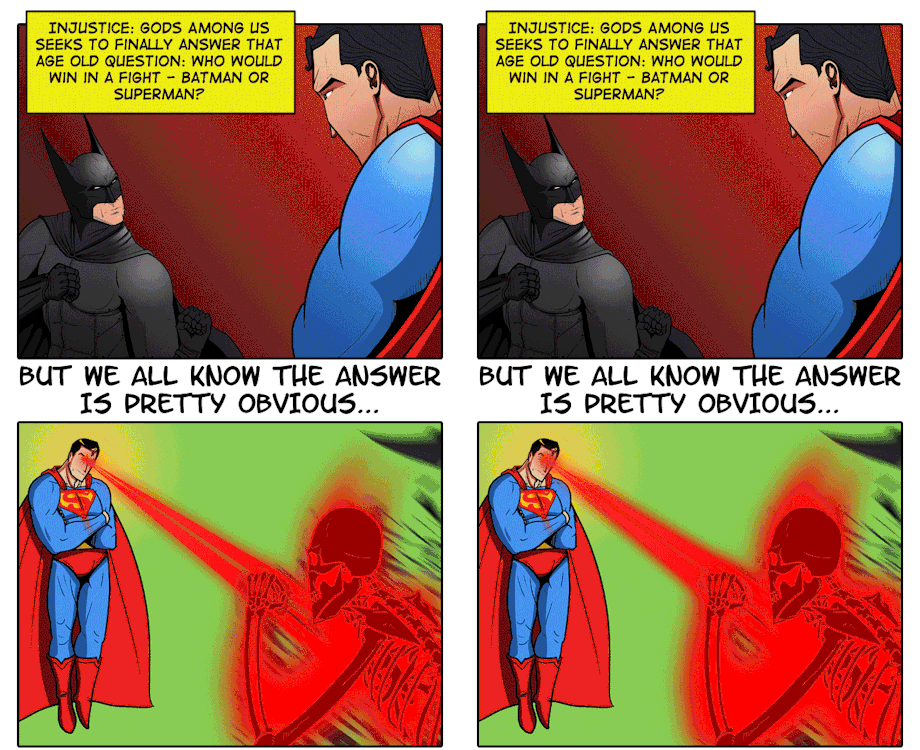
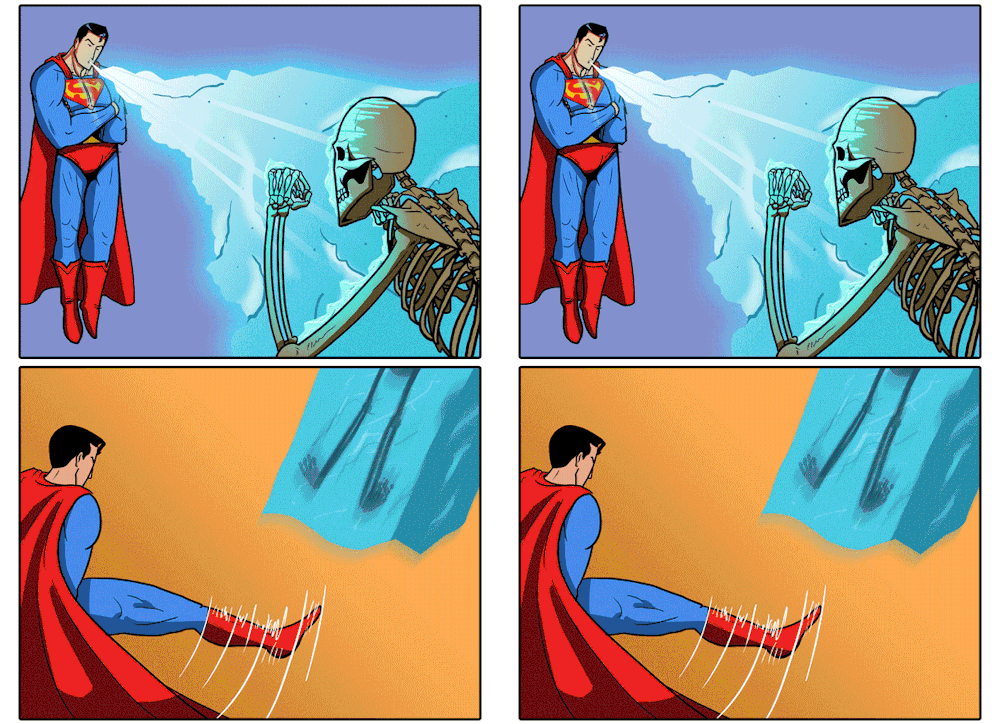
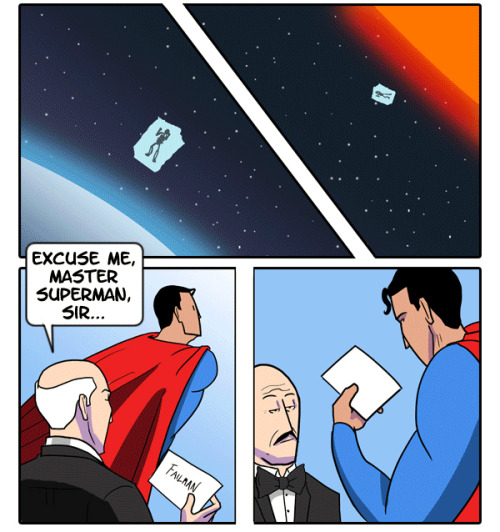
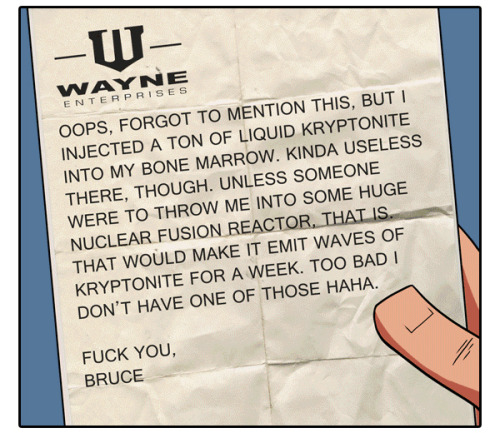
ē The Cord-Cutting Fantasy
firehose'Cable companies know the cable TV business, and would prefer to put up with customer disgruntlement over rising prices than become dumb pipes. ... Cable TV is socialism that works; subscribers pay equally for everything, and watch only what they want, to the benefit of everyone. Any “grand vision” Apple, or any other tech company, has for television is likely to sustain the current model, not disrupt it.'
Predictably, television was one of the first topics Tim Cook was asked about at yesterday’s interview at AllThingsD. This followed the rumors of Yahoo acquiring Hulu, and Microsoft’s entertainment-centric Xbox One launch last week.
It’s all about TV and the imminent age of cord-cutting. On this the blogosphere is certain.
Except for one little problem: the economics of cord-cutting simply don’t make sense, for neither networks nor viewers.1 Consider two examples: ESPN and AMC.
ESPN is the linchpin upon which cable television turns. It’s the sole reason many people have cable, and it’s insanely profitable. The vast majority of that profit comes from affiliate fees paid by cable companies on a per-subscriber basis (unless otherwise noted, all numbers are from this Forbes article that combines information from Disney’s annual report and data from SNL Kagan):
ESPN FY12 Revenue: $9.4 billion
- Affiliate fees: $6.1 billion
- Ad revenues: $3.3 billion
That’s about $508 million per month in affiliate fees alone, from about 100 million households.
Last week, ESPN averaged 1.36 million viewers in primetime, which is 9.52 million for the week, or about 40.8 million for the month. I think it’s fair to say that most of those are not uniques, to use Internet parlance. If we assume that the average ESPN household tunes in eight times a month in primetime, then that means about 5 million households watch ESPN a month.
Let’s assume this is true.2 That means:
- Every household pays $5.13 per month for ESPN in affiliate fees
- Only 4.8 percent of households watch ESPN. If ESPN were only available a la carte, each of those households would have to pay $101.60/month for ESPN to achieve the same revenue numbers they do currently
- The 95.2 percent of households who don’t watch ESPN would only see their cable bills decrease by $5.13 were they able to exclude it
ESPN is a special case for many reasons, so let’s take AMC, a geek favorite. AMC pulled in 460,000 viewers a night last week, yet earned $196 million in affiliate fees last quarter. If we assume that the average AMC viewer tunes in the same eight times a month, that’s 1.73 million households that watch AMC:
- Every household pays $0.65 per month for AMC in affiliate fees ($65.3m/100m)
- Only 1.7 percent of households watch AMC. If AMC were only available a la carte, each of those households would have to pay $38/month in order for AMC to achieve the same revenue numbers they do currently
- The 98.3 percent of households who don’t watch AMC would only see their cable bills decrease by $0.65 were they able to exclude it
Both these cases are overly simplified, and make a lot of assumptions, and, crucially, ignore price elasticity: at those a la carte prices, both ESPN and AMC would get a lot less viewers, both decreasing advertising revenue and requiring that much higher of a fee to maintain their current revenues.
The truth is that the current TV system is a great deal for everyone.
- Networks earn much more per viewer than would be sustainable under a la carte pricing
- Networks are incentivised to create (or in ESPN’s case, buy rights to) great programming; making your content “must-watch” lets you raise your affiliate fees
- Viewers get access to multiple channels that are hyper-focused on specific niches. Sure, folks complain about paying for those niches, but only because they don’t realize others are subsidizing their particular interests
- Cable companies know the cable TV business, and would prefer to put up with customer disgruntlement over rising prices than become dumb pipes
Cable TV is socialism that works; subscribers pay equally for everything, and watch only what they want, to the benefit of everyone. Any “grand vision” Apple, or any other tech company, has for television is likely to sustain the current model, not disrupt it directly.
UPDATE: The ESPN numbers were too low. See the update here
This is a three-part series.
- Part 1: The Cord-Cutting Fantasy. Getting only the content you want without paying for everything is a fantasy. Pay TV is socialism that works.
- Part 2: Why TV has resisted disruption. Great content is differentiated, has high barriers to entry, and depends on networks.
- Part 3: The Jobs TV Does. The key question is attention, not set top boxes. What jobs do we hire TV to do?
Also see Steve Jobs on TV, my Apple TV prediction, and my Additional Notes on TV
- Update: It’s been pointed out, correctly, that I’m talking about unbundling, not cord-cutting. That’s technically correct. However, I think folks who talk about cord-cutting still want the same content. That’s the fantasy I’m referring too. Still, I regret the imprecision. Thanks to John Feminella for the correction
- It’s not; those numbers were prime time only from a random week in May. The total number of households that watch ESPN is surely higher, but that only changes the dollar figure somewhat, not the overriding point
“The farist extrusion puzzle has been designed by neo...

“The farist extrusion puzzle has been designed by neo Geo.” -
Oshidashi Zintrick (ADK/SNK - Neo Geo CD - 1996)
your guess is as good as mine
SEC Pokes Nasdaq; Dow 28000?; Chinese M&A Sizzle - CNBC.com
New York Times |
SEC Pokes Nasdaq; Dow 28000?; Chinese M&A Sizzle
CNBC.com Mark Zuckerberg, CEO of Facebook, center, Sheryl Sandberg, COO of Facebook, center left, and Robert Greifeld, CEO of Nasdaq OMX Group, center right, applaud after remotely ring the opening bell for trading at the Nasdaq MarketSite from the Facebook ... Nasdaq to Pay $10 Million Over Handling of FacebookWall Street Journal Nasdaq to Pay $10 Million Fine Over Facebook IPONew York Times Nasdaq must pay $10M to settle SEC charges over Facebook IPO woesComputerworld Reuters -KTVQ Billings News -Los Angeles Times all 74 news articles » |


Subberg vs. Subberg - Oshidashi Zintrick (ADK/SNK - Neo Geo CD -...

Subberg vs. Subberg -
Oshidashi Zintrick (ADK/SNK - Neo Geo CD - 1996)
Video Game Controllers Repurposed as Useful Desk Organizers
firehosefuck your controllers

Nintendo 64 Controller Desk-Mate
Ogden, Utah-based Graeme Abraham, owner of the Etsy store GreenCüb, has repurposed a collection of recognizable video game controllers as useful desk organizers (Nintendo 64, GameCube, Xbox 360 and PlayStation). Each controller comes equipped with a three foot gold-plated USB extension, action buttons or joysticks replaced with pen slots and a magnetic paperclip holder. They are all available to purchase online.



PlayStation Controller Desk-Mate
images via GreenCüb
via The Gadget Flow
Thanks Reka Juhasz!
Rangers Fire Tortorella as Coach - New York Times
firehoselol Bruins
New York Times |
Rangers Fire Tortorella as Coach
New York Times The Rangers fired Coach John Tortorella on Wednesday, four days after the team was eliminated in the N.H.L. Eastern Conference semifinals by the Boston Bruins. Slap Shot. If it happens on ice and it involves hitting and scoring, The Times's Slap Shot blog ... John Tortorella fired as head coach of the NY Rangers after second-round ...New York Daily News Rangers fire coach John TortorellaUSA TODAY John Tortorella fired as Rangers head coachThe Star-Ledger - NJ.com Wall Street Journal -The Guardian all 86 news articles » |
29 of the world’s largest bike-sharing programs in one map
firehose"Not all of the major bike-sharing programs are included, mostly because details are scarce on many such systems in China. O’Brien notes China is said to be home to 17 of the world’s 20 largest bike-sharing systems, measured by the number of available bikes, including 4 that could be the largest in the world."

New York’s new system is compact and dense. Washington DC’s is expansive and sparse. Seoul’s is bifurcated. Paris’s is comprehensive. The geographic footprint of a city’s bike-sharing system can reveal both the municipality’s level of commitment to transportation alternatives as well as the topography of the surrounding area.
The maps above show the locations of all docking stations for 29 bike-sharing programs around the world. They are drawn at the same scale and arranged by the number of docks. The data are drawn from Oliver O’Brien’s interactive maps, and the illustrations are inspired by Neil Freeman’s “Subway systems at the same scale.”
Not all of the major bike-sharing programs are included, mostly because details are scarce on many such systems in China. O’Brien notes China is said to be home to 17 of the world’s 20 largest bike-sharing systems, measured by the number of available bikes, including 4 that could be the largest in the world.

Badass cyberpunk Game Boy mask This is some dystopian gaming...
firehosecyberpunk


Badass cyberpunk Game Boy mask
This is some dystopian gaming survival apparatus type of shit. Like you’re about to hook up your face to the Neuronet and drop some zero-days on megacorp mainframes. It’s the kind of thing you wear while blasting El-P and doing drive-bys in a floating whip system, yelling out “Tetsuooooooo!” before draining a 40-watt phased plasma rifle into a gang of Com-Bots.
It’s also the showpiece of Tsuyoshi Morita’s Game Boy inspired collection, Thunderbox, which Tokyo Telephone has lots of great photos from — I’m forever in love with that Konami Hyper Boy.
BUY Game Boy games, upcoming releases
Why Japan’s Suntory wants to go partly public but keep its whisky private

In what could be Asia’s biggest IPO this year, Suntory Holdings is planning to raise as much as ¥476 billion ($4.7 billion) by taking its food and non-alcoholic beverage unit public.
For years, Suntory has been one of Japan’s largest privately held companies. Now, like other Japanese firms helped by a strengthening yen, the Osaka-based drinks maker appears to be flexing its muscles. Suntory, Japan’s second biggest drink manufacturer and one of the world’s 20 largest by market capitalization, says proceeds from listing on the Tokyo Stock Exchange will help fund investments at home and abroad.
But why keep its liquor business, which includes the award-winning Yamazaki whisky (paywall) for which Suntory is most famous, private? Perhaps because by staying unlisted, Suntory has had the freedom to focus on the long-term, a strategy that suits alcoholic beverages. It took 46 years before Suntory made a profit from beer. Its premium whisky ages for as long as 18 years.
But it’s also a sign that all is not smooth in Japan’s alcohol industry. A shrinking as well as ageing population is drinking less beer. Last year, Japanese brewers shipped 36% less (paywall) beer than a decade earlier. Suntory’s liquor operations accounted for about 80% (paywall) of its sales for decades, but now its food and non-alcoholic beverage business accounts for over half.
And some analysts think Japan’s non-booze drinks industry doesn’t hold much promise either. “Domestic beverage demand is saturated. Whether Suntory will be attractive in the beverage industry compared with [beer makers] Asahi and Kirin will depend on its overseas strategy,” Makoto Kikuchi, chief executive of Myojo Asset Management told Reuters. “Just because the IPO is big doesn’t mean people will buy.” It may not be relaxing times ahead for Suntory.

Why is this funny? This isn’t funny.
firehosevia Vjuliao
Why is this funny?
This isn’t funny.
Random House's online 'narrative gaming experience' Black Crown launches today
Black Crown, the "narrative gaming experience" penned by Robert Sherman which marks book publisher Random House's entry into video games, launched today through the game's free-to-play web portal.
The game, which is played entirely through the Black Crown Project site, casts players as a clerk in the mysterious Widsith Institute, a facility dedicated to the research of "bespoke diseases." By cataloging and reading the diaries of the Institute's many world explorers, players will learn more about the Miasma Eremite, a character central to the lore of Black Crown, and encounter a number of shady characters occupying the Institute.
Today's launch marks the beginning of "stage one" for the title, which will run for one month before more narrative content is added to the game. Anyone curious about what the Widswith Institute is hiding can sign up for a free account.

Deploying on a Friday night
firehoseI mean, that's why there's a support team, right? So they can worry about it?

by @drcabl3