
firehose
Shared posts
22 Aug 20:26

(AP file photo)

(Photo via Wikimedia Commons)

(Photo via Wikimedia Commons)

(Photo via Wikimedia Commons)

(AP file photo)
8 Real Spies And Actual Bad Guys Who Got Shorter Sentences Than Bradley Manning
by djempirical
Bradley Manning received a 35-year prison sentence on Wednesday, punishment for leaking troves of classified intelligence to the website WikiLeaks in 2010. The former Army private first class faced a maximum of 90 years in prison, and the prosecution was pushing aggressively for at least 60 years, meaning the final outcome was less harsh than it could have been.
But supporters of Manning -- who has maintained that his actions were driven by his desire to expose brutality and wrongdoing being carried out by America's military and diplomatic corps -- argued that he deserves to be pardoned for his part in the revelations. Anti-war activists and civil libertarians have also commended Manning for his part in the leaks, saying that he helped accelerate the drawing down of U.S. military engagements in Iraq and Afghanistan and provided important fodder for the Arab revolutions in 2010 and 2011.
Was the judge's sentence overly harsh? Does Manning deserve to be jailed at all? Below, take a look at how his 35-year sentence stacks up to those handed out to other criminals, many of whose crimes were arguably more severe than Manning's.
William Colton Millay, 16 years for attempting to sell secrets to a Russian spy
(AP file photo)
Millay pleaded guilty earlier this year to attempted espionage and other counts, after selling secrets to an FBI undercover agent whom he believed was a Russian spy. The U.S. Army policeman had faced a maximum sentence of confinement for up to life without the possibility of parole.
David Henry Barnett, 18 years for selling classified documents to Soviet officials
Over a period of years during the 1970s, Barnett, a former CIA agent, revealed the identities of some 30 CIA officers and other classified information to the KGB in exchange for money. As part of his partnership with the Soviets, Barnett tried, but failed, to get a position on Capitol Hill. He would later be rehired by the CIA, before finally being outed as a spy. Barnett pleaded guilty to espionage charges in 1980, and served 10 years before being paroled in 1990.
Harold James Nicholson, 23 years for providing highly classified information to Russia
(Photo via Wikimedia Commons)
The highest ranking CIA official ever convicted of spying for a foreign power, Nicholson was apprehended in 1996 at a Washington-area airport with rolls of film bearing images of Top Secret documents. He was subsequently charged with espionage and accused of having taken up a two-and-a-half year operation to hack into agency computers and provide the Russians with every secret he could steal. He was ultimately convicted of espionage, and later sentenced to additional years in prison after pleading guilty to betraying his country a second time.
Ana Belen Montes, 25 years for passing classified information to Cuba's government
(Photo via Wikimedia Commons)
For 17 years, Montes, an analyst for the Defense Intelligence Agency, carried out a dynamic spy operation for Cuba. She was caught in 2001, and later plead guilty to espionage.
Earl Edwin Pitts, 27 years for giving classified information to Russian intelligence services
(Photo via Wikimedia Commons)
During the late '80s and early '90s, Pitts, then an FBI special agent, spied for Russia, providing agents with Top Secret documents and information about key bureau assets. Pitts was alleged to have received $224,000 in payments for the information he gave between 1987 and 1992. He was caught in 1996, and pleaded guilty to two counts of espionage in 1997.
Michael Peri, 30 years for passing defense secrets to communist East Germany
As the Cold War was winding down in 1989, Peri, then a U.S. Army specialist, disappeared from his Germany-based regiment with a portable computer thought be filled with sensitive information. He was believed to have defected, but returned less than two weeks later and was arrested. He would eventually plead guilty to espionage.
Clayton Lonetree, 30 years for delivering classified information from American embassies to Soviet agents
(AP file photo)
Lonetree confessed in 1987 to selling U.S. embassy blueprints and the names and identities of undercover intelligence agents to the Soviet Union. Lonetree's initial 30-year sentence was eventually reduced, and he was finally released in 1996 after serving nine years.
Albert Sombolay, 34 years for giving a Jordanian intelligence agent key information about the U.S. military buildup ahead of the first Gulf War
Sombolay, a specialist 4th class with the Army artillery, ultimately pleaded guilty to charges of espionage and contacting the enemy. He was reportedly paid "about $1,300 for his activities," and had attempted to get in touch with Iraqi intelligence officials as well. Somobolay ultimately served 12 years of his sentence.

22 Aug 20:17


High-speed rail is at the foundation of China’s growth strategy
by Commentary
Has China overinvested in high speed rail? Anecdotal stories of empty train stations (paywall) in far-off provinces have led some to conclude that high-speed rail is just another Chinese white elephant—an investment without a cause. But the recent experience with high-speed rail belies this narrative, and a closer look at the data reveals that high-speed rail has been, and is set to be, a vital part of China’s growth strategy.

Passenger rail has grown very quickly over the past decade. As seen above, from 2001 to 2011, national passenger turnover doubled. Yet this rise in demand has not been accompanied by a comparable increase in the length of railroad track. As a result, each kilometer of rail is now supporting more passengers. In other words, rail utilization has become more intense. In 2001, the average kilometer of rail supported 680 km (422 miles) of passenger travel. By 2011, this rose to 1,030 km, a 50% increase. This phenomenon has been going on across the country—particularly in the inland provinces. During the same time period, rail intensity in the frontier province of Qinhai increased by a factor of 2.5. In no other period of Chinese history has passenger rail demand been this strong.

In this context, high-speed rail has become important by enabling a more intense utilization of existing railways. When too many trains take too much time traveling the same length of track, they can get in one another’s way. But high-speed rail gets around this issue by reducing the amount of time any single trip takes. For example, the July 1, 2012 opening of the Yichang-Wuhan high-speed rail line cut travel time between the two cities from around four hours to only two. The recent Guangdong-Beijing line has also cut travel between the two cities from 20 hours to just eight.
This has occurred across the country, and as a result, high-speed rail has allowed more trains to be placed on the same length of tracks without overcrowding.
High-speed rail isn’t short of passengers either. Back in 2011, Tsinghua University professor Patrick Chovanec penned an editorial arguing that high-speed rail would be too expensive for most Chinese citizens to use, and therefore, would not have enough riders to sustain itself. But just one year later, average daily ridership on the high-speed rail network has hit 1.33 million daily passengers—more than one-fourth of the total number of passengers on the rail system.
The customer reaction to the previously discussed Yichang-Wuhan rail line has been especially positive. The July 1 opening was first announced on a government website on June 25 at 10 p.m. That night, the train station received calls asking about tickets from more than 50,000 people. The news about the opening also led a blogger in Yichang to exclaim: “Two hours from Yichang to Wuhan! A trip that I never dared to imagine has now become reality—truly a blessing for the masses.” Subsequently, during this year’s three-day summer boat festival, the Yichang train station saw a staggering 72,000 passengers pass through, up 71% from a year earlier.
Given that inland Hubei, a relatively poor farming province, has benefited from such an enthused ridership base, this bodes well for expansion in other parts of the country.
The above data and anecdotes show that high-speed rail is a justified investment, if only based on current conditions. But it still ignores a much bigger issue: the importance of high-speed rail to China’s future development strategy.
First, for China to continue growing, it must work on raising the income levels of the inland provinces.
So as more Chinese manufacturing moves inland, efficient freight transport will become even more necessary. Otherwise, the factories will be cut off from the coastal markets, and therefore will miss the opportunity to become as competitive as Guangdong and other coastal provinces were 10 years prior. As discussed above, high-speed rail reduces the time passenger trains spend on the railways, and therefore open up more room for freight trains. This is good timing, as freight demand is likely to only increase as more goods need to be shipped from inland China to be sold and more coal needs to be shipped across the country to satisfy rising energy demand. Thus, by strengthening the freight transport system, high-speed rail raises growth in rich and poor provinces alike.
Second, by making travel between large cities more economical, high-speed rail builds a foundation for service industries. Since high-speed rail dramatically cuts down travel times, many trips that used to be overnight now can be done in a day. While this may not be as important for the average tourist, this can be indispensable for client meetings in the business world. Without this, many high value added service industries, such as consulting or finance, would not be as strong.
Third, by making travel and tourism cheaper for middle class Chinese families, high-speed rail can actually help China rebalance towards consumption. According to estimates from the World Travel and Tourism Council, the tourism industry makes up 10% of employment in China, and its direct and indirect effects add up to around 14% of China’s GDP (pdf). Since tourism depends on cheap travel, high-speed rail could play a pivotal role in fostering this industry.
And indeed it has. During this year’s spring festival, the opening of the Beijing-Guangdong line caused an explosion in long distance travel packages for Beijing, with a major tourism company reporting a 50% year-over-year growth in this category. It is further forecast that the opening of this new line will result in an over 20% increase in Beijing tourism by the year’s end.
By making travel much cheaper, high-speed rail can encourage more tourism and consumption growth.
Fourth, if China is to avoid an environmental catastrophe, it needs to start developing energy-efficient forms of transport right now, and high-speed rail certainly fits the bill. As a recent Economist has documented, China is experiencing never-before-seen levels of air pollution. And given that China has a population of 1.34 billion people, it cannot afford to have intercity transportation be based on automobiles. There is not enough space—both physically and environmentally—for China to expand on that path. High-speed rail also competes with Chinese airlines. As CNN has documented, high-speed rail has become a very attractive option against a backdrop of worsening airport congestion. Because air travel is one of the most carbon intensive forms of transport, any substitution away from air to rail reduces the Chinese carbon footprint. Therefore, besides being a prudent investment in economic growth, high-speed rail is also a necessary investment in preserving China’s environment.
This is not to say there is nothing to criticize about China’s high-speed rail development. The procurement procedures for Chinese rail cars are notoriously corrupt. Caixin has found stories of “sink tops that cost 26,000 yuan each, [and] 11,280 yuan for a water valve.” But the Chinese government is slowly improving on this matter of financing. While not directly related to high speed rail, the recent invitation for foreign bids to improve Chinese infrastructure represents a step in the direction of more efficient infrastructure construction. By declaring an intention to put private firms on the same level as state-owned firms in the bidding process, this is a sign that the Chinese government is slowly improving on its state driven model. Unlike the past decade of “the state advancing, the private sector retreats” (guo jin min tui), future Chinese rail development can advance alongside the private sector, thereby reducing risks of corruption.
But even if difficulties should arise, they should be put in the proper context. Any complex system will occasionally fail. As a Chinese blogger writes, the proper response in this situation is to “discover problems, face the problems, and then solve the problems.” This is normal and one does not need to condemn the entire system at the first sign of trouble, nor let the first sign of pessimism derail an entire growth story. Even if there are risks, the rewards are far greater. To channel the words of the late US president John F. Kennedy, China must invest in high-speed rail not because it is easy, but because it is hard—and because it represents a critical next step in China’s march toward development.
Follow Yichuan on Twitter at @yichuanw. His blog is Synthenomics. We welcome your comments at ideas@qz.com.
22 Aug 17:26


Will it bend? Apple patent application shows off seamless, flexible hinge
by Andrew Cunningham
One of several "geometric patterns" that could be used to make a solid sheet of plastic or metal bendable.
Apple
The aluminum unibody construction that Apple uses for its MacBooks is approaching its fifth birthday, and while it still makes for very sturdy and attractive-looking laptops, it's getting a bit long in the tooth. Older designs like the 2013 MacBook Air have us wondering how Apple can continue to make its products lighter and thinner without sacrificing the build quality the company is known for. A new patent application published today may just point the way forward.
The patent in question (application number 20130216740) is for "interlocking flexible segments formed from a rigid material," and it describes a process by which "a substantially rigid" piece of material—including but not limited to plastic or metal—can be cut in a geometric pattern to make it bendable. Either a laser or "electrical discharge machining" can be used to make the cuts. The degree to which the "hinge" can be bent is "defined by the geometric pattern," indicating that slightly different cuts could result in more or less bendable hinges. By using these specially cut pieces of material rather than traditional hinges, one could theoretically reduce both the thickness and the manufacturing cost of your device (at least, so says the patent).
Several photos included with the patent indicate potential uses for the technology—the first (and most interesting) would be in laptops, where the separate lid, bottom case, and hinge pieces could be completely replaced by a single strategically cut piece of material.
Read 3 remaining paragraphs | Comments
    
|
22 Aug 16:58

Google attempts to fix Nexus 7 multitouch issues with software update
by Chris Welch
Google has released a new software update for its second-gen Nexus 7, and early reports indicate the wonky touchscreen behavior users have been complaining about is largely resolved. Googler Paul Wilcox confirms that the new Android build, JSS15Q, was pushed out specifically to fix the device's touchscreen response. Prior to today, some Nexus 7 owners were experiencing keyboard issues and bogged down performance in apps like Google Maps thanks to the touchscreen bug.
Not everyone has received the update yet, but those who have are responding positively. "I'm thrilled to report that my touchscreen is now working within a tolerable level of perfection," writes one user. "So far so good," says another. But the new Android build isn't solving things for 100 percent of owners. In any event, it's worth applying the update to see if it clears any issues you're seeing. Beyond multitouch, Google still has other problems to patch up on the new Nexus 7, led by the tablet's unreliable GPS performance.
- Via Droid Life
- Source Google Product Forums
- Related Items multitouch touchscreen response touch software update jss15q Nexus 7 (2013) Google Tablets
22 Aug 16:57
Conn. Rep. wants to end the 'nefarious relationship' between game devs and firearm makers
by Dave Tach
Connecticut Speaker of the House J. Brendan Sharkey called upon members of the video game industry last week to end "the nefarious relationship between video game makers and gun makers."
Sharkey requested that video game developers end the "reckless practice" of "licensing, marketing" and entering into "financial arrangements" that allow them to include real-life firearms in video games in a letter dated Aug. 14, 2013 (PDF link). It was addressed to Activision CEO Bobby Kotick, Valve head Gabe Newell, Take-Two Interactive CEO Strauss Zelnick and Electronic Software Association president and CEO Michael Gallagher.
Sharkey's letter begins with a reference to the shootings in Newtown, Connecticut late last year and acknowledges that "research has shown little connection" between video game gun violence and real-life violence. He goes on to argue, however, that including models of real-life weapons in video games "blurs the lines between fiction and reality in ways that can have tragic consequences."
Further, Sharkey portrays the digital portrayal of real weapons in video games as a form of marketing.
"We have to take steps to institute meaningful change in the way that we portray, and effectively market, assault weapons to children and young adults," he wrote.
"We have to take steps to institute meaningful change."
The Speaker acknowledges that video games are afforded First Amendment freedom of speech protection, likely a reference to the 2011 Brown vs. Entertainment Merchants Association Supreme Court case whose decision (PDF link) stated that most video games "qualify for First Amendment protection." However, "there is little to be said in defense of the industry-wide practice of arranging licensing deals with gun manufacturers" for the rights to use their products in video games," he wrote.
Sharkey lauded Electronic Arts' decision to no longer pay firearm manufacturers for the rights to license in its games, a decision that he characterized as "the first in what we hope will become industry standard against this reckless practice."
Although EA's decision will cut off some funding to weapon manufacturers, it will not end the practice of using real weapons in games. EA still plans to include the designs and names of real-life weapons, but free-of-charge as an exercise in freedom of expression.
"We're telling a story and we have a point of view," EA president of labels Frank Gibeau said in May 2013. "A book doesn't pay for saying the word 'Colt,' for example."
In a January 2013 interview, Ralph Vaugn, who negotiated deals between video game developers and M82 sniper rifle creator Barrett Firearms Manufacturing, said that it's "hard to qualify to what extent rifle sales have increased as a result of being in games. But video games expose our brand to a young audience who are considered possible future owners."
22 Aug 16:32
avatarkorra1311: lovelylittlebear: High-Speed photographs of...


firehose and -1 others like this
22 Aug 16:32
Pug’s Guide to Dating, An Illustrated Book About Young Pugs & Their Quest For Love by Gemma Correll
by Justin Page

Pug’s Guide to Dating, an upcoming illustrated book by cartoonist and writer Gemma Correll, is packed full of fun comics about “the pitfalls facing young pugs in their quest for love.” The hardcover book is currently available to pre-order at Amazon.com (ships on September 12, 2013) and available to purchase from Amazon UK. Previously, we wrote about Gemma’s book A Pug’s Guide to Etiquette.
Who knew that sniffing someone’s backside in a park could be so alluring? For every pug, the road to romance is filled with dramatic highs and crashing lows. For every successful lick there’s an aborted leg hump, for each whiff of a pretty posterior there is a howl lamenting unrequited adoration. In A Pug’s Guide to Dating, pug lover and illustrator of the moment Gemma Correll has put together a collection of 50 charming cartoons, observing from a pug’s point of view.

images via Gemma Correll and Amazon
firehose likes this
22 Aug 16:32
Roving Trigger Discipline Classes For Cosplayers – Now in Session | Myke Cole
firehose"I LOVE cosplay. The masquerade is one of my favorite things about cons, second only to just wandering the floor and seeing what awesome looks fans have put together.
But SF/F costumes often include representations of firearms, and cosplayers often don’t know basic fire discipline. They don’t know to keep their finger off the trigger. They don’t know not to scan people with their muzzle.
...
I will now be offering impromptu hallway fire discipline classes for cosplayers at any con I attend. Total time will be 5–7 minutes and will cover the following topics:
- Trigger discipline.
- Muzzle control.
- The 4 rules of firearms safety."
firehose likes this
22 Aug 16:26
Ten Most Expensive US Colleges, 2012-13 tuition/room/board (Chronicle of Higher Education)
by gguillotte
firehose7. Dartmouth College ($57.996)
1. Sarah Lawrence College ($61,236); 2. New York University ($59,337); 3. Harvey Mudd College ($58,913); 4. Columbia University ($58,742); 5. Wesleyan University ($58,502); 6. Claremont McKenna College ($58,065); 7. Dartmouth College ($57,996); 8. New School Parsons School of Design ($57,910); 9. Johns Hopkins University ($57,820); 10. The University of Chicago ($57,711)
firehose likes this
22 Aug 16:25
NRA keeps database of gun owners and potential members: Report - Yahoo! News
by gguillotte
A new investigative report says that the National Rifle Association collects and maintains an expansive database of information on gun owners.
BuzzFeed contributor Steve Friess reports that the NRA keeps the stockpile of information at its national headquarters in Virginia and that it goes well beyond the group’s estimated 3 million members.
“That database has been built through years of acquiring gun permit registration lists from state and county offices, gathering names of new owners from the thousands of gun-safety classes taught by NRA-certified instructors and by buying lists of attendees of gun shows, subscribers to gun magazines, and more,” Friess writes.
Defenders of the policy note that the NRA is a private organization and therefore its efforts to collect information on gun owners is not a contradiction to its opposition to a government mandated gun ownership registry.
“It’s probably partially true that people don’t know the information is being collected,” former NRA lobbyist Richard Feldman told BuzzFeed. “But even if they don’t know it, they probably won’t care because the NRA is not part of the government.”
firehose likes this
22 Aug 16:19
The American Dream Is Alive and Well — in Canada
by gguillotte
New research shows the American Dream — the ability to improve your prospects through hard work, personal initiative and grit — is more vibrant in Canada than its native land. In a paper published in the Journal of Economic Perspectives, Miles Corak of the University of Ottawa compared the way people get ahead in the United States with trends in Canada and several other nations. While nations such as Denmark and Sweden tend to have the highest levels of “economic mobility,” or movement between income groups, Canada turned out to be a good basis for comparison because the U.S. and Canada are culturally and economically similar. And in both countries, the share of income flowing to the top 1% of earners has soared since 1980 — though it has risen by more in the United States than in Canada. Despite those similarities, the Canadian economy offers more opportunity to middle and lower earners than the U.S. economy does. Corak found, for instance, that boys born into low-income families were much more likely to end up in a higher income category in Canada than in the United States. And boys born into high-income families were more likely to slip down the economic food chain in Canada than in America, which means those born into wealth in Canada have to work harder to maintain it.
In America, by contrast, those born into poverty increasingly stay there. And some analysts worry that a kind of hereditary dynasty is forming among the top 1%, since along with concentrated riches, the wealthy tend to gain political power that allows them to perpetuate low tax rates and other policies favorable to them. Corak's research suggests three differences that may help explain the lower mobility in the US: Less US emphasis on early education, fewer national-level social-support programs in the US, and Canadians' greater trust in their government allowing for more flexible socioeconomic policy decisions.
firehose likes this
22 Aug 16:15
On A Rocky Maine Island, Puffins Are Making A Tenuous Comeback
firehosevia saucie
The windswept island about 6 miles off the coast was a haven for a hugely diverse bird population until fishermen decimated the birds' ranks. Puffins have been successfully reintroduced to Eastern Egg Rock, but warming ocean waters may be threatening their ability to survive.
Alisa.wynn and -1 others like this
22 Aug 16:13
What a Peach! The Glenn Danzig Interview | Music | Portland Mercury
by gguillotte
firehose likes this
22 Aug 16:13
The new Portland Film Festival to premier films in free, outdoor screenings at The Fields Park | OregonLive.com
by gguillotte
A new film festival is in town, and along with an all-star lineup of speakers for workshops and panels, the first Portland Film Festival will feature three nights of films in The Fields Park -- with free admission, a beer garden, and food carts.
The festival will run from Aug. 28 to Sept. 1, with a party to launch the event Aug. 27. Tickets to screenings at Bagdad Theater in Southeast Portland and Living Room Theaters, Cinema 21 and Mission Theater in Northwest Portland cost between $10 and $12. Tickets for individual screenings and festival-long passes are available at PortlandFilmFestival.com.
22 Aug 16:13
UPDATE: Bradley Cooper In Talks For "Guardians of the Galaxy's" Rocket Racoon
Unnamed sources have confirmed that Bradley Cooper is in talks to play Rocket Raccoon for "Guardians of the Galaxy," while Elizabeth Olsen is in negotiations to play the Scarlet Witch in "Age of Ultron."

firehose and -1 others like this
22 Aug 16:13
Baby Lizard Loves Belly Rubs
by Kimber Streams
A baby Mali Uromastyx lizard rolls over for belly rubs and flails her front legs while her owner rubs her tummy in this cute video.
video via smplymaxx
firehose likes this
22 Aug 15:32
 Designer Engineer Artist



 The Verge
Back to School 2013: The Verge buying guide
by Verge Staff
firehosenothing says "art student going back to school" like spending $4,805
First, the bad news: summer’s over. It’s chillier out there every day, and soon you won’t have beaches, road trips, or kaiju to entertain you. It’s time to pull your jacket out of the closet and get to work.
Now the good news: You can make your own fun, you just need the right gear. So we’ve pulled together a state-of-the-art arsenal of gadgets, tools, and toys that will make the next nine months a breeze. That means a computer, sure, but the modern student’s life wouldn’t be complete without a camera, a hackable smartwatch, or a forest-ready backpack, right? We’ve gathered up the necessities and divided them into three categories: the designer, the engineer, and the artist. Whether you fall right in line with one type, or mix and match between them, we’ve got a perfect trunk of gear lined up and waiting. Making it sing is up to you.
- Apple MacBook Air 13-inch $1099
- Seagate Backup Plus portable drive $99.99
- Fujifilm X-M1 $699
- Jack Spade dipped industrial canvas utility brief $195
- HTC One $199
- Kindle Paperwhite $119
- MUJI tape dispenser $1.50
- iPad Mini $329
- Jawbone Big Jambox $249.99
- AIAIAI Capital headphones $100
- Contigo insulated tumbler $20.99
The Designer
Designing is like solving an equation: precise, thoughtful, and all about getting it right. Designers see how all of the pieces fit together, how form and function can add up. Whether it’s subtle or outlandish, design informs everything around us. Accolades may not be important, but space to work certainly is. For the most part, a designer’s journal is a broad enough audience anyway, and for that, you don’t need much — just a clean pad of paper, a nice pen, and a quiet place to focus.
-
Essentials
Clean, simple, and composed. It should be an easy axiom to work with, but physical and visual clutter is a persistent enemy. There are just a few things you really need: Fujifilm’s small and versatile X-M1 camera for shooting photos around town; your MacBook Air for post-production, mocking up designs, and updating Tumblr all day long; and a sturdy bag like Jack Spade’s industrial canvas brief to tote it all around in. It’s not much, but that’ll leave plenty of room for books, accessories, and a portable hard drive to make sure you never lose a line of work.
-
-

Apple MacBook Air 13-inch
$1099
Read our review
-

Seagate Backup Plus portable drive
$99.99
-

Fujifilm X-M1
$699
-

Jack Spade dipped industrial canvas utility brief
$195
-
-
Are good looks and reliability too much to ask for? If something’s going to be with you 24 / 7, you shouldn't have to compromise. Between its sharp display and stoic build, the HTC One could be the perfect companion. From there, you can get some architectural feng shui going: pepper your desk with the MUJI tape dispenser’s subtle geometry, and for playing the dream-pop soundtrack to your life, add on the portable Big Jambox, which carries an unmistakable resemblance to 2001’s monolith. You’re all straight lines, basic colors, and little flair — a style so right that you’re not sure why others haven’t caught on. Same rules apply when reading an ebook or browsing the web — no unneeded gloss, just the basics.
-
-

HTC One
$199
-

Kindle Paperwhite
$119
Read our review
-

MUJI tape dispenser
$1.50
-

iPad Mini
$329
Read our review
-

Jawbone Big Jambox
$249.99
-
-
Accessories
Others may not realize it, but you have big plans today. Every day, in fact. You’ll take your tea to go, kept warm in a metal Contigo tumbler. Your Laco watch — what could almost be a relic from World War II — will keep you in check. You’ll sit, write, relax, and when it all gets too noisy, throw on a pair of AIAIAI headphones to work deep into the night.
-
-

AIAIAI Capital headphones
$100.00
-

Eastern Collective USB cables
$16.95 - 23.95
-

Contigo insulated tumbler
$20.99
-
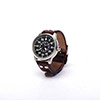
Laco Navigator Automatic pilot watch
$345.00
-

HP Sponsored product
The notebook you need becomes the tablet you want.
The next generation of PCs is here.
Introducing the HP Split x2. Featuring a unique detachable design, 13.3" diagonal touchscreen and dual batteries, it converts easily from notebook to tablet so you can work and play how you want to. Powered by the Intel® Core™ i3 processor and featuring Windows 8 optimized for touch.
- Manfrotto Active Backpack I $99.99 (fall 2013)
- Cinch camera strap $60
- Canon EOS Rebel T5i $799.00 (kit)
- Razer Blade laptop $1,799.99
- Audioengine 2 speakers $199
- Nexus 10 $429.99
- Samsung Galaxy S4 $199.99
- AIAIAI TMA-1 DJ headphone $199
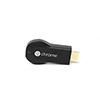
- Chromecast $35
- AeroPress coffee maker $29.99
- Razer Naga MMO gaming mouse $79.99
- Pebble smartwatch $149.99
- Shure SE215 $99.99
- Takeya Classic glass bottle, 16 oz. $17.99
The engineer
It’s not easy being powerful. You want as much control as possible: everything needs to be codeable, upgradeable, and customizable. At a desk or on the move, you need access to all the world’s knowledge and enough processing power to mash it up a little. Not a lot of gear, just the right gear, so you’re not caught off guard when your low-key study break turns into a frenzied all-night hackathon. And since not all hacks are electronic, you’ll also need the necessary equipment to whittle a tent stake, brew espresso, or start a fire. You never know, right?
-
Essentials
None of this netbook business; you need power. You never know when you’ll need to compile a Processing script, or jump into the library’s standing Team Fortress 2 LAN party. That means a serious, quad-core beast (possibly dual-booting Ubuntu) like the Razer Blade that can handle as much rendering as you can throw at it. Plus, you can crack it open for a hardware upgrade if it ever runs up against some code it can’t handle. And as long as you need something to carry it in, we recommend the Manfrotto Active Backpack and Cinch strap so you can keep your Flickr fresh.
-
-

Manfrotto Active Backpack I
$99.99 (fall 2013)
-
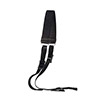
Cinch camera strap
$60
-

Canon EOS Rebel T5i
$799.00 (kit)
-

Razer Blade laptop
$1,799.99
Read our review
-
-
You can’t spend all your time in front of a laptop. So when you’re taking a keyboard break, you’ll want a tablet with a sharp screen and a battery strong enough to withstand your impromptu Black Mirror marathons. The Nexus 10 should stand up on both counts, and the Galaxy S4 will make the perfect backup for communication and Canabalt. Of course, the stock Nexus speakers are a little anemic on their own, so you’ll also want to bring along a pair of pint-sized desktop speakers to get the appropriate bass rumble, and a pair of low-end-friendly AIAIAI headphones in case your roommates are spoiler-averse.
-
-

Audioengine 2 speakers
$199
-

Nexus 10
$429.99
Read our review
-

Samsung Galaxy S4
$199.99
Read our review
-

AIAIAI TMA-1 DJ headphone
$199
-
-
Accessories
First: coffee. After that: more coffee. So much coffee, in fact, that you’ll want to keep an AeroPress on your person at all times to power you through those late-night coding sessions. The Chromecast also comes in handy, in case you need to show off some blueprints on your roommate’s flatscreen — not to mention that Pebble, which you’ve hacked to vibrate whenever someone pushes an update to your Github project. Then: a third cup of coffee.





- Apple iMac 27-inch $1,799.00
- Nexus 7 $229
- Wacom Intuos5 Touch large pen tablet ~$398.00
- Nintendo 3DS $169.99
- Apple iPhone 5 $199
- Mophie Juice Pack Air $79.99
- Herschel Supply Co. Little America backpack $89.99
- Pen Type-A $150
- Bose SoundLink Mini Bluetooth speaker $199.99
- LaCie Blade Runner by Philippe Starck $299.99
- Nocs NS2 Air Monitors $449
- Three by Three Seattle, Peg mighties magnets $9
- Warby Parker, Preston glasses in Whiskey Tortoise $95
- Field Notes $9.95 (three pack)
- Panasonic Lumix GX1 $299.99
- Black + Blum Eau Good water bottle $20
- Klipsch Image S4 headphones $79.99
- VOID V02-BLMU watch $190
- Belkin Mini Surge Protector with USB charger $24.99
The artist
Head-down in a studio, at work on a painting, or stringing together zeroes and ones; the artist’s canvas is more varied than ever. And often, it’s not just about one piece of art, or one medium. It’s about the infinite possibilities. Film, music, Rymdkapsel. But creation doesn’t just take time and tools — it requires the right state of mind. You need to surround yourself not just with the means to express, but also a means of inspiration. Work can be a thing of beauty, and beauty is often hard work. Here’s a good place to start both.
-
Essentials
When it comes down to it, most of your work is moving pixels around on a screen. As a result, you’ll want a very large screen — so large you could climb into it, Poltergeist-style, if the need arose. Throw in a Wacom board for sketching out those graceful curves, and you’ve got a full artist’s studio at your disposal. For the backpack-ready equivalent, we suggest the Adonit Jot Pro stylus with a Nexus 7 tablet, which should give you roughly the same feel as a ballpoint pen on a sketch pad, without all that messy ink.
-
-

Apple iMac 27-inch
$1,799.00
Read our review
-

Nexus 7
$229
Read our review
-

Wacom Intuos5 Touch large pen tablet
~$398.00
-
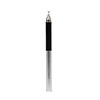
Adonit Jot Pro stylus
$29.99
-
-
There’s what you want, and what you need. Then there’s what you carry it all around in. That’s Herschel’s bright and stylish backpack, which looks as good on a hanger as it does chock-full of your stuff. There’s room for books, and for that 3DS for passing time between (and let’s be honest – during) classes. And Bose’s SoundLink speaker dispenses the perfect mood music anywhere, so keep a journal or two handy for whenever your newest best-idea-ever strikes. Back at your desk, it’s time to buckle down: Philippe Starck’s stunning Blade Runner hard drive is rugged and reliable for storage, and we can’t say for sure that it didn’t come from an alien mothership. And the Pen Type-A doesn’t just use your ink of choice — it doubles as a ruler for keeping your drawings sharp.
-
-
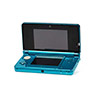
Nintendo 3DS
$169.99
-

Apple iPhone 5
$199
Read our review
-

Mophie Juice Pack Air
$79.99
Read our review
-
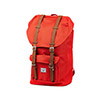
Herschel Supply Co. Little America backpack
$89.99
-

Pen Type-A
$150
-

Bose SoundLink Mini Bluetooth speaker
$199.99
-

LaCie Blade Runner by Philippe Starck
$299.99
-
-
Accessories
First things first — no looking sloppy. The VOID V02 watch can give you a touch of flair, and Warby Parker’s latest glasses will keep you looking sharp for the season. And since you go where your inspiration takes you, you might as well stay prepared: you’ll want Nocs’ NS2 Air Monitors for blasting mixtapes during a party; Black + Blum’s filtering water bottle in case inspiration leads you somewhere it probably shouldn’t; a few Field Notes journals for taking down ideas; and Panasonic’s tiny powerhouse GX1 camera for your mood boards back home. You’re style and substance, and this year, you’re ready for anything.
-
-

Nocs NS2 Air Monitors
$449
-
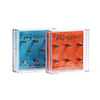
Three by Three Seattle, Peg mighties magnets
$9
-

Warby Parker, Preston glasses in Whiskey Tortoise
$95
-

Field Notes
$9.95 (three pack)
-

Panasonic Lumix GX1
$299.99
-

Black + Blum Eau Good water bottle
$20
-
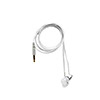
Klipsch Image S4 headphones
$79.99
-
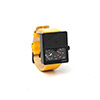
VOID V02-BLMU watch
$190
-

Belkin Mini Surge Protector with USB charger
$24.99
-
- Editors: Thomas Houston and David Pierce
- Writers: Jake Kastrenakes and Russell Brandom
- Lead designer: Scott Kellum
- Lead engineer: Steve McKinney
- Photographer: Michael Shane
- Art director: James Chae
- Wardrobe stylist: Kathryn Typaldos
- Product stylists: Adam Parker Smith and Nathan Smith
- Hair and makeup: Natasha Leibel
- Photo assistant: Andrew Frasz
22 Aug 15:14
Spider-Man Costume Hoodie
by Justin Page
firehosenerds will buy anything

The Spider-Man Costume Hoodie from ThinkGeek will allow you to look like you are wearing Spider Man’s actual crime fighting uniform, from the waist up. The hoodie, which comes equipped with a pull-over mask, is available to purchase online. Previously, we wrote about ThinkGeek’s Nyan Cat and Captain America hoodies.
Peter Parker’s early days were fraught with confusion and turmoil, not over his powers, no that was pure fun, it was all over his costume. As a man of science, he knew nothing of knitting fabrics, tensile strength of tight cotton over a polyester blend, but he had to start somewhere. Walk the path of Spider-Man with the Spider-Man Costume Hoodie, the very same style adopted by the newly dubbed super-hero before he was a master with his sewing machine.

images via ThinkGeek
22 Aug 15:13
New York Public Library Installs Photo Booths for Library Patrons
by Kimber Streams

The New York Public Library has installed photo booths at the Mid-Manhattan Library and the Stephen A. Schwarzman Building so patrons can take photos of themselves, share what they’re doing at the library, and show where they’re from. Users can label their photos with the reason for their visit using presets like “borrowing, exploring, learning, reading, researching, studying, visiting, [and] writing” and whether they live in the Bronx, Brooklyn, Manhattan, Queens, Staten Island, or outside the New York City region. The New York Public Library shares the best photobooth photos on its Flickr account.


images via NYPL Photo Booth
via Gothamist
22 Aug 15:09

Up next from the "could be cool but will inevitably get real creepy, real fast" research team at Microsoft comes the news that Project Spark will be able to use Kinect to bring your likeness and even your voice into the game.
Speaking at Gamescom, Team Dakota demonstrated how Kinect can accomplish facial motion capture and have it applied to an in-game character, how full-body captures could create new animations, and how audio could be recorded and modulated in a number of ways. You can just go on ahead and start counting the minutes until this is used for a particularly nerdy marriage proposal and/or breakup. (Though, breaking up by animated cutscene? Almost worth it.)
Team Dakota also revealed that invitations will by flying out to Project Spark's registered beta participants at the end of October for Windows 8 devices and in January for Xbox One owners. You can register for the beta here.
Revealed at E3, Project Spark is a user-creation driven game that Microsoft has described as an "open-world digital canvas that allows you to create your own games, stories, worlds, and share them with everyone." You can check out 40 minutes of Spark in action here.
Project Spark, Kinect create mini mocap studio in your living room
by Susan Arendt
Up next from the "could be cool but will inevitably get real creepy, real fast" research team at Microsoft comes the news that Project Spark will be able to use Kinect to bring your likeness and even your voice into the game.
Speaking at Gamescom, Team Dakota demonstrated how Kinect can accomplish facial motion capture and have it applied to an in-game character, how full-body captures could create new animations, and how audio could be recorded and modulated in a number of ways. You can just go on ahead and start counting the minutes until this is used for a particularly nerdy marriage proposal and/or breakup. (Though, breaking up by animated cutscene? Almost worth it.)
Team Dakota also revealed that invitations will by flying out to Project Spark's registered beta participants at the end of October for Windows 8 devices and in January for Xbox One owners. You can register for the beta here.
Revealed at E3, Project Spark is a user-creation driven game that Microsoft has described as an "open-world digital canvas that allows you to create your own games, stories, worlds, and share them with everyone." You can check out 40 minutes of Spark in action here.
Continue reading Project Spark, Kinect create mini mocap studio in your living room
 Project Spark, Kinect create mini mocap studio in your living room originally appeared on Joystiq on Thu, 22 Aug 2013 10:30:00 EST. Please see our terms for use of feeds.
firehose likes this
22 Aug 15:00
Silicon Valley Thinks It Should Live Forever
firehose' "Death has never made any sense to me. How can a person be there and then just vanish, just not be there?”
If it doesn’t make sense to Larry Ellison, who views death as “just another kind of corporate opponent he can outfox,” then it just can’t be right.'
A bunch of rich guys can’t imagine what the world would be like without them.
22 Aug 14:55
The indie game that 144 Android users bought and 50,000 pirated
by Adi Robertson
firehose'So far we have sold 1,114 copies on iPad, and 144 copies on Android. Whether this is a ‘good’ result is up for debate. Certainly, many many games are released every day that don’t sell anything close to these numbers. We knew very well that we were making a pretty esoteric game, in the sense that it is limited to iPads and tablets bigger than 7 inches and requires two players, so we didn’t exactly have high expectations. We also set the price relatively high - starting at $5, and currently on sale for $3.
We also didn’t really get any featuring from Apple for this release, which was too bad, but then they have really supported our previous releases so we can’t complain!
...
One narrative that kept appearing was “this is why you shouldn’t develop for Android”, or more bluntly “this is why Android sucks”. I find this attitude pretty silly. Let’s face it, all of these devices are just computers. Some of them have nice UI, some of them have nice product design, and they all certainly have downsides. It’s pretty sad when people associate electronics products with lifestyle choices, and judge others accordingly. These devices and companies are loaded with moral and ethical dilemmas, there is very little critical thought devoted to their place in the world, and the differences between them are negligible at best. Instead of saying “Product X is so much better than Product Y” or “Fans of Product X are blind/idiots/fanboys”, we should really be saying “How can we use this technology in a positive way?” On a more technical note, the idea that we “shouldn’t develop for Android” is kind of ridiculous. We made Gentlemen! in the Unity game engine, which makes building an Android version extremely easy. It probably took us an extra two or three days to make the android version (out of a 5 month develop cycle), so even if we only sell 200 copies total it’s still just about worth it.
...
One thing that helped me reach that conclusion was the location statistics for the pirated copies. About 95% of the pirated copies are being installed in Russia and China (and of those, mostly China). We didn’t even translate our Google Play store into Russian or Chinese, so it’s almost certain that the pirates just found our app on localized pirate sites. On the other hand, I’m glad our menu design is intuitive enough that you can play the game without speaking English!
...
One small thing that really surprised us - Google Play users are far more likely to leave reviews in the store...and very positive ones at that! Nearly 10% of the people who bought the game on Google Play have left reviews, averaging 4.8 stars. On iTunes, it’s more like 0.01%, and we’re only averaging 3.3 stars. Awww! So there you go. '
Victorian dueling game Gentlemen! was released in July for iOS and Android, with limited popularity but excellent reviews. Yann Seznec, director of studio Lucky Frame, says that over 50,000 people have downloaded his game on Android — far more than the 2,000 copies he hoped to sell overall. Unfortunately, only 144 of those people actually paid. Like many other mobile developers, Seznec is frustrated by his game's piracy rate. But in a blog post, he lays out the complicated factors around it, avoiding a simple condemnation of Android or the desire for free stuff.
"The number of pirates just confirmed to us that we made a game that people love to play," he writes. And 95 percent of the pirated copies went to Russia and China — countries he'd barely considered when selling the game. "The main problem is that most of these pirates probably exist in a commercial ecosystem where the Google Play Store does not even exist," he says. "It doesn't occur to them to buy any games from there at all."
- Source Yann Seznec (Gamasutra)
- Related Items gentlemen lucky frame android ios piracy gaming mobile game


22 Aug 14:49
Texas Lt. Gov. Calls Police To Get Relative Out Of Jail (AUDIO) - TPM
firehosenever go
TPM |
Texas Lt. Gov. Calls Police To Get Relative Out Of Jail (AUDIO) TPM Police in Allen, Texas released audio to Dallas television station KXAS Wednesday of a call made by Lt. Gov. David Dewhurst (R) to ask for the release of a relative from jail. Ellen Beavers, who Dewhurst described at difference points in the recording as a ... Lt. Gov. Dewhurst call to police draws criticismYNN, Your News Now Lt. Gov. Dewhurst Calls Police After Relative's ArrestTexas Tribune Texas Lt. Gov. David Dewhurst calls Allen police to get relative out of jailDallas Morning News KUT News -Fort Worth Star Telegram -Austin American-Statesman all 45 news articles » |
22 Aug 14:42
Zoo Tycoon aiming to have 'the most beautiful animals, zoos in gaming'
by Alexa Ray Corriea
Frontier Developers is aiming to make the animals and zoos of the new Zoo Tycoon the most beautiful and lifelike of any previous Zoo title, the developers told Polygon during a demo of the title at Gamescom today.
According to Microsoft Studios manager Jorg Neumann, in additional to beautiful animals, the development team wants to make a zoo-building simulator that is accessible to all types of players, as well as create an engaging multiplayer experience and allow players to connect more intimately with animals using the Kinect. Players will be able to use the Kinect's gesture controls to pet, feed and make faces — even dance — with their animals, creating a "deeper connection than ever before," Neumann said.
Frontier's chief creative officer Jonny Watts, whose background includes studies in biology, said the team has worked hard to make sure Zoo Tycoon's animals are as close to life as possible in behavior and looks.
"With the Xbox One, we've improved their looks," he said. "They really are the most beautiful animals in gaming."
During a demo of the game's Freeform sandbox mode, we watched as whole pieces of zoo exhibits were set down in an area. Walkways between the areas automatically built themselves, depending on how close together areas were placed. Neumann noted that Frontier wanted to create sets that were "beautiful right out of the gate." Once they are placed, players can customize and tweak them to suit their tastes.
Watts said there are two main priorities every Zoo Tycoon player should have: make sure the animals are happy and make sure the guests are happy. A zoo full of happy, healthy animals will attract more visitors and earn more revenue.
Zoo Tycoon will also feature a challenge mode where players can complete strings of tasks around their zoo, alone or with a friend, and a "hardcore" campaign mode, as Neumann described it. Players will also have access to a Zoopedia, a massive store of information on the game's 101 species and 176 variants powered by National Geographic. This information can be viewed in the game itself or on a tablet via Zoo Tycoon's SmartGlass integration.
In multiplayer mode, players can invite friends through Xbox Live into their zoo. The game will also feature cloud saving, allowing for visiting players to pick up tasks and participate in challenges in friends' zoos.
Zoo Tycoon will launch exclusively this November for Xbox 360 and Xbox One. But once upon a time, Frontier was rumored to have another zoo game in the works: Microsoft Zoo. According to Neumann and Watts, Microsoft Zoo wasn't a game but a prototype with the internal name Zoo Next.
"[When we got together] in 2008, the first thing we talked about was making a zoo game," Neumann said. "We basically made Kinectimals out of the very early prototype of [Zoo Next]. Then Disney came to us and said, 'Hey, make us a Disney game,' and we made Disneyland Kinect Adventures. And then we finally got back to the game we wanted to make, and that became Zoo Tycoon.
"It's definitely a little connected, and we learned a lot along the way," he added. "We only worked on [Zoo Next] for about eight months."
22 Aug 14:40


Film: Movie Review: The Grandmaster
by A.A. Dowd
firehose"during a particularly Wongish passage, he exchanges letters with a gorgeous combatant (Zhang Ziyi) with whom he once sparred. Where the filmmaker really cuts loose is in the glorious fight scenes, as expertly choreographed as the ones in a Zhang Yimou movie, but also infused with the intimacy of those long, seductive strolls in In The Mood For Love."
There are few filmmakers, great ones included, capable of overcoming the banality of the biopic, a genre in which drama is dubiously generated by playing connect the dots with the events of a real person’s life. Wong Kar Wai, the Hong Kong director of Chungking Express and In The Mood For Love, isn't immune to the limitations of this cinematic approach; one of the medium’s most expressive visionaries is done in by the burden of fidelity, a duty to stick to the trajectory of his subject’s story. Said subject is Ip Man, the martial-arts legend best known—in the West, anyway—for training Bruce Lee. His life has been explored by several recent films, including a pair of Hong Kong smashes starring Donnie Yen. The Grandmaster, which casts Wong regular Tony Leung as Ip Man, is a moodier take on the material, with a greater emphasis ...
Read more
firehose likes this