Shared posts

27 Aug 20:30

'Lobo' Writer Marguerite Bennett Responds To New Design Backlash

by Joseph Hughes

You may have missed it as the internet continued to rage about this, but last Friday on its website DC Comics revealed four proposed looks for a new version of Lobo. Designed by Kenneth Rocafort, the distinctly svelte, sinister and maybe even sexy Lobo looks very much like the kind of standard sci-fi character you’d see from Top Cow (where Rocafort made his name), and is a dramatic shift away from the over-the-top ’80s biker originally conceived by Keith Giffen and Roger Silfer and visually defined by Simon Bisley. In fitting Lobo fashion, things got ugly, which led to Marguerite Bennett — who’ll be writing the Lobo one-shot — defending the book and herself before anyone’s even had a chance to read it.

Set to debut in September during the publisher’s “Villains Month” campaign, the new Lobo is meant to affirm himself as the true Lobo, with the classic version turning out to be an imposter. In other words, Lobo hasn’t been redesigned so much as he’s been replaced (at least, that’s the implication. ComicsAlliance Lobo expert Andy Khouri fully expects the original “Main Main” to make short work of the new guy, imposter or not).

Here’s DC Comics Editor-in-Chief Bob Harrass on the change:

The Lobo you’ve seen so far in the New 52 is not who you think he is. In this one-shot, you’ll be introduced to the real Lobo. A ruthless killer, Lobo is on a quest to kill the man who has taken his name.

In this design, Ken updated Lobo’s facial tattoos and weaponry by adding laser edges to his blades and gloves that’ll give him extra strength with their mechanical usage. In the end, Ken transformed Lobo into a lean, mean killing machine.

Now, if that confuses you at all, you’re not alone. The new look was erroneously reblogged here and there, often without the crucial fact that the new Lobo is a wholly separate character rather than another controversial New 52 revamp a la Harley Quinn. The other guy is still out there somewhere, but the prevailing (mis)understanding is that he’s been supplanted by this new and seemingly without-any-sense-of-irony-or-fun version of the fan-favorite space bounty hunter (this may yet turn out to be the case by the end of the issue, of course).

Naturally, this caused a bit of angst among fans of the original Lobo. In a post on her Tumblr that has since been deleted, Bennett addressed the negative reaction:

On Lobo 

Dear Internet (which has called me some very unendearing names today), 

I was not in charge of the Lobo redesign. Ben Oliver was not in charge of the Lobo redesign. 

I wrote my script, and after it was completed, I was shown what the new character would look like.
For the record, the images you’ve seen—Ken Rocafort’s design and Aaron Kuder’s cover—are not what Lobo actually looks like in the book. I respectfully disagree with the decision to release that image. 

When you go to get your comics on Wednesday, Sept 11, before you buy it (if you buy it), pick up Lobo and read the first four pages.

You can hate me by Page Two.

But if I do not have your attention by Page Four, you don’t have to read something of mine ever again.

Bennett defends the work of both herself and the issue’s artists, Ben Oliver and cover artist Aaron Kuder, by asking — quite understandably — that people simply look at the book before passing judgment. She also took to Twitter to discuss the new character, saying the one Harass proclaimed was NuBo’s final design was not an accurate reflection of what he’ll look like in the book:

Bennett co-wrote Batman Annual #2 with Scott Snyder, who previously served as her writing teacher and was apparently the one who brought her to the attention of DC Comics’ editorial staff. But this will be the first book she’s written completely on her own, making her last line, “But if I do not have your attention by Page Four, you don’t have to read something of mine ever again,” a brave one, and one that I imagine will give some readers further incentive to give a book a try that they otherwise may not have.

Lobo #1 goes on sale September 11 at your local comic shop and digitally via Comixology.

27 Aug 18:53

Just Thinking About Science Triggers Moral Behavior

by Soulskill
ananyo writes "The association between science and morality is so ingrained that merely thinking about it can trigger more moral behavior, according to a study by researchers at the University of California Santa Barbara. The researchers hypothesized that there is a deep-seated perception of science as a moral pursuit — its emphasis on truth-seeking, impartiality and rationality privileges collective well-being above all else. The researchers conducted four separate studies to test this. In the first, participants read a vignette of a date-rape and were asked to rate the 'wrongness' of the offense before answering a questionnaire measuring their belief in science. Those reporting greater belief in science condemned the act more harshly. In the other three, participants primed with science-related words were more altruistic."

Share on Google+

Read more of this story at Slashdot.


27 Aug 18:42

TV: Newswire: Joshua Jackson and Maura Tierney join Dominic West in Showtime's The Affair

by Mike Vago

Since it was announced in June that The Wire's Dominic West would be headlining Showtime's The Affair, the network has been quietly building a solid cast for its drama about marital infidelity, signing Maura Tierney as West's soon-to-be-long-suffering wife, and Ruth Wilson as the also-married object of his affections.

This week the show added Fringe and Dawson's Creek alum Joshua Jackson as the fourth member of the love trapezoid. Jackson plays "a hard-edged cowboy who manages a ranch" on the bitter unforgiving prairies of... Long Island. West, Tierney, and their four kids go on vacation in that land where the buffalo roam, the Hamptons, and West and Wilson discover they have an instant connection, presumably while the deer and the antelope are off playing in the distance. 

We still haven't ruled out the possibility that this is a Fringe spin-off, and this Long Island cattle ...

Read more


27 Aug 18:40

"When my daughter Emmy was 3 years old..." #supermeatboy

by djempirical

When my daughter Emmy was 3 years old, she was referred to both speech and occupational therapies by her doctor because she was falling so behind in both areas. At her first OT assessment taken at 3 years 4 months, her crayon holding and drawing skills were tested at an 18-month-old level. Around the same time, she seriously got into watching Super Meat Boy gameplay and got obsessed. One of the first things her therapist wanted her to work on was drawing squares. How perfect! It took lots of practice but around the time when she turned 4 her first squares wound up being endless Meat Boys and Bandage Girls. At first she would go through 50+ pieces of copy paper a day, simply drawing pictures of them that took up the entire page over and over. 

Soon she would learn to draw them a little smaller so she could start telling us stories about what was going on in the picture.

(one of her very first attempts at Dr. Fetus kidnapping Bandage Girl)

(proudly showing off her work)

In only 1 year and 4 months at age 4 1/2, she “graduated” from OT and was caught up to at or above age level. From an 18-month-old’s drawing skills to a 5-year-old level in such a short time was surely the result of her passion for these characters. She needed something to love to draw to help her catch up.

Now she will be 6-years-old in a little over a week, and it’s hard to believe she ever had a problem with holding a crayon. Drawing is now her biggest strength and she even won the “class artist” award this June in pre-school. Now she draws lots of characters and real people alike still going through 50+ sheets of paper a day, but now they are much more colorful and expressive. I especially love the Dr. Fetus she draws now, and it’s what prompted me to make this post when I thought of those early drawings and how far she’s come.

Super Meat Boy also now leaves his little “sauce” trails (as she calls it) everywhere now. Bandage Girl is not always being kidnapped also btw. Sometimes they have a picnic. Sometimes they are getting married. Sometimes they are just out on a sunny day.

I’m saving everything so one day she can realize how much these guys changed her life so fast.

Original Source

27 Aug 18:38

Canada's Vancouver Is Better Than Ours!

by Alex Falcone

Did you guys know Canada has a Vancouver too? And it's WAY better than ours. We should build a giant Columbia River Crossing that skips Washington altogether and lets off in British Columbia.

Before I went I couldn't have told you if British Columbia was more like Narnia or actual Columbia. I'm happy to report it's like the former, but more technologically advanced. In fact, the technology in Vancouver was so impressive, we need to NAFTA some of their ideas ASAP.

[1] Credit Card Machines
Every restaurant I ate at had these great portable credit card machines that they brought to our tables. It included a brilliant option for tipping either by amount or percentage, which advances my goal of never learning how to do long division.

[2] Money Business
If you prefer cash, you're in luck too. Canadian dollars, despite being worth only 96% of what our dollars are worth (plus foreign transaction fees), are far superior dollars. Brilliantly colorful with transparent windows on bigger denominations and including pictures of animals (cute!) and even kids playing hockey (adorable!).

[3] Jaunty Crosswalks!
Look at this American crosswalk guy:

He's all business. Head down, he's got places to go and people to be rude to.

Now look at this Canadian crosswalk:

He's so jaunty! His head is back, his arms are up, everywhere he goes he says "Haters gonna hate!"

You can't cross a street angrily in Canada.

[4] Rollerblade Lanes
Vancouvrians love their rollerblading! They love it so much, they dedicate separate lanes for ice-less skating. This isn't so much a technological accomplishment as an emotional one, with a whole city agreeing to not make fun of people for rollerblading.

[5] SkyTrain
Instead of the painfully slow MAX (GroundTrain), Canadian light rail is so light it's floating in the sky! But the height isn't the impressive part, it's that SkyTrain is entirely driven by robots! In addition to being incredibly awesome, it also means trains arrive every couple minutes. That's unfathomable in Portland given that it takes more than a couple minutes for each MAX to adjust itself at every stop before opening its doors.


I know it's going to be hard to find funding for a CRC all the way to the better Vancouver, but it'll be worth it. Even with the fights over a SkyTrain lane AND a rollerblading lane.

[ Subscribe to the comments on this story ]

27 Aug 18:36

"Scooby-Doo" Returning to Big Screen With All-New Animated Movie

Warner Bros. has turned to "Short Circuit" screenwriter Matt Lieberman to help bring Scooby, Shaggy, Velma and the gang back to the big screen in an all-new animated feature.
27 Aug 18:35

In memory of

27 Aug 18:35

Palmistry

27 Aug 18:35

Opinion: XCOMs prove AAA game development is high-risk gambling

by Russ Pitts

Making games is hard. Making AAA games is close to impossible.

The world of AAA development revolves around big risks and potentially big rewards. It is not an investment, for publishers, so much as a gamble. The more money they put on the table, the more they can potentially make. A hit game can make hundreds of millions. The biggest hit games make closer to billions.

Considering the height of the stakes, publishers keep their secrets close to the vest for fear of impacting public reception of the final products. Getting a look at how the sausage is made is extremely rare. Rarer still is an opportunity to get such a look inside the development of two separate, but connected games.

This week, we got that opportunity, with the publishing of our second deep feature on the two modern takes on the XCOM franchise.

Chris Plante has the story on the development of The Bureau: XCOM Declassified. It begins just prior to the start of work on the game, in 2006, offering a perspective on the creation of Take Two's publishing arm, 2K Games, and how that led to the creation of a game using the XCOM intellectual property (IP).

[I]n 1998, Take-Two purchased BMG Interactive. BMG had just released DMA Design's Grand Theft Auto, a minor hit on the PC.

In 2001, the same team, under the name Rockstar Games, released Grand Theft Auto 3. The game, the first open-world crime simulator, was a colossal financial success; the series would go on to make both Rockstar and Take-Two very wealthy over the course of multiple sequels.

As a result, in the mid-2000s, Take-Two was suddenly flush with cash. Brant and his board had a plan to essentially recreate what had worked to make them rich to begin with. They'd buy some of the industry's best talent and fund them - with minimal input - to create massive hits.

Between 2005 and 2006, Take-Two Interactive spent over $80 million to acquire and construct a suite of developers, among them, Irrational Games in Boston and Firaxis Games in Baltimore.

What follows is a tale of creative risks, abject failures, concept redirects, personnel layoffs, political machinations and frenzied attempts to create a compelling work of art under often excruciating circumstances. It is a remarkable, yet remarkably ordinary story of AAA game development.

Remarkable because of its absurdity, such as this description of an original prototype:

One pitch imagined Earth post-invasion and full of resistance fighters. The intention was to create scenarios in which humans were outclassed, outmatched and outsized.

A source describes one storyboard pitch in which a hero - who resembled Foo Fighters lead singer Dave Grohl - placed boom boxes on plinths in a city square, inspiring humans to rise up against their alien overlords.

Yet ordinary because this sort of thing happens all the time in games development.

By very virtue of the fact that the teams can be so large (and spread out between multiple continents) and the budgets so large (single-digit millions of dollars for "simple" games, and triple-digit millions for some AAA titles) means that the logistics of managing a video game production alone can make creating such a game as complex - if not more complex than - any project in the world. With the possible exception of NSA data collection. Or rocket launches. (Although some commercial space ventures actually cost less than some AAA games.)

This very complexity, though, is what can open up to the door to dizzyingly creative accomplishments. Modern AAA games can be outright astounding, technologically, and can engage the hearts and imaginations of people around the world. This is no small part due to how brilliant they can look and how exciting they can be to play, with both visual brilliance and pulse-pounding, "cinematic" excitement being among the more expensive aspects of game production.

Yet this complexity comes at a cost more ephemeral than the dollar amount. It also comes at a cost of certainty.

With so many moving parts, by the time a game has been finished there's no guarantee it will be any good or even what it was intended to be in the first place. The recent rise in popularity of so-called "indie" games, created by small teams and led by auteurs has perpetuated the myth of the modern AAA game as being developed along similar lines. And marketing teams love nothing more than to wheel out studio heads and creative directors to keep this myth alive.

There's no guarantee a game will be any good or even what it was intended to be in the first place

With this model, a single creative driver pushes a game from concept through execution, knowing (to some degree) what it will be and how it will be made, seeing (sometimes literally) the players' experience in his/her head and working to perfect that vision.

Rare is the AAA studio that can be profitably driven by the creator auteur and survive. 2K's own Irrational serves as the exception proving the rule. Ken Levine has become a legendary figure in game development circles, not just for his remarkably diverse background and compelling creative vision, but also owing to the fact that he has twice now driven a AAA project to completion without seeming to compromise his own intentions.

Chris Plante's recent profile of the creator paints a picture of a man who knows he's bucking a trend, but just doesn't care. Nor does it appear, in my opinion, he gives too much thought to Irrational's growing reputation for burnout culture and his own public image as an uncompromising diva.

The success of BioShock and BioShock: Infinite notwithstanding, the reality in AAA is that games are designed by teams, not auteurs, and those teams often change - sometimes dissolve entirely and reconstituting — throughout the course of development. It is not at all uncommon for a AAA game to radically change over the course of it's making or even for the creative leaders on the project to rotate or depart.

This is the process we see in action throughout the development of The Bureau, and it's made worse by the forced collaboration between two teams divided by five time zones and the largest ocean on the planet. When The Bureau comes stumbling toward the finish line, you almost expect it will not be well-received. And if the current Metacritic average for the game is any indication, it hasn't been. (Though Polygon's own reviewer gave it a 7 out of 10)

The tale of The Bureau's development becomes truly amazing, however, when compared to the development of its "sister game," XCOM: Enemy Unknown.

Polygon was given an in-depth look at the development of XCOM: Enemy Unknown last year, as well as a profile of it's lead developer Jake Solomon, which I wrote myself.

In that story we learn that Jake Solomon had been a fan of the original XCOM as a young man, and then lobbied hard to make it Firaxis' next game after he was hired. When he was finally given the chance to build a small team and actually make the game, he failed. Spectacularly. Twice.

"It was a pretty big setback," Solomon says. "It was a pretty big failure. That wasn't the end of it, either. ... You have this big team of developers who you love, who you shake hands with, who trust you and give you all this time and passion to work on these ideas of yours, and then you've got this company that's relying on this big title, and then you've got all these people at the publisher, and they basically are all looking at you."

Solomon's plane had taken off. His passengers were sitting behind him. The plane was on fire.

Looking back on the vertical slice now, Greg Foertsch can't believe how terrible it was.

"It was so bad," Foertsch says. "We made the '94 game now ... It just didn't feel right. We changed the movements and all that. Going back now, I just don't remember it - when I played it the first time around - being quite as painful."
Solomon admits now that the game he had envisioned was overly complicated.

"It's hard to even describe now," Solomon says. "I don't know what I was thinking. It was the original game, and then over the top of that I had put ... soldier abilities ... a cover system ... new alien abilities ... new weapons. It was ... incredibly complicated - not complex. Complex is fun, complicated is bad. This was a very complicated game. It was more complicated than the original."

Over the course of almost a decade Firaxis tried and tried again to make their version of XCOM into something worth selling, and that they eventually succeeded owes as much to that studio's time-honed talent and ability to engineer logistical success as it does to Solomon and team's raw creative ability.

But the success of XCOM: Enemy Unknown is also due to a rare element in the games industry: A patient and supportive publisher. Ironically, probably the same factor responsible for much of The Bureau's failures.

In both cases, 2K invested money and time in a creative team and trusted in that team's vision. In the case of XCOM: Enemy Unknown, the gamble paid off, big time. The game has a Metacritic average of 90% across all platforms and has already received one release of DLC (another has recently been announced). Sources also suggest a sequel seems likely.

On the other hand, there's The Bureau. It remains to be seen what will become of this game, and whether or not it will live longer than it takes for existing copies of the game to slink towards the bargain bin, but the future looks considerably less bright for it in spite of the fact that its development can hardly be said to be radically different than it's sister game's.

The combined picture both of these stories present is one of the immense complexity of developing AAA games, and the fact that even with the best intentions, the most competent game makers and a proper budget, there's no guarantee of making a great game. Rather, when it happens, it can be serendipity as much as anything else.

Yet in 2K we see an unusual publisher in today's industry, one seemingly willing to take bold risks and invest in creative challenges rather than pruning back creativity to focus on sure things.

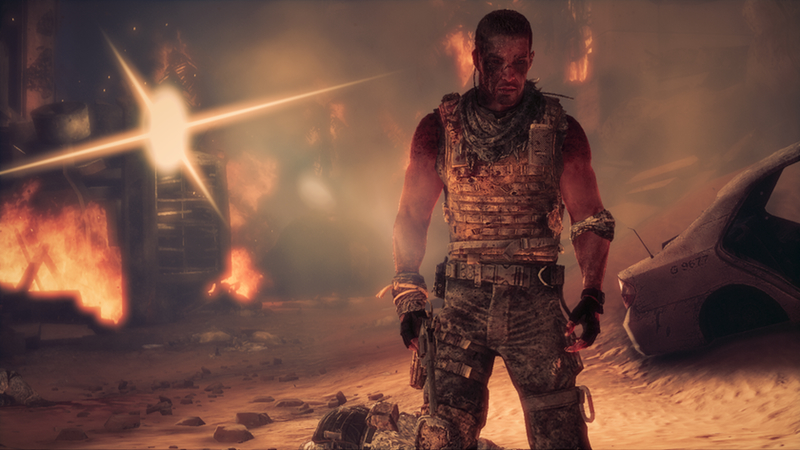
Sometimes this commitment to taking artistic risks crashes and burns, as illustrated in the story of critically lauded, but commercially challenged Spec Ops: The Line. Here, too, 2K games invested in a team of creators with a vision of making the shooter into something approaching art.

Aftermath_800

At one point, the game's developer, Yager, argued that in order to remain true to the story, the main character had to die. This would preclude publisher 2K from eventually making a sequel to the game, which many publisher's consider a prerequisite before investing in new, or re-booted IP. But the Yager's surprise, 2K went along. The publisher was committed to allowing the developer the creative freedom it wanted in order to make they game 2K had asked for.

The degree to which 2K and Yager succeeded in making art with Spec Ops may be up for debate, but it's unquestionably a welcome development to find in 2K a publisher ready and willing to take such risks.

In 2K we see an unusual publisher, one seemingly willing to take bold risks

The flip side is that nothing is certain in entertainment, and less so in taking creative risks than with playing it safe and churning out sequels to established brands. Publisher 2K has been pouring dollars into its creative teams, allowing them the freedom to take those creative risks.

In the case of the two XCOMs, we see the risks inherent in this approach, and the absolute lack of certainty that comes with playing to win the high-stakes game of AAA hit-making.

27 Aug 18:31

Endless Space dev expanding with fantasy sequel and roguelike side-project

by Griffin McElroy

Endless Space developer Amplitude Studios is taking its 4X strategy games to some interesting places with its upcoming pair of quasi-connected titles, Endless Legend and Dungeon of the Endless.

As you've probably already deduced by the number of times "Endless" appeared in that last paragraph, the three games are part of the same franchise, albeit one that's beginning to mutate across genres and themes. Endless Space, which launched last year on PC, tasked players with achieving intergalactic dominance with their budding space empire. Endless Legend shares many mechanical elements with the last title, but has shed its space setting for a classical fantasy realm.

During a hands-off demo at Gamescom 2013, Endless Legends' similarities and differences with its predecessor were highlighted. Players are still adhering to the 4X creed of "explore, expand, exploit and exterminate," building up a capital city and army and wielding shrewd tactics to achieve dominance in certain fields. Players will have to collect and mete out four resources returning from Endless Space: Food, Dust, Industry and Science.

Similarities start to dry up there. Endless Legend takes place on a hex-based map, where your army is represented by a comically large hero avatar, and your city can be expanded in all six directions, terrain permitting. Fog of war is in effect, dynamically changing depending on the height of the terrain surrounding your army; height plays a major role in Endless Legend, also affecting combat scenarios, as long-range troops have the edge on higher ground.

The game looks and, in a few ways, operates similarly to Civilization

The game looks and, in a few ways, operates similarly to Civilization. As your city accrues resources, you can spend them to build new structures and expand, assuming you have the citizens to fill your new slots. Those upgrades can be combined if you can arrange them in a certain pattern; for instance, placing six residential districts around your main city turns it into a metropolis capable of supporting much more life.

As your city expands, so does your owned region; a territory that you can peruse for rare resources and build certain helpful structures — like fog of war-clearing watchtowers — on. These structures don't have to be part of your core city, either; they can be distant warning outposts, so long as they're built in your region.

Most of the game's features, like players' abilities to diplomatically align themselves with other major and minor factions, or the battle system which blends real-time and turn-based combat, weren't demonstrated. However, the game's transformation into something a bit more accessible (even to a strategy novice like myself) was evident after just a few short minutes with the game.

5628_564932356896755_1201069884_n__640px

Dungeon of the Endless, the second title coming from Amplitude, attempts to blend the fiction of the two other Endless games together in arguably the weirdest way possible. You control a survivor of a downed prison space ship, which has crashed headfirst into a fantasy dungeon, suggesting the Endless-verse is one without narrative boundaries.

It's a far cry from the two games it links, though: Dungeon is a tower-defense roguelike, tasking you with exploring that dungeon while building structures to prevent waves of monsters from swarming the ship you rode in on. It's still very much about resource management; you can use food to strengthen the heroes you find during your quest, industry to craft turrets and dust to turn on the lights in a given room, preventing monsters from spawning in them.

It's a strategic experience with a climactic finale, as upon finding the exit of each floor of the dungeon, you have to retrieve the core from your downed vessel and run it to the next floor — but in doing so, you shut down the towers and lights you've been powering, turning the game into a mad dash for the finish.

It's got some great genre and game inspirations (FTL: Faster Than Light was an inspiration, and it shows) that are genuinely exciting. The project started out as a way for the developers to blow off steam after finishing Endless Space's latest DLC; but it could end up being something much more than that.

27 Aug 18:28

Unlimited vacation time is better in theory than in practice

by Commentary
firehose

'At a time when many top-level professionals view the traditional 40-hour work week as a “part-time” job that amounts to “career suicide,” according to a 2011 report by the Center for American Progress (pdf), unlimited vacation time may be more confusing than helpful. Many people, of course, could benefit from more time off, but employees need guidelines. A mandatory minimum of two weeks of vacation might be a good starting point.'

The problem at HockSnot was never "too many choices". It was always "every choice is wrong." Every day you opted to take vacation was the wrong day to take vacation, and that was made clear when someone came back from vacation. So there ended up being two camps:

- People who took no vacation for fear of losing their job.
- People who knew their department would fall over without them and took vacation frequently out of spite.

'Some employees, it should be noted, are perfectly happy to live and breathe work—in fact they seek it out. The Wall Street Journal recently ran a story about Enplug, an advertising-technology company based in Los Angeles, that rents a house where 10 employees live and work together. “This practice is not uncommon, as many startup companies have combined their workspace and living space to save money and increase production,” notes the Journal.'

Shadowrun~

Scared to test the waters.

It is a vivid illustration of our 24/7-work culture that most Americans do not use all of their allotted vacation days. This is especially sad considering the large number of Americans who are not eligible for paid time-off; the US is one of a few countries that lacks a federal law requiring vacation time. Even those employees who do take time off from work are still largely tethered to the office.

Numerous studies have found that time away from the office and more frequent vacations lead to greater productivity, improved job performance, and lower levels of stress. Time off from work gives us an opportunity to rest and recharge, which in turn makes us more creative and resourceful once we’re back on the job. Most of us already know this from personal experience but now there’s data to back it up (paywall).

Some companies are beginning to take a pro-holiday stance. Netflix, Best Buy, and a growing number of technology firms have begun to offer unlimited vacation time to their employees. “It seemed silly, really, to track vacation time when we don’t track the amount of time employees work after the normal workday,” Vivian Vitale, executive vice president of human resources at Veracode, the application security company that offers this perk, told the Boston Globe recently.

The problem? Most employees are not taking advantage of it.

Unlimited vacation time may sound wonderful in theory, but in reality, less is more. Too much choice is restrictive and confusing. Sheena Iyengar, a professor at Columbia Business School, calls this phenomenon “choice overload.” Some of her past research shows that when employees are deluged with too many mutual fund choices it overwhelms them to the point of paralysis. They become risk-averse or unable to make a decision, which leads them to either make a low yielding investment choice—or, worse, not sign up at all.

Similarly, when vacation time is offered as an unlimited resource many people decide not to take advantage because it’s too hard to figure out the right amount to take. At a time when many top-level professionals view the traditional 40-hour work week as a “part-time” job that amounts to “career suicide,” according to a 2011 report by the Center for American Progress (pdf), unlimited vacation time may be more confusing than helpful. Many people, of course, could benefit from more time off, but employees need guidelines. A mandatory minimum of two weeks of vacation might be a good starting point.

Some employees, it should be noted, are perfectly happy to live and breathe work—in fact they seek it out. The Wall Street Journal recently ran a story about Enplug, an advertising-technology company based in Los Angeles, that rents a house where 10 employees live and work together. “This practice is not uncommon, as many startup companies have combined their workspace and living space to save money and increase production,” notes the Journal.

“We don’t try to separate work life from our personal life,” says Nanxi Liu, the 23-year-old co-founder and CEO of the company. “It’s a little bit cultish.”

For a particular time of life, in your 20s, say, completely combining your personal life with your professional one could work out just fine. You’re young, you don’t have many responsibilities yet: no mortgage, no children, and no spouse. You’re also highly motivated and so working in this kind of environment could be fun and creative—not to mention a great cost saver.

The trouble is that it could develop into an unhealthy lifelong pattern of workaholism, where people’s entire lives revolve around the office. It will be hard for those people to form and maintain good personal relationships. It will be a detriment to the neighborhoods in which they live because it leaves them no time to participate in community building activities. It could also literally make them sick. On top of that, it is not likely to be an effective or efficient way to accomplish innovative and creative work.

For maximum productivity combined with personal well being, we need more time-outs, and more time away from the office. Employers can help by demanding that people take vacations, and modeling this themselves. But allowing unlimited vacation time will only work if reasonable norms are established and acted on by executives and managers as well as their subordinates.

Follow the MIT Sloan School of Management on Twitter @mitsloanexperts. We welcome your comments at ideas@qz.com.


27 Aug 17:57

Film: Newswire: The Mick Jagger-produced James Brown biopic finds its James Brown

by Mike Vago

Having already refused to lose as Jackie Robinson, Chadwick Boseman is on board to play Mr. Dynamite, the Hardest Working Man in Show Business, Mr. Please, Please, Please, Soul Brother #1, the Godfather of Soul, James Brown. Producer Brian Grazer has been trying to make a movie about Brown for a decade, but didn't get a green light until The Help director Tate Taylor signed on. Noted Brown aficionado Mick Jagger is also on board as a co-producer.

The film will presumably chart Brown's rise from an impoverished childhood, through a brief jail stint, to the pinnacle of success as arguably the most influential American musician of the 20th century. Less certain is whether the film will trace Brown's fall, as the notoriously controlling bandleader gradually lost control of his own personal life and endured later years marred by problems with drug abuse and domestic violence.

Also ...

Read more


27 Aug 17:57

Dance, Magic Dance: A Treasury of Awesome Labyrinth Fan Art

by Rob Bricken

Dance, Magic Dance: A Treasury of Awesome Labyrinth Fan Art

You remind me of the babe. You know, the babe with the power. I assume that's why I was inspired to round up some of the best fan art on the web inspired by Jim Henson's 1986 fantasy movie, and starring a young Jennifer Connelly, a perfectly cast David Bowie, and an intimidating bulge in Bowie's tights.

Read more...


27 Aug 17:57

Music: Great Job, Internet!: The new Nine Inch Nails record is streaming online in its entirety now

by Marah Eakin

The new Nine Inch Nails record isn’t due out until next Tuesday, but it’s streaming in its entirety online now. Hesitation Marks is available now on the band’s iTunes artist page for antsy Reznor fans, and while the record might not have the flair of, say, a young Kurt Vile covering some old NIN material, it’s still pretty damn good. Guest performers on the record include Fleetwood Mac’s Lindsey Buckinham, King Crimson’s Adrian Belew, and bassist Pino Palladino, who as played with both The Who and D’Angelo.

The record’s lead single, “Came Back Haunted,” is below, and super stoked NIN fans can pre-order Hesitation Marks now.

Read more


27 Aug 17:56

This fake Batman/Superman trailer is so great even Batfleck looks good

by Rob Bricken

Why wait for an actual Batman/Superman movie trailer when you can make one yourself? That's what Soylent Brak 1 did, complete with Ben Affleck as Batman and Bryan Cranston as Lex Luthor (and a special guest as Alfred). And it looks awesome.

Read more...


27 Aug 17:53

It's 'scary' watching aspects of her fiction come to life, Margaret Atwood says - The Globe and Mail

by OnlyMrGodKnowsWhy
8d2cc425146099670fad12b892654e24
OnlyMrGodKnowsWhy

(Via @RussianSledges)

Ten years ago, Margaret Atwood ended the world, and in rather spectacular fashion. Oryx and Crake was a revelation: a harrowing vision of society gone terribly wrong, and a reminder that Atwood, author of the classic dystopian novel The Handmaid’s Tale, is one of the best speculative-fiction writers alive. The first volume in a trilogy, it was followed by The Year of the Flood, which, in a bit of remarkable narrative showing-off, offered a completely different story that unfolded concurrently with Oryx and Crake. With the publication of MaddAddam next week, she concludes her epic account of what happens in the wake of the end, after her “waterless flood” has scrubbed the planet clean, leaving behind only a handful of people – or, at least, only a handful we know of – to survive in a landscape populated by fearsome pigoons (angry pigs genetically altered to grow human organs).

More Related to this Story

The trilogy is one of the most impressive achievements in contemporary literature, and stands as a grand document of humanity’s greatest failings but also a moving celebration of our greatest possibilities. They are frank and ugly books but also funny and beautiful. And for all their SF fireworks, all the world-building pyrotechnics, they are quietly realistic stories that recognize that any future the world can hope to have will be one of adaptation and synthesis, of our learning to live better with those around us to make the most of the diminished circumstances in which we’re likely to find ourselves.

On a recent hot and sunny afternoon, around the corner from her home in Toronto’s well-appointed Annex neighbourhood, Atwood met with up with me at a bustling café patio – to which she arrived an hour late, though to her credit, she had phoned 30 minutes into my waiting to belatedly warn me she was running behind. At times during our conversation – her first with a Canadian newspaper in anticipation of the publication of

MaddAddam – she was playful, quizzing me, for instance, on the reasons Stephen King might have called his hotel in The Shining “the Overlook.” At other moments, she could be quasi-adversarial, pointedly ignoring questions that didn’t interest her, answering instead those she wished had been posed.

Throughout, she offered her own revealing takes on the big themes that inform her work. Among them: feminism, utopia, and apocalypse. She also stooped to ponder whether someone like her, whose books have predicted so much that has come to pass, is a prophet. Atwood says not; future generations may beg to differ.

Toward the end of MaddAddam, a character complains that she hates gender roles. Toby, the female protagonist, replies that the complainer should stop performing them. These books have an interesting relationship with feminism. Is that, for you, an ever-present concern?

What? Girls, boys; boys, girls?

That’s one way of putting it.

I’m from the generation that had the boys door and the girls door when you went to school, and you got in big trouble if you went in the wrong one. It was so that the snips-and-snails-and-puppy-dog-tails nasty boys wouldn’t pull the pigtails of the girls, who were of course engaged in their own byzantine, evil plotting.

I’ve never bought into any sort of hard and fast, this-box/that-box characterization. People are individuals. Yes, they may be expected to be a particular way. But that doesn’t mean they’re going to be that way. Lady Catherine in Pride and Prejudice, she’s very bad, but she’s a woman. And we are very pleased when Elizabeth Bennet faces her down and tells her to piss off and mind her own business. And that’s a woman-woman thing. It has nothing to do with theories of feminism. It has a lot to do with the class system and asserting yourself as an individual.

I found it fascinating that that moment came late in this book, after Toby’s ascendance to what is, in a sense, a much more traditionally gendered role: the laying open of her jealousy, her suspicion.

That’s not traditional. That’s just human. And in fact, it’s prehuman. I don’t know if you’ve ever had a dog. Have you ever had two dogs? Do you know that if you pat one of the dogs, the other is immediately there and wants to be patted? They keep count. Small children do this, too: “How much is for me?” When they’re grownups, it’s all about how much can they rightfully claim. “I know from my socialization that I shouldn’t be jealous, and no commitments have been made … but …”

One of the interesting things to me is that, right now, some of the most feminist books out there are being written by men. In Stephen King, there are two big no-nos. One is being mean to women; one is being mean to kids. The Girl With the Dragon Tattoo trilogy: If a woman wrote that, she would just be accused of being the most hate-filled, anti-male kind of person. So it is actually men writing the most extreme books of that kind. That’s interesting to me, just as the most extreme criticism of women’s behaviour, if it’s not just “slut” kinds of things, is going to be written by women.

Does the notion of writing actively feminist work not interest you?

No, it’s that that term itself has always been very rubbery. It’s hard to get people to say exactly what they mean by it. So they say “feminist.” Does that mean all the female characters are good and all the men are bad? Would we believe that? Probably not, unless it was some kind of other-planet-type science-fiction sort of thing. Does it mean that we are exploring ways in which life is unpleasant for women? Well, it might mean that.

But do we honestly believe that life is not unpleasant for a lot of men? Life is actually quite unpleasant for a lot of men. What does that mean? What exactly are we looking at? The division, with this set of characteristics being over here, and that set being over there, doesn’t hold up to scrutiny.

Does it mean, for instance, that we should not have laws that enable women to perform as individuals? No, we should have laws that enable women to perform as individuals. It’s not a particularly extreme point of view. If you go back through history and you could vote on every single issue that has been hotly debated at the time, most people in our society would vote for the side that turned out to be the feminist one. Should women be allowed to read? Should women be allowed to have jobs? Should women be allowed to control their own money?

There’s a moment early in the novel when someone notes that perfection exacts a price, but it’s the imperfect who pay it.

That’s partly true. I think the perfect also pay.

So much of this trilogy is about what can go wrong when perfection is sought in an extreme way. How should we balance our desire to improve as people, and as a society, with the perils that come from going too far?

That’s the utopia question. Every utopia – let’s just stick with the literary ones – faces the same problem: What do you do with the people who don’t fit in? The real ones also did that. Remember that National Socialism presented itself as utopia. In order to achieve this wonderful future in which everything’s going to be terrific, who are you going to shove into a hole in the ground? Every one of them has had to face that, including the literary ones, beginning with Thomas More. Even including Jonathan Swift’s utopia of the Houyhnhnms, who finally decide they have to get rid of Gulliver, because he doesn’t fit. He can’t be. So he has to go, much though they like him. Goodbye to you.

But where’s the line between a whole set of desirable incremental improvements …

…and a utopia? Utopia is usually a total blueprint: This is how we’re going to run everything; this is how everything fits. Typically in literary utopias you get a traveller to that place, or an observer within that place, who is shown the thing once it’s already complete – you don’t see it in the stages of evolving. And then you get what I call the “touring the sewage system” problem. In your bad, inferior society, you handled the sewage system this way. But we have vastly improved on that, and now I’m going to show you how all that works. And that’s usually kind of a boring part; it poses narrative problems.

How do you make that interesting?

There are various ways of doing it. A lot of the 19th-century utopias were essentially guided tours. They were written by people who really did think those ideas should be implemented. They put it into fictional form to show what it would look like. Then you get more extreme, less realistic examples, like W.H. Hudson’s A Crystal Age, a wonderful William Morris type society in which people are doing a lot of weaving in beautiful stained-glass houses in the woods.

But the catch is that nobody has sex – they’re not even interested in it, except these two tragic figures called the mother and the father who have to do this awful thing that everybody pities them for. Then the unfortunate mother has to do this horrible thing called giving birth. But it’s a tragedy because our traveller from the past falls in love with one of these beauteous maidens who doesn’t know what he’s talking about – “You want me to do what?”

In this book, and The Year of the Flood though, there’s this utopian vision emerging from a spiritual survivalist movement, God’s Gardeners …

… well, they’re holding the fort. But this kind of thinking has been built into mythology for a very long time. Deucalion’s flood. Noah’s flood. Utnapishtim’s flood in Gilgamesh. There’s always been some kind of thing that’s wiped out quite a few people. Actually, as Homer presents the Trojan War, Zeus says at some point that there are too many people; we have to get rid of some of them! But there’s always the seed of beginning again. Nobody can actually go so far as to say it’s all going to be wiped out and then there’ll be nothing.

In MaddAddam, the people holding the fort systematically harmonize themselves with the things that, quite literally, fall outside their square. They have their boundaries, they have their adversaries, and they ally themselves with them, in the end.

Have you read 1491? It’s about what North and South America were like in 1491, after which the mortality rate was something like 95 per cent. It’s probably the biggest mass extinction of human beings that has ever happened. Black Death was 50 per cent, overall. Ninety-five per cent is really pretty high. But that is not the first bottleneck the human species went through, which we know from counting back through the mitochondrial DNA. We have had ups and downs, as with any species. If you follow whooping cranes, they were down to 25 in the world; they’re now up to 600. Now those are going to be somewhat inbred. It is a problem.

So is a bottleneck coming again?

I’m not a prophet. What I’m saying is: You can kill a lot of them, but until you kill every last … until you kill it down to the nub … That’s true of every animal, including us.

A strange month to not be a prophet, with so much of what you predicted in the first two books of this trilogy coming to pass: lab-manufactured meat, and news of approval being given in Japan to grow human organs inside pigs.

They’ll grow kidneys first, like I said would happen. They’re trying to put this law in place that says you can never have human cortex tissue in an animal. Dream on. Somebody’s going to do it, just to see what happens.

That must be one of the strange realities of working on a project that’s this future-oriented and that took this long.

To see it come true. I know. It’s scary. But as usual I didn’t put anything in at the beginning that wasn’t already in process. The question wasn’t “Will they be able to do it?” but “Will they keep trying to do it?” And the answer is “Yes.”

Original Source

27 Aug 17:53

96-Year Old Man Pens Love Song to His Late Wife & Studio Surprises Him by Recording It Professionally

by Rusty Blazenhoff

I really really miss her. It just don’t seem right. It’s like a dream.

When Green Shoe Studio in Illinois advertised for video entries for their singer-songwriter contest, they weren’t expecting an entry like the one they got from 96-year old Fred Stobaugh of Peoria. Fred wrote a song which paid tribute to the love of his life, his recently deceased wife Lorraine who he had been married to for 75 years. He sent the song, titled “Oh Sweet Lorraine,” in a big manila envelope to the studio and didn’t expect to hear back. Jacob Colgan of the studio was so touched by the letter that he called Fred up and told him that he was going to professionally record the song for him. “A Letter From Fred” is a short documentary that tells this touching story in more detail and shows Fred hearing the song he wrote after it was recorded by professionals. The song is available to download at iTunes and Google Play.

submitted via Laughing Squid Tips

27 Aug 17:25

The Wonderbrewer Of Nowheresville

firehose

The Hill Farmstead Brewery
#2people

On a 230-year-old family farm in a remote corner of Vermont, an enigmatic young brewer quietly stirs up some of the most acclaimed beers in the world.
27 Aug 17:20

femmert15: #actual disney princess Kristin Chenoweth 

firehose

otter beat


femmert15:

#actual disney princess Kristin Chenoweth 

27 Aug 16:59

Afraid Someone Will Steal Your Game Design Idea?

by timothy
Lemeowski writes "Game studios go to great lengths to protect their IP. But board game designer Daniel Solis doesn't subscribe to that philosophy. He has spent the past ten years blogging his game design process, posting all of his concepts and prototypes on his blog. Daniel shares four things he's learned after designing games in public, saying paranoia about your ideas being stolen "is just an excuse not to do the work." His article provides a solid gut check for game designers and other creatives who may let pride give them weird expectations."

Share on Google+

Read more of this story at Slashdot.


27 Aug 16:58

The Unbearable Whiteness of Breaking Things | Medium.com

by OnlyMrGodKnowsWhy

It’s a secure site so the bookmarklet’s not working, but this was good.

In Silicon Valley they start them young, as we learn from 16-year-old Midas Kwant in his bright-eyed Medium essay about learning about startups at Stanford summer camp. In his “Investigations in Business and Entrepreneurship” class, he is taught the startup motto “don’t ask for permission, ask for forgiveness,” and he narrates how he and his friends decide to take the motto to heart and risk the forbidden walk off campus to Palo Alto’s University Avenue. When they run into a camp counselor in a cafe they quickly “say hi as cute as possible” and, though they get called in for a talk later, they aren’t punished. The moral of Midas’ story is that taking risks and breaking the rules pays off.

…when you are a young white man.

What Stanford does not teach young white men like Midas, in the course of teaching them about startups, is that everything they are being taught—about breaking rules, taking risks, and not asking for permission—works especially well for them, and often only for them, because of who they are, what they look like, and all the associations their appearance does and does not carry. On University Avenue, white men who break things look, in Midas’ words, “cute”, not delinquent or scary, and this is why privileged young men are brought to Palo Alto in droves to learn and practice the business of what Facebook calls “breaking things”. At every turn this breaking of things is celebrated and encouraged. If you’re not breaking things in Palo Alto, you’re not doing your job.

…unless you’re not a young white man.

If you happen to live two more miles down University Avenue from where Midas trespassed camp boundaries, you are living in East Palo Alto, which is the economic and racial counterpoint to blond-boy-celebrating, millionaire-laden Palo Alto. And if you live in East Palo Alto and you decided to walk across the 101 freeway to University Avenue, to the same cafe that Midas walked to from the other side, you’d be taking a risk, but not one likely to be rewarded.

People of color who walk up University Avenue from East Palo Alto don’t look to the police in Palo Alto like they are “damn entrepreneurs!” who “take risks!” (as Midas exclaims when he realizes that by breaking the rules he is actually fulfilling his entrepreneurial duty); they are often treated like trouble, and are likely to be stopped and questioned, not unlike Bloomberg’s racially profiled “Stop and Frisk” targets in New York. For two different classed and raced positions, there are two kinds of risks, two kinds of outcomes. One person trespasses the boundary of Palo Alto and has his privilege proven for him—“you’re one of us”, Midas’ elders are likely thinking, wondering what internships they can offer him next summer; the other trespasses the boundary of Palo Alto and is assumed to be “other” and out of place, potentially about to “break” something but not in the way that will be rewarded with a pat on the back or a job.

I write this not just to make the point that “don’t ask for permission” is a starkly, unconsciously raced and classed (and also gendered, in the way that Lean In asks women not to break rules but to lean into them, or the way in which Stanford summer camp doesn’t seem to notice that “don’t ask for permission” is a dangerously rapey lesson to teach young men) motto for Silicon Valley, though there is that.

It’s also to note that a young man and his friends are being schooled in this privilege from boyhood by institutions that have all of the intellectual and financial resources available to widen the scope of instruction and teach them more than just how to successfully trespass the few boundaries they encounter. By teaching primarily young white men to unreflectively “break things” and reward them when they do, Stanford and other Silicon Valley institutions like YCombinator are incubators not for any kind of social change or “disruption” but for the assignment of privilege to the people who are most likely to already have it.

Original Source

27 Aug 16:57

K for Kaylee or K for Konfused?

firehose

via Osiasjota

27 Aug 16:56

.gif hell Tracks GIFs Trending On Twitter

firehose

why 'made by a redditor is relevant':

"Notice: the porn gifs are apparently a violation of the acceptable use policy of my host. gif hell will reopen tonight on more permissive hosting."

the non-porn gifs are almost all Bieber or One Direction anyway

Exactly what it sounds like. Made by a redditor.
27 Aug 16:35

Google Claims ChromeCast Local Streaming Only Broken Because of SDK Changes

by Unknown Lamer
firehose

'We expect that the SDK will continue to change before we launch out of developer preview, and want to provide a great experience for users and developers before making the SDK and additional apps more broadly available.' So no need to fear!" '

no need to fear, everybody, carry on
nothing to see here

sfcrazy writes "As you all know about the story that ChromeCast update disabled the playback of local content, but Google has confirmed that it will allow every kind of content. Google Statement: 'We're excited to bring more content to Chromecast and would like to support all types of apps, including those for local content. It's still early days for the Google Cast SDK, which we just released in developer preview for early development and testing only. We expect that the SDK will continue to change before we launch out of developer preview, and want to provide a great experience for users and developers before making the SDK and additional apps more broadly available.' So no need to fear!"

Share on Google+

Read more of this story at Slashdot.


27 Aug 16:35

Facebook to compensate users for sharing details on ads - BBC News

firehose

"Approximately 614,000 Facebook users whose personal details appeared in ads on the site without their permission will each receive a $15 (£9.65) payout."


The Australian Financial Review

Facebook to compensate users for sharing details on ads
BBC News
Approximately 614,000 Facebook users whose personal details appeared in ads on the site without their permission will each receive a $15 (£9.65) payout. The names and pictures of an estimated 150 million Facebook members were used in Sponsored ...
Judge awards $US20m Facebook settlementSky News Australia
Facebook will pay $15 per user after judge approves final $20M ad settlementGigaOM
Facebook pays out for sharing users' personal details in advertsEuro Weekly News
Computer Business Review -TechCrunch
all 71 news articles »
27 Aug 16:34

Impressions: Skullgirls

by Ben Barrett
firehose

"There was an opportunity here. An opportunity for an entire cast of characters like Peacock, the sanely proportioned and thoroughly ridiculous robot-girl. An opportunity for fighting poses that are good for something other than predominantly showing bouncing breasts. An opportunity for a collection of stories that end with powerful women actually in control of their destiny, rather than a slave to a nameless god or mafia boss. An opportunity not to have fucking measurement statistics on the official character pages.

I didn’t want the art of Skullgirls to overshadow my writing on it, but it overshadows the game. It’s omnipresent, requiring actual effort to get a screenshot not containing someone’s heaving bosom. I would love to see these characters redesigned, super-heroine style, to be sexy but inoffensive. No matter what I may think of the final product, there is very obviously an incredibly talented art team here. From backgrounds to special effects, it’s lovingly rendered, I just wish it had been done with a little more respect."

By Ben Barrett on August 27th, 2013 at 11:00 am.

Skullgirls absolutely exudes style. From the off there’s a classy jazz beat lain down to play out over the dark menu, entries listed in a unique typeface. Thought and time has obviously been put into the way options are enlarged, the selection cursor, the smoothness of transition from item to item. It’s polished to a tee, every surface smooth and shining its message to the world: I’m classy, I’m friendly and I’m intricately, lovingly designed. But can it carry this throughout?

The greatest strength of any game is being able to draw in a player. Even Dark Souls begins simple enough, teaches you its rules before climbing aboard the murder train. Fighting games seem to have missed this class, probably too busy in the playground throwing rocks at one-another and doing kick-flips off walls. Arcade origins meant that even explaining the basic button ‘n’ stick configurations for a fireball or uppercut was a no-no for years to get just a few more quarters. As home consoles (and PCs!) became the dominant force in gaming and the genre slowly made a transition that way, training modes and move lists were invented as a necessity.

But actual tutorials explaining game mechanics still fly way under the radar. Super Street Fighter 4 (the first reiteration) added functions to teach character-specific combos and moves, but never explained the mechanics behind them. Most don’t even bother, so Skullgirls’ elaborate, intricate tutorial system is an absolute godsend. Everything, from the very basics of moving to multi-layered combo strings combining normals, special attacks and super moves is gone over multiple times. There’s an obvious decision been made to make it possible for anyone to pick up Skullgirls and begin to learn.

There is a problem though: it doesn’t go far enough. It starts at the very beginning, but then doesn’t extend to the point it needs to prepare you for the online arena. Each character is given a tutorial, but all this does is explain their special moves and allow you to try them out. There’s no combo examples, no explanations of how these specials can be linked or best times to use them. Now, Skullgirls’ actual fighting mechanics are simple enough that knowing the over-arching links – light, medium, heavy, launch into air and jump, light, medium, heavy – is enough to get you started. This still leaves you totally unprepared for an online foray though, meaning it’s either back to training mode or time to spend many hours fighting the AI.

Tripping itself up at a final hurdle is, sadly, a little common. Story mode is short and sweet, but never manages to link the fights together in such a way that it feels like a narrative rather than background. Online play is sublimely handled with a dearth of options, but lacks the auto-requeue and easy transition of Divekick. Training mode has an approaching-infinite number of options for assisting veterans (seriously, if you know what you’re doing it’s everything you’ll need), but there’s an evolutionary step missing for noobies between the tutorials and that. However, where this is most obvious is the art and that really bears explaining.

Skullgirls characters are a perfect example of the difference between design and implementation. Every last one of them is so uniquely brilliant, such individually great ideas for larger-than-life people. A circus performer with a giant pair of living hands for a hat. A shape-shifter who starts battles by vomiting herself inside-out and can turn into a teacup. A girl with living hair. Each has such wonderful personality, such charm in their dialogue and backstory that you’d need to be cold-hearted not to smile. It is a shame this is wasted on such an exploitative art style.

There was an opportunity here. An opportunity for an entire cast of characters like Peacock, the sanely proportioned and thoroughly ridiculous robot-girl. An opportunity for fighting poses that are good for something other than predominantly showing bouncing breasts. An opportunity for a collection of stories that end with powerful women actually in control of their destiny, rather than a slave to a nameless god or mafia boss. An opportunity not to have fucking measurement statistics on the official character pages.

I didn’t want the art of Skullgirls to overshadow my writing on it, but it overshadows the game. It’s omnipresent, requiring actual effort to get a screenshot not containing someone’s heaving bosom. I would love to see these characters redesigned, super-heroine style, to be sexy but inoffensive. No matter what I may think of the final product, there is very obviously an incredibly talented art team here. From backgrounds to special effects, it’s lovingly rendered, I just wish it had been done with a little more respect.

If you’re willing to see past all that, Skullgirls is probably the best introduction to ‘real’ fighting games you’re going to get. It’ll feed an interest flared by Divekick well and requires many less Youtube tutorials and mechanics articles to understand than its peers. For those who may own it elsewhere, the transition to PC has been slick as you like. Netcode functions beautifully and, while I’m not adept enough to understand their quality, there have been a large number of changes balance and systems wise. I may not wholly approve, but I do recommend.

Skullgirls is available now on Steam.

27 Aug 16:30

German executives are feeling feeling better and better. And they’re not alone.

by Matt Phillips
firehose

shared for Merkel chug

German Chancellor Angela Merkel, feeling confident about the future.

Germany’s executives are walking with a more purposeful stride lately, according to the latest business sentiment numbers out from the Munich-based IFO Institute for Economic Research. The organization’s monthly business confidence index reached 107.5 in July, the last month for which data is available. That’s the highest since April 2012.

As you can see from the chart above, the 7,000 executives IFO polls monthly are far from ebullient. But their mood is clearly getting better. And that’s a natural outgrowth of the positive economic data Germany has seen lately.

For example, Germany’s industrial engine has been starting upshift…

And manufacturing orders are showing signs of life. That’s a good indicator for the small-and-medium sized companies that make up the famed “mittelstand,” the backbone of Germany’s export-driven economy.

GDP has even returned to positive territory, although growth is pretty modest…

Despite Germany’s reputation for hoarding the region’s upbeat economic news, the mood among executives in other eurozone countries is looking up, too. France has also seen a noticeable uptick in optimism among the executive ranks, as French GDP surpassed expectations in the second quarter. Business confidence has also risen in the euro zone’s third-largest economy, Italy.

Countries like Greece and Spain remain deeply troubled, but there are signs of improvement, and in this year’s second quarter Europe saw its first quarterly growth since the eurozone slipped into recession. That suggests Germany’s improving economic outlook could be helping to lead Europe out of the recession, rather than leaving Europe behind.


27 Aug 16:28

Killer Is Dead review: blunt instrument

by Arthur Gies
firehose

"the final insult, the aspect that takes Killer is Dead from the annals of poorly executed late-generation action games to something truly awful, is the rampant sexism and objectification throughout. ... The whole thing is crass, exploitative and gross — the women you’re picking up desperately hound you multiple times per mission to let you know it’s time to play the minigame again, and if you do it enough times, you’re awarded achievements for making them "your prisoner body and soul." Killer is Dead is deeply misogynistic — even stepping outside of the overwhelming ick-factor of the gigolo aspects, every female character in the game exists to be rescued, killed, gawked at, or f**ked for an in-game item."

I don’t know how many person-hours went into Killer is Dead. I can’t say if it’s lazy, exactly. But it is a collection of staggeringly poor clichés executed with seemingly little care or consideration. Playing it establishes this immediately, but watching the disaster of a story unfold punched me in the face with it. Killer is Dead’s story meanders over nearly as much running time as actual gameplay colliding with almost every anime and manga trope you could think of. I won’t spoil them here, but if you made a drinking game out of it, you’d be dead.

But the final insult, the aspect that takes Killer is Dead from the annals of poorly executed late-generation action games to something truly awful, is the rampant sexism and objectification throughout.

The most disturbing examples of this happen between story missions. As you progress, you unlock the "option" to play Gigolo scenarios where you seduce women by literally leering at them for as long as possible while they’re not looking. After working up enough nerve, you give them presents to win their "heart." If you get caught staring too much, you’ll get slapped in the face and have to try again.

I say "have to" because Killer is Dead locks a number of subweapons for your mechanical arm behind the manipulated affections of the women in the gigolo missions, relegating it to what is apparently the most intrusive form of peacocking ever conceived by aspiring pickup artists. I suppose you could beat Killer Is Dead without these spoils of douchebaggery, but it would make an otherwise dull action game even more boring.

The whole thing is crass, exploitative and gross — the women you’re picking up desperately hound you multiple times per mission to let you know it’s time to play the minigame again, and if you do it enough times, you’re awarded achievements for making them "your prisoner body and soul." Killer is Dead is deeply misogynistic — even stepping outside of the overwhelming ick-factor of the gigolo aspects, every female character in the game exists to be rescued, killed, gawked at, or f**ked for an in-game item.

27 Aug 16:27

Killer Is Dead review: Drunk on the moon

by Sinan Kubba
firehose

"These are side quests in which Zappa can bed one of his Mondo girls – a play on Bond girls – which he does through tactical leering; the idea is to stare at each Mondo girl's naughty bits while she's not looking. This raises your guts – represented as blood going to Zappa's head – and when that's high enough, you can give the girl a present. Do this enough times and you'll woo the lady into the bedroom, after which she'll give you a present in return."

I invariably recommend games made by Grasshopper Manufacture to friends, not necessarily because I enjoyed them, but because Goichi Suda's studio produces games that have to be tried. Grasshopper's approach to design can be nonchalant bordering on reckless, and leaves me as secure of their games' quality as I am watching a drunk at a dartboard. Much like someone's who had too many, their games can be hilarious, frivolous, profound, outrageous, offensive, and at their worst downright loathsome, but when it comes down to it I want to be there when they're around - even if it means taking a dart to the eye.

For better or worse, Killer Is Dead is certainly a Grasshopper game, and for the most part it's closer to bullseye than head wound, although it's an absolute shame its one real gash is so very profuse. But then, the good thing about recommending games to friends is that you can tell them which bits to avoid.

Continue reading Killer Is Dead review: Drunk on the moon

JoystiqKiller Is Dead review: Drunk on the moon originally appeared on Joystiq on Tue, 27 Aug 2013 09:00:00 EST. Please see our terms for use of feeds.

Permalink | Email this | Comments
27 Aug 16:23

Here's Rob Liefeld singing the Game of Thrones theme on the toilet

by Rob Bricken
firehose

no new music
"Dear rest of the planet: Stop recording the GoT theme. We're done now. It's officially over."

Here's Rob Liefeld singing the Game of Thrones theme on the toilet

'90s-est of all '90s comic artists Rob Liefeld decided to share his version of the Game of Thrones opening theme with the world, all while sitting on a throne of his own. Dear rest of the planet: Stop recording the GoT theme. We're done now. It's officially over.

Read more...