Shared posts

05 Jun 12:17

Résumé

by Greg Ross

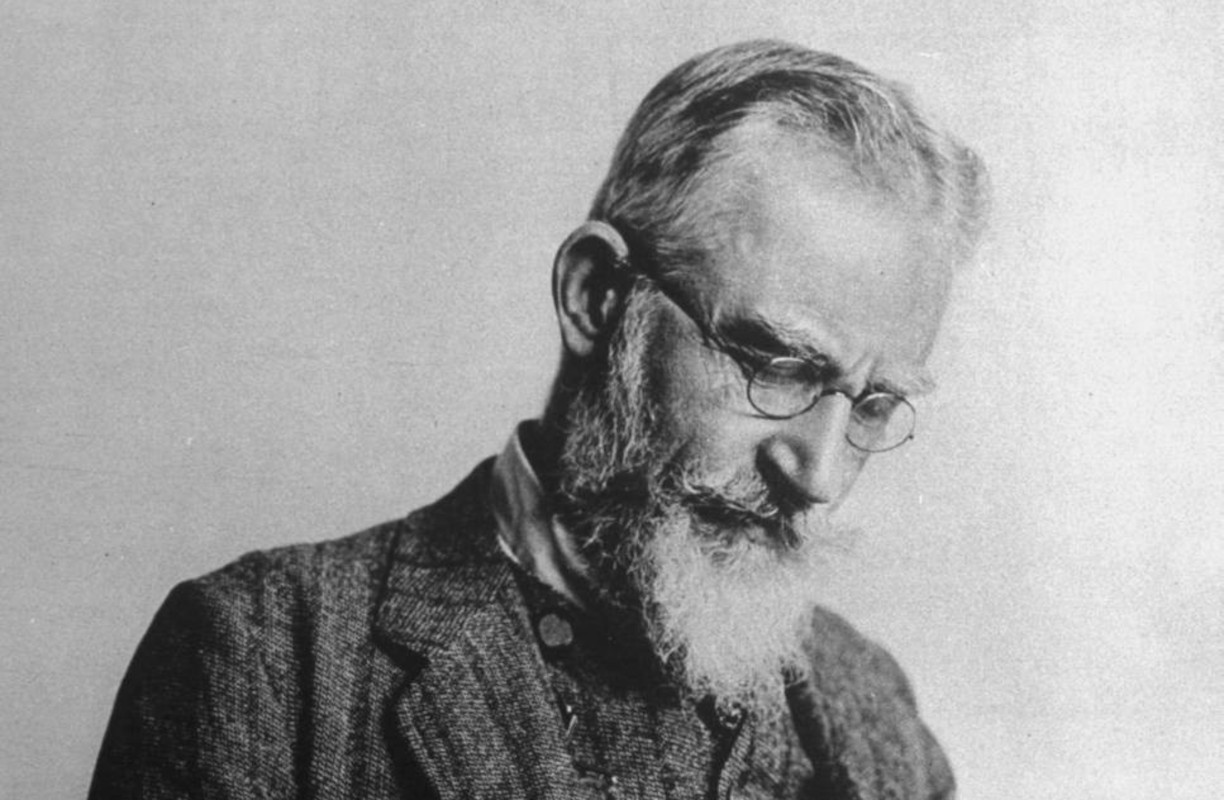
https://commons.wikimedia.org/wiki/File:George_Bernard_Shaw_notebook.jpg

In the 1897 edition of Who’s Who, George Bernard Shaw listed his recreations as “cycling and showing off.”

To H.G. Wells he once wrote, “The longer I live the more I see that I am never wrong about anything, and that all the pains I have so humbly taken to verify my notions have only wasted my time.”

06 Sep 11:40

Misc Pics

by James Agg Rolfe
04 Sep 09:49

crisped chickpeas with herbs and garlic yogurt

by deb

We’ve all been lying to you about crispy chickpeas. I’m sorry. It wasn’t very cool of us. I include myself; I’ve been telling you for years that you can crisp chickpeas in the oven and you can, you really can. But it’s not the whole story. The whole story is that you can get them crunchy in the oven but they also dry out a bit and the texture isn’t half as good as the more lightweight, nuanced crisp you get from frying them on the stove. I’ve always known this. But, who wants to deep fry? Not most of us, and certainly on a random Tuesday. It sounds like a project. It must use a ton of oil. It feels a bit heavy… for lunch.

Read more »

24 Jun 13:13

Six Deals You Need To Know About In Australia Today

by Chris Jager
G'day! Here are some cracking online deals for Lifehacker readers, including: 80% off Earnshaw watches, new Amazon EOFY deals, and more! More »
    
08 Jul 12:15

Mission Possible: Solving Problems and Realizing Goals Through Open Communities

by Dale Dougherty

Makers explore and experiment; they create and innovate. Many projects come from a personal interest or passion, but become something else.

Read more on MAKE

The post Mission Possible: Solving Problems and Realizing Goals Through Open Communities appeared first on Make: DIY Projects and Ideas for Makers.

23 Feb 13:31

Cycling Australia poaches Sky’s Simon Jones to head high performance

by Simone Giuliani

Cycling Australia continued on its phase of renewal this week, announcing it had appointed Team Sky’s Simon Jones to head its high performance unit as it seeks to restore the nation to its former role as an Olympic cycling force.

It’s a move that harks back to British Cycling’s days of poaching Australians and modelling the system on that of its former colony, yet now the tables have turned.

It hasn’t been the easiest of patches for Cycling Australia. In the past few years the national cycling body has had to dig itself out of financial hole and face a performance decline, which saw the once dominant cycling nation fail to meet expectations at the latest Olympics. Australia won just two cycling medals in the 2016 Summer Olympics, while Great Britain won 12, quite a contrast to 2004 when Australia won 11 and Great Britain four.

Jones, who spent 12 years at British Cycling, was one of the coaches credited for ushering in the turnaround to an era of British cycling strength. Cycling Australia now hopes that the dual-citizen, who will start as high performance director on April 3, can transform the fortunes of Australia with a philosophy of marginal gains and continuous improvement.

“Everybody of course would like better results,” Jones told CyclingTips. “And let’s make it clear, I’m only here for one reason. I’m only taking this job because I want to win – I’m not here for the t-shirt and the suntan.”

The announcement of Jones as a replacement for Kevin Tabotta, who has gone to Orica-Scott, comes just a day after the news that former Victorian premier Steve Bracks will chair the Cycling Australia board.

New chair Steve Bracks (left) with Australian cycling legend Phil Anderson at the Australian Road National in 2015.

Duncan Murray was also appointed deputy chair and Steven Drake added to the board.

There has been plenty of change afoot, perhaps signalling a shift in phase from a team that is focussed on the stabilisation of the financially strained organisation to one that can look to building a sustainable future. However, Jones said it wasn’t as if he was coming in with an attitude that there wasn’t value in the current set up, as he was a “massive admirer” of the Australian system; after all it was the one that British Cycling used as a model.

Australia in gold medal mode back in 2004.

“I want to go in with the team and really listen hard. There are a lot of good people, good athletes, good coaches and good support,” said Jones, who spent six years in Australia and worked at the Western Australian Institute of Sport.

Most recently head of performance support and innovation at Team Sky, Jones is a big believer in marginal gains, continuous improvement and exploiting data to improve performance, but he said the decisions about how to move forward aren’t going to be his alone.

“I’m going to take an approach that we have got to get buy in from the coaches and the athletes so certainly its not going to be just my opinion and my ideas. We’re going to go on this journey together.”

Controversy, compassion and equality

Jones, who has a sports science background, is shifting from Britain at a time when performance may be good, but other issues are casting a shadow. In particular an independent review is underway at British Cycling looking into the culture of the organisation. This comes after former British Cycling technical director Shane Sutton – an Australian who was also named in the media as a contender for the Cycling Australia high performance role – had a complaint against him of using inappropriate and discriminatory language upheld.

Jess Varnish (GBR) pictured during 2013 European championships.

Jones said he didn’t observe that behaviour in his time at British Cycling but “I think my opinion on this is probably less important than that fact there’s an ongoing process and that it’s been dealt with by the authorities.”

The question Jones was happy to answer is how he intends to help shape an equitable, fair and encouraging environment for female athletes at Cycling Australia. Part of this he said is an athlete focussed culture which deals with people in a genuinely compassionate way.

“We’re dealing with people. This is about people, not just numbers and power outputs and speeds,” said the father of two teenage girls.

He said as a parent he is strong on providing an equal opportunity in life for his daughters, and his thoughts on equality in a sporting setting reflect that mindset.

“If you’re good enough, you’re old enough, if you hit the standards and display the characteristics, the behaviours, follow the code of conduct and all the other policies that we need to have … and do things in the right way, then you can be part of the program.”

That clash: “I’ve learnt lessons along the way.”

Jones has had to deal with some controversy of his own and has learnt first hand what can happen when an athlete doesn’t feel like they were treated with compassion. One of the things you’ll find if you go and type his name into a search engine is Mark Cavendish’s opinion of Jones, as a man he detests. Cavendish said this in his book, which details multiple exchange in the early 2000’s, one about eating too many chocolate bars.

“We had a clash and I think that’s quite common in high performance,” said Jones. “I’ve learnt lessons along the way, and I think it’s these people that really stand out … you know they don’t do things in the normal way.”

“I think you have to have a flexibility in your approach. You have to know how to deliver the message. I think I’m better at that now than I used to be. I’ve improved a lot in that,” he added.

The money is what it is

Jones worked with British Cycling until 2007, but now its going to be his competition, and competition with much deeper pockets at that. The organisation has the benefit of yearly revenue of more than double that of Cycling Australia. His latest workplace, Team Sky, is also renowned for being incredibly well-resourced. So how will Jones handle the prospect of slimmer budgets and still get results?

“I think we need to stop worrying about the money and think about what it takes to win – think about the strategy and what we need to prioritise,” said Jones. “I think if we work backwards from each gold medal and in detail break it down. What is it going to take? What resources do we need?”

“The money is what it is,” he added matter of factly. “I wouldn’t be doing the job unless I felt that we had sufficient resources, quality athletes and coaches that can actually get results and win.”

The post Cycling Australia poaches Sky’s Simon Jones to head high performance appeared first on Cycling Tips.

03 Oct 18:01

News Post: PAX Comic Contest Ends Monday

by tycho@penny-arcade.com (Tycho)
Tycho: I refer, of course, to the contest Gabriel posted about earlier - hit up that page for info, choose your frame, and then enter a comic for a chance to win a ticket to any PAX.  Not a bad deal.  We have received several hundred replies so far, here is a grab bag from the available frames: Edward Eric R Ben Reierson Scott Boyce Do you have what it takes?!? (CW)TB
15 Aug 21:06

Desperately Need a 1200mm Canon Lens? You're in Luck!

Canon EF 1200mm f/5.6 L USM Lens
MPB Photographic has an ultra-rare, used Canon EF 1200mm f/5.6 L USM available for £99,000.00. (thanks John)
 
If you're curious how much that is in American dollars, the conversion works out to a cool $165,285.45. :-)
 
Want to know more? Bryan got his hands on this massive lens when B&H had one available for purchase.
 
19 Jul 02:36

Horner: The Tour is not over…Nibali is isolated

by Shane Stokes

Chris Horner has said that he will dedicate himself to team-mate Rui Costa in the days ahead at the Tour de France, believing that the world champion has a better chance of doing something in the overall than he does.

The American spoke to a cluster of reporters just after the end of stage 13 in Chamrousse and said that both he and Costa are still not quite over the illness which affected them in recent days.

“I wasn’t 100 percent for sure,” he said of the final Hors Categorie climb. “You could see the power was down. But I just…the guys that we were with, the top four or five, you can’t follow, but the other guys I can follow. When they accelerate you have got to let them go.

“I have got Rui with me and for sure he is going to be better than me. We just have to keep it regular. Both him and I have gone through some weird bronchitis or something in the lungs that has been giving us a problem. It was better today, Rui was better, so hopefully it comes good tomorrow.”

Horner rode with Costa on the climb and also did other work during the stage. Both limited their losses to the fastest riders; Costa wheeled in 15th, three minutes and one second behind the stage winner and ongoing yellow jersey Vincenzo Nibali (Astana), while Horner was two places and ten seconds further back.

“I am just trying to minimise the damage,” he said. “If he [Lampre Merida team-mate Costa] comes really good, he is going to be with the best guys up there. I don’t think my form is going to put me with the top three.

“If I ride ninth or tenth or if I am 15th, that is not much of a distance, but if I can save Rui a little bit and his legs keep getting better and better and him and I, if our lungs get better, we are going to be in the front group. So we just got to minimise damage and hopefully the form gets better as we go on.”

Costa is now ninth overall, 8 minutes and 35 seconds behind Nibali. The overall win is likely long gone, but the Tour de Suisse champion is just over four minutes off the podium. If he is indeed stronger in the days ahead, he will push hard to see what is possible.

As for Horner, he’s clearly not at the same level he was when winning last year’s Vuelta a España. He is 15th overall, 11 minutes 11 seconds back, but is willing to keep riding for Costa and perhaps to then try to defend his Vuelta title next month.

While he acknowledged that Nibali was very strong, he said that the battle for the final yellow jersey wasn’t done and dusted.

“You saw that Nibalia was isolated but still nobody has any gas to get away from him,” he said with a laugh. The Tour is not over. He is isolated.

“Who knows – maybe if something happens or his team blows on the second to last climb, maybe there will be some action. They didn’t have to ride at all today. You saw it was Katusha riding almost all day, then on the second to last climb they weren’t really riding that either. We weren’t doing big, big power there.

“So it was really just the last climb where they rode on the front. We will see. Of course Nibali is the best, we all know that, but it is just going to come down to tactics. Or maybe he gets bronchitis too,” he laughed.

19 Mar 20:51

Whole Roast Fish for 2 With Mushroom Pesto and Roasted Wild Mushrooms

by Kerry Saretsky

Whole Roasted Bream with Mushroom Pesto.jpg

[Photograph: Kerry Saretsky]

My husband and I have a favorite restaurant in London that absolutely no one knows about. Except, that is, the locals and regulars we see when we're there. But our 'set,' so to speak, has never heard of it. We ferry over very special friends when we feel like sharing.

Why do we love it? Its completely unpretentious location? Well, frankly, I wouldn't mind if that improved. The otherworldly amaretto sours (yes, I said amaretto sours) made with the fresh juice of an entire lemon? That's definitely part of it. But actually, it's what I already mentioned: sharing.

The menu changes daily, and there's only about three or four appetizers, mains, and desserts to choose from—all seasonal and fabulous—on the printed paper menu. But the secret is to look up to the chalkboard on the wall. I never let us arrive after 8, or we risk the dreaded chalk line through one of the specials—the menu equivalent of the chalk outline of a murder victim. You can see what was there, but now it's gone. Shudder.

The thing that makes it so special is, all the chalkboard items are made to share.

Our favorite is the slow-cooked lamb shoulder for five, which comes in a cast iron pot, still bubbling, and a second cast-iron tray full of Boulangère potatoes. There are two big spoons, and that's it. You serve yourself. Firsts, seconds; more often than not, thirds and fourths; friends trading pieces of lamb, and scraping at the corner of the potato dish. There's the sea bass acqua pazza or steak-frites for two or three with creamy béarnaise. I know it seems conflicting, to want to go out so that you can eat the way you do at home, but I just love it. It feels more convivial than any other meal I've ever had.

And that was the inspiration behind this fish. Even stranger to make a meal to imitate a restaurant that imitates the home, but there you have it. A bream or a bass, big enough for two, stuffed with a simple mushroom-truffle pesto and topped with crispy broiled wild mushrooms. The great thing about cooking a whole fish is that you can't serve it in anything other than the pan in which it was cooked. So, it has that feel of our secret place. Bring it to the table, and we just paw at it with our forks, taking pieces, and losing track of how many servings it's been, insisting the other take more. And I love the curious juxtaposition of fish with an ingredient as earthy as mushroom. It makes for a terrific contrast of texture and flavor. There's something concrete about a meal that is made for two and made to be shared. I like the directive. Eat and be together now.

I'm just doing what the fish tells me to do.

About the author: Kerry Saretsky is the creator of French Revolution Food, where she reinvents her family's classic French recipes in a fresh, chic, modern way.

Get the Recipe!