12 May 02:52
J. Mater. Chem. A, 2017, 5,10289-10300
DOI: 10.1039/C7TA01744H, Paper
Bhanumathi Nagarajan, Suman Kushwaha, Ramachandran Elumalai, Sudip Mandal, Kothandaraman Ramanujam, Dhamodharan Raghavachari
Six new dyes based on phenothiazine conjugated to an ethynyl-pyrene moiety are synthesized and characterized.
The content of this RSS Feed (c) The Royal Society of Chemistry
10 May 08:14
by Liang Ma, Jun Dai, Xiao Cheng Zeng

In article number 1601731, Xiao Cheng Zeng and co-workers report a theoretical study on single-layer hybrid perovskites semiconductors. The single-layer hybrid perovskites not only possess desired electronic properties for potential optoelectronic and photovoltaic applications, but also can achieve improved stability and functionalities through effective encapsulation and/or heterogeneously stacking with other two-dimensional materials.
10 May 08:13
by Sai Kishore Ravi, Zhimeng Yu, David J. K. Swainsbury, Jianyong Ouyang, Michael R. Jones, Swee Ching Tan

Photosynthetic pigment–proteins exhibit an excellent ability to transduce solar energy to electrical energy with high quantum efficiency. In article number 1601821, Swee Ching Tan and co-workers report a tandem design demonstrating the photocurrent enhancement by complementary absorption of the red and green variants of a bacterial Reaction Center/Light Harvesting protein that vary in the absorption characteristics of the carotenoid.
10 May 08:01
by Yunhao Cai, Lijun Huo, Yanming Sun
The past decade has witnessed significant advances in the field of organic solar cells (OSCs). Ongoing improvements in the power conversion efficiency of OSCs have been achieved, which were mainly attributed to the design and synthesis of novel conjugated polymers with different architectures and functional moieties. Among various conjugated polymers, the development of wide-bandgap (WBG) polymers has received less attention than that of low-bandgap and medium-bandgap polymers. Here, we briefly summarize recent advances in WBG polymers and their applications in organic photovoltaic (PV) devices, such as tandem, ternary, and non-fullerene solar cells. Addtionally, we also dissuss the application of high open-circuit voltage tandem solar cells in PV-driven electrochemical water dissociation. We mainly focus on the molecular design strategies, the structure-property correlations, and the photovoltaic performance of these WBG polymers. Finally, we extract empirical regularities and provide invigorating perspectives on the future development of WBG photovoltaic materials.

The development of wide-bandgap (WBG) polymers is of significant importance in boosting the power conversion efficiency of organic solar cells. Recent advances in WBG polymers and their applications in different types of organic photovoltaic devices are reviewed. In addition, empirical regularities and invigorating perspectives are provided to help guide future designs of WBG photovoltaic materials.
28 Apr 01:42
by Yun Hee Park, Inyoung Jeong, Seunghwan Bae, Hae Jung Son, Phillip Lee, Jinwoo Lee, Chul-Ho Lee, Min Jae Ko

In article number 1605988, Chul-Ho Lee, Min Jae Ko, and co-workers report the structural engineering of formamidinium lead iodide (FAPbI3) perovskite thin films by partially substituting the formamidinium cations with smaller rubidium (Rb) cations. Even traces of Rb significantly enhance photovoltaic performances and long-term stability of perovskite solar cells. This is due to the supplement favoring complete conversion of the perovskite to its photoactive phase while offering structural stabilization.
28 Apr 01:41
by Hong Zhang, Jiaqi Cheng, Dan Li, Francis Lin, Jian Mao, Chunjun Liang, Alex K.-Y. Jen, Michael Grätzel, Wallace C. H. Choy

In article number 1604695, Wallace C.H. Choy and co-workers propose a novel room-temperature scheme of pyridine-promoted formation of perovskite films featuring large grain-sizes, and high crystallinity, while being free of residues. This new approach enables the fabrication of all room-temperature, solution-processed perovskite solar cells (PVSCs) with a record efficiency of 17.10% and 14.19%, with no hysteresis on rigid and flexible substrate respectively.
28 Apr 01:40
by Sri Ganesh R. Bade, Xin Shan, Phong Tran Hoang, Junqiang Li, Thomas Geske, Le Cai, Qibing Pei, Chuan Wang, Zhibin Yu
Intrinsically stretchable light-emitting diodes (LEDs) are demonstrated using organometal-halide-perovskite/polymer composite emitters. The polymer matrix serves as a microscale elastic connector for the rigid and brittle perovskite and induces stretchability to the composite emissive layers. The stretchable LEDs consist of poly(ethylene oxide)-modified poly(3,4-ethylenedioxythiophene) polystyrene sulfonate as a transparent and stretchable anode, a perovskite/polymer composite emissive layer, and eutectic indium–gallium as the cathode. The devices exhibit a turn-on voltage of 2.4 V, and a maximum luminance intensity of 15 960 cd m−2 at 8.5 V. Such performance far exceeds all reported intrinsically stretchable LEDs based on electroluminescent polymers. The stretchable perovskite LEDs are mechanically robust and can be reversibly stretched up to 40% strain for 100 cycles without failure.

Intrinsically stretchable light-emitting diodes (LEDs) are demonstrated using organometal-halide-perovskite/polymer composite emitters. The polymer matrix serves as a microscale elastic connector for the rigid and brittle perovskite and induces stretchability to the composite emissive layers. Such an approach results in bright and stretchable perovskite LEDs that can be reversibly stretched up to 40% uniaxial strain for 100 cycles.
28 Apr 01:40
by Kakaraparthi Kranthiraja, Kumarasamy Gunasekar, Hyunji Kim, An-Na Cho, Nam-Gyu Park, Seonha Kim, Bumjoon J. Kim, Ryosuke Nishikubo, Akinori Saeki, Myungkwan Song, Sung-Ho Jin
Perovskite solar cells (PSCs) and organic solar cells (OSCs) are promising renewable light-harvesting technologies with high performance, but the utilization of hazardous dopants and high boiling additives is harmful to all forms of life and the environment. Herein, new multirole π-conjugated polymers (P1–P3) are developed via a rational design approach through theoretical hindsight, further successfully subjecting them into dopant-free PSCs as hole-transporting materials and additive-free OSCs as photoactive donors, respectively. Especially, P3-based PSCs and OSCs not only show high power conversion efficiencies of 17.28% and 8.26%, but also display an excellent ambient stability up to 30 d (for PSCs only), owing to their inherent superior optoelectronic properties in their pristine form. Overall, the rational approach promises to support the development of environmentally and economically sustainable PSCs and OSCs.

New multirole π-conjugated polymers are developed via a rational design approach through theoretical hindsight, further successfully subjecting them into dopant-free perovskite solar cells as hole-transporting materials with high power conversion efficiency (PCE) of 17.28%, and additive-free organic solar cells as photoactive donors with high PCE of 8.26%.
28 Apr 01:40
by Jinho Lee, Hongkyu Kang, Geunjin Kim, Hyungcheol Back, Junghwan Kim, Soonil Hong, Byoungwook Park, Eunhag Lee, Kwanghee Lee
Despite the recent unprecedented increase in the power conversion efficiencies (PCEs) of small-area devices (≤0.1 cm2), the PCEs deteriorate drastically for PSCs of larger areas because of the incomplete film coverage caused by the dewetting of the hydrophilic perovskite precursor solutions on the hydrophobic organic charge-transport layers (CTLs). Here, an innovative method of fabricating scalable PSCs on all types of organic CTLs is reported. By introducing an amphiphilic conjugated polyelectrolyte as an interfacial compatibilizer, fabricating uniform perovskite films on large-area substrates (18.4 cm2) and PSCs with the total active area of 6 cm2 (1 cm2 × 6 unit cells) via a single-turn solution process is successfully demonstrated. All of the unit cells exhibit highly uniform PCEs of 16.1 ± 0.9% (best PCE of 17%), which is the highest value for printable PSCs with a total active area larger than 1 cm2.

Large-area planar perovskite solar cells (PSCs) are demonstrated by an innovative method using an amphiphilic conjugated polyelectrolyte as an interfacial compatibilizer between the hydrophobic organic charge-transport layer and hydrophilic perovskite layer. Highly scalable PSCs with uniform perovskite films on a large-area substrate (18.4 cm2) and with an active area of 1 cm2 exhibit stabilized power conversion efficiencies of 17%.
28 Apr 01:39
by Jun Xi, Zhaoxin Wu, Bo Jiao, Hua Dong, Chenxin Ran, Chengcheng Piao, Ting Lei, Tze-Bin Song, Weijun Ke, Takamichi Yokoyama, Xun Hou, Mercouri G. Kanatzidis
Tin (Sn)-based perovskites are increasingly attractive because they offer lead-free alternatives in perovskite solar cells. However, depositing high-quality Sn-based perovskite films is still a challenge, particularly for low-temperature planar heterojunction (PHJ) devices. Here, a “multichannel interdiffusion” protocol is demonstrated by annealing stacked layers of aqueous solution deposited formamidinium iodide (FAI)/polymer layer followed with an evaporated SnI2 layer to create uniform FASnI3 films. In this protocol, tiny FAI crystals, significantly inhibited by the introduced polymer, can offer multiple interdiffusion pathways for complete reaction with SnI2. What is more, water, rather than traditional aprotic organic solvents, is used to dissolve the precursors. The best-performing FASnI3 PHJ solar cell assembled by this protocol exhibits a power conversion efficiency (PCE) of 3.98%. In addition, a flexible FASnI3-based flexible solar cell assembled on a polyethylene naphthalate–indium tin oxide flexible substrate with a PCE of 3.12% is demonstrated. This novel interdiffusion process can help to further boost the performance of lead-free Sn-based perovskites.

Flexible lead-free perovskite solar cells are achieved using FASnI3 via a novel water-based multichannel interdiffusion protocol for the first time. Nanosized formamidinium iodide crystals inhibited by the introduced polymer of the aqueous salt/polymer solutions provide multiple channels to completely react with evaporated SnI2. The highest power conversion efficiency of 3.98% and 3.12% is realized for rigid and flexible substrate, respectively.
28 Apr 01:39
by Ryosuke Nishikubo, Norimitsu Tohnai, Ichiro Hisaki, Akinori Saeki
Lead halide perovskites have shown much promise for high-performing solar cells due to their inherent electronic nature, and though the color of bright-light emitters based on perovskite nanoparticles can be tuned by halide mixing and/or size control, dynamic switching using external stimuli remains a challenge. This article reports an unprecedented lower critical solution temperature (LCST) for toluene solutions containing methylammonium lead bromide (MAPbBr3), oleic acid, alkylamines, and dimethylformamide. The delicate interplay of these molecules and ions allows for the reversible formation and decomposition of MAPbBr3 nanoparticles upon heating and cooling, which is accompanied by green and blue photoemissions at each state. An intermediate 1D crystal with PbBr2-amine coordination is found to play pivotal role in this, and a mechanistic insight is provided based on a three-state model. In addition to a high quantum yield (up to 85%), this system allows for control over the cloud point (30−80 °C) through compositional engineering and the luminescent color (blue to red) via halogen exchange, thus making it a versatile solution for developing functional molecular organic–inorganic LCST quantum dots.

Lead halide perovskites show much promise for high-performing solar cells and light-emitting diodes. An unprecedented lower critical solution temperature behavior of perovskite nanoparticles is reported, the mechanism of which is explained using a three-state model involving an intermediate 1D cocrystal.
28 Apr 01:38
by Shuting Zhang, Chang Yi, Nana Wang, Yan Sun, Wei Zou, Yingqiang Wei, Yu Cao, Yanfeng Miao, Renzhi Li, Yao Yin, Ni Zhao, Jianpu Wang, Wei Huang
This paper reports a facile and scalable process to achieve high performance red perovskite light-emitting diodes (LEDs) by introducing inorganic Cs into multiple quantum well (MQW) perovskites. The MQW structure facilitates the formation of cubic CsPbI3 perovskites at low temperature, enabling the Cs-based QWs to provide pure and stable red electroluminescence. The versatile synthesis of MQW perovskites provides freedom to control the crystallinity and morphology of the emission layer. It is demonstrated that the inclusion of chloride can further improve the crystallization and consequently the optical properties of the Cs-based MQW perovskites, inducing a low turn-on voltage of 2.0 V, a maximum external quantum efficiency of 3.7%, a luminance of ≈440 cd m−2 at 4.0 V. These results suggest that the Cs-based MQW LED is among the best performing red perovskite LEDs. Moreover, the LED device demonstrates a record lifetime of over 5 h under a constant current density of 10 mA cm−2. This work suggests that the MQW perovskites is a promising platform for achieving high performance visible-range electroluminescence emission through high-throughput processing methods, which is attractive for low-cost lighting and display applications.

High performance red perovskite light-emitting diodes (LEDs) are achieved by introducing cesium in multiple-quantum-well perovskites. The device exhibits a low turn-on voltage of 2.0 V, a peak external quantum efficiency of 3.7%, a maximum luminance of 440 cd m−2, and lifetime of 5 h under 10 mA cm−2 constant current density, presenting one of the best performing red perovskite LEDs.
28 Apr 01:38
by Zonghao Liu, Junnan Hu, Haoyang Jiao, Liang Li, Guanhaojie Zheng, Yihua Chen, Yuan Huang, Qing Zhang, Chao Shen, Qi Chen, Huanping Zhou
Minimization of defects in absorber materials is essential for hybrid perovskite solar cells, especially when constructing thick polycrystalline layers in a planar configuration. Here, a simple methylamine solution-based additive is reported to improve film quality with nearly an order of magnitude reduction in intrinsic defect concentration. In the resultant film, an increase in carrier lifetime as a result of a decrease in shallow electronic disorder is observed. This superior crystalline film quality is further evidenced via a doubled spin relaxation time as compared with other reports. Bearing sufficient carrier diffusion length, a thick absorber layer (≈650 nm) is implemented in planar devices to achieve a champion power conversion efficiency of 20.02% with a stabilized output efficiency of 19.01% under one sun illumination. This work demonstrates a simple approach to improve hybrid perovskite film quality by substantial reduction of intrinsic defects for wide applications in optoelectronics.

A simple methylamine solution-based additive to improve film quality with nearly an order of magnitude reduction in the concentration of intrinsic defects is reported, and the relevant perovskite solar cells achieve a champion power conversion efficiency of 20.02% with a stabilized output efficiency of 19.01% under 1 sun illumination.
28 Apr 01:34
by Shengjian Liu, Xin Song, Simil Thomas, Zhipeng Kan, Federico Cruciani, Frédéric Laquai, Jean-Luc Bredas, Pierre M. Beaujuge
While polymer acceptors are promising fullerene alternatives in the fabrication of efficient bulk heterojunction (BHJ) solar cells, the range of efficient material systems relevant to the “all-polymer” BHJ concept remains narrow, and currently limits the perspectives to meet the 10% efficiency threshold in all-polymer solar cells. This report examines two polymer acceptor analogs composed of thieno[3,4-c]pyrrole-4,6-dione (TPD) and 3,4-difluorothiophene ([2F]T) motifs, and their BHJ solar cell performance pattern with a low-bandgap polymer donor commonly used with fullerenes (PBDT-TS1; taken as a model system). In this material set, the introduction of a third electron-deficient motif, namely 2,1,3-benzothiadiazole (BT), is shown to (i) significantly narrow the optical gap (Eopt) of the corresponding polymer (by ≈0.2 eV) and (ii) improve the electron mobility of the polymer by over two orders of magnitude in BHJ solar cells. In turn, the narrow-gap P2TPDBT[2F]T analog (Eopt = 1.7 eV) used as fullerene alternative yields high open-circuit voltages (VOC) of ≈1.0 V, notable short-circuit current values (JSC) of ≈11.0 mA cm−2, and power conversion efficiencies (PCEs) nearing 5% in all-polymer BHJ solar cells. P2TPDBT[2F]T paves the way to a new, promising class of polymer acceptor candidates.

Alternating π-conjugated polymers composed of electron-deficient thieno[3,4-c]pyrrole-4,6-dione (TPD) and 3,4-difluorothiophene ([2F]T) motifs are proving relevant as fullerene alternatives for “all-polymer” bulk heterojunction (BHJ) solar cells. When a third electron-deficient motif, namely 2,1,3-benzothiadiazole (BT), is inserted in the main chain, the corresponding polymer (P2TPDBT[2F]T) yields a twofold increase in BHJ device efficiency.
28 Apr 01:34
by Jinho Lee, Junghwan Kim, Chang-Lyoul Lee, Geunjin Kim, Tae Kyun Kim, Hyungcheol Back, Suhyun Jung, Kilho Yu, Soonil Hong, Seongyu Lee, Seok Kim, Soyeong Jeong, Hongkyu Kang, Kwanghee Lee
Despite recent breakthroughs in power conversion efficiencies (PCEs), which have resulted in PCEs exceeding 22%, perovskite solar cells (PSCs) still face serious drawbacks in terms of their printability, reliability, and stability. The most efficient PSC architecture, which is based on titanium dioxide as an electron transport layer, requires an extremely high-temperature sintering process (≈500 °C), reveals hysterical discrepancies in the device measurement, and suffers from performance degradation under light illumination. These drawbacks hamper the practical development of PSCs fabricated via a printing process on flexible plastic substrates. Herein, an innovative method to fabricate low-temperature-processed, hysteresis-free, and stable PSCs with a large area up to 1 cm2 is demonstrated using a versatile organic nanocomposite that combines an electron acceptor and a surface modifier. This nanocomposite forms an ideal, self-organized electron transport layer (ETL) via a spontaneous vertical phase separation, which leads to hysteresis-free, planar heterojunction PSCs with stabilized PCEs of over 18%. In addition, the organic nanocomposite concept is successfully applied to the printing process, resulting in a PCE of over 17% in PSCs with printed ETLs.

An innovative method for achieving printable planar heterojunction perovskite solar cells (PSCs) is demonstrated using self-assembled organic nanocomposites of fullerene derivatives and cationic polyelectrolytes as the electron transport layer. Highly reliable and stable PSCs with low-temperature solution-processable organic nanocomposites exhibit stabilized power conversion efficiencies exceeding 18%.
28 Apr 01:34
by Ming Cheng, Yuanyuan Li, Majid Safdari, Cheng Chen, Peng Liu, Lars Kloo, Licheng Sun
An organic–inorganic integrated hole transport layer (HTL) composed of the solution-processable nickel phthalocyanine (NiPc) abbreviated NiPc-(OBu)8 and vanadium(V) oxide (V2O5) is successfully incorporated into structured mesoporous perovskite solar cells (PSCs). The optimized PSCs show the highest stabilized power conversion efficiency of up to 16.8% and good stability under dark ambient conditions. These results highlight the potential application of organic–inorganic integrated HTLs in PSCs.

A perovskite solar cell containing a NiPc-(OBu)8 and V2O5 based organic–inorganic integrated hole transport layer is reported. It achieves a power conversion efficiency of 17.6%.
28 Apr 01:31
by Guozheng Shi, Yongjie Wang, Zeke Liu, Lu Han, Jie Liu, Yakun Wang, Kunyuan Lu, Si Chen, Xufeng Ling, Yong Li, Si Cheng, Wanli Ma
This study reports the fabrication of stable, high-performance, simple structured tandem solar cells based on PbS colloidal quantum dots (CQDs) under ambient air. This study also reveals detailed device engineering to deposit each functional layer in the subcells at low temperature to avoid damage to the PbS CQDs and meanwhile makes the fabrication process compatible to flexible plastic substrate. Two efficient recombination layers (RLs) are rationally designed to connect the two subcells in series. The use of solution-processed RL with an organic PEDOT:PSS (poly(3,4-ethylenedioxythiophene): polystyrene sulfonate) interlayer leads to the fabrication of the tandem devices in solution process. The use of robust inorganic RL containing an ultrathin Au interlayer results in more efficient device performance and remarkably improved device lifetime. The optimal PbS CQDs tandem cells based on inorganic RL demonstrate a high power conversion efficiency approaching 9%. This efficiency is more than two times higher than the previous record of 4.2%, which has been kept for more than five years. The remarkable stability, high performance, and low-temperature processing of these tandem devices may provide insight into the commercialization of flexible and large-area CQDs tandem solar cells in the near future.

Air-stable PbS colloidal quantum dot (CQD) tandem solar cells with a power conversion efficiency approaching 9% and a recorded-high open-circuit voltage of 1.13 V are demonstrated. By rationally designing the recombination layers, air stable, solution-processed, highly efficient CQD tandem devices with simplified structure are successfully realized.
28 Apr 01:21
by Xian-Kai Chen, Tonghui Wang, Jean-Luc Brédas
In the most efficient solar cells based on blends of a conjugated polymer (electron donor) and a fullerene derivative (electron acceptor),ultrafast formation of charge-transfer (CT) electronic states at the donor-acceptor interfaces and efficient separation of these CT states into free charges, lead to internal quantum efficiencies near 100%. However, there occur substantial energy losses due to the non-radiative recombinations of the charges, mediated by the loweset-energy (singlet and triplet) CT states; for example, such recombinations can lead to the formation of triplet excited electronic states on the polymer chains, which do not generate free charges. This issue remains a major factor limiting the power conversion efficiencies (PCE) of these devices. The recombination rates are, however, difficult to quantify experimentally. To shed light on these issues, here, an integrated multi-scale theoretical approach that combines molecular dynamics simulations with quantum chemistry calculations is employed in order to establish the relationships among chemical structures, molecular packing, and non-radiative recombination losses mediated by the lowest-energy charge-transfer states.

In many polymer–fullerene bulk heterojunction solar cells, triplet exciton formation on the polymer chains has been identified as a major energy loss channel. Here, an integrated multiscale theoretical approach is used to establish detailed relationships among chemical structures, molecular packing, and nonradiative recombination loss mediated by the lowest-energy charge-transfer states with either singlet or triplet spin character.
28 Apr 01:12
by Jianquan Zhang, Kui Jiang, Guofang Yang, Tingxuan Ma, Jing Liu, Zhengke Li, Joshua Yuk Lin Lai, Wei Ma, He Yan
One advantage of nonfullerene polymer solar cells (PSCs) is that they can yield high open-circuit voltage (VOC) despite their relatively low optical bandgaps. To maximize the VOC of PSCs, it is important to fine-tune the energy level offset between the donor and acceptor materials, but in a way not negatively affecting the morphology of the donor:acceptor (D:A) blends. Here, an effective material design rationale based on a family of D–A1–D–A2 terthiophene (T3) donor polymers is reported, which allows for the effective tuning of energy levels but without any negative impacts on the morphology of the blend. Based on a T3 donor unit combined with difluorobenzothiadiazole (ffBT) and difluorobenzoxadiazole (ffBX) acceptor units, three donor polymers are developed with highly similar morphological properties. This is particularly surprising considering that the corresponding quaterthiophene polymers based on ffBT and ffBX exhibit dramatic differences in their solubility and morphological properties. With the fine-tuning of energy levels, the T3 polymers yield nonfullerene PSCs with a high efficiency of 9.0% for one case and with a remarkably low energy loss (0.53 V) for another polymer. This work will facilitate the development of efficient nonfullerene PSCs with optimal energy levels and favorable morphology properties.

A terthiophene-based donor polymer PffBTBX-T3 with the D–A1–D–A2 structure is demonstrated and compared with the other two D–A-type polymers PffBT-T3 and PffBX-T3. While the energy levels of three polymers are fine-tuned, their optical and morphological properties are not dramatically changed. The optimal energetic match and well-controlled morphology enable 9.0% efficient nonfullerene devices based on PffBTBX-T3 and ITIC-Th.
28 Apr 01:12
by Manoj Jaysankar, Weiming Qiu, Maarten van Eerden, Tom Aernouts, Robert Gehlhaar, Maarten Debucquoy, Ulrich W. Paetzold, Jef Poortmans
Multijunction solar cells employing perovskite and crystalline-silicon (c-Si) light absorbers bear the exciting potential to surpass the efficiency limit of market-leading single-junction c-Si solar cells. However, scaling up this technology and maintaining high efficiency over large areas are challenging as evidenced by the small-area perovskite/c-Si multijunction solar cells reported so far. In this work, a scalable four-terminal multijunction solar module design employing a 4 cm2 semitransparent methylammonium lead triiodide perovskite solar module stacked on top of an interdigitated back contact c-Si solar cell of identical area is demonstrated. With a combination of optimized transparent electrodes and efficient module design, the perovskite/c-Si multijunction solar modules exhibit power conversion efficiencies of 22.6% on 0.13 cm2 and 20.2% on 4 cm2 aperture area. Furthermore, a detailed optoelectronic loss analysis along with strategies to enhance the performance is discussed.

A high-efficient large-area scalable perovskite/silicon four-terminal multijunction solar module is presented. The four-terminal perovskite/silicon multijunction photovoltaic devices are scaled up from a 0.13 cm2 cell-on-cell configuration to a 4 cm2 module-on-cell configuration while maintaining high efficiency. By using efficient solar module design and optimized electrodes, the scalability of four-terminal perovskite/silicon multijunction photovoltaics is demonstrated.
25 Apr 01:20
J. Mater. Chem. A, 2017, 5,10154-10160
DOI: 10.1039/C7TA02427D, Communication
Zhiyang Liu, Wang Li, Ruixiang Peng, Weigang Jiang, Qian Guan, Tao Lei, Rongjuan Yang, Amjad Islam, Qiang Wei, Ziyi Ge
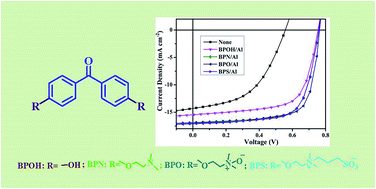
A series of novel benzophenone-based molecules with different polar groups as cathode interfacial materials were synthesized for polymer solar cells.
The content of this RSS Feed (c) The Royal Society of Chemistry
25 Apr 01:20
J. Mater. Chem. A, 2017, 5,10374-10379
DOI: 10.1039/C7TA01383C, Paper
F. R. Li, Y. Xu, W. Chen, S. H. Xie, J. Y. Li
Semitransparent solar cells have attracted significant attention for their potential applications, though obtaining high average visible transmittance (AVT) while maintaining good conversion efficiency is a challenge.
The content of this RSS Feed (c) The Royal Society of Chemistry
25 Apr 01:15
J. Mater. Chem. A, 2017, 5,10206-10219
DOI: 10.1039/C7TA01665D, Paper
Tiantian Cao, Ning Chen, Guangxin Liu, Yingbo Wan, Jose Dario Perea, Yijun Xia, Zhaowei Wang, Bo Song, Ning Li, Xiaohong Li, Yi Zhou, Christoph J. Brabec, Yongfang Li
A complete regioisomer separation of indene-C60 bisadduct (IC60BA) for polymer solar cell (PSC) applications was conducted for the first time.
The content of this RSS Feed (c) The Royal Society of Chemistry
18 Apr 01:50
Nanoscale, 2017, 9,5896-5903
DOI: 10.1039/C7NR01818E, Paper
Ioannis Deretzis, Antonino La Magna
The dynamic role of the methylammonium ions in the orthorhombic-tetragonal phase transition of CH3NH3PbI3 has been computationally explored.
The content of this RSS Feed (c) The Royal Society of Chemistry

07 Apr 01:22
J. Mater. Chem. A, 2017, 5,9204-9209
DOI: 10.1039/C7TA02075A, Paper
Qunping Fan, Wenyan Su, Xia Guo, Yan Wang, Juan Chen, Chennan Ye, Maojie Zhang, Yongfang Li
Non-fullerene polymer solar cells based on a wide-bandgap polymer, PSBZ, exhibited a PCE of up to 10.5% with a high Jsc of 19.0 mA cm-2.
The content of this RSS Feed (c) The Royal Society of Chemistry
07 Apr 01:20
by Shigeo Asahi
Two-step photon up-conversion solar cells
Nature Communications, Published online: 6 April 2017; doi:10.1038/ncomms14962
Harvesting incident photons with energy below the bandgap may lead to highly efficient solar cells. By introducing InAs quantum dots at the hetero-interface, Asahi et al. achieve efficient two step photon up-conversion resulting in additional photocurrent and very high external quantum efficiency.

07 Apr 01:17
Nanoscale, 2017, 9,7391-7396
DOI: 10.1039/C7NR01287J, Paper
Qiang Jing, Mian Zhang, Xiang Huang, Xiaoming Ren, Peng Wang, Zhenda Lu
A facile selective acetone-etching method is reported to significantly enhance the stability of mixed-halide perovskite CsPb(BrxI1-x)3 nanocrystals.
The content of this RSS Feed (c) The Royal Society of Chemistry

07 Apr 01:17
Nanoscale, 2017, 9,5828-5834
DOI: 10.1039/C7NR00444C, Paper
Mohammad Mahdi Tavakoli, Aashir Waleed, Leilei Gu, Daquan Zhang, Rouhollah Tavakoli, Bingbing Lei, Wenjun Su, Fang Fang, Zhiyong Fan
In this work, a novel and facile synthesis process to fabricate single crystalline organometal halide perovskite nanowires has been successfully developed.
The content of this RSS Feed (c) The Royal Society of Chemistry

27 Mar 02:09
by R. Clayton Shallcross, Yilong Zheng, S. Scott Saavedra and Neal R. Armstrong

Journal of the American Chemical Society
DOI: 10.1021/jacs.7b00516

27 Mar 02:05
by Bin Kan, Huanran Feng, Xiangjian Wan, Feng Liu, Xin Ke, Yanbo Wang, Yunchuang Wang, Hongtao Zhang, Chenxi Li, Jianhui Hou and Yongsheng Chen

Journal of the American Chemical Society
DOI: 10.1021/jacs.7b01170