ACS Nano
DOI: 10.1021/acsnano.7b05033
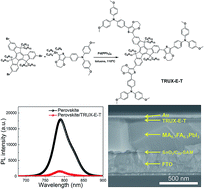
Herein, this study reports high-efficiency, low-temperature ZnO based planar perovskite solar cells (PSCs) with state-of-the-art performance. They are achieved via a strategy that combines dual-functional self-assembled monolayer (SAM) modification of ZnO electron accepting layers (EALs) with sequential deposition of perovskite active layers. The SAMs, constructed from newly synthesized molecules with high dipole moments, act both as excellent surface wetting control layers and as electric dipole layers for ZnO-EALs. The insertion of SAMs improves the quality of PbI2 layers and final perovskite layers during sequential deposition, while charge extraction is enhanced via electric dipole effects. Leveraged by SAM modification, our low-temperature ZnO based PSCs achieve an unprecedentedly high power conversion efficiency of 18.82% with a VOC of 1.13 V, a JSC of 21.72 mA cm−2, and a FF of 0.76. The strategy used in this study can be further developed to produce additional performance enhancements or fabrication temperature reductions.

Low-temperature planar perovskite solar cells with efficiency of 18.82% are developed via a strategy that combines dual-functional self-assembled monolayer (SAM) modification of ZnO electron accepting layers with sequential deposition of perovskite active layers. The SAMs, constructed from newly synthesized molecules with high dipole moments, act both as excellent surface wetting control layers and as electric dipole layers for ZnO layers.
Compact TiO2 is widely used as an electron transport material in planar-perovskite solar cells. However, TiO2-based planar-perovskite solar cells exhibit low efficiencies due to intrinsic problems such as the unsuitable conduction band energy and low electron extraction ability of TiO2. Herein, the planar TiO2 electron transport layer (ETL) of perovskite solar cells is modified with ionic salt CuI via a simple one-step spin-coating process. The p-type nature of the CuI islands on the TiO2 surface leads to modification of the TiO2 band alignment, resulting in barrier-free contacts and increased open-circuit voltage. It is found that the polarity of the CuI-modified TiO2 surface can pull electrons to the interface between the perovskite and the TiO2, which improves electron extraction and reduces nonradiative recombination. The CuI solution concentration is varied to control the electron extraction of the modified TiO2 ETL, and the optimized device shows a high efficiency of 19.0%. In addition, the optimized device shows negligible hysteresis, which is believed to be due to the removal of trap sites and effective electron extraction by CuI-modified TiO2. These results demonstrate the hitherto unknown effect of p-type ionic salts on electron transport material.

It is revealed that the CuI islands on the TiO2 electron transport layer can induce change of polarity increasing electron extraction, establish barrier-free band alignment with perovskite, and reduce the trap sites. These changes of interface properties induce power conversion efficiency of 19.0% perovskite solar cell with negligible hysteresis.
Although antimony sulfoiodide (SbSI) exhibits very interesting properties including high photoconductivity, ferroelectricity, and piezoelectricity, it is not applied to solar cells. Meanwhile, SbSI is predominantly prepared as a powder using a high-temperature, high-pressure system. Herein, the fabrication of solar cells utilizing SbSI as light harvesters is reported for the first time to the best of knowledge. SbSI is prepared by solution processing, followed by annealing under mild temperature conditions by a reaction between antimony trisulfide, which is deposited by chemical bath deposition on a mesoporous TiO2 electrode and antimony triiodide, under air at a low temperature (90 °C) without any external pressure. The solar cells fabricated using SbSI exhibit a power conversion efficiency of 3.05% under standard illumination conditions of 100 mW cm−2.

Solar cells with the configuration of FTO (fluorine-doped SnO2)/TiO2 blocking layer/mesoporous TiO2/SbSI/hole-transporting material/Au are demonstrated for the first time. The cells fabricated using TiO2 as an electron-transporting layer and poly[2,6-(4,4-bis(2-ethylhexyl)-4H-cyclopenta[2,1-b;3,4-b′]dithiophene)-alt-4,7-(2,1,3-benzothiadiazole)] as a hole-transporting layer exhibit a power conversion efficiency of 3.05% under full illumination of air mass 1.5G.
In this work, highly efficient ternary-blend organic solar cells (TB-OSCs) are reported based on a low-bandgap copolymer of PTB7-Th, a medium-bandgap copolymer of PBDB-T, and a wide-bandgap small molecule of SFBRCN. The ternary-blend layer exhibits a good complementary absorption in the range of 300–800 nm, in which PTB7-Th and PBDB-T have excellent miscibility with each other and a desirable phase separation with SFBRCN. In such devices, there exist multiple energy transfer pathways from PBDB-T to PTB7-Th, and from SFBRCN to the above two polymer donors. The hole-back transfer from PTB7-Th to PBDB-T and multiple electron transfers between the acceptor and the donor materials are also observed for elevating the whole device performance. After systematically optimizing the weight ratio of PBDB-T:PTB7-Th:SFBRCN, a champion power conversion efficiency (PCE) of 12.27% is finally achieved with an open-circuit voltage (Voc) of 0.93 V, a short-circuit current density (Jsc) of 17.86 mA cm−2, and a fill factor of 73.9%, which is the highest value for the ternary OSCs reported so far. Importantly, the TB-OSCs exhibit a broad composition tolerance with a high PCE over 10% throughout the whole blend ratios.

Highly efficient ternary-blend nonfullerene organic solar cells based on two copolymer donors and one electron acceptor are fabricated and evaluated. The multiple energy and charge-transfer pathways in this ternary system enable the power conversion efficiency to reach 12.27%, which is a new record for ternary-blend organic solar cells at present. These devices also exhibit a broad composition tolerance.
Low temperature solution processed planar-structure perovskite solar cells gain great attention recently, while their power conversions are still lower than that of high temperature mesoporous counterpart. Previous reports are mainly focused on perovskite morphology control and interface engineering to improve performance. Here, this study systematically investigates the effect of precise stoichiometry, especially the PbI2 contents on device performance including efficiency, hysteresis and stability. This study finds that a moderate residual of PbI2 can deliver stable and high efficiency of solar cells without hysteresis, while too much residual PbI2 will lead to serious hysteresis and poor transit stability. Solar cells with the efficiencies of 21.6% in small size (0.0737 cm2) and 20.1% in large size (1 cm2) with moderate residual PbI2 in perovskite layer are obtained. The certificated efficiency for small size shows the efficiency of 20.9%, which is the highest efficiency ever recorded in planar-structure perovskite solar cells, showing the planar-structure perovskite solar cells are very promising.

Planar-structure perovskite solar cells with efficiencies of 21.6% in small size (0.0737 cm2) and 20.1% in large size (1 cm2) with moderate residual PbI2 in perovskite layer are obtained. The certificated efficiency for small size shows the efficiency of 20.9%, which is the highest efficiency ever recorded in planar-structure perovskite solar cells.
The device performance of polymer solar cells (PSCs) is strongly dependent on the blend morphology. One of the strategies for improving PSC performance is side-chain engineering, which plays an important role in controlling the aggregation properties of the polymers and thus the domain crystallinity/purity of the donor–acceptor blends. In particular, for a family of high-performance donor polymers with strong temperature-dependent aggregation properties, the device performances are very sensitive to the size of alkyl chains, and the best device performance can only be achieved with an optimized odd-numbered alkyl chain. However, the synthetic route of odd-numbered alkyl chains is costly and complicated, which makes it difficult for large-scale synthesis. Here, this study presents a facile method to optimize the aggregation properties and blend morphology by employing donor polymers with a mixture of two even-numbered, randomly distributed alkyl chains. In a model polymer system, this study suggests that the structural and electronic properties of the random polymers comprising a mixture of 2-octyldodecyl and 2-decyltetradecyl alkyl chains can be systematically tuned by varying the mixing ratio, and a high power conversion efficiency (11.1%) can be achieved. This approach promotes the scalability of donor polymers and thus facilitates the commercialization of PSCs.

The structural and electronic properties of random polymers comprising a mixture of commercially available alkyl chains can be systematically tuned and a power conversion efficiency up to 11.1% can be achieved, which is one of the highest values to date for polymer:fullerene solar cells. These random polymers are easier to scale up compared to that obtained using odd-numbered alkyl chains.
Newly developed benzo[1,2-b:4,5-b′]dithiophene (BDT) block with 3,4-ethylenedioxythiophene (EDOT) side chains is first employed to build efficient photovoltaic copolymers. The resulting copolymers, PBDTEDOT-BT and PBDTEDOTFBT, have a large bandgap more than 1.80 eV, which is attributed to the increased steric hindrance between the BDT and EDOT skeletons. Both copolymers possess the satisfied absorptions, low-lying highest occupied molecular orbital (HOMO) levels and high crystallinity. Using the fluorination strategy, PBDTEDOT-FBT exhibits a wider and stronger absorption and a deeper HOMO level than those of PBDTEDOT-BT. PBDTEDOT-FBT:[6,6]-Phenyl C71 butyric acid methyl ester (PC71BM) blend also shows the higher hole mobility and better surface morphology compared with the PBDTEDOTBT:PC71BM blend. Combination of above advantages, PBDTEDOT-FBT devices exhibit much higher power conversion efficiency (PCE) of 10.11%, with an improved open circuit voltage (Voc) of 0.86 V, short circuit current densities (Jsc) of 16.01 mA cm−2, and fill factor (FF) of 72.6%. This work not only provides a newly efficient candidate of BDT donor block modified with EDOT conjugated side chains, but also achieves high-performance large bandgap copolymers for polymer solar cells (PSCs) via the synergistic effect of fluorination and side chain engineering strategies.

Combination of fluorination and side chain engineering strategies, newly developed benzo[1,2-b:4,5-b′]dithiophene block with 3,4-ethylenedioxythiophene side chains is first employed to build the efficient large bandgap copolymers with efficiency of 10.11%.
Solution-processed colloidal quantum dot (CQD) solar cells harvesting the infrared part of the solar spectrum are especially interesting for future use in semitransparent windows or multilayer solar cells. To improve the device power conversion efficiency (PCE) and stability of the solar cells, surface passivation of the quantum dots is vital in the research of CQD solar cells. Herein, inorganic CsPbI3 perovskite (CsPbI3-P) coating on PbS CQDs with a low-temperature, solution-processed approach is reported. The PbS CQD solar cell with CsPbI3-P coating gives a high PCE of 10.5% and exhibits remarkable stability both under long-term constant illumination and storage under ambient conditions. Detailed characterization and analysis reveal improved passivation of the PbS CQDs with the CsPbI3-P coating, and the results suggest that the lattice coherence between CsPbI3-P and PbS results in epitaxial induced growth of the CsPbI3-P coating. The improved passivation significantly diminishes the sub-bandgap trap-state assisted recombination, leading to improved charge collection and therefore higher photovoltaic performance. This work therefore provides important insight to improve the CQD passivation by coating with an inorganic perovskite ligand for photovoltaics or other optoelectronic applications.

Inorganic CsPbI3 perovskite is epitaxially grown on the PbS colloidal quantum dot at a low temperature. Increased depletion width, lower trap density, reduced charge recombination, and enhanced built-in electric field within the solar cell are obtained by using the CsPbI3-perovskited coated PbS colloidal quantum dot as a light absorbing material in the solar cell, resulting in high performance.
Organic bulk heterojunction (BHJ) solar cells require energetic offsets between the donor and acceptor to obtain high short-circuit currents (JSC) and fill factors (FF). However, it is necessary to reduce the energetic offsets to achieve high open-circuit voltages (VOC). Recently, reports have highlighted BHJ blends that are pushing at the accepted limits of energetic offsets necessary for high efficiency. Unfortunately, most of these BHJs have modest FF values. How the energetic offset impacts the solar cell characteristics thus remains poorly understood. Here, a comprehensive characterization of the losses in a polymer:fullerene BHJ blend, PIPCP:phenyl-C61-butyric acid methyl ester (PC61BM), that achieves a high VOC (0.9 V) with very low energy losses (Eloss = 0.52 eV) from the energy of absorbed photons, a respectable JSC (13 mA cm−2), but a limited FF (54%) is reported. Despite the low energetic offset, the system does not suffer from field-dependent generation and instead it is characterized by very fast nongeminate recombination and the presence of shallow traps. The charge-carrier losses are attributed to suboptimal morphology due to high miscibility between PIPCP and PC61BM. These results hold promise that given the appropriate morphology, the JSC, VOC, and FF can all be improved, even with very low energetic offsets.

To realize organic photovoltaics with high open-circuit voltages and short-circuit currents, it is necessary to minimize energetic offsets between donor and acceptor semiconductors. This article describes a comprehensive study on charge recombination and generation in a system with very low energetic offsets yet relatively high performance, in order to identify the root cause for the limited fill factor.

In article number 1700566, Min Ju Cho, Dong Hoon Choi, and co-workers report a new conjugated widebandgap donor polymer, 3MT-Th, harmonized with an ITIC acceptor to enable the production of a polymer solar cell (PSC) with high efficiency of 9.73% under eco-friendly conditions using a non-halogenated solvent. This PSC also exhibits excellent shelf-life stability in air and good operational stability under continuous light illumination.

In article number 1700722, Aleksandra B. Djurišić, Zhu-Bing He, and co-workers investigate the cesium doped NiO film as highly transparent and conductive HTL for inverted perovskite solar cells. Cs dopant can significantly improve the conductivity of NiO and lower the work function, allowing better charge transfer and band alignment between perovskite and Cs doped NiO. Efficiency over 19% for the Cs doped devices is obtained and 90% of its initial performance is maintained after 80 days.
All-inorganic cesium lead halide perovskite is suggested as a promising candidate for perovskite solar cells due to its prominent thermal stability and comparable light absorption ability. Designing textured perovskite films rather than using planar-architectural perovskites can indeed optimize the optical and photoelectrical conversion performance of perovskite photovoltaics. Herein, for the first time, this study demonstrates a rational strategy for fabricating carbon quantum dot (CQD-) sensitized all-inorganic CsPbBr3 perovskite inverse opal (IO) films via a template-assisted, spin-coating method. CsPbBr3 IO introduces slow-photon effect from tunable photonic band gaps, displaying novel optical response property visible to naked eyes, while CQD inlaid among the IO frameworks not only broadens the light absorption range but also improves the charge transfer process. Applied in the perovskite solar cells, compared with planar CsPbBr3, slow-photon effect of CsPbBr3 IO greatly enhances the light utilization, while CQD effectively facilitates the electron–hole extraction and injection process, prolongs the carrier lifetime, jointly contributing to a double-boosted power conversion efficiency (PCE) of 8.29% and an increased incident photon-to-electron conversion efficiency of up to 76.9%. The present strategy on CsPbBr3 IO to enhance perovskite PCE can be extended to rationally design other novel optoelectronic devices.

Novel carbon quantum dot (CQD)-sensitized inorganic CsPbBr3 inverse opal perovskite solar cells are fabricated for the first time. CsPbBr3 inverse opal induces improved light utilization originating from the slow-photon effect with tunable photonic band gaps, while CQD helps to facilitate the charge transfer process, which jointly contributes to a greatly improved photoelectrical conversion efficiency with outstanding stability.
Following the unprecedented rise in photovoltaic power conversion efficiencies during the past five years, metal-halide perovskites (MHPs) have emerged as a new and highly promising class of solar-energy materials. Their extraordinary electrical and optical properties combined with the abundance of the raw materials, the simplicity of synthetic routes, and processing versatility make MHPs ideal for cost-efficient, large-volume manufacturing of a plethora of optoelectronic devices that span far beyond photovoltaics. Herein looks beyond current applications in the field of energy, to the area of large-area electronics using MHPs as the semiconductor material. A comprehensive overview of the relevant fundamental material properties of MHPs, including crystal structure, electronic states, and charge transport, is provided first. Thereafter, recent demonstrations of MHP-based thin-film transistors and their application in logic circuits, as well as bi-functional devices such as light-sensing and light-emitting transistors, are discussed. Finally, the challenges and opportunities in the area of MHPs-based electronics, with particular emphasis on manufacturing, stability, and health and environmental concerns, are highlighted.

Their extraordinary electrical and optical properties combined with the abundance of their raw materials, have driven metal-halide perovskites (MHPs) to the forefront of functional electronic materials research, with envisioned applications spanning across several technology sectors. The recent advances in the use of MHPs in the area of transistors and transistor-related applications are summarized.
Organometal halide perovskites are under intense study for use in optoelectronics. Methylammonium and formamidinium lead iodide show impressive performance as photovoltaic materials; a premise that has spurred investigations into light-emitting devices and photodetectors. Herein, the optical and electrical material properties of organometal halide perovskites are reviewed. An overview is given on how the material composition and morphology are tied to these properties, and how these properties ultimately affect device performance. Material attributes and techniques used to estimate them are analyzed for different perovskite materials, with a particular focus on the bandgap, mobility, diffusion length, carrier lifetime, and trap-state density.

Organometal halide perovskites offer promise as high-performance solution-processed optoelectronic materials. The optical and electrical properties of these materials are reviewed, as well as how these relate to material aspects and their influence on device performance.
Ionic movement is considered awful in perovskite solar cells (PSCs) for relating with the hysteresis and long-term instability. However, the positive role of ions to enhance the energy band bending for high performance PSC is always overlooked, let alone reducing the hysteresis. In this work, LiI is doped in CH3NH3PbI3. It is observed that the aggregation of Li+/I− tunes the energy level of the perovskite and induces n/p doping in CH3NH3PbI3, which makes charge extraction quite efficient from perovskite to both NiO and [6,6]-phenyl-C61-butyric acid methyl ester (PCBM) layer. Therefore, in NiO/LiI doped perovskite/PCBM solar cells, Li+ and I− modulate the interface energy band alignment to facilitate the electron/hole transport and reduce the interface energy loss. On the other hand, n/p doping enlarges Fermi energy level splitting of the PSCs to improve the photovoltage. The performance of LiI doped PSCs is much higher with reduced hysteresis compared to the undoped solar cells. This work highlights the positive effect of selective ionic doping, which is promisingly important to design the stable and efficient PSCs.

This work highlights the positive effect of selective ionic doping in CH3NH3PbI3, which benefits for the energy band alignment and perovskite solar cell performances.
Two donor–acceptor (D–A) conjugated polymers composed of the same ratio of 5-fluorobenzothiadiazole and thiophene subunits are synthesized through different routes, providing a precisely regioregular (2TRR) and a random (2TRA) polymer structures. Detailed structural analyses indicate that the backbone of regioregular 2TRR has only one donor segment of bithiophene, while the backbone of random 2TRA consists of three different donor segments: thiophene, bithiophene, and terthiophene (in a ratio of 0.16:0.68:0.16). Synergetic contributions from these segments allow the “tetrapolymer” 2TRA to achieve more favorable film morphology and a higher hole-mobility relative to 2TRR. Consequently, the random polymer 2TRA achieves a substantially higher power conversion efficiency (8.8%) than the regioregular polymer 2TRR (5.1%). Notably, the “tetrapolymer” 2TRA is readily synthesized from two monomers, rather than through complex conventional preparation required for similar multipolymers. These findings provide a novel route toward the design and synthesis of multipolymeric materials and demonstrate their potential advantages in high-performance organic electronic applications.

Two conjugated polymers are synthesized using the same components in different sequences, regioregular and random. Readily synthesized with only two monomers, detailed structure analyses indicate that the random polymer 2TRA contains three distinct donor segments in its “tetrapolymer” backbone, granting a favorable morphology, higher hole-mobility, and better photovoltaic performance in blends with PC71BM than its regioregular analog (2TRR).
Nonfullerene polymer solar cells (PSCs) based on polymer donors and nonfullerene small molecular acceptors (SMAs) have recently attracted considerable attention. Although much of the progress is driven by the development of novel SMAs, the donor polymer also plays an important role in achieving efficient nonfullerene PSCs. However, it is far from clear how the polymer donor choice influences the morphology and performance of the SMAs and the nonfullerene blends. In addition, it is challenging to carry out quantitative analysis of the morphology of polymer:SMA blends, due to the low material contrast and overlapping scattering features of the π–π stacking between the two organic components. Here, a series of nonfullerene blends is studied based on ITIC-Th blended with five different donor polymers. Through quantitative morphology analysis, the (010) coherence length of the SMA is characterized and a positive correlation between the coherence length of the SMA and the device fill factor (FF) is established. The study reveals that the donor polymer can significantly change the molecular ordering of the SMA and thus improve the electron mobility and domain purity of the blend, which has an overall positive effect that leads to the enhanced device FF for nonfullerene PSCs.

Morphological analysis reveals influence of the donor polymer on the structural/electronic properties of small molecular acceptor and the overall blend morphology. A direct correlation is found between the (010) coherence length of small molecular acceptor with device fill-factor and photocurrent density, which is in good agreement with the parameters reported for state-of-art high-efficiency nonfullerene polymer solar cells.
Using bromoantimonate (V) (N-EtPy)[SbBr6] as an example, it is demonstrated that ABX6 compounds can form perovskite-like 3D crystalline frameworks with short interhalide contacts, enabling advanced optoelectronic characteristics of these materials. The designed compound shows an impressive performance in planar junction solar cells delivering external quantum efficiency of ≈80% and power conversion efficiency of ≈4%, thus being comparable with the conventional perovskite material MAPbBr3. The discovery of the first perovskite-like compound ABX6 exhibiting good photovoltaic performance opens wide opportunities for rational design of novel perovskite-like semiconductor materials for advanced electronic and photovoltaic applications.

Planar junction solar cells based on the complex antimony (V) bromide (N-EtPy)[SbBr6] reveal external quantum efficiency of ≈80% and power conversion efficiency of ≈4%. The discovery of the first perovskite-like compound ABX6 exhibiting good photovoltaic performance opens wide opportunities for rational design of novel hybrid semiconductor materials for advanced electronic and photovoltaic applications.
Semitransparent organic solar cells (OSCs) show attractive potential in power-generating windows. However, the development of semitransparent OSCs is lagging behind opaque OSCs. Here, an ultralow-bandgap nonfullerene acceptor, “IEICO-4Cl”, is designed and synthesized, whose absorption spectrum is mainly located in the near-infrared region. When IEICO-4Cl is blended with different polymer donors (J52, PBDB-T, and PTB7-Th), the colors of the blend films can be tuned from purple to blue to cyan, respectively. Traditional OSCs with a nontransparent Al electrode fabricated by J52:IEICO-4Cl, PBDB-T:IEICO-4Cl, and PTB7-Th:IEICO-4Cl yield power conversion efficiencies (PCE) of 9.65 ± 0.33%, 9.43 ± 0.13%, and 10.0 ± 0.2%, respectively. By using 15 nm Au as the electrode, semitransparent OSCs based on these three blends also show PCEs of 6.37%, 6.24%, and 6.97% with high average visible transmittance (AVT) of 35.1%, 35.7%, and 33.5%, respectively. Furthermore, via changing the thickness of Au in the OSCs, the relationship between the transmittance and efficiency is studied in detail, and an impressive PCE of 8.38% with an AVT of 25.7% is obtained, which is an outstanding value in the semitransparent OSCs.

A new nonfullerene acceptor, IEICO-4Cl, is designed to prepare semitransparent organic solar cells (OSCs), yielding a power conversion efficiency of 8.38% with an average visible transmittance of 25.7%, which is among the top results for semitransparent OSCs.

In article number 1702469, Emanuele Orgiu, Paolo Samorì, and co-workers find that oxygen gas induces a colossal change in the electrical current flowing through a hybrid organic–inorganic perovskite. Some atoms in the perovskite structure are missing, creating reactive vacancies that can be filled by the oxygen present in the environment. The electrical properties of the material are sensitive to such vacancy filling, making this perovskite a highly sensitive and fast oxygen sensor.
With an indenoindene core, a new thieno[3,4-b]thiophene-based small-molecule electron acceptor, 2,2′-((2Z,2′Z)-((6,6′-(5,5,10,10-tetrakis(2-ethylhexyl)-5,10-dihydroindeno[2,1-a]indene-2,7-diyl)bis(2-octylthieno[3,4-b]thiophene-6,4-diyl))bis(methanylylidene))bis(5,6-difluoro-3-oxo-2,3-dihydro-1H-indene-2,1-diylidene))dimalononitrile (NITI), is successfully designed and synthesized. Compared with 12-π-electron fluorene, a carbon-bridged biphenylene with an axial symmetry, indenoindene, a carbon-bridged E-stilbene with a centrosymmetry, shows elongated π-conjugation with 14 π-electrons and one more sp3 carbon bridge, which may increase the tunability of electronic structure and film morphology. Despite its twisted molecular framework, NITI shows a low optical bandgap of 1.49 eV in thin film and a high molar extinction coefficient of 1.90 × 10⁵m−1 cm−1 in solution. By matching NITI with a large-bandgap polymer donor, an extraordinary power conversion efficiency of 12.74% is achieved, which is among the best performance so far reported for fullerene-free organic photovoltaics and is inspiring for the design of new electron acceptors.

A thieno[3,4-b]thiophene-based electron acceptor, NITI, featuring a 14-π-electron indenoindene core is designed and synthesized. Despite its twisted molecular geometry, NITI shows a low optical bandgap and a high molar extinction coefficient. By matching NITI with a large-bandgap polymer donor, an extraordinary power conversion efficiency of 12.74% is achieved, which represents an exciting progress in the design of new electron acceptors.


Organic light-emitting devices (OLEDs), typically operated with constant-voltage or direct-current (DC) power sources, are candidates for next-generation solid-state lighting and displays, as they are light, thin, inexpensive, and flexible. However, researchers have focused mainly on the device itself (e.g., development of novel materials, design of the device structure, and optical outcoupling engineering), and little attention has been paid to the driving mode. Recently, an alternative concept to DC-driven OLEDs by directly driving devices using time-dependent voltages or alternating current (AC) has been explored. Here, the effects of different device structures of AC-driven OLEDs, for example, double-insulation, single-insulation, double-injection, and tandem structure, on the device performance are systematically investigated. The formation of excitons and the dielectric layer, which are important to achieve high-performance AC-driven OLEDs, are carefully considered. The importance of gaining further understanding of the fundamental properties of AC-driven OLEDs is then discussed, especially as they relate to device physics.

Recent advances in alternating current (AC)-driven organic light-emitting devices (OLEDs) are highlighted, regarding device structure, operation, and performance, focusing mainly on different device structures of AC-driven OLEDs. These structures include double-insulation, single-insulation, double-injection, and tandem structures. A great future can be expected for high-performance AC-driven OLEDs in further exploration of new device structures, designing new materials, and understanding the device physics.