14 Nov 10:40
Energy Environ. Sci., 2016, 9,3687-3692
DOI: 10.1039/C6EE02693A, Communication
Anish Priyadarshi, Lew Jia Haur, Paul Murray, Dongchuan Fu, Sneha Kulkarni, Guichuan Xing, Tze Chien Sum, Nripan Mathews, Subodh G. Mhaisalkar
A large area and highly stable perovskite solar module (10 cm [times] 10 cm, active area [similar]70 cm2) is demonstrated using low cost processing methods and materials.
The content of this RSS Feed (c) The Royal Society of Chemistry

14 Nov 10:34
by Tejas A. Shastry, Itamar Balla, Hadallia Bergeron, Samuel H. Amsterdam, Tobin J. Marks and Mark C. Hersam

ACS Nano
DOI: 10.1021/acsnano.6b06592

12 Nov 00:40
J. Mater. Chem. A, 2016, 4,18931-18941
DOI: 10.1039/C6TA08684E, Paper
Daobin Yang, Hisahiro Sasabe, Yan Jiao, Taojun Zhuang, Yan Huang, Xuemei Pu, Takeshi Sano, Zhiyun Lu, Junji Kido
A [small pi]-extension strategy is an effective way for squaraines for achieving high-performance photovoltaic materials capable of showing much enhanced hole mobility.
The content of this RSS Feed (c) The Royal Society of Chemistry
12 Nov 00:40
J. Mater. Chem. A, 2016, 4,18852-18856
DOI: 10.1039/C6TA08526A, Paper
Yunlong Guo, Wataru Sato, Kento Inoue, Weifeng Zhang, Gui Yu, Eiichi Nakamura
n-Type doping of a polymeric electron-transporting layer in a perovskite solar cell doubles the performance of the device.
The content of this RSS Feed (c) The Royal Society of Chemistry
12 Nov 00:35
by Suman, Vinay Gupta, Anirban Bagui, Surya Prakash Singh
A new molecularly engineered nonfullerene acceptor, 2,2′-(5,5′-(9,9-didecyl-9H-fluorene-2,7-diyl)bis(benzo[c][1,2,5]thiadiazole-7,4-diyl)bis(methanylylidene))bis(3-hexyl-1,4-oxothiazolidine-5,2-diylidene))dimalononitrile (BAF-4CN), with fluorene as the core and arms of dicyano-n-hexylrhodanine terminated benzothiadiazole is synthesized and used as an electron acceptor in bulk heterojunction organic solar cells. BAF-4CN shows a stronger and broader absorption with a high molar extinction coefficient of 7.8 × 10⁴m−1 cm−1 at the peak position (498 nm). In the thin film, the molecule shows a redshift around 17 nm. The photoluminescence experiments confirm the excellent electron accepting nature of BAF-4CN with a Stern–Volmer coefficient (Ksv) of 1.1 × 10⁵m−1. From the electrochemical studies, the highest occupied molecular orbital and lowest unoccupied molecular orbital energy levels of BAF-4CN are estimated to be −5.71 and −3.55 eV, respectively, which is in good synchronization with low bandgap polymer donors. Using BAF-4CN as an electron acceptor in a poly[(5,6-difluoro-2,1,3-benzothiadiazol-4,7-diyl)-alt-(3,3″′-di(2-octyldodecyl) 2,2′;5′,2″;5″,2″′-quaterthiophen-5,5″′-diyl)] based bulk-heterojunction solar cell, a maximum power conversion efficiency of 8.4% with short-circuit current values of 15.52 mA cm−2, a fill factor of 70.7%, and external quantum efficiency of about 84% covering a broad range of wavelength is achieved.

The non-fullerene acceptor (NFA) BAF-4CN is synthesized for organic photovoltaic (OPV) application to overcome the drawbacks of fullerene. BAF-4CN shows stronger absorption compared to phenyl C71-butyric acid methyl ester and has an excellent electron accepting nature and high charge carrier mobility. A power conversion efficiency of 8.4% is achieved from PffBT4T-2OD:BAF-4CN based bulk heterojunction solar cells. This may be a promising substitute for fullerene in low-cost solution-processed OPV.
11 Nov 04:36
by Yuze Lin, Fuwen Zhao, Yang Wu, Kai Chen, Yuxin Xia, Guangwu Li, Shyamal K. K. Prasad, Jingshuai Zhu, Lijun Huo, Haijun Bin, Zhi-Guo Zhang, Xia Guo, Maojie Zhang, Yanming Sun, Feng Gao, Zhixiang Wei, Wei Ma, Chunru Wang, Justin Hodgkiss, Zhishan Bo, Olle Inganäs, Yongfang Li, Xiaowei Zhan

Five polymer donors with distinct chemical structures and different electronic properties are surveyed in a planar and narrow-bandgap fused-ring electron acceptor (IDIC)-based organic solar cells, which exhibit power conversion efficiencies of up to 11%.
fen, Bin and 8 others like this
11 Nov 04:35
by Verena A. Hintermayr, Alexander F. Richter, Florian Ehrat, Markus Döblinger, Willem Vanderlinden, Jasmina A. Sichert, Yu Tong, Lakshminarayana Polavarapu, Jochen Feldmann, Alexander S. Urban

Organic/inorganic halide perovskite nanoplatelets are exfoliated from microcrystals of the same material through ligand-assisted liquid-phase tip sonification, as described by L. Polavarapu, A. S. Urban, and co-workers on page 9478. The nanoplatelets are hundreds of nanometers large but extremely thin, down to a single-crystal-unit monolayer. Due to the strong quantum confinement, the transition energy of the nanoplatelets is shifted into the visible, leading to brightly fluorescing nanoplatelets of various colors.
10 Nov 03:16
J. Mater. Chem. A, 2016, 4,18763-18768
DOI: 10.1039/C6TA08068E, Communication
Il Jeon, Yang Qian, Shoichiro Nakao, Daisuke Ogawa, Rong Xiang, Taiki Inoue, Shohei Chiashi, Tetsuya Hasegawa, Shigeo Maruyama, Yutaka Matsuo
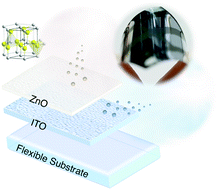
This study reports improved performance of inverted organic solar cells by using high working-pressure sputtered ZnO.
The content of this RSS Feed (c) The Royal Society of Chemistry
10 Nov 01:48
by Tenghooi Goh, Jing-Shun Huang, Kevin G. Yager, Matthew Y. Sfeir, Chang-Yong Nam, Xiao Tong, Louise M. Guard, Patrick R. Melvin, Francisco Antonio, Benjamin G. Bartolome, Minjoo L. Lee, Nilay Hazari, André D. Taylor

The first highly efficient single junction quaternary blend solar cells that break efficiency above 10% with complementary squaraine small molecules and low band-gap polymer combinations are reported by Nilay Hazari, André D. Taylor and co-workers in article number 1600660. The quaternary design demonstrates several advantages: (i) broader light absorption, (ii) improved surface morphology, (iii) enhanced co-crystallization packing, (iv) multiple energy and charge transfer pathways to reduce recombination, and (v) increased charge mobility.
10 Nov 01:48
by Florian Lombeck, Hartmut Komber, Daniele Fazzi, Diego Nava, Jochen Kuhlmann, Dominik Stegerer, Karen Strassel, Josef Brandt, Amaia Diaz de Zerio Mendaza, Christian Müller, Walter Thiel, Mario Caironi, Richard Friend, Michael Sommer

Unintentionally formed carbazole homocouplings occur frequently in the photovoltaic material PCDTBT when made by Suzuki polycondensation resulting in significantly lower power conversion efficiency of PCDTBT/fullerene solar cells. A likely loss mechanism that leads to reduced short circuit currents is exciton localization next to the homocoupling defect. This is reported by Michael Sommer and co-workers in article number 1601232.
10 Nov 01:47
by Annika Spies, Mathias List, Tanmoy Sarkar, Uli Würfel
The selectivity of electrodes of solar cells is a critical factor that can limit the overall efficiency. If the selectivity of an electrode is not sufficient both electrons and holes recombine at its surface. In materials with poor transport properties such as in organic solar cells, these surface recombination currents are accompanied by large gradients of the quasi-Fermi energies as the driving force. Experimental results from current–voltage characteristics, advanced photo- and electroluminescence as well as charge extraction of three different photoactive materials are shown and compared to drift-diffusion simulations. It can be concluded that in cases of electrodes with reduced selectivity the decrease of the open-circuit voltage can be divided into two distinct contributions, the reduction of the overall steady-state charge carrier density and the gradients of the quasi-Fermi energies. The results clearly show that for photoactive layers with poor transport properties, the gradient of the quasi-Fermi energy in the vicinity of the contact is the main contribution to the loss in open-circuit voltage. For imbalanced mobilities, this gives rise to the phenomenon that it is more challenging to realize a selective contact for the less mobile charge carrier, i.e., the hole contact in most organic solar cells.

The impact of charge carrier mobility and electrode selectivity on surface recombination is investigated by drift-diffusion modeling, charge extraction, electro- and photoluminescence. It is shown that for organic solar cells the reduced open-circuit voltage is not only due to actual recombination of charge carriers at the contact but mainly a consequence of the required driving force for the majority carriers.
10 Nov 01:47
Nanoscale, 2016, 8,19804-19810
DOI: 10.1039/C6NR07450B, Paper
Xiaobing Cao, Changli Li, Yahui Li, Fei Fang, Xian Cui, Youwei Yao, Jinquan Wei
The efficiency of perovskite solar cells is improved greatly through controlling the microstructure of PbI2 films by adding a small amount of NMP.
The content of this RSS Feed (c) The Royal Society of Chemistry

10 Nov 01:38
by Özlem Ateş Sönmezoğlu, Seçkin Akın, Begüm Terzi, Serdal Mutlu, Savaş Sönmezoğlu
This paper firstly reports the effect of deoxyribonucleic acid (DNA) molecules extracted from chickpea and wheat plants on the injection/recombination of photogenerated electrons and sensitizing ability of dye-sensitized solar cells (DSSCs). These high-yield DNA molecules are applied as both linker bridging unit as well as thin tunneling barrier (TTB) at titanium dioxide (TiO2 )/dye interface, to build up high-efficient DSSCs. With its favorable energy levels, effective linker bridging role, and double helix structure, bifunctional DNA modifier shows an efficient electron injection, suppressed charge recombination, longer electron lifetime, and higher light harvesting efficiency, which leads to higher photovoltaic performance. In particular, a photoconversion efficiency (PCE) of 9.23% is achieved by the binary chickpea and wheat DNA-modified TiO2 (CW@TiO2) photoanode. Furthermore, time-resolved fluorescence spectroscopy measurements confirm a better electron transfer kinetics for DNA-modified TiO2 photoanodes, implying a higher electron transfer rate (kET). This work highlights a great contribution for the photoanodes that are linked with DNA molecule, which act as both bridging unit and TTB to control the charge recombination and injection dynamics, and hence, boost the photovoltaic performance in the DSSCs.

Two types of deoxyribonucleic acid molecules, extracted from fresh leaves of chickpea and wheat plants, employ as thin tunneling barrier at TiO2/dye interface to minimize the recombination rates as well as linker bridging units for the electrons to move toward the TiO2, thereby enhancing Voc and Jsc. This strategy might open up new opportunities for the widespread fabrication and application of dye-sensitized solar cells.
10 Nov 01:21
by Zonglong Zhu, Jing-Qi Xu, Chu-Chen Chueh, Hongbin Liu, Zhong'an Li, Xiaosong Li, Hongzheng Chen, Alex K.-Y. Jen

A low-temperature, solution-processable organic electron-transporting material (ETM) is successfully developed for efficient conventional n-i-p perovskite solar cells (PVSCs). This ETM can show a high efficiency over 17% on rigid device and 14.2% on flexible PVSC. To the best of our knowledge, this efficiency is among the highest values reported for flexible n-i-p PVSCs with negligible hysteresis thus far.
10 Nov 01:18
by Ailing Tang, Chuanlang Zhan, Jiannian Yao, Erjun Zhou
After the first report in 2008, diketopyrrolopyrrole (DPP)-based small-molecule photovoltaic materials have been intensively explored. The power conversion efficiencies (PCEs) for the DPP-based small-molecule donors have been improved up to 8%. Furthermore, through judicious structure modification, DPP-based small molecules can also be converted into electron-acceptor materials, and, recently, some exciting progress has been achieved. The development of DPP-based photovoltaic small molecules is summarized here, and the photovoltaic performance is discussed in relation to structural modifications, such as the variations of donor–acceptor building blocks, alkyl substitutions, and the type of conjugated bridges, as well as end-capped groups. It is expected that the discussion will provide a guideline in the exploration of novel and promising DPP-containing photovoltaic small molecules.

Diketopyrrolopyrrole (DPP)-based small-molecule photovoltaic materials are being intensively explored and can be divided into three types: single-DPP, double-DPP, and multi-DPP respectively. The recent progress regarding DPP-based photovoltaic small molecules is highlighted and the photovoltaic performance in relation to structural modification such as the variations of donor–acceptor building blocks, alkyl substitutions, the type of conjugated bridges, and the type of end-capped groups is discussed.
fen, Bin and 7 others like this
09 Nov 09:23
by Weijun Ke, Constantinos C. Stoumpos, Jenna Leigh Logsdon, Michael R. Wasielewski, Yanfa Yan, Guojia Fang and Mercouri G. Kanatzidis

Journal of the American Chemical Society
DOI: 10.1021/jacs.6b08790

08 Nov 03:08
J. Mater. Chem. A, 2016, Advance Article
DOI: 10.1039/C6TA07004C, Paper
Su-Jin Ha, Jin Hyuck Heo, Sang Hyuk Im, Jun Hyuk Moon
A mesoscopic inverse opal is prepared as an electron-conducting scaffold for high efficiency and stable perovskite solar cells.
To cite this article before page numbers are assigned, use the DOI form of citation above.
The content of this RSS Feed (c) The Royal Society of Chemistry
08 Nov 03:06
J. Mater. Chem. A, 2016, Advance Article
DOI: 10.1039/C6TA08117G, Communication
Yue Sun, Yihui Wu, Xiang Fang, Linjun Xu, Zhijie Ma, Yongting Lu, Wen-Hua Zhang, Qiang Yu, Ningyi Yuan, Jiangning Ding
Perovskite solar cells with superior tolerance to humidity (85-95% RH) and long-term stability have been achieved via adding a certain amount of a cost-effective and available water soluble additive, polyvinyl alcohol (PVA).
To cite this article before page numbers are assigned, use the DOI form of citation above.
The content of this RSS Feed (c) The Royal Society of Chemistry
08 Nov 03:06
J. Mater. Chem. A, 2016, 4,18952-18962
DOI: 10.1039/C6TA08119C, Paper
Qing-Dong Ou, Hao-Jun Xie, Jing-De Chen, Lei Zhou, Yan-Qing Li, Jian-Xin Tang
Highly efficient flexible polymer solar cells with enhanced light harvesting are achieved by combining a transparent silver mesowire grid electrode and a plasmonic meta-mirror back reflector.
The content of this RSS Feed (c) The Royal Society of Chemistry
08 Nov 03:06
J. Mater. Chem. A, 2016, Advance Article
DOI: 10.1039/C6TA08317J, Highlight
Andrew T. Kleinschmidt, Samuel E. Root, Darren J. Lipomi
Regioregular poly(3-hexylthiophene) (P3HT) is used as a model polymer for research in organic solar cells.
To cite this article before page numbers are assigned, use the DOI form of citation above.
The content of this RSS Feed (c) The Royal Society of Chemistry
08 Nov 03:04
by Sadok Ben Dkhil, Martin Pfannmöller, Maria Ilenia Saba, Meriem Gaceur, Hamed Heidari, Christine Videlot-Ackermann, Olivier Margeat, Antonio Guerrero, Juan Bisquert, Germa Garcia-Belmonte, Alessandro Mattoni, Sara Bals, Jörg Ackermann
The use of fullerene as acceptor limits the thermal stability of organic solar cells at high temperatures as their diffusion inside the donor leads to phase separation via Ostwald ripening. Here it is reported that fullerene diffusion is fully suppressed at temperatures up to 140 °C in bulk heterojunctions based on the benzodithiophene-based polymer (the poly[[4,8-bis[(2-ethylhexyl)oxy]-benzo[1,2-b:4,5-b′]dithiophene-2,6-diyl][3-fluoro-2-[(2-ethylhexyl)carbonyl]-thieno[3,4-b]thiophenediyl]], (PTB7) in combination with the fullerene derivative [6,6]-phenyl-C71-butyric acid methyl ester (PC70BM). The blend stability is found independently of the presence of diiodooctane (DIO) used to optimize nanostructuration and in contrast to PTB7 blends using the smaller fullerene derivative PC70BM. The unprecedented thermal stability of PTB7:PC70BM layers is addressed to local minima in the mixing enthalpy of the blend forming stable phases that inhibit fullerene diffusion. Importantly, although the nanoscale morphology of DIO processed blends is thermally stable, corresponding devices show strong performance losses under thermal stress. Only by the use of a high temperature annealing step removing residual DIO from the device, remarkably stable high efficiency solar cells with performance losses less than 10% after a continuous annealing at 140 °C over 3 days are obtained. These results pave the way toward high temperature stable polymer solar cells using fullerene acceptors.

Thermal stability of poly[[4,8-bis[(2-ethylhexyl)oxy]benzo[1,2-b:4,5-b′]dithiophene-2,6-diyl][3-fluoro-2-[(2-ethylhexyl)-carbonyl]thieno[3,4-b]thiophenediyl]]-based solar cells is found to depend on fullerene size and solvent additive. While [6,6]-phenyl-C71-butyric acid methyl ester diffusion is suppressed inside blends independently of the solvent additive, only removing residual additive by 140 °C annealing leads to solar cells resisting 140 °C over days with performance losses less than 10%.
08 Nov 03:04
by Xiaoyan Du, Ole Lytken, Manuela S. Killian, Jiamin Cao, Tobias Stubhan, Mathieu Turbiez, Patrik Schmuki, Hans-Peter Steinrück, Liming Ding, Rainer H. Fink, Ning Li, Christoph J. Brabec
Organic solar cells are promising in terms of full-solution-processing which enables low-cost and large-scale fabrication. While single-junction solar cells have seen a boost in power conversion efficiency (PCE), multi-junction solar cells are promising to further enhance the PCE. In all-solution-processed multi-junction solar cells, interfacial losses are often encountered between hole-transporting layer (HTL) and the active layers and therefore greatly limit the application of newly developed high-performance donor and acceptor materials in multi-junction solar cells. Here, the authors report on a systematic study of interface losses in both single-junction and multi-junction solar cells based on representative polymer donors and HTLs using electron spectroscopy and time-of-flight secondary ion mass spectrometry. It is found that a facile mixed HTL containing poly(3,4-ethylenedioxythiophene) polystyrene sulfonate (PEDOT:PSS) and MoO
x
nanoparticles successfully overcomes the interfacial losses in both single- and multi-junction solar cells based on various active layers by reducing interface protonation, promoting better energy-level alignment, and forming a dense and smooth layer. Solution-processed single-junction solar cells are demonstrated to reach the same performance as with evaporated MoO
x
(over 7%). Multi-junction solar cells with polymers containing nitrogen atoms as the first layer and the mixed PEDOT:PSS and MoO
x
nanoparticles as hole extraction layer reach fill factor (FF) of over 60%, and PCE of over 8%, while the identical stack with pristine PEDOT:PSS or MoO
x
nanoparticles show FF smaller than 50% and PCE less than 5%.

The interface losses in both solution-processed inverted single- and multi-junction solar cells using representative polymer donors and hole-transporting layers (HTLs) are systematically investigated. A facile mixed HTL containing poly(3,4-ethylenedioxythiophene) polystyrene sulfonate and MoO
x
nanoparticles successfully overcomes the interfacial losses by reducing interface protonation, promoting better energy-level alignment, and forming a dense and smooth layer.
08 Nov 03:04
by Rajni Garg, Sait Elmas, Thomas Nann, Mats R. Andersson
Advances in the research of graphene in the development of optoelectronic devices have clearly witnessed a strong increase in the past few years. Graphene, a zero bandgap semiconducting material exhibits exceptional properties such as high conductivity, mechanical robustness, optical transparency, flexibility and much more yet to be discovered. Due to its extraordinary properties, graphene is believed to have the potential to replace many traditional electrode materials that are being used in optoelectronic devices. To achieve a high device performance various deposition techniques have been developed to deposit a thin, transparent, and uniform layer of graphene on different substrates. However, the success of these methods strongly relies on the processing conditions, resulting morphology and the work function of the graphene films. This review summarizes the developments in the synthesis and deposition methods of graphene electrodes in combination with organic solar cells over the past 10 years.

The significant increase in graphene research over the past ten years includes the use of graphene in organic solar cells (OSCs). Current challenges and future research directions for graphene electrodes combined with OSCs are discussed, covering the latest developments in deposition methods of graphene electrodes, with an emphasis on manufacturing commercializable graphene electrode-based OSCs.
08 Nov 03:03
by Martin Stolterfoht, Safa Shoaee, Ardalan Armin, Hui Jin, Ivan Kassal, Wei Jiang, Paul Burn, Paul Meredith
The origin of photocurrent losses in the power-generating regime of organic solar cells (OSCs) remains a controversial topic, although recent literature suggests that the competition between bimolecular recombination and charge extraction determines the bias dependence of the photocurrent. Here the steady-state recombination dynamics is studied in bulk-heterojunction OSCs with different hole mobilities from short-circuit to maximum power point. It is shown that in this regime, in contrast to previous transient extracted charge and absorption spectroscopy studies, first-order recombination outweighs bimolecular recombination of photogenerated charge carriers. This study demonstrates that the first-order losses increase with decreasing slower carrier mobility, and attributes them to either mobilization of charges trapped at the donor:acceptor interface through the Poole–Frenkel effect, and/or recombination of photogenerated and injected charges. The dependence of both first-order and higher-order losses on the slower carrier mobility explains why the field dependence of OSC efficiencies has historically been attributed to charge-extraction losses.

Fill Factor losses in organic solar cells are decoupled into recombination with first-order and second-order (bimolecular) kinetics. Under steady-state, the former losses dominate the latter from short-circuit to maximum-power point. The first-order photocurrent losses are attributed to geminate charge-transfer state recombination, or recombination of photogenerated and injected charges. Both loss mechanisms can be minimized by increasing the slower carrier mobility.
08 Nov 03:02
Nanoscale, 2016, 8,19536-19540
DOI: 10.1039/C6NR06891J, Communication
Haichao Yu, Kuankuan Ren, Qiang Wu, Jian Wang, Jie Lin, Zhijie Wang, Jingjun Xu, Rupert F. Oulton, Shengchun Qu, Peng Jin
Plasmonic nanowire lasers based on solution grown organic-inorganic perovskites are demonstrated with a low threshold and good thermal stability.
The content of this RSS Feed (c) The Royal Society of Chemistry

08 Nov 03:01
by Rahim Munir, Arif D. Sheikh, Maged Abdelsamie, Hanlin Hu, Liyang Yu, Kui Zhao, Taesoo Kim, Omar El Tall, Ruipeng Li, Detlef-M. Smilgies, Aram Amassian

Solution-processed hybrid perovskite semiconductors attract a great deal of attention, but little is known about their formation process. The one-step spin-coating process of perovskites is investigated in situ, revealing that thin-film formation is mediated by solid-state precursor solvates and their nature. The stability of these intermediate phases directly impacts the quality and reproducibility of thermally converted perovskite films and their photovoltaic performance.
08 Nov 02:59
by Baodan Zhao, Mojtaba Abdi-Jalebi, Maxim Tabachnyk, Hugh Glass, Varun S. Kamboj, Wanyi Andrew Nie, J. Pearson, Yuttapoom Puttisong, Karl C. Gödel, Harvey E. Beere, David A. Ritchie, Aditya D. Mohite, Siân E. Dutton, Richard H. Friend, Aditya Sadhanala

Low-bandgap CH3NH3(PbxSn1–x)I3 (0 ≤ x ≤ 1) hybrid perovskites (e.g., ≈1.5–1.1 eV) demonstrating high surface coverage and superior optoelectronic properties are fabricated. State-of-the-art photovoltaic (PV) performance is reported with power conversion efficiencies approaching 10% in planar heterojunction architecture with small (<450 meV) energy loss compared to the bandgap and high (>100 cm2 V−1 s−1) intrinsic carrier mobilities.
08 Nov 02:58
by Hrishit Banerjee, Sudip Chakraborty and Tanusri Saha-Dasgupta

Chemistry of Materials
DOI: 10.1021/acs.chemmater.6b03755

08 Nov 02:57
by Mahesh Kumar Ravva, Tonghui Wang and Jean-Luc Brédas

Chemistry of Materials
DOI: 10.1021/acs.chemmater.6b02930

04 Nov 13:36
J. Mater. Chem. A, 2016, Accepted Manuscript
DOI: 10.1039/C6TA08565B, Communication
Eun Joo Yeom, Seong Sik Shin, Woon Seok Yang, Seon Joo Lee, Wenping Yin, Jun Hong Noh, Tae Kyu Ahn, Sang Il Seok
We synthesized single-crystalline Sn-based oxides for the use in electron-transporting layer (ETL) in perovskite solar cells (PSCs). The control of Zn-to-Sn cation ratio (Zn/Sn=0-2) in a fixed concentration of hydrazine...
The content of this RSS Feed (c) The Royal Society of Chemistry