Shared posts

09 Jul 08:28

EPAW-1.0 code for evolutionary optimization of PAW datasets especially for high-pressure applications

Publication date: December 2018

Source: Computer Physics Communications, Volume 233

Author(s): Kanchan Sarkar, N.A.W. Holzwarth, R.M. Wentzcovitch

Abstract

We present a bio-inspired stochastic optimization strategy that optimizes projector augmented wave (PAW) datasets, for a user-specified pressure range, to realize the highest possible accuracy in high-throughput density functional theory calculations within the framework of PAW method. We named the optimizer “Evolutionary Generator of projector augmented wave datasets” (EPAW-1.0). The self-learning evolutionary algorithms in EPAW-1.0 adaptively tune some of the PAW parameters (such as different radii, and reference energies) to generate evolutionary optimized PAW (EPAW) datasets. In the course of designing EPAW dataset with a specific pseudo partial waves and projectors generation scheme, the code keeps the user-specified electronic configuration unaltered and the augmentation radius (rc) on the verge of the user allowed maximum without resulting in sphere overlap. The EPAW-1.0 algorithm homes on to a soft, transferable and unified EPAW dataset using various measures including the equation of state (EoS) of standard elemental materials within a user-specified pressure range that allows probing ∼50% volume compression with respect to the equilibrium atomic volume (corresponding to the energy minimum). The measures used by the EPAW algorithm also can be used to balance the efficiency and accuracy of the dataset.

Program Title: EPAW-1.0

Program Files doi:http://dx.doi.org/10.17632/ms52ym7vcn.1

Licensing provisions: GNU General Public License 3 (GPLv3)

Programming languages: Fortran90, Fortran77, Python3.0, bash shell, gnuplot5.0.

External routines/libraries: ATOMPAW, Quantum ESPRESSO, related linear algebra package.

Nature of problem: EPAW-1.0 is a hybrid recipe [2] that documents an interdisciplinary research integrating evolutionary computing with density functional theory (DFT). It offers a partially automated and consistent route to generate evolutionary optimized PAW (EPAW) datasets that show uniform performance for simulations up to a predefined high pressure. In particular, EPAW-1.0 makes use of evolutionary algorithms [[3], [4], [5], [6], [7]], PAW dataset generator (ATOMPAW [8], for example) and electronic-structure calculation code (Quantum Espresso [9], for example) to generate efficient and transferable EPAW datasets. EPAW datasets provide optimal accuracy in solid-state ab initio calculations within the favorable PAW computational framework — very close to the precision of targeted all-electron full potential linearized Augmented-plane-wave (AE-FLAPW) approach. We set the EoS from WIEN2k [1] calculations as our target, but any reliable EoS can be in use. The better the target EoS, the better is the performance of the EPAW datasets. Similarly, electronic-structure calculation code and PAW dataset generator code can also be replaced.

Solution Method: The implementation has two parts: a. Generating a diverse random initial population for EPAW-1.0 to start with; b. Generating EPAW dataset using EPAW-1.0.

A hybrid method, combining an in-house evolutionary strategy named Completely Adaptive Random Mutation Hill Climbing [6] (CARMHC) with ATOMPAW [8] program, quickly optimizes a set (population) of npop solutions (PAW dataset descriptors) from which the iterative process of EPAW-1.0 starts. The optimization condition involves superimposing the logarithmic derivative curves of the all-electron and pseudo radial wave functions, simultaneously satisfying necessary constraints on logarithmic derivatives, partial waves, pseudo partial waves and projector basis sets [[2], [8], [10], [11], [12]]. To start with, the method generates a diverse initial population of npop solution vector (npop= cardinality of the GA’s population in EPAW-1.0) randomly in the neighborhood of the initial educated guess based on problem-specific knowledge from the ATOMPAW program and iteratively tunes the population to minimize the area under the logarithmic derivative curves.

Once npop number of solution strings have been optimized, npop individuals are feed into the EPAW-1.0’s initial population. Equilibrium total energies are evaluated using Quantum Espresso distribution [9] and fitted to a finite strain expansion. Pressures are calculated using a 4-parameter Birch–Murnaghan fit [[13], [14]]. EPAW-1.0 employs genetic algorithms (GAs) [[15], [16], [17], [18], [19]] as the evolutionary procedure and iteratively tunes the free parameters of the PAW dataset generator to minimize the difference in equation of states (EoS) with respect to the given target EoS for the specified pressure range.

Additional comments: EPAW-1.0 is an evolutionary procedure blended with external density functional theory (DFT) formalism (as implemented in ATOMPAW and Quantum Espresso, for example). The ATOMPAW code generates dataset by a self-consistent all-electron atomic structure calculation within the framework of DFT. The projector and basis functions are derived from the eigenstates of the all-electron atomic Hamiltonian. They are determined by iteratively solving radial differential equations. Equilibrium total energies at some equidistant volume points for a specific elemental crystal are evaluated using Quantum Espresso distribution [9]. The EPAW-1.0 program conserves different constraints [2] on logarithmic derivatives and basis sets to avoid numerical instability, ghost states, and to promote an excellent transferability. More details about the constraints can be found in the methodology part of reference 1. It also provides a goodness measure of the generated dataset concerning the targeted results.

06 Jul 10:03

SO2 adsorption on rutile TiO2(110): An infrared reflection-absorption spectroscopy and density functional theory study

Publication date: November 2018

Source: Surface Science, Volume 677

Author(s): David Langhammer, Jolla Kullgren, Pavlin Mitev, Lars Österlund

Abstract

The adsorption of SO2 on single crystalline TiO2(110) has been investigated by means of polarized infrared reflection-absorption spectroscopy (IRRAS) experiments and density functional theory (DFT) calculations. IR absorption bands were detected at 1324 cm−1 and 985 cm−1 with p-polarized light incident along both the [11¯0] and [001] crystallographic directions at 123 K. When the temperature was increased to 153 K, the peak at 1324 cm−1 disappears, while a new, weak band appears at 995 cm−1. Simultaneously, a band at 995 cm−1 also emerges with s-polarized light along the [11¯0] direction. Based on the symmetry properties of the IRRAS spectra and accompanying ab initio simulations of the spectra employing a three layer model (vacuum-adsorbate-substrate), it is shown that the low temperature absorption IRRAS bands can be attributed to an SO3-like adsorbate structure. This is also the most stable adsorption structure (Ead = −0.58 eV) on the stoichiometric surface. The combined IRRAS and DFT results show that the band appearing at 995 cm−1 is associated with a surface sulfite specie which is stabilized by residual surface water. The DFT calculations also revealed that a stable adsorption structure exists on a reduced TiO2 surface, where SO2 binds strongly to an oxygen vacancy site. It is suggested that this is an intermediate that form surface sulfate upon further reactions with water, although it was not observed on the stoichiometric surface studied in this work.

Graphical abstract

Graphical abstract for this article

04 Jul 08:30

[ASAP] Accuracy of TD-DFT Geometries: A Fresh Look

by Eric Brémond, Marika Savarese, Carlo Adamo, Denis Jacquemin

TOC Graphic

Journal of Chemical Theory and Computation
DOI: 10.1021/acs.jctc.8b00311
15 Jun 08:42

[ASAP] A Comprehensive Assessment of the Effectiveness of Orbital Optimization in Double-Hybrid Density Functionals in the Treatment of Thermochemistry, Kinetics, and Noncovalent Interactions

by Asim Najibi, Lars Goerigk

TOC Graphic

The Journal of Physical Chemistry A
DOI: 10.1021/acs.jpca.8b04058
14 Jun 10:12

Questions in natural products synthesis research that can (and cannot) be answered using computational chemistry

Chem. Soc. Rev., 2018, 47,7845-7850
DOI: 10.1039/C8CS00298C, Tutorial Review
Dean J. Tantillo
Questions of relevance to synthetic chemists that can be answered, at least in part, using quantum chemical computations are highlighted.
The content of this RSS Feed (c) The Royal Society of Chemistry
12 Jun 10:43

[ASAP] Nonadiabatic Quantum Dynamics with Frozen-Width Gaussians

by Loïc Joubert-Doriol, Artur F. Izmaylov

TOC Graphic

The Journal of Physical Chemistry A
DOI: 10.1021/acs.jpca.8b03404
12 Jun 08:52

[ASAP] Psi4NumPy: An Interactive Quantum Chemistry Programming Environment for Reference Implementations and Rapid Development

by Daniel G. A. Smith, Lori A. Burns, Dominic A. Sirianni, Daniel R. Nascimento, Ashutosh Kumar, Andrew M. James, Jeffrey B. Schriber, Tianyuan Zhang, Boyi Zhang, Adam S. Abbott, Eric J. Berquist, Marvin H. Lechner, Leonardo A. Cunha, Alexander G. Heide, Jonathan M. Waldrop, Tyler Y. Takeshita, Asem Alenaizan, Daniel Neuhauser, Rollin A. King, Andrew C. Simmonett, Justin M. Turney, Henry F. Schaefer, Francesco A. Evangelista, A. Eugene DePrince III, T. Daniel Crawford, Konrad Patkowski, C. David Sherrill

TOC Graphic

Journal of Chemical Theory and Computation
DOI: 10.1021/acs.jctc.8b00286
11 Jun 10:39

Electronic structure of coinage metal clusters M20 (M = Cu, Ag, Au) from density functional calculations and the phenomenological shell model

Publication date: 16 August 2018
Source:Chemical Physics Letters, Volume 706
Author(s): Pham Vu Nhat, Truong Ba Tai
The first-principles calculations are carried out to explore more intensely on geometric, spectroscopic and electronic properties of M20 (M = Cu, Ag, Au) species. Computed results show that the global minima of these clusters are compact, nearly spherical structures, while other low-lying isomers exhibit the oblate or probate shapes. For Cu20, we find it is in a C 3 symmetry form rather than the C s conformation as previously suggested. The vertical ionization energies for lower-lying isomers are also computed and assigned with respect to available experimental values. Although several isomers were predicted to be similar in energy content, the corresponding vibrational signatures are so distinctive that could be used as fingerprint signals to identify their geometrical forms. More importantly, the enhanced stability of these systems can be understood in terms of the phenomenological shell model. Computed results also recognize that the structures and properties of Ag20 and Cu20 clusters are similar and prefer compact structures, while Au20 cluster exhibits structures different from with a tetrahedral form.

Graphical abstract

image
25 May 07:26

Before reproducibility must come preproducibility

by Philip B. Stark

Before reproducibility must come preproducibility

Before reproducibility must come preproducibility, Published online: 24 May 2018; doi:10.1038/d41586-018-05256-0

Instead of arguing about whether results hold up, let’s push to provide enough information for others to repeat the experiments, says Philip Stark.
14 May 07:47

[ASAP] Ultrathin WO3·0.33H2O Nanotubes for CO2 Photoreduction to Acetate with High Selectivity

by Songmei Sun, Motonori Watanabe, Ji Wu, Qi An, Tatsumi Ishihara

TOC Graphic

Journal of the American Chemical Society
DOI: 10.1021/jacs.8b03316
07 May 09:01

[ASAP] Plane-Wave Implementation and Performance of à-la-Carte Coulomb-Attenuated Exchange-Correlation Functionals for Predicting Optical Excitation Energies in Some Notorious Cases

by Martin P. Bircher, Ursula Rothlisberger

TOC Graphic

Journal of Chemical Theory and Computation
DOI: 10.1021/acs.jctc.8b00069
25 Apr 10:31

Decoding real space bonding descriptors in valence bond language

Phys. Chem. Chem. Phys., 2018, 20,12368-12372
DOI: 10.1039/C8CP01519H, Communication
A. Martin Pendas, E. Francisco
Real space bonding descriptors are orbital invariant indices that can be obtained independently of the theoretical framework used to compute a given wavefunction.
The content of this RSS Feed (c) The Royal Society of Chemistry
17 Apr 11:41

Booze-busting nanopills to help the liver

Booze-busting nanopills to help the liver

Booze-busting nanopills to help the liver, Published online: 17 April 2018; doi:10.1038/d41586-018-04732-x

Miniature capsules deliver enzymes that quickly cut blood-alcohol levels.
12 Apr 11:51

Web of Science owner buys tool that offers one-click access to journal articles

by Holly Else

Web of Science owner buys tool that offers one-click access to journal articles

Web of Science owner buys tool that offers one-click access to journal articles, Published online: 10 April 2018; doi:10.1038/d41586-018-04414-8

Kopernio’s web-browser extension helps academics download research papers legally with one click.
06 Apr 14:12

An improved reaction path optimization method using a chain of conformations

Publication date: May 2018
Source:Chemical Physics Letters, Volume 699
Author(s): Toshio Asada, Nozomi Sawada, Takuya Nishikawa, Shiro Koseki
The efficient fast path optimization (FPO) method is proposed to optimize the reaction paths on energy surfaces by using chains of conformations. No artificial spring force is used in the FPO method to ensure the equal spacing of adjacent conformations. The FPO method is applied to optimize the reaction path on two model potential surfaces. The use of this method enabled the optimization of the reaction paths with a drastically reduced number of optimization cycles for both potentials. It was also successfully utilized to define the MEP of the isomerization of the glycine molecule in water by FPO method.

Graphical abstract

image
06 Apr 09:31

[ASAP] Promising Photocatalysts for Water Splitting in BeN2 and MgN2 Monolayers

by Yining Wei, Yandong Ma, Wei Wei, Mengmeng Li, Baibiao Huang, Ying Dai

TOC Graphic

The Journal of Physical Chemistry C
DOI: 10.1021/acs.jpcc.8b01081
05 Apr 10:28

First layer water phases on anatase TiO2(101)

Publication date: August 2018
Source:Surface Science, Volume 674
Author(s): A. Schaefer, V. Lanzilotto, U. Cappel, P. Uvdal, A. Borg, A. Sandell
The anatase TiO2(101) surface and its interaction with water is an important topic in oxide surface chemistry. Firstly, it benchmarks the properties of the majority facet of TiO2 nanoparticles and, secondly, there is a controversy as to whether the water molecule adsorbs intact or deprotonates. We have addressed the adsorption of water on anatase TiO2(101) by synchrotron radiation photoelectron spectroscopy. Three two-dimensional water structures are found during growth at different temperatures: at 100 K, a metastable structure forms with no hydrogen bonding between the water molecules. In accord with prior literature, we assign this phase to chains of disordered molecules. Growth 160 K results in a metastable structure with expressed hydrogen bonding between the water molecules. At 190 K, the water molecules become disordered as the thermal energy is too high and hence the hydrogen bonds break. The result is a structure with isolated monomers. Partial dissociation is observed for all three growths, with the molecular state only slightly favored in energy (20–40 meV) over the dissociated state. Heating of a thick film leads to more dissociation compared to a bilayer, when formed at 100 K. Thus, extending the water network facilitates proton transport and hence dissociation. The results reconcile apparent conflicting experimental results previously obtained by scanning tunneling microscopy (STM) and core level photoelectron spectroscopy.

Graphical abstract

image
26 Mar 10:50

Direct inversion of the iterative subspace (DIIS) convergence accelerator for crystalline solids employing Gaussian basis sets

Abstract

When dealing with crystalline solids, convergence of iterative procedures such as self-consistent field (SCF) or coupled–perturbed equations is often more difficult than in the case of molecular systems, specially when a local basis set of atom-centered Gaussians is adopted. Reasons are usually to be found in the close packing of atoms and peculiar chemical characters, such as metallic bond. In this work, a periodic implementation of the direct inversion of the iterative subspace (DIIS) method for crystalline solids is presented for SCF and electric field response up to second order. The error vectors are computed in reciprocal space and implemented for the energy, polarizability and up to second hyperpolarizability. The performance of different DIIS flavors is benchmarked on a representative set of 42 systems including metallic, ionic, molecular and covalent crystals, bulk crystals, surfaces and nanotubes, adopting all-electron basis sets as well as pseudopotentials. Interestingly, it is seen that the error vectors evaluated in the central (gamma) point of the Brillouin zone are sufficient in all cases for an optimal DIIS performance.

13 Mar 09:37

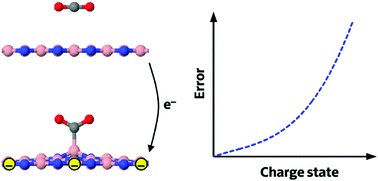
Modelling molecular adsorption on charged or polarized surfaces: a critical flaw in common approaches

Phys. Chem. Chem. Phys., 2018, 20,8456-8459
DOI: 10.1039/C7CP08209F, Communication
Kristof M. Bal, Erik C. Neyts
Many theoretical predictions of charge- or external field-enhanced adsorption are in severe error due to inconsiderate treatment of periodicity.
The content of this RSS Feed (c) The Royal Society of Chemistry
09 Mar 10:22

[ASAP] Efficient Method for Calculating Effective Core Potential Integrals

by Simon C. McKenzie, Evgeny Epifanovsky, Giuseppe M. J. Barca, Andrew T. B. Gilbert and Peter M. W. Gill

TOC Graphic

The Journal of Physical Chemistry A
DOI: 10.1021/acs.jpca.7b12679
05 Mar 10:07

Theoretical study of the rutile based semiconductor with visible-light responsive photocatalytic activity for water splitting

Publication date: 22 March 2018
Source:International Journal of Hydrogen Energy, Volume 43, Issue 12
Author(s): Baihai Li, Jianlin Wang, Haoran Guo, Lei Li, Qiuju Zhang
The cluster expansion formalism combined with the accurate first-principles calculations were performed to investigate the stabilities, the electronic structures and the optical absorption of the rutile based semiconductor TiPt7O16. Our comprehensive calculations have predicted that TiPt7O16 is the most stable structure among the hundreds of the configurations of Pt substituted rutile TiO2 (Ti1-xPtxO2 (R), x = 0–1). More importantly, the accurate HSE06 calculations indicate that TiPt7O16 is a potential visible-light responsible photocatalyst with the band gap of 1.70 eV. In addition, the Pt-terminated (010) and Ti & Pt-terminated (011) surfaces are suitable for catalyzing the overall water splitting, due to their band edges span over the required redox potential.

26 Feb 12:53

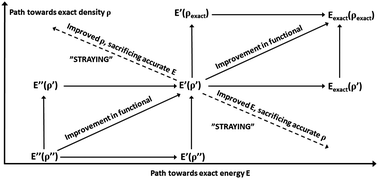
Energy vs. density on paths toward more exact density functionals

Phys. Chem. Chem. Phys., 2018, 20,7538-7548
DOI: 10.1039/C7CP07730K, Paper
Kasper P. Kepp
The density-energy balance of density functionals is quantified using trial densities. Density errors commonly amount to only a few kJ mol-1.
The content of this RSS Feed (c) The Royal Society of Chemistry
26 Feb 12:49

Importance of one-parameter hybrid exchange-correlation functionals in band gaps of transition metal and metalloid oxides

Abstract

In this work, the effect of the exact exchange in hybrid functionals based on one parameter is explored over the electronic structure of \(\hbox {Ti}_2\hbox {O}_3\) , \(\hbox {V}_2\hbox {O}_3\) , \(\hbox {Cr}_2\hbox {O}_3\) , \(\hbox {Fe}_2\hbox {O}_3\) , \(\hbox {MnO}, \hbox {SiO}_2\) , \(\hbox {GeO}_2\) , and \(\hbox {SnO}_2\) , such that oxides with different nature are included in this data set. Structural parameters and magnetic states of these oxides are reproduced according to experimental information, which are discussed in the context of the exact exchange inclusion. Several exchange-correlation functionals are considered to reach this goal, two of them, HSE06 and B1WC, which were designed ad hoc to study metal oxides are contrasted with hybrid exchange-correlation functionals that contain a fraction ( \(\alpha \) ) of the exact exchange, like PBE0. Thus, in this work, hybrid functionals where \(\alpha \) is varied systematically provide a linear relationship between band gap and \(\alpha \) , which gives one way to match the theoretical band gap with experimental information. If this optimum \(\alpha \) is used to predict cell parameters or bulk modulus, then the corresponding results are close to experimental data. For the systems considered in this work, all-electron calculations were performed using a periodic ab initio code, which uses Gaussian localized basis set functions for the expansion of Bloch orbitals by linear combinations of atomic orbitals.

21 Feb 09:44

Enhanced Hydrogen Production from Methanol Photolysis on a Formate-Modified Rutile-TiO2(110) Surface

by Chenbiao Xu, Ruimin Wang, Fei Xu, Qing Guo, Xing’an Wang, Dongxu Dai, Hongjun Fan and Xueming Yang

TOC Graphic

The Journal of Physical Chemistry C
DOI: 10.1021/acs.jpcc.8b00724
20 Feb 11:37

PyCDT: A Python toolkit for modeling point defects in semiconductors and insulators

Publication date: May 2018
Source:Computer Physics Communications, Volume 226
Author(s): Danny Broberg, Bharat Medasani, Nils E.R. Zimmermann, Guodong Yu, Andrew Canning, Maciej Haranczyk, Mark Asta, Geoffroy Hautier
Point defects have a strong impact on the performance of semiconductor and insulator materials used in technological applications, spanning microelectronics to energy conversion and storage. The nature of the dominant defect types, how they vary with processing conditions, and their impact on materials properties are central aspects that determine the performance of a material in a certain application. This information is, however, difficult to access directly from experimental measurements. Consequently, computational methods, based on electronic density functional theory (DFT), have found widespread use in the calculation of point-defect properties. Here we have developed the Python Charged Defect Toolkit (PyCDT) to expedite the setup and post-processing of defect calculations with widely used DFT software. PyCDT has a user-friendly command-line interface and provides a direct interface with the Materials Project database. This allows for setting up many charged defect calculations for any material of interest, as well as post-processing and applying state-of-the-art electrostatic correction terms. Our paper serves as a documentation for PyCDT, and demonstrates its use in an application to the well-studied GaAs compound semiconductor. We anticipate that the PyCDT code will be useful as a framework for undertaking readily reproducible calculations of charged point-defect properties, and that it will provide a foundation for automated, high-throughput calculations. Program summary Program title: PyCDT Program Files doi: http://dx.doi.org/10.17632/7vzk5gxzh3.1 Licensing Provisions: MIT License. Programming language: Python External routines/libraries: NumPy [1], matplotlib [2], and Pymatgen [3], Nature of problem: Computing the formation energies and stable point defects with finite size supercell error corrections for charged defects in semiconductors and insulators. Solution method: Automated setup, and parsing of defect calculations, combined with local use of finite size supercell corrections. All combined into a code with a standard user-friendly command line interface that leverages a core set of tools with a wide range of applicability. Additional comments: This article describes version 1.0.0. Program obtainable from https://bitbucket.org/mbkumar/pycdt

20 Feb 11:32

QuantumOptics.jl: A Julia framework for simulating open quantum systems

Publication date: June 2018
Source:Computer Physics Communications, Volume 227
Author(s): Sebastian Krämer, David Plankensteiner, Laurin Ostermann, Helmut Ritsch
We present an open source computational framework geared towards the efficient numerical investigation of open quantum systems written in the Julia programming language. Built exclusively in Julia and based on standard quantum optics notation, the toolbox offers speed comparable to low-level statically typed languages, without compromising on the accessibility and code readability found in dynamic languages. After introducing the framework, we highlight its features and showcase implementations of generic quantum models. Finally, we compare its usability and performance to two well-established and widely used numerical quantum libraries. Program summary Program Title: QuantumOptics.jl Program Files doi: http://dx.doi.org/10.17632/3696r5jhm4.1 Licensing provisions: MIT Programming language: Julia Supplementary material: Full list of functions (API) as html Nature of problem: Dynamics of open quantum systems Solution method: Numerically solving the Schrödinger or master equation or a Monte Carlo wave-function approach. Additional comments including Restrictions and Unusual features: The framework may be used for problems that fulfill the necessary conditions such that they can be described by a Schrödinger or master equation. Furthermore, the aim is to efficiently and easily simulate systems of moderate size rather than pushing the limits of what is possible numerically.

08 Feb 10:26

The PseudoDojo: Training and grading a 85 element optimized norm-conserving pseudopotential table

Publication date: May 2018
Source:Computer Physics Communications, Volume 226
Author(s): M.J. van Setten, M. Giantomassi, E. Bousquet, M.J. Verstraete, D.R. Hamann, X. Gonze, G.-M. Rignanese
First-principles calculations in crystalline structures are often performed with a planewave basis set. To make the number of basis functions tractable two approximations are usually introduced: core electrons are frozen and the diverging Coulomb potential near the nucleus is replaced by a smoother expression. The norm-conserving pseudopotential was the first successful method to apply these approximations in a fully ab initio way. Later on, more efficient and more exact approaches were developed based on the ultrasoft and the projector augmented wave formalisms. These formalisms are however more complex and developing new features in these frameworks is usually more difficult than in the norm-conserving framework. Most of the existing tables of norm-conserving pseudopotentials, generated long ago, do not include the latest developments, are not systematically tested or are not designed primarily for high precision. In this paper, we present our PseudoDojo framework for developing and testing full tables of pseudopotentials, and demonstrate it with a new table generated with the ONCVPSP approach. The PseudoDojo is an open source project, building on the AbiPy package, for developing and systematically testing pseudopotentials. At present it contains 7 different batteries of tests executed with ABINIT, which are performed as a function of the energy cutoff. The results of these tests are then used to provide hints for the energy cutoff for actual production calculations. Our final set contains 141 pseudopotentials split into a standard and a stringent accuracy table. In total around 70,000 calculations were performed to test the pseudopotentials. The process of developing the final table led to new insights into the effects of both the core-valence partitioning and the non-linear core corrections on the stability, convergence, and transferability of norm-conserving pseudopotentials. The PseudoDojo hence provides a set of pseudopotentials and general purpose tools for further testing and development, focusing on highly accurate calculations and their use in the development of ab initio packages. The pseudopotential files are available on the PseudoDojo web-interface pseudo-dojo.org under the name NC (ONCVPSP) v0.4 in the psp8, UPF2, and PSML 1.1 formats. The webinterface also provides the inputs, which are compatible with the 3.3.1 and higher versions of ONCVPSP. All tests have been performed with ABINIT 8.4.

06 Feb 14:01

Discovery and Enumeration of Organic-Chemical and Biomimetic Reaction Cycles within the Network of Chemistry

by Michał D. Bajczyk, Piotr Dittwald, Agnieszka Wołos, Sara Szymkuć, Bartosz A. Grzybowski

Abstract

Analysis of the chemical-organic knowledge represented as a giant network reveals that it contains millions of reaction sequences closing into cycles. Without realizing it, independent chemists working at different times have jointly created examples of cyclic sequences that allow for the recovery of useful reagents and for the autoamplification of synthetically important molecules, those that mimic biological cycles, and those that can be operated one-pot.

Thumbnail image of graphical abstract

NOC-ing on heaven′s door: Big-data analysis of the network of organic chemistry (NOC), reveals that over many decades, chemists have created—unknowingly—millions of cyclic reaction sequences including those that recover valuable substrates, those that amplify useful chemicals, or those that mimic biological cycles. The image shows a special type of a cycle (the so-called clique) in which any member can be made from any other one in one step. Colors correspond to years in which a reaction was first reported.

05 Feb 11:08

Organic Cation Substitution in Hybrid Perovskite CH3NH3PbI3 with Hydroxylammonium (NH3OH+): A First-Principles Study

by Markus Becker and Michael Wark

TOC Graphic

The Journal of Physical Chemistry C
DOI: 10.1021/acs.jpcc.7b10359
05 Feb 10:56

CoFFEE: Corrections For Formation Energy and Eigenvalues for charged defect simulations

Publication date: May 2018
Source:Computer Physics Communications, Volume 226
Author(s): Mit H. Naik, Manish Jain
Charged point defects in materials are widely studied using Density Functional Theory (DFT) packages with periodic boundary conditions. The formation energy and defect level computed from these simulations need to be corrected to remove the contributions from the spurious long-range interaction between the defect and its periodic images. To this effect, the CoFFEE code implements the Freysoldt–Neugebauer–Van de Walle (FNV) correction scheme. The corrections can be applied to charged defects in a complete range of material shapes and size: bulk, slab (or two-dimensional), wires and nanoribbons. The code is written in Python and features MPI parallelization and optimizations using the Cython package for slow steps. Program summary Program title: CoFFEE Program Files doi: http://dx.doi.org/10.17632/s2x4d542dc.1 Licensing provisions: BSD 3-clause Programming language: Python External routines/libraries: numpy, scipy, mpi4py, matplotlib Nature of problem: Most electronic structure codes based on Density Functional Theory use periodic boundary conditions. This leads to spurious electrostatic interactions during simulation of charged defects, which affects the computed defect formation energy and the defect eigenvalue. Solution method: We implement the Freysoldt–Neugebauer–Van de Walle (FNV) correction scheme to correct the defect formation energy and eigenvalues. Our implementation can be applied to charged defects in 3D bulk materials as well as materials having 2D and 1D geometries.