Shared posts

23 Feb 02:57

GDoN “Mid-1700 home steeped in history” edition

by Prince Of Petworth

GDoN

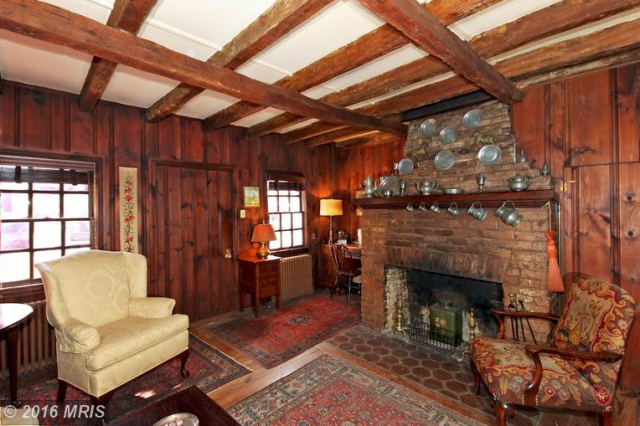
This house is located at 1222 28th Street, Northwest. The listing says:

“Mid-1700 home steeped in history on the market for first time in over 50 years. Enter into a lg. living room with grand FP and hand hewn beams. Next is a den and 1/2 BA with WD. Bright TS kitchen addition with room to relax and 3 skylights. Doors to wonderful G-town garden and private walkway. Upstairs is the bedroom, office nook and full bath. Lots of storage under eaves. sold “as-is”

I have always wanted to see inside this multiple ‘House of the Day’ nominee:

inside

You can see more photos here.

This 1 bed/1.5 bath is going for $865,000.

22 Feb 22:42

A Batch Of Geese Was Released Back Into The Potomac After Oil Spill

by Christina Sturdivant
A Batch Of Geese Was Released Back Into The Potomac After Oil Spill But 29 birds that were taken out of the Roaches Run Waterfowl Sanctuary have died. [ more › ]


19 Feb 21:41

Bathroom tip


Bathroom tip

18 Feb 03:51

“It’s one of the best taco places in the city, but I noticed last week that the building is empty”

by Prince Of Petworth

mama chuy
2620 Georgia Ave, NW

“Dear PoPville,

What happened to Mama Chuy’s on Georgia Avenue? It’s one of the best taco places in the city, but I noticed last week that the building is empty. Are they closed for good (please God no!) or did they just relocate?”

Back in 2014 we noted the building was for sale. Mama Chuy’s facebook page hasn’t been updated since early 2015, their website is no longer live and their voicemail is full. Not looking good…

17 Feb 18:18

tomorrow's front page: Scientists Completely UNbaffled As To Why Pizza Delicious

archive - contact - sexy exciting merchandise - search - about
← previous February 17th, 2016 next

February 17th, 2016: This comic was inspired by looking at a pizza and then, eating that pizza.

– Ryan

16 Feb 21:42

“This Private Paradise awaits you”

by Prince Of Petworth

paradise

Thanks to a reader for sending this “Private Paradise”:

“I know it’s across the border and not in DC but this is worth a look.”

The listing says:

“This Private Paradise awaits you. Get the best of both worlds, living in the country and the city. wooded lot, fresh air, deck. Features kitchen, vaulted ceilings, 2 fireplaces, large deck, bedrooms, basement. Short walk to metro. photos are outdated”

Outdated or not – this is amazing. Have a look at the rest of the photos here.

This 3 bed/2.5 bath is going for $649,000.

16 Feb 20:09

Your Afternoon Animal Fix

by Prince Of Petworth

If you have any animal/pet photos you’d like to share please send an email to princeofpetworth(at)gmail(dot)com with ‘Animal Fix’ in the title and say the name of your pet and your neighborhood. Your photos will go into the queue (usually 2 weeks wait) and will be posted in the order I receive them. If you’ve already entered your pet and would like to do so again – that’s no problem – just space the entries out a bit. Please try to send horizontal photos 640×480 (medium size on your iphone) if possible. If you’re not using an iphone any size is fine.

85477A1A-A3C5-46B5-A638-4FB8CCCBF69B

“Riley, formerly of Brookland, was unfortunately hit by a car last week. But he was a great cat for 9+ years. A rare male calico, he loved stalking birds, pooping outside, and chasing that damn red dot. R.I.P. “Bubba”

image003

“Near Southern Ave.

Thor who is asking, “Daddy may I go out and play in the snow”?”

image005

“Ruthie, “the Snow Dog” Ready Willing and Able”!”

16 Feb 17:13

Mapping Xenophobia

by Frank Jacobs

A noble attempt at fighting viral racism. But is it telling only half the story?


Read More
16 Feb 17:13

Looking for Love? Try these Singles Maps

by Keir Clarke
This week, with one eye on Valentines Day, a number of interactive maps were released that show where all the single men and women live. The Map of French Singles visualizes the proportion of single men and women in every French department. If you are a young single French woman then the map is good news. It shows that in the 20-29 age group there are lots of single men across the whole of
16 Feb 17:06

Livestream: Eagles Are Back At The Arboretum, And You Can Watch Them Nest In The Snow

by Rachel Sadon
  
Two eaglets are expected to hatch in about a month. [ more › ]


12 Feb 16:36

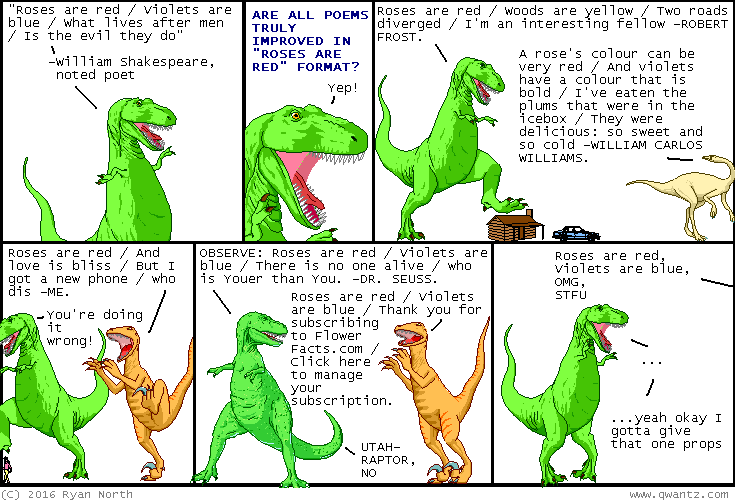
Roses are red / But not all reds are roses / Language gets weird / If everything transposes

archive - contact - sexy exciting merchandise - search - about
← previous February 12th, 2016 next

February 12th, 2016: HEY GUESS WHAT?? I've got a new book coming out in June called ROMEO AND/OR JULIET and you can preorder it now and IF YOU DO, you can send a special Valentine's Day ecard to your sweetie THIS WEEKEND that features new art by either Kate Beaton or Noelle Stevenson! AHHHH

– Ryan

11 Feb 18:24

americasgreatoutdoors: Pictured here is the bog turtle – North...

V.w.verweij

PICTURED HERE IS A GRUMPMUPPET


americasgreatoutdoors:

Pictured here is the bog turtle – North America’s tiniest turtle! This turtle can be found in the Appalachian Mountain bogs, one of the nation’s most biodiverse, yet rarest and most imperiled habitats. Roughly 90 percent of the area’s mountain bogs that once existed have been lost, making protection critical. That’s why the President’s budget calls for funding to conserve places like this as part of full and permanent funding for the Land and Water Conservation Fund. http://on.doi.gov/23Ljo4L 🐢

Photo by Rosie Walunas, USFWS.

11 Feb 18:23

americasgreatoutdoors: Baby black bears are born in the winter...


americasgreatoutdoors:

Baby black bears are born in the winter and stay in the den with their mothers through the cold months. In spring, the cubs emerge to explore the world and show off their cuteness. Photo from Cades Cove in Great Smoky Mountains National Park in Tennessee by Steve Perry (www.sharetheexperience.org).

11 Feb 14:08

Your Afternoon Animal Fix

by Prince Of Petworth

If you have any animal/pet photos you’d like to share please send an email to princeofpetworth(at)gmail(dot)com with ‘Animal Fix’ in the title and say the name of your pet and your neighborhood. Your photos will go into the queue (usually 2 weeks wait) and will be posted in the order I receive them. If you’ve already entered your pet and would like to do so again – that’s no problem – just space the entries out a bit. Please try to send horizontal photos 640×480 (medium size on your iphone) if possible. If you’re not using an iphone any size is fine.

image1

“Billie from Columbia Heights”

24573439529_b4cbc91822_z

“Cookie, foreground, and Timur, both of Homeward Trails Animal Rescue, trying to calculate the snowfall total in Mt. Pleasant.”

IMG_6082

“This is Nina Simone of U Street. Photo by Jane Petersen”

11 Feb 13:59

“Flora of the National Parks Exhibit at U.S. Botanic Gardens!”

by Prince Of Petworth

staghorn sumac
‘Rhus typhina – Staghorn Sumac’ – painting by Kellie Cox

From an email:

“Unique art exhibit starting on February 18th to October 2nd at U.S. Botanic Gardens. Featuring local and national artists.

United States Botanic Garden (USBG) and National Park Service (NPS) launch art show Flora of the National Parks at USBG, part of NPS Centennial celebration

United States Botanic Garden
100 Maryland Ave. S.W., Washington, D.C.

In celebration of the 100th anniversary of the National Park Service, this art exhibit will showcase some of the plant species and communities found throughout the more than 400 national parks. From giant redwoods and aspen forests to endangered Virginia spiraea and water lilies, the national parks contain a diverse representation of the North American flora. Illustrations, paintings, and photography will take you on a tour of the beauty and importance of the American flora.”

10 Feb 19:42

Photo: Squirrel!

by Melissa Breyer
Cutie caught in the act of laying in supplies.
09 Feb 17:43

#1197; I Trust You Will Adequately Convey My Sentiment

by David Malki

Not a lot of tips in this gig.

09 Feb 17:42

Pyrameats

by nedroid

Pyrameats

09 Feb 17:41

Rethink Energy: Super Bowl (Flush)

by ARLnow.com Sponsor
Spike in sewage flowing to Arlington’s water treatment facility at Super Bowl halftime in 2015. Image #2

This regularly-scheduled sponsored Q&A column is written by the Arlington Initiative to Rethink Energy team (AIRE). This county program helps you make smart energy decisions that save you money and leaves a lighter footprint on the environment. Got a question? Email us at energy@arlingtonva.us!

Whether you are planning to watch the big game tomorrow or not (sorry Redskins fans), there’s one bowl we should all keep our eyes on: the toilet bowl.

The real evidence of Arlingtonians’ Super Bowl celebrating will be in the sewer pipes. The “Super Bowl flush” is the moment that thousands of toilets in Arlington all flush at the same time – halftime.

If all 184 million viewers flushed with a water efficient WaterSense toilet instead of an older model, over 400 million gallons of water could be saved! Instead of spending money on your water bill, you could spend it on your favorite beverage.

Using water = using energy. You may not think about it, but it takes a lot of energy to purify your water and then pump it to your home. After you flush, it also takes a significant amount of energy to get your waste to Arlington’s Water Pollution Control Plant, where even more energy is required to treat the wastewater.

Why does water use matter to you? Arlington’s water and sewer rates have increased significantly over the past 15 years. These costs mostly increased due to upgrades at the Water Pollution Control Plant to ensure that Arlington’s wastewater is cleaned to meet increasingly stringent standards.

Since energy and water are inextricably linked, using WaterSense toilets (faucets and showerheads, too) saves you money on your water bill, about $110 a year per toilet. This Super Bowl, when you flush, think about tackling that toilet, showerhead, or faucet upgrade by installing high-performance WaterSense fixtures. You’ll score some savings, even if your favorite team doesn’t win!

The views and opinions expressed in the column are those of the author and do not necessarily reflect the views of ARLnow.com.

09 Feb 17:40

Wait, What? IChing Restaurant is Now “new Gay Bear Bar” Uproar Lounge

by Prince Of Petworth

IMG_2792
639 Florida Ave, NW

Thanks to a reader for sending word. IChing (cuisine is Vietnamese, Korean, Thai, Japanese) opened up back in Sept. 2014. From their Facebook it looks like they opened around late December/early January:

“DC’s new Gay Bear Bar, Lounge & Restaurant”

IMG_2793

09 Feb 17:21

Photo: Day-glo nudibranch shows off its gills

by Melissa Breyer
This candy-colored creature could brighten anyone's day.
09 Feb 17:20

Tarantula named after Johnny Cash is one of 14 new species

by Melissa Breyer
The man in black plays muse to the spider set.
08 Feb 22:40

Your Afternoon Animal Fix

by Prince Of Petworth

If you have any animal/pet photos you’d like to share please send an email to princeofpetworth(at)gmail(dot)com with ‘Animal Fix’ in the title and say the name of your pet and your neighborhood. Your photos will go into the queue (usually 2 weeks wait) and will be posted in the order I receive them. If you’ve already entered your pet and would like to do so again – that’s no problem – just space the entries out a bit. Please try to send horizontal photos 640×480 (medium size on your iphone) if possible. If you’re not using an iphone any size is fine.

12594033_10205667049100205_4458857110126651835_o

“Big, brave pit-mix Navon would much rather watch the snow fall that fall in the snow!”

24532040549_82afe40d33_z

“My 10-month old kitten Schroeder, a WARL alum, getting to know his new home in Mount Vernon Square. He has one amber eye and one blue eye and tabby spots, plus a cute pink nose.”

snowybella

“Bella the Chiggy in Mt. Pleasant”

08 Feb 22:40

DOEE’s new RiverSmart Innovation Grants “will provide funding for innovative projects that positively impact the District’s watersheds and waterbodies”

by Prince Of Petworth

Green Summer crew10
photos courtesy DOEE

From an email:

“The Department of Energy and Environment (DOEE) is now accepting applications for the new RiverSmart Innovation Grants program, which will provide funding for innovative projects that positively impact the District’s watersheds and waterbodies. DOEE anticipates awarding multiple grants of up to $20,000 each. Applications are due by 4:30pm on February 29, 2016.

This week, DOEE is holding two informational meetings: tonight at 7pm at the Benning Library (3935 Benning Road NE, Minnesota Ave Metro) and Thursday, February 11 at 1pm at its offices (1200 First Street NE, 5th Floor, NOMA/Gallaudet Metro). The meetings will start with a short presentation. Q&A to follow.

Click here to download the Request for Applications.

Contact information: Riversmart.innovation16@dc.gov or 202-535-2679

trash capture

07 Feb 19:01

#1196; The Currency of Cute

by David Malki

she keeps lifting them off her legs but they keep climbing back up all ''mew! mew! mew!''

07 Feb 19:00

'Pro-Rape' Blogger Says He's Been 'Advised To Leave The Entire D.C. Area Immediately'

by Rachel Kurzius
'Pro-Rape' Blogger Says He's Been 'Advised To Leave The Entire D.C. Area Immediately' The man who threatened to dox journalists and protesters is getting a taste of his own medicine. [ more › ]


07 Feb 18:24

Your Afternoon Animal Fix

by Prince Of Petworth

If you have any animal/pet photos you’d like to share please send an email to princeofpetworth(at)gmail(dot)com with ‘Animal Fix’ in the title and say the name of your pet and your neighborhood. Your photos will go into the queue (usually 2 weeks wait) and will be posted in the order I receive them. If you’ve already entered your pet and would like to do so again – that’s no problem – just space the entries out a bit. Please try to send horizontal photos 640×480 (medium size on your iphone) if possible. If you’re not using an iphone any size is fine.

DSC_0169

“This is Idli, my 2-year-old rescue. She’s named that because her paws look like little idli, fluffy white rice and lentil cakes eaten for breakfast in India.”

IMG_8729

“Douglas taking a snow day in Adams Morgan.”

20160117_141704

“This is Skittle in his new yoga pose on Webster St. off 14th NW”

02 Feb 16:10

Your Afternoon Animal Fix

by Prince Of Petworth
V.w.verweij

OVERWHELMED

If you have any animal/pet photos you’d like to share please send an email to princeofpetworth(at)gmail(dot)com with ‘Animal Fix’ in the title and say the name of your pet and your neighborhood. Your photos will go into the queue (usually 2 weeks wait) and will be posted in the order I receive them. If you’ve already entered your pet and would like to do so again – that’s no problem – just space the entries out a bit. Please try to send horizontal photos 640×480 (medium size on your iphone) if possible. If you’re not using an iphone any size is fine.

IMG954615-1

“Pilot from Shaw was overwhelmed by his best friend’s bone!”

image1

“This is Kokomo in Petworth. He loves sitting in the window watching the people of Petworth walk by our house. He’s the honorary president of the neighborhood watch.”

24387915729_69ce208fde_z

“Napoleon bird (and squirrel) watching from his little couch by the window. (In Arlington)”

02 Feb 15:56

Puppy Delivery Is Returning To D.C. Tomorrow

by Christina Sturdivant
Puppy Delivery Is Returning To D.C. Tomorrow You can request a puppy between 11 a.m. and 2 p.m. tomorrow. [ more › ]


02 Feb 14:41

Designing a forest from the ground up

by Vincent Verweij

Components of an Eastern Deciduous Forest

Vertical composition Source: University of Missouri

Vertical composition Source: University of Missouri

The best designer of the eastern deciduous forest in which we live is nature. Given enough time and lack of human disturbance, almost any spot in Northern Virginia with some soil, will turn into this ecosystem. Our climate and environment encourage the type of growth that brings with it tall trees and dense woods. If you looked at all the layers of a healthy forest, what would go into designing a forest from the ground up?

Soil

Without proper soil, you don’t get much growth. There are plants that can handle very poor, thin soils, but that will not get you a full forest very quickly. Because our forest tends to be dominated by species that prefer acidic soils, such as oaks, beech, and tuliptree, you would start with an acidic soil. Almost just as important is the soil composition. Gardeners will attest to the prevalence of clay in their soil, and the difficulty of digging in this clay, but we do also have sand and silt in our soil. A good mix of the three, with a focus on the water-retaining clay, gets us a good soil to start with.

If we end up with an acidic, well-composed, uncompacted soil, that’s step 1 of our forest. Our useable soil typically goes about 1-2 feet down, so that’s a target to hold. Where space is restricted (planters, tree pits), we often ask for more to compensate, but in an actual forest, this is plenty. Bringing in soil from other areas can be costly, so a great method of providing this layer of our forest is to mix organic material with clean existing soil on site, to provide the basis of our forest.

Tree Roots and soil. Source: Forestkeepers.net

Tree Roots and soil. Source: Forestkeepers.net


Groundcover and herbaceous plants

A forest is not just made out of trees. Ephemerals take advantage of low canopy cover in the earlier part of the year to catch energy from the sun, and then disappear. Grasses and other groundcovers hold the soil, and provide food for earthbound wildlife.

When building from the ground up, a complete forest also has:

Groundcovers. Source: USFWS

Groundcovers. Source: USFWS

– Ephemerals, such as spring beauty (Claytonia virginica), Virginia bluebell (Mertensia virginica), and Dutchman’s breeches (Dicentra cucullaria)
– Grasses and grass-like plants, such as eastern bottlebrush grass (Elymus hystrix) and Pennsylvania sedge (Carex pensylvanica)
– Ferns, such as Christmas fern (Polystichum acrostichoides), and wood ferns (Dryopteris spp.)
– Other Herbaceous plants, such as Jack-in-the-pulpit (Arisaema triphyllum), and mayapple (Podophyllum peltatum)
– Vines, such as Virginia creeper (Parthenocissus quinquefolia) and grape (Vitis spp.)

This layer can be difficult to emulate perfectly, as some ephemerals require unusual soil compositions, and species such as orchids and trilliums often don’t survive transplanting. However, there are many grasses, ferns, and vines are fairly tolerant of transplanting,  which can be used to prepare the site for other seeds to come in naturally. Keeping the soil in place and alive is the best way to have this forest provide the habitat for the rarer plants to come in.

Shrubs

Shrubs. Source: USFWS

Shrubs. Source: USFWS

The next level up is the shrub layer. There’s no real physiological difference between most shrubs and trees, but the general definition relates to mature size. Most shrubs don’t reach above 20 feet, when fully grown. This shrub layer provides much of the shelter and cover for forest animals. In forests with an unhealthy population of deer, this layer is often suppressed, along with the lower plants. Healthy native shrub growth is a great indicator of a healthy forest, and usually indicates the other aspects of the forest are in place, in a fairly balanced way. Unfortunately, many invasive shrubs, such as Honeysuckle (Lonicera spp.) and Autumn olive (Elaeagnus umbellata) have out-competed our native shrubs, providing little value to our ecosystem, except for some shelter and berries with little nutritional value.

Common shrubs in our forest include spicebush (Lindera benzoin), witch hazel (Hamamelis virginiana), Arrowwood (Viburnum dentatum), and blueberry (Vaccinium spp.).

Creating the shrub layer can be a great way to improve the forest, but deer pressure can make it a frustrating process. Deer exclosures and individual deer fencing can be a great way to address this issue.

Understory and midstory Canopy

The forest is an ever-changing fight for access to light. The groundcovers and shrubs have typically adapted to lower light conditions, but there are always new trees coming through, trying to get to the top. All of our tree species can exist in this middle level of canopy at one point in their lives, but it typically takes the opening of the canopy to let through the really intolerant species. For example, Tuliptree (Liriodendron tulipifera), will live as a sapling, building up energy, sometimes for up to several decades, to wait for an opening in the canopy. All of the accumulated energy in its roots will then allow for exponential growth into the canopy, to prevent others from taking this access to light.

Understory trees that stay under 30-40 feet are present in a healthy forest, and rise above the shrub layer. These are most commonly dogwoods (Cornus spp), redbuds (Cercis), serviceberry (Amelanchier spp.), hornbeam (Carpinus caroliniana), Pawpaw (Asimina triloba), American holly (Ilex opaca), and Sassafras (Sassafras albidum).

The mid-story is typically composed of all the trees looking to reach the next level, and can be composed of any of our hundreds of native species. This layer can be emulated through transplanting of landscape-sized trees, but care has to be taken with placement. If a plant has no access to light, it will not thrive, and not likely survive.

Overstory Canopy

Ultimately, what is essential to the forest is the overstory canopy. Trees larger than 40 fe

Overstory trees. Source: VDOF

Overstory trees. Source: VDOF

et, providing high cover for animals, intercepting the majority of the rainwater and sunlight. The trees in this layer are typically older, and have accumulated massive reserves of energy through their access to light and lack of competition. Some overstory trees even provide their own habitat for other plants, like vines and epiphytes, plants growing in small soil pockets along branches.

In our region, our overstory is dominated largely by oaks, beech, tuliptree, and hickory. Some unique ecosystems with very high moisture contents also have dominant red maples, willow, and sweetgum canopy.

Creating this layer of the forest takes extreme patience. Transplanting large canopy trees is financially burdensome, and establishment is difficult. The best approach is to plant for the future, with all of the aforementioned layers in place, and, after establishing the plants, letting nature take its course.

The Complete Forest

Arlington is working to incorporate all the elements of the forest into our ecosystem, understanding the stresses of urban influence. While letting nature do its job is an essential component, invasive species, deer pressure,  pollutants, and non-native insects can cause human-made havoc on our environment, and we must stay vigilant in identifying and addressing these problems in time.

Of course soil and plants are not the only aspect of forests that make it a healthy ecosystem. Water, in the form of groundwater, streams, lakes, and wetlands, provides the lifeblood for the forest, animals spread and germinate seed, and fungi make nutrients available to our plants, and break down dead material. The forest does not work without these aspects, and if you are looking for a permanently self-sustaining forest, measuring the presence of key organisms and soil fungus health can be a great indicator of success.

The best way to learn about these layers is to explore all of our region’s forests, and to see all the different growth habits of every habitat. Learn to identify habitat types, and why certain plants are in different situations. This way you can learn to best incorporate these elements into your urban forest.

For more information on forest structure in Virginia, check out this publication by the Virginia State Extension and Virginia Tech: https://pubs.ext.vt.edu/465/465-315/465-315_pdf.pdf