 The urban farming scene is diversifying, and instead of growing veggies and greens, Smallhold is fruiting fungi in minifarms located right in the restaurants where they'll be served.
V.w.verweij
Shared posts
28 Jan 21:06
The urban farming scene is diversifying, and instead of growing veggies and greens, Smallhold is fruiting fungi in minifarms located right in the restaurants where they'll be served.
Urban shrooming: This startup is putting mini mushroom farms inside restaurants
by Derek Markham
The urban farming scene is diversifying, and instead of growing veggies and greens, Smallhold is fruiting fungi in minifarms located right in the restaurants where they'll be served.
27 Jan 21:10

Bread & Water Coming to Pentagon Row
by ARLnow.com
V.w.verweijSetting a pretty low bar here with this This & That name.

Artisan bakery Bread & Water appears to be coming to Pentagon Row.
According to a sign, the bakery and cafe is opening in one of the glass-and-steel kiosk building of Pentagon Row’s central plaza, which was formerly occupied by Capital Teas and sunglasses store Specs.
The bakery has an existing bricks-and-mortar location in the Belle View section of Fairfax County, south of Alexandria. It also is a regular fixture at local farmers markets, including Crystal City, Ballston and Columbia Pike.
Bread & Water’s menu includes freshly-baked breads, breakfast items, salads, soups, sandwiches, pastries and desserts.
No word yet on an opening date.
25 Jan 15:23


did they include falling pandas AND kittens?
did they include falling pandas AND kittens?
Pelgris likes this
24 Jan 21:50

Cherrydale Residents Fight for Proper Spelling of Park
by Anna Merod
V.w.verweijARLINGTON!

Cherrydale residents are seeking to reclaim the original spelling of a neighborhood park as it goes through a second phase of renovations.
In a presentation at an Arlington Parks and Recreation Commission meeting yesterday (Tuesday), neighborhood resident Harry Spector said he wanted to clarify the spelling of Oak Grove Park as two words and not one word.
There are three signs currently in the park that spell it as Oakgrove. However, the original sign in the park spells it as Oak Grove.
“With this being the oldest sign at the park, it’s clear to us that this was the county’s original intended spelling of the park,” Spector said.
Though the Oakgrove spelling is cited in the county’s Parks and Recreation master plan, Spector said there is no record the county intended to change the spelling.
“It’s a typographical error that was never corrected,” he said.
Other official documents since the 1990s that required county approval have also used the two-word spelling, Spector said.
While it seems the change could be made administratively, Spector said he was directed to the Parks and Recreation Commission by county staff, as there is a two-part process for renaming parks. The commission makes recommendations to the Arlington County Board, which has the final say on approval.
“It’s a little time consuming to correct a typo, but it’s probably the only way to do it,” said David Howell, a commission member.
Spector was hoping to fast-track the change, since the county acknowledges the park as Oak Grove while the department references it as Oakgrove. He said he wants the change to happen before the park’s renovation is complete, sometime between February and May.
The renovations include a new playground for 2-5 year-olds and 5-12 year-olds. There will also be new benches and a new gazebo with picnic tables.
All the members of the committee agreed with Cherrydale residents that the name should be changed, and will be holding another meeting on the protocol of name changing and will include another motion to move forward the spelling of the park.
“It’s kind of absurd to have go through such a process for a simple, obvious grammatical error,” Spector said.
Photos via Google Maps

29 Dec 22:02


Can You Identify This 1906 Building?
by Ghosts of DC
Whoa, how cool is this old colorized photo. You’re looking at a “horseless carriage” back in 1906. The passenger is Senator George P. Wetmore of Rhode Island. Can anyone identify the building in the background?

Source: Shorpy
Here is the original source image in black and white.

29 Dec 21:20
Your Afternoon Animal Fix
by Prince Of Petworth
If you have any animal/pet photos you’d like to share please send an email to princeofpetworth(at)gmail(dot)com with ‘Animal Fix’ in the title and say the name of your pet and your neighborhood.

“Linny Louise in Petworth”
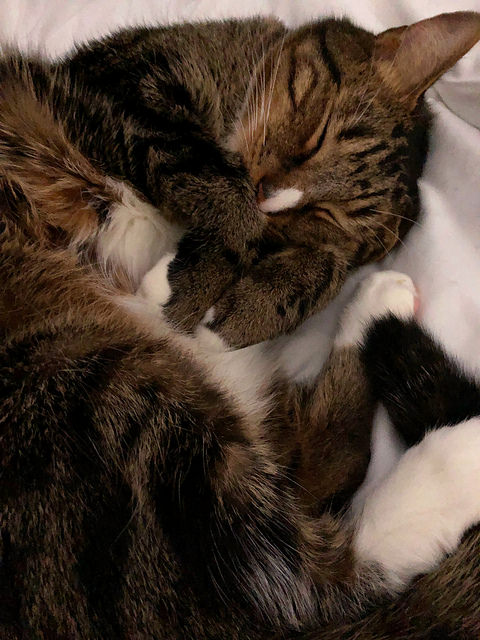
“Tinky Lil’ Mang
Thomas Circle
-was rescued from humane rescue alliance in DC”

“Frijolita, enjoying our newly redone upstairs porch.”
27 Dec 17:39
Showtime Lounge's New Year's Eve spec-tac-u-lar
by noreply@blogger.com (Scott Roberts of Bloomingdale)
See this tweet:

SPENDING CHEDDAR AT THE DOOR? THAT PARTY'S A BORE!! LIVE LARGE WITH NO COVER CHARGE AT SHOWTIME'S NYE SPEC-TAC-U-LAR!— Showtime (@Showtime_DC) December 26, 2017
WITH A VERY SPECIAL SET FROM GRANNY & THE BOYS FOLLOWED BY DJ @BabyAlcatraz SPINNING YOU INTO THE NEW YEAR! FREE "CHAMPAGNE" AT MIDNITE!https://t.co/aslYdeamjh pic.twitter.com/Y3LRYe4uZS

27 Dec 17:36
Today in Hawks around Town – Backyard Hawk (and a poor pigeon part two)
by Prince Of Petworth
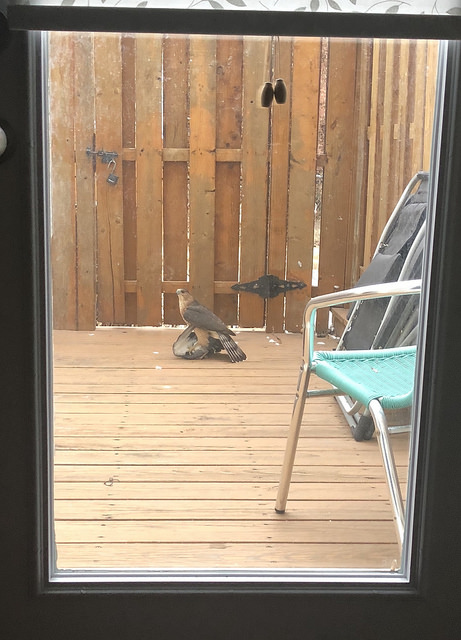
Thanks to Chris for sending from Truxton Circle:
“The pigeon must have been injured, possibly by the hawk earlier, as it fell from the sky a few minutes earlier and was basically unresponsive when I opened the door before the hawk arrived.”
If you spot a hawk or any interesting wildlife around town, lunching or otherwise, and get a good photo please send in an email where you spotted it to princeofpetworth@gmail.com and I’ll add it to the queue. Hawks around Town is made possible by a generous grant from the Ben and Sylvia Gardner foundation.

22 Dec 16:32
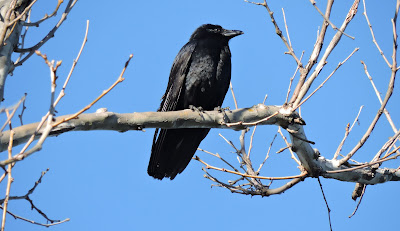
We have two species of crows in the DC area: the common American Crow (Corvus brachyrynchus) and the slightly smaller Fish Crow (Corvus ossifragus), which is usually associated with water. The two are tough to differentiate (apart from the nasal like calls of the Fish Crow) and often flock together. Fish Crows have been expanding their range inland along waterways. American Crows are the largest of the true crows in North America at 16-20 inches, compared to the 14-16 inch Fish Crows. The rest of this article will be about American Crows, though much is also true of Fish Crows.
All crows (called corvids because they're in the Corvidae family, the crows, ravens, magpies and jays) are considered among the smartest of birds, with good reason. American Crows are incredibly adaptable creatures with some amazing natural history allowing them to thrive.
First of all, crows will eat just about anything. While they prefer animal protein (they love worms for example), they will eat quite a bit of plant material as well. And they won't be fooled by such scare tactics as scarecrows or fake owls to keep them away, being much too smart for that. The lengths corvids will go to get food are legendary, with some types of crows worldwide using tools, stealing fish caught ice-fishing, cracking nuts under car tires, using water to soften hard foods, and such. But our own crows are also very adept at getting food. Here's a short video of crows taking advantage of red cedar fruits:
While they love to eat meat, crow beaks are not always strong enough to make them great scavengers. But they will take advantage of road kill, letting the car tires help them to not only kill their food, but break the skin open to allow them access to the softer insides. Crows will also raid bird nests, eating both eggs and young. This is one of the reasons you see birds gang up and mob them all the time. As they sometimes target poultry, this does not always endear them to many farmers.
They will also eat young animals, though again, it isn't easy for crows to dispatch potential prey with their beaks. It sometimes takes some great effort and time for them to finally kill their food. They will occasionally cooperate in order to do so. I've seen several crows all ganging up on a young rat, pecking at it, chasing and cornering it among each other until it finally died. Crows will also raid pet bowls, scavenge garbage and go after baby turtles. They will sometimes follow the edges of forest fires to catch whatever the flames force out into the open. I've seen them patrolling the edges of vernal pools, intercepting frogs as they make their way to the ponds to lay eggs. When they have enough food, they may cache leftovers for later use. If they eat something indigestible such as feathers, fur or bone, these get coughed up in pellets similar to owls.
Some people think that curiosity is a sign of intelligence. Well, crows certainly are curious, but their inquisitiveness is tempered by lots of caution. Still, they do go out of their way to check out novel developments. I think it humorous when I see a crow sitting next to a fake owl meant to scare it away, for instance. They love to investigate shiny objects as well it seems. We had some who would regularly walk through our Arlington County native plant nursery and pull most of the plant tags and labels out of the pots and discard them on the ground. Here's a short video of them doing just that:
American Crows will also make use of tools, a trait most other animals don't share. One example is of a captive crow who learned to use a shallow container as a cup to carry water over to its dish to moisten the dry mash it was fed. Another involves one that shaped a stick so it would fit into a fence post to pry food out. Others have learned to pick up mollusks and drop them from great heights to break them open. In another example, a captive crow would use a slinky toy as a head-scratcher. One learned to drop pine cones and other tree parts onto the heads of climbers getting too close to its nest. Some crows use another bird behavior called "anting" where they stir up an ants' nest and let the ants swarm them, or pick up individual ants in their beaks to preen their feathers. The belief is that the ants not only kill parasites on the birds, but by spraying formic acid also reduce the presence of pests on their bodies. In what may be a unique use of a "tool", a crow was famously photographed hitching a ride for a while on the back of a flying bald eagle. Crows are capable of learning and even teaching one another, as some examples below will show. Some crows have even learned to be mimics, including saying some words and copying voices.
Crows have a very complex communication system. They make many other sounds in addition to the common "caw", but the same "caw" can mean a variety of different things based on how quickly it is repeated, how many times it's made, and the context as well. Many people are most familiar with the 3 sharp caws given by sentry crows that are keeping watch over the flock. It also seems that each crow sounds different enough from one another that they can tell individuals apart. Crow calling is a favorite study subject among researchers studying animal communication due to its complexity.
Crows not only learn, but appear to have remarkable memories and can teach one other. One experiment showed that when researchers captured crows, once they returned to the area, the crows could recognize them and tell them apart from other people. They would harass the researchers and warn each other of their presence. They did this even 9 years later, and amazingly birds who had not been handled themselves learned to recognize the researchers and warn others years later. Hunters and farmers have even tried to accustom crows to their presence, carrying broom sticks as gun-props in the hopes that they would learn not to fear them. But the crows are able to tell the difference of when they are carrying a gun instead of broomsticks. Many hunters and farmers have tried to trick crows with fake-gun props, and the crows always seem to figure it out. It is little wonder that scarecrows, fake owls and other scare tactics are useless, even when changing their clothes or imparting motion.
Mobbing is a common defensive behavior among birds, and crows use it quite often. This is when birds gang up and harass a potential predator. They may not actually strike their perceived enemy, but they don't let it rest or hunt, eventually causing it to leave the area. Crows may use this as a means to teach their young what predators to avoid as well.
I've used crows mobbing as an educational demonstration many times. My set-up is a bit more elaborate in order to trick them, if only briefly. I use a fake owl that I place out there as the predator (sometimes a large great horned owl puppet, sometimes a stuffed taxidermy mount). At its feet, I place a crow puppet, usually on its back with feet up in the air and wings spread in as dramatic a death-pose as I can achieve. I then hide nearby and use a mouth call along with a recording of crows mobbing. The first few are apprehensive when they appear, and I need to be well hidden or they quickly notice something is amiss. But as their numbers increase, so does their daring. It is sometimes like a scene from Alfred Hitchcock's "The Birds" movie, so many aggressively gather and scream bloody murder. But this is very short-lived. Soon they see through the ruse and leave. I can rarely get away with dong this in the same area more than a couple of times a year before they get wise that it's a trick.
It appears that crows also learn how to be good parents. Crows normally are not sexually mature until after their second year, and many don't breed until their fourth year or even later. During the interim after they themselves leave the nest, most assist their parents in raising their younger siblings. Each year, the previous years' young assist in feeding and protecting the nest. In this way some think they learn the best ways of being successful as parents, and the extra helps helps more young crows survive. It is not uncommon for families of up to 15 crows covering 5 generations to all be present raising young.
So during the late winter and early spring, crows pair up, often with the previous year's same mate and often mating for life. While they have interesting courtship displays, (preening one another, males bowing and spreading their wings for the females, and showing off with diving and circling), this is not often seen. Once the pair has bonded, they tend to not have as many courtship displays anymore in the years that follow.
Once paired up, the pair builds a nest, preferring evergreens as a nest site when they're available. It is often hidden, with the normally noisy birds keeping quite quiet around the nest. From 3-9 (though 4-5 is most common) dull bluish green eggs are laid, incubated solely by the females, hatching about 18 days later. With lots of help from their older siblings, young leave the nest 3-5 weeks later. The young crows tend to have bluish eyes at first. crows only nest once a year, but after their first successful attempt, they tend to be fairly successful in raising young most years that follow. Being so smart and adaptable, they have been recorded as living over 16 years in the wild, and the record is of one that lived 59 years old in New York as a captive.
While their extended families and clans form the basis of their flocks, and while they tend to use a set family territory, this can be quite variable. Crows living in urban areas have much smaller territories for instance. During the day, family members may leave and join larger flocks before coming back to join their families. While in the larger flocks, family members also don't seem to hang out together very much either.
Crow behavior changes quite a bit in the winter though. Crows tend to join flocks more, particularly before dusk. These can be huge aggregations, some 2 million strong per roost have been recorded, though of course numbers are usually much smaller. Some historic roosts have also been around for over 100 years. There's safety in numbers.
There are quite a few generally accepted names for flocks of crows. The most popular is to call them a murder. But they're also sometimes called a congress, a cauldron, a muster, or a horde. These noisy (and sometimes messy) aggregations may be very unpopular near people, leading to some jurisdictions trying harassment tactics to discourage them in certain areas. Crows being as smart as they are, these are not always very successful, leading to more lethal means of controlling numbers and trying to break up roosts. Dynamite has even been used in the past.
Recently, crow numbers in some areas took a dramatic drop, with some surveys showing a 45% drop in their population numbers. West Nile Virus when it was accidentally introduced into our area took a huge toll on them. Crows are more susceptible to it than any other bird, with most infected birds not lasting even a week. But those that survived, due to their adaptability and intelligence, have made a huge come back. A 2014 survey estimated there were 27 million crows in North America.
Crows may not be every one's favorite bird, and indeed to some they're a nuisance or even a pest. but there's no denying their adaptability and intelligence. People may grudgingly admire these large, common birds. Around the world, corvids have been part of folklore and legend, be it the crows in Aesop's fables, or the mythical ravens in Norse mythology. I'll leave you with one tale of our own crows, a legend attributed to the Delaware tribe, the Lenni Lenape. Back in my stoyteller days, my version was part of a much longer creation story, but here are the elements at least regarding crows. One of many versions, the story of the Rainbow Crow:
It starts with a long, bitter and dark winter. The deep snow and darkness finally worried all the animals, who were tired of stumbling in the darkness and suffering from the cold. They all gathered to see what they could do about it. In the most common version of the tale, it is decided that a messenger should go to the great spirit and ask for help. The journey would be long and dangerous with the darkness and snows. As they were fearful of disturbing the spirits, and since only a very intelligent creature would be able to find the way, there were not a lot of volunteers. But the most beautiful of all birds, the Rainbow Crow, volunteered to speak on their behalf and ask for aid. Having one of the most elegant of voices, this was seen as fitting as well.
After a perilous voyage, Rainbow Crow eloquently made his point, asking for help on behalf of all the animals, and providing a gift to the spirits of his song. The great spirit provided a magical gift called Tindeh (fire) for him to take back as a present for the animals, to provide light and warmth until the season changed. It was burning at the end of a stout branch for the beautiful messenger to carry.
Rainbow Crow grabbed the fire stick by the end in his strong beak and returned to the people. Again, the journey was a long one. Soon the fire stick started to burn down to the end he was holding, yet he could not let go lest he lose this precious gift. So he ignored the heat and smoke and flew on. Soon the flames were scorching his beautiful feathers. He could not help but breathe in the fumes. When he arrived back at the animal village, his beautiful feathers had burned black, covered in soot and ash. When he tried to speak, his speech was hoarse from the smoke, his eloquent voice forever gone.
All the other animals rejoiced for Rainbow Crow's sacrifice had provided them with a great gift providing light and warmth, All rejoiced that is except for Rainbow Crow, who had gone from the most beautiful of voice and feather to now being among the ugliest. But the great spirit appeared to him in a smoky vision. He reminded Rainbow Crow that his daring deed had saved the people, and he would always be remembered for his bravery and intelligence. He added that he also would not be hunted for food, for the smoke had made his flesh burnt and ill tasting, no one would want to eat crow (more on how this saying came to be in the comments below). Since his voice was also not attractive anymore, few would want to cage him for he had no song to offer rather than a hoarse "caw". But seeing that Rainbow Crow was still suffering, the spirit gave him another gift. His black feathers were not just dull black any longer, but under the right light would have a beautiful iridescence all their own. So it would ever be for the descendants of Rainbow Crow: always to be admired, if sometimes grudgingly, for all their remarkable abilities for those who take the time to look for them.
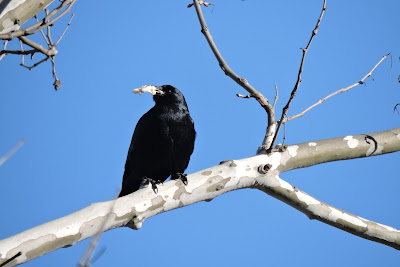
Crows - Of Mobbing and Murder
by noreply@blogger.com (Alonso Abugattas)

All crows (called corvids because they're in the Corvidae family, the crows, ravens, magpies and jays) are considered among the smartest of birds, with good reason. American Crows are incredibly adaptable creatures with some amazing natural history allowing them to thrive.
First of all, crows will eat just about anything. While they prefer animal protein (they love worms for example), they will eat quite a bit of plant material as well. And they won't be fooled by such scare tactics as scarecrows or fake owls to keep them away, being much too smart for that. The lengths corvids will go to get food are legendary, with some types of crows worldwide using tools, stealing fish caught ice-fishing, cracking nuts under car tires, using water to soften hard foods, and such. But our own crows are also very adept at getting food. Here's a short video of crows taking advantage of red cedar fruits:
They will also eat young animals, though again, it isn't easy for crows to dispatch potential prey with their beaks. It sometimes takes some great effort and time for them to finally kill their food. They will occasionally cooperate in order to do so. I've seen several crows all ganging up on a young rat, pecking at it, chasing and cornering it among each other until it finally died. Crows will also raid pet bowls, scavenge garbage and go after baby turtles. They will sometimes follow the edges of forest fires to catch whatever the flames force out into the open. I've seen them patrolling the edges of vernal pools, intercepting frogs as they make their way to the ponds to lay eggs. When they have enough food, they may cache leftovers for later use. If they eat something indigestible such as feathers, fur or bone, these get coughed up in pellets similar to owls.
 |
| Crows are curious, and that occasionally gets them into trouble. We had to untangle this one when it got tangled up in line. |
American Crows will also make use of tools, a trait most other animals don't share. One example is of a captive crow who learned to use a shallow container as a cup to carry water over to its dish to moisten the dry mash it was fed. Another involves one that shaped a stick so it would fit into a fence post to pry food out. Others have learned to pick up mollusks and drop them from great heights to break them open. In another example, a captive crow would use a slinky toy as a head-scratcher. One learned to drop pine cones and other tree parts onto the heads of climbers getting too close to its nest. Some crows use another bird behavior called "anting" where they stir up an ants' nest and let the ants swarm them, or pick up individual ants in their beaks to preen their feathers. The belief is that the ants not only kill parasites on the birds, but by spraying formic acid also reduce the presence of pests on their bodies. In what may be a unique use of a "tool", a crow was famously photographed hitching a ride for a while on the back of a flying bald eagle. Crows are capable of learning and even teaching one another, as some examples below will show. Some crows have even learned to be mimics, including saying some words and copying voices.
Crows have a very complex communication system. They make many other sounds in addition to the common "caw", but the same "caw" can mean a variety of different things based on how quickly it is repeated, how many times it's made, and the context as well. Many people are most familiar with the 3 sharp caws given by sentry crows that are keeping watch over the flock. It also seems that each crow sounds different enough from one another that they can tell individuals apart. Crow calling is a favorite study subject among researchers studying animal communication due to its complexity.
Crows not only learn, but appear to have remarkable memories and can teach one other. One experiment showed that when researchers captured crows, once they returned to the area, the crows could recognize them and tell them apart from other people. They would harass the researchers and warn each other of their presence. They did this even 9 years later, and amazingly birds who had not been handled themselves learned to recognize the researchers and warn others years later. Hunters and farmers have even tried to accustom crows to their presence, carrying broom sticks as gun-props in the hopes that they would learn not to fear them. But the crows are able to tell the difference of when they are carrying a gun instead of broomsticks. Many hunters and farmers have tried to trick crows with fake-gun props, and the crows always seem to figure it out. It is little wonder that scarecrows, fake owls and other scare tactics are useless, even when changing their clothes or imparting motion.
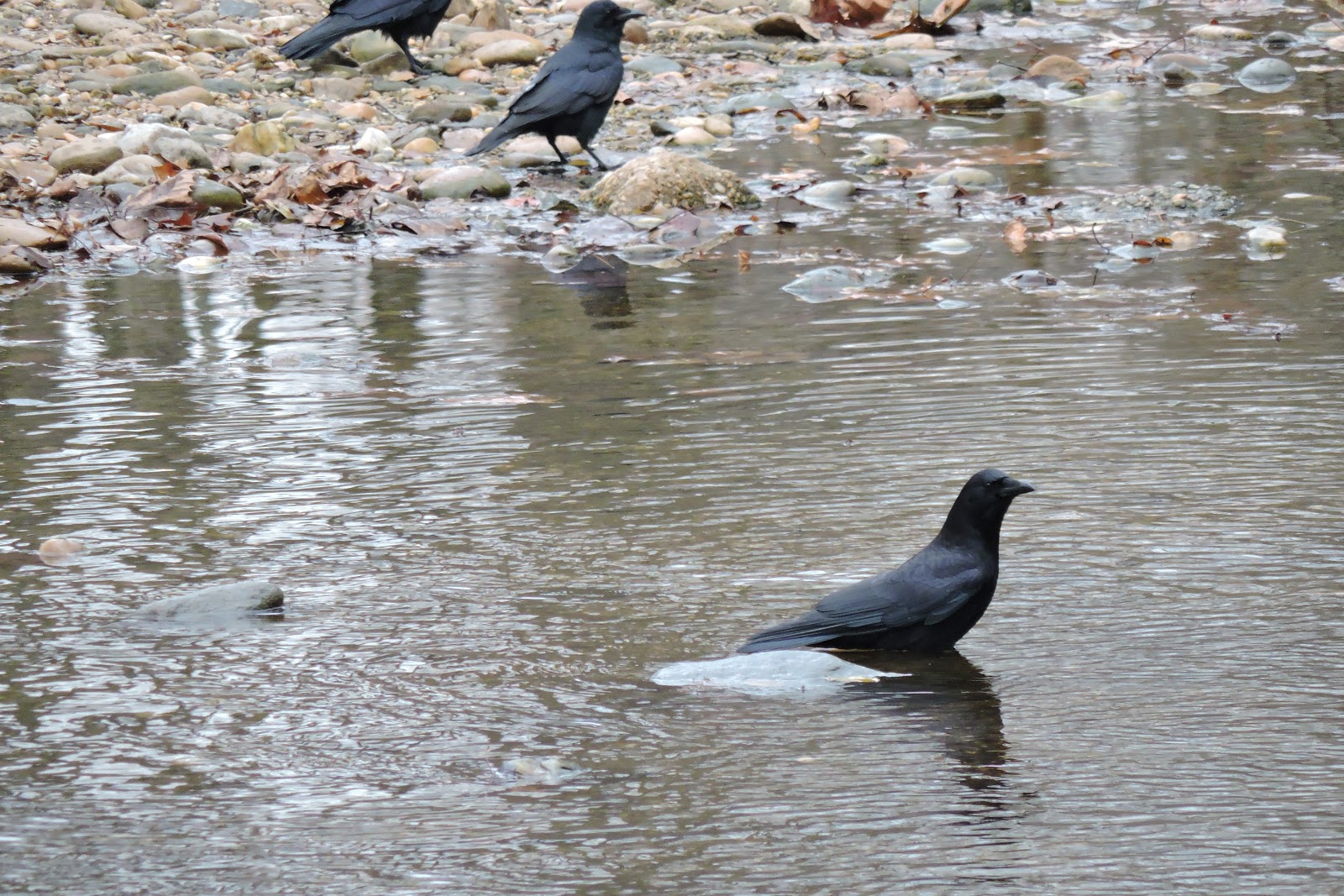 |
| Crows love to bathe and will do so almost daily even in winter, frequently in large numbers. |
I've used crows mobbing as an educational demonstration many times. My set-up is a bit more elaborate in order to trick them, if only briefly. I use a fake owl that I place out there as the predator (sometimes a large great horned owl puppet, sometimes a stuffed taxidermy mount). At its feet, I place a crow puppet, usually on its back with feet up in the air and wings spread in as dramatic a death-pose as I can achieve. I then hide nearby and use a mouth call along with a recording of crows mobbing. The first few are apprehensive when they appear, and I need to be well hidden or they quickly notice something is amiss. But as their numbers increase, so does their daring. It is sometimes like a scene from Alfred Hitchcock's "The Birds" movie, so many aggressively gather and scream bloody murder. But this is very short-lived. Soon they see through the ruse and leave. I can rarely get away with dong this in the same area more than a couple of times a year before they get wise that it's a trick.
It appears that crows also learn how to be good parents. Crows normally are not sexually mature until after their second year, and many don't breed until their fourth year or even later. During the interim after they themselves leave the nest, most assist their parents in raising their younger siblings. Each year, the previous years' young assist in feeding and protecting the nest. In this way some think they learn the best ways of being successful as parents, and the extra helps helps more young crows survive. It is not uncommon for families of up to 15 crows covering 5 generations to all be present raising young.
 |
| A pair of crows |
Once paired up, the pair builds a nest, preferring evergreens as a nest site when they're available. It is often hidden, with the normally noisy birds keeping quite quiet around the nest. From 3-9 (though 4-5 is most common) dull bluish green eggs are laid, incubated solely by the females, hatching about 18 days later. With lots of help from their older siblings, young leave the nest 3-5 weeks later. The young crows tend to have bluish eyes at first. crows only nest once a year, but after their first successful attempt, they tend to be fairly successful in raising young most years that follow. Being so smart and adaptable, they have been recorded as living over 16 years in the wild, and the record is of one that lived 59 years old in New York as a captive.
While their extended families and clans form the basis of their flocks, and while they tend to use a set family territory, this can be quite variable. Crows living in urban areas have much smaller territories for instance. During the day, family members may leave and join larger flocks before coming back to join their families. While in the larger flocks, family members also don't seem to hang out together very much either.
Crow behavior changes quite a bit in the winter though. Crows tend to join flocks more, particularly before dusk. These can be huge aggregations, some 2 million strong per roost have been recorded, though of course numbers are usually much smaller. Some historic roosts have also been around for over 100 years. There's safety in numbers.
 |
| A murder of crows... |
 |
| Attempted murder of crows... |
Crows may not be every one's favorite bird, and indeed to some they're a nuisance or even a pest. but there's no denying their adaptability and intelligence. People may grudgingly admire these large, common birds. Around the world, corvids have been part of folklore and legend, be it the crows in Aesop's fables, or the mythical ravens in Norse mythology. I'll leave you with one tale of our own crows, a legend attributed to the Delaware tribe, the Lenni Lenape. Back in my stoyteller days, my version was part of a much longer creation story, but here are the elements at least regarding crows. One of many versions, the story of the Rainbow Crow:
It starts with a long, bitter and dark winter. The deep snow and darkness finally worried all the animals, who were tired of stumbling in the darkness and suffering from the cold. They all gathered to see what they could do about it. In the most common version of the tale, it is decided that a messenger should go to the great spirit and ask for help. The journey would be long and dangerous with the darkness and snows. As they were fearful of disturbing the spirits, and since only a very intelligent creature would be able to find the way, there were not a lot of volunteers. But the most beautiful of all birds, the Rainbow Crow, volunteered to speak on their behalf and ask for aid. Having one of the most elegant of voices, this was seen as fitting as well.
After a perilous voyage, Rainbow Crow eloquently made his point, asking for help on behalf of all the animals, and providing a gift to the spirits of his song. The great spirit provided a magical gift called Tindeh (fire) for him to take back as a present for the animals, to provide light and warmth until the season changed. It was burning at the end of a stout branch for the beautiful messenger to carry.
Rainbow Crow grabbed the fire stick by the end in his strong beak and returned to the people. Again, the journey was a long one. Soon the fire stick started to burn down to the end he was holding, yet he could not let go lest he lose this precious gift. So he ignored the heat and smoke and flew on. Soon the flames were scorching his beautiful feathers. He could not help but breathe in the fumes. When he arrived back at the animal village, his beautiful feathers had burned black, covered in soot and ash. When he tried to speak, his speech was hoarse from the smoke, his eloquent voice forever gone.
All the other animals rejoiced for Rainbow Crow's sacrifice had provided them with a great gift providing light and warmth, All rejoiced that is except for Rainbow Crow, who had gone from the most beautiful of voice and feather to now being among the ugliest. But the great spirit appeared to him in a smoky vision. He reminded Rainbow Crow that his daring deed had saved the people, and he would always be remembered for his bravery and intelligence. He added that he also would not be hunted for food, for the smoke had made his flesh burnt and ill tasting, no one would want to eat crow (more on how this saying came to be in the comments below). Since his voice was also not attractive anymore, few would want to cage him for he had no song to offer rather than a hoarse "caw". But seeing that Rainbow Crow was still suffering, the spirit gave him another gift. His black feathers were not just dull black any longer, but under the right light would have a beautiful iridescence all their own. So it would ever be for the descendants of Rainbow Crow: always to be admired, if sometimes grudgingly, for all their remarkable abilities for those who take the time to look for them.

20 Dec 21:36

County Wins Top Environmental Award from U.S. Green Building Council
by Chris Teale

Arlington County is the first community in the country to win a top award for its environmentally-friendly policies from the U.S. Green Building Council.
The county was named a Platinum level community by USGBC under its new LEED for Communities program.
USGBC said the certification recognizes the county’s creation of a “sustainable and resilient urban environment that has long-proven success in reducing greenhouse gas emissions, managing stormwater, ensuring economic prosperity and focusing on education, affordable housing, health and safety for residents and businesses.”
LEED — Leadership in Energy and Environmental Design — is a rating system by USGBC that evaluates how environmentally-friendly buildings are.
“It is truly an honor, and a validation of Arlington’s commitment to sustainability, to be the first to earn LEED for Communities Platinum certification,” County Board chair Jay Fisette said in a statement. “This has been a community effort, achieved by having a vision of combating climate change and promoting energy efficiency on a local level, and putting in place innovative policies and practices to achieve it. Now, more than ever, the responsibility for progress on climate change rests with local and state governments and with the private sector.”
The award honors communities that have set goals for environmental sustainability and then met them. It tracks energy, water, waste, transportation and human experience (education, prosperity, equitability and health and safety) before awarding certification.
“Arlington County understands the value of LEED and its ability to help set goals and deploy strategies that can improve the quality of life for residents across the community,” Mahesh Ramanujam, president and CEO of USGBC, said in a statement. “Arlington’s LEED for Communities Platinum certification demonstrates a commitment to improving performance and creating a more resilient and sustainable future.”
More details from a press release after the jump:
More than a half-century of commitment to sustainability
Arlington’s sustainability story began with thoughtful Metrorail planning in the 1960s, followed by the Smart Growth strategies outlined in the General Land Use Plan. The County launched its Arlington Initiative to Rethink Energy (AIRE) effort in 2007. AIRE set a target to reduce Arlington County government’s carbon emissions by 10 percent by 2012, compared to 2000 levels, and achieved it by improving energy efficiency in the County government’s buildings, vehicles and infrastructure and other efforts.
The County’s Community Energy Plan (CEP), adopted in 2013, established a goal of reducing greenhouse gas emissions 75 percent by 2050. The CEP is an element of Arlington’s Comprehensive Plan, which sets forth the broad goals and policies of a sustainable community over the next 30 to 40 years. Arlington’s green building policies support the plan’s goals by encouraging the construction of buildings that are energy and water efficient while providing healthy indoor environments. Most recently, the County became the first locality in Virginia to approve an ordinance allowing a Commercial-Property Assessed Clean Energy (C-PACE) program – a public-private partnership to provide affordable, long-term financing for projects to improve the energy or water efficiency of commercial buildings in the County.
Open-space planning, solid-waste management, stormwater management, affordable-housing planning and public schools were evaluated by the USGBC for the LEED for Communities Platinum certification.
The Arlington County Board celebrated the Platinum certification at its December 19 meeting, which also marked the retirement of sustainability advocate and long-time County Board Member Jay Fisette.
“Whether from his bicycle or from the dais of the County Board room, Mr. Fisette has championed sustainability in Arlington for the past 20 years. This LEED certification is a tribute to Jay and his now-lasting vision for Arlington’s future,” said Board Vice Chair Katie Cristol.

14 Dec 20:10
It Brings Me Great Pleasure to Give You Ten More Snow Dogs!!
by Prince Of Petworth

Photo by Laura
“Wilga in Dupont”

Photo by James
“Berkeley in Adams Morgan”

Photo by Rachel
“Charlie is loving the snow dusting in Burleith.”
Many more after the jump.

Photo by Missy Herendeen
“Maddon loving his first snow at Garfield Park!”

Photo by Sara Swezy
“@CityDogsRescue Alumni Plum of Columbia Heights mesmerized by the falling snow.”

Photo by Jenna
“Live from Mt. Pleasant”

Photo by Shannon
“This is Titan, he arrived in DC from North Carolina last weekend and this is likely his first time seeing snow! He was quite confused by it all  He’s a 5 year old Jack Russell Terrier available for adoption through City Dogs Rescue.”

Photo by Blair
“Appa’s first snow at Meridian Hill”
Snow dog
#dogsofdc #firstsnow #dontmakemegobackinside #PoPville
A post shared by Reagan (@reaganmer) on
A post shared by Pablo the Doodle (@lifeofpablo.thedoodle) on
 #goldendoodle #snowdog #goldendoodlepuppy #goldendoodlesofig #snowday #firstsnow #dogs #puppiesofinstagram #popville
03 Dec 19:00
Your Afternoon Animal Fix
by Prince Of Petworth
If you have any animal/pet photos you’d like to share please send an email to princeofpetworth(at)gmail(dot)com with ‘Animal Fix’ in the title and say the name of your pet and your neighborhood.

“Murphy loves his ball and his Adams Morgan neighborhood!”

“Here’s Cleo from Shaw enjoying her new bed”
03 Dec 18:59

Morning Notes
by ARLnow.com
V.w.verweijShared for dog only

Fight Over Aquatics Center Operation Costs — Local budget hawks are worried that operating costs of the new Long Bridge Aquatics Center may take a chunk out of the county budget. The current staff estimate is about $1 million per year of net taxpayer support for operating costs, with a caveat that there may be a ramp-up period with less revenue and thus net higher costs. [InsideNova]
Arlington Honors ‘Fast Four’ Companies — Arlington County on Wednesday honored the fastest-growing local companies in four revenue categories. The companies honored were: Courthouse-based Mind Body Health, digital marketing company Knucklepuck, Ballston-based Deep Learning Analytics and another Ballston tech-oriented company, Apogee Research. [Arlington County]
Eastern Foundry Expanding Again — Arlington-based startup incubator Eastern Foundry is working with investors to launch Global Foundry, which will “provide international companies entrée to U.S. commercial and government markets, while exposing potential American customers to the innovation taking place overseas.” [Washington Business Journal]
Flickr pool photo by Eric
01 Dec 17:56
 But electric cars will save us, right? Think again.
Transportation is now the biggest source of US CO2 emissions
by Lloyd Alter
V.w.verweijDATA
But electric cars will save us, right? Think again.
26 Nov 02:08

Vico has been a part of the BLM since 2011 and has always been dedicated to his duties.

Vico had his own doggie treat at his retirement party as well as a few parting gifts of doggie bones.

We wish you the best in retirement Vico! Enjoy all the belly rubs :)

Vico celebrating his retirement with co-worker Ranger Stephanie Clark. Photo by John Asselin

Chillin out waiting for the next command. Vico is known for having a great personality and knows when it's time to work and relax.
Vico, BLM Nevada’s only K-9, retires“Vico has always had...
Vico has been a part of the BLM since 2011 and has always been dedicated to his duties.
Vico had his own doggie treat at his retirement party as well as a few parting gifts of doggie bones.
We wish you the best in retirement Vico! Enjoy all the belly rubs :)
Vico celebrating his retirement with co-worker Ranger Stephanie Clark. Photo by John Asselin
Chillin out waiting for the next command. Vico is known for having a great personality and knows when it's time to work and relax.
Vico, BLM Nevada’s only K-9, retires
“Vico has always had dedication and persistence in his duties. He is probably the happiest BLM employee with just some dog food and a piece of hose,” said Dave Stolts, BLM Southern Nevada Supervisory Ranger. Stolts has been Vico’s handler since 2011 when Vico was brought into the BLM’s K-9 program.
In the six years that he has been on the job, Vico has been involved in assignments all over Nevada and across the west. He has been a part of operations on public lands where hundreds of people were hosting “raves” on the desert. He had details on the Mexican border trailing smugglers and has made a number of felony arrests. The most important part of their duties, Stolts said, was the outreach to schools, churches and special events.
“We really feel like the face of the agency at the special events we went to,” Stolts said. “Vico is such a unique police dog and handles being petted and around crowds really well.”
Vico has the personality that many law enforcement dogs don’t. He has the ability to be calm and collected, and when it’s time to work, he gets the job done. Stolts remembers when they were working near the Mexican border following a group of smugglers. The law enforcement team had hiked in rough terrain all day and had decided they would head back for the night. As the team was leaving the area, Vico picked up the scent of the smugglers on his own. The rest of the team had basically called it a day, but Vico never quit. The team was able to follow the smugglers trail and catch them at a highway. They ended up making an arrest. Stolts said he didn’t even signal Vico to work, but he had the sensibility to never stop.
This year, Stolts has accepted a supervisory role on the Southern Nevada District. There he will be supervising up to nine Law Enforcement Rangers and felt it was time to retire Vico. Stolts will continue to keep him in his retirement.
Story by Rita Henderson, BLM NV Social Media Lead. Photos by Dave Stolts, SNDO Supervisory Law Enforcement Ranger.
26 Nov 02:07





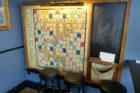


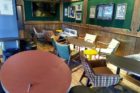

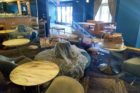



The Board Room Now Open in Clarendon
by Chris Teale
A bar that combines an extensive drinks menu with board games is now open in Clarendon.
The Board Room opened yesterday (Tuesday) at 925 N. Garfield Street, in the space formerly occupied by Sehkraft Brewing. This is The Board Room’s second location — it already has one in Dupont Circle.
It has space for around 140 people in the main bar area, as well as the adjoining “Ms. Peacock’s Champagne Lounge,” which was the butcher shop. Mark Handwerger, owner of The Board Room’s parent company Bedrock Bars, said this morning that he expects that section to be open on Friday, depending on construction.
The Board Room will look to continue Sehkraft’s in-house brewing, and Handwerger said it will start to have its own beer available for purchase on Monday, made initially at a commercial brewer. It also has an extensive cocktail and food menu.
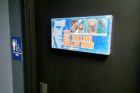
Board games are available for rent, with various box tops from other board games added to the walls as art throughout. Even the entrances to the restrooms have references to board games on their doors.
Handwerger had planned to open The Board Room earlier, but construction issues caused delays.
26 Nov 02:07
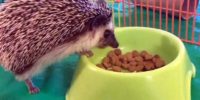

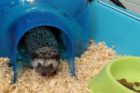
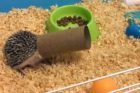

Arlington Pet of the Week: Prickles
by ARLnow.com
This week’s Arlington Pet of the Week is Prickles, a hedgehog who got involved in one of the Arlington County Board’s recent policy debates.
Here is what his owner John had to say:
Cats and dogs are great, don’t get me wrong, but few have won recent legislation battles with Arlington County.
In an article this year, your website covered an exception for hedgehogs in the new exotic animal ban. My hedgehog, Prickles, was part of that fight.
After emailing the county on behalf of the Arlington hedgehog community, the county responded and reassured us that Prickles was A-OK in their books and that his voice was heard loud and clear throughout their offices.
So who is Prickles? Well, he is a 1-year-old African hedgehog who was born in the countryside of Winchester, Va. He spends most days curled up in a small fleece sleeping bag (we should all be so lucky).
At night is when the magic happens. Around 10 p.m. or so, he wanders out for water and a quick bit to eat (dry cat food).
Gold’s Gym is closed at this point, so instead he rotates between sessions of running on his wheel and powerwalks with toilet paper tubes on his head. Some of his favorite toys are ping pong balls, cat toys with bells and PVC tubes to run through.
Prickles isn’t much of a talker: just the occasional squeak or hiccup. He also doesn’t fetch, kill mice, roll over, or care about laser pointers; these things are beneath him.
While he certainly can be lazy, and he is most certainly grumpy when he wakes up; my finance and I love him, and hope you guys will consider a pet outside of the box, yet has recent relevance to Arlington, for your Pet of the Week.
PS: He thinks Sonic projects an unrealistic body image for all other hedgehogs. Just kidding, he loves him, but he does hate those pesky water levels.
Want your pet to be considered for the Arlington Pet of the Week? Email arlingtonnews@gmail.com with a 2-3 paragraph bio and at least 3-4 horizontally-oriented photos of your pet. Please don’t send vertical photos, they don’t fit in our photo galleries!
Each week’s winner receives a sample of dog or cat treats from our sponsor, Becky’s Pet Care, along with $100 in Becky’s Bucks. Becky’s Pet Care is the winner of six consecutive Angie’s List Super Service Awards, the National Association of Professional Pet Sitters’ 2013 Business of the Year and a proud supporter of the Arlington County Pawsitively Prepared Campaign.
Becky’s Pet Care provides professional dog walking and pet sitting in Arlington and all of Northern Virginia, as well as PetPrep training courses for Pet Care, CPR and emergency preparedness.

22 Nov 04:01


Are Crickets Dispersing Seeds of Parasitic Plants?
by Matt
Parasitic plants lead a rather unique lifestyle. Many have foregone photosynthesis entirely by living off fungi or their photosynthetic neighbors. Indeed, there are many anatomical and physiological adaptations that are associated with making a living parasitically. Whether they are full parasites or only partial, one thing that many parasitic plants have in common are tiny, dust-like seeds. Their reduced size and thin seed coats are generally associated with wind dispersal, however, there are always exceptions to the rule. Recent evidence has demonstrated that a handful of parasitic plants have evolved in response to a rather unique seed dispersal agent - camel crickets.
A research team based out of Japan recently published a paper describing a rather intriguing seed dispersal situation involving three species of parasitic plants (Yoania amagiensis - Orchidaceae, Monotropastrum humile - Ericaceae, and Phacellanthus tubiflorus - Orobanchaceae). These are all small, achlorophyllous herbs that either parasitize trees directly through their roots or they parasitize the mycorrhizal fungi associated with said trees. What's more, each of these species are largely inhabitants of the dense, shaded understory of rich forests.
These sorts of habitats don't lend well to wind dispersal. The closed forest canopy and dense understory really limits wind flow. It would appear that these three plant species have found away around this issue. Each of these plants invest in surprisingly fleshy fruits for their parasitic lifestyle. Also, their seeds aren't as dusk-like as many of their relatives. They are actually quite fleshy. This is odd considering the thin margins many parasitic plants live on. Any sort of investment in costly tissues must have considerable benefits for the plants if they are to successfully get their genes into the next generation.
Fleshy fruits like this are usually associated with a form of animal dispersal called endozoochory. Anyone that has ever found seed-laden bird poop understands how this process works. Still, simply getting an animal to eat your seeds isn't necesarly enough for successful dispersal. Seeds must survive their trip through the gut and come out the other end relatively in tact for the process to work. That is where a bit of close observation came into play.
After hours of observation, the team found that the usual frugivorous suspects such as birds and small mammals showed little to no interest in the fruits of these parasites. Beetles were observed munching on the fruits a bit but the real attention was given by a group of stumpy-looking nocturnal insects collectively referred to as camel crickets. Again, eating the fruits is but one step in the process of successful seed dispersal. The real question was whether or not the seeds of these parasites survived their time inside either of these insect groups. To answer this question, the team employed feeding trials.
They compared seed viability by offering up fruits to beetles and crickets both in the field and back in the lab. Whereas both groups of insects readily consumed the fruits and seeds, only the crickets appeared to offer the greatest chances of a seed surviving the process. Beetles never pooped out viable seeds. The strong mandibles of the beetles fatally damaged the seeds. This was not the case for the camel crickets. Instead, these nocturnal insects frequently pooped out tens to hundreds of healthy, viable seeds. Considering the distances the crickets can travel as well as their propensity for enjoying similar habitats as the plants, this stacks up to potentially be quite a beneficial interaction.
The authors are sure to note that these results do not suggest that camel crickets are the sole seed dispersal agents for these plants. Still, the fact that they are effective at moving large amounts of seeds is tantalizing to say the least. Taken together with other evidence such as the fact that the fruits of these plants often give off a fermented odor, which is known to attract camel crickets, the fleshy nature of their fruits and seeds, and the fact that these plants present ripe seed capsules at or near the soil surface suggests that crickets (and potentially other insects) may very well be important factors in the reproductive ecology of these plants.
Coupled with previous evidence of cricket seed dispersal, it would appear that this sort of relationship between plants and crickets is more widespread than we ever imagined. It is interesting to note that relatives of both the plants in this study and the camel crickets occur in both temperate and tropical habitats around the globe. We very well could be overlooking a considerable component of seed dispersal ecology via crickets. Certainly more work is needed.
Photo Credits: [1]
17 Nov 18:03
Local metal head Danica Roem wins election!
by Metal Chris
V.w.verweijBest headline

We here at DCHeavyMetal.com are very proud of local metal head Danica Roem! Yesterday she was successfully elected to Virginia’s House Of Delegates to represent the state’s 13th district, which covers Manassas Park City and parts of Prince William County. Her historic win has garnered her headlines across the nation and world. While I’m totally psyched to see the first person from our area’s metal scene elected to office, the reason this grabbed headlines is the fact that Danica is transgender, and now the first ever transgender person elected to office in Virginia. I stopped by her victory party last night to join in the celebration (and make sure our area’s metal heads were representing!) and snapped the photo above. Danica gave a moving victory speech (embedded below) to the packed room and even gave a shout out to metal heads at the beginning! Though she ran on fixing traffic on Route 28 and paying teachers more, her win was important to many outside of her district as well.
It’s really awesome to see one of us making headlines and causing change in such a positive way. Arch Enemy frontwoman Alissa White-Gluz even made an Instagram post (here) about how she used to crash on Danica’s couch back in the day when she played Jaxx/Empire. Be sure to check out the party thrash band Danica fronts, Cab Ride Home, by streaming their 2017 album Crash The Gate below.
13 Nov 17:37
Mooning Cyclist Evades Police Search
by ARLnow.com
 A cyclist was seen riding down the street in Courthouse yesterday, mooning every driver and pedestrian in his path.
Police were called around 3:45 p.m. for “a report of a male traveling by bicycle with his buttocks exposed in the area of N. Veitch Street at Wilson Boulevard,” according to Arlington County Police Department spokeswoman Ashley Savage.
An ARLnow.com contractor witnessed the odd sight and said the man rode his bike into the nearby Key Elementary parking lot. Police, however, were unable to locate him.
“A lookout was broadcast and a search of the area by officers was negative,” Savage said.
07 Nov 14:35
Today in Hawks around Town – Logan Circle
by Prince Of Petworth
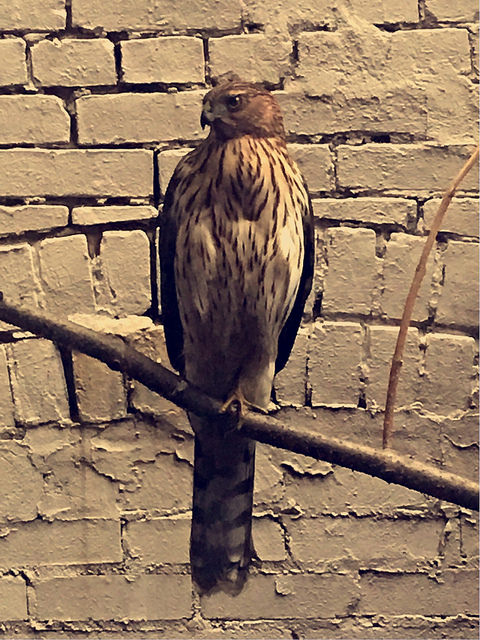
Thanks to Devon for sending:
“After he/she consumed the pigeon meal.”
If you spot a hawk or any interesting wildlife around town, lunching or otherwise, and get a good photo please send in an email where you spotted it to princeofpetworth@gmail.com and I’ll add it to the queue. Hawks around Town is made possible by a generous grant from the Ben and Sylvia Gardner foundation.
03 Nov 00:02
 While the world chases solar generating windows, we see how to do solar generating walls.
Finally, C.F. Møller shows the world how to do building-integrated solar panels
by Lloyd Alter
While the world chases solar generating windows, we see how to do solar generating walls.
03 Nov 00:02
 The period taboo has gone on long enough. Now it's time we taught young girls about the safer, reusable options that exist for them.
Why we need to talk about reusable menstrual products
by Katherine Martinko
The period taboo has gone on long enough. Now it's time we taught young girls about the safer, reusable options that exist for them.
03 Nov 00:01
 But as the BBC explains, the butter is there; it's just not accessible to the French.
France struggles with lack of butter
by Katherine Martinko
V.w.verweij...
But as the BBC explains, the butter is there; it's just not accessible to the French.
