Shared posts

26 Dec 23:06

Archie Shepp, Interviewed by his Son It seems to me that...


Archie Shepp, Interviewed by his Son

It seems to me that interviews of Archie Shepp always prove interesting, but this one in some respects proves even more arresting, perhaps because his son Accra Shepp is posing the questions. Archie Shepp’s passion and commitment seem kindled as movingly here as ever – perhaps even more so in light of his singular partner in this conversation, and also, perhaps, the times that may be finally starting to give this seer and activist’s ideas their due. Fascinating reading.


-Nick Moy


Read from the New York Review of Books…

Follow: Mosaic Records Facebook Tumblr Twitter
26 Aug 14:15

Piqued bleached

by Mark Liberman

Bruce Finley, "Wildfire haze, record heat and pollution combine to make Denver air quality dangerous for all", Denver Post 8/25/2020:

Colorado public health officials issued a special “multiple pollutants” alert through at least 4 p.m. Tuesday. Health authorities focused most urgently on the harm from inhaling tiny “particulates” spreading in the smoke from burning forests and grasslands. California’s big fires brought more smoke, thickening the haze from the four major fires still burning across more than 193,000 acres in western Colorado. […]

These particulates piqued concerns because they easily waft inside homes and vehicles, penetrate masks residents wear to combat the coronavirus, cannot be exhaled, and quickly enter bloodstreams to cause broader harm. [emphasis added]

I've noticed that in current usage, pique has been almost entirely bleached of its original emotional content. Merriam-Webster's entry recognizes this, at least partly, by giving the word's first sense as "to excite or arouse especially by a provocation, challenge, or rebuff", with "to arouse anger or resentment in : IRRITATE" in second place.

The OED's entry (updated 2006) has the opposite order, with  "To wound the pride of, irritate, or offend; to make resentful" in first place,  "To take pride in or congratulate oneself on" in second place, and  "To stimulate or provoke (a person) to action, esp. by arousing jealousy, etc.; to arouse (a feeling, esp. curiosity or interest)" last.

The OED's etymology underlines the interesting collection of emotions involved — annoyance or anger when the stimulus comes from the outside, pride when it's internal:

Etymology: < French piquer to anger, annoy (1458 in Middle French), (reflexive) to get angry (c1590 in Middle French), to stimulate, provoke (1615), (reflexive) to take pride in, boast about (1623), specific uses of piquer to prick, pierce, sting (see pick v.1). Compare Occitan picar (reflexive) to be offended, Italian piccare (reflexive) to be offended (a1342), to anger, provoke (1611), (reflexive) to pride oneself in (1615), Spanish picar to anger, provoke, (reflexive) to be offended, to pride oneself in (a1496 in the latter sense).

But all of these negatively-evaluated emotions have evaporated in most current usage. In Denver, interest has been piqued because of danger; in the first five (other) examples in the Google News index, it's opportunity, enjoyment, or plain old curiosity:

[link] Whales Investors Interest Piqued: Is Bitcoin About To Rally?
[link] Why Nikola is piqued by the fragrance of Musk
[link] While he’s used to singing ballads, recently pop and R&B music have piqued his interest.
[link] The origin of life on Earth is a topic that has piqued human curiosity since probably before recorded history began.
[link] So if your interest on this interest is piqued, here are some answers to questions about when and how this money may arrive.

This kind of semantic bleaching is common, e,g. "Ask Language Log: 'Incredible'", 7/18/2018.


04 May 21:33

How to Annotate Screenshots and Photos on iOS

by Rose Orchard

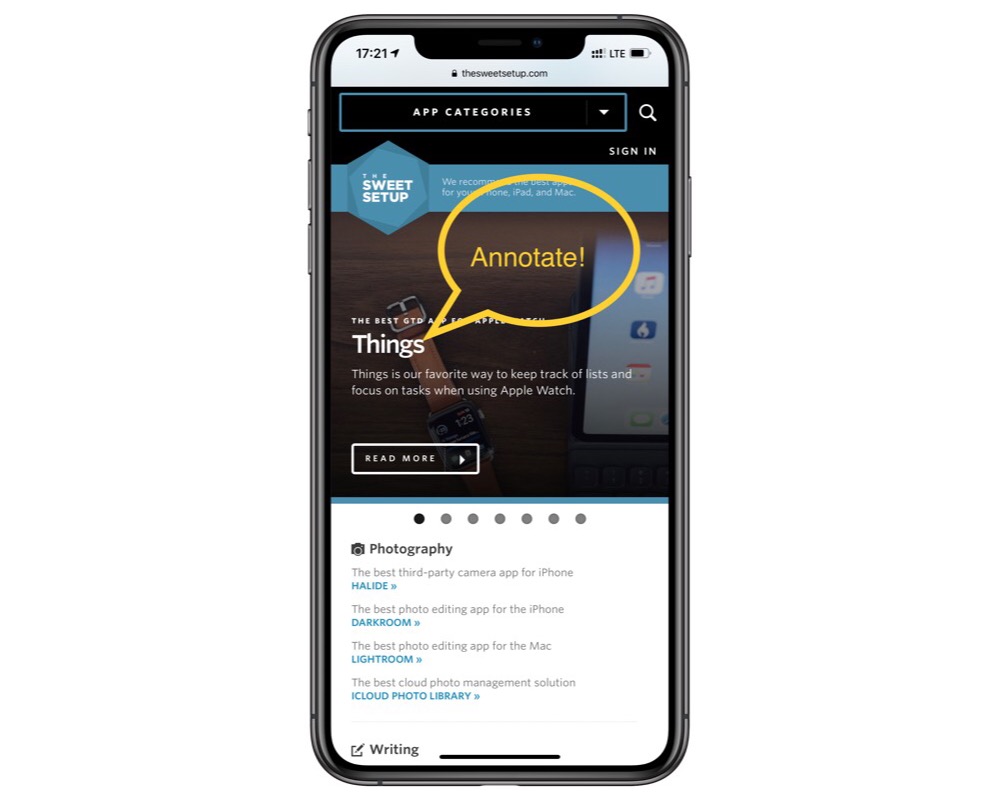
Screenshots are one of the most effective ways to communicate about UI elements in virtually any operating system. What used to be a clunky and frustrating experience in years past is now a seamless and quick task. Thanks to the built-in screenshot tools on iOS today, it’s easier than ever to comment and share your ideas around the UI experience.

Annotating a New Screenshot

Whenever you take a screenshot on iOS, the image floats in the bottom right corner for a while — not long, just long enough for you to grab it if you want to. This is the most immediate way to start editing a screenshot. If you tap this floating image, then you’ll be taken straight to the editing window with the pen, marker, pencil, eraser, and lasso tools across the bottom. Next to these, you can choose the color you want to use with these tools.

In the bottom right corner, there’s a + button, which allows you to add additional markup — be it text, a signature, magnification, squares, circles, speech bubbles, or arrows.

Once you’ve annotated your screenshot to your heart’s content, you can use the share sheet in the bottom right corner to send it where it needs to go instantly. Once you tap Done in the top left corner, you’re given the option of saving the image to photos or deleting the screenshot immediately, which helps to keep your camera roll clean.

Annotating an Existing Image

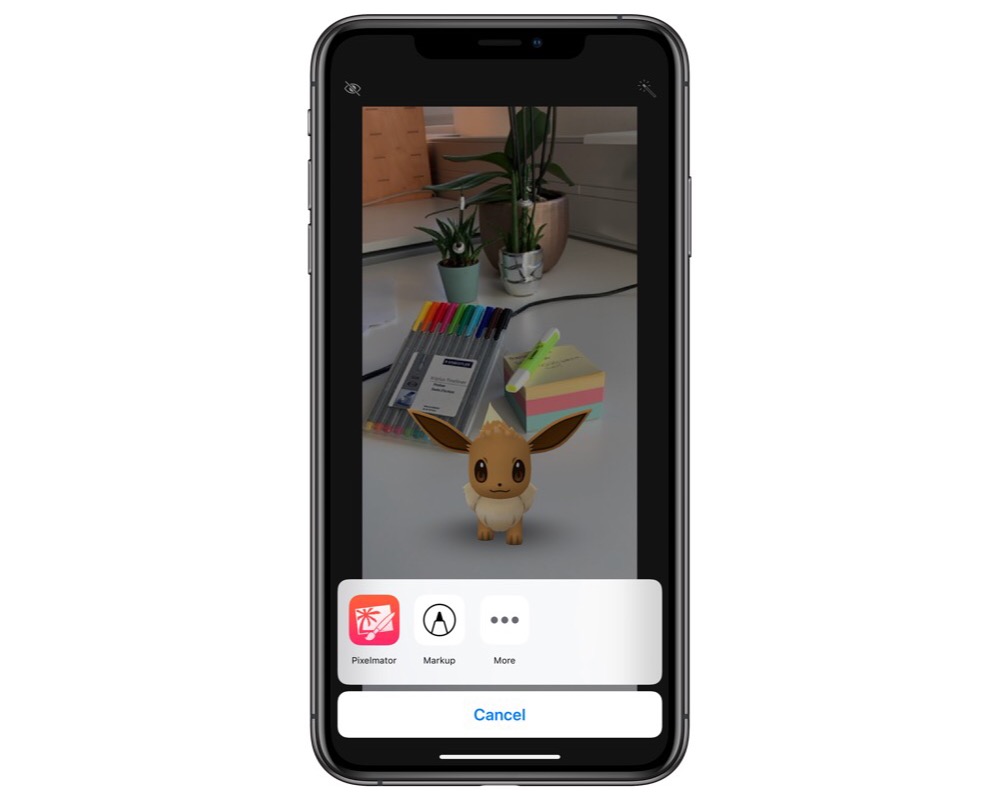
If you already have an image or screenshot saved in your Camera Roll, you can simply find it in Photos, tap Edit, and when you tap the menu item at the bottom of the screen, choose Markup. This gives you all the same options as marking up a screenshot.

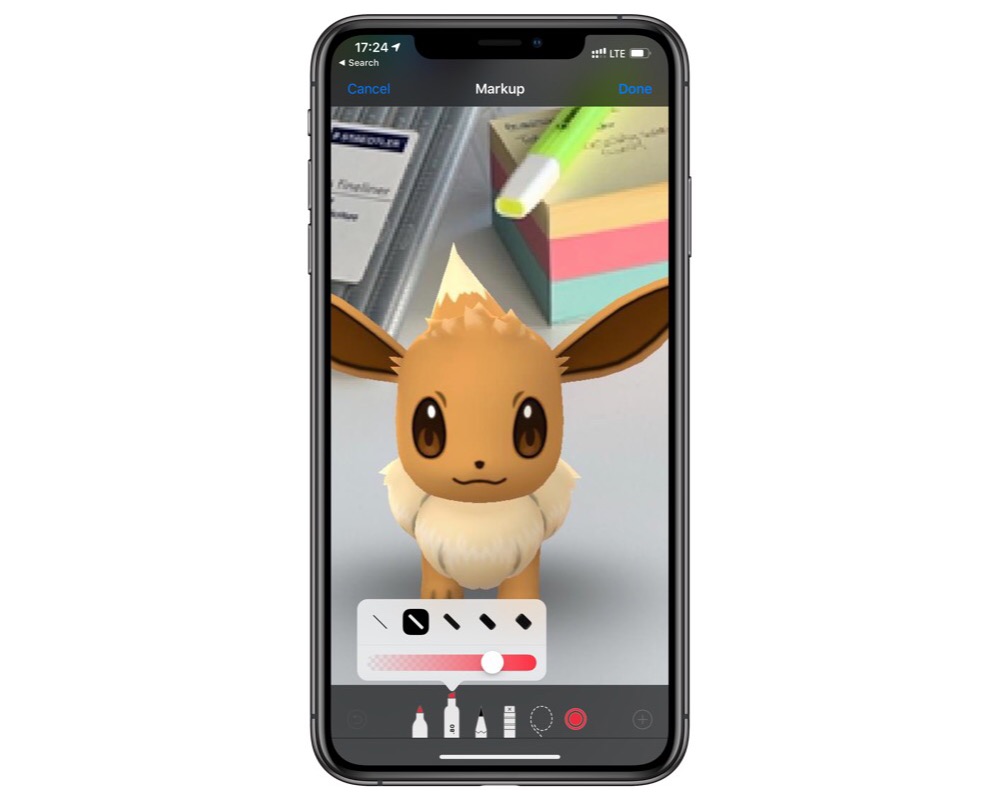
If you tap and hold the marker icon, you can choose how transparent or thick it should be too. Just don’t forget — it can be removed with some photoshop, so don’t use it to redact sensitive information.

Mess up your annotation? Tap and hold the undo button to undo all your changes.


We have more helpful tips right here.


The 5 Best Productivity Apps (Sweet Setup Favorites)

Download: We spend an inordinate amount of time sorting through hundreds of apps to find the very best. This list of must-have productivity apps includes app links, quick-start info, and pro-tip workflow recommendations for each app.

Get Access to the List Here »