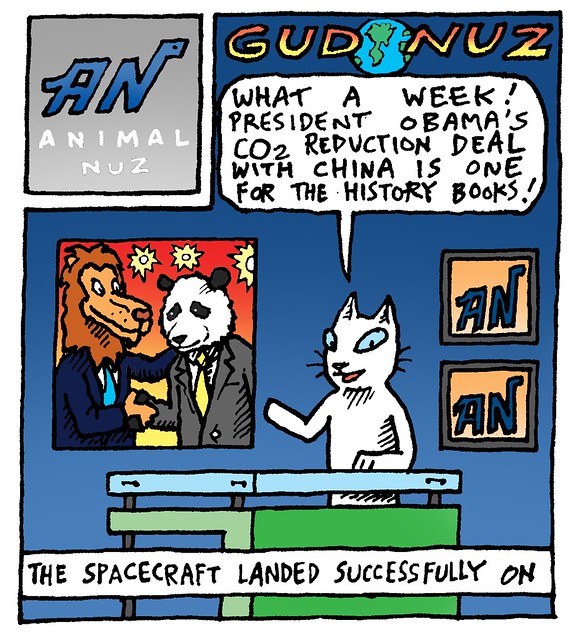
A cartoon by Mike Luckovich.
Related | Border czar admits ICE sees all immigrants as criminals
In Her Maryland Crabby Daddy, by Golden Angel, our heroine is doing kinky “research” for her next novel. It’s going pretty well, I’d say:
He wanted to do things with her that he hadn’t with anyone else. Things he’d only fantasized about before.
Which was how she ended up over his knee before the Oriole’s game they were meeting everyone at.
“I’m supposed to go to the game with a plug in my butt?” she whined as he pressed the lubricated tip to her virgin hole. Whether or not he’d ever get his cock in the tight orifice, he wasn’t sure, but he knew he wanted to play with it. The first time he’d put his finger there while eating her out, she’d nearly kicked him in the head from surprise — so he’d tied her in place and continued doing what he was doing, but it had made the area much more tantalizing a target.
“That’s right.” He pushed in slightly, feeling the resistance, enjoying the little noise of surprise and uncertainty that she made. “It’ll help remind you to be a good girl while we’re out in public. Plus, it will be fun.”
“I think you and I have very different ideas of fun,” she grumbled, making Ethan laugh. He pushed the plug in deeper and Ria squealed.
“I think your problem is that we have exactly the same idea of what constitutes ‘fun’ and sometimes you wish we didn’t.”
He’d hit a little too close to home with that observation. Fortunately, he didn’t seem to expect a response as he pulled the plug back a bit before pushing it in deeper still and making her moan and wriggle as her backside was invaded. Ria had written about plugs and butt stuff plenty of times, but this first experience… it was more invasive, more humiliating, and more arousing than she’d imagined.
Her pussy fluttered as it pushed in, opening her up, stretching her entrance with a raw sensation as the toy rubbed against her nerve endings, causing a fluttering that was indescribable. It felt so wrong and so good at the same time. Her brain was insisting it was an ‘out’ hole, and yet her pussy clenched at the sensation of being filled there. Or maybe it was the idea of taking his cock there, because of course she was now wildly curious as to what that would feel like.
How much it would hurt.
How good it would feel.
“Ow!” She squealed as the thickest part pushed past her tight ring. She could actually feel her entrance snap into place around the little neck between the bulb and the flat base.
“Good girl,” Ethan crooned, twisting it inside her.
The amount of lube meant it spun easily, despite the way her muscles clamped down around it, which was the oddest sensation. Ria moaned, shuddering a little.
“You look very pretty with a plug in your ass, princess.”
Similar Sex Blogging:
The post Plugged For The First Time appeared first on ErosBlog.

SATURDAY, DECEMBER 21st, is the winter solstice and either the shortest or longest day of the year, depending on your hemisphere. It also marks the 36th anniversary of one of history’s most notorious terrorist bombings, the 1988 downing of Pan Am flight 103 over Lockerbie, Scotland.
Flight 103, a Boeing 747 named Clipper Maid of Seas, was bound from London to New York when it blew up in the evening sky about a half-hour after takeoff. All 259 passengers and crew were killed, along with eleven people in the town of Lockerbie, where an entire neighborhood was virtually demolished. Debris was scattered over 800 square miles. Until 2001, this was the deadliest-ever terror attack against American civilians. A photograph of the decapitated cockpit and first class section of the 747, lying crushed on its side in a field, became an icon of the disaster, and is perhaps the saddest air crash photo of all time.
The investigation into the bombing — the U.S. prosecutorial team was led by a hard-nosed assistant attorney general named Robert Mueller (yes, that Robert Mueller) was one of the most fascinating and intensive investigations in law enforcement history. Much of the footwork took place on the Mediterranean island of Malta, where the explosive device, hidden inside a Toshiba radio and packed into a suitcase, was assembled and sent on its way. The deadly suitcase traveled first from Malta to Frankfurt, and from there onward to London-Heathrow, where it was loaded into flight 103’s baggage hold.
Among the security enhancements put in place after the bombing is the now familiar requirement that passengers and their checked luggage travel together on the same flight. (“Bag pulls,” as we call them, are a regular occurrence on overseas flights when passengers — but not their bags — miss their connections, often resulting in delays.)
Two Libyans, Abdelbaset al-Megrahi and Lamin Khalifah Fhimah, were eventually tried in the Netherlands for the bombing. Both had ties to Libyan intelligence and were believed to have carried out the attack under orders of Libyan leader Mohammar Khaddafy. Fhimah was acquitted (a verdict that generated plenty of controversy), but in 2001, eleven years after the incident, al-Megrahi was convicted and sentenced to life.
Al-Megrahi and Fhimah also had been employees of Libyan Arab Airlines. Al-Megrahi was in charge of security, and Fhimah was the carrier’s station manager at the Malta airport. During my vacation to the island a few years ago, it was eerie when I found myself walking past the Libyan Airlines ticket office, which is still there, just inside the gate to the old city of Valletta.

In 2009, in a move that has startled the world, Scottish authorities struck a deal with the Libyan government, and al-Megrahi, terminally ill at the time, was allowed to return home, to be with his family in his final days. He was welcomed back as a hero by many.
Then, only two years ago, a third alleged Libyan conspirator, Abu Agila Masud, was apprehended by U.S. authorities and awaits trial on charges that he built the explosive device that destroyed flight 103. The investigation remains open, and it’s possible, if unlikely, that other individuals could someday be held accountable.
There’s lots to read online about flight 103, including many ghastly day-after pictures from Lockerbie. But instead of focusing on the gorier aspects, check out the amazing story of Ken Dornstein, whose brother perished at Lockerbie, and his dogged pursuit of what happened. (Dornstein, like me, is a resident of Somerville, Massachusetts.)
The government of Mohammar Khaddafy was also held responsible for the 1989 destruction of UTA flight 772, a DC-10 bound from Congo to Paris. Few Americans remember this incident, but it has never been forgotten in France (UTA, a globe-spanning carrier based in Paris, was later absorbed by Air France).
A hundred and seventy people were killed when an explosive device went off in the DC-10’s forward luggage hold. The wreckage fell into the Tenere region of the Sahara, in northern Niger, one of the planet’s most remote areas. (Years later, a remarkable memorial, incorporating a section of the plane’s wing, was constructed in the desert where the wreckage landed.)
In exchange for the lifting of sanctions, Khaddafy eventually agreed to blood money settlements for Libya’s hand in both attacks. The UTA agreement doled out a million dollars to each of the families of the 170 victims. More than $2.7 billion was allotted to the Lockerbie next of kin.
Upper photo courtesy of Pan Am Museum.
Second photo by the author.
The post Lockerbie at 36. appeared first on AskThePilot.com.
This post, a stolen work laptop, employee wants me to fire her coworker, and more , was originally published by Alison Green on Ask a Manager.
It’s five answers to five questions. Here we go…
1. How to tell your boss a sex worker stole your work laptop
I have a question on behalf of a friend (yes, I promise it is actually a friend and not me). He was staying overnight on a business trip and decided to hire a sex worker. This is perfectly legal in our part of the world and he used his own personal funds. While he was in the bathroom, the sex worker robbed him, including his work laptop. How should he go about informing work what happened?
In theory he could just explain that he had an “acquaintance” come back to his room and not proactively volunteer that the acquaintance was a sex worker, but the company will likely want him to file a police report (and will wonder why he hasn’t done that already). Once that happens, it’s going to be hard to avoid the rest of the story coming out … and that could potentially be very bad for your friend (not necessarily that he hired a sex worker but that he did it on a business trip and it resulted in the theft of company property, and possibly sensitive company property). He’d be more likely to keep his job if the laptop got lifted from a restaurant or other public place. It’s a bad situation.
2. Husband and wife owners are constantly fighting
I work for a small firm (under 20 employees). The owners are husband and wife and they are constantly fighting. She’s the president, he’s the CEO. She’s an alcoholic and he is on the wagon, part-time. They’ve owned this company for over 20 years, and they’ve taken a lot of personal issues into the office. There are days where it is all-out war with each other, which affects the team for weeks. Everyone is on eggshells and I don’t see it getting any better. There are days where my boss spends over an hour complaining about his wife, how she can’t do anything right, calls her horrible names, and just simply is unproductive. It’s to the point where I and other colleagues don’t want to come to the office anymore. It’s hard to do our jobs.
Outside of removing myself from the situation and finding a new job, is there any legal recourse or quitting based on a hostile work environment? The boss has gotten so angry that he’s clenched fists and turned colors. He doesn’t think he’s the problem and that it’s everyone else.
Assuming you’re in the U.S., there’s no legal recourse. Your work environment is certainly hostile in the colloquial sense (in that you are surrounded by hostility), but in the legal sense hostile work environment needs to be based on a protected characteristic, like race, sex, religion, disability, etc. In other words, being a jerk to someone because of their race is illegal., but being an equal-opportunity jerk or fighting with your wife in front of everyone is not.
But this sounds horrible and you should get out ASAP.
3. My employee wants me to fire her coworker for working during medical leave
I have two employees under my management, Phoebe and Monica. They are equals in the organization and neither are management. Monica went on medical leave a few months ago and Phoebe found out she was working a side job during this time. Phoebe reported Monica using our whistle-blower policy. The insurance company who was paying her is now involved and we have decided to leave it in their hands. Phoebe is angry that Monica was not fired and will not let it go. She is angry at me and the organization as she wants Monica fired and is threatening to quit if she isn’t.
I believe this is none of Phoebe’s business and she has been told to leave it alone. We have never had other issues with Monica and while this shows a level of dishonesty and a lack of integrity, I also recognize short-term disability doesn’t pay enough for most people to live on. I don’t see this as a fireable offense. Am I in the wrong here? It won’t be the end of the world to lose Phoebe if she feels this strongly about it, I just want to know how to deal with this situation should it happen again.
This isn’t even remotely Phoebe’s business, and the next time she brings it up you should say, “This isn’t something that’s up for further discussion, and it’s become disruptive for you to continue pushing for a different outcome. If you’d like to take the next few days off to decide whether you’re able to move on from it or not, that’s fine to do. But I want to make sure you understand that if you choose to stay, this isn’t something we will continue to discuss.”
And if she threatens to quit you should say, “I understand. If you decide to do that, let me know and I’ll notify HR to get the paperwork started.”
As for your decision about Monica, it’s definitely possible for her to need medical leave for one kind of work while still being able to do a different kind of work.
4. No one has acknowledged my resignation
I have been working as a freelancer for a company that I need to break ties with so I can focus on the full-time job I have managed to get. I sent a resignation email to my direct boss and their boss, since most often my emails on Friday have been ignored unless they went to more than one person. I haven’t had a reply. Not even a curt “acknowledged” message from anyone. I have contracts I am going to wrap up according to the work left on them, but there’s one ongoing contract that will need to be transferred to someone else. If I don’t get a response from my boss or her boss, what’s my next move? They’re a haphazardly organized business and I am feeling so good about my decision to leave because of the inconsistencies in their ability to do their jobs effectively, but also I don’t want to leave my clients hanging.
For context, I was tutoring so my clients are kids and their parents, with the parents choosing a number of hours of tutoring they want and I’m contracted for that amount of time. The company matched me with the kids and I organized times and content. I’m happy to finish the two shorter/easier contracts I have left, but new job starts in September and if I continue with the long and challenging remaining contract, I’ll be stuck with that student until November at the earliest.
This is time-sensitive, so call your boss. If you get voicemail, leave a message saying, “I wanted to make sure you saw my email that I am starting a new job and need to wrap up my work here by (date). I need to talk with you about how to handle the X contract since I’ll be unavailable to continue that tutoring. My proposal is that I do ___ and I want to get your sign-off on that.” If it’s reasonable for the context, you could add, “If I don’t hear back from you by X, I’ll move forward with that.” And then follow that up with an email reiterating your plan for what to do with that contract (which presumably would be alerting the family of your ending date and having them connect with the company for a new tutor, but give your boss the chance to weigh in first).
5. Recommending an acquaintance who I don’t know well
A newish acquaintance of mine (Herbert) recently let me know he was applying for a job at my ginormous global company and asked me if I had any contacts or insight I could pass along to him. I have a coworker who used to work for the department he is applying to and that coworker offered to connect me (over instant message) to the hiring manager if I want to put in a good word. My company has a referral bonus program, so I also submitted some info related to Herbert’s application.
I’d love to see Herbert succeed and earn a referral bonus in the process, but should I skip trying to put in a good word for him with the hiring manager since I don’t really know his work? He’s a congenial guy and I have his resume and can speak to his experience that way, but I don’t have any other first-hand knowledge. Is there any benefit to trying to refer somebody I don’t really know to a manager who doesn’t know me? Is there any risk?
The risk is that if you recommend him and he turns out to be horrible, your reputation can suffer as a result; if nothing else, your referrals will be a lot less trusted in the future. You’re basically vouching for someone when you recommend them and putting your own judgment on the line. (That’s not always the case with referrals, where you’re not saying much more than “this person came through me and they seem generally pleasant.” But with a recommendation (which includes stuff like “putting in a good word” for the person, you are indeed vouching for them to some extent.)
The way to deal with this is to always be really clear about the limits of your knowledge about a candidate. For example, you can say, “I want to be up-front that I’ve never worked with him so can’t vouch for his work, but from knowing him socially I can say that he’s smart, funny, and really enthusiastic about llama grooming.” But if you don’t know him well enough to vouch for those sorts of personal characteristics either, I’d skip trying to contact the hiring manager about him altogether.
This post, is it OK to expense drinks with a coworker, my ex-boss blew up when I accepted a different job, and more , was originally published by Alison Green on Ask a Manager.
It’s four answers to four questions. Here we go…
1. Is it weird that my coworker expensed drinks?
I have a colleague, Fergus, who is very close to me in age but senior to me at our company (not my manager, though). We have interacted at a few work events and had a great time talking to each other, and he’s mentioned a few times that he’d love to hang out. I’m also a great admirer of his work and am looking for friends in our city (I’m fairly new here), so I asked him the other day if he wanted to grab a drink and chat about one of his recent projects that I was interested in. We are both married, and it was clearly not anything romantic.
We had the drink, and I thought it was great! We got along well, and while we did discuss his project a bit, we also chatted about many non-work topics for several hours. He seemed like someone I’d definitely want to get to know better and hang out with again.
On the way out I offered to split the bill, but he said he was just going to expense it. This threw me a bit! I had though we we were meeting up for fun, and now I’m wondering if the expensing means that Fergus considered these drinks a work obligation. Is it normal for colleagues who spend time together to expense it, or should I assume Fergus isn’t actually interested in being friends and I misinterpreted what this hangout was? Am I overthinking this?
In many fields it’s common for people to expense drinks with coworkers and/or colleagues at other companies, even if the conversation was mostly non-work. Often that’s because they figure it benefits the company to have strong relationships internally and externally (especially in a situation like this where you don’t know each other well yet; expensing weekly socializing with your work BFF wouldn’t generally be acceptable) and the culture is such that they know the company would be fine with it.
That doesn’t mean Fergus saw it as a work obligation, just that he recognized that there’s enough work connection that he can get away with expensing it. (“Get away with” in this context doesn’t necessarily mean doing something shady; lots of managers are fine with this and encourage people to do it.)
There’s also a seniority element. Two junior people having drinks typically won’t be able to expense that, whereas two senior people often could (or a senior person who pays for a junior person). Partly that’s privileges of seniority, but partly it’s because there’s more expectation that senior people building relationships helps the company (and more common that they have expensing abilities at all).
2. My friend/ex-boss blew up after I accepted a different job
My contract in Company X was about to end and I was interviewing with several internal teams, so of course I reached out to my network inside, including a high-level manager I used to work for. Since our time together, we kept in touch as friends (or so I thought). She is now very well-positioned and immediately responded saying that she wanted me back on her team in a role that she was about to open. She then referred me to the potential supervisor.
I had a short exchange with him. The role did seem great and with a high-level of responsibility. The problem was timing, as my contract is ending and the internal processes haven’t even been completed so there is no open role yet. That would mean me being out of the system and unemployed until they hire me.They also changed the salary to a category lower than I was initially told. In the meantime, I received another solid offer and I called this manager to tell her that I needed to accept it to have a safe option, and we could see later how I could switch roles to her team. We agreed on this.
A few days later, I reconsidered that agreement. The truth is, I was dazzled by the career development but thinking it through, I felt uneasy going back on my word with the team who is hiring and welcoming me NOW. Likewise, my time working with her was filled with stress and burnout, and I’m not sure I am that person who works 24/7 anymore. So I write the manager thanking her for inviting me to be on board so quickly but telling her I am stepping out of this process, and of course apologizing for any inconvenience. She was on a business trip (so I couldn’t call her) but she texted me on Whatsapp late at night, and was very angry with me. Some of the wording included that she “could hire anyone she wanted” and “felt sorry for me for not choosing what is best for me.”
So, a friendship that spanned some years seems to have ended. Was I unethical? I understand the disappointment and inconvenience, but there was no work contract involved — heck, not even an open position. I never should have considered her offer in the first place, but I am human and I made a mistake. Is there any way I could repair this relationship?
You weren’t unethical. There isn’t even a job yet! There might never be a job. In fact, the only thing potentially approaching unethical would be if you’d accepted the other job with the intent of leaving as soon as the other one opened up — which is exactly what you realized you didn’t want to do.
Your old manager is being an ass. And if she reacts this dramatically to you not taking a job that doesn’t exist yet and hasn’t been offered to you and instead accepting a job that does exist so that you can have, you know, an income, you’re better off not working for her.
It doesn’t sound like the relationship is necessarily detroyed (not all arguments are friendship-enders), but whether or not you can repair it depends on her — both whether she calms down and becomes more reasonable, and whether you’re willing to move forward after her blow-up.
3. I don’t have the right equipment for my in-office days
I recently started a new job. Company headquarters are about two hours away, but there is a local office 30 minutes from my house. When hired, we agreed I’d be in the local office two days a week. The rest of my team is hybrid at the headquarters two hours away so while I see coworkers in other departments, I don’t gain face time with my team by coming into the office.
I could deal with that, though it seems a bit pointless. Since I’m here two days a week, I don’t get my own office but instead have to reserve a “hotel” office. That would be fine, except the offices are not set up with what I would expect for a functional work space. The docking station and monitors are incompatible with my newer (company-issued) laptop. Also, there is only one other hotel office that I have had to use when people don’t check the scheduling system. That office doesn’t have any monitors at all. I am much more productive with an external monitor.
Am I ridiculous for thinking that if I am required to be in the office, the setup should be functional for my daily activities? I asked my manager, who is usually very responsive, but she did not want to seem to want to make waves. Supply chain issues were also cited.
I should add that they provided everything for a functional setup for my home office, which seems to be part of the argument for why they won’t provide a second.
No, you’re not being ridiculous. If they want you working from the office, they should provide the equipment you need to do your job. I can understand not wanting to buy two of everything so you have it at both home and the office, but telling you to come in multiple days a week when there are (apparently) no real gains from having you there and you don’t have what you need to do your job is silly. It doesn’t sound like you’ll necessarily be able to do anything about it, but you’re not off-base in being irritated.
In a couple of months, if you find that is indeed harming your productivity without any payoff, you could see if your manager is willing to revisit the in-office requirement. Being able to show that you’ve made a good faith effort for a while can help strengthen that case.
4. I can’t have LinkedIn for safety reasons, but my new job requires it
I got a job offer today. Yay! But they said they require all their employees to have LinkedIn. Thing is, I have a crazy ex who will stalk me and hurt me at my place of employment if I publicize where I work. I have a very unusual last name so it would be easy to find me on LinkedIn. I don’t want to lose my new job. How do I tell my new boss that I don’t want LinkedIn due to having a crazy ex?
You are very, very, very unlikely to lose your new job over this! You just need to explain the situation, and any reasonable boss will understand. The easiest way is to be straightforward: “I’m very careful not to have an online presence because of a stalker situation. Could I opt out of this for safety reasons?”
If there’s an actual work-related need for the account (like if you work in recruiting so LinkedIn is a frequent work tool), you could talk about ways around that. (For example, would you be safe using a different last name and no photo, or another option like that?)
After dizzily swelling for weeks, COVID-19 cases seem to be leveling off in New York and Chicago. In the greater Boston area, the amount of SARS-CoV-2 found in wastewater is going down as quickly as it had gone up. The hard part isn’t over yet, but the omicron wave is starting to break and roll back out to sea. Soon we’ll see if any treasures are left behind in the tide pool.
Between Dec. 1 and Jan. 17, at least 18 million Americans contracted COVID. Data suggests that the vast majority of those cases were in unvaccinated people, but plenty of people who got their primary series of the vaccine also caught the immunity-evading omicron variant. By the time this wave is over, American bodies will know this virus like never before. But will the survivors gain anything from having had the disease? After all, there will be more variants in the future. Could the hard-earned immunity we’ve gained from omicron help fight them off? Could this wave be the last?
On Monday, White House chief medical adviser Anthony Fauci said it’s too soon to answer these questions. Scientists we spoke to agreed. But they also said the reason these questions were so difficult to answer was because of an issue that hasn’t always gotten much attention in the public sphere: the immunity provided by a COVID infection itself. Scientists have learned a lot about this “natural immunity” since the pandemic began. But omicron has upended many of those expectations, and the more we learn about this variant, the less clear it is what we should expect for the future of the virus and our immunity to it.
Scientists have been studying infection-induced immunity since COVID first emerged. In fact, it was the only kind of immunity anyone could really study at that point, said John Moore, a professor of microbiology and immunology at Cornell University’s Weill Cornell Medical College. And while there are now many more studies on vaccine-induced immunity thanks to clinical trials and easily trackable vaccinated populations like medical staff, there’s a lot that can be said about natural immunity, pre-omicron, with a reasonable amount of certainty.
One important takeaway from all that pre-omicron research: Infection-induced immunity and vaccine-induced immunity are pretty similar. On the whole, studies found that the efficacy of infection-induced immunity was about the same as what you’d get from a two-dose mRNA vaccine, and sometimes higher. For example, research from the U.K., in which a few hundred thousand participants were followed in a large-scale longitudinal survey, found that prior to May 16, having had two doses of the vaccine (regardless of the type) reduced the risk of testing positive by 79 percent, while being unvaccinated and having had a previous infection reduced the risk by 65 percent. After the delta variant became dominant,26 vaccination became less effective, reducing the risk by 67 percent, while a previous infection reduced the risk by 71 percent.
Likewise, both kinds of immunity seemed to wane over time — though Moore said infection-induced immunity might take longer to decline because a vaccination happens nearly all at once, while an infection takes longer to go through a process of growing, declining and finally being cleared from the body. “But it’s also not radically different [from antibody titers to vaccination]. It’s not measured in years, but months,” he said.
This is why some countries, including the member states of the European Union, treat documented recovery from COVID-19 as functionally the same as vaccination in their “vaccine passport” systems.
Still, vaccine-induced immunity is a better choice, not because it produces a stronger immunity, but because it enables you to get the immunity without the side effects and risks that come along with illness — like a greater risk of stillbirth if you’re pregnant, or long COVID, hospitalization and death in general.
The pre-omicron research also indicated another downside to natural immunity: namely, that it can be more variable. All immunity differs from person to person and holds up better against some variants than others. But infection-induced immunity can also be more or less effective depending on how severe your case of COVID was, explained John Dennehy, a professor of biology at the City University of New York’s Graduate Center. Since the earliest studies, scientists have found evidence that more severe illnesses produce a higher antibody response, while mild cases end up producing much less.
Then came omicron. The public desire for information on omicron is moving faster than science can produce, but we do know that this variant escapes natural immunity as easily as it does vaccine immunity. Omicron carries a lot of mutations that make it able to evade antibodies — and it doesn’t really matter how you got those antibodies in the first place, said Jeffrey Klausner, a professor of medicine in the Division of Infectious Diseases at UCLA’s David Geffen School of Medicine.
Beyond that, the picture is murky. For example, we know milder infections have, with past strains, produced less effective immunity. If a hallmark of omicron is milder infections — and that’s the main reason why there’s so much chatter that it might just be better to get this variant and get some natural immunity — how much immunity can anyone really expect to come out of those mild infections with? “We’re going to know for sure in a few weeks because a ton of preprint is coming out about it, but I don’t know the answer today,” Moore said. It’s information journalists can come back and update you on later, but it makes informed speculation hard now. (Meanwhile, keep an eye on our COVID-19 research tracker.)
The same holds true when you start trying to parse out what vaccinated people can expect from a breakthrough case of omicron. The combination of vaccine and infection-induced immunity has been shown to produce a hybrid that is probably more effective than either type alone — but, again, that research came from pre-omicron studies. Is a breakthrough case as good as a booster? If you’re going to get a booster after you’ve had a breakthrough case, how long should you wait? Those are questions scientists don’t have the answers to yet, partly because there’s no clear through line of what to expect once you’re dealing with omicron.
“Maybe your readers are right in being confused, because we don’t really know how long-lasting the immunity you get from omicron will be,” said David Thomas, the director of the Division of Infectious Diseases at Johns Hopkins Medicine.
Which brings us to the biggest question of all: Will the many infections, reinfections and breakthrough infections associated with omicron maybe — finally — put us in a better position for a well-protected, safer society? Maybe even a society that doesn’t have any more big waves crashing on its head? Theoretically, yes, Klausner told me. And he’s optimistic that it will. Thomas and Dennehy, on the other hand, were more cautious. After all, Dennehy pointed out, there’s no guarantee that future strains will be related to omicron. If omicron is different enough from delta that it evades immunity from that previous variant, what happens if a future variant comes along that’s evolved from delta and not omicron? It’s not unreasonable to expect a whole new wave.
And what does Moore think? He was just ready to take a pause from speculation and get some data before anyone starts making decisions for themselves or for society. “I’m fed up with winging answers to reporters like yourself, because I don’t know the answer,” he said. “None of us know for sure.”

While the decision to cancel #20NTC was disappointing, it’s been equally heartening to see the community members and the organization step up to help fill the void. To that end, NTEN has been aggregating a list of free webinars developed from what would have been conference sessions.
Two of those webinars are from ArtsHackers Drew McManus and Ceci Dadisman:
Webinar Description
Without a doubt, Google Analytics does all sorts of great things, but that doesn’t mean you are getting a complete picture. To get every benefit of the data, you’ll need to activate and/or setup several key features. Attendees will get step by step instructions on how to implement the following must-have GA settings in real-time: Set Your Primary URL, Activate Demographics, Activate Google Signals, Bot Filtering, Filter Your Visits, Referral Exclusions, Activate Search Tracking, and Adjust Session Settings & Campaign Lengths.
The webinar is limited to 100 attendees and space is first come, first serve so don’t wait to register.
Webinar Description
In times of uncertainty, email is a powerful tool to keep in touch with your community of donors and patrons. We’ll talk about how to maximize your email campaigns to drive open rates, engagement, and conversions. In this highly tactical session, you’ll learn best practices that can lead to more engagement and explore email automation functionality that will revolutionize the way you think about and deploy your email campaigns.
For the first time this cycle, Michael Bloomberg will participate in a Democratic presidential primary debate — and it promises to be scrappy. The former New York mayor qualified for the Nevada Democratic presidential primary debate just in the nick of time, getting the last poll he needed just before tonight’s deadline. Five other candidates will join him on the stage on Wednesday night: former Vice President Joe Biden; former South Bend, Indiana, Mayor Pete Buttigieg; Sen. Amy Klobuchar; Sen. Bernie Sanders; and Sen. Elizabeth Warren.
Democratic presidential candidates by whether they’ve qualified for the Nevada debate, as of Feb. 18 at 9:30 a.m. Eastern
| QUALIFYING POLLS | MET THRESHOLD FOR … | ||||
|---|---|---|---|---|---|
| CANDIDATE | National, NV, SC ≥10% | NV, SC ≥12% | POLLS | 1+ IA/NH DELEGATES | QUALIFIED |
| Biden | 8 | 1 | ✓ | ✓ | ✓ |
| Sanders | 8 | 1 | ✓ | ✓ | ✓ |
| Warren | 8 | 1 | ✓ | ✓ | ✓ |
| Buttigieg | 4 | 0 | ✓ | ✓ | ✓ |
| Bloomberg | 4 | 0 | ✓ | ✓ | |
| Klobuchar | 1 | 0 | ✓ | ✓ | |
| Steyer | 1 | 0 | |||
| Gabbard | 0 | 0 | |||
To qualify for the Nevada debate, a candidate must reach 10 percent support in at least four national, Nevada or South Carolina polls, or 12 percent support in at least two Nevada or South Carolina polls from qualifying polling organizations. Separately, candidates can also qualify if they won at least one national delegate via the Iowa caucuses or the New Hampshire primary.
Sources: Polls, ABC News
There were three ways to qualify for the debate, according to rules set by the Democratic National Committee. First, a candidate could qualify by getting 10 percent or more in four national, Nevada or South Carolina polls conducted by DNC-approved pollsters and released between Jan. 15 and 11:59 p.m. Tuesday.24 Alternatively, a candidate could qualify by getting 12 percent or more in just two Nevada or South Carolina polls from approved pollsters.25 Finally, a candidate could have also qualified simply by picking up at least one pledged delegate in Iowa or New Hampshire.
Although candidates need much more polling support to make the stage this time around, one barrier to qualification has been removed: The DNC controversially decided to scrap the requirement that a candidate must have raised money from a certain number of individual donors. This opened the door for Bloomberg, who is not accepting campaign donations, to make the stage, which he did by hitting 10 percent or more in four national surveys. The other five participants all got at least one pledged delegate (although all of them except Klobuchar also met the polling standard).
[Our Latest Forecast: Who Will Win The 2020 Democratic Primary?]
One of the candidates on the outside looking in is philanthropist Tom Steyer. He hasn’t won any pledged delegates so far, and the polling standards were much tougher to meet this time around: Not only were the thresholds roughly twice as high as in the last debate (after months of incremental increases), but the window in which qualifying polls could be released was also only about a month long — much shorter than all of the previous debates.
However, Steyer will have another shot at qualifying for the debate stage in the near future. On Saturday, the DNC announced how candidates can qualify for the next debate, which will take place in South Carolina just six days after this week’s Nevada debate. The criteria are essentially the same as the Nevada debate, except for the obvious difference that Nevada polls won’t count but Nevada delegates will (since the debate will take place after Nevada has already voted). But the window in which qualifying polls can be released is even shorter: Feb. 4-24.
That means that, so far, only five candidates are slated to appear at the South Carolina debate — the ones who have qualified via delegates:
Democratic presidential candidates by whether they’ve qualified for the South Carolina debate, as of Feb. 18 at 9:30 a.m. Eastern
| QUALIFYING POLLS | MET THRESHOLD FOR … | ||||
|---|---|---|---|---|---|
| CANDIDATE | National, SC ≥10% | SC ≥12% | POLLS | 1+ IA/NH/NV DELEGATES | QUALIFIED |
| Biden | 3 | 0 | ✓ | ✓ | |
| Sanders | 3 | 0 | ✓ | ✓ | |
| Warren | 3 | 0 | ✓ | ✓ | |
| Buttigieg | 2 | 0 | ✓ | ✓ | |
| Klobuchar | 0 | 0 | ✓ | ✓ | |
| Bloomberg | 3 | 0 | |||
| Gabbard | 0 | 0 | |||
| Steyer | 0 | 0 | |||
To qualify for the South Carolina debate, a candidate must reach 10 percent support in at least four national or South Carolina polls or 12 percent support in at least two South Carolina polls from qualifying polling organizations. Separately, candidates can also qualify if they won at least one national delegate via the Iowa caucuses, the New Hampshire primary or the Nevada caucuses.
Sources: Polls, ABC News
So far, only three qualifying polls have been published during the new qualifying period, and with one week to go there isn’t much time for many more to be released. But Bloomberg has cleared the 10 percent threshold in all three, so he needs just one more good poll to earn his spot on the debate stage. Steyer has a longer path, but he could make it, especially if more qualifying South Carolina polls are released, as he’s historically posted strong numbers there. He also has a shot at nabbing a delegate out of Nevada, which would automatically qualify him.
But there is also a good chance that the two upcoming debates — especially the one in Nevada — will be limited to just six candidates. If so, they will tie the Iowa debate for the smallest 2020 debates yet.
neil (Neil Paine, senior sportswriter): Now that every NBA team has played Game 82 of the regular season, we can finally get to the real business at hand: The playoffs. Let’s start with the Eastern Conference, where the Milwaukee Bucks earned the franchise’s first top seed since the league adopted the 16-team playoff format in 1984.
What do we think about the big picture in the East? The No. 1 Bucks and No. 2 Raptors were the most dominant during the regular season, but seeds 3 and 4 (Philadelphia and Boston) have as much talent as anybody in the conference on paper. Who do you think should have the edge and why?
natesilver (Nate Silver, editor in chief): I’m going to go ahead and agree with our algorithm that there’s a big gap between the top two (Milwaukee and Toronto) and No. 3 and 4 (Philly and Boston). Milwaukee and Toronto were a LOT better in the regular season. I agree that Philly might have as much talent on paper, but they didn’t really get it together. I’m not sure you can say that about Boston, especially with Marcus Smart out.
chris.herring (Chris Herring, senior sportswriter): Yeah. I spent some time around the Sixers over the past week, and Brett Brown admits what Nate just said: That the Sixers have an enormous amount of talent on paper, but he almost would’ve preferred to have less rest if it meant having more cohesion with that group.
The Marcus Smart injury could end up being really problematic for the Celtics for a couple reasons, too — we don’t know exactly how much time he’ll miss, but it could even be a bad sign in this series vs. Indiana.
Smart would have been the guy guarding Bojan Bogdanovic, who’s essentially taken over as the Pacers’ top gun since Victor Oladipo went down with injury.
Bogdanovic struggled against Smart all season, and his worst numbers of the year were against Boston because of it. But now, I assume they’ll go to Jaylen Brown to defend him, and that hasn’t worked well at all in those instances.
tchow (Tony Chow, video producer): Our predictions give the Celtics a 79 percent chance to advance. Even with the Oladipo injury for the Pacers, that still seems … high?
chris.herring: Probably a little high, yeah. Especially now, without Smart.
natesilver: I mean, I think people tend to underestimate how little luck there is in a seven-game series. The better team tends to win out, especially if it has home-court advantage.
chris.herring: I tend to think the Pacers are The Little Engine That Could. They play very hard … but that will probably only get them so far.
natesilver: For what it’s worth, our algorithm is giving Boston some credit for being more talented “on paper” than they played like during the regular season. Jayson Tatum is probably a better player going forward than what he showed this season, for instance. Gordon Hayward is obviously in a different category, but maybe him, too. Boston also had the point differential that you’d associate with a 52-win team instead of a 49-win team, which is not huge, but it’s something.
chris.herring: Yeah. Hayward has come on really nicely as of late, including a 9-of-9 game vs. Indiana last week. If he’s getting back to his old self, it could be tough for Indiana.
natesilver: It does seem, though, that it’s a team with only one real star-level talent right now, and Kyrie Irving seems pretty checked out. That’s subjective, I know, but they have a pretty big hill to climb — having to win three road series against three VERY good teams (likely Milwaukee, Toronto and Golden State, in that order) even if they get past Indiana.
chris.herring: I’ll be honest: I’m not very amped about the East’s first round at all. But that second round will probably be eons better than the West’s conference final.
neil: Yeah, it sounds from this like Boston-Indiana is the first-round series that has caught your attention the most. But that might be by default.
chris.herring: I think Philly-Brooklyn could be somewhat interesting. It doesn’t sound like an absolute given that Joel Embiid will play Game 1. The Nets are essentially playing with house money, and though they’ve struggled as of late, they had a harder end-of-season schedule than the other teams fighting their way into the playoffs.
natesilver: The Nets are kind of a buzzy team. But Philly, maybe in contrast to a Marcus Smart-less Boston, has enough talent that maybe they can be slightly subpar and still win fairly easily.
chris.herring: Yeah. I don’t expect much from Brooklyn, but I could see them making things interesting because of the limited time the Sixers have had together. Other than that — and some slight interest in how Boston looks without Smart/what it means for Indiana — I wish I could just simulate the East’s first round like a video game or something
neil: Haha. Let’s just play it out in NBA 2K.
chris.herring: Maybe that isn’t fair to Orlando, though. They’ve been good for a decent amount of time now.
neil: They’ve been on fire (11-2) since mid-March.
chris.herring: I just feel like it ultimately won’t matter against a club like Toronto.
natesilver: I also think Philly has more flip-the-switch potential than Boston. Maybe Jimmy Butler accepts his role as what’s essentially a third fiddle on offense and plays dominant defense and starts hitting 3s again. Maybe they treat the playoffs as a fun eight-week road trip instead of worrying too much about how the team is constructed in the future.
tchow: Just tell me what needs to happen to get Sixers vs. Bucks in the Eastern Conference finals.
neil: Well, the Raptors would have to lose in the second round AGAIN. How soul crushing would that be for that franchise? This was sorta supposed to be their year after LeBron left the East. (Especially after adding Kawhi Leonard.)
chris.herring: I don’t know how I feel yet about the Sixers-Raptors series, assuming it happens. But I think the Bucks should be favored against everyone, honestly. I think everybody has downplayed them, even as they’ve had this unbelievable season, with the likely MVP and coach of the year.
natesilver: The Raptors somehow won 58 games with Kawhi only playing 60. That’s seriously impressive.
chris.herring: I don’t know if it’s a small-market thing. Or if it’s just that people seem to be a year late on everything. It is impressive!
At the same time, they won 59 last year without him. So I’m more impressed by the Bucks essentially having the same cast and transforming into what they are now. I don’t know. Maybe it’s simply Milwaukee’s newness that I’m taken by.
neil: Are we also maybe holding Toronto’s playoff track record against them? (Even if it’s a relatively new version of that team this season?)
chris.herring: Nah. I’m not. Kawhi is such a different player than DeMar DeRozan, who had a game that didn’t translate all that well to postseason. Also, Pascal Siakam has improved by leaps and bounds. You could ignore him before on defense, and now that’s tantamount to having a death wish.
natesilver: They also have one of the two real stars in the East that’s won a ring before (Kawhi, with Kyrie being the other). Which I know sounds like boilerplate sports radio talk, but our research has found that playoff experience is actually fairly predictive.
chris.herring: I think Toronto fans have wanted to believe their team was different for a couple years now. Almost like that “Shawshank Redemption” scene where Red keeps going to the parole hearing and saying he’s a changed man, ready to rejoin society. But this time, the Raptors are different. Kawhi alone would have made them that way, but Siakam is a different player. As is Lowry, who hasn’t quite looked himself at all times. But has the experience, and has a better roster around him.
natesilver: Our algorithm also thinks that all six of their top rotation guys are above-average defensively. So that’s likely to keep them in every game unless they get mentally checked out.
Which, I don’t know. I wouldn’t totally rule out the possibility that they take a rough loss in a Game 1 or 2 somewhere and start panicking, and Kawhi starts thinking about how nice the Clippers could look next year with him in L.A.
But on balance, I think I’m on the side that says people are reading too much into the Raptors’ past playoff failures. It’s a different team this year, and there’s no LeBron.
chris.herring: Like the Munchkins when they realize the Wicked Witch is dead. Why do I keep using these movie references? What is wrong with me?
neil: LOL.
tchow: As of right now though, our model actually favors Toronto (slightly) over the Bucks to make the Finals (46 percent vs. 42 percent). Toronto fans have to be happy to see that.
neil: Do you guys agree?
natesilver: Yeah, that surprised me a bit. But Toronto has more playoff experience and Milwaukee has some injury issues.
tchow: I guess it’ll go a long way in the “playoff experience” argument to see how far a team like the Bucks go this year after that seven-game series last season against Boston. I have a hard time betting against them in the East though.
natesilver: On the flip side, Giannis Antetokounmpo is presumably going to start playing 37-38 minutes a game now after only playing 32.8 minutes in the regular season. That actually makes a pretty big difference.
chris.herring: That surprises me, but only a little. Their records aren’t that far off. The Raptors have played Kawhi a lot fewer games than Giannis.
What I do think will be key at some point, which we haven’t talked about yet, is the Bucks’ need to get back to full strength. They’ve been without Malcolm Brogdon, and Tony Snell has missed time, too. It doesn’t matter in a round 1 matchup. But it comes into play in a very big way in the following two rounds, should they get that far.
natesilver: I do wonder if Milwaukee’s whole floor spacing thing will work slightly less well in the playoffs. If you can contain Giannis — obviously not at all easy — there really isn’t a second iso-ball scorer on the whole roster. Maybe Eric Bledsoe, I guess.
chris.herring: I just don’t know how it’s done
natesilver: Containing Giannis you mean?
chris.herring: Before, there wasn’t much trust or belief. But now, you kind of either have to help in the paint against him, or leave open someone like Brook Lopez, who will gladly shoot a triple.
There were screenshots last postseason of four Celtics standing in the paint at one time to stop him, because Milwaukee wasn’t trained to score outside of his drives to the basket.
Now, even Giannis will pull 3s every now and then, just to keep defenses honest. Bledsoe’s had a nice year. Lopez is there, but wasn’t before.
@JonAriasRadio agree Giannis needed to play better but the below image is why he struggled to get more shots off. Spacing. Brogdon sitting in the corner makes a world of difference. Instead you have Bazz and Jabari collapsing the lane. pic.twitter.com/VXdYo7oYiE
— WiscoScoot (@WiscoScoot) April 25, 2018
natesilver: I guess I’m saying a team like Toronto that is quick (at least with certain lineups) and can switch a lot, maybe they can contest that Lopez 3.
Or get a few steals when the Bucks telegraph their intentions too much.
tchow: Nikola Mirotic also may be back in time for Game 1. So yeah, the Bucks will have shooters.
neil: And for what it’s worth (maybe something?), Milwaukee beat Toronto in three of their four regular season matchups. Those games were also before all the little upgrades Milwaukee made around the trade deadline. But we’ll have to see how the Bucks look at full strength and if they and the Raptors can even make it all the way to the Conference Finals to face each other.
Let’s move on to the West, where — here’s a surprise — the Golden State Warriors are the No. 1 seed, for the fourth time in five years. Our model currently gives the Warriors a commanding 78 percent chance of winning the conference (and a 60 percent chance of winning the NBA title). On the one hand, that is amazingly high, but does it sound right to you guys?
natesilver: The West playoffs feel a lot less climactic to me now that the Rockets wound up on the same side of the bracket as Golden State.
chris.herring: It sounds about right to me. The one side of the West bracket is the equivalent of Michigan State and Duke being in the same region.
natesilver: Utah is also a pretty rough first-round matchup for Houston. Rudy Gobert is going to make it much harder for James Harden to get to the rim.
neil: Well, Chris, we were talking the other day this idea that the Rockets may have actually wanted the No. 4 seed so that they’d face the Warriors sooner. Can you explain a little about what you meant there?
chris.herring: I fully believe the Rockets may be happy with this setup. At this point, they’re probably of the opinion that they can beat anyone other than GSW (and maybe them, too).
Utah isn’t a pushover at all. It’s kind of an amazing first-round matchup that, in most years would be at least a second-round matchup, and in a post-Warriors universe, maybe even a conference finals.
But that said, Houston beat Utah last year. And they did it by neutralizing what the Jazz do best: Take away threes and the rim. They forced the Rockets to take midrange shots, which they basically view as evil. But the Rockets did that — Chris Paul is a midrange specialist and went off for 40 points one game — and were able to win. So if the Rockets can get by Utah again, having the Warriors in round 2 instead of the Western Conference finals might be beneficial. Just so Paul and Harden aren’t exhausted or injured like they were by round 3 last season, when they played the Warriors.
natesilver: Yeah, I think Chris Paul is key in that series. Utah’s pretty optimally designed to curb Harden as much as you can curb him, but CP3 is a big problem for them.
natesilver: Overall, though, I think if I’m Houston, I’d rather have a hope-and-a-prayer that someone else knocks Golden State out before they reach the finals. Or that someone on the Warriors gets hurt.
chris.herring: Yeah. They’d never admit it out loud, but the potential theory that they want GSW early is fascinating to me. If your line of thought is that you’re almost certainly gonna have to go through them anyway, might as well do it before you’re too spent to have a chance.
neil: Right, because fatigue seemed like a big issue for them by the Western Conference finals last year.
chris.herring: Golden State doesn’t fear anyone, but I think they would privately acknowledge that they see Houston as the only team that, in optimal circumstances, could beat them
natesilver: It could make the Western Conference finals pretty boring though. Our model says there’s a 93 percent chance the Warriors win the WCF (!) conditional on reaching them.
chris.herring: Yeah. That’s why I keep saying the semifinals are gonna be the best round this year. Especially if Houston-Golden State is the matchup, along with those East series.
tchow: Hey kudos to Oklahoma City for avoiding Golden State AND Denver AND Houston. Actually, OKC vs. Portland is the only series in the entire playoffs where the lower seed is favored according to our model. We give the Thunder a 78 percent chance of advancing.
natesilver: OKC and Denver saw their championship odds improve when Houston wound up in the No. 4 seed, and it’s mostly because of the parlay that Houston beats Golden State (possible) and then THEY beat Houston (also possible). I’m not sure that Denver would have any chance against Golden State in a seven-game series, however.
chris.herring: I feel bad that I don’t believe in Denver, given how well they played all year, with injuries, and with so many young guys on that roster.
neil: Is Denver the weirdest No. 2 seed we’ve seen in recent memory? They didn’t even make the playoffs last year, albeit with 46 wins.
chris.herring: Also, every single time Denver plays Golden State, it feels very much like GSW goes out of its way to show how easily they can dominate the Nuggets when they want to. Basically to show that a playoff series could get embarrassing if Golden State felt like imposing its will.
natesilver: The Nuggets benefited a lot from their depth in the regular season — that’s why they battled so well through injuries — but depth doesn’t mean much in the playoffs.
chris.herring: Their relative inexperience in the playoffs concerns me maybe more than it should.
natesilver: It’s a pretty weird roster, and I think the Nuggets have some offseason work to do to turn a couple of their many, many league-average players into another really good player, especially someone who can play out on the wing.
chris.herring: Part of me feels like they simply may not have another gear. Almost like those Tom Thibodeau teams. Because they’re young, perhaps they don’t know to pace themselves. And how could they? They missed the playoffs in the final game of the season last year.
But the fact that Golden State just runs them out of the building whenever they play very much feels like an experienced team versus one that isn’t and needs some playoff seasoning so that they’re ready for the next time.
neil: They feel destined to become another poster child for the difference between what wins in the regular season and the playoffs, for all the reasons you guys mentioned. But at least they do have a legit star in Nikola Jokic.
natesilver: Denver does have a pretty big home-court advantage because of the altitude. So that they got the No. 2 seed is actually pretty relevant.
chris.herring: That’s true. I at least like that they aren’t reliant on the altitude anymore to win games. (Although those teams that played at a breakneck pace under George Karl — and Doug Moe before that — were pretty fun to watch.)
neil: Good point. They were an NBA-best 34-7 at home this season, and they are in that relatively lesser bottom section of the bracket.
natesilver: I mean, we have the Nuggets with a 53 percent chance of reaching the Western Conference finals … and a 6 percent chance of reaching the NBA Finals. That tells you a lot right there.
chris.herring: What else are you all interested to see in the West? Any hope whatsoever for Portland, despite the injury to Jusuf Nurkic?
neil: Portland is another team with a lot to prove after that unexpected first-round sweep vs. the Pelicans (remember THEM?) last year. But OKC is a very tough draw.
chris.herring: Portland got swept this year by OKC. Our projection model is right to not trust them. And Nurkic not being there is a killer. They had put together a really, really nice run before his injury, and perhaps could have made things interesting.
tchow: I really feel for Portland fans. So many “what ifs” due to injury, and they always seem to happen when it looks like they’re on the cusp of putting it all together.
natesilver: Pretty unusual to have a No. 6 seed be better than a 3 to 1 favorite (OKC is 78 percent to win the series, according to our model), but I think I agree, too.
chris.herring: Yeah. There’s isn’t much to love about Portland’s chances
natesilver: The Thunder are also the team that I’d fear the most if I were Golden State after Houston.
chris.herring: Damian Lillard went nuts during the regular season against the Thunder. Had a 50-point game and averaged better than 30 a night against them, yet they dropped all four meetings.
tchow: Is CJ McCollum going to be back for this first round?
chris.herring: Yeah. McCollum is back. But he had a true shooting percentage of 46 against OKC, his worst mark of any opponent out West that he played at least three times.
natesilver: Tenacious defense + Paul George (especially if he can get back to his midseason form) is a formula that gives you a puncher’s chance against any opponent.
chris.herring: I don’t trust OKC yet. Some of that is Russell Westbrook’s tendencies being all over the place at times. Some of it is George not having played the way he was playing earlier in the year (still not sure his shoulder is completely right at times).
Their defense, which is one of the best in the league, has been merely average since the break. They don’t have enough shooting. But their top-level talent is better than anybody else’s, outside of Houston and GSW. And that ultimately matters. And their side of the bracket is amazing.
natesilver: Jerami Grant shot 39 percent from three this year, although that’s likely a fluke (he’s 33 percent careerwise).
chris.herring: He’s been a big bright spot for them.
natesilver: If they had another wing that was a true 39-40 percent 3-point shooter, that would make a ton of difference.
neil: OK, so to wrap things up, let’s look at the big picture for the title as it runs through Golden State (like always). If we each had to put together a short list of teams — from either conference — who could beat the Warriors in these playoffs, how many teams would be on it and who are they?
Mine might be two: Rockets and Bucks.
natesilver: Our algorithm feels strongly that the list is EXACTLY three teams long: Milwaukee, Toronto and Houston.
tchow: Bucks
natesilver: I guess people — or Neil and Tony, anyway — have trouble envisioning the Raptors doing it.
tchow: Sorry, Toronto.
natesilver: And to be clear, the Raptors would be big underdogs. Like 3:1 underdogs, per our model, despite having home-court advantage.
tchow: Another way to ask that question, Nate, as a fan of gambling, Warriors have a 60 percent chance of winning another title. Would you bet on the field?
natesilver: No. I think that’s a pretty fair price. And it’s pretty close to the Vegas odds, I think.
chris.herring: Yeah. I feel much better about Milwaukee, just based off their season, analytics and star power than anyone else. But I don’t think Toronto would match up poorly at all with Golden State. They’d have guys who could credibly guard Kevin Durant, Steph Curry and Klay Thompson and have enough offense of their own to make things interesting.
Boston seemed like a good bet to get there in preseason, but I don’t trust them to accomplish that without Smart being healthy., a And without them putting together a solid string of performances, I still ultimately think it’s the Warriors winning it all again. But I hope someone at least gives them a competitive series, be it Houston, Milwaukee (Toronto?) or both.
tchow: That’s all folks!
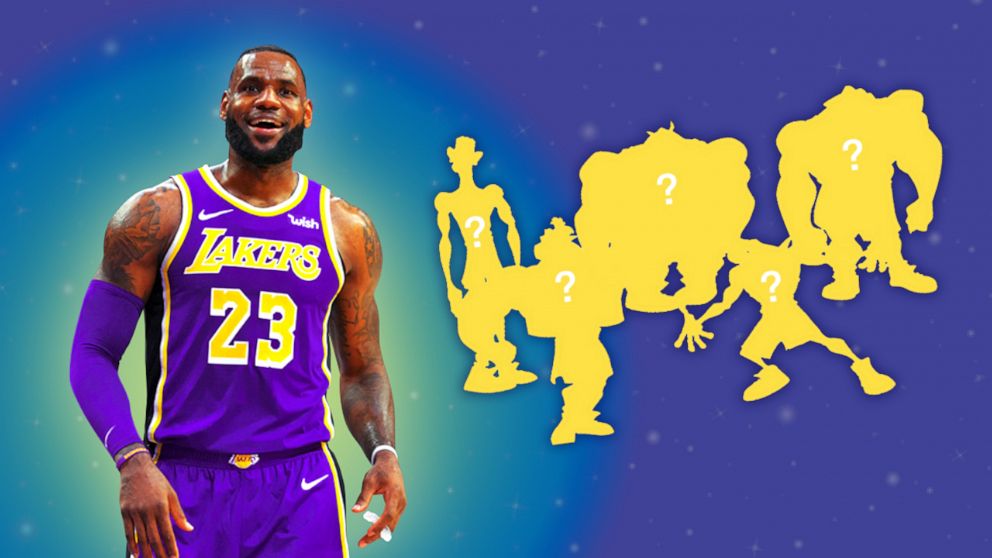
…. according to one of those pointless academic surveys, this one originating from Nagasaki in Japan.
A tiny sample group of 37 Japanese males and 39 females, most in their early 20s, were subjected to 25 musical extracts and asked to rate them on a scale of “Like very much” to “Don’t like at all.”…
Read on here.

Warmest birthday wishes to the German-born soprano Hilde Zadek, who turned one hundred yesterday. She was honored at the Vienna State Opera, where she once sang alongside Schwarzkopf and della Casa in the company's famed postwar ensemble; Christa Ludwig, a younger colleague from those years, led the tributes. (Via David Shengold.)
These femdom illustrations are from three different covers of the French pulp publication Sexopolis; click each one for the uncropped cover:



Similar Sex Blogging:
The swinging party is not quite what she was expecting, but she’s having fun anyway:

From the cover of this French-language pulp.
Similar Sex Blogging:
I loved music when I was a teenager. All my spare time and cash went on getting my hands on music or going to see live music. I love the aspect of collecting it and seeking things out and finding people you had the same musical tastes in common with. And I loved that it was a great way to meet men.
Men love women who are into things’ they think of as ‘boy’s interests’. Girls who love football or computer games or drink beer are often jokingly referred to as ‘cool girls‘ with the slight sting in the tail that no matter how much you really love ninja movies or comics or whatever you will be accused of only doing it to impress men.
So while I loved the bands I was into, I also learned quite quickly that I could happily subvert the sexual stereotype to my own advantage and get fucked in the process. And on a couple of occasions I got my hands on an import only issue album as well as their cock. A win-win situation for me frankly.
On this occasion though it was a gig. I was about seventeen and they were a local band done good internationally coming home to an adoring crowd. It was the kind of night you know you’d talk about for years as a teenager and it would be packed. There’s a certain kind of freedom that comes with crowds.
I went with some friends and before the support band had even finished the set I’d some how lost them in the mass of people. I can’t remember if that bothered me to be on my own in a crowd of handsy men as a kid or I felt liberated by it. But I remember glancing round looking for a little space to carve out for myself and tucking into it.
Then I noticed the guy standing there too. Maybe I’d noticed them already and that was why I picked out that space, but I was completely aware of his presence. He just seemed to fill the space in a way that wasn’t at all intimidating. More in the way that made me want to lean against him.
We exchanged polite pleasantries, just enough to make it definitely consensual not not creepy. For some reason I remember that he was from Southampton which meant he was passing through and I wasn’t likely to see him again. This gave me permission to misbehave and embrace the fact he was in holiday mode when people behave the way they want not the way they should.
Luckily I was wearing a skirt. My grandmother would have described it as a belt with that tone of disapproval but that’s exactly why I loved it. It was probably the shortest skirt I’ve ever owned and looked like black leather. That skirt was my secret weapon for several years and I’ve always wanted to find one like it again.
Being December I was also wearing tights but as I slipped in front of the guy and leaned into his chest like guys do with their girlfriends at gigs to hold them in place away from thrashing arms and grabby hands, he reached down and used his thumbs to rip the crotch of my tights open. My underwear was easy to push aside so now he had perfect access.
I was pressed against him in an incredibly dark crowded space where no one could hear a single thing except the band and despite several thousands of people round us we had a surprising amount of privacy. He took advantage of that by using his fingers to make me arch my back and have to hold my myself up while he made me come in public.
He teased me that the more I squirmed and seemed to collapse against him he’d pull back and leave me on the edge making me stand up straight several times before allowing me to come and using his spare arm to hold me up as I ground down on his fingers and pressed against his incredibly hard cock.
Neither of us were paying any attention to the band. But luckily everyone else was. After the second, maybe third orgasm, he spun me round and started walking me out of the crowd. There was a balcony of seats upstairs in the venue which a few people were using for smoking and drinking smuggled in booze, but it was dark and barely noticed.
We went upstairs and he selected the darkest corner of the seats and sat down pulling me onto his knee turning my head so we could kiss looking for all intents and purposes like many of the other young couples at any gig who use it as an excuse to snog their partner to their favourite bands.
The only difference was that he had pulled his cock out of his fly without pulling his trousers down (I do miss when low slung baggy trousers were in fashion for men. They offered excellent opportunities for access) and was slowly positioning the rip in my tights over his erection.
For a few seconds I had to hold myself up enough to pull my underwear aside and line the angles up before his cock slipped right into my cunt so I literally slid down his dick and sat down hard on his lap. Still with my head turned as we kissed, it looked entirely more innocent than it was.
To keep it that way, he used the tilt of the cinema style seats to tip his hips forward and back gently to fuck me while I had to basically sit still and push my clenched cunt down onto his cock to get as much movement and friction as possible. Sometimes it doesn’t take much to make someone come and this was one of those moments.
He came hard into me, pulling me down tighter onto his lap and pressing his face into my back I presume to hide any noise or facial expressions that might give away that we weren’t just hugging. I remember he seemed to come for what felt like forever as he thrust into me more. I don’t recall if I came but when my Master does that now the feeling of it always pushed me into another orgasm so I presume I did.
We sat for a few minutes with his cock still in my cunt, leaning back and allowing the energy to come back for both us before disentangling ourselves. He walked me back downstairs and we watched the rest of the gig in comfortable silence.
The only difference was that while an hour earlier I had been delighted with the shortness of my skirt now I was hoping I wouldn’t accidentally flash the rip in the crotch that advertised I really was a slut not just a fan of short skirts…


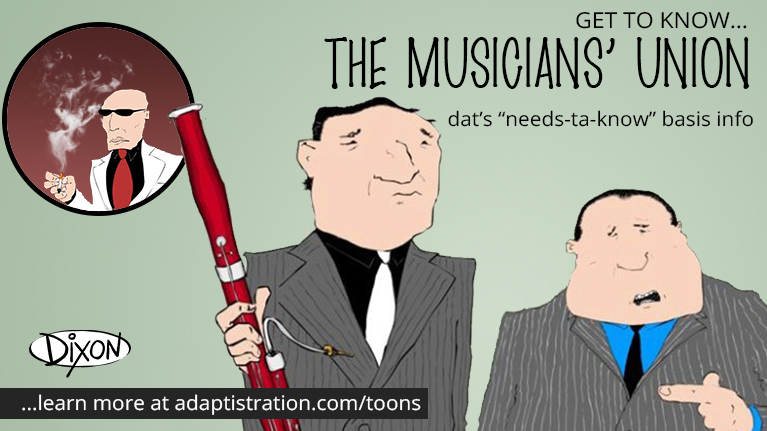
Take a moment to treat yourself today and get to learn about ins and outs of orchestra management from a humorous perspective by binge-reading all 157 episodes of Who’s Minding The Score?, a satirical cartoon that provides a behind the scenes look orchestra life. It’s the ideal way to spend some of your Labor Day, really, just take a look at some of these characters…


Every single time – bar none – I have had a conversation with someone about CAM and its modalities, they are absolutely astonished when I explain to them what the modality really is. One story I love telling comes from my friend in the year behind me. His parents are professional chemists and he came home one day and saw his mother had a bottle of homeopathic medicine. He asked why and she gave the typical non-committal response of “well, I thought it may help and I saw it on the shelf at the pharmacy.” He explained what homeopathy actually is and they were absolutely dumbfounded. They are well aware of Avogadro’s number, after all. People generally don’t study what the CAM in question actually is – merely the fluff PR garbage that gets touted around and without direct and clear demonstration of harm, give it a pass as a result. After all, the business of real medicine is time consuming and difficult enough.
Participating in activities that have a permanent record gives one the fortunate, or unfortunate, opportunity to revisit the past and see just how you worked early in a career.
It was sobering, as third year resident, to see the notes I had written as an intern. Man. It was amazing how unsophisticated my medical thinking had been a little over two years’ prior. How little I understood about the ins and outs of diagnosis and treatment even after four years of medical school. It is part of the reason I think it is a joke, albeit a cruel joke, that naturopaths and other pseudo-medical providers think they can function as primary care providers after a few years of alternative edjamacation.
I have a similar experience every now and then when I see the notes from early in my Infectious Disease practice, now heading into 24 years. Not quite as painful, but still remarkable in how much I didn’t know then. My ID podcast is an ongoing reminder of how much I still do not know. The last 34 years have been my personal linear acquisition of knowledge from the exponential production in the medical, and non-medical, world. Ignorance isn’t bliss, but an ever-expanding hole that can never be filled.
There is nothing wrong with ignorance per se. It depends on what you do with it. Ignorance can be a condition you can spend a lifetime attempting to overcome.
My early career in the world of SBM was defined by a remarkable naiveté. I thought people who used the various pseudo-medicines were simply ignorant, they lacked basic information about the topic and all I had to do was supply that information. They would read/listen to my explanation and think, ‘Oh. That’s how it works’ and move on. That is partly how medical training works. Once you learn how some therapy or procedure does or does not work, you behave accordingly. Eventually. Change is painful, and I do notice as I age how much harder it is to make an intellectual change. Habit is so comfortable.
There was certainly a large helping of ignorance with a side of hubris on my part. But that is how you increase knowledge. Discover the gaps and fill them.
I have not thought much about ignorance. Most of my time is spent on the hows and whys of the acquisition of knowledge. Part of my job and my hobby is to be an educator. I think of residents, myself, and my readers as an empty glass to be filled with facts and their relationships. A simplistic idea, but how I spend a huge amount of my time. I take in information, organize it, synthesize it, and then pass it to others, hopefully in a clever manner.
Others have thought about ignorance in a more comprehensive way. Robert N. Proctor is such a person and he has coined a term for the cultural production (and study) of ignorance: Agnotology. The author delineates several kinds of ignorance in the paper, and they make for a good conceptual framework for understanding ignorance.
And though distinctions such as these are somewhat arbitrary, I shall make three to begin the discussion: ignorance as native state (or resource), ignorance as lost realm (or selective choice), and ignorance as a deliberately engineered and strategic ploy (or active construct).
And he points out that:
Ignorance has many interesting surrogates and overlaps in myriad ways with—as it is generated by—secrecy, stupidity, apathy, censorship, disinformation, faith, and forgetfulness,
I have tended to think of ignorance only in the first definition: simply lacking knowledge on a topic or having wrong or incomplete knowledge. No one can know everything or anything perfectly. It is the kind of ignorance I thought I was combatting when I started my blogging career and why I spend an inordinate amount of time on Pubmed.
It leads to the second kind of ignorance, that of selective choice. Due to time and interest (not all topics in the universe are equally interesting) there are areas about which I choose to have a minimal knowledge. Diet, I admit, bores me. I pay little attention to the ongoing debates as to the best diet and what is good and mad to eat. I eat for pleasure or fuel and not for health and it is not a part of my professional life.
Other examples of selective ignorance occur in professional education. Medical schools and residency give short shrift to pseudo-medicine and critical thinking, and probably justifiable so. There is just so much time and neuronal space for the jaw-droppingly huge amount of information that becoming a physician requires. I have mentioned before that I was in medical school and training from 1980 to 1990. That decade of my life was spent learning my profession. My kids used to like to watch I Love the 80′s on VH1 and I recognized nothing from the show: the movies, the music, the fashion, the memes were are new to me. Most people lose a decade of life to drugs or alcohol; mine was to medicine. I have a huge selective ignorance concerning the 80′s and if the show is any evidence, it was a good thing.
Even more impressive in their selective ignorance is the training in pseudo-medicines:
Ignorance is a product of inattention, and since we cannot study all things, some by necessity—almost all, in fact—must be left out. “A way of seeing is also a way of not seeing—a focus upon object A involves a neglect of object B.”
And best typified by the curricula at a naturopathic school, but the same is true for any pseudo-medical education. Vast quantities of time are spent on areas divorced from reality: homeopathy, acupuncture, hydrotherapy etc. The effort to absorb these fantasies is, by their nature, going to prevent acquisition of knowledge about reality.
There is a similar process occurring at chiropractic schools, where they like to brag about their education:
According to the American Chiropractic Association, the course of study to become a chiropractor includes 4,200 hours of classroom, laboratory and clinical experience in “orthopedics, neurology, physiology, human anatomy, clinical diagnosis including laboratory procedures, diagnostic imaging, exercise, nutrition rehabilitation and more.”
I am not impressed. That 4,200 hours is 525 eight-hour days, a little under a year and a half. It would be so much more impressive if they said their training was 15,120,000 seconds. The bigger the number the better the education. My internal medicine training was seven years, plus two more for infectious diseases. And what good is all that training if it is being applied to the fantastical ideas of fixing subluxations? It is like learning horse anatomy to take care of unicorns. But it also ensures ignorance in areas of reality-based medicine.
The most interesting form of ignorance is the third:
Ignorance as strategic ploy, or active construct
The focus here is on ignorance-or doubt or uncertainty-as something that is made, maintained, and manipulated by means of certain arts and sciences. The idea is one that easily lends itself to paranoia: namely, that certain people don’t want you to know certain things, or will actively work to organize doubt or uncertainty or misinformation to help maintain (your) ignorance. They know, and may or may not want you to know they know, but you are not to be privy to the secret. This is an idea insufficiently explored by philosophers, that ignorance should not be viewed as a simple omission or gap, but rather as an active production. Ignorance can be actively engineered part of a deliberate plan.
The author uses the tobacco industry as an archetype of an industry that manufactures ignorance and starts the paper with a quote:
Doubt is our product. Brown & Williamson Tobacco Company, internal memo, 1969
The manufacture of doubt is common in the pseudo-medical world. It could not exist without it. I do not know if ignorance is bliss for pseudo-medicine, but it is a requisite.
The false information that underlies all pseudo-medicine, from the popularity of pseudo-medicine in the US, to the efficacy of acupuncture to the safety of chiropractic to the mechanism of reiki relies on the production of massive amounts of ignorance. And so has some aspects of real medical treatments. Pharmaceutical companies have not been hesitant to borrow methods from their tobacco brethren. Although science can be an antidote to the production of ignorance in the real world, the pseudo-medical world is often invulnerable.
Examples of ignorance as strategic ploy in the pseudo-medical world abound and can, for a time be effective, as Megan Sandlin demonstrated, although:
In the end, I couldn’t continue to deny the science. It’s hard to believe now how easily I bought into everything I was hearing from the anti-vaccine crowd. It seems extremely obvious now: doctors aren’t evil, scientists aren’t trying to kill your kids with toxins, and vaccine researchers aren’t just trying to scam you out of your money.
Natural News and the Mercola site are probably the Ford and GM of medical ignorance production, but there are numerous boutique producers. I ran across Why You Never Need A Tetanus Vaccine, Regardless of Your Age or Location by Dave Mihalovic, ND, whose ignorance production I have discussed before
Mr. Mihalovic identifies himself as “a naturopathic medical doctor who specializes in vaccine research.” However, just where the research is published is uncertain as his name yields no publications on Pubmed. BTW. I specialize in beer research. Same credentials.
Tetanus is a rare disease in the US. I have seen one case, years ago as a fellow, in an elderly immigrant who had never received the vaccine. Having every muscle spasm at once is horrible for the victim.
From 1922-1926, there were an estimated 1,314 cases of tetanus per year in the U.S. In the late 1940′s, the tetanus vaccine was introduced, and tetanus became a disease that was officially counted and tracked by public health officials. In 2000, only 41 cases of tetanus were reported in the U.S. … Approximately 20 percent of reported cases end in death.
Tetanus in the U.S. is primarily a disease of adults, but unvaccinated children and infants of unvaccinated mothers are also at risk for tetanus and neonatal tetanus, respectively. From 1995-1997, 33 percent of reported cases of tetanus occurred among persons 60 years of age or older and 60 percent occurred in patients greater than 40 years of age. The National Health Interview Survey found that in 1995, only 36 percent of adults 65 or older had received a tetanus vaccination during the preceding 10 years.
Worldwide, tetanus in newborn infants continues to be a huge problem. Every year tetanus kills 300,000 newborns and 30,000 birth mothers who were not properly vaccinated.
A rare, awful, and mostly preventable disease, it is caused by Clostridium tetani. The bacteria, found in the soil, gets into damaged tissues, releases its toxin and the result is tetanus.
Tetanus toxin, tetanospasmin, is extremely potent and can cause severe disease yet not cause the production of antibody. A curiosity of many toxins made by Clostridia, be it botulism, tetanus or gas gangrene, is the purpose of the toxins in the wild (i.e. the dirt), which remain a mystery. As an anaerobe it can be difficult to grow.
Of course, as is his métier, and no doubt a result of his naturopathic training where his understanding of microbiology and infectious diseases is profoundly ignorant, he says:
The tetanus bacteria may be a factor in tetanus. The toxin may be involved in some way but that these are fundamental causes is nonsense, otherwise the disease would be more common, in view of the fact that the bacteria is so frequently found on and in our bodies.
And:
The real cause of tetanus is not a germ, but dirt and filth. The bacteria are harmless when placed into a surgically clean wound. Tetanus develops when drainage of a wound is checked and dirt is retained in the tissues.
And:
The patient suffering from tetanus should be put to bed, permitted to rest, kept warm and fasting should be immediately instituted. They should receive all the salubrious hygienic influences and the fasting should be continued until all symptoms have disappeared.
Advice and treatment that, if followed, could result a repeat of when parents’ fear of vaccinations nearly killed their son or worse:
Auckland parents Ian and Linda Williams thought they had made an informed choice not to vaccinate their children, but after their son ended up in intensive care with a tetanus infection they realized they had made a terrible mistake.
The problem with reality is it doesn’t care if you are ignorant. You can reject and substitute your own where dirt causes tetanus and vaccines are worthless. Get the perfect storm of bad luck and you will get tetanus if not vaccinated.
Pseudo-medicine is producing ignorance at a vastly higher rate than medicine can produce an approximation of the truth. But it will always be that way. It is why I lobbied for Sisyphus to be the emblem of the Society for Science-Based Medicine.