Shared posts

20 Jan 19:50

Oura’s third-generation Ring is more powerful, but not for everybody

by Daniel Cooper

The wearables business is hard, especially if you’re a small startup with a device you could, perhaps uncharitably, call “niche.” Oura, which makes activity-tracking rings worn endorsed by a numberof celebrities, recently released its third-generation model. This new hardware is a technical marvel, packing many of the features that most wrist-worn devices take for granted. But the need to keep the cash rolling in has seen Oura, like Fitbit, Apple, Wahoo and others, pivot to a recurring-revenue model. Oura says that this is key to shift from the idea of buying a device that never changes, to supporting its broader goals of building an evolving fitness ecosystem.

Hardware

Image of the inside of the Oura Ring (v3)
Daniel Cooper

Before we get into the specifics of this new Oura ring, let’s take a moment to remember that this device is still a marvel of engineering. Taking the sensors from a smartwatch or fitness tracker and shrinking them into a ring is worthy of enormous praise. For all of its imperfections, it’s amazing to see Oura push the limits of what is capable in such a small form factor. And there’s much more tech crammed in this time around, despite the size and weight remaining the same as the second-generation version. The headline features these new sensors enable include continuous heart-rate tracking, temperature monitoring, blood oxygenation and period prediction.

The sizing process is the same for pretty much every smart ring I’ve ever tried: The company sends you a set of plastic dummy rings you have to wear for a couple of days. Once you’ve determined the correct fit, which is tight and secure around the base of your index finger, but not to the point where it’s uncomfortable, you can order the real thing. This actually was the most stressful part of this review, since I felt that one size was too loose, the other too tight, but I opted for looseness rather than sacrificing a digit to the gods of fitness tracking. Oura says that the index finger is the best place for its ring, but you can stick it elsewhere if you prefer.

Unfortunately, the one thing you can’t do much about is the size of the ring itself which is a bit too big. I’m a big-ish guy with big-ish hands, but it feels a bit too ostentatious on my fingers, enough that people notice and ask me what it is as soon as they spot it. If you have more slender hands, I’m sure you might have a similar issue with folks pointing it out. I suspect that the smart thing to do is visit Parts Of 4 to get some more adornments to balance out the look.

Software

Without a screen, Oura is yoked tightly to the iOS or Android app where all of this data will be displayed. The Oura app is clean and tidy, only giving you the deepest data when you go looking for it. The app breaks down all of the information generated from your finger and compresses it into three scores, which are shown on the homescreen. These are for Readiness, Sleep and Activity, representing how prepared you are to face the day, how well-rested you are and how much exercise you’re doing.

The only other thing you’ll find on the homescreen is a breakdown of your heart rate across the day, showing you where the peaks and troughs are. You’ll also get advice on your ideal bedtime, which is useful when you’re working late nights and need to juggle sleep with getting things done. You’ll also get periodic reminders to move if the app detects you’ve been still for a while, and advice when it’s time for you to wind down for the day.

Go into one of the categories, like Readiness, and you’ll get scores for your recovery index, sleep, as well as your HRV balance, body temperature and resting heart rate. You can also see that my figures dropped quite substantially during a three-day period when I got food poisoning from a New Year’s Eve takeaway meal. During that period, I was given plenty of warnings telling me I wasn’t rested or well enough to do much else – not that I felt like I was gonna go for a run or anything.

As part of Oura’s plan to add extra value to its platform, the company is adding a series of video and audio guides for meditation, breathwork and sleeping. These guides, which are essentially guided meditation audio tracks, can be backed with a white noise option of your choice. You can pick the hum of a train station, the crunch of a forest stroll, the sound of the tide lapping at the land or rainfall, amongst others. These are a thing for people who find those things useful to fall asleep and feel restful but I, personally, do not find them that great.

That said, where Oura differs from its rivals in this space is that it’ll break down your vital signs during your meditation. If you’re wondering how to get better at meditating then you’ll be guided to more appropriate tracks that’ll help prod you toward nirvana.

Oura is working on adding more features to the Ring v3 over the next year, including more content as well as more accurate sleep and period tracking. These will not actually appear as new features so much as they are behind-the-scenes improvements in the underlying systems. Finally, at some point this year, the ring will be able to identify your blood oxygenation (SpO2) while you sleep in order to help detect disorders like sleep apnea.

In use

Image of the Oura Ring V3 on its charging plate.
Daniel Cooper

The best thing about the Oura ring is that, once you’ve worn it a few days, you quickly start to ignore its presence. And while you’re not paying attention, it begins worming its way into every corner of your life, learning your working patterns and getting ready to make helpful suggestions. If you feel like crap in the morning but don’t have the mental wherewithal to comprehend why, you’ll be told as soon as you look at your phone. Don’t get me wrong, there’s nothing here that other platforms don’t do as well, but this is certainly an elegant implementation of the idea.

Sleep tracking is generally fine, by which I mean it works by tracking movement and therefore can’t tell when you’ve been rudely awoken but haven’t moved. As part of this new pivot, however, Oura is promising that the sleep tracking will soon become vastly more accurate as a consequence of behind-the-scenes changes. This will not be readily visible to users, however, since all you’ll get is a pop-up telling you that things just got more accurate. Still, it offers a fairly good indicator for how the night went, although I find the activity tracking to be a little more on the generous side. Yesterday morning, for instance, it told me that my morning shower was a strength training workout with plenty of burned calories for my trouble. Similarly, it’ll tell me around lunchtime that I need to take a half-hour brisk walk to finish my activity for the day, and then by early evening, having done nothing more than stand at my desk, make dinner and put my kids to sleep, it’ll tell me I’ve completed my goal.

One of the features that Oura is tempting its users with is Workout Heart Rate, which I find inadvertently amusing. Because the ring is so chunky, and it has such a hard edge, that I really don’t find it comfortable to wear during workouts. For instance, if I’ve got a pair of free weights, or I’m doing an incline push up on a Smith machine bar, the ring just pushes into the fleshy parts of my hand. For most of the proper “gym” workouts I’ve done, the ring has had to come off, lest I tap out too early or draw blood from the chubby parts of my fingers. But for more ring-friendly jobs, like running, walking, or cycling, you should find this to be a big help.

In terms of vital-signs tracking accuracy, I think it’s always wise to remember that wearables will not be as inch-perfect as a clinical-grade device. But in a number of random spot-tests, the Oura offered the exact same figures as the Apple Watch on my wrist. In fact, Oura’s reputation for accuracy has always been pretty high, and one of the reasons that the company hasn’t released some of these features is to ensure they’re ready to go when they do arrive.

Oura quotes battery life at seven days, although I rarely managed to get past five without having to drop it on the charging plate. Certainly, real-world stamina is a bit far from what the company is saying, but then it’s hardly a deal breaker since you can charge it full in two hours. It’s become common for me to take the ring off while I’m standing at my desk on Monday and Friday mornings and let it re-juice while I’m working.

Economics

The third-generation Oura ring will set you back $299, which gets you the ring in one of four finishes: Silver, Black, Stealth or Gold. In the box, you’ll receive the charging plate and a USB-C cable, and as part of the deal, you’ll get a six-month trial of Oura’s subscription service. Membership, which costs $5.99 a month for new users, will entitle you to “daily health insights,” “personalized recommendations,” as well as more video and audio sessions. Any existing Oura user who upgrades to the new ring will get a lifetime membership thrown in for free.

I want to be fair here and say that I understand why Oura is pivoting to this recurring revenue model. It’s not as if other companies in this space, like Fitbit, aren’t doing the same in the hope of bolstering their bottom lines. And that’s before we get to talk about how much lock-in the Apple Watch gets as a consequence of Fitness+. But I also think there’s a difference between the sort of product that those rivals are offering compared to Oura’s product.

After all, Apple and Fitbit can both offer coaching both on their devices and on bigger screens, which Oura can’t. Not to mention that Oura is really only able to offer guided audio clips (and short videos) through its app. And that while Apple and Fitbit are selling their devices as (having the potential to become) Capital-F Fitness gear, the Oura really isn’t. But, then again, that’s not what Oura is pitching here – it’s for the meditator, the runner, the cyclist, who doesn’t want to strap something beefy to their wrist.

Wrap-Up

Here’s the problem with reviewing Oura: It’s not a device that every fitness person will love. If you want something with more versatility, you’d buy a smartwatch and have done with it. Oura is more of a subtle product, for people who want to be less ostentatious about their health, or simply want something that slips into their lives and does the job. Honestly, since I’m not a gym bro, I really like the data the ring offers me without any fuss or muss.

As for the subscription, it’s likely that Oura will have to keep squeezing as many new features and insights as possible out of this new hardware. Between that, and vastly improving its currently slender content library, it’s worth it if you’re a paid-up member of the Oura family. But, and this is more a comment on the industry as a whole rather than a slight against Oura itself, I do find this need for every company to squeeze some rental income out of their users to be a little bit grating.


21 Jul 08:32

Customers’ Choice: Private Cinema Rentals are Boxoffice Pro’s Trend of the Year

by Rebecca Pahle

Roadside popcorn sales. Pop-up drive-ins. Virtual cinema. The Covid era has been one of experimentation for the exhibition industry, as cinemas worldwide struggle to compensate for shutdowns, capacity limits, and a lack of content. One of the most successful methods for keeping theaters afloat as they wade through a period of recovery has been named Boxoffice Pro’s first ever Trend of the Year: Private cinema rentals and microcinemas.

Private cinema rentals, as a concept, are nothing new. But, with the pandemic, the old world of private cinema rentals in North America—corporate events and children’s birthday parties—took a sharp turn. For exhibitors, renting cinemas out to small groups of moviegoers made sense for many reasons: It let customers know they were open and operating; it gave exhibitors a way to sell tickets during a period of content scarcity and let them reopen their theaters gradually, rather than all at once; and it gave moviegoers still apprehensive about the full cinema experience a way to dip their toes into theatrical waters once more.

Cinemark was the first of North America’s top chains out of the gate for what a representative calls a “a streamlined, direct-to-consumer online private auditorium rental program.” The Texas-based chain, the third largest in North America, announced its “Private Watch Parties” program in July of 2020, enabling moviegoers to rent an auditorium for as many as 20 guests. In August, Alamo started with locations in Austin and Denver. AMC soft launched a beta program in October before officially launching its “Private Theatre Rentals” in November—noting in the press release that the four weeks of the beta period resulted in 110,000 guest requests, more than quadruple the entire number in all of 2019, “without any significant marketing and press announcement.”

Other chains, large and small, were quick to see the benefits of private rentals. One of those is San Antonio, Texas–based Santikos Entertainment, one of the first chains to reopen in summer 2020. “Back in November, we started getting a lot of requests from our customers about private cinema rentals,” recalls COO Rob Lehman. They started renting private cinemas in December, with 658 groups taking them up on the offer that month—54 on Christmas Day alone. “It really took off [from there]. We did three different price structures. We did a $75 rental, we did a $135 rental, and then [with] Wonder Woman 1984 we did $175. We were blown away by the number of people that wanted private rentals. We had 194 alone for Wonder Woman, and that was for the month of December. In six days, 194 private showings.”

Santikos was not alone. Between December’s launch of the Marcus Private Cinema (MPC) program and mid-April 2021, Marcus Theatres sold nearly 25,000 private cinema rentals; over the final 11 weeks of the fiscal 2021 first quarter, they averaged over 1,500 MPC events per week, accounting for over 20 percent of their admissions revenue. 

Within four months of the launch of Cinemark’s private cinema rental program, they’d sold nearly 50,000 private events attended by more than 600,000 people, “with a significant portion reporting it was their first time back in the theater since the shutdown, underscoring the opportunity for guests to sample the cleanliness and safety of our theaters,” said CEO Mark Zoradi in a November 2020 call with investors. By the end of Q1 2021, Cinemark had welcomed over three million attendees to more than 235,000 private rentals, making up 20 percent of the chain’s U.S. admissions revenues in that quarter.

AMC, too, saw the success of private cinema rentals continue through the end of 2020 and into 2021. As of press time, they had hosted more than 165,000 private watch parties since reopening in August 2020. Ryan Noonan, AMC Theatres’ V.P. of corporate communication, notes that private rentals had long been available at the chain, but what changed in the pandemic era was a concerted communication effort to inform patrons as to their rental options. As a result, he says, “Consumer sentiment about theater rentals shifted. It was no longer thought of as just for special events like birthday parties or corporate outings. It was now friends and families who were getting out of the house, while enjoying the communal theatrical experience in a way that made them feel comfortable.” 

Though the pandemic era has seen millions of moviegoers attend a private cinema screening for the first time, audiences in select overseas countries have been able to rent out cinemas in small groups for years. According to Tony Adamson, GDC Technology of America’s SVP of strategic planning, private cinema rentals have been waiting in the wings for a while, its newfound popularity less caused by than sped up by the pandemic.

“Let’s take a look at the evolution of the movie theater,” said Adamson in an April Boxoffice Pro LIVE Session webinar on the subject of private cinema rentals. “Early 20th century was the grand movie palace. In 1963, the multiplex era began with a twin, leading up to 14, 16, 18-plexes. Then, in 1995, the megaplex era began with the 24-, 30-screen complexes. And now many would say we’re in the dine-in era or the entertainment center era. So, what’s next in the evolution of the movie theater? We feel very strongly that it’s the minitheater.” A smaller theater, rentable by a small group, gives Gen Z and millennial moviegoers in particular the experience they want, Adamson argues: “They want to be with their friends. They want to be with their families. They want to text. They want to talk.” In other words, they want to see the movie they want to see, when they want to see it, and with whom.

The concept has already caught on in parts of Asia, says Adamson, where “the introduction of a new media law in China in April 2017 by media regulator SAPPRFT kick-started the trend of private cinemas (aka microcinemas) in China. The law recognized private cinemas as second-run theaters with earnings now included in the national box office.” GDC’s own GoGoCinema, which allows moviegoers to create their own mini cinema screenings, launched in Singapore and Shanghai in the final months of 2019. Says Adamson, “Despite the pilot test being stopped due to the pandemic, the response from exhibitors and customers was very positive. For example, from October 30, 2019, to January 5, 2020, Hall 4 (GoGoCinema Hall) at GV Funan in Singapore averaged over 90 percent seating capacity, while Hall 3 averaged half the seating capacity of the GoGoCinema Hall.”

With the pandemic, the private cinema rental hopped overseas. North American exhibitors experimented to find the price points and mix of new and older films that best worked for their audiences. Marcus Theatres, noted CEO Greg Marcus in a May 2021 call with investors, found particular success with family films, like Raya and the Last Dragon, Tom and Jerry, and The Croods: A New Age—two films (Raya, Tom and Jerry), notably, that went day-and-date in theaters and on streaming, and one (The Croods) that had only three weekends of theatrical exclusivity. Chris Tickner, director of marketing and special events for B&B Theatres, recalls wondering “[when] all of this would end, as far as how many people are going to continue to want to come and … watch something they can watch at home, which was pretty much what we were able to show.” Happily, the rentals kept coming, speaking to patrons’ desire to experience films theatrically even when they could have watched them at home from their sofas.

Some chains, like Santikos, broadened the private cinema rental concept to include gaming, inviting small groups to bring in their own gaming consoles and games and play on a large theater screen. In March 2021, says Santikos’s Lehman, “We had 43 private rentals on just [gaming] alone. It’s been a huge demand. The kids just love it. We did great internal marketing from our video team here, and we played that in front of the movies that we were showing. Once we started showing that, we got a spike on the Xboxes and PlayStations and having 15 kids in an auditorium playing Madden or Call of Duty.”

As cinemas and audiences alike adapted to the private cinema rental concept, tweaks had to be made. On the opening week of Godzilla vs. Kong, recalls Lehman, a group came in toting a PlayStation and dressed in Team Godzilla and Team Kong T-shirts. “They walk into the auditorium. They hook up the PlayStation. We have one of our managers in there. And all of a sudden, they’re loading up Godzilla vs. Kong through HBO Max. They rented the auditorium for $75 for that one. But we’re renting auditoriums for $135 going through our projectors. So, we said, ‘Whoa, wait a minute, this isn’t gonna work. Give us 60 more dollars. We’ll run it through our projector.’… That was pretty creative. We had to tweak our FAQs again on that one.”

Other changes didn’t involve rule-bending teenagers. For private cinema rentals to have any sort of longevity—at least enough to get the industry through the pandemic—the booking process would need to be streamlined and simplified for the benefit of both the customers and the theaters. That involved another trend that’s seen a major boost during the pandemic: mobile ticketing. At AMC, previous investment in online ticketing made its private rental campaign easier to launch. Notes Noonan: “Online ticketing in general has exploded over the last decade, and AMC has invested greatly in our online ticketing technology, as well as in features that accompany online ticketing, like our website, reserved seating, and mobile ordering. Guests were already accustomed to going online to purchase tickets and, in many cases, purchase tickets well in advance of a showtime, making it easier to plan a night out with friends and family for a Private Theatre Rental.”

“Bringing it online made a huge difference for us,” says Marcus Theatres’ V.P. Sales Clint Wisialowski. “As much as I love my crew and our Group Sales Department, once we automated this system and allowed people to come in through what we’re calling our micro site, it dramatically changed the numbers for us. It allowed us to, with greatly depleted staff based on all the furloughs we had, monetize these private rentals.” 

Added to that, notes Annelise Holyoak, national director of marketing and communications at Cinépolis Luxury Cinemas, “The people that are renting [cinemas] are the millennials that are very tech savvy, and they really don’t have any interest in dealing with the sales team.”

For Marcus, as they moved into April 2021, the volume for private cinema rentals remained “tremendous,” says Wisialowski. “Right now, we’re booking about 40 percent more events than we had in 2019 over this first quarter.” What doesn’t match up in the current private cinema rental landscape, he notes, is attendance and revenue, which “[don’t] even compare” to what Marcus was pulling in pre-pandemic. “So, even at this volume, it’s still not significant enough for us to say that this would be our business model going forward.”

“I call it the 100/100 phase,” Wisialowski continues. “When you get to 100 percent open and 100 percent occupied, this system no longer works.” It’s a sentiment echoed by other exhibitors. Deeply discounted private cinema rentals (the average event pre-pandemic at Marcus cost around $850) make sense when capacity limits and a lack of content put a cap on attendance, but once those restrictions are removed, a cinema can typically make more money on a general admission screening than they can by renting it to a small group. 

At Cinépolis Luxury Cinemas, private cinema rentals kicked off in a beta form in May 2020 at their Moviehouse and Eatery locations before they were even open to the public. “It was a family affair,” says Holyoak. “We had the CEO running drinks. … Having a limited menu and just opening up to those reservations made it really easy for us to get started.” Private cinema rentals later expanded to the wider Cinépolis Luxury Cinemas brand, and demand ballooned—to a point where it has outstripped supply, at least when it comes to what Holyoak terms “prime time hours.”

“People are kind of frustrated that they can’t get a theater for four people, or even 20 people, now that capacity is up to 50 percent [in California],” says Holyoak. “It really makes more sense for us to just have it as a regular show.”

In April 2021, B&B Theatres stopped letting people rent its cinemas to watch older titles on weekends. Even a multiplex with a dozen-plus screens, argues Tickner, needs to devote most of those screens to general screenings once lucrative new films—like Godzilla vs. Kong—start to debut. With moneymakers finally back in cinemas, B&B Theatres and Cinépolis count themselves among the chains that have begun shifting private rentals to off-peak hours. At AMC, the plan is to continue to offer private rentals “after this summer and likely far into the future,” says Noonan. He anticipates that after the pandemic subsides, AMC will continue to see demand for special events like birthday parties and corporate outings, as well as the sort of friends-and-family cinema gatherings that moviegoers have been introduced to.

Meanwhile, at Cinemark, the increased presence of blockbuster movies means the chain has seen “an increased number of people booking standard showtimes over [Private Watch Parties], particularly as Covid cases decline, vaccinations increase, and consumer sentiment rises,” says a Cinemark representative. “While Private Watch Parties will still continue to exist at Cinemark for the foreseeable future, their frequency and amount may evolve as we welcome new content from our studio partners.”

“I don’t think the concept is going away any time soon,” says Cinépolis’s Holyoak. For one, the way the pandemic has pressed cinemas to simplify the rental process will impact traditional group sales moving forward. “Prior to Covid,” she says, “our company was doing thousands of private events every year. Primarily corporate, but we joked that the most time-consuming events were the kids’ birthday parties. … Our highly paid sales team was focusing way too much attention on that. This has been a game changer for us now that we’ve gotten it online. If you want to have your kid’s birthday party, you can book it online yourself and, quite frankly, we’re just not going to help you coordinate clowns and all these other things. If you want to go that route, you’ll have to have a higher food and beverage minimum and book with our team.”

Kid’s birthday parties and clowns aside, if, moving forward, a customer wants to rent a cinema for their group of friends to see the latest blockbuster, they may still be able to do so, depending on the cinema. Just don’t plan on a Friday night spot or Covid-era pricing. At B&B Theatres, says Tickner, the presence of 30- to 40-seat auditoriums alongside larger-capacity houses means private cinema rentals might remain “an ongoing revenue stream” after Covid. “They might not get Avengers on opening weekend. But we’ll tell them, ‘Hey, you can get that 30-seat auditorium two weeks after.’ And [they can say], ‘OK, I’ll watch it opening weekend and then I’ll come back for my private rental two weeks after.’”

Given the potential of private cinema rentals as an ongoing auxiliary revenue stream, especially as cinemas continue to explore alternative, niche forms of programming—and given the general unsuitability of large auditoriums to the private cinema rental concept—could we be seeing an increase in the number of microcinemas in North America over the coming years, either through new builds or the renovation of existing theaters? Adamson of GDC Technology believes we will. “Many exhibitors are resistant,” he admits, “but there are [an] equal amount that are ready to move onto the next era. Recently built suburban complexes, they average seven screens with about 125 to 250 seats. There are several other barriers: high capital investment, film distribution costs”—and the need for projection equipment suited to small spaces. 

Mike Cummings, senior principal at TK Architects, which has operated in the cinema design space for 40 years, believes that the private cinema rental concept has “strong potential,” pointing to the fact that “the pandemic has proven that customers like the option of private cinema rental.” Too, Cummings argues, the relationship between exhibitors and studios has changed over the course of the pandemic, meaning, “Exhibitors are exploring other content sources and should also be exploring other revenue sources. Microcinemas can be part of this inevitable evolution of the exhibition business model.”

The issue, expectedly, comes down to money. Exhibitors, says Cummings, are “immersed in recovery. Between SVOG [the Shuttered Venue Operators Grant program] and the complex logistics of reopening facilities, they are striving to achieve some semblance of financial stability”—so, even though some exhibitors have expressed “keen interest” in microcinemas over the last several months, “it is not their priority right now.” 

As the industry stabilizes, Cummings says, “Converting is the most likely first wave. Right-sizing spaces is critical long-term but less important with current content availability. Many facilities have more auditoriums than they can utilize effectively right now. They could allocate a few to microcinema[s]. … We have seen some experimentation, but we believe the right formula is yet to be discovered.”

The post Customers’ Choice: Private Cinema Rentals are <em>Boxoffice Pro</eM>’s Trend of the Year appeared first on Boxoffice.

14 Jul 22:35

Microsoft unveils Windows 365, a Windows 10 PC in the cloud

by Devindra Hardawar

Windows 365, a new service announced today at the Microsoft Inspire conference, is basically an unintentional riff on the Yo Dawg meme: Microsoft put Windows in the cloud so you can run a Windows computer while you're running your computer. You can just call it a Cloud PC, as Microsoft does. It's basically an easy-to-use virtual machine that lets you hop into your own Windows 10 (and eventually Windows 11) installation on any device, be it a Mac, iPad, Linux device or Android tablet. Xzibit would be proud.

Windows 365
Microsoft

While Windows 365 doesn't come completely out of nowhere — rumors about some kind of Microsoft cloud PC effort have been swirling for months — its full scope is still surprising. It builds on Microsoft's Azure Virtual Desktop service, which lets tech-savvy folks also spin up their own virtual PCs, but it makes the entire process of managing a Windows installation in a far-off server far simpler. You just need to head to Windows365.com when it launches on August 2nd (that domain isn't yet live), choose a virtual machine configuration, and you'll be up and running. (Unfortunately, we don't yet know how much the service is going to cost, but Microsoft says it will reveal final pricing on August 1st.)

Windows 365 likely isn't going to mean much for most consumers, but it could be life-changing for IT departments and small businesses. Now, instead of managing local Windows installations on pricey notebooks, IT folks can get by with simpler hardware that taps into a scalable cloud. Windows 365 installations will be configurable with up to eight virtual CPUs, 16GB of RAM and 512GB of storage at the time of launch. Microsoft is also exploring ways to bring in dedicated GPU power for more demanding users, Scott Manchester, the director of Program Management for Windows 365, tells us.

Smaller businesses, meanwhile, could set up Windows 365 instances for their handful of employees to use on shared devices. And instead of lugging a work device home, every Windows 365 user can securely hop back into their virtual desktops from their home PCs or tablets via the web or Microsoft's Remote Desktop app. During a brief demo of Windows 365, running apps and browsing the web didn't seem that different than a local PC. It's also fast enough to stream video without any noticeable artifacts, Manchester says. (Microsoft is also using technology that can render streaming video on a local machine, which it eventually passes over to your Cloud PC.) You'll also be able to roll back your Cloud PC to previous states, which should be helpful if you ever accidentally delete important files.

Windows 365
Microsoft

While the idea for Windows 365 came long before the pandemic, Microsoft workers spent the last year learning first-hand how useful a Cloud PC could be. They used a tool meant for hybrid work — where you can easily switch between working in an office or remotely — while stuck at home during the pandemic.

But why develop Windows 365 when Azure Virtual Desktop already exists? Manchester tells us that Microsoft noticed a whopping 80 percent of AVD customers were relying on third-party vendors to help manage their installations. "Ultimately, they were looking for Microsoft to be a one-stop-shop for them to get all the services they need to," he said said.

That statistic isn't very surprising. Virtualizing operating systems has been a useful local tool for developers over the last few decades, but it's typically been a bit too difficult for mainstream users to manage on their own. And even though a tool like Azure Virtual Desktop brought it to the cloud (Manchester assures us that's not going anywhere either), it's even more difficult to manage. 

One thing Windows 365 doesn't mean, at least at this point, is the end of traditional computers. "I think we'll still continue to have great client PC experiences," said Melissa Grant, director of Product Marketing for Windows 365, in an interview. "You know we have a relationship with our laptops. It is our sort of home and hub for our computing experience. What we want to offer with Windows 365 is the ability to have that same familiar and consistent Windows experience across other devices."

03 Jul 16:06

My Everyday Carry

07 Jun 04:51

Simple gear for a simple bike ride

22 Apr 04:22

All about Eve: The upstart PC brand struggling to pay back jilted customers

Three years after the first Eve-branded computers went on sale, some customers still haven’t received their machines, and attempts to reclaim their money have largely gone unanswered. Now, with a bevy of new products in the works — including a follow-up to that original V PC — Eve seemingly hopes its new customers will forget how much it still owes some of its earliest backers.
20 Feb 08:54

'Mythic Quest' season 2 hits Apple TV+ on May 7th

by Mariella Moon
The second season of Mythic Quest is almost upon us. Apple has released a trailer for the TV+ comedy, giving us a glimpse of what Poppy, Ian and the rest of the team are up to. We once described the show as Silicon Valley for game devs, which tells t...
26 Mar 05:04

SpaceX parachute test failure could further delay crewed flight

by Jon Fingas
SpaceX's hopes a human-occupied Crew Dragon flight this May are fading fast. A parachute test for the capsule failed on March 24th after a helicopter pilot was forced to drop the test vehicle early when it became unstable, threatening the pilot's saf...

15 Oct 04:08

One of Linux's most important commands had a glaring security flaw

by Jon Fingas
If you've used the command line in Linux or a Unix-based platform like macOS, you're probably familiar with the "sudo" command -- it lets you run tasks with different (usually elevated) permissions than you'd otherwise have. It's powerful, but it wa...

22 Jul 19:01

FDA targets teens with e-cigarette prevention ads

by Christine Fisher
Today, the FDA launched its first e-cigarette prevention TV ads. Part of "The Real Cost" campaign, they're meant to educate teens on the dangers of e-cigarette use. The ads will target nearly 10.7 million teens, aged 12 to 17, who have used e-cigaret...

18 May 19:07

European powers team up to build homegrown drones

by Daniel Cooper
Drones are sufficiently commonplace now that if you aren't building your own, you get a serious dose of FOMO. That's why Germany, France and Italy have agreed to bankroll a joint drone project, separate to Europe's, that'll build aerial surveillance ...
31 Jan 11:45

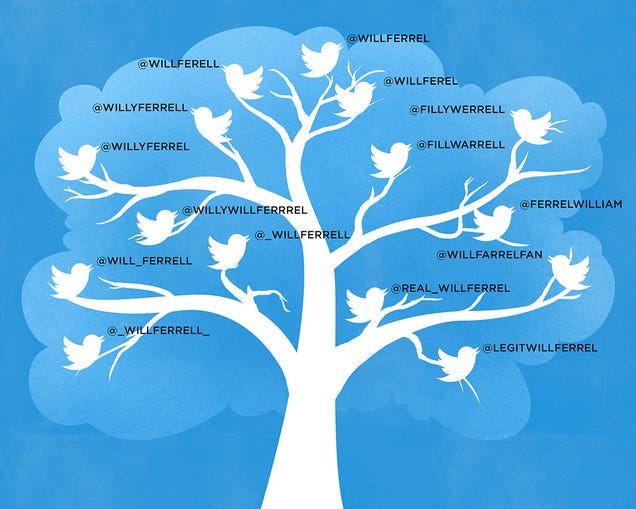
An Exhaustive Guide to Fake Will Ferrell Twitter Accounts

by Eric Limer

An Exhaustive Guide to Fake Will Ferrell Twitter Accounts

Twitter is a mess , but parody account Twitter is a social networking hellscape unto itself. Between the Black Stewie Griffins and Pharrell's hats is a black hole as old as time, pulling all of #teamfollowback into its gaping maw. I'm talking, of course, about the Will Ferrell accounts.

Read more...