Claus.dahl
Shared posts
How one EVE Online player nearly crashed the market with a single useless item
Should everybody learn to code? A PandoDaily meta media mashup of opinion

Lots, and I mean lots, has been written about whether we should all learn to code or not. If everyone who wrote about the need for everyone to learn programming actually knew how to program, there wouldn’t be a shortage of programmers.
We sifted through all that opinion so you don’t have to, to bring you a curated mash up of the great coding debate, every sentence taken from someone else. It’s the ultimate hyperlinked aggregation, a veritable clickfest. Next time maybe we’ll just write an automated script.
There’s a lot of chatter and hype around normals learning how to code. Coding is the hottest skill on the job market, the modern-day language of creativity, and a powerful force in the economy. As technology becomes more and more ingrained in our everyday lives, you have to make a choice: Are you a consumer of tech, or are you someone who understands it? Learning to code helps people build a deeper understanding of the world around them and can help them to automate and improve their daily lives. Even if you never touch code after learning how, you’ll never regret that glimpse into how our technology world works. Program or be programmed.
I believe that learning basic programming skills should be on every kid’s educational agenda. Maybe instead of teaching young children to write in cursive – a skill nobody needs – they should be taught some basic programming concepts. The biggest names in technology want today’s children to learn computer programming. Forget trying to become a doctor or rapper or a football star, not to mention all the teasing you may get in school for being a nerd – computers are where it’s at. You don’t have to be a genius to code — and that if you learn to code, you’ll be a hero like [Chris] Bosh or get to eat free food at Facebook. “It’s the Closest Thing We Have To a Super Power.” Even geezers can learn.
OK, I’m exaggerating, but you get the idea. The whole “everyone should learn programming” meme has gotten so out of control that the mayor of New York City actually vowed to learn to code in 2012. Recently, my brother – who I affectionately describe as someone whose biggest dream is to be rich and will look into any scheme (albeit legitimate and legal) to get rich quick, whether they’re shady entrepreneurial partnerships or plans to “beat the house” in blackjack or poker – came to me saying “I want to be like you, I want to program.”
I’m not completely sold on the fact that everyone should. It’s basically impossible to become an expert, or even objectively “good,” at any truly demanding task with only weekly, anonymous e-instruction over the course of a year. The “everyone should learn to code” movement isn’t just wrong because it falsely equates coding with essential life skills like reading, writing, and math. Most people can’t learn to program: between 30% and 60% of every university computer science department’s intake fail the first programming course.
Rather, everyone should learn to program, but not everyone should be a programmer. I actually do think people should learn to code, at least a little — just as you learn a little chemistry, biology and math in school. Coding, by itself, has never been about writing a bunch of gibberish on the screen but more about solving real-world problems. “Code” is just a convenient and press-friendly way to say “think in algorithms, think about problems, think about how things fit together.” Many content producers use technology virtually every waking hour of their life, and they don’t know a variable from an identifier, or an integer from a string.
The fact is, the whole world should not learn to code anymore than all of us should learn to be a space shuttle engine designer or a lawyer. The future of the world is in software but not necessarily the tools used to make that software. The machines are coming for our jobs, and one of those jobs is writing code.
Sources:
1. “Why learning to code isn’t as important as learning to build something,” by Jake Levine, Nieman Journalism Lab, Mar. 13, 2013.
2. “Why Everyone Should Learn to Code: An Event Recap,” by Madeline McSherry, Slate, Mar. 29, 2013.
3. “Why every single one of you should learn a little code,” by Jolie O’Dell, VentureBeat, Sep. 17, 2012.
4. “Codecademy Founder: Why Everyone Should Learn Programming,” by Zach Sims, Time, Jun. 8, 2012.
5. “Should Everyone Learn to Code?” by Chris Taylor, Wired, Feb. 28, 2013.
6. Program or Be Programmed: Ten Commands for a Digital Age, by Douglas Rushkoff, Soft Skull Press, Sep. 2011.
7. “Everybody should learn how to code,” by Dennis Wetzig, dennis-wetzig.com, Mar. 9, 2013.
8. “Code.org Says ‘Hello, World’ to Get Everybody Coding,” by Glen Tickle, Geekosystem, Jan. 22, 2013.
9. “Technology superstars ask kids to code,” Breaking News English, March 1, 2013.
10. “Gates, Zuckerberg: Kids, learn to code,” by Brandon Griggs, CNN, Mar. 7, 2013.
11. “Zuckerberg and Gates join the learn-to-code movement,” by Jennifer Van Grove, CNET, Feb. 26, 2013.
12. “It’s the Closest Thing We Have To a Super Power,”by Gail Poulin, poulingail.edublogs.org, Feb. 27, 2013.
13. “Want to be a reporter? Learn to code,” by Barb Darrow, gigaom, Sep. 5, 2012.
14. “HTTP: Response Codes,” by Karl Dubost, dev.opera.com, Sep. 12, 2012.
15. “Please Don’t Learn to Code,” by Jeff Atwood, Coding Horror, May 15, 2012.
16. “Programming Is Not for Everybody,” by Robert Smith, Symbo1ics Ideas, Mar. 3, 2013.
17. “Everyone Should Learn To Code (Whatever ‘Code’ Means)” by Tom McFarlin, tommcfarlin.com, Mar. 11, 2013.
18. “Can you learn to code in a year? Maybe, but should you?” by Matthew Murray, ExtremeTech, Jan. 13, 2012.
19. “Please Don’t Learn to Code,” by Jeff Atwood, Gizmodo, May 15, 2012.
20. “Separating Programming Sheep from Non-Programming Goats,” by Jeff Atwood, Coding Horror, Jul. 14, 2006.
21. “I’d rather be coding,” by mats, rathercoding.com, Dec. 28, 2011.
22. “Everyone Should Learn To Program, But Not Everyone Should Be A Programmer,” by John Sonmez, Making the Complex Simple, Mar. 31, 2013.
23. “Why you should learn to code,” by Dave Winer, Scripting News, Feb. 27, 2013.
24. “7 Reasons Why Everyone Must Learn To Code,” by Radford C., LazyTechGuys, Feb 26, 2013.
25. “Programming’s not for you? How about thinking? Be empowered,” by Scott Hanselman, hanselman.com, Mar. 4, 2013.
26. “Is Learning to Code More Popular Than Learning a Foreign Language?” by Jamie Condliffe, Gizmodo, Mar. 28, 2012.
27. “Why Everyone Should NOT Learn To Code,” by Martyr2, Coders Lexicon, Feb. 28, 2013.
28. “The Learn-to-Code Bubble,” by Tommy Leung, Super Tommy, Apr. 26, 2013.
29. “Not Everyone Should Learn to Code,” by D.M. Rutherford, dmrutherford.com, Apr. 3, 2013.
30. “Should All Students Learn to Code?” by Melissa Westbrook, Seattle Schools Community Forum, Feb. 26, 2013.
Adam L. Penenberg


|
The National Automated Highway System That Almost Was


A computer visualization of the driverless car of the future (1997)
Visions of driverless cars zipping around on the highways of the future are nothing new. Visions of automated highways date back to at least the 1939 New York World’s Fair, and the push-button driverless car was a common dream depicted in such midcentury utopian artifacts as 1958′s Disneyland TV episode “Magic Highway, U.S.A.” But here in the 21st century there’s a growing sense that the driverless car might actually (fingers crossed, hope to die) be closer than we think. And thanks to the progress being made by companies like Google (not to mention just about every major car company), some even believe that driverless vehicles could become a mainstream reality within just five years.
Despite all the well-known sci-fi predictions of the 20th century (not to mention those of the 21st, like in the movies Minority Report and iRobot) many people forget the very earnest and expensive investment in this vision of the future from recent history. That investment was the multi-million dollar push by the U.S. Congress to build an automated highway system in the 1990s.
In 1991 Congress passed the Intermodal Surface Transportation Efficiency Act, which authorized $650 million to be spent over the course of the next six years on developing the technology that would be needed for driverless cars running on an automated highway. The vision was admittedly bold, seeing as how primitive all of the components needed for such a system were at that time. Even consumer GPS technology — which today we take for granted in our phones and vehicles — wasn’t a reality in the early 1990s.
The real-world benefits of automated highways were thought to be improving safety by removing human error from the equation, as well as improved travel times and better fuel economy.

Dashboard of an automated vehicle of the future (1997)
The National Automated Highway System Consortium was formed in late 1994 and were comprised of nine core organizations, both public and private: General Motors, Bechtel Corporation, The California Department of Transportation, Carnegie Mellon University, Delco Electronics, Hughes Electronics, Lockheed Martin, Parsons Brinckerhoff, and the University of California-Berkeley.
The goal was eventually to allow for fully automated operation of an automobile — what a Congressional report described as “hands-off, feet-off” driving.
The program was not without its detractors. In December of 1993 Marcia D. Lowe at the Worldwatch Institute wrote a scathing op-ed in the Washington Post. Perhaps unsurprisingly, Lowe mentions “The Jetsons.”
Computer-equipped cars driving themselves on automated highways. A scene out of “The Jetsons?” Not exactly.
Smart cars and highways have quietly emerged as the latest and most-expensive proposal to solve the nation’s traffic problems. Government spending on the little known Intelligent Vehicle and Highway Systems program is expected to exceed $40 billion over the next 20 years. (By comparison, in the first 10 years of the Strategic Defense Initiative, Washington spent $30 billion.)
Even more astonishing is the total lack of organized opposition to the idea, despite evidence that smart cars and highways may well exacerbate the very problems they are supposed to solve.

A demonstration of the automated highway system in San Diego (1997)
By 1997 the program had to show its technical feasibility in a demonstration in San Diego, California. On July 22 of that year the demonstration test vehicles rode down 7.6 miles of the HOV lane on Interstate 15. The Associated Press even reported that the prototype highway should be running by 2002.

A researcher demonstrates the driverless car by showing his hands aren’t on the wheel (1997)
During the lead up to the San Diego demonstration in 1997, the NAHSC produced a video called “Where The Research Meets The Road.” You can watch the video below.
Needless to say, the program didn’t deliver driverless cars and automated highways to Americans. So what was the problem? The legislation didn’t really give the Department of Transportation any direction on how they should go about the research—only that they needed to demonstrate it by 1997. But perhaps the biggest problem was that the legislation never clearly defined what was meant by “fully automated highway system.”
Present Shock- explained in 15 minutes
Douglas Rushkoff: Present Shock. When Everything Happens Now from Piers Fawkes on Vimeo.
The Apathy Epidemic: Why your startup will suck you dry

With entrepreneurs, there’s rarely a lack of drive, at least in the beginning. After a while, though, as your idea matures into an actual startup, apathy can rears its ugly head. Almost every entrepreneur experiences this, though is usually loathe to admit it. It might present itself as a slow decline in motivation, with each day feeling a little less exhilarating than the one before, or a sudden slack of the wind in the sails.
Everyone, no matter how unconventional the business he’s in, is at risk. It happened, for example, to Andy Drish, founder of TheFoundation.com, a-software-as-a-service education platform that preaches a bootstrap philosophy. Last year’s product launch, though wildly successful, left Drish and his team in a slump.
“We were so focused on the launch that we made the mistake of not asking ourselves what the following hundred days of business looked liked,” Drish says. “The launch was so fun — immediately after that, it changed. Our customers felt the results of that too. It felt like depression.”
As a venture capitalist, quoted anonymously by Psychology Today, put it, “You discover that the real fun was getting there… Not only is achieving the goal a letdown. You don’t feel good about yourself.”
And, of course, there’s Marc Andreessen’s infamous thoughts on the subject:
A start-up puts you on an emotional roller-coaster unlike anything you have ever experienced… And I’m talking about what happens to stable entrepreneurs. The level of stress that you’re under generally will magnify things (into) incredible highs and unbelievable lows at whiplash speed…
Let’s call it “Entrepreneurial Apathy.”
If it’s happened to you, you may have written it off, figuring you’d get over it. If you’ve watched friends of yours go through this, you might have dismissed them as mere “Starters” – people who never achieve that fabled “Finisher” status. It’s easy, after all, to feel the high of a new project. It’s far more difficult to follow through to a successful exit.
To get there you have to start right, and to do that you must understand what happens just after you start wrong.
Entrepreneurial Apathy tends to strike right after you begin to hit successful milestones, like raising a round, hitting profitability, or achieving a certain number of users. When your business reaches one of these goals, you experience the entrepreneurial version of la petite mort; that moment where you flop back on the pillow and wonder if it was all you’d hoped it would be.
This moment of post-victory existential doubt breeds apathy. The fire and energy you put into pursuing your goal dissolves in a single moment of ecstatic entrepreneurial achievement, which can leave you feeling empty and apathetic.
Taking vacations right after hitting milestones has become a common and socially acceptable occurrence, but something is broken about that. Vacations are great (recharging is critical), but apathetic entrepreneurs dream of sandy beaches precisely when they’ve arrived at The Place they’ve always dreamed of. The apathy epidemic is in full swing when you’re mentally checking out at the moment that your real career begins in earnest.
Apathy springs from the way you dream about people and ideas. The fetish of startup culture has created a generation of aspiring entrepreneurs that prizes milestones over the miles themselves. One good example is how starting a business has become more about getting funded than the actual creation that comes afterwards.
Evolutionary Psychologists (cynics that they are) have the answers: Human beings are driven by reproductive urges. We use sophisticated systems to signal our potential as quality mating partners. You can spot this easily by watching Jersey Shore: He with the biggest muscles wins.
Every behavior you carry out (yes, all of them) are designed to send these signals. They can be summarized in six categories: general intelligence, openness, conscientiousness, agreeableness, stability, and extroversion. You seek out these traits in prospective mates; they measure you right back.
Psychologists assure us that no one is immune — every segment of society, from WASP-ish Wall Street guys to dirty-bearded Dead Heads, engage in full-time signaling of these traits. Sometimes it’s through obvious consumption (what does your car say about you?); other times through ironic, counter-culture choices designed to set you apart from the rest.
As a member of the business elite, what better way to demonstrate your value as a breeding partner than by creating a startup? It checks all the evolutionary psychology boxes: the creative thinking, the agenda of social-impact and the track record of successful negotiation, and there’s always the assumption that you’re a genius.
Entrepreneurs are often motivated by start-up milestones because they represent the ultimate top-shelf social signals: Get your badge of “Funded”, “Exit” or “100,000 users,” and wear it proudly. It tells the world you’ve made it.
Herein lie the seeds of apathy. Think about it: The purchase of that new Cadillac feels great as you speed out of the dealership. By the time you arrive home, though, you feel empty. The shine has worn off.
What has reaching that goal really cost you? Were the hours spent lusting over the car well spent? You’ve reached your goal – a new car – but you’re left wondering whether it was truly worth it, now that achieving the goal is over. The same happens to the startup entrepreneur who wanted to show the world he was a success. Once he reaches that goal, the rest is a letdown. Actually creating something was just an afterthought.
Apathy occurs: Your intuitive mind deflates as it realizes what you thought would make you happy…hasn’t.
To make sure you don’t unconsciously fall into the apathy trap, you can ask yourself a few simple questions at the onset. The answers to these questions prepare your brain to anticipate moments of achievement and appropriately contextualize them.
In other words, you can stay motivated for the right reasons – and avoid disillusionment. What are the questions? Simply consider your start-up goals, and ask yourself:
What will happen if I get this?
This is like asking what your goal really means for your business. And for you. You might ask yourself what would happen for you the day after you hit your milestone. When you wake up, how will your life be different?
How will I feel about this?
You’re awake, sitting up in bed, the milestone behind you. Think about how you feel – not about the victory, but about what’s to come in the next week or three.
What will happen if I don’t reach my goal?
Not all startup goals are a success, and chances of not reaching yours are fairly high, so it’s worth rehearsing how you might feel about Plan B and Plan C and prepare for them.
What else will I gain or lose if I achieve this?
Achieving this dream may change your life indirectly. Think laterally about the other people and things in your life this will affect.
And lastly, here’s an opportunity to practice radical honesty with yourself:
For what purpose do you really want this?
Take a moment to look deep inside yourself and really check in with what’s important to you. Is this business goal guaranteed to deliver it? If not, make sure you reign in your expectations.
These questions might sound obtuse, but so few entrepreneurs consider them properly. The goal is to pre-frame what success really looks like, which prevents your unconscious mind from coming down off the high with a case of buyer’s remorse. By checking in with yourself before you start working towards your goals, you’re truly making the best possible decisions that every part of you supports.
And if you can hold up the answers to these questions in your mind and genuinely think, “Yessir I still want to make this start-up dream fly!” then you’re successfully insulated against apathy. Energy and motivation will flow.
[Image Credit: Sanofi Pasteur on Flickr]
Peter Shallard


|
|

Week 413
Claus.dahlIs it ungentlemanlike to guess that the Here & There reprint was most likely a cash raising operation?
Very late weeknotes. Alice was on holiday last week but I fear I’d have been told off if she was around. Although, strangely it’s easier to write a summary of the week once it’s finished. So what’s been going on?
Like a tiny army we carried a fair few (read: lots) of wrapped, stickered and sealed Here & There maps to the Post Office across windy Old Street to send on their ways, near and far. (There’s still some available, if you like that sort of thing). Helen wins employee of the week for some extraordinary Post Office endurance.
Loads of Little Printer / BERG Cloud things happening as usual. Tying loose ends for manufacture / Remote edits / Website planning / sales / firmware / hardware / operations / Dev Kit progress / picking and packing (we’re selling paper for Little Printers now if you missed it… it comes in a nice box)… it’s quite exciting selling actual things to actual people, and we’re all learning a lot.
The workshop reminded me of my Grandad’s aviary this week, as Andy and Neil fine tune sounds for #Flock. Unlike ‘Sounds of the Serengeti’ which has become an off-key regular on bergtunes, I quite enjoyed this. I might pinch the sounds from Andy next week.
Aside from all of that business, there’s been a lot of workshop consolidation, Keynote’in, customer service and the other stuff that keeps the office ticking along. Looks like the weather’s turned in typical British fashion, which gives us another week to try and work out how to turn the air conditioning on in the new office.
And because I like inflicting my musical wanderings during my time on this blog, this week I’ve been enjoying the skippy niceties of Kaytranada. Until next time!
Thought Experiment: Build a Supercomputer Replica of the Human Brain
Claus.dahlHe'll probably fail - but this is Apollo mission level daring


Long-form never stopped working
Claus.dahlI'm long on long
Fashions come and go. Verities do not.
One verity respected by many old-fashioned writers and publishers is the simple fact that long-form pieces work better than short-form ones for the purpose of communicating in depth. If you want deep, and you’re writing prose, more of it will work better than less of it, given an equally strong work-over by a good copy-edit.
Such has also been my ample experience at this game. Long-form has always out-performed short, even during the long dark period during which the common non-wisdom in online publishing was that short beat long. Some examples from my own oeuvre:
- Saving the Net
- Getting Flat, Part I
- Getting Flat, Part II
- An Open Letter on Patents, 12 Years Later
- What if Flickr Fails?
- After the Advertising Bubble Bursts
Now comes Fast Company‘s FastCo Labs, with findings that support the obvious, delivered in a long-ish article by Chris Dannen titled This Is What Happens When Publishers Invest In Long Stories. Two pull-quote conclusions: “quality, not velocity, is the future of online news,”and “Long Form Is The Past And Future.”
There are also business advantages:
…In fact, we’re not the only organization betting on long form quality. Here’s the CEO of Vox Media Jim Bankoff talking at TechCrunch Disrupt on May 2, 2013 (emphasis mine):
We know somethings as a fact. Globally there is a $250 billion advertising market of which 70 percent is really built on brand building… the top of the funnel, to use the marketing jargon. If you look at the web, which is a $25 billion slice of that pie, 80 percent of it is direct response–it’s search… it’s bottom of the funnel stuff. So there’s a big market opportunity there that hasn’t been captured. Where is all the brand building going [...] that we had seen previously in magazines and newspapers and even in broadcast going to go, as consumers turn their attention to digital media? We believe there’s a big opportunity there, but someone has to actually go after it–someone has to bring the quality back.
This recalls everything Don Marti has been saying about brand advertising vs. adtech over the last two years. Follow that link. Read back through his stuff. And, if you’re in the adtech game, leave your defenses at the door. If you want more, visit what I wrote here and here about advertising vs. direct marketing, exploring the same territory.
Bear this in mind too: most writers would rather have their work accompanied by brand advertising than by adtech that’s busy giving personalized messages to the reader — both for the reasons Don and I give at the links above, and because personalized adtech competes more aggressively for the reader’s attention.
We writers have a similar dislike for turning a long piece into many small chunks, so the reader’s eyeballs get dragged across fresh advertising on every page. That’s an infuriating publishing practice that not only makes a long piece hard to read, but also hard to scan for ideas or to search through for a word or a string.
These desires inconvenience publishers, and — under the subhead “The Downside of Long Quality Articles” — Chris visits those. All of the ones he lists are on the production side: server and CMS limitations, composuer UI and so on. Long-form itself has no downsides other than not being short.
Bottom line: Long-form does what only long-form can do. The time has come for publishers to respect that fact.
GeoGuessr
Claus.dahlDet her er pokkers svært
This is like CSI for geography dorks: you're plopped into a random location on Google Street View and you have to guess where in the world you are. So much fun...you get to say "wait, zoom in, enhance, whoa, back up" to yourself while playing. My top score is 14103...what'd you get? p.s. Using Google in another tab is cheating! (thx, nick)
Tags: games geography Google Maps Google Street ViewThe proof "from outer space"
Claus.dahlActually, this isn't true at all. The genius cult is alive and well in mathematics; and while there's extra points for crisp readable math; if the prize - the fame of the problem - is high enough, the community will accept truly arcane and bad writing.
In August of 2012, mathematician Shinichi Mochizuki posted a series of four papers online that purported to prove the ABC Conjecture, "a famed, beguilingly simple number theory problem that had stumped mathematicians for decades". Then, nothing. Or nearly nothing.
The problem, as many mathematicians were discovering when they flocked to Mochizuki's website, was that the proof was impossible to read. The first paper, entitled "Inter-universal Teichmuller Theory I: Construction of Hodge Theaters," starts out by stating that the goal is "to establish an arithmetic version of Teichmuller theory for number fields equipped with an elliptic curve...by applying the theory of semi-graphs of anabelioids, Frobenioids, the etale theta function, and log-shells."
This is not just gibberish to the average layman. It was gibberish to the math community as well.
"Looking at it, you feel a bit like you might be reading a paper from the future, or from outer space," wrote Ellenberg on his blog.
But seeming jibberish by a genius might just be solid mathematics, but Mochizuki isn't doing much to help other mathematicians confirm or refute his assertions. Which raises an interesting point: mathematics isn't all just logic and truth...there's a social element to it as well.
"You don't get to say you've proved something if you haven't explained it," she says. "A proof is a social construct. If the community doesn't understand it, you haven't done your job."
(via @dunstan)
Tags: mathematics Shinichi MochizukiFour short links: 10 May 2013
Claus.dahlI wonder why anyone would phrase the findings in link 1 as a 'Dilemma'. Finding 1 makes sense: Simple projects don't need remixes - they 'do one thing well'. Complex ones are hard to remix. Finding 2 makes sense: Better distribution. Finding 3 makes sense: Previous remixes indicate remixability.
- The Remixing Dilemma — summary of research on remixed projects, finding that (1) Projects with moderate amounts of code are remixed more often than either very simple or very complex projects. (2) Projects by more prominent creators are more generative. (3) Remixes are more likely to attract remixers than de novo projects.
- Scratch 2.0 — my favourite first programming language for kids and adults, now in the browser! Downloadable version for offline use coming soon. See the overview for what’s new.
- State Dept Takedown on 3D-Printed Gun (Forbes) — The government says it wants to review the files for compliance with arms export control laws known as the International Traffic in Arms Regulations, or ITAR. By uploading the weapons files to the Internet and allowing them to be downloaded abroad, the letter implies Wilson’s high-tech gun group may have violated those export controls.
- Data Science of the Facebook World (Stephen Wolfram) — More than a million people have now used our Wolfram|Alpha Personal Analytics for Facebook. And as part of our latest update, in addition to collecting some anonymized statistics, we launched a Data Donor program that allows people to contribute detailed data to us for research purposes. A few weeks ago we decided to start analyzing all this data… (via Phil Earnhardt)
The themes and techniques of Steven Spielberg
A nice short analysis by filmmaker Steven Benedict of the themes expressed and techniques used by Steven Spielberg in his films.
Tags: movies Steven Benedict Steven Spielberg videoThe seven-minute workout
Claus.dahl7 minutter, dem *må* man ku' finde....
According to science, you can achieve the results of a long run and a visit to weight room by doing "12 exercises deploying only body weight, a chair and a wall." And the whole thing only takes seven minutes.
"There's very good evidence" that high-intensity interval training provides "many of the fitness benefits of prolonged endurance training but in much less time," says Chris Jordan, the director of exercise physiology at the Human Performance Institute in Orlando, Fla., and co-author of the new article.
A picture of Earth through time
Claus.dahlScary timelapses; Las Vegas-udviklingen er sgu vild
Today, we're making it possible for you to go back in time and get a stunning historical perspective on the changes to the Earth’s surface over time. Working with the U.S. Geological Survey (USGS), NASA and TIME, we're releasing more than a quarter-century of images of Earth taken from space, compiled for the first time into an interactive time-lapse experience. We believe this is the most comprehensive picture of our changing planet ever made available to the public.
Built from millions of satellite images and trillions of pixels, you can explore this global, zoomable time-lapse map as part of TIME's new Timelapse project. View stunning phenomena such as the sprouting of Dubai’s artificial Palm Islands, the retreat of Alaska’s Columbia Glacier, the deforestation of the Brazilian Amazon and urban growth in Las Vegas from 1984 to 2012:




Feel free to share these GIFs! More examples can be found on Google+.
The images were collected as part of an ongoing joint mission between the USGS and NASA called Landsat. Their satellites have been observing earth from space since the 1970s—with all of the images sent back to Earth and archived on USGS tape drives that look something like this example (courtesy of the USGS).
We started working with the USGS in 2009 to make this historic archive of earth imagery available online. Using Google Earth Engine technology, we sifted through 2,068,467 images—a total of 909 terabytes of data—to find the highest-quality pixels (e.g., those without clouds), for every year since 1984 and for every spot on Earth. We then compiled these into enormous planetary images, 1.78 terapixels each, one for each year.
As the final step, we worked with the CREATE Lab at Carnegie Mellon University, recipients of a Google Focused Research Award, to convert these annual Earth images into a seamless, browsable HTML5 animation. Check it out on the Google’s Timelapse website.
Much like the iconic image of Earth from the Apollo 17 mission—which had a profound effect on many of us—this time-lapse map is not only fascinating to explore, but we also hope it can inform the global community’s thinking about how we live on our planet and the policies that will guide us in the future. A special thanks to all our partners who helped us to make this happen.
Posted by Rebecca Moore, Engineering Manager, Google Earth Engine & Earth Outreach


Four short links: 1 May 2013
Claus.dahlLink 3 er godt
- Pin: A Dynamic Binary Instrumentation Tool — a dynamic binary instrumentation framework for the IA-32 and x86-64 instruction-set architectures that enables the creation of dynamic program analysis tools. Some tools built with Pin are Intel Parallel Inspector, Intel Parallel Amplifier and Intel Parallel Advisor. The tools created using Pin, called Pintools, can be used to perform program analysis on user space applications in Linux and Windows. As a dynamic binary instrumentation tool, instrumentation is performed at run time on the compiled binary files. Thus, it requires no recompiling of source code and can support instrumenting programs that dynamically generate code.
- Lasers Bringing Down Drones (Wired) — I’ve sat on this for a while, but it is still hypnotic. Autonomous attack, autonomous defence. Pessimist: we’ll be slaves of the better machine learning algorithm. Optimist: we can make love while the AIs make war.
- Advice on Rewriting It From Scratch — every word is true. Over my career, I’ve come to place a really strong value on figuring out how to break big changes into small, safe, value-generating pieces. It’s a sort of meta-design — designing the process of gradual, safe change.
- Creating Gmail Inbox Statistics Reports — shows how to setup gmail to send you an email at the beginning of each month showing statistics for the previous month, such as the number of emails you received, the top 5 to whom you sent email, the top 5 from whom you received email, charts on your daily usage.
YouTube users now watch 6 billion hours of videos a month
Claus.dahlSom en befolkning på 200 mio, der ser en time om dagen. Hvilket TV-netværk viser så meget?
People are now watching more than 6 billion hours of video a month on YouTube, the Google-owned video service announced on its blog Wednesday afternoon. That’s twice as much as just a year ago: In May 2012, YouTube announced that its viewers were watching three billion hours of videos a month. In August, that number had grown to four billion hours.
From the announcement blog post:
“We recently announced that YouTube hit an incredible milestone of 1 billion unique monthly visitors, connecting 15 percent of the planet to the videos they love. And those global fan communities are watching more than 6 billion hours of video each month on YouTube; almost an hour a month for every person on Earth and 50 percent more this year than last.”
Less than two months ago, YouTube announced that its site now gets frequented by more than one billion unique visitors a month.
YouTube announced the new milestone in conjunction with the Newfronts in New York, where various online video services are showing new shows to advertisers.

Related research and analysis from GigaOM Pro:
Subscriber content. Sign up for a free trial.
Every Noise at Once
Claus.dahlHavde været sjovere med mere mening i geografien
William Gibson Reads From His Next Novel, The Peripheral
Claus.dahlUtrolig accent efter alle de år i Canada, som nogen sagde på et tidspunkt et andt sted.
Gibson recently made an appearance at the New York Public Library, and he also did a surprise reading of the first couple pages of his forthcoming science fiction novel The Peripheral. The reading begins about 80 minutes in.
The video and transcript can be downloaded here and The Awl has a good write-up of the rest of the talk.
For more Gibson, check out our dossier.
Sidste vers
Claus.dahlMen iøvrigt har jeg ikke findet noget ideelt til erstatning - orker ikke at multi-blogge en wordpress, så tror det bli'r en wordpress i baggrunden og så en specialgenereret forside, ud fra wordpressens feeds osv. Så kan forsiden få lidt mere magasin-præg.
Jeg må nok se i øjnene at denne blogplatform, rent teknisk, her i sit 11. år, synger på sidste vers. Distributionen til Twitter og Facebook er ikke god, og mere alvorligt er skriveinterfacet noget, der får mig til at skrive endnu mindre end jeg ellers ville nå, og bl.a. derfor er bloggen gået helt i frø. Min blog fylder 11 22. maj. Jeg regner med at relancere den dag.

MOOCs: A view from the digital trenches
Claus.dahlVerdens største MOOC? Youtube, uden indpakning

The Wharton School of the University of Pennsylvania, where I’m a professor, is among the world’s oldest, largest, and best business schools, with 11 academic departments, 20 research centers, 230 standing faculty, and an endowment nearing $1 billion. With all those resource, it has produced 92,000 living alumni.
Now consider this: Over the past eight months, in two sessions of a course, I myself taught more than 140,000 people from 150 countries. In other words, I reached more students than all of my colleagues, combined, ever. To be fair, it was one non-credit course, whereas those alumni spent two to four years with us and earned a degree. Nevertheless, I was able to touch so many lives with little more than a webcam and a laptop. Welcome to the world of the massively open online course (MOOC).
If you’re interested in higher education, you’ve probably heard spectacular reports and wild predictions about MOOCs. Pundits, entrepreneurs, university administrators, graduate students, journalists, and politicians have all weighed in on the perils and promise of this new platform for teaching and learning. About the only ones who haven’t written much are the ones in the best position to describe what MOOCs really are: the faculty teaching them.
The first session of my course on gamification, the application of digital game design techniques to business, had some of the highest rates of engagement and completion of any offering on the Coursera MOOC platform. It generated more than 2 million video views and nearly 20,000 forum posts. How could I possibly grade so many students? I couldn’t. So I didn’t. Some assignments were multiple-choice tests that could be machine-graded, and for those involving writing and creativity, students evaluated each other. For these so-called peer assessments, the Coursera system automatically sends each student’s submission to five other randomly selected students. Those students get a grading rubric to score the assignments, and the option to include freeform comments as well. In my first session, a student critiqued another student’s work an astounding 187,000 times.
What’s more, I’m still getting emails, tweets, letters and other responses from participants telling me how much they loved the course. Some of these are from students excited to learn about a new field that few universities offer courses on, but many others are from entrepreneurs and corporate managers telling me how they are applying what I taught in their businesses. This was easily the most successful teaching experience of my life.
So, what’s the secret to an effective MOOC?
First, forget what you’ve probably read: MOOCs’ aren’t just “online lectures.” My course has a series of short pre-recorded video segments featuring me behind a desk discussing key topics, woven around slides, live diagrams, practitioner interviews, video clips, and thought questions posed to the students, along with discussion forums, social media exchanges, and real-time “video office hours” that I participate in. Around the same time I taught my MOOC, a Penn colleague was teaching modern poetry by filming live student seminars, and a fellow Wharton professor was teaching product design through the format of a TV cooking show. None of us used the classical long-form lecture format. (By the way, none of us do in the classroom either.) And that’s just three MOOCs out of several hundred offered or under development.
On the student side, once you get beyond those who signed up for the course with no real commitment to complete it, MOOC participants are self-selected and self-motivated. So far, no one takes a MOOC because they have to; they do it because they want to. These are students who know they are experimenting, want to explore the subject matter, and know they are getting at least what they paid for, because they paid nothing. They aren’t taking the course to fulfill a requirement or to plug a hole in their schedule. Their native interest level is therefore higher than in a traditional course.
That causes problems in the long run, as more MOOCs offer credit or valuable credentials. Not every student has the confidence, drive, and resources to join a MOOC. Many people register for MOOCs – which are generally free today – without a real commitment or the time available to complete them. And let’s face it: watching videos at home isn’t the same experience as going to a classroom. For these and other reasons, a small percentage of those who sign up for MOOCs complete all the requirements to “pass” the course. The typical numbers are three to five percent. For my course it was around ten percent, which I’m proud of, but we still have a long way to go. Very soon we’ll have to confront what happens when a system optimized for self-starters collides with the realities of higher education as a gateway to jobs and other opportunities.
Even with self-motivated students, teaching a MOOC poses challenges. I can see when students are nodding off in one of my classes at Wharton, or check their comprehension by asking a question. I can’t do that in a MOOC. That forces me to focus relentlessly on student engagement. There are some sixty video segments in my course, most of them less than 10 minutes long. I worked hard to make every one self-contained and appealing, yet also tied to the larger narrative. It took hundreds of hours to put the course together, but it was worth it.
The biggest thing I learned is that MOOC students want to feel like they are interacting with a real person. As off-putting as it is for me to talk to a webcam rather than a row of faces, it’s even worse for students to contemplate being taught by a robot or a tape recorder. That’s the quickest way for them to drop out or tune out. So I tried to make the students feel like I was talking to them as a real person, not an august expert on stage. And I threw in elements to make the course feel alive, like a challenge to find a hidden message amid shifting objects in the bookcases behind me in the video. Students responded to these with gusto on the discussion forums. It didn’t hurt the bits of fun did double-duty as illustrations of the game design principles I was teaching about.
There is a popular misconception that MOOCs are taught by “rock star faculty.” As appealing as I find that statement personally, it’s simply wrong. The best teachers aren’t necessarily the most famous public intellectuals or the most distinguished researchers, and elite universities emphasize the latter. A professor who can give a spellbinding lecture may not be best-suited to construct an engaging MOOC, or willing to put in the kind of effort involved. And most important, rock stars act like, well, rock stars. That’s the worst possible attitude going into a MOOC.
Dirty little secret No. 1: I recorded and edited my MOOC entirely myself, with inexpensive home studio gear purchased on Amazon. Some MOOC instructors staff up an army of instructional designers, videographers, and technicians, but I think that’s a mistake. The DIY approach ensures that the course as delivered reflects my vision. And the fact that, while the video and audio quality is quite good, my course would never be mistaken for a Hollywood production, is actually more of a feature than a bug: It humanizes the experience for the students. Not to mention that it makes it easier to change or replace elements of the course in subsequent sessions, or to throw the whole thing out and start over. After all, the MOOC landscape is changing at breakneck speed. In three years the typical MOOC will be completely different than today, so why invest in cathedral-like courses now?
Dirty little secret No. 2: I’d never taught an online course before I did my MOOC. And that was a big reason for its success. I didn’t take anything for granted or do anything familiar; I had to feel my way based on what I thought would work best in this format. In contrast, the Coursera offering that failed most spectacularly, and had to be shut down only days after launching, was a course by an instructor with deep experience teaching online. I feel badly for her, but failures are as important to advancing the state of MOOC pedagogy as successes, if not more so.
Not to say my course didn’t have its glitches. Many students the first time out were confused by Coursera’s deadline structures for assignments… and, truth be told, so was I. A number of students submitted an assignment late because the Coursera system, for some reason, showed the deadline as Sunday night CST (Central Standard Time). For students in China, CST means China Standard Time, and Sunday night there was Monday where the deadline was recorded. And don’t get me started on the weekend all of Coursera disappeared from the Internet when the hacker collective Anonymous took down its domain name registrar for completely unrelated reasons.
The only thing I could do in these difficult situation was to be present, communicating as actively and with as much good humor as I could manage. Again, students are much more willing to be tolerant of human beings doing their best than of slick automated systems. On the positive side, both I and Coursera learned from our experiences. I’m sure we’ll find new mistakes to make, but we should be able to avoid making the same ones the next time.
For faculty, MOOCs are a license to innovate and experiment at scale. Lecture halls, semester schedules, and university requirements can limit the range of possibilities in a traditional course, even those offered online through distance learning. MOOCs change all that by decoupling courses in time and from institutional boundaries. What we’ve seen so far is only the beginning. They aren’t right for every situation, and they’re still primitive in many ways. Discussion and collaboration tools, personalized learning based on analytics, and reliable assessments just some of the key elements of MOOCs that are barely at the alpha test stage. Those who rhapsodize about MOOCs slashing college tuition costs don’t appreciate how early we are in the process, or that new platforms have limitations as well as benefits.
Ultimately, instructors will use MOOCs to push on the definition of a “course.” We’ll see greater variation in lengths, subject matter, learning objectives, and course structures than on campus. In that environment, profs like me will have to compete against MOOC taught by those who aren’t employed by universities. Bring it on. If there’s one thing the world needs, it’s more great teaching and more great learning.
[Image Credit: schwa242 on Flickr]
Kevin Werbach
 Kevin is Associate Professor of Legal Studies and Business Ethics at the Wharton School, University of Pennsylvania, and founder of the Supernova Group. He formerly served as Counsel for New Technology Policy at the Federal Communications Commission and as editor of Release 1.0. Follow him on Twitter.

|
|
90-year-old woman tries Oculus Rift
Claus.dahlDet' sjovt
Court backs artist in Rasta case: less copyright control for image owners?
Claus.dahlThis sounds exactly like the Shephard Fairey "HOPE"-poster case, but without backing from the AP
An influential appeals court sided with famed appropriation artist Richard Prince in a copyright case that has been closely watched in high art and legal circles. The decision, handed down last week in New York, is likely to have ripples beyond the art world and to provide more grist for the debate over how much control artists should have over their images.
The controversy turned on art projects in which Prince incorporated photographs from Yes Rasta, a portrait book about Rastafarians by photographer Patrick Cariou. In some cases, Prince altered the photos so the originals could barely be recognized:

But in other cases, Prince made only minor alterations, such as adding face blotches and a blue guitar:

Cariou, who earned about $8,000 from the sale of his book, sued Prince for copyright infringement. Prince, whose individual works fetched up to $2 million, argued that his modifications amounted to a “fair use” exception under copyright law.
In 2011, a federal judge sided with Cariou and issued an injunction against Prince and an order for any unsold works to be destroyed (they were not).
Can judges be art critics?
In her decision, U.S. District Judge Deborah Batts concluded that Prince’s work was not transformative — and did not qualify for fair use — because it didn’t satirize or otherwise comment on the original photographs. On appeal, a unanimous three-judge court wrote that Batts got the law wrong and said there was no such requirement under fair use.
Citing Andy Warhol’s Campbell Soup cans and the rap group 2 Live Crew’s parody of “Pretty Woman,” the appeals court noted that many fair use cases did indeed comment on the original, but that this was not essential. In the case of Prince, the court said, his works are transformative in part because they are “hectic and provocative” compared to Cariou’s serene and beautiful photographs.
On a technical level, the “transformative” requirement is just a sub-step in one part of a four-pronged fair use analysis. Increasingly, however, it’s also becoming a shorthand for courts to determine if someone is using an image in a new and legitimate fashion, or just ripping off and devaluing the original.
In resolving the Prince case, the appeals court found that 25 of the 30 images were transformative but added that it did could not say “confidently” whether five of the others — including the blue guitar picture — were as well. It returned the case to the original judge to mull over the five pictures in more detail.
One of the three appeals court judges stated, however, that he was uncomfortable acting in the role of art critic and that the original judge should re-evaluate all 30 pictures with the help of expert opinion and other evidence:
“Indeed, while I admit freely that I am not an art critic or expert, I fail to see how the majority in its appellate role can ‘confidently’ draw a distinction [...] Certainly we are not merely to use our personal art views to make the new legal application to the facts of this case … It would be extremely uncomfortable for me to do so in my appellate capacity, let alone my limited art experience.”
So what is “transformative” on the internet?
The Prince decision could affect not just the art world, but internet culture as well. That’s because the decision comes at a time when images are becoming ever more central to online news and social media platforms — and while the rules for using them are unclear.
Sites like BuzzFeed, for instance, have taken an aggressive approach to image appropriation, declaring that almost any use is “transformative.” This approach is well-suited to the fast-paced, mash-up style of internet journalism but is also a source of frustration to photographers and others who feel artists deserve more control over their work.
The Prince ruling, while not a green light for anyone to use photographs as they see fit, appears to provide broader legal cover to appropriation artists and experimenters. Here’s the decision itself with some of the more significant passages underlined.
A previous version of this article stated that the “Pretty Woman” parody was by Salt-n-Pepa. It was by 2 Live Crew.

Related research and analysis from GigaOM Pro:
Subscriber content. Sign up for a free trial.

Bitcoin mining devices
Claus.dahlDet beskidte liv i minerne
*Meanwhile, somewhere in a disused, formerly-industrial shed near you…
http://gizmodo.com/5994446/digital-drills-the-monster-machines-that-mine-bitcoin


Dustforce sales figures
Claus.dahlDet er hårdt og langt arbejde at have det sjovt
Unfortunate: Twitter Forces Flattr To Stop Its Twitter Integration
Claus.dahlFuck jer, Twitter
Flattr had been using the Twitter API to figure out what people had favorited, and had been gathering data about the specific tweets. However, Twitter told the company that it was violating section IV. 2 C from its API terms. That term says that:
Your advertisements cannot resemble or reasonably be confused by users as a Tweet. For example, ads cannot have Tweet actions like follow, retweet, favorite, and reply. And you cannot sell or receive compensation for Tweet actions or the placement of Tweet actions on your Service.It's that last part where the trouble came in. Of course, it seems clear that that particular line in the terms of service was designed for situations where people are "selling" tweets or something similar. Not for cases where a service like Flattr is helping people make money from supporters. In response, Flattr even said that it would waive its standard 10% fee on any Flattrs that come via tweets. Twitter told them it wasn't good enough. Now, you can argue that "rules are rules," but rules need to make some sense. And it's unclear what kind of sense this makes. There's nothing about the way in which Flattr is using Twttier that is negative for Twitter. It seems like a really nice and useful addition. Obviously, we're somewhat biased, because it also helped us make a few bucks (not much, but some), but I can't see how it makes sense for Twitter to block this functionality.
Permalink | Comments | Email This Story
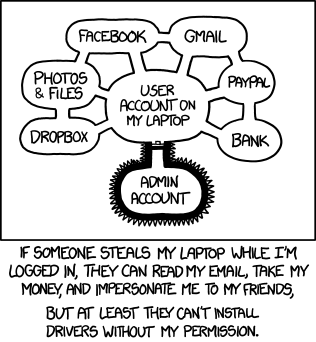
Authorization
Claus.dahlRings very true. Jeg blev engang reddet fra en nu-er-du-totalt-offline fadæse alene pga fuldstændig lam sikkerhed på min laptop, så jeg ku komme i min Gmail konto osv osv.
Netflix Says Fewer Than 8,000 People ‘Gamed' Its Free Trials To Watch House Of Cards
Claus.dahl"According to reviews from Metacritic, people aren’t exactly loving Hemlock Grove — in fact most seem to think it’s awful. The AV Club goes so far as to give Hemlock an “F.” So there’s that." - nej, man kan stadig ikke datamine sig til at lave gode historier; til trods for alle de absurde avishistorier om House of Cards' databaggrund

Netflix released its first-quarter earnings report today, and the company saw another period of strong growth, adding more than 3 million streaming members, bringing its total to 36 million. Domestically, Netflix saw 2 million new streaming members, which was relatively equal compared to last quarter and up from 1.74 million in Q1 last year.
Helping Netflix along in its rebound after the split of its business, which caused a big customer backlash, has been the company’s focus on original programming, beginning with its first “major” TV series, House of Cards. Netflix just recently launched its second original series, Hemlock Grove, and on May 25th will feature the much-anticipated debut of Arrested Development. However, the question has been whether or not Netflix’s new shows would significantly add to its member total — or whether people would sign up for a month to get the shows for free and then cancel.
In its letter to shareholders today, Netflix said that in spite of the fact that “some investors were worried that the House of Cards fans would take advantage of its free trial, watch the show and then cancel,” there was, in fact, very little “free-trial gaming” as the company calls it — fewer than 8,000 people signed up to watch it for free and then cancelled — out of what the company says were “millions of free trials in the quarter.”
Herein, Netflix is just talking about the free trial portion of its service, whereas the other question has been whether or not the new members the company has been able to attract through House of Cards would actually stick around. And it seems that, from its 2 million new members, it was actually able to retain those new customers.
“The launch of House of Cards provided a halo effect on our entire service and spoke to the quality of experience members can expect from Netflix,” the executives said in their letter to shareholders this afternoon. In fact, the good news for Netflix is that, so far, Hemlock Grove seems to be attracting the same amount of attention, if not more than House of Cards.
“Hemlock Grove was viewed by more members globally in its first weekend than was House of Cards and has been a particular hit among young adults,” the company said in its letter. However, on the other hand, that goodwill may be short-lived. According to reviews from Metacritic, people aren’t exactly loving Hemlock Grove — in fact most seem to think it’s awful. The AV Club goes so far as to give Hemlock an “F.” So there’s that.
That could change, after all. The show hasn’t been out very long. Netflix just made all 13 episodes available three days ago. At the same time, it wouldn’t be surprising if Netflix were to go through a little bit of a hangover after House of Cards — or to learn that it has dedicated more capital, advertising, etc. to its first big splash (House of Cards) and its much-anticipated comedy (Arrested Development) than Hemlock. However, that’s just speculation at this point and only time will tell.