Shared posts

04 Jun 03:05

Industrial Boiler Inspections: Scrap 1923 mindset for self-certification to cut corruption

by Bibek Debroy

There was a news report that Commerce and Industry Ministry has written to States, urging them to move to a self-certification scheme for boilers. The law in question is something called the Indian Boilers Act of 1923 and applies to steam boilers. For these, there is a system of Chief Inspector, Deputy Chief Inspectors and Inspectors. A boiler has to be inspected and registered. “The Chief Inspector shall, on registering the boiler, order the issue to the owner of a certificate in the prescribed form authorizing the user of the boiler for a period not exceeding twelve months at a pressure not exceeding such maximum pressure as he thinks fit and as is in accordance with the regulations made under this Act.” The State government formulates rules and incidentally, the Central government can issue “directions” to State governments to implement the Act, since this is a Central statute. Thus, Commerce and Industry Ministry is within its rights. There is a history to the Indian Boilers Act. In 1863, there was a serious boiler explosion in Kolkata, leading to deaths. Therefore, in 1864, a Boiler Act was passed in Bengal, for the safety of boilers. Not many people know that there was a Boiler Laws Committee in 1920. This committee submitted a report in 1921 and said that there should be uniformity in boiler legislation throughout India, different parts having enacted different kinds of legislation, following Bengal in 1864. Hence, we had the 1923 Act. Perhaps that’s the reason boilers are entry 35 on the Concurrent List, following the original Government of India Act of 1935.


That 1923 statute was amended in 1937. This set up a Central Boilers Board and Indian Boiler Regulations were formulated in 1950, amended off and on till 2005. The problems are obvious. First, technology is not what it was in 1863 or 1923. Why should a certificate only be valid for 1 year? (In exceptional situations, it can be 2 years.) Second, there is a shortage of government-appointed inspectors. You don’t get inspections on time. Third, this leads to a system of bribery, corruption and harassment. Fourth, who should be most worried about unsafe boilers? Presumably the person who is running the boiler. We are thus talking about two different things. Can we get away from inspections only by government inspectors? Why can’t other recognized and certified individuals/organizations be entrusted with the task of inspections? The 1923 statute was amended in 2007 (the draft was from 2004) and this is precisely what it enables, “inspector” having been replaced by “competent authority/individual”. In other words, inspection can be out-sourced. I have no idea why the 2007 amendment didn’t extend the time period for validity of certificates or allow self-certification. As far as I can make out, Gujarat and Madhya Pradesh have not only out-sourced. They also allow for self-certification.


I am not sure how self-certification can legally work. The law doesn’t seem to allow that. Perhaps there has been some misreporting. However, outsourcing of inspections is different. Some States have done that. Others haven’t, because there is a vested interest on the part of existing boiler inspectors. Perhaps this is what Commerce and Industry is urging States to do. To state the obvious, if a government inspector is bribed to issue a certificate to a boiler, that doesn’t make the boiler safe.
04 Jun 03:05

Air India's losses? Look at private airlines

by T T Ram Mohan
The media has been going to town about Air India's losses. With their penchant for trivialising issues, they have been carrying stories about freebies offered by Air India to its staff and its politicians- as though that is why the airline is running up losses. (Do they private owners of companies do not milk them at shareholders' expense?).

Anyway, Air India's losses for 2013-14 of Rs 2012 crore and projected loss of around Rs 1000 crore for 2014-15 look modest compared to those at Jet Airways, as today's edit in BS makes clear. Jet's losses for the first three months of calender year 2014 are a staggering Rs 2153 crore! Spice Jet and Jet Lite both made losses of over Rs 300 crore in the same period. The problems have to do with traffic and revenues not measuring up to expectations in a highly capital-intensive business. Air India's problem is the large burden of debt accumulated because of a large fleet order placed at a time when there was irrational exuberance about the growth of air traffic. Operational efficiency at Air India is not the issue. Nor is public ownership.

If ownership is the issue, then should we consider nationalising Jet because of the losses it is running up?

04 Jun 03:04

Show will, use IT and reissue all driving licences in the country

by Rajesh Kalra

The untimely and unfortunate death of the Union rural development minister, Gopinath Munde in a car crash this morning would once again revive the debate over road safety in India. Since the person who’s gone is a minister and a VIP, the debate would be more intense than what it normally is. Experts would discuss what and how for a while even as the chaos on the streets goes from bad to worse. About time to, for our country has among the highest road fatalities in the world, with the number of deaths in 2011 clocking a staggering 2,43,475. For a nation whose vehicles per capita number is very low, the number of deaths is huge, distressing and worrisome.

If you go through various reports and papers and deliberations, they all talk of the same thing — Drunken driving, urban speed, enforcement of rules, seat belts not being worn, safety of pedestrians and cyclists who constitute majority of those who perish in road accidents, improving infrastructure, and so on.

All this is good, but can be effective only in nations that have a modicum of discipline. But how does one enforce laws, and implement what is considered a given anywhere else, in a nation which is undisciplined to the core, where corruption is rampant, where laws are meant to be taken lightly, where the multiplicity of vehicles, even on a national highway would baffle  the most advanced system?

Of course, there is police and rules, perhaps more per capita than any other place in the world, but it has done precious little to improve the situation on the ground. With the growing economy, growing purchasing power, growing number of faster and modern motor vehicles on the roads, the situation is actually turning worse.

In fact, a good way of how dangerous we are can be gauged from the description of Indian roads I have often used in the past — A nation with 21st century cars, 19th century roads infrastructure and 17th century driving habits. It is a deathly concoction and it shows. I speak to a lot of people all over, and all seem to hold the view that although improving the situation on our roads may not be impossible, it is very very tough.

Even in the midst of no-hopers, I think there is a way to improve the lot of motorists and pedestrians and cyclists and motorcyclists in this country. And for that, there needs to be a will and determination and sincere and honest use of technology.

What we need is a mission. A mission to reissue ALL driving licenses in the country in a time-bound manner. Yes, by all I mean even those who hold valid licenses currently. And to start with, we need to change the way the licenses are issued.

It is no secret that like a lot else, driving licenses here can be purchased. Leave alone knowledge of traffic rules, you may not even tell a steering wheel from a spare wheel, but you can get a heavy motor license if you can lay enough money on the table. Driving tests are a mockery. And whenever there is ‘strict’ checking and enforcement on, it is generally a euphemism for hiking the going rate.

This happens with impunity and the lack of accountability in the system means those who have issued the license go scot free, generally. And when an accident happens, what happens is that the person may get his license  cancelled, or worse, may be sent to jail for a short duration. But have you ever heard that the person who issued the license is questioned? Has anyone ever asked the person: How the hell did you issue a license to someone who clearly didn’t deserve it? It hasn’t happened, for it is virtually impossible to pinpoint who, and the way the records are kept, it is almost impossible.

But imagine if we, the so called IT superpower, were to use technology for the purpose. How about a national grid of all licenses connected to a central database? So, when I go for a driving test and am cleared, it clearly notes down who interviewed me for rules, who gave me the written test and cleared me, who took my driving test and certified me Ok. Let it all be a part of the smart licenses that are already made available by several transport authorities. If they are not, let them invest in it. It may seem a tall order, a capital-intensive one too, but given the death rate in the country and the economic and personal and all other losses combined, it would mean a small price, really.

Once in place, the way we go about it needs to change too. First of all, just like random checks are done for pollution control, let there be random checks for drivers too. Pick them up at random and question their driving skills and traffic rules knowledge. I would be the first one to admit that this would be a huge tool for harassment, just like the pollution checks are. But it can be entrusted to an organisation or an NGO or anyone the common man has trust in, whose credentials and intentions are unquestionable. At least try it. There would be initial hic-cups, but that is normal. May be there would be some learning too, but given the number of people who die in the most unfortunate circumstances, it would be worth it.

And that is for people who are picked at random. Now, think of a situation where a license holder is caught doing something wrong. Among the various things that need to be checked, just as in the case of a random check, is to see if the person actually knows the rules. If not, one should immediately check who the individual who issued the license was and haul him up in an exemplary manner. Once the point is made, demonstratively so, that this is zero-tolerance territory, all would fall in line. It may seem draconian to some, but when the system is subverted to an extent as it currently is, nothing is too strong. And when it goes towards saving lives, it is totally justified.

Sure, there would be issues of centre-state jurisdiction, license issued elsewhere  and so on, but there is nothing that can’t be done through a fool-proof, tight policy that overrides all else when it comes to accidents, nationally.  Anything can be better than what we currently have provided, as I have said earlier, there is will and commitment.

Of course, this is a major change I am advocating, but there are other things that need to happen too. As is aid often, we need to improve our public transport so that more and more people go off personal vehicles. We genuinely need to move away from a society that looks at transportation based on status symbols and not what is more convenient and sustainable.

Also, a lot of you may have noticed, so many of the educated ones, when they sit in their cars with their drivers, turn blind to all their misadventures. Why? Why can’t they tick off a driver when he does something wrong? Also, how many times have you see educated people jump a red light late at night, or drive on the wrong side of the road because none is looking? And not just the common man, even celebrities need to be true role models and desist from doing things that are wrong. I remember raising this in a piece in October 2010 – SRK, think of your fans before driving in the wrong lane.

Ultimately, for the roads to really improve, the realisation has to come from within. But since we cannot afford to allow our people to keep dying till that happens, handling violators with an iron hand and reissuing licenses all over the country, as a mission needs to be done, and now.

Follow Rajesh Kalra on Twitter

04 Jun 03:02

Buy Stocks When Credit Spreads are High, Sell When They are Low

by David Merkel

Credit spreads and implied volatility are cousins.  When there is complacency, both are low.  When there is panic, both are high.  For those of us with strong balance sheets, when do we buy?  We buy during panic. when we can get quality assets at bargain prices.  When things are euphoric, we sell, or at least reduce exposure, increase quality, etc.

That’s why I don’t have much sympathy for articles talking about Great Moderation 2.0.  Ask yourself, “How did the Great Moderation work out?  Was taking a lot of risk then a good idea?

There were many that chased past returns 2005-7 that got hosed 2008-9.  So when I see articles like Trends Point to Growth & Stability, I shake my head and say, “Driving by looking through the rear-view mirror.”

I feel the same about this article, Investors Rewarded for Trek Into Little Known Markets.  Anytime a lot of new money spills into any new asset class, returns are high and implied volatility falls.  That tells us little about the future.

When implied volatility and credit spreads are low, that tells us that people are very certain about the future, and they are relying on things remaining stable.  It doesn’t tell us when the bear market will come, but it does tell us that gains are limited before the bear market.

I can’t tell you when things will break, or how badly they will break.  I can tell you that stocks are producing earnings gains by levering up more, and not through organic growth.  In the short run, it pays to issue debt to buy back stock, but the additional debt eventually exacts its price — when the cycle turns, and the price of liquidity rises, the debts will still be there, and interest costs to refinance them will be considerably higher.  Or, equity might have to be issued at an unfavorable moment.

One practical tip — the area with the greatest percentage amount of credit growth is usually the one that performs the worst when the cycle turns — candidates for that include E&P firms engaged in fracking, student loans, US Government debt, and more.  If anyone can think of additional areas, please mention them in the comments.

I’m not running away.  I’m just trimming here and there, and investing in safer companies that seem to have good accounting.  All for now.

03 Jun 07:57

The new IFA

by subra

In the 1960s, and 1970s till even the 1990s there were many animals in the BFSI’s intermediation space. At the top end were of course the ‘main’ brokers who were members of The Stock Exchange, Mumbai (now famously called BSE).

The lesser animals were called sub-brokers – who went to meet the clients and made them invest in equities. They would come to your house/ office to take/ give physical delivery of shares, cheques, etc. and also get the shares transferred in your name.

A lesser animal was the guy who would do company fixed deposits, LIC policies, national savings certificates, ppf, etc. – and was at the bottom end of the chain.

The mutual funds were born (effectively) in 1993-4 and the lowest animal was now being wooed to sell units of mutual funds.

Now all the low end animals who sold mutual funds, fixed deposits, etc. would not be earning much and were not too well educated too. They would be unemployed, unemployable, or simply too lazy. For them even talking to a branch manager of a Hdfc or Shriram Transport finance was a big news. If the branch manager spoke to them it was an achievement, and if he offered them coffee they would write it down in the diary. The reason why they came to the office was manifold – deposit the cheques, call up their wives to ask if somebody had called, tell her that they were now sitting in an airconditioned office, fill up their water bottles with cold water from the cooler, and occasionally even use the cafetaria if one of the employees was good enough to invite them for lunch (they carried their own dabba, but they got to use the cafetaria).

Now come to the 2000s. The sub-broker had become a broker in some cases (when a card was only Rs. 50L in NSE vs. 400 L in BSE). Some of them had become a PMS owner (they ran their own PMS which was say Rs. 50 crores), drove their own cars (Merc, BMW, Lincoln, Jaguar are the cars in which I have traveled – belonging to IFAs), and some of them had AUM more than some of the smaller AMCs. Difficult to believe? Well, come to Mumbai. I am sure this is true for Delhi too, but I do not know them.

Now when you see a Rs. 35 L (head of sales CTC) trying to create an incentive system for a guy who has a networth of Rs. 20 crores, it is a nice struggle. There are IFAs who have a Rs. X crore Home Loan – and the business head of the H L company had to go to the IFAs house to disburse the loan. He was a Hni customer you see. Incidentally he was an IFA. (I just changed the amount to X – the figure is a give away number!).

Amazing transformation of the ‘agent’ – and when you know people in all the spectrum of agents it is nice to see the transformation. And the industry struggling to accept the change.

Post Footer automatically generated by Add Post Footer Plugin for wordpress.

02 Jun 03:31

Thoughts on retrospective taxation

by Manshu

The market has been doing quite well the past few months, and the hope is that the new government brings out policies, and clears roadblocks that further encourage investment, and in turn encourages FII money in the country, and help the overall economy as well.

With today’s globalized economy, it is no surprise that foreign governments and companies take as much interest in Indian policies as Indian companies themselves take, and one of the issues that has been coming up recently is retrospective taxation.

The most prominent example is the Vodafone case where the tax authorities wanted to charge capital gains on Vodafone’s acquisition of Hutchison Essar; the Supreme Court ruled in favor of Vodafone, and then the Indian government decided to change the laws relating to capital gains taxation accruing from cross border acquisitions where an Indian subsidiary is involved, and make that rule applicable retrospectively from 1962.

Since then Vodafone has decided to take this case to international arbitration as the dispute wasn’t getting resolved by other means.

The Japanese government has also brought up this issue recently with the Financial Express reporting that Japan has asked the current government to drop a $3 billion retrospective tax bill on Mitsubishi and Honda. 

Retrospective taxation is a bad idea and I hope the current government abandons the pursuit of tax revenues in this manner. This is changing the rules of the game after the game has long started and is grossly unfair. Imagine the uproar if someone raised the current income tax rate by 5% and made that retrospectively effective from the past 10 years, such a thing would never pass, then why force a foreign corporation to pay such a tax? For people who support the amendment saying it plugged a loophole, I think that is very weak ground – you can certainly plug a loophole for future purposes but it is incredibly unfair to plug a loophole retrospectively especially when that involves working around a Supreme Court judgement.

This is high handed behavior that certainly doesn’t encourage a positive investment environment, and sacrifices good long term policies and economic system for a short term gain to cover the revenue deficit, which it anyway failed to do.

02 Jun 03:30

Happy augury for the RBI

by Mythili Bhusnurmath

Inevitably, Prime Minister Narendra Modi’s decision to keep everyone guessing about the portfolios of his Cabinet ministers on swearing-in day gave rise to a great deal of comment. "Why, for example, are some ministers likely to be given dual responsibility for unrelated and large ministries? Defence and finance, for example, have nothing in common," asked the editorial of a pink paper.


Clearly, the edit writer could do with some lessons in statecraft. Defence and finance are but two sides of the same coin. No country can be secure militarily unless it is secure economically. If the US today is the world’s biggest military power, it is because it is an economic superpower. To argue that defence and finance have nothing in common is facile.


Two Good


Few ministers are experts on their subjects. Thabo Mbeki, who followed Nelson Mandela as South African President, said, "I don’t imagine heads of government would ever be able to say I’m not an economist, therefore, I can’t take decisions on matters of the economy; I’m not a soldier, I can’t take decisions on matters of defence; I’m not an educationist, so I can’t take decisions about education."


So, the lack of commonality or of technical competence straddling two diverse subjects is not the main argument against loading Arun Jaitley with the defence and finance portfolios. Rather, both portfolios require an enormous amount of time and attention; and no single minister can possibly do justice to both.


Assuming Modi will see the wisdom of this argument and shift the defence portfolio to someone else, what is it the new FM must keep as his lodestar in the growing din over economic issues: the Budget, the fiscal deficit, inflation, goods and service tax (GST), Direct Taxes Code (DTC), the current account deficit, black money and what have you?


At Loggerheads


The guiding principle must be to work towards a healthy relationship with the governor, Reserve Bank of India (RBI). The finance minister must work with RBI to tackle the two big bugbears before the government: slow growth and high inflation.


There are only two levers of policy available to any government: fiscal and monetary policy. Sustainable growth is possible only if both work in tandem and not at cross purposes. Not if the relationship between the RBI and the finance ministry is strained, as was the case during much of the UPA regime.


Most people remember the stormy relationship between ex-finance minister P Chidambaram and former RBI governor D Subbarao. But few remember that the relationship between Chidambaram and Y V Reddy, Subbarao’s predecessor, was equally stormy. The FM wanted faster opening up of the economy, especially the financial sector, while Reddy, a quintessential central banker, favoured "calibrated opening up". Luckily, he was able to stick to his guns and we were spared the excesses of the 2008 financial crisis like reckless securitisation.


Democratic compulsions often conflict with economic virtue. Yes, there is bound to be friction in a relationship where the protagonists have different timeframes. Jaitley’s timeframe is till 2019, after which his job is up for grabs. The RBI has the luxury of a much longer time frame. The governor doesn’t have to contest elections, so he can afford to dole out tough love even as the FM treads warily, with an eye on different constituencies. But that doesn’t mean the governor and the FM have to be antagonistic. Their means might differ. But since the goal is the same — growth with price stability —they have to work towards a policy that is best in the long term.


Mutual Respect


As Subbarao put it, "An apolitical central bank, operating autonomously within a statutorily prescribed mandate and with a longer time perspective, is an effective counterpoise to a democratically elected government which typically operates with a political mandate within the time horizon of an electoral cycle….


But this is a delicate arrangement and will work only if the government respects the autonomy of the central bank, and the central bank itself stays within its mandate, delivers on that mandate and renders accountability for the outcomes of its policies and actions."


Initial statements from Jaitley suggest he recognises the need to work together with the RBI. Historically, non-Congress governments have had a better relationship with the RBI than Congress-led governments.


The RBI enjoyed greater freedom when Yashwant Sinha was FM in the Chandrashekhar government in the early 1990s. Bimal Jalan was given a free hand during the Asian crisis, first by Yashwant Sinha and then Jaswant Singh in the NDA regime. Ironically, Chidambaram showed much greater respect for the RBI during his two stints as FM in non-Congress governments led by Deve Gowda and I K Gujral.


Hopefully, now that we have a non-Congress government in the saddle, the relationship between the finance ministry and RBI will once again be one of mutual respect rather than mutual animosity.

01 Jun 03:40

How to miss a 10 bagger

by Rohit Chauhan
What is worse than losing 100% on a stock ? It’s missing a 10 bagger !


What’s worse than missing a 10 bagger ? It missing a 10 bagger which you identified and decided to take no action inspite of knowing about the company. Now you must be thinking – that’s quite dumb ! In a way it is, but as always the story is more nuanced than just being dumb.


So what’s the name of this mystery company ?

Let me give some more hints J ..I wrote about it in July 2010 when it was selling for around 80 Crs market cap. It now sells at around 1400 crores. That’s a 20 bagger excluding dividends during a period where the market has gone nowhere.


I won’t tease you any more ….the company name is Mayur uniquoters! See the post here.

Now I can assign this to bad luck and move on. However I have never operated this way – I want to dissect each failure – failure of losing money or failure missing out on a 10+ bagger.


How did I miss it?

I wrote about this company in July 2010 when it was a micro cap and started a small position in the company. I was comfortable with the financial performance of the company, but was concerned with a corporate governance issue – issue of warrants to the promoter at below market price, when the company did not really need the extra capital.


As the stock price rose, I lost interest in the company and sold my small position as I was not comfortable with the corporate governance issue. In hindsight, I do not fault myself for this decision – it was the right thing to do based on the facts known to me at that point


The downside of labeling

So where did I really go wrong? As I look back, I can attribute the failure to a label I attached to the company. I was not comfortable with the management and attached the label of ‘poor corporate governance’ to the company.


After I sold my position in 2010, I continued to track the company and could clearly see the good performance. Inspite of the facts, I refused to change the label and remain locked to an existing view although the management did not show any new governance issues.

First conclusion or confirmation bias


The other name for this locking is called the first conclusion bias (read here). Once I had reached a conclusion I refused to change it, inspite of evidence to the contrary. It is only after the evidence became too obvious to ignore that I have revisited my conclusion and realized the flaw in my thinking


The illusion of high valuation

If mayor uniquoters was an isolated example, it would have been comforting to ‘label’ it as an aberration and move on. However there are a few more examples (atleast ones which are obvious to me).


Let me give another example and the back story behind missing the multi-bagger

Hawkins cooker: This stock was pointed out to me in 2010 when the company was selling at a PE of around 15. The company was and is easy to understand, has great economics and a wonderful management. So if such a company was presented to me on a platter , why did I ignore it ? The single word for that is valuations – The Company was selling at a PE of 15+ which in my mind was expensive.


I started off my investing life with high quality companies such as asian paints and Pidilite selling at reasonable valuations (15-18 times earnings) and slowly graduated to graham style low PE stocks (the reverse of most people). Over time, I got locked into a mental model where I started equating a low PE with an attractively priced stock and a high PE with an expensive stock.

The above thought process holds true in isolation, but it is important to consider the PE ratio in context of business quality. A business with weak economics is a bad stock even if it has a low PE and an exceptional business with a moderately high PE can still be a great stock. I have been aware of this fact, but still had to relearn this important concept all over again


How to change your mind ?

It would be safe to assume that if you are presented ‘data’ which contradicts your assumptions, you will change your prior conclusions ? Atleast not in my case !


Let me point to two extreme example –

Ajanta pharma has been a multi-bagger since it was pointed out to me by a very smart investor – Hitesh. I still have the email in which he shared the idea with me in 2011. At that time, I was not comfortable with pharma companies and thought that I could not judge Ajanta’s future prospects accurately.


That’s a reasonable argument and can be a plausible reason, but for the fact that this idea was posted on the website – valuepickr by Hitesh and donald. This website is run by Donald Francis and it has a lot of good investors who write regularly on it. The good thing about this forum is that Donald, Hitesh and ayush have encouraged a long term investing mindset with a focus on the process of investing. I am not praising the website due to any vested interest (I don’t have any), but think that one should read through the analysis on some of the picks made by the team

I personally follow this site and occasionally post on it too. Ajanta pharma and Mayur uniquoters are two such ideas which were posted on this site and analyzed in a lot detail. I have been following these companies over the last few years and inspite of over whelming evidence did not take the plunge


So much for changing my mind based on evidence  !

How to change ?


The first step in fixing a blind spot is recognizing one. Now that I have recognized multiple biases in my case, I have started focusing on the following points in my investment process


-          Do not equate a high PE with expensive. Analyze the business in detail and determine if the company can still double in 3 years at current or slightly lower valuations


-          Focus on quality before valuations


-          Constantly question my own conclusions. I have started doing this after each quarterly result – does the company match the original thesis (positive or negative)? Do I have access to some new non-quantitative information which should prompt me to revise my original thesis ?


I have already made changes in my stock picks in the recent past and the initial results are good. In summary I think there is a lot of value in analyzing the success of other people  – not to be envious of them, but to reverse engineer it and improve your own process.

Ps: if you guys have some stock tips, do send it my way. I will have a more open mind on it now J


----------------
Stocks discussed in this post are for educational purpose only and not recommendations to buy or sell. Please contact a certified investment adviser for your investment decisions. Please read disclaimer towards the end of blog.
30 May 02:34

Sri Sri Ravishankar advocates privatisation of schools and colleges. Good idea. Let him explain clearly to the people.

by Sanjeev Sabhlok

Below is an extract from Sri Sri's talk:

This is something I agree with – not because of the ridiculous reason Sri Sri gives (re: government school educated children becoming Naxalites) but because this is the ONLY way to ensure HIGH QUALITY education even for the poorest of the poor, when coupled with a high value education voucher for the poorest of the poor.

Details in BFN/ SKC agenda.

Now it is important for Sri Sri to understand how this can be implemented, and to explain it to the people.

29 May 15:36

Food Fables - Clean, creamy alternative

by Vikram Doctor

If the BJP uses its super majority to fulfil its long-standing promise to ban cow-slaughter you might want to invest in cashews. Because any honest effort to end cow slaughter must start by severely reducing the consumption of dairy milk.

In 1967 Dr.Verghese Kurien of Amul was appointed to a panel to examine the feasibility of ending cow-slaughter. And despite much pressure from other members like the Shankaracharya of Puri and M.S.Golwalkar of the RSS he managed to resist the proposition. As he writes in his memoirs, dairy farmers had to "keep weeding out the unhealthy cows so that available resources could be used for healthy and productive cattle."

Even more, the money received from selling unproductive cows helps farmers buy new ones. Dairy milk and meat are deeply intertwined and while opponents may talk of goshalas for old cows, there is simply not enough land nor enough fodder in India to support the number of unproductive cows that will result from our current levels of milk production.

This is one reason why vegans argue against both dairy milk and meat, and for non-dairy milk alternatives. But this generally means soy milk, and I have yet to find anyone who genuinely likes it. You can mix in coffee or other flavours to disguise that 'beany' after-taste, but there is no joy in soy milk.

Coconut milk is rich and savoury when used in cooking, but by itself has an off-putting, slightly sweaty rank note. Almond milk is smooth and light tasting, but the price of almonds makes it prohibitive (and this will only increase, given the severe drought in California which supplies much of the world trade). The same goes for other nuts like walnuts, hazelnuts and pistachios.

Which brings us to cashews. Unlike most other nuts, it is tropical, from a tree that flourishes on poorer soils. Originally from Brazil and brought to India by the Portuguese, it grows well along our southern coasts. Cashews must be carefully extracted because of the acrid liquid that surrounds the edible kernels, but such labour is easily available here and we process most of the world's cashews.

The broken pieces from this process are ideal for cashew milk. Soak them overnight, then grind to a paste in a mixie and dilute this with water in a blender. You get a thick white liquid that can be drunk right away, but is better strained for a result remarkably like milk. It tastes wonderful, with a clean, creamy flavour (it helps to add a pinch of salt and very little sugar).

Cashew milk could never totally substitute India's dairy milk consumption, but could reduce it - and unlike soy milk, could provide real pleasure on its own, or made into ice-cream or other products. Any serious ban on cow-slaughter should be accompanied by a National Cashew Milk Mission to ensure that the resulting disappearance of dairy milk can be met by this delicious and healthy alternative.

29 May 02:52

Let the poor own our state-run banks!

by Shailesh Haribhakti

The unprecedented mandate that Modiji secured at the hustings could not have come at a better time for the economy that has been on a ventilator for the past three years. Modiji assumes office amidst great challenges to both the macro-micro front as well as on phenomenal expectations. Arun Jaitley, the erudite and talented finance minister, has a task of lifting the economy that has been on a reverse gear for three years with growth down to a decadal low. High fiscal deficit driven by unproductive and porous subsidies; burgeoning current account deficit due to the easily avoidable imports of coal and steel; persistently high inflation created by the FCI that has assumed the role of the biggest hoarder of food, and lack of supply-side measures coupled with the organized extortion racket called APMC markets. All-round pessimism from across sectors and investors; and record of high bad loans threatening the very survival of our banking system, all these demand his attention on a war footing.


Here I want to highlight the last point, the cash-strapped banking system that is choking of bad loans which have reached a historic high of over 10 per cent, generated by hapless promoters who have no resources and the policy paralysis which has halted all projects.  India Ratings has warned that the stressed assets may even go higher by the end of the current fiscal.


Under the Basel III capital buffer norms, our banking system needs a whopping INR 4 trillion in fresh capital by FY 2019 and the state-run banks will need over 80 percent of this, as per the RBI estimates. How can the government mobilise so much money as it fights high fiscal deficit that stood at 4.6 percent last fiscal?


Here’s an idea whose time has come! Let our poor be a part of our nationalised banks. How? Its very simple. The Modi regime should transfer INR 10,000 into the account of each 400 million poor identified using the UID or other efforts, who are mostly farmers owning small land holdings.  Make them invest this INR 10,000, which aggregates to INR 4 trillion in state-run banking stocks. The natural consequence will be that the government holding in these banks will come down from the present high holdings, which vary from 90 percent in some small banks to 58 percent in the nation’s largest lender SBI. For this to happen, 
Modiji / Arunji  should set up a BANK RECPAITALIZATION AUTHORITY.


Let these 400 million poor acquire the banking stock at market prices. Quantum may be as decided by the Authority. To my mind, this is the best and the easiest way to achieve the financial inclusion objective that the RBI has been trying to attain.  I see an enhanced governance in banks post stake dilution.


How to mobilise this large sum of money? Do away with all other subsidies, except those on food: a resource pool of INR 2.5 trillion. Even the food subsidy can be contained a lot if direct cash transfer is introduced effectively. Why should there be fertiliser subsidies which jumped fourfold when its benefit is mostly enjoyed by the rich farmers?     


Similar is the case with diesel subsidies, the maximum benefit of which is enjoyed by SUV-owners. For kerosene, again make it a strictly DBT scheme only. Cooking gas rebate can be lifted after bringing down the taxes on it.  Also, there is a need to cancel the rural employment scheme as it has disrupted the rural wages and farm labour availability badly.


While fertilizer subsidy is removed, the government has to ensure that farmers get cheap bank credit. A well-capitalized banking system, by way of capital infusion by farmers--can easily extend agri loans at much below the current lending rates. Since they are co-owners of the banks, they will be the last to default on debt servicing  unlike some of the corporates.   


The benefit of this is multi-pronged. Fiscal deficit can be reduced to below 1 percent of GDP, banks are re-capitalized well, farmer enrichment as agri production will jump with cheap credit, which will lead to poverty elimination, job creation and financial inclusion.  Without bank lending nobody will be able to put up a project!


I hope the new FM would find some of these suggestions useful and implement them.

27 May 10:09

How to tackle food inflation?

by T T Ram Mohan
The new government's big priority is tackling inflation, chiefly food inflation. One option often suggested is simply releasing some of the foodgrain stocks held by the government at a low price or even free. Isn't this better than allowing the grain to rot or be eaten by rats?

Well, the answer is not that simple. Kaushik Basu, former CEA, made the point in 2011 in an article in EPW. If the government unloads grain at below the market price, traders will buy it up and sell at the market price through their shops, making a neat profit! So, this won't work.

How do we reach food to the poor at subsidised priecs. The public distribution system has leakages but some states have managed to plug these effectively (Tamil Nadu and Chattisgarh). The answer that Basu proposes is giving food stamps to the poor. They can use the stamps to buy from any private shop. There could be a problem here. What if the market price spirals out of control? Will the poor get adequate food, then, using food stamps? Working to plug leakages in the PDS using IT might be a better option for now.
27 May 10:08

Book Review: What’s Behind the Numbers?

by David Merkel

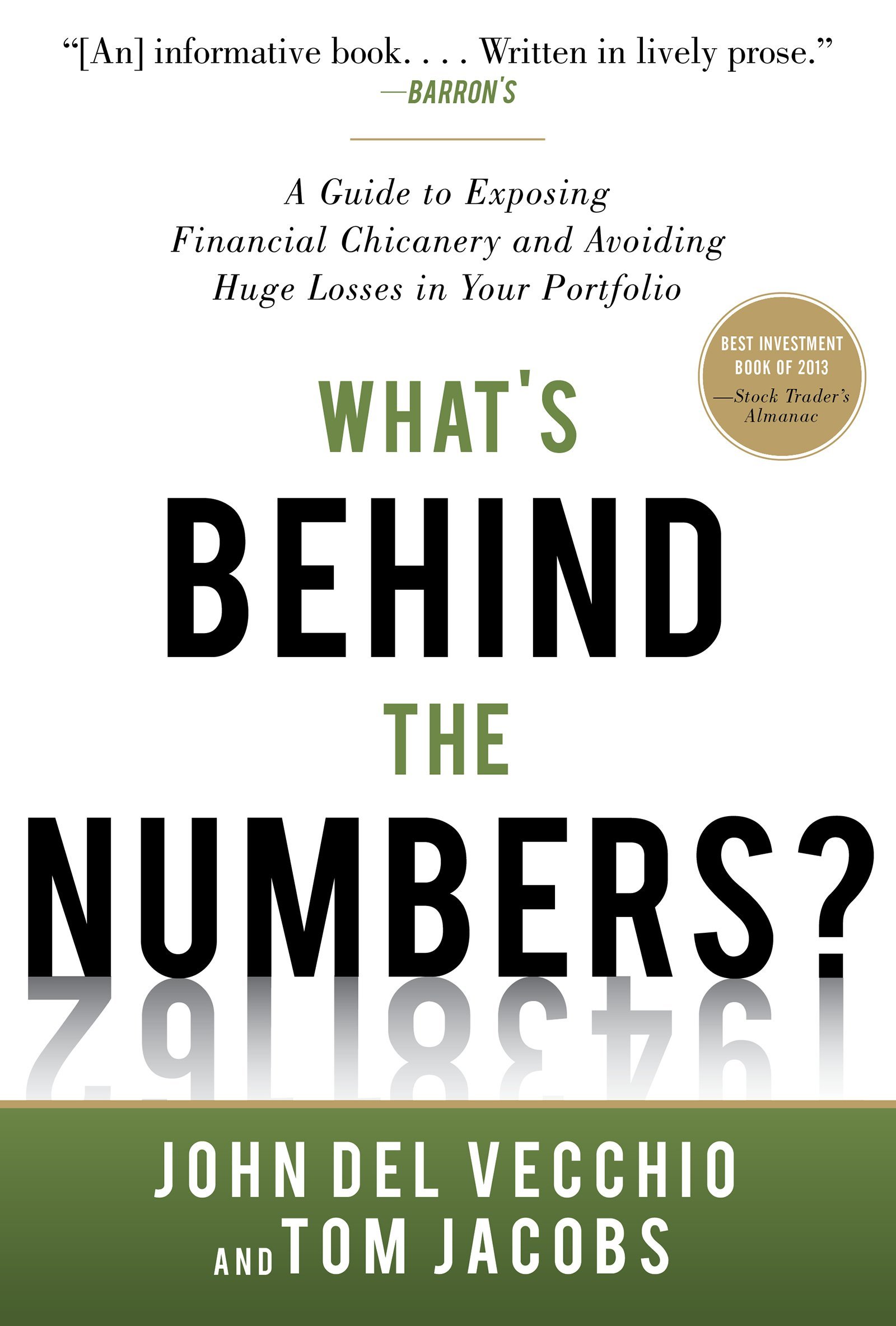
71zM0CNU4QL This is an ambitious book.  It tries to draw together financial statement analysis, value investing, short-selling, technical analysis, market timing, and portfolio management into one slim book of 254 pages.

It spends the most time on financial statement analysis, going over revenue recognition, inventories, and all of the squishier areas of accounting that most industrial companies face.  It will not help you much with financial companies, they are far more complex, and deserve a book all their own.

I was surprised that the book did not suggest common summary measures of accounting quality, such as Normalized Operating Accruals.  It did feature Cash Flow from Operations less Net Income, which is almost as good.

The book focuses on the short side — how do you make money from failure?  The long side suggests maxing out on small cap value stocks, and idea which  I like, but can get overfished at times.

Think of it this way: do you want to run a portfolio that is systematically short company size, long value, short liquidity, long quality, etc?  I helped do that for 4.5 years at a hedge fund, and boy that ride was bumpy.  The market can remain insane longer than you can remain solvent.

But, to the book’s credit, it understands position sizing for short positions, which is momentum following.  Short more of things that fall.  Do not add to shorts when the prices rise.  This is a key insight of the book, and it is a reason why value managers often don’t do well in a long-short context.

My last complaint is that the book does not explain even in broad terms how they balance the various portfolio management ideas.  If you buy this book, you are on your own.  You do not  have a full roadmap to guide you.  If you were going to use this as a main strategy, you would have to fill in a lot of holes.

Now, I’m often critical of turn-the-crank books — follow my rules, and you will make money.  But I am more critical of almost turn-the-crank books — follow my rules, and you still won’t know exactly what to do.

Is this a good book?  Yes.  Read it and you will learn a lot.  Will it help you analyze stocks?  Also yes.  You can make a lot more money by avoiding stocks with a high probability of losing money.  Will it tell you exactly what to do?  No.  That is a strength and a weakness — I’m not sure any book on investing that offers a formula can be exact, and be good.  Investing is an art, not a science.  Then again, science is an art, not a science, but that’s another topic — all the great discoveries come from not following the scientific method.

So if you want to learn, this is a good book.  If you want a foolproof way to make money, sorry, this won’t do it for you, and the same for almost every other investment book.

Quibbles

There are far better books on all of the topics that they cover, and most of them have been reviewed at my blog.  Far better to read books that specialize on a single topic, than one that is a hodgepodge.

Summary

This is a good book, but average investors should not buy it as a formula, because they can’t implement it.  Average investors could benefit from the book, because it gives them a taste of a wide number of investing topics.  Just be aware that you aren’t getting a full dose of anything.  If you still want that, you can buy it here: What’s Behind the Numbers?: A Guide to Exposing Financial Chicanery and Avoiding Huge Losses in Your Portfolio.

Full disclosure: I borrowed this book via Interlibrary Loan.  It is going back tomorrow, and I will not buy a copy to replace it.

If you enter Amazon through my site, and you buy anything, I get a small commission.  This is my main source of blog revenue.  I prefer this to a “tip jar” because I want you to get something you want, rather than merely giving me a tip.  Book reviews take time, particularly with the reading, which most book reviewers don’t do in full, and I typically do. (When I don’t, I mention that I scanned the book.  Also, I never use the data that the PR flacks send out.)

Most people buying at Amazon do not enter via a referring website.  Thus Amazon builds an extra 1-3% into the prices to all buyers to compensate for the commissions given to the minority that come through referring sites.  Whether you buy at Amazon directly or enter via my site, your prices don’t change.

27 May 10:04

So when does India get a full-time defence minister?

by Raghu Krishnan

Prime Minister Modi is hitting the road running, the TV news-channels kept saying over and over again. Which made one wonder why the same news-channels informed us that Mr Jaitley would be India'a finance minister while taking additional charge of defence. Surely, defence is a portfolio which requires a full-time minister, especially since Mr Jaitley will have his time and energy cut out on preparing the Union Budget. Surely, defence is a key portfolio and not something which can wait till the next round of Cabinet-expansion. What, if God forbid, a crisis breaks out on the border? Will the FM take time off to be the defence minister? 


If, as some news-channels tell us, some senior BJP leaders were not too keen on the defence portfolio, Mr Modi could have himself taken on the responsibility after ensuring that there was a competent minister of state. If domain-expertise in defence was lacking among the MPs, someone from outside could have been laterally inducted. 


The immediate solution could have been to utilize the services of the Ghaziabad MP V K Singh who is the former chief of army staff. The new government might have thought twice in terms of giving him the responsibility for defence even as a minister of state since that has never been done before in the past. However, if we are down to a situation where the new FM has to take additional charge of defence, surely convention can be overlooked. 


Take Israel which has successfully faced crises after crises on the defence front. Some of Israel's best defence ministers have been former army chiefs like the legendary Moshe Dayan, the architect of the 1967 six-day war-victory. Any conflict of interest could have been preempted by making it clear to V K Singh that the post of the chief of army staff had already been filled by the outgoing UPA government and that there was no question of reversing that decision to appoint Lt-General Dalbir Singh Suhag, especially since the next in seniority was Lt-General Ashok Singh whose son was married to the Ghaziabad MP's daughter. As someone who topped the challenging Rangers' commando course in the USA, V K Singh would surely have been professional enough to accept a fait accompli on the chief of army staff front. 


If, as V K Singh communicated a few years ago when he was the army chief, the Indian defence forces are facing a critical shortage by way of crucial equipment, hitting the road running means the new government should have had a full-time defence minister to tackle this crisis from day one instead of waiting till the next round of Cabinet-expansion and hoping that the inimitable Jaitley can find time from his main occupation as India's new finance minister. India is the world's largest arms importer and the Kelkar Committee had recommended greater privatization in the defence sector, especially by way of investment in joint ventures for manufacturing cutting-edge equipment.  


There is a need for technocrats and not just in the defence ministry. There were, for instance, media reports that the Metro-man E Sreedharan would be inducted as a minister of state in the railways. We can only hope that the technocrats will be brought in during the next round of Cabinet-expansion which is scheduled to be in the near future. Each time the previous UPA government talked about a Cabinet-expansion in the near future, it took not weeks but months and sometimes a year or more. 


Less government and more governance does not mean not having a full-time defence minister. Hopefully, the new government will quickly sort out this and other anomalies even while it has sent out the right signals by not just having 25-per-cent representation for women in the Cabinet but by also including younger and more qualified ministers like Piyush Goyal while excluding those over 75, as compared to the UPA which was literally an old boys' club. 


However, the NDA government should set new benchmarks instead of being satisfied with scoring points over its lacklustre UPA predecessor.

27 May 10:02

Regulator riddle: India needs many more Raghuram Rajans

by Hema Ramakrishnan

For nearly six months, a senior finance ministry official doubled up as India’s pension fund regulator. The UPA government dithered to name a new head even after the selection panel had completed its job.


Now, a full-time member of the Pension Fund Regulatory and Development Authority (PFRDA) is the officiating chairman. Pray, why another interim arrangement by the caretaker government? Acting heads, understandably, will be reluctant to take a decision that a new person may overturn. The new BJP government has the prerogative of appointing a person of its choice to lead the regulatory body, but it would do well to complete the process as long as the selection panel was fair and impartial.


PFRDA, the youngest statutory regulatory body in the financial sector, needs a competent professional with in-depth domain knowledge to steer the sector. Athriving pension sector will help people build a decent retirement nest. It will foster the growth of equity and debt markets, making financing of infrastructure projects much easier.


Typically, both pension funds and insurance companies look for longterm investment avenues, while infrastructure needs long-term funds. Now that the BJP has vowed to spend billions of dollars to build roads, ports and new cities to revive India’s growth, it should also push reforms in insurance and pensions. Insurance, especially life insurance, needs plenty of capital to expand.


The government should not stand in the way if foreign companies are willing to offer more capital. It makes sense to allow foreign investment up to 51% against 26% now, in insurance and pensions, to promote capital inflows. There is no need to panic over majority control to a foreign partner if the companies follow Indian regulations.


Pension funds should also be allowed to invest a slice of their corpus overseas to earn more returns. Investment rules written by regulators must be eased as well for insurers and pension funds. An expert panel steered by former Sebi chairman G N Bajpai is said to have recommended moving away from investment norm by fiat in insurance and pensions to enhance returns for investors.


Why should subscribers to the National Pension System (NPS) be allowed to invest only up to 15% in equities compared to the limit of 50% for voluntary subscribers? The absurd rule must be scrapped. Let civil servants have a say in the allocation of their savings and choice of fund managers.


Also, there is no reason for workers to park their retirement savings with the Employees’ Provident Fund Organisation (EPFO), a lousy fund manager. They must be allowed to voluntarily switch to the NPS and earn better returns. More money will flow into equities, reducing volatility in the stock markets.


The new government should make the Bajpai panel report public and act on its recommendations. But its immediate challenge is to make financial saving products attractive for investors. Equities yield better returns in the long run than an idle asset like gold. What’s missing is proper incentives for distributing financial products. Sales of mutual funds crashed after the capital markets regulator trimmed commissions for agents.


The NPS has also not taken off in a big way due to the poor incentive structure. Neither have inflationindexed bonds been a draw with retail investors. The broken distribution system must be repaired. Professionalising financial regulation will foster innovation. In the US, regulators are usually former market players, and their selection process confirmed by the Senate. So, the right man gets picked for the job, sans partisanship. India can take a page from the US. It should overhaul the selection process for regulators.


Once regulators are selected by the government, the selection should be endorsed by a parliamentary panel, comprising of members of the ruling party and the Opposition. This will ensure full independence of the regulator.


The UPA government rightly chose Raghuram Rajan, an eminent economist, with a sound understanding of the financial markets, to steer the Reserve Bank of India. It was a wise decision. We need many such professionals if India is to bring in holistic and harmonious financial regulation.

27 May 10:02

Edible Oils – “A Ticking Time Bomb”

by Atul Chaturvedi

One of the biggest failures of our planners and decision makers has been the lackadaisical approach in handling our ‘Energy’ and ‘Edible Oil’ security in the last few decades. The situation had been allowed to deteriorate to such an extent that India now spends $160 Billion on Petroleum Imports and $ 12 Billion on Edible Oil Imports. We see some action on addressing ‘Energy Security’ issues but it seems ‘Edible Oil’ is still on the backburners.


With a new Government in office in Delhi, in all likelihood a new set of planners and decision makers would be getting installed and we hope this ‘policy of drift’ in case of Oilseeds and Edible Oil Sector would give way to some concrete action on the ground.


Lack of coordinated Policy


What has gone so horrible wrong that our Nation now requires almost 11 Million Tons of Edible Oil Imports making it the 2nd biggest drain on our forex reserves and seriously compromising our ‘Food Security’. Just imagine a situation where Exporting Nations decide to increase their Export duty on Edible Oil or create tariff barriers in export of oil to India. I am not saying this is going to happen but if we are complacent and do not plan in advance the results could be catastrophic for Indian consumers. How can we afford to forget Indonesian action in case of coal which has very nearly destroyed our Power Sector.


The situation in early nineties was not as bad as it is today. Indian dependence on Imported Edible Oils was only 3% compared to 60 % currently. With the opening up of the Indian Economy and consequent rise in income levels of average Indian, imports continued to grow alarmingly. The average per capita consumption from a level of about 8 kgs in early nineties has now gone up to more than 14 kgs.


Our policy makers in the last few decades had a blinkered vision and were obsessed with flogging the production and procurement of wheat and Rice. This obsession has resulted in lopsided development and has had a serious detrimental effect on oilseed cultivation in our country. Our Nation merrily continues to produce Wheat and Rice much in excess of our consumption, challenging our storage system on the one hand and on the other we import approximately 11 Million (and growing) Tons of Edible Oil to feed our teeming millions.


Demand Projection by 2025 – Edible Oils
The Edible Oil consumption in our country which is currently pegged at about 18 Million Tons is likely to grow to 34 Million Tons by the year 2025. We estimate Indian Vegetable Oil consumption would grow at around 4% per annum. The growth can actually be more with the ‘Modi Effect’ on our economy.


The per capita consumption in the developed world is around 22 kg and India at 14 kgs still has a lot of catching up to do.


Changing food habits are also likely to drive consumption growth in our country. The aspirational Indian is no longer interested in eating basic food and this is getting reflected in the plateauing of our Wheat and Rice consumption. The shift to processed foods is also contributing in no small measure to Edible oil consumption growth.


Demand – Supply gap
With Indian consumption expected to touch 34 Million Tons by 2025 and domestic oil supply around 10 Million Tons our import dependence would rise to a whopping 24 million tons.


- Can our Nation afford to close its eyes in the face of looming disaster?
Can Exporting Countries continue to increase their production and exports to satisfy Indian and Chinese growing appetites?
Will our ‘Food Security’ not be compromised?


The writing on the wall is clear and we need to wake up from our slumber before events overtake us.


What can be done ?


First and foremost we need to enlarge the definition of the word ‘Food Security’ to include not just Wheat and Rice but Edible Oil and Oilseed as well.


> The relevant Department should be tasked to suggest road map for ‘Food Security’ within a period of one month along with action plan.


>Technocrats and domain experts should not only be consulted but also given due importance in the decision making process. Their suggestions and ideas should be taken seriously as they understand the ground realities.


>MSP driven Wheat and Rice has done wonders in our country in increasing production. Why not replicate a similar model of incentivising oilseed production. Our Agri Scientists should be given specific task of increasing yield of oilseeds. With Indian Oilseed yield around 50% of the world average scope of improvement is huge.


>Import duty on Edible Oils should be raised significantly to encourage oilseed farmers. Further, the duty differential between Crude Edible Oils and Refined Edible Oils should be increased to minimum 20%. Our refining Industry should be protected against Refined Oil imports as the current situation has the potential to destroy our refining industry. This would be calamitous as the country would not only loose money and jobs but our ‘Food Security’ would be seriously compromised.


>‘Palm Cultivation’ in South India should be seriously encouraged as it is high oil bearing fruit.


>India should actively encourage GM cultivation in Oilseeds as our opposition to the same has done more harm than good to our Nation. The stupendous success of BT cotton should give our policy makers the required confidence to bite the bullet.


>Create buffer stock of Edible Oil to manage volatility and inflation and insulate consumers. Involve private sector as they not only have the required infrastructure in place but can also suggest and implement the most cost effective method.


With Mr. Modi as the new CEO of our Nation we hope and trust this “Chalta hai” attitude in relation to Vegetable Oil sector would come to an end and we can expect positive action. “Kya acche din aane waley hain”?

27 May 10:01

Rahul Gandhi's Discovery of Congress

by CL Manoj

To witness the making of history from up close is a privilege. To witness its replay is a bonus. Sonia Gandhi’s address to the Congress Parliamentary Party on May 24 at its gloomiest post-Independence moment was eerily similar to her speech at the 1998 AICC session in Delhi’s Siri Fort Auditorium, a month after her anointment as the leader, albeit untested, of a defeated Congress.


The ruthless dumping of the incumbent president Sitaram Kesri had taught her the ground rule in the Congress: just three things keep the Congress establishment on the drive — votes, victory and power. It revers only a mascot that can lead them to conquer. So, her presidential concern for a party in trouble can’t be second to her maternal worries for her son!


Déjà Vu


In her address at Siri Fort, a nervous and shy Sonia Gandhi said, “I have come to this office at a critical point in the history of the party. Our numbers in Parliament have dwindled. Our support base among the electorate has been seriously eroded. Some segments have drifted from us. We are in danger of losing our central place in the polity of our country as a central party of governance.” Last Saturday, Sonia Gandhi could well have repeated that sentence.


At Siri Fort, Sonia Gandhi had also cited her main challenge: reviving the Congress in UP, Bihar, Tamil Nadu and Bengal. And 16 years on, despite a 10-year booster shot of power, the Congress stands decimated across the country.


This is the progress card Rahul Gandhi has brought home after the Congress was placed under his de facto leadership. Why blame Rahul alone? Didn’t Team Manmohan create such a mess that the Congress’ electoral burial was inevitable? True. The UPA-II ran on a death wish right from the word go, and committed serial hara-kiri.


Who’s the Party Host?


But when a government goes off the track, as UPA-II did, normally, the party steps in with course correction. But Rahul Gandhi’s fanciful experiments had crippled the Congress establishment. Since he alone could be the party’s future PM, Gandhi’s unwillingness to join the government also meant no one else could replace the defunct Manmohan Singh to give the government a new momentum.


Rahul’s experiments left telling effects. The Youth Congress (YC), the agitational and often physical wing of the party, got gentrified, and never once hit the street to defend the UPA. An old Alsatian was “reformed” into a poodle. In Tamil Nadu, Team Rahul’s biggest success in YC drive, Congress polled a pitiable 4.3% votes! Having let off realpolitik steam in his outings in UP, Niyamgiri Hills and Mumbai local trains, till about 2012, Rahul chose to be his own man.


While preaching “how to defeat Modi with love”, he waged a war against the Congress establishment. His “temper” became well-shown, he and his corporate-style office were mostly inaccessible to even senior leaders. He also had no patience with those who pitched for critical prepoll alliances in UP, Bengal and TN. He let his apolitical backroom team — draftsmen, technocrats, fortune seekers and social climbers — “help him win elections” through laptops/data collection, and appointed many greenhorns as regional commanders.


He imposed ex-socialists, Sanghis and unproductive professors in AICC to mess up time-tested political/organisational/election management systems. Rahul could do all this only because of his surname. He put on a fake “angry-youngman” act, only to be rejected by the youth. After the disaster, the ones trying to distance themselves from Team Rahul are the same people who had promoted themselves on their “Rahul tag”: the Milind Deoras and Jairam Rameshes, like the Arun Singhs and Arun Nehrus of yore.


Slow, Unsteady Learner


Rahul’s real failure was his refusal to learn his mother’s real strength. Sonia Gandhi understood her limitations and the reality of her position. When the Congress brass brought her in ceremonial splendour to anoint her as Congress chief, she never made the mistake of taking them for her palanquin bearers. She understood these Congress leaders, product of Indira-Sanjay era, are entrenched warlords and equal stakeholders.


Only those with skills of Indira Gandhi or Sanjay could set terms of leadership. Sonia Gandhi was to play a harmonising unifier so that the army could march ahead and she can be the face of victory. She played that role perfectly. But Rahul chose to follow his father. The “nice guy” Rajiv Gandhi took the post-Indira assassination massive victory as his licence to demolish the Congress establishment, called them “power brokers”, snubbed his CMs and propped up his own apolitical team.


But as V P Singh, a Sanjay Gandhi chela, unleashed Bofors on Rajiv, the battle-hardened Congress brass whom Rajiv humiliated just lay back and watched the fun. Politics can’t be one-way street. Acrippling defeat can make Rahul respond in two ways: either show off that he is least affected and shall carry on with “the mission”, or wise up and discover his party’s core truths. Rajiv Gandhi had opted for the latter course while sincerely working on a second coming.

20 May 03:31

Food for thought – Agri Agenda

by Atul Chaturvedi

With dust settling down on the longest election campaign in our history, it’s time now for the new Government of Mr. Modi to put promises into action. The season of unsolicited advice from armchair intellectuals for the NDA Government has started and they are bound to have a tough time in sifting through the same. I am also joining the fray and taking the liberty of penning my thoughts on some of the major issues plaguing our Agriculture and Agri Stake holders.


One of the real success stories of UPA II which they were not able to communicate effectively was “Agriculture”. In the gloom and doom of total inaction during last few years Agriculture was the Star Performer. A cursory look at the numbers would tell the story.


  • Agriculture grew at an average of 3.6% during last few years.

  • Grain production reached an all time high of 259 Million Tons in 2013-14.

  • Agri Exports have grown from USD 20 Billion in 2009-10 to about USD 45 Billion in 2013-14.

  • Rural Incomes have grown exponentially.

  • Inspite of these notable successes Agri sector is crying for much needed reforms.


Unshackle Agri Marketing :
One of the biggest millstone round the neck of Agri Marketing is the much derided APMC Act. This Act was promulgated with the express intention of ensuring that farmers get fair price for their produce and protect them from fleecing by the traders.
Countless studies over the years have revealed that this Act has crossed its “sell by” date and outlived its utility. It is downright illogical to compel farmers to compulsorily market their produce through APMC Market yards. The farmer should have the right to sell to the highest bidder – whether in Market yards of in private. In this age of internet and mobile phones it is unimaginable to think the farmer is naive and would be duped easily. In other words the fear of farmers being exploited is far removed from ground reality in case of Grains.


In the case of fruits and vegetables APMC has done unimaginable harm both to farmers as well as consumers. Farmers, trading in perishables are seriously manipulated by colluding traders in APMC mandis. For the consumer also the APMC has been more of a bane than boon. The general thumb rule of price spread from a farmer to consumer in perishable commodities is 1:2:3:4. In other words the long chain from farmer to consumer via APMC yards results in price going up from Rs.1/- to Rs. 4/-. Farmer gets Rs.1 and consumer pays Rs.4. Should this be allowed?


If the APMC has not helped either the farmer or consumer, why not give it a decent burial.


Storage Control Order :
This draconian order had been buried during Ataljis regime as it was serving no purpose in a liberalized economy. The only purpose it serves is to perpetuate the Inspector Raj along with all its attendant evils. The tragedy is that this Act was resurrected from the graveyard at the first indication of food inflation in UPA regime. History teaches us that more controls you put, more skewed the markets become. One of the biggest failures of UPA II was in controlling food inflation. When you choke the supply line with laws hindering free movement of goods the end results are for all to see.


These laws may have been relevant during the sixties when the economy was controlled and long queues at Ration Shops was the rule rather than an exception. The world has moved on and so has India. It is high time we bid adieu to such archaic laws which are no longer relevant.


Genetically Modified Crops:
India’s opposition to GM crops over the years is nothing short of laughable. With 158 Million hectares of land under cultivation and yields not even 50% of the world average the opposition to GM crops looks more like a conspiracy against our nation.
With Mr.Narendra Modi heading the nation we can hope to see some action on this front. Modijis experience of BT cotton in Gujarat and what it has done to the rural economy should come handy. Before BT Cotton was introduced in Gujarat few years back the size of the Cotton Crop was about 30 lakh bales. Now the crop has leap frogged to 116 Lakh bales grown on 26 lakh hectares of land. The yield in Maharashtra is 356 kg/hectare compared with Gujarat at 733 kg/hectare. These numbers cannot be trifled with and needs to be replicated across different crops being grown in our country.


Countries like Brazil, Argentina, US have adopted GM crops and it would be naive on our part to continue to defer taking the call on one pretext or the other.


India needs to adopt GM crops with open arms if we aim to achieve self sufficiency.


Encourage Oilseed Cultivation:
Years of minimum support price driven Wheat and Rice cultivation in Punjab and Haryana has resulted in an anomalous situation in our country. We have overflowing granaries stretching our storage system on the one hand and heavy Oil Imports on the other. Our planning is skewed and needs a closer alignment with the requirement of the country.


Indian vegetable oil consumption is currently pegged at a little over 18 Million Tons. The domestic production of Oils is around 7 Million Tons and the gap of 11 Million Tons is bridged with imports. With annual consumption growing at more than 4% India may require about 25 Million Tons of Imported Oils by the year 2025 if we do not react now. The gap between domestic availability and consumption will continue to grow.


In the face of impending scenario can we afford to be complacent? Certainly not!


MSP driven cultivation has done wonders in India. Why not utilize the same tool in weaning away farmers of Punjab and Haryana from Wheat, Rice cycle to Maize, Mustard cycle. This will kill two birds in one stone. India will benefit with higher Oilseed production and lower Wheat, Rice production apart from helping to improve the water table in Punjab and Haryana.
We understand water table in Punjab is dropping 30 cms annually – courtesy rice cultivation.
We hope the new Govt. Would give this issue the required priority.


Edible Oil Import Duties:


One of the charges against the UPA II was lack of action on every front. Nowhere is this more starkly visible than in the case of India’s response to change in Indonesian Edible Oil duty structure. In order to encourage exports of value added refined products from Indonesia their Govt. reduced export duties on Refined Products as opposed to crude Palm Oil (commonly known as CPO) thus making Refined Palm Oil cheaper than crude CPO.


India which is one of the largest importers of CPO suffered enormously. Over the years huge refining capacity had been built in India at Port towns – about 12 Million Tons- to cater to rising demand. With rising imports of Refined Palm Oil these refineries are becoming redundant leaving thousands jobless.


If Indonesia can protect its Industry Why not India? It may not be a bad idea for India to increase the differential on Crude and Refined Edible Oil to 20% from the current 7.5%. In other words Refined Oils should attract 20% higher duty than crude oils. This action will have no effect whatsoever on inflation as India has more than adequate refining capacity. The only difference would be that India would import more Crude Oils to keep the Refineries Viable. This will also help in boosting Employment opportunities.


It is high time India understands its own strength and stops taking things lying down. We need to be more proactive in our responses. Is it asking for too much?


Gujarat has been at the forefront of the silent Agri Revolution and the man responsible for this transformation is now at the helm. He is a man of action and Agriculture is close to his heart. With 60% of the population engaged in Agri we can be sure it will get due attention from the incumbent Government. For starters can we target 7% Agri Growth by the year 2017? Food for thought!


The views expressed are personal.

20 May 03:15

How can the Congress find a Blair to Modi’s Thatcher act?

by Nistula Hebbar

These are difficult times for the Congress party, the party of the independence movement, of towering personalities who gave India most of its modern institutions and narratives. An electoral drubbing the likes of which the party has never experienced in its often complicated relationship with the Indian public has shocked it into a sulky silence. Fundamentals in the party, of the continuance of the Gandhi family at its apex is being whispered about but not aloud, as witnessed by the Congress Working Committee meeting held on Monday evening.


What can be the way out? For clues on how a recovery could be affected, it is necessary for the Congress leadership (whether Gandhi family or otherwise) to look at the templates on which their nemesis and India’s Prime Minister elect Narendra Modi fought the elections. The polarisation that aided his victory, was not just to do with Hindutva, but also on how to do business in this country. “Minimum government, maximum governance” was his slogan. In that, his template had been the late lamented Prime Minister of Britain, Margaret Thatcher.


She came to power in 1979, defeating a tottering labour government headed by James Callaghan, and was only removed from the post after an internal coup in the Conservative party. Even then, her successor, John Major called the “gray man” by some of his less charitable colleagues managed one more conservative victory. Thatcher opened Britain’s economy, broke the power of the unions, and prioritised the country’s strength as a financial rather than a manufacturing hub to give “Thatcherism” its pivot points. Her labour rival, Neil Kinnock, could never reformulate the Labour parties policies, to match step with the Thatcher generation.


That was up to Tony Blair. In 1993, a young Tony Blair pin pointed the exact problem he felt was holding back the Labour party from seizing power. That to him was Clause IV in the labour Constitution. Simply speaking Clause IV states that the aim of the labour party would be “to secure for the workers by hand or by brain the full fruits of their industry and the most equitable distribution thereof that may be possible upon the basis of the common ownership of the means of production, distribution and exchange, and the best obtainable system of popular administration and control of each industry or service.”


For decades that had meant labour unions and nationalisation to the labour party, an anachronistic economic arrangement to much of Thatcher’s Britain. Blair, in a pamphlet in 1993 first formulated a “modern” amendment to Clause IV. “To define socialism, in terms of a set of values which were constant while the policies needed to achieve them would have to change,” he said. After he became leader of the labour party, he got the amendment adopted in 1995, and became a popular Prime Minister, pioneering “New Labour” and ensuring its political survival.


This long history lesson is about templates and strategies, but most importantly about changing and amending fundamental values which have lost their relevance to your voter. For the Congress this could mean a change in leadership, or more pertinently a recognition, that their real space in Indian politics is pretty much a Janus like balance between economic and social policy.


Congress has to realise that after 1991, the country’s economic policy had turned decisively Right. The 2004 verdict had been misinterpreted to mean that people wanted a Leftward shift. The good growth years of 2004-08 blinded the Congress government to the fact that doles and write offs, though welcome in the short run were not what people wanted. They wanted the good life and removal of conditions which obstructed growth. A more leftward social policy, secularism and liberalism was the other aspect. Good growth in 2004-08 and a gentler government on social policy got them re-elected. The liberal values of the Congress were never the issue.


The Congress has to find its own Clause IV to amend and modernise, and the courage to tamper the fundamentals.


20 May 03:13

Of Brokerages and Sensex Targets

by Manshu

One of the more futile functions of brokerages is to issue targets on indices, and to a lesser extent on stocks. Often these are horribly wrong and almost always, brokerages tend to issue a higher target when the market is going up, and revise it downwards when the market is going down.

These days since the markets are going up, all brokerages are scampering to issue higher Sensex and Nifty targets, and it’s funny to see a whole bunch of them issuing a target that is close to what the others are issuing, and you feel that surely these people are hedging their bets, and don’t mind being wrong in a herd rather than be correct alone.

There’s rarely any accountability on what happened versus what they said and I feel that anyone who uses these targets to buy or sell is doing a great dis-service to themselves.

I’m going to start a post here that collates Sensex targets from various brokers, and at a certain point in future compares them to what the market is actually doing, and see how various brokerages do.

Brokerage Target Target Date Issue Date
Edelweiss 29,000 (Sensex) Dec 31 2014 May-14
Macquarie 28,000 (Sensex) Mar 31 2015 May-14
Deutsche Bank 28,000 (Sensex) Dec 31 2014 May-14
BNP Paribas SA 28,000 (Sensex) Dec 31 2014 May-14
Nirmal Bang 28,000 (Sensex) Dec 31 2014 May-14
Nomura 27,200 (Sensex) Dec 31 2014 May-14
Bank of America Merrill Lynch 27,000 (Sensex) Dec 31 2014 May-14
Citigroup 26,300 (Sensex) Dec 31 2014 May-14
Goldman Sachs 8,300 (Nifty) Dec 31 2014 May-14
Sharekhan 8,000 (Nifty) Dec 31 2014 May-14
UBS 8,000 (Nifty) Dec 31 2014 May-14

The idea is that observing this for an year or two will either show that these targets are close to being right, and have some use or are completely bogus, and that data will be useful for people who are swayed by these things to make decisions to either buy or sell stocks, and will hopefully help them become better investors.

20 May 02:58

How Bad It Can Hurt In a Bull Market

by Sudarshan Sukhani


        Syndicate bank announced its quarterly result on 7 May and result were pretty bad, which punished the stock and it fell almost 7.5%. Most of the analyst predicted the stock could fell much more after watching intraday movement and result impact. But something unexpected happened and stock resumes its uptrend again from next day.

        Now it is trading near to its 52 week high and probably could see more upside. The reason for this surprising movement is we are in a Bull market, which means overall trend is up. And in an up trending market, we should not go against the trend.

        My point is not blaming analyst or fundamentalist. The conclusion is when we are in a Bull market, then we should try to avoid short selling either in individual stocks or index. Because they can resume their uptrend with the overall market at anytime.
     
19 May 02:58

Why fund management is so difficult

by subra

People who read my blog regularly would have seen me contradict myself many times. That is the bane of fund management. Especially when you are managing somebody else’s money for a fee.

This post is to explain one such contradiction. Most of my regular readers know that I do not like PSU companies. Bad/ poor management, pathetic corporate governance, and sometimes poor execution. However somethings you can NEVER EVER get in the private sector you have to buy in the PSU – for e.g. NTPC is 10x the size of Tata Power. Similarly Coal India, State Bank of India – you just cannot get that kind of reach.

So I have NTPC in my portfolio (bought it sub Rs. 100 per share) and therefore enjoy a very good dividend yield. I surely did sell some at 225 but hurriedly bought it back at 201 – thus dramatically benefiting as a cost reduction technique / trading profit.

Recently I saw the share at Rs. 114 – and loved the yield of about 6% p.a. – expect the cash flow in July, thus improving the yield even further. One more guess was that Na Mo (at that time it was hope, now it is a certainty – his becoming PM) could work wonders. What could he do? Well he could reduce or dramatically remove the political interference in NTPC (like he did in Gujarat). What would this do? It would change the market perception of PsU companies in general, and in the infra space in particular. The risk in NTPC at a sub 120 price (7 year old price!! ) was very very low.

Discussed with my broker and bought this along with a PSU bank – similar kinda argument.

Now you could call this a tactical move (strategically I do not wish to hold a psu in my portfolio but can take a tactical trading position). So I did.

I am happy with the current price of Rs. 132, but will hold on longer – maybe sell it at Rs. 230 in 2018. What is the return on such a stock?

Well, about 18% p.a. in terms of appreciation and about 6% in dividend yield. About 24% p.a. over a 5-6 year period. Not bad, eh?

Post Footer automatically generated by Add Post Footer Plugin for wordpress.

19 May 02:57

Further bets that I challenge Modi to take, and why BJP is NEVER going to be an answer

by Sanjeev Sabhlok

The other day I repeated – to Modi – the challenge I had made to Arvind Kejriwal when he became CM of Delhi. 

Real estate in India is a den of corruption. Under the current socialist model, buyers are forced to pay some of the portion by cheque and the other (undeclared) by cash. The cash portion is a huge problem. It forces the people to participate in the black, undeclared economy.

This not only leads to evasion of stamp duties, but gives a great impetus (a shelter) to money created by evading income and other taxes.  The fact that one has to (usually) pay the land revenue bureaucracy to register land, is yet another blight on India – created through the socialist incentives at work.

To change this is not a matter of simply  waking up and waving a magic wand. It requires a complete overhaul of the system, which neither Modi nor anyone in BJP (including Modi’s new found chamchas) understand. [I’ve explained details of how this can be done on this blog, and also included a brief outline in the SKC agenda]

That’s why my first bet – that Modi can’t deliver a corruption and black-money free real estate system in three years.

Further bets (how these can be delivered is outlined in the SKC agenda):

2) That Modi can’t totally eliminate poverty (and I mean bringing it to zero per cent) within three years.
3) That Modi can’t almost entirely eradicate corruption across the board within three years 
4) That Modi can’t ensure an effective police system within three years
5) That Modi can’t ensure an effective justice system within three years
6) That Modi can’t ensure that every child starts receiving high quality school education within three years.
7) That Modi can’t ensure that water and power are available in abundance (for a price) within five years
8) That Modi can’t make India rise dramatically in international rankings of nations, such as Ease of Doing Business, Transparency International’s corruption rankings, Freedom rankings, etc., within three years
9) That Modi can’t eliminate the sale of public land at throw away prices to corrupt industrialists within three years
10) That Modi can’t increase India’s per capita GDP by 50 per cent in three years.

I can go on and on but this should do for now.

If he can achieve ANY of these I’ll pay him Rs.1 lakh. If he fails to do so he must pay me Rs.1 lakh.

Is Modi CAPABLE OF TAKING THIS WAGER? He can't because he doesn't even know where to start. BJP is a mess, and yet India is enthused with this sub-standard party.

ADDENDUM

ALL these bets (and many more outcomes of this sort) are perfectly within the capability of liberals to achieve, and entirely within the realm of possibility. Outline of how these can be achieved is documented in the draft 100 page Sone Ki Chidiya agenda. 

I will now start preparing detailed policy outlines for these outcomes since BJP can't do anything useful for India and will leave India as a backward Third World country again, after five years, riven by internal divisions. We will need to have a world-class liberal party in position by then. When all these jokers like Congress/AAP/BJP have failed, then India will (hopefully!) be ready for real reform.

We need a party that understands liberty and good economic policy (which includes good governance). I invite all genuine liberals and well wishers of India to come together for the 5-day workshop I am planning to convene in end-July to create a platform to spread the message of genuine reforms to India. So by 2019 we have shown India why criminal Modi and divisive BJP are NOT the answer. We need genuine rule of law and liberty.

Would anyone who knows Modi challenge him to accept these wagers. I BET he won't. He can't. He is a SHAM.

Happy to create another 30 wagers for Modi to take.

ANYONE from BJP with guts to take these bets?? Indeed, anyone from ANY party (including AAP – but that is pointless now) willing to take these bets.

Remember, my Rs.1 lakh (for each bet) is on the line. I'm putting my money where my mouth is. Does anyone have the guts to take me on?


19 May 02:57

Fallen, into thin air

by TK Arun

If Narendra Modi has vaulted to unexpected heights, the Congress party has plummeted to unimaginable depths. Its decimation calls for an explanation beyond the ineptitude of a Rahul Gandhi and his rootless mentors.


The Congress’ vote share has fallen a steep 10 percentage points to an all-time low of 19%, and for the first time, it has got fewer votes than the BJP. Even in 1998 and 1999, when its tally was significantly lower than the BJP’s number of seats, the Congress had polled a higher share of the popular vote. Now it stands reduced to 44 seats, not making it to double digits even in a single state. How did this absurdity happen?


Revulsion against corruption is a ready explanation, and it has merit.


Unrelenting price rise had alienated all town dwellers, undoubtedly. Rahul Gandhi’s failure to impress as a leader, leave alone measure up to an articulate, artful and forceful Narendra Modi, is another valid explanation.


The enormous corporate backing Modi got and the far more expensive and sustained media campaign he ran certainly made a difference.


Forgot the Feats...


Congress leaders’ failure to articulate the government’s not-inconsiderable achievements has now become a favourite whipping boy. The boy certainly deserves to be whipped. But the depth of Congress’ fall cannot be explained by these alone. There are deeper structural issues, to ignore which is to forgo any corrective. Let us look at some facts. The UPA government’s social policy was derived from a National Advisory Council.


Why does a political party need to outsource policymaking creativity? The UPA government put in place a rights-based development model.


Education, employment and food are now guaranteed. The right to information allows people to prise information out of the bureaucracy, sniff out malgovernance and corruption.


Like Enforcing New Laws...


The Forest Rights Act undid the enormous injustice done to India’s tribal people by colonial rule, which nationalised forests and made trespassers and criminals out of the tribes that lived in and off forests. Rahul Gandhi and other Congress leaders never tire of listing these benign gifts of the Congress.


But rights make sense only when they are enforced. As a contract between the state and the people, a right can be enforced either through the courts or through democratic mobilisation of empowered citizenry. The courts are burdened with cases that keep accumulating, instead of getting resolved. So, any prospect of rights helping people via court-mediated enforcement is remote.


That leaves popular mobilisation to enforce rights. Have you heard of any party, leave alone the Congress, mobilising a single soul to enforce any rights? The Right to Information Act has produced several martyrs, not one is from the Congress.


It is indeed true that the record of the UPA government in terms of social development and poverty removal has been nothing short of remarkable.


Now, the sharp fall in infant mortality rate (IMR) and maternal mortality rate (MMR) since 2004 — from 58 to 42 for IMR and from 280 to 178 for MMR — might be explained more by the rise in incomes and availability of good roads in rural areas that allow a patient to be moved fast to a nearby healthcare facility than by specific schemes meant for women’s and children’s welfare.


But such schemes were well-funded under the UPA, and rural prosperity, sustained rise in real rural wages and large-scale rural road-building too were part of the UPA’s redistributive programmes. Yet, no Congress candidate has taken credit for any of these achievements. But the question is, why not?


And Everything that Mattered


The share of the workforce trapped in low-productivity farm work, a sink for underemployment, has dropped below 50% for the first time, thanks to the demand for labour from construction and related activities such as brickmaking. This is part of the reason for a rise in real wages across rural India, for which the employment guarantee scheme set a floor. Yet, not a chirp on the subject out of a single Congress candidate touring rural areas, even as they coo over little urchins and woo castes and communities.


In 2011, seminars were held in Delhi to celebrate the 20th anniversary of India’s economic reforms. The Congress party did not join the celebrations, it did not claim ownership of this transformative paradigm shift in the nation’s development strategy.


No Congressman explained why the party was indifferent, if not looked askance at the reforms.


There is one and only one explanation. Complete political bankruptcy.


For the average Congressman, politics has come to mean power, patronage and pelf. Mediating the people’s concerns to the state and empowering and leading people to get the state to deliver on their entitlements just do not figure in their scheme of things.


Such understanding of politics as power-broking for self-enrichment is the root failing of Indian politics.


And no party exemplifies this failure as well as the Congress does. This failure explains all the previously listed failures. Thus, reductio ad absurdum.

18 May 02:59

Rents go down in Gurgaon!

by subra

I just did a post saying that there are risks in RE investing. Of course many people do not like to see the risks.

However not seeing the risk does not mean that there are NO risks…

There are risks like falling rents, zero appreciation, very low rental yields coupled with low appreciation, tenant not being able to pay rents, tenants not wanting to pay rent on time, tenant refusing to vacate.

There are times when a low rent in the neighbhoring flats makes the tenant call and re-negotiate rents – all these are high tension activities and can hurt the overall deal.

read on what is happening in Gurgaon

http://www.business-standard.com/article/specials/the-rent-crash-114051501019_1.html

Post Footer automatically generated by Add Post Footer Plugin for wordpress.

18 May 02:59

Making the central government more manageable and effective

by Ajay Shah
For the government to work, cabinet meetings must work well. For a meeting to work well, it can't have more than 15 persons. That gives you a real meeting, a conversation, an argument. If big groups are assembled then people just do speeches at each other and nothing is accomplished.

Fragmentation of inter-related functions into separate ministries has hampered work. We have shiny electricity generation plants that haven't been switched on as there is no coal -- this is the failure of cooperation between the Ministry of Coal and the Ministry of Power.

The US Cabinet consists of 15 ministries. The UK Cabinet has 22 members in all. In India, we have 33 ministers and then we have a long list of others who are cabinet members. The failure of the bloated Cabinet to work as a mechanism for arguments and planning has given rise to the proliferation of GoMs, and mini-Cabinet structures like CCEA, where the actual work gets done. These coping mechanisms have their own problems.

Why did we get a bloated cabinet structure?

  1. Operating a vast socialist State requires much more government. As we pull back the State from indiscriminate meddling to the narrow goal of addressing market failures, this requires fewer building blocks. As an example, when India's objective was to cut off trade integration into the world, we needed a big machinery in the Ministry of Commerce.
  2. Coalition politics gave us the pressure to invent more ministries, more ministers of state, etc. With that compulsion behind us, we can now come back to a tight and simple design. There is no reason to have a single Minister of State.

Once you start questioning the status quo, we see numerous opportunities for change, with ministries that don't need to exist, as Ila Patnaik has argued.  In some cases, all that's going on is an ownership function of a PSU -- e.g. Steel (SAIL) or DFS (PSU finance companies). For these, all that's required is a mechanism with multiple holding companies that will perform the ownership/governance function. The British ran India from Raisina Hill and we don't require a whole lot more than that. A sensible compact design would consist of:

  1. Finance
  2. Home
  3. External affairs
  4. Defence
  5. Transportation
  6. Energy
  7. Justice
  8. Agriculture
  9. Commerce
  10. Labour
  11. Health
  12. Education
  13. Urban development
  14. Poverty alleviation

That would give a 15-man Cabinet including the Prime Minister. This would be a tight and coherent body that would be able to talk with each other in depth, coordinate and plan.

It would also generate improved leadership by the PM and accountability to the PM. In the field of management, we have a thumb rule: One person should not have more than 7 persons reporting to him. In similar fashion, if the Indian PM has an 80-person Cabinet, he almost surely knows nothing about what most of them are doing. In contrast, with this 14-person Cabinet sketched above, the PM would have the capacity to have a sense about what each minister is doing, which would generate enhanced accountability and thus performance.

Moving to such a compact structure requires carefully analysing all existing departments of government, shutting down some, placing PSUs into holding companies, and putting others under the above 14 heads.
17 May 03:01

There is a tide in the affairs of men

by Manshu

The extent and comprehensiveness of Mr. Modi and BJP’s victory has surprised everyone, and raised the hopes from his government even more than they already were.

Indeed, when one party gets a clear majority in 30 years — hopes and expectations are bound to be high, and when that majority is driven by a leader who appears to be strong willed, and transformational, that just adds tremendously to everyone’s expectations.


The current generation has never been so passionate about politics, and the highest ever turnout shows how important people thought these elections were, and how deeply they felt about it.

Lok Sabha Election Results 2014

Now that the results are out, and Mr. Modi has a thumping majority – people want to see changes, and see those changes fast.

The very nature of democracies makes it hard for them to move fast, and my sense is that you will not see a lot of sweeping changes very quickly, and the inflation rate that has been terribly high in the last few years will remain high for some time to come.

You would probably see small things, and indeed the absence of some things that will tell you things are headed in the right direction.

The absence of certain actions is perhaps as important as the presence of some actions. For example – you don’t want to see the finance ministry interfering with how the RBI works, as it is one of the few institutions in the country that is doing a good job.

You don’t want to see the tax authorities going after corporates — foreign or domestic with retrospective changes to rules, and changing the rules of the game long after it started.

You definitely don’t want to see the government announcing a policy, then backtracking on it, and causing confusion among all involved.

And you certainly don’t want to hear politicians talk about regulating social media.

The number of things you want to see happen is perhaps endless, and range from big things like allowing FDI in retail, initiating massive infrastructure projects with private partnership, bringing back the Direct Tax Code, cutting oil subsidies, or relatively smaller things like picking up the disinvestment pace, and bringing changes to visa rules boosting tourism in the country.

Ultimately, everything good or bad will be reflected in numbers and a year from now, you can look at the current account deficit, or the fiscal deficit, the inflation numbers, or even something simpler like the forex reserves or the Rupee Dollar exchange rate to see how things are faring, and those numbers will tell you the whole story.

This is a great win for Mr. Modi, and he certainly recognizes this as the tide that will let him travel far, let’s just hope the country isn’t confined to shallow waters when he does that.

17 May 02:59

Risks and Returns in Real Estate

by subra

I regularly get calls from people wanting to invest in Real Estate. Some of these callers are perfectly good investors, understand IRR, risks, returns, etc. HOWEVER they ALSO get blinded when they hear something.

So how does this conversation go (normally) is as follows:

‘Subra I wish to buy a house in XXXXXXXXX .

Me: Why XXXXXXXXX ?

Sir my aunt bought there in 2002 and now it has gone up almost 3 times from the original price.

Me: Have you calculated the return?

No sir..something like Rs. 9 lakhs was the buying price, now it is almost 25 lakhs, not bad na?

Me: Sure will you please use excel or Pattu’s calculator and calculate the IRR on the investment? And by the way please also tell me how much money was borrowed, and what is the net PROFIT that your aunt makes now.

Suddenly the answer is so subdued that one cannot believe it.

“Darling the IRR on this is about 8.89%, and I am assuming that Rs. 7L was borrowed at about 12% p.a. from Hdfc (oh I am so happy for myself, thank you), your aunt took a term insurance of about Rs. 10L – as a single premium (the worst way to buy term insurance from an expensive provider like Hdfc life), paid brokerage, stamp duty, paid municipal taxes, spent on maintenance, etc.”

And here are the risks that she took in that period:

1. She did not need any money ‘urgently’ and therefore did not need to sell it in a distress.
2. The builder really built, and gave possession without needing any legal screaming.
3. She had her job, her husbands job, and is CONTINUING to pay the EMI – and that is not hurting at all.
4. She could give it on rent, BUT ON AN AVERAGE she received 8 months rent in a year for the past 4 years.
5. Her tenant did not do anything stupid (allowing a terrorist to stay), or store drugs or commit suicide there.
6. Her tenants have been good and paid rents regularly.

Do you realize that when it comes to investing in equities people worry about all kinds of non existent risks ALSO but while investing in RE (a show off asset) the word risk is forgotten.

So when somebody talks of brilliant returns, chuckle and check out the calculators. Or even just an excel sheet and find out the IRR.

Then also remember ” past performance is not a guarantee of future performance”….

Post Footer automatically generated by Add Post Footer Plugin for wordpress.

16 May 03:04

The faux victimhood of Manmohan Singh

by Abheek Barman

On Wednesday evening, many Congress leaders went to a dinner hosted by party president Sonia Gandhi. The meal was to bid farewell to Prime Minister Manmohan Singh, who served in that post for 10 years.


The only notable absentee at the meal table was Rahul Gandhi, vice-president of the party his mother heads. Rahul’s absence has been interpreted as a snub to Singh, as a mark of disrespect to a man who laboured long and hard at India’s top job. Really? Though Sonia appointed Singh to the top job in 2004 — she was hailed in media for her “renunciation” then — the relationship between Singh and Sonia was not always smooth and seamless.


Singh’s laissez faire instincts, acquired quite late in his life, were often at odds with Sonia’s left-leaning, rights-based political approach.


When Sonia gathered a group of intellectuals and activists around her to form the National Advisory Council (NAC), Singh quickly formed a prime minister’s economic advisory council (PMEAC) to push back. And push back he did.


Almost every welfare measure proposed by the NAC was resisted by the PMEAC, from the NREGA job scheme to the law that made it a right for every poor person to get cheap food. Each time, the PMEAC used the same hackneyed argument to counter the NAC: India can’t afford this scheme or that.


Never mind that the NREGA’s total cost turned out to be well under 0.5% of India’s GDP. Never mind that the NREGA succeeded in setting a floor to rural wages, leading to the highest farm wage growth ever seen in India.


When the PMEAC’s bean counters argued against the right to food law, saying it would bust the bank, they conveniently forgot that India was sitting on record grain stocks of 80 million tonnes. The additional cost of implementing this is likely to be negligible.


Apart from these differences, Singh was given a free hand to carry on with his job. Yet, in many important — and potentially controversial — assignments, he chose to pass the buck to colleagues who had more spine. So, decisions on civil aviation, public broadcasting, competition law, coal regulation and many, many more were handed over to groups of ministers (GoMs), headed by Pranab Mukherjee, Palaniappan Chidambaram and A K Antony, among others.


Ideally, the Cabinet, which the prime minister chairs, should be the last word on any important policy decision.


Not so under Singh. So, subjects like the food law, SEZs, gas pricing, telecom spectrum allocation, oil subsidies and so on were handed over to empowered GoMs, the word “empowered" meaning that the groups’ decisions were final and would not even need the Prime Minister’s clearance. Most of these EGoMs, unsurprisingly, were headed by Pranab Mukherjee.


A recent book tries to portray Singh as a victim, manipulated by the Gandhis into doing their will. It does not explain why Singh acquiesced to this role and played along for 10 years. And as the constant sparring between the NAC and the PMEAC proved, Singh was no meek political puppet either.


He was merely reluctant to take decisions and stand by them. By passing the buck to GoMs and EGoMs, he chose to distance himself from responsibility and accountability.


And the few calls he did take turned out to be damp squibs. He risked his government to push the US-India nuclear deal in 2008. Not a single new watt of electricity has been added thereafter. As standby coal minister in UPA-I, he allocated mines to dodgy enterprises, through processes whose minutes have now gone missing.


The claim that Singh was some kind of passive victim of the Gandhis and the Congress holds no water. In 1972, when he joined the ministry of finance as an adviser, Indira Gandhi was the Prime Minister. His appointments to the Planning Commission and other government organisations were all done under Congress regimes.


In the 1980s, Singh was asked to head the Reserve Bank of India by finance minister Pranab Mukherjee. Then-Prime Minister P V Narasimha Rao appointed him finance minister in 1991 and Sonia made him the Prime Minister in 2004. Not bad for a victim of the Gandhis and Congress.


Rahul may or may not have wanted to snub Singh by missing dinner. But there’s nothing that Singh, as he walks off into the sunset of an extraordinary career propelled by Congress and Gandhi patronage, can quibble about.

16 May 02:57

Strategy for Debt funds

by subra

It was in the month of May 2013 that debt funds looked good! From June onwards there has been a lot of turmoil, and in July and August all of us have seen a lot of turbulence in debt funds.

For those who invested in Gilt funds, my condolences. The people who invested in Corporate Bonds also there would have been some hurt in July and August.

Does one have to react to such a situation? If yes, how does one react?

Tough to say. The answer will also depend on case to case basis – If you ignore INCOME tax bank deposits giving you about 10% p.a. for senior citizens and about 9.5% for others is surely not bad.

However, if you are in a position to NOT WITHDRAW AT ALL FROM A DEBT FUND for say 15 years you have tons of options. You could invest in a Corporate Bond fund with a short maturity – say 2 year duration. This currently yields about 9% p.a. and seems to be reasonably safe. Stay on in this fund for a few months, and you will get 2 types of returns -

a) the yield of 9% p.a. and 2) the portfolio appreciation when interest rates go down

I do not see the interest rates going down very easily – unless Modi does something dramatic about dollar inflows into the debt market.

If you have a longer horizon of say 10 years and do not want to worry too much about day to day fluctuation you could go for funds with longer duration. Of course higher risk is attached….

Post Footer automatically generated by Add Post Footer Plugin for wordpress.