Shared posts

06 Sep 18:17

Weekend reading links

by noreply@blogger.com (Gulzar Natarajan)
1. One of the biggest concerns for the world economy is that the nearly two decades of high trade growth, spurred by trade reforms and technological advances, may nearing its end, as trade volumes have remained flat in recent years.
Manufacturing trade, which has been the escalator to prosperity for many developing countries in East Asia may have run out of steam.
And this trend in manufacturing trade has been agnostic of regions.
Both trends cause great concern for countries like India, which may have to increasingly rely on domestic markets as the engine for sustaining high economic growth rates.

2. There may be more bad news in store for world trade if this FT article is right. The conventional wisdom on competitive devaluation is that depreciating currencies improve external competitiveness, thereby boosting exports. But an FT analysis of 107 EM currencies and their respective trade volumes found that having a weaker currency not only did not lead to any rise in export volumes, but was associated with a decline in import volumes by about 0.5% for every percent a currency depreciated against the US Dollar. The FT writes,
Since June 2014, the currencies of Russia, Colombia, Brazil, Turkey, Mexico and Chile have fallen by between 20 per cent and 50 per cent against the dollar, while the Malaysian ringgit and Indonesian rupiah are at their weakest since the Asian financial crisis of 1998... Brazilian import volumes for the past three months, for example, are falling at a pace of 13 per cent year-on-year, according to estimates from Capital Economics, following a 37 per cent collapse in the real over the past 12 months. Russia, South Africa and Venezuela have also seen imports fall in the wake of plummeting currencies... This suggests emerging market countries can improve their current account balances by letting their currencies weaken, but only as a result of importing less, not exporting more, leading to a vicious cycle of falling global trade and an army of losers, but no winners... The findings may help explain the current weakness in global trade, with volumes falling 1.5 per cent in the first quarter of 2015 and 0.5 per cent in the second quarter.
3. This graphic captures much of the carnage that has happened in recent months following the plunging commodity prices. The depreciation, especially for commodity exporting EMs has been steep.
4. MR points to this fantastic interactive history, spanning four centuries, of a 486 ft block on Greene Street in New York. It comes from a study by William Easterly and Co, which draws attention to the importance of micro-level changes in determining the trajectory of its growth. While macro-trends deeply influences micro-changes, the emergent dynamics, often due to "spontaneous forces", between the local context and these macro-trends is what determines local growth. This is fascinating,
133 Greene Street, for example, has been part of the large Bayard farm, a grand residential home, a brothel, a garment factory, part of a slum, an art gallery, and is today the home of luxury co-op residences and a Dior Homme store. Many of these shifts took only a decade and could have been very difficult to anticipate.
5. As a flood of migrants from strife-torn parts of Africa and Asia flood Europe, causing over 2500 casualties in the Mediterranean in 2015 itself, the graphic below summarizes the scale of the problem in terms of the pending asylum applications,
Germany expects to receive 800,000 asylum seekers this year, more than the rest of EU combined in 2014. The political leadership led by Chancellor Angela Merkel have taken a very balanced view, and even floated the idea of an immigration law, a clear legal avenue for non-EU migrants. Even more admirably, 60% of the population believes that the country could cope with high levels of refugees and 86% regarded Germany as a "country of immigration".

6. Livemint points to the perilous state of the small and medium enterprises. In the quarter ending June 2015, the average sales of listed firms with quarterly sales less than Rs 100 Cr and average profits of those with quarterly sales below Rs 500 Cr both showed declines. The average firm with quarterly sales below Rs 100 Cr was either unable or barely able to service its debts. 
The situation improves dramatically as the firm-size increases.
This underlines the point that MSMEs are the worst affected when the economic conditions weaken and domestic demand stagnates. Exacerbating the situation, SMEs are already squeezed out of the credit markets due to high interest rates. 

7. Interesting story about the regulatory challenges facing the $63 bn Indian packaged food industry (China is $220 bn), which is estimated to reach $88 bn by 2019,
For decades, India had multiple government departments charged with preventing adulteration — which is rampant — of basic products such as milk and cooking oils. In 2006, India adopted a new food safety law with a broader agenda, including promoting healthy food. As part of the process, companies have been required to submit their exact recipes and formulations for official scrutiny. But industry has complained that the FSSAI decision-making process is both time-consuming and arbitrary, with products rejected on numerous whimsical grounds — including that they should be a different colour. India has fixed standards for only roughly 370 food items, compared with the 5,000 to 10,000 items common in developed markets. All other food items — except traditional Indian food — have been subjected to a controversial approval process in which regulators decide case by case whether to allow a food product or supplement to be sold in India.
8.  Is Charif Souki and his Cheniere Energy about to disrupt the fragmented global LNG market? Hitherto, even as the US is swamped with cheap shale gas, all of it has remained within the US boundaries and LNG prices elsewhere in the world have been ruling 2-3 times higher. Accordingly, LNG prices outside the US has been linked to the oil price, does not have spot markets, and can be procured only through long-term contracts. 

The Cheniere Energy's Sabine Pass LNG terminal off Louisiana coast, with a capacity of 2.2 bcf/d, sought to be commissioned in December 2015 may be the first step towards an integrated global natural gas market. The firm proposes to sell 20% of its production through spot market deals. It is part of five LNG terminals on the Gulf Coast and East Coast, involving a capacity of 9 bcf/d that are likely to become operational by end of this year. Another 15 LNG terminal construction requests are awaiting approval. Integration of the US shale supplies can potentially lower prices and eliminate the current fragmentation of the global natural gas markets. 

9. Rahul Jacob has an interesting take on India's internet start-ups,
Many Indian startups essentially "concentrate on eking out efficiencies, not creating new opportunities." Startups in India broadly have the mindset of private equity firms in developed economies who in essence are trying to work, say, steel and auto plants harder rather than build new ones. Most of the action is among aggregators of business (retail groceries, for instance, and taxis) rather than in new businesses. India’s poor record on job creation risks being perpetuated. The distressingly overladen delivery men for Flipkart and Snapdeal are numerous and polite, but it is hard to view these jobs as a new dawn for the Indian economy in the way that business process outsourcing and call centres were a couple of decades ago... 
Startups that grow into large businesses such as Uber and Ola have, in fact, created thousands of new jobs, drawing people into the taxi driving profession who were earning much less doing other jobs as well as aggregating fleet taxi drivers who were under-utilised and underpaid. But, this is still not job creation on the order of the garment industry in Bangladesh, the assembly of iPhones in China or BPOs in India.
I am inclined to agree with Rahul Jacob on the job creation potential of such firms. Further, given that all of them are bleeding money big time in the pursuit of building a subscriber base, it remains to be seen how many of them stay afloat for long enough to start making money. In an extremely price-sensitive and small market like India, the 'subscribers' may prove too fickle to base your business case on. 

But by lowering frictions in the markets for goods and services, market aggregators are undoubtedly contributing to improving the overall economic productivity besides expanding the market. Equally important, services like Uber, Ola, Magicbricks, and Housing.com serve to shrink the country's massive informal economy by formalizing transactions which are generally done in cash.

10. Finally, Paul Romer finds that urbanization passes the Lant Pritchett smell test for development interventions. He makes a graph which captures the urban share of population and GDP percapita (on a log scale) every 5 years from 1955-2010 for all year country pairs and finds a very strong positive correlation. But more interestingly, he finds an even stronger correlation for China during its high-growth years.
Apart from education, urbanization is the only other clear development intervention that always contributes to economic growth.
Add to Technorati Favorites
06 Sep 17:04

On Slack: Monday Morning Carnage in the Markets, CAPM Portfolio Changes, Will Rajan Cut Rates and More…

by Gautam Jagannathan

CapM Premium Header

The Slack Discussions

The Slack group at Capital Mind Premium has been extremely active and if you haven’t been there, pop us a note by replying to this email. (If you’re a trial member this probably sound like Greek to you; it will be available when you sign up!)

Awesome discussions again!

A brief summary of some of the interesting things discussed there in the last few days:

divider

US Markets closed in Red on 21-Aug-14 (Friday)

Monday markets

Markets witness 7 year lows, India follows US and China…..

#Sensex 25,741.56 / -1624.51 (-5.91%); #Nifty 7,809 / -490.95 (-5.92%)

http://www.reuters.com/article/2015/08/23/us-global-economy-idUSKCN0QS0EG20150823

http://economictimes.indiatimes.com/markets/stocks/news/sensex-crashes-most-in-seven-years-4th-biggest-in-history/articleshow/48650408.cms?utm_source=facebook.com&utm_medium=referral&utm_campaign=ETFBMain

http://www.reuters.com/article/2015/08/24/us-china-markets-idUSKCN0QT0CV20150824

http://www.zerohedge.com/news/2015-08-24/summarizing-black-monday-carnage-so-far

http://www.cnbc.com/2015/08/24/wall-street-prepped-for-meltdown-as-futures-plunge.html

Monday markets_01

Avoid Buying Put Insurance When You are Most Afraid

http://blog.alphaarchitect.com/2015/08/24/avoid-buying-put-insurance-when-you-are-most-afraid/

What else was making news:

http://www.business-standard.com/article/pti-stories/yes-bank-to-decide-on-usd-1-bn-share-sale-in-h2-115082300113_1.html

http://economictimes.indiatimes.com/markets/forex/rbi-can-use-forex-reserves-to-curb-volatility-raghuram-rajan/articleshow/48648810.cms

http://www.livemint.com/Companies/JFD1POTNZoXFjTa7Lw25BI/Amtek-unit-bondholders-look-to-move-UK-courts.html

http://wap.business-standard.com/article/companies/piramal-takes-a-contrarian-call-115082001105_1.html

Exits We Made on #actionable:

Aug 24:

Actionable_01


Actionable_Aug24

Aug 25:

Actionable_Aug25

Actionable_Aug25_02

VC Funding: Funding Boom to a Funding Bust…??? Start-ups starting to worry….

http://www.livemint.com/Companies/lhqvkCLkR6NGS7eXpO8bCN/Is-the-funding-boom-ending-for-startups.html#ref=newsletter

http://yourstory.com/2015/08/flipkart-snapdeal-valuations-and-gmv/

Government’s IOC stake sale kicked off in the Monday blood bath:

http://economictimes.indiatimes.com/markets/stocks/news/ioc-share-sale-begins-amid-bloodbath-in-market/articleshow/48649818.cms

http://zeenews.india.com/business/news/finance/govt-stake-sale-in-ioc-subscribed-over-57-by-1-pm_134419.html

IOC

Monday Afternoon Market Updates:

Sensex Fall


Equity_Cumulative

An excerpt of the conversations we witnessed during the week:

Amitvikram M: So finally @deepakshenoy warning of being cautious in every actionable post is hitting;

Deepak Shenoy: It’s a little vindication, but now is the real work.… (Read On...)

06 Sep 17:02

The risks people take …..

by subra
It is amazing to see a person paranoid about risk in one field does not worry at all about risks in other aspects. Just narrating risks… one person handling IT security for a bank has entered into 2 really bad RE deals stuck without OC one doctor who smokes 20 cigarettes a day one very […]
05 Sep 06:11

How to save Capital Gains Tax on Property sale?

by Hemant Beniwal

Do you want to reduce your capital gain tax liability on Property transaction?

If yes, then this article is for you! 

 What is Capital Gain?

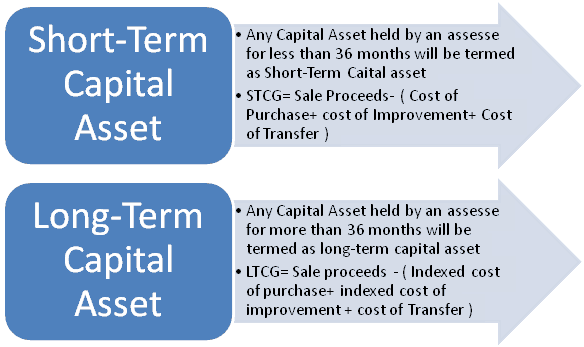
Profits or gains arising from transfer of a capital asset are called “Capital Gains” and are charged to tax under the head “Capital Gains”.

save Capital Gains Tax on Property sale

Image courtesy of iosphere at FreeDigitalPhotos.net

Types of Capital Assets

  • Any Property
  • Any security
  • Jewellery
  • Archeological Collections
  • Drawings
  • Paintings
  • Sculptures
  • Any form of Art.

Types of Capital Gains

types of capital gain tax

  • Indexed cost means the inflated cost of the asset which is taken out by dividing the index number of year of sale and index number of year of acquisition of the asset.
  • LTCG stands for Long-Term Capital Gain and STCG stands for Short-Term Capital Gains.
  • Indexed cost also stands for Adjusted for Inflation.

Read: Cost Inflation Index (CII) How it impacts Capital Gain Tax on Real Estate & Mutual Funds

What is Capital Gains tax on sale of property?

The Income Tax Department imposes taxes on capital gains. These taxes are capital gains tax. If a property has been owned by you for less than 3 years and you have sold it, short term Capital Gains tax has to be paid else  the terms of Long Term Capital Gains tax have to be applied. Short Term Capital Gains tax is paid as per income tax slab that one falls under. Long Term Capital Gains tax is set at 20%.

How do I save Capital Gains Tax from sale of Property?

  • Section 54 : Old Asset : Residential Property, New Asset : Residential Property

Any long term capital gain arising from sale of residential house property shall be exempt to the extent such amount of gain is invested in

  1. Purchase of residential house during 1 year prior to or 2 years after the date of the transfer of property.
  2. Construction of residential property within 3 years from the date of transfer.

It may be noted here that with effect from 1st April, 2015, such investment can be made only in one residential property located in India.

If the new property is sold before expiry of 3 years from the date of acquisition/construction, then for the purpose of calculating capital gain for such property, the cost of acquisition shall be reduced by the amount of capital gain exempted earlier.

  • Capital Gains Account Scheme:

In case, the new property could not be acquired/constructed before the due date of filing of return for that year, the amount sought to be invested can be deposited in Capital Gains Account with any authorised bank. Generally, most of the public sector banks are authorised under the Capital Gains Account Scheme.

Note that the amount so deposited shall be eligible for exemption as if it has been utilised for purchase/construction of new residential house property, however, if any amount so deposited, remains un-utilised at the end of 3 years from the date of transfer, it shall be chargeable to tax in that year.

  • Section 54 EC : Old Asset : Any Asset, New Asset: Specified bonds

If you have sold property but do not wish to invest in another property soon, you can invest in bonds issued by National Highway Authority of India (NHAI) or Rural Electrification Corporation (REC) to save capital gains tax. You can invest up to Rs. 50,00,000 in the bonds within 6 months of date of sale of property. The bonds must not be sold up to 3 years from the date on which property was sold. It has to be noted that you should invest before the returns filing date if you wish to claim exemption in that financial year.

Kindly note, please make use of this benefit before the return filing date. If the amount is not invested, then it is included in the taxable income.

  • Section 54F : Old Asset: Any Asset, New Asset : Residential Property

Wondering about how to save your tax if you have any asset other than residential house? There is Section 54F for you. J

Secton 54F : Section 54F states that any gain realizing from the sale of any long-term asset ( Apart from residential asset ) shall be fully exempt if the entire net sales is invested in purchasing of  1 residential house within 2 years or before 1 year from the date of such transfer OR the net consideration is invested in construction of 1 residential within 3 years after the date of such transfer.

Pro-Rata Exemption: If full consideration is not invested into the aforesaid options, then exemption would work on a pro-rata basis. The formula for the following is:

Amount exempted= Capital Gain X Amount Invested/Net Sale consideration.

Kindly note, at the date of such transfer the assese should be in possession of not more than 1 residential house apart from the house that he is investing his capital gain into.

Read: Mutual Fund Taxation in India

What if you have loss in selling of a property?

Things  does not always work out according to the pans. If you end up in loss after selling your property, then that Long Term Capital Loss (LTCL) can be set off from long term capital gain ( LTCG ) arising from sale of any asset ( apart from gains arising from sale of shares, mutual funds etc on which STT has been paid ).

If the capital loss cannot be fully set off in that particular financial year, then it is allowed to be carry forward for 8 years but should be set off under the same head only.

05 Sep 03:20

The Difference Between India and Pakistan

by Atanu Dey

Here’s an interesting tweet

Sure, Indians are better known for being high-powered CEOs in foreign corporations than Pakistanis. Pakistanis tend to specialize more in the “peaceful” pursuits of high-powered terrorism, which is consistent with the fact that Pakistan is built on the peaceful foundation of the Religion of Peace. So naturally Pakistanis spread peace around the world.

As the population of the Religion of Peace grows in any place, it becomes more peaceful. In time, peace finally reigns. Syria is getting more peaceful by the day, to the point that people cannot take any more peace and are fleeing Syria. Heartbreaking stories of people drowning is merely the froth on a deep ocean of peace.

Enough of the Religion of Peace.

Time to once again ponder the question. Indians are obviously not incapable or stupid. So why are so many forced to migrate out of India to become successful? What’s it about India that Indians find it hard to be successful in India?

04 Sep 11:57

Axis Bank: Irena Vittal and conflct of interest

by T T Ram Mohan
Irena Vittal has quit as independent director on the board of Axis Bank. The reason is said to be that her husband is CEO of Bharti Airtel, which won a license for a payments bank to be set up in partnership with Kotak Bank, a competitor of Axis Bank. There was a perception of conflict of interest in this situation.

The implication seems to be that Vittal was placed in a situation where she could share information about Axis Bank with her husband and this would not be in the interests of Axis Bank. This suggestion has drawn fierce criticism from many who see the suggestion as proof of gender bias, implying that we in India cannot believe that a lady can separate her family life from her professional obligations.

What do we make of this situation? Well, I doubt that anybody would want to cast aspersions on Vittal, a professional of repute. But the point is that it is best to avoid a situation that has potential for conflict of interest. There are lots of competent lady professionals out there. If Axis Bank can find somebody who is not placed in a conflict of interest situation, why not do so?

Of course, you could say that since conflicts of interest are par for the course in boardrooms, why get worked up over this one? One situation is where A sits on B's board and B sits on A's board and they happily scratch each other's backs. Independent directors on most private boards are drawn from the same cosy club of CEOs, retired bureaucrats and chartered accountants. Even if there's no technical conflict of interest, independence is the last thing one would expect from the members of this cosy club.

The central issue in boardroom reform is not conflict of interest but having directors who are capable of acting independently of management or the promoter. I have said this before- and I argue at length in my recent book RETHINC (Random House), that the long-term answer is to have proportional representation on boards, with various constituencies other than the promoter and management - institutional investors, minority shareholders, large lenders, emloyees, etc- also been given the right to appoint independent directors.

Then, we have independent directors answerable to those who have put them there, not 'independent' directors who are beholden to  management or the promoter for their seats and fat fees and who will happily nod their heads to whatever management or the promoter wants done.
04 Sep 11:56

Amtek Auto Down Another 36% on Thursday as FIIs Dump Stock

by Deepak Shenoy

This Amtek Auto story continues to worsen. First, it fell 60% when it was removed from futures and options, and earlier, downgraded. And then, two JP Morgan AMC short term debt funds that held about 200 cr. of its debt saw a fall in their NAV and cut redemptions to 1% per day.

On Thursday things REALLY went wrong, and the stock fell a further 36% from there. (it’s down another 8% today)

image

Foreign Investors Sold, But Not All Of It

Two investors, Barclays Mauritius and Swiss Finance, sold about 40 lakh shares yesterday according to bulk deal data, at Rs. 36 or so. They apparently have dumped shares in the market, and with the stock still in F&O (it’s going off at the end of the month) there are no protective circuits. Barclays is probably just a front for other FIIs.

Foreign investors still own a tremendous chunk of the stock.… (Read On...)

04 Sep 03:42

Getting BRT to work

by SK

Dedicated bus lanes are neither a necessary nor a sufficient condition for BRT

After significant success in Ahmedabad and spectacular failure in Delhi, Pune is the latest city in India to embark on a “Bus Rapid Transport” (BRT) project. As the name suggests, the point of a BRT is to provide fast and convenient transport to people on buses that ply on existing roads, with some sections of some roads being reserved for buses.

However, in popular imagination, BRT has become synonymous with bus lanes (a lane of road reserved for buses), and the whole controversy in Delhi (which caused the project to be shelved) was about a lane of an arterial road being reserved for buses. In fact, however, a dedicated bus lane is neither a necessary nor a sufficient condition for implementation of BRT.

The attraction of BRT is that it comes with low infrastructure cost – unlike a train or monorail (or even a tram) line, there is not much investment required in terms of physical infrastructure. The challenge with BRT, however, is that its buses are liable to get stuck in traffic (just like every other vehicle) which might prevent it from living up to its middle name.

For this reason, certain changes are made to traffic patterns so that BRT indeed remains rapid. For example, traffic signals on arterial bus routes might be designed to give priority to the directions where buses travel. You might have bus stops in the middle of the road for people to get on to buses. And you might reserve lanes on roads for buses. Once again note that the last named is not a necessary condition for BRT.

What BRT should deliver is a dense and reliable network of buses. On arterial and other key roads, frequency of buses should be extremely high. Our current model of point-to-point and hub-and-spoke based bus routes need to be given up in favour of a more dense network, where it might be quicker for people to change multiple buses to get to their destination. This also warrants a change in the ticketing system, using a zone-based ticket than the current point-to-point ticket, and moving ticketing offline.


The fashion so far in India (with Ahmedabad being a possible exception) is to announce arterial roads as “BRT corridors” and start off the BRT services by reserving lanes on these roads for buses, without bothering about linkages and networks at either end. The problem with this is that the losers of the road space “pay” immediately, but the benefits of BRT are not immediately forthcoming.

A better method of implementation would be to make reservation of bus lanes the last step in BRT. The first should be to increase the density of buses and creation of networks. The problem with this is that it requires investment and the expanded (and densified) network might run far below capacity for a while. Yet, as the network expands (even without dedicated lanes), people will begin to see the benefits and convenience offered, and demand for BRT will increase.

Two things will happen – firstly, the expanded and densified network of buses will start crowding out (literally) private vehicles on the road. Secondly, people will see the relative benefits of taking these buses and these buses will start filling up. As these two effects take place, there will come a point when lanes can be reserved for buses without slowing down any of the rest of the traffic.

What we need, in other words, is “system thinking“, and to look at BRT as a solution to move people to their destination in a more efficient manner. Once policymakers recognise that bus lanes are only a means to this end, we can expect BRT to implemented in a proper fashion.

04 Sep 03:40

Meditation: Why Bother?

by Shane Parrish

Mindfulness in Plain English

Via the amazing Mindfulness in Plain English, which I’d recommend pairing with this guide to meditation.

Meditation is not easy. It takes time and it takes energy. It also takes grit, determination, and discipline. It requires a host of personal qualities that we normally regard as unpleasant and like to avoid whenever possible. We can sum up all of these qualities in the American word gumption. Meditation takes gumption. It is certainly a great deal easier just to sit back and watch television.

So why bother? Why waste your time and energy when you could be doing something else. We know that it can make you 10% happier but is that enough?

Why? Simple. Because you are human. Just because of the simple fact that you are human, you find yourself heir to an inherent unsatisfactoriness in life that simply will not go away. You can suppress it from your awareness for a time; you can distract yourself for hours on end, but it always comes back, and usually when you least expect it. All of a sudden, seemingly out of the blue, you sit up, take stock, and realize your actual situation in life.”

Sometimes it hits us. We’re just barely hanging on while our life is flying by.

You manage to make ends meet somehow and look okay from the outside. But those periods of desperation, those times when you feel everything caving in on you— you keep those to yourself. You are a mess, and you know it. But you hide it beautifully. Meanwhile, way down under all of that, you just know that there has to be some other way to live, a better way to look at the world, a way to touch life more fully.

We know there is more to life. As if there is another layer that we haven’t accessed yet.

You feel that there really is a whole other realm of depth and sensitivity available in life; somehow, you are just not seeing it. You wind up feeling cut off. You feel insulated from the sweetness of experience by some sort of sensory cotton. You are not really touching life. You are not “making it” again. Then even that vague awareness fades away, and you are back to the same old reality. The world looks like the usual foul place. It is an emotional roller coaster, and you spend a lot of your time down at the bottom of the ramp, yearning for the heights.

And so we blame ourselves, forgetting that we’re human. This is the same malady that affects every human.

It is a monster inside all of us, and it has many arms: chronic tension, lack of genuine compassion for others, including the people closest to you, blocked up feelings and emotional deadness— many, many arms. None of us is entirely free from it. We may deny it. We try to suppress it. We build a whole culture around hiding from it, pretending it is not there, and distracting ourselves with goals, projects, and concerns about status. But it never goes away. It is a constant undercurrent in every thought and every perception, a little voice in the back of the mind that keeps saying, “Not good enough yet. Need to have more. Have to make it better. Have to be better.” It is a monster, a monster that manifests everywhere in subtle forms.

The same themes repeat throughout our lives: jealousy, suffering, discontent, and stress. They are in the music we listen to and the shows we watch. They are in our very nature.

If Only Syndrome

Life seems to be a perpetual struggle, an enormous effort against staggering odds. And what is our solution to all this dissatisfaction? We get stuck in the “if only” syndrome. If only I had more money, then I would be happy. If only I could find somebody who really loved me; if only I could lose twenty pounds; if only I had a color TV, a hot tub, and curly hair; and on and on forever. Where does all this junk come from, and more important, what can we do about it? It comes from the conditions of our own minds. It is a deep, subtle, and pervasive set of mental habits, a Gordian knot that we have tied bit by bit and that we can only unravel in just that same way, one piece at a time. We can tune up our awareness, dredge up each separate piece, and bring it out into the light. We can make the unconscious conscious, slowly, one piece at a time.

Human culture has taught us odd responses to the ever-changing landscape of our world. When things are positive we grasp.

We categorize experiences. We try to stick each perception, every mental change in this endless flow, into one of three mental pigeon holes: it is good, bad, or neutral. Then, according to which box we stick it in, we perceive with a set of fixed habitual mental responses. If a particular perception has been labeled “good,” then we try to freeze time right there. We grab onto that particular thought, fondle it, hold it, and we try to keep it from escaping. When that does not work, we go all-out in an effort to repeat the experience that caused the thought.

Then there is the other side of the mind where we have a box labelled “bad.” We try to push these experiences away. We ignore.

When we perceive something “bad,” we try to push it away. We try to deny it, reject it, and get rid of it any way we can. We fight against our own experience. We run from pieces of ourselves. Let us call this mental habit “rejecting.” Between these two reactions lies the “neutral” box. Here we place the experiences that are neither good nor bad. They are tepid, neutral, uninteresting. We pack experience away in the neutral box so that we can ignore it and thus return our attention to where the action is, namely, our endless round of desire and aversion. So this “neutral” category of experience gets robbed of its fair share of our attention.

What’s the result? An endless treadmill of seeking pleasure and fleeing from pain, while ignoring most of what happens. And we “wonder why life tastes so flat.”

No matter how hard you pursue pleasure and success, there are times when you fail. No matter how fast you flee, there are times when pain catches up with you. And in between those times, life is so boring you could scream. Our minds are full of opinions and criticisms. We have built walls all around ourselves and are trapped in the prison of our own likes and dislikes. We suffer.

Suffering

Suffering is a key word in meditation. Its understanding is important.

The Pali word is dukkha, and it does not just mean the agony of the body. It means that deep, subtle sense of dissatisfaction that is a part of every mind moment and that results directly from the mental treadmill. The essence of life is suffering, said the Buddha. At first glance this statement seems exceedingly morbid and pessimistic. It even seems untrue. After all, there are plenty of times when we are happy. Aren’t there? No, there are not. It just seems that way. Take any moment when you feel really fulfilled and examine it closely. Down under the joy, you will find that subtle, all-pervasive undercurrent of tension that no matter how great this moment is, it is going to end. No matter how much you just gained, you are inevitably either going to lose some of it or spend the rest of your days guarding what you have and scheming how to get more. And in the end, you are going to die; in the end, you lose everything. It is all transitory.

That all sounds rather bleak when viewed through the lens of the treadmill that we’re on. But there is another way to look at the universe.

It is a level of functioning in which the mind does not try to freeze time, does not grasp onto our experience as it flows by, and does not try to block things out and ignore them. It is a level of experience beyond good and bad, beyond pleasure and pain. It is a lovely way to perceive the world, and it is a learnable skill. It is not easy, but it can be learned.

Happiness and peace are really the prime issues in human existence. That is what all of us are seeking. This is often a bit hard to see because we cover up those basic goals with layers of surface objectives. We want food, wealth, sex, entertainment, and respect. We even say to ourselves that the idea of “happiness” is too abstract: “Look, I am practical. Just give me enough money and I will buy all the happiness I need.” Unfortunately, this is an attitude that does not work. Examine each of these goals and you will find that they are superficial. You want food. Why? Because I am hungry. So you are hungry— so what? Well, if I eat, I won’t be hungry, and then I’ll feel good. Ah ha! “Feel good”: now there is the real item. What we really seek is not the surface goals; those are just means to an end. What we are really after is the feeling of relief that comes when the drive is satisfied.

We want to end the tension between desire and aversion.

You can learn not to want what you want, to recognize desires but not be controlled by them. This does not mean that you lie down on the road and invite everybody to walk all over you. It means that you continue to live a very normal-looking life, but live from a whole new viewpoint. You do the things that a person must do, but you are free from that obsessive, compulsive drivenness of your own desires. You want something, but you don’t need to chase after it. You fear something, but you don’t need to stand there quaking in your boots. This sort of mental cultivation is very difficult.

Have we overdeveloped the material aspects of life at the expense of the deeper emotional ones?

Meditation

Meditation is intended to purify the mind. It cleanses the thought process of what can be called psychic irritants, things like greed, hatred, and jealousy, which keep you snarled up in emotional bondage. Meditation brings the mind to a state of tranquillity and awareness, a state of concentration and insight.

In our society, we are great believers in education. We believe that knowledge makes a person civilized. Civilization, however, polishes a person only superficially. Subject our noble and sophisticated gentleperson to the stresses of war or economic collapse, and see what happens. It is one thing to obey the law because you know the penalties and fear the consequences; it is something else entirely to obey the law because you have cleansed yourself from the greed that would make you steal and the hatred that would make you kill.

The more we understand the more flexible and tolerant we become. The more compassionate we can be.

Meditation is a lot like cultivating a new land. To make a field out of a forest, first you have to clear the trees and pull out the stumps. Then you till the soil and fertilize it, sow your seed, and harvest your crops. To cultivate your mind, first you have to clear out the various irritants that are in the way— pull them right out by the root so that they won’t grow back. Then you fertilize: you pump energy and discipline into the mental soil. Then you sow the seed, and harvest your crops of faith, morality, mindfulness, and wisdom.

Meditation sharpens the mind.

Meditation sharpens your concentration and your thinking power. Then, piece by piece, your own subconscious motives and mechanics become clear to you. Your intuition sharpens. The precision of your thought increases, and gradually you come to a direct knowledge of things as they really are, without prejudice and without illusion.

While these are great reasons they are only promises on paper. The only way to know if it’s worth the effort is to see for yourself.

--
Sponsored By: Greenhaven Road Capital: You think differently - now invest differently.

04 Sep 03:21

Three Thumb Rules that work in Retirement

by subra
I hate thumb rules, and let me repeat that, I hate thumb rules. The thumb looks very different from the other fingers, so what rules apply to it, cannot apply to the other fingers. However, there are a few rules which work in retirement / for retirement. Let us look at 3 of them: Start […]
04 Sep 03:19

Day Trading Guidelines

by Sudarshan Sukhani
1. The three E’s: enter, exit, and escape
Rule No. 1 is having an enter price, an exit price, and an escape price in case of a worst-case scenario. This is rule number one for a reason. Before you press the “Enter” key, you must know when to get in, when to get out, and escape if the trade doesn’t work out as expected.

2. Avoid trading during the first 15 minutes of the market open
Those first 15 minutes of market action are often panic trades or market orders placed the night before. Novice day traders should avoid this time period while also looking for reversals. If you’re looking to make quick profits, it’s best to wait a while until you’re able to spot rewarding opportunities.

4. Have a selling plan
Many rookies spend most of their time thinking about stocks they want to buy without considering when to sell. Before you enter the market, you need to know in advance when to exit, hopefully with a profit.

5. Cut your losses
Managing losing trades is the key to surviving as a day trader. Although you also want to let your winners run, you can’t afford to let them run for too long. It’s more art than science to get it right, but learning how to control losses is essential if you are going to day trade.
03 Sep 03:20

Plan and Act, Don’t React

by David Merkel

An investor can and should learn from the past.  He should never react to the recent past.  Why?  The past can’t be changed, but it can be known.  Reacting to the recent past leads investors into the valleys of greed and regret — good investments missed, bad investments incurred.

We’ve been in a relatively volatile environment for the last two weeks or so.  Markets are down, with a lot of noise over China, and slowing global growth.  Boo!

The markets were too complacent for too long, and valuations were/are higher than they should be, given current earnings, growth prospects and corporate bond yields.  It’s not the best environment for stocks given those longer-term valuation factors, but guess what?  The market often ignores those until a crisis hits.

The FOMC is going to tighten monetary policy soon.  Boo!

The things that people are taking on as worries rarely produce large crises.  They could mark stocks down 20-30% from the peak, producing a bear market, but they are unlikely of themselves to produce something similar to 2000-2 or 2008-9.

Let’s think about a few things supporting valuations and suppressing yields at present.  The overarching demographic trend in the market leads to a fairly consistent bid for risky assets.  It would take a lot to derail that bid, though that has happened twice in the last 15 years.  Ask yourself, do we face some significant imbalance where the banks could be impaired? I don’t see it at present.  Is a major sector like information technology or healthcare dramatically overvalued?  Maybe a little overvalued, but not a lot in relative terms.

There are major elections coming up next year, and a group of politicians harmful to the market will be elected.  This is a bad part of the Presidential Cycle.  Boo!

Take a step back, and ask how you would want your portfolio positioned for a moderate pullback, where you can’t predict how long it will take or last.  Also ask how you would like to be positioned for the market to return to its recent highs over the next year.  Come up with your own estimates of likelihood for these scenarios, and others that you might imagine.

We work in a fog.  We don’t know the future at all, but we can take actions to affect it, and our investing results.  The trouble is, we can adjust our risk profile, but our ability to know when it is wise to take more or less risk is poor, except perhaps at market extremes.  Even then, we don’t act, because we drink the Kool-aid in those ebullient or depressed environments.  We often know what we should do at the extremes, but we don’t listen.  There is a failure of the will.

This is a bad season of the year.  September and October are particularly bad months.  Boo!

I often say that there is always enough time to panic.  Well, let me modify that: there’s also always enough time to plan.  But what will you take as inputs to your plan?  Look at your time horizon, and ask what investment factors will persistently change over that horizon.  There are factors that will change, but can you see any that are significant enough for you to notice, and obscure enough that much of the rest of the market has missed it?

Yeah, that’s tough to do.  So perhaps be modest in your risk positioning, and invest with a margin of safety for the intermediate-to-long-term, recognizing that in most cases, the worst case scenario does not persist.  The Great Depression ended.  So did the ’70s.  Valuations are higher now than in 2007.  (Tsst… Boo!)  The crisis in 2008-9 did not persist.

That doesn’t mean a crisis could not persist, just that it is unlikely.  Capitalist systems are very good at dealing with economic volatility, even amid moderate socialism.  Go ahead and ask, “Will we become like Greece?  Argentina?  Venezuela?  Russia?  Spain?  Etc?”  Boo!

It would take a lot to get us to the economic conditions of any of those places.  Thus I would say it is reasonable to take moderate risk in this environment if your time horizon and stomach/sleep allow for it.  That doesn’t mean you won’t go through a bear market in the future, but it will be unlikely for that bear market to last beyond two years, and even less likely a decade.

03 Sep 03:17

The Fish That Ate The Whale

by noreply@blogger.com (Saj Karsan)
Who knew the banana could be so interesting? Well, not the banana itself, but the business conditions surrounding its introduction to the US. Rich Cohen takes us through the story in The Fish That...

[[ Please visit site to read more ]]
03 Sep 03:17

What’s a Republic?

by Atanu Dey

I have been poking around in The Federalist Papers recently. Written between October 1787 and August 1788, they are “a collection of 85 articles and essays written by Alexander Hamilton, James Madison, and John Jay promoting the ratification of the United States Constitution.” Fascinating stuff. (The complete collection is here at the Library of Congress.) Here’s a bit from James Madison, Federalist, no. 39, on the matter of what a republic is:

. . . we may define a republic to be, or at least may bestow that name on, a government which derives all its powers directly or indirectly from the great body of the people; and is administered by persons holding their offices during pleasure, for a limited period, or during good behaviour. It is essential to such a government, that it be derived from the great body of the society, not from an inconsiderable proportion, or a favored class of it; otherwise a handful of tyrannical nobles, exercising their oppressions by a delegation of their powers, might aspire to the rank of republicans, and claim for their government the honorable title of republic.

Let’s remember that this was written around 1788. That over 225 years ago!

02 Sep 06:01

My Most Powerful Tool for Thinking and Decision Making

by Anshul Khare

Note: This is an updated version of the article that was part of the May 2015 issue of our premium newsletter, Value Investing Almanack.

When historian Charles Weiner looked over a pile of Richard Feynman’s notebooks, he called them a wonderful ‘record of his day-to-day work’.

“No, no!”, Feynman objected strongly. [1]

“They aren’t a record of my thinking process. They are my thinking process. I actually did the work on the paper.”

“Well,” Weiner said, “The work was done in your head, but the record of it is still here.”

“No, it’s not a record, not really. It’s working. You have to work on paper and this is the paper. Okay?”, Feynman explained.

Richard Feynman, who won the Nobel prize for Physics, understood that writing his equations and ideas on paper was crucial to his thought.

I think this should give you some clue about what I am going to write about today.

Let me ask you this – how many times it has happened that, after reading a book, you thought you understood the idea but found it difficult to explain it to others? The idea seemed pretty clear in your head but the moment you had to verbalise it you discovered that either you didn’t have a proper grasp on the idea at the first place or you were unable to explain it in a logical coherent way to a third person.

As far as I am concerned, this is the kind of reaction people gave me, “You’re telling me that you just finished reading a compelling book but can’t explain the central idea in few sentences?”

MM-1

Reading something passively creates an illusion of knowledge. It creates a confusion between  ‘mere familiarity with the concepts’ in the book and an actual understanding of them. Only by testing ourselves can we actually determine whether or not we really understand.

This is when the Feynman Technique [2] came to my rescue. It says that the mere action of writing something down allows for a more effective integration of the learning. Feynman’s discovery led me to a tremendously useful tool which I call Journaling. It was a Eureka moment.

If the word Journaling sounds like a jargon, let me simplify it by providing you a definition.

Journaling is simply an activity of writing in plain language about what’s going on around you and what are your thoughts about them. It can include things like your future goals, plans, dreams, reminders to yourself, comments on ideas/people or any unrelated thing that crosses your mind. It’s a conversation that you have with yourself.

Today Journaling features in my personal list of top 10 big ideas for life.

Our Brain On Journaling

One fine day, while experimenting with journaling, it dawned on me that it’s almost impossible to write one thing and think something else at the same time. Just like it’s not possible to inhale through your nose and exhale through your mouth at the same time. It’s the way nature has built us.

The practical implication of this insight was that when I forced my hand to write something, it channeled my thoughts also in the same direction. I discovered that my unchained-thought-monkey could finally be put on a leash. I did, after all, have some control over my thoughts.

Journaling turns out to be not just a tool for thinking but a powerful weapon for focusing thoughts. The more your write, the more precision of thought you build. It allows you to take fuzzy thinking and distill it into precise line of thought. If you want to think better you have to start writing your thoughts.

Writing is a thinking exercise and it acts as a shield against the mental rust. I wonder when majority of the old people in their 80s and 90s can barely remember their family member’s names, how come Warren Buffett who is 85 and Charlie Munger who is 91 are still mentally so sharp? Perhaps a lifetime devotion to reading, writing and learning has something to do with it.

It’s not a common knowledge that writing, apart from being a communication tool, is a thinking tool too. Famous author, Dan Pink, in a commencement speech [3], further validated my belief in this powerful tool. He recommends – “write things to figure out your thoughts”.

For that matter, writing is terribly useful tool for retaining what you read. You have to intersperse your reading with independent thinking to really understand the concepts. Writing introduces that element of thinking hence deepens the understanding.

Problem Solving

Many creative people use writing as problem solving tool.

On getting stuck they write down their question and listen for the answer to come. Sounds creepy right? Neale Donald Walsch, author of best selling book series called Conversations With God [4], claims that his books were not written by him, but they happened through him.

Can it happen to you? You won’t know until you give it a try.

Maria Konnikova, in her book Mastermind [5], writes –

The act of writing and speaking out loud your thesis forces you to slow down and catch those error that are invisible to your eyes.. Your ear notes them when your eye doesn’t.

Julia Cameron, in her book The Artist’s Way [6], talks about a similar idea called ‘morning pages’. She says that every artist should journal for least twenty minutes every morning to unleash their creativity.

I believe everybody is an artist. It’s just that some have already discovered their art and the rest are on their way.

Decision Making and Investing

The most serious disease that plagues decision making is Narrative Fallacy (also known as Hindsight Bias), the tendency to find a cause and effect relationship in historical events even if there is none. And the best cure for this disease is maintaining a decision journal.

When Michael Mauboussin posed the question to Daniel Kahneman, what is a single thing an investor can do to improve his or her performance, he said –

..go down to a local drugstore and buy a very cheap notebook and start keeping track of your decisions. And the specific idea is whenever you’re making a consequential decision, something going in or out of the portfolio, just take a moment to think, write down what you expect to happen, why you expect it to happen and then actually, and this is optional, but probably a great idea, is write down how you feel about the situation, both physically and even emotionally. Just, how do you feel? I feel tired. I feel good, or this stock is really draining me. Whatever you think…When you’ve got a decision-making journal, it gives you accurate and honest feedback of what you were thinking at that time.

Once the outcome of your decision is known revisit your decision journal. Odds are you’re going to discover some surprises. It won’t be uncommon to find that in spite of the favorable outcomes, the reasoning wasn’t always right. Outcomes distort your thinking a lot. It’s very counterintuitive to honestly recall how exactly the events unfolded after the result has come.

As an aside, Shane Parrish’s wonderful post [7] on journaling and decision making needs to be read at least twice.

Carol Loomis, who has been editing Warren Buffett’s letters since last 40 years, writes [8]

Writing itself makes you realize where there are holes in things. I’m never sure what I think until I see what I write. And so I believe that, even though you’re an optimist, the analysis part of you kicks in when you sit down to construct a story or a paragraph or a sentence. You think, ‘Oh, that can’t be right.’ And you have to go back, and you have to rethink it all.

Even Warren Buffett observed – “Good writing clarifies your own thinking and that of your fellow shareholders.” A profound thought from the Oracle.

Sir Richard Branson, founder of Virgin group, once said “my most essential possession is a standard-sized school notebook,” which he uses for regular writing. If he says so I am sure there must be some merit to the idea of journaling.

It’s A Therapy

While I don’t claim to be a psychic, I reckon that almost everybody has some thoughts which they are scared to share with others, even with people who are very close to them. These thoughts create unfelt emotions which remain suppressed in your subconscious. They need a vent.

Writing about your thoughts in a private journal can have great cathartic effects. Journaling gives an avenue for your unfelt emotions to process themselves. This release allows you to find freedom from the latent emotional baggage.

When you jot down a thought, two things can happen. If it’s a negative thought it’s toxicity will get diluted and it will die out. If it’s a positive thought, it will grow stronger and more refined.

It’s interesting that some thoughts have their own personality and the threat of getting exposed may produce a subconscious resistance. This resistance can make you feel that this activity (writing) is boring and pointless. So it’s very crucial that you journal regularly to be able to discover the therapeutic value of Journaling.

Another psychological benefit created by journaling is that it deepens commitment. The very act of writing things down deepens your resolve to make good things happen in your life. It’s like a declaration to yourself.

Journaling is no less than a therapy.

What and How

Now that I have convinced you about the importance of Journaling, let me share some ideas about ‘what to write’ and ‘how to write’.

First thing that you need to keep in mind is that you aren’t doing this to become a professional writer. The purpose here is to discover yourself. However let me warn you that as an unintentional side effect you will anyway slowly become an effective writer.

So what do you write about? Pour your heart out. Don’t bother too much about forming coherent sentences, incorrect grammar or bad handwriting. Write without fearing that somebody might see it. You can always destroy the paper later.

What do I write about? I express my gratitude for all the blessing in my life. I wonder about the beauty and mystery of life.

Sometimes, you will sit there holding your pen, staring at the blank paper and nothing would seem to appear in your thought screen. Then how about pondering over a question similar to what Steve Jobs regularly asked himself – “If I had only 30 days to live, what would I do?”

In this digital era of smartphones and tablets it’s not an overstatement that coming generation will hardly be using a pen to write. Why should they? Pen is going to pretty much look like a stone age tool to them.

Now as far as journaling is concerned you could always use a digital device (using a keyboard) to write. It’s definitely better than not writing at all. But in my experience there is some magic in grabbing a pen and scribbling in your own handwriting. It generates a unique vibration and a different part of your brain is activated when you write the good old way.

Clive Thompson has some useful insights about pen vs keyboard. He mentions [9]

Writing with a pencil is very effective for structuring your thoughts. The flow of ideas and clarity of thought comes better when you use a pencil.

…However when you want to get your thoughts out on paper for an audience, it needs to flow as fast as possible, i.e., your writing speed should match with your thoughts else you will lose the train of thought. This is where typing is a better medium.

…Keep a pencil and a notebook to take notes and capture the flash of insights whereas use a keyboard to communicate your ideas.

According to Thompson, blogging is a great way to refine your ideas and thinking. In his book, Smarter Than You Think [10], he writes –

Blogging forces you to write down your arguments and assumptions. This is the single biggest reason to do it, and I think it alone makes it worth it. You have a lot of opinions. I’m sure some of them you hold strongly. Pick one and write it up in a post—I’m sure your opinion will change somewhat, or at least become more nuanced. When you move from your head to “paper,” a lot of the hand-waveyness goes away and you are left to really defend your position to yourself.

Conclusion

One of the disciples of Gautam Buddha once asked him, “Master! what’s the highest form of knowledge?”

Buddha replied, “Self knowledge is the greatest knowledge. Know thyself.”

I am speculating that self knowledge starts with self awareness. And in this journey of self awareness pen is definitely mightier than sword.

The point really is this – “Do you think your life is worth journaling about?” If not then make it worth and then write about it. Or even better, start writing about it and you’ll discover that your experiences are indeed worth journaling about.

If you carve out few hours every week for journaling, you will start discovering its value very soon. So I say, pen is your friend, my friend! Pick up the pen and journal on.

And what could be a better way to start the practice of journaling than the Comments section of this post. 😉

The post My Most Powerful Tool for Thinking and Decision Making appeared first on Safal Niveshak.

    
02 Sep 03:53

Payment bank entry process considered inconsistent with the rule of law

by Ajay Shah
by Shubho Roy and Ajay Shah.

First best


Banking is the business of accepting deposits from the public with the promise of repaying such deposits on demand at an agreed rate of return. Payments is a distinct business from banking. A payment system is one which enables payment of funds to be effected between payer and a beneficiary. In the olden days, payments was primarily (though not entirely) the business of banks. In the modern world, banks should face competition from technology companies who will use modern telephony to do payments. These companies are bringing in a new business strategy of leveraging their client base and using analytical tools to provide a superior consumer experience.

The first best approach is to establish a regulatory strategy for payments which is not deferential to the business interests of banks,i.e. which has a level playing field between banks and non-banks.

Second best


The second best strategy is to invent the moniker `payments banks',which suggests some kind of entity which does payments and sounds like bank but isn't a bank. In this case, a mechanism is required through which new entrants will establish payments banks. Anything that we do in public policy in the Republic of India should be grounded in the rule of law. How would a rule-of-law entry mechanism work?

Under version1.1 of the draft Indian Financial Code, the legal process for considering an application for carrying out a new business is governed by Chapter 20. This induces the following procedure:

  1. The regulator has to make clear regulations on the criteria on which an application will be judged.
  2. Section 73(6) of the Code provides that before rejecting an application, the Regulator must provide a show cause notice to the applicant.
  3. Section 91 provides the details of how a show cause notice is issued and its contents.
  4. The Regulator must give an hearing, and provide all the material the Regulator relied on to come to its decision.
  5. The hearing will be before a staff member of the regulator, who is not involved in the actual evaluation of the proposal (separation between executive and and quasi-judicial functions)
  6. There will be detailed regulations on how the hearings will be carried out; the procedure will not be made up on the fly.
  7. If the applicant is unhappy with the decision of the regulator, the applicant may appeal to the Financial Sector Appellate Tribunal (FSAT).

This procedure yields the rule of law in entry of new firms.

Third best


The RBI recently announced that it has given "in principle" approval to 11 applicants for payments banks licenses. These were chosen from 41 applicants who wanted to start payment systems. The manner in which 11 payments banks were short-listed is inconsistent with the rule of law. It is not clear how the RBI came to the number of 11 payments banks, or why licenses were denied to the others.

Right at the outset of this process, it is not clear why RBI chose to use the Banking Regulation Act, 1949 to license "payments banks" when Parliament has made a separate law for governing payment systems under the Payments and Settlement Systems Act, 2007. Since paragraph iv of the payment bank guidelines do not allow such entities to undertake any lending activities, it is not even clear why RBI is classifying them as banks.

The RBI states that an external evaluation committee chose the 11. The RBI claims that the committee determined its own procedure and analysed the applications. Without casting any aspersions on the members of the committee, this is, sadly, not a due process of law.

The RBI notification claims that the committee screened the applicants for financial soundness, fit and proper criteria, physical outreach, business model innovation, capability of volumes of transactions and money and their proposed business plan. Additional data was also requested from the applicants. While this may satisfy a casual reader, these phrases are vague and empty. There is no explanation on how the committee evaluated each criterion mentioned in the paragraph. Were marks given for each criteria? Was there a pre-decided cut off marks below which licenses would be denied? What was the basis/system of providing marks or comparative ranking? How was innovation adjudged and comparatively scored/ranked between the 41 applicants?

In addition to these process failures described above, the RBI guidelines provide no review or appeal provision for rejected applicants. This is also a violation of the rule of law.

Compare and contrast this with examples for the existing legal process for selection/short-listing in the government. If you apply for a driving license and it gets rejected, you get a specific reason for the rejection. The Motor Vehicles Rules specify what the department tests. The Motor Vehicles department does not state "the driving instructor will formulate his/her own procedure for determining the competence of the driver". Giving out licenses to payments banks is more important than giving out driving licenses; the quality of procedure at RBI should be even more thorough than what is done by Motor Vehicles departments all across India.

Look at the UPSC exams which select the senior most officials for all of Government of India and State Governments. There is a set syllabus. The rules about how marking is done are stated before the exam. There is a clear system of assigning ranks. After the examination, the answers are also published for examinees to determine their scores independently and more importantly to understand where they went wrong. The process has a subjective part of interviews; but that forms a smaller component of the overall evaluation which is predominantly objective.

The process used for the entry of payments banks is strikingly different from the quality of governance seen in main line government. It is, however, disturbingly similar to the process of allocating coal blocks through a Screening Committee, which the Supreme Court has held unconstitutional on the grounds that:

  1. The allocation procedure followed by the Screening Committee was arbitrary.
  2. No objective criterion was used to determine the selection of companies.

The Supreme Court found:

The approach had been ad-hoc and casual. There was no fair and transparent procedure,...

The Supreme Court judgment gives much insight into the governance problems of RBI, and the concepts that drive the draft Indian Financial Code. It should be noted that the much criticised procedure of the coal ministry was ahead of RBI on good governance procedures in that they released the minutes of the meetings of the Screening Committee while RBI did not.

So far, we have discussed how RBI has run the licensing process. Now we turn to the RBI concept of a scarce number of licenses. Entry problems in public policy fall into two kinds:

  1. Allocation problems: Where the resource is a limited resource and the number of claimants are more. The system preferred by governments in these types of situations is usually auctions with allocation to the highest bidder. This is used for situations like coal mines or spectrum allocation.
  2. Licensing problems: These are activities where the entity carrying out the activity needs to have certain minimum qualifications. If such qualifications are absent then there is a risk that the activity may generate substantial negative externalities. As an example, an untrained driver may kill innocent bystanders.

Some problems are combination of the two, like the UPSC exams where you need skilled civil servants and the number of positions are limited. In those circumstances, scoring plus comparative ranking is the standard method.

The payments bank licenses are not an allocation problem. There would be no problem if there were 30 payment banks instead of 11. It would have promoted more competition and reduced costs to consumers. The arbitrary setting of numbers of payment banks harks back to the days of the Aluminium Control Order or Steel Control Order or the other Control Orders and Industrial Licenses which plagued the Indian economy before 1992. These laws set arbitrary production quotas and licenses for manufacturing without any rationale. A crucial part of our reforms of 1992 was removing the quotas and industrial licenses. Anyone can start a steel mill now or produce aluminium. there is no limit to the number of steel mills the government will allow.

Even if you were to consider the entry of payments banks as an allocation problem, there is an important governance failure right at the outset. Nowhere in the guidelines for payments banks (or any document that we could find in the public domain) is there any mention of the magic number 11. This is akin to the UPSC deciding on the number of students to take in after the exam. The arbitrariness of the decision is inconsistent with the rule of law.

A climate of fear


One may wonder why no one stands up against these violations of the rule of law. The problem is, without a statutory or regulatory right to appeal, it is dangerous to go against a regulator in India. Even if you win in court, you would then be under the regulation of the same entity you vanquished in the High Court. In a non-rule-of-law situation, where the financial agency has wide and arbitrary powers, that is not a condition you would enjoy. Unlike other regulators (SEBI, IRDA, PFRDA) there are no statutory appeals under the RBI Act against the decisions of the RBI. Regulated persons feel safe dragging SEBI to SAT as SEBI operates in a rule of law environment and is not able to exact retribution through devious methods.

On this subject, see the recent article The rule of law in the regulatory state by John Cochrane. For an example of better governance found within India, consider SEBI. When a person applies to become a stock broker SEBI grants the broker a hearing before rejecting the application and even allows the broker to apply for a reconsideration (See Regulation 8 here). After that, the broker can appeal to the Securities Appellate Tribunal.

Subjects versus citizens


RBI gives hope to the industry through the following paragraph in the notification on approvals:

Going forward, the Reserve Bank intends to use the learning from this licensing round to appropriately revise the Guidelines and move to giving licences more regularly, that is, virtually "on tap". The Reserve Bank believes that some of the entities who did not qualify in this round, could well be successful in future rounds.

This has two shortcomings:

  1. The minimum standard of objectivity required under Article 14 of the Constitution is not dependent on the convenience of RBI. A regulator has to meet a minimum level of objectivity under the Constitution. It may improve upon it, but that does not allow it to deny it to the applicants at the present.
  2. The consolation to the "failed" participants is in itself an admission of the lack of faith of RBI in the process. A more inclusive and consultative mechanism may have developed a more objective criteria for selection. Even RBI itself seems not to be sure about the legality of the present process when it says that the failed entities may be successful in the future. It seems unsure about the reasons why these entities were rejected.

For an analogy, we would not accept a Coal Ministry which first gave out 11 coal mines through a clubby process, which violates the rule of law, and said that in the future it will adhere to the Constitution.

The promise of future "success" is clouded by dangers for the 30 unsuccessful aspirants. The first set of 11 may rapidly develop their business. In network industries, subsequent entrants face an uphill task of competing against the entrenched incumbents. In addition, RBI makes no promises about when the next round of licenses will be awarded. From 1949 till 2015, RBI was not able to learn how to do on-tap licenses for banks. Hence, there is no telling how many decades of a head start these 11 payments banks will get. The harm imposed upon the unsuccessful applicants could be arbitrarily large. Under the rule of law, State actors can only inflict harm after following certain sound processes.

The problem of learning


As emphasised above, the Constitution of India does not give rope to any part of the State to violate the rule of law while it is learning.

It is hard to see what was difficult about developing a sound rule of law framework. The steps required are quite elementary:

  1. RBI staff could have read the Indian Financial Code and used the procedure there.
  2. SEBI has long had sound entry procedures. RBI staff could have just studied SEBI and emulated them.
  3. These procedures could have been validated against ample international experience which is on the web. UK regulations are available here, in the U.S. it is usually governed under state laws and the New York regulation process is available here. Australia regulates some payment systems under deposit taking regulations which can be seen here.

Saving capitalism from the capitalists


A nimble new set of technology companies want to challenge an inefficient incumbent: the existing sleepy world of payments as done by banks. Both industries have one regulator -- RBI -- which is captured by the interests of incumbents. It has not permitted the new players to compete with the incumbents. In an age of great concern about crony capitalism, uncomfortable questions are raised when six out of 11 new entrants are big business houses, and the competitive energy of technology companies has been largely shut out. Many names in the list of 11 which appear new to this field have partnerships with incumbent banks -- e.g. Reliance with SBI, Fino with ICICI Bank, Airtel with Kotak Bank, etc.

How do we save capitalism from the capitalists? The rule of law is a necessary, though not sufficient, condition for a competitive economy where rich families and dominant firms face vigorous competitive pressure. The Constitution of India is a great tool for addressing our problems of cronyism.

At the same time, mere emphasis on rule of law procedures is not a sufficient condition for doing sound economic policy. A great deal of thought and care needs to go into the work, so as to ensure that good outcomes are obtained. E.g. it's easy to do a formal rule of law process which insists that any applicant for a payments bank must be a software company with over Rs.1 trillion a year of revenue. All the formal processes can be easily run with this criterion. But it will give us the wrong outcome. The rule of law is a necessary, but not sufficient, condition to get sound outcomes.

While the RBI Act, 1934, predates free India, in 1949, the Constitution of India established the rule of law in India. SEBI has long had a more evolved system on the entry of mutual funds. In 2013, the draft IFC was released, and offered a substantial step forward where the rule of law was integrally brought into all aspects of financial economic policy. Sound entry procedures are in Chapter 9 of the FSLRC Handbook. In 2014, this critique of RBI permitting two persons to start a bank came out. In this backdrop, the process failures with payments banks constitute an avoidable failure.

Conclusion


It is better to have 11 new payments banks than to have none. However, there are important intellectual failures in what was done, on questions of economics and on questions of law.

References


Supreme Court of India, Manohar Lal Sharma vs The Principle Secretary & Others, judgment dated 25th August, 2014

Ministry of Finance, Revised Draft Indian Financial Code for Public Comments

John Cochrane, The Rule of Law in the Regulatory State, The Grumpy Economist, 1 August 2015.

Ajay Shah, Rule of law and competition in banking, Economic Times, 9 January 2014.
02 Sep 03:44

What to write on this blog…

by subra
I started out in 2007/8 writing this blog. It has been more challenging than publishing a book(s). Now after about 4000 odd articles I realize that I have written about everything that I know (or I think I know). Frankly there is nothing NEW that I can write, I can only hash and rehash. People […]
02 Sep 03:41

Our GDP in Charts: Lack of Government Spending and Slowing Private Consumption Growth Show GDP at Marginally Weaker 7%

by Deepak Shenoy

India’s GDP data came  in yesterday and it “seems” to be a weaker 7% compared to 7.5% in the march quarter. There’s two ways to look at it – the new calculation shows “Gross Value Added” which is actually UP from the previous quarter! (up to 7.1% from 6.1%)

GDP is just GVA plus the effect of indirect taxes, in my opinion. Given that it makes sense to consider indirect taxes and that anyway India’s going to look at the GDP (not GVA) as the headline number, we will grudgingly look at it too:

image

Nominal Growth (that is, the number that includes the impact of inflation) saw an uptick at 8.81% which is slightly better.

Sectors: Agri is Happier, but Services Show Sustained Drops

image

As you can see 1.9% as the Agriculture GDP growth which seems to be on a recovery path. Mining at 4% is also pretty good.

However Manufacturing at 7.2% is lower than the previous quarter, which is strange because input costs (steel, crude etc) should have fallen and prompted much more growth!… (Read On...)

02 Sep 03:34

What are your Systemically Important Investments?

by Dev Ashish
Just yesterday, RBI announced the names of Systemically Important Banks of India. To put it simply, these are those banks whose failure will lead to catastrophic consequences for the country and its people, that is, us. This concept of Systemically Important Banks (or SIBs) gave me an interesting idea about our own personal finances. Now it may sound a little far fetched… but I request you
02 Sep 03:34

Jaitley Says Minimum Alternate Tax on FIIs Won’t Apply Even In The Past

by Deepak Shenoy

There will be no MAT on FIIs even before April 1, 2015. The history is…well, read this post.

From ET:

“We are of the considered opinion that the alternative course suggested by the Justice Shah panel, that a necessary amendment in the Income Tax Act would be required…(would be pursued). And we would be bringing out that amendment in the statute.

“Meanwhile, pending such amendment, all the field formations will be conveyed by way of circular that this is the decision of the government so they will have to hold their hands and not make or pass any orders in these matters till such time. Hopefully in the winter session of Parliament or whenever there is next session of Parliament, we will be able to bring out such an amendment expeditiously”, he said.

Wait one second.

This is going to have to depend on Parliament? Good luck with that.… (Read On...)

02 Sep 03:32

Portfolio Construction: steps

by subra
What is portfolio construction?  Let me start in the correct order: Setting your Goals Making your Investment Philosophy Statement Understanding Asset allocation Next step is Portfolio construction. Once you have decided to do Goal Based Investing, set your goals, made your Investment philosophy statement and understood the need for asset allocation, you are ready for […]
01 Sep 03:32

Bond market distortions amplify capital flows volatility

by noreply@blogger.com (Gulzar Natarajan)
One of the defining features of the post-Lehman cross-border capital flows has been the dominant role played by bond market investors. Whereas in the earlier periods, large commercial lenders were the primary overseas lenders, the onset of stricter regulations shifted the onus to shadow banks, asset managers. A BIS study has shown that overseas lending from the US banks and bond mutual funds (BlackRock, Franklin Templeton, Pimco etc) to emerging market non-financial issuers, companies and countries, has doubled since the crisis to $9 trillion. The extraordinary monetary easing in the US, accompanied by rock-bottom yields, left these fund managers with little choice but to search for yields in emerging markets (EM).

The growth in dollar-credit from the US investors to non-banks outside the US till June 2014 is shown below. The declining share of bank loans mirrors the sharp rise in bond market investments, especially to EMs.
The World Bank has estimated that corporates and sovereigns in emerging economies sold $1.5 trillion in debt in the five years to 2014, about three times that in the 2002-07 period. China, Brazil, and India were the largest recipients. India's off-shore issuance (to skirt around the domestic capital flows management regime) has risen significantly since 2009. 
The Times writes about the distortions engendered by these flows,
EPFR Global, a fund-tracking company, calculates that global bond funds have allocated 16 percent of their holdings to emerging-market bonds. Relative to the 2.5 percent recommended benchmark for these securities suggested by the Barclays aggregate bond index, that is a very aggressive bet... Among the many beneficiaries of this largess were commodity-driven borrowers such as the state-owned oil companies Petrobras in Brazil and Pemex in Mexico, the Russian state-owned natural gas exporter Gazprom, and real estate developers in China.
One of the more extreme cases of this bond market frenzy was Mongolia. In 2012, with expectations high that the relatively tiny economy would reap the benefits from China’s ceaseless appetite for raw materials, the government sold $1.5 billion worth of bonds, with demand from investors reaching $10 billion. That meant, in effect, that the country was in a position to borrow an amount twice the size of its $4 billion gross domestic product. Three years later, the International Monetary Fund is warning that Mongolia may not be able to make good on these loans... and the yields have shot up to about 9 percent from 4 percent...
Russian train companies easily sold dollar bonds, despite the fact that their revenues were earned in rubles. Even Ecuador, a country that defaulted in 2008, was able to raise $2 billion last year. Brazil, China, Malaysia, Russia, Turkey and others have sold more than $2 trillion in bonds, mostly to American mutual fund companies, since 2009. As this money flowed into their countries, financing skyscrapers in Istanbul and oil exploration in Brazil, economies and currencies strengthened. Now the reverse is occurring, led by a slowing Chinese economy, and as that money heads for safety, local currencies are plunging.
This highlights an inter-temporal asset-liability mismatch in the books of these asset managers. Their assets (bond mutual funds and exchange traded funds) are often in illiquid or hard-to-sell investments, whereas their investors are free to withdraw anytime. Since bond investors typically rush to redeem their positions when faced with such turmoil, especially in the currency markets, any panic-sale has the potential to trigger a forced-sale of infrequently traded assets, thereby unraveling the bond markets. On the debtor's side, the sharp devaluation of their currency that invariably follows such episodes adds to their debt burden.

This game of massive inflows where private corporations (and governments) leverage-up on plentiful external credit, followed by sudden-stops in response to shocks and panic flight to the exit gates has been replayed too many times to be kept track. A large share of such inflows end up financing hubris-driven projects with limited social value and/or doubtful commercial viability. The capital flights leaves in its wake the ruins of incomplete or failed projects with massive debts, battered corporate balance sheets, vulnerable banks (exposed to these corporations), and economies on the brink.

Countries like India which have been aggressively courting capital from asset managers like pension funds to finance their infrastructure investment requirements would do well to keep these lessons in mind as they go about this. Most infrastructure investments have their revenue streams in local currency. Financing such investments with foreign currency denominated liabilities is fraught with considerable risks. This is all the more so since the volatility engendered by cross-border capital flows, which has become all too frequent, does not discriminate between prudent and reckless borrowers. In any case, given the scale of the country's infrastructure financing requirements, foreign capital can at best be small change.

All this assumes even greater significance given that economic fundamentals are no insurance against the volatility induced by bouts of global financial market turmoil and that markets react excessively when faced with such uncertainty. 
Add to Technorati Favorites
31 Aug 03:39

We Still Have a Buck in the Till; We’re Solvent!

by David Merkel

Imagine that you are in the position of a high cost crude oil producer that has a lot of debt to service.  The price that you can sell your oil for is high enough that you make some cash over your variable cost.  The price is low enough that you are not recouping the cost of what you paid to buy the right to develop the oil, the development cost, and cost of equity capital employed.

In this awkward situation you continue to produce oil, because it may keep you from defaulting on your debts, even though you are not earning what is needed to justify the GAAP book value of your firm.  You’re destroying value by producing, but because of the debt, you don’t have the option of waiting because not surviving loses more money than pumping oil and seeing if you can survive.

Where there is life, there is hope.  Who knows, one of three things could “go right:”

  1. Enough competitors could fail such that global industry capacity reduces and prices rise.
  2. Demand for oil could rise because it is cheap, leading prices to rise.
  3. You could get bought out by a more solvent competitor with a longer time horizon, who sees the assets as eventually valuable.

Trouble is with #1, you could fail first.  With #2, the process is slow, and who knows how much the Saudis will pump.  With #3, the price that an acquirer could pay might not be enough for shareholders, or worse, they could buy out your competitors and not you, leaving you in a worse competitive position.

One more thought: think of the Saudis, the Venezuelans, etc… all of the national oil companies.  They’re not in all that different a spot than you are.  They need cash to fund government programs or they may face unrest.  For some like the Saudis, who assets in reserve, the odds are lower.  For the Venezuelans, who have had their economy destroyed by the politics of Chavez, the odds are a lot higher.

There will be failures among energy producers, and that could include nations.  Failures with each will be temporary as debts get worked through/compromised and new management takes over, and high cost supply gets shut down.  The question is: who will fail and who won’t.  The job of the hypothetical firm that I posited at the beginning of this article is to survive until prices rise.  What will a survivor look like?

  • Relatively high contribution margins (Price – variable cost per barrel)
  • Relatively little debt
  • Debt has long maturities and/or low coupons.

Now, I’m going to give you 40% of the answer here… I’m still working on the contribution margin question, but I can give you a useful measure regarding debt.  My summary measure is total debt as a ratio of market capitalization.  It’s crude, but I think it is a good first pass on debt stress, because the market capitalization figures carry an implicit estimate of the probability of bankruptcy.

Anyway here’s a list of all of the oil companies in the database that have debt greater than their market cap:

Company Country ticker Mkt cap Debt / Market Cap
Energy XXI Ltd Bermuda EXXI 171 26.93
SandRidge Energy Inc. United States SD 264 16.63
Comstock Resources Inc United States CRK 146 9.45
Linn Energy LLC United States LINE 1,172 8.81
EXCO Resources Inc United States XCO 213 7.2
Cosan Limited(USA) Brazil CZZ 1,015 6.34
W&T Offshore, Inc. United States WTI 245 6
Halcon Resources Corp United States HK 620 5.89
BreitBurn Energy Partners L.P. United States BBEP 614 5.05
Magnum Hunter Resources Corp United States MHR 188 5.05
California Resources Corp United States CRC 1,325 4.92
Sanchez Energy Corp United States SN 368 4.74
Crestwood Equity Partners LP United States CEQP 543 4.64
Rex Energy Corporation United States REXX 171 4.51
Penn West Petroleum Ltd (USA) Canada PWE 403 4.19
Atlas Resource Partners, L.P. United States ARP 365 4.09
Gastar Exploration Inc United States GST 108 3.8
Petroleo Brasileiro Petrobras Brazil PBR 35,748 3.71
Stone Energy Corporation United States SGY 292 3.59
Bill Barrett Corporation United States BBG 252 3.19
EP Energy Corp United States EPE 1,552 3.15
Memorial Production Partners L United States MEMP 599 3.05
Premier Oil PLC (ADR) United Kingdom PMOIY 828 2.95
Triangle Petroleum Corporation United States TPLM 286 2.88
Ultra Petroleum Corp. United States UPL 1,281 2.68
Bonanza Creek Energy Inc United States BCEI 333 2.55
Northern Oil & Gas, Inc. United States NOG 359 2.47
Denbury Resources Inc. United States DNR 1,479 2.37
Jones Energy Inc United States JONE 354 2.36
Chesapeake Energy Corporation United States CHK 4,917 2.35
Vanguard Natural Resources, LL United States VNR 833 2.27
LRR Energy LP United States LRE 128 2.23
Pengrowth Energy Corp (USA) Canada PGH 705 2.21
Legacy Reserves LP United States LGCY 461 2.1
Aegean Marine Petroleum Networ Greece ANW 391 1.85
GeoPark Ltd Chile GPRK 202 1.8
Mitsui & Co Ltd (ADR) Japan MITSY 23,727 1.74
Oasis Petroleum Inc. United States OAS 1,390 1.69
Santos Ltd (ADR) Australia SSLTY 3,813 1.59
Whiting Petroleum Corp United States WLL 3,593 1.46
Midcoast Energy Partners LP United States MEP 558 1.45
Paramount Resources Ltd (USA) Canada PRMRF 1,006 1.35
Encana Corporation (USA) Canada ECA 5,944 1.33
Clayton Williams Energy, Inc. United States CWEI 597 1.25
Clean Energy Fuels Corp United States CLNE 468 1.23
EV Energy Partners, L.P. United States EVEP 405 1.23
WPX Energy Inc United States WPX 1,660 1.2
Baytex Energy Corp (USA) Canada BTE 1,068 1.19
ONEOK, Inc. United States OKE 7,453 1.18
SunCoke Energy Partners LP United States SXCP 505 1.18
TransAtlantic Petroleum Ltd United States TAT 126 1.13
Global Partners LP United States GLP 1,071 1.12
NGL Energy Partners LP United States NGL 2,659 1.12
Sprague Resources LP United States SRLP 495 1.11
Amyris Inc United States AMRS 266 1.07
Sunoco LP United States SUN 1,605 1.06
SM Energy Co United States SM 2,360 1.05
Solazyme Inc United States SZYM 202 1


This isn’t a complete analysis by any means. Personally, I would be skeptical of holding any company twice as much debt as market cap without a significant analysis.  Have at it your own way, but be careful, there will be a lot of stress on oil companies with high debt.

30 Aug 03:33

A Favorite Place: Yosemite

by Atanu Dey

One of my favorite places to visit is Yosemite National Park. Thankfully, since it’s just a few hours drive from home, I have been there dozens of times. Here’s a pretty picture of El Capitan.

El capitan
(Click the image to embiggen.)

Probably the most inspiring, tempting and most recognisable of the big walls around the world, El Capitan (named from a rough Spanish translation of its Native American name To-to-kon-oo-lah), rises a massive 900m from its base. Originally thought to be unclimbable it was first scaled in 1958 by Warren Harding, Wayne Merry and George Whitmore, their ascent took them a total 47 days to complete!

Harding and his gang climbed El Cap up a route called ‘The Nose’. Since their awesome first ascent hundreds of new routes have been put up on the rock face and in contrast to their slow but successful attempt speed climbing is now a popular way of taking on the giant. Alex Honnald and Hans Florine currently hold the speed climbing record, taking on El Capitan in 2 hours 23 minutes and 44 seconds on June 17 2012.

One of the header images of this site is indeed a panoramic view of Yosemite.

29 Aug 08:21

Renaming Aurangzeb Road: A Proposal

by Atanu Dey

Indian politicians talk a very loudly talk about India being a democracy, meaning Indians have some say in what happens in India. But when it comes to reality, they are understandably reluctant to put their money where their mouth is. Indian democracy should not be limited to Indians merely having the vote for choosing who is going to be their mai-baap, to dictate to them. To be meaningful, democracy should be extended to the relatively unimportant matter of people deciding who are worthy of being honored by having major roads, schemes and institutions named after them.

So far, most of the major roads, institutions and public schemes have been named after members of the Nehru-Gandhi clan. It’s high time to change that high-handed, dictatorial method and go with a more “democratic” process. The means exist. A significant proportion of the population has the means to vote for all proposed name changes — and there’s a crying need to change all those names. Here’s my proposal.

The proposal is that every significant name change involve a vote. First, decide on the theme. Are we going to name or re-name a road to honor a politician or a scientist, etc. Once that is decided, the next order of business is to have a short list of candidates. Second, put up a website where all the short-listed candidates have their achievements and qualifications listed so that people can learn about them and make an informed choice. Finally, have a public vote. Let the people choose.

In this specific instance, the proposal is to change “Aurangzeb Road” to “Shri or Shrimati XYZ Road” where XYZ is a scientist. Among the candidates, you would have “Mr APJ Abdul Kalam” and others such as “Dr Satyandra Nath Bose” (whom I mentioned in passing in my recent piece, “Naming “Dr” APJ Kalam Road: The Administrator“.)

This is not just an empty exercise in popular opinion polling. This process has the benefit of not just provoking a public debate or public engagement, but also public education. If I am serious about choosing among a set of alternatives, I will have the incentive to learn something about the various candidates. This will increase public understanding.

Among the rules of the game, should be included such terms as that no person’s name should be over-represented in the naming game. If one has a few schemes, roads and institutions already named for them, they are out of the game. That rule will insulate India from yet another scheme being named after Nehru, his daughter Indira, his grandsons Sanjay and Rajiv, his grand-daughter-in-law Antonia Maino, his great-grand-kids Raul Vinci and Priyanka Vadra, and his great-grand-son-in-law Robert Vadra.

There should also be an absolute moratorium on naming anything — even a public toilet — after Gandhi. In fact, there should be a law that renames 100 items every year that are currently named after Gandhi.

Second, no particular group should be over-represented. Thus, if there are already 5000 roads, schemes and institutions named after politicians, then politician names must not be considered other than when a politician’s name is being replaced by another politician’s name. Therefore, if “Jawahar Urban Renewal Scheme” is being renamed, a politician’s name is OK but renaming it as “Robert Vadra Renewal Scheme” is disallowed.

This proposal is reasonable. Hence it’s guaranteed to be ignored by the politicians and the public. I harbor no illusions about Indians and India. But tilting against windmills is part of my nature. So be it.

29 Aug 08:20

The Importance of Your Time Horizon

by David Merkel
Photo Credit: Dr. Wendy Longo || This horizon is distant...

Photo Credit: Dr. Wendy Longo || This horizon is distant…

I ran across two interesting articles today:

Both articles are exercises in understanding the time horizon over which you invest.  If you are older, you may not have the time to recover from market shortfalls, so advice to buy dips may sound hollow when you are nearer to drawing on your assets.

Thus the idea that volatility, presumably negative, doesn’t hurt unless you sell.  Some people don’t have much choice in the matter.  They have retired, and they have a lump sum of money that they are managing for long-term income.  No more money is going in, money is only going out.  What can you do?

You have to plan before volatility strikes.  My equity only clients had 14% cash before the recent volatility hit.  Over the past week I opportunistically brought that down to 10% in names that I would like to own even if the “crisis” deepened.  That flexibility was built into my management.  (If the market recovers enough, I will rebuild the buffer.  Around 1300 on the S&P, I would put all cash to work, and move to the alternative portfolio management strategy where I sell the most marginal ideas one at a time to raise cash and reinvest into the best ideas.)

If an older investor would be hurt by a drawdown in the stock market, he needs to invest less in stocks now, even if that means having a lower income on average over the longer-term.  With a higher level of bonds in the portfolio, he could more than proportionately draw down on bonds during a crisis, which would rebalance his portfolio.  If and when the stock market recovered, for a time, he could draw on has stock positions more than proportionately then.  That also would rebalance the portfolio.

Again, plans like that need to be made in advance.  If you have no plans for defense, you will lose most wars.

One more note: often when we talk about time horizon, it sounds like we are talking about a single future point in time.  When the time for converting assets to cash is far distant, using a single point may be a decent approximation.  When the time for converting assets to cash is near, it must be viewed as a stream of payments, and whatever scenario testing, (quasi) Monte Carlo simulations, and sensitivity analyses are done must reflect that.

Many different scenarios may have the same average rate of return, but the ones with early losses and late gains are pure poison to the person trying to manage a lump sum in retirement.  The same would apply to an early spike in inflation rates followed by deflation.

The time to plan is now for all contingencies, and please realize that this is an art and not a science, so if someone comes to you with glitzy simulation analyses, ask them to run the following scenarios: run every 30-year period back as far as the data goes.  If it doesn’t include the Great Depression, it is not realistic enough.  Run them forwards, backwards, upside-down forwards, and upside-down backwards.  (For the upside-down scenarios normalize the return levels to the right side up levels.)  The idea here is to use real volatility levels in the analyses, because reality is almost always more volatile than models using normal distributions.  History is meaner, much meaner than models, and will likely be meaner in the future… we just don’t know how it will be meaner.

You will then be surprised at how much caution the models will indicate, and hopefully those who can will save more, run safer asset allocations, and plan to withdraw less over time.  Reality is a lot more stingy than the models of most financial Dr. Feelgoods out there.

One more note: and I know how to model this, but most won’t — in the Great Depression, the returns after 1931 weren’t bad.  Trouble is, few were able to take advantage of them because they had already drawn down on their investments.  The many bankruptcies meant there was a smaller market available to invest in, so the dollar-weighted returns in the Great Depression were lower than the buy-and-hold returns.  They had to be lower, because many people could not hold their investments for the eventual recovery.  Part of that was margin loans, part of it was liquidating assets to help tide over unemployment.

It would be wonky, but simulation models would have to have an uptick in need for withdrawals at the very time that markets are low.  That’s not all that much different than some had to do in the recent financial crisis.  Now, who is willing to throw *that* into financial planning models?

The simple answer is to be more conservative.  Expect less from your investments, and maybe you will get positive surprises.  Better that than being negatively surprised when older, when flexibility is limited.

29 Aug 04:43

Latticework of Mental Models: Moral Hazard

by Anshul Khare

Millions of years ago, before the agriculture revolution, when homo sapiens was still living life as a hunter-gatherer, there was this one naturally occurring phenomenon which aroused a sense of wonder, fear and longing at the same time in his mind. The phenomenon occurred on its own in nature and humans found it very useful but it espoused extreme dread too because of its destructive capabilities.

I think you can guess what I am talking about. That natural phenomenon was fire!

About 100,000 years ago, humans finally learned how to create fire and it accelerated the development of human race. Fast forward to this day. Even after having developed technologies to create, douse and control all sorts of fires, wildfire is one thing where humans have found themselves helpless in front of mother nature.

Wildfire kills 339,000 people every year[1], even today! So why we haven’t been able to do much about wildfire carnages? Agreed, we can’t prevent a tsunami or an earthquake but we can surely prevent and contain a fire. Right?

The surprising truth is that with the help of modern technology the number of wildfires have come down drastically over the last hundred years but the total destruction caused by these fires hasn’t gone down proportionately. It even seems to have increased.

That’s perplexing, isn’t it? Is there something wrong with these wildfire prevention efforts? Of course we aren’t doubting the intentions of these fire prevention squads. Here is a hint from famous philosopher Karl Marx who said –

The road to hell is paved with good intentions.

This takes me back to the year 1991. “Why can’t government print lots of money and distribute it to the poor?”, as a 10 year old I remember asking this from my social science teacher. It was puzzling to me that why wasn’t the solution obvious to government.

“Printing money is a bad idea because it will solve the problem in short term but it will increase the inflation.” My teacher explained to me.

Of course I had no clue what inflation meant and I wasn’t the curious type so I left it at that. It took me another decade and a half to finally understand the relationship between inflation and currency supply.

I know I haven’t uttered a single word about our mental model for today, but please bear with me. You patience will be rewarded well.

Let’s return to our wildfire conundrum. Frequent wildfires are mother nature’s mechanism to get rid of the inflammable biomass that accumulates in forests. Every time someone intervenes, with all good intentions, to suppress these relatively smaller wildfires, it sets the stage for bigger, meaner and deadlier conflagration.

Because of artificial suppression of the smaller fires, people living in those areas assume that the risk has gone away. This may attract more people to inhabit those areas and eventually when the bigger fire erupts (with more than enough fuel in form of unused biomass), not only its size and intensity is much higher but it engulfs a much larger area. The effect is non-linearly amplified. Suppressing five small fires doesn’t result in a five times bigger fire, it could mean a 10 times bigger fire.

Howard Marks, author of The Most Important Thing[2], writes –

The government’s long campaign to tame wildfires has, perversely, made the problem worse. . . . By stamping out most wildland blazes as quickly as possible, the Forest Service has stymied nature’s housekeeping – the frequent, well-behaved fires that once cleaned up the pine forests of the Sierra Nevada and the Southwest. Now, woodlands are tangled with thick growth and dead branches. When fires break out, they often explode…. the policy of fighting fires early also created moral hazard by encouraging people to build homes further into the forest.

Please note the word ‘Moral Hazard’, because that’s our mental model for today.

Moral hazard describes a situation in which one person makes the decision about how much risk to take, while someone else bears the cost if things go badly. As a result, a party, which does not bear the true costs associated with its action, is likely to behave in a reckless fashion.

A simplest example would be the business of insurance. Someone who has a fire insurance for his house is going to be less vigilant about fire hazards like not installing the fire alarms. This creates a moral hazard for the insurance companies. Essentially the risk is not just transferred to the other party but it may even increase.

A similar case with medical insurance too. Medical professionals tend to prescribe more expensive treatment (even if it’s not required) for patients covered under medical insurance.

I hope you remember our discussion on Complex Adaptive Systems[3]. Recall the story of cobra snakes and how government’s policy, incentivising the snake-killing, backfired. It was an apt example of law of unintended consequences, which states that good intentions don’t always result in good outcomes especially when you’re dealing with complex adaptive systems. So it’s not uncommon when the cure turns out to be worse than the disease.

Economy or for that matter stock market is a complex adaptive system, very much prone to the law of unintended consequences. Because of that Moral Hazard is something which needs to be thought about before making any decision.

Every time government prints more money for bailing out a failing bank or a troubled PSU, they are sending a wrong signal which says – it’s okay to take absurd risks because we will protect you. And that sets the stage for an eventual meltdown.

There is a clear analogy between financial crises and forest wild fires. Politicians and economists have a tendency to quickly douse any and every small fire (a bank or institution facing crunch) which leads people to take foolish risks. Just like forest services felt a need to keep those unwisely built forest houses safe, government feels it has to rescue the imprudent borrowers and financial institutions.

Robert Rubin, former secretary of US treasury, in his book, In An Uncertain World[4], describes moral hazards problems at the macroeconomic level –

…insulation from loss can sow the seeds of future crises. Part of the issue in Thailand had clearly been excessive and undisciplined investment from the developed world. ‘Rescuing’ these investors, especially in a relatively small economy like Thailand’s, could encourage lenders and investors to give insufficient weight to risk in pursuit of higher yield in other developing countries and undermine the discipline of the market-based system. In supporting an IMF rescue program, we would be interfering with the free play of market forces. As a result, investors would escape some of the burden of problems they had helped create.

Ironically, Mr. Rubin earned $120 million from Citibank in bonuses over about a decade. The risks taken by the institution were hidden. Citibank collapsed, but he kept his money while taxpayers had to compensate him retrospectively since the government took over the banks’ losses.[5] In the moral hazard equation, Rubin chose to be on the profitable side.

Snip20150828_127

Howard Marks further says –

How can a free-market economy allocate capital effectively if capital creation is abetted and capital destruction is prevented? The fact is, excesses have to be corrected – painfully – and if they aren’t, they’ll just grow bigger and bigger as the cycles wear on. “Moral hazard” will arise, convincing people that risk takers will always be bailed out, something that’s bound to encourage greater risk taking.

If you give it a thought you would realize that a similar thing is currently happening in Indian tech industry where mindless growth supported by venture capital is creating a moral hazard for investors since many of the tech entrepreneurs, having diluted most of their stake, aren’t exposed to much risk. Most of these reckless founders have already cashed on multimillion dollar pay cheques as CEOs and won’t bear the direct risk if the company goes under.

“The idea is simple,” explains Jeffrey Tucker, in an article published by the Mises Institute in December 1998 [6]

If you are continually willing to protect people from the consequences of their own errors, your benevolence will be factored into the future decisions of the persons rescued. In the long run, they will make even more errors. The principle exists at all levels. The teacher who changes grades when students plead hardship isn’t helping in the long run. The teacher is rewarding and thereby encouraging poor study habits. He is creating moral hazard.

Nassim Taleb, author of Antifragile[7], dubs this as transfer of fragility. He writes  –

The worst problem of modernity lies in the malignant transfer of fragility and antifragility from one party to the other, with one getting the benefits, the other one (unwittingly) getting the harm, with such transfer facilitated by the growing wedge between the ethical and the legal. This state of affairs has existed before, but is acute today – modernity hides it especially well.

When a suit-tie wearing middlemen (investment banker) bundles a bad loan as securities to other investors, he doesn’t worry whether the borrower will repay in five years’ time. He gets paid just for making the deal so all he will care about is more quantity than quality. The 2008 financial crisis was largely a moral hazard created by these kind of credit derivatives.

Consider an example of a CEO who is not the owner of the company and has recently been appointed. His pay depends on company’s performance in subsequent year, which means he has all the reasons to take (risky) decisions which will benefit company in short term including the ones which may be detrimental over long term. The way things unfold after that isn’t that hard to guess.

At the end of the first year he goes home with a fat paycheque and few years down the line when business suffers the long term effects of his decision, he is sacked but not without a healthy severance package. Shareholders become the victims of this moral hazard situation.

Seth Klarman, in his 1998 letter to shareholders, wrote –

Investors are strangely willing to ignore the moral hazard of their own behavior, rewarding managements which successfully manipulate quarterly earnings into a steady and predictable uptrend.

And don’t forget that the sacked CEO, having learned that he doesn’t face the risk, will soon be repeating his tactics at some other company, conveniently spreading the moral hazard.

In designing social policies, there is fine line between discouraging entrepreneurship and making them dependent on a safety net. In the long run bailing out people is less harmful to the system than bailing out firms.

Skin In The Game

The solution of course is that nobody should be in a position to have the upside without sharing the downside, particularly when others may be harmed. But how?

Warren Buffett offers a solution[8]

If I were running things and if a bank had to go to the government for help, the CEO and his wife would forfeit all their net worth. … And that would apply to any CEO that had been there in the previous two years. …I think you have to change the incentives. The incentives a few years ago were try and report higher quarterly earnings. It’s nice to have carrots, but you need sticks.

Moral hazard being a problem caused by human behaviour is obviously not a new one and so the solution also exists in the ancient code of Hammurabi, which was formulated 4000 years ago. It says –

If a builder builds a house for a man and does not make its construction firm, and the house which he has built collapses and causes the death of the owner of the house, that builder shall be put to death.

Therefore you have to redesign the incentives because at the end of the day it’s nothing but an agency problem (incentive caused bias). We need people to have their skin in the game.

Conclusion

Moral hazard is very tightly coupled to other mental models like complex adaptive systems and incentive caused bias. No wonder it manifests as lollapalooza, a confluence of multiple mental models working in the same direction.

I am sure moral hazard isn’t just limited to wildfires, insurance and financial transactions. You must have seen this at many places. Do share your insights, observations and learnings about this mental model in the comments section.

Take care and keep learning.

The post Latticework of Mental Models: Moral Hazard appeared first on Safal Niveshak.

    
29 Aug 03:35

How to find the right retirement planner?

by subra
Why did I use the word Retirement Planner and not Financial Planner? Simply because these days the terminology is changing and changing fast. Soon you will find Retirement coach, retirement planner, retirement communities, …remember in 20 years from now we will have the highest number of people over the age of 60 in the WORLD. […]
28 Aug 04:04

A third scenario for stock markets

by Antonio Fatas
Robert Shiller on the New York Times argues that the stock market is expensive by historical standards using the cyclically-adjusted price earnings ratio (CAPE) that he has made popular through his writings since the late 1990s.

There is no doubt that the CAPE ratio for the US stock market is high by historical standards. Using Shiller's estimates it stands around 26 today, clearly above the historical average of about 17. What a higher CAPE means is that you are paying more for the same earnings. Earnings' growth could, of course, be different in the future. They might be lower because potential GDP growth is slowing down but they might be higher as profits as a share of GDP increases. If we assume the same number just for simplicity, a higher CAPE means that investors should expect a lower return if they buy the stock market today compared to an average year in the past.

What does it mean for the future price of the stock market? Shiller concludes that maybe we will see the stock market returning to historical averages (which implies a massive fall in the current values) or maybe we see what we saw in the late 90s where the market continues going up and reaching a CAPE of over 40 before crashing. As Shiller puts it we "just don't know".

But what about a third option? The market remains at a level around 25, as it is today and this implies that returns will be lower than historical averages. Is this possible and consistent with investors' expectations? Yes, under two assumptions. One is that returns in all other assets are also lower than historical averages. This is certainly the case today where interest rates on bonds are at very low historical levels and it is difficult to foresee a large increase in the coming years. The other justification for high CAPE ratios is that the risk aversion of investors has gone down relative to previous decades. While talking about low risk perception this week might not sound right, the reality is that the years while the stock market had CAPE ratios of around 17 where also the years where academics wondered about why risk aversion was so high among investors (what we called the equity risk premium).

How much do we need those numbers to change to justify higher-than-normal CAPE ratios? A quick calculation using current bond interest rates would tell us that the stock market at a 25 CAPE ratio offers a risk premium over bonds that is similar to what the stock market offered when the CAPE ratio was 17 (around 6-7%). In that sense, the stock market is not expensive, it is prices in a way that is consistent with historical levels. If you want to make the stock market cheap you just need to argue that risk premium should be lower than that. If you want to make the stock market very expensive you need to argue that interest rates on bonds will soon go back to historical levels. In that scenario the US stock market should go down by about 30-40% relative to current levels.

Predicting which scenario will be realized is not easy, as Shiller argues. But I wished that he would have considered as well the third possible scenario where current CAPE levels are fine and investors should get used to lower-than-historical returns but returns that are consistent with what is going on in other asset classes. Maybe we put too much emphasis on the bouncing back and crashing scenarios when we talk about stock prices and we forget a much more boring but as plausible one that delivers a less volatile stock market.

Antonio Fatás
28 Aug 03:47

One Rank One Pension

by subra
This is a very long post and requires a lot of patience. The argument for  OROP has been very vocal and many many people who do not understand money, statistics, or the power of compounding have been screaming for OROP. There are 3 big risks in most people’s lives. Some of these risks are accentuated […]