EPW celebrates its 50 years and guess what? There is hardly any mention of it in the media as the people seem to be busy obsessing with new Indian central bank chief and write one flowery piece after the other (here is another rebuke). #EPWat50 hardly has any comments. So much so for Indian economy soothsayers that no acknowledgement is even […]
One of the biggest controversies around the financial crisis of 2008 is about the decision to let the investment bank Lehman Brothers fail.
The moment that happened, it was as though somebody had dropped a bunker-busting bomb on a shaky and dilapidated building. The money market mutual funds, on whom the banks depended for short-term funds, withdrew their funding raising the prospect of the collapse of the financial system. It required a series of bailouts, including that of insurance giant AIG, and the guaranteeing of money market mutual funds' investment in banks, to rescue the system.
One argument trotted out at the time was that the US Treasury Secretary Hank Paulson wanted to send out a clear message on moral hazard to big players: no more rescues. However, since further rescues followed the failure of Lehman, that argument has worn thin. The official position since has been that the Fed simply could not provide liquidity to Lehman because it was not solvent and could not provide the necessary collateral. The Fed would violated the laws applicable to it had it tried to save Lehman.
Larry Ball of Johns Hopkins has done a brilliant analysis of the Lehman failure and he finds that the arguments don't stand up to scrutiny. He believes that Lehman was allowed to fail because the US Treasury and the Fed didn't quite anticipate the disastrous consequences that would follow. He also contends that the Fed has failed to provide the necessary documentation to substantiate its contention that Lehman wasn't solvent at the time.
A former investment banker who blew the whistle on Deutsche Bank in a case involving wrong valuation of its derivatives portfolio has declined the $8.5 mn award given to him by SEC ( his ex-wife and lawyers have a claim on some of it).
In an article in the FT, he explains he's doing so because he's unhappy that the SEC let off senior executives of the bank:
But Deutsche did not commit this wrongdoing. Deutsche was the victim. To be precise, the bank’s shareholders and its rank-and-file employees who are now losing their jobs in droves are the primary victims. Meanwhile, top executives retired with multimillion-dollar bonuses based on the misrepresentation of the bank’s balance sheet. It is therefore especially disappointing that in 2015, after a lengthy investigation helped by multiple whistleblowers, the SEC imposed a fine on Deutsche’s shareholders instead of the managers responsible.
Compare this outcome with a contemporaneous SEC enforcement action against the less connected executives of a smaller firm, Trinity Capital, and its subsidiary Los Alamos National Bank. The violations at Trinity seem similar to Deutsche, but orders of magnitude smaller. Five executives at Trinity were charged, the chief executive settled and paid a fine, and litigation continued against two senior officers.
He explains that this happened because of the "revolving door" sydrome about which I have written often:
So why did the SEC not go after Deutsche’s executives? The most obvious concern is that Deutsche’s top lawyers “revolved” in and out of the SEC before, during and after the illegal activity at the bank. Robert Rice, the chief lawyer in charge of the internal investigation at Deutsche in 2011, became the SEC’s chief counsel in 2013. Robert Khuzami, Deutsche’s top lawyer in North America, became head of the SEC’s enforcement division after the financial crisis. Their boss, Richard Walker, the bank’s longtime general counsel (he left the bank this year) was once head of enforcement at the SEC. This goes beyond the typical revolving door story. In this case, top SEC lawyers had held senior posts at the bank, moving in and out of top positions at the regulator even as the investigations into malfeasance at Deutsche were ongoing.
This is a classic case of regulatory capture. And because regulations will always be weak and will be undermined by crony capitalism, the idea that free markets can function efficiently, subject to their being regulated properly, will remain a myth.
Sometime in the early 2000s (2000 or 2001, if I’m not mistaken), there came a sitcom on Kannada television (Udaya TV, if I remember correctly) called “daNDapiNDagaLu” (no direct translation to English available, but it translates to something like “waste bodies”).
The sitcom was about the travails of five boys who had studied one of {B.A., B.Sc., B.Com. } and were subsequently unemployed. Directed by Phani Ramachandra, of the Ganeshana Madhuve and Gowri Ganesha fame, it was rather funny and mostly well received. The most memorable part of the sitcom, however, was the iconic title song (the version on Youtube is audio-only, but that will suffice for our purposes).
For non-Kannada speakers here, the song is about people who study B.A., B.Sc. or B.Com. and subsequently fail to find a job, and then roam the streets with little to do. The song also talks about the unwillingness of these people to do menial jobs, of not being of the “right caste” to avail reservations, and not having the ability to get good marks which can get them a job.
Thinking about it, the song was extremely appropriate for its times, and the release of the serial coincided with the low point of the value of a B.A., B.Sc. or B.Com. degrees in India (I remember feeling rather proud when the sitcom came out that I was studying engineering, and hence wasn’t one of “them”).
Until the 1980s or so, the possession of a bachelor’s degree qualified you for a large gamut of opportunities, mostly in the government. So it didn’t matter that much what you studied, and if you weren’t particularly useless, you’d find a job to get by on.
To take an example, my mother had a bachelor’s in biology, but spent most of her career in an accounting job (she entered the workforce in the 1970s). In other words, it didn’t matter what degree you had, as long as you had one. So people gladly did whatever degree they could get into.
In the 1990s, however, with the government sector on the decline and liberalisation not having had enough of an impact to massively expand the job market, there was trouble for these graduates. Government was no longer recruiting as it used to, and the private sector wasn’t picking up the slack either. It was at this time that most such graduates started going jobless, and the value of these degrees diminished like crazy.
It is no surprise that around the time I finished high school (2000), everyone wanted to study engineering – opportunities for most other degrees were very few. With liberalisation in the education sector having kicked in, supply in engineering college seats expanded to meet the demand (in some states at least). It was a popular meme in those days that anyone who studied for a B.A. or a B.Sc. did so only because they couldn’t get an engineering seat.
It was around this time, the absolute low point for B.A., B.Sc. and B.Com. that daNDapiNDagaLu came out. The sitcom lost its relevance rather soon, though.
With liberalisation in full swing in India,development in communications technology, and slowing growth in developed markets, “offshoring” became a thing. Companies in developed western markets figured out that they could get routine stuff done for a lot cheaper by “offshoring” them to emerging markets, where labour was a lot cheaper.
And some of those jobs came to India, which had a large pool of (hitherto unemployed) graduates, most of whom spoke English. It started with call centre jobs (where Indians were trained to get Western or “neutral” accents, and Janardhans became Johns). Then came slightly higher value adding jobs, like accounting, secretarial services, etc. Business Process Outsourcing was soon a thing, and it didn’t take Thomas Friedman too long to write The World is Flat.
With the coming of these jobs, the market for people with B.A., B.Sc. and B.Com. was suddenly opened up, and there was a range of jobs these people could do. Today, someone with one of these degrees, as long as they are reasonably capable, can expect to find a job after graduation.
Society hasn’t kept up, though. A lot of people are still in the daNDapiNDagaLu mode, and consider those studying B.A., B.Sc. or B.Com. as potential “waste bodies”, not realising that the time now is different!
First of all ‘renting’ and ‘investing’ is NOT everybody’s cup of tea. If you do not know how to invest, and are not willing to learn you are better off buying a house, AND repaying the loan as soon as possible. If you rent and blow all the money on lifestyle expenses – it is […]
Business Standard Editorial Comment | New Delhi August 18, 2013 Last Updated at 21:46 IST
ALSO READ
The external value of the rupee has become a matter of political debate, which is fine. What is not fine is that positions should be taken on the basis of historical fiction. It is bad enough that Narendra Modi, the Bharatiya Janata Party’s (BJP’s) all-but-formal candidate for prime minister next year, should articulate more than once the mythical “fact” that has been floating around in the cyber world that the rupee was equal to a US dollarin 1947. That supposed parity has subsequently found its way into some newspaper articles, and was repeated by parliamentarians taking part in a Rajya Sabha debate last week. The regret is that the finance minister, who should have known better, gave this mythical rupee-dollar parity new life by confirming it as fact (“Of course, it was in 1947 that one rupee was indeed equal to one dollar”).
For the record, the rupee was never equal to the dollar, except perhaps in the hoary past. At the time of independence, India’s currency was pegged to pound sterling, and the exchange rate was a shilling and six pence for a rupee – which worked out to Rs 13.33 to the pound. The dollar-pound exchange rate then was $4.03 to the pound, which in effect gave a rupee-dollar rate in 1947 of around Rs 3.30. The pound was devalued in 1949, changing its dollar parity from 4.03 to 2.80. India was then a part of the sterling area, and the rupee was devalued on the same day by the same percentage, so that the new dollar exchange rate in 1949 became Rs 4.76 – which is where it stayed till the rupee devaluation of 1966 made it Rs 7.50 to the dollar and the pound moved to Rs 21.
The BJP has made currency value a political issue because it wants to argue that the currency’s decline testifies to poor economic management by the government. Currency value does of course denote economic strength (China’s yuan, for instance, has been appreciating in value in recent years), but the worst outcome of the debate would be to reverse cause and effect and posit that a strong currency would somehow make India economically strong. As Mr Chidambaram has done well to point out in the Rajya Sabha, the debate on the currency “should not become a debate about the pride or prestige of our country… We have to address the fundamental issues … [the] fiscal deficit and the current account deficit”. Indeed, most countries that grew rapidly in the past did so by deliberately undervaluing their currencies, as China too did until fairly recently.
In historical terms, the rupee’s fall during the life of the two United Progressive Alliance governments taken together (from Rs 45 to Rs 62 for the dollar) is par for the course. Indeed, the current account deficit has grown to gargantuan proportions in recent years precisely because the rupee-dollar rate was the same in 2000 as well as in 2010. With higher inflation rates in India than in all developed and many developing markets and a currency that did not depreciate to reflect the inflation differential, Indian exports simply became uncompetitive. The correction in the rupee value gives exporters a new lease of life. If he understands economics, Mr Modi should welcome the rupee’s fall as overdue, not criticise it. If the BJP wants a strong India, it should demand a weak currency.
Fact of the day: "Danish-Americans have a measured living standard about 55 percent higher than the Danes in Denmark. Swedish-Americans have a living standard 53 percent higher than the Swedes, and Finnish-Americans have a living standard 59 percent higher than those back in Finland."
(Purchase a copy of the entire 3-part series in one sexy PDF for $3.99)
***
In part one, we began a conversation about the trappings of the human memory, using Daniel Schacter’s excellent The Seven Sins of Memory as our guide. We covered transience — the loss of memory due to time — and absent-mindedness — memories that were never encoded at all or were not available when needed. Let’s keep going with a couple more whoppers: Blocking andMisattribution.
Blocking
Blocking is the phenomenon when something is indeed encoded in our memory and should be easily available in the given situation, but simply will not come to mind. We’re most familiar with blocking as the always frustrating “It’s on the tip of my tongue!”
Unsurprisingly, blocking occurs most frequently when it comes to peoples’ names and occurs more frequently as we get older:
Twenty-year-olds, forty-year-olds, and seventy-year-olds kept diaries for a month in which they recorded spontaneously occurring retrieval blocks that were accompanied by the “tip of the tongue” sensation. Blocking occurred occasionally for the names of objects (for example, algae) and abstract words (for example, idiomatic). In all three groups, however, blocking occurred most frequently for proper names, with more blocks for people than for other proper names such as countries or cities. Proper name blocks occurred more frequently in the seventy-year-olds than in either of the other two groups.
This is not the worst sin our memory commits — excepting the times when we forget an important person’s name (which is admittedly not fun), blocking doesn’t cause the terrible practical results some of the other memory issues cause. But the reason blocking occurs does tells us something interesting about memory, something we intuitively know from other domains: We have a hard time learning things by rote or by force. We prefer associations and connections to form strong, lasting, easily available memories.
Why are names blocked from us so frequently, even more than objects, places, descriptions, and other nouns? For example, Schacter mentions experiments in which researchers show that we more easily forget a man’s name than his occupation…even if they’re the same word! (Baker/baker or Potter/potter, for example.)
It’s because relative to a descriptive noun like “baker,” which calls to mind all sorts of connotations, images, and associations, a person’s name has very little attached to it. We have no easy associations to make — it doesn’t tell us anything about the person or give us much to hang our hat on. It doesn’t really help us form an image or impression. And so we basically remember it by rote, which doesn’t always work that well.
Most models of name retrieval hold that activation of phonological representations [sound associations] occurs only after activation of conceptual and visual representations. This idea explains why people can often retrieve conceptual information about an object or person whom they cannot name, whereas the reverse does not occur. For example, diary studies indicate that people frequently recall a person’s occupation without remembering his name,but no instances have been documented in which a name is recalled without any conceptual knowledge about the person. In experiments in which people named pictures of famous individuals, participants who failed to retrieve the name “Charlton Heston” could often recall that he was an actor. Thus, when you block on the name “John Baker” you may very well recall that he is an attorney who enjoys golf, but it is highly unlikely that you would recall Baker’s name and fail to recall any of his personal attributes.
A person’s name is the weakest piece of information we have about them in our people-information lexicon, and thus the least available at any time, and the most susceptible to not being available as needed. It gets worse if it’s a name we haven’t needed to recall frequently or recently, as we all can probably attest to. (This also applies to the other types of words we block on less frequently — objects, places, etc.)
The only real way to avoid blocking problems is to create stronger associations when we learn names, or even re-encode names we already know by increasing their salience with a vivid image, even a silly one. (If you ever meet anyone named Baker…you know what to do.)
But the most important idea here is that information gains salience in our brain based onwhat it brings to mind.
Whether or not blocking occurs in the sense implied by Freud’s idea of repressed memories, Schacter is non-committal about — it seems the issue was not, at the time of writing, settled.
Misattribution
The memory sin of misattribution has fairly serious consequences. Misattribution happens all the time and is a peculiar memory sin where we do remember something, but that thing is wrong, or possibly not even our own memory at all:
Sometimes we remember events that never happened, misattributing speedy processing of incoming information or vivid images that spring to mind, to memories of past events that did not occur. Sometimes we recall correctly what happened, but misattribute it to the wrong time and place. And at other times misattribution operates in a different direction: we mistakenly credit a spontaneous image or thought to our own imagination, when in reality we are recalling it–without awareness–from something we read or heard.
The most familiar, but benign, experience we’ve all had with misattribution is the curious case of deja vu. As of the writing of his book, Schacter felt there was no convincing explanation for why deja vu occurs, but we know that the brain is capable of thinking it’s recalling an event that happened previously, even if it hasn’t.
In the case of deja vu, it’s simply a bit of an annoyance. But the misattribution problem causes more serious problems elsewhere.
The major one is eyewitness testimony, which we now know is notoriously unreliable. It turns out that when eyewitnesses claim they “know what they saw!” it’s unlikely they remember as well as they claim. It’s not their fault and it’s not a lie — you do think you recall the details of a situation perfectly well. But your brain is tricking you, just like deja vu. How bad is the eyewitness testimony problem? It used to be pretty bad.
…consider two facts. First, according to estimates made in the late 1980s, each year in the United States more than seventy-five thousand criminal trials were decided on the basis of eyewitness testimony. Second, a recent analysis of forty cases in which DNA evidence established the innocence of wrongly imprisoned individuals revealed that thirty-six of them (90 percent) involved mistaken eyewitness identification. There are no doubt other such mistakes that have not been rectified.
What happens is that, in any situation where our memory stores away information, it doesn’t have the horsepower to do it with complete accuracy. There are just too many variables to sort through. So we remember the general aspects of what happened, and we remember some details, depending on how salient they were.
We recall that we met John, Jim, and Todd, who were all part of the sales team for John Deere. We might recall that John was the young one with glasses, Jim was the older bald one, and Todd talked the most. We might remember specific moments or details of the conversation which stuck out.
But we don’t get it all perfectly, and if it was an unmemorable meeting, with the transience of time, we start to lose the details. The combination of the specifics and the details is a process called memory binding, and it’s often the source of misattribution errors.
Let’s say we remember for sure that we curled our hair this morning. All of our usual cues tell us that we did — our hair is curly, it’s part of our morning routine, we remember thinking it needed to be done, etc. But…did we turn the curling iron off? We remember that we did, but is that yesterday’s memory or today’s?
This is a memory binding error. Our brain didn’t sufficiently “link up” the curling event and the turning off of the curler, so we’re left to wonder. This binding issue leads to other errors, like the memory conjunction error, where sometimes the binding process does occur, but it makes a mistake. We misattribute the strong familiarity:
Having met Mr. Wilson and Mr. Albert during your business meeting, you reply confidently the next day when an associate asks you the name of the company vice president: “Mr. Wilbert.” You remembered correctly pieces of the two surnames but mistakenly combined them into a new one. Cognitive psychologists have developed experimental procedures in which people exhibit precisely these kinds of erroneous conjunctions between features of different words, pictures, sentences, or even faces. Thus, having studied spaniel and varnish, people sometimes claim to remember Spanish.
What’s happening is a misattribution. We know we saw the syllables Span- and –nish and our memory tells us we must have heard Spanish. But we didn’t.
Back to the eyewitness testimony problem, what’s happening is we’re combining a general familiarity with a lack of specific recall, and our brain is recombining those into a misattribution. We recall a tall-ish man with some sort of facial hair, and then we’re shown 6 men in a lineup, and one is tall-ish with facial hair, and our brain tells us that must be the guy. We’re make a relative judgment: Which person here is closest to what I think I saw? Unfortunately, like the Spanish/varnish issue, we never actually saw the person we’ve identified as the perp.
None of this occurs with much conscious involvement, of course. It’s happening subconsciously, which is why good procedures are needed to overcome the problem. In the case of suspect lineups, the solution is to show the witness each member, one after another, and have them give a thumbs up or thumbs down immediately. This takes away the relative comparison and makes us consciously compare the suspect in front of us with our memory of the perpetrator.
The good thing about this solving this error is that people can be encouraged to search their memory more carefully. But it’s far from foolproof, even if we’re getting a very strong indication that we remember something.
And what helps prevent us from making too many errors is something Schacter calls the distinctiveness heuristic. If a distinctive thing supposedly happened, we usually reason we’d have a good memory of it. And usually, this is a very good heuristic to have. (Remember, salience always encourages memory formation.) As we discussed in Part One, a salient artifact gives us something to tie a memory to. If I meet someone wearing a bright rainbow-colored shirt, I’m a lot more likely to recall some details about them, simply because they stuck out.
***
As an aside, misattribution allows us one other interesting insight into the human brain: Our “people information” remembering is a specific, distinct module, one that can falter on its own, without harming any other modules. Schacter discusses a man with a delusion that many of the normal people around him were film stars. He even misattributed made-up famous-sounding names (like Sharon Sugar) to famous people, although he couldn’t put his finger on who they were.
But the man did not falsely recognize other things. Made up cities or made up words did not trip up his brain in the strange way people did. This (and other data) tells us that our ability to recognize people is a distinct “module” our brain uses, supporting one of Judith Rich Harris’s modules of human personality that we’ve discussed: The “people information lexicon” we develop throughout our lives.
***
One final misattribution is something called cryptomnesia — the opposite of deja vu. It’s when we think we recognize something as new and novel when we have indeed seen it before. Accidental plagiarizing can even result from cryptomnesia. (Try telling that to your school teachers!) Cryptomnesia falls into the same bucket as other misattributions in that we fail to recollect the source of information we’re recalling — the information and event where we first remembered it are not bound together properly. Let’s say we “invent” the melody to a song which already exists. The melody sounds wonderful and familiar, so we like it. But we mistakenly think it’s new.
In the end, Schacter reminds us to think carefully about the memories we “know” are true, and to try to remember specifics when possible:
We often need to sort out ambiguous signals, such as feelings of familiarity or fleeting images, that may originate in specific past experiences, or arise from subtle influences in the present. Relying on judgment and reasoning to come up with plausible attributions, we sometimes go astray. When misattribution combines with another of memory’s sins — suggestibility — people can develop detailed and strongly held recollections of complex events that never occurred.
And with that, we will leave it here for now. Next time we’ll delve into suggestibility and bias, two more memory sins with a range of practical outcomes.
You keep a deposit in a private limited company or in a listed company. Let me name them – Orkay, or Thackersey Fabrics or IAEC, or you bought debentures of Vishwapriya Finance. Well the company did badly. Ran out of money. OBVIOUSLY you lost money. You were wild. Sorry, no luck, your money is gone. […]
WARNING – On-Line Article Regarding Warren Buffett, BREXIT and Anderson Cooper is a Fraud
OMAHA, Neb.–(BUSINESS WIRE)–Berkshire Hathaway Inc. (NYSE: BRK.A; BRK.B) —
It has come to Berkshire’s attention that there is an article on-line concerning Warren Buffett and BREXIT with respect to a conversation that Mr. Buffett allegedly had with Anderson Cooper. The article is headlined as follows – “Warren Buffett Warns “BREXIT” Chaos is going to cost Millions of Americans Jobs.” For the record, Mr. Buffett has not spoken with Anderson Cooper for about five years and never about BREXIT.
The article among other fraudulent claims states that Mr. Buffett spoke with Mr. Cooper and indicated that Mr. Buffett was recommending something called “The Global Cash Code.” Allegedly, per the on-line article, Mr. Buffett indicated that Sandra Barnes, the party who allegedly created “The Global Cash Code,” has been teaching people how to successfully use “The Global Cash Code.” Prior to learning of this fraudulent article, Mr. Buffett has never spoken with or even heard of Sandra Barnes.
Contacts
Berkshire Hathaway Inc. Marc D. Hamburg, 402-346-1400
There is no end of those that want to cash in on Warren Buffett. But those that know Buffett know that he doesn’t give investment advice aside from what he has written publicly himself. But to the uninformed, the pitch mentioned looks real enough.
I was curious, so I went looking for it, and I found a version of it here. It came up number one on my Google search. It looks like a fake CNN site, which fits the shtick of using Anderson Cooper interviewing Buffett. I decided to do a WHOIS search on the domain name “com-politics.us” to see if there was anything interesting. There was.
The domain was registered on June 28th, 2016. Here’s the data I found at the WHOIS site:
Name: Devin Karapoulos Organization: Devin Karapoulos Address: 1348 high bluff cir City: Park City State / Province: UT Postal Code: 84060 Country: United States Phone: 1-435-214-1857 Email: dkarapoulos@gmail.com
Now, that might not be the main site — the Global Cash Code site has hidden its owner, so you can’t tell, but who knows? That said, I can’t find another one. Maybe Mr. Karapoulos knows something about this misuse of Mr. Buffett’s name, likeness, and reputation.
Full disclosure: my clients and I own shares of BRK/B
I arrived in the US on this day, August 15th, back in 1982 at JFK in New York, NY around 5 PM Eastern (Aug 16th, 5:30 AM IST.) Though it’s been many years, I still recall exactly how I felt. It was the best day of my life that far.
I had no idea of what lay ahead.
I came to the US to get a PhD in computer science at Rutgers. At that time I had not known that I was at heart an economist. In any event, I worked for Hewlett Packard for some years in the Silicon Valley, and then went back to school. Now, after 20 years of studying economics, just this past month I concluded that I finally understood the subject.
The journey so far has been wonderful because of all the stuff that I learned. My major goal in life is understanding how the world works. I am not really interested in doing anything. Most of all, I don’t want to interfere.
First do no harm. Then try to do good.
Too may people do stuff, and interfere without understanding. Do-gooders often end up making a mess. Too many people are like the monkey, trying to save a fish from drowning by putting it up on a tree.
Economist
I learned the meaning of science, engineering, technology at the beginning and later built upon that my understanding of economics. My journey within economics started with Micromotives and Macrobehavior (W.W.Norton 1978) by the brilliant Thomas Schelling. I had stumbled upon the book at the Sunnyvale Public library in 1993. It was sitting on a sorting cart and I picked it up on my way to the checkout. Life is unpredictable and takes strange turns. That book revealed to me that I was an economist because from it I learned that economics is the study of human behavior.
Economics is not a science like physics
My formal study of economics began with neoclassical economics. It’s good stuff. Clearly an adequate introduction to the study of economics but to really know the subject, you have to go beyond all the mathiness (to use a word that Paul Romer favors) and understand that economics is close to logic and pretty far away from a science.
I moved on, beyond the maximization, the perfect competition and equilibrium analysis of the neoclassical school. Via James Buchanan and public choice theory, I arrived at the works of Friedrich August von Hayek and Ludwig von Mises — the Austrians. I went in reverse chronological order in a sense. I read Hayek before I read Mises. Mises’s Human Action: A Treatise on Economics (1949, 1963, 1966, 1996) sits at the top of the pyramid of everything that I know about economics.
The Road Ahead
Now that I have accomplished that bit, what’s next? I don’t know for sure since life’s a random draw. But I am sure that it will be very exciting. This year I will certainly get these things done:
A book on economics as I understand it. This has been about 10 years in the making. As I mentioned before, I have finally understood the topic. So it’s time to write it. Title: Confessions of an Economic Fundamentalist
The Ultimate American Road Trip. I have done many road trips but never all the way from coast to coast. This year, come hell or high water, I will get an across the country, from coast to shining coast, road trip done. The route will be a combination of “The Lower 48 States Major Landmarks” and “The Lower 48 States Popular Cities” Here they are:
Popular Cities routeMajor Landmarks route
I expect that planning will take a few months and the trip to take around 100 days to complete. Currently I intend to get on the road by 1st April 2017. I will start from home here in San Jose, CA, and head east along the southern route. By mid-May, I would have reached the eastern extreme (Maine), and head back along the northern route, to be home again by mid-July.
I will pack an SUV with some camping gear. Which leads to the sub-goal of buying an SUV. I will have space for a couple of fellow travelers. Along with the planning of the road trip, I will report on the progress of this venture as and when it happens.
Upcoming Travel
I am going traveling in a few days. I depart SJC on 26th Aug for Boston. After the weekend in Boston, I get to NY City for a day. Then to New Jersey. I spend the Labor day weekend in Chicago (Sept 3-5th). And then back to San Jose.
In our last post, we figured out the basics of liquids funds and how to select an appropriate liquid fund (Link). Today let us move on to our next category – Ultra Short Term Funds.
Ultra Short Term Funds:
Ultra Short Term Funds (UST) are very similar to Liquid Funds in terms of their conservative nature. UST funds invest predominantly in debt securities which have a maturity of more than 91 days and less than 1 year. Due to the slightly higher maturity of underlying securities in UST funds compared to a liquid fund (which invests in debt securities which mature in less than 91 days) UST funds may have marginally higher returnsoverliquid funds. Logic being when you lend for a longer time frame you will require a higher interest rate from the borrower. This will be visible in the YTM (Yield to maturity) of the fund.
Typically we can use this fund for short term investment horizons of more than 3 months. (I use it up to to 2 years)
As always, by applying our simple framework (Link) we will primarily need to check for
Interest rate risk that UST funds take to improve returns:
The funds mostly have a modified duration ranging between 0.3 to 1 year (There are also few funds which are classified under UST and have modified duration as high as 1.8 years). Since we look at this category for short term and want only marginal levels of interest rate risk to improve returns, let us stick to funds which have modified duration less than 1 year.
Credit Risk: Typically since this category is meant for short term investments, most of the funds maintain a high credit quality in their portfolios i.e they have a high percentage of Sovereign (govt. bonds) and AAA and equivalent rated bonds (AA bonds can also be included unless you are ultra conservative). But that being said, there will always be some funds which invest a portion in lower quality debt securities (below AA rated) to have a higher YTM and hence show higher returns. Hence we must check for these funds which take credit risk. I personally don’t want credit risk when I invest in UST category as it is meant for short term and “return of capital” is the priority over “return on capital”. But for investors who clearly understand credit risk and are willing to take the risk to generate additional returns, they can consider those funds with higher YTM.
Expense ratio:
The expense ratio is generally around 0.10 to 0.60% for the category for direct plans. The lower the better.
How to select the right UST fund ?
Honestly there is nothing such as the “one right” fund. What may be right for me might not work for you. So I shall take you through my logic of selecting the funds. Instead of focusing on the funds that I choose I would request you to check if the logic appeals to you. Once you are fine with the logic, you can either go with ones I choose or tweak around to figure out your own funds.
One of the biggest issues I face with the mutual fund industry is the mammoth no of choices it offers when it comes to choosing funds. While rationally, it looks like a great situation to be in, as you have large no of choices and hence can make better decisions. But unfortunately the truth is that more no of choices actually cause decision paralysis. If interested you can read about this interesting phenomenon called “Paradox of choice”here. Most of us (of course that includes me) will get into this decision-making paralysis. Hence the key is to remember that our selection process intends to find a “good enough” fund and not the no 1 fund (and the hard truth is no one can predict the no 1 fund of the future..why ?? well that is one of my favorite topics and I reserve it for another day)
So lets get to business..
The screener options in value research and morningstar do not provide Modified duration and hence to manually collate data for each and every fund is a nightmare. Finally I have found a reasonable hack to get through this.
Motilal Oswal Research publishes an excel report called Most Mutual Fund Daily. You can download it here . We will be using this for our selection process. While the sheet does have some problem as not all the cells are getting filled up and there is also a slight mismatch between some of its data and value research. However this is the closest I could get to a decent screener and hence kindly adjust with this at this juncture.
There are a total of 61 Funds classified as UST funds.
Step 1: Knock off all schemes less than 1000 cr. Since debt mutual funds are an Institutional dominated segment (i.e mostly it is the corporates who park their surplus cash in debt funds) I would prefer a larger sized scheme which will be able to handle the impact of sudden redemption (selling) pressures if any. 27 funds get knocked off and we are left with 34 funds.
Step 2: To check for credit quality – Knock off all schemes with % of AAA+ Sovereign + Call & Cash < 80% Another 11 funds get knocked off and we are left with 23 funds
Step 3: Knock off funds with Modified duration greater than 1 year You can keep your own cut off here. I end up removing another 3 funds and I am left with 20 funds.
Step 4: Sort it according to 1Y, 2Y, 3Y returns and observe the max and min returns
Range of return outcomes: 1Y = 7.6% to 9.0% 2Y = 8.1% to 9.1% 3Y = 8.5% to 9.6%
Putting that in perspective, for every 1 lakh you invest in UST the difference between the lowest and highest return fund in our final list in the last 1 year works out to be Rs 1,400 (for 2 years it is Rs 2,172). So the most important thing to notice is that the outcome ranges are pretty narrow and even if you end up with the lowest return fund it is definitely not catastrophic!!
Takeaway – once you have arrived at this stage – remember the “paradox of choice” and we are only looking for a “good enough” fund !!
Step 5: Stick to major AMC’s with reasonable track record and good debt fund management teams
I prefer funds from IDFC, ICICI, HDFC, Reliance, Axis, Birla Sun Life. In fact I have a bias towards IDFC as they are the only fund house where the fund manager regularly communicates (you can find them here) and hence as investors it is easy for us to understand what is happening in their funds. I sincerely wish other AMCs follow suit (Axis does a decent job but still not upto IDFC).
Now technically you are free to pick any fund within these 20 schemes. I would prefer IDFC Ultra Short Term Fund – Direct Plan and Reliance Money Manager – Direct Plan (Reliance has a nice app which allows me to easily invest in their direct scheme. Check the details here . Again just to clarify, I have no connection with neither IDFC or Reliance AMC and you are free to pick any fund of your choice)
In effect what we are essentially trying to do is to reduce credit risk, emphasize reasonable size, take moderate interest rate risk and stick to good fund managers!!
I hope you found this useful. In our next post, let us cover short term debt funds and how to select a “good enough” short term fund.
Happy investing folks
(P.S – In case you have a better screener source, method or suggestion, feel free to add it in the comments section. As always, I would love to be wrong and hope to keep learning from my mistakes. Looking forward to learn from all of you)
Disclaimer: No content on this blog should be construed to be investment advice. You should consult a qualified financial advisor prior to making any actual investment or trading decisions. All information is a point of view, and is for educational and informational use only. The author accepts no liability for any interpretation of articles or comments on this blog being used for actual investments
A recent ASSOCHAM study found out that just 7% of the pass-outs from business schools in India, excluding the top 20 schools, are employable and are able to get a job immediately after completing their course,
India has at least 5,500 B-schools in operation now, but including unapproved institutes could take that number much higher... Low education quality coupled with the economic slowdown, from 2014 to 2016, campus recruitments have gone down by a whopping 45 per cent. There are more seats than the takers in the B-schools... In the last five years, the number of B-school seats has tripled. In 2015-16, these schools offered a total of 5,20,000 seats in MBA courses, compared to 3,60,000 in 2011-12. Lack of quality control and infrastructure, low-paying jobs through campus placement and poor faculty are the major reasons for India’s unfolding B-school disaster...
While on an average each student spent nearly Rs 3 to Rs 5 lakh on a two-year MBA programme, their current monthly salary is a measly Rs 8,000 to Rs 10,000... Of the 15 lakh engineering graduates India produces every year, 20-30% of them do not find jobs and many other get jobs well below their technical qualification. There is clearly a rush towards engineering, that which is engineered largely by parents and the society... There is a large mismatch in the aspirations of graduating engineers and their job readiness. 97% engineers aspire for a job in IT and core engineering. However, only 18.43% employable in IT; 7.49% in core engineering, adds the paper.
This is a teachable moment. The tripling of business school seats, like with similar explosion in engineering colleges in the 2006-11 period, came with a prohibitive cost in terms of quality. The provision of good quality professional education requires competent faculty, adequate infrastructure, and good students. And finally, there should be enough jobs going around to absorb those passing out. These are not achieved easily at the speed and scale expected, given our antecedent human and physical capital quality deficiencies. And in any case, colleges take time to develop good quality and establish credibility. They cannot be manufactured on a production line in a routine manner.
This is equally true of the spurt in IITs, IIMs, AIIMS, and other institutions of national excellence. After failing to build on the success of these brands by gradually increasing their numbers over the years, there has been a swing to the other extreme in recent years in terms of sanctioning of a slew of such institutions. It is only to be expected that the supply-side in terms of quality of faculty and students fail to keep up with the growth in such institutions.
This is true not just of higher education, but any sector. There are limits to how quickly any sector can grow in a country with a very narrow base in industry, human resource, agriculture, financial capital, state capacity, and so on. India needs economy-wide human and physical capital accumulation for a long period of time to build up the platform necessary for sustainable growth. Without this foundation, high growth can only happen in short episodes of over-heating followed by cleaning up balance sheets, as is happening now.
Recently I read this book called Chaos Monkeys which is about a former Goldman Sachs guy who first worked for a startup, then started up himself, sold his startup and worked for Facebook for a number of years.
It’s a fast racy read (I finished the 500 page book in a week) full of gossip, though now I remember little of the gossip. The book is also peppered with facts and wisdom about the venture capital and startup industries and that’s what this blogpost is about.
One of the interesting points mentioned in the book is that venture capitalists do not churn their money. So for example if they’ve raised a round of money, some of which they’ve invested, liquidating some of the investment doesn’t mean that they’ll redeploy these funds.
While the reason for this lack of churn is not known, one of the consequences is that the internal rate of return (IRR) of the investment doesn’t matter as much as the absolute returns they make on the investment during the course of the round. So they’d rather let an investment return them 50x in 8 years (IRR of 63%) rather than cash it one year in for a 10x return (IRR of 900%).
Some of this non churn is driven by lack of opportunities for further investment (it’s an illiquid market) and also because of venture capitalists’ views on the optimal period of investment (roughly matching the tenure of the rounds).
This got me thinking about why venture capitalists raise money in rounds, rather than allowing investors continuous entry and exit like hedge funds do. And the answer again is quite simple – it is rather straightforward for a hedge fund to mark their investments to market on a regular basis. Most hedge fund investment happens in instruments where price discovery happens at least once in a few days, which allows this mark to market.
Venture capital investments however are in instruments that trade much more rarely – like once every few months if the investor is lucky. Also, there are different “series” of preferred stock, which makes the market further less liquid. And this makes it impossible for them to mark to market even once a month, or once a quarter. Hence continuous investment and redemption is not an option! Hence they raise and deploy their capital in rounds.
So, coming back, venture capitalists like to invest for a duration similar to that of the fund they’ve raised, and they don’t churn their money, and so their preferences in terms of investment should be looked at from this angle.
They want to invest in companies that have a great chance of producing a spectacular return in the time period that runs parallel to their round. This means long term growth wise steady businesses are out of the picture. As are small opportunities which may return great returns over a short period of time.
And with most venture capitalists raising money for similar tenures (it not, that market fragments and becomes illiquid), and with tenure of round dictating investment philosophy, is there any surprise that all venture capitalists think alike?
If you are reading this, I am sure you wish to become financially independent some day. You might have been secretive about this dream of yours, but given a chance you would be the first one to get out of the rat race.
Now financial freedom means different things to different people.
Being independent mostly means not depending on another’s authority. Or you can say that when you’re financially independent, you work because you want to and not because you have to.
And that is what I like about this concept.
To bring in Charlie Munger’s words in the context:
Like Warren, I had a considerable passion to get rich, not because I wanted Ferraris – I wanted the independence. I desperately wanted it.
Personally speaking, I want to become financially independent much before 60. And if I get it right, it should be done by early 40s.
Am I close to it? Not yet.
But I am working towards it.
I know I need to be smart about handling money. But not too smart.
I need to think differently most people. But not everytime (and not just for the sake of being different).
I know that by simply avoiding making stupid mistakes and being lazy enough to stay on course, I can reach the goal.
But is there a guarantee?
No there is not. I cannot control everything.
But I am trying and I am optimistic about it.
Many people think that being financially independent and retiring are one and the same things.
But you can be financially independent and not retire from active work. And that is what I am aiming for. I don’t want to retire but I want to be financially independent.
Now there is a well-followed blog named ‘Early Retirement Extreme’. And if I remember correctly, the author has written that one can retire very early (even in 5 years) if you can save more than 75% of your take-home pay each month for about 5 years!
Now I can’t do that. Seriously.
Don’t wanna retire like that.
I would rather delay my retirement financial independence…
As I said, this is not what financial freedom means to me.
Being financially independent is not enough. There is more to life than just hoarding money for years, to spend it when I am old.
And life will not wait for me till I achieve my financial freedom.
So I am better off balancing my desire for financial freedom with that of living a decent and fulfilling life.
And to be very honest,
I don’t want to choose between Life and Money. I want both.
So how do you go about finding your own financial independence?
Will it work if you just read an article or two on say How to Become Financially Independent in 5 or 10 Years? Or if you used some checklist, early retirement planning calculator or financial independence calculator?
These steps will no doubt be a good start.
But that’s it. These are just….start(s).
And there is a lot more to be done.
The biggest challenge of adopting such an enormous goal (like achieving financial independence) is that the only way to actually achieve it is to change your mindset. And as this article puts it,
That can be a difficult transition. When you commit to saving a major portion of your household income each year, you’re choosing to live in a way that’s likely significantly different than how you were raised and also significantly different than how the vast majority of [people] live.
And the author goes on to put out 9 strategies to change your mindset:
Spend Additional Time Thinking About How Your Daily Choices Work Toward That Life
Learn How to Separate Needs and Wants
Separate Your Desires from the Desires of Others
Research All of Your Purchases
Take Your Time and Be Patient (Financial independence is all about the long term. It’s about patience. It’s about taking your time. It’s about being willing to move slowly toward something big that really matters instead of moving quickly toward something small that doesn’t matter as much.)
Educate Yourself Daily
Maximize Appreciation of the Free Things in Life
Build Reinforcing Relationships
And these are not easy changes. Read them again and you will know why.
Now lets come back to the possibility of retiring early in India.
Can it be done?
Yes. Ofcourse.
Can I prove it?
I can’t.
But you can chose to believe me when I tell you that two of my friends have already done it. One is 33 and other is 38. Younger one got lucky and the older one was super smart with money (took risks that paid off).
Then there was this guy I wrote about few years back. He was unhappy, busy and never gave much thought to early retirement planning or thinking how much money was needed to retire at say 45. But one smart decision and he had enough money to retire. And that is what he did. He is doing well now.
Want another example?
I have it – a financially wise reader accumulated tons of money by following a simple, disciplined and powerful investment plan.
So there is absolutely no doubt that it can be done.
Just few days back, another friend of mine asked me a question.
How much do I need to retire early in India?
Now there is no one right answer to this. And I told him this and that his ‘how much’ would be very different from my ‘how much’.
Every person will have his/her own number and it has be worked out mathematically and very very carefully.
As our discussion on the topic progressed, he confided about his poor state of finances. And this friend of mine is earning Rs 25 lac+ annual package. And without getting into the details, I will say that he has totally messed it up. (He now even wants me to now help him put his finances in order professionally….)
So I bluntly scolded him – that inspite of earning so well, he would be unable to retire even at 60 if he continues doing what he does with his money.
So ideally, he has no right to even think about retiring early for now.
Having not even created an investment plan to retire at 60, he was asking how to make the exit at 40. It was ridiculous.
I told him to become realistic and atleast put in place a simple investment plan and stick to it. Once that is achieved and his finances are under control, only then should he even think about early retirement (or financial freedom or financial independence)
Suggested Reading – Jonathan Clements’ decade old article (in Wall Street Journal) on how to know whether you are in control of your finances or not – Your Finances Are Under Control When …
I am not suggesting that everybody aim for financial independence. Some people are just better off and more comfortable working in a routine-heavy day job.
But there are a few who are quite capable of taking an aim at financial freedom. And even if they fail, it won’t hurt much. They will in any case be able retire at 60 (when generally everybody does).
So such people should think about it.
All they need is to take the first step. And rest everything will fall in its place with time…
Here’s a small suggestion to ponder over this Independence Day weekend.
Take some time to come up with a day (or year) you want to become financially independent.
Declare it as your…
Financial Independence Day.
Or call it whatever you like – use F words if you like (for example – F***-the-day-job Day).
Just do this.
Once you have done that and if your desire for achieving financial freedom is really strong, you will take steps to understand how to achieve it.
You will start asking the right questions. More importantly, you will start looking for answers. And that is what will take you eventually to your financial independence day.
Several small businesses require financing to get started. Some of the commonly used sources for raising this money include savings, borrowing from friends and relatives, angel investors and institutional loans. A large percentage of small ventures do not survive the first year. In this situation, promoters would not want to be in a position where they have huge outstanding loans with no business. This article talks about How a Business Loan Can Help You Scale up Your Venture.
Here are five ways in which an SME (small and medium-sized enterprises) loan may be beneficial in scaling the business:
Effective Marketing
Without a structured marketing effort, bringing in customers will be difficult. Although free sources like social media may be beneficial, the best method to acquire loyal customers is through professional advertising sources. When the loan is used prudently towards advertising and marketing, companies would be able to increase the customer base, thereby earning higher revenue and profits.
Hire Skilled Professionals
Hiring skilled and experienced professionals means paying higher salaries and perks. In addition, taking the business to the next level requires talented personnel who have the expertise in managing different aspects of running a company. Some promoters may opt to invest money in talent with the objective of keeping their business competitive and innovative. Seeking business finance to hire experienced personnel is beneficial in scaling up the venture.
Invest in Better Equipment
An institutional loan allows business owners to be able to afford good quality and modern equipment. Without the money, promoters may have to use old and outdated machinery, which limits their operational capabilities and efficiency. With modern equipment, these shortcomings are easily overcome and the business grows.
Acquire More Inventory
Inventory is a huge expense for most businesses. Having the capability to constantly replenish inventory to meet demand is crucial for the growth of a business. Purchasing a large amount of inventory may be tough due to lack of funds. This limits the growth and using a loan to acquire inventory is beneficial in taking the business to the next level.
Expand to a Bigger Facility
Many entrepreneurs start their ventures from homes or garages. Using a loan facility allows them to think bigger and move to a better facility. This provides them the capabilities to service higher demand, which, in turn, translates to more revenue and greater profits.
Although a business loan has several benefits for the growth of the company, promoters need to think before making the commitment. The revenue potential by infusing these funds into the business must be evaluated. Using a forecast to determine the future revenue and profitability prior to availing the loan is imperative to prevent financial difficulties while servicing the funding.
A year and a half ago, I wrote a blog post about loss aversion and negative interest rates. That post argued that if prospect theory is true, then the most loss averse investors who traditionally invest in bonds would now become risk seeking when confronted with certain loss of principal induced by negative interest rates. I also raised the possibility that the most loss averse investors would switch to equities and the less loss averse investors would stay in bonds. As we look around at investor behaviour under negative rates, we can see evidence of loss aversion at work though perhaps not quite in the way that I hypothesized earlier.
The most loss averse investors have become risk seeking by taking on duration risk rather than equity risk. If you buy a bond maturing beyond your investment horizon, then there is a possibility of a capital appreciation if interest rates become even more negative in the meantime. For example, suppose your investment horizon is 4 years and you put your money in a 10-year zero coupon bond yielding -0.1%. You would have to pay 100 × 0.999-10 = 101.0055 for such a bond with a face value of 100. At the end of 4 years, when you sell your bond, suppose the 6-year yield is -0.17%. the price of the bond would be 100 × 0.9983-6 = 101.0261, and you would have sold the bond at a profit! (You would break even if the 6-year yield is -0.1666%). You may think that there is a good chance that the 6-year yield will be more negative than -0.1666% for two reasons. First, since the yield curve is usually upward sloping, the yield is likely to drop as the residual maturity shortens from 10 years today to 6 years at the time of sale. Second, you may hope that central banks would become more aggressive with ultra loose monetary policy and push the entire yield curve deeper into negative territory.
In some sense, this is similar to the flight to equity markets that I postulated in my 2015 blog post. Equity investors traditionally tended to chase capital gains and tended to be relatively unconcerned about yields. Now it is bond market investors who are behaving in this way. There is no coupon anymore and they are hoping for redemption through capital gains by selling the bond before maturity. That is the best explanation that I can think of for bond yields turning negative at very long maturities – for example, the Swiss 50 year bond has been trading at negative yields.
On the other hand, there is a sizeable group of equity market investors who are today enamoured of the high dividend yield on some “safe” value stocks. Some of them are actually crossover investors from the bond market who see these dividends as the replacement for the coupons that they used to get on their bonds. These investors are buying equities for their yield rather than their capital appreciation.
In this sense, my original blog post may have got things upside down – bonds are the new equities (home to risk seeking investors hoping for capital appreciation) and at least some equities are the new bonds (home to risk averse investors hoping for a steady yield). If this is so, prospect theory is critical for understanding the effectiveness of unconventional monetary policy.
It is an evident and obvious fact that India has failed to prosper. The cause of that failure is also obvious: the poor quality of its political and bureaucratic overlords. I use the word overlord advisedly because politicians and bureaucrats are not agents of the people — as they should be in a properly constructed government of a free people — but rather are rulers who position themselves above the people as commanders and dictators.
It is also easy to explain why the government is the overlord rather than the servant of the people. The reason is historical. The form, function, structure, objectives and power of the government were determined by the British during their colonial rule of India, starting in the mid-19th century. When it was no longer profitable for the British to continue to hold India as its colony, they transferred control of the British-created government to its favored minions, namely, Gandhi and his protégé Nehru. It is absolutely imperative to recognize that this transfer of power from the British to the Indians was a deliberate and voluntary act on both sides of the bargain.
The occasion of India’s “independence” in August 1947 was a peaceful transfer of power. Both the departing British overlords and the new overlords were quite content with the arrangement. It was an amicable, gentlemanly (they were all men) and civilized deal worked out in genial camaraderie.
Indeed, the new management was not all that new. Nehru considered himself an Englishman. He boasted that he was the last Englishman to rule India. The British Raj was dead. Long live the British Raj.
Nehru, like the proper Englishman he fancied himself to be, had contempt for Indians.
Continuity
It was the age old tradition of the apprentice taking over control from the master. Continuity was a prime objective of this transition of power. Nehru was taking control but under the watchful eyes of the old master, Admiral of the Fleet Louis Francis Albert Victor Nicholas Mountbatten, 1st Earl Mountbatten of Burma, KG, GCB, OM, GCSI, GCIE, GCVO, DSO, PC, FRS — aka Lord Mountbatten.
Lord Mountbatten (even the title impresses upon all that it was a master-slave relationship) continued as the British lord ruling Indians. He was the Governor General of India until June 1948. It was a long handshake between the old and the new management. Continuity and all that, old chap, don’t you know.
New Masters
No sir, this was no break from tradition. It was a continuance of tradition, a continuation of the tradition of British Imperialism, a tradition of the government as the ruler, the master and the people as subjects, as the servants.
Colonial governments deny all manner of freedoms to its subjugated population. This is natural and easily understandable. It would be pointless to be a colonial power and allow people to do what they want. Colonialism is profitable for the colonizers and supremely costly for the colonized. Colonization impoverished India and the most potent instrument of destruction was the government that the British created for ruling India — and precisely that government was transferred peacefully to the new overlords. These were not British by birth or skin color but they continued to wield that same instrument of destruction with evident relish and expertise.
The command, control, license, permit, quota, bureaucratic government of the British continued to impoverish India. Most Indians don’t know it but the British rule was brutal and in many instances needlessly so. This general ignorance is also explained by the fact that post 1947 it was a continuation of the British Raj: it was what I refer to it as British Raj 2.0.
Because it was British Raj 2.0, all the atrocities committed by the British Raj 1.0 had to be suppressed because doing so otherwise would motivate the people to revolt against British Raj 2.0 — which would imply that Nehru would not be acceptable to Indians.
Tyrannical Government
What was so bad about the British Raj pre-1947? First, it was an imperial rule. Imperialism consists in the control of one group over another group and its territories. For the proper implementation of imperialism, the instrument that the British created was the government of India. That instrument enriched the British and impoverished India.
Second, the British were not benevolent masters. They committed what we would today recognize as war crimes and atrocities. Massive human rights violations were the norm. Anyone can read about it with only a little bit of searching on the web. Take a quick look at the website Crimes of Britain.
Why were the British not benevolent towards Indians? Because they considered Indians to be sub-human at best. Attitudes have perhaps improved a bit but I venture not by much. Churchill epitomized that hatred. He said, “I hate Indians. They are a beastly people with a beastly religion.”
Pay attention, the Indian reader of this piece. I am looking at you. You are a beastly person with a beastly religion. You deserve to be treated like crap by the government you have.
That kind of attitude does not produce a benevolent government. It produces a controlling, overbearing, freedom-denying, ruthless and tyrannical government.
That tyrannical British government is still in force. Certainly, the overlords are not any longer white like the British but are homegrown (with a couple of exceptions). But regardless of the color of the skin, the British-created government continues to imprison India.
The sad fact is that Indians are unaware that they are not free. They have been fed a lie that independence from the British is the same as being free. It is not. Freedom is the absence of coercion by others.
My resistance to coercion is not conditional on the skin-color of the oppressor. It is a matter of supreme indifference to me whether a brown or a white guy swings the whip. I just don’t acquiesce to being whipped. In this regard I appear to have decidedly different preferences than the majority of Indians.
In Aug 1947, India became independent of the British but did not become free. All the hoopla of Independence Day parades and speeches cannot alter that fact. And the present overlords don’t want Indians to know that any more than the overlords of the past did.
Be quiet and calmly submit to your Indian overlords. And have a happy Independence Day, India.
BONUS
Here’s a screen capture of a page from Deena Khatkhate’s book“Ruminations of a Gadfly” (Academic Foundation 2008.):
Quote from Deena Khatkhate
Well, what do you know. Nehru had a love affair with a young Englishman!
There are moments in life when you are in awe of someone so much that you wish to be in that person’s shoes, doing what he or she is doing.
For that matter, everybody aspires to be really good at something. It could be a sport, an art, playing a musical instrument or any other activity like reading, painting or drawing. When we see someone who displays an extraordinary talent in any of these fields, it leaves us awestruck and inspired.
So how do you become good at something? How do you improve your performance in a chosen activity?
The most popular strategy among people is to practice by mindlessly repeating an activity over and over. Many performance coaches and motivational gurus tout this idea of working incessantly for long and hard hours. Practice makes perfect – is the mantra they preach. Ten thousand hours of practice, they say, is the key to world class performance.
Have you heard of the ten thousand hour rule? It was made popular by Malcolm Gladwell in his bestselling book Outliers. He wrote –
The idea that excellence at performing a complex task requires a critical minimum level of practice surfaces again and again in studies of expertise. In fact, researchers have settled on what they believe is the magic number for true expertise: ten thousand hours.
Gladwell quotes neurologist Daniel Levitin –
The emerging picture from such studies is that ten thousand hours of practice is required to achieve the level of mastery associated with being a world-class expert—in anything. In study after study, of composers, basketball players, fiction writers, ice skaters, concert pianists, chess players, master criminals, and what have you, this number comes up again and again. Of course, this doesn’t address why some people get more out of their practice sessions than others do. But no one has yet found a case in which true world-class expertise was accomplished in less time. It seems that it takes the brain this long to assimilate all that it needs to know to achieve true mastery.
Notice the statement – this doesn’t address why some people get more out of their practice sessions than others do.
With our conventional education system, most of us clock “ten thousand hours of reading” by the time we graduate from college (which includes reading novels, comics etc.). Does it establish all of us as world class readers? I doubt.
Practice alone doesn’t make perfect. Gladwell missed the important distinction that ten thousand hour was a necessary condition but not sufficient for achieving mastery in any activity.
In his book Talent is Overrated, Fortune Magazine editor Geoff Colvin highlights recent studies that show that greatness can be developed by any man, in any field, through the process of what he calls Deliberate Practice. It’s the big idea from the field of science of human performance.
Let’s say I want to improve my cricket skills. If I’m like most men (and budding cricketers out there), I’ll just go to the nets and try smacking each and every delivery to the boundary without thinking much about specific ways I can improve my defence and shot-taking. 300 balls later, I wouldn’t have improved at all. In fact, my shots may have gotten worse.
Deliberate practice, on the other hand, is what a professional cricketer like Virat Kohli does every time he practices in the nets. A sports person like Kohli doesn’t focus on hitting every ball out of the park, but on strengthening his defence. He has a clear objective and goal in mind when he gets down to practice, and that is what makes him the a great cricketer.
There are people who have spend hours reading news papers every morning. I am sure they have clocked more than 10,000 hours reading but does it mean that they have become effective readers and thinkers? I don’t think so. Most people don’t have a conscious goal of improving their reading skills. They read merely for pleasure and pleasure is probably the last thing on your mind while practicing deliberately.
How To Practice Deliberately
Deliberate practice is a highly structured activity with the specific goal of improving performance. It requires continuous evaluation, feedback and thinking. It’s not fun and requires lot of mental and physical effort.
Here are few key elements of deliberate practice –
It’s repeatable – If you’re a writer, you write a lot. If you are a musician, you know the importance of repeating your notes. If you’re a website designer, you know why it is important to work on great designs again and again.
There’s a constant feedback – Deliberate practice constantly refers back to results-based feedback. No mistakes go unnoticed. In fact, every error is a crucial piece of information for further improvement. The feedback can come from your own observation or from a coach or mentor who can notice the things which aren’t always visible to you.
It’s hard – Deliberate practice takes significant mental effort. This factor separates deliberate practice from mindless practice. When you’re practicing deliberately, you’re focusing and concentrating so much on your performance that you’re mentally exhausted after your practice session.
It isn’t much fun – Most people don’t enjoy doing activities that they’re not good at. It’s no fun to fail over and over again and receive criticism on how you can improve. We’d rather do stuff at which we excel because succeeding is enjoyable, and it strokes our egos. Yet deliberate practice is specifically designed to focus on things you are weak at and requires you to practice those skills over and over again until you become a master at them.
While practicing deliberately, you are at the boundary of your limits and knowledge, stretching out for a goal which is just a little out of reach. Reminds me of this famous quote from Bruce Lee
Randomly throwing your feet in the air a couple of thousand times doesn’t turn you into Bruce Lee. Bruce Lee’s philosophy was perfecting one move by practicing it and refining it before learning any other type of kick.
Deliberate practice is all about having a blue collar mindset, writes Daniel Coyle in his wonderful book The Little Book Of Talent.
From a distance, top performers seem to live charmed, cushy lives. When you look closer, however, you’ll find that they spend vast portions of their life intensively practicing their craft. Their mind-set is not entitled or arrogant; it’s 100-percent blue collar: They get up in the morning and go to work every day, whether they feel like it or not. As the artist Chuck Close says, “Inspiration is for amateurs.”
Needless to say, Coyle’s book is a must read.
Benjamin Franklin used deliberate practice to improve his writing skills. Here’s an excerpt from the book Talent is Overrated –
First, he [Franklin] found examples of prose clearly superior to anything he could produce, a bound volume of the Spectator, the great English periodical written by Joseph Addison and Richard Steele. Any of us might have done something similar. But Franklin then embarked on a remarkable program that few of us would ever have thought of. It began with his reading a Spectator article and making brief notes on the meaning of each sentence; a few days later he would take up the notes and try to express the meaning of each sentence in his own words. When done, he compared his essay with the original, “discovered some of my faults, and corrected them.”
One of the faults he noticed was his poor vocabulary. What could he do about that? He realized that writing poetry required an extensive “stock of words” because he might need to express any given meaning in many different ways depending on the demands of rhyme or meter. So he would rewrite Spectator essays in verse. Then, after he had forgotten them, he would take his versified essays and rewrite them in prose, again comparing his efforts with the original.
Franklin realized also that a key element of a good essay is its organization, so he developed a method to work on that. He would again make short notes on each sentence in an essay, but would write each note on a separate slip of paper. He would then mix up the notes and set them aside for weeks, until he had forgotten the essay. At that point he would try to put the notes in their correct order, attempt to write the essay, and then compare it with the original; again, he “discovered many faults and amended them.”
Key To Long Term Happiness
Why would you want to go through so much pain and discomfort of deliberate practice?
Doing an activity just for fun isn’t going to reward you with long term happiness unless there is an element of deliberate practice involved in it.
One of the key ingredients of long term happiness is the feeling of being exceptionally well at any specific task. Many recent studies in the field of psychology have found that people who are improving their performance constantly (even if the progress is slow) in some chosen activity, are happier than average people.
When you are getting better in something every day, it boosts your ego and releases a feel good hormone called serotonin in your body. This hormone is popularly thought to be a contributor to feelings of well-being and happiness.
In Investing
How much Deliberate Practice you need to master investing?
In the context of investing, the theory of ‘deliberate practice’ suggests that you’re not as limited by your natural talent as you often think you are.
Charlie Munger says –
We make actual decisions very rapidly, but that’s because we’ve spent so much time preparing ourselves by quietly sitting and reading and thinking.
To implement deliberate practice in investing, a constant feedback is crucial for improving the investing skills. You have to see the results of your efforts (the return on your investment) to evaluate if the way you’re doing things is working or if you need to change things up to improve.
One thing is certain, if you want to be the best investor you can be, you’ll have to commit yourself to years of deliberate practice.
But when it comes to investing, even deliberate practice has its limitations. Like if you’re 5-foot, no amount of practice will allow you to slam dunk like Michael Jordan. Or if you’re as impatient as a lover, no amount of coaching or drilling on long-term investing will make you a long-term investor.
So on one hand, you don’t need to put in 10,000 hours to become a good investor capable of earning decent returns (a bit higher than benchmark indexes) on your investments. But on the other hand, just because you spend a lot of time deliberately practicing how to pick stocks better, you won’t become a master investor like Warren Buffett. But where deliberate practice helps is in refining the skills of “Reading and Thinking”.
Conclusion
The cliche “practice, practice and practice” isn’t the entirely correct answer. Simple practice isn’t enough to rapidly gain skills. Mere repetition of an activity won’t lead to improved performance. It’s not the quantity but the quality of practice. You are only as good as is the quality of your practice.
The idea of deliberate practice is to make a decision about the realm you want to master – like becoming a better investor – and then focus your time there.
Of course practicing too much can also become counterproductive. After you’ve finished your period of practice, it’s time for some self-care. Don’t strain yourself mentally too much. Do something that doesn’t require a lot of mental focus. Reward yourself. Go for a walk or take a nap.
I’ll leave you with this super powerful thought from Aristotle –
We are what we repeatedly do. Excellence, then, is not an act, but a habit.
Know the real reason why you want to invest (or save or buy insurance).
List down the actual goals for which you are investing. You need a powerful ‘WHY’ to continue investing for years.
Understand the asset allocation that you are comfortable with. Also understand the asset allocation that is required for each of your goals. Both can be different.
Put money in your PF (PPF or EPF or both) judiciously. Don’t ignore it. Don’t go overboard with it. It can form the bedrock of your portfolio and also bring in the much needed stability in your wealth creation journey.
Start you SIPs in equity mutual funds (and if necessary, debt MFs).
Do not stop your SIPs. Especially when markets are down. (why?)
Invest additional money (if you have) when markets as well as PE or P/BV are down.
Don’t invest additional money or buy less when the PE or P/BV is high (like for Nifty, 22 to 24+ PE can be high – details).
When people start discussing that SIP in last few years has given lower returns than bank FDs, consider investing additional amounts.
The additional amount in above four points (#7 to #10) is over and above the SIP amount (in #5).
Direct stock investing is tough and not suitable for everyone. Understand this.
Once you have put in place the above mentioned SIP + Additional Investment model, only then consider direct investing in stocks. (ESOPs are a different matter).
Focus on increasing your income (if possible, side income too). You can only save or invest a part of what you earn. So increasing your income is necessary. But don’t go overboard or kill yourself doing that.
Don’t spend too much on unnecessary stuff. Prefer spending money on experiences. You will be happier, have better memories and surplus money to put to work.
If you earn well and save money well in initial years, you can force the money to work hard for you instead of you working hard for it.
Use common sense and be willing to be a contrarian. But don’t be a contrarian just for the sake of it or to sound intelligent.
I have not mentioned anything about insurance here as focus is wealth creation. But that is definitely important and a must, if you want to protect your wealth from bad luck.
reading has its advantages..this was a forward..and since it was nice..i am making it a post so that more people can read it Sharing something profound about how Mahabharata can be interpreted as a philosophy of life. A good interpretation of Mahabharata.. It was said in the texts that eighty percent of the fighting male […]
There is a three-way stalemate with labor market reforms in India. The government is committed to the achievement of the following
1. Expand the coverage (both benefits and target group) of social and other protections for labor and increase the level of existing protections.
2. Lower the cost of doing business by reducing various regulatory compliance costs - compliance filings, maintenance of documents and registers, periodic renewals and licensing, recurring payments.
3. Limit discretionary transactions in the interface with the government so as to reduce harassment corruption.
But public provision of social protections runs into the fiscal constraint very quickly. In the case of the private sector, it increases the employee cost to the company. This, in turn, runs counter to the second objective, thereby necessitating direct trade-offs. Similar trade-offs, albeit of a lower degree, arise between the first and third objectives since greater protections (basic facilities at the workplace, freedom to exercise basic rights, decent wages and other benefits, safeguards against exploitation and abrupt retrenchments etc) invariably demand more interfaces. But in a deeply corrupt system, more interfaces merely exacerbate the harassment. So what gives?
The fiscally cheap and politically easy challenge is the third one. Modern IT systems - involving integrated work-flow automation and Aadhaar linkage, complemented with high quality data analytics - have the potential to dramatically reduce harassment corruption. But the quality of implementation most often detracts from the achievement of the desired objective. And the vast entrenched vested interests committed to its failure are powerful. But, to the extent that harassment corruption can be crippling on new and smaller firms, its mitigation can be a big nod for firms to start formal.
It also lays down the platform for effectively balancing the first two objectives. Apart from reducing harassment corruption, with its attendant costs, work-flow automation also lowers compliance costs significantly. A combination of lower compliance and harassment costs eases the burden on firms from a gradual increase in labor protections. But even these, on their own, would only offer marginal attraction for firms. In this mileu, targeted and structured public support for labor protections, also made possible by the IT systems, has the potential to dramatically increase the attractions of formality.
For example, the insurance and pension deductions and contributions for all new employees of a firm (with a small negative list to exclude the largest firms) earning below a certain income could be subsidized for a period of ten years, with a progressively declining phase-out schedule. Assuming a maximum support of 15% of salary and for employees with monthly income below Rs 20,000, and a steady state of 1 million workers, the net annual outflow would be just Rs 36 billion.
Even assuming a steady state of five times as many workers, it would be far lower than the generous subsidies given to capital. Once the costs of formality are lowered and benefits raised, it may even no longer be necessary to be so generous with the public support. But even if the political economy makes a benefits reduction difficult, the overall economic and social benefits would far outweigh the financial costs.
Nothing related to investing or money here. This is something bigger. I came across a small 350+ words paragraph and couldn’t stop myself from sharing it. Its written by H. Jackson Brown, Jr. and surprisingly, I had never come across these words before.
Supposedly, this contains every life tip out there. Ok. That might be an exaggeration.
But its really worth it. Read it once – Twice – Thrice – Bookmark it – Or better still, Print it. Its that amazing!
Edited to add: I am breaking this paragraph to increase readability.
Be brave. Even if you’re not, pretend to be. No one can tell the difference.
Don’t allow the phone to interrupt important moments. It’s there for your convenience, not the callers.
Don’t be afraid to go out on a limb. That’s where the fruit is.
Don’t burn bridges. You’ll be surprised how many times you have to cross the same river.
Don’t forget, a person’s greatest emotional need is to feel appreciated.
Don’t major in minor things.
Don’t say you don’t have enough time. You have exactly the same number of hours per day that were given to Pasteur, Michelangelo, Mother Teresa, Helen Keller, Leonardo Da Vinci, Thomas Jefferson, and Albert Einstein.
Don’t spread yourself too thin. Learn to say no politely and quickly.
Don’t use time or words carelessly. Neither can be retrieved.
Don’t waste time grieving over past mistakes. Learn from them and move on.
Every person needs to have their moment in the sun, when they raise their arms in victory, knowing that on this day, at his hour, they were at their very best.
Get your priorities straight. No one ever said on his death bed, ‘Gee, if I’d only spent more time at the office’.
Give people a second chance, but not a third.
Judge your success by the degree that you’re enjoying peace, health and love.
Learn to listen. Opportunity sometimes knocks very softly.
Leave everything a little better than you found it.
Live your life as an exclamation, not an explanation.
Loosen up. Relax. Except for rare life and death matters, nothing is as important as it first seems.
Never cut what can be untied.
Never overestimate your power to change others. Never underestimate your power to change yourself.
Remember that overnight success usually takes about fifteen years. Remember that winners do what losers don’t want to do.
Seek opportunity, not security. A boat in harbor is safe, but in time its bottom will rot out.
Spend less time worrying who’s right, more time deciding what’s right.
Stop blaming others. Take responsibility for every area of your life.
Success is getting what you want. Happiness is liking what you get.
The importance of winning is not what we get from it, but what we become because of it.
When facing a difficult task, act as though it’s impossible to fail.
— Jackson Brown Jr.
Amazing. Isn’t it?
Jackson has written a few volumes of interestingly named book Life’s Little Instruction Book. And as after reading this one paragraph I couldn’t stop myself from sharing it here, after a second reading I couldn’t stop myself from ordering this book. Lets see if it does live upto the great expectations I have now.
One of the fundamental methods in which we humans understand the world around us is by means of classification, and one of the fundamental steps in classification is nomenclature. When we give an object (animate or inanimate) a name, we take a massive step towards understanding it and appreciating it. An entity without a name is extremely hard to fathom, and it can be argued that the lack of a name can turn something into a non-entity.
It is thus standard practice that when something is created, it be given a name. And this applies to fellow human beings as well – until a name is applied, a newborn Homo sapiens remains an “it” – almost a non-entity. With the application of a name, “it” becomes a person, and gets an identity of its own.
As we have been discovering over the last few months, finding a name for a t0-be-born baby is a non-trivial process. The number of considerations that must be taken into consideration is humongous, for this set of words is going to fundamentally determine how this to-be-born will be viewed by the world for the duration of its lifetime.
For starters, the name should sound pleasant, and should be reasonably easy to pronounce for most of the people the to-be-born will encounter during the course of its life. Second, the name in entirety should seem cohesive – think of all those names where some part of character is lost because first and last names somehow don’t “match”.
Then, while there might be an argument that the name is simply an identifier for the said entity, we should also take into consideration the meaning of the said collection of syllables. This meaning should be something aesthetically pleasing to both the parents, and (hopefully) to the to-be-born.
Some people go so far as to name their kids after certain qualities, either physical or otherwise, and then it becomes a lifelong (and sometimes futile) adventure of the said kids to simply live up to their names!
And then there is a separate set of factors that many might find trivial, but can nonetheless be important. One must consider, for example, the possible nicknames and diminutives that might stem from the name, and these (apart from the name itself) need to be palatable. Next, the name should be “contemporary”, so that the to-be-born’s name doesn’t look misplaced in terms of era.
Then, this is a possibly recent phenomenon, but there is the uniqueness factor. As one hostel T-shirt at IIT Madras in the early 2000s put it, “na bhUtO, na bhavishyati” – there should never have been one, and there should never be one other with the same name. And so people try to find names that are unique – but not so unique that it (the name) becomes a point of ridicule.
And then there are constraints on the language of origin of the name – in case it means something. And some people like to name their kids based on where they expect it to stand in class – this is one reason for the profusion of “Aa*”s in recent times.
Given that we know the gender of our child already, there is added pressure on us to come up with a name quickly – at least by the time she is born. With a name by the time of birth, she can start her life of an independently living Homo sapiens as a “person”, and won’t have to be an “it” for too long.
A friend with a two-year-old daughter recently remarked that “naming a girl shouldn’t be hard. So many abstract nouns in Sanskrit denoting qualities are female”. Another friend with a much younger daughter supplied us with “rejects” – names he had considered but ultimately didn’t use. Yet, it is of no avail, as we continue to be clueless in our nomenclature.
And it’s not just the first name that’s up for grabs – we need to decide what our daughter’s last name will be as well. The “default option” is to continue the patronymic (using father’s first name as last name), but the wife thinks “Karthik” makes for a lousy last name, so there is some debate on that front as well. Another option is to use my father’s given name (which is my last name) as my kid’s last name, but I find that simply weird.
Then there is the option of reviving the name of my ancestral village (which was part of my father’s name, but is not part of mine), but it sounds “too country” (translates to “village of cowherds”). Another option is to use the gotra (which is what the wife, or rather her parents, has used), but that will lend a casteist element to the name, which we’re not particularly comfortable with.
Yet another option is to dig into my paternal ancestry to look for suffixes that can be used as last names (this supplies “Rao”, “Shastri” and “Bhat” – and I know this because this is necessary information for performing death ceremonies), but that somehow that sounds too manufactured. Another common option is to use the place of birth, but “Bangalore” (where we expect our daughter to be born) just doesn’t sound right.
And all this is for the last name, which you might think must be straightforward! Imagine the amount of effort involved in coming up with the first name!
Two doctors who were students together met after a long time. One was practicing in a lower middle class locality, had a great reputation for helping people, and of course not much money. The other doctor was a senior in a big international hospital chain and had the finest things of the world. The rich […]
A bungalow in Nepean Sea Road, South Mumbai was bought for around Rs.1 lakh in 1917. It is now going to be sold for Rs.400 crores. The value of the bungalow has multiplied by whopping forty thousand times in 100 years.
Real estate is always discussed in terms of how many times it has multiplied. Rarely anyone in that industry calculates XIRR or annualised returns. 40,000 times in 100 years when expressed in terms of XIRR is 11.3%. Not a bad return at all. But nowhere as glamorous as saying 40,000 times.
Many tell me something like that the property they bought 25 years ago has multiplied by 10 times. Sounds fantastic. But the annualised return works out to 9.6%.
When I say Birla Sun life Tax Relief’96 has provided around 26% returns in last 20 years, it doesn’t sound much sexy. When I rephrase that the fund has multiplied wealth by 100 times in 20 years, it suddenly looks very attractive.
Generally, we the advisors always talk in terms of annualised returns. If I say, you may expect around 15% annualised returns from equity over next 20 years, what it means is that the money getting multiplied by 16 times.
Do one thing. Use the simple function in excel or a financial calculator to calculate returns in terms of XIRR. An exotic 10 times in 25 years would be converted into a modest 9.6% XIRR. Comparison between asset classes would become meaningless if not measured in the same way.
Learn to measure everything in terms of annualised returns. This would not only impart better financial literacy, it would also reset your expectations to more realistic levels. If a prime property in Mumbai can ‘only’ deliver 11.3% over 100 years, you would learn to be contended with 9% annualised returns from your real estate investments.
The 2004-07 bull market in stocks, the 2004-09 boom in real estate are more of exceptions than the rule. As I’ve mentioned before, in the long run, you may set your expectations as follows:
Fixed Deposits: Inflation + 1%
Gold: Inflation + 1.5%
Real Estate: Inflation + 3%
Equity: Inflation + 7%
Next time when you meet me, let me know how much annual returns your real estate investments has delivered over last 2 decades.
(This appears in yesterday/today in Deccan Chronicle. Do not chase the market, unless you have the stomach for it.)
There is a strange phenomenon in the air. As the market keeps going higher, we all fell very wise about our stock picking skills. Almost everything we ‘identify’ for possible investment seems to keep going up. Truly, makes an expert out of all of us.
These are great times to be in the stock market. In fact, we feel left out if we are not in. The mutual fund folios in equity mutual funds are hitting new records each day. It seems like it is the last train leaving town and everyone wants to be on board.
I read a foreign brokerage report that says that our markets are ‘expensive’ relative to historic valuations. However, being a brokerage, it has to keep printing, “buy” ideas so that its investment banking business and corporate finance business do not suffer. So it hastens to add that our markets are not as expensive as some other ‘emerging’ markets in some global baskets.
What is interesting to see is that most written off sectors seem to be back in favour. Commodities, finance, PSUs etc are back in favour. Even textiles, auto ancillaries and plastic fabricators seem to be headed to stratospheric valuations. There is cheer on the street.
The interesting thing is that globally, markets seem to be hot. Valuation rules are conveniently changed to justify higher and higher valuation for the unchanged earnings outlooks or potential. For example, we like to hear that GST will be a miracle boost for valuations. Pause. GST simply means higher or lower prices to everyone and competition will ensure that profitability is not abnormal for anyone. Retail or business prices will adjust to the new effective rate of taxation. Similarly, any company getting to even make a screwdriver that would be used by the defence sector gets a huge valuation kicker. Be cautions. While it may mean additional revenue for a few companies, by and large it would not mean corresponding earnings growth. I could be wrong if the market re-rates the valuation for these companies, giving multiples that are patently not related to the fundamentals. It has happened. You have to look at valuation of stocks of companies like Gillette or P&G.
One thing to focus on in this market is “LIQUIDITY”. In a bull market you end up buying things easily. Check on the number of shareholders and the spread thereof. There are ‘hot’ mid caps with less than ten thousand shareholders! What it means is that in a bull run, they will climb quickly. In a corrective phase, there would be only sellers and you will find it difficult to even sell fifty shares without taking a steep cut from the quoted price. Midcaps are by nature illiquid. One other thing that can be spotted is that volumes increase with price rise. Stocks, which hardly traded a few hundred shares a day, become actively traded once the price jumps up. These are classic signs of operator driven action and often end up as poor stories.
So what does one do in this market? Have you heard of a concept called ‘drug holiday’? Here is an extract from Wikipedia:
“ A drug holiday (sometimes also called a drug vacation, medication vacation, structured treatment interruption orstrategic treatment interruption) is when a patient stops taking a medication(s) for a period of time; anywhere from a few days to many months or even years if they feel it is in their best interests.
Planned drug holidays are used in numerous fields of medicine. They are perhaps best known in HIV therapy, after a study showed that stopping medication may stimulate the immune system to attack the virus.”
Many of us are addicted to the stock markets. A break is strongly recommended. It will help one to conserve one’s resources. And also prevent us from building a ‘long term’ portfolio out of short term trades that go wrong.
Markets will find a reason to correct or stagnate for a long period of time, till the earnings catch up with valuation. Yes, liquidity can do strange things for continued periods of time, but then, the odds of making a great return from stocks keeps going down as valuations keep going up.
It is time to exercise caution. Reduce exposure to equities. I am fairly sure that we will get better opportunities. After all, we surely have a window of anything from twenty to forty years where one would be adding to the investment portfolio. And you do get five to ten opportunities in that. Get ‘detoxified’. It is good for your financial health. Keep adding to knowledge. Make a list of what stocks you would like to own. Write a ‘buy’ price against it. Wait. The odds of making money to losing money in the stock markets at this juncture makes me content to stay on the sidelines.
As a kid, one of the most fascinating thing I ever witnessed while conducting my own zoology experiments, was to watch a lizard leave it’s tail behind.
I am sure many of you must have found it intriguing that a lizard, if threatened, can voluntarily let go of its tail. It’s common in many lizard species to shed a part of their tails. It’s a survival mechanism. The trick allows these reptiles to escape when captured by the tail by a predator. The detached tail writhes and wiggles, creating a deceptive sense of continued struggle, distracting the predator’s attention from the fleeing prey animal.
It’s a marvellous self-preservation mechanism that evolution has given to lizards. And what’s more fascinating is that the lizard can grow that tail back in a matter of few weeks. What a robust way to deal with loss!
If that sounds cool then you must also know about Hydra. It is a serpent-like creature from Greek mythology. Hydra grows two new heads every time you cut one off. In Indian mythology, there is a similar character called Raktavija. A demon (asura) who who has the magic boon that every drop of blood shed from his body gives rise to another Raktavija (literally the blood borne).
These apocryphal characters are very important metaphors to improve our understanding about fragility and robustness.
What is fragile? Something which breaks or disintegrates easily when subjected to a stress or disorder. Isn’t it?
Now if I ask you what’s the opposite of fragile, you might say – ‘Robust’ or ‘Resilient’. These are the words that came to my mind when I tried to answer this for the first time.
But think about it for a moment. Is ‘staying same’ the opposite of the word ‘decrease’? Because that’s what robust or resilient means – something which doesn’t break, i.e. stays the same when subjected to stress. Right?
Just like opposite of ‘decrement’ is not ‘staying the same’, opposite of fragile cannot be ‘robust’. So Nassim Taleb has coined a new word for things which are opposite of fragile. He calls it Antifragile. These are the things that benefit from shocks; they thrive and grow when exposed to volatility, randomness, obstacles, disorder, unexpected events, change, and stressors.
Being resilient or robust means that you bounce back quickly from disturbances . For example, a bridge that can withstand a 9.0 earthquake.
Antifragility describes things that not only bounce back quickly, but come back stronger when they meet adversity. Antifragility is beyond resilience or robustness. The resilient resists shocks and stays the same; the antifragile gets better. A lizard is robust but a Hydra is antifragile.
Antifragility in Nature
If antifragility looks to you like an academic concept with no real world application then let me take a non-mythological example.
When you exercise or lift heavy weights, it exerts stress on your body. As a result muscle fibres break down but how does the body respond to this strain? Those muscle fibres don’t just repair themselves back. They actually grow back much stronger. The body’s response is to overcompensate to the trauma and come out stronger than before. This process of overreaction to stress and harm is how mother nature operates. It is the process of life itself. Human body is antifragile.
And not just muscles, our bones too grow stronger when subjected to moderate stress. Now the reverse holds true as well: Remove stress from a system, and that system grows weak. Stay in bed for three weeks instead of lifting weights, and muscles atrophy. Bones, in absence of stress, become weak and wither away. So an antifragile body doesn’t just thrive on stress but it needs the stress to flourish.
For that matter, most organic entities are intrinsically antifragile, while artificial creations are at best robust and likely fragile. Most of the man made things especially mechanical ones are subject to wear and tear and horribly fragile in long term. So my laptop isn’t growing stronger as I am hammering my fingers on the keyboard. Laptop is, thus, fragile or at best robust, if it lasts forever.
It’s worth noting that things are antifragile up to a certain level of stress. Even our so called antifragile body benefits from some amount of mishandling, but up to a point. We would not benefit too much from being thrown down from the Eiffel tower.
In Investing
What implication does this idea have for an investor?
Of course you want to introduce the element of antifragility in your finances. And the first step is to remove the fragility. How do you do that?
Get rid of debt. Debt not only takes away the safety, it actually makes your finances extremely fragile in the face of unexpected adversity. It is the opposite of redundancy. Taleb writes –
When you don’t have debt you don’t care about your reputation in economic circles – and somehow it is only when you don’t care about your reputation that you tend to have a good one.
Any sensible personal finance advisor would recommend you to first get rid of personal debt and create an emergency fund. This will make sure that you don’t get wiped out in the face emergency and have sufficient cushion to build your financial strength again. In fact, availability of cash during crisis lets you exploit the opportunities and grow stronger.
In Business
The next most important question that an investor can ask is – are there any antifragile businesses? If yes and if they are available at reasonable price, you’ve got a jackpot. So what does an antifragile business look like?
Taleb explains –
Some businesses love their own mistakes. Reinsurance companies who focus on insuring catastrophic risks (and are used by insurance companies to “re-insure” such non-diversifiable risks), manage to do well after a calamity or tail event that causes them to take a hit. If they are still in business and “have their powder dry” (few manage to have plans for such contingency), they make it up by disproportionately raising premia – customers overreact and pay up for insurance. They claim to have no idea about fair value, that is, proper pricing, for reinsurance, but they certainly know that it is overpriced at times of stress, which is sufficient to them to make a long term shekel. All they need is to keep their mistakes small enough so they can survive them.
Warren Buffett probably understood this and that’s why he refused to participate in the race for mindless growth for his insurance subsidiaries. A relentless focus on underwriting profitability made sure that he had his “powder dry” when other fragile competitors would routinely get wiped out in the event of one bad year.
Berkshire’s great managers, premier financial strength and a variety of business models protected by wide moats amount to something unique in the insurance world, writes Buffett, “This assemblage of strengths is a huge asset for Berkshire shareholders that will only get more valuable with time.”
All economic moats are either widening or narrowing and for an antifragile business, the moat is always widening even though you can’t see it in short term. Buffett’s Berkshire is the greatest example of an antifragile business.
In the context of antifragility, Taleb gives a great analogy between forest fire and economy. He writes –
Small forest fires periodically cleanse the system of the most flammable material, so this does not have the opportunity to accumulate. Systematically preventing forest fires from taking place “to be safe” makes the big one much worse. For similar reasons, stability is not good for the economy: firms become very weak during long periods of steady prosperity devoid of setbacks, and hidden vulnerabilities accumulate silently under the surface – so delaying crisis is not a very good idea. Likewise, absence of fluctuations in the market causes hidden risks to accumulate with impunity. The longer one goes without a trauma, the worse the damage when commotion occurs.
Come to think of it, the stock markets do exhibit the characteristics of antifragility. In markets, paradoxically, there is no long-term stability without short-term volatility.
Detecting the Fragility
To build antifragility you need to first understand the characteristics of fragile systems. How do you know if you’re dealing with a fragile system?
Fragile systems experience increasingly bigger harms as the size of the stress increases. To describe the idea in Taleb’s words –
The difference between a thousand pebbles and a large stone of equivalent weight is a potent illustration of how fragility stems from non-linear effects…so if you double the dose, you get lot more or a lot less than double the effect – if I throw at someone’s head a ten-pound stone, it will cause more than twice the harm of a five-pound stone, more than five times the harm of a one-pound stone, etc…Jumping from a height of thirty feet brings more than ten times the harm of jumping from a height of three feet.
This nonlinear characteristic of fragility is also referred as negative convexity. Antifragile systems are opposite, i.e. they exhibit positive convexity. In a linear system, you have to be right 50 percent of the times to be average however it’s not so in case of non-linear payoffs.
The hidden benefit of antifragility is that you can guess worse than random and still end up outperforming…this explains my statement that you can be dumb and antifragile and still do very well.
That’s why you don’t need to pick hundreds of great stocks in your investing life to do well. All you need is few good ideas and they can take care of everything. I can personally vouch for this. In my own portfolio, in last 6 years, more than 50% of the profits have come from a single stock.
Taleb summarizes –
If you have favorable asymmetries, or positive convexity, options being a special case, then in the long run you will do reasonably well, outperforming the average in the presence of uncertainty.
Conclusion
Wind extinguishes a candle and energizes fire, writes Taleb, “Likewise with randomness, uncertainty, chaos: you want to use them, not hide from them. You want to be the fire and wish for the wind.”
Recall the fundamental notion behind antifragility: the antifragile benefits from volatility and disorder, the fragile is harmed. Well, ‘time’ is the same as disorder.
“Time has sharp teeth that destroy everything,” declaimed the sixth-century poet Simonides.
But if something survives the ravages of time, it probably has some antifragility into it. A business which has survived few market cycles (10 years) has better odds of being antifragile than the one which has been around only for past few years. Taleb argues –
What survives must be good at saving some (mostly hidden) purpose that time can see but our eyes and logical faculties can’t capture.
So if you, or for that matter any business, can make time an ally, it will serve well. Think on the scale of months and years and decades (not hours, days, weeks). The lesson here is that being a Hydra is all about the long term.
Remember what Buffett once said –
Time is the friend of the wonderful company, the enemy of the mediocre.
In an earlier post, I had argued that "the simultaneous pursuit of macroeconomic stability (or low inflation), high growth, and depreciating currency" may not be possible for any country in a closely integrated global economy. I'll call this the impossible trilemma that commentators in India advocate. A failure to appreciate this also leads them to be critical of the RBI's reluctance to lower interest rates.
Their argument is logically attractive. Lower rates will encourage investments, induce job creation, boost consumption, and therefore put in place a positive growth spiral. Lower rates will also trigger exchange rate depreciation, boost exports, and feed more growth forces. So what is wrong with this assessment?
The logic applies only if businesses are well positioned to respond to lower rates with investments. What if the businesses are stuck with excess capacity, indebtedness, and far less demand than expected? It is, therefore, no surprise that corporate credit off-take is contracting, especially to the small and medium enterprises, pointing to deeper factors that go beyond mere high-interest rates. And what if banks, with battered balance sheets, are unwilling, even unable, to assume more risks? And the global trade conditions lend little credence to the belief that India's external trade will take off with a lower rate and a depreciating currency.
I feel that the most important belief that should be dispelled is that we can grow fast and long with a combination of low rates, higher inflation, and macroeconomic stability. The belief comes from a failure (or difficulty) to realize (imagine) the limitations of our capital accumulation (primary products, credit, labor, capital goods, and state capacity) stock as well as flows. Push any of these buttons too hard and too long and excesses will become evident in just 2-3 years. Opinion makers are deceived by extrapolating the limited world that they see around us as representative of India and making growth assumptions based on them. Unfortunately, this is a tiny sliver of the vast and largely still very poor country. I wish there were some great interactive graphics that could explain this nuance to those advocating high growth strategies.
In the circumstances, the only way to realize such high growth is through episodes of over-heating that India had in the 2003-08 period. Corporates made reckless bets and aggressive bids, especially in the infrastructure sector, banks provided credit with limited due diligence, markets and government egged on. This was also complemented with a generous boost in public spending by way of welfare schemes, which cranked up rural demand. Once the party got over, everyone was left picking up the pieces and still haven't recovered from it.
There is only one way out of this. Steady and gradual human and physical capital accumulation, as well as the development of strong state capacity. Building rapid and sustained growth in a balanced manner on our current foundations does not look a promising endeavour.
The trend I see today in organizations concerns me. People are working harder and harder to clean up otherwise avoidable messes they created by making poor initial decisions. In my opinion, two main factors contribute to our inability to make good initial decisions. First, we don’t have the time to think. And second, we don’t have a firm understanding of how the world really works.
Luckily there is another path.
If you understand the world as it really is, not as you’d wish it to be, you will begin to make better decisions. These better decisions will also free up your time, reduce your stress, allow you to spend more time with your family, and leave your competition in the dust.
That leads us to the question: How can we best understand the world as it is?
Acquiring knowledge can be a very daunting task. If you think of the mind as a toolbox, we’re only as good as the tools at our disposal. A carpenter doesn’t show up to work with an empty toolbox. Not only do they want as many tools in their toolbox as possible, but they want to know how to use them. Having more tools and the knowledge of how to use them means they can tackle more problems. Try as we might, we cannot build a house with only a hammer.
If you’re a knowledge worker, you’re a carpenter. But your tools aren’t bought at a store and they don’t come in a red box that you carry around. Mental tools are the big ideas from multiple disciplines, and we store them in our mind. And if we have a lot of tools and the knowledge required to wield them properly, we can start to synthesize how the world works and make better decisions when confronted with problems.
This is how we understand and deal with reality. I call these tools Mental Models.
“Mental models are a framework for understanding how the world really works.” Click To Tweet
Mental models are a framework for understanding how the world really works. They help you grasp new ideas quickly, identify patterns before anyone else and shift your perspective with ease.
Mental Models allow us to make better decisions, scramble out of bad situations, and think critically. If you want to understand reality you must look at a problem in multiple dimensions — how could it be otherwise?
Getting to this level of understanding requires having a lot of tools and knowing how to use them. You knew there was a hitch right?
We need to change our fast-food diet of information consumption and adopt the healthier diet of knowledge that changes slowly over time. While changing diets isn’t easy, it can be incredibly rewarding: more time, less stress, and being better at your job. The costs, however, are short term pain for long term gain. You must change how you think.
One example of a model we can immediately conceptualize and use to improve our ability to make better decisions is something we can borrow from ecology called second-order thinking. The simple way to conceptualize this is to ask yourself “If I do X, what will happen after that?”. I sum this up using the ecologist Garrett Hardin’s simple question: “And then what?”
A lot of people forget about higher order effects — second and third-order effects or higher. I’ve been in a lot of meetings where decisions are made and very few people think to the second level, let alone the third (see second-level thinking). This includes board meetings. Rather, what typically happens is what we call first conclusion bias. The brain shuts down and stops thinking at the first idea that comes to mind that seems to address the problem as you understand it.
We don’t often realize that our first thoughts are usually not even our thoughts. They usually belong to someone else. We understand the sound-byte but we haven’t done the hard work of real thinking. After we reach a first conclusion, our minds often shut down. We don’t seek evidence that would contradict our conclusion. We don’t ask ourselves what the likely result of this solution would be — we don’t ask ourselves “And then what?” We don’t ask what other solutions might be even more optimal.
For example, consider a hypothetical organization that decides to change their incentive systems. They come up with a costly new system that requires substantial changes to the current system. Only they don’t consider (or even understand) the problems that the new system is likely to create. It’s possible they’ve created more problems than they’ve solved – only now there are different problems they must put their head down to solve. Optically, they “reorganize their incentive programs,” but practically, they’ve simply expended energy to stay in place.
Another, perhaps more complicated, example is when a salesman comes into a company and offers you a software program he claims will lower your operating costs and increase your profits. He’s got all these beautiful charts on how much more competitive you’ll be and how it will improve everything. This is exactly what you need because your compensation is based on increasing profits. You’re sold.
Then second-order thinking kicks in and you dare to ask how much of those cost savings are going to go to you and how much will eventually end up benefits enjoyed by customers? To a large extent, that depends on the business you’re in. However, you can be damn sure the salesman is now knocking on your competitor’s door and telling them you just bought their product and if they want to remain competitive they better purchase it too. Eventually, you all have the new software and no one is truly better off. Thus, in the manner of a crowd of people standing on their tip-toes at a parade, all competitors spend the money but none of them win: The salesman wins and the customer wins.
We know, thanks to people like Garrett Hardin, Howard Marks, Charlie Munger, Peter Kaufman, and disciplines like ecology, that there are second and third-order effects. This is how the world really works. It just isn’t always a comfortable reality.
Understanding how the world works isn’t easy and it shouldn’t be. It’s hard work. If it were easy, everyone would do it. And it’s not for everyone. Sometimes, if your goal is to maximize utility, you should focus on getting very, very good in a narrow area and becoming an expert, accepting that you will make many mistakes outside of that domain. But for most, it’s extremely helpful to understand the forces at play outside of their narrow area of expertise.
Because when you think about it, how could reality be anything other than a synthesis of multiple factors? How could it possibly be otherwise?
Mental Models: Getting the World to Do the Work for You Click To Tweet


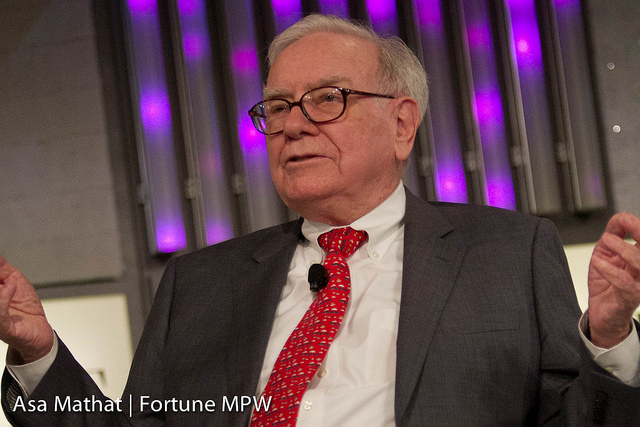












 I feel that the most important belief that should be dispelled is that we can grow fast and long with a combination of low rates, higher inflation, and macroeconomic stability. The belief comes from a failure (or difficulty) to realize (imagine) the limitations of our capital accumulation (primary products, credit, labor, capital goods, and state capacity) stock as well as flows. Push any of these buttons too hard and too long and excesses will become evident in just 2-3 years. Opinion makers are deceived by extrapolating the limited world that they see around us as representative of India and making growth assumptions based on them. Unfortunately, this is a tiny sliver of the vast and largely still very poor country. I wish there were some great interactive graphics that could explain this nuance to those advocating high growth strategies.
