Shared posts

23 May 07:38

Facebook Workplace adds 2 million more paid users since October

by Jay Peters
Illustration by Alex Castro / The Verge

Facebook’s Workplace, its Slack-like collaboration and chat tool targeted at businesses, now has more than 5 million paid users, up from 3 million in October, Facebook announced today. That growth in users is due in large part to the COVID-19 pandemic, which has required many people to rely more on software tools while working from home.

Many collaboration apps have also seen growth since the pandemic. In March, Slack said that it had surpassed more than 12.5 million concurrent users, for example, and Microsoft Teams hit 75 million daily active users in April, a jump of 70 percent since the month before. However, those metrics indicate both Slack and Teams have more users than Facebook’s Workplace, even if they aren’t comparing apples to...

Continue reading…

23 May 07:38

Facebook is 'opening up remote hiring aggressively' and expects half of its employees may be remote by 2030 (FB)

by Rob Price

facebook ceo mark zuckerberg

  • Facebook expects up to half of its workforce will be working remotely within ten years.
  • On Thursday, CEO Mark Zuckerberg announced the company is "aggressively" leaning into hiring remotely in response to COVID-19.
  • The announcement by the influential company could help reshape workplace cultural norms around the world, and transform Silicon Valley.

Facebook expects up to half of its workforce — tens of thousands of employees — may be working remotely within 10 years.

On a public livestream on Thursday, CEO Mark Zuckerberg said the Silicon Valley-headquarted company is "aggressively opening up remote hiring" in response to coronavirus lockdowns, and then it leaning hard into the possibilities of working from home even after the pandemic ends.

The announcement is one of the most significant remote work pledges of any technology company to date, and has the potential to help radically reshape cultural norms around remote work and transform California's San Francisco Bay Area, long the epicenter of the American technology industry.

"I think we're going to be the most forward-leaning company on remote at our scale for sure, and we're going to do this in a way that is measured and thoughtful and responsible," he said. "Over the next five to ten years, about 50% of our people could be working remotely, would be my guess. That's not a target or a goal."

Facebook has around 48,000 employees globally (and a similar number again of contract staffers). The large majority of these are based at the company's sprawling campus in Menlo Park, California — but that could now change in the coming years, as more and more hires choose to live outside of the Bay Area.

"The reality is most of us are working remotely at this point," Zuckerberg said. "It doesn't make sense for us to retrain our hiring to near offices most of us aren't going to be able to go into."

Join the conversation about this story »

NOW WATCH: Why electric planes haven't taken off yet

23 May 07:27

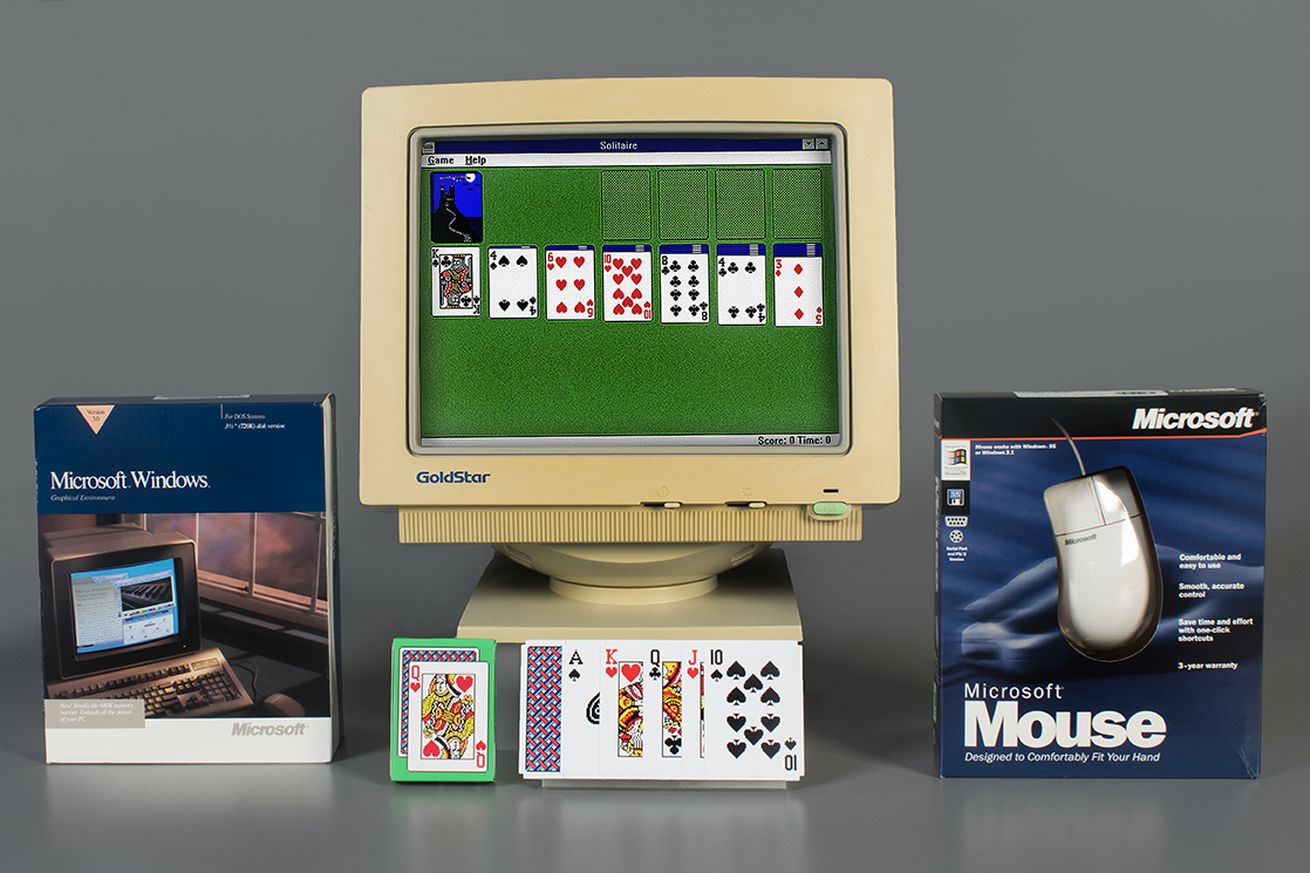
Microsoft Solitaire turns 30 years old today and still has 35 million monthly players

by Tom Warren
Credit: World Video Game Hall of Fame / The Strong Museum

Microsoft’s Solitaire game is turning 30 years old today. Microsoft is celebrating the occasion with a world record attempt of the most games of Microsoft Solitaire completed in one day. 35 million people still play Solitaire monthly, according to Microsoft, with more than 100 million hands played daily around the world.

Microsoft Solitaire was originally included as part of Windows 3.0 back in 1990, designed specifically to teach users how to use a mouse. Grabbing virtual cards and dropping them in place taught the basics of drag-and-drop in Windows, which we still use today in many parts of the operating system.

Microsoft Solitaire, originally known as Windows Solitaire, is one of the most played games in the world as it shipped in...

Continue reading…

22 May 19:42

How CIOs can support a gradual return to the office

by Roberto Torres

In partnership with the C-suite, CIOs are gearing up to support office safety and critical processes through digital products.

22 May 02:15

Facebook is eyeing offices in cities like Dallas, Atlanta, and Denver to act as 'hubs' to support 50% of its workers staying remote — and it's a move that could upend Silicon Valley and NYC real estate

by Daniel Geiger

Mark Zuckerberg

  • Mark Zuckerberg said Facebook plans to allow half of its employees to work remotely within the next 5-10 years.
  • The announcement is a major departure from the firm's growth strategy in recent years, which has focused on establishing big offices in major cities to attract talent. 
  • Zuckerberg envisioned the covid crisis stretching on, preventing any more than 25% of Facebook's workers from returning to the office for the foreseeable future and raising questions how much of its workers will ever return full time. 
  • As part of the company's new strategy, Zuckerberg said, it would seek to establish new "hubs" in secondary and tertiary cities to tap talent in those markets and surrounding areas.
  • The news is a blow to big cities such as New York and San Francisco, which have become hotspots for tech companies.  
  • Visit Business Insider's homepage for more stories.

Facebook's chief executive Mark Zuckerberg said on Thursday that the social-media giant would pivot away from sprawling offices in major cities and allow up to half of its employees to work remotely in the wake of the coronavirus crisis.

The announcement is a major departure from the $660 billion technology firm's growth strategy in recent years, which has focused on expanding it physical footprint in large urban centers, such as New York City and San Francisco, with pools of talent, clusters of major competitors, and important educational and research institutions.

"Over the next five to 10 years, about 50% of our people could be working remotely would be my guess," Zuckerberg said in a live public presentation that was broadcast Thursday afternoon on his Facebook page.

The announcement is sure to intensify questions around the future of the office workplace in a post-Covid world as well as the relevance of major cities, which have been hotspots for the virus.

Zuckerberg sought to distance the company from its attachment to big metropolitan areas, stating that remote work could allow it to hire across a wider geography and attract and retain more talent.

"Right now we're doing pretty well recruiting in a small number of hubs in big cities, but being able to recruit more broadly across the U.S. and Canada to start is going to open up a lot of new talent that previously wouldn't have considered moving to a big city," Zuckerberg said. "One of the top reasons that some good people give us when they leave the company is that they're moving to a place where we currently don't have an office and don't support work and being able to keep those key people at the company is going to be very valuable."

Tech companies such as Facebook had been among the chief drivers of demand for offices in New York City in recent years and a retreat by major players in the industry could have a big impact on demand and pricing for office space throughout the city. 

Office 'hubs' in secondary and tertiary markets

As part of the company's new strategy, Zuckerberg said it would seek to establish new "hubs" in secondary and tertiary cities to tap talent in those markets and surrounding areas. He said that Dallas, Atlanta, and Denver would be the initial focus of that effort. The hubs, he suggested, could serve as facilities where staff can gather for periodic meetings or rotating work shifts.

"They're not necessarily offices," Zuckerberg said. "Over time we'll likely create some kind of physical space for the communities to come together." 

Facebook had been contemplating significant big-city leasing transactions before the coronavirus crises, and Zuckerberg's new vision appears to run contrary to that approach.

The company, for instance, began negotiating to take an over 700,000 square foot block of space at the Farley Building on Manhattan's West Side last year. Sources earlier this month had suggested the blockbuster deal will get done.

Zuckerberg's new approach aligns with a vision that real-estate experts had shared with Business Insider in March. They predicted that the pandemic would prompt companies to take a diffused approach, allowing employees to work from home and replacing city-center offices with a wider distribution of smaller satellite locations. 

In December, real-estate experts had told Business Insider that financial firms were expressing interest in smaller cities such as Provo, Utah; Boise, Idaho; Raleigh Durham; and Indianapolis – a trend these experts expected to accelerate in the coming decade.

No timeline for return 

Zuckerberg said on Thursday that about 95% of Facebook's nearly 50,000 employees are presently working remotely as the pandemic has shuttered office spaces across the country.

Facebook has previously stated that it expects most of its employees to continue working from home through the end of the year. Zuckerberg suggested that timeline could stretch longer for the majority of its workforce, raising questions whether a substantial portion of its workforce will ever return to the office full time.

Only about a quarter of Facebook workers will be able to come back to its offices while social distancing protocols are in place in order to minimize the dangers of spreading the pathogen, Zuckerberg said.

"I just think Covid is going to be with us for awhile to come," Zuckerberg said. "The reality is that I don't think it's going to be that we wake up one day on January 1 and no one has any more concerns about this."

Have a tip? Contact Daniel Geiger at dgeiger@businessinsider.com or via encrypted messaging app Signal at +1 (646) 352-2884, or Twitter DM at @dangeiger79. You can also contact Business Insider securely via SecureDrop.

SEE ALSO: A quarter of NYC office leases went to tech firms in 2019. Now, the fate of a blockbuster Facebook deal is make-or-break for the city — and a case study for the future of commercial real estate.

SEE ALSO: The office as we knew it is dead

SEE ALSO: Real-estate services giant JLL explains how the coronavirus could usher in a permanent 'paradigm shift' towards more remote work

Join the conversation about this story »

NOW WATCH: A cleaning expert reveals her 3-step method for cleaning your entire home quickly

21 May 16:44

Google is launching a new app that lets you do almost anything on your Android phone with just the press of a button (GOOG, GOOGL)

by Lisa Eadicicco

Google Pixel 3a XL

  • Google is releasing a new app called Action Blocks that lets you create shortcuts to specific tasks that appear as tiles on the home screen.
  • The app was designed to make it easier for those with cognitive disabilities to perform tasks like listening to music or making a phone call, but anyone can use it.
  • It's the latest example of how large tech companies like Google are making accessibility a bigger focus when developing products.
  • Visit Business Insider's homepage for more stories.

Google is releasing a new app that will make it easier to perform tasks on your phone that usually take multiple taps or swipes — like making a video call — with just a single press.

The new app, called Action Blocks, was designed to make it easier for those with cognitive disabilities to perform functions like listening to music or making a phone call. The free app is available immediately for Android devices through Google's Play Store. The app was in testing last year, but Google is  only now releasing it publicly.

As its name implies, the app allows you to create a shortcut in the form of a "block" for a designated action that lives on your phone's home screen. Pressing an action block could replace the process of opening an app, finding the contact you want to speak with, and tapping the call button, for example. Or opening a music app and finding the playlist you want to hear.

These buttons can also be customized with photos so that it's easy to tell exactly what they do at just a glance. An action block for video calling your spouse with just a tap, for example, might have a photo with their face on it. The app includes a list of actions to choose from, such as making a call, getting directions to a certain place, and turning the smart home-enabled lights on and off, among other tasks.

When creating a new action block, you can also give the button a nickname that's different from the specific command. For example, an action block that turns off the lights in your child's bedroom may appear as a button called "Bedtime" on the home screen.

Although the app was designed to serve those with cognitive disabilities, anyone with an Android phone running Android 5.0 and higher can use it.  

Action Blocks   Adjust Lights

The launch of Action Blocks comes as Google and other major tech companies have been focusing more on designing products with accessibility in mind in recent years.

At Google's annual I/O conference in 2019, for example, it unveiled Live Caption, which provides captioning for videos and podcasts. It also announced Project Euphonia, an initiative that it's partnered with the ALS Therapy Development Institute and ALS Residence Initiative to help Google's voice-activated technology better understand people living with the disease.

Google is also announcing a slew of other accessibility-related updates on Thursday, such as new settings for Google Maps that make it easier to see wheelchair accessible places and new features for its speech-to-text service Live Transcribe.

Apple has also added a new accessibility-oriented feature to the iPhone with iOS 13 that lets you control your iPhone entirely with your voice, while Microsoft has a variety of accessibility tools baked into Windows that make the software easier to use for people with vision and hearing impairments.

Still, despite recent advances, there's still more to be done. Companies could be doing more to help developers create accessible apps and programs, for example, as Jennison Asuncion, head of accessibility engineering at LinkedIn, told CNET last year. 

SEE ALSO: Major tech companies are letting their employees work from home. But Apple thinks different.

Join the conversation about this story »

NOW WATCH: Pathologists debunk 13 coronavirus myths

21 May 15:38

The $86,000 Porsche Cayenne Coupé is the newest ultra-luxury fastback SUV to stare down rivals BMW and Mercedes-Benz

by Matthew DeBord

Porsche Cayenne Coupe

  • I tested a 2020 Porsche Cayenne Coupé, a fastback SUV that's the entry point for this new kind of ute from Porsche.
  • My $86,090 test vehicle had a 335-horsepower, turbocharged V6.
  • The Cayenne Coupé also boasted a beautifully made, if minimalist, interior that's plenty spacious enough for four or even five adults.
  • The Cayenne Coupé is superb — and better looking than the regular Cayenne — but although the performance was superb, I was left craving a more powerful V8 engine.
  • Visit Business Insider's homepage for more stories.

The Porsche Cayenne is, without question, the finest SUV humanity has ever produced.

It's fast. It handles ... well, like a Porsche. It's roomy. It has plenty of space to stow gear. 

So it has been since the early 2000s, when it made its shocking debut, and so it remains. But there's one thing. Brilliant though it may be, the Cayenne isn't really all that attractive. 

Porsche has addressed that now with the Cayenne Coupé, a Cayenne with a fastback roofline and sportier stance than the regular SUV. SUV Coupés are all the rage. BMW does 'em. So does Mercedes. In think they're weird, but folk love 'em. 

And in the Cayenne's case, the Coupé treatment deals with the great SUV's one glaring flaw.

Does it succeed? Read on to find out:

FOLLOW US: On Facebook for more car and transportation content!

Greetings, 2020 Porsche Cayenne Coupé, in an $800 White Metallic paint job. The base price for my test car was $75,300, but options took the sticker to $86,090.


The Cayenne Coupé is set to challenge the BM X6 ...


... And the Mercedes GLE Coupé for the title of ... greatest four-door fastback SUV in all the land?


Let's just deal with this whole coupé thing, shall we?


A coupé is supposed to be a two-door with a roof. Such as the Porsche 911.


The Porsche Cayenne that isn't a coupé has a boxier silhouette.


The Cayenne Coupé under consideration here has a sloping roofline, much of which is glass, curving through ...


... An integrated spoiler ...


... And descending rakishly through a hatchback ...


... And terminating with a small, decklid spoiler. The idea is to take a luxury SUV and turn it into a luxury SUV with more flash and style and sportiness.


I'll concede that the Porsche Cayenne Coupé looks sharper than the regular Cayenne, solving the Cayenne's worst feature: it's massive rear end.


I mean, the Cayenne is glorious, but the back end is regrettable.


Thee front end, of course, defaults to the traditional bug-eyed design lingo that has defined Porsche since the 1950s. Take it or leave it, there's no mistaking who made this machine.


The famous Porsche badge occupies a modest amount of real estate. I have to say that the sea-of-white aspect of my tester was a modest turnoff. I've don't much care for blanched Porsches.


The cool, quad-point running lights combine with a superb, swept-back headlight assembly to make seeing even darkest road ahead an effortless experience.


The blacked-out blades of the front maw add menace to the fascia. The more black on this big ol' white sorta turtle-ish looking' ride, the better.


I dunno — the Cayenne has never been a looker, but fastback treatment helps.


I will say that Porsche could up the ante somewhat on the nameplating. You might need binoculars to read "Cayenne" in chrome from a distance.


The dual pipes, finished in chrome, are a nice touch.


I genuinely admired Porsche tail light game! While the headlights are a given, the tail light can have a wonderful, slashing approach to give the back end some dynamic oomph.


They wrap beautifully around the rear haunches.


My tester came with a set of 21-inch "Spyder" wheels, a $2,700 extra.


Front and back, this base-level Cayenne had cast-iron brake rotors and black calipers.


Let's check out the cargo hatch!


It's big! There's 22 cubic feet, expandable to 54 with the rear seats dropped.


It swallowed some groceries with ease.


Contrast that with what I managed, frunk-wise, when I tested the 911. Now THAT'S why you get the Porsche SUV!


Time to pop the hood and see what propels this 4,700-pound Porsche.


The Cayenne Coupe has a 3.0-liter turbocharged V6, making 335 horsepower with 332 pound-feet of torque.


The power is sent to the all-wheel-drive system through an eight-speed automatic with a manual-shifting option.


Let's look inside!


Porsches aren't Mercedes. If you expect bling, you won't find it in here, amid the $3,700 "Slate Gray" leather and subdued appointments.


I'm not kidding. You get almost no flash. But the fit and finish is tremendous. Craftsmanship, meet minimalism.


The rear seats are notably roomy, even with the sloping roofline taken into account.


Plenty of legroom ...


... And space to stretch out. The back seats have been lowered slightly to deal with ...


... the glass, panoramic fastback roof, which allows much light to flood the cabin.


Porsches are supposed to be about driving, and the Cayenne has always distinguished itself on this score.


But the Cayenne Coupé is quite accommodating for driver and passengers.


The thick, topstitched, multi-function steering wheel is heated, as are the front seats. The tachometer is front and center in the instrument cluster, and the drive-mode selector is located on the lower right. You have Normal, Sport, Sport-Plus, and an Individual mode to choose from.

In  Normal Mode, the Cayenne Coupé hustles up to seventh and eights gears, to enhance the MPGs. Auto-stop-start is also active in this mode, as well as Sport, which hold the shifts longer. Sport + give you the full monty, and Individual allows from customization. Usually, I favor Sport with Porsches, but with the Cayenne Coupé and the least-power motor, I made the move to Sport + and enjoyed punching the Sport Response button, which serves up 20 seconds burst of all the boost the turbo six can muster.

The undergirdings of the Cayenne are intricate. There's both torque vectoring a rear-wheel steering, as well as Porsche's traction management and dynamic chassis control features, which do allow you to push this SUV rather hard without having to worry about that which might concern you with lesser utes.

The top speed is 151 mph, and the 0-60 mph dash passes in just under six seconds. 

Off-roading? Check. The Cayenne has several modes: Gravel, Mud, Sand and Rock.


The paddle shifters are low-key ...


... But I actually used them, a lot. That's more than I can say of paddles on most of the other sporty SUVs I test.


The center console is exquisite and simple, with gorgeously made knobs and buttons embedded in a glistening piano-black touchscreen surface.


The audio volume control alone is a study in attention to detail.


There's also a console above the driver that shows similar design forethought.


Nods to Porsche tradition include the starter switch, left-hand mounted ...


... and the dash-center stopwatch.


Not for nothing, but the key fob is Porsche-shaped.


The infotainment system runs on a 12.3-inch center touchscreen, with an adjunct screen on the right side of the instrument cluster.


The system is fantastic, handling GPS navigation, Bluetooth-pairing, and USB connectivity, serving up the interface in crisp high-def.


You do need to put yourself in an engineer's frame of mind to negotiate some aspects of it. But it's more intuitive and easier to use than previous Porsche systems.


The Home view is a simple, tiled arrangement.


And the screen is very responsive, never lagging.


That's important if you want to check the weather ...


... tweak the climate controls ...


... Or shuffle through off-roading ...


... Or foul-weather modes.


So what's the verdict?

I've been unashamedly awestruck by the Cayenne ever since it was first unveiled in the early 2000s. Two decades later, it continues to impress, impress, and impress some more. Porsche defied the naysayers with its stupendous and prescient take on what back in those days was an SUV form that had been defined by relatively crude, truck-like vehicles, such as the Ford Explorer (crude but effective, of course). The Cayenne added luxury, sizzle, and above all Porsche values to the mix. And Stuttgart reaped the rewards.

So here we are. Enter the Cayenne Coupé, Porsche's effort to capture its fair share of the growing fastback SUV market. "Fastback SUV" — I still struggle to accept that these vehicles exist. But they do, and they're popular, giving premium nameplates the chance to offer versatile haulers with a smidgen more style than their boxier counterparts.

The Cayenne always does it for me, and the Coupé was no exception. But ... well, the truth is that the last Cayenne I drove was V8-powered, and the last two Porsches I enjoyed were the stupendous 911 Carrera 4s and 911 Turbo S. So the Cayenne Coupé with a V6 under the hood was going to present some adjustments to my mindset.

The whole point of the Cayenne Coupé is to deliver a sportier Cayenne. And while the Coupé is plentifully sportif, I was left craving the beefier engine option. This reaction shook me up. I normally prefer Porsche's sixes to its eights, especially in the Panamera sedan. It wasn't as if the Coupé didn't serve the good stuff, either: I punched it on the highway and dove into backwoods curves, and this Cayenne performed with predictable aplomb. It's easily the best SUV Coupé I've ever piloted. But is it Porsche excellent?

I mean, yeah. But while I prefer less horsepower and more agility in sports cars, I guess I want my circa 2020 SUVs to bring some brawn to the party. That would logically leave me wanting for some seat time in the 541-horsepower Turbo version. In this respect, I suddenly realized that I'm now officially of two minds when it comes to Porsches: I like the lowest-powered 911, the base Carrera; I favor the wimpier V6 Panameras over the stonking V8s; I think the burlier Macans are overdone; and yet when it's Cayenne time, gimme power, power, and more power.

So the Cayenne Coupé, while objectively great, isn't quite magnificent, in my book. Obviously, there's a version that probably is — I just haven't yet savored it.

Think about that verdict for a second: objectively great but not quite magnificent. Now consider the standard that the Cayenne Coupé has to live up to: it must be a more stylin' iteration of the greatest SUV ever built by human hands on planet Earth. Tall order. And — it must be said — mission more or less accomplished. I twist myself into knots for the same reasons I might be vexed when contrasting Picasso's blue period with late cubism: we're not exactly in the realm of the mundane anymore. 

And remember that although the Cayenne Coupé is theoretically competing with BMW and Mercedes coupé offerings, that's really just a conceit. The Cayenne Coupé has one critical competitor and that's the Cayenne itself. 

It is, then, worthy. And while it ain't cheap, it makes good on expectations. It's also massively less expensive than the V8-equipped Turbo trim, which at $130,000 is properly rich. What the Cayenne Coupé achieved is a brilliant point of entry. But for me, it's only the beginning.



21 May 05:40

Google Cloud Wins Multimillion-Dollar Pentagon Cybersecurity Contract

by Joseph Tsidulko
The third-largest public cloud provider has secured a seven-figure contract from the Defense Department’s Defense Innovation Unit to implement ‘zero trust’ security across a multi-cloud environment managed by its Anthos Kubernetes platform. Previously, internal dissent had caused Google to pull away from DoD engagements.
20 May 23:22

128 Technology Enhances SD-Branch, Remote Work Capabilities: Exclusive

by Gina Narcisi
The networking software firm is introducing SD-Branch, Remote Work, and 5G software updates geared toward helping customers work from home and with mobile and IoT use cases.
20 May 23:21

The biggest announcements from Microsoft Build 2020

by Dieter Bohn
Photo by Tom Warren / The Verge

Microsoft’s annual developer conference has officially kicked off, the first yearly developer conference in the consumer tech world we’ve experienced online. The others are Google I/O and Apple’s WWDC. All three have obviously changed during the pandemic and watching what each company has chosen (or will choose) to do has been instructive.

Google straight up cancelled I/O entirely — perhaps playing it safer, as in the COVID timeline in the Bay Area Google had to make a call when things were looking particularly dire. There will be some sort of online unveiling for Android, at least. Apple’s is still “on” as an online-only event, and though you never know with Apple I suspect it will try to make a splash with new versions of iOS, iPadOS,...

Continue reading…

20 May 16:58

Signal adds PINs, which will help you move your profile across devices

by Bijan Stephen
Photo by Tom Warren / The Verge

Signal has added PINs to its secure messaging service. It’s a move that’s intended to make the company less reliant on phone numbers as its users’ primary identification.

The feature is available to all Signal users now, according to ZDNet, and once the feature is enabled, you’ll be able to choose a PIN that will be associated with your account. That four-digit code or string of alphanumeric text will then be used to encrypt settings, local contacts, and profile information, and then upload a copy of that data to Signal’s servers. The PIN won’t cover conversations, as Signal doesn’t store that data on its servers, and moreover, developers can’t access or view any data without a PIN. The PINs can also be used to lock accounts and prevent...

Continue reading…

20 May 03:45

'Scam' Spyware Vendor Gets Caught, Once Again

by Lorenzo Franceschi-Bicchierai

Cops and spies all over the world are in the market for expensive tools that let them hack into phones and track down criminals. You’d think that none of them would want to purchase them from a guy described by competitors, former business partners, and researchers as a "criminal of the worst kind" and “walking scam” with “shitty” products.

This infamous broker of spyware is still selling his wares, and he’s getting caught once again, according to a new report by security firm Cisco Talos.

The report, written by Cisco Talos researchers Warren Mercer, Paul Rascagneres, and Vitor Ventura, calls the company run by Manish Kumar an “infamous organization” with “a surprising level of amateur actions,” and “copy/paste” products.

Kumar’s Android malware, which the researchers dubbed WolfRAT, is based on DenDroid, a malicious software that was discovered in 2014, according to the report. DenDroid’s code was leaked online in 2015, effectively making it open source. The servers the malware connects to have been publicly linked to Kumar's company for more than a year, after researchers from another security company published a report about Wolf Intelligence, Kumar's company that sold surveillance and hacking tools to police and intelligence agencies.

Moreover, WolfRAT’s interface—the one that the hacking operators would use—looks exactly the same as the interface of Kumar’s previous products, according to the report, as well as an independent source who has direct knowledge of Kumar’s offerings. This source asked to remain anonymous to discuss sensitive issues.

“The malware itself is a poorly written and cobbled together using copy+pasted open source resources. Altogether it forms a mess of unused code and unused functionality,” Warren Mercer, the lead author on the report, told Motherboard. “We were able to link the campaigns off the previous research, from CSIS, which allowed us to overlap the command and control infrastructure that was being used by WolfRAT, including domains, almost identical C2 panel designs and largely re-used code across previous samples...oh and the fact that 'Wolf Intelligence' was left in one of their C2 panels is interesting.”

Cisco Talos researchers concluded that WolfRAT was developed and operated by Wolf Intelligence with "high confidence."

Do you work or used to work at Wolf Intelligence or LokD? Or have you had any business dealings with Manish Kumar? We’d love to hear from you. You can contact Lorenzo Franceschi-Bicchierai securely on Signal at +1 917 257 1382, OTR chat at lorenzofb@jabber.ccc.de, or email lorenzofb@vice.com

The Android malware targets users in Thailand, and specifically messaging apps like Line, WhatsApp, and Facebook Messenger. The malware’s code is filled with comments in Thai language, the command and control servers are located in Thailand, and the server’s names contain references to Thai food, according to the report.

Cisco Talos researchers believe that after being exposed in 2018, Manish Kumar shut down Wolf Intelligence and now runs another company called LokD, which purports to be a secure phone maker and is registered to his name according to the Cyprus company registry. The researchers also said that a panel in the software that contains the name "Coralco" suggested a link to another company called Coralco Tech.

After this story was published, Eyal Almog, the CEO of Coralco Tech, denied having any links to Kumar or Wolf Intelligence.

“We have no knowledge as to our company name being displayed on the new panel as featured in the post, since we have no ties to said organization. Our company corresponded with Manish Kumar several years ago, for a short period, but said correspondence did not lead to joint business,” Almog said in an email.

Talos security researchers found a command and control server used by the malware that contained two user interface panels, one titled Coralco Archimedes, one titled Wolf Intelligence.

Wolf Intelligence

A source with direct knowledge of Kumar’s business, who asked to remain anonymous to discuss sensitive issues, said this is the same interface he saw years ago, when Kumar was running Wolf Intelligence.

In 2015, Kumar sent an Italian body guard to Mauritania to help close a deal. When the deal went wrong, the local government arrested the bodyguard, who was detained in the country for almost two years.. In 2018, security researchers from threat intelligence company CSIS found unprotected servers that contained data collected from targets hacked by Wolf Intelligence’s customers, as well as internal documents including a picture of Kumar himself.

“The absurd thing is that Kumar keeps selling this stuff,” said the source with knowledge of Kumar’s business. “I wish I knew who buys.”

This story was updated to clarify that Cisco Talos concluded with "high confidence" that the malware is developed by Wolf Intelligence.

Correction: This story originally said that Cisco Talos researchers believed Manish Kumar now runs Coralco Tech. The Cisco Talos researchers only said that there's a "potential link" between Wolf Research and Coralco Tech. The story was also updated to include a comment from Coralco Tech CEO Eyal Almog, who said the company has no ties to Wolf Intelligence. Motherboard regrets the error.

Subscribe to our new cybersecurity podcast, CYBER.

19 May 16:38

Verizon wraps up BlueJeans acquisition lickety split

by Ron Miller

When Verizon (which owns this publication) announced it was buying video conferencing company BlueJeans for around $500 million last month, you probably thought it was going take awhile to bake, but the companies announced today that they have closed the deal.

While it’s crystal clear that video conferencing is a hot item during the pandemic, all sides maintained that this deal was about much more than the short-term requirements of COVID-19. In fact, Verizon saw an enterprise-grade video conferencing platform that would fit nicely into its 5G strategy around things like telemedicine and online learning.

They believe these needs will far outlast the current situation, and BlueJeans puts them in good shape to carry out a longer-term video strategy, especially on the burgeoning 5G platform. As BlueJean’s CEO Quentin Gallivan and co-founders Krish Ramakrishnan and Alagu Periyannan reiterated in a blog post today announcing the deal has been finalized, they saw a lot of potential for growth inside the Verizon Business family that would have been difficult to achieve as a stand-alone company.

“Today, organizations are relying on connectivity and digital communications now more than ever. As Verizon announced, adding BlueJeans’ trusted, enterprise-grade video conferencing and event platform to the company’s Advanced Communications portfolio is critical to keep businesses, from small organizations to some of the world’s largest multinational brands, operating at the highest level,” the trio wrote.

As Alan Pelz-Sharpe, founder and principal analyst at Deep Analysis told TechCrunch at the time of the acquisition announcement, Verizon got a good deal here.

Verizon is getting one of the only true enterprise-grade online conferencing systems in the market at a pretty low price,” he told TechCrunch. “On one level, all these systems do pretty much the same thing, but BlueJeans has always prided itself on superior sound and audio quality. It is also a system that scales well and can handle large numbers of participants as well, if not better, than its nearest competitors.

BlueJean brings with it 15,000 enterprise customers. It raised $175 million since its founding in 2009.

19 May 16:37

StarLeaf Enhances Huddle Room Meetings

by Rebekah Carter
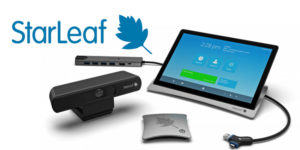
Starleaf-Huddle-Room

StarLeaf, one of the market leaders in seamless collaboration experiences, recently announced the arrival of its new huddle room solution. The company introduced the StarLeaf Huddle experience during ISE 2020 and has now begun shipping room kits to early adopters.

Designed to transform any space into a fully functional and efficient meeting room, StarLeaf Huddle is an all-in-one environment that allows users to collaborate reliably wherever they are. The kit ensures that employees can get the most out of any workspace, whether it’s at home or in the office, with the ability to quickly and cost-effectively transform any room into a collaboration hub.

Easy to install and set-up, the StarLeaf Huddle kit comes with a wide-angle camera for video conferencing, touchscreen controls, and a high-performance microphone too. There’s also a Pronto Cable USB designed to make it easier for team members to manage cables in smaller spaces.

Transform Any Room into a Collaboration Hub

As more companies search for ways to ensure that their employees can remain connected and productive wherever they are, the StarLeaf Huddle solution ensures that everyone can get the most out of any space, no matter where they are. This plug and play room kit gives you everything you need to start having creative meetings in no time!

StarLeaf Huddle is just one of the several new innovations offered by StarLeaf recently. Other arrivals coming in the future months include StarLeaf for Microsoft Teams and StarLeaf MultiJoin. The CEO at StarLeaf, Mark Richer, commented on the arrival of the new Huddle kit, saying that it’s more valuable today than ever for the UK workforce. As employees continue to embrace the remote working environment, StarLeaf Huddle will help provide organisations with a secure and reliable way to run effective meetings.

Update Your Meetings

StarLeaf has always been committed to offering intuitive and immersive experiences for businesses in search of a reliable way to connect with their colleagues. The StarLeaf Huddle solution is an ideal addition to the StarLeaf portfolio, offering users a premium video and audio experience. The experience is very similar to what employees might already be used to in the office.

The StarLeaf team believes that good collaboration relies on a company’s ability to provide employees with the tools that they need to work better wherever they are. This is why the company works so hard to make sure that video meetings are highly secure, flexible, and intuitive. Whether you’re looking to host a large scheduled meeting or an ad-hoc conversation, Huddle has you covered. This new offering shows StarLeaf’s commitment to giving organisations a flexible solution designed to be intuitive and easy to implement.


19 May 16:37

Google’s experimental ‘smart braid’ headphone wire controls music with a squeeze

by James Vincent
It’s just a prototype — for now. | GIF: Google

From touch-sensitive jean jackets to radar controls in smartphones, Google has always had a penchant for weird and wonderful user interfaces. Its latest is the “I/O braid” — a textile UI that lets users control electronics by pinching, patting, squeezing, or swiping a fabric cord.

The I/O braid uses AI to distinguish between different types of touch

The braid uses what Google calls a “helical sensing matrix” (or HSM) to register commands from users. A series of capacitive and conductive yarns are woven into the braid, allowing it to identify when it’s touched by someone’s hand with 360 degrees of visibility. Fiber optic strings are also woven into the fabric to provide visual feedback.

Although the braid is very much just a research...

Continue reading…

19 May 16:35

Lenovo Chromebook Duet review: this has no business costing so little

by Monica Chin

Cut corners don’t ruin the experience

Continue reading…

19 May 16:34

Colorado-based unicorn Guild Education is taking advantage of a buyer's market to acquire one of its old investors, and combine forces as edtech goes mainstream

by Bani Sapra

Guild Education CEO Rachel Carlson

  • Edtech unicorn Guild Education just announced that it scored its first acquisition — a move that few companies have so far made in the downturn, even though falling valuations make for a buyer's market.
  • It bought Entangled Group, an edtech studio that builds products, offers consulting services, and has invested in a host of edtech startups including Guild Education itself. Guild declined to reveal the cost of the acquisition. 
  • Guild Education's core business focused on helping Fortune 500 companies offer education perks to their employees, but as the coronavirus forced companies to cut costs and lay off workers, the startup says it is working with the Entangled team to help furloughed and laid-off workers. 
  • "Many companies were laying off (at significant numbers) their frontline workforces or putting them on furlough, and they needed new ways to support those workers," Carlson said. "But they also needed career services and outplacement tools, which was exactly where the Entangled team was innovating and building products." 
  • The acquisition may also be key to driving Guild's future innovations as edtech goes mainstream — the sector has already attracted more than $2 billion in venture funding during the first quarter of 2020, per Pitchbook. 
  • Visit Business Insider's homepage for more stories.

The pace of mergers and acquisitions in Silicon Valley is expected to slow during the coronavirus-spurred downturn, but for some cash-rich companies, a savvy purchase is a valuable chance to regain their footing in an upended economy. 

Edtech unicorn Guild Education is testing the waters with its first acquisition. It just bought the Entangled Group, a San Francisco-based edtech venture studio that builds products and offers consulting services. It has also invested in a host of edtech startups, including a 2018 investment in Guild Education itself. 

That makes for a surprising flip-flop in the investor-founder relationship. But Guild Education CEO Rachel Carlson is hoping that Entangled will help her startup offer a wider range of education, career services, and employment support tools in a radically different labor market. 

Colorado-based Guild grew into a $1 billion business by selling Fortune 500 companies a way to offer education benefits to its employees — a valuable edge in a competitive job-recruiting market. Now, many of those companies have been forced to furlough or lay off their workers, and unemployment is surging. 

"Many companies were laying off (at significant numbers) their frontline workforces or putting them on furlough, and they need new ways to support those workers that include Guild's core solution," Carlson said. "But they also need career services and outplacement tools, which was exactly where the Entangled team was innovating and building products."

The new deal gives Guild Education a foothold in both New York and San Francisco, where Entangled has offices. Entangled's products and consulting services will be absorbed by Guild, but the studio will no longer be investing in other startups, Entangled's CEO Paul Freedman said. Freedman will also be joining Guild Education, as President of the Learning Marketplace. 

Guild Education declined to reveal the amount it paid for Entangled, but the studio was last valued at $104.2 million according to Pitchbook. 

Ready for an edtech revolution

Guild Education's new purchase may also help it get ahead in a market that is ready for a revolution in edtech. 

As students have been sent home, colleges and schools are turning to online learning outfits like Coursera and helping them surge in popularity. And as edtech goes mainstream, the category has attracted more than $2 billion in venture funding during the first quarter of 2020, per Pitchbook. 

work from home office

Entangled has helped set off a wave of edtech startups that have attracted partners such as Facebook and the World Economic Forum. Its skills may push Guild Education to the forefront of a new wave of edtech innovation. 

Guild Education and Entangled have already begun working together. They built Next Chapter, an initiative to help companies support laid-off and furloughed workers by finding them new roles in sectors that are still hiring. It also provides access to training and reskilling programs, to help those workers qualify for new positions. 

That combination of short-term career services and long-term training programs is essential to help transitioning workers succeed, according to Entangled's Freedman. 

"Unless you meet workers where they are and help demonstrate that there are short-term jobs, there is emergency support, and there are things that can get people back on their feet, they're not in a mental mindset to start talking about opportunities for upskilling and education to get ahead," Freedman explained.

Join the conversation about this story »

NOW WATCH: How waste is dealt with on the world's largest cruise ship

19 May 16:33

What Sundar Pichai’s ‘long-term’ hardware commitment means for the Pixel

by Dieter Bohn
Photo by Vjeran Pavic / The Verg

Small things now, hopefully bigger things later.

Continue reading…

19 May 16:32

Microsoft Edge is getting a new sidebar search feature and Pinterest integration

by Tom Warren
Illustration by Alex Castro / The Verge

Microsoft is revealing some new features for its Edge browser today. The first is a new sidebar search option that’s designed to let you search the web without having to leave a tab. You can highlight text on a page and right-click to “search in sidebar” and see the results to the side of the page you’re currently viewing.

Pinterest is also partnering with Microsoft Edge to bring suggestions to the Collections feature inside the browser. Collections is used to collate groups of content like links, images, and text into a single place. Pinterest suggestions will soon appear at the bottom of Collections if the new feature is enabled, and Edge users will even be able to export Collections to Pinterest. Microsoft is also adding the ability...

Continue reading…

19 May 16:32

5 Key Microsoft 365 Announcements At Build 2020

by Kyle Alspach
The Microsoft 365 platform is getting several updates around the Teams collaboration app, along with adding new capabilities for developing web-based apps and a new AI service.
19 May 16:32

6 Top Azure Announcements From Microsoft Build 2020

by Donna Goodison
Major Azure announcements at Microsoft Build include the general availability of Microsoft’s Azure IoT Developer Specialty Certification and training resources.
19 May 16:32

Microsoft is bringing Linux GUI apps to Windows 10

by Tom Warren

Microsoft is promising to dramatically improve its Windows Subsystem for Linux (WSL) with GUI app support and GPU hardware acceleration. The software giant is adding a full Linux kernel to Windows 10 with WSL version 2 later this month, and it’s now planning to support Linux GUI apps that will run alongside regular Windows apps.

This will be enabled without Windows users having to use X11 forwarding, and it’s mainly designed for developers to run Linux integrated development environments (IDE) alongside regular Windows apps.

While it has been possible to run Linux GUI apps within Windows previously using a third-party X server, poor graphics performance has always been an issue. Microsoft is promising to solve this, too. Windows 10 will...

Continue reading…

19 May 16:31

Microsoft just launched a bunch of new features at its annual developers' conference as it takes on rivals like Zoom and Slack to become an all-in-one tool for businesses: 'We believe we're the best solution' (MSFT)

by Rosalie Chan

Jared Spataro Microsoft

  • Microsoft announced new features for Teams, including integrations with Power Platform, which allows users to easily build apps without having to write code, at its developers' conference Build on Tuesday.
  • Microsoft also launched updates to Fluid Framework so that users can collaborate on tables, lists, and agendas right in their Outlook email and other Office apps for the web.
  • Microsoft competes with the likes of Slack, Zoom, and Google, but exec Jeff Teper says that while rivals are "great" companies, "we believe we're the best solution"
  • Visit Business Insider's homepage for more stories.

Microsoft just launched a bunch of new features and updates at its annual developer conference that deepen its competition with Slack, Zoom, and Google and further its aim to make the Microsoft 365 suite an all-in-one product for the enterprise. 

Microsoft and its rivals have all seen seen a surge in usage during the ongoing coronavirus pandemic, and the company is laser-focused on being "the best choice in every category we participate in," executive Jeff Teper told Business Insider.

"Our strategy with Microsoft 365 is to have the best capability in each of these categories and integrate them together so there's great user experience," he said. "We respect all these companies — we think they're great companies — but we believe we're the best solution and that's why we have great momentum."

Its collaboration app, Teams, received a host of new tools on Tuesday, including customizable templates, chatbots, meeting scheduling features, and the ability to broadcast events. Teams hit 75 million daily active users in April, an enormous spike over its roughly 20 million late last year (while there's no direct comparison, Zoom reported 300 million daily meeting participants in April, while Slack had 119,000 paid customers in March). 

Teams will also now be able to integrate with Power Platform, a tool that helps people develop apps without having to write code. That way, developers can build Teams functionality into other products they're building, using it to automatically send messages, automate repetitive tasks, or share reports to an entire team. For example, a company that creates an app for patient care in hospitals could build an integration to automatically ping people in Teams for their shift.  

"We want to make sure developers recognize the opportunity and number of people they can reach and the services and capabilities to build apps to meet the needs of a changing world" said Teper,  the corporate vice president of Microsoft 365 Collaboration.

Microsoft also updated Fluid Framework, the interactive collaboration platform that it announced last year. The service will include interactive components like tables, lists, and agendas that users can insert and work on directly within Microsoft Office on the web and in Outlook email, without opening a new browser or tab. Microsoft plans to make Fluid Framework available as open source software, meaning anyone can download and modify its code for free, which will allow developers to use it within their companies' own products. 

"We believe the future of productivity won't be defined by any one person or any one company," Jared Spataro, corporate vice president of Microsoft 365, told Business Insider. "Open sourcing allows us to create a mechanism so we can all contribute and add what we have to add."

How MAGIX used Microsoft's service to build an app

Some companies have already been using Microsoft's services to build apps. MAGIX, which develops software for editing video and audio, built an app called VEGAS Stream to help teachers stream their lessons to students during the coronavirus crisis, and it integrates with Teams, Office 365, and Microsoft's Azure cloud. 

This app also allowed the San Francisco Conservatory of Music to stream music lessons and concerts online. Thanks to the Teams integration, people watching the streams can also ask questions live within the app.

"Teams is just a daily tool for us," MAGIX CTO Hagen Hirsche told Business Insider. "That's why we came up with ideas on how to connect with teams and how to interact with Microsoft ecosystems. We want to make use of this big world of collaboration and productivity."

Do you work at Microsoft? Got a tip? Contact this reporter via email at rmchan@businessinsider.com, Signal at 646.376.6106, Telegram at @rosaliechan, or Twitter DM at @rosaliechan17. (PR pitches by email only, please.) Other types of secure messaging available upon request. 

SEE ALSO: Microsoft-owned GitHub just launched new features to help its over 50 million developers collaborate on, secure, and write code in the cloud

Join the conversation about this story »

NOW WATCH: A cleaning expert reveals her 3-step method for cleaning your entire home quickly

19 May 16:31

Microsoft launches industry-specific cloud solutions, starting with healthcare

by Frederic Lardinois

Microsoft today announced the launch of the Microsoft Cloud for Healthcare, an industry-specific cloud solution for healthcare providers. This is the first in what is likely going to be a set of cloud offerings that target specific verticals and extends a trend we’ve seen among large cloud providers (especially Google) that tailor specific offerings to the needs of individual industries.

“More than ever, being connected is critical to create an individualized patient experience,” writes Tom McGuinness, corporate vice president, Worldwide Health at Microsoft, and Dr. Greg Moore, corporate vice president, Microsoft Health, in today’s announcement. “The Microsoft Cloud for Healthcare helps healthcare organizations to engage in more proactive ways with their patients, allows caregivers to improve the efficiency of their workflows and streamline interactions with Classified as Microsoft Confidential patients with more actionable results.”

Like similar Microsoft-branded offerings from the company, Cloud for Healthcare is about bringing together a set of capabilities that already exist inside of Microsoft. In this case, that includes Microsoft 365, Dynamics, Power Platform and Azure, including Azure IoT for monitoring patients. The solution sits on top of a common data model that makes it easier to share data between applications and analyze the data they gather.

“By providing the right information at the right time, the Microsoft Cloud for Healthcare will help hospitals and care providers better manage the needs of patients and staff and make resource deployments more efficient,” Microsoft says in its press materials. “This solution also improves end-to-end security compliance and accessibility of data, driving better operational outcomes.”

Since Microsoft never passes up a chance to talk up Teams, the company also notes that its communications service will allow healthcare workers to more efficiently communicate with each other, but it also notes that Teams now includes a Bookings app to help its users — including healthcare providers — schedule, manage and conduct virtual visits in Teams. Some of the healthcare systems that are already using Teams include St. Luke’s University Health Network, Stony Brook Medicine, Confluent Health and Calderdale & Huddersfield NHS Foundation Trust in the U.K.

In addition to Microsoft’s own tools, the company is also working with its large partner ecosystem to provide healthcare providers with specialized services. These include the likes of Epic, Allscripts, GE Healthcare, Adaptive Biotechnologies and Nuance.

18 May 22:31

Square just told employees they can work from home permanently (SQ)

by Tyler Sonnemaker

Jack Dorsey

  • Square CEO Jack Dorsey is giving employees the choice to keep working remotely even as offices reopen, The Verge first reported Monday.
  • The policy applies to all employees who can do their jobs from home, meaning some security and facilities personnel will still need to come in, a spokesperson confirmed to Business Insider.
  • Square's new work-from-home policy follows a similar change last week by Twitter, where Dorsey is also the CEO.
  • Several major tech companies, including Facebook, Google, and Microsoft, have warmed to the idea of more dispersed workforces in recent weeks, though so far only Twitter and Square have made the switch indefinitely. 
  • Visit Business Insider's homepage for more stories.

Square CEO Jack Dorsey told employees that they'll be allowed to continue working from home even after offices reopen post-pandemic, as first reported by The Verge Monday and confirmed to Business Insider by a spokesperson.

"We want employees to be able to work where they feel most creative and productive. Moving forward, Squares will be able to work from home permanently, even once offices begin to reopen. Over the past several weeks, we've learned a lot about what it takes for people to effectively perform roles outside of an office, and we will continue to learn as we go," the spokesperson said.

As states loosen stay-at-home restrictions and Square is able to reopen its offices, employees will have the option to continue work remotely if their job allows for it, meaning some who work in security or supporting Square's office operations will still be required to come in, according to the spokesperson.

While the new policy has already been shared with employees, Square said it doesn't yet have a timeline for reopening its offices.

The change comes on the heels of Dorsey's announcement last week that Twitter, where he is also CEO, will give employees the option to remain remote for good. Twitter said it doesn't plan to open most of its offices until September at the earliest.

Tech companies were some of the earliest businesses to encourage and ultimately require employees to work from home in the early days of the pandemic, and many are considering keeping the policies in place more broadly moving forward, or are at least giving employees more flexibility in returning to the office.

Facebook and Google both announced earlier in May that employees can keep working remote for the remainder of 2020 even as they begin opening some offices this summer, while Microsoft is giving its employees the same option through October.

Twitter and Square are the first companies to make those changes permanent.

Join the conversation about this story »

NOW WATCH: Pathologists debunk 13 coronavirus myths

18 May 20:47

Walmart made a $99 tablet with Android 10 and USB-C

by Taylor Lyles
Onn Tablet Pro 10.1-inch | Image: Walmarr

Walmart has released new versions of its Onn tablets, starting at $99 and including some uncommon features for Android tablets in that price range, as spotted by 9to5Google.

The new Onn Tablet Pro comes in eight-inch and 10.1-inch models. The eight-inch variant, which is $99, includes an HD LCD display, 32GB of storage, 2GB of RAM, a 2.0GHz octa-core processor, and 5MP cameras located on the front and the back of the device. The 10.1-inch model is $129 and comes with a 1080p display, 3GB of RAM, and a headphone jack, but it retains the same processor, storage, and cameras as the eight-inch model.

Image: Walmart
Onn Tablet Pro eight-inch

Both variants run Android 10 and use USB-C to charge, which is a bit of a...

Continue reading…

18 May 20:47

A court in Texas is holding the first jury trial by Zoom

by Zoe Schiffer
Illustration by Alex Castro / The Verge
A court in Texas is holding the first jury trial on Zoom. The news comes as court systems across the country face a choice between postponing trials until the pandemic ends or holding remote proceedings.

The case in Texas is an insurance dispute in the Collin County District, as reported by Reuters. Judge Emily Miskel live-streamed the jury selection process via her YouTube channel on Monday morning.

Next, jurors will hear an abbreviated version of the dispute — a lawsuit against State Farm for not covering property damages that occurred during a 2017 storm — and deliver a non-binding verdict. “Officials say the abbreviated format and non-binding verdict make it ideal to test the viability of holding jury trials remotely,” writes R...

Continue reading…

18 May 20:44

Silicon Valley execs are requesting revamped home offices with generators and ergonomic chairs as more companies adopt work-from-home policies

by Katie Canales

man home office working remotely

  • Tech execs are seeking upgraded home offices as remote work becomes a greater focus of office life in the future.
  • One design firm in Silicon Valley is fielding an influx of requests from tech clients.
  • Ergonomic chairs, generators for more reliable power, and a sturdy internet connection are some items at the top of the list for execs seeking more efficient home office setups.
  • Visit Business Insider's homepage for more stories.

Tech offices in Silicon Valley will see a transformation in light of the coronavirus disease when people start returning to work.

Design firms say employers may have to implement one-way hallways to minimize cross-traffic. You might be a part of an office cohort with a few handfuls of your coworkers. The ubiquitous snack rooms, with robust selections, may not be part of a new era of office life where physical distancing is paramount.

Working remotely will be more widely accepted moving forward as companies adopt work-from-home policies in the long-term. You might even only go into the office on days when you have group work, with individual tasks completed at home. 

As a result, workers are rethinking their home office setups.

Greg Mottola is a principal at Bohlin Cywinski Jackson, the architecture firm behind office designs for Square's San Francisco headquarters, Pixar, Adobe, and multiple Blue Bottle Coffee locations. Even before the pandemic, about 20% of the firm's workload was designing for customers' high-end residences, many of which were second homes.

But Mottola told Business Insider that the mid-sized firm is delving even more into home-office design after an influx of requests from tech execs in the region.

"It's not just the place where you go for a few hours at night and then go to sleep," Mottola said of the home office. "Some days you might be there all day rather than going into the office. And I think that's a trend that's probably going to stay."

The tech world was already well accustomed to remote work, with productivity more heavily valued over mere office attendance. But thousands of Bay Area office workers were mandated to work from home in mid-March when the region entered a shelter-in-place order. Many employees — and executives — abandoned their offices for makeshift workstations on the dining room table, the couch, and other areas throughout their pint-sized Bay Area apartments.

Mottola said he was unable to name the clients specifically, but they were "the kinds of execs you would guess" to be making these requests. He also said he hasn't gotten any extravagant requests for home office modifications. Instead, the typical asks are fairly ordinary, yet vital: a solid internet connection, an ergonomic desk chair, and good lighting.

Clients want the office furniture to be more intentional and practical rather than serving purely an aesthetic purpose.

"Can we select the furniture that's not just picking a beautiful, iconic piece of modern design as a chair?" Mottola said. "You're really thinking about it as a work chair — the ergonomic chair — because we might be spending days, weeks, months, needing to work from there."

Factors such as monitor positioning are being considered for some, but for many clients, the primary way of conducting business is via phone.

"Some of the tech clients that we're working with don't really use even a laptop anymore," Mottola said. "It's all on their phone." Or maybe they'll have an iPad with a keyboard attached to it.

For many in the Valley, office workers are accustomed to the open office floor plan, where seas and seas of workstations allow for accommodating a denser workforce. A characteristic of the open office is also a flat hierarchical setup, where sometimes even the CEO doesn't have an assigned work area and is out on the floor among employees.

Many of the tech clients that Mottola is working with are coming from that environment, he said, a transition that the firm is keeping in mind when developing home office designs.

"They just sort of roam and float because they're all over the place," Mottola said. "And that same approach seems to be what they do in their personal life. It's that kind of extreme mobility."

Buyers on the hunt for new homes in the future are also going to want efficient space to accommodate a comfortable, better planned home office.

Employers are "toying with the idea that they'll let their people work more remotely going forward just as a new way of being more flexible," Mottola said. "That kind of impact to office design is going to also have that ripple effect on what people are looking for in their housing." That could even include rental properties.

Clients on the West Coast are also thinking about how to sustainably supply their homes with energy.

Some in more remote areas of Northern California, such as Carmel or Calistoga, have asked for generators to maintain power in case of an emergency like an earthquake or wildfire, Mottola said. A natural disaster or not, people are going to have to stay productive when working out of the home. 

"If they're needing to work remotely, they need their services to be really reliable," Mottola said.

Join the conversation about this story »

NOW WATCH: A cleaning expert reveals her 3-step method for cleaning your entire home quickly

18 May 17:43

The FBI successfully broke into a gunman’s iPhone, but it’s still very angry at Apple

by Chris Welch
Attorney General William Barr And FBI Director Christopher Wray Announce Crime Reduction Initiative In Detroit Photo by Bill Pugliano/Getty Images

After months of trying, the FBI successfully broke into iPhones belonging to the gunman responsible for a deadly shooting at Pensacola Naval Air Station in December 2019, and it now claims he had associations with terrorist organization al-Qaeda. Investigators managed to do so without Apple’s help, but Attorney General William Barr and FBI director Christopher Wray both voiced strong frustration with the iPhone maker at a press conference on Monday morning.

Both officials say that encryption on the gunman’s devices severely hampered the investigation. “Thanks to the great work of the FBI — and no thanks to Apple — we were able to unlock Alshamrani’s phones,” said Barr, who lamented the months and “large sums of tax-payer dollars” it...

Continue reading…

18 May 16:48

Verizon Closes BlueJeans Deal In A Move To Boost Enterprise Cloud Video Chops

by Gina Narcisi
The carrier giant will integrate BlueJeans' scalable and encrypted videoconferencing and event products into its Advanced Communications portfolio as Verizon looks to attract more enterprise customers.