Endpoints are one of the most valuable components of a successful communication setup. Even with the best UC and collaboration software, you can’t create an incredible experience without the right hardware.
In a world where today’s staff members are increasingly divided between in-office and remote workers, conference phones are becoming more essential. A successful conference phone provides an excellent way for teams to collaboratively engage with colleagues, clients, and stakeholders.
Cisco, one of the market leaders in communication technology, is now introducing an exceptional new conference phone, specifically designed for the collaborative landscape.
Cisco Webex Room Phone: Features
Intended to provide a sensational business phone experience in any landscape, Cisco’s new Webex room phone combines HD calls with an engaging interface. Employees can easily join meetings in seconds, and even engage in smart presentations. Using wireless connections from Webex apps. This new conference phone includes features like:
Advanced screens: Employees and business leaders can make the most of office screens with instant content sharing and digital signage
Smart presentations: Share in-meeting or locally with wireless connections from Webex apps. Guests can share through HDMI cables and web browsers too
Webex in your conference phone: If you’re familiar with the Webex meeting experience from Cisco, you’ll feel right at home. The external display, participant list, and active speaker features make it easy to keep track
Join meetings with ease: Users can view their room calendar and join instantly through the Webex button. There’s also a zero-touch solution with proximity pairing from Webex apps
Simple and intuitive design: The 6-inch display is fully HD and offers access to all of your Webex needs, including meetings, calling, directories, and more
Acoustic echo cancellation: Noise reduction and acoustic echo cancellation eliminates distractions from meetings and calls
An Exceptional Premium Conference Phone
The new Cisco Webex Room phone has everything that today’s businesses need to share content, video, and voice in an engaging meeting. High-quality audio, sharing features, meeting experiences and more come from the internal software of Webex running behind the scenes. Plus, you get a platform that your team members already feel comfortable with.
The Smart meetings environment means that users can unlock a simple and quick connection with a HD display. This means that you get more great meting experiences with intelligent sharing options and even an active speaker insight.
Another major benefit of the Webex Room phone is that it comes with flexible options for deployment. You can choose between whether you want your technology in the cloud or on-premise. This means that businesses with strict regulatory guidelines to follow don’t have to worry as much about compliance.
The sensational room-filling audio is another major selling point for the Webex Room phone. This conference phone is specially designed for collaborative meetings, including high-quality audio, a familiar share and meeting experience, and a 6-inch full HD touchscreen with instant access to calling, meetings, directories, and more.
There’s acoustic noise cancellation and noise reduction, so that the meeting attendees can easily hear the voices of the people that they’re communicating with. Plus, you also get device analytics in the Control Hub, which means that business leaders can track and monitor device use, and check which rooms are the most popular.
A New Collaborative Meeting Experience
Cisco’s Webex Room phone stands out from the other conference phones on the market today by providing an experience that’s easy to use and engaging. You don’t need to enter phone numbers or room codes to get started. Instead, you can pair your devices to the phone with proximity features. Plus, guests can share content in the way that’s suitable for them.
The Webex Room phone comes with a 6-inch touch-screen, which gives you the same user interface that you would get from other Webex components. At the same time, there’s an additional port, HD display, HDMI-out, and so much more to explore. These features usually demand a more expensive conference phone.
The Room phone from Webex is a single all-in-one device solution that allows various people in small to mid-sized conference rooms to make the most out of their collaborative experiences. There’s also support for usage analytics for better insights into your business too.
If you’re looking for an intelligent and intuitive meeting room experience for the new collaborative age, this could be it.
Sen. Cory Gardner speaks onstage before President Trump takes the stage at the Broadmoor World Arena in Denver, Colorado, on February 20. | AAron Ontiveroz/MediaNews Group/The Denver Post via Getty Images
Why Colorado is Democrats’ top Senate target this fall.
Democrats feel confident about flippingRepublican Sen. Cory Gardner’s seat in Colorado for one simple reason:Republican voters there are leaving the party in droves.
“The moderates are being run out of the party, top to bottom,” said David Flaherty, who runs Colorado-based Republican polling firm Magellan Strategies. “It’s really a math problem for all [GOP] candidates, not just Cory Gardner.”
Colorado voters elected Gardner in 2014, a year where Republican turnout in the state outnumbered Democratic and unaffiliated turnout. But in the Trump era, many disaffected moderates are registering as unaffiliated voters, leaving a bleak numbers game for Republicans. In Colorado’s 2018 midterms, Magellan analysis found Democratic and unaffiliated voter turnout each surged past Republican turnout — powered by women and younger voters.
“2014 is a different political environment like Saturn is to the moon,” Flaherty said.
The Democratic Senatorial Campaign Committee (DSCC) has thrown itself behind former Colorado Gov. John Hickenlooper, a popular moderate with a self-described penchant for inserting his foot into his mouth. But the Democratic Senate primary has become contentious in recent weeks, with progressive challenger and former state House Speaker Andrew Romanoff hoping to capitalize on a series of recent Hickenlooper gaffes and over $2,000 worth of fines Colorado’s Independent Ethics Commission slapped on the former governor in early June.
Stephen Maturen/Getty Images
Former Colorado Gov. John Hickenlooper speaks onstage during a forum on gun safety at the Iowa Events Center on August 10, 2019, in Des Moines, Iowa, during his short-lived presidential campaign. Hickenlooper is now running for US Senate in Colorado.
“I believed him, and I still do, when he said he would be a terrible senator and wasn’t cut out for the job and would hate it,” Romanoff told Vox in a recent interview. “It’s not Colorado Democrats that recruited Hick ... it’s the national establishment.”
Despite some last-minute momentum from Romanoff, national progressives haven’t coalesced around him in the same way they have around candidates like Kentucky progressive Charles Booker; Sen. Elizabeth Warren recently endorsed Hickenlooper and Sen. Bernie Sanders hasn’t weighed in. A recent poll by 9NEWS/ColoradoPolitics.com shows Hickenlooper with a 30-point lead.
At this point, Republicans seem pretty confident Gardner will still face Hickenlooper in the fall and are aware it could be a very tight race. The National Republican Senatorial Committee has already reserved $6.4 million on TV ads, aiming to blast Hickenlooper for the ethics commission fines.
“This is going to be the albatross around the neck of John Hickenlooper for the next four months,” a GOP strategist told Vox.
But Gardner has a larger albatross around his neck: President Donald Trump.
“Cory Gardner sealed his fate when he endorsed Trump and that’s pretty much it,” said longtime Colorado Democratic strategist Laura Chapin.
Cory Gardner has a Trump problem
The 2014 midterms may have been a wave year for Republicans, but Gardner’s victory in a state that was already trending blue for years was especially bitter for Democrats.
Then a member of the US House, Gardner beat incumbent Democratic Sen. Mark Udall, who ran a campaign focused heavily on protecting abortion rights, while Gardner did everything he could to bind Udall’s image and voting record to that of President Barack Obama. Gardner promised that if elected, he’d be an independent voice in Washington, DC.
Politics in Colorado, like Virginia, has shifted quickly and significantly, such that it’s no longer considered an Electoral College swing state. The state’s political identity is more nuanced than it might seem, however. For all of the progressive stances taken on issues like marijuana legalization, voting by mail, universal background checks, and red flag laws (which authorize courts to issue protective orders that take guns away from people considered a danger to themselves or others), there’s a current of fiscal conservatism that runs through the state. That’s evident in Gov. Jared Polis’s attempt to push an income tax cut this year, rather than raise the state income tax at the urging of progressive state lawmakers.
This helps explain why the DSCC is backing a moderate Democrat in the race. Anti-Obama sentiment boosted Gardner and many other Republicans in 2014, but Gardner also won in Colorado by vowing to be a different kind of Republican — one who would happily buck his party, fight for environmental conservation and immigration reform, and govern in a bipartisan way. Gardner called on Donald Trump to step aside from the presidential race in October 2016 after the Access Hollywood tape was leaked (in which Trump bragged about grabbing women by the genitals), and said he wouldn’t vote for him. Trump went on to lose Colorado by 5 points.
Gardner and Trump have now embraced each other wholeheartedly as each stares down reelection. Looking at the political makeup of the state, it’s easy to see how Gardner is caught between a rock and a hard place: He certainly can’t win reelection by alienating Trump supporters in Colorado, but he also might not win reelection with just their support. (Gardner’s campaign didn’t respond to requests for comment from Vox.)
Michael Ciaglo/Getty Images
Cory Gardner joins Donald Trump onstage during a Keep America Great rally on February 20 in Colorado Springs.
“Cory had no choice,” Flaherty said. “It was unfortunate for him, but there’s nobody that can run and be critical of this president.”
Democrats’ main line of attack on Gardner will be tying him to Trump and citing a long list of instances where he’s voted in line with the president, Affordable Care Act repeal and GOP tax bill chief among them. Democrats are also hitting vulnerable Republican incumbents for confirming controversial US Supreme Court Justice Brett Kavanaugh, and Hickenlooper is criticizing Gardner’s vote to approve him.
Republican politicos in Colorado say Gardner will still have to forge ahead with the independent “happy warrior” campaign ethos that got him to the Senate in the first place.
“Trump is not going to win Colorado,” Colorado Republican consultant Tyler Sandberg, who ran former Rep. Mike Coffman’s House campaigns, told Vox. “I think it’s a show, not tell thing. [Gardner’s] got to demonstrate that he’s different.”
Gardner’s attempts to demonstrate bipartisan action are in full swing; he was the lead sponsor of the bipartisan Great American Outdoors Act, which puts $900 million per year toward the Land and Water Conservation Fund and $9 billion over five years toward filling maintenance backlogs in America’s national parks. At the same time, Democrats in the state are highlighting Gardner’s reluctance to back the CORE Act, a Colorado-specific public lands bill introduced by Sen. Michael Bennet (D-CO) that has broad bipartisan support in the state.
Gardner would rather talk about his environmental bill than Trump; when the president recently tweeted a right-wing conspiracy theory that a 75-year-old man pushed and seriously injured by Buffalo police was a part of an antifa “set-up,” Gardner wouldn’t comment. As Politico reporter Burgess Everett showed Republican senators a printout of Trump’s tweet, Gardner said he didn’t want to look at it — he was too busy rushing to the Senate floor for the Outdoors Act bill.
Sen. Gardner has not seen the tweet and didn’t want to look at it. Says he’s focused on his outdoors bill on the Senate floor and was in a rush to get up there
Even with Gardner’s obvious Trump problem, Democrats in the state say the incumbent is a shrewd and talented politician who has proved himself tough to beat.
“Cory is slick; he has protected himself,” said former Colorado House Majority Leader Alice Madden, a Democrat. “I don’t think anyone can write him off.”
Some worry the primary has exposed Hickenlooper’s weak spots
It’s hard to overstate the importance of Colorado to Democrats’ chances of taking back the Senate in 2020; since Trump lost the state by 5 points in 2016, his current net approval rating is -13, according to Morning Consult.
Even though many in the state expect Hickenlooper will win his primary on Tuesday, the former governor’s recent performance has given some Democrats in the state pause about how he might perform against Gardner.
June has seen a stretch of bad news for Hickenlooper, starting with the state Independent Ethics Commission’s order that the former governor must pay $2,750 in fines on two charges that he had accepted illegal gifts as governor. Hickenlooper is not seeking to appeal the decision and plans to pay the fines.
“Governor Hickenlooper accepts the Commission’s findings and takes responsibility,” said campaign spokesperson Melissa Miller.
The ethics allegations were initially brought in 2018 by former Republican state House Speaker Frank McNulty, but the process received attention this year in part because Hickenlooper defied a subpoena to testify in front of the state ethics commission via video, before showing up to testify the following day.
State Democrats have grumbled the allegations were a partisan attack. (“Being called unethical by Frank McNulty is like being called ugly by a frog,” Chapin told Vox.) But some have also said Hickenlooper’s campaign should have responded more quickly to settle the ethics complaints before they became a bigger political problem. And amid the national conversation around race and policing, a 2014 video surfaced of Hickenlooper comparing politicians working with political schedulers to slaves being whipped on a slave ship.
Hickenlooper has accepted the ethics commission’s findings and apologized forthe 2014comments. Romanoff, Hickenlooper’s progressive challenger, and Republicans have both pounced.
“I think one of the biggest changes for me has been to go from leading the party here in Colorado to fighting the party here in Washington,” Romanoff told Vox.
Brent Lewis/The Denver Post via Getty Images
Andrew Romanoff talks about his campaign during his concession speech Tuesday, November 4, 2014. Romanoff is now running for the US Senate in Colorado, facing John Hickenlooper in the Democratic primary.
As a progressive who is running on Medicare-for-all and a Green New Deal, Romanoff’s more moderate political record in the Colorado state House has not escaped scrutiny. People who worked with Romanoff when he was Colorado state House Speaker in the mid-2000s told Vox he acted “cautiously” on policy to not lose the Democratic majority to Republicans.
“I was pleasantly surprised to see the positions he took in the primary, that wasn’t what I would have expected from him having served with him for eight years,” said Madden, the former state House majority leader who served with Romanoff. “I think [Hickenlooper] is all about building consensus, which is a little how Andrew used to be.”
Whether Hickenlooper or Romanoff wins on Tuesday, Madden, who initially jumped into the 2020 Colorado Senate primary herself but has remained neutral, said she thinks the thing national Democrats care about the most is the ability to raise enough money to beat Cory Gardner.
Senate Minority Leader Chuck Schumer “wanted a race where the candidate could take care of themselves,” Madden said. “The DC world is always so skewed, they just thought, ‘Oh, popular governor who raised money — no further inquiry.’”
There’s little recent public polling, but it suggests Hickenlooper’s perception hasn’t taken a huge hit among voters. The Denver9/ColoradoPolitics.com poll showed just 9 percent of likely Democratic primary voters considered the former governor to be “fundamentally unethical,” while 18 percent said they consider him “fundamentally ethical” and another 62 percent said he’s “an ethical guy who made some mistakes.”
Tuesday will be Hickenlooper’s first test of whether he can survive weeks of bad press and come out somewhat unscathed. But Republicans think that even with the state’s inherently bad numbers for Gardner, they might be able to make the most out of the situation facing Hickenlooper as a candidate.
“Hick has had a political glass jaw,” said Sandberg, the Republican strategist. “We just didn’t think he would shatter it with his own punch.”
Support Vox’s explanatory journalism
Every day at Vox, we aim to answer your most important questions and provide you, and our audience around the world, with information that has the power to save lives. Our mission has never been more vital than it is in this moment: to empower you through understanding. Vox’s work is reaching more people than ever, but our distinctive brand of explanatory journalism takes resources — particularly during a pandemic and an economic downturn. Your financial contribution will not constitute a donation, but it will enable our staff to continue to offer free articles, videos, and podcasts at the quality and volume that this moment requires. Please consider making a contribution to Vox today.
A growing number of advertisers including Unilever, Coke, and Starbucks are saying they'll pull their ads from the platform to protest hate speech on the platform.
Business Insider granted anonymity to a Fortune 500 marketer to speak freely about the situation.
This marketer explained why they pulled ads from Facebook, how it's an internal struggle to do so, and if they think the current boycott will impact Facebook.
We talked to one Fortune 500 chief marketing officer — granting this person anonymity to speak candidly — about whether these boycott statements are just PR moves, if they'll really hurt Facebook's business, and why it's hard to quit the platform.
A Facebook spokesperson said in a statement: "We invest billions of dollars each year to keep our community safe and continuously work with outside experts to review and update our policies. We've opened ourselves up to a civil rights audit, and we have banned 250 white supremacist organizations from Facebook and Instagram. The investments we have made in AI mean that we find nearly 90% of Hate Speech we action before users report it to us, while a recent EU report found Facebook assessed more hate speech reports in 24 hours than Twitter and YouTube. We know we have more work to do, and we'll continue to work with civil rights groups, GARM [Global Alliance for Responsible Media], and other experts to develop even more tools, technology and policies to continue this fight."
BI: Are you still spending on Facebook?
CMO: Not in months. Facebook has violated all our brand safety principles. All they give us are ambiguous answers when I ask for clarity on brand safety issues. It's good they're addressing these issuesnow, but they should have done this in 2017. Everything feels like a delay tactic.
I predict they'll make changes to decrease hate speech and advertisers, government, and the media will think they made sweeping reforms. But they won't have addressed the underlying causes — their leadership, policy, and governance practices — that let bad actors use their platform.
I'm glad about the attention the boycott is getting. I think others will follow suit.
Why don't you say this publicly?
I have more leverage talking to them privately.
What's involved in pulling ads off Facebook?
I'm constantly fighting with our business leads who think it's killing their business to not be on Facebook. It's easier for me to move money off Facebook than it is for a bigger spender like P&G, but it's still hard to reallocate all that video advertising. It's a short-term logistical headache. And in the pandemic, for companies whose business is soft, it's hard to take your advertising off a platform that's working.
For every company that's boycotting, there's another 10 that can't make a decision.
Some call the boycott a PR move by advertisers. Agree?
Half the CMOs out there are sincere. The other half are doing it because they're worried about being tone-deaf. You have to look at which companies have a track record of acting on social causes. For us, it's not like we just woke up to Black Lives Matters. But they've all written their boycott statements vaguely enough so they can keep their options open and come back to Facebook.
How much of an impact do you think the boycott will have on Facebook?
If all the Fortune 500 companies stopped advertising, it would only be 10% of their revenue.
The European Union has confirmed that American citizens will not be allowed to enter its borders as the bloc begins to ease travel restrictions imposed earlier this year in response to the pandemic. Travelers from America, as well as Brazil and Russia, have been barred from entry because of their countries’ inability to contain the spread of the coronavirus.
The EU is easing restrictions to rejuvenate tourism
Citizens from 14 nations, including Canada, Japan, Australia, New Zealand, and China — subject to a pending reciprocal agreement — will all be allowed entry for the first time since March as the EU attempts to rejuvenate the continent’s vital tourism industry.
Despite the pressing economic need, though, the EU has judged that...
Sandi Lin started Skilljar after spending years nearly four years at Amazon because she wanted to find a way to improve customer interactions.
Her company makes a customizable customer-training platform for software companies and has signed on big clients, like Tableau, Verizon, and Zendesk.
It's seeing demand skyrocket in the remote-work era as companies quickly look to connect with customers digitally, and having what one of its investors calls its "Zoom moment."
Online education and training are effective ways for businesses to engage with their user bases, Lin said, especially in this moment when all customer interaction is online.
As a senior product manager at Amazon in customer-facing roles, Sandi Lin always felt like there was a disconnect between her customer interactions and the product training those customers would receive.
With the belief that she could create a better system, she took a leap of faith and left Amazon in 2013 to start her own company. She's since built Skilljar into a platform that allows companies to customize their own customer-training programs. Skilljar got its start by participating in the Techstars accelerator program in 2013 and has raised $20 million at a $46 million valuation from investors, including T-Mobile founder John Stanton's Trilogy Equity Partners.
Since its launch, Skilljar has signed on big customers like Tableau, Zendesk, and Verizon. Now it's seeing its demand skyrocket in the coronavirus-related remote-work era as companies are quickly looking to train and connect with customers digitally. The company's growth prompted one investor to describe Skilljar as having its "Zoom moment."
With all customer interactions moving online for the foreseeable future, Lin said companies were relying more than ever on their customer-training teams to engage with new and existing customers to drive product adoption and customer success. Online classes and training are ways to do that.
"Executives are now relying on their customer-training teams to be the front line," Lin told Business Insider.
Skilljar provides templates for businesses to build online training programs for their customers, including webinar-style courses, quizzes, and live video training in a self-contained website. It also integrates with tools like Zoom, Webex, Salesforce, Box, and other customer-facing tools that businesses use.
So when customers go to Tableau's online learning academy or Zendesk's training website, they're powered by Skilljar behind the scenes, though the company's branding is rarely displayed on the page.
Skilljar has had increased interest and demand amid the pandemic
Lin said she's noticed that customers who already used Skilljar now use it even more — in some cases, companies have done five times the amount of virtual training than normal to accommodate what previously was done in person. Some customers, like Tableau, have opened their virtual training tools to everyone for free, even though the service is normally reserved for paying customers.
It's not just software companies that sell to corporate offices that have to rethink customer education, Lin said. Skilljar's clients include a music-technology company that sells to schools and a student information system company. Across the board, Skilljar's customers are relying on it more than ever.
April was the company's biggest sales month this year, Lin said. All of its customers with over 100 employees renewed contracts this year, she said, and it's signed on new customers too. The number of active "students" using Skilljar's technology and the number of students signing up for courses on the platform have both more than doubled between January and April.
"COVID-19 has changed how companies think about education in general," Aashish Dhamdhere, Skilljar's vice president of marketing, said. "It wasn't top of mind for a lot of companies and they've suddenly realized that education is a great way of driving customer engagement."
Many of the startup's customers have realized that education can be delivered to customers effectively online and will permanently switch most of their education to a digital format, Lin added.
Skilljar fills a big hole in the customer-training market
Rajeev Batra, a partner at Mayfield, was an early investor in Skilljar and sees it as having cracked the code on customer-education software. He said most companies buy software and employees don't really know how to use it to do their work more efficiently. No one reads manuals either, so training is key, he added.
The way most online education works today is not super effective, but Skilljar seems to have gotten it right.
"[Lin] worked on cracking the code of building a really great product that supports different learning modalities, different tools, different tech, different approaches, different content is delivered in different ways and different types of people and audiences learn differently," Batra said. "They built an incredibly interesting and very modern approach to helping these companies actually help their customers learn and use the products."
Other online training companies are more focused on internal employee-facing training versus a customer format, he said, though he could imagine Skilljar eventually expanding outside customer-training tools.
For now, though, Lin said the company was focused on keeping up with its newfound demand.
With the ongoing financial stress of a global pandemic, enterprise contact centers continue to be a target for fraudsters and criminal activity. Banks and financial services, in particular, see an increasing need to verify and authenticate legitimate customers and provide seamless, secure customer service.
Journey.ai, who just emerged from stealth mode last week, is singularly focused on making it simple to verify and secure personal data between brands and customers with mutual verification. The company’s goal is to improve customer satisfaction, prevent fraud, and provide operational and cost efficiencies for businesses with an intelligent authentication process.
The solution relies upon mutual verification of both the customer and contact center agent. Leveraging a “zero knowledge” network, private information such as credit and debit card payment information or Social Security numbers are processed using encrypted protocols with only the success/fail results presented to contact center agents. The data is encrypted at the user level and transmitted without storage so the customer information is not exposed to anyone or any application that doesn’t need to know.
Journey’s approach is to make verified digital identity the root of trust and eliminate friction into and out of the contact center. The platform includes an ecosystem of third-party partners for deployment. Journey is a strong believer in face biometrics as the authentication technique to provide optimal user experience and accuracy.
Though the company just emerged from stealth, Journey is finding some market traction with contact center platforms and technology partners successfully selling into financial services, business process outsourcing, and retail. Brett Shockley (CEO and Chairman) and Alex Shockley (Co-founder and President) lead the team that is also identifying additional use cases across the customer lifecycle, including inbound customer interactions, outbound, payment processing and document signing.
The need to mutually identify and verify customers and agents is becoming a compelling prospect for contact centers with the explosion of remote, work-from-home agents and increasing regulatory pressures. As Opus Research expands its coverage of Intelligent Authentication, Journey builds a strong case as a formidable player in establishing trust and using best-in-class biometrics for personalized, secure commerce and customer service.
Earlier this month, the Russian authorities lifted their ban on the Telegram messaging app, citing the company’s willingness to help with its counterterrorism efforts. However, despite the official ban being in effect for over two years, Telegram has reportedly remained accessible in the country for much of that time. In a new feature, The Washington Post has written how Telegram’s founder Pavel Durov, “humiliated and outmaneuvered Russia’s state telecommunications regulator,” in preventing the app from being successfully banned. Unsurprisingly, it’s well worth a read in full.
Telegram initially gained the attention of the Russian authorities because it had reportedly become one of the apps of choice for the country’s opposition groups....
You may be shocked to learn this, but nearly all of the promises AT&T made in the lead up to its $86 billion merger with Time Warner wound up not being true.
The company's promise that the deal wouldn't result in price hikes for consumers? False. The company's promise the deal wouldn't result in higher prices for competitors needing access to essential AT&T content like HBO? False. AT&T's promise they wouldn't hide Time Warner content behind exclusivity paywalls? False. The idea that the merger would somehow create more jobs at the company? False.
Last week, yet another AT&T promise disappeared without much fanfare or notice. Ahead of the Time Warner merger, AT&T promised regulators the deal would directly culminate in the release of a cheaper, $15 per month TV service dubbed AT&T Watch. This $15 service was highly promoted not only in AT&T filings, but during its court defense of the merger by the CEO himself:
"Watch" will be different because it will not include any sports channels. This will enable AT&T to sell it for $15 a month, compared to $35 a month for DirecTV Now. Stephenson brought it up on the stand in the context of AT&T's streaming businesses. He testified that AT&T does not want to stop innovation in streaming services and brought up the new skinny bundle.
"The whole thing was an obvious PR ploy from the start, and now with the acquisition fading into the rear view, there’s little reason to keep the service going any longer. The company never got around to adding Roku support for Watch TV, and it stopped giving the service away with unlimited data plans last October. Those who want to get a streaming TV service from AT&T can turn to one of its broader and more expensive packages instead—with prices starting at $55 per month.
Irony being that due to incompetence, AT&T's grand merger ambitions (or its lobbying assault on net neutrality) didn't even actually help it dominate the TV space, at least not yet. The mergers saddled AT&T with so much debt, the company immediately turned around and imposed rate hikes. Those hikes, in turn, drove TV customers to the exits by the millions, since the whole point of "cutting the cord" is to get away from ridiculously bloated cable TV bills. It's part of the reason that AT&T CEO Randall Stephenson is now an ex-CEO, somewhere napping on a giant pile of money.
In short, much like the $42 billion tax cut AT&T nabbed from the Trump administration (that resulted in 41,000 layoffs), AT&T made a long list of promises that wound up being completely hollow. This was all laid out to US District Judge Richard Leon during the merger trial, yet Leon still ignored all of the warnings and rubber stamped the deal without a single condition. At absolutely no point did Leon in his absurd ruling recognize the threat of AT&T owning both a monopoly over broadband and a massive media empire in charge of content needed by competitors (who also were quickly subjected to price hikes).
All of this was obvious to anybody that has paid attention to the fact that AT&T has a thirty year history of making all manner of promises in exchange for deregulation, tax cuts, regulatory favors, and merger approvals that almost universally wind up being complete bullshit. But like the last dozen or so times we've been through this, absolutely nobody on any level of government will try to hold AT&T accountable, lest they put campaign contributions in jeopardy.
Pfizer just cut a deal with the digital-health startup SidekickHealth, which uses a mobile app to help patients eat better, sleep better, and stick to their medications.
The deal is worth more than $8 million, a person close to the transaction said.
Sidekick's app is designed to help people manage their chronic conditions and improve their health.
Pfizer just cut a deal with the digital-health startup SidekickHealth to use its tech to help patients manage their diseases, a sign of how giant drugmakers are going beyond pills as they seek to do a better job of caring for patients.
Sidekick offers an app that encourages people to adopt healthier habits, such as eating well, sleeping enough, and exercising, and take their drugs when they're supposed to. The deal is understood to be worth more than $8 million, a person close to the transaction told Business Insider.
Pfizer declined to confirm the deal size but said its financial commitment was "scalable" depending on how the pilot program goes.
The deal focuses on patients with inflammatory conditions like arthritis and Crohn's disease, according to a statement. Pfizer sells the medication Xeljanz, which is used to treat these conditions.
Patients with these kinds of chronic conditions can sometimes feel better if they change their diets and limit stress, but it can be difficult for doctors to help them do that.
Sidekick is one of a number of digital-health companies, like Livongo Health and Omada Health, that are gaining ground as a way of providing better care to patients. Shares of Livongo, a public company focused on diabetes, have more than doubled since February. In May, Omada raised more cash to expand its online physical-therapy offerings, and it also helps people with conditions like diabetes and hypertension.
Most of the top 10 causes of death around the world — including heart disease, stroke, and lung disease — can often be prevented with lifestyle changes like exercising or taking medication as prescribed, according to the World Health Organization and Centers for Disease Control and Prevention.
But the traditional healthcare system doesn't always concern itself with patients' habits unless they get seriously ill. In 2016 alone, the treatment of chronic health conditions like obesity and hypertension in the US cost upward of $1 trillion, according to a report by the Milken Institute.
Digital-therapeutics companies have been busy lately
Companies like Sidekick and Livongo can partner with health plans, employers, or pharmaceutical companies to monitor patients over mobile apps and, sometimes, connected devices like blood-sugar monitors. With apps telling patients when to take their medication or logging their exercise, patients could stay healthier, and health plans and employers could save money.
The coronavirus accelerated adoption in this part of the industry by one to three years as clinicians have acquired a bigger appetite for digital tools, while before the pandemic, they might've resisted changes to how they work, Sidekick's CEO and cofounder Dr. Tryggvi Thorgeirsson told Business Insider.
"But now with COVID, it's something you kind of have to do almost overnight," Thorgeirsson said.
For example, Sidekick recently got a program up and running for coronavirus patients in Iceland, where the company is partially based. It asks them to self-report shortness of breath and other symptoms from home. If they get sick enough, a clinician can call them.
The startup is in the middle of raising a Series A round with a target of up to $9 million, Thorgeirsson said. That would bring its total raise to about $17 million. It was founded in 2014 and investors include Frumtak Ventures and Novator Partners, he said.
Sidekick has previously worked with Pfizer, which makes the smoking-cessation drug Chantix, on an app to help people quit smoking. It has also teamed up with the drugmaker Bayer on a program for patients with peripheral artery disease.
Why drugmakers want in
The startup declined to describe in detail how its program with Pfizer will work, but the idea broadly is that pharma giants spend a fortune to bring their drugs to market, only to see about 50% of patients stop taking them during the first year, Thorgeirsson said.
Their collaboration will start in Finland for patients with arthritis, the skin condition atopic dermatitis, and inflammatory bowel diseases like ulcerative colitis and Crohn's disease, the release said. Later in the year, the platform will become available for patients in Sweden, Belgium, Netherlands, Ireland, Switzerland, and Austria, according to Sidekick.
Pfizer said patients wouldn't have to pay for the platform, though the ways they'll gain access to it will vary by country.
The partnership is Pfizer's latest move toward working with patients and customers through digital means, but the transformation has been underway for some time.
The coronavirus prompted it to set up its first "virtual" clinical trial using smartphones to collect data from participants in their homes, the company previously told Business Insider.
Even before the coronavirus, healthcare systems and governments were looking for payment models that reward quality of care, not just quantity, a spokesperson for the company said. Pfizer's response to that trend has led it to add a number of digital products.
In addition to pharma companies pairing their treatments with Sidekick's patient-care tools such as videos, diet programs, and notifications, they can also use them to collect data about how treatments are working, according to Thorgeirsson.
Any time they go into a new treatment area, Sidekick sets up an expert panel of clinicians and does patient surveys to see what they're struggling with, he said. For ulcerative colitis, one problem facing patients is the embarrassment associated with unexpected bowel movements, the research showed, so the interface is geared toward helping them manage workplace and romantic relationships.
Helping in the behavioral department, and giving patients information about themselves in an understandable format, builds trust in the treatment over the long term, Thorgeirsson said. Already a physician, he studied at Harvard's school of public health because he wanted to understand how to change people's habits and behaviors, he said.
"I was told that in medicine, you really can't, but that's not true," he said.
More than 3.2 million records were exposed in the 10 biggest data breaches in the first half of 2020, with eight of the top 10 breaches occurring at medical or health-care organizations.
Senator Kelly Loeffler has apparently jumped on the grandstanding bandwagon in trying to destroy Section 230 of the Communications Decency Act without understanding the first thing about how any of this works. Loeffler was already a co-sponsor of Josh Hawley's latest dumb bill to reform Section 230 and somehow decided that she had to introduce her own, even dumber, bill. It is clear that Loeffler, the wealthiest elected official in Congress (by a lot), has never spent any time with the actual working people who do content moderation. Because her bill is written by someone who doesn't understand the first thing about how all of this works.
The key to Loeffler's bill is the unconstitutional dream that some ignorant people have that websites shouldn't be able to remove any speech except speech that isn't covered by the 1st Amendment. Among the things her bill would do is change Section 230's famous Section (c)(1) (the so-called "26 words that created the internet" by saying that no website is liable for 3rd party speech) to only apply if a website is focused on moderating "unlawful" speech. Under her bill (c)(1) would go from:
No provider or user of an interactive computer service shall be treated as the publisher or speaker of any information provided by another information content provider.
To:
(A) In General —No provider or user of an interactive
computer service that takes reasonable steps to prevent or address
the unlawful use of the interactive computer service or unlawful
publication of information on the interactive computer service shall be
treated as the publisher or speaker of any information provided by
another information content provider.
(B) DEFINITION.—For purposes of this paragraph, the term ‘unlawful
use of the interactive computer service or unlawful publication of
information on the interactive computer service’ includes
cyberstalking, sex trafficking, trafficking in illegal products or
activities, child sexual exploitation, and any other activity relating to
the use of, or publication of information on, an interactive computer
service that is otherwise proscribed by Federal law.
This on its own may create tremendous problems for encryption, because one might read this to say, a la the EARN IT Act, that offering end-to-end encryption means that you are not "taking reasonable steps to prevent or address the unlawful use." That's a massive problem, and very, very dangerous.
Then her bill would change (c)(2) -- the less widely used part of Section 230 that says there's no liability for moderation choices targeting "otherwise objectionable" content, would change that part massively to say that it only applies if your moderation is "viewpoint-neutral" and if the site has "a compelling reason for restricting that access or availability."
Finally, the bill would require any website that wants to get these (now greatly limited) protections to put into their user agreement or terms of service something that will "clearly explain the practices and procedures used by the provider in restricting access to or availability of any material" and that if a site restricts content that it "shall provide a clear explanation of that decision to the information content provider that created or developed the material."
In short, this is a bill that would turn Section 230 into what a bunch of ignorant people already think Section 230 is -- one that requires content moderation decisions focused mostly on just speech unprotected by the 1st Amendment, that any content moderation decisions must be done in a "viewpoint-neutral" manner, that it's possible to clearly delineate content moderation policies to the public, and that anyone who has their content moderated should be able to get a full explanation.
Again, these are ideas that sound reasonable if you've never spoken to anyone who's ever done any of this work. Let's just use Techdirt and the way our comments are moderated as an example of why this bill would be insane. As many of you know, our comments are moderated based on user voting, in which users can vote if a comment is "insightful" or "funny" (or both!). They can also vote if a comment is spam/trollish. If a comment meets a key threshold for insightful or for funny, it gets a little icon next to that comment indicating as such (that's a form of content moderation). It is not viewpoint-neutral. It's literally based on the subjective viewpoints of our users, about how they feel. "Neutral" in this context makes no sense. Are we biased against non-insightful, non-funny comments? Hell yes. And we should be.
Of course, these viewpoint decisions are protected by the 1st Amendment, and they would also be if the "bias" were on the silly "left/right" political spectrum. Congress can no more order social media sites to only moderate content in a "viewpoint-neutral" manner than it can tell Fox News or Breitbart to stop only presenting the president's delusional view of the world. They have a 1st Amendment right to do so, just as we have a 1st Amendment right to not give participation trophies to non-funny comments.
Similarly, with our comments that are voted spammish or trollish, if they reach a certain threshold, those comments get "minimized" such that users need to click through to view them. If the comments are truly spammish, then they may get removed entirely. Under Loeffler's bill, we'd then have to spend a ridiculous amount of time explaining to trolls and spammers why we removed or minimized their comments. Which seems like a massive fucking waste of time, and would just lead to dishonest trolls and spammers insisting that their disingenuous arguments were neither trolling nor spamming.
Also, since this is almost entirely determined by user voting, we wouldn't even be able to explain most of the time, since we wouldn't even be the ones making the decisions! I can't explain why our users voted someone's comments to be trollish (or funny or insightful) because I don't know. Yet, under Loeffler's bill... we'd be required to "provide a clear explanation of that decision." Would "because people voted you that way" be clear enough? Who the hell knows, but will Loeffler use some of her immense wealth to pay for the litigation costs for us and everyone else to find out?
Also, it's entirely unclear to me if a platform can actually delete spam under this bill. Is deleting spam "viewpoint-neutral"? Or is it anti-spam? There's an interpretation (and thus, almost certainly expensive litigation) to go through before we find out if sites are protected in deleting spam. Even if deleting spam is considered "viewpoint-neutral" the bill would require sites to explain to every spammer why their content is being deleted, which would be a massive waste of time and resources, such that many sites would simply choose to (a) host all the spam, or (b) stop hosting any user generated content at all, because of all the spam.
What this bill would really do is turn any platform that hosted 3rd party speech into a garbage dump of spam, abuse, porn and harassment. Because the "cost" of removing that "lawful" speech now becomes extremely high. It does seem odd that a Republican Senator would be pushing for a bill that would lead to a lot more porn on the internet in places that formerly had policies against that, but if that's what Loeffler wants... that's what she'll get.
House Democrats recently unveiled their Moving Forward Act, which includes $25 billion in funding for the US Postal Service. | Irfan Khan/Los Angeles Times via Getty Images
Cleaner, quieter, cheaper Postal Service vehicles — if Mitch McConnell allows them.
For months, Democrats in Congress have focused on immediate recovery from the coronavirus, saying they would turn to long-term stimulus when the time is right.
The time is apparently right. This week, House Democrats unveiled their Moving Forward Act, a $1.5 trillion infrastructure bill. It is capacious: $300 billion for repair of existing infrastructure, $100 billion for public transit, $100 billion for affordable housing infrastructure, $100 billion for broadband, $100 billion for high-poverty schools, $70 billion for upgrades to the electricity grid, and many, many smaller items.
The bill contains multitudes, but it is just an opening bid. It will eventually make its way to the Senate, where Senate Majority Leader Mitch McConnell is certain to bargain it down and try to strip out anything he sees as “green,” if he brings it to a vote at all.
If it does come to a vote, there will be more to discuss. For now, I just want to focus on one tiny gem in the bill that has made me — and the dozens (?) of other people obsessed with this issue — very happy.
To wit: The Moving Forward Act contains money to electrify mail trucks!
Making the US Postal Service a vanguard for electric vehicles
Back in April, I wrote an in-depth post on why replacing the US Postal Service’s fleet of delivery trucks with electric vehicles is a good idea, why now is the perfect time to do it, and where the process stands within the USPS.
To summarize: USPS trucks are old and janky. They get poor gas mileage, have no air conditioning, regularly burst into flames, and are imposing huge and rising fuel and maintenance costs on the already-struggling agency. Replacing them with electric delivery trucks would radically reduce those costs, improve driver health and performance, and reduce air and noise pollution in districts across the US.
Paul Ratje/AFP via Getty Images
USPS mail carrier Lizette Portugal poses for a portrait in front of her truck before departing on her delivery route amid the coronavirus pandemic on April 30, 2020, in El Paso, Texas.
The USPS says it needs about $6 billion to replace its vehicles and about $25 billion overall to save itself from financial ruin. Well, if you scroll way, way down in the Moving Forward Act to Division I, Sec. 50001, you find this:
Authorizes $25 billion in funding for the Postal Service for the modernization of postal infrastructure and operations, including through capital expenditures to purchase delivery vehicles, processing equipment, and other goods. The section reserves $6 billion for the purchase of new vehicles.
Then Sec. 50002 gets more specific about how the $6 billion for vehicles must be used:
Requires the Postal Service to use any of the authorized funds to purchase electric or zero-emission vehicles to replace its current right-hand-drive vehicles to the maximum extent practicable. However, at least 75 percent of the new fleet must be such vehicles. The section would also require that the fleet of medium and heavy-duty trucks consist of at least 30 percent of electric vehicles by 2030 and that any vehicle purchased after 2040 be electric or zero-emission.
A minimum of 75 percent electric vehicles: that’s awesome. Beyond the immediate health benefits and the long-term savings for the USPS, this would be an incredible marketing coup for electric vehicles generally.
The Postal Service is the US public’s favorite government agency. It is a friendly, reliable presence in every community in the nation. If the familiar, boxy mail trucks were replaced with electric trucks, every American who interacts with a postal carrier — which is nearly every American — would have a chance to see an electric vehicle with their own eyes, in a workaday, non-political context.
It would do more to raise awareness of electric vehicles than any conceivable amount of marketing. And there’s evidence that electric vehicles, much like solar panels, are “contagious,” meaning that people who see them in their own community are more likely to buy them. The Moving Forward Act would spread EVs like a contagion across the country (a good contagion for once).
Using post offices to kickstart electric vehicle charging infrastructure
Speaking of acting as a vanguard, there is one other intriguing provision in Sec. 50002: “The section would require the Postal Service to provide at least one charging station at each publicly accessible facility it owns or leases by 2026 and ensure that it has adequate charging facilities to keep its fleet operating.”
Every analyst agrees that one of the major challenges facing electric vehicles is the lack of charging infrastructure. It creates a perpetual chicken-and-egg problem: the infrastructure doesn’t make sense without the cars; the cars don’t make sense without the infrastructure.
The research consultancy Brattle Group put out a report this week projecting that EVs in the US will grow from today’s 1.5 million to between 10 and 35 million by 2030. Part of what will enable (or constrain) that growth is charging infrastructure. Out of the $75 to $125 billion in investments in the electricity system Brattle estimates will be needed to support EV growth, about $30 to $50 billion need to go to charging infrastructure.
Nothing would do more to increase consumer confidence in EV charging infrastructure than having an EV charger publicly available at every post office. It could finally break the chicken-and-egg stalemate: It would make EV chargers a familiar part of public infrastructure, prompting more consumers to choose EVs, prompting more investment in chargers.
Given the amount of federal spending needed to pull the US economy out of a nosedive, $25 billion for the USPS isn’t much, and $6 billion for electric postal trucks is peanuts. But it’s a smart investment that would return itself many times over in health, economic, and social benefits.
“This provision is a win all the way around,” California Rep. Jared Huffman told me. “We can slash emissions from one of the largest vehicle fleets in the world, boost clean vehicle manufacturing in this country, build out EV charging infrastructure, and help the USPS save money on wasted fuel and maintenance costs for an aging fleet.”
The provision was drawn from Huffman’s Federal Leadership in Energy Efficient Transportation (FLEET) Act, for which he has been fighting a lonely battle since 2014. He is cautiously optimistic about its chances.
“Good legislation has a tendency to die at Mitch McConnell’s hand,” he says, “but I hope he’s smart enough to see how much this will benefit the country and doesn’t leave it on the cutting room floor.”
Support Vox’s explanatory journalism
Every day at Vox, we aim to answer your most important questions and provide you, and our audience around the world, with information that has the power to save lives. Our mission has never been more vital than it is in this moment: to empower you through understanding. Vox’s work is reaching more people than ever, but our distinctive brand of explanatory journalism takes resources — particularly during a pandemic and an economic downturn. Your financial contribution will not constitute a donation, but it will enable our staff to continue to offer free articles, videos, and podcasts at the quality and volume that this moment requires. Please consider making a contribution to Vox today.
I sat down with Omar Javaid, President, API Platform Group, Vonage, in the company’s very-own virtual meeting space, Vonage Meetings, a platform jam-packed with collaboration features. We warmed up with the usual pleasantries, and quickly got down to business, eventually landing on the topic of video security and APIs. Video conferencing companies like Zoom have faced a lot of heat in light of unwanted intrusions known as Zoombombing, along with other security issues.
Javaid told me, programmable APIs address these risks and ensure they do not happen. All this intrigued me as to how? He gave me some insight, telling me, WebRTC has strong encryption and doesn’t require plug-ins, which other video solutions do require. Plug-ins, are, however, an easy point of entry for intruders who want to send malware target unsuspecting users. Otherwise known as programmable APIs, they extend automatic updates along with security patches for the browser-based application.
Once security shortcomings or bugs get detected by browser developers like Google, Apple, etc, patches are deployed, the issue resolved, and end-users never lift a finger. Not to mention, WebRTC is HTTPS compliant, which requires it to have a secure connection. Otherwise, it will not work. Vonage customer and telehealth provider Doxy.me reported seeing ‘Explosive growth’ during the week of March 23, 2020, with 139,000 providers and 1.35 million patients now using the telemedicine services to the tune of 170 million total video meeting minutes. According to Javaid, the pandemic only underscores the need for secure and privacy-compliant video offerings. “The novel Coronavirus pandemic accelerated the need for secure and privacy-compliant video interactions.”
“Leveraging Vonage Video APIs, enterprise customers around the world, across all industries, have successfully designed secure and compliant solutions for users”
Embedded APIs enable a built-for-purpose application with controls, roles, and authentication around the video capabilities to meet specific industry needs that off-the-shelf general-purpose conferencing tools are simply not designed to do. I’m told, users can also randomly generate unique meeting IDs to block overlap, two-factor authentication to ensure security, cap the number of participants who can join a video call, as well as limit entry to a list of names or email addresses. Javaid told me, Vonage Video APIs have experienced what he called ‘Significant growth’ over the last three months, especially in telehealth.
While Video API as a building block provides robust security, telehealth, remote learning, and other apps that embed video API have a lot more capabilities that need to be designed and implemented with best security practices — such as their own customer data storage and customer authentication models.
“We also saw more usage for social and educational reasons. Since the inception of our programmable video APIs, we’ve delivered more than 50 billion meeting minutes via video”
WebRTC, furthermore, does not allow hijackers to hack computer microphones and cameras. It requires users to indicate if they’re using those elements to ensure high security, I’m told. Vonage has been a global leader in WebRTC video solutions since the standard was established in 2012.
Omar Javaid
Vonage recently announced the expansion of the Vonage Contact Center with a new ServiceNow integration. The digital workflow services developer enables contact centers customers to access mission-critical customer service and productivity via ServiceNow’s enterprise-level customer service management solution. The all-new unified, contextual employee and customer experience use data and workflows to make integrating with CRM systems and other platforms for billing, etc., simpler. There are embedded call controls, accessible via the platform’s contact pad – ensuring users never have to leave the solution.
A group Google Duo call on a Nest Hub Max smart display | Photo: Google
Google is expanding the ways you can make video calls on smart displays powered by Google Assistant with new support for group calling in Google Meet and Duo. The new video group calling abilities will be available on the Nest Hub Max and other Assistant smart displays with cameras starting today.
Just like you can do with one-on-one calls, it’s possible to start a group call from a smart display with either your voice or by tapping the screen. Groups that are created in the Duo mobile app will be accessible on the smart display and can support up to 32 people at a time. The smart display will show up to eight participants, including yourself, at a time. If you’re using the Nest Hub Max, the auto-framing features will still work so you...
T-Mobile has filed a petition asking California’s Public Utilities Commission (CPUC) to par back some of the conditions that CPUC insisted on when it agreed to approve the merger of T-Mobile and Sprint earlier this year. It’s requesting changes to its 5G rollout timing, requirements of new jobs, and testing requirements for its 5G network, via Engadget.
T-Mobile’s filing makes three requests. First, that the date for T-Mobile’s 5G rollout in California be moved two years back to 2026. T-Mobile argues that the 2024 date from CPUC was a placeholder used in 2018 — when the negotiations first started — for the promise that T-Mobile would roll out its network in six years from the closing of the deal. Since the deal closed in 2020, T-Mobile...
Former NSA contractor and whistleblower Edward Snowden says that tech workers need to think long and hard about how their labor is used by companies to amass power, surveil people, and fundamentally change society, and need to think about whether it is ethical to work at tech companies at all.
During a panel on technology and surveillance hosted by Motherboard and Mijente, Snowden was asked by Mijente campaign organizer Jacinta González what needs to be done to get workers within the tech industry to take a stronger position in the dismantling of oppressive systems.
Reflecting on his own experience, Snowden acknowledged there does seem to be an awakening occurring within the tech industry, but said those within tech need to think harder about the technologies they’re working on and the greater implications of their work.
“The reality is all work is political work. I don’t care if you’re selling hotdogs on the street. We’re all confronted with choices about how our labor is used, how we direct that, who we are really serving, who we’re working for and who benefits from the labor of our lives,” Snowden said.
Many in the tech industry have organized in recent years. In the past few weeks alone, we’ve seen a “virtual” walkout by hundreds of Facebook employees in protest to the company’s decision to leave up inflammatory posts by President Trump, and a letter signed by at least 1,666 Google employees demanding the company stop selling technology to police departments.
But González noted that even though these moments are exciting, many in the tech industry have not used their power to actually stop dangerous technologies from coming out when confronted by impacted communities. Many tech workers have shown they’re willing to sign their name to a letter, but relatively few have been willing to quit or become whistleblowers.
Snowden said many in the tech industry believe their work is value neutral, making a comparison to the physicists who worked to harness the power of the atom believing it would be used to build clean energy. The result of course was one of the most devastating weapons in human history.
“Engineers like to believe that they’re like scientists, what they do is something that is pure, and they’re just trying to get the rocket up. Where the rocket comes down is not their department,” Snowden said.
“People who make spreadsheets, people who make weather apps, people who just wanted to create family tree websites, all of them are being bought out, are being subverted, are being corrupted, are being incentivized into building capabilities into their platforms, into their apps that fundamentally work against the public and in the favor of some institution wherever they happen to be,” Snowden said.
“These technologies were forged in the war front but they have a way of moving to the home front and they’re used against the disenfranchised, they’re used against the people with the least, they’re used against vulnerable minorities, and then they’re used against everyone. Even if you feel like this doesn’t affect you personally, it does and it will in time,” Snowden said.
He called on those in the tech industry to look at the bigger picture regarding their work and its implications beyond simply a project—and to think deeply and take a stronger stand with regards to who their labor actually serves.
“It’s not enough to read, it’s not enough to believe in something, it’s not enough to write something, you have to eventually stand for something if you want things to change,” he said.
London-based Hopin has raised a $40 million Series A led by IVP, joined by Salesforce Ventures and existing investors Accel, Northzone, Seedcamp, and Slack Fund.
Hopin is only a year old and has yet to publish its first financials, but has attracted frenzied interest from backers as the coronavirus puts paid to conferences and live events.
More than 16,000 organizations now use Hopin, including United Nations, Dell, and Adobe alongside a 50,000 waitlist as companies look to find new ways of communicating during the coronavirus pandemic.
Events startup Hopin has confirmed a fundraising round of $40 million from IVP as well as Salesforce Ventures and Slack Fund.
Business Insider previously reported on the company's fundraising plans for the rapidly growing startup, which now has 16,000 organizations using its platform. The company's valuation is believed to be around $350 million following the round, which also included existing investors Accel, Northzone, and Seedcamp.
Hopin is only a year old and is yet to publish its first financials.
Hopin, headquartered in London, allows users to host events and conferences online. The company's business has boomed during the pandemic since most large global events and conferences have moved online. Hopin is now bringing on 1,000 new organizations each day and has a waitlist of 50,000.
Startup investors hope to find the next Zoom, the video call platform whose share price has more than tripled during 2020. Among the 10,000 clients already on Hopin's platform are the United Nations, Dell and Adobe.
"I think we are probably the fastest-growing company in the world," Hopin CEO and founder Johnny Boufarhat told Business Insider in an interview. "We want to build one of the world's most iconic companies and this is the future to be the world's biggest online events company."
Founder Boufarhat has met very few of his team in person, preferring to work and hire virtually.
The funds will go towards continued growth of personnel at the startup.
Hopin grew from 8 to 60 people in just a few months following its seed round and Boufarhat expects that headcount could jump to 200 to cope with demand by the end of the year.
"They've created the most engaging events that blend live presentations, interactivity, and truly valuable networking for an unparalleled digital experience," said Jules Maltz, General Partner at IVP. "Hopin is scaling faster than any software company we've ever seen to meet the current demand and create an enduring model to meet this long-term societal shift.
Even before the pandemic pushed most employees to work from home, sales people often worked outside of the office. Salesforce introduced a new tool today at the Trailheadx Conference called Salesforce Anywhere that’s designed to let teams collaborate and share data wherever they happen to be.
Salesforce VP of product, Michael Machado says that the company began thinking about the themes of working from anywhere pre-COVID. “We were really thinking across the board what a mobile experience would be for the end users that’s extremely opinionated, really focuses on the jobs to be done and is optimized for what workers need and how that user experience can be transformed,” Machado explained.
As the pandemic took hold and the company saw how important collaboration was becoming in a digital context, the idea of an app like this took on a new sense of urgency. “When COVID happened, it really added fuel to the fire as we looked around the market and saw that this is a huge need with our customers going through a major transformation, and we wanted to be there to support them in Salesforce with kind of a native experience,” he said.
The idea is to move beyond the database and help surface the information that matters most to individual sales people based on their pipelines. “So we’re going to provide real time alerts so users are able to subscribe to their own alerts that they want to be notified about, whether it’s based on a list they use or a report that they work off of [in Salesforce], but also at the granularity of a single field in Salesforce,” he said.
Employees can then share information across a team, and have chats related to that information. While there are other chat tools out there, Machado says that this tool is focused on sharing Salesforce data, rather than being general purpose like Slack or any other business chat tool.
Image Credit: Salesforce
Salesforce sees this as another way to remove the complexity of working in CRM. It’s not a secret that sales people don’t love entering customer information into CRM tools, so the company is attempting to leverage that information to make it worth their while. If the tool isn’t creating a layer of work just for record keeping’s sake, but actually taking advantage of that information to give the sales person key information about their pipeline when it matters most, that makes the record keeping piece more attractive. Being able to share and communicate around that information is another advantage.
This also creates a new collaboration layer that is increasingly essential with workers spread out and working from home. Even when we return to some semblance of normal, sales people on the road can use Anywhere to collaborate, communicate and stay on top of their tasks.
The new tool will be available in beta in July. The company expects to make it generally available some time in the fourth quarter this year.
Dave Michels, Lead Analyst, TalkingPointz hosts Javed Khan, VP & General Manager, Cisco Webex, Omar Tawakol, VP & General Manager, Cisco Contact Center and Aruna Ravichandran, VP/CMO, Cisco Collaboration.
In this session we discuss the following:
Cisco Webex Triples its Usage
Cisco Live New Announcements
New Cisco Webex Desk Pro
New Webex Assistant integration into Meetings
AI features – Facial recognition, people counting capability
Collaboration security enhancements extended to Webex meetings
Contact Center use cases during COVID-19
Contact Center enhancements
The API first contact center
Thanks for watching, if you’d like more like this, don’t forget to SUBSCRIBE to our YouTube channel.
When you think of Slack, you probably think of a chat app that’s growing in popularity for businesses large and small. Originally designed by accident as something that could potentially replace email, Slack hasn’t quite killed off email just yet. But over the past four years, Slack has quietly been building a major platform change for its communications app that might help replace your work email in the future.
Slack Connect furthers the idea of shared channels that let companies collaborate, allowing up to 20 organizations to work seamlessly together with apps, chat, and more. Over a million Slack users have been testing Slack Connect in recent months, and it’s launching for all paid plans today.
In a region where food is already scarce, billions of insects are now eating everything in sight.
Since late 2019, East Africa and the Middle East have been experiencing their worst locust outbreaks in decades.
A small locust swarm can eat more food than 35,000 people. But some swarms in the area have grown to more than 2,000 times that size. Billions of insects have formed swarms so thick that airplanes have been forced to divert their course. Some areas in Ethiopia have reported nearly a 100 percent loss in vital crops. And controlling the locusts has been especially difficult alongside the Covid-19 pandemic and the restrictions put in place to fight it.
What exactly made this year so bad? The weather. The desert locust thrives when dry weather turns wet. And in 2018 and 2019, a series of freak weather events brought record-setting rainfall to the Middle East and East Africa.
Sen. Martha McSally (R-AZ) wears a face mask depicting the Arizona state flag as she listens to testimony on Capitol Hill on May 6, 2020, in Washington, DC. | Shawn Thew-Pool/Getty Images
The Arizona senator wants to give each US adult $4,000 to go on vacation — but only if you’re not too poor.
Sen. Martha McSally (R-AZ) has a plan to bolster the American economy: Direct thousands of dollars in subsidies for families to go on vacation, but only if they’re reasonably affluent.
Meet the American Tax Rebate and Incentive Program Act, or the American TRIP Act, which McSally says “will help boost domestic travel and jumpstart the comeback of our hotels, entertainment sectors, local tourism agencies, and the thousands of businesses that make Arizona one of the best places in the world to visit” by encouraging Americans to “safely get out of their homes and discover or rediscover Arizona along with the rest of the amazing destinations our country has to offer after a difficult several months stuck inside.”
The plan does not include an extension of the emergency economic assistance that’s kept households afloat; that is still set to expire later in the summer.
The proposal is for a nonrefundable tax credit — $4,000 for adults, $500 for children — in 2020, 2021, and 2022 for expenses related to domestic travel that takes a person more than 50 miles from their house. It’s a strange form of stimulus. If viewed as financial assistance to households, it specifically targets money in a way that nearly half of US families won’t be eligible to receive, including almost all of the people who could objectively use the most help.
And if the idea is simply to help businesses that are hurting due to public health concerns, it might be better to bypass those concerns by just funneling them money, especially as the existing Paycheck Protection Program (PPP) is set to expire soon.
McSally’s plan is taken more or less directly from the travel industry lobby, and she was on tour in Arizona with President Donald Trump while rolling it out — so it attracted a fair amount of attention in the media. Whether it’ll actually end up on the floor of the Senate for a vote is another story. Regardless, in a moment when real Americans are suffering job losses, businesses are struggling to survive, and a pandemic is raging, a leading senator is pitching a policy proposal that does nothing for workers or employers and puts everybody at risk by incentivizing potentially dangerous behavior.
How the TRIP Act would work
To quality for TRIP money, as it’s called, you would need to be taking a trip to somewhere within the United States that is at least 50 miles from your main residence. Lodging, travel, and entertainment costs would all qualify. What’s more, if you own a second home, “expenses related to live entertainment, food and beverage, and transportation qualify, but expenses related to the dwelling would not qualify.”
In other words, if you drive out to your vacation house, you can use the tax credit to cover the cost of your food but not to cover expenses associated with the house itself.
The implications of this are somewhat bizarre. The stated intention is to encourage vacation travel. But the way the bill is written, an affluent white-collar professional who’s working remotely during the pandemic and owns a vacation house could simply relocate for a while and get thousands of dollars in tax credits for meals they would have bought anyway. Conversely, a service-sector worker with limited vacation time would, in fact, have a strong incentive to take a brief but very pricey vacation.
But there are two catches.
One is that this is a tax credit, not the government sending you a gift card in the mail. If you have $4,000 (or $8,000 for a couple, and potentially more for a family with kids) in the bank to blow on a vacation, you’ll end up getting your money back when you file your taxes next year. But if you’re living paycheck to paycheck, McSally isn’t actually providing you with any additional money. So the people most likely to be incentivized to actually undertake travel they wouldn’t have otherwise are actually least likely to be able to use the program.
That’s further exacerbated by the reality that the tax credit is nonrefundable. A refundable tax credit lets people owe less than zero income tax (in effect offsetting their payroll-tax burden), while a nonrefundable one applies only to people who have a positive income-tax burden. Thanks to an aging population and a proliferation of other tax credits over the years — including the expansion of the child tax credit in the GOP tax bill passed in 2019 — about 45 percent of the population pays no income taxes, meaning the vast majority of people in the bottom half of the income distribution would get no help at all from McSally’s program.
Small business needs a better solution
Beyond the design flaws, the underlying concept of McSally’s legislation is simply strange.
Travel-related businesses are facing particular burdens due to the pandemic because a lot of travel-related activities are seen as risky. Trying to pay consumers to ignore those risks might give businesses a shot in the arm, but it also might undermine efforts to halt Covid-19. That could both cost lives and prolong the period during which there is an elevated fear of traveling. If you want to help businesses impacted by the pandemic, a better solution is to help them directly — either with targeted assistance to impacted sectors (as airlines received in the CARES Act) or with a broad program like zero-interest loans for small businesses, allowing them to ride out a period of reduced revenue without going into liquidation.
Alternatively, if you’re simply seeking to bolster consumer spending, you want to follow the CARES Act model: Put money into people’s hands quickly (not when they file taxes next year) and try to target the money at people who are likely to be in need (not high-income individuals with savings in the bank), while also letting households decide for themselves what’s a safe and prudent way to spend it.
Support Vox’s explanatory journalism
Every day at Vox, we aim to answer your most important questions and provide you, and our audience around the world, with information that has the power to save lives. Our mission has never been more vital than it is in this moment: to empower you through understanding. Vox’s work is reaching more people than ever, but our distinctive brand of explanatory journalism takes resources — particularly during a pandemic and an economic downturn. Your financial contribution will not constitute a donation, but it will enable our staff to continue to offer free articles, videos, and podcasts at the quality and volume that this moment requires. Please consider making a contribution to Vox today.
Thousands abandoned their offices and crafted makeshift work areas in their homes in March as the COVID-19 pandemic ushered office workers indoors to help stunt the spread of the virus.
But not everyone had a souped-up workstation in their home.
Sidegiggle's Hid-Den concept, created by designer Irene Yu, could address that problem. The mobile tiny room is designed to fit in the corner of your living room and serve as an enclosed mini-office pod, providing freedom from distraction of kids, pets, and other aspects of the home.
According to the Sidegiggle website, the company came up with the design concept as a way to compartmentalize the home into both a place for work but also "retreat and reset."
Office workers have had to adapt to working from home during the pandemic as offices have shuttered and remote work becomes the way of the world.
But that doesn't mean that everyone had the proper setup for an adequate home office.
Sidegiggle's Hid-Den could help address a lack of adequate workspace in the home.
The design firm designs quirky products as solutions to problems created by the COVID-19 pandemic.
The Hid-Den modular system can take on different forms.
There's a bookcase mode, which uses three of its walls as bookcases and can flatten out when the pod isn't in use.
The door to the pod is mirrored.
Then there's the den mode. The bookcase walls fold together into a cube to form the mini-office.
The books provide acoustic insulation, according to the company.
The design plans also include a simple, freestanding 30-square-foot office pod.
It's slightly larger than a typical wardrobe.
The door would simply slide shut.
Shelves line the exterior of it for storing home items like linen or toilet paper, which provide insulation.
Another version would allow the owner to store clothing in the outer compartments, which would also help insulate the pod.
The concept is still in the planning phase and doesn't have a price tag yet, but the company told Business Insider in an email that due to a high volume of requests, it's exploring what production could look like.
Google is rolling out the ability to have different Voice and Fi numbers on the same Google account. That could be handy if you want to use one service for a personal number and the other for a business number, for example.
The feature addresses a criticism of Fi that has existed since the initial wave of invites went out for the service in 2015. Previously, if you wanted to use your Google Voice number on Google Fi, you had to port your Voice number to Fi, which means you’d lose the ability to use it with Voice. When this new feature is rolled out to you, though, you’ll be able to forward calls from Google Voice to your Google Fi number.
Virtual events are the new norm for product rollouts in 2020, with Slack taking to the internet earlier today to talk about a new part of its service called Slack Connect.
On the heels of Apple’s lengthy and pretty good virtual WWDC that took place earlier this week, Slack’s event, part experiment and part press conference, was called to detail the firm’s new Slack Connect capability, which will allow companies to better link together and communicate inside of their Slack instance than what was possible with its shared channels feature. The product was described inside of a business-to-business context, including examples about companies needing to chat with agencies and other external vendors.
In its most basic form, Slack is well-known for internal chat functionality, helping teams talk amongst themselves. Slack Connect appears to be a progression past that idea, pushing internal communications tooling to allow companies to plug their private comms into the private comms of other orgs, linking them for simple communication while keeping the entire affair secure.
Slack Connect, a evolution past what shared channels offered, includes better security tooling and the ability to share channels across 20 orgs. The enterprise SaaS company is also working to give Connect-using companies “the ability to form DM connections independent of channels,” the company told TechCrunch.
The product could slim down email usage; if Slack Connect can let many orgs chat amongst themselves, perhaps fewer emails will be needed to keep different companies in sync. That said, Slack is hardly a quiet product. During his part of the presentation, Slack CEO Stewart Butterfield noted that the service sees up to 65 million messages sent each second at peak times.
According to the CEO, Slack Connect has been piloted for a few months, and is now available for paid plans.
Slack shares are off 3.8% today, before the news came out. Its broader company cohort (SaaS) are also down today, along with the market more broadly; investors don’t appear to have reacted to this piece of news, at least yet.
General Motors’ OnStar is branching out beyond the car. The automaker is launching a new smartphone app called Guardian for customers who want to access OnStar’s remote assistance service capabilities when they aren’t physically inside their car.
Previously, OnStar’s operators were only accessible to subscribers of the service by pressing a button on the rearview mirror or infotainment screen of their GM vehicle. Now, with the new app, OnStar customers can connect to an operator where ever they have their phone, either in the car, at home, or out walking. And for a limited time, they have the option of extending those services to up to seven family and friends of their choosing.
“We’ve got over 20 years of experience dealing with...
Ben & Jerry's is halting paid advertising on Facebook and its subsidiary Instagram over the company's hate speech policies, the company announced in a tweet Tuesday.
"Facebook, Inc. must take the clear and unequivocal actions to stop its platform from being used to spread and amplify racism and hate," the company said.
The Vermont-based ice cream maker joins a growing list of advertisers boycotting the platform at the urging of civil rights groups who say Facebook has been unwilling and unable to fix the problem.
Facebook has faced fierce criticism for its approach to moderating hate speech, particularly in the wake of its refusal to act on controversial tweets by Trump.
Ice cream maker Ben & Jerry's announced in a tweet Thursday that it will stop advertising on Facebook over concerns about the social media's role in spreading hate speech.
"We will pause all paid advertising on Facebook and Instagram in the US in support of the #StopHateForProfit campaign," the company said. "Facebook, Inc. must take the clear and unequivocal actions to stop its platform from being used to spread and amplify racism and hate."
The announcement comes in response to a call last week from top civil rights groups, including the NAACP and Anti-Defamation League, for advertisers to abandon the platform.
The groups said that Facebook amplifies white supremacists, allows posts that incite violence and contain misinformation, and has remained unwilling to take significant steps to address the issues.
Facebook has faced growing backlash over its role in spreading misinformation and harmful content, particularly in the wake of its refusal to act on controversial posts by Trump surrounding election misinformation and racial justice protests.
A firefighter in Siberia on June 2 monitors a controlled burn to reduce the threat from wildfires. Amid record heat, the region is bracing for more blazes. | Yevgeny Sofroneyev/TASS via Getty Images
Siberia’s triple-digit heat wave and wildfires are a glimpse into the future of the Arctic.
The Arctic is continuing to swelter in a heat wave, as temperatures around the Arctic Ocean this week top 93 degrees Fahrenheit.
Extremely hot again on the fringe of the Arctic Ocean.
An astonishing + 34 °C has just been recorded at a latitude of 73 °N today in Russia. This is about + 20-25 °C warmer than normal.
Note how much open water there is compared to normal. Sea ice is taking a hit. pic.twitter.com/y0w5PLjkHx
— Scott From Scotland (@ScottDuncanWX) June 30, 2020
The recent heat follows an even more stunning data point: Last month, Verkhoyansk, Russia, hit a temperature of 100.4 degrees Fahrenheit. Researchers are still working to confirm the result, which may be recognized as a record high for the Arctic Circle. This is a town that holds the record for the coldest temperature above the Arctic Circle, -90 degrees Fahrenheit in 1892.
“That is a fantastical degree,” said Roman Vilfand, head of Russia’s weather service, during a press conference this week.
And the small Siberian town isn’t alone. Much of Russia has been facing a heat wave in recent weeks, with multiple locations reporting temperatures as high as 113 degrees on June 19. The surprising warmth was also felt in other parts of the Arctic like northern Canada and Scandinavia.
It’s part of a pattern of soaring temperatures this year in what are ordinarily some of the chilliest parts of the planet. The current searing weather of the region stands to have global consequences and foreshadows the future of the Arctic, and the planet, as the climate changes.
Several key factors aligned in recent months to heat up the Arctic. And they’re building on top of long-term warming trends. That means more of this kind of heat is likely in the future, and so are thawing, fires, and climate disruption.
Why parts of the Arctic are searingly hot right now
The term “heat wave” is a relative measure. What temperatures count as a heat wave differ depending on the regional climate. It’s usually defined as temperatures above the 95th percentile of the historical distribution for a region.
So the bar for a heat wave in the Arctic is considerably lower than in lower latitudes. But the recent temperatures in the far north would be sweltering just about anywhere.
A heat wave begins with high atmospheric pressure building up over an area. A downward-moving air column compresses the air that’s closer to the ground, holding it still and heating it up. That high pressure also forces clouds away and around the column, creating an unobstructed line of light between the ground and the sun.
Over a period of days and weeks, the ground absorbs sunlight, and with stagnant air, heat accumulates and temperatures rise. “There’s nothing coming in and nothing going out,” explained Walt Meier, a senior research scientist at the National Snow and Ice Data Center at the University of Colorado Boulder. “It’s kind of like an oven basically.”
That’s the general formula for heat waves around the world. But there are also several unique ingredients contributing to the Arctic one.
In northern latitudes during the summer, there is near-continuous sunlight — even at night. That allows heat to accumulate faster than in areas that experience sunsets and can cool off in the evening.
Number of wildfires in the Arctic part of Yakutia continues to rise, with towns as high north as Chersky and Srednekolymsk reporting fires getting really close and threatening power lines #wildfires2020#wildfires2020Siberiapic.twitter.com/cJtVbxrKox
— The Siberian Times (@siberian_times) June 23, 2020
Another factor this year was the lack of snow. With an unusually warm winter, less snow built up across parts of the Arctic, and with a warm spring, much of it melted away sooner than usual. “The snow is very reflective of the sunlight,” said Meier. “This year, the snow went away earlier, so then you have the bare ground that can absorb more solar energy.”
The warmer ground also dries out in the heat. With less moisture, there is less evaporation that can cool the surrounding air. “The drier ground and the air over the top of it makes it more susceptible to rapid warming when you have the right conditions like we’re seeing now,” Meier said.
The Arctic heat wave highlights the impacts that lie ahead from climate change
For Siberia’s heat wave, past may be prologue. Last year, amid temperatures that were 14 degrees Fahrenheit above the long-term average for the region, forest fires burned over a near-record area, sending choking smoke into cities like Novosibirsk, Russia’s third-largest city. The plumes even reached the western United States.
Siberia also saw massive fires in 2018, 2017, and 2016. Forest fires naturally occur in Siberia and can occasionally spark north of the Arctic circle, often ignited by lightning in dry forests in summer months. But the blazes in recent years were unusually large and close to population centers. The fires burning in the region now could continue to spread as the summer season warms the region further.
One of the overarching trends behind the heat wave and the wildfires is climate change. Earth as a whole is warming up due to human emissions of greenhouse gases like carbon dioxide. But every place isn’t warming up at the same rate; the Arctic is warming at double the rate of the rest of the planet, which is why some of the earliest effects of climate change are felt in the region. The north pole also presents a window into the future for the rest of the world.
Denis Kozhevnikov/TASS via Getty Images
Workers in Norilsk, Russia, clean up an oil spill caused in part by thawing permafrost.
Those higher average temperatures mean extreme heat will become even more likely and more intense, exacerbating threats like forest fires as vegetation dries out. “The wildfires definitely come from the extreme heat and the dryness,” Meier said.
The loss of these ancient, slow-growing forests will release carbon dioxide into the atmosphere that will take decades to reabsorb, further warming the planet. Warming in the Arctic is also thawing permafrost, which releases even more carbon into the atmosphere.
With average temperatures poised to rise further, more heat, thawing, melting, and fire lie ahead for the Arctic. “This year it’s in Siberia. Next year it might be in Alaska or northern Canada or it might be in Scandinavia,” Meier said. “On average, what we consider to be extreme events are going to become more and more normal.”
Support Vox’s explanatory journalism
Every day at Vox, we aim to answer your most important questions and provide you, and our audience around the world, with information that has the power to save lives. Our mission has never been more vital than it is in this moment: to empower you through understanding. Vox’s work is reaching more people than ever, but our distinctive brand of explanatory journalism takes resources — particularly during a pandemic and an economic downturn. Your financial contribution will not constitute a donation, but it will enable our staff to continue to offer free articles, videos, and podcasts at the quality and volume that this moment requires. Please consider making a contribution to Vox today.
Mercedes-Benz is teaming up with Nvidia to develop a next-generation computing platform for vehicles that will support everything from over-the-air software updates to automated driving. The German automaker said it plans to begin rolling out the new technology across its fleet starting in 2024.
The new platform will be based on Nvidia’s system-on-a-chip Orin technology and will also use the San Jose-based company’s full Drive AGX software stack. Nvidia first unveiled Orin at CES in December 2019, and aside from top-line specifications such as the ability to deliver up to 200 trillion operations per second while using less power, the company has yet to provide any further details.
The new platform includes a full system software stack...

 Sen. Cory Gardner speaks onstage before President Trump takes the stage at the Broadmoor World Arena in Denver, Colorado, on February 20. | AAron Ontiveroz/MediaNews Group/The Denver Post via Getty Images
/cdn.vox-cdn.com/uploads/chorus_asset/file/20058794/1160669083.jpg.jpg) Stephen Maturen/Getty Images
Stephen Maturen/Getty Images
/cdn.vox-cdn.com/uploads/chorus_asset/file/20058596/1202122686.jpg.jpg) Michael Ciaglo/Getty Images
Michael Ciaglo/Getty Images
/cdn.vox-cdn.com/uploads/chorus_asset/file/20058785/458419174.jpg.jpg) Brent Lewis/The Denver Post via Getty Images
Brent Lewis/The Denver Post via Getty Images

 Illustration by Alex Castro / The Verge

 With the ongoing financial stress of a global pandemic, enterprise contact centers continue to be a target for fraudsters and criminal activity. Banks and financial services, in particular, see an increasing need to verify and authenticate legitimate customers and provide seamless, secure customer service.
 Illustration by Alex Castro / The Verge


 House Democrats recently unveiled their Moving Forward Act, which includes $25 billion in funding for the US Postal Service. | Irfan Khan/Los Angeles Times via Getty Images
/cdn.vox-cdn.com/uploads/chorus_asset/file/20054443/1211465049.jpg.jpg) Paul Ratje/AFP via Getty Images
Paul Ratje/AFP via Getty Images
/cdn.vox-cdn.com/uploads/chorus_asset/file/20054429/Screen_Shot_2020_06_25_at_9.07.44_PM.png)



 A group Google Duo call on a Nest Hub Max smart display | Photo: Google
 Illustration by Alex Castro / The Verge


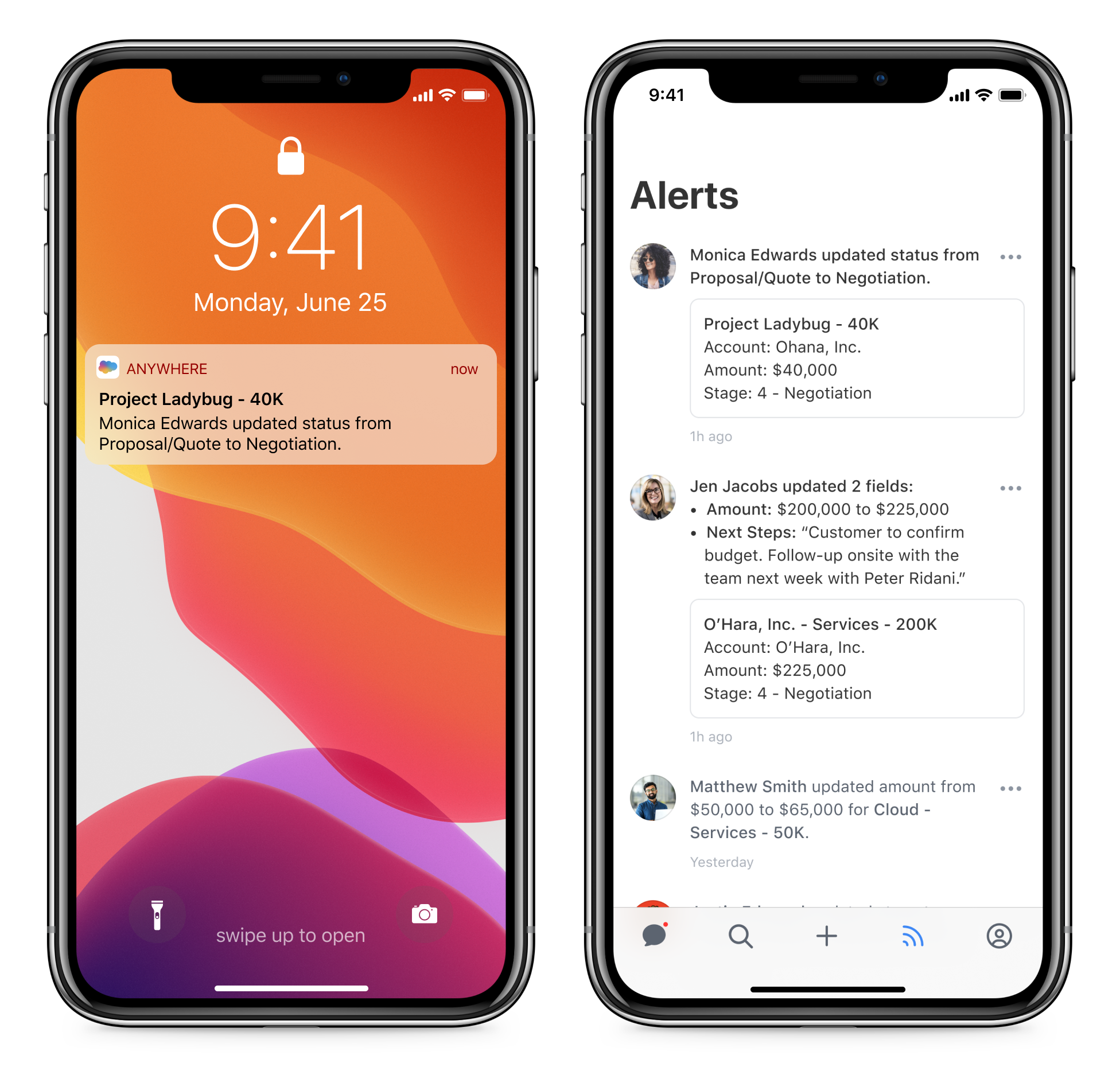

 Illustration by Alex Castro / The Verge

 Sen. Martha McSally (R-AZ) wears a face mask depicting the Arizona state flag as she listens to testimony on Capitol Hill on May 6, 2020, in Washington, DC. | Shawn Thew-Pool/Getty Images


 Photo by Vjeran Pavic / The Verge


 A firefighter in Siberia on June 2 monitors a controlled burn to reduce the threat from wildfires. Amid record heat, the region is bracing for more blazes. | Yevgeny Sofroneyev/TASS via Getty Images
/cdn.vox-cdn.com/uploads/chorus_asset/file/20049456/GettyImages_1219296341.jpg) Denis Kozhevnikov/TASS via Getty Images
Denis Kozhevnikov/TASS via Getty Images
/cdn.vox-cdn.com/uploads/chorus_asset/file/20049254/Artboard_2_copy_3_80.jpg) Christina Animashaun/Vox
Christina Animashaun/Vox