Shared posts

23 Jun 17:23

Google is on a mission to stop you from reusing passwords

by Jay Peters
Illustration by Alex Castro / The Verge

“Passwords are one of the worst things on the internet,” Mark Risher, Google’s senior director for account security, identity, and abuse told The Verge. Though they’re essential for security and to help people log in to many apps and websites, “they’re one of the primary, if not the primary, ways that people actually end up getting compromised.”

It’s a strange thing for a Google security executive to say because the last time you logged into Gmail, you probably typed in a password. But the company has been trying to nudge users away from the model for years, or at least minimize the damage. And in the coming weeks, one of Google’s quietest tools in that fight — the Password Checkup plugin — will be getting a higher profile, as it joins...

Continue reading…

23 Jun 17:20

The Trump administration has called Huawei a 'parasite' and warned Boris Johnson not to let it attach to the UK

by Thomas Colson

Boris Johnson Trump

  • The Trump administration is furious with Boris Johnson's administration over plans to build a Huawei research centre in England.
  • A senior US official warned China could attach itself like a 'parasite' to the UK through Huawei, which has close links to the Chinese Communist party.
  • It follows Boris Johnson's approval of a plan to allow Huawei to build part of its 5G network, despite fierce opposition from Washington.
  • Trump slammed the phone down on Boris Johnson earlier this year in a moment of "apoplectic" fury over the issue.
  • Visit Business Insider's homepage for more stories.

The Trump administration is furious with Boris Johnson over plans to build a Huawei centre in England, with a senior official warning that China could attach itself like a "parasite" to the UK.

Huawei, the tech giant with alleged close links to the Chinese government, is planning to build a £400 million research facility in Cambridgeshire which will focus on developing chips for broadband. It follows Boris Johnson's approval of a plan to allow Huawei to build part of its 5G network, despite fierce opposition from Washington.

Trump reportedly hung the phone up on Johnson earlier this year in a moment of "apoplectic" fury, after the UK prime minister refused to heed his previous warnings about Huawei.

Responding to the mooted plans for a new research facility, which has been recommended by planning officers in Cambridgeshire, Keith Krach, the US undersecretary of state for economic growth, told the Times newspaper that the US was worried about a "parasite" attaching itself to the UK in the form of Huawei, which he called "an extension of the Chinese government."

Krach said the UK should "put the whole thing in perspective — aggressive tactics of the Chinese Communist party, because it all starts from there."

"They are after the people and technology," he told the newspaper. "They want to co-opt the researchers, and talent from one of the most prestigious universities. They want to get their hands on the technology and IP [intellectual property] to take back to China."

The US Secretary of State Mike Pompeo is also "really furious" about the move, the Times reported.

Huawei insists that it is a privately owned company which is not subject to Chinese government influence and denies that it poses a security threat.

However, a report from Conservative MP Bob Seely and two academics last year said that the firm was "subject to influence by the Chinese state."

Boris Johnson has come under significant pressure from Conservative MPs to reset the party's relationship with China amid fears that it is too dependent on Beijing for vital imports and could be increasingly dependent upon it for infrastructure projects.

Tom Tugendhat, the Conservative MP who chairs the UK parliament's Foreign Affairs Committee, told Business Insider in April that Beijing had "constantly lied" about the virus, which originated in the Chinese city of Wuhan, and had "failed to face up to its responsibilities."

The prime minister, who approved the Huawei 5G deal in January, is said to have hardened his position towards China in the months since. When the deal was originally approved, Pompeo urged the UK to "relook" at its decision, warning that the project created "real risk" for UK national security.

According to the Spectator magazine, Johnson's own position shifted since the pandemic began, not because of the origin of the virus in China, but principally because it revealed how the UK is heavily dependent on China for essential goods, such as personal protective equipment for frontline doctors and health staff.

Tugendhat told Business Insider that he believed the prime minister would revisit the Huawei 5G decision in light of the pandemic. "I can't see how it doesn't change that. Clearly, it's going to have implications," he said.

"It makes the Huawei position hard."

Join the conversation about this story »

NOW WATCH: How waste is dealt with on the world's largest cruise ship

23 Jun 17:18

Six ways the pandemic was on display at Apple’s WWDC

by Jon Porter
Memoji can now be customized with face coverings. | Image: Apple

The COVID-19 pandemic has affected nearly every facet of our lives, so it’s only natural that it would impact more than one of Apple’s product announcements at yesterday’s WWDC. Whether it’s the Apple Watch’s handwashing feature or the new face mask options for Memoji, the pandemic’s presence was repeatedly felt during Apple’s presentation. And let’s not forget, its entire prerecorded streaming format was driven by the pandemic in the first place.

In some cases, Apple’s announcements seemed to come in direct response to the pandemic, but others, like bicycle directions for Maps, were almost certainly in development prior to COVID-19. They just happen to be releasing at a time they’re needed most.

Apple has already made at least one...

Continue reading…

23 Jun 17:17

Amazon boosts climate commitments and greenhouse gas emissions

by Justine Calma
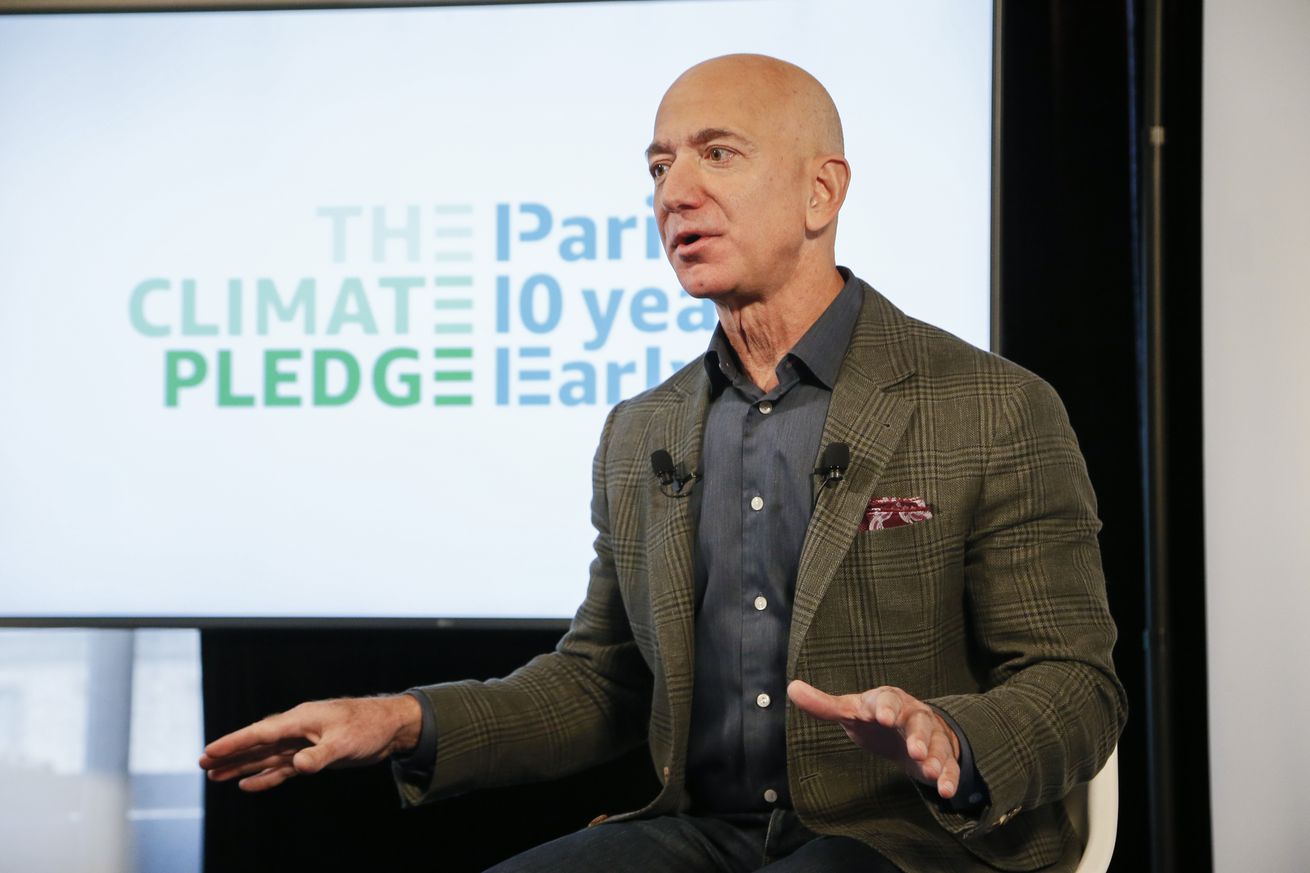
Amazon Co-founds The Climate Pledge Amazon CEO Jeff Bezos announces the co-founding of The Climate Pledge at the National Press Club on September 19, 2019 in Washington, DC. | Photo by Paul Morigi/Getty Images for Amazon

Amazon launched a $2 billion fund today to advance technologies that will cut down greenhouse gases. The fund will help Amazon and other companies adhere to The Climate Pledge initiative it started in September 2019. That pledge committed the company, and others that sign onto it, to becoming carbon neutral by 2040.

Companies need tools to reduce, offset, or capture planet-heating pollution they produce

To become carbon neutral, companies need tools to be able to reduce, offset, or capture all the planet-heating pollution they produce. The $2 billion will go toward advancements in transportation and logistics, energy generation and storage, manufacturing and materials, food and agriculture, and reducing or reusing waste. Companies can...

Continue reading…

23 Jun 17:13

What the switch to ARM for Mac means for Apple, Intel, and developers (AAPL)

by Hirsh Chitkara

At its Worldwide Developers Conference (WWDC) this week, Apple confirmed reports that it will transition away from Intel chips in its Macs, and instead use its own ARM-based architecture. Macs featuring Intel components are still in the product pipeline, but Apple intends to launch its first ARM-based Mac in 2020, instigating a full transition over a two-year period.

In this photo provided by Apple Inc., CEO Tim Cook delivers the keynote address during the 2020 Apple Worldwide Developers Conference Monday, June 22, 2020, in Cupertino, Calif. At its postponed and now-virtual developers conference, Apple is expected to unveil some modest changes to iPhone operating software and possibly to drop some hints about its efforts in augmented and virtual reality, although any new gadgets are still probably a few years away. (Brooks Kraft/Apple Inc. via AP)

Apple highlighted a number of advantages it hopes to gain by making this transition, including improved performance and energy efficiency on Macs, and deeper integrations between Macs and the Apple Watch, iPad, and iPhone, which already use Apple's ARM-based chips. The switch was reportedly motivated by Apple's dissatisfaction with the performance gains achieved by Intel over the past few iterations of chip architecture, according to The Verge. 

Here are three key impacts for how Apple's transition to in-house, ARM-based chips will impact Intel, developers, and consumers: 

  • Apple will be in a better position to convert iOS users over to the broader Apple ecosystem. Apple holds a much larger share of the mobile OS market than it does for the desktop market. With the introduction of ARM-based chips for Macs, Apple hopes to deepen integrations and cross-platform functionality between iOS and Mac. This would allow, for instance, iOS apps to run natively on the forthcoming Big Sur OS for Mac. These sorts of integrations can heighten the appeal of Mac OS for the significant portion of Apple's user base who are only in the Apple ecosystem by way of iOS.
  • Intel has likely anticipated this move for some time, but it will nevertheless provide impetus for the company to accelerate its transition to data-centric business segments. Intel managed to wean itself off of PC-centric revenues by undergoing a makeover to shift towards what it calls "data-centric" business segments. These business-centric segments include Intel's IoT business, data center group, and Mobileye autonomous vehicle systems division. In undergoing this makeover, Intel hoped to transition to high-growth sectors in which high R&D costs create a competitive barrier, which can translate to higher profit margins. Still, Intel's PC-centric business unit produced 53% of total revenue in Q1 2020. Losing Apple's Mac business will provide further motivation for Intel to invest in high-growth business units such as its cloud services, which achieved 53% year-over-year (YoY) revenue growth between Q1 2019 and Q1 2020.
  • Developers will benefit from deeper integrations across the iOS and Mac ecosystems. Most apps developed today use high-level coding languages, which means it will be relatively easy for developers to make the transition from Intel to Apple architecture, according to The Next Web. Apple is hoping to further streamline this transition, as it announced a series of products within its developer ecosystem such as Rosetta 2 and Xcode that help automate the transition. Further, the ARM-based chips will allow iOS apps to run natively on Macs, which means iOS developers will be able to more easily expand their user base and integrate their software across Apple's ecosystem.

Join the conversation about this story »

23 Jun 15:42

Acer launches stylish new Chromebook Spin 713

by Monica Chin

Acer has announced its newest Chromebook today, the Chromebook Spin 713, which is verified as part of Intel’s Project Athena program.

The Chromebook Spin 713 will contain 10th Gen Intel processors, up to 16GB of RAM (DDR4), and a 256GB SSD. Acer says you can expect 10 hours of use from the device’s fast-charging battery.

The Chromebook also has a 13.5-inch display with a 3:2 aspect ratio — 2256 x 1504 resolution. The 3:2 aspect ratio provides more vertical screen space than more common 16:9 panels, reducing your need to zoom out and scroll.

The aluminum chassis is sturdy enough to survive drops from up to 48 inches and to withstand up to 132 pounds of force, according to Acer. It’s 3.02 pounds, which means it’s not the...

Continue reading…

23 Jun 03:19

The 10 Hottest Networking Startups Of 2020 (So Far)

by Gina Narcisi
With cloud and automation top of mind in 2020 due to the rise of remote working, here are 10 networking startups you should know about that are making their mark on 2020 so far.
22 Jun 17:26

Microsoft Teams now available for personal use as Microsoft targets friends and families

by Tom Warren

Microsoft is launching the personal version of Microsoft Teams today in preview. It’s part of a broader effort by Microsoft to remain relevant with consumers and win them back after a series of exits from consumer-friendly services. Microsoft isn’t rebranding Teams here or offering a totally separate version, nor is the company looking to compete with iMessage, Facebook Messenger, WhatsApp, or other dedicated chat apps. It’s simply repositioning the existing Microsoft Teams app with features that might appeal to a set of people looking to do more than just chat.

Launching initially as a preview for iOS and Android, Microsoft Teams for personal use will include the basics of text chat and video calling, combined with shared lists,...

Continue reading…

22 Jun 16:58

The Whiteboard Goes Digital

By Irwin Lazar
Attempts to digitize the ubiquitous whiteboard have struggled, could separating hardware from software finally be the answer?
22 Jun 05:06

A Siberian town near the Arctic Circle just recorded a 100-degree temperature

by Zeeshan Aleem
A past summer thaw in Verkhoyansk, a Siberian town in Russia. The town normally has an average high of 68 degrees in June but recorded a temp of 100.4 degrees on Saturday. | Dean Conger/Corbis/Getty Images

One of the coldest towns on Earth clocks a potentially record-breaking — and worrying — temperature.

A small town in Siberia reached a temperature of 100.4 degrees Fahrenheit on Saturday, which, if verified, would mark the hottest temperature ever recorded north of the Arctic Circle.

Temperatures have jumped in recent months to levels rarely seen in the Russian region, and it’s a sign of a broader trend of human-caused climate change that’s transforming weather patterns in the Arctic Circle.

The town of Verkhoyansk is one of the coldest towns on Earth — temperatures dropped to nearly 60 degrees below zero there this past November — and the average June high temperature is 68 degrees.

The 100.4 reading in Verkhoyansk, which sits farther north than Fairbanks, Alaska, would be the northernmost 100-degree reading ever observed.

The Washington Post reports that while there are questions about the accuracy of the record temperature, a Saturday weather balloon launch that found unusually high temperatures in the lower atmosphere supports the reading. And on Sunday, the town reached 95.3 degrees, according to the Post.

CBS News meteorologist and climate specialist Jeff Berardelli wrote on Saturday that 100-degree temperatures in or near the Arctic are “almost unheard of.”

Before Saturday, Siberia was already experiencing an extraordinary heat wave. Surface temperatures in Siberia were 18 degrees higher than average in May, making it the hottest May in the region since record-keeping began in 1979, according to the Copernicus Climate Change Service.

 Yevgeny Sofroneyev/TASS/Getty Images
Another Eastern Siberian town, Yakutsk, during a January cold snap. Winter temperatures in the region near the Arctic can reach far below zero.

“It is undoubtedly an alarming sign, but not only May was unusually warm in this region,” said Freja Vamborg, a senior scientist at the Copernicus Climate Change Service, in a statement about the finding. “The whole of winter and spring had repeated periods of higher-than-average surface air temperatures.”

Climate scientist Martin Stendel said on Twitter that the temperatures recorded in northwestern Siberia last month would be a 1-in-100,000-year event — if not for climate change.

Berardelli said the average heat across Russia between January and May actually matches what current models project to be normal for the region in 2100, if carbon emissions continue.

“Due to heat trapping greenhouse gases that result from the burning of fossil fuels and feedback loops, the Arctic is warming at more than two times the average rate of the globe,” he explained in his analysis of the Verkhoyansk reading. “This phenomenon is known as Arctic Amplification, which is leading to the decline of sea ice, and in some cases snow cover, due to rapidly warming temperatures.”

He noted that if the climate continues to heat up, extreme heat waves will become more of the norm.


Support Vox’s explanatory journalism

Every day at Vox, we aim to answer your most important questions and provide you, and our audience around the world, with information that has the power to save lives. Our mission has never been more vital than it is in this moment: to empower you through understanding. Vox’s work is reaching more people than ever, but our distinctive brand of explanatory journalism takes resources — particularly during a pandemic and an economic downturn. Your financial contribution will not constitute a donation, but it will enable our staff to continue to offer free articles, videos, and podcasts at the quality and volume that this moment requires. Please consider making a contribution to Vox today.

20 Jun 06:27

The biggest companies no longer advertising on Facebook due to the platform's lack of hate-speech moderation

by Julia Naftulin

Mark Zuckerberg

  • Civil rights organizations including NAACP, Color of Change, Anti-Defamation League, and Sleeping Giants asked advertisers to stop paying for advertisements on Facebook in the wake of George Floyd's death at the hands of Minneapolis police officers.
  • Since Floyd's death, Facebook has allowed posts in which Trump called protesters "thugs" and suggested violence when he wrote, "when the looting starts, the shooting starts."
  • Facebook CEO Mark Zuckerberg decided not to take action in removing the content despite requests. Twitter, on the other hand, flagged Trump's tweets using the same language as "glorifying violence."
  • In light of Zuckerberg's inaction, more than 40 major brands across a variety of industries, including Coca-Cola, Starbucks, Unilever, Verizon, Ford, Ben & Jerry's, Denny's, and The North Face have halted their paid advertising on Facebook — some of them just for the month of July.
  • Sleeping Giants has been tracking the more than 500 companies that have joined — read the full list here.
  • Visit Business Insider's homepage for more stories.

SEE ALSO: 'We're In. We're Out': The North Face becomes the first major company to boycott Facebook as the calls for advertisers to walk out of the platform in July intensify

SEE ALSO: Facebook has now removed the Trump post featuring doctored video of a Black toddler and fake CNN graphics

SEE ALSO: After 4 years of timidity, Facebook and Twitter are finally taking basic steps to curb Trump's worst instincts

Adidas and its subsidiary Reebok are pausing Facebook and Instagram ads globally through July.

"Racist, discriminatory and hateful online content have no place in our brand or in society," Adidas told Adweek.


Affirm, a financial services startup, is pausing paid ads on Facebook and Instagram for July.

Tweet Embed:
//twitter.com/mims/statuses/1276597069654810624?ref_src=twsrc%5Etfw
People come first. Affirm is proud to join the #StopHateForProfit campaign, standing against the spread of misinformation and hatred on social media. We will pull our paid advertising on Facebook and Instagram for the month of July to hold these platforms accountable. pic.twitter.com/jq3Lc7ScsV


Arc'teryx, an outdoor clothing brand, said it will pause advertising on Facebook and Instagram through at least the end of July. The brand tweeted: "We need a break @facebook."

Tweet Embed:
//twitter.com/mims/statuses/1275482126599639040?ref_src=twsrc%5Etfw
We need a break @facebook. Effective immediately, we will be halting our global advertising with @Facebook & @Instagram until at least the end of July in support of the #stophateforprofit campaign & donating those dollars towards building more inclusive outdoors.Tweet Embed:
//twitter.com/mims/statuses/1275506187195179008?ref_src=twsrc%5Etfw
We are proud to stand with the #StopHateForProfit campaign - @Facebook profits 'will never be worth promoting hate, bigotry, racism, antisemitism & violence.' Learn more: https://t.co/T81TtElTCH


Beam Suntory, a liquor company, will also halt its Facebook and Instagram advertising through July.

"We stand up for what's right, and we stand with all who are committed to the fight against hate speech, racism and prejudice," the company said in a statement. "That's why Beam Suntory is joining #StopHateForProfit, pausing all paid Facebook and Instagram advertising in the US across our brand portfolio throughout July. We hope this collective action helps catalyze positive change and accountability, and we will evaluate our advertising approach beyond July as we await Facebook's response."


Ben & Jerry's paused Facebook and Instagram ads and called on the company to take "clear and unequivocal actions" to stop the spread of racism on its platform.

Vermont-based ice cream maker Ben & Jerry's, which has campaigned against racial inequality for years, tweeted its announcement Monday.

"We will pause all paid advertising on Facebook and Instagram in the US in support of the #StopHateForProfit campaign. Facebook, Inc. must take the clear and unequivocal actions to stop its platform from being used to spread and amplify racism and hate," the company said.


Best Buy is pausing ads on Facebook and Instagram for the month of July.

"We support what groups like the NAACP and ADL are trying to achieve, and our decision was made on that basis," a spokesperson told Business Insider.


Birchbox, a subscription company that sends customers samples of makeup and other beauty-related products, is pausing Facebook and Instagram ads for the month of July.

Birchbox said in an Instagram post it plans to "re-allocate our advertising dollars to other platforms and to support more individual content creators."

"We want Facebook to acknowledge this demand for change and to commit to making the necessary changes suggested on StopHateForProfit.org," it added.

Instagram Embed:
//instagram.com/p/CB6F4UmDBNN/embed
Width: 540px


Blue Bottle Coffee said it would pause Facebook ads for July.

Tweet Embed:
//twitter.com/mims/statuses/1277761119717855233?ref_src=twsrc%5Etfw
Because of our commitment to care, we're compelled to join the #StopHateforProfit campaign. Blue Bottle Coffee will pause all paid advertising on Facebook during July.

We believe in the limitless power of care to change the world. #StopHateforProfithttps://t.co/U1bZY8JuMb pic.twitter.com/rRtk5jjjRC


Software company Braze paused its paid ads on Facebook, while CMO Sara Spivey called for other companies to join the boycott.

Tweet Embed:
//twitter.com/mims/statuses/1268172965952327680?ref_src=twsrc%5Etfw
As a CMO, I am reallocating dollars planned for Facebook advertising to other places. I won't fund an org that fails to act against divisiveness and hate, hiding behind "freedom of speech." Fellow marketers, join me. #nomoremoneyforFacebook


Campbell Soup Company is pausing all social media activity on Facebook, Instagram, and Twitter, including ads and organic posts, through at least August.

"The consumer experience on these social platforms has become increasingly divisive, and we will use this time to reevaluate our advertising standards and association with these platforms to ensure that our brands are not in environments that promote bias, racism or hatred of any kind," the company told Adweek.


Cava is pausing paid ads on Facebook and Instagram through at least July.

Tweet Embed:
//twitter.com/mims/statuses/1277680944967811072?ref_src=twsrc%5Etfw
pic.twitter.com/d1s5Dpj3p6


Chipotle will stop advertising on Facebook and Instagram through at least July.

"We will continue to be part of the solution to fight systemic racism and create inclusive communities," Chipotle Chief Marketing Officer Chris Brandt told Adweek.

The company told Adweek it would keep posting organically and didn't say whether it would continue to use Facebook Audience Network.


Chobani is pausing all social media advertising, saying it has "always stood against hate & bigotry and it is our duty to help change these platforms."

Tweet Embed:
//twitter.com/mims/statuses/1277678892371922945?ref_src=twsrc%5Etfw
Action over advertising. Today we join our friends at @ADL and a growing list of amazing groups like the @NAACP to pause all our paid social advertising. We've always stood against hate & bigotry and it is our duty to help change these platforms. #StopHateForProfit https://t.co/GaKTheAySG


CLIF Bar is pausing paid ads on Facebook and Instagram for July.

Tweet Embed:
//twitter.com/mims/statuses/1277995316948721667?ref_src=twsrc%5Etfw
We believe in building communities where people feel safe & respected. Facebook hasn't done enough to curb racist hate speech in their community, so we will be joining @ColorOfChange, @ADL & the @NAACP to boycott Facebook and Instagram paid ads in July #stophateforprofit pic.twitter.com/8nevoRLuBo


Clorox is pausing Facebook ads through 2020.

"As a people-centered company committed to our values, we feel compelled to take action against hate speech, which we believe will increase through the balance of the year," Clorox Chief Marketing Officer Stacey Grier told Adweek, adding that the company will shift its ad spending to "other media."


Coca-Cola said it would pause paid ads on all social media platforms so it can "reassess" its ad spending policies.

Coca-Cola CEO James Quincey told Adweek that Coca-Cola will pause international paid ads across all social media platforms for 30 days so it can "reassess our advertising policies to determine whether revisions are needed."

"There is no place for racism in the world, and there is no place for racism on social media," Quincy told Adweek, adding that the company expects "greater accountability and transparency from our social media partners."


Conagra Brands is pausing Facebook and Instagram ads in the US for the rest of 2020.

Conagra, which owns food brands like Slim Jim, Hunt's, and Pam, told Adweek that it would continue to post organically but wouldn't use Facebook Audience Network, the platform's targeted ads tool.

"We stand by our company values including broadmindedness and integrity and believe there is no place for hate, intolerance and racism in the world or on social media," a spokesperson told Adweek.


Consumer Reports will pause paid ads on Facebook and Instagram indefinitely.

"Facebook must step up and take meaningful action to stop the spread of misinformation and hate speech on its platforms," the nonprofit product review site tweeted.

Tweet Embed:
//twitter.com/mims/statuses/1278112856513314818?ref_src=twsrc%5Etfw
Consumer Reports will begin a pause of all paid advertising on Facebook and Instagram, alongside many other nonprofits and corporations. Facebook must step up and take meaningful action to stop the spread of misinformation and hate speech on its platforms.


CVS Health is pausing paid ads on Facebook, Instagram, and Twitter through at least July.

CVS told AdAge that it plans to use the month to define its strategy moving forward and doesn't plan to support any platform that isn't working to "eliminate hate speech and misinformation," and said that: "While some have joined organized boycotts, we've chosen to act with independence to ensure that our standards are met, and our values upheld."


Dashlane, a password management software, is pausing paid ads and organic posts on Facebook and Instagram through at least July.

Tweet Embed:
//twitter.com/mims/statuses/1275131643846680577?ref_src=twsrc%5Etfw
Dashlane is joining the #StopHateForProfit campaign, and is stopping all paid and organic posts on Facebook and Instagram through July at minimum. pic.twitter.com/U3EKXmqJgn


Denny's became the first restaurant industry brand to join the boycott, saying it would halt all Facebook ads starting July 1.

"Denny's is a place where folks from all walks of life are welcome and accepted for who they are. We are committed to promoting diversity, equality and inclusion across our restaurants nationwide and fighting for racial justice. This commitment extends well beyond our restaurants' doors and into our workplace, as well as the thousands of local communities we serve each and every day," Denny's said in a statement to Business Insider.

"As America's Diner, we offer an inclusive and welcoming environment where all people can enjoy a nice meal and we strongly oppose hate speech of any kind. It is our belief that Facebook has not done enough to address this important issue on its platform and we are calling on Facebook to make positive changes to its process for combatting hate speech and disinformation. We are proudly joining the #StopHateForProfit campaign and pausing all paid advertising on Facebook, as of July 1," the company added.


Beverage giant Diageo will pause all social media advertising starting July 1.

Diageo, the company behind alcohol brands like Guinness, Smirnoff, Captain Morgan, and Bailey's, tweeted that it "strives to promote inclusion and diversity" and would "continue to discuss with media partners how they will deal with unacceptable content."

Tweet Embed:
//twitter.com/mims/statuses/1276968665271996418?ref_src=twsrc%5Etfw
Diageo statement on social media advertising pause. pic.twitter.com/kRIsdFjgzk


Dockers


Dunkin' Brands

Dunkin' Brands has "temporarily" paused paid media advertising on both Facebook and Instagram for both Dunkin' and Baskin Robbins. 

"We continue to assess our social media plans, and we are in talks with Facebook about its plans to eliminate hate speech and to stop the spread of racist rhetoric and false information," a spokeswoman told Business Insider.


Eddie Bauer is suspending ads on Facebook and Instagram through the end of July.

Tweet Embed:
//twitter.com/mims/statuses/1275597057818951685?ref_src=twsrc%5Etfw
In support of the #StopHateForProfit initiative, Eddie Bauer will suspend all paid ads on Facebook and Instagram through the end of July, effective immediately.
Learn more here: https://t.co/0oMnahL1Mh


Edgewell Personal Care's brands in North America and Europe will stop paid advertising on Facebook and Instagram starting July 1.

"We believe that Facebook is not doing enough to fight the hate speech on their platforms," Edgewell, which owns brands like Schick, Banana Boat, Playtex, and Wet Ones, said in a LinkedIn post.

"For us, this issue is personal. We are a people-first company, driven by our purpose of making useful things joyful, and we are committed to standing up for what is right," it added.


Fons, a payment company, has sworn off Facebook advertising.


Tweet Embed:
//twitter.com/mims/statuses/1269755411369869312?ref_src=twsrc%5Etfw
So many companies, including @getfons are exploring options to divest marketing budgets from FB/Insta. If we stop advertising, perhaps they'll change. https://t.co/i41nySfHMh

CEO and co-founder Eric Branner said that the boycott could potentially lead to Facebook changing its policy.


Ford is pausing all social media advertising in the US for the next month.

Reuters reported that the second-largest US automaker is reevaluating its presence across all social media platforms and ad spending outside the US as well.

A Ford spokesperson told Reuters that hate speech, violence, and racial injustice in content on social media "needs to be eradicated."


Habitat For Humanity, a major nonprofit, is pausing all ads on Facebook's services for the month of July.

Tweet Embed:
//twitter.com/mims/statuses/1276582450307760130?ref_src=twsrc%5Etfw
During the month of July, Habitat for Humanity International will pause all of our paid advertising on Facebook's services in support of the #StopHateforProfit campaign. Learn more about the campaign here: https://t.co/q11nk0mK7u


Herschel Supply Co., a backpack and luggage maker, is pausing paid ads on Facebook and Instagram for July.

Tweet Embed:
//twitter.com/mims/statuses/1278014617273298944?ref_src=twsrc%5Etfw
We support organizations and brands that stand for change and will continue to ask our partners to create a safe and trusted digital ecosystem for all people in our community. Learn more: https://t.co/fpfyWyuCta


Honda's US division was the first automaker to join the ad boycott, pausing paid Facebook and Instagram ads for July.

"For the month of July, American Honda will withhold its advertising on Facebook and Instagram, choosing to stand with people united against hate and racism. This is in alignment with our company's values, which are grounded in human respect," Honda told AdAge.


HP is halting ads on Facebook indefinitely and is reevaluating its ad spending across all social media.

"HP is a purpose-driven brand and we expect all platforms on which we advertise to uphold responsible policies that prevent our ads from appearing alongside objectionable content, regardless of the source," the company said in a press release.

"We have expressed deep concerns to Facebook and are stopping U.S. advertising on the platform until we see more robust safeguards in place. We are also reviewing our social media strategy across all markets and platforms, and we will take additional actions as needed to protect our brand and combat hateful content," it added.


J.M. Smucker Company said none of its 40+ brands, which include Smucker's, Dunkin', Jif, and Crisco, will advertise on Facebook or Instagram for at least July.

"Moving forward, we will only advertise on platforms that are taking meaningful, systemic steps to rid their ecosystems of hate speech and discriminatory content," the company said in a statement.

"Based on these enhanced guidelines, none of our 40+ brands will be advertising on Facebook or Instagram in the month of July, and potentially longer, as we await details on the steps Facebook will take to eliminate hate speech and discriminatory content from its platforms. We have shared this decision with Facebook and encouraged them to take meaningful steps to address these important issues," it added.


JanSport is pausing paid Facebook and Instagram ads for the month of July.

JanSport tweeted that it would "join the fight for stricter policies that keep racist, violent & hateful content from proliferating on these platforms."

Tweet Embed:
//twitter.com/mims/statuses/1276626795203182592?ref_src=twsrc%5Etfw
Count us out @Facebook. We stand with the @NAACP & @ADL to #StopHateforProfit. JanSport will stop advertising on @Facebook & @Instagram for the month of July and join the fight for stricter policies that keep racist, violent & hateful content from proliferating on these platforms


Kimberly-Clark Corp., the company behind brands like Kleenex, Cottonelle, and Huggies, is pausing paid ads on Facebook and Instagram in the US and Canada and won't use Facebook Audience Network. for July.

"Kimberly-Clark is committed to only engaging with media partners that support our values and meet our standards for safety, civility and tolerance," the company told Adweek


KIND is pausing all Facebook and Instagram ads throughout July and will consider doing so permanently unless Facebook changes.

"Social media platforms – and particularly Facebook – have been exacerbating divisions and fueling hatred by knowingly allowing false and hateful information to permeate across their platforms," KIND founder Daniel Lubetzky told employees, which he also shared on LinkedIn.

"We need to communicate to our counterparts at Facebook that, as much as we all care about financial objectives, protecting our society and stopping groups from undermining our democracy, our rule of law, and our social fabric matters far more," he added.

Lubetzky, who also sits on the board of the Anti-Defamation League (one of the groups behind the boycott), said if Facebook doesn't take "visible, measurable and assertive efforts to effectively prevent the promotion of hate, division, defamation and misinformation" by the end of 2020, KIND would consider pausing advertising indefinitely until Facebook made further changes.


LEGO is pausing all ads on social media for at least 30 days while it reviews its advertising standards.

"We are committed to having a positive impact on children and the world they will inherit. That includes contributing to a positive, inclusive digital environment free from hate speech, discrimination and misinformation," LEGO's chief marketing officer Julia Goldin said in a statement published Wednesday.

"We will take immediate steps to carefully review the standards we apply to advertising and engagement on global social media platforms. While we do that, we will pause all paid advertising on global social media platforms for at least 30 days," she added.


Levi Strauss & Co. is pausing its advertising on Facebook and Instagram through at least the end of July.

"We want to see meaningful progress toward ending the amplification of misinformation and hate speech and better addressing of political advertisements and content that contributes to voter suppression," Levi's told Adweek, adding that Facebook's efforts so far are "not enough."

The company also owns Dockers, which will join the ban as well.

Tweet Embed:
//twitter.com/mims/statuses/1276670223815307264?ref_src=twsrc%5Etfw
Facebook must take actions to stop misinformation and hate speech on its platforms. It is an unacceptable affront to our values. We and @Levis are joining the #StopHateForProfit campaign and pausing all ads on @Facebook and @Instagram.https://t.co/wZaNN2UAd2


Limeade, a software company that focuses on employee experience, is also halting advertising.

Tweet Embed:
//twitter.com/mims/statuses/1275847665679503373?ref_src=twsrc%5Etfw
.@Limeade will be pausing all of our Facebook ads through the end of July or until meaningful action occurs. @Facebook #stophateforprofit. Learn more at https://t.co/daW7khxn5t. Sign the pledge.


Lululemon will pause paid advertising on Facebook and Instagram.

"As individuals, as leaders and as a company, we believe we all have a responsibility to create a truly inclusive society, and that includes using our brand and our voice to advocate for change," the company tweeted.

Tweet Embed:
//twitter.com/mims/statuses/1276658939984089088?ref_src=twsrc%5Etfw
We stand in solidarity with the @NAACP, @ADL and others in the #StopHateForProfit campaign. We believe we all have a responsibility to create a truly inclusive society and are actively engaging with @Facebook to seek meaningful change. Learn more: https://t.co/7CNc8Nk2aV


LUNA Bar is pausing all paid ads on Facebook and Instagram for July.

Tweet Embed:
//twitter.com/mims/statuses/1277995332530569217?ref_src=twsrc%5Etfw
We are joining @ColorOfChange, @NAACP, and @ADL and will suspend Facebook and Instagram advertising globally in July to push them to take responsibility for the racist hate speech and misinformation on their platforms. #StopHateForProfit

Read more: https://t.co/dqPXWB0xW7 pic.twitter.com/Z7ecGaf5IL


Madewell is pausing paid ads on Facebook and Instagram for July.

Tweet Embed:
//twitter.com/mims/statuses/1277739952093245440?ref_src=twsrc%5Etfw
We will pause all advertising on @facebook and @instagram through July as we join the #StopHateforProfit campaign. We won't allow hate speech and misinformation to be spread across these platforms. https://t.co/X4ub1mQUMG


Magnolia Pictures — the studio behind "I Am Not Your Negro" and upcoming documentary "John Lewis: Good Trouble" — is pausing its advertising.

Tweet Embed:
//twitter.com/mims/statuses/1275420847151300615?ref_src=twsrc%5Etfw
In solidarity with the #StopHateForProfit movement, Magnolia Pictures has chosen to stop advertising on Facebook and Instagram, starting immediately, through at least the end of July. We are seeking meaningful change at Facebook and the end to their amplification of hate speech.


Molson Coors Beverage Company is pausing paid ads on Facebook, Instagram, and Twitter while it revisits its advertising standards.

Molson Coors is "choosing to pause Facebook, Instagram and Twitter while we revisit our own advertising standards to create better guardrails to protect our brands and address the spread of hate speech," Chief Marketing Officer Michelle St Jacques told employees, according to CNBC.


Mozilla, which develops the Firefox internet browser, stopped advertising on Facebook in 2018 following the Cambridge Analytica scandal.

"The policies and practices that led to the [Cambridge Analytica] scandal demonstrated that Facebook was not taking adequate care to safeguard people's personal data on their platform. As a result, we not only stopped our advertising spend, but we stopped using Facebook to promote Mozilla or Firefox," interim Chief Marketing Officer Mary Ellen Muckerman told Business Insider in a statement.

"Like other companies now, we find what Facebook is doing in this moment to be problematic as well. Barring any significant changes in their actions, we have no plans to resume our advertising on Facebook," she said.


Patagonia announced that it would boycott Facebook and Instagram ads through at least July over "hateful lies and dangerous propaganda on its platform."

Tweet Embed:
//twitter.com/mims/statuses/1274832570891431936?ref_src=twsrc%5Etfw
For too long, Facebook has failed to take sufficient steps to stop the spread of hateful lies and dangerous propaganda on its platform.


Patreon, a crowdfunding platform, said it would remove ads from Facebook and Instagram "until significant action is taken by Facebook."

"At Patreon, we believe in building safe communities for creators and their fans, which means we do not tolerate hate speech of any kind," the company tweeted.

"We encourage our industry peers to do the same," it added.

Tweet Embed:
//twitter.com/mims/statuses/1277590197459271681?ref_src=twsrc%5Etfw
Count us in. There's no room for hate. #StopHateForProfit pic.twitter.com/yRxSrg4SOp


PepsiCo is reportedly pulling Facebook ads through July and August.

Fox Business reported that Pepsi will halt ads on the platform globally during July and August but that the company has yet to make an official announcement.

Pepsi subsidiary Sodastream is also pausing Facebook ads, The Jerusalem Post reported, citing an Israeli local news outlet.


Pernod Ricard, which owns alcohol brands like Absolut Vodka and Jameson Irish Whiskey, is pausing paid ads on all social media for July.

"Movements like #StopHateForProfit are demonstrating that brands and consumers want them to take more urgent action. This is important, and it is why we are joining the movement for the next 30 days across all paid social media platforms, not just Facebook," Pernod Ricard USA CEO Ann Mukherjee told AdAge.

AdAge also reported that the company is creating an app for consumers to identify hate speech on social media.


Pfizer, the pharmaceutical giant, is pausing paid ads on Facebook and Instagram and won't use Facebook Audience Network for July.

Pfizer will "continue a dialogue directly with Facebook, to emphasize how these issues impact our ability to advertise on the platform and hope that we can be a part of a solution that addresses these issues," the company said in a statement to Adweek.


Puma said it would pause paid all ads on Facebook and Instagram for July.

Tweet Embed:
//twitter.com/mims/statuses/1277719215265525761?ref_src=twsrc%5Etfw
We are proud to join the #StopHateforProfit boycott. We will stop all advertisements on Facebook and Instagram throughout July.


REI said it would stop its Facebook ads for the month of July.

Tweet Embed:
//twitter.com/mims/statuses/1274110350703554560?ref_src=twsrc%5Etfw
For 82 years, we have put people over profits. We're pulling all Facebook/Instagram advertising for the month of July. #StopHateForProfit

Learn more: https://t.co/XCQSnUO8XJ https://t.co/Jp1GaKdCUN


SAP will halt paid ads on Facebook and Instagram indefinitely.

SAP, one of the biggest enterprise software companies in the world, said in a statement it would pause ads on Facebook's services "until the company signals a significant, action-driven commitment to combating the spread of hate speech and racism on its platforms."

"It's really now time to stand up against racism. For way too long, we've just ignored that. All of us were too silent about that," CEO Christian Klein told Business Insider in an interview.


Signet Jewelers, parent company of Zales, Jared, and Kay Jewelers, is pausing paid ads on Facebook and Instagram for July.

"At Signet, we hold to a belief that love inspires love," the company told The New York Times, adding: "We therefore stand resolutely against any racist, discriminatory and hateful online content."


Starbucks is pausing advertising on all social media platforms.

The coffee giant did not mention Facebook by name, but said it is continuing internal discussions with partners and civil rights organizations "in the effort to stop the spread of hate speech."

"We believe in bringing communities together, both in person and online, and we stand against hate speech," the company wrote on its website on Sunday. "We believe more must be done to create welcoming and inclusive online communities, and we believe both business leaders and policy makers need to come together to affect real change."


Talkspace, a mental health app, also halted its Facebook advertising. CEO Oren Frank said he "will not support a platform that incites violence, racism, and lies."

Tweet Embed:
//twitter.com/mims/statuses/1267504648275005440?ref_src=twsrc%5Etfw
We at @Talkspace discontinued our partnership discussions with @Facebook today. We will not support a platform that incites violence, racism, and lies. #BlackLivesMatter


Target is pausing paid ads on Facebook and Instagram through at least July.

Target told Adweek in a statement that it would "use that time to reevaluate our plans for the remainder of the year."


The Hershey Co. is halting ad spending on Facebook and Instagram in July and will cut spending by a third for the remainder of the year.

"As a company, we stand for the values of togetherness and inclusion and we are resolute in our commitment to make a difference and be part of positive change," Jill Baskin, The Hershey Co.'s chief marketing officer, told Business Insider. "We are hopeful that Facebook will take action and make it a safe space for our consumers to communicate and gather."

Baskin added that the company told Facebook that it was unhappy with its stance on hate speech earlier this month but was not satisfied with its response. The company also said that it cut its spending on the platform by a third for the remainder of the year.

"We do not believe that Facebook is effectively managing violent and divisive speech on their platform," Baskin said. "Despite repeated assertions by Facebook to take action, we have not seen meaningful change."


The North Face was the first major brand to halt its paid advertising on Facebook and Instagram.

The North Face announced its decision on Friday.

"We know that for too long harmful, racist rhetoric and misinformation has made the world unequal and unsafe, and we stand with the NAACP and the other organizations who are working to #StopHateforProfit," Steve Lesnard, The North Face's global VP of marketing, said in a statement.


Unilever, a major consumer goods company that owns brands like Dove, Lipton, and Vaseline, said it would halt US ads on both Facebook and Twitter for the rest of 2020.

"Based on the current polarization and the election that we are having in the U.S., there needs to be much more enforcement in the area of hate speech," Luis Di Como, Unilever's head of global media told The Wall Street Journal, which was the first to report the news.

"There is much more to be done, especially in the areas of divisiveness and hate speech during this polarized election period in the U.S.," Unilever said in a statement. "Continuing to advertise on these platforms at this time would not add value to people and society."

Facebook's stock tumbled as much as 7% following Unilever's announcement.


University of Phoenix, one of the largest for-profit online colleges, will indefinitely pause all ads on Facebook and Instagram and won't use Facebook Audience Network.

"We will continue to closely monitor Facebook's actions in the coming days and weeks, along with the actions of all social media platforms. We strongly urge Facebook to accelerate its efforts to implement a set of measures to fight racism and hateful discrimination," University of Phoenix said in a statement.

"We will continue our community-building activities on Facebook—which are non-paid and organic in nature—because such engagement is essential to our students' learning and progression, as a University that is operating wholly online due to the COVID-19 pandemic," the school added.


Upwork, a virtual freelancing platform, is halting its advertising across all Facebook platforms. CEO Hayden Brown tweeted, "We're out too."

Tweet Embed:
//twitter.com/mims/statuses/1274110168402280448?ref_src=twsrc%5Etfw
We're out too. No @Upwork ad spend on Facebook in July. Thank you @NAACP @ColorOfChange and others. #StopHateForProfit

"We cannot stand by and be complicit to or complacent about the spread of hate, racism and misinformation, and that is why we are supporting the Stop Hate for Profit advocacy campaign, which calls for pausing advertising on all Facebook platforms in the month of July. Upwork will pause advertising on Facebook and Instagram as a part of this campaign," Brown told NBC News in a statement.


Vans will redirect its Facebook and Instagram ad budgets for July "to support Black communities through empowerment and education programs."

"We remain committed to our responsibility to do more in the fight against racial inequality," Vans head of global marketing Nick Street told Business Insider.

"Our decision to join the #StopHateForProfit campaign demonstrates just one of the ways we are working diligently, thoughtfully and continuously to becoming anti-racist in everything we do," Street added.

Vans also said it will divert its July budget for retail store window displays across the US and Canada to causes that "uplift and empower the Black community."


Verizon, after being pressured directly by civil rights groups, told AdAge it would pause Facebook advertising until the company could "create an acceptable solution that makes [Verizon] comfortable."

After the Anti-Defamation League sent a letter to major advertisers allegedly showing their ads next to hate speech on Facebook, Verizon decided it would temporarily halt advertising on the platform.

"Our brand safety standards have not changed," a Verizon spokeswoman told AdAge, adding: "We're pausing our advertising until Facebook can create an acceptable solution that makes us comfortable and is consistent with what we've done with YouTube and other partners."


Viber said it will "cut all business ties" with Facebook in addition to joining the ad boycott.

Rakuten, which operates encrypted messaging service Viber, said in a press release that it will immediately pause all ads on Facebook, as well as remove Facebook Connect (which enables users to sign into apps with their Facebook account), Facebook SDK (a set of software tools that allows developers to integrate Facebook with their apps), and GIPHY (a GIF service recently purchased by Facebook).

"Facebook continues to demonstrate poor judgment in understanding its role in today's world. From the company's mishandling of data and lack of privacy in its apps, to its outrageous stand of avoiding the steps necessary to protect the public from violent and dangerous rhetoric, Facebook has gone too far," said Viber CEO Djamel Agaoua.

Tweet Embed:
//twitter.com/mims/statuses/1276212542130528261?ref_src=twsrc%5Etfw
Update on @Viber's decision to cut business ties with Facebook #StopHateForProfit pic.twitter.com/cch4CfdQzh

Volkswagen Group is pausing paid ads on Facebook and Instagram for July.

"The Volkswagen Group stands for open interaction with each other based on equality," the company told The New York Times, adding: "An environment of fake news or hate speech is therefore unacceptable to us."


White Castle is pausing paid ads on Facebook and Instagram indefinitely.

Tweet Embed:
//twitter.com/mims/statuses/1278344111930642432?ref_src=twsrc%5Etfw
#StopHateForProfit pic.twitter.com/4h1YVDH5KY


White Claw and sister brand Mike's Hard Lemonade will pause paid ads and organic posts on Facebook, Instagram, and Twitter starting July 1 and won't use Facebook Audience Network.

"We are committed to fostering a diverse and inclusive community and do not tolerate hate speech, racism or violence," White Claw told Adweek.


Wingstop Restaurants is pausing paid ads on Facebook and Instagram for July.

Tweet Embed:
//twitter.com/mims/statuses/1278010474718793731?ref_src=twsrc%5Etfw
✌ Facebook. We do not support hate. We are pulling paid advertising for the month of July. #StopHateForProfit https://t.co/g95PRDpNHX


20 Jun 00:48

Andy Jassy: Video Conferencing Is Changing AWS’ Thinking On Hiring, Meetings

by Donna Goodison
'There's a lot of things that have happened during the pandemic -- most by necessity -- that are going to change the way we all work moving forward,' Jassy says.
19 Jun 19:13

'We're In. We're Out': The North Face becomes the first major company to boycott Facebook as the calls for advertisers to walk out of the platform in July intensify

by Tanya Dua

A view of The North Face store on London's Carnaby Street.

The North Face has become the first major brand to boycott Facebook on the heels of mounting pressure from civil-rights organizations over the platform's content-moderation policies and handling of hate speech in the aftermath of George Floyd's death.

In a tweet saying "We're in. We're Out" the clothing company announced Friday it would stop buying Facebook ads in the US in solidarity with organizations including the NAACP, the Anti-Defamation League, and Sleeping Giants.

In a follow-up statement to Business Insider, the company said it would also halt paid advertisements on Instagram, which is owned by Facebook.

"We know that for too long harmful, racist rhetoric and misinformation has made the world unequal and unsafe, and we stand with the NAACP and the other organizations who are working to #StopHateforProfit," Steve Lesnard, The North Face's global VP of marketing, said in a statement.

North Face

A company spokesman said it was halting all US paid advertising with Facebook, effective June 19, until stricter policies are in place to stop racist, violent, and hateful content and misinformation from circulating on the platform. The North Face is not pulling ads from Facebook-owned Instagram, CNN reported.

Only a handful of smaller companies, including the meditation app Talkspace and the payment company Fons, had said that they won't advertise on Facebook before The North Face. 

Carolyn Everson, Facebook's VP of global business group, said that the company was in conversation with marketers and civil-rights organizations about how they could work with them to "be a force for good."

"We deeply respect any brand's decision and remain focused on the important work of removing hate speech and providing critical voting information," Everson said in a statement.

The platform has been under fire over its content-moderation policies, particularly its handling of President Donald Trump's posts in the aftermath of George Floyd's killing. While it has faced criticism on its handling of user data and the spread of misinformation before, such calls have rarely translated to wider collective action against Facebook or dented its advertising business.

But advertisers say it's different this time. IPG Mediabrands' Elijah Harris said in a Business Insider interview last week that the reaction against Facebook was an issue of "brand safety, not political activism."

Another ad-agency source told Business Insider their agency anticipated a number of other brands to also walk out on Facebook, as the social-media giant's executives try to put out the fires in memos sent to various agencies this week.

Facebook, which generates 98% of its revenue through ads, took in $17.4 billion from advertising in its most recent quarter, despite marketers across the board pausing advertising in the face of the pandemic.

Update Friday, June 19, 2020: This story was updated to add that North Face will also be halting paid advertising on Instagram.

Join the conversation about this story »

NOW WATCH: Tax Day is now July 15 — this is what it's like to do your own taxes for the very first time

19 Jun 16:20

Guinness reverses decision to strip Billy Mitchell’s Pac-Man and Donkey Kong records

by Sean O'Kane

Guinness World Records has reversed its 2018 decision to strip Billy Mitchell of his Pac-Man and Donkey Kong world records, according to Ars Technica, in what is the latest twist in a long story about the notorious arcade game master at the center of documentary The King of Kong: A Fistful of Quarters.

This means that, according to Guinness, Mitchell is once again the first to achieve a perfect score on Pac-Man (totaling 3,333,360 points) and the first to reach 1 million points on Donkey Kong.

The controversy around Mitchell’s records has a long history

But Guinness stands alone in recognizing Mitchell’s scores, as Twin Galaxies International Scoreboard — an organization that also audits and awards records — is sticking with its...

Continue reading…

19 Jun 15:21

Why Remote Learning Failed

by Lizzie O’Leary
Three months ago, the U.S. embarked on “a vast unplanned experiment in mass home-schooling.” We’re starting to see the results.
19 Jun 15:20

Microsoft isn’t happy with Apple’s App Store bullying either

by Tom Warren
Illustration by Alex Castro / The Verge

Microsoft believes it’s time for antitrust regulators to fully investigate Apple’s App Store. Speaking during a Politico interview this week, Microsoft’s chief legal officer Brad Smith outlined Apple’s walled garden approach to its App Store, and how it’s affecting competition.

“If you look at the industry today, I think what you’ll find is increasingly you’re seeing app stores that have created higher walls and far more formidable gates to access other applications than anything that existed in the industry 20 years ago,” says Smith. “They impose requirements that increasingly say there’s only one way to get onto our platform, and that is to go through the gate that we ourselves have created. In some cases they create a very high price...

Continue reading…

18 Jun 23:55

What Will Become of the Cruise Ship Smorgasbord?

by Eater
Shutterstock

Cruise companies have been fighting contagious viruses for years, which loyal cruisers say makes eating aboard as appetizing as ever

https://www.eater.com/2020/6/18/21293233/coronavirus-cruise-ship-dining-food-travel-covid-19-impact
18 Jun 23:55

The Trump administration’s flawed plan to destroy the internet as we know it

by Sara Morrison
Attorney General Bill Barr. This week, Attorney General Bill Barr released a set of recommendations for new legislation that would limit the immunity offered by Section 230. | Nicholas Kamm / AFP via Getty Images

Following the president’s lead, Republicans are all trying to chip away at Section 230.

Section 230, the law that is often credited as the reason why the internet as we know it exists, could be facing its greatest threat yet. A seemingly coordinated attack on the law is unfolding this week from the Trump administration and Republicans in Congress. It follows complaints that platforms such as Facebook, Twitter, and YouTube unfairly censor conservative speech. Though some are framing the efforts as a way to promote free speech, others say the result will be exactly the opposite.

Following President Trump’s executive order aimed at social media companies he thinks are censoring right-wing voices, the most direct actions taken against Section 230 arrived this week in the form of a new bill from Sen. Josh Hawley and a set of recommendations from Attorney General Bill Barr.

Hawley, a 40-year-old Republican from Missouri who has made no secret of his intentions regarding Section 230, is proposing a bill that would require large platforms to enforce their rules equally to stop a perceived targeting of conservatives and conservative commentary. Hawley is also rumored to be preparing another Section 230-related bill to add to his growing collection.

Meanwhile, Barr’s Department of Justice said it is calling for new legislation that, in certain cases, would remove the civil liability protections offered by Section 230. If platforms like Facebook, Google, and Twitter somehow encouraged content that violates federal law, these platforms would be treated as “bad samaritans” and would lose the immunity offered by Section 230. Like Hawley’s bill, the DOJ’s proposed rules would also force platforms to clearly define and equally enforce content rules.

Civil rights advocates say they’re concerned that some of these proposed measures may end up becoming law, leading to all sorts of unintended consequences and stifling speech — which will ultimately punish internet users far more than the websites.

“I do think there is a very serious risk to Section 230 right now,” Kathleen Ruane, senior legislative counsel at the American Civil Liberties Union (ACLU), told Recode. “And they all concern me, not for the platforms, but for users and online free expression.”

Section 230, briefly explained

Section 230 is part of the Communications Decency Act of 1996. It says internet platforms that host third-party content are not civilly liable for that content. There are a few exceptions, such as intellectual property or content related to sex trafficking, but otherwise the law allows platforms to be as hands-off as they want to be with user-generated content.

Here’s an example: If a Twitter user were to tweet something defamatory, the user could be sued for libel, but Twitter itself could not. This law has allowed websites and services that rely on user-generated content to exist and grow. If these sites could be held responsible for the actions of their users, they would either have to strictly moderate everything those users produce — which is impossible at scale — or not host any third-party content at all. Either way, the demise of Section 230 could be the end of sites like Facebook, Twitter, Reddit, YouTube, Yelp, forums, message boards, and basically any platform that’s based on user-generated content.

The law also gives those services that immunity even if they moderate certain content. This is why, for instance, Twitter can take down tweets that it deems in violation of its terms of service. Sen. Ron Wyden, who was one of the architects of Section 230, has likened these provisions to a sword and shield for platforms.

But as some of these platforms have increased in size, scope, and power, there has been increasing support on both sides of the aisle to chip away at the law that allowed them to flourish free of much accountability.

Democrats have supported laws that crack down on websites that facilitate sexual abuse. The Allow States and Victims to Fight Online Sex Trafficking Act (FOSTA) and the Stop Enabling Sex Traffickers Act (SESTA) made platforms legally responsible for third-party content related to sex trafficking. The two bills, known together as FOSTA-SESTA, overwhelmingly passed in the House and Senate, and President Trump signed them into law in 2018.

More recently, there’s the bipartisan Eliminating Abusive and Rampant Neglect of Internet Technologies Act (EARN IT), which would require companies to follow a yet-to-be-defined set of “best practices” or else lose Section 230 immunity if third parties post child pornography on their platforms. Civil rights advocates worry what those “best practices” will be and how they might stifle all speech.

Josh Hawley’s crusade for a different internet

Many Republicans see altering Section 230 as a way to force platforms to fit their definition of “politically neutral.” Typically, this translates into restricting a website or service’s ability to moderate content.

This seems to be the goal of Hawley’s bill, which is called the Limiting Section 230 Immunity to Good Samaritans Act. Cosponsored by Republican Sens. Marco Rubio, Mike Braun, Tom Cotton, and Kelly Loeffler, the bill would force large tech companies — that is, companies that have 30 million American users or 300 million users worldwide, as well as $1.5 billion annual revenue — to act in “good faith” when enforcing their content rules. Acting in “good faith” here means that platforms must clearly define what their rules are and enforce them consistently, rather than, say, targeting certain types of political speech, as some conservatives believe they currently do.

Users who feel that their content is being unfairly removed would also have a new tool for reprisal. Hawley’s bill gives individual users who believe they’re being censored the right to sue companies for at least $5,000 as well as attorney’s fees. You can imagine how many people would be happy to take advantage of that, which would give platforms a big incentive to comply lest they be flooded with millions of lawsuits.

“It is impossible to moderate user-generated content at scale perfectly, or even well, and this bill would weaponize mistakes,” Aaron Mackey, staff attorney for the Electronic Frontier Foundation, told Recode. “There are legitimate concerns about the dominance of a handful of online platforms and their power to limit internet users’ speech. But rather than addressing those concerns, this bill bluntly encourages frivolous litigation and will lead to massive trolling.”

This isn’t Republicans’ only recent attempt at limiting Section 230. In 2019, Hawley introduced the Ending Support for Internet Censorship Act, which would have required the Federal Trade Commission to declare platforms unbiased to get Section 230 protections. The same year, Rep. Louie Gohmert introduced the Biased Algorithm Deterrence Act, which would remove Section 230 protections from companies that moderated content using algorithms. Both were responses to conservative complaints that companies including Facebook, Twitter, and Google were selectively enforcing their content guidelines, de-platforming, shadow banning, or otherwise censoring conservatives while mostly leaving liberals alone. Sen. Ted Cruz has also been a vocal critic of platforms in this regard, erroneously asserting that Section 230 includes some kind of political neutrality requirement even though the law doesn’t say anything to that effect.

Those complaints have gained steam recently. Despite being one of the biggest beneficiaries of the influence and reach these platforms can afford, President Trump had a recent tantrum over Twitter’s decision to fact-check two of his tweets, which contained inaccurate information about mail-in ballots. Soon after, Trump signed his executive order aimed at social media companies, which said platforms that go beyond “good faith” content moderation should not be entitled to Section 230 protections. An executive order is not a law and therefore its impact on an actual law is likely limited, but the right’s intention to go after big tech companies was made very clear.

The Trump administration says, “The time is ripe”

While recent bills in Congress have been markedly divisive, Barr’s proposed reforms manage to incorporate the issues that both Democrats and Republicans have raised with Section 230. The DOJ called this a “productive middle ground.” Note that the department’s proposals are simply suggestions for the laws Congress should enact that would actually change things, but they, like the executive order, signal how and why the Trump administration hopes to go after or control large platforms.

One of Barr’s recommendations is to withhold immunity from “truly bad actors,” which are defined as sites promoting, soliciting, or facilitating content that violates federal law. Sites must also “maintain the ability to assist government authorities to obtain content (i.e. evidence) in a comprehensible, readable, and usable format.” This would be the end of services that use end-to-end encryption, which Barr has a particular problem with, and which civil liberties advocates believe will be the ultimate effect of the EARN IT act.

There’s also a section that addresses “open discourse and greater transparency.” Here, Barr recommends something along the lines of Hawley’s bill — that platforms must have clear terms of service for what is and isn’t allowed on their platforms and moderate content accordingly. This includes defining “good faith,” similar to Hawley’s bill, as well as removing the part of the law that says platforms can moderate content that is “otherwise objectionable,” as Barr believes the term is too vague and has given platforms the freedom to remove anything simply by saying it’s objectionable in some way.

Wyden was not impressed by the recommendations to change the law he helped create.

“This jumbled mess of a proposal is yet another cynical attempt by the Trump administration to bully the tech companies into letting the president and his cronies post lies and conspiracies on their sites, and is clearly not intended to become law,” the Oregon senator told Recode. “Congress should stay far away from this disingenuous plan that would gut the ability of tech companies to take down hateful slime, spawn endless frivolous lawsuits, and chill Americans’ free speech online.”

In the background of all of this is a growing public sentiment against powerful tech companies due, in part, to how they help spread fake news and the incredible amounts of personal information about us they collect. That has surely emboldened politicians to act accordingly. Not only do we have multiple bills against Section 230, but there are also ongoing efforts to break up the biggest tech companies through antitrust investigations both in the United States and the European Union.

“The Department of Justice has concluded that the time is ripe to realign the scope of Section 230 with the realities of the modern internet,” the recommendations say.

This all adds up to a very real possibility that Section 230, at least as we know it, won’t be around for much longer. Hawley’s bill, which has no bipartisan support as of now, might go the way his past bills did — that is to say, nowhere. But the EARN IT Act does have bipartisan support and, like FOSTA-SESTA which did pass, targets child sexual abuse. Few politicians may want to vote against a law that says it’s meant to combat child porn, regardless of any unintended consequences.

The consequences of changing Section 230 will inevitably change the internet and what we’re allowed to do on it. Ruane, from the ACLU, points to the impact of FOSTA-SESTA, which she says “has been a complete and total disaster,” and its unintended consequences as a guide for what we can expect. Faced with the new law, online platforms didn’t seek to target specific content that might relate to or facilitate sex trafficking; they simply took down everything sex or sex work-related to ensure they wouldn’t get in trouble.

“It was only supposed to apply to advertisements for sex trafficking. That is absolutely not what happened,” Ruane said. “All platforms adopted much broader content moderation policies that applied to a lot of LGBTQ-related speech, sex education-related speech, and ... sites where [sex workers] built communities where they shared information to maintain safety.”

She added, “It is astonishing to me that that law is being used as an example of what we should do in the future because of all the clear harms that censoring a broad amount of speech has caused.”

As for Wyden, he wrote in a recent op-ed that laws that force platforms to be “politically neutral” may not encourage more speech, as conservatives who favor those laws claim, but rather suppress it. Facebook has taken a similar stance, saying on Wednesday that changing Section 230’s liability protections would “mean less speech of all kinds appearing online.”

Section 230 won’t change tomorrow, if it changes at all. But a series of seemingly coordinated attacks from two of the three branches of government certainly shows some momentum toward the possibility of change.

On one hand, the internet has profoundly changed since the law was introduced 25 years ago and it’s not unreasonable to believe that the law should change with it. On the other, those changes likely won’t have the impact on the companies they’re targeting that lawmakers and the administration seem to desire. The impact will largely fall on the people who use the platforms those companies run: You.


Support Vox’s explanatory journalism

Every day at Vox, we aim to answer your most important questions and provide you, and our audience around the world, with information that has the power to save lives. Our mission has never been more vital than it is in this moment: to empower you through understanding. Vox’s work is reaching more people than ever, but our distinctive brand of explanatory journalism takes resources — particularly during a pandemic and an economic downturn. Your financial contribution will not constitute a donation, but it will enable our staff to continue to offer free articles, videos, and podcasts at the quality and volume that this moment requires. Please consider making a contribution to Vox today.

18 Jun 23:27

Podcast: Patrick Sullivan, Home Offices and Zoom Fatigue

by Michael Cromwell
18 Jun 23:27

Cisco Channel Chief Oliver Tuszik To Partners: 'The New Normal Is Now'

by Gina Narcisi
Cisco Channel Chief Oliver Tuszik talked with CRN about the importance of flexible consumption models, how partners can turn free trials of Cisco solutions into new revenue streams, and how solution providers can continue to build their businesses in the face of a global pandemic.
18 Jun 16:38

Russia lifts its ban on the Telegram messenger app

by Kim Lyons
Illustration by Alex Castro / The Verge

Russia will lift its nearly two-year ban on messenger app Telegram, Reuters reported. The country’s telecom watchdog Roskomnadzor said the company had shown “willingness” to help with counterterrorism efforts.

“Roskomnadzor is dropping its demands to restrict access to Telegram messenger in agreement with Russia’s general prosecutor’s office,” the agency said in a statement.

A Russian court blocked the app in April 2018, after Telegram refused to share its encryption keys — a means of accessing users’ data — with Roskomnadzor. Telegram has a history of use by terrorist organizations. Its refusal to provide access to encryption keys ran afoul of Russia’s anti-terrorism laws, which require messaging services to give authorities access to...

Continue reading…

18 Jun 16:36

The US wants to kill part of an 8,000 mile-long undersea cable linking Hong Kong with LA over China spying fears

by Isobel Asher Hamilton

Undersea ocean cable underwater

  • In 2016 Google and Facebook announced a new high-speed undersea cable connecting Hong Kong and Los Angeles.
  • The cable is now laid, but a DOJ committee has advised the FCC deny approval for the Hong Kong section of the cable.
  • The committee is worried the cable could be tapped by the Chinese government.
  • Visit Business Insider's homepage for more stories.

The US government seems poised to stunt a multimillion undersea cable project by Google and Facebook.

The cable is part of the Pacific Light Cable Network and was announced in 2016. Google said at the time the cable would be 8,000 miles long and span the Pacific Ocean, linking Los Angeles with Hong Kong, Taiwan, and the Philippines. It is designed to manage 120 terabytes of data per second, or 80 million HD videoconference calls between LA and Hong Kong, according to Google's statements in 2016.

A Depart of Justice committee called Team Telecom has now recommended to the FCC that the part of the cable connecting Hong Kong be rejected on security grounds.

The committee said it fears a cable to Hong Kong could be vulnerable to being tapped by the Chinese government, and is particularly concerned by  the fact a large investor in the cable was a Hong Kong-based company called Dr. Peng Ltd which it says is the "fourth largest provider of telecommunications services in the PRC [People's Republic of China]."

More broadly it says the cable could help China make Hong Kong a pan-Asian Pacific telecommunications hub, meaning US data would be more likely to pass through Chinese infrastructure even if China wasn't its final destination.

The US government's fears were heightened is due to "the PRC government's recent actions to remove Hong Kong's autonomy and allow for the possibility that PRC intelligence and security services will operate openly in Hong Kong."

In May China introduced sweeping new legislation for Hong Kong, cracking down on dissent and taking away many of the region's semi-autonomous powers, sparking widespread protests.

Team Telecom said the portions connecting the US with Taiwan and the Philippines should be allowed to function.

SEE ALSO: Here are the most explosive claims former national security adviser John Bolton made about Trump in his upcoming book

Join the conversation about this story »

NOW WATCH: We tested a machine that brews beer at the push of a button

18 Jun 16:35

Turning off political ads on Facebook could have unpredictable consequences

by Casey Newton
Photo by Amelia Holowaty Krales

Programming note: The Interface is off on Thursday. Back on Monday.

It seems hard to believe now, but there was a time when political advertising was relatively uncontroversial. Sure, individual ads regularly proved to be controversial, from the nuclear provocations of Lyndon B. Johnson’s “Daisy” to racist fear-mongering of George H.W. Bush’s “Willie Horton.” And the economics of political advertising, which depend heavily on moneyed interests pushing their agenda through opaque front groups, have been the subject of sustained and valid criticism since well before the Citizens United decision.

But the basic idea that a politician ought to be able to buy space in a media outlet and show it to a bunch of people — that was something we...

Continue reading…

18 Jun 16:35

Former Google CEO Eric Schmidt says there's 'no question' Huawei endangered US national security

by Isobel Asher Hamilton

eric schmidt

Google's former CEO Eric Schmidt thinks China has used tech giant Huawei to spy on the the US.

Speaking on a BBC radio documentary due to be aired Friday, Schmidt said: "There's no question that Huawei has engaged in some practices that are not acceptable in national security.

"There's no question that information from Huawei routers has ultimately ended up in hands that would appear to be the state," he said, adding that "however that happened, we're sure it happened."

Schmidt, a technical advisor on the US government's Defense Innovation Board, likened the company to national spying agencies such as the NSA by saying its operations are a form of "signals intelligence."

Schmidt was Google's CEO from 2001 to 2010, but stayed on at the company as an advisor until February this year, when he took up government roles.

Huawei's UK chief Victor Zhang said Schmidt's claims were "simply not true."

"Huawei is a private company, 100% owned by its employees. Huawei is independent from any government, including the Chinese government," he told the BBC.

Huawei has repeatedly denied accusations from the US government that it is used as a spying proxy by the Chinese government. Accusations that it's a national security threat are part of a US political strategy in its trade war with China, it says. The Trump administration placed Huawei on a trade blacklist in May 2019, but the company has been granted multiple temporary licenses since then. 

A week after Trump blacklisted Huawei, he said the company could make up part of a trade deal. In an excerpt from an upcoming new book, Trump's former national security advisor John Bolton says Huawei formed part of Trump's strategy to strike a trade deal and secure re-election.

Join the conversation about this story »

NOW WATCH: Why thoroughbred horse semen is the world's most expensive liquid

18 Jun 16:34

Trump used Huawei as a ploy in his reelection strategy, according to John Bolton's explosive new book

by Isobel Asher Hamilton

Donald Trump Mike Pompeo John Bolton.JPG

  • Former Trump security adviser John Bolton claims in his explosive new book that President Trump used Huawei as a part of his strategy to forge a trade deal with China.
  • Bolton said securing a trade deal with China was part of Trump's re-election strategy, and that he pleaded with Xi Jinping to ensure he'd win the 2020 election.
  • The Department of Justice is trying to block Bolton's book from publication and Trump tweeted it is full of "lies & fake stories."
  • Visit Business Insider's homepage for more stories.

Donald Trump used Huawei as a pawn in his plan to get reelected in 2020, according to the explosive new book by former national security adviser John Bolton.

In an excerpt from "The Room Where It Happened: A White House Memoir," published in the Wall Street Journal on Wednesday, Bolton claims Trump approached perceived security threats from Chinese firms Huawei and ZTE as bargaining chips in the US-China trade war.

Bolton writes that Commerce Secretary Wilbur Ross and others "repeatedly pushed to strictly enforce US regulations and criminal laws against fraudulent conduct, including both firms' flouting of US sanctions against Iran and other rogue states."

But Trump saw these legal measures as something to negotiate with the Chinese premier Xi Jinping.

Bolton continues: "Trump, by contrast, saw this not as a policy issue to be resolved but as an opportunity to make personal gestures to Xi Jinping [...] In 2019, he offered to reverse criminal prosecution against Huawei if it would help in the trade deal—which, of course, was primarily about getting Trump reelected in 2020."

Bolton's account tallies with public signals from the Trump administration that Huawei was a bargaining chip in the trade talks.

In May 2019, one week after placing Huawei on a trade blacklist, Trump publicly said Huawei could be part of a trade deal despite being "something that is very dangerous." The US has consistently accused Huawei of acting as a proxy for the Chinese government and spying on the US, which Huawei denies.

Bolton makes broader accusations in his book about Trump's conduct during the US-China trade war, saying he pleaded with China's president Xi Jinping to buy US agricultural products to help with his 2020 election strategy.

The Justice Department filed an emergency restraining order against Bolton's book on Wednesday seeking to block its publication, claiming it compromises national security. Trump lashed out against Bolton in an interview with Fox News and in a late-night tweet on Wednesday, saying the book was "made up of lies & fake stories."

SEE ALSO: Former Google CEO Eric Schmidt says there's 'no question' Huawei endangered US national security

Join the conversation about this story »

NOW WATCH: Why electric planes haven't taken off yet

18 Jun 16:30

Amazon says it mitigated the largest DDoS attack ever recorded

by Jon Porter
A chart produced by Amazon shows the scale of the attack. | Image: Amazon

Amazon Web Services recently had to defend against a DDoS attack with a peak traffic volume of 2.3 Tbps, the largest ever recorded, ZDNet reports. Detailing the attack in its Q1 2020 threat report, Amazon said that the attack occurred back in February, and was mitigated by AWS Shield, a service designed to protect customers of Amazon’s on-demand cloud computing platform from DDoS attacks, as well as from bad bots and application vulnerabilities. The company did not disclose the target or the origin of the attack.

To put that number into perspective, prior to February of this year, ZDNet notes that the largest DDoS attack recorded was back in March 2018, when NetScout Arbor mitigated a 1.7 Tbps attack. The previous month, GitHub disclosed...

Continue reading…

18 Jun 16:22

Asana is deepening its partnership with Microsoft Teams to appeal to a broader customer base as it prepares to go public

by Paayal Zaveri

Asana cofounders Justin Rosenstein and Dustin Moskovitz

  • Asana is expanding its partnership with Microsoft and releasing a new integration with Microsoft Teams, as it tries to appeal to a broader customer base.
  • This comes as Asana announced earlier this year that it plans to go public via a direct listing. — the same route that Spotify and Slack took.
  • The new integration comes as Teams sees usage skyrocket in the remote work era and is modeled after Asana's existing integration with Slack, which has become wildly popular, Asana's chief product officer Alex Hood said. 
  • Hood said Asana's goal is to be a neutral platform that integrates to all tools that its customers may be using to get work done, and Microsoft Teams is increasingly one of those tools. 
  • It fits into Asana's larger strategy of helping people reduce the amount of time spent in busy work and collaborate more easily, especially as productivity tools are seeing higher demand due to remote work, Hood said.
  • Click here to read more BI Prime stories.

Productivity startup Asana is expanding its partnership with Microsoft as it prepares to go public through a direct listing.

In February, Asana announced that it had confidentially filed an S-1 with the SEC and said it plans to go public with a direct listing – the same route that Spotify and Slack took. 

With that debut expected in the second half of the year according to Bloomberg, Asana's deepening partnership with Microsoft allows the task management company to appeal to a broader customer base. As of late April, Microsoft Teams had 75 million daily active users; while Asana doesn't reveal DAUs, it had 75,000 paying customers as of last year.

While Asana previously integrated with Teams, it only let users add Asana as a tab within the platform. The new launch connects both apps much more completely. Users will now be able to access information from Asana within Teams, got answers from Asana using a new bot, and create or add messages to tasks in Asana. The partnership also allows anyone to see information shared from Asana, whether or not they have a license. 

Create Asana task within Microsoft Teams

Asana modeled the new partnership off its integration with Slack, which has been available since 2018, said Alex Hood, Asana's chief product officer. Asana's goal is to be a neutral platform that integrates to all tools that its customers may be using to get work done, he said. 

"We didn't want to just be relegated to Apple or GSuite or Slack: We want to be cross-cutting all the places where work happens," Hood said. "Asana should be there to create the plan, clarify the plan, and show you what's next in all those places." 

Asana already integrated with other Microsoft products like Outlook, Power BI, Power Automate, and Office 365.

A deeper integration with Microsoft Teams could help Asana appeal to a wider customer base

In the coronavirus-related remote work era, Microsoft Teams' user base has grown rapidly, at least in part because it is included in the larger Microsoft productivity suite that's used by so many companies. All organizations had to do was turn it on once the coronavirus crisis made remote collaboration so critical. Asana's current bread-and-butter is small businesses and startups, and creating an integration with Microsoft Teams could help it attract larger enterprise customers that are already using Microsoft. 

The new integration also ties into Asana's larger strategy to help people collaborate more easily and reduce the amount of time spent on busy work. Asana and Microsoft Teams are complementary, Hood says, especially as productivity tools are seeing higher demand due to remote work. 

In a recent survey, Asana found that 62% of workplaces are increasing their use of productivity tools and one in five people is using one for the first time. 

"The impact of remote work really intensifies the problem of lack of clarity in the workplace that creates a whole bunch of extra work cycles," Hood told Business Insider. "It's accelerating category growth that we call work management." 

Got a tip? Contact this reporter via email at pzaveri@businessinsider.com or Signal at 925-364-4258. (PR pitches by email only, please.) You can also contact Business Insider securely via SecureDrop.

SEE ALSO: Tax registrations, pay adjustments, and new training for managers: A Slack exec explains the changes it's making to allow employees to work remote indefinitely

Join the conversation about this story »

NOW WATCH: Why Pikes Peak is the most dangerous racetrack in America

18 Jun 15:28

A new spaceship-on-a-balloon startup wants to float you high enough to see Earth's curvature and the darkness of space for roughly $125,000 per ticket

by Dave Mosher

space perspective high altitude stratospheric balloon neptune spaceship capsule earth illustration High Alt_Day_281019

  • Space Perspective hopes to balloon wealthy passengers to an altitude of about 100,000 feet, where the darkness of space and the curvature of Earth are visible.
  • The startup, which emerged from hiding on Thursday, was founded in 2019 by Jane Poynter and Taber MacCallum, who previously cofounded the high-altitude balloon company World View Enterprises.
  • Their new startup is developing a "Spaceship Neptune" crew capsule to fly eight passengers and a pilot at the end of a hydrogen balloon. Each flight would ascend nearly 19 miles high and last about six hours.
  • Launches are planned from NASA's Kennedy Space Center, and tickets may cost around $125,000 each, or roughly half the price of a seat aboard Virgin Galactic's rocket-powered SpaceShipTwo.
  • MacCallum and Poynter told Business Insider they're aiming for an uncrewed test flight in early 2021, the first crewed test in 2023, commercial operations around 2024, and about 500 missions per year before the end of this decade.
  • The company's philosophical goal is to help people achieve a powerful "overview effect" — a shift in perspective that astronauts experience when gazing at Earth and seeing how finite the planet is. 
  • Visit Business Insider's homepage for more stories.

If you're looking for a life-altering adventure, have more than $100,000 to spare, and are willing to wait a few years, a new startup called Space Perspective may have the ticket you.

The space tourism company came out of hiding on Thursday, and its business centers around planned flights of a nine-person "Spaceship Neptune" — a top-shaped crew capsule that's surrounded by big windows, has a mini bar, and even comes equipped with a hidden lavatory.

space perspective high altitude stratospheric balloon neptune spaceship capsule illustration High_Alt_291019_sharp

Ostensibly, the 10,000-pound capsule would launch from NASA's Kennedy Space Center while dangling from the end of a high-altitude balloon pumped full of hydrogen gas.

After a two-hour ascent, Neptune would reach an altitude of nearly 19 miles and hover over the Atlantic Ocean for another two hours. That's about 44 miles short of the Kármán line, which is what most researchers recognize as the edge of space(though there's no consensus on the matter).

However, there is about 1% of the atmospheric pressure at 19 miles that is present on the ground, which is practically a vacuum, making it a potentially valuable platform for scientists to attach experiments, such as exposing materials to a space-like environment or sampling layers of the atmosphere on the way up and down.

Neptune should also soar high enough for a pilot and eight passengers or "Explorers" to see Earth's curvature and soak in a view that, so far, has been afforded to only a few hundred space-flying humans. Launching before dawn would allow passengers to take in starry sights before seeing a unique sunrise.

"As Neptune glides along the edge of space, the sun slowly rises over the curved limb of Earth, scattering rainbow colors of light across the planet and illuminating the thin, bright blue line of our atmosphere," Space Perspective's website says of a flight.

space perspective high altitude stratospheric balloon neptune spaceship capsule interior parabolic windows illustration Inside_281019

Passengers could look out floor-to-ceiling parabolic windows to take in views. The might also take turns poking their head into a glass viewing dome on top of the capsule.

Looking up, the sky would appear "completely inky black" and show the stars "like you've never before seen them," according to the website.

While all of this is not yet real, it's not a huge stretch to believe that it could be. A major reason is the history of the new startup's co-CEOs and cofounders, Jane Poynter and Taber MacCallum: a married couple who have years of experience launching both people and payloads high above the planet on the end of giant balloons.

The 'masters of the stratosphere'

taber maccallum jane poynter ceos founders space perspective world view enterprises high altitude stratospheric balloons masters november 2017 dave mosher insider DCM_7297

In a July 2018 feature about MacCallum and Poynter, Bloomberg Businessweek dubbed the duo "masters of the stratosphere," and with good reason.

MacCallum and Poynter achieved fame in the 1990s for their two-year mission inside Biosphere 2, a grand experiment to see if a crew could sustain themselves inside sealed, miniature version of Earth that essentially functioned as a faux Mars colony.

While still inside the 3.14-acre facility, the couple co-founded Paragon Space Development Corp, which specializes in life support systems. The company later flexed its technological muscle by helping send pilot, computer scientist, and former Google executive Alan Eustace on a world record-breaking flight and leap from a balloon lofted to about 25.75 miles high.

Amid that project, called StratEx, MacCallum and Poynter created a high-altitude balloon company called World View Enterprises with Alan Stern, the principal investigator of NASA's New Horizons mission to Pluto. The group worked with dozens of engineers and even a retired astronaut to build a business around launching payloads on hydrogen balloons high into the stratosphere, which ranges from 9 to 31 miles in altitude.

world view enterprises stratollite stratospheric spy balloon telescope image photo university arizona enlarged

The key to World View's current business is a pyramid-shaped surveillance platform called the Stratollite. The device can harbor ground-observing instruments — including cameras and radio beacons — and control the balloon above it to hover over a desired area for weeks or months at a time. World View was also developing a Voyager crew capsule to loft tourists into the stratosphere for $75,000 a piece.

But in early 2019, after helping push World View toward regular commercial operations, MacCallum and Poynter stepped aside, and the company's board hired drone-business expert Ryan Hartman as CEO to run the company. With that executive transition, Voyager crewed got tabled indefinitely.

The reason why is now clear: MacCallum and Poynter, who remain shareholders In World View, saw crewed balloon flights as a very different, customer-facing business that was a big distraction from uncrewed Stratollite flights, which seemed better poised to make World View money sooner.

"We have a huge financial interest in the success of World View. So we're cheering them on. But we also needed to give them their own ability to go forth and make it make it happen," MacCallum told Business Insider. "Having a bunch of founders looking over your shoulders can be tricky."

The couple used their newfound freedom to create Space Perspective, eventually convincing Space Ventures Investors to supply enough cash to fund a staff of 15 people and through most of 2021, Poynter said. (She declined to provide a dollar figure, saying "we told our investors that we're going to keep that confidential.")

The company's crew roster is a who's-who of high-altitude ballooning, including Eustace many of the StratEx team members, as well as former World View engineers. Their first big goal is to use their funding to get through the first uncrewed test flight of a Neptune prototype.

How a 'slap in the face with reality' may lead to a $500 million-a-year business

space perspective high altitude stratospheric balloon neptune spaceship capsule kennedy space center shuttle landing facility runway ground illustration Kennedy_281019

Although Space Perspective is perusing possible launch sites in Hawaii, Alaska, and overseas, it plans to base its first launch operations at NASA's space shuttle landing facility, which was last used in July 2011 — the month that the 30-year-old government spaceflight program ended.

Space Perspective's first uncrewed test flight is planned for the quarter one of 2021. If all goes according to plan, the team will create a full-size Neptune prototype, though one that weighs less. During the test, the Neptune dummy would soar to nearly 19 miles up a "blazing" rate of 12 mph, MacCallum said jokingly — a trip he noted would take about two hours. The capsule would float for about two more hours at that altitude before beginning its descent.

A seafaring ground crew would then recover the Neptune prototype after its splashdown in the Atlantic Ocean some 200 miles off the coast of Cape Canaveral, Florida. MacCallum said the full-up test should help the company try out the "concept of operations" or "ConOps" for the system, including its launch, flight, descent, and recovery modes.

"We're reasonably calling it 'the early slap in the face with reality,'" MacCallum said of test. "We want to give it an early run before we really start getting into detailed design on the capsule."

He added: "I think it's only really a failure if something goes wrong, and you can't figure out what happened. The assumption here is that a whole bunch of things aren't going to go as we planned, and we'll learn from those."

Barring radical design changes to Neptune, data from the test will help the company work toward crewed test flights in 2023. Along the way, the company would perform tests of every major subsystem, including an emergency parachute to bring the capsule back to Earth in the event that a balloon catastrophically bursts.

Poynter believes Space Perspective is about four years away from commercial flights but said the company will fly its first customers "when we're good and ready."

"Our strategic plan has us getting to something on the order of 500 flights a year within a few years after [first] operations," Poynter said, or around 2027.

To that end, the company secured a 30-year lease for the shuttle landing facility from Space Florida, an organization which represents the interests of spaceflight companies in the state. But the co-CEOs said they're still working up an exact per-passenger ticket price. Poynter said they'd announce a dollar figure toward end of 2020, then put the first tickets up for sale sometime in 2021.

"We are anticipating that it will be on the order of half, or less than half, of the current Virgin [Galactic] ticket price," Poynter said, referring to the now-public company's rocket-powered SpaceShipTwo vehicle, which is designed to carry six passengers per flight.

Virgin Galactic has sold about 600 tickets for between $200,000 and $250,000 a seat, though a new round of 400 additional tickets will likely cost more, CEO George Whitesides recently told Business Insider. This suggests an individual ticket to ride Neptune may cost between $100,000 to $125,000, though perhaps more.

With a target of 500 flights and eight passengers per flight, annual revenue at full scale may range between $400 million and $500 million. And that's not including any ancillary research payloads, which can be attached to the outside of the balloon craft.

Chasing the 'overview effect'

Earth from Space

Aside from trying to establish a profitable business, MacCallum and Poynter — who espouse the idea that Earth is one giant spaceship that we all share — hope to spread a philosophy with Space Perspective flights.

In particular, they want customers to walk away having experienced what astronauts refer to as the "overview effect:" a sometimes life-changing shift in perspective that comes with gazing upon Earth from above and contemplating its finiteness and connectedness.

Astronauts, who may live in space for months or even a year, are constantly exposed to that shift in thinking by orbiting Earth once roughly every 90 minutes while moving at about 17,500 mph.

"It is endlessly fulfilling. You never quite see the same thing as you are orbiting. There is a different ground track every time. The time of day is different; the clouds are different. The cloud patterns show different colors. The oceans are different; the dust over the deserts is different. It doesn't get repetitive," Joseph P. Allen, a now-retired NASA astronaut who flew twice aboard space shuttles, told author Frank White, who coined the term "overview effect" and wrote a book about it in 1987.

MacCallum and Poynter say that, unlike a brief rocket ride — which would grant passengers about five minutes a weightlessness and views of Earth outside a window — a relatively gentle ride on Neptune would be more accessible to those who can't make such a trip. 

And according to MacCallum, retired NASA astronaut Jeff Hoffman — an advisor to Space Perspective — said the balloon-based experience should also provide a more genuine opportunity to experience the overview effect.

"He said for him, the quintessential spaceflight experience is very calmly quietly looking at the Earth from space for a long time," MacCallum said, adding: "It is sort of like a meditation."

Watch a trailer of Space Perspective's planned experience


SEE ALSO: Surveillance balloons that can see a phone in your hand will soon fly loops over North America

DON'T MISS: 'We've grown up': SpaceX's failures have prepared the rocket company to launch NASA astronauts for the first time, says president Gwynne Shotwell

Join the conversation about this story »

NOW WATCH: Why NASA waited nearly a decade to send astronauts into space from the US

18 Jun 15:26

The PinePhone Is an Open-Source, Community Developed iOS and Android Competitor

by Kevin Truong

A new community-developed smartphone is hoping to disrupt a smartphone industry dominated by Android and iOS operating systems.

Called the PinePhone postmarketOS Community Edition, the device will be available for preorder starting in July 2020 at a cost of $150, and runs a version of Linux. Though still in a development stage, its creators say that the goal is to make a smartphone that lasts longer and is free of the Android/iOS duopoly.

The PinePhone postmarketOS Community Edition is the result of a partnership between community-driven tech manufacturer Pine64 and postmarketOS—a Linux-based operating system designed for mobile devices.

Oliver Smith, lead developer of postmarketOS, said he began working on the Linux-based operating system in 2016, to help address what he says is the problem of smartphones having too short a lifecycle.

“It was common for most Android vendors to only provide updates for two years, and after these you were either forced to buy a new phone or to keep using a phone that does not get security updates anymore,” Smith told Motherboard in an email. “With Apple, you get five years of support. But you are pushed to buying another iPhone through other means—the scandal of artificially reducing the CPU power on older devices via updates is just one example.”

Smith said this led him to want to create a system that could be used to support devices as long as possible.

“We share as much code between all devices, as possible, by taking the traditional package based approach from desktop Linux distributions. Each piece of software is in a tiny package, and devices just have one or two packages of their own, where all the device specific code lives,” Smith said.

The result is coding that can be used and updated by many devices. Because it is open source, anyone can use the software, study the source code, modify it, and redistribute it.

“Just imagine being able to change everything in the apps to your liking,” Smith said.

It’s worth noting that there have been many attempts to create mobile OSes that are more open than Android and iOS. Many of them have had short life cycles, weren’t adopted by many users, or both. Even huge companies like BlackBerry and Microsoft have had to fold their operating systems because they weren’t competitive. Nonetheless, creating a competitor to Android and iOS is a laudable goal, and it’s great that there are still groups working to bring alternatives to the public.

“We can definitively show that there are other ideas to approaching smartphone operating systems, which give the user more control, freedom, privacy and security,” Smith said. “Getting a very tiny slice of the smartphone market may be possible in some distant future. But one miracle at a time, we are still in beta after all.”

The partnership with Pine64 came after Smith met the company’s CEO at a conference in 2018, creating an opportunity to work together in the development of the PinePhone postmarketOS Community Edition.

Though specifications for the hardware of the phone haven’t yet been released, features on previous PinePhones have included a modem separated from the main CPU, a removable battery, a bootable micro SD slot, and a headphone jack that doubles as a serial port.

The phone is still in a development stage, and according to the blog post announcing its arrival, the phone will have basic smartphone functionality such as the ability to take phone calls, SMS, mobile data, Wi-Fi and a touch friendly user interface.

“As of writing, there are too many bugs to provide a reasonable user experience. We will fix as much as we can over the next weeks, until the device is shipped to everyone who has pre-ordered. More fixes and improvements will become available over time through software updates,” the blog post read.

17 Jun 23:32

Dell’s new USB-C hub is also a speakerphone for conference calls

by Chaim Gartenberg

With a huge chunk of the working world now working remotely, conference calls in Zoom or Skype have become a central part of day-to-day life. So Dell is adapting with a new Mobile Adapter Speakerphone, which combines a USB-C hub that adds HDMI or USB-A ports with a conference call-style speakerphone for better audio quality.

With both a wrap-around USB-C cable and a second USB-C port, the Mobile Adapter Speakerphone lets you plug in a power adapter for 90W USB-C PD passthrough charging, while providing access to two USB-A ports (rated for up to 10 Gbps speeds), and an HDMI 2.0 port (with support for 4K HDR at 60Hz refresh rates). There’s no SD card slots or Ethernet port, though — a particularly puzzling move given how much video...

Continue reading…