Shared posts

19 Jul 06:39

G Suite's new unified interface poses an existential threat to Zoom and Slack

by Hirsh Chitkara

Google announced a design overhaul for G Suite that will further integrate its enterprise productivity services including Gmail, Chat, Meet, and Docs. The new G Suite will be available to a select group of customers for preview starting this week, with a larger roll out slated for later in 2020.

unnamed

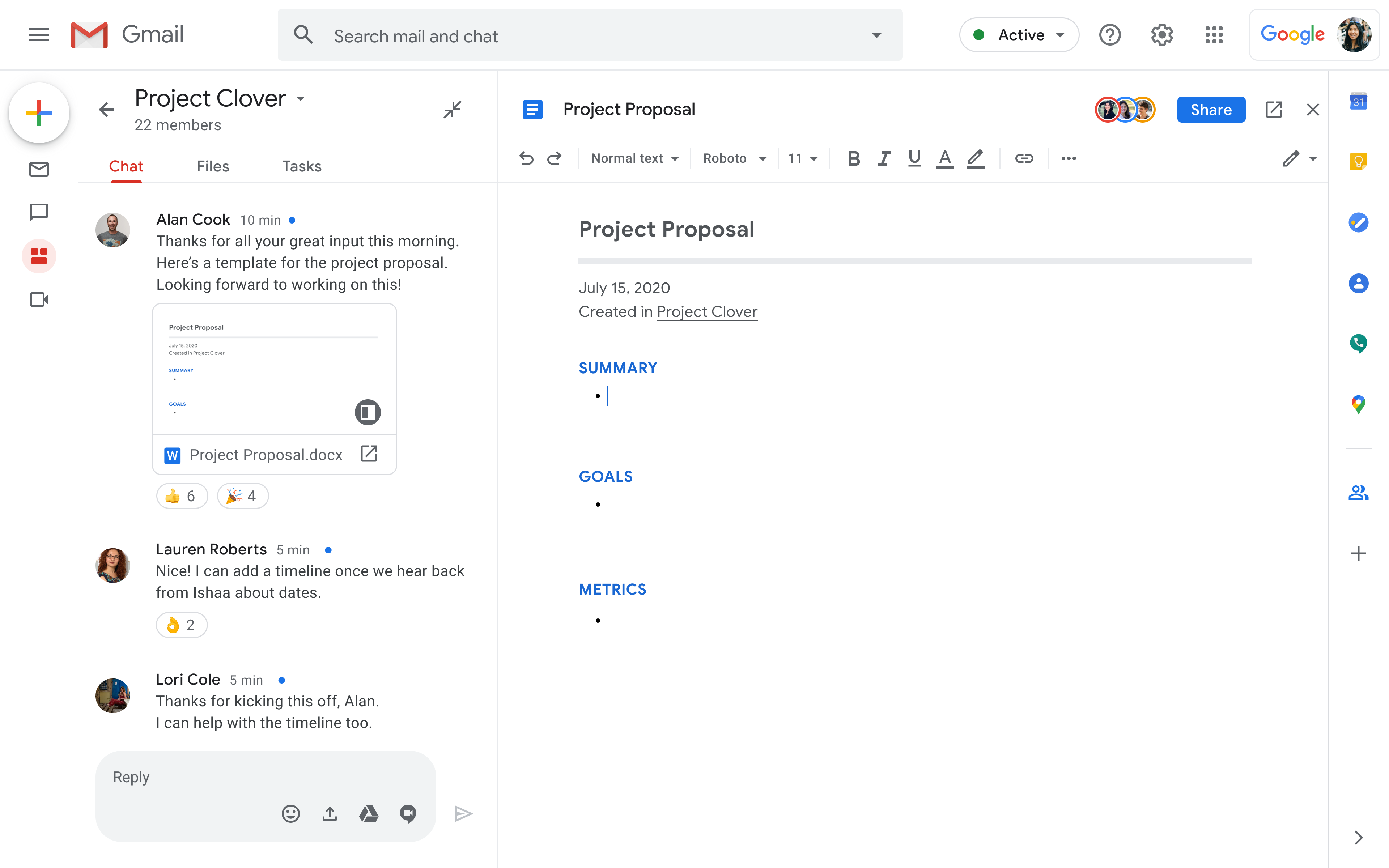
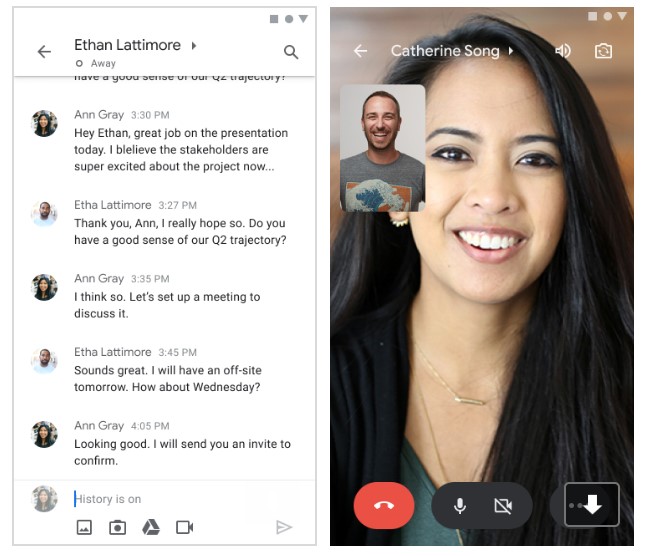
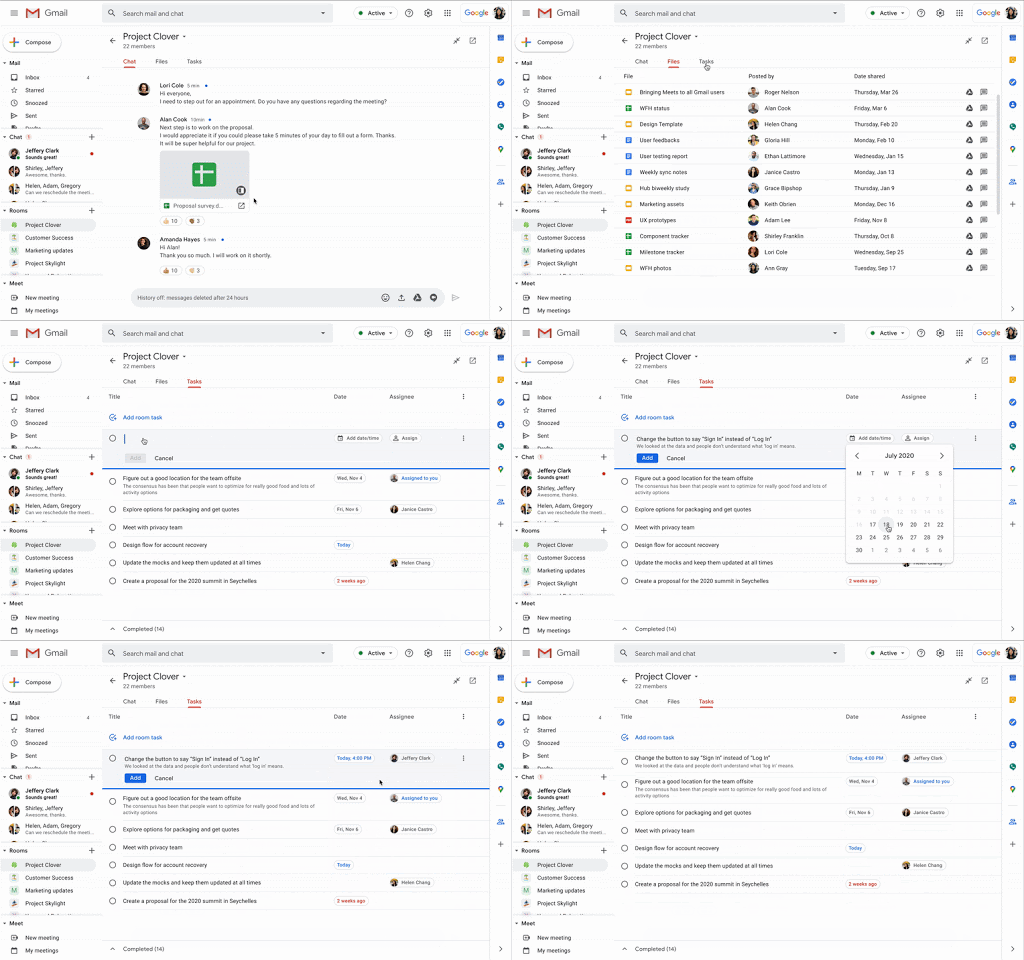
In essence, the redesign further blurs the lines between Google services: The Gmail app will also serve as a hub for Chat, Docs collaboration will be directly embedded in Chat rooms, and backend search will function across Chat and Gmail. Google claims these changes are intended to help G Suite users retain their focus by reducing the need to switch apps between tasks. The tech giant also noted more features are in development, such as supporting picture-in-picture video calls within Gmail and offering Meet functionality directly in Docs. 

Deeper G Suite integrations pose an existential threat to Zoom and Slack, as enterprises will look to cut redundant software subscriptions. As we have noted before, Google and Microsoft together account for virtually the entire enterprise office suite market — this gives the tech giants a considerable advantage over smaller competitors like Zoom and Slack, which only offer standalone enterprise communications platforms.

Google and Microsoft can exercise this advantage by promoting their less dominant services through their already dominant platforms. In concrete terms: If G Suite is suffused with Google Chat integrations available at no additional cost, it doesn't make sense for an enterprise to pay for both Slack and G Suite. And because there aren't viable competitors to Microsoft and Google in the enterprise office suite market, enterprises will choose to stay within their ecosystems, cutting the redundant services offered by Zoom and Slack. 

Google will likely take a more gradual approach to rolling out the G Suite integrations due to concerns over both the user experience and antitrust regulation. For enterprises that use G Suite along with competing services like Slack or Zoom, the deeper integrations might come off as more invasive than useful, considering how much real estate they occupy within the revamped user interface. So even though Google could probably flip a switch and turn on every available integration at once, it risks alienating a significant number of customers by doing so. A more gradual approach could also help to avoid regulatory scrutiny.

In May, Slack CEO Stewart Butterfield told The Verge, "Microsoft is perhaps unhealthily preoccupied with killing us, and Teams is the vehicle to do that." Google is employing a similar strategy to grow market share in this domain, and as it faces antitrust scrutiny in both the US and Europe, it may restrain its G Suite integration plan in an attempt to avoid attracting further regulatory attention. 

Want to read more stories like this one? Here's how you can gain access:

  1. Join other Insider Intelligence clients who receive this Briefing, along with other Connectivity & Tech forecasts, briefings, charts, and research reports to their inboxes each day. >> Become a Client
  2. Explore related topics more in depth. >> Browse Our Coverage

Are you a current Insider Intelligence client? Log in here.

Join the conversation about this story »

19 Jul 06:32

The Trump campaign is running several anti-TikTok ads on Facebook and Instagram accusing the Chinese app of 'spying on you'

by Paige Leskin

donald trump facebook tiktok ad

  • The Trump campaign is now running political ads on Facebook and Instagram that accuse TikTok of "spying" on users.
  • The ads, launched Friday, encourage users to sign a petition banning TikTok, the viral app that's raising national security concerns due to its ties to China through its parent company ByteDance.
  • In recent weeks, the president and government officials have said they're considering banning TikTok in the US, where the app has an estimated userbase as high as 80 million.
  • Visit Business Insider's homepage for more stories.

As Donald Trump considers banning TikTok, his political campaign has started running ads on Facebook and Instagram accusing the China-based platform of "spying" on its users.

More than 100 iterations of ads were launched Friday encouraging Facebook users to sign a petition banning TikTok in the US. The ads, first spotted by New York Times reporter Taylor Lorenz, come as the US government threatens to instate a country-wide ban on the viral video-sharing app over its ties to China.

Facebook removed one version of the anti-TikTok ad on Friday evening. The ad in question includes a graphic with "yes" and "no" checkboxes, which appears to be a violation of Facebook's policy against ads with "nonexistent functionality." Facebook did not respond to Business Insider's request for comment.

Another anti-TikTok ad tells users: "Protect our kids from China." 

TikTok's roots in China — where the app's parent company, ByteDance, is located — have long raised questions from US lawmakers and security experts about how much access and influence the Chinese government is afforded over user data and content moderation. Concerns over the TikTok-China connection have skyrocketed in recent weeks after India decided to instate its own ban on the app earlier this month.

The campaign's political ads also claim that "TikTok has been caught red-handed by monitoring what is on your phone's clipboard." The accusation is based on research from March showing how apps are able to access content stored on the clipboard — the copy-and-paste feature — of users' iPhones and iPads. TikTok was only one of the dozens of the apps caught spying on iPhone clipboards, including LinkedIn and Fox News. ByteDance has since said it will stop accessing clipboard content.

trump tiktok facebook ad

In recent weeks, the Trump campaign has also taken out ads against Twitter and Snapchat, claiming they're "attempting to silence" the president.

In early July, both President Trump and Secretary of State Mike Pompeo publicly said they were considering a TikTok ban in the US: Trump said the ban would be a way to punish China over its role in the coronavirus pandemic, while Pompeo cited national security concerns. On Thursday, White House economic adviser Larry Kudlow told reporters he expected TikTok to "pull out of the holding company which is China-run and operate as an independent American company."

Since TikTok launched in the US in 2018, the app has successfully been able to brush off lawmakers' calls for investigations and national security experts' warnings. Most recently, TikTok launched a content advisory council to guide policy changes and appointed a US-based CEO in June to show it was distancing itself from its Chinese roots.

But TikTok has also run afoul of the Trump campaign for reasons beyond its ties to China. Swarms of TikTok teens and K-pop fans were credited last month with signing up en masse for tickets to a major Trump rally in Tulsa, Oklahoma. Instead of the big comeback that the Trump campaign advertised, attendance at the rally was considerably lacking.

TikTok's reported influence on the Tulsa rally demonstrates how the app has grown into a social media powerhouse, establishing itself as a staple of internet culture and social interaction for Generation Z. The app has more than 2 billion global downloads, and an estimated US userbase at as high as 80 million. It outperforms US-based apps with younger audiences such as Snapchat and Instagram in both new downloads and time spent

The imminent threat of TikTok disappearing from the US has already signaled panic among users and creators, and has led attempts by tech companies to capitalize on the chaos to lure the app's loyal following to their competing platforms.

SEE ALSO: TikTok's under pressure from the US government, and competitors like Snapchat, YouTube, and Instagram are capitalizing on the app's uncertain future

Join the conversation about this story »

NOW WATCH: Swayze Valentine is the only female treating fighters' cuts and bruises inside the UFC octagon

17 Jul 22:02

The National Suicide Prevention Lifeline will be available by dialing ‘988’ in 2022

by Makena Kelly
FCC Officials Testify Before House Energy And Commerce Committee Photo by Chip Somodevilla/Getty Images

The National Suicide Prevention Lifeline will be available for people in suicidal crisis under a new easier-to-remember phone number in two years.

On Thursday, the Federal Communications Commission voted unanimously to finalize 988 as the number Americans can call to be directed to the 24/7 National Suicide Prevention Lifeline hotline. As of right now, individuals in suicidal crisis can reach that hotline by dialing 1-800-273-8255 (TALK), but that number will be easier to remember once it transitions to its three-digit equivalent starting on July 16th, 2022.

FCC Chairman Ajit Pai said in a statement on Thursday, “Establishing the easy-to-remember 988 as the ‘911’ for suicide prevention and mental health services will make it easier for...

Continue reading…

17 Jul 22:02

Samsung’s Galaxy Book S is the first laptop with Intel’s new Hybrid processor

by Monica Chin
Photo by Chris Welch / The Verge

Samsung has announced that its latest Galaxy Book S is now available to purchase. It’s the first device to offer Intel’s new “Core processors with Intel Hybrid Technology.” Previous Galaxy Book S models have run on Qualcomm’s Snapdragon platform.

The new Intel processors (referred to as “Lakefield”) are designed to power ultralight devices; we’re also expecting to see them in the Lenovo ThinkPad X1 Fold and the dual-screen Surface Neo. They’re essentially Intel’s answer to ARM.

The way these things work is that Intel combines one powerful core with four lower-power cores (for a total of five cores and five threads) on a single die. That allows smaller devices to offer a multithread-capable structure without requiring a hefty amount of...

Continue reading…

17 Jul 21:48

Microsoft Teams users seek better channel management tools

17 Jul 04:13

Introducing AudioCodes Live for Microsoft Teams

by Rebekah Carter
audiocodes-live-microsoft-teams

As the era of remote working continues to accelerate, employees need a way to stay connected. Communication tools like email and calling aren’t always ideal in a space where employees need to consistently collaborate.

Fortunately, solutions like Microsoft Teams are available to bridge the gap between the traditional workforce, and the new remote landscape. With Microsoft Teams, employees can speak to each other in a real-time environment. Instant messaging, voice and video pave the way for a more creative virtual team. But what about when employees need to tap into business phone?

Microsoft Teams does have a business phone service, but it’s not as reliable or immersive as many of the phone solutions that enterprises are used to, that’s where AudioCodes come in.

AudioCodes Live for Microsoft Teams

AudioCodes, a master of audio solutions for communications, is offering AudioCodes Live for Microsoft Teams. This portfolio of managed services eliminates the complexity associated with linking your business phone and essential tools to your Microsoft Teams set-up.

With AudioCodes Live for Microsoft Teams, companies can enjoy the freedom of a seamless, cost-effective, and efficient solution for Teams, offering both video and voice collaboration.

The AudioCodes Live for Teams experience is available through AudioCodes’ incredible community of service providers and partners. Each available package comes with a host of handy managed services, intended to support today’s teams. Companies have the option to choose from a range of options, starting with the essentials, and ranging all the way to premium services.

The per-user-per-month pricing also simplifies the way that companies access their new Microsoft Teams solution. There’s no need to worry about unpredictable costs. Instead, you choose what you need and pay for what you use. There are even additional subscription options for things like audio and video room conferencing, meeting insights (analytics) and call recording.

The Three Tiers for Audiocodes Live

AudioCodes has created three packages for Microsoft Teams users to suit different styles of business. The portfolio of solutions all come with their own range of managed services, including a per-user, per-month predictable pricing model. Options include:

  • Essentials: This package is perfect for companies that want to bring the power of telephony into their Microsoft Teams landscape. You get a fully managed SBC as a service system, so that you can integrate your existing phone services and providers into Microsoft Teams. Alternatively, you can set up your own new calling plans if you prefer
  • Live Pro: The Live Pro package comes with everything you need to start operating your employee lifecycle from within Microsoft Teams. This package supports busy and experienced IT professionals that need access to deeper insights. You get all the benefits of the Essentials package, plus cloud reporting. There’s also a self-service portal where you can manage provisioning, onboarding, and more
  • Live Premium: Live Premium from Audiocodes is perfect for those in search of a fully-managed and comprehensive solution. This package gives you everything you need to transform your Microsoft Teams experience. You get Microsoft tenant management, access to everything from user life-cycle management, to management over phones, conferencing devices, video, headsets, and more. There’s also support for on-premise integration with your existing legacy equipment, data, and branch services, and more. Everything is available as a white glove package

Microsoft Teams as a Service

The new selection of AudioCodes Live solutions for Microsoft Teams allows companies to unlock the full power of Microsoft Teams with managed services built in. The flexible managed service solutions means that companies can focus on building better collaboration and communication experiences, without worrying about the back-end.

At the same time, companies can tap into the value of AudioCodes solutions for business telephony or use their existing solutions with direct routing. There’s no limit to what you can accomplish when your business phone and Teams service works together. AudioCodes even offers user and device management through a simple portal.

To offer even greater flexibility within their Microsoft Teams as a Service solution, AudioCodes has also made this new solution available through a vast global community of service providers and partners. This is an excellent opportunity for partners that want to expand what they can offer their clients in the age of collaboration. At the same time, end-users get more choice on who they work with to transform their communication and collaboration stack.

Choosing Your Service Options

The AudioCodes solution is an exciting upgrade for companies that want to take their Microsoft Teams environment and transform it into a single pane of glass solution for collaboration and communication. Rather than just using Microsoft Teams for internal conversations, you can have your entire solution in one convenient place.

The per user per month pricing also means that companies have the freedom to scale their system according to their individual needs. There are no complicated long-lasting subscriptions to worry about, and you don’t need to stay tied into a specific service if the needs of your company change.

For service providers and partners the range of as a service solutions available for Microsoft Teams allows for an exciting addition to the portfolio in a time when the environment is more competitive than ever. Companies are constantly looking for ways to strengthen their collaborative environment, particularly in the remote working landscape.

AudioCodes Live for Microsoft Teams provides a range of managed service options that allow partners and service providers to meet the custom needs of every company, no matter their size of background.

The Simple Route to Team Collaboration

The 3 service packages available with AudioCodes Live for Microsoft Teams are now available to AudioCodes’ entire global reseller and service provider community. It’s also possible for companies to add-in further solutions and products like consulting and migration services, extra telephony systems, and more.

For companies that want to strengthen their position with Microsoft Teams collaboration, this could be the perfect step forward into the future.


17 Jul 02:29

WindowSwap lets you cycle through picturesque views from all over the world

by William Joel
A few windows from WindowSwap | WindowSwap

Some of us are fortunate enough to have a window with a view to help us cope with being inside so much. For those who aren’t so lucky, a new site called WindowSwap can help by letting you cycle through other people’s picturesque views from all over the world.

WindowSwap is a quarantine project by Sonali Ranjit and Vaishnav Balasubramaniam that lets you use your browser to watch a video of a window and its unique view from different locations across the globe. There are scenes from all over: there’s a rainy street in Thailand, a small field with a gentle breeze on a sunny day in Austria, a mountain view from Switzerland, a busy street in London, a view over a boardwalk and the ocean in Japan, a cat watching birds in Qatar, a view of the...

Continue reading…

17 Jul 02:24

Zoom and DTEN to release home video conferencing device

17 Jul 02:23

Microsoft quietly cut under 1,000 jobs across its business this week, as it enters its new fiscal year (MSFT)

by Ashley Stewart

  • Microsoft this week held layoffs, in what a spokesperson characterized as a small number of job cuts across multiple business units.
  • The cuts come in at less than 1,000 jobs, according to a person familiar with the situation. 
  • Microsoft had about 156,000 employees as of the end of March, meaning that the cuts affected less than 0.64% of its global workforce.
  • Earlier this week, Microsoft is said to have cut several roles at MSN.com, its online news portal, as it shifted to an AI-powered algorithmic feed. Some jobs were also cut in the Microsoft Azure cloud division, one source later told Business Insider.
  • Are you a current or former Microsoft employee? Contact this reporter via encrypted messaging app Signal (+1-425-344-8242) or email (astewart@businessinsider.com).
  • Visit Business Insider's homepage for more stories.

Microsoft cut a small number of jobs relative to the size of its workforce this week as it transitions to a new fiscal year, the company confirmed.

Microsoft has not issued a public statement on the layoffs, but a spokesperson said the cuts came across various teams and locations, without giving specifics. It's common, the spokesperson said, for Microsoft to re-evaluate its business as it enters a new fiscal year on July 1st. 

The most recent cuts affected less than 1,000 jobs, a person familiar with the situation said. The company had 156,439 employees as of March 31, including 92,335 in the US and 55,513 in the Seattle area, where it's headquartered. That means that the cuts affected approximately 0.64% or less of its total workforce.

Earlier this week, Microsoft is said to have laid off several workers at its MSN.com news portal as it shifts to an AI-powered algorithmic feed. Some jobs were also cut in the Microsoft Azure cloud division, one source later told Business Insider. Microsoft declined to comment on any cuts in the Azure division.

Microsoft typically makes changes around this time. Perhaps the most significant of these changes came in the July of 2017 when the company reorganized its entire sales organization to focus on cloud computing, and laid off thousands of employees.

This year, just prior to the end of Microsoft's fiscal year on June 30, Microsoft announced plans to close all of its physical retail locations and shut down its video game streaming service Mixer.

In Mixer's case, Microsoft last month told Business Insider the company is "committed to redeploying people and technology across our team wherever possible." In announcing the store closures, Microsoft said in a press release: "the retail team members will serve consumers, small-business, education, and enterprise customers, while building a pipeline of talent with transferable skills." 

Microsoft earlier this year also confirmed it froze hiring for some roles, except for in unspecific "strategic areas." The current status of the hiring freeze is unclear.

"We continue to seek industry-leading talent in a range of disciplines as we continue to invest in certain strategic areas," a Microsoft spokesperson told Business Insider in April. "However, in light of the uncertainties presented by COVID-19, we are temporarily pausing recruitment for other roles."

Got a tip? Contact Ashley Stewart via email at astewart@businessinsider.com, message her on Twitter @ashannstew, or send her a secure message through Signal at 425-344-8242.

Join the conversation about this story »

NOW WATCH: What makes 'Parasite' so shocking is the twist that happens in a 10-minute sequence

16 Jul 20:24

Here's how security experts think hackers hijacked the Twitter accounts of Jeff Bezos, Elon Musk, Barack Obama, and many others

by Isobel Asher Hamilton

  • Hackers hijacked dozens of accounts belonging to high-profile individuals on Wednesday to perpetrate a Bitcoin scam.
  • Twitter has said hackers likely tricked Twitter employees into giving them access to an internal company tool. Motherboard reports that hackers bribed a single Twitter employee to gain access.
  • Business Insider spoke to two cybersecurity experts who said it seems likely the hackers gained access to reset the emails and passwords tied to the compromised accounts.
  • Visit Business Insider's homepage for more stories.

Twitter on Wednesday was the target of a wild hack.

Hackers gained access to dozens of high-profile accounts, including Barack Obama, Joe Biden, Kim Kardashian, Elon Musk, and Jeff Bezos, a list which includes some of the richest people in the world.

They used the accounts to tweet links to a Bitcoin scam, asking followers to send Bitcoin and promising they'd send double the amount in return.

It's thought the hackers made away with as much as $120,000, and Twitter had to swing into action, suspending certain accounts and disabling all verified accounts from tweeting.

So how did this happen?

Twitter's investigation is still ongoing, but Motherboard, citing an anonymous source, reported that the hackers bribed an employee in order to gain access to an internal company tool.

Twitter acknowledged that hackers may have accessed internal tools, but appeared to dispute that an employe was bribed:

"We believe to be a coordinated social engineering attack by people who successfully targeted some of our employees with access to internal systems and tools," the company said.

A social engineering attack is a security term referring to types of attack where individuals are tricked into handing over access to systems or data. It isn't a technical hack, but relies on people failing to spot suspicious behavior. For example, if you got an email from someone impersonating your boss and requesting confidential company information, that would be an attempted social engineering attack.

"It looks like the way this was done was by using the tools inside Twitter to reset contact details and then trigger password resets,"  Alan Woodward, a cybersecurity expert at the University of Surrey, told Business Insider.

In other words, hackers potentially gained access to the internal, high-level Twitter tools, used them to switch out contact details for high-profile accounts with their own details, then sent password reset requests. This gave them access to people's accounts.

Hackers gaining the ability to reset passwords is not an easy attack to counter technically.

Killing the broader account management tool that allows employees to reset passwords might be one option but, as Woodward noted, users could never get back into the service if they were locked out.

Woodward suggested the best way for Twitter to defend against such an attack would be to require more than one employee to sign off on the password reset function.

"If you allow such tools to exist (and it's difficult to see how you'd not) then the only way to stop them being misused by an individual is to have a process in place to make sure you need two people internally to make it function," he said. 

Eerke Boiten, cybersecurity professor at De Montfort University, added: " I think the suggestion that an internal tool for managing accounts, including the possibility of resetting account email addresses, was used is credible."

He added this kind of tool would be like a "golden key" if handed to a hacker.

"This hack hints that the level of account regulation requires such a large number of staff with access to the account changing tools that it introduces a security risk via broad access to the 'golden key,'" Boiten told Business Insider.

Another worry is private messages

Woodward said that another worry for the people targeted by this attack is whether the hackers could have read their private direct messages on Twitter.

"As it currently stands DMs [direct messages] are not E2EE [end-to-end encrypted] so any device you log into your account from can access those DMs," said Woodward.

End-to-end encryption is used by messaging apps like WhatsApp and Signal, and ensures that no one other than the sender and recipient can read a message. As Woodward noted, Twitter does not use end-to-end encryption for direct messages.

Eva Galperin, cybersecurity chief at the nonprofit Electronic Frontier Foundation, tweeted: "Twitter wouldn't have to worry about the possibility that the attacker read, exfiltrated, or altered DMs right now if they had implemented e2e for DMs like EFF has been asking them to for years."

Twitter has not yet commented on whether it thinks the hackers looked at the compromised accounts' direct messages.

The hack is an unsettling reminder of how users of social media can be powerless to stop attacks on their private accounts.

Woodward and Boiten both said there was no way for regular Twitter users to defend against this kind of attack.

Join the conversation about this story »

NOW WATCH: Here's what it's like to travel during the coronavirus outbreak

16 Jul 20:14

Twitter Employees Hacked In ‘Coordinated Social Engineering Attack’

by Michael Novinson
Twitter said Wednesday that hackers breached employees with access to internal systems and tools, and then used that access to take control of high-profile accounts and tweet on their behalf.
16 Jul 20:14

This Company is Selling Bizarre and Expensive Spy Equipment to Police

by Todd Feathers

Last month, a small Georgia company that sells equipment to law enforcement sent out a jovial email to its private mailing list, with special summer offers and a copy of its 2020 catalogue of covert surveillance tools.

June had seen what was, by some estimates, the largest protest movement in U.S. history. Tens of millions of people filled streets across the country to protest the police killing of Black Americans, sparking unprecedented momentum for defunding the police and intense scrutiny of police tactics and technology.

Advanced Covert Technology has been selling surveillance tools to police for 21 years, and its latest catalog is an example of the expensive, Hollywood-style gadgets being marketed to law enforcement agencies out of the public eye.

For $2,250, ACT offered a fake Monster energy drink can—”fully functional as an energy drink”— equipped with a hidden high gain-microphone. The company also sells a bugged $1 bill with 16 gigabytes of audio storage for $1,875, and a chewing tobacco container—also fully functional—equipped with both a microphone and a high-quality camera, for $1,650.

Other items include fake vape pens, sports caps, gift cards, and car keys equipped with cameras or microphones, as well as band t-shirts from artists ranging from Johnny Cash to Jane’s Addiction designed to hold spy cameras.

Advanced Covert Technology
The Advanced Covert Technology catalog offers spy devices disguised as vapes, energy drinks, clothing, and more.

ACT co-founder Ryan Mitchell told Motherboard that the devices were intended for use by undercover officers, and claimed that publishing details of their existence would endanger the lives of police officers. “It’s very serious that it doesn’t get out what this equipment is,” Mitchell said. “[Undercover officers] could get killed if the bad guy finds out what the equipment is. You are jeopardizing somebody’s life.”

From 2015 through 2019, there were no recorded killings of officers while performing undercover work, according to annual statistics reported by police departments around the country and compiled by the FBI.

A quick Google search reveals that very similar equipment is available for sale to civilians through electronics retailers. For example, New York City staple B&H sells an assortment of spy gear posing as common household items, including a fake Monster Energy drink, for a fraction of the price ACT is offering to law enforcement.

Advanced Covert Technology

The 36-page ACT catalog was distributed the week of June 20th to a private mailing list, according to Dave Maass, a senior investigative researcher for the Electronic Frontier Foundation, who shared the catalog with Motherboard after it was sent to him by a person on the mailing list. Maass said that he did not have a complete list of the recipients, but that it appeared to be a broad group, rather than a select set of elite undercover officers.

Maass, who studies police technology, said surveillance companies commonly claim that informing the public about their wares will put police in harm’s way, without providing any evidence that’s the case.

“When you have companies going to police departments and hawking their wares and then you have police department’s acquiring them without a public process, that’s a problem,” Maass told Motherboard. “These things are super expensive. If you’re going to spend several grand on a gift card that has a recording device in it, is that a good use of money? Is it a good return on investment?”

Advanced Covert Technology
A listing in the Advanced Covert Technology catalog showing a dollar bill equipped with a hidden recording device.

It is unclear whether any police departments or private companies have purchased the specific items in the 2020 catalog, but ACT has previously sold more than $60,000 of audio and video equipment to federal agencies, including the Department of Justice and U.S. Army, according to spending records. The company has also provided equipment to local police in Alabama, Georgia, Florida, North Carolina, South Carolina, and other states, according to readily available purchase reports and check registers.

Through its other co-founder, Charlie Fuller, ACT also has a cozy relationship with the International Association of Undercover Officers (IAUO), a membership and training organization. Fuller, a former agent with the Bureau of Alcohol, Tobacco, Firearms, and Explosives, is the current executive director of the IAUO, and ACT is the only surveillance equipment vendor the IAUO promotes on its website.In its catalog, ACT returns the favor, encouraging customers to also enroll in Fuller’s undercover training courses, which cost as much as $475 per person.

“It’s fairer to the bad guys,” Fuller told Motherboard about ACT’s spy equipment. “It’s great for the court system. It doesn’t put my word against your word, it puts my video against your video. It doesn’t get any more fair than that.”

“We used to wear tape recorders and hide them on our body, and now they’ve got all this nice stuff,” he added. “What’s more covert than that? What’s more Hollywood than that?”

16 Jul 20:12

UCaaS on Track to Capture 50% of the Whole PBX Market

By John Malone
According to a new survey by the Eastern Management Group, UCaaS is now the fastest-growing telephony system in enterprises with 300 or more employees.
16 Jul 20:10

BlueVoyant Raises $68 Million To Boost Security Services Tools

by Michael Novinson
The funding was led by Temasek, and will allow BlueVoyant to increase the number of technical, sales and marketing resources supporting its managed security, third-party cyber risk, and cyber defense services.
16 Jul 20:09

Canada is way ahead in scooping up tech talent from the US

by Taylor Borden

  • While the US has long been a tech sector destination, the country's recent political climate has pushed noncitizen tech workers to reconsider their options — and Canada could be benefiting, Axios reported.
  • Axios cited a study from the Center for Security and Emerging Technology which found that even before the pandemic, Canada's skilled immigration program has been successfully processing a high number of noncitizen American residents.
  • From 2017 to 2019, more than 20,000 applied for and received express entry permanent residence in Canada, and the number increased by 75% over that period, the study found. 
  • From the Trump administration freezing H-1B visas to nearly barring international students at colleges operating remotely, the US is at risk of intensifying this flow of residents, and pushing its top tech talent out.
  • Following the H-1B visa ban, the CEO of Ottawa-based Shopify tweeted: "If this affects your plans, consider coming to Canada," suggesting that company at least is welcoming American talent. 
  • In 2019, the US was the third most popular recipient of express entry for skilled noncitizen workers, behind India ... and Canada.
  • Canadian immigration numbers are likely to increase and US immigration numbers are likely to fall. A study from the National Foundation of American Policy projected that enrollment of new international students at US colleges — the exact kind of person Canada would welcome — is set to decline this fall by 63% to 98%. 
  • Business Insider has provided a step-by-step guide on moving to Canada and becoming a citizen.
  • Visit Business Insider's homepage for more stories.

SEE ALSO: A step-by-step guide for moving to Canada and becoming a citizen there

Join the conversation about this story »

NOW WATCH: Why Pikes Peak is the most dangerous racetrack in America

16 Jul 20:06

Russian hackers are targeting vaccine development, officials say

by Monica Chin
Vaccine development Photo by Ute Grabowsky/Photothek via Getty Images

Hackers from Russian intelligence services are targeting organizations that are involved in COVID-19 vaccine development, according to US, UK, and Canadian authorities.

The UK’s National Cyber Security Centre (NCSC) denounced the attacks in an advisory issued Thursday. The NCSC believes the culprits to be APT29, also known as “the Dukes” and “Cozy Bear,” an espionage organization it says is likely associated with Russian intelligence services. A number of partner agencies support that assessment, the advisory says, including the Canadian Communications Security Establishment, the US Department of Homeland Security, the Cybersecurity and Infrastructure Security Agency (CISA), and the National Security Agency.

The NCSC believes the...

Continue reading…

16 Jul 05:55

Leaked Gmail redesign integrates Chat, Meet, and document collaboration in one place

by Jay Peters
Image: Tahin Rahman

Update: Google has officially announced the changes. Original story follows:

Google seemingly has a big Gmail redesign in the works that could let you collaborate with colleagues, work on Google Docs, and talk over Google Meet all without leaving Gmail. Leaked images of the redesign were spotted on Google’s website for the Google Cloud Next ‘20: OnAir event by Twitter user Tahin Rahman (via Android Police).

In the redesign, there are now tabs for Mail, Chat, Rooms, and Meet. The Chat tab looks to take you to your conversations with people, while Rooms appear to be spaces for topic-based conversations, similar to Slack channels. The Meet tab shows your upcoming Google Meet meetings and suggestions for who you might want to contact. (The...

Continue reading…

16 Jul 05:53

Gmail is integrating Google Chat, Rooms, and Meet to take on Microsoft and Slack

by Dieter Bohn

True to Google’s penchant for just announcing things right after they’ve leaked, the company has unveiled a grand redesign of Gmail for G Suite business users ahead of next week’s Google Cloud conference. The app isn’t so much “Gmail” anymore as it is a unified app for all of Google’s communication platforms: Gmail, Chat, Rooms, and Meet.

It will be available as an “early access preview” to G Suite customers this week and roll out to all G Suite customers later this year. As for the consumer version of Gmail, it seems as though little will change in the short term. Google says that it is “actively thinking through how and when to bring this experience to the consumers who might want it.”

Javier Soltero, who rolled in to Google last...

Continue reading…

16 Jul 05:50

Banning TikTok Is a Human Rights Issue

by Kevin Truong

As a growing list of companies and government officials issue warnings about the use of TikTok, citing privacy and security concerns, the popular video sharing app is denying that it shares its users’ data with the government of China.

Questions about TikTok and its Beijing-based parent company ByteDance are not new. TikTok has in the past faced concerns about its growing influence in the United States. It has also been accused of censoring user content critical of China. In November of last year, TikTok apologized to 17-year-old user Feroza Aziz after a video she posted criticizing China’s treatment of the Uighur Muslims was removed on the platform, calling the decision a "human error" that should not have happened.

In the last few weeks, though, pressure on TikTok has hit new levels. The app has left Hong Kong, India has banned it, and politicians have suggested the U.S. should do the same. Amazon told employees to remove TikTok from their work phones (it quickly said an email telling them to delete it was sent in error), and Wells Fargo also told employees they must delete the app. Secretary of State Mike Pompeo said in an interview that the Trump Administration is “looking” at banning TikTok and other Chinese social media apps.

The question being raised—by Silicon Valley, by politicians, by governments—is what should be done about TikTok? The bulk of the public argument thus far has been that, because ByteDance is a Chinese company, it cannot be trusted to be independent from the Chinese Communist Party, and could use TikTok as either a spying or influence tool in other countries. Proponents of a ban are speaking in absolutes about what is a complicated and nuanced situation. TikTok is the first major, well-funded foreign social media company that has become massively popular with Americans, especially a new generation of social media users. And so it is a legitimate threat to Facebook and YouTube from a competition perspective. It's hard to say how much of the current concern is American protectionism, how much is legitimate fear of surveillance and foreign influence, and how much of it is xenophobia.

The debate over TikTok is similar to that over Huawei, another Chinese technology company that has been widely banned in the United States and several other countries. The Huawei ban has been predicated on classified information about supposed vulnerabilities or surveillance operations that have never become public. Similarly, politicians who want to ban TikTok have thus far been unable to point to a specific vulnerability or example of the app sharing American data with the Chinese government.

TikTok's public-facing issues aren't all that different from those facing YouTube or Facebook—it has trouble with content moderation, it has an ad-based business model that relies on monetizing the data of its users, and it could very well be subject to data collection orders from governments. The difference with TikTok is that the government that could be demanding that information is China. But banning TikTok in the United States would be an extreme measure, and one that's devastating to the free expression of its users.

“Any motivated actor, from a government to a malicious hacker or disgruntled employee, has reason to drive a dump truck through the loopholes in TikTok’s terms of service,” Peter Micek, a digital human rights expert at Access Now said in an email to Motherboard. “Only comprehensive data protection regulations, and able and well-resourced enforcement, can reduce this exploitation.”

But “banning apps is an extreme measure that does not meet international human rights standards,” Micek said. “Under international human rights law, blocking an entire service or application is not regarded as necessary and proportionate and has been declared unlawful in several instances.”

In an email to Motherboard, a TikTok spokesperson said the company has hundreds of employees and key leaders in the United States tasked with safety, security, product, and public policy, and noted that the company is led by an American CEO. In May, former Disney executive Kevin Mayer resigned from his position at Disney to become the chief executive of TikTok.

“We have no higher priority than promoting a safe and secure app experience for our users,” the spokesperson said. “We have never provided user data to the Chinese government, nor would we do so if asked."

According to its Privacy Policy, TikTok collects user data similar to many other social media and technology companies. This includes registration information such as age and email; user generated content such as comments, photos, and videos; information contained in messages; and information about a user’s location including IP address.

“TikTok collects much less U.S. user information than many of the companies in our space and stores it in the U.S. and Singapore. We have not, and would not, give it to the Chinese government,” TikTok said.

The company also recently released its Transparency Report to provide insight on how the company handles moderation and requests for information.

Lots has happened this month, if you're trying to catch up, here's a TikTok timeline:

Legislation banning the use of TikTok by U.S. federal employees

On March 4, U.S. Senator Josh Hawley, chairman of the Judiciary Committee’s Subcomittee on Crime and Terrorism, announced he would introduce legislation banning the use of TikTok by all federal employees on government devices.

“TikTok was the most downloaded app of 2019. More than any other app in the country. More teenagers are on TikTok now than use Facebook. It counts millions and millions and millions of Americans as users. But it is owned by a Chinese company that includes Chinese Communist Party Members in leadership, and it is required under Chinese law to share user data with Beijing,” Senator Hawley said.

If passed, the ban would follow similar moves already made by the Defense Department and the Transportation Security Administration.

India bans TikTok and other Chinese apps

On June 29, the Indian government included TikTok among 59 Chinese apps that would be banned in the country, citing national security concerns. The announcement came not long after a clash between China and India in the Himalayas left 20 Indian soldiers dead.

According to Sensor Tower, India is TikTok’s largest market with 611 million downloads of the app made in the country.

Trump administration 'looking' at banning TikTok

On July 6 in an interview with Fox News, Secretary of State Mike Pompeo said the Trump Administration is “looking” at banning TikTok and other Chinese social media apps.

When asked about a ban, Secretary Pompeo said: “We’re taking this very seriously. We’re certainly looking at it. We’ve worked on this very issue for a long time. Whether it was the problems of having Huawei technology in your infrastructure, we’ve gone all over the world and we’re making real progress of getting that out.”

TikTok pulls out of Hong Kong

On July 7, TikTok announced it would be withdrawing its app from Hong Kong after China imposed a new security law in the semi-autonomous city. The law is seen by many as giving sweeping powers to Beijing.

TikTok’s move to leave Hong Kong is a stronger stance than other social media companies such as Facebook and Twitter have taken, which said they would be pausing cooperation with requests for information from Hong Kong’s law enforcement officials.

Amazon asks employees to remove TikTok in 'error'

On July 10, Amazon sent out an email to its employees asking them to delete TikTok from their phones, citing concerns over security. The company sent out a statement later that day saying the email was sent out in error.

“This morning’s email to some of our employees was sent in error. There is no change to our policies right now with regard to TikTok,” the statement said.

Employees at Wells Fargo asked to remove TikTok from work phones

On July 11, NBC reported that employees at Wells Fargo were told to delete TikTok from their work phones, with a spokesperson citing concerns over privacy and security.

“We have identified a small number of Wells Fargo employees with corporate-owned devices who had installed the TikTok application on their device. Due to concerns about TikTok’s privacy and security controls and practices, and because corporate-owned devices should be used for company business only, we have directed those employees to remove the app from their devices,” the spokesperson told Motherboard in an email.

The DNC and RNC advise against using TikTok

Also over the weekend, both the Democratic and Republican national committees warned their staff and campaigns about using TikTok on their phones.

On Friday, the Democratic National Committee (DNC) repeated a warning to its campaigns, state parties, and committees asking that they refrain from downloading TikTok on their personal devices. This follows a previous warning put out by the DNC in December.

On Saturday, Republican National Committee (RNC) National Press Secretary Mandi Merrit said the RNC had advised their employees not to download TikTok on their personal devices out of security concerns.

White House trade advisor Peter Navarro’s calls TikTok CEO Kevin Mayer a 'puppet'

In an interview with Fox News on July 12, White House trade advisor Peter Navarro said that TikTok hiring former Disney executive Kevin Mayer as its CEO is similar to a move made by Chinese telecom giant Huawei and called Mayer a "puppet."

“They’re running the same playbook as Huawei, right? Put an American puppet in charge of Huawei as the CEO, and say, ‘hey, everythings going to be fine, we’re going to be separate.’ They’re trying that game with TikTok. Not going to work,” Navarra said. He then went on to say to expect “strong” action by President Trump, without elaborating what was meant.

Chinese telecom giant Huawei has faced bans by the Trump administration and has long been accused of serving as a backdoor for spying by the Chinese government As reported by VICE in 2018, there’s no public evidence that Huawei devices are being used to spy on Americans and some see the efforts to blacklist the company as being the result of protectionism and geopolitical tension between the United States and China.

16 Jul 05:48

Zoom introduces all-in-one home communications appliance for $599

by Ron Miller

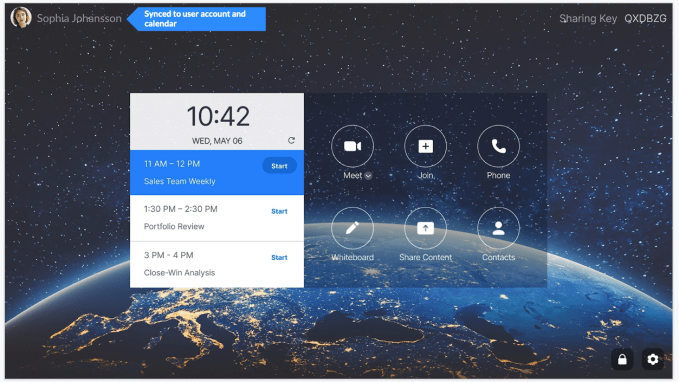
Zoom has become the de facto standard for online communications during the pandemic, but the company has found that it’s still a struggle for many employees to set up the equipment and the software to run a meeting effectively. The company’s answer is an all-in-one communications appliance with Zoom software ready to roll in a simple touch interface.

The device, dubbed the Zoom for Home – DTEN ME, is being produced by partner DTEN. It consists of a standalone 27-inch screen, essentially a large tablet equipped with three wide-angle cameras designed for high-resolution video and 8 microphones. Zoom software is pre-loaded on the device and the interface is designed to provide easy access to popular Zoom features.

Zoom for Home – DTEN ME with screen sharing on. Image Credits: Zoom

Jeff Smith, head of Zoom Rooms, says that the idea is to offer an appliance that you can pull out of the box and it’s ready to use with minimal fuss. “Zoom for Home is an initiative from Zoom that allows any Zoom user to deploy a personal collaboration device for their video meetings, phone calls, interactive whiteboard annotation — all the good stuff that you want to do on Zoom, you can do with a dedicated purpose-built device,” Smith told TechCrunch.

He says this is designed with simplicity in mind, so that you pull it out of the box and launch the interface by entering a pairing code on a website on your laptop or mobile phone. Once the interface appears, you simply touch the function you want, such as making a phone call or starting a meeting, and it connects automatically.

Image Credits: Zoom

You can link it to your calendar so that all your meetings appear in a sidebar, and you just touch the next meeting to connect. If you need to share your screen it includes ultrasonic pairing between the appliance and your laptop or mobile phone. This works like Bluetooth, but instead of sending out a radio signal, it sends out a sound between 18 and 22 kHz, which most people can’t hear, to connect the two devices, Smith said.

Smith says Zoom will launch with two additional partners, including the Neat Bar and the Poly Studio X Series, and could add other partners in the future.

The DTEN appliance will cost $599 and works with an existing Zoom license. The company is taking pre-orders and the devices are expected to ship next month.

16 Jul 05:47

Gmail for G Suite gets deep integrations with Chat, Meet, Rooms and more

by Frederic Lardinois

Google is launching a major update to its G Suite productivity tools today that will see a deep integration of Gmail, Chat, Meet and Rooms on the web and on mobile, as well as other tools like Calendar, Docs, Sheets and Slides. This integration will become available in the G Suite early adopter program, with a wider roll-out coming at a later time.

The G Suite team has been working on this project for about a year, though it fast-tracked the Gmail/Meet integration, which was originally scheduled to be part of today’s release, as part of its response to the COVID-19 pandemic.

At the core of today’s update is the idea that we’re all constantly switching between different modes of communication, be that email, chat, voice or video. So with this update, the company is bringing all of this together, with Gmail being the focal point for the time being, given that this is where most users already find themselves for hours on end anyway.

Google is branding this initiative as a “better home for work” and in practice, it means that you’ll not just see deeper integrations between products, like a fill calendaring and file management experience in Gmail, but also the ability to have a video chat open on one side of the window while collaboratively editing a document in real time on the other.

Image Credits: Google

According to G Suite VP and GM Javier Soltero, the overall idea here is not just to bring all of these tools closer together to reduce the task-switching that users have to do.

Image Credits: Google

“We’re announcing something we’ve been working on since a little bit before I even joined Google last year: a new integrated workspace designed to bring together all the core components of communication and collaboration into a single surface that is not just about bringing these ingredients into the same pane of glass, but also realizes something that’s greater than the sum of its parts,” he told me ahead of today’s announcement. “The degree of integration across the different modes of communication, specifically email, chat, and video calling and voice video calling along with our existing physical existing strength in collaboration.”

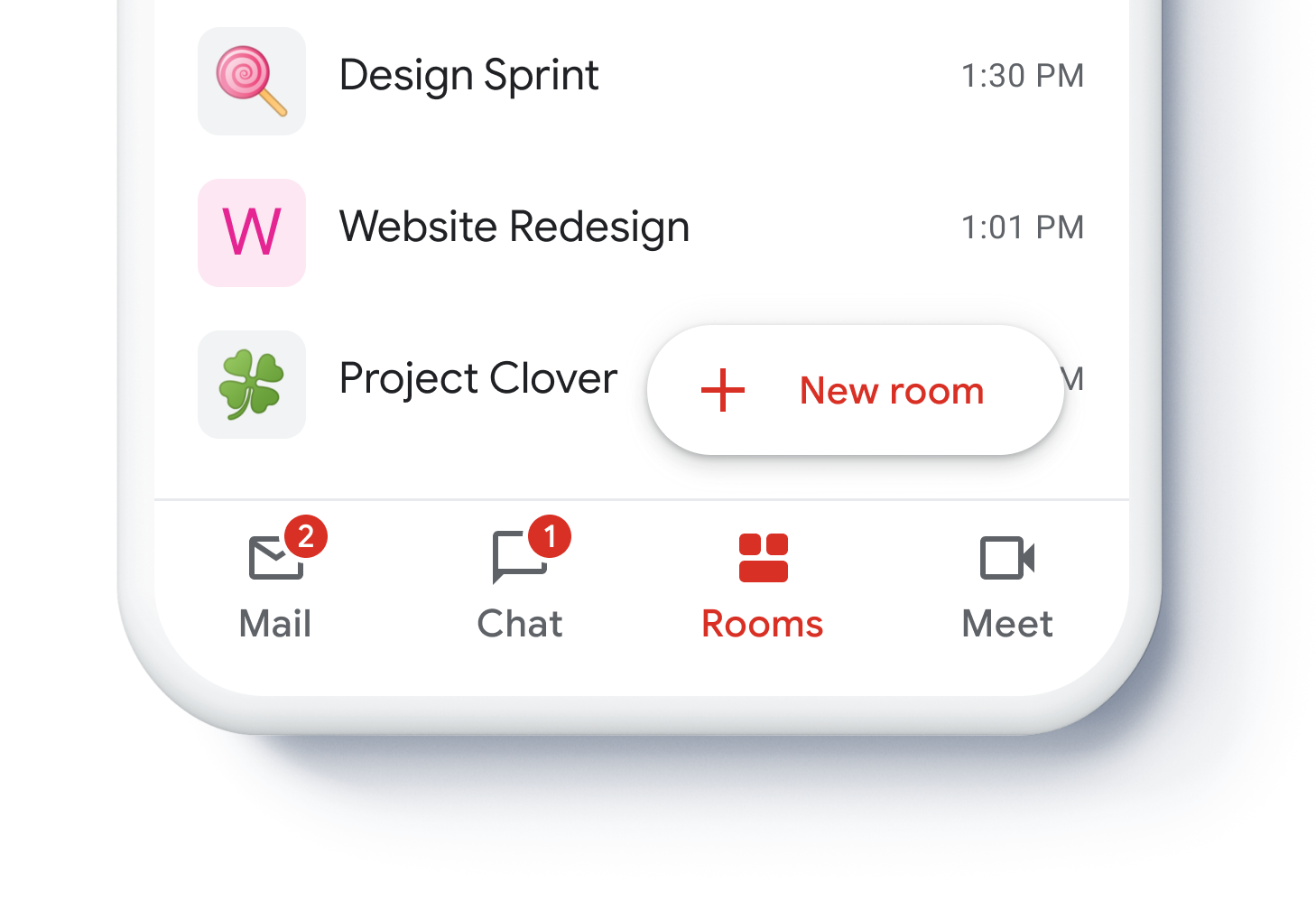
Just like on the web, Google also revealed some of its plans when it first announced its latest major update to Gmail for mobile in May, with its Meet integration in the form of a new bar at the bottom of the screen for moving between Mail and Meet. With this, it’s expanding to include native Chat and Rooms support as well. Soltero noted that Google thinks of these four products as the “four pillars of the integrated workspace.” Having them all integrated into a single app means you can manage the notification behavior of all of them in a single place, for example, and without the often cumbersome task-switching experience on mobile.

Image Credits: Google

For now, these updates are specific to G Suite, though similar to Google’s work around bringing Meet to consumers, the company plans to bring this workspace experience to consumers as well, but what exactly that will look like still remains to be seen. “Right now we’re really focused. The people who urgently need this are those involved in productivity scenarios. This idea of ‘the new home for work’ is much more about collaboration that is specific to professional settings, productivity and workplace settings,” Soltero said.

Image Credits: Google

But there is more…

Google is also announcing a few other feature updates to its G Suite line today. Chat rooms, for example, are now getting shared files and tasks, with the ability to assign tasks and to invite users from outside your company into rooms. These rooms now also let you have chats open on one side and edit a document on the other, all without switching to a completely different web app.

Also new is the ability in Gmail to search not just for emails but also chats, as well as new tools to pin important rooms and new “do not disturb” and “out of office” settings.

One nifty new feature of these new integrated workspaces is that Google is also working with some of its partners to bring their apps into the experience. The company specifically mentions DocuSign, Salesforce and Trello. These companies already offer some deep Gmail integrations, including integrations with the Gmail sidebar, so we’ll likely see this list expand over time.

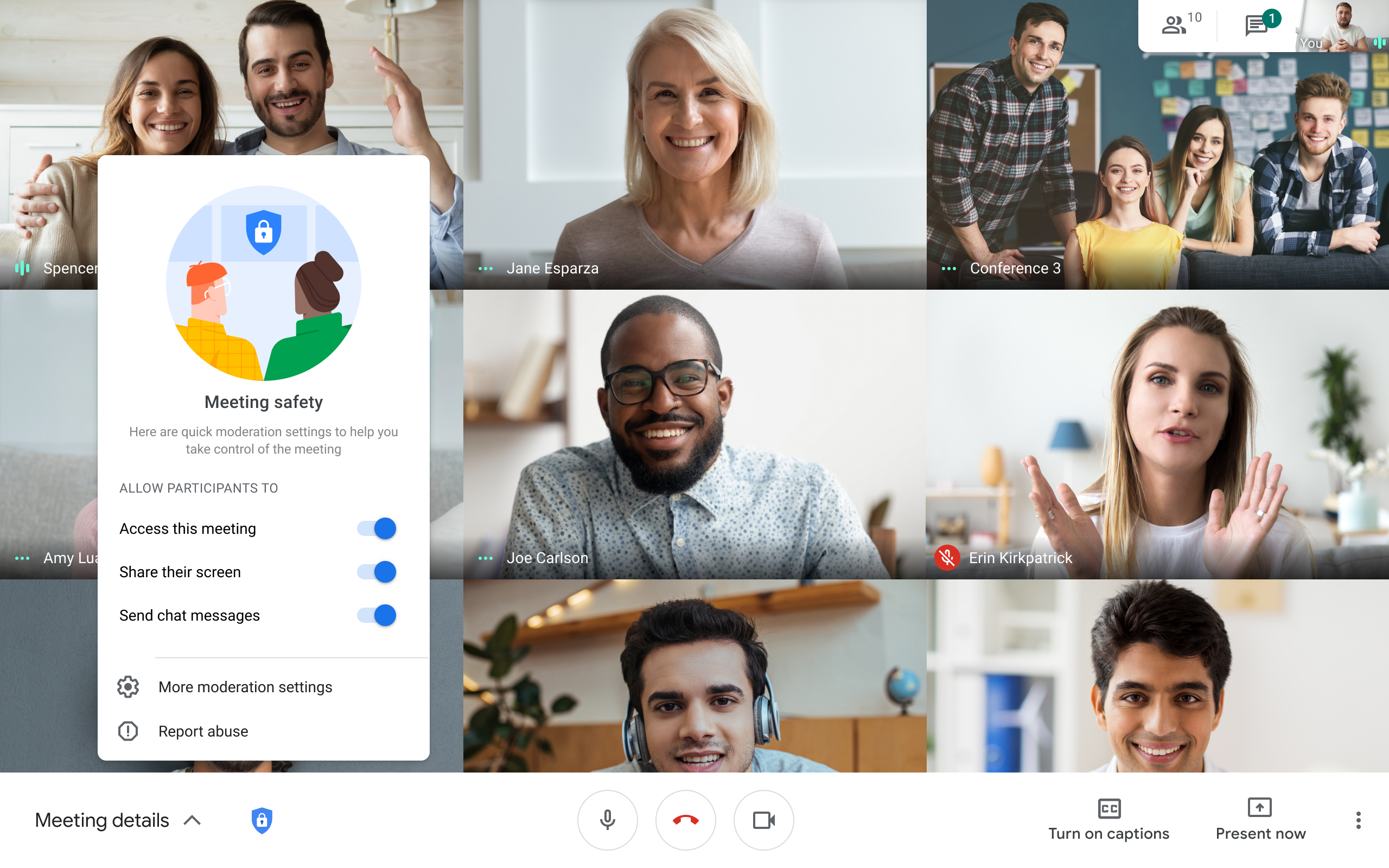
Meet itself, too, is getting some updates in the coming weeks with “knocking controls” to make sure that once you throw somebody out of a meeting, that person can’t come back, and safety locks that help meeting hosts decide who can chat or present in a meeting.

Image Credits: Google

16 Jul 05:47

Zoom Targets WFH Tech Gap

By Ryan Daily
Zoom introduces its Zoom for Home line, joining others with an aim of equipping WFH users where they are.
15 Jul 16:26

The antitrust case against Google is gathering steam

by Casey Newton
Illustration by Alex Castro / The Verge

Let’s spend a few minutes today catching up on the antitrust inquiries into Google. There are investigations related to competition underway against most of the biggest tech giants – Apple, Facebook, and Amazon face similar inquiries, and their CEOS are scheduled to join Sundar Pichai for a virtual hearing with the House of Representatives later this month. But there’s reason to believe the case against Google will land the soonest of any of them — in May, the New York Times reported that charges could come “as early as this summer.”

Scrutiny into the company’s business practices has since accelerated. Politico reported last week that California, which sat out an investigation led by 48 attorneys general, is preparing to mount its own...

Continue reading…

14 Jul 21:14

The New Ford Bronco Is An Obscene Monument to Climate Denialism

by Aaron Gordon

On Monday evening, Ford held a digital launch event for the new Ford Bronco, resurrecting the brand name for a Sport Utility Vehicle engineered for off-roading performance that is best known for transporting a fugitive along a Southern California freeway.

There isn’t much you need to know about the new Bronco—which I can assure you via Ford’s press release is capable of being driven on any terrain you could possibly want to drive it—because the odds are you will never need the off-roading capabilities this particular vehicle offers.

For John and Jane Q. Commuter, the only thing you need to know about the Bronco—which, unless you regularly go off-roading for sport and thrill, you should never ever consider buying no matter how much Ford tries to convince you otherwise with its massive marketing campaign—is that it does not come with a hybrid or electric version. In the year 2020, this is tantamount to climate denialism.

The Bronco’s devolution from off-road enthusiast utilitarianism to mainstream faux-adventurism lifestyle signaling is emblematic of how the American relationship with SUVs has changed since the Bronco was discontinued in 1996. The Bronco may have a special place in the hearts of off-roading enthusiasts and OJ Simpson trial obsessives, but it was never an especially popular vehicle, because it was never an especially practical one. When it debuted in 1965, Ford never considered marketing it to the masses. Ford produced some 1.1 million Broncos over its 30-year run; by comparison, Ford sold about 900,000 F-series pickup trucks in 2019 alone.

Ford killed off the Bronco because it had essentially replaced it with the Explorer and Expedition, two large SUVs hopping on the SUV craze of the 1990s. They were marketed as commuter vehicles with the same off-roading prowess even though they were essentially pickup trucks where the bed was replaced with seats. As Keith Bradsher wrote in his book High and Mighty: SUVs, the World’s Most Dangerous Vehicles and How They Got That Way, “the new Expedition would be little like the Bronco” from the driver’s perspective. Rather than the Bronco’s minimalist utilitarian aesthetic and form, the Expedition would be loaded with features and accessories, stacked on top of what was essentially the F-150 pickup engine components and parts and sold for a $12,000 markup. They would get Americans to buy this wildly impractical vehicle—a pickup truck without the bed?—by marketing the hell out of it as a lifestyle aspiration.

To achieve the expected sales figures, Ford couldn’t merely shift Bronco drivers into Expeditions. It needed to convert non-SUV drivers into SUV drivers. And they did (to be clear, this was not just a Ford thing; pretty much every American auto company was doing this at the time because they couldn’t compete with foreign automakers on quality and price). In 1991, SUVs were just 6.7 percent of the US sales market, according to Bradsher. By 1997, they were 16.1 percent. Today, the top seven selling vehicles in the US are pickups and SUVs. And 2020 could be the first year SUVs account for a majority of new car sales.

These SUVs are bad for the environment because they get worse gas mileage than smaller, lighter cars, especially if there is no Hybrid or plug-in electric version. Every driver who “upgrades” from a sedan to an SUV is a net-negative for the environment, undoing all of the gains in fuel efficiency since they last bought a vehicle. And over the last several decades, that transition has been the single largest and most significant trend in American transportation.

American automakers have long argued that regulations are an ineffective way to enact positive change, that the free market is the best way to produce progress. But they have proven themselves wrong time and again. From seat belts to air bags to air quality and fuel economy standards—all regulations they fought tooth and nail claiming they would destroy their businesses only to easily accommodate them once enacted—automakers have consistently proven they won’t do the right thing until they are forced to by the heavy hand of government they so often decry.

In the mid-1990s, the climate movement had not reached the urgency it has today, nor had the first hybrid car been released. But with everything we know today, automakers have run out of excuses to be launching fully redesigned SUVs without so much as a hybrid option, which would only begin to mitigate the environmental harm they have perpetrated by ushering in the SUV era. Ford does offer the Escape as a hybrid which gets some 40 miles to the gallon (as well as a plug-in version which does even better) and it is noteworthy that an SUV with a hybrid engine can get better mileage on par with many gas-powered sedans or small cars like the Honda Fit. This is a testament to the fact that the technology exists to make real strides in vehicle emissions. The problem is the auto companies pick and choose when to include this technology in the vehicle, and more often than not they choose not to.

They do this to their own detriment. The most galling part of the gas-powered Bronco is that a hybrid—or even potentially fully electric—option would make it a better vehicle. Electric motors provide more torque and consistent power, which is a plus for off-roading. While off-roading enthusiasts might balk at an all-electric version due to range concerns on multi-day trips, a hybrid engine would only be a plus to everyone. But it’s obvious not everyone sees it that way, including the so-called “Bronco Underground” team at Ford that has been working since 1999 to resurrect the vehicle. Like much of the auto industry, it consists solely of middle-aged white men. It’s hard to shake the feeling the Bronco is yet another front in the culture wars where manly men can drive their big, masculine, gas-guzzling truck wherever they want, libs be damned.

As climate activists and concerned citizens around the world demand more corporate accountability, especially when it comes to the environment, time is running out to let auto companies do the right thing. Corporatespeak and website landing pages about climate goals can only go so far. Ford releasing this high profile SUV—with a starting price of $30,000—in the year 2020 without a hybrid engine is a slap in the face to anyone who is tempted to take the company’s climate concerns seriously.

Ford is marketing the Bronco to people who consider themselves outdoor enthusiasts. One might think outdoor enthusiasts would be particularly receptive to spending a little extra money to assuage some climate guilt and upgrade to a hybrid engine. But thanks to Ford, they won’t have that option.

14 Jul 21:14

Massachusetts sues Uber and Lyft over driver classification

by Andrew J. Hawkins
Uber and Lyft Photo by Lane Turner/The Boston Globe via Getty Images

Massachusetts filed a lawsuit against Uber and Lyft on Tuesday claiming the app-based companies are misclassifying drivers as independent contractors rather than employees. The state is the latest to challenge the way the multibillion-dollar ride-hailing industry treats its workers.

“For years Uber and Lyft have built their billion-dollar businesses on a model that exploits drivers,” Massachusetts Attorney General Maura Healey said in a video message announcing the lawsuit. “Uber and Lyft set the rates. They alone set the rules. Drivers are employees.”

Massachusetts is the second state to sue Uber and Lyft over the misclassification of drivers. In May, California Attorney General Xavier Becerra, along with city attorneys of Los Angeles,...

Continue reading…

14 Jul 21:13

BMW unveils iX3 electric SUV destined for China and Europe

by Sean O'Kane
Images: BMW

BMW has finally revealed the iX3 SUV, the company’s first all-electric vehicle to top 200 miles of range, and the brand’s first since the i3 launched back in 2014. The iX3 will be built in China and sold both there and in Europe, but it won’t be coming to the United States. Deliveries will start at the end of this year, and it will sell for around €68,000 (about $77,500).

The iX3 is, in many ways, a BMW X3 SUV with an electric powertrain, making it the first normal-looking electric car the German automaker has released. While that may help normalize the technology, it also means BMW had to squeeze the battery-powered drivetrain into a vehicle design that was originally developed to be powered by an internal combustion engine. This leaves...

Continue reading…

14 Jul 21:09

15 states will follow California’s push to electrify trucks and buses

by Sean O'Kane
Image: Proterra

Fifteen states and Washington, DC have announced that they will follow California’s lead in switching all heavy-duty trucks, vans, and buses over to running on electricity, in what could be one of the most significant efforts to reduce harmful diesel engine pollution in the United States. It could also be a big development in the fight for environmental justice because emissions from diesel-powered commercial vehicles disproportionately harm Black, Asian, and Latinx communities.

The states that signed the agreement along with Washington, DC are: California, Connecticut, Colorado, Hawaii, Maine, Maryland, Massachusetts, New Jersey, New York, North Carolina, Oregon, Pennsylvania, Rhode Island, Vermont, and Washington.

California’s Air...

Continue reading…

14 Jul 21:04

Google’s Sundar Pichai: ‘The Future Of Work Will Be More Digital’

by Donna Goodison
‘We are already seeing the long-term acceleration of businesses moving to digital services, including increased online work, education, medicine, shopping and entertainment,’ Pichai said during the keynote of Google Cloud Next ’20: OnAir. ‘These changes will be significant and lasting.’
14 Jul 15:02

AppDynamics Founder’s New Security Venture, Traceable, Exits Stealth With $20 Million

by Joseph Tsidulko
The San Francisco startup implements ‘edge-to-code’ distributed tracing, enhanced by artificial intelligence, to provide visibility into what are often blind spots in cloud-native applications—the APIs that link microservices.
14 Jul 15:01

CCaaS Provider UJET Debuts First Channel Program: Exclusive

by Gina Narcisi
‘For partners, the CCaaS market was growing before COVID and the only thing we've seen since then is an acceleration -- it's boom time,’ UJET tells CRN.