For starters, Peter Navarro, an adviser to the president, said in an interview with Fox News on Sunday that he expects President Trump will take “strong action” against TikTok and a fellow Chinese-made social app, WeChat. Worse from ByteDance’s perspective is that Navarro said the United States will not back down even if TikTok is sold to an American buyer. Here’s Bloomberg:
Google is turning on new security features in its Google Meet video chat service for meetings held by education subscribers, the company has announced. The changes, which are due to go into effect over the next 15 days, will mean that anonymous users won’t be able to join meetings organized by G Suite for Education or G Suite Enterprise for Education subscribers. An anonymous user is anyone not signed into a Google account, the company says.
The new features appear to be designed to prevent “zoombombing,” where unauthorized users connect to meetings and disrupt them by broadcasting shock videos, or hurling insults. ZDNet notes that as school lessons have moved online due to the pandemic, some students have shared links to their classes...
PwC and tech startup Talespin have teamed up to train employees on implicit bias using virtual reality.
VR-based implicit bias training immerses its participants in scenarios where they learn to make inclusive hiring decisions and point out instances of discrimination.
Studies have shown VR learners required less time to learn, had a stronger emotional connection to the training content, were more focused when learning, and were more confident about their takeaways from the training.
Virtual reality could permanently alter the way businesses approach diversity and inclusion trainings.
Despite spending billions of dollars on D&I initiatives, US companies are more segregated now than they were 40 years ago, and implicit bias in hiring remains one of the biggest culprits. Implicit bias refers to the unknown assumptions people make about others based on their gender, ethnicity, age, or minority status, rather than their professional qualifications.
Some companies are exploring new options for diversity trainings. PwC is one of them.
The professional-services firm is working with software company Talespin to implement VR-based implicit-bias training programs —and it could be a new frontier for how companies approach diversity, equity, and inclusion training.
The Big 4 consulting and tax firm completed a pilot with Talespin last year, and it has since used virtual reality programming to train over 4,000 employees on implicit bias.
How the VR training works
The training places employees in simulated office settings designed after actual PwC offices, where they speak with virtual characters through a head-mounted display. During the five-to-seven-minute training modules, they are prompted to make decisions about who to hire and promote, and must use inclusive leadership practices introduced prior to the simulation.
Kyle Jackson, CEO of Talespin, told Business Insider that PwC employees using the VR tool are trained on how to recognize unconscious bias when hiring. They have to think about how even a candidate's name on a résumé can stir up implicit biases, he said.
Studies have shown, for example, that résumés with names that sound "white" get more call backs than those that don't. Employees using the VR training are asked to formulate responses if these biases are expressed in a hiring meeting by a colleague, or a senior partner.
Scott Likens, emerging technology leader at PwC, told Business Insider the firm wanted to test how VR diversity and inclusion training compared to more traditional computer-based training. PwC selected a group of new managers in 12 US locations to test out the VR between February and October 2019.
The results were promising. A PwC study found that VR participants required less time to learn, had a stronger emotional connection to the training content, were more focused when learning, and were more confident about their takeaways from the training. And to top it off, the VR training program was more cost-effective at scale than classroom or online learning modules.
VR could present a viable training method for companies looking to update their practices. So far, traditional diversity, equity, and inclusion training programs haven't worked. US companies spend $8 billion annually on diversity and inclusion initiatives, and implicit bias seminars have become ubiquitous across the American workplace. But their efforts are still falling short.
Virtual reality has already taken off across a range of industries since the onset of the coronavirus pandemic. Hospitals are using virtual reality simulations to train doctors and nurses on treatment of coronavirus patients, and computer software company MeetInVR is developing a tool for companies to host virtual reality meetings. Talespin also offers training for managers who need to have difficult conversations in the office.
VR reduces the distance between the learner and the experience
With VR, learners can immerse themselves in the experience at hand without feeling self-conscious about learning in a group setting. Compare this with a conventional, in-person training session: though employees might also be able to role-play in person, self-consciousness in front of colleagues may hamper an employee's ability to engage as closely with the scenario.
"Our own biases creep back in and our own fears creep back in terms of our participation, because we can't actually role play," Jackson said. "A lot of people's nerves creep up and role play does not work for them. So even as much as I try to put myself in somebody's shoes, I can't."
The key lies in the immediacy of the VR experience, Likens said.
"It comes back to experience as a driver for behavior change," Likens said. "VR has a weird way of doing that. You're in the shoes of a situation which you might not ever be, or at least not frequently."
VR training reduces the distance between the learner and the experience at hand, allowing participants to empathize with situations more deeply. Jeremy Bailenson, founding director of Stanford's Virtual Human Interaction Lab, worked with a group of researchers to see if people were more inclined to feel empathy after experiencing a VR simulation of homelessness. It worked: A significantly higher number of participants who had experienced the VR signed a petition supporting affordable housing for the homeless compared to those who had just read about it. A few months later, in February 2017, the Virtual Human Interaction Lab launched VR-based implicit bias training for the NFL.
PwC is not the first business to explore VR diversity initiatives — but it's doing so at a crucial time. Both the pandemic and the backlash against racial injustice have made companies more open to approaching workplace racism and discrimination with new solutions.
"I think it accelerated the acceptance of the innovation," Likens said about the current moment. "We're getting executives to put on a headset, whereas a year ago they wouldn't have. But being at home, being disconnected from our teams, I think it's triggered this desire to do something big. And I think VR now is being accepted as a 'here and now' thing, not a future emerging technology."
Amazon is expanding its real-world footprint with another unconventional physical product: a shopping cart. While it certainly looks like an aesthetic upgrade to your standard grocery store cart, the Dash Cart, as it’s called, is in fact a smart version of the tried-and-true food transport vehicle.
It’s equipped with a touchscreen and other various hardware components to automatically detect what items you’re placing inside and even how many of those items you’ve picked off the shelf. When you’re done shopping, you’re allowed to take the cart through a special lane that checks you out digitally without requiring a human cashier to ring you up.
The idea builds on Amazon’s approach of trying to take the convenience it’s mastered in the...
The wildly popular social app TikTok is owned and operated by a Chinese company, ByteDance, prompting critics to accuse it of being a tool for the Chinese government to collect data.
As such, both major US political parties have warned staff members not to use the app on their personal devices, according to CNN.
Representatives for both parties cited security as the reason for warning staff. "If you are using TikTok for campaign work, we recommend using a separate phone and account," the Democratic staff memo said.
Both major US political parties have warned their staff members not to use TikTok, the wildly popular social app that's owned and operated by the Chinese company ByteDance, CNN reports.
Representatives for both the Republican National Committee and Democratic National Committee cited security issues with TikTok as the reason for warning staff.
"The RNC has advised employees and stakeholders to not download the TikTok app on their personal devices," RNC national press secretary Mandi Merritt told CNN. Merritt pointed to "security concerns" as the reason for the advisory.
Similarly, the DNC warned staff back in December 2019 about TikTok.
"If you are using TikTok for campaign work, we recommend using a separate phone and account," a memo obtained by CNN said. The memo reportedly warned DNC staff about both TikTok and a Russian app named FaceApp.
TikTok parent company ByteDance issued a statement to CNN regarding the warnings.
"We are fully committed to protecting our users' privacy and security," the statement said. "Under the leadership of our American CEO, along with our Chief Information Security Officer and Head of Safety, TikTok's growing US team works diligently to develop a best-in-class security infrastructure and uphold our Community Guidelines which prohibit misleading and inauthentic content and accounts."
Notably, ByteDance's TikTok has been cited as a security concern due to its country of origin, China.
President Trump's administration has warned that the app could potentially be outright banned in the United States. Secretary of State Mike Pompeo said that TikTok users risk their data ending up, "in the hands of the Chinese Communist Party."
Got a tip? Contact Business Insider senior correspondent Ben Gilbert via email (bgilbert@businessinsider.com), or Twitter DM (@realbengilbert). We can keep sources anonymous. Use a non-work device to reach out. PR pitches by email only, please.
Apple has published a support page warning MacBook Pro, MacBook Air, and MacBook owners to remove any camera coverings before closing their laptop.
Closing an Apple laptop while the camera is covered could damage the display or prevent features like True Tone from working properly, the website says.
Apple instead advises users to rely on the Mac's green indicator light to see when the camera is in use, or to use a camera cover that's no thicker than a piece of paper.
The warning comes after some MacBook Pro owners have reported in online forums that they've broken their screens after using camera covers.
If you regularly cover your laptop's camera when it's not in use, you might want to think twice before closing your laptop without removing the cover, Apple warns. A failure to do so could damage your laptop's display.
Apple recently published a support page that advises customers not to leave their camera cover on when closing their MacBook, MacBook Air, or MacBook Pro, as MacRumors first noticed. Doing so could damage the display or prevent features like automatic brightness and True Tone from working correctly since it may interfere with laptop's ambient light sensor.
Apple laptops may be prone to damage if closed with while the camera is covered because "the clearance between the display and the keyboard is designed to very tight tolerances," the website says.
The company advises users to instead rely on the green indicator light that appears when an app is using the camera on a Mac.
"The camera is engineered so that it can't activate without the camera indicator light also turning on," Apple says.
However, if your job requires that you cover the webcam at all times, Apple advises that you use a cover that isn't thicker than the average piece of paper (0.1 mm), avoid using a cover that leaves residue, and remove the camera cover before closing it if you're using one that's thicker than 0.1 mm.
Threads on Reddit and a MacRumors forum have indicated that owners of the 16-inch MacBook Pro in particular have experienced this firsthand. The 16-inch model has a noticeably thinner bezel framing its display compared to other Apple laptops, and an Apple repair technician told ZDNet that "anything that gets in-between the screen and the body can break the display in a heartbeat."
Apple has published its warning against closing your MacBook while its camera is covered as people have been working from home and relying on video chat services because of the coronavirus pandemic.
And for some, working from home may be the new norm even when offices are allowed to reopen. Several companies such as Twitter, Slack, and Shopify have said they'll allow employees to work from home indefinitely if they choose. A 451 Research survey from late June indicates that two-thirds of companies may adopt work-from-home policies permanently.
The Apple technician who spoke to ZDNet said they see customers bring in MacBooks with all sorts of unofficial camera coverings — Band-Aids, stickers, and even glued plastic — adding they've been told that the usage of camera covers has increased as people have begun working from home. That could be why Apple is only now issuing official guidance through its support page on how to properly use laptop camera coverings without damaging the display.
Through market uncertainty, infrastructure as a service shines, with Gartner projecting the segment will grow 13.4%, reaching $50.4 billion this year and $64.3 billion in 2021.
Gig workers on Target’s delivery app Shipt will strike on July 15 to protest the rollout of an algorithmic pay model that they claim has reduced wages by 30 percent in cities where it has been tested. The striking workers have also asked customers to boycott the app.
On Friday, Shipt announced to workers on its Facebook group and through notifications on its app that the pay model would take effect in at least 38 new metro areas in the United States in coming weeks. For gig workers in 12 of those metro areas, including Chicago, Indianapolis, Tampa, Denver, Portland, and Richmond, Virginia, the algorithmic pay model will take effect on July 15.
“Soon, your pay will reflect your effort,” Shipt informed workers in the 12 cities on Friday in internal messages on the app reviewed by Motherboard. “Here’s what to expect: the estimated pay range for each order will now consider variables including high store traffic times, street traffic, and estimated store-to-door travel time.”
The walkout marks the third time Shipt gig workers have gone on strike. Shipt has more than 100,000 gig workers in the United States, and has hired at least 10,000 more during the Coronavirus pandemic. The app, a top competitor of the grocery delivery service Instacart, has gained notoriety for censoring and retaliating against workers on social media, as Motherboard reported in February.
While Shipt has framed the new payment model as a benefit to workers, the company’s gig workers have substantial evidence that it will hurt them. In cities such as Philadelphia, Kalamazoo, Michigan, and San Antonio, Texas, where Shipt has already rolled out the new pay model in recent months, gig workers say they’ve seen their wages plummet by between 30 and 40 percent. For years, Shipt has used a clear commissioned-based pay model that ($5 plus a 7.5 percent commission on all orders), but began to roll out the new model in 2019. In some metro areas, workers say their pay dropped by as much as 50 percent.
"We have learned a great deal in the past six years about compensation and how external factors may influence the shopping experience," a spokesperson for Shipt told Motherboard. "We are updating our pay model to better account for the actual effort it takes to complete and deliver orders by factoring in estimated drive time, the number of items in the order, peak shopping windows and location. This means that some orders may pay out differently than before since payment is based on effort and not on the value of the order."
At other gig economy giants that rely on so-called ‘black box’ algorithmic pay structures, such as Instacart, DoorDash, Uber, and Lyft, workers who rely on the app as a primary source of income have found themselves at the mercy of constant, unexpected tweaks to their pay structure and no guarantee that they’ll make the minimum wage.
Desiree M, a Shipt shopper in San Antonio who spoke on the condition we use only her first name because she feared retaliation from the company, says she used to rely on Shipt as a full-time job, but when Shipt tested out the algorithmic pay model in January in her city, she say her wages drop by 30 percent overnight.
“Suddenly, I was out $500-700 a week,” Desiree, who worked full-time on the app until last month, told Motherboard. She says the app allowed her the flexibility she needed to take her kids to and from school. “The change was so discouraging. Shoppers in San Antonio took a big hit, and I had to find a new job at a call center.”
In an internal post on Shipt’s website reviewed by Motherboard, the company brushed off concerns about workers’ pay falling as a result of the changes: “We identified a technical issue that resulted in some orders having lower estimated pay ranges, and we fixed the issue,” but said it could not share a formula for how pay would be calculated.
“Each metro area has unique characteristics that can affect the shopping experience,” the post continued. “Shipt aims to provide compensation in each metro that is market competitive, which means similar orders in size and estimated drive time may pay out differently in various areas of the country.”
After Shipt’s announcement on Friday that the pay model was expanding, hundreds of workers on its company controlled Facebook group, known as the Shipt Shopper Lounge, which has more than 125,000 members, expressed outrage and despair that the changes would upend their livelihoods.
“This single mom just had a total freakout. This is my full time gig. WTF,” a worker wrote.
“I got this notification today and almost started crying,” another worker posted.
“I chose to work for Shipt over 2 years ago because it wasn’t Instacart. Now it’s turning into Instacart,” a third worker wrote.
The July 15 walkout comes during a hiring surge for delivery apps around the country that rely on contracted labor. Companies such as Shipt, Amazon Flex, and Instacart have marketed the positions, which offer no guarantee of minimum wage or other employment benefits such as overtime pay and worker’s compensation, to Americans laid off during the COVID-19 pandemic desperate for immediate work.
On April 6, Shipt gig workers staged a nationwide walkout demanding paid leave, hazard pay and protective gear, the first collective action taken by workers since the company’s founding in 2014. Low wage workers at other tech companies including Instacart and Amazon have staged their own walkouts and sickouts in recent months, culminating in a massive multi-company walkout on May Day.
Lead organizer of the July 15 Shipt strike, Willy Solis, who organizes with the Gig Workers Collective, will use local and national social media groups to organize the walkout. They have asked that each gig worker who has committed to participating in the strike find five other workers to commit to shut off the app that day.
“We, Shipt’s shoppers, cannot and will not accept this attempt to slash our pay as we risk our lives and the lives of our families during this pandemic,” workers wrote in a statement on Medium. “Thus, on July 15th, Shipt shoppers will be walking off. We ask that you join us in boycotting Shipt and send the message that profiteering off shoppers and customers is unacceptable.
The new algorithmic pay model will also take effect in Traverse City, Michigan; El Paso, Texas; St. George, Utah; Mt. Kisco/White Plains/Stamford; and the Harrisburg, Pennsylvania metro areas on July 15, according to Shipt workers.
Natural Language Processing, or NLP, is a branch of artificial intelligence that focuses on how computers learn, analyze and understand human languages. NLP software can give applications the ability to understand nuances of human language, such as semantics, linguistics, and definitions of words and phrases.
Developers wishing to create applications that better understand humans need the proper Application Programming Interfaces, or APIs, to enhance their applications.
President Donald Trump speaks to reporters before departing from the White House on Marine One, on July 10, 2020. | Win McNamee/Getty Images
Supreme Court decisions, closed-door testimony, and developments for Michael Flynn and Michael Cohen.
A pair of Supreme Court decisions related to President Donald Trump’s financial records and a closed-door hearing featuring a fired US attorney were just the start of an eventful day for Trump’s legal problems Thursday.
In an opinion written by Chief Justice John Roberts, the Supreme Court ruled that a New York state grand jury does have the authority to investigate President Trump. The Court also ruled that congressional subpoena power to investigate the president should be limited — but not eliminated out of hand, as Trump hoped.
But as for whether Trump’s financial records will actually be turned over anytime soon, don’t hold your breath. Both of these cases were sent back to lower courts for further proceedings, and Trump’s legal team has promised to challenge them further.
Meanwhile, Geoffrey Berman, who was the US attorney for the Southern District of New York until his firing last month, testified at a closed-door House Judiciary Committee hearing about his dismissal. Berman had alluded to concern that his firing could be an effort to impede “important investigations” taking place in the office. He didn’t specify which, but the office has probed many matters related to Trump.
In his testimony, Berman described how Attorney General Bill Barr first tried to offer him another Justice Department job. When Berman said he wasn’t interested, Barr told him that he should resign, because “getting fired” wouldn’t be good for his “resume or future job prospects.“
There were also developments regarding Russia investigation loose ends. The first was in the case of former Trump National Security Adviser Michael Flynn, who pleaded guilty to making false statements to the FBI as part of special counsel Robert Mueller’s Russia probe. New appointees at the Justice Department have been trying to get the case against Flynn thrown out, but Judge Emmet Sullivan, who is overseeing the case, isn’t ready to do so just yet. A panel of DC Circuit Court judges told him to do it anyway — but, on Thursday, Sullivan started the process of appealing that decision to the full DC Circuit Court of Appeals.
In the second development, Fox News reported that John Durham, the US attorney whom Barr appointed to investigate the Russia investigation itself, might not complete his findings before the election — which, if true, would disappoint Trump allies who hope his report will finally uncover evidence of a vast Obama conspiracy against Trump.
And last, former Trump lawyer Michael Cohen was taken into custody — again. Here are the key takeaways from this swirl of news developments.
What the Supreme Court decisions mean for investigations into Trump
Drew Angerer/Getty Images
Chief Justice John Roberts, during impeachment proceedings for President Trump in January.
Chief Justice John Roberts’s two opinions Thursday were in a sense victories for investigators trying to obtain President Trump’s financial records — but they may have been Pyrrhic ones.
“The end result of both opinions concerning Trump’s financial records is that there will be additional litigation in both cases and no one will likely see the records before the election — if ever,” George Washington University Law School professor Randall Eliason tweeted.
There are two sets of investigators we’re talking about here: state prosecutors from New York, who are investigating the Trump Organization’s role in hush money payments to women alleging sexual encounters with Trump; and congressional committees, which are investigating the same matter, as well as potential money laundering or foreign influence on the Trump Organization.
Both subpoenaed Trump’s accounting firm or banks for his financial records (though only New York state prosecutors demanded Trump’s tax returns as well). In response, Trump’s lawyers argued that a sitting president should be immune from both requests.
The Supreme Court denied those broad claims of presidential immunity. Regarding the New York state prosecutors’ requests, the Court held that the president does not get special exemption from state criminal investigations.
“Two hundred years ago, a great jurist of our Court established that no citizen, not even the President, is categorically above the common duty to produce evidence when called upon in a criminal proceeding,” Roberts wrote. “We reaffirm that principle today.”
Practically, however, the Court did not call for the subpoenaed documents to be handed over, but instead sent the matter back down to the district court for further action. Barbara McQuade, a former US attorney and a professor at Michigan Law School, suggested that Trump will likely “raise further arguments” and continue “the stall tactics.”
When I asked Eliason what might happen next, he pointed me toward language at the end of the opinion stressing that, like any other citizen, the president can still challenge subpoenas “on any grounds permitted by state law, which usually include bad faith and undue burden or breadth,” or he could challenge it “as an attempt to influence the performance of his official duties” or that compliance “would impede his constitutional duties.” So Trump still has options here.
Regarding the congressional subpoenas, the Court’s decision was more mixed. It denied Trump’s claim of total presidential immunity, but the justices also determined that some congressional subpoenas really can present separation-of-powers concerns. So the justices set out a new test for lower courts to use, to review congressional subpoenas to make sure they appropriately respect the separation of powers.
This means the committees’ subpoenas will go back to the lower courts to face new arguments based on this new standard. That wouldn’t seem devastating, except for one thing: the clock.
New arguments mean there will likely be further appeals from Trump’s team, and the continuation of a lengthy judicial process. The issue isn’t just that this will go past this fall’s election — it’s that the House subpoenas will expire at the end of each Congress (in this case, in early January 2021).
As University of Texas School of Law professor Steve Vladeck points out, unless some sort of “fast track” process is created to move this wrangling more quickly through the court system, it will be easy for presidents to use the legal process to delay and eventually escape such subpoenas.
Overall, Trump lawyer Jay Sekulow is taking the glass-half-full approach. “We are pleased that in the decisions issued today, the Supreme Court has temporarily blocked both Congress and New York prosecutors from obtaining the President’s financial records,” Sekulow said in an emailed statement to reporters. “We will now proceed to raise additional Constitutional and legal issues in the lower courts.”
Fired US Attorney Geoffrey Berman testified about Bill Barr
Saul Loeb/AFP via Getty Images
Geoffrey Berman, former US attorney for the Southern District of New York, arrives for a closed transcribed interview with the House Judiciary Committee on Capitol Hill, in Washington, DC, July 9, 2020.
Shortly after the Supreme Court issued those final opinions of the term, Geoffrey Berman, the fired US attorney for the Southern District of New York, went in to give closed-door testimony to the House Judiciary Committee.
Berman was Trump’s pick to head the highest-profile US attorney’s office in the country, the office that oversaw investigations into Trump lawyer Michael Cohen (though Berman recused himself from that) and into Rudy Giuliani’s associates Lev Parnas and Igor Fruman. His sudden and controversial firing last month appeared to many to be an attempt by Attorney General Bill Barr to take greater control of that office, as the election loomed.
In Berman’s opening statement (later posted by Politico), he detailed the conversations he had with Barr just before his dismissal last month. Overall, Berman described how Barr used both carrots (offers of other jobs) and sticks (threats that being fired would hurt his career prospects) to try to get him to resign his post, while giving inconsistent or unclear explanations about why he was doing so.
For instance, Barr insisted to Berman that the only reason he was being asked to leave was because the administration wanted Jay Clayton, chair of the Securities and Exchange Commission, to have the US attorney job. But there’s a catch here — Clayton needs to be confirmed by the Senate. And Barr was making very clear he wanted Berman gone before that happened.
Berman smelled a rat: “I asked the Attorney General why I was being asked to resign prior to a nominee being confirmed,” he said. Barr’s answer, according to Berman, was basically a dodge: Per Berman, Barr said that “the Administration wanted to get Clayton into that position.” But the true aim appeared to be to get Berman out, and quickly.
Barr offered Berman a new job as the head of the Justice Department’s Civil Division, and emphasized how good that post would purportedly be for Berman’s career once he left government. “He said that I should want to create a book of business once I returned to the private sector, which that role would help achieve,” Berman said. “He also stated that I would just have to sit there for five months and see who won the election before deciding what came next for me.”
“I told the Attorney General that there were important investigations in the Office that I wanted to see through to completion,” Berman continued, making clear that he was not intending to resign. So Barr took a more threatening tack. “The Attorney General said that if I did not resign from my position I would be fired. He added that getting fired from my job would not be good for my resume or future job prospects.”
What really alarmed Berman was that Barr seemingly intended to force him out quickly and, while Clayton was awaiting confirmation, replace him with someone outside the ordinary line of succession. And indeed, later that night, the Justice Department issued a press release claiming that Berman was “stepping down,” and would be temporarily replaced by Craig Carpenito, the US attorney for New Jersey, until Clayton could be confirmed.
Berman then issued a defiant public statement claiming he would not step down. And the next day, Barr fired him. Berman explains, however, that Barr made “a critical concession” — that Berman’s deputy, Audrey Strauss, would succeed him. “With that concession, and having full confidence that Audrey would continue the important work of the Office, I decided to step down and not litigate my removal,” Berman explained.
It remains unclear whether Barr wanted Berman out merely because of a general sense of his political unreliability, or because of specific pending cases. But overall, Berman’s account of events makes the whole situation look shady and strange.
Michael Flynn’s case isn’t being thrown out just yet
Alex Wroblewski/Getty Images
President Donald Trump’s former National Security Adviser Michael Flynn leaves the E. Barrett Prettyman US Courthouse on June 24, 2019, in Washington, DC.
Back in December 2017, Flynn pleaded guilty to lying to the FBI about his contacts with Russian Ambassador Sergey Kislyak — specifically, he said he hadn’t discussed US sanctions on Russia with Kislyak, but evidence showed he had. (The scandal around this topic, which leaked out publicly long before Flynn was charged, led to his resignation as national security adviser.)
Flynn reiterated his guilty plea at his initial sentencing hearing in December 2018. But when Judge Emmet Sullivan harshly criticized him and seemed ready to give him prison time, Flynn said he wanted to delay his sentencing until his cooperation in another trial was complete, and Sullivan agreed.
Instead, though, Flynn’s cooperation fell apart; he switched his legal team and began making legal filings aimed at challenging his case.
Flynn’s allies have long argued that he was railroaded, and eventually, Barr appointed a US attorney to review his case. Then in May 2020, before Flynn could be sentenced again, the Justice Department announced that it would withdraw Flynn’s prosecution — even though he had already pleaded guilty.
Judge Sullivan, worried about political influence at Barr’s Justice Department, essentially said, “Not so fast.” The judge hired his own lawyers to review whether he was in fact obligated to throw out the case. Flynn’s team appealed to the DC Circuit asking for the case to be immediately dismissed, and a three-judge panel (with two Republican appointees) ruled that Sullivan had to throw it out.
On Thursday, Sullivan filed his own appeal, to the full DC Circuit Court of Appeals. Emphasizing that he hadn’t even ruled on the prosecution’s dismissal yet and that he hoped to hear arguments from both sides, Sullivan asked the court to let him do so.
So Flynn’s years-long legal saga will continue at least a little longer.
Fox News hears that John Durham might not finish before the election
Meanwhile, there was an intriguing report in Fox News about other goings-on at Trump’s Justice Department — namely, that prosecutor John Durham, whom conservatives hope will vindicate President Trump’s claims that the Russia investigation was a “witch hunt” against him, might not finish his work until after the election.
Conservatives have long been abuzz with speculation about what Durham might have found (just as liberals once were about the Mueller investigation). However, we haven’t seen any of the results of Durham’s work so far, and exactly what he has focused on remains somewhat mysterious.
On Monday, Sen. Chuck Grassley (R-IA) expressed some concern that Durham was taking too long. “IF NO PROSECUTIONS TIL AFTER ELECTIONS SAD SAD,” Grassley tweeted, adding that “Durham [should] be producing some fruit of his labor.” Grassley not only seemed to be demanding Durham prosecute some unnamed people, he was apparently also demanding the timing be tailored to the political calendar.
Then on Thursday, Fox News’s Brooke Singman reported, citing two anonymous sources “familiar” with the investigation, that Durham was “under pressure” to wrap up the investigation by the end of summer. (Barr has publicly said that he expects there will be “developments” in Durham’s probe “before the end of the summer.”)
But, Singman wrote, there are a few problems. First is that “several lines of investigation are not yet complete” and, per one source, Durham thinks “it’s critical to do them.” That source also told Singman that Durham “does not want this to look political” and could “punt it to after the election.”
For now, then, whatever Durham’s up to will remain a mystery.
Michael Cohen was taken back into custody
David Dee Delgado/Getty Images
Michael Cohen, Presidents Trump’s former attorney, arrives at his Park Avenue home after being released from federal prison on furlough due to medical concerns related to Covid-19 on May 21, 2020, in New York City.
Finally, former Trump lawyer Michael Cohen made it back into the news Thursday, when he was taken into custody — again.
In 2018, Cohen pleaded guilty to campaign finance violations related to hush money payments he made to women who’d alleged having sexual encounters with Trump, and to other financial crimes. He was sentenced to three years in prison and began serving that sentence — until, on May 21, he was released on furlough due to concerns about Covid-19 (as other inmates have been).
According to an emailed statement sent to reporters by the Bureau of Prisons, Cohen’s furlough release was temporary, pending his “placement on home confinement.” However, Cohen “refused the conditions of his home confinement and as a result, has been returned to a BOP facility.”
The New York Times reported that Cohen “had refused to sign papers agreeing to certain conditions related to media appearances and writing books” while under that home confinement.
Mother Jones obtained the order from the Bureau of Prisons that Cohen’s lawyers say he’d refused to sign. In it, Cohen is told he should have “no engagement of any kind with the media, including print, tv, film, books, or any other form of media/news” and “no posting on social media.” The reason, per the order, was “to avoid glamorizing or bringing publicity to your status as a sentenced inmate serving a custodial term in the community.”
Notably, Cohen had recently been posting on social media and revealed he was working on a book:
Favorable ruling yesterday by the Court as I am close to completion of my book...https://t.co/lprtpkdl7K
So this could be an attempt to either silence a Trump critic from writing a negative book — or prevent a convicted criminal from cashing in and drumming up press before he’s even finished his sentence.
Support Vox’s explanatory journalism
Every day at Vox, we aim to answer your most important questions and provide you, and our audience around the world, with information that has the power to save lives. Our mission has never been more vital than it is in this moment: to empower you through understanding. Vox’s work is reaching more people than ever, but our distinctive brand of explanatory journalism takes resources — particularly during a pandemic and an economic downturn. Your financial contribution will not constitute a donation, but it will enable our staff to continue to offer free articles, videos, and podcasts at the quality and volume that this moment requires. Please consider making a contribution to Vox today.
Amazon told employees in an email on Friday that they had to delete TikTok from phones they use to access their work email because of "security risks," The New York Times reported.
But Amazon walked that policy back in a statement Friday, saying it was sent to some employees in "error" and that employees don't have to delete TikTok.
TikTok's data-collection practices have come under scrutiny from US lawmakers. While the app collects the same type of data that most apps collect, critics have pointed out that TikTok is owned by a Beijing-based company and questioned whether the data could be turned over to the Chinese government.
Amazon said an email instructing employees to delete TikTok from their phones was "sent in error" Friday, hours after the email was sent and widely reported by news outlets.
The company first told employees in an email on Friday that they must delete the TikTok app from phones they use to access their work email, citing "security risks."
"Due to security risks, the TikTok app is no longer permitted on mobile devices that access Amazon email," employees were told, according to a copy of the email tweeted by the New York Times reporter Taylor Lorenz.
Here's the email Amazon sent to employees this morning banning TikTok from employee phones.
"If you have TikTok on your device, you must remove it by 10-Jul to retain mobile access to Amazon email." pic.twitter.com/fIgmqyMhmO
But after the email was reported, Amazon said in a statement to Business Insider that it was sent in error.
"This morning's email to some of our employees was sent in error. There is no change to our policies right now with regard to TikTok," an Amazon spokesperson said.
A TikTok representative told Business Insider in a statement that the company did not receive any communication from Amazon.
"While Amazon did not communicate to us before sending their email, and we still do not understand their concerns, we welcome a dialogue so we can address any issues they may have and enable their team to continue participating in our community," the representative said.
TikTok's data-collection practices have come under scrutiny because TikTok is owned by a Chinese company. However, experts told Business Insider that its practices largely mirrored those of popular US apps like Facebook.
The Trump administration has said it's considering banning TikTok in the US because of its data collection and Chinese ownership — but it hasn't clarified what such a ban would look like.
Sen. Josh Hawley, a Republican who has hammered TikTok's ties to China, retweeted an article about Amazon's ban on Friday before it was walked back, adding, "Now the whole federal government should follow suit."
New details of TikTok's data-collection practices recently came to light thanks to a new feature in Apple's iOS 14 that caught the app snooping on users' clipboard data. TikTok has since said it disabled the feature.
The ongoing coronavirus pandemic has made it more difficult to buy a new laptop recently, and we’re now starting to see how PC shipments have been affected. While PC shipments declined sharply during the impact to manufacturing in Q1, both IDC and Gartner report that shipments have now grown in Q2 despite an economic slowdown.
Remote working and schooling is undoubtedly fueling an increase in demand for PCs. Businesses and students have had to adapt to working and learning remotely, and demand for laptops has increased as a result. IDC says PC shipments have increased 11.2 percent year-over year, while Gartner places it at a more modest 2.8 percent.
Gartner does not include Chromebooks in its PC shipments, but IDC includes them in its...
It’s a scenario straight out of a hacking thriller: Drug dealers, extortionists, traffickers, and hit men all freely using an encrypted phone network to openly talk about their illicit trades. The phone service, called EncroChat was supposedly so secure, the criminals who used it talked openly and in great detail about their crimes, trading names of buyers, of victims, and the locations of their stash houses.
Those resisting the onslaught of screens in cars might as well give up because it's a battle that won't be won. Especially after seeing what Mercedes-Benz has planned for the second generation of the Mercedes-Benz User Experience system.
The new system, which will debut on the 2021 S-Class later this year, has displays on up to five giant screens — two in the front and three in the back, according to a press release. The driver's display will display information in a 3D spatial view without the need for 3D glasses.
As part of the new MBUX system, there will be a 12.8-inch OLED screen with haptic feedback as standard. Screen content will be sharable with other passengers, with the ability to change the navigation destination possible from the rear seats. There will also be the option of fitting up to three screens in the rear — a touchscreen in the rear center console and one for each passenger.
That big, main infotainment screen will also no longer look like it was tacked onto the dashboard as an afterthought. Instead, it looks more like it's floating in front of the dashboard and will largely be button-free. Mercedes says that it cut down on 27 "hardkeys" (mechanical switches) on the new system versus the outgoing system.
There will be more vehicle systems and sensor data than ever. A neat feature from that is the exit warning function. Mercedes explains a situation where if a passenger wants to exit the car, the car's cameras will check and see if there's something coming in the blind spot. The active ambient lighting will flash red as a warning if there is.
The voice assistant system, activated by the keyword, "Hey Mercedes" can be controlled from the rear seats, too. It will support 27 languages.
This isn't just a trend anymore. Screens are the future. The Tesla Model 3 already has a minimalist interior, dominated by a giant screen. As does the new Ford Explorer. Audi, at the end of last year, envisioned a future where there "will be no more buttons." And now Mercedes will offer not two but five screens.
The new MBUX system will run on a suite of hardware that includes a 320-gigabyte solid-state drive, 16-gigabytes of RAM, and 50% more processing power than the outgoing MBUX system, reports The Verge.
WIth rising complexity, 96% of organizations are concerned about their cloud security, a Sophos report found. Misconfigurations are at the heart of the trouble.
The substance of the probe is unknown, but Politico reports that it is separate from the other ongoing investigation into Google's business practices, according to people "with knowledge of the inquiry."
California would be the 49th state to launch an antitrust investigation into the company. Last year, attorneys general from 48 states and two territories launched a joint probe into Google's advertising and search practices, but California was not among them. According to the report, California is not joining the existing state coalition and is instead running its own investigation.
California is home to Google's Mountain View headquarters, making it a particularly noteworthy addition to the list of investigators into Google's business.
Separately, the Justice Department is running its own antitrust investigation into Google. In May, the Washington Post reported that both the federal and state investigations were preparing to bring lawsuits against the company.
Then, there's the House Judiciary Committee investigation into the four major tech companies — Google, Apple, Facebook, and Amazon — which will hold a hearing on July 27. All four CEOs have committed to testifying.
So far, the antitrust investigations into Google have focused heavily on its advertising business and search practices, although it's been reported that the company's Android business is also being looked at.
A Google spokesperson declined to comment for this story.
Are you a Google insider with insight to share? You can contact this reporter securely using encrypted messaging app Signal (+1 628-228-1836) or encrypted email (hslangley@protonmail.com).
Mark Zuckerberg testifies about how his company will handle false and misleading information by political leaders during the 2020 campaign before the House Financial Services Committee in October 2019. | Chip Somodevilla / Getty Images
The new, deeply critical report highlights the tension between free expression and hate speech on the social network.
Facebook has failed on civil rights.
On Wednesday, after two years of work, the social media giant finally released the results of its independent audit, a wide-ranging report on the state of civil rights on Facebook, from hate speech to advertising to algorithmic bias. The auditors found that the company simply hasn’t done enough to combat hate and abuse on its platform.
Following up on two previous updates in December 2018 and June 2019, the audit concludes that the company’s handling of civil rights issues is “too reactive and piecemeal,” and ultimately raises doubts about whether Facebook is actually committed to addressing its myriad problems.
That’s especially concerning given that the November 2020 election is just months away.
Former ACLU director Laura W. Murphy, who led the report along with civil rights attorney Megan Cacace, compared Facebook’s work to climbing Mount Everest. She noted that though the social media company had made some progress, Facebook still hadn’t invested enough resources or moved quickly enough to address its many civil rights challenges, creating “legitimate questions about Facebook’s full-throated commitment to reaching the summit.”
The audit, which was commissioned by Facebook at the urging of civil rights leaders and politicians, comes amid a growing advertiser boycott of the platform called Stop Hate for Profit, which is led by civil rights groups including the NAACP, the Anti-Defamation League, and Color of Change, none of which seem to have any plans to halt their campaign. More than 1,000 companies have now signed on, despite CEO Mark Zuckerberg dismissing its impact.
For these leaders of the boycott, who have long tried to work alongside Facebook, the findings of the audit confirm much of what they’ve previously said about the company: that it isn’t taking issues around hate speech, bias, polarization, and diversity seriously enough.
“Ridding the platform of hate and misinformation against Black people only became a priority when there was a PR crisis to endure,” said Rashad Robinson, the president of Color of Change, who hinted that Congress may have a role in protecting civil rights on the ever-embattled platform.
The report is an important one for Facebook’s reputation, but it isn’t binding. Facebook can choose to implement the recommendations in the report or to dismiss them — which is what some advocates like Robinson fear. In a blog post announcing the report’s release on Wednesday, Facebook COO Sheryl Sandberg said that the company “won’t make every change they [auditors] call for,” but that it “will put more of their proposals into practice.”
Regardless of what the company ends up doing, the audit serves as a thorough examination of Facebook’s longstanding struggle to reconcile its stated values around free speech with the history of harm caused by unchecked vitriol and discrimination on its platform. With that overarching theme in mind, here are five key takeaways about Facebook and civil rights from the 89-page report.
1) Holding Trump to a different standard sets a troubling precedent
Facebook has failed to penalize Trump for violating its community guidelines, the auditors say, which stands “to gut policies” that had represented progress for civil rights on the platform. The report specifically highlights a group of Trump’s posts that made misleading claims about voting and the president’s infamous “looting … shooting” post about protesters. Echoing previous concerns from civil rights groups, the auditors say these posts clearly violate Facebook’s community guidelines and that not removing them establishes a concerning precedent for Trump and other politicians.
The voting-related posts by Trump referenced in the report include false claims about mail-in ballots in California, Michigan, and Nevada. Facebook ultimately decided that these posts did not violate its guidelines, arguing in the case of Michigan and Nevada that the language in the posts was merely “challenging the legality of officials.” The auditors explain that they “vehemently expressed” their view that the posts violated policy but were “not afforded an opportunity to speak directly to decision-makers” until after the final decision was made.
Facebook’s decisions, they said, constitute a “tremendous setback for all of the policies that attempt to ban voter suppression on Facebook.”
Trump’s “looting ... shooting” post represents a similar pattern of self-justified inaction. In that post, the president appeared to threaten violence against Black Lives Matter protesters, using language that echoed civil rights-era white segregationists. Though Facebook executives called the White House requesting that Trump change or delete the post, the company ultimately did nothing about it. By contrast, Twitter chose to label an identical post by President Trump on its platform for violating its rules about glorifying violence.
Facebook defended its decision by arguing that threats of state action are allowed on the platform. The auditors say that logic ignored “how such statements, especially when made by those in power and targeted toward an identifiable, minority community, condone vigilantism and legitimize violence against that community.“ They added, “Random shooting is not a legitimate state use of force.” Again, the auditors say they were not included in the decision-making process in time. Facebook’s decision about the “looting … shooting” post, which Mark Zuckerberg later defended on a call with employees, prompted criticism from company executives and a virtual employee walkout. It was one of the incidents that inspired the Stop Hate for Profit boycott.
In June, Facebook announced it will label posts that violate its community guidelines but are left up because they’re deemed newsworthy (and if their public interest value eclipses the harm they cause), but that doesn’t seem to happen very often. The audit revealed that over the past year, the company only applied the newsworthy exception to politicians 15 times, and only once in the United States, and it was not immediately clear what those instances were.
Meanwhile, the company still hasn’t taken any action against Trump’s past posts, and the auditors concluded that for many civil rights advocates, “the damage has already been done.” Even if Facebook has policies supporting civil rights, the auditors concluded, the refusal to enforce them against Trump has eroded trust in the company and leaves room for other politicians to follow in Trump’s footsteps.
2) Valuing free speech above all else creates problems
While Facebook’s leadership has repeatedly emphasized the company’s commitment to free expression, the auditors found that this comes at a cost. Facebook systematically chooses to prioritize the speech of politicians over clamping down on harmful and hateful rhetoric, which hurts its users overall. Several times in the report, the auditors cite Zuckerberg’s 2019 speech at Georgetown as a “turning point,” where Facebook reiterated its commitment to free expression as “a governing principle of the platform.”
Facebook’s choice not to fact-check politicians — and to allow them to sometimes break Facebook’s own rules against posting harmful content because what politicians say is inherently newsworthy — represents another problem. Both steps have significantly hurt the company’s civil rights efforts, the auditors said. Allowing politicians to spread misinformation about voting, which Zuckerberg in his Georgetown speech argued was a form of free expression, particularly undermines Facebook’s commitment to its values. The auditors said they found Facebook’s prioritization of free speech over other values, like nondiscrimination and equality, “deeply troubling.”
The auditors said they found Facebook’s prioritization of free speech over other values, like nondiscrimination and equality, “deeply troubling”
By forming exemptions for politicians’ content, they argue, a “hierarchy of speech is created that privileges certain voices over less powerful voices.”
The report, however, acknowledges that Facebook is failing to address the tension between its civil rights promises and its monolithic commitment to free expression. Instead, the company should work to develop a more comprehensive understanding of free speech that acknowledges how typical users actually experience the platform.
“For a 21st century American corporation, and for Facebook, a social media company that has so much influence over our daily lives, the lack of clarity about the relationship between those two values is devastating,” lead auditor Laura W. Murphy wrote in the report’s introduction. “It will require hard balancing, but that kind of balancing of rights and interests has been part of the American dialogue since its founding and there is no reason that Facebook cannot harmonize those values, if it really wants to do so.”
3) Hate speech is still a problem for Facebook, and we don’t know how bad it really is
Facebook has long struggled with hateful and violent speech on its platform, including from white nationalists streaming talk shows on Facebook Watch and members of the “boogaloo movement” that promote anti-government ideology and has instigated violence at recent racial justice protests.
Facebook’s audit highlights that the company has a long way to go in combating hate speech, particularly around white nationalism. Facebook has made some progress: It says it’s gotten better at identifying hate speech, and it now has a team of 350 people who work exclusively on combating dangerous groups on Facebook. But the auditors say hateful content often stays on the platform for longer than it should or doesn’t get removed in the first place. This is an “especially acute” problem with content targeting African Americans, Jews, and Muslims, according to the audit.
For example, the auditors asked Facebook to ban all content that promotes white nationalist or white separatist ideology, something it has so far failed to do. The company has explicitly banned phrases like “white nationalism” or “white separatism,” but that simplistic approach still allows racist content to continue to spread on the platform, the auditors said.
The audit also criticized Facebook for not taking down hateful events fast enough. The report highlights how in 2019, it took Facebook more than 24 hours to remove an event intended to physically intimidate attendees at the Islamic Society of North America’s annual meeting in Houston, Texas. Facebook has acknowledged its misstep with that incident, but auditors called for the company to fundamentally revise its review process to expedite the removal of such events. Properly moderating events, the report says, is essential “to ensure that people cannot use Facebook to organize calls to arms to harm or intimidate specific groups” during the current nationwide protests.
One thing complicating Facebook’s hate speech problem is the fact that there’s not enough hard data to know how bad it is or how it impacts different groups. The report says “the absence of data for analysis and study seems to undercut efforts to document and define the problem, identify its source, and explore potential mitigation.”
While the audit focused on issues of hate speech, it also touched on a related and even more complex issue that has dogged Facebook for years: whether its platform politically polarizes its users and how this might be connected to the hate speech that spreads on Facebook. A recent Wall Street Journal report found that Facebook’s leadership shut down efforts to make the site less divisive by shelving internal research on whether social media increases polarization. Facebook, and Zuckerberg in particular, has denied these claims and criticized the Journal’s reporting.
Zuckerberg has vehemently disputed the notion that Facebook is polarizing its users, arguing that on the whole the platform brings people together. The auditors questioned that conclusion, saying they “do not believe that Facebook is sufficiently attuned to the depth of concern on the issue of polarization and the way that the algorithms used by Facebook inadvertently fuel extreme and polarizing content.”
Under public pressure after the 2016 election, Facebook adjusted its News Feed’s algorithm so that it promotes posts from friends and family over news articles. Still, the auditors believe this wasn’t sufficient action and that “Facebook should do everything in its power to prevent its tools and algorithms from driving people toward self-reinforcing echo chambers of extremism, and that the company must recognize that failure to do so can have dangerous (and life-threatening) real-world consequences.”
Facebook can do this, the auditors say, not just by removing hateful content but also by redirecting users “away from (rather than toward) extremist organizations” in the types of recommendations it makes.
4) Covid-19 showed Facebook can effectively police harmful content when it wants to
The Covid-19 pandemic raised the stakes for how the company handles harmful content. Notably, in response to the pandemic, Facebook began to aggressively take down misinformation related to Covid-19, removing hundreds of thousands of false posts that Facebook identified as having the potential to cause imminent physical harm.
This new approach contrasts starkly with how the company combats other types of misinformation, which Facebook has historically chosen not to act on. The report says that “Facebook has no qualms about reining in speech by the proponents of the anti-vaccination movement, or limiting misinformation about COVID-19, but when it comes to voting, Facebook has been far too reluctant to adopt strong rules to limit misinformation and voter suppression.”
Moderating pandemic-related content is also getting more complicated for the platform: As Recode’s Peter Kafka explained in late May, the discussion around Covid-19 has evolved from a public health concern into a rancorous and partisan political debate that encompasses voting rights, state reopening plans, and the politics of wearing (or not wearing) masks. The report notes the majority of the 100,000 pieces of content between March and May taken down for violating its voter inference policies were related to Covid-19.
5) The person Facebook hires to be its new civil rights executive needs real decision-making power
For years, civil rights leaders have pressured Facebook to create a role that would ensure that the company is thinking about whether its products and policies are treating people fairly. With the publication of this report, Facebook announced that it is creating a senior vice president on civil rights leadership role. But auditors say that isn’t enough. They want Facebook to create a “civil rights infrastructure.”
The audit recommends that the new vice president of civil rights should manage a team rather than work in a standalone position; they should have a mandatory say in key “decisions with civil rights implications,” such as whether or not to remove controversial posts from a politician. The auditors specifically said the new vice president of civil rights “must be ‘in the room’ (meaning in direct dialogue with decision-makers) when decisions are being made and have direct conversations with leadership.”
Fewer than 10 people weighed in on Zuckerberg’s controversial final decision not to take down Trump’s post referencing “shooting” at protests, according to a transcript of an internal Facebook all-hands meeting Recode reported on in June. Of the people Zuckerberg cited in the meeting, only one was Black, and none had roles dedicated exclusively to civil rights.
In a statement to Recode, Rashad Robertson, the president of Color of Change, said the newly announced position was “an important step” but added that “their office needs to be provided with full resources to be effective.”
“Without this, there is no reason to believe that Facebook will prioritize civil rights protections moving forward,” Robertson said. “All we can count on is Zuckerberg pontificating about free expression, while giving a free pass to politicians to lie, sow discord, and thrive off of hate and political chaos.”
What’s next
For civil rights leaders who have been waiting on the results of this report for two years, the big question is what comes next. Will Facebook enact the many changes in this audit it has said it’s “considering” or “piloting”?
Facebook COO Sheryl Sandberg, in her blog post announcing the audit’s release on Wednesday, called it the “beginning of the journey — not the end” for Facebook’s handling of hate speech and related issues. But some civil rights organizations are losing patience, and according to the audit, some are considering stopping their work with Facebook altogether. This is an alarming sign, considering how close the November election is.
“I’m not looking only for what the audit recommends, but what Facebook is going to do about it,” Jessica Gonzáles, president of the civil rights organization Free Press, which has been one of the organizations leading an advertising boycott of Facebook, told Recode.
“I know that we can’t snap our fingers and transform a social media network in a day, but [Facebook has] been way too lethargic about this”
Advertisers are continuing to sign on to the boycott, with around 125 new ones signing up so far this week alone, Gonzáles told Recode on Wednesday. Congress is also likely to press Facebook on these issues at an upcoming congressional hearing on antitrust issues in July, during which Zuckerberg and other major tech executives are set to testify.
“I know that we can’t snap our fingers and transform a social media network in a day, but [Facebook has] been way too lethargic about this,” said Gonzáles. “The actions don’t meet the words.”
Support Vox’s explanatory journalism
Every day at Vox, we aim to answer your most important questions and provide you, and our audience around the world, with information that has the power to save lives. Our mission has never been more vital than it is in this moment: to empower you through understanding. Vox’s work is reaching more people than ever, but our distinctive brand of explanatory journalism takes resources — particularly during a pandemic and an economic downturn. Your financial contribution will not constitute a donation, but it will enable our staff to continue to offer free articles, videos, and podcasts at the quality and volume that this moment requires. Please consider making a contribution to Vox today.
On Thursday, Jack Dorsey, the billionaire CEO of Twitter, announced he is working with 14 American mayors to fund universal basic income (UBI) trials in their cities.
The pilot programs will be run city by city and have not yet launched.
Former presidential candidate Andrew Yang helped bring the idea of universal basic income into the mainstream and is funding his own UBI pilot program.
Proponents say guaranteed incomes could help close America's growing wealth gap, while others say they could compound America's financial crisis by encouraging people to stop working.
Billionaire Jack Dorsey, the cofounder of Twitter, is spending millions to experiment with universal basic income.
Dorsey's experiment is part of a larger initiative called Mayors for a Guaranteed Income. On Thursday, the group announced the program could impact as many as 7 million Americans across 14 different cities, including Los Angeles; Atlanta; Newark, New Jersey; and Jackson, Mississippi. The involved mayors say they plan to launch guaranteed income pilot programs in their cities at an unspecified future date and lobby federal lawyers to consider a national one, too.
The coalition behind the experiment says giving people a guaranteed income could lift people out of poverty and cushion the economic and career blows of the coronavirus crisis.
Dorsey, who has built up a net worth of $7.5 billion, will sink $3 million from his nonprofit into the program, according to the announcement. The UBI program comes shortly after Dorsey's widely publicized pledge to donate $1 billion to coronavirus relief efforts.
The group did not specify who will be eligible for payments and how much they will receive each month under their plan. In a statement, it said that it envisions the basic income as a flexible supplement to existing social programs. At least two cities — Jackson, Mississippi; and Stockton, California — represented in the mayors' coalition already have working guaranteed income pilot programs, while Chicago, Newark, and Atlanta have task forces exploring programs of their own, according to the group's website.
Proponents and past research claim that a guaranteed income could be the best way to level the wealth divide between the richest and poorest Americans, a chasm that has grown even wider during the coronavirus pandemic. Critics of basic incomes say the economic effects of such proposals haven't been thoroughly researched and could stop recipients from working, Business Insider previously reported.
Still, Dorsey isn't the only wealthy American experimenting with universal basic income. Entrepreneur and former presidential candidate Andrew Yang announced in May that he will give $500 to 20 New Yorkers every month for the next five years through his nonprofit in an effort to test the effects of the policy.
Yang made his universal basic income proposal — a scheme, called the Freedom Dividend, that would pay every American adult $1,000 monthly — a central part of his presidential campaign. Once considered an unlikely policy proposal championed only by Silicon Valley titans like Mark Zuckerberg and Elon Musk, guaranteed income has since gained traction with lawmakers on both sides of the aisle.
UBI proposals can be traced back as far as the 16th century, but have been floated throughout American history by a wide range of leaders including Thomas Payne and Martin Luther King, Jr. The one-time $1,200 stimulus checks Americans received earlier this year as a part of the CARES Act were essentially an interim universal basic income, Business Insider previously reported.
In an exclusive interview with CRN, Dell Technologies global channel chief Joyce Mullen explains why she’s leaving her post as the company's global channel chief after 21 years with the company.
German authorities have seized a server that hosted thousands of sensitive police documents published as part of the BlueLeaks data dump.
The German prosecutors behind the seizure were acting at the request of the US government, they told the Associated Press. The FBI and other US officials have not commented on the seizure.
The takedown comes after DDoSecrets, the publisher that hosted the BlueLeaks files after they were obtained by an anonymous hacker, was permanently banned from Twitter.
Hacking the government to steal information is illegal, but DDoSecrets says it was merely acting as a publisher — and the Supreme Court has upheld the right of journalists to publish stolen material.
The site that hosted hundreds of thousands of leaked police files — dubbed BlueLeaks — has been taken offline after its servers were confiscated by German authorities acting at the request of the US government.
The police files were published by DDoSecrets, a transparency-focused group that said it obtained the files from an anonymous hacker last month. DDoSecrets founder Emma Best said German prosecutors in the town of Zwickau seized their servers on Tuesday, but added that the publisher has not been given an explanation.
"Unsurprisingly, German authorities won't say why the server was seized or what #DDoSecrets is accused of," Best tweeted on Tuesday.
German prosecutors said in a statement Wednesday that they seized the servers at the behest of the US government.
It's not clear what legal grounds the US has to take the server offline. Hacking the government is a crime, but the Supreme Court has upheld the right of journalists to publish leaked documents as long as they weren't involved in their theft. DDoSecrets maintains that it's a publisher without any ties to the hacker who first obtained the BlueLeaks files.
A spokesperson for the Zwickau prosecutor's office told the German outlet Zeit Online that they were aware DDoSecrets is a journalistic project, but declined to provide any further information.
US authorities have yet to make a statement about BlueLeaks or the takedown. An FBI spokesperson declined to comment.
After BlueLeaks' publication, DDoSecrets' official Twitter account was permanently banned from the site. Twitter said DDoSecrets broke Twitter's rules against sharing hacked material, but similar enforcement has not been taken against other news outlets who published information gleaned from BlueLeaks.
DDoSecrets members remain undeterred by the seizure of their servers — Best said that the BlueLeaks files will remain available via torrent networks, which decentralize file hosting and make takedowns more difficult.
I think FBI thinks taking our server and search engine down will stop or slow down journalists reporting on #BlueLeaks, but I don't think they understand what happens when the government tells journalists they can't report something
— Emma Best 🏳️🌈🏴 (Mx. Yzptlk) (@NatSecGeek) July 9, 2020
Logitech’s Harmony brand tried to reinvent the wheel with its Harmony Express remote control, and it didn’t work. The company just sent out an email to customers alerting them that the $250 remote — which used Amazon’s Alexa voice assistant as the brains for controlling your various home theater components — will cease functioning after September 30th. It will be fully cut off from both the Harmony and Alexa clouds, according to this FAQ. Ouch.
The Harmony Express was only introduced in April 2019, so that’s a pretty short lifespan for what was positioned as a significant product for the company. Retailers, including Amazon and Best Buy, have already ceased sales of the device, which clearly didn’t take off in the way Logitech...
Facebook's top executives, CEO Mark Zuckerberg and chief operating officer Sheryl Sandberg, had a meeting on Tuesday with a coalition of civil rights groups that have organized a major advertising boycott of the company over its handling of hate speech.
On a media call afterwards, representatives from the N.A.A.C.P., Anti-Defamation League, Color of Change, and Free Press made it clear that the meeting had gone horribly.
Jessica Gonazalez, co-CEO of Free Press, summed up the company's efforts as "the same old talking points to try and placate us without meeting our demands." Rashad Robinson, President of Color of Change, said that the executives “showed up to the meeting expecting an A for attendance. Attending alone is not enough.”
The groups presented 10 specific demands they referred to as "low-hanging fruit.” The hope was that these demands would begin the process of radically fighting hate speech on the platform, but so far Facebook has only partially addressed the first demand. The coalition calls for hiring a C-suite executive with civil rights expertise to "evaluate products and policies for discrimination, bias, and hate.” While Facebook agreed to hire such a person, the representatives told journalists Facebook would not commit to a C-suite position or provide any concrete details about the position in their meeting.
Representatives went on to call the meeting “disappointing,” a “PR exercise,” and yet another opportunity for “spin” from the company. Jonathan Greenblatt, CEO of the Anti-Defamation League, told journalists that it was "abundantly clear" that Facebook "is not yet ready to address the vitriolic hate on their platform."
The reason for this is obvious: the gargantuan Facebook and Google have an effective duopoly on digital advertising for all of America, not just big spenders. Facebook is so big that it is not even the slightest bit afraid of other unfathomably large companies (e.g. Verizon, Microsoft, or Starbucks) pulling money from its platform.
Early this month, The Informationreported that Zuckerberg privately characterized the boycott at a staff meeting as a "reputational and a partner issue," not an economic one, and as a result "these advertisers will be back on the platform soon enough." For the Facebook chief executive, there's no reason to "change our policies or approach on anything because of a threat to a small percentage of our revenue, or to any percentage of our revenue."
Last year, Facebook brought in nearly $70 billion in advertising revenue—only 6 percent, a meager $4.2 billion of it, came from the 100 top ad spenders. The remaining $65.3 billion came from small and medium-sized businesses. And while the pandemic and boycott have hurt the company to an extent (Facebook cut its spending this fiscal year by $3 billion to make up for the pandemic's effects on advertising and lost $60 billion in stock value on June 26, the day the ad boycott really took off) analysts seem unfazed and the company has another $60 billion cash on hand. Its stock has also gained nearly $80 billion in value since the day the boycott launched, making up for any initial losses.
"It's important for groups and advertisers to apply public pressure. But we shouldn't think that public pressure is going to be enough. The government is going to need to act,” said Charlotte Slaiman, competition policy director at Public Knowledge, a non-profit focused on platforms and the digital economy. "The impact of our public pressure would be more powerful if we have a competitive marketplace."
Slaiman is not advocating for free market economics to unleash the engine of the marketplace of ideas, or whatever. Instead, she’s interested in significant antitrust reforms to fight Facebook’s monopoly that gives it the ability to act unilaterally because there are no economic threats, only “reputational” and “partner” issues as Zuckerberg so aptly put it.
As important as the #StopProfitFromHate campaign is right now, the meeting between Facebook and civil rights groups showcased that Facebook can choose to meet demands or ignore them, even when billions are at stake. You can’t boycott a monopoly. And even if Facebook were to meet demands, there’s no guarantee of future collaboration if the company’s power eclipses any damage competitors or the public can do.
There is no chance that Facebook, which also owns social media juggernauts Instagram and WhatsApp, will reduce its power voluntarily. During Congressional hearings in 2018, Zuckerberg spent an enormous amount of time arguing that Facebook is not a monopoly. And yet his internal suggestion that a mass boycott from some of the most powerful companies in the world will have little or no effect on the company indicates that Facebook is able to operate like one. These companies have no choice, Zuckerberg said, but to come back.
As Public Knowledge laid out in a letter to the FTC, Facebook "benefits form significant barriers to entry, [including] very strong network effects... [which] make it hard for a new social network to gain users.” Indeed, over the years numerous “Facebook killers” have come and gone without making much of a dent.
Slaiman pointed to the United Kingdom, which conducted an economic analysis of digital advertising markets to help plan what shape antitrust action would take and what its goals should be. The report’s conclusion was that if we are interested in making Facebook accountable, transparent, and reducing its negative impact on individuals and society at large, then short of breaking up the platform or spinning off its various products into standalone public goods and services, we need regulatory frameworks that make the company more vulnerable to government action and public pressure.
Microsoft Teams announced some new features Wednesday, including a new "together mode" that makes it look like people in the same room and an integration with its smart assistant Cortana.
The new tools set Microsoft's videoconferencing system apart from competitors like Zoom and Google Meet: "It really highlights Microsoft taking a leadership position in this market in a way that we haven't really seen," CCS analyst Angela Ashenden told Business Insider.
Microsoft executive Jared Spataro, who runs Microsoft 365, said Microsoft has been looking closely at any gaps its services had, but that these new features push the market forward based on customer feedback.
"Together mode" uses artificial intelligence segment people's heads and shoulders and place them in the same shared background on a video call. It's meant to reduce meeting fatigue and make people feel more connected.
Microsoft announced a handful of new features for its chat and collaboration app Teams on Wednesday that aim to make remote work less cumbersome and which show that it's finally pushing the video conferencing market forward, according to an analyst, instead of just playing catch-up to competitor Zoom.
The launch includes a new feature called "together mode," which uses artificial intelligence technology segment people's head and shoulders and place them in the same shared background on a video call, and the integration of Microsoft's voice assistant Cortana.
Microsoft executive Jared Spataro, who runs the Microsoft 365 suite of tools, said he views competition as a way to understand what customers need. His team has been focused on listening to what people want from a video conferencing tools and making sure to close the gaps between Teams and other products. But it also realized that it could do more to push the market forward.
"Competitors are useful as essentially a signal of what customers really want," Spataro told Business Insider. "So we watched them to get those signals, but the things that you see from us this week are based not on competitive signals, but instead on customer signals. We've really been able to roll up our sleeves and ask customers, 'Hey, what would help you deal with the current situation?'"
The most glaring conclusion from talking to people using Microsoft tools to work remotely: After four months of remote work many workers are feeling video meeting fatigue and less connected to their colleagues, too.
Video calls don't work as well for an all-hands or big team meeting, which are meant to foster a sense of community. That's where together mode comes in: It attempts to create a more natural setting so people feel less overwhelmed during team meetings, Spataro said. Meanwhile, it's "dynamic views" mode allows users to customize the layout of the video call, so they can easily decide whose screens are emphasized.
"We started to realize that this idea of having the boxes on the screen was actually pretty mentally taxing," Spataro said. "You're kind of moving from one person to another and having a part of that background and a person. And we realized that that's very different from what people do generally."
With these new tools Microsoft is finally taking a 'leadership position'
Wednesday's announcement marks Microsoft as finally doing something in the video collaboration market that isn't just playing catch up, Angela Ashenden, an analyst at CCS Insight, told Business Insider.
"I think it is a really important feature for them, not least because it really highlights Microsoft taking a leadership position in this market in a way that we haven't really seen," Ashenden said. "A lot of the capabilities that it's announced in the last few weeks have been making sure that it's on a par with Zoom."
Microsoft is taking advantage of the other parts of its business, like artificial intelligence, to inform how it continues to improve and develop Microsoft Teams and rethink video communication in this new remote work environment. The new integration with Cortana will allow people to do things like reply to chats and join and leave meetings with their voice, and will be available on mobile and conference room hardware, though not desktop. As Microsoft continues to evolve Teams, Ashenden said she thinks it will put more focus into adding new features for the chat and collaboration parts of the app, as opposed to just video.
Microsoft itself thinks that companies will be in a sort of hybrid state of working for the foreseeable future, with some offices reopening for a small number of employees when it's safe to do so and some people continuing to work from home, Spataro said. Microsoft wants Teams to be the digital platform that companies can use for this new style of working, and it goes beyond video meetings.
"The big opportunity for them going forward is to kind of how they fit that leadership that they're really bringing forth around the video to do the same thing on the chat-based conversational side of house as well," Ashenden said.
President Donald Trump said Tuesday he's considering banning popular video-sharing app TikTok.
His remarks follow similar comments by Secretary of State Mike Pompeo, who told Fox News on Monday that the administration was considering banning TikTok over privacy and national security concerns, fearing Chinese surveillance.
"It's something we're looking at, yes," Trump said on Tuesday when asked about Pompeo's remarks by Gray Television's Greta Van Susteren, per Bloomberg.
"It's a big business," he said. "Look, what happened with China with this virus, what they've done to this country and to the entire world is disgraceful," he said, adding that banning TikTok was "one of many" options he's considering to punish China over the coronavirus.
Trump was not specific about what element of China's response to the coronavirus angered him.
Trump's justification differs from Pompeo's, who told Fox News the issue was whether TikTok is handing private user data over to the Chinese government. TikTok is owned by Chinese tech company ByteDance, which is headquartered in Beijing.
US politicians have voiced concerns over TikTok's Chinese roots for months now. But for the president, the app's popularity may rankle for a different reason. Teen activists on the app in June claimed to have tanked Trump's comeback rally in Oklahoma by signing up for tickets then not attending.
A TikTok spokesperson told BI: "TikTok is led by an American CEO, with hundreds of employees and key leaders across safety, security, product, and public policy in the US. We have no higher priority than promoting a safe and secure app experience for our users. We have never provided user data to the Chinese government, nor would we do so if asked."
On June 30 TikTok was banned in India along with 58 other Chinese apps following an escalation in political tensions between India and China after a border skirmish on June 15.
Microsoft CEO Satya Nadella has helped transform the company into a $1.6 trillion cloud powerhouse.
Part of that effort included cultivating new talent, even as much of Microsoft's old guard departed for greener pastures.
Business Insider compiled a list of 14 of the most significant executive departures since Nadella took over as CEO – and what those executives are doing now.
An analysis of the most high-profile Microsoft executive departures under CEO Satya Nadella helps shed light on how the company's transformation into a trillion-dollar cloud powerhouse has taken shape.
This week, the company's top dealmarker Peggy Johnson joined the list of ex-Microsoft executives when she announced plans to become CEO of augmented reality startup Magic Leap beginning in August. Johnson was Microsoft CEO Satya Nadella's first hire, and a key part of transforming Microsoft into a more collaborative company by repairing relationships with its competitors.
Some of executive shifts started immediately. Less than a month after Nadella became CEO, he announced two executive departures and made it clear he expected an "'all in' commitment as we embark on the next chapter for the company" from Microsoft senior leaders. Others took time, and unfolded throughout reorganizations.
Here are 14 of the most significant executive departures since Nadella took over as CEO – and what those executives are doing now:
Johnson was Nadella's first major hire and joined the company after a long career at chipmaker Qualcomm in September 2014 — a mere six months after Nadella became CEO.
"Her ability to connect people, drive consensus, and forge relationships has taught me a lot," Microsoft CEO Satya Nadella said in a statement on Tuesday after Johnson announced the plans.
Tami Reller, former executive vice president of marketing
Former Microsoft title: Executive vice president, marketing
Left Microsoft: March 2014
Current title: UnitedHealthcare chief marketing and experience officer
In the memo, Nadella seemed to indicate Reller and Bates were leaving the company because they didn't buy into Nadella's vision.
"I have discussed this point in various forms with the SLT and have asked for their "all in" commitment as we embark on the next chapter for the company," Nadella wrote. "We need to drive clarity, alignment and intensity across all our work. With that as a backdrop, I want to share a set of changes to the leadership team."
Reller, a 13-year Microsoft veteran, was replaced by Microsoft's current Chief Marketing Officer Chris Capossela.
Reller has since worked for UnitedHealth Group, according to her LinkedIn profile.
Tony Bates, former executive vice president of development and evangelism
Former Microsoft title: Executive vice president of development and evangelism.
Left Microsoft: March 2014
Current title: Genesys CEO
Bates, whose departure was mentioned in the same memo as Reller's, was once considered a candidate for Nadella's job.
Gates became GoPro president shortly after leaving Microsoft and moved around a bit before taking a job last year as CEO of call center software company Genesys. He's also a board member of eBay and VMWare.
Lisa Brummel, former chief people officer
Former Microsoft title: Chief people officer
Departure announced: December 2014
Current title: Retired
Lisa Brummel was once called "perhaps the most universally hated exec" at Microsoft for overseeing an unpopular performance evaluation system called stack ranking – although it was largely architected by Ballmer.
Microsoft managers had to rank their employees from one to five in equal measure. Which meant that, no matter how good the employees were, some of them had to get the lowest ranking of a five.
Brummel retired late in Nadella's first year as CEO and was succeeded by the company's current chief people officer, Kathleen Hogan, who along with Nadella created a new system to evaluate employees – although Ballmer started to phase out stack ranking while he was CEO.
Brummel is now a co-owner of the Seattle Storm Women's National Basketball Association team and a board member at Laird Norton Wealth Management and Domino Data Lab.
Stephen Elop, former executive vice president of Microsoft Devices Group
Former Microsoft title: Executive vice president of Microsoft Devices Group
Left Microsoft: July 2015
Current title: APiJET CEO
Nadella in 2015 announced his first major reorganization, changing Microsoft's senior leadership team to align the company under new "core ambitions," which he described at the time as "reinvent productivity and business processes, build the intelligent cloud platform, and create more personal computing."
The reorganization included an exodus of three top executives: Stephen Elop, Kirill Tatarinov and Eric Rudder. Nadella announced Chief Insights Officer Mark Penn's plans to leave at the same time, but said his departure was unrelated to the reorganization.
Elop was the former CEO and president of Nokia who became the executive vice president of Microsoft Devices Group after Microsoft acquired Nokia's device group in April 2014.
Eric Rudder, former executive vice president of advanced strategy
Former Microsoft title: Executive vice president of advanced strategy
Left Microsoft: October 2015
Current title: Pulumi founder
Eric Rudder, Microsoft's former executive vice president of advanced strategy, spent more than 23 years before leaving during Nadella's 2015 reorganization.
Rudder previously took over the duties of Bates, the former executive vice president of development and evangelism and CEO-hopeful who left shortly after Nadella was appointed.
Rudder is now a founder of Pulumi, a Seattle-based startup that builds an "infrastructure as code" platform that lets developers use regular familiar programming languages for cloud infrastructure. It was recently named by investors and industry experts among the hottest enterprise startups in Seattle.
Kirill Tatarinov, former executive vice president of Microsoft Business Solutions
Former title: Executive vice president of Microsoft Business Solutions
Current title: Stagwell Group managing partner and president
In 2012, Ballmer hired Mark Penn, a Washington, D.C. insider and former senior strategist for Hillary Clinton's presidential campaign, to run strategic.
While Penn's departure was announced along with Nadella's 2015 reorganization and ousted executives, Nadella insisted Penn's plans were unrelated, saying Penn "decided to pursue another venture outside Microsoft."
A few months after leaving Microsoft, he joined China's leading search engine Baidu as chief operating officer. He stepped down from that role in July 2018 and recently set up a new startup fund called MiraclePlus.
Kevin Turner
Former Microsoft title: Chief operating officer
Left Microsoft: July 2016
Current title: Core Scientific president and CEO
Kevin Turner was a major part of Ballmer's Microsoft and was named alongside Nadella and Bates as Ballmer's three most likely successors. Turner ultimately left the company in 2016 to take a CEO post elsewhere in a move considered by some to mark the end of the changing of Microsoft's old guard.
Turner left Microsoft to become CEO of hedge fund Citadel Securities. He was out after about six months. Now, Turner is president and CEO of a Seattle-area artificial intelligence and blockchain company called Core Scientific, and a board member of Albertsons and Nordstrom.
Terry Myerson, former executive vice president of Windows
Former Microsoft title: Former executive vice president of Windows
Left Microsoft: September 2018
Current title: Madrona Venture Group venture partner
Myerson went on a seven-month hiatus after leaving Microsoft before announcing new roles, including as venture partner for Seattle-based Madrona Venture Group, best known as an early Amazon investor.
Javier Soltero, corporate vice president of Cortana
Former Microsoft title: Corporate vice president of Cortana
Left Microsoft: November 2018
Current title: Google G Suite vice president and general manager
Soltero now oversees Google's G Suite of products, managing Google's productivity and collaboration tools for both enterprise customers and consumers, and reports to Google Cloud CEO Thomas Kurian.
Harry Shum, former executive vice president of AI and research
Former Microsoft title: Executive vice president of AI and research
Left Microsoft: February 2020
Current title: Visiting researcher, Microsoft Research
Harry Shum, the Microsoft executive charged with overseeing the artificial intelligence strategy for the entire company, recently left after 23 years.
Shum was key to Microsoft's efforts to take the research it was doing through research subsidiary Microsoft Research and translate it to actual products Microsoft can sell. Now Microsoft has to do that without him just as the business is starting to come together.
Shum's LinkedIn profile now lists the title of "visiting researcher, Microsoft Research."
Brian MacDonald, former corporate vice president of Microsoft Teams chat app
Former title: Corporate vice president of Microsoft Teams chat app
Left Microsoft: Retirement announced February 2020
Current title: Retiring
Brian MacDonald, the executive who runs Microsoft's Teams chat app, earlier this year announced plans to retire.
"Brian has created multiple product categories — starting as the founder of modern project management in Microsoft Project, bringing together email and personal information management as the founder of Microsoft Outlook and more recently with Microsoft Teams — the fastest growing business application that is a modern productivity hub," Rajesh Jha, Microsoft's executive vice president of experiences and devices, said in a memo reviewed by Business Insider.
MacDonald is known as the "father of Outlook," Microsoft's email product. He helped Microsoft develop Teams by taking a small group of engineers to his fruit plantation in Maui.
Slack acquired business directory company Rimeto for an undisclosed amount, it announced Wednesday.
The move comes as employees that are working from home are "struggling to stay connected," Slack said in a blog post.
Rimeto, founded by three former Facebook employees, previously raised over $10 million in venture funding at a $42 million valuation, according to Pitchbook estimates.
Work productivity company Slack bought business directory startup Rimeto, it announced in a blog post Wednesday, as it tries to help its users strengthen their connections to their coworkers during the pandemic.
Rimeto's directories highlight employee skills, projects they're working on, and job experience along with contact information, and it's database is searchable by skill, region, or expertise. Slack plans to integrate Rimeto's profile and directory features directly into Slack, but will also continue to offer Rimeto as a standalone product.
Slack describes the acquisition as a solution to the fact that customers and employees were "struggling to stay connected" during the coronavirus crisis.
"We all want to understand the people we work with and have context around their lives," Slack wrote in its blog post explaining the acquisition. "Employees with weak social ties to their colleagues aren't as happy or productive as employees at companies with a thriving, healthy culture."
The integration will make it easier for users to "find the people you need and understand the humans you're working with," the post added.
Rimeto was founded in 2016 by three former Facebook employees and raised an estimated $10.6 million in venture funding at a $42 million valuation, according to PitchBook. Neither Slack nor Rimeto has disclosed the terms of the acquisition.
Amazon will start publicly listing the names and addresses of US-based third-party sellers on its Marketplace platform as a measure to fight counterfeiters, according to a report from Business Insider. The change was announced in a note sent to sellers on Wednesday, and the change goes into effect on September 1st.
“These features help customers learn more about the businesses of a seller and the products that they are selling,” the note says, according to a copy obtained by Business Insider. “We are making this change to ensure there is a consistent baseline of seller information to help customers make informed shopping decisions.” The change in policy will make it harder to stay an anonymous seller on Marketplace, but it also means...
 Illustration by Alex Castro / The Verge
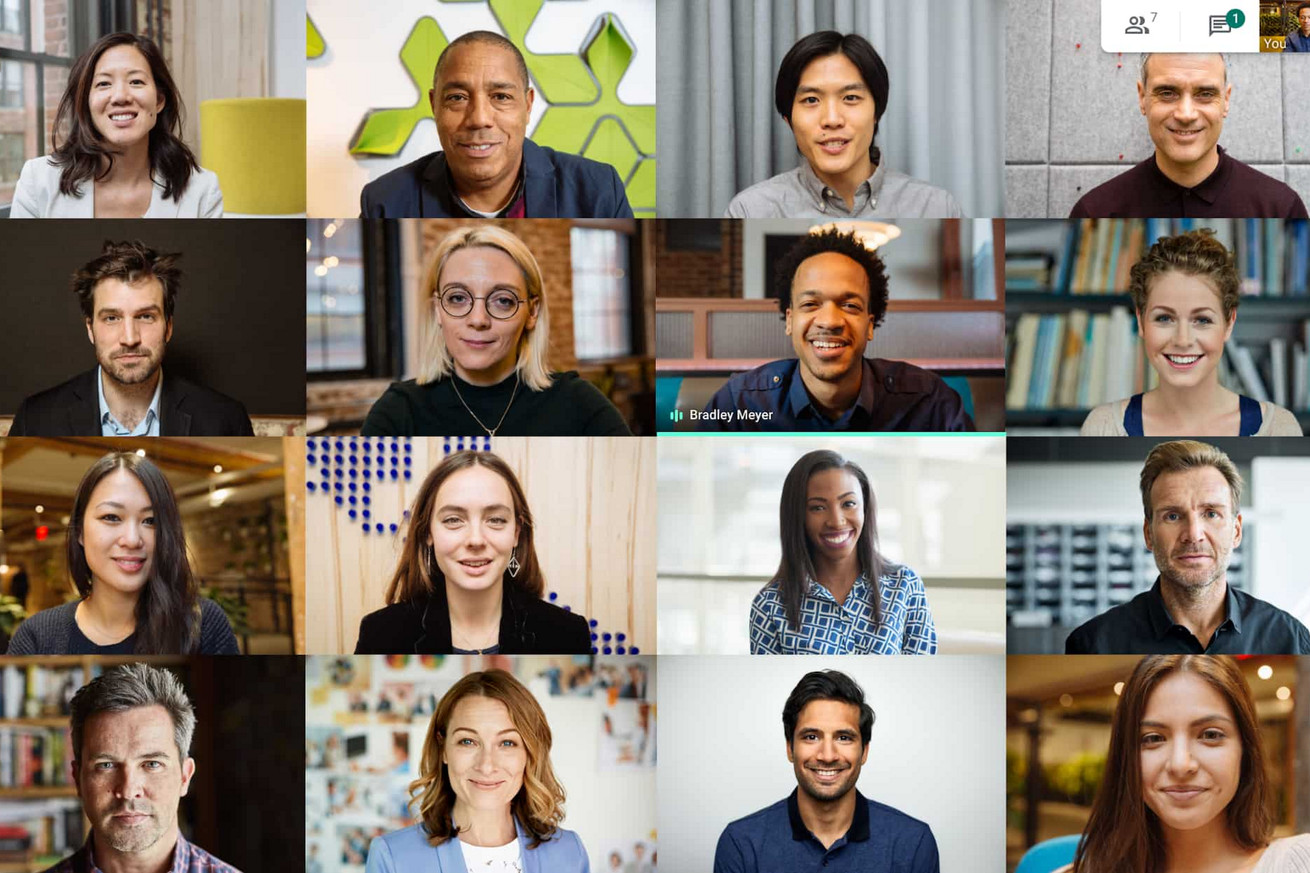 Image: Google


 Photo: Amazon


 President Donald Trump speaks to reporters before departing from the White House on Marine One, on July 10, 2020. | Win McNamee/Getty Images
/cdn.vox-cdn.com/uploads/chorus_asset/file/20076975/GettyImages_1194052434.jpg) Drew Angerer/Getty Images
Drew Angerer/Getty Images
/cdn.vox-cdn.com/uploads/chorus_asset/file/20076972/GettyImages_1225944757.jpg) Saul Loeb/AFP via Getty Images
Saul Loeb/AFP via Getty Images
/cdn.vox-cdn.com/uploads/chorus_asset/file/20076969/GettyImages_1151712082.jpg) Alex Wroblewski/Getty Images
Alex Wroblewski/Getty Images
/cdn.vox-cdn.com/uploads/chorus_asset/file/20076966/GettyImages_1214408829.jpg) David Dee Delgado/Getty Images
David Dee Delgado/Getty Images
 Photo by Amelia Holowaty Krales / The Verge


 Mark Zuckerberg testifies about how his company will handle false and misleading information by political leaders during the 2020 campaign before the House Financial Services Committee in October 2019. | Chip Somodevilla / Getty Images


 Photo by Chris Welch / The Verge


 Illustration by Alex Castro / The Verge