The Microsoft 365 admin center (portal.office.com) offers usage reports for a lot of the main services,
Reports are available for the last 7 days, 30 days, 90 days, and 180 days. Reports are typically around 48 hours behind.
Previous to this update we simply got a per user count of each of the following:
Channel Messages
Chat Messages
1:1 Calls
Meetings
This is still the default of the Web UI view.
However, if you click the “choose columns button” or do the Excel export, you can now also get the following:
New fields give the total minutes for each user for the 7, 30, 90 or 180 day period.
It reports minutes for:
Audio Duration
Video Duration
Screen Share Duration
We also get:
Meetings Organized Count
Meetings Attended Count
AdHoc Meetings Organized Count
AdHoc Meetings Attended Count
Scheduled Meetings Organized Count
Thanks to Raj Gorsia for letting me know about this change.
You can also export this to excel. The exported format for audio time, video time and screen share time follows ISO8601 date format, which is a bit of a pain as it comes out like this: “P3DT14H20M45S”
P is the duration designator for period – which just denotes that its a value for a period of time.
D is the day designator that follows the value for the number of days.
T is the time designator that precedes the time components of the representation.
H is the hour designator that follows the value for the number of hours.
M is the minute designator that follows the value for the number of minutes.
S is the second designator that follows the value for the number of seconds.
So, “P3DT14H20M45S” is 3 days, 14 hours, 20 minutes and 45 seconds. It also outputs 0 values as this “PT0S” making it a pain to convert the values with a formula.
Still, it’s great to finally get some per user minutes reports without needing to leverage the call records API.
President Donald Trump speaks at a White House press conference on September 16. | Mandel Ngan/AFP via Getty Images
Both companies have Chinese owners. One of them has support from Trump-backers.
The Trump administration says it will effectively cripple WeChat, the mobile chat/payment service popular with millions of Chinese Americans, on Sunday.
And the administration says it will do the same thing to TikTok, the mobile video service popular with tens of millions of Americans — but only after the November election.
Friday’s news combines several different strands of politics, policy, and realpolitik: legitimate concerns about China’s ability to exert influence in the US via consumer technology; American electoral politics; and links between US tech executives and investors with the White House.
But the top line is straightforward: The Trump administration is getting tough with China by moving to shut down one important Chinese-owned app in the US — while keeping another important Chinese-owned app, with ties to Trump supporters, running through the fall.
Department of Commerce Secretary Wilbur Ross announced the moves in a press release Friday morning, and then stated it more explicitly in an interview with Fox Business News: “For all practical purposes [WeChat] will be shut down in the US, but only in the US, as of midnight Monday.”
TikTok, meanwhile, would be allowed to keep operating in the US through November 12, so existing users of the app aren’t likely to be affected. But Trump’s announcement is meant to force Apple and Google to remove TikTok from their app stores — which means the service would not be able to add new users — and to prevent TikTok from updating the app for existing users.
Both WeChat and TikTok are owned (for now) by Chinese companies, and both services have enormous footprints in the US. WeChat, owned by Tencent, combines chat, e-commerce, games, and other services; it’s a crucial app within China, and an estimated 19 million people use it in America to keep in touch with each other, and with people in China.
TikTok, owned by ByteDance, is a wildly popular video app with 100 million users in the US.
It’s unclear how much attention Trump is paying to any of this — earlier this summer, he announced that the federal government would demand a cut of a proposed sale of TikTok’s US operations; this week he conceded that the demand was illegal. He also announced this week that Microsoft, which had been in the running to buy TikTok’s US operations until days ago, might still be working on a deal; reporters including Axios’s Dan Primack say that isn’t so.
Help keep Vox free for all
Millions turn to Vox each month to understand what’s happening in the news, from the coronavirus crisis to a racial reckoning to what is, quite possibly, the most consequential presidential election of our lifetimes. Our mission has never been more vital than it is in this moment: to empower you through understanding. But our distinctive brand of explanatory journalism takes resources. Even when the economy and the news advertising market recovers, your support will be a critical part of sustaining our resource-intensive work. If you have already contributed, thank you. If you haven’t, please consider helping everyone make sense of an increasingly chaotic world: Contribute today from as little as $3.
The Trump administration will ban the use of chat and payments app WeChat for users in the US beginning September 20.
The ban is part of an order from the US Commerce Department that will prohibit new downloads and app updates of WeChat and video app TikTok over fears that the apps' user data can be accessed by the Chinese government.
But the ban has far-reaching implications for WeChat: While TikTok will still be usable in the US after Sunday, and a possible sale to US-based Oracle and other investors would eliminate national security concerns, WeChat has no similar way out.
The app is said to have 3.3 million monthly active users in the US, many of whom use it to communicate with family and friends in China.
Downloads of TikTok and WeChat will both be banned in the US beginning on Sunday, the latest escalation in the Trump administration's battle with Chinese-owned apps that are popular among US users. But while TikTok may be able to escape the ban by selling to US investors, there is no easy escape for WeChat.
But the order goes one step further, and it has far worse implications for WeChat: Beginning on Sunday, the app will not only be unavailable to download and unable to process payments, but it will also be rendered unusable for US users — the Commerce Department order prohibits any internet hosting service from "enabling the functioning or optimization of the mobile application in the US."
TikTok is currently exploring a sale in the US to software company Oracle and other US investors, which would resolve the Trump administration's national security concerns. If the deal is completed before November 12, the Trump administration says it will lift the ban.
But there is no such deal on the table for WeChat, and no clear pathway for the app to ban to be lifted.
Both TikTok and WeChat have been closely scrutinized by the Trump administration over the last several months. In August, Trump issued an executive order barring American companies and individuals from making "any transaction" with WeChat over concerns about how much user data the app collects and whether the Chinese government is able to access it.
A Tencent spokesperson told Business Insider in a statement that it has been in discussions with the US government since the August executive order and that it has already submitted a proposal that would address the government's concerns.
"WeChat was designed to serve international users outside of mainland China and has always incorporated the highest standards of user privacy and data security," the spokesperson said. "The restrictions announced today are unfortunate, but given our desire to provide ongoing services to our users in the US — for whom WeChat is an important communication tool — we will continue to discuss with the government and other stakeholders in the U.S. ways to achieve a long-term solution."
WeChat currently has millions of users in the US — estimates range from 3.3 million monthly active users, according to App Annie, to 19 million daily active users, according to Reuters, using data from app analytics tracker Apptopia. While the app began as a straightforward messaging service in 2011, it has since evolved into much more, adding features like the ability to send mobile payments, video calling, gaming, shopping, and the option to hail a taxi or order food. The new
The app is a major part of everyday life in China, to an extent that users outside the country can't fully comprehend — as analyst and Stratechery founder Ben Thompson wrote in 2017, "WeChat is your phone," far more than any comparable apps in the US.
WeChat and Tencent's other messaging app, QQ, are used by more than two-thirds of Chinese people, according to Bloomberg.
According to a report from Reuters' Krystal Hu, WeChat has become one of the main communication tools between people the US and China, in part because it hadn't yet been blocked in either country, unlike other popular chat apps, including Facebook Messenger, WhatsApp, and Telegram. Reuters reports that the ban on WeChat would sever a communication lifeline for Chinese students or expats living in the US, who rely on it to reach family and friends back home.
Nvidia Broadcast is a follow-up to the RTX Voice beta and introduces two new AI-powered features: Virtual Background and Auto Frame. Nvidia says that the noise removal feature also now has a reduced performance cost and supports triple the number of noise profiles.
Nvidia Broadcast is a follow-up to the RTX Voice beta
The new Virtual Background allows you to remove the background of your webcam...
Google says it will ban stalkerware apps on the Google Play store beginning on Oct. 1 — but with some exceptions.
The new policy is meant to crack down on apps built to collect personal information on someone's device and secretly send it to another person, like a controlling spouse or partner.
However, Google will continue to allow parental control apps that do the same thing — but apps will now have to show users a notification when they're being tracked.
Google is cracking down on "stalkerware" apps on the Google Play store. Starting next month, the company will ban all apps that secretly transmit people's personal information without their knowledge, it announced Wednesday.
The announcement builds on Google's preexisting policy that broadly banned "deceptive behavior" in apps. However, even under that policy, several stalkerware apps routinely slipped through the cracks.
Stalkerware apps are typically designed to be hidden or undetectable and can transmit information about what apps a person is using, who they're in contact with, and the contents of their files and photo libraries. Because they're often hidden, they're ripe for abuse and can be used by people who want full control over a user, like a boss or an overbearing spouse.
However, Google will still allow parental control apps, which can carry out the same functions as stalkerware apps, possibly leaving a loophole open. The difference is that apps will now have to display a persistent icon that tells users they're being tracked, making it harder for them to operate in secret.
Google previously banned stalkerware makers from advertising their apps on its ad platform, but struggled to immediately enforce that ban. Last month, TechCrunch reported that several of those companies were still running ads through Google's platform despite violating the policy.
This week, the Google Play store also announced that it will ban apps that "misrepresent or conceal their ownership or primary purpose." The scope of that policy is vague. It isn't immediately clear whether it applies to apps that present themselves as services like VPNs or Ad Blockers in order to get people to download them, and then mine information from people's phones — like their location or what other apps they use — and sell that data.
A Google spokesperson did not immediately respond to a request for comment.
For the first time in more than 30 years, conferencing specialist, Konftel, is selling more video solutions than audio in the UK and beyond. State-of-the-art kits like the C20Ego and all-in-one CC200 from Konftel are transforming the way people work. This represents a perfect fit for the dispersed trends of the workplace.
Jeff May, the UK Sales Director, says that video solutions now account for around 65% of demand, overtaking audio sales by a significant margin. However, Jeff also pointed out that audio is still a popular solution, particularly when companies are forming a powerful room environment for their teams. Companies need a strong combination of audio and video.
A Massive Shift to Video
Over the last six months, there’s been a rapid shift from standalone audio investment to video. These trends were growing long before the COVID crisis emerged too. The evolution is moving beyond using laptops for Zoom and Teams. Companies need more immersive technology experiences. Konftel is opening the door to advanced Bring Your Own Meeting options to people who demand a genuinely professional, high-quality experience.
Konftel provides full flexibility in the video landscape, with a wide range of collaboration and video cloud services to choose from. These days, the company is seeing a significant shift in the landscape, with around 8 out of 10 website inquiries moving to video. Everyone should be considering their own strategy for video, and Konftel helps with that.
Jeff noted that demand for USB solutions is incredibly high right now, probably caused in part by the rapid panic buying at the beginning of the COVID-19 lockdown. Now, more considered sales are on the rise, with lots of reseller opportunities emerging as people return to the office while working from home too.
Exploring the Benefits of Video
Konftel believes that the video landscape has a lot of potential, unlocking larger and more lucrative reseller projects with hundreds of units for huddle rooms, remote workers, and large meeting areas too. Health authorities have invested heavily in video tools for internal meetings and triage, with educational groups also embracing video at a massive scale.
The Konftel team offers a valuable range of solutions, with things like the Ego portable Bluetooth speakerphone and the Cam50 and Cam20 systems too. The new all-in-one collaboration camera, the CC200, is also an exciting option.
Konftel CC200
As companies continue to refit and transform offices with more tools for flexible and hybrid working, we’re discovering a new style of business operations. Video and audio from Konftel are helping to change the world of work, and there’s no way back.
Sony is continuing its refresh of its smartphone line to focus on photography and video with the new Xperia 5 II. It’s the smaller sibling of the very tall and weirdly expensive Xperia 1 II, and this newer phone betters it in several regards. It’s cheaper, for one thing, going on sale on September 29th for $949. The other major improvement is that Sony has put in a high-refresh-rate 120Hz panel.
Oddly, though, Sony says it’s not shipping until December 4th and even more oddly, it will have 5G but won’t work with the 5G networks in the US — just like the Xperia 1 II.
The basic idea of the Xperia 5 II is that it’s a phone with a tall 21:9 screen, but it’s relatively small at 6.1-inches. That sounds big, but since it’s so tall it works out...
Nespresso CEO Guillaume Le Cunff said business leaders "can't wait" any longer to address climate change.
Emmanuel Nguyen Ngoc
By 2022, every cup of coffee and espresso drink Nespresso produces (including at-home pods) will be carbon neutral, the company told Business Insider.
Nespresso CEO Guillaume Le Cunff said addressing climate change is imperative for success and is calling on other leaders to take a bolder stance on climate change.
To meet its ambitious goal, Nespresso will invest in reforestation, renewable energy (like solar power and wind power), and work with nonprofits to boost soil health and prevent erosion.
Nespresso offset its business operations to be carbon neutral in 2017.
Nespresso, known for its strong espresso and coffee, is taking a bold stance on climate change.
The company told Business Insider that by 2022, every cup of coffee and espresso drink it produces in-store, as well as at-home pods, will be carbon neutral.
In other words, all the carbon emissions associated with the growing, production, and brewing of each coffee will be offset, so the net emissions of damaging greenhouse gasses is zero.
"We can't wait, simply said. We have to do it now. We have to act now. Everyone — customers, employees —is expecting brands to generate more positive impact," Guillaume Le Cunff, CEO of Nespresso told Business Insider.
The announcement comes just days after 150 business leaders and investors, including Google and Apple, published an open letter calling on the European Union for tougher carbon emissions standards, and right before the business and nonprofit community convene for Climate Week 2020 in the US. It also comes as the US faces some of the most devastating wildfires, which have been worsened by climate change.
Le Cunff, who's worked in sustainability for the company for over 12 years, said it's his personal mission to help reduce environmental damage. But he also acknowledges that addressing climate change is a busines imperative.
"Climate change is already a reality for farmers and our core brand essence is to deliver the finest, the most exclusive, the most surprising coffee profile on Earth. If we don't act, and if these growers are not able to make it and keep growing coffee, simply said, the risk is to be out of business," the CEO said.
Juancho Torres/Anadolu Agency via Getty Images
Nespresso has already offset all of its business operations to be carbon neutral, which it did in 2017. Over the last 10 years, it's reduced its carbon emissions by 30%. The company's new commitment will focus on emissions that occur in its supply chain and the "product life cycle," per a company statement.
To reach this ambitious two-year goal, Nespresso will have thousands of trees planted in and around coffee farms to sequester carbon and rejuvenate the soil, which is stripped of its nutrients through farming practices. It will also invest in "clean energy solutions," which can range from everything from solar energy to wind power turbines for its approximately 110,000 farmers concentrated in Colombia, Guatemala, Ethiopia, and Costa Rica.
The company will also continue to reduce its carbon emissions, aiming toward operating 100% on renewable energy.
A mail carrier delivers in Los Angeles in April 2020, just before Postmaster General Louis DeJoy was appointed. | Valerie Macon/AFP via Getty Images
From boutiques to Etsy sellers, small businesses are bearing the brunt of changes to the United States Postal Service.
Sofi Madison’s Boston gift shop Olives & Grace has been struggling for the past few months. First came the pandemic, then constant shipping issues. “It’s exclusively a small-business business. We only work with emerging makers,” she explained. “We’re able to rely on USPS. That’s how we ship, exclusively.”
For the past several months, Madison’s shipments from vendors, all of which are other small businesses, have started coming in late, affecting the shop’s delicate supply chain. “Part of that is Covid,” she said. “Supplies are delayed.” Luckily, she said, her own shipments to customers haven’t suffered much, a rarity she attributes to her friendship with her local postal worker, Joe. “He’ll come by the shop first thing in the morning and make sure that we get our deliveries,” she said. “And he’ll swing by at the end of his shift to see if we need anything brought to the post office, because I’m seven months pregnant and he doesn’t want me having to go to the Postal Service to drop those off.”
But Madison is bracing for delays, especially heading into the holiday season. For months, the US Postal Service has had a backlog of packages and other mail due to a combination of the coronavirus pandemic and recent cost-cutting measures implemented by Postmaster General Louis DeJoy. DeJoy, a Republican donor and ally of President Donald Trump, was appointed in May and has drastically changed the Postal Service in just a few months. He has cut overtime for postal workers, reduced the number of mail trucks, and taken sorting machines out of post offices, as reported by Recode. In August, DeJoy announced he’d put some of these new policies on hold until November after critics said they would likely affect the 2020 presidential election, a type of meddling some worried was intentional.
For thousands of small-business owners across the country who rely on the Postal Service — many of whom had to pivot almost entirely to e-commerce in the wake of the pandemic — the damage has already been done. An internal USPS document obtained by Supply Chain Dive shows the extent of the delays, which postal workers say are ongoing. The document says that workers may “temporarily … see mail left behind or mail on the workroom floor or docks” at the end of a shift, a departure from the standard practice of getting everything out as soon as possible. Some postal workers told the website that Amazon packages are being prioritized, putting small businesses at yet another disadvantage.
“It’s impacting reviews — [small businesses] are getting negative reviews because things are taking a really long time to arrive,” Molly Day, the vice president of public affairs for the National Small Business Association (NSBA), told The Goods. “They shipped it as soon as they got the order, and it’s a week, two week, three weeks later that people are getting it.” Consumers have gotten used to Amazon-style near-immediate shipping, something that’s both expensive and logistically difficult for small businesses to accomplish even in the best of times. Now that people feel less comfortable buying things in person, having orders arrive late is particularly devastating.
Day said the NSBA conducted an “informal poll” of its members and found that 60 percent of respondents said they’ve experienced some kind of postal delay. Nearly two-thirds of the businesses polled, 65 percent, said the USPS was their most commonly used form of business shipment. Seventy-five percent of those polled said they primarily rely on the Postal Service for payments and checks, and 7 percent use it for sending and receiving business goods. In other words, USPS delays affect every aspect of a small business, not just the consumer-facing end. In a September 10 press release, USPS noted an “uptick in service performance, consistent with recent trends.”
In a statement to The Goods, a USPS spokesperson acknowledged that there have been issues but reiterated that service is trending upward.
“There have been misconceptions about our operational actions. The Postmaster General has spearheaded two initiatives during his tenure to drive operational discipline and improve efficiencies that will help improve service and help the Postal Service embark on a path of sustainability,” spokesperson Kimberly Frum said. “These initiatives include plans to ensure trucks run on time and on schedule, and to realign our organizational structure to allow for clearer lines of authority and accountability. As a result of these initiatives, our on-time departures are approaching 98 percent and extra trips are down by over 70 percent.”
Still, business owners say lost packages are another major issue. “We’ve heard stories of people having to replace goods just because they haven’t shown up yet,” Day said.
Chris Doeblin, the president of New York City bookstore Book Culture, said the postal service has lost a handful of orders since March. “The problem with USPS is that the tracking isn’t very effective and there is no resolution to a lost package; we absorb all that risk,” Doeblin told The Goods via email. Before the pandemic, online purchases made up around 3 percent of total sales volume. “At first during the Covid era we were almost 100 percent online sales, and that has trended back to where we are now about 25 percent online sales,” he said.
“The amount of lost packages I have right now compared to the amount sold is crazy”
On Etsy’s forums, sellers who were used to shipping out products to customers across the country before the pandemic commiserate about how the new USPS changes have affected sales and reviews. In one thread, a seller said an order they shipped on July 27 still hadn’t arrived by August 8, a delay of more than a week. “I’m not a huge seller but the amount of lost packages I have right now compared to the amount sold is crazy,” another seller said. Another said they believed the shipping issues were due to USPS cutting overtime for workers. “My carrier works 6 days a week,” one wrote. “He has only been working there about 5 years and 3 years ago they changed his contract to salary. He says that he works 30-40 hours a month unpaid because of this. Imagine the people not on salary.”
Cutting overtime is a major factor in all of this. In July, DeJoy began requiring postal workers to return to their base by a set time even if they hadn’t finished delivering all their mail for the day, which both reduced overtime hours for workers and contributed to the backlog. Instead of taking as much time as was needed to deliver all packages on a route, mail carriers were now being asked to leave unfinished work for the next day, causing a snowball effect. “[I]t’s an indisputable fact mail postal customers have witnessed a degrading and slowing of mail service since Postmaster General Louis DeJoy instituted changes in mid-July,” Mark Dimondstein, the president of the American Postal Workers Union, told CNN in August.
Put simply, DeJoy began limiting mail carriers’ ability to do the kinds of courtesies Sofi Madison, the owner of the Boston gift shop, gets from her local postal worker. Instead of dropping by at the end of a shift to see if she has anything that needs to be delivered, Madison’s mail carrier, under the new rules, would have had to just wait until the next day.
“That kind of love is just, like, a signature of the Postal Service, from my experience and everything that I’ve known,” Madison said of her postal worker’s attentiveness. “Without that kind of human intervention and touch, we would be in a much different position as a small business, financially.”
Help keep Vox free for all
Millions turn to Vox each month to understand what’s happening in the news, from the coronavirus crisis to a racial reckoning to what is, quite possibly, the most consequential presidential election of our lifetimes. Our mission has never been more vital than it is in this moment: to empower you through understanding. But our distinctive brand of explanatory journalism takes resources — particularly during a pandemic and an economic downturn. Even when the economy and the news advertising market recovers, your support will be a critical part of sustaining our resource-intensive work, and helping everyone make sense of an increasingly chaotic world. Contribute today from as little as $3.
While the world is in the midst of a horrendous pandemic, the US is currently in the midst of two.
One of those, COVID-19, has moved with lightning speed, killing hundreds of thousands of people and infecting millions more. The other pandemic has been spreading slowly through American culture for the past 30 years. It has now collided disastrously with the coronavirus.
This second pandemic, in the absence of an official name, might best be described as the anti-science pandemic. And unless we roll back this second, dangerous pandemic, we're unlikely to regain control of COVID or be prepared for a potentially more lethal virus in the future.
The anti-science pandemic has taken hold of America
Rush Limbaugh, whose radio program reaches 15.5 million listeners weekly, calls science one of the "four corners of deceit" (government, academia, and the press are the other three). Fox News has repeatedly presented "experts" pushing all manner of positions that fly in the face of science. The downplaying of COVID early on in the pandemic by Fox anchors was particularly troublesome — half of the network's viewers are over 68, one of the groups most vulnerable to COVID.
Anti-science now infects many of the leaders who are charged with guiding us through our worst health crisis in a century. Leaders are shunning science and technology when we need it most.
In some cases, they've shunned rationality entirely — the President himself said "if we stop testing right now, we'd have very few cases." Vice President Mike Pence, who leads the coronavirus task force, has a long history of rejecting health-related science. He even declared in a Wall Street Journal op-ed that "we are winning the fight against the invisible enemy," even as multiple states reported record increases in new cases following the easing of lockdown restrictions.
Anti-scientists believe that if the data does not convey the message desired, then just dismiss the data. As White House Press Secretary Kayleigh McEnany put it on whether schools should reopen: "The science should not stand in the way."
Unfortunately, the administration and a number of governors have been willing to sacrifice large numbers of their own people's lives because they see a bad economy threatening their political prospects. Ironically, their failure to honor science will only compound the economic disaster.
Science is the way out of this crisis
We need science and technology to save us. Government leaders are literally helpless without tools and techniques provided by scientists and engineers. These tools and techniques are obvious now: a capacity to develop rapid testing, swift contact tracing, , validated models for projecting disease spread and impact of interventions, new treatments to reduce the severity of the virus's impact, a vaccine, and finally a massive manufacturing and systems engineering approach to deploy all of these fairly at enormous scale.
To succeed, scientists and technologists need political, financial and policy guidance that will facilitate the eventual deployment of the fruits of their labor to society. And, given the virus's neutrality to whom it infects, these leaders need to insure all people regardless of race, religion, economic sector or country have access.
At the same time, they should be aware of the fact that the burdens of the virus have fallen disproportionately on communities of color, a further problem that epidemiologists and public health experts could usefully address.
Our leaders have a choice. They can rapidly provide resources and new funding to the scientific and technological sectors to create real weapons against the virus while simultaneously providing economic support to their citizens until science develops new tools. Or they can choose to send everyone back to work and thereby tacitly admit that from their perspective it is fine to watch people die who didn't have to.
Ultimately, science and technology will bring us out of the COVID pandemic — either aided by, or in spite of, public policies and government leadership.
But for the long term, our leaders at every level of government need to reaffirm — in word and deed — the value of science, if we are to conquer our other pandemic.
The UK's flag-carrier airline British Airways (BA) is fighting for survival, its boss said Wednesday.
Its CEO Alex Cruz told a government committee that the coronavirus pandemic is "the worst crisis for BA," adding that the firm is burning through £20 million ($25.9 million) per day. He has taken a one-third pay cut, he said.
"COVID has devastated our business, our sector, and we're still fighting for our own survival," he said.
Only 187,000 passengers travelled with the company on the week starting September 7, he said, compared to 1 million at the same time last year.
"We remain worried about the virus in the winter season. People are still afraid of travelling. We are having weekly changes to the quarantine list. All the data that we get are still pointing at a slow recovery process," Cruz said.
British Airways has joined other airlines in calling for a test-and-quarantine scheme between London and New York — the world's busiest intercontinental air link — that will "minimize the quarantine process" and encourage passengers to fly again. But the government says that there is no alternative to 14 days of self-isolation.
In April, British Airways announced plans to cut up to 12,000 jobs from its 42,000-strong workforce. Cruz described the job cuts on as an "impossible situation" on Wednesday, adding: "I deeply, deeply regret that way too many loyal and hardworking colleagues of mine are having to leave our business."
For tens of thousands of years, humans have developed funeral rites and burial practices that reflected the attitudes of their particular time and place. These traditions of honoring the dead continue to evolve into the 21st century, as people seek “green burials” that are more environmentally friendly than standard coffins.
One of the newest examples comes from Loop, a Dutch biotech company that recently unveiled a biodegradable coffin made of fungus, microbes and plant roots. Called the “Living Cocoon,” the coffin is designed to hasten bodily decomposition while also enriching soil around the plot.
“Normally, what we do as humans is we take something out of nature, we kill it, and we use it,” said Bob Hendrikx, founder of Loop, in a call. “So I thought: what if we humans start moving from working with dead materials toward a world in which we work with living materials?”
“We would not only become less of a parasite, but we could also start exploring super-cool material properties, like living lights, walls that are self-healing, and that kind of stuff,” he added.
Hendrikx was inspired to develop the Living Cocoon while presenting a living home concept at last year’s Dutch Design Week. While houses are obviously for the living, Hendrikx got to thinking about adapting the concept into a coffin powered by mushroom mycelium, which is the filamentary vegetative part of the fungus.
“Mycelium is nature’s biggest recycler,” Hendrikx said. “It is continuously looking for dead organic matter to transform into key nutrients.”
Developed in collaboration with Delft University of Technology and the Naturalis Biodiversity Center, the Living Cocoon contains a moss bed packed with mycelium, plant roots, and a lush ecosystem of microorganisms. It is already on the market in the Netherlands, and has been used for a burial at the Hague.
Initial tests of the coffin indicate that it degrades in soil over about 30 to 45 days, and the Loop team estimates that bodies within coffins should be composted after three years. Mushrooms can also remove contaminants from soil, so the researchers have a “bigger vision” to use the coffins to purify dirty environments.
“We have a dream of having super-new natural funeral-based concepts in which we go to different cities and search for the most dirty soil and start cleaning that up,” Hendrikx said.
“We already have this product launched on the market, but what we want to really know is how long does [decomposition] take exactly, what does the decomposition phase look like, and also—this is super-important—what kind of chemicals can it absorb and in what amounts,” he added.
The Living Cocoon is one of many emerging concepts that aim to reduce the environmental tolls of current mortuary norms. Right now, both caskets and cadavers are treated with chemicals that leach into soil over time, potentially contaminating groundwater.
Green burials are exactly not a new phenomenon, as Indigenous cultures around the world have practiced environmentally friendly mortuary practices for thousands of years. For instance, “sky burials” that expose bodies to high altitudes where they can be scavenged by birds and animals, are still practiced in the Himalayas today.
But more novel funeral technologies such as “water cremation,” in which bodies are broken down in water and potassium hydroxide, are attracting the interest of people who want to tread lightly on the planet, even after they no longer live on it.
To that point, the Loop team thinks that the Living Cocoon will help people access the right end-of-life experience for them.
“I think people are ready for this,” Hendrikx said.
ServiceNow today announced the latest release of its workflow automation platform. With this, the company is emphasizing a number of new solutions for specific verticals, including for telcos and financial services organizations. This focus on verticals extends the company’s previous efforts to branch out beyond the core IT management capabilities that defined its business during its early years. The company is also adding new features for making companies more resilient in the face of crises, as well as new machine learning-based tools.
Dubbed the “Paris” release, this update also marks one of the first major releases for the company since former SAP CEO Bill McDermott became its president and CEO last November.
“We are in the business of operating on purpose,” McDermott said. “And that purpose is to make the world of work work better for people. And frankly, it’s all about people. That’s all CEOs talk about all around the world. This COVID environment has put the focus on people. In today’s world, how do you get people to achieve missions across the enterprise? […] Businesses are changing how they run to drive customer loyalty and employee engagement.”
He argues that at this point, “technology is no longer supporting the business, technology is the business,” but at the same time, the majority of companies aren’t prepared to meet whatever digital disruption comes their way. ServiceNow, of course, wants to position itself as the platform that can help these businesses.
“We are very fortunate at ServiceNow,” CJ Desai, ServiceNow’s chief product officer, said. “We are the critical platform for digital transformation, as our customers are thinking about transforming their companies.”
As far as the actual product updates, ServiceNow is launching a total of six new products. These include new business continuity management features with automated business impact analysis and tools for continuity plan development, as well as new hardware asset management for IT teams and legal service delivery for legal operations teams.
Image Credits: ServiceNow
With specialized solutions for financial services and telco users, the company is also now bringing together some of its existing solutions with more specialized services for these customers. As ServiceNow’s Dave Wright noted, this goes well beyond just putting together existing blocks.
“The first element is actually getting familiar with the business,” he explained. “So the technology, actually building the product, isn’t that hard. That’s relatively quick. But the uniqueness when you look at all of these workflows, it’s the connection of the operations to the customer service side. Telco is a great example. You’ve got the telco network operations side, making sure that all the operational equipment is active. And then you’ve got the business service side with customer service management, looking at how the customers are getting service. Now, the interesting thing is, because we’ve got both things sitting on one platform, we can link those together really easily.”
Image Credits: ServiceNow
On the machine learning side, ServiceNow made six acquisitions in the area in the last four years, Wright noted — and that is now starting to pay off. Specifically, the company is launching its new predictive intelligence workbench with this release. This new service makes it easier for process owners to detect issues, while also suggesting relevant tasks and content to agents, for example, and prioritizing incoming requests automatically. Using unsupervised learning, the system can also identify other kinds of patterns and with a number of pre-built templates, users can build their own solutions, too.
“The ServiceNow advantage has always been one architecture, one data model and one born-in-the-cloud platform that delivers workflows companies need and great experiences employees and customers expect,” said Desai. “The Now Platform Paris release provides smart experiences powered by AI, resilient operations, and the ability to optimize spend. Together, they will provide businesses with the agility they need to help them thrive in the COVID economy.”
A group of Swedish researchers and boat builders designed Oceanbird, a new type of cargo ship that's powered by giant wings instead of a traditional engine.
The ship will cut down on emissions by up to 90% compared to other cargo ships, according to Wallenius Marine, the manufacturer behind the concept.
The huge fins will be able to swivel to catch the wind, and can retract to go under bridges.
Oceanbird was conceived as a car carrier that can fit 7,000 vehicles, but Wallenius Marine said the technology can be adapted to other types of vessels, like cruise ships.
Cargo ships carry around 90% of global trade — roughly 11 billion tons of goods each year — and contribute mightily to global greenhouse-gas emissions. But one Swedish company is looking to make shipping a bit more sustainable with a new breed of emission-free vessels.
Shipbuilder Wallenius Marine teamed up with Stockholm's Royal Institute of Technology, maritime consultancy SSPA, and the Swedish Transportation Administration to design a new type of cargo ship that's far more ecologically friendly than the diesel-powered vessels on the seas today. The result of that partnership is Oceanbird, a cargo-ship concept that's pulled along by gigantic wing-like sails.
Wallenius claims Oceanbird will be able to carry 7,000 cars and be 90% more efficient than other ocean-going vessels. The trade-off, however, is that Oceanbird will take around 12 days to cross the Atlantic, whereas traditional ships currently make the journey in about eight.
Learn a bit more about the green cargo ship below.
Oceanbird gets its power from five 262-foot wings, which are made from metal and composite. They're twice the height of the sails on the biggest sailing ships today, Wallenius says.
Oceanbird rendering.
Wallenius Marine
In its current design, the ship will be 656 feet long and and 131 feet wide. That would make it the largest sailing vessel when completed, according to Wallenius.
Oceanbird rendering.
Wallenius Marine
The sails spin 360 degrees to catch the wind and can retract by 75% for stormy conditions or to pass under a bridge.
Oceanbird rendering.
Wallenius Marine
Plus, Oceanbird will have engines for emergencies and for easier maneuvering in ports.
Oceanbird rendering.
Wallenius Marine
Oceanbird is designed to carry 7,000 cars, but Wallenius plans to apply the same technology to other types of ships, like cruise ships.
Oceanbird rendering.
Wallenius Marine
Wallenius worked on the design for several years, and built a seven-meter model to be tested this fall.
Oceanbird rendering.
Wallenius Marine
Oceanbird will be ready to order by the end of next year, Wallenius said, and the first vessel will be delivered at the end of 2024.
Oceanbird rendering.
When it comes to pop culture, a company executive or history questions, most of us use Google as a memory crutch to recall information we can’t always keep in our heads, but Google can’t help you remember the name of your client’s spouse or the great idea you came up with at a meeting the other day.
Enter Luther.AI, which purports to be Google for your memory by capturing and transcribing audio recordings, while using AI to deliver the right information from your virtual memory bank in the moment of another online conversation or via search.
The company is releasing an initial browser-based version of their product this week at TechCrunch Disrupt where it’s competing for the $100,000 prize at TechCrunch Disrupt Battlefield.
Luther.AI’s founders say the company is built on the premise that human memory is fallible, and that weakness limits our individual intelligence. The idea behind Luther.AI is to provide a tool to retain, recall and even augment our own brains.
It’s a tall order, but the company’s founders believe it’s possible through the growing power of artificial intelligence and other technologies.
“It’s made possible through a convergence of neuroscience, NLP and blockchain to deliver seamless in-the-moment recall. GPT-3 is built on the memories of the public internet, while Luther is built on the memories of your private self,” company founder and CEO Suman Kanuganti told TechCrunch.
It starts by recording your interactions throughout the day. For starters, that will be online meetings in a browser, as we find ourselves in a time where that is the way we interact most often. Over time though, they envision a high-quality 5G recording device you wear throughout your day at work and capture your interactions.
If that is worrisome to you from a privacy perspective, Luther is building in a few safeguards starting with high-end encryption. Further, you can only save other parties’ parts of a conversation with their explicit permission. “Technologically, we make users the owner of what they are speaking. So for example, if you and I are having a conversation in the physical world unless you provide explicit permission, your memories are not shared from this particular conversation with me,” Kanuganti explained.
Finally, each person owns their own data in Luther and nobody else can access or use these conversations either from Luther or any other individual. They will eventually enforce this ownership using blockchain technology, although Kanuganti says that will be added in a future version of the product.
Image Credits: Luther.ai
Kanuganti says the true power of the product won’t be realized with a few individuals using the product inside a company, but in the network effect of having dozens or hundreds of people using it, even though it will have utility even for an individual to help with memory recall, he said.
While they are releasing the browser-based product this week, they will eventually have a stand-alone app, and can also envision other applications taking advantage of the technology in the future via an API where developers can build Luther functionality into other apps.
The company was founded at the beginning of this year by Kanuganti and three co-founders including CTO Sharon Zhang, design director Kristie Kaiser and scientist Marc Ettlinger . It has raised $500,000 and currently has 14 employees including the founders.
Travis Scott surprises crew and customers at McDonald's for the launch of the Travis Scott Meal on September 8.
Jerritt Clark/Getty Images for McDonald's
McDonald's is facing shortages due to the massive popularity of the Travis Scott Meal.
"It's been so lit, some of our restaurants have temporarily sold out of some of the ingredients in the meal," McDonald's said in a statement. "We're working closely with our suppliers, distributors, and franchisees to resupply impacted restaurants as quickly as possible."
McDonald's also asked franchisees to make sure that employees would recognize viral catchphrases linked to the Travis Scott deal, including "The Fornite guy burger" and "You know why I am here' (while playing Travis Scott music)," according to an internal memo.
McDonald's is running out of burgers thanks to a partnership with rapper and singer Travis Scott.
The fast-food chain confirmed shortages to Business Insider, after some customers began saying on Twitter that their local McDonald's had run out of the Travis Scott Meal. The shortages are especially remarkable because the meal is made up of McDonald's classics — a Quarter Pounder with cheese, fries with BBQ sauce, and Sprite.
"No doubt, Cactus Jack sent you…A LOT of you. SO many of you," McDonald's said in a statement.
"In fact, it's been so lit, some of our restaurants have temporarily sold out of some of the ingredients in the meal," McDonald's added. "We're working closely with our suppliers, distributors, and franchisees to resupply impacted restaurants as quickly as possible. Stay tuned and don't worry, we've got more surprises from Cactus Jack coming soon."
Due to the popularity of the deal, McDonald's is temporarily controlling the supply of some ingredients, including Quarter Pounder fresh beef, bacon, slivered onions, shredded lettuce, according to sources with knowledge. More restaurants are expected to run out of these Quarter Pounder ingredients in the coming days, as McDonald's weathers supply chain disruption.
Controlling supply is a strategy McDonald's uses to prevent shortages, such as when meat processing plants were shut down earlier this year. However, this is the first time during the pandemic that McDonald's has actually run out of ingredients — a shortage sparked by massive demand for the Travis Scott Meal, not coronavirus-related supply chain disruptions.
Customers have swarmed McDonald's in pursuit of the Travis Scott Meal
Travis Scott at McDonald's.
Jerritt Clark, Courtesy of McDonald’s
On Tuesday, McDonald's US CMO Morgan Flatley and Vicki Chancellor, the franchisee who is the head of McDonald's Operator's National Advertising Fund, sent out a memo about the shortages and other aspects of the deal viewed by Business Insider.
As part of the memo, Flatley and Chancellor told franchisees — the independent operators who run 95% of the McDonald's locations in the US — to "make sure crew knows how much you appreciate their efforts in support of this promotion." McDonald's employees are receiving custom t-shirts, designed by Scott's Cactus Jack label, as part of the partnership.
The memo also instructs franchisees to make sure that employees know all the catchphrases that have been associated with the campaign.
Customers have been posting videos of themselves ordering the Travis Scott Meal on social media. But, in some cases, they don't order at all, but instead, blast a Travis Scott song and tell employees: "You know why I'm here."
"Various Travis Scott Meal marketing materials include the line, 'Say Cactus Jack sent you', leading some customers to say, 'Cactus Jack sent me' or other social-media-inspired variations including: 'It's lit, sickomode,' 'The Fornite guy burger,' or 'You know why I am here' (while playing Travis Scott music)," the memo reads. "To reduce confusion, please make crew aware of these monikers or alternate ordering methods."
Flatley told Business Insider in late August that McDonald's wanted to partner with Scott because of his cultural relevance, especially among younger customers. According to Flatley, people under the age of 34 are "becoming more and more challenging for brands to reach."
"How they engage with media is different," Flatley said. "They look to recommendations much more than any other generation has. They're very reliant on social media. They're very reliant on their friends."
McDonald's CEO Chris Kempczinski addressed the popularity of Travis Scott deal in an Instagram Q&A earlier this week.
"We put our people and our customers first, and I think our customers have spoken resoundingly — they love it," Kempczinski said. "So do I."
GoPro’s new flagship action camera — the Hero 9 Black — has arrived, bringing with it one of the most significant updates in years to the product lineup. In addition to a new design that features a front-facing color display, the Hero 9 Black improves on nearly every aspect of the device, with better resolution for stills and video, a larger battery, better video stabilization, and more. The downside: those changes also bring a bigger $449.99 price tag, $50 more than 2019’s Hero 8 Black.
The new Hero 9 Black improves on nearly every aspect of the device
GoPro has improved the overall resolution at which the Hero 9 Black can shoot, with up to 20-megapixel stills (up from 12 megapixels) and the option to shoot in 5K video for the first...
The acquisition of Odo Security will make working from home easier and safer by enabling organizations to securely connect any number of remote employees to everything from any location, Check Point says.
by tborden@businessinsider.com (Taylor Borden,Allana Akhtar,Joey Hadden)
People gather at the entrance for the New York State Department of Labor offices on March 20, which closed to the public due to the coronavirus outbreak in the Brooklyn borough of New York City.
Over six months, more than 60 million Americans have filed for unemployment insurance — that's more than the number of claims filed during the 18-month Great Recession.
The travel and hospitality industries have taken a significant hit. In addition to major airlines, businesses such as ride-share company Uber and hotel giants Hilton and Marriott have announced furloughs.
Here's a roundup of the major companies who have announced downsizing their workforce due to the coronavirus thus far.
This is a developing story. Check back for updates.
WarnerMedia told the Wall Street Journal on October 8 that it plans to cut thousands of jobs in order to reduce costs by 20%. The company's first round of cuts in August were expected to impact 600 employees, mostly at Warner Brothers and DC Comics. Those cuts included top executives.
The Warner Bros. film studio lot in Burbank, California.
As of October 5, Southwest was asking its labor unions to accept pay cuts to dodge furloughs and layoffs through the end of next year. Previously, the airline offered extended leave and exit packages. Roughly 28% of its workforce accepted such packages in July.
Cineworld, which owns Picturehouse and Regal, closed all their theaters worldwide on October 5. The closures impact 40,000 jobs in the US and 5,000 jobs in the UK.
A man cycles past a shuttered movie theater in Times Square following the outbreak of coronavirus disease (COVID-19), in the Manhattan borough of New York City, New York, U.S., March 17, 2020.
American Airlines had previously announced cutting 20% of the company's workforce upon the expiration of federal aid. The airline was set to furlough 19,000 employees on October 1.
Employees watch as American Airlines Flight 903 prepares for take off from Miami in 2016.
On October 1, United Airlines furloughed 13,000 people. The company had previously said 16,370 jobs would be impacted by cuts.
A United Airlines check-in counter in Atlanta.
David Goldman/AP Photo
In a July 30 internal memo, United Airlines said it would furlough a third of its pilots — 3,900 people. The airline had announced on July 8 that it would issue layoff and furlough notices to 36,000 employees, including 2,250 pilots and 15,000 flight attendants. Before that, in a leaked May 4 memo, United Airlines said it expected to lay off at least 30% or some 3,400 employees on its administrative staff.
Goldman Sachs is cutting 400 jobs, or 1% of its workforce, after briefly pausing job cuts amid the pandemic, Bloomberg reported on September 30.
Goldman Sachs trading booth on the floor of the New York Stock Exchange in New York, on Thursday, January 6, 2011.
Allstate, the home and auto insurer, said it would lay off 3,800 employees — or 8% of its workforce — on September 30. CEO Thomas Wilson said the insurer would allow employees to stay on their medical plan through the end of the year while talent acquisition staff helps those impacted by the cuts find new employment.
An awning over an Allstate branch.
Oil giant Shell is cutting up to 9,000 jobs, or roughly 10% of its workforce, as of September 30. The layoffs are meant to cut costs amid the pandemic, as well as position the company to move away from fossil fuels.
A Shell gas station.
Disney announced on September 29 that it was cutting 28,000 jobs from its theme parks division as the coronavirus pandemic continues to heavily impact that side of its business. The layoffs will most heavily affect part-time employees. CNBC reported in August that park shutdowns cost the company $3.5 billion.
(Photo by Paul Hennessy/SOPA Images/LightRocket via Getty Images)
Ralph Lauren said it would cut its global workforce by about 15% on September 22, ultimately saving the retailer $180 million annually.
A man walks past Ralph Lauren's flagship Polo store on Fifth Avenue in New York City.
As of September 21, Carnival Cruise Line is laying off an unspecified "small number" of its crew members as it reduces its fleet size. The cuts represent the company's second round of layoffs this year.
A Carnival ship.
Lufthansa announced on September 21 that it is further shrinking its global fleet and workforce. The airline did not announce how many job cuts to expect, but noted that it had a personnel surplus of more than 22,000 positions.
A Lufthansa Airbus A321.
Defense and aerospace giant Raytheon Technologies announced it will cut 15,000 jobs on September 17.
A visitor walks past the Raytheon stand at the 53rd International Paris Air Show at Le Bourget Airport near Paris.
The Guggenheim Museum, which will reopen on October 3, announced that it will be doing so with a smaller staff — it laid off 11% of employees as of September 16.
New York City's iconic Guggenheim museum.
Kohl's is cutting 15% of its corporate workforce. The unspecified cuts will save the company $65 million annually, according to a September 15 securities filing.
Customers walk outside of a Kohl's store in Colma, California in November 2019.
Dell told employees on September 14 that it will start eliminating an unspecified number of jobs in an effort to cut costs, according to Bloomberg.
The logo for Dell Technologies Inc. is displayed on a screen on the floor of the New York Stock Exchange.
Citigroup will continue laying off roughly 1% of its global workforce, the company announced on September 14. The cuts end a previous commitment to pause layoffs amid the pandemic.
The Citigroup logo is seen at the SIBOS banking and financial conference in Toronto in 2017.
Ford is offering buyouts to 1,400 workers eligible for retirement this year in the US. The September 2 cuts make up just under 5% of the company's US workforce.
Ford vehicles lined up in a factory.
MGM Resorts is laying off 18,000 previously furloughed employees starting August 28.
The Bellagio hotel and casino, an MGM resort, is seen along the Las Vegas strip.
Coca-Cola said it plans to offer voluntary-separation packages to 4,000 employees in North America on August 28. It did not specify the total number of employees it plans to layoff.
Boxes of Coca-Cola are seen at a grocery store in Los Angeles.
Salesforce started to lay off 1,000 of 54,000 employees on August 26, according to the Wall Street Journal. The news comes one day after the company posted record sales. In March, CEO Marc Benioff pledged a 90-day freeze on layoffs.
Marc Benioff, Salesforce CEO & cofounder.
Delta Airlines plans to furlough 1,941 pilots in October following the expiration of federal aid, the company said on August 24.
FILE PHOTO: Delta Air Lines passenger planes parked in Birmingham
In April, Boeing committed to cutting its massive staff by 10%. In an August 17 memo, Boeing told employees it was starting a second round of buyout offers that would extend beyond the original expected numbers.
A Boeing 787 Dreamliner being constructed at Boeing's Everett, Washington plant.
NBCUniversal started layoffs on August 4, impacting its broadcast networks, movie studio, and theme parks. The company is expected to cut less than 10% of its 35,000-person workforce.
The NBC Universal logo on one of the company's Los Angeles buildings.
Spirit Airlines is preparing to furlough 20-30% of its workforce, according to a July 28 internal memo. Those at risk include pilots and flight attendants.
L Brands, the parent company of Victoria's Secret and Bath & Body Works, said it would lay off 15% of its workforce on July 28. The job cuts impact 850 people at the company's Columbus, Ohio, headquarters.
A shot from the Victoria's Secret annual fashion show.
Creative Artists Agency, a major Los Angeles talent firm, announced layoffs on July 28. It will layoff 90 agents and furlough 275 assistants — or nearly 20% of its workforce.
The CAA headquarters in Los Angeles, California.
Oilfield services company Schlumberger said it is cutting roughly 21,000 jobs on July 24. It also reported second-quarter losses of $3.4 billion.
A Schlumberger building in Houston, Texas.
Daimler, the company that owns Mercedes-Benz, may cut 30% of its global workforce, Manager Magazine reported on July 22.
A logo of a car at the Mercedes Benz automobile assembly plant.
Tailored Brands, the parent company behind Men's Wearhouse and Jos. A. Bank, said it expects to layoff 20% of its workforce and shutter 500 stores on July 21.
A Men's Wearhouse storefront.
LinkedIn said it would cut 960 jobs, or 6% of its global workforce, on July 21. The cuts will impact hiring and sales positions.
LinkedIn CEO Ryan Roslansky.
On July 15, American Airlines said that it will soon layoff 25,000 workers, including 9,950 flight attendants and 2,500 pilots. The cuts represent almost 20% of the company.
An American Airlines flight taking off.
Department store JC Penney announced that it would shutter 152 stores and lay off 1,000 jobs in corporate and field management on July 15. The company filed for bankruptcy in May and furloughed thousands in April.
The clearance section in a JC Penney store.
PVH Corp, the company that owns Calvin Klein and Tommy Hilfiger among other brands, announced that it is shuttering 162 stores and cutting 450 jobs, or 12% of its workforce, on July 14.
A Calvin Klein advertisement.
Walgreens said it plans to cut 4,000 jobs on July 9, after reporting a $1.7 billion loss in the third quarter.
A shuttered Walgreens location in New York City.
While Macy's furloughed the majority of its workforce in March, it announced it would lay off about 3,900 corporate workers on June 25.
A Macy's storefront in a Seattle mall in July 2019.
HSBC, Europe's biggest bank, announced plans to cut 35,000 jobs — or 15% of its global workforce — across the US and Europe on June 17.
A woman walks past an HSBC bank amid the coronavirus pandemic in Paris, France on May 11, 2020.
On June 16, a union representing AT&T employees said the wireless carrier will lay off 3,400 and shut down more than 250 stores.
People walk past the AT&T store in New York's Times Square, June 17, 2015.
Hilton Hotels announced it is laying off 2,100 corporate employees on June 16, amounting to 22% of its corporate workforce.
The Hilton Hotel in Batumi, Georgia in 2016.
Chevron, the second-largest oil producer in the US, announced that it will cut 10% to 15% of its 45,000 global workforce on May 27.
A Chevron gas station sign is shown at one of their retain gas stations in Cardiff, California.
Boeing said it would lay off nearly 7,000 employees on May 27. The company initially announced that it would cut about 10% of its workforce on April 29. The company had 143,000 workers at the beginning of the year.
Workers enter the Boeing factory in Renton, Washington on April 21, 2020, as commercial airplane production resumes following a suspension of operations in response to the coronavirus pandemic.
IBM will eliminate "several thousand jobs" as of May 22, mainly in the company's technology-services division. Cuts come a month after new CEO Arvind Krishna withdrew IBM's financial outlook amid economic uncertainty caused by the pandemic.
IBM CEO Arvind Krishna.
Weeks after ride-hailing giant Uber announced it is cutting 3,700 jobs (14% of its workforce), CEO Dara Khosrowshahi announced on May 18 that he will cut 3,000 additional jobs and close 45 offices.
Uber CEO Dara Khosrowshahi.
Airbnb announced it is laying off about 25% of its workforce, or 1,900 employees, on May 5. Its severance package includes several months' pay, a year of healthcare, and support finding a new job.
A woman talks on the phone at the Airbnb office headquarters in San Francisco.
Richard Branson's Virgin Atlantic announced it would cut 3,150 jobs on May 5, in addition to retiring its iconic Boeing 747-700 planes a year early.
Virgin Atlantic Boeing 747-700.
Ride-hailing company Lyft is laying off 982 employees and furloughing another 288, accounting for 17% of the company's workforce. The company made the announcement on April 29 and added that other cost-cutting measures include pay cuts for executive leadership.
A Lyft ride-share car waits at a stoplight in Sacramento, California in July 2019.
On April 28, online travel company TripAdvisor announced it was laying off more than 900 of its employees, amounting to a quarter of its workforce.
A TripAdvisor sign on a storefront, a ubiquitous site at tourist spots around the world.
Hertz said it plans to lay off 10,000 employees on April 20. The car rental company previously employed 38,000 people.
A sign displaying the Hertz logo.
On April 12, a union representing workers at Walt Disney World said the company will be furloughing 43,000 employees starting April 19. The amusement parks have been closed since March 16 and 200 essential workers will continue maintaining them.
Walt Disney World's Magic Kingdom in January 2020.
On April 7, Tesla sent an email to employees saying it will furlough all nonessential workers until at least May 4, and reduce all employees' pay by at least 10%. These cost-cutting measures are expected to start April 13.
Tesla's factory in Fremont, California.
JCPenney has already started furloughing workers and confirmed it would continue to furlough a "significant portion" of its 85,000 employees as of April 5.
The exterior of a JCPenney store.
The Wing, a buzzy Instagram-ready women's coworking company, is laying off nearly all of its hourly employees and half of its corporate staff as of April 3, according to Vice. The company confirmed the layoffs but did not elaborate on numbers. Its founders are foregoing their salaries.
The Wing's Dumbo location in Brooklyn, New York.
ClassPass, the billion-dollar fitness platform, furloughed or laid off over half of its 700 employees on April 2 — 22% were laid off and 31% were furloughed.
ClassPass CEO Fritz Lanman.
On April 2, airplane manufacturer Boeing announced that it would offer a voluntary layoff plan to employees to cut costs. Those opting into the layoff plan will leave with a pay and benefits package, but the company offered no details about compensation.
A Boeing employee works on a 747-8 Intercontinental airplane at the Boeing factory in Everett, Washington.
Famed auction house Sotheby's is furloughing 200 people — or 12% of its workforce —as of April 1, according to the Wall Street Journal.
Sotheby's employees carry a painting by Roy Lichtenstein called 'Two Paintings with Dado, 1983' during a press view at the auction rooms in London.
Sephora laid off over 3,000 employees across the US via conference call on March 31. "It is our sincerest hope that we are able to bring these employees back on staff in the near future," Sephora said in a statement.
A Sephora store in New York City's Times Square.
Macy's CEO Jeff Gennette informed his staff via email that the company would be furloughing most of its 125,000 employees on March 30. The company only plans to have work for "the minimum number of employees necessary to maintain basic business operations" across Macy's, Bloomingdale's, and Bluemercury, Gennette wrote. He will stop receiving his salary, along with the rest of the board of directors.
A Macy's store in New York City.
Bird, the buzzy electric scooter company, laid off 30% of its staff via a Zoom call on March 27. The call lasted only around 2 minutes.
A Bird electric scooter.
Everlane, the clothing retailer focused on ethical sourcing, laid off over 200 employees and furloughed 68 others on March 27. CEO Michael Preysman will reduce his salary to zero.
A pair of Everlane jeans.
ZipRecruiter laid off 443 employees and furloughed dozens more on March 27, days after CEO Ian Siegel said the billion-dollar online job-hub company was safe.
Ian Siegel founded ZipRecruiter in 2010 and serves as the company's CEO.
Sonder, a billion-dollar apartment-rental startup billed as a hospitality industry disruptor, laid off or furloughed 400 people — one third of its workforce — on March 24, according to The Information.
A Sonder apartment in New York City.
GE announced that it will be reducing approximately 10% of its aviation unit's workforce, amounting to about 2,500 employees, on March 23. It also announced a three month furlough impacting 50% of its maintenance and repair employees. GE CEO Larry Culp will forgo his salary for the rest of the year, while GE Aviation CEO David Joyce will give up half of his salary.
The logo of General Electric is shown at its subsidiary company GE Aviation in Santa Ana, California on April 13, 2016.
According to the Washington Post, at least 200 workers across President Trump's hotels in Washington DC, New York City, and Las Vegas were laid off as of March 20. Other Trump properties, like Palm Beach's Mar-a-Lago, have temporarily closed.
A police boat patrols in front of U.S. President Donald Trump's Mar-a-Lago estate in Palm Beach, Florida, U.S., February 17, 2019.
Air Canada announced it is set to lay off more than 5,100, or 50%, of its flight crew on March 19. Renee Smith-Valade, the airline's vice president, called the decision "difficult but necessary" in a statement.
An Air Canada aircraft.
Cirque du Soleil announced it is laying off 95% of its 4,679 person staff on March 19, a week after canceling all its upcoming performances. The circus producer kept 259 staffers to plan and sell tickets for future tours.
Artists perform during a dress rehearsal for Quidam, a show by Cirque du Soleil, at the Royal Albert Hall in London January 4, 2014.
New York's Metropolitan Opera is the largest performing arts organization in the US by budget. On March 19, the Met laid off all of its union employees for the duration of the coronavirus outbreak. The Met also announced the cancellation of all performances through the end of the 2019-2020 season, which was set to end May 9.
The Metropolitan Opera in Lincoln Center at dusk.
Famous restaurateur Danny Meyer's Union Square Hospitality Group, which owns beloved NYC staples like Gramercy Tavern, laid off 2,000 employees, or 80% of its workforce, on March 18.
Danny Meyer opened his first restaurant, Union Square Cafe, in 1985 at age 27, and went on to found Shake Shack, which is not currently part of the USHG portfolio.
Pebblebrook Hotel Trust, which owns over 50 hotels in the US including the W in Los Angeles, laid off 50% of its 8,000 employees on March 17. CEO Jon Bortz also told the Los Angeles Times that the company may need to lay off an additional 2,000 employees by the end of the month.
The W Hollywood.
Tiffany Rose/Getty Images for Third Street Media Group
Marriott International, the world's largest hotel company, said it has started to furlough what could amount to tens of thousands of employees on March 17. Furloughs, as opposed to layoffs, occur when employees are required to take an unpaid leave of absence. Arne Sorenson, the president and CEO, announced that his own salary will be suspended for the rest of the year and senior executives' salaries will be reduced by 50%.
Arne Sorenson at a meeting with President Donald Trump discussing the economic response to the coronavirus outbreak on March 17, 2020.
Norwegian Airlines announced the temporary layoff of 90% of its workforce on March 16, amounting to 7,300 employees. The airline also canceled 85% of its flights.
Norwegian aircrafts.
Scandinavian Airlines (SAS) announced that it would temporarily lay off 10,000 employees — 90% of its staff — on March 15. SAS also halted the majority of its flights and is operating with limited service.
An SAS airbus.
The social etiquette surrounding video calls and meetings is still an evolving phenomenon, but a new gesture-activated add-on that works with Zoom, Slack, Skype, and more could certainly alleviate some problems. In short, it saves you from unmuting your mic to make small contributions by using gestures to activate comic book-style dialogue boxes.
So if you wave, it’ll say “Hello.” A thumbs-up produces a “Yes.” A closed fist a “No.” Raise a finger, and it’ll show that you want to ask a question. Laugh, and the words “Ha Ha” will flit across the screen. Best yet, if you leave the frame at all, text will appear telling the call’s other participants that you’ll “be right back.”
Google has rapidly updated its videoconferencing Google Meet software, as the COVID-19 pandemic has meant more people rely on it now than ever before. But today, the company is announcing new Google Meet videoconferencing hardware — though the hardware is designed for conference rooms, not for your home.
The new Series One hardware, designed by Google but made in partnership with Lenovo, has a number of different pieces. There’s a 12MP Smart Camera and, for bigger conference rooms, a 20.3MP Smart Camera XL. Google says the devices can automatically frame participants in a meeting and sense how many people are in a room without using facial recognition, as well as digitally pan, tilt, and zoom.
Facebook CEO Mark Zuckerberg leaving The Merrion Hotel in Dublin after a meeting with politicians to discuss regulation of social media and harmful content in April 2019.
Niall Carson/PA Images via Getty Images
A recently fired Facebook data scientist wrote a lengthy memo detailing the tech giant's failures to stop election interference in countries around the world, per a Buzzfeed report.
The employee, whose job was to find "inauthentic activity," wrote that the company was slow to take action against fake accounts used to manipulate political outcomes in nations like India, Ukraine, Bolivia, and many more.
Instead, Sophie Zhang wrote Facebook prioritized its public image in choosing which fake networks to investigate, even if the "disproportionate impact" of real-world problems would go ignored.
The report is the latest example of Facebook's long-standing struggle to stop the spread of misinformation and election interference and to prioritize content moderation on its platform.
A recently fired Facebook employee wrote a memo on her last day at the company detailing how the tech giant routinely ignored or did not prioritize fake accounts' efforts to manipulate elections and political climates around the world, according to a Monday Buzzfeed report.
The 6,600-word memo was written by Sophie Zhang, a data scientist whose job while at the company was to identify fake accounts used to manipulate political outcomes. The mid-level employee said she was tasked with exercising her own judgment without managerial support while choosing which crucial matters to prioritize that pertained to Iraq, Indonesia, Italy, India, El Salvador, and countless more nations. Zhang's monumental workload resulted in many such fake networks slipping through the cracks in what is the latest example of Facebook's longtime struggle to stem the spread of misinformation and election interference on its platform.
Zhang found a series of inauthentic accounts — a term used to describe engagement on the site involving bot accounts — used in an opposition campaign to promote Azerbaijan President Ilham Aliyev. Zhang said in the memo that Facebook did not launch an investigation into the activity until more than a year after she first reported it, and the probe is still ongoing. It also took the company nine months to take action on a coordinated inauthentic campaign to influence public opinion and promote Honduran President Juan Orlando Hernandez, according to the report. Zhang said a similar pattern occurred in Bolivia and Ecuador.
Overall, Zhang wrote that she and her team removed "10.5 million fake reactions and fans from high-profile politicians in Brazil and the US in the 2018 elections," according to Buzzfeed. She said she knows that she has "blood on my hands by now" as political strife has erupted in many of these nations. She also said she has experienced mental stress and a decline in health due to the weight of such power given to her in her role, a common occurrence that has emerged among content moderators for large tech firms.
Zhang wrote in her memo that Facebook CEO Mark Zuckerberg prioritized networks concerning the US and Western Europe, but other nations took a back seat on the company's radar. Zhang wrote that Facebook's indifference was due to "slapdash and haphazard accidents" instead of malicious intent, per the report. However, she did say that Facebook routinely prioritized the company's public image and "PR fires" over world issues, even if the "disproportionate impact" of those real-world problems would go ignored.
She said, per the outlet, that a NATO researcher brought to Facebook's attention evidence of Russian inauthentic activity on a "high-profile US political figure that we didn't catch." It took that researcher saying they were planning on disclosing the evidence to Congress the next day for the company to prompt Zhang to investigate. She also wrote that to receive the green-light from higher-ups to investigate a matter, she would post about world issues in internal employee message boards to incentivize management.
As Buzzfeed notes, the kinds of operations outlined in Zhang's memo are similar to one conducted by Russia in 2016 in an attempt to influence the outcome of that year's US presidential election, which President Donald Trump ultimately won.
Facebook did not immediately respond to Business Insider's request for comment.
TikTok’s parent company ByteDance has been in the middle of a messy, months-long negotiation with the US government over its future. | Photo Illustration by Andrea Ronchini; NurPhoto/Getty Images
Announcement of the “sale” is just the latest plot twist in a months-long political battle over the future of the wildly popular video-sharing app.
The fate of TikTok, the wildly popular video-sharing app, has involved plenty of plot twists since President Donald Trump signed an executive order in late August that promised to effectively ban TikTok from doing business in the US over national security concerns — unless the Chinese-owned app sold its US operations to an American company by September 20.
The latest turn: Microsoft, which had been seen as the frontrunner among several potential bidders, said on Sunday it isn’t buying the app. Instead, Oracle, a database software company whose co-founder and CEO are both open supporters of Trump, is the winning bidder.
But wait — Oracle isn’t actually going to buy TikTok. Instead, it’s offered to buy the rights to take over TikTok’s US data operations (which Microsoft also originally wanted to do, but Trump discouraged — more on that later), further complicating the situation.
The proposed deal between Oracle and ByteDance, the Chinese company that owns TikTok, involves a number of extraordinarily political, volatile, and complex factors. By this point, you may be confused about what’s going on and how TikTok got here in the first place. Here’s what we know so far, and what the implications of this deal are.
Oracle won’t buy TikTok outright, and it’s not clear if that will assuage national security concerns
Right now, there’s still a lot we don’t know about the details of the proposed TikTok-Oracle deal, since the terms aren’t public.
But one thing we do know is that Oracle has said it’s proposing to become a “trusted technology provider” of ByteDance, rather than buying the company’s US operations outright.
Here’s Oracle’s statement Monday morning: “Oracle confirms Secretary Mnuchin’s statement that it is part of the proposal submitted by ByteDance to the Treasury Department over the weekend in which Oracle will serve as the trusted technology provider. Oracle has a 40-year track record providing secure, highly performant technology solutions.”
If this Oracle-TikTok proposal goes through as planned — not as a full sale — it raises the question of why President Trump issued the executive order pressuring TikTok to sell off its entire US operations in the first place.
Trump said he issued the executive order over grave national security concerns. Namely, that the Chinese government could allegedly pressure TikTok to funnel sensitive US user data back to Beijing because ByteDance is a Chinese-owned company. Another concern is that TikTok could be censoring topics on TikTok that the Chinese government doesn’t approve of.
TikTok has repeatedly asserted that it stores all US data in the US and Singapore, which would ostensibly make it difficult for the Chinese government to reach. It’s also denied censoring content in the US on behalf of the Chinese government.
While there isn’t any public evidence proving that the Chinese government has ever coerced TikTok to spy on US users or control what they see and discuss on the app, it’s also hard to rule out that could ever happen. The Chinese government regularly exerts authority over domestic companies for political purposes, such as pressuring tech companies to hand over user data.
What’s a real head-scratcher is that it’s not clear how Oracle handling TikTok’s US data — without spinning TikTok US into a separate company free from ByteDance’s oversight — would assuage any of these security or censorship worries.
“If these things were a concern before, it’s not clear why that wouldn’t be a concern now,” Bobby Chesney, a professor at the University of Texas who specializes in national security law, told Recode.
Although it’s unknown so far if Trump will approve this deal, Treasury Secretary Steven Mnuchin said about the deal on CNBC Monday morning, “We have a lot of confidence in both Microsoft and Oracle; they [ByteDance] have chosen Oracle.”
All this has unfolded as CFIUS, a US national security regulatory agency, is conducting an ongoing review into TikTok — a process that Trump seemingly bypassed to issue his executive orders about the app. Mnuchin said CFIUS’s technical teams will be reviewing the proposal with Oracle and ByteDance this week and that the agency will then issue a recommendation to President Trump on whether or not to approve the deal. He also said that, as part of the proposal, TikTok has promised to create 20,000 new US-based jobs.
Another key player in all of this is the Chinese government. Previously, it had reportedly said that it won’t let ByteDance sell off its secret sauce — its proprietary recommendation algorithm — to the US. So from ByteDance’s perspective, a partial sale to Oracle that doesn’t include the prized algorithm could be a win-win situation for both the US and the Chinese government.
But then what was the point of the executive order forcing a sale, even if Trump had no intention of actually enforcing it and even if these national security concerns weren’t serious enough to warrant a full-on sale of TikTok US in the first place.
Oracle’s cozy relationship with Trump could be helping its prospects of a deal with TikTok
Oracle’s co-founder Larry Ellison and CEO Safra Catz are rare supporters of Trump among mostly liberal Silicon Valley tech executives (Facebook board member Peter Thiel is another notable exception).
Catz’s and Ellison’s support of Trump hasn’t always gone over well with Oracle’s largely liberal-leaning employees, many of whom are immigrants working on H1B engineering visas and whose legal residency status has been threatened by Trump’s anti-immigration policies.
“I think with Oracle and the relationship they have with the administration, one wonders, ‘Now, what kind of a level playing field was this?’” said Chesney. But that’s all speculative, Chesney said, since the terms of the deal are still unknown. It’s also entirely possible that Oracle simply made a higher offer than Microsoft, or laid out better terms.
Chesney also suggested that maybe ByteDance viewed Oracle as the most likely company to appease not just the US government but the Chinese government as well.
Even some Oracle employees — admittedly ones who disapprove of their company leaders’ ties to the Trump administration — are scrutinizing the TikTok deal. Employees on Monday had not heard anything internally from Oracle leadership as of midday and were hunting around for details.
One employee in a meeting on Monday commented that they worried about their ability to recruit their friends to the company if they think Oracle “is complicit in the corruption” of the Trump administration, according to an internal Slack message seen by Recode that relayed the comment.
“I see this as kissing Trump’s ass and damaging Oracle even further in the developer community, giving them more of a reason to hate us,” said one employee who spoke on the condition of anonymity due to fear of losing their job for publicly criticizing the company.
Another said many colleagues “have a gross taste in their mouth about the whole process,” because of the Trump administration’s “role in all this and the perceived closeness of Larry and Safra to Trump. Just feels to us like that’s what got the business.” But ultimately, this employee said, a TikTok deal could be a good business play for the company.
“As someone who has stock, I’m not hating that part of it right now,” said the employee.
The way Trump has gone about this whole process raises concerns about the rule of law
But the manner in which Trump has gone about forcing this TikTok deal — issuing unexpected and confusing executive orders, making contradictory statements to the press, openly suggesting that TikTok should essentially bribe the US government to sweeten the deal, and now considering a deal with terms that Trump initially dismissed until a similar offer was put forward by business leaders who have supported him in the past — has raised troubling concerns with civil liberties advocates and political analysts about the president’s exertion of authority and the free market in the US.
TikTok is also a wildly popular consumer app with 100 million US users, so its fans are left fretting over whether the US government might end up actually shutting TikTok down.
For users, probably not much will change if Trump approves the bid from Oracle, as the data company manages data on the back end and shouldn’t change how the TikTok app actually looks or feels to users.
There are concerns about how Oracle will use this data, and whether it would use it to inform its other operations. But given all the twists and turns that have led to this politically complicated deal, exactly what’s next in the TikTok-Trump saga at this point is anyone’s guess.
Theodore Schleifer contributed reporting to this article.
Help keep Vox free for all
Millions turn to Vox each month to understand what’s happening in the news, from the coronavirus crisis to a racial reckoning to what is, quite possibly, the most consequential presidential election of our lifetimes. Our mission has never been more vital than it is in this moment: to empower you through understanding. But our distinctive brand of explanatory journalism takes resources. Even when the economy and the news advertising market recovers, your support will be a critical part of sustaining our resource-intensive work. If you have already contributed, thank you. If you haven’t, please consider helping everyone make sense of an increasingly chaotic world: Contribute today from as little as $3.
Google CEO Sundar Pichai | Photo by Justin Sullivan/Getty Images
Google just made one of Big Tech’s most ambitious environmental commitments: it will work to run its operations purely on renewable energy by 2030. It also announced that as of today, it has purchased enough carbon offsets to essentially cancel out all the planet-heating carbon dioxide emissions the company has released since it was founded in 1998.
Google has been carbon neutral each year since 2007, which means that it offsets the emissions it generates from burning fossil fuels by investing in renewable energy projects or other initiatives that draw carbon dioxide out of the atmosphere and into storage. But relying on offsets doesn’t actually wean the company off fossil fuels. Google released 4.9 million metric tons of greenhouse...
CenturyLink has rebranded to Lumen Technologies in an effort to focus on next-generation connectivity solutions for enterprises. The CenturyLink brand will be retained for residential and some SMB services, the carrier said.
LG is no stranger to two-screen smartphones in recent years, but the company has just officially announced its boldest foray into a dual-screen device in recent memory: the LG Wing. It’s a wild-looking, swiveling-display smartphone that looks to — quite literally — offer a new spin on what a phone can do.
The new phone is inspired by LG’s current trends of dual-screen smartphones like the G8X ThinQ and the Velvet, along with the company’s classic swiveling LG VX9400 feature phone released over a decade ago. The Wing is set to be the first device under LG’s new “Explorer Project” branding, aimed at exploring ways to “breathe new life into what makes a smartphone.”
Wing’s most interesting feature, of course, is the two OLED panels. The...
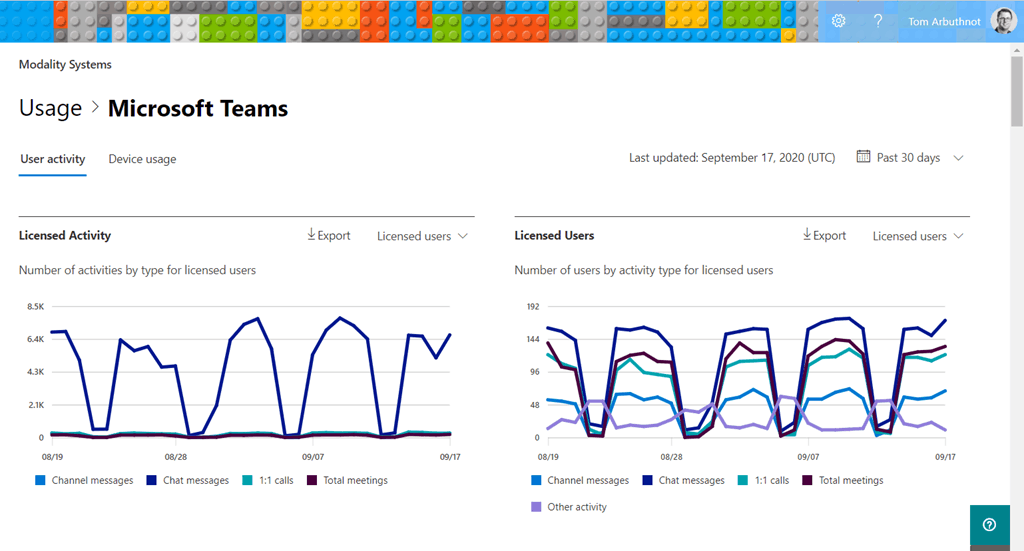
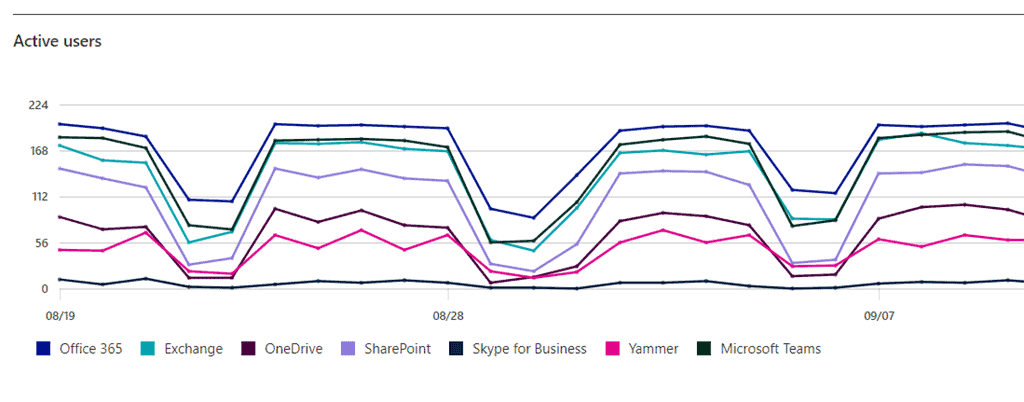



 President Donald Trump speaks at a White House press conference on September 16. | Mandel Ngan/AFP via Getty Images




 A mail carrier delivers in Los Angeles in April 2020, just before Postmaster General Louis DeJoy was appointed. | Valerie Macon/AFP via Getty Images


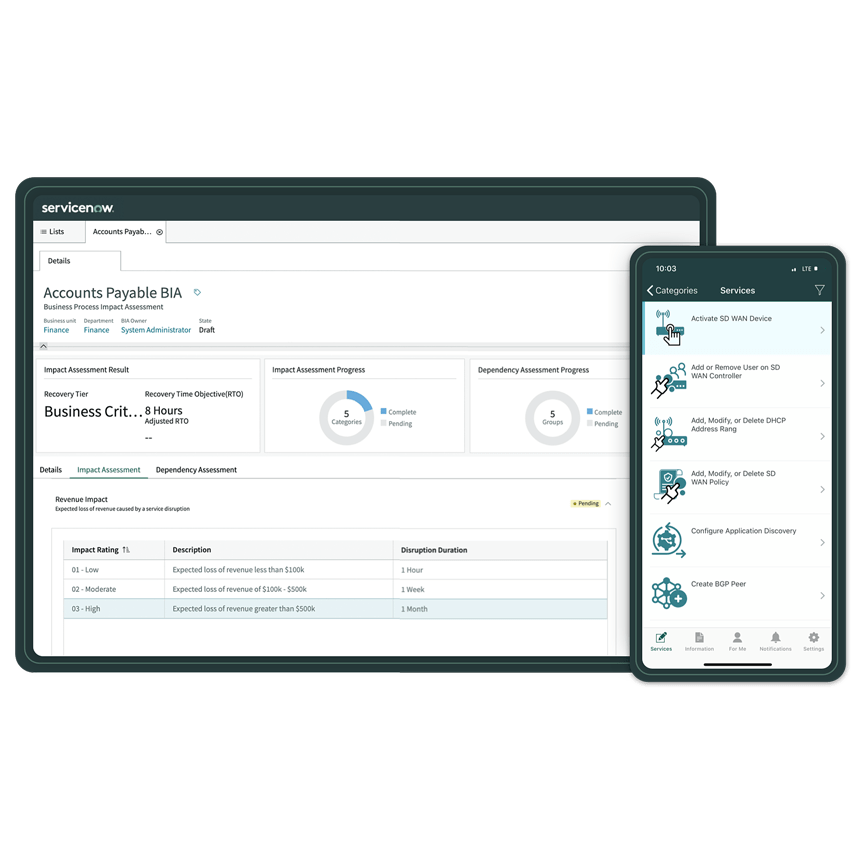
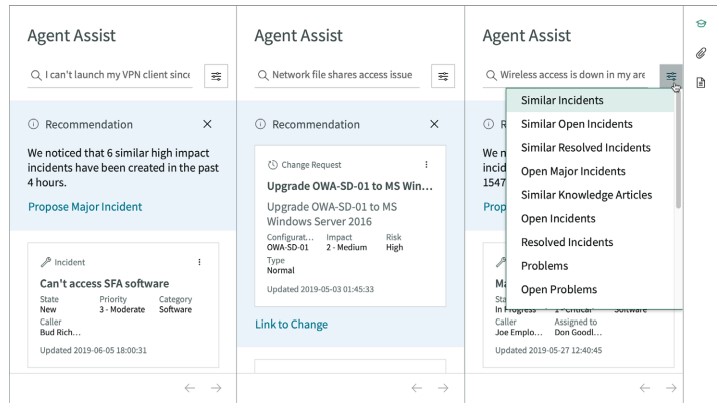
 Photo by Becca Farsace / The Verge


 Image: Google

 TikTok’s parent company ByteDance has been in the middle of a messy, months-long negotiation with the US government over its future. | Photo Illustration by Andrea Ronchini; NurPhoto/Getty Images
 Google CEO Sundar Pichai | Photo by Justin Sullivan/Getty Images

 Image: LG