When Netscape launched in 1994 and kicked off the consumer internet, there were maybe 100m PCs on earth, and over half of them were in the USA. The web was invented in Switzerland, and computers were invented in the UK, but the internet was American. American companies set the agenda and created most of the important products and services, and American attitudes, cultures and laws around regulation and speech dominated.
This is not quite so true anymore. 80-90% of internet users are now outside the USA, there are more smartphone users in China than in the USA and western Europe combined, and the creation of venture-based startups has gone global.
Meanwhile, of course, the internet became vastly more important. In the last decade it has gone from being interesting and exciting but not really an important part of most people’s lives to being a central part of society. This is my favorite way to illustrate this - by 2017, almost half of new (straight) relationships in the USA started online.
This has two pretty basic sets of consequences.
First, as I discussed in some detail here, technology is becoming a regulated industry, if only because important and specialised industries are always regulated. That regulation will not only be determined by the USA. Other countries have their own laws, cultures and constitutions, and so we are entering a period of increasing regulatory expansion, overlap and competition from different jurisdictions, from the EU and UK to Singapore or Australia and, of course, China.
Second, you can no longer assume that the important companies and products themselves are American.
Both of these are captured in Tiktok. This is the first time that Americans have really had to deal with their teenagers using a form of mass media that isn’t created in their country by people who mostly share their values. It’s from somewhere else. That’s compounded by the fact that the ‘somewhere else’ is China, with all of the political and geopolitical issues that come with that, but I’d suggest that the core, structural issue is that it’s foreign. This is, of course, a problem that the rest of the world has been wrestling with since 1994, but it comes as something of a shock in Washington DC. There’s an old joke that war is how God teaches Americans geography - now it’s regulation.
TikTok is introducing Americans to a question that Europeans have struggled with for 20 years: a lot of your citizens might use an Internet platform created somewhere that doesn’t know or care about your laws or cultural attitudes and won’t turn up to a committee hearing
There are many questions that flow out of this. One, for example, is how far and how many Chinese consumer internet companies will spread globally as opposed to being constrained by their domestic environment (this would be the ‘Galapagos Effect’ often suggested of Japanese tech. Tiktok worked, but WeChat failed). Another is how many ‘unicorns’ come from Europe - how fast does its population, economic, scientific and educational base produce a proportionate number of big tech companies (or if not, why not?). Yet another is the ‘Is Silicon Valley Over?’ debate, which goes back decades - when my old colleague Marc Andreessen arrived there in the early 1990s, he thought the whole thing was over and he’d missed it.
You can argue about the details of these all day, but it does seem clear that we should just presume a global diffusion of software creation and internet company creation. It doesn’t really matter if Silicon Valley ends up as 25% or 75% of the next 100 important companies - America doesn’t have a monopoly on the agenda any more.
Hence, there are all sorts of issues with the ways that the US government has addressed Tiktok in 2020, but the most fundamental, I think, is that it has acted as though this is a one-off, rather than understanding that this is the new normal - there will be hundreds more of these. You can’t one-at-a-time this - you need a systematic, repeatable approach. You can’t ask to know the citizenship of the shareholders in every popular app - you need rules that apply to everyone. Today, the rules come from Apple, or California, both of which are increasingly becoming America’s privacy regulators by default. But they will also come from the EU, which is increasingly writing laws that, intentionally or not, change how American companies do business in America, and the more different rules we have in different places, the more fragmented and complicated things get. Regulation is an export industry, and a competitive industry.
This year’s Pixel 5 includes two rear-facing cameras; a 12.2-megapixel main sensor, and a 16-megapixel ultrawide with a 107-degree field of view. Google chose a configuration that’s similar to recent Samsung and Apple devices, which have prioritized ultrawide over telephoto cameras on dual-camera handsets like the Galaxy A51 and iPhone 11. Fine.
But the funny thing about Google’s decision is that it contradicts what the company said just one short year ago at the launch of the Pixel 4. “While wide-angle can be fun, we think telephoto is more important,” Google Research’s Marc Levoy said onstage last October while promoting the Pixel 4’s telephoto lens.
FILE PHOTO: Chamath Palihapitiya, Founder and CEO of Social Capital, presents during the 2018 Sohn Investment Conference in New York
Reuters
Billionaire investor Chamath Palihapitiya said large corporations should not receive a "single extra dollar" of stimulus and Congress should prioritize putting money in Americans' pockets instead.
At the CNBC Institutional Investor Delivering Alpha conference Palihapitiya criticized the "idiotic forms of capital allocation" of big companies.
He said the only way the nation will dig itself out of the economic crisis is to give money to ordinary Americans who will then use capital to spend.
"Give money to ordinary Americans, priority number one. Priority number two, give money to small businesses. But do not start ripping any more money into these big companies. They don't know what to do with it," the billionaire said.
Billionaire Chamath Palihapitiya criticized capital allocation of large corporations and said the government shouldn't give them a "single extra dollar" but focus on paying ordinary Americans instead. He made the comments during a panel at the CNBC Institutional Investor Delivering Alpha conference on Wednesday.
In April the venture capital investor told CNBC the government should not bail out large corporations like airlines during the pandemic and let them "get wiped out." He expanded on this on Wednesday and said these corporations have done "the most absolutely horrid and idiotic forms of capital allocation." The companies did not use the first stimulus to invest in research and development, raise worker wages, or save cash — and they weren't doing that before the pandemic either, he said.
"What they were doing is they were entering the markets, they were buying back their stock, they were inflating earnings per share to drive their own personal compensation. And this isn't a one-year problem; this has been happening, frankly, for the last 15 or 20 years," Palihapitiya said.
The only way America will dig itself out of the economic crisis is by focusing on the consumer, the Social Capital CEO added. Americans are "unbelievable at spending" and their consumption drives gross domestic product. Therefore, Congress should prioritize additional unemployment benefits, loan forgiveness programs, and small business aid in the next stimulus bill.
"Americans are unbelievable at spending. And I think that spending right now is probably the best way for us to dig ourselves out. But giving more money to these class of CEOs and boards is idiotic and dumb," he added.
Palihapitiya also said that small businesses, unlike large corporations, "are forced to actually run a good business" in order to make money and will do so much better if they are given extra capital.
"Give money to ordinary Americans, priority number one. Priority number two, give money to small businesses. But do not start ripping any more money into these big companies. They don't know what to do with it," the billionaire said.
Microsoft’s Outlook service is down worldwide, affecting Outlook on the web, Outlook.com, and Outlook on desktop and mobile. The outage started at around 2AM ET, and Microsoft has confirmed it’s affecting users worldwide. Outlook users are currently unable to access their email, and Outlook.com is failing to load.
“We’re collecting additional data from the affected infrastructure to aid in our investigation to determine the cause of impact,” says a Microsoft support update. The outage appears to have been caused by a recent change on Microsoft’s end. “We’re reviewing recent changes to our service to further determine the cause of impact,” says Microsoft’s 365 status Twitter account.
This is the second major Microsoft services outage in...
The new Supreme Court term begins on Monday. | Al Drago/Getty Images
A Supreme Court without Ruth Bader Ginsburg is about to show us whether it still cares for the rule of law.
The new Supreme Court term will open on Monday under a cloud of uncertainty — and dread, if you’re a liberal.Justice Ruth Bader Ginsburg’s death means Republicans will almost certainly control six seats on the Court before the year is up. And President Donald Trump’s nominee to fill Ginsburg’s seat, Amy Coney Barrett, is an extraordinarily conservative judge who is likely to support lawsuits advanced by the legal profession’s right flank.
If the Supreme Court strikes down Obamacare — which, with Barrett essentially guaranteed to replace Ginsburg, is very much a possibility — every single one of those 20 million people could be stripped of their health coverage overnight.
Erin Schaff-Pool/Getty Images
Amy Coney Barrett, Trump’s third nominee to the US Supreme Court, poses with Vice President Mike Pence and Senate Majority Leader Mitch McConnell on September 29, 2020.
The upcoming term could also write the final chapter in a long-simmering dispute over whether someone with a religious objection to LGBTQ people has a constitutional right to discriminate against them. Proponents of LGBTQ equality already faced an uphill battle in Fulton v. City of Philadelphiabefore Ginsburg’s death. With a presumed six Republicans on the Court, their prospects are even more grim.
Moreover, it’s worth noting that the cases on the current docket were chosen by a nine-justice Court that included Ginsburg. In nearly all circumstances, at least four justices must agree to hear a case before it’s added to the Court’s argument calendar.
In the coming weeks and months, the Court’s Republican majority has the opportunity to add cases to its docket knowing it will likely have the votes to move the law sharply to the right.
In other words, the conservative legal movement is poised to remake large swaths of American law — and it’s well-positioned to do so in the years to come so long as Republicans control a supermajority of Supreme Court seats.
The Supreme Court could take health care away from millions of Americans
There’s no way to sugarcoat this: The legal arguments challenging Obamacare in California v.Texas are absurd. They’re the sort of arguments fair and impartial judges would laugh out of court, possibly after sanctioning the plaintiffs’ lawyers for bringing frivolous litigation.
As Yuval Levin, a prominent conservative commentator and policy wonk, wrote in the National Review, the notion that Obamacare cannot stand without the individual mandate “doesn’t even merit being called silly. It’s ridiculous.”
But with six conservative jurists, there’s a very real chance the Court will seize this opportunity to repeal a law Republicans have wanted to destroy for more than a decade. Judge Reed O’Connor, a former Republican Senate staffer appointed to the federal bench by President George W. Bush, already ruled in Texas that the whole law should be repealed. And two Republican appellate judges upheld much of O’Connor’s decision.
The case concerns a 2017 amendment to the ACA, which effectively repealed the law’s individual mandate requiring most Americans to either purchase health insurance or pay at least $695 in additional taxes.But the tax law Trump signed the same year reduced the penalty owed by people without health insurance to zero dollars.
The plaintiffs in Texas, which include 18 states with Republican governors or attorneys general, claim this zeroed-out mandate is unconstitutional.
One reason why this lawsuit should not be taken seriously is because it challenges an Obamacare provision that, at least after the 2017 amendment, does literally nothing. Again, the amended law requires individuals to either purchase health insurance or pay a zero-dollar tax.
The Constitution does not permit just anyone to show up in federal court and ask the judges to strike down a law. Rather, in order to bring a lawsuit challenging a legal provision, a plaintiff must show they were injured in some way by that law, a requirement known as “standing.”
Because no one is injured by a zero-dollar tax, no one has standing to challenge the zeroed-out individual mandate in court.
If the standing requirement did not exist, there is a plausible — though not exactly airtight — argument that the ex-mandate is indeed unconstitutional. The Supreme Court upheld the fully operational mandate as a valid exercise of Congress’s power to levy taxes inNational Federation of Individual Business v. Sebelius (2012). But a zero-dollar tax is no tax at all, so there’s at least one non-frivolous argument that the neutered mandate is unconstitutional.
But even if you assume the non-mandate is unconstitutional, so what? Who cares whether a provision of the law that literally does nothing is constitutional?
Which brings us to the single most absurd aspect of Texas.
When a court strikes down part of a broader statute, it often needs to ask whether other parts of the law should fall along with it. This question, known as “severability,” is a normally speculative inquiry — courts must ask what hypothetical law Congress would have enacted had it known that one provision was invalid.
But speculation is unnecessary here because the question has been answered. In 2017, Congress spent months debating whether to repeal the ACA and how much of the law should go. Ultimately, it had enough votes to repeal only one provision: the individual mandate.
So we already know what Congress would have done had it been aware the zeroed-out mandate would ultimately be struck down: It would have enacted legislation that eliminated the individual mandate but kept the rest of the law intact. We know this because Congress enacted legislation that eliminated the individual mandate but kept the rest of the law intact.
California v. Texas, in other words, is more than just a challenge to the ACA. It is an early test of whether a Court with a 6-3 Republican majority is capable of honoring the rule of law. The plaintiffs’ arguments in this case would be comical if countless human lives weren’t endangered by them.
And if the Supreme Court is willing to strike down Obamacare on this risible legal theory, we cannot expect its new conservative majority to stay its hand in any case wherein the Republican Party’s preferred outcome is at odds with the law.
Religious conservatives could gain a constitutional right to discriminate against LGBTQ people
The question of whether private business owners who refuse to serve LGBTQ customers for religious reasons has been with us for quite some time. In Masterpiece Cakeshop v. Colorado Civil Rights Commission (2018), the Court sided with a baker who refused to make a wedding cake for a gay couple. That said, the Court’s decision in Masterpiece was quite narrow and largely punted on the larger question of when religion provides a license to discriminate.
Fulton v. City of Philadelphia, Pennsylvania, which the Court will hear this upcoming term, superficially resembles Masterpiece. Like the earlier case, Fulton involves religious plaintiffs who claim the First Amendment’s command that the government shall not prohibit the “free exercise” of religion entitles them to discriminate against same-sex couples.
But there is one very important difference between Masterpiece and Fulton. Again, Masterpiece involved a private business. Fulton, by contrast, involves a government contractor that claims that it has a constitutional right to discriminate against same-sex couples while performing a governmental service.
The city of Philadelphia contracts with multiple private organizations to screen couples to determine whether they’re suitable to become foster parents. The city’s contract with these organizations contains a provision prohibiting them from discriminating on the basis of sexual orientation.
Historically, Catholic Social Services (CSS) has been one of the organizations that provided this service to the city. But in 2018, the Philadelphia Inquirer reported that CSS refused to work with same-sex couples. The city investigated and determined CSS was, indeed, in violation of the contract’s non-discrimination provision, after which it did not renew its contract with CSS.
Regardless of whether the Constitution permits private businesses to discriminate, the Supreme Court has long acknowledged that the government has more authority over its own operations than it does over purely private citizens. “There is a crucial difference, with respect to constitutional analysis,” the Court explained in Engquist v. Oregon Dept. of Agriculture (2008), “between the government exercising ‘the power to regulate or license, as lawmaker,’ and the government acting ‘as proprietor, to manage [its] internal operation.’”
Fulton is not a case about whether private citizens can refuse service to LGBTQ people. It is a case about whether the government may refuse to discriminate against LGBTQ people — and whether it can order the people it pays to provide governmental services to provide those services equally to everyone.
Should the Supreme Court rule that religious conservatives may demand government contracts on their own preferred terms, the implications could be profound. It is one thing for private businesses to claim autonomy over their own limited domain. It is another thing altogether for a private contractor to effectively dictate terms to a government that is supposed to serve all people equally.
Federal law enforcement officers could gain immunity from lawsuits claiming they violated the Constitution
Bivens held that federal law enforcement officers may be personally sued when they violate the constitutional rights of a private plaintiff.
“Power, once granted, does not disappear like a magic gift when it is wrongfully used,” Justice William Brennan wrote for the Court in Bivens. “An agent acting — albeit unconstitutionally — in the name of the United States possesses a far greater capacity for harm than an individual trespasser exercising no authority other than his own.” And thus the Constitution must offer a remedy to victims of federal officers who inflict such harm on them.
But Bivens suits are “a ‘disfavored’ judicial activity,” according to a recent ruling joined by all five members of the Court’s current Republican majority. The 5-4 decision in Hernandez v. Mesa (2020) strongly suggests the Republican justices are ready to overrule Bivens.
Had those same five justices sat on the Court when Bivens was originally decided, Justice Samuel Alito wrote in Hernandez, “It is doubtful that we would have reached the same result.”
Which brings us to Brownback v. King, which the Court will hear in November.
The facts of Brownback are simply horrific. James King, the plaintiff in the case, was a 21-year-old college student when two law enforcement officers mistook him for a criminal suspect in the summer of 2014. After falsely identifying King as the fugitive they were looking for, the officers arrested him before allegedly beating and choking him to the point of unconsciousness.
Courtesy of the Institute for Justice
A picture of James King taken after his encounter with two law enforcement officers in 2014.
King sued, alleging the officer’s actions violated his Fourth Amendment right against unreasonable seizure and excessive force.
The specific legal issue before the Supreme Court in Brownback is fairly technical, and thus difficult to summarize concisely. In essence, the Court must decide whether a statute known as the Federal Tort Claims Act prevents King from pursuing a Bivens claim against the officers.
Given the Court’s recently expressed hostility toward Bivens — and because Brownback is likely to be heard by an even more conservative Court than the one that decided Hernandez — there is a very real risk that Brownback could be used as a vehicle to overrule Bivens in its entirety, thereby leaving King without any remedy against the officers who mistook him for someone else, with violent consequences.
Government officials could be forced to compensate “religious liberty” plaintiffs
Tanzin v. Tanvir, which the Court will hear on Tuesday, presents a direct conflict between the conservative values pressed by the Fulton plaintiffs and the conservative disdain for decisions like that ofBivens — which, again, held that federal law enforcement officers could be sued directly — that is likely to animate the Court’s decision in Brownback.
Like Brownback, Tanzin arose from allegations of civil rights violations by federal law enforcement officers. Muhammad Tanvir says he was approached by two FBI agents who asked him “whether he had anything he ‘could share’ with the FBI about the American Muslim community.” After Tanvir declined to become an informant, those agents allegedly threatened him with deportation and placed him on the no-fly list.
Because he was placed on the list, Tanvir also claims that he was unable to fly to see his ailing mother in Pakistan and that he had to quit a job as a long-haul trucker because he could no longer fly home to New York after a one-way delivery.
The legal issue in Tanzin is whether the Religious Freedom Restoration Act, which governs many federal religious liberty claims, permits Tanvir to directly sue the FBI agents who allegedly violated his civil rights. Thus, the conservative justices will have to choose between expanding the power of plaintiffs who allege their religious rights were violated and protecting federal law enforcement officers from liability.
Liberals are also likely to be conflicted about the proper result in Tanzin. Though the facts of this particular case involve a Muslim man who was allegedly abused by law enforcement, a ruling in Tanvir’s favor could also subject federal officials who enforce anti-discrimination laws against conservative Christians to personal liability.
The Court could cut deeply into the Constitution’s safeguards against cruel and unusual punishment
The Eighth Amendment forbids “cruel and unusual punishments,” and the Supreme Court has held that this amendment prohibits states from imposing certain punishments on certain individuals.
In Atkins v. Virginia (2002), for example, the Court held that “death is not a suitable punishment” for someone who is intellectually disabled. Roper v. Simmons (2005) extended this holding to juvenile offenders, relying in part on the theory that a “lack of maturity and an underdeveloped sense of responsibility are found in youth more often than in adults and are more understandable among the young.”
More recently, in Miller v. Alabama (2012), the Court held that juvenile offenders should not be sentenced to life without the possibility of parole unless they are “the rare juvenile offender whose crime reflects irreparable corruption.”
Notably, both Ginsburg and now-retired Justice Anthony Kennedy were in the majority in these closely divided cases. It is far from clear whether the Court still has the five votes necessary to sustain the decisions in Atkins, Roper, and Miller.
Which brings us to Jones v. Mississippi, a case the Court will hear in November. The specific issue in Jones is whether sentencing judges must make an explicit determination that a juvenile offender is “permanently incorrigible” before sentencing them to life without parole. But the stakes in Jones are potentially much higher.
If there are five justices who wish to overrule decisions like those of Atkins, Roper, and Miller, Jones potentially presents them with a way to do it. Indeed, the case could enable the Court’s new Republican majority to drastically roll back much of the Constitution’s protections against cruel and unusual punishment.
The Court could impose additional limits on Congress’s power to investigate the president
The specific legal issue in House Committee is fairly narrow. The House Judiciary Committee seeks grand jury materials related to former special counsel Robert Mueller’s investigation into potential Russian interference in the 2016 election. As a general rule, such materials are kept confidential, but the Federal Rules of Civil Procedure sometimes allow such materials to be disclosed “preliminary to or in connection with a judicial proceeding.”
A federal appeals court held that an impeachment trial counts as a judicial proceeding, and as such a House committee may potentially obtain grand jury materials if it seeks them as part of an impeachment inquiry. The Court will consider whether that conclusion was correct.
By the time this case is argued, it’s likely that the stakes in House Committee will be fairly low. Trump will either be a lame duck, in which case there will be less need to investigate him closely, or will have held onto the presidency, in which case a House investigation is unlikely to thwart his efforts to further consolidate power.
Nevertheless, House Committee could provide a window into the newly constituted Court’s eagerness to protect Trump from investigation.
The Court could retroactively invalidate years’ worth of agency actions
In last term’s Seila Law v. Consumer Financial Protection Bureau(2020), the Supreme Court held that it is unconstitutional for Congress to create a federal agency led by a single person if that person cannot be fired by the president at will.
At least at first, the practical implications of the decision appeared fairly minimal — the only immediate impact of Seila Law is that the CFPB director can now be fired by the president at any time. Should Democratic nominee Joe Biden prevail in the upcoming election, this means he can replace Trump’s CFPB director immediately after taking office.
And yet Collins v. Mnuchin, a case the Court will hear in December, could raise the stakes of the Court’s Seila Law decision considerably.
Collins involves the Federal Housing Finance Agency (FHFA), an agency that, like the CFPB, has a single director who enjoys some protections against being fired by the president. After Seila Law, there is little doubt that FHFA Director Mark Calabria will be stripped of these protections. If Biden wins, he will almost certainly be allowed to dismiss Calabria.
But the plaintiffs in Collins ask for substantially more. As several lower court judges explained, the plaintiff’s claim is that “everything the FHFA has done since its inception is void because it was an unconstitutionally structured agency” (Congress created the FHFA in 2008).
As a result, a dozen years’ worth of federal actions could potentially be vacated.
The United States is in the middle of one of the most consequential presidential elections of our lifetimes. It’s essential that all Americans are able to access clear, concise information on what the outcome of the election could mean for their lives, and the lives of their families and communities. That is our mission at Vox. But our distinctive brand of explanatory journalism takes resources. Even when the economy and the news advertising market recovers, your support will be a critical part of sustaining our resource-intensive work. If you have already contributed, thank you. If you haven’t, please consider helping everyone understand this presidential election: Contribute today from as little as $3.
Most of us stick with the silicone ear tips that come in the box with our earbuds; usually one of the small / medium / large sizes makes for a good enough seal to enhance bass and increase noise isolation. Stepping up from that, you get foam tips like those from Comply that expand to fill your ear canal for top-notch sound. But the pinnacle of earbud listening comes when you have a completely custom, personalized ear tip that’s perfectly fitted to the contours of your ear.
Ultimate Ears wants to offer that option to more people — without making them go to their local audiologist for a ear mold. The company’s new $249 UE Fits have gel-filled tips that, through a 60-second process initiated on your smartphone, will permanently harden in...
Back in 2007, Verizon was forced to strike an agreement with the New York State Attorney General for falsely marketing data plans as "unlimited" when the plans had very clear limits. Thirteen years later and it's not clear the company has learned much of anything.
Verizon's 2020 wireless plans still falsely claim that users get "unlimited" data for a premium price point on top of base surcharges. But you're to ignore that things like HD and 4K streaming cost extra. Or the fact that if you're enrolled in something like Verizon's recent "Unlimited Plus" plan, "unlimited data" is defined as up to 15 GB of usage, after which your connection is throttled for the remainder of the billing cycle. Such surcharges of course don't include additional fees to connect additional devices to this so-called "unlimited" connection, be it your Apple Watch or your tablet.
Verizon recently updated this plan, offering double the data allotment (30 GB) when connected to Verizon's 4G LTE network, while providing "unlimited data" while users are connected to its newer 5G network:
"Unlimited Plus gives customers double the 4G LTE premium data for jetpacks, tablets and laptops, and includes unlimited access to blazing-fast 5G Ultra Wideband speeds when connected on 5G Ultra Wideband devices."
While that superficially sounds nice, Verizon's 5G network is barely available to the vast majority of customers. One recent study found that due to coverage issues with the millimeter wave spectrum Verizon is using for 5G, 5G was available roughly 0.4% of the time even in "launched" markets. The other problem? Verizon's "unlimited" plans continue to include not only a ban on faster HD and 4K streaming (unless you pay more), but all manner of additional surcharges to connect additional devices to your already pricey connection:
"As of late last week, Verizon introduced a new version of its “Unlimited Plus” plan, which attaches to existing wireless plans for an extra $30 a month. Then, if you would like to connect more devices to your plan beyond your phone, you can sign up for an unlimited connected device plan and upgrade to Unlimited Plus for another $10 a month. If you have a tablet or hotspot, Verizon will sell you another unlimited plan for those for an extra $20 a month.
The new “Unlimited Plus” offers unlimited-unlimited 5G and up to 30 GB of “premium” 4G LTE data. So it appears you get double the unlimited data as well as an infinite amount of 5G service which is probably not provided in your area (or if you turn the corner, or go indoors in an area that has the service). But if you are connecting a hotspot, laptop, or tablet to your plan, then Verizon redefines unlimited again, this time to mean up to 50 GB of 5G data (almost not available anywhere) and then you get speed throttled to 3 Mbps for the rest of the billing cycle, but just on those devices."
There's simply no way the majority of normal consumers actually understand what most of this means. And that's of course quite by design. One, the complexity and caveats make it difficult to impossible to compare Verizon's pricing to its competitors. That helps mask the fact that U.S. wireless subscribers pay not only some of the highest prices in the developed world for wireless data, but those connections are some both some of the slowest in the world, and inundated with all kinds of murky restrictions on what you can do with your new connection. How innovative!
The other major benefit is that consumers confused by these plans will generally subscribe to the most expensive plan they can afford to avoid headaches. Basically, Verizon and other U.S. wireless carriers adore making their plans intimidating and confusing because they know you'll pay a premium to avoid bullshit surprises and headaches in the middle of your billing cycle. They're effectively intentionally sowing confusion, then charging you a premium to avoid arbitrary penalties. Like the airlines, banking, and other industries, U.S. policymakers treat reining in this kind of behavior as a non-starter.
Which is why it was surprising that net neutrality rules, which mandated transparency and other base-level restrictions on this kind of stuff, managed to get passed in the first place. But not only did the Trump administration eliminate these hugely popular consumer protections based on bullshit data, they effectively lobotomized the agency's authority over telecom at lobbyist behest. Said lobotomized FCC then rubber stamped the T-Mobile Sprint merger (without even looking at the data or warnings by antitrust experts), ensuring less overall price competition over the next few years.
In short if you're an American who likes paying a lot for mediocre, spotty service delivered on a platter of intentionally confusing options designed to nickel-and-dime you into oblivion, things are looking good for you over the next 3-5 years. Enjoy!
A woman with a mail-in ballot before dropping it off at Boston City Hall during a Massachusetts primary on September 1.
JOSEPH PREZIOSO/AFP via Getty Images
More states and counties than ever are allowing Americans to vote from home with a paper ballot mailed to their houses this fall.
But voting by mail can be more prone to human error than voting in person, leading to mail ballots being rejected at higher rates than in-person votes.
Already this year, an NPR analysis found that over half a million mail ballots have been rejected for arriving too late, missing signatures, or other errors.
Here are the five biggest mistakes to avoid when filling out your mail ballot this fall, according to election experts.
This fall, 46 states and the District of Columbia are offering all voters the option to vote from home because of the COVID-19 pandemic.
While voting by mail allows voters to safely fill out their ballots in the comfort of their homes and avoid long lines at polling place, it's often more prone to human error than voting in person, especially for those unfamiliar with the process, leading to mail ballots getting rejected at higher rates than in-person votes.
The US Election Assistance Commission found that domestically, 33 million, or 23.7% of voters, cast ballots by mail in the 2016 presidential election. More than 318,000 of those votes, accounting for about 1% of the mail ballots that arrived at election offices, ended up being rejected.
This year alone, over half a million mail-in primary ballots have been disqualified for late arrival or other errors, according to a recent NPR analysis.
Here are five common mistakes that could get your mail-in ballot challenged, disqualified, or not counted at all.
1) Improperly filling out your ballot
When you get your mail ballot, be sure to fill it out on a flat dry surface (no nearby coffee mugs or wine glasses) and carefully follow the instructions that come with it.
Similar to the multiple-choice standardized Scantron tests you took in high school, ballot scanners can accept only certain colors of ink and ballots that are filled out properly. Ballots can't have stray marks or multiple choices filled in for the same office.
"You don't want to use red ink, marker, or anything that could be problematic. If your instructions say to use black or blue ink, use black or blue ink. If it says fill in the oval, fill in the oval. I think it's really critical for voters to follow the instructions more than anything," Amber McReynolds, the CEO of the National Vote at Home Institute and a former director of the Denver Elections Division in Colorado, told Insider.
Adrian Fontes, the top election official in Maricopa County, Arizona, told Insider that county canvassing boards often must resolve major errors with mail ballots.
"If you're voting in person, and your ballot doesn't go through the tabulator, almost all models of tabulators will kick it back out and say there's something wrong, either a double vote, overvote, or something like that," he said. "In a vote-by-mail system, you don't get that second-chance opportunity, so those ballots have to be adjudicated."
Every state requires a voter to sign an affidavit on the outside of the envelope containing their mail ballot affirming their identity and eligibility to vote, so make sure you sign in every place that requires a signature.
Monica Lewinsky recounted in a recent Twitter thread how she went to extreme lengths to vote from abroad in the 2016 presidential election, including covering the expensive costs of getting her absentee ballot sent to her in Australia via FedEx and back halfway across the world to New York, only to return home and discover her ballot was rejected because she forgot to sign the outer envelope.
"The most common reason for rejection is people forget to sign," Rick Barron, the elections director in Fulton County, Georgia, told Insider. "If they don't sign the application, or they don't sign the ballot that's sent, that's really the only reason why we end up rejecting them."
A ballot-collection box in Cambridge, Massachusetts, on August 25.
Lane Turner/The Boston Globe via Getty Images
3) Using a different signature from what your state has on file
Thirty-one states now use signature verification to confirm the authenticity of voted ballots, according to the National Conference of State Legislatures. In this process, election officials cross-check the signature a voter used to sign their ballot envelope to see if it matches the voter's most recent signature on file with the elections office, the Department of Motor Vehicles, or another government agency.
Signature matching adds an extra layer of security to ensure the integrity of mail ballots, but it can also lead to a greater share of ballots being challenged or rejected.
Kathleen Unger, a voter-protection attorney and the founder and board chairwoman of the nonprofit VoteRiders, told Insider that signature-matching problems could particularly affect younger and first-time voters.
"I used to think that this issue applied especially to older voters and to some folks with disabilities," she said. "But I then had this aha discovery after the 2018 election and saw that in the Parkland area of Florida, there were an excessive number of ballots rejected among young people because of signature issues."
In Georgia, too, young voters, first-time voters, and Black voters were far more likely than others to have their ballots rejected for mismatched signatures or for being incorrectly completed in 2018, one study found.
"Young people use one signature when they register to vote, and then they go off to college, become very creative, and their signature changes," Unger said. "I'm not ready to fall on my sword over this, but I think it's possible that signature matching could be the hanging chad of 2020."
McReynolds said that if you're not sure which signature your elections office uses or think your signature may be outdated, you can update your signature on file with your local elections office by submitting a new paper voter-registration form or on your paper mail-ballot application.
"Consistency is really what the election officials are looking for," McReynolds said. "We used to have people taking their ballot more seriously than everything else, so they'd write out a really nice, beautiful signature, and yet their voter-registration form did not include that. So consistency really matters."
At least 21 of the states that use signature verification have an established "cure" process to give voters a chance to correct any discrepancies with their signatures in order for their ballot to be counted, newly including Kentucky and New Jersey.
Those states need to have some form of contact information on hand to let the voter know of the problem and give them the greatest chance of having their vote counted.
"In Arizona, we ask for a phone number on the outside of the envelope that is not part of the public record but is part of the affidavit voters sign. So if we have an issue with a signature, we can call the voters back as quickly as possible," Fontes of Maricopa County told Insider.
A voter ID sign at a Little Rock, Arkansas, polling place in 2014.
AP Photo/Danny Johnston, File
4) Not including required additional documentation
While most states will allow anyone to vote by mail in November, not all states' rules are created equal. Some states require voters to take additional steps, like having a signature from a witness, to authenticate their ballot.
Thirteen states require all or some voters to submit a copy of their photo ID with their absentee ballots, and most people in Oklahoma and Missouri who vote by mail must get their ballot envelopes notarized.
Alaska, Louisiana, Mississippi, North Carolina, South Carolina, and Wisconsin will require voters to include one witness signature on their ballot envelopes in November. And Alabama requires each voter to submit a photocopy of their photo ID and obtain two witness signatures or notarization.
"In Wisconsin, all voters are required to have a witness signature, but we see a lot of voters who think that the witness signature is only required if they needed assistance, so there's a bit of confusion over that, which we are working to do some education around," Claire Woodall-Vogg, the executive director of the Milwaukee Election Commission, told Insider.
If you need help navigating the voter-ID laws in your state, affording the cost of obtaining an ID, or making a photocopy to send in with your ballot or application, organizations like VoteRiders can help.
"Based on a Brennan Center study showing that 11% of voting-age Americans do not have a current government-issued photo ID, that translates into about 25 million eligible voters," Unger said. "There are many millions more who are so confused and intimidated by these complicated and onerous voter-ID laws that they won't vote, even though they have a valid ID."
An election worker loads unopened ballots into a machine for sorting at the King County Elections headquarters on August 4 in Renton, Washington.
Photo by David Ryder/Getty Images
5) Sending your ballot back too late
One of the most common reasons mail ballots are rejected is that they arrive too late or lack a postmark.
Out of the 40 states not sending voters a ballot in the mail in November, 31 allow voters to request their ballots by mail within seven days of the election. For years, experts have said these tight deadlines set voters up to fail by not allowing enough time for a ballot to be delivered each way per the US Postal Service's delivery standards.
This year, 26 states require ballots to be received by Election Day or the day before in order to count, while 24 states and the District of Columbia require ballots to be postmarked by Election Day or the day before. If you're in a state where a ballot must be received by Election Day, the Postal Service recommends that you put your ballot in the mail at least a week in advance.
Judges in four key swing states, Georgia, Pennsylvania,Wisconsin, and Michigan, have ruled to extend receipt deadlines for mail ballots, decisions that could prevent thousands from being rejected for late arrival.
A traditional postmark is a dated stamp on the envelope that cancels the postage and prevents it from being used more than once. Some states now use alternative digital methods to verify when a ballot entered the mail stream so it can be accepted if it lacks that postmark.
"What we recommend is not just acceptance of postmark but also acceptance of a digital scan of an Intelligent Mail barcode or what we've been considering to be an electronic postmark," McReynolds said. "With the use of Intelligent Mail barcodes and more advanced technology, you can get electronic data showing when the ballot was first scanned by the Postal Service."
Tammy Patrick, a senior adviser at the Democracy Fund and a longtime liaison between election officials and the Postal Service, recommends that voters who mail in their ballots near or on the day of their deadline go in-person to a post-office branch and have their ballot envelope postmarked by a clerk.
The vast majority of states also allow voters to drop off their ballot in person at their local elections offices before the polls close, and a growing number of jurisdictions offer secure ballot drop boxes that are maintained by elections offices and allow voters to safely drop off their ballots by hand without using the Postal Service at all.
At today’s Google event, the company announced that its Recorder app, which is available for Pixel 2 or newer phones, is getting a nice update that should make it a lot easier to search through audio files. The update will allow you to select a snippet of audio from a recorded clip, which you can then either share or remove from the larger audio file.
Additionally, you can search for specific words in a recorded transcript and delete them. So if you’re someone like me who tends to say “uh,” “um,” or any other crutch word during interviews, you can theoretically find and remove them with this new update.
According to Google, you’ll be able to use this feature offline, in the same way its live English transcription function works without...
Google made a big statement about how it hopes to differentiate its Pixel smartphones in an already crowded market: by offering lower prices.
Google took the wraps off its new Pixel 5 flagship on Wednesday, which starts at $700 and is among Google's first phones to offer 5G support.
The Pixel 5's $700 price tag might not seem unusually cheap compared to some of its rivals. But the fact that it's the priciest phone in Google's lineup, not a starting point, says a lot about the search giant's approach to the industry.
"What the world doesn't seem like it needs right now is another $1,000 phone," Rick Osterloh, Google's senior vice president of devices and services, said on a call with reporters on Wednesday.
Other than 5G, the Pixel 5 doesn't offer much that's new to the industry, marking a stark contrast from last year's Pixel 4. The headline feature of that phone was its Motion Sense capabilities, which allow users to control the device using gestures without physically touching it.
But it also came with a higher starting price of $800. This year, Google is doubling down on value and catching up where the Pixel 4 fell short, particularly when it comes to its camera and battery life.
Google isn't finished with its Soli technology, the miniature radar it built into the Pixel 4 that powers its motion sensing features, according to Osterloh. But it's focus for 2020 is on delivering 5G at an accessible price. Early phones that supported 5G all came at a premium price, but that's started to shift over the past year as companies like Samsung and OnePlus have launched affordable 5G devices.
"I'm really glad we built these technologies, they'll be used in the future," he said. "But they're very expensive, and so we wanted to try to offer a lot of value this year and that's what we did."
To accomplish this, Google is building off the success of its cheaper A-series line of devices. Last year's $400 Pixel 3a became the best-selling unlocked phone on Amazon in the US shortly following its launch. It released a follow-up to that phone in August, the $350 Pixel 3a, and on Wednesday introduced a 5G version for $500.
"I think the easiest way to think about it is: Pixel 4a, I think, has done a great job of delivering the essential smartphone elements," Osterloh said. "And we built out from that."
Google's Pixel 3a and 4a have earned praise from tech critics, but the competition for cheaper smartphones has only increased since the 3a's launch last May. Apple introduced a direct rival in its $400 iPhone SE, which it began selling in April. One analyst also expects it to launch a cheaper version of the upcoming iPhone 12 without 5G in 2021.
Samsung is also launching the Galaxy S20 Fan Edition, a $700 version of its flagship phone that comes with differences in terms of its design and camera.
Still, that doesn't mean Google is completely done with high-end phones.
"I wouldn't rule it out," Osterloh said in response to a question about whether Google would compete in the $1,000 smartphone market again. "Certainly what we announced today is where we're at right now."
Recently 2600Hz expanded their reach as a leading provider of unified business communications by partnering with OneBill, a Billing and Revenue Management provider. By working with OneBill, 2600Hz created a strategic partnership to streamline and automate order provisioning, billing, invoicing, and taxation for 2600Hz customers. “We created this partnership to make our customers’ lives easier. We wanted to give them more of the tools that they need to be successful”, says Head of Marketing, Alisa Bartash.
The collaboration between both companies creates a synchronicity between KAZOO and OneBill’s platform to automate ordering and billing operations. Bartash shares, “we were looking at different revenue and billing platforms to determine which would fit inside of our platform, KAZOO, for seamless integration and also an organization that shares similar philosophies that has the customers’ best interest in mind”.
A Partnership That’s a Win for Everyone
Alisa Bartash
From the customer perspective, this partnership makes sense because it helps enhance the customer experience. The tools OneBill provides will eliminate manual errors and allows customers to spend less time on billing, invoicing, and taxation and more time on sales and marketing in order for their businesses to grow. From a corporate standpoint, this partnership makes the best use of OneBill’s platform to offer 2600Hz’s partners everything they need to be successful within the realm of billing operations. OneBill is a leader in their industry, and they have built a solution that catered to the needs of our customers, some of whom were already using their platform. By bridging the gap and automating processes to create a unified experience it provides the best of both worlds along with streamlined integration between 2600Hz’s platform KAZOO and OneBill.
This partnership is more than just a broad alignment of interest. It has taken all levels of customers into consideration in terms of tangible success outcomes. “On the small business side, it’s a very affordable solution. We’re doing it for the benefit of our customers so they can get the best return on their investment as possible”, states Bartash.
“This is just another tool we’re providing to make their lives easier, to help them with their billing and invoicing, to make sure their revenue is coming in on time while helping to keep their costs low”
She goes on to explain, “this partnership is helping large businesses streamline their billing operations so they can become more efficient. OneBill also has taxation capabilities so it can help larger organizations with taxation requirements in multiple geographies”.
Businesses Can Achieve Their Global Potential Effortlessly
The partnership of these two customer-driven organizations also helps companies navigate a rapidly changing global market. OneBill offers an internal tax engine that can be set up for international taxes, and taxes such as VAT, GST, and HST can all be set up and synced via KAZOO. This gives partners the ability to create a variation on a product in a different currency and also assign them relevant tax codes for a specific regional market. Ultimately, it is easier for businesses to collect the required taxes regardless of where in the world they are providing services. The ability to provide consistent service for customers and peace of mind for users is the real return on investment for this new enterprise deal.
Microsoft is officially revealing it’s working on x64 app emulation support for Windows on ARM today. Currently, Windows on ARM devices like the Surface Pro X can only run native 32- and 64-bit ARM apps, alongside 32-bit x86 apps. The vast majority of desktop apps, including Adobe’s Creative Suite, have moved to 64-bit x86 and many have stopped supporting their 32-bit variants.
This has left devices like the Surface Pro X unable to access certain apps, but Microsoft’s new emulation support will mean any and all Windows apps will now work on Windows on ARM. The new x64 emulation support will start rolling out to Windows Insider testers in November and should arrive in a broader operating system update next year.
by snagarajan@businessinsider.com (Shalini Nagarajan)
TOLGA AKMEN/Getty
The UK economy posted a record contraction in the second quarter of the year, with gross domestic product plunging 19.8% between the months of April and June.
The latest figures show that the UK's quarterly decline was less severe than previous estimates by the Office for National Statistics.
It is the largest decline since quarterly records began in 1955, and reflects the harsh impact of ongoing containment policies that were put in place to contain the coronavirus pandemic.
"It is clear that the UK is in the largest recession on record," the ONS said.
The UK economy posted its biggest quarterly fall in record between April and June this year, officially entering recession, but a final reading of total activity on Wednesday showed the decline was less severe than originally thought.
Gross domestic product — widely used to measure a country's output — fell by 19.8% in the second quarter, the biggest fall on record, according to data from the Office for National Statistics.
The figure is marginally lower than the previous second-quarter estimate of a 20.4% drop. Having posted two successive quarterly falls, the UK officially met the technical definition of a recession.
"It is clear that the UK is in the largest recession on record," the ONS said.
The economy's historic drop is the largest decline since quarterly records began in 1955, and is reflective of the containment policies implemented against the COVID-19 pandemic.
First-quarter GDP figures also showed a steeper contraction of 2.5%, revised from a previous estimate of a 2.2% decline.
Britain has suffered one of the worst retreats in economic activity in Europe this year. It has also registered more deaths due to COVID-19 than any other European country, with over 41,000 fatalities.
In three months, Britain also fully exits the European Union and, despite more than four years elapsing since the vote to leave in June 2016, Conservative Prime Minister Boris Johnson's government has yet to reach an agreement with the bloc on trade.
"The bulk of the pain of Q2's slump in GDP had been borne by the government rather than households and businesses," said Ruth Gregory, senior UK economist at Capital Economics. "But with the recovery already flattening off, fiscal support fading and the full scale of the fallout in unemployment yet to be felt, that will change in the second half of 2020."
Twilio’s annual customer conference was supposed to happen in May, but like everyone else who had live events scheduled for this year, it ran smack-dab into COVID-19 and was forced to cancel. That left the company wondering how to reimagine the event online. It began an RFP process to find a vendor to help, but eventually concluded it could use its own APIs and built a platform on its own.
That’s a pretty bold move, but one of the key issues facing Twilio was how to recreate the in-person experience of the show floor where people could chat with specific API experts. After much internal deliberation, they realized that was what their communication API products were designed to do.
Once they committed to going their own way, they began a long process that involved figuring out must-have features, building consensus in the company, creating a development and testing cycle and finding third-party partnerships to help them when they ran into the limitations of their own products.
All that work culminates this week when Twilio holds its annual Signal Conference online Wednesday and Thursday. We spoke to In-Young Chang, director of experience at Twilio, to learn how this project came together.
Chang said once the decision was made to go virtual, the biggest issue for them (and for anyone putting on a virtual conference) was how to recreate that human connection that is a natural part of the in-person conference experience.
The company’s first step was to put out a request for proposals with event software vendors. She said that the problem was that these platforms hadn’t been designed for the most part to be fully virtual. At best, they had a hybrid approach, where some people attended virtually, but most were there in person.
“We met with a lot of different vendors, vendors that a lot of big tech companies were using, but there were pros to some of them, and then cons to others, and none of them truly fit everything that we needed, which was connecting our customers to product experts [like we do at our in-person conferences],” Chang told TechCrunch.
Even though they had winnowed the proposals down to a manageable few, they weren’t truly satisfied with what the event software vendors were offering, and they came to a realization.
“Either we find a vendor who can do this fully custom in three months’ time, or [we do it ourselves]. This is what we do. This is in our DNA, so we can make this happen. The hard part became how do you prioritize because once we made the conference fully software-based, the possibilities were endless,” she said.
All of this happened pretty quickly. The team interviewed the vendors in May, and by June made the decision to build it themselves. They began the process of designing the event software they would be using, taking advantage of their own communications capabilities, first and foremost.
The first thing they needed to do was meet with various stakeholders inside the company and figure out the must-have features in their custom platform. She said that reeling in people’s ambitions for version 1.0 of the platform was part of the challenge that they faced trying to pull this together.
“We only had three months. It wasn’t going to be totally perfect. There had to be some prioritization and compromises, but with our APIs we [felt that we] could totally make this happen,” Chang said.
They started meeting with different groups across the company to find out their must-haves. They knew that they wanted to recreate this personal contact experience. Other needs included typical conference activities like being able to collect leads and build agendas and the kinds of things you would expect to do at any conference, whether in-person or virtual.
As the team met with the various constituencies across the company, they began to get a sense of what they needed to build and they created a priorities document, which they reviewed with the Signal leadership team. “There were some hard conversations and some debates, but everyone really had goodwill toward each other knowing that we only had a few months,” she said.
Signal Concierge Agent helps attendees navigate the online conference. Image Credits: Twilio
The team believed it could build a platform that met the company’s needs, but with only 10 developers working on it, they had a huge challenge to get it done in three months.
With one of the major priorities putting customers together with the right Twilio personnel, they decided to put their customer service platform, Twilio Flex, to work on the problem. Flex combines voice, messaging, video and chat in one interface. While the conference wasn’t a pure customer service issue, they believed that they could leverage the platform to direct requests to people with the right expertise and recreate the experience of walking up to the booth and asking questions of a Twilio employee with a particular skill set.
“Twilio Flex has Taskrouter, which allows us to assign agents unique skills-based characteristics, like you’re a video expert, so I’m going to tag you as a video expert. If anyone has a question around video, I know that we can route it directly to you,” Chang explained.
They also built a bot companion, called Signal Concierge, that moves through the online experience with each attendee and helps them find what they need, applying their customer service approach to the conference experience.
“Signal Concierge is your conference companion, so that if you ever have a question about what session you should go to next or [you want to talk to an expert], there’s just one place that you have to go to get an answer to your question, and we’ll be there to help you with it,” she said.
The company couldn’t do everything with Twilio’s tools, so it turned to third parties in those cases. “We continued our partnership with Klik, a conference data and badging platform all available via API. And Perficient, a Twilio SI partner we hired to augment the internal team to more quickly implement the custom Twilio Flex experience in the tight time frame we had. And Plexus, who provided streaming capabilities that we could use in an open-source video player,” she said.
They spent September testing what they built, making sure the Signal Concierge was routing requests correctly and all the moving parts were working. They open the virtual doors on Wednesday morning and get to see how well they pulled it off.
Chang says she is proud of what her team pulled off, but recognizes this is a first pass and future versions will have additional features that they didn’t have time to build.
“This is V1 of the platform. It’s not by any means exactly what we want, but we’re really proud of what we were able to accomplish from scoping the content to actually building the platform within three months’ time,” she said.
Leading provider of cloud contact centre solutions, UJET, recently announced its successful Series C funding round. The company raised $55 million overall, creating a total of just over $100 million to date. With the adoption of cloud contact centre and omni-channel customer support solutions on the rise, this new funding round will expand UJET’s marketing and sales teams on an international and domestic scale.
UJET is in the middle of propelling customer experience into a new era by helping groups to take advantage of actionable data, design new business models, and unlock intelligent workflows. With UJET, companies have the technology and tools required to make more immersive and engaging experiences for customers.
The New Round of Funding
The latest round of funding came from Sapphire Ventures, with participation from existing investors like Citi Ventures, Google Ventures, Resolute Ventures, and DCM. The Managing Director, Co-Founder, and President of Sapphire Ventures, Jal Das, will be joining the board of directors at UJET. Das brings over 15 years of experience helping companies innovate their marketing and product strategies to a point of market leadership.
Companies are increasingly embracing cloud-based solutions for the contact centre, as they undergo more digital transformation efforts, and unlock modern approaches to omni-channel support, according to Das. This trend is something that started to emerge before the pandemic hit. However, COVID-19 has strengthened the demand for an all-in-one and cloud-native contact centre solution. UJET is now in a unique position to push a new wave of contact centre companies tackling the challenge of finding a better way for customers to connect with companies.
The fundraising comes straight after a remarkable period of growth for UJET. The company has seen its total number of licenses increase by 400% in the last 12 months, while furthering expansion into new sectors like on-demand services, retail, and eCommerce. The company is also exploring healthcare, financial services, and IoT.
Updating the Customer Experience
Anand Janefalkar
According to the CEO and Founder of UJET, Anand Janefalkar, today’s digital-first clients expect a highly personalised experience where they can connect seamlessly with live and virtual agents when they have issues, and have those problems resolved in an efficient, fast, and modern manner. The UJET company is thrilled to have an opportunity to continue investing in it’s vision of the future.
UJET hopes to continue developing smartphone-centric and cloud-native solutions with the security and scale that companies need. According to the UJET team, this process will facilitate the reimagining of consumer journeys that create loyalty and trust, while driving greater customer satisfaction levels too.
The Unified Communication and Collaboration marketplace is growing at a phenomenal rate. Valued at around $56.33 billion in 2018, the space will reach around $167.1 billion by 2025.
The Unified Communication and Collaboration space refers to the packages of tools that help people to exchange ideas and do their jobs more effectively. With UC&C, companies can create complete solutions for significant interactions. For instance, companies can access instant messaging (chat) for immediate conversations and videos for face-to-face discussions.
As the demand for communication and collaboration opportunities continues to accelerate, it’s becoming increasingly difficult to keep track of the options and trends. One of the best ways to make sure that you’re ahead of the curve is to pay attention to market leaders in the space.
Today, we’re going to introduce you to some of the most critical communication and collaboration influencers of 2020, and why they’re so impressive.
Here they are, in no particular order, the Top 10 UC&C influencers for 2020:
Vlad Shmunis
Vlad Shmunis created RingCentral, one of the world’s biggest communication and collaboration companies. Shmunis has been the driving inspiration behind RingCentral for more than 20 years, helping to drive the company towards innovation and new opportunities.
RingCentral is an innovator in supporting the modern workforce with communication, collaboration, and connectivity from any device or environment. The company knows how to unify voice, video, messaging, and other communication methods in an environment that’s easy to use. Under Shmunis, RingCentral has transformed from a startup company, funded with $12 million in 2006, to a publicly-traded NYSE business.
Before Vlad launched RingCentral, he served as the CEO of Ring Zero Systems, where he supported the continued innovation of desktop software for business communications. Shmunis holds a Master of Science degree in Computer Science, as a testament to his commitment to the complex field.
Vlad Shmunis has spent more than 30 years in the software industry, transforming the way that we speak and interact. In 2014, he even earned the award for Ernst & Young’s Young Entrepreneur of the Year for the Northern Californian region. Today, he’s helping RingCentral thrive as one of the fastest-growing pure cloud companies in the world.
Jeff Teper
Jeff Teper is the Corporate Vice President of Microsoft 365 Collaboration (Teams). He rose to fame in the digital world as the Founder of SharePoint and came to Microsoft to support the company in tackling the everyday challenges that modern employees face. As a dedicated developer, Jeff leads Microsoft’s collaboration platform team, working on Teams, OneDrive, and SharePoint.
Teper started his career with Microsoft in 1992. Before he began spearheading the SharePoint experience, Teper was a general manager for MSN. He has a Master’s Degree in Business administration from Harvard Business School. Teper was one of the Microsoft executives that helped to create Microsoft’s fastest-growing product.
Teper was in the competitive team in Microsoft, responsible for examining the marketplace and producing products that would transform the way that people worked. Teper has been with Microsoft for nearly 30 years now, and actively shares updates about Microsoft Teams on Twitter. Previous roles include Corporate Vice President for Corporate Strategy.
It was Jeff Teper and his peers who had a vision to create a collaboration tool that competes with things like Google Chat, Slack, and Workplace from Facebook. Today, Jeff’s commitment to innovation and transformation has helped Microsoft to emerge as one of the primary providers of collaboration technology worldwide. According to Teper, he joined Microsoft because he believed in empowering others with the right technology platform.
Javed Khan
Senior Vice President and General Manager of the Cisco Collaboration team, Javed Khan, leads Cisco’s world-leading collaboration business. This unique platform includes the Webex portfolio for Teams, Meetings, Calling, Rooms, and the Contact Centre. Javed’s passion for developing world-changing experiences for collaboration has made him a true innovator in his field.
Javed’s previous roles with Cisco included running the Cloud Calling business as General Manager and Vice President. Khan and his team were responsible for the execution of product management, partner operations, and more for the Cisco Cloud portfolio. Javed also plays a vital role in cloud-based solutions.
Before leading the group for cloud calling, Javed managed the Webex Business meetings unit, where his team was responsible for various transformative initiatives, including the development of a single platform for meetings architecture and modernisation of the Webex experience. Khan successfully worked his way up through the ranks to become an innovator and pioneer in the digital collaboration and communication space.
Javed brings more than 20 years of experience and product leadership to the Cisco environment. Prior to joining Cisco, he was also the Vice President of Consumer Security products and Enterprise solutions for Symantec. Khan also holds a Masters in Computer Science, alongside an MBA from the Anderson School of Management at UCLA.
Julien Codorniou
Julien Codorniou is the Vice President of Workplace from Facebook, responsible for looking after the business and partnership teams for the company. Under his leadership, Workplace supports more than 5 million paying users at companies ranging from Booking.com to Walmart, Spotify, and ServiceNow.
Julien joined the Facebook team in 2011, working with the Global Platform Partnerships environment for five years. He began his journey as VP for Workplace from Facebook in 2015. Before his experience with Facebook, Julien started his career in finance. Before Facebook, he was the Director of Business Development at Microsoft, where he handled the BizSpark campaign.
Over the years, Julien has to deliver powerful insight to many leading companies around the world, helping them to overcome their challenges and boundaries. Since 2012, he’s also been serving on the board of the Le Monde French media group. Julien even made a name for himself as an established author by co-authoring The Keloo.com success story.
Julien started his career with a master’s degree in Finance. Today, this Facebook thought leader is one of the innovators responsible for making Workplace from Facebook a leading solution for collaboration and business communication. His diverse experience working with many other companies before Facebook gives him a unique approach to business today.
Eric Yuan
A global innovator, and leader in the communications landscape, Eric Yuan is the pioneering CEO of Zoom Video Communications. Eric founded Zoom in 2011 to provide companies with more innovative ways of working together. The video-first Unified Communication platform that Zoom offers today continues to transform the way that global enterprises connect.
Before founding Zoom, Eric was the Corporate Vice President of Engineering at Cisco, where he was responsible for Cisco’s development of collaboration software. Eric was also the VP of Engineering at Webex, another market-leading name in the collaboration space. Between the years of 1997 and 2011, Eric managed to grow his team from 10 engineers to over 800 worldwide.
Eric’s vision with Zoom was to create a collaborative environment where people could accomplish more with video. The company’s reliable and innovative communication platform offers a combination of voice, webinars, meetings, and chat across mobile devices, phones, and desktops. Eric’s forward-thinking leadership earned him the title of one of the most influential people in Enterprise Tech.
In 2018, Eric also became the number 1 CEO of a large US company, according to Glassdoor, and EY Entrepreneur of the Year for the Northern California region. By 2019, Eric joined the Bloomberg 50 as one of the innovators responsible for changing the game in global business. Yuan is an inventor on 11 issued patents and 20 pending ones, and he’s constantly looking for new ways to transform the world with communication.
Stewart Butterfield
Stewart Butterfield, born Dharma Jeremy Butterfield, is the co-founder and CEO of the world-famous collaboration platform, Slack. For 2 decades, Stewart has been a technology leader, designer, and entrepreneur committed to changing the landscape. When Stewart and his team launched Slack in 2013, it transformed the way that employees stayed connected.
Slack is one of the leading channel-based platforms for messaging and channel-based communication. Millions of people rely on Slack for team alignment. Slack isn’t the first innovation that Stewart Butterfield helped to create. In 2013, he co-founded the image sharing and social web company Flickr. Butterfield’s work helped Flickr to become one of the most extensive global web services.
Over the years, Stewart has achieved numerous accolades for his foresight and innovation. He became one of the most influential people in the world, according to Time Magazine. Butterfield is also one of the top 50 leaders, according to Businessweek. Butterfield also co-founded a company named Tiny Speck in 2009, which created a multiplayer game, Glitch.
Stewart has a Master of Philosophy degree from the University of Cambridge and a Bachelor of Arts in Philosophy from the University of Victoria. Today, Butterfield is responsible for consistently moving the collaboration space offered by Slack in the right direction, with innovations and evolutionary features.
Jim Chirico
CEO and President of Avaya, Jim Chirico, is an inspirational figure in his field. As the head of Avaya, he guides the company towards the consistent creation of complete communication and collaboration solutions. Avaya is committed to driving better experiences, enhanced productivity, and improved financial performance in the modern workplace.
Chirico joined Avaya in 2008, as the Chief Operating Officer and Global Sales leader. Today, Chirico is the president and Chief Executive, responsible for leading Avaya to a future of digital transformation and better value for customers. Jim came to Avaya from the Seagate Technology company. With Seagate, Chirico was the Executive VP of Development and Manufacturing, and Global Operations.
Chirico started his career in the innovative technology and communication landscape in 1980, where he spent 18 years with the market leaders, IBM. Jim’s journey with IBM took him through numerous management positions. He progressed through corporate assignment positions and line leadership opportunities to eventually become a Manufacturing Leader, and Site General Manager.
Chirico has a Bachelor of Science in Marketing from Providence College, and today stands as one of the most recognisable professionals in communication and collaboration. Chirico’s leadership guided Avaya through Chapter 11 bankruptcy and into a new era.
Mary T. McDowell
President and CEO of leading communications company, Mitel, Mary T. McDowell, has an incredible history in the landscape. With more than 3 decades of experience, McDowell is responsible for developing the Mitel global strategy and leading the business towards success. Mary’s extensive experience in running private and public companies give her an excellent understanding of how to drive amazing transformations across consumer, enterprise, and tech sectors.
Before joining Mitel, Mary was the CEO for Polycom, helping the company to progress in its transition to a private enterrpise in 2016. McDowell was also a crucial player in the successful sale of Polycom to Plantronics in 2018. The two companies are now “Poly.”
Previously, Mary earned her knowledge as a market leader in several amazing positions. She was the Executive Partner at the Siris Capital private equity firm, and Executive Vice President of Nokia, where she assisted in the company’s $15 billion feature phone business. Mary also oversaw the app store and developer organisation and held senior positions at Compaq Computer and Hewlett Packard.
Currently, alongside her position at Mitel, Mary holds a crucial role as a board member for the Autodesk software company. McDowell is also a member of the board for a non-profit committed to supporting the advancement of women in business, the Committee of 200.
Vik Verma
CEO at innovative cloud communications company, 8×8, Vik (Vikram) Verma, helps to empower more than 1 million businesses around the world to collaborate and communicate across a host of dispersed locations. Vik started his career with 8×8 as a member of the board of directors in January 2012, and he’s still on the board of directors today.
An engineer at heart, Verma started his adventure into the technology landscape with Savi Technology, an RFID and cloud-based technologies business. Vik was both the Chief Operating Officer and Chief Executive Officer during his time with Savi. After that, Verma became the President of the Savi group for Lockheed Martin, then President of Strategic Venture Development for the same business.
Today, Vik Verma holds eight patents for his creations, and was given the title of “Technology Pioneer” in a list of 40 peers mentioned by the World Economic Forum. Over the years, Verma has strengthened his knowledge of technology and communication, while simultaneously becoming an inspiring figure of leadership. He’s a board member for Cambium Networks, and the Florida Institute of Technology.
Many industry experts agree that Vik Verma is the driving inspiration behind 8×8’s impressive market leadership in the market for contact centre and unified communications. Verma also helps 8×8 to stay on the cutting edge with investments in disruptive concepts like artificial intelligence, data analytics, and machine learning.
Jack Chen
Lixin (Jack) Chen is the inspirational leader and CEO behind Alcatel-Lucent Enterprise. ALE is one of the market-leading companies in the communication and technology market. The company specializes in offering state-of-the-art solutions for communication, collaboration, and innovation. In recent years, ALE has also begun to invest beyond UCaaS, into tools for CCaaS and CPaaS too.
Jack Chen arrived at Alcatel-Lucent Enterprise in 2016, bringing with him 25 years of experience in the telecommunications industry. As a proven leader and industry veteran, Jack is a specialist in restructuring and transforming business operations. During his time as CEO, Jack has successfully helped the ALE company to progress as an innovator in the new digital landscape.
Before becoming CEO of Alcatel-Lucent Enterprise, Jack held various roles as the head of APAC wireless for Alcatel-Lucent and the executive VP of ASB. Chen also had positions as the global COO of the Mobile Radio Business for the Alcatel brand and was the president and COO of the Alcatel Shanghai Bell mobile company.
Chen earned his MBA from the University of Antwerp and stands out as a powerful figure in the current technology space. With the help of his dedicated team, Jack keeps ALE on the cutting edge of the communications space and assists the brand in exploring new opportunities for customer success and business development.
The Thought Leaders in Unified Communications
As the Unified Communication and Collaboration space continues to transform, its thought leaders will evolve too. New innovators and forward-thinking professionals are making their way into this landscape all the time. Even now, experts in the realm of audio and video conversations are beginning to carve a space for themselves within the UC market. A year from now, it’s impossible to predict who the most inspirational figures of UC will be.
For now, this is just our top ten collection of Unified Communication experts, picked for their contribution to the current industry and the helpful insights they deliver in their keynote speeches, events, and interactions with communication experts around the world.
Is there a UC industry thought leader that you think we should have mentioned here? Who do you think should be at the top of our list? Join the conversation on social media.
A growing number of British people believe it was wrong for the UK to leave the EU.
A new poll found that Brexit regret is at its highest level since the 2016 referendum.
The survey comes as the UK and EU engage in a period of intense negotiations as they try to negotiate a free trade agreement to avoid a no-deal Brexit in January.
Just 28% of people think the government is handling Britain's exit from the EU well, compared to 61% who think the government is handling it badly.
A growing number of British people believe it was wrong for the UK to have voted to leave the EU, according to a new poll, which found that Brexit regret is at its highest level since the 2016 referendum.
A poll for YouGov of 1,623 British adults conducted last week, suggests that 50% now believe Britain was wrong to leave the European Union, the highest figure the polling company has recorded since it began asking the question.
By contrast, just 39% of people said that Britain was right to leave the EU.
The gap between those who still back leaving the EU and those who now believe it was wrong has grown by 8 points since the start of September.
Once uncertain voters are removed from the total, the poll suggests 56% think Brexit was a mistake compared to 44% who still think it was right.
The survey also found that just 28% of people think the government is handling Britain's exit from the EU well, down from 30 points earlier in September. That compares to a total of 61% who think the government is handling it badly, up by 5 points from the beginning of September.
Even many Leave voters are dissatisfied with the government's progress, with 39% saying negotiations have been handled badly.
The latest polling comes as the UK and EU engage in a period of intense negotiations as they try to negotiate a free trade agreement to avoid a no-deal Brexit in January, which could compound a period of intense economic gloom triggered by the coronavirus pandemic.
The UK is currently in a Brexit transition period, which means it remains signed up to EU rules and trades within its single market despite the fact it has formally left the bloc. Johnson has insisted that the UK will not extend the transition period and says that both sides must have struck a deal by mid-October.
However, talks stalled after Johnson brought in a new UK Internal Markets Bill, which ministers confirmed would "break international law" by overriding parts of the legally binding Brexit Withdrawal Agreement agreed by both sides last year.
by insider@insider.com (Marguerite Ward,Richard Feloni)
Democratic presidential nominee Joe Biden and President Donald Trump will face off in their first debate on Tuesday.
REUTERS/Leah Millis; REUTERS/Alan Freed; Insider
Ahead of Tuesday's presidential debate between President Donald Trump and Democratic presidential candidate Joe Biden, Business Insider asked: What does it take to "win" a debate?
Samuel Nelson, professor at Cornell University and the director of its top-ranking debate team, shared six strategies for winning an argument.
For example, when debating, never get flustered or raise your voice. And don't respond to personal attacks.
Many of these debating skills can help if you ever face a heated exchange at work.
On Tuesday night, President Donald Trump and Democratic presidential candidate Joe Biden will face off in the first presidential debate ahead of the 2020 elections. After the debate ends, there will undoubtedly be buzz over who performed the best.
But what does it take to really come out on top in a debate? Business Insider consulted Samuel Nelson, professor at Cornell University and the director of its top-ranking debate team, to find out.
You'll notice how, with some temperance, many of these debating skills can work on stage as well as in the boardroom.
Here are Nelson's top tips.
Understand the elements of your argument
Nelson said even though it may sound basic, most people don't realize what the elements of an argument are.
Your argument needs:
A claim: You have to say something you're trying to get across.
A warrant: You have to explain why your point is true.
Data: You need evidence to validate your explanation.
Woo your audience
The components of your argument should then be delivered through the ancient Greek philosopher Aristotle's elements of persuasion.
You need to convince your audience through ethos, credibility based on character; pathos, an appeal to emotion; and logos, logic. Keeping these in mind, Nelson also recommends that you persuade with the four steps outlined in "The Art of Woo" by G. Richard Shell and Mario Moussa:
Present a problem that needs fixing.
Reveal the root of the problem.
Explain your solution.
Illustrate how your solution will bring good things to the audience.
Keep your cool
"One of the things you look for in a good debate is clash," Nelson said, but this doesn't mean that successful debaters should be foaming at the mouth when they're challenged. It's why Nelson gave his debate team the mantra: "Don't raise your voice/Improve your argument."
Debaters, especially in the world of politics, can be firebrands in the sense that they win support by expressing their passion about certain subjects. But they can't win an argument if they let their opponent drive them to emotional outbursts that knock them off their messaging.
Nelson said one of the best debaters in American politics was President Ronald Reagan, who maintained a cool demeanor even in the face of vicious attacks. Nelson tells his students that strictly focusing on the elements of their argument will help them stay focused when a debate heats up.
Identify rather than ignore personal attacks
On that note, there's always the chance that your opponent attacks your character rather than just your argument.
In everyday life, taking the high road may be ignoring a rude insult and moving on with your day; not in a debate, Nelson said. He tells his students to "beat the personal attack; don't ignore it."
In a presidential debate, for example, a candidate may accuse the other of being a terrible governor. Rather than either say why the opponent is a terrible senator or pretend like it didn't register, the candidate would do best by first repeating the insult, giving a brief explanation of why it was incorrect, and then transition into one of his or her key talking points.
An audience may be entertained by a personal retaliation, but they'll be truly impressed by a classy reply.
Pivot to strengths when given an opportunity
One of the most frustrating things about politicians is the way they can avoid answering questions by repeating a message they've already repeated many times before.
To avoid sounding like a robot (or a jerk), you should address any secondary question or challenge and finesse your response back to one of your fundamental points that you want your audience to remember.
Represent your constituency
One of the final messages Nelson gives to everyone he's coaching is, "Don't make a gaffe," which basically means, "Don't say anything stupid." The way he gets them from making fools of themselves is by reminding them of who they're speaking for.
If he's talking to a student, he's reminding them that they stand for their university. If he's talking to a high-ranking politician, he's reminding them that they stand for their state.
"At the very least, Trump represents his brand," Nelson said.
You don't want to be in a situation where you're embarrassing the people you represent, Nelson said, and "if you remember this, you can stay on track."
CRN looks at some of the coolest ultrathin laptops coming out with Intel’s new Tiger Lake processors, both for consumer and business segments. Some go the fancy route while others go big on memory, security or being superlight.
Reese's said its snarky ad campaign for its new Big Cups with Pretzels is symbolic of everyone in 2020 — "keeping it together on the outside, but we're salty on the inside."
The candy brand joins a number of other companies that are crafting marketing based on how horrible and stressful 2020 has been.
Everyone can agree that 2020 has been filled with stress and chaos. Now, brands are trying to capitalize on the year from hell.
This week, Reese's decided to launch its new Big Cups with Pretzels with a series of "salty" tweets.
"Yearning for the days when the world's biggest problem was that Reese's wasn't stuffed with pretzels," one reads.
"Spent the day sneering every time I heard 'the new normal' instead of 'the new Reese's.' Feeling pretty good about my time management skills," reads another.
Reese's explained that the new treat represents how people are feeling in 2020 — "keeping it together on the outside, but we're salty on the inside."
"Let's face it, we're all feeling a little bit salty this year," Ian Norton, Reese's senior director, said in a statement. "In true Reese's fashion, we channeled our feelings into sweet and salty deliciousness with new Reese's Big Cups with Pretzels."
There is plenty to feel 'salty' about in 2020
There is plenty to feel "salty" about, though perhaps a more accurate word for some would be "depressed" or "enraged."
Many new advertisements early in the pandemic addressed the coronavirus head on. Budweiser and McDonald's were among the companies that ran ads celebrating first responders in April. But, as the pandemic stretches on, marketing has shifted to what executives call the "new normal."
Now things are just terrible in general
Brands are now building strategies that acknowledge the general hellishness of this year, without focusing specifically on the coronavirus.
The most obvious channel that brands have used to show that they "get" 2020 is social media, where companies tend to be more casual and strive towards relatability. Burger King, for example, has tweeted numerous times about how terrible and bizarre this year has been.
People's struggles are also playing into companies' strategies in more subtle ways. For example, Starbucks and Dunkin' launched their Pumpkin Spice products earlier than ever before this year. The decision seems to have been sparked in part by people's desperation for 2020 to end — or at least to have something to brighten their days as the year dragged on.
Katherine Cullen, NRF's senior director of industry and consumer insights, told Business Insider that people are looking for anything that will distinguish one day from the rest. For example, Americans who plan to celebrate Halloween are spending more money on costumes, decorations, and candy than ever before, allotting more than $92 simply to break up the monotony of 2020.
"It's a way to have a little joy and share a little joy at a time when people are dealing with a lot of uncertainty," Cullen said.
Some McDonald's locations go far beyond the typical drive-thru experience, offering unique and unforgettable dining settings that redefine the concept of fast food.
From a New Zealand McDonald's located inside a decommissioned plane to multiple restaurants built inside historic homes, McDonald's has transformed iconic and unconventional spaces into mind-blowing dining locations.
Many restaurants have also been changed to reflect local laws. In Sedona, Arizona, there's a McDonald's with turquoise arches instead of the iconic golden ones, designed to complement the area's natural red rock scenery, and a glass-walled McDonald's restaurant in Georgia has received an award for its impressive architecture.
Here are some of the weirdest and most extraordinary McDonald's restaurants around the globe.
The McDonald's location in Downey, California, is the oldest McDonald's restaurant that still looks as it did when it first opened.McDonald's in Downey, California.
tishomir/Shutterstock
It is the oldest surviving McDonald's location in the world. It doesn't even have a drive-thru — instead, customers walk up to the restaurant's windows to order.
The location also features a vintage McDonald's sign with the fast-food brand's old mascot.The vintage 60-foot-tall neon sign at the world's oldest-operating McDonald's restaurant in Downey, California.
David McNew/Getty Images
Speedee, a chef with a hamburger for a head, appeared on the original McDonald's signs alongside the brand's logo of two interlocking golden arches.
Some signs also advertised the low price of McDonald's hamburgers — just 15 cents at the time.
This McDonald's restaurant in Hangzhou, China, is located inside a historic villa that once housed a former Taiwanese leader.McDonald's in Hangzhou, China.
Zhang Peng/LightRocket/Getty Images
Before being converted into a McDonald's and McCafe restaurant, the building was known as a cultural relic that was the residence of politician Chiang Ching-kuo for one month during the 1940s, CNN reported.
The restaurant has been called "the most controversial McDonald's outlet in the world."McDonald's in Hangzhou, China.
STR/AFP/Getty Images
CNN reported that many locals objected to the restaurant opening inside the historic building, calling it a prime example of Western commercialism invading Chinese culture.
However, since opening in 2015, the restaurant has become somewhat of a tourist attraction, welcoming visitors from all over the world.
There's also an eye-catching McDonald's on Dongmen Street in Shenzhen, China.The McDonald's on Dongmen Street in Shenzhen, China.
Lina Mo/Shutterstock
The restaurant opened on October 8, 1990, in Shenzhen's special economic zone.
The South China Morning Post reported that on its opening day, the unique McDonald's received over 40,000 customers despite only having a maximum seating capacity of 460. It was the first McDonald's to open in mainland China, which made it a popular destination for locals and tourists at the time.
The building occupies three floors and features traditional-looking pagoda-style roofs.The McDonald's on Dongmen Street in Shenzhen, China.
Dave Colman/Shutterstock
The restaurant's roof is still adorned with the iconic golden arches to make it recognizable to passersby.
This McDonald's restaurant in Taupo, New Zealand, is located inside a decommissioned plane.This McDonald's restaurant in Taupo, New Zealand, is located inside a decommissioned plane.
Jam Travels/Shutterstock
Named one of the "world's coolest McDonald's" on a sign outside the restaurant, customers can enjoy everything from a classic Big Mac to Chicken McNuggets and McCafe beverages inside the plane.
There's even airplane-style seating where customers can sit and enjoy their food.McDonald's in Taupo, New Zealand.
Fotos593/Shutterstock
Visitors to this unique McDonald's restaurant can also view the D3 plane's cockpit.
This McDonald's restaurant in Clifton Hill, Melbourne, Australia, is designed in the art-deco style of the 1920s and '30s.Art deco McDonald's in Clifton Hill, Melbourne, Victoria, Australia.
Tim McRae/Getty Images
The building was originally the United Kingdom Hotel and was designed by architect James Hastie Wardrop.
Constructed between 1937 and 1938, this restaurant has been called one of the most beautiful McDonald's buildings in the world.
Built in 1983, the Rock-N-Roll McDonald's in Chicago was known nationwide for its themed decor.Rock-N-Roll McDonald's in Chicago.
PRNewsfoto/Getty Images
The restaurant, which spanned two floors and was a replica of Ray Kroc's first McDonald's, was filled with music and pop-culture memorabilia.
The decor was quintessentially '80s, but in 2017, the fast-food giant decided to fully renovate and modernize the location.An old jukebox is displayed in the Rock-N-Roll McDonald's in 2004.
Tim Boyle/Getty Images
After the restaurant was partially demolished and modernized, the memorabilia once housed in the restaurant went into the franchise owner's personal collection, The Chicago Tribune reported.
Surprisingly, another iconic McDonald's restaurant that has closed for good is the chain's flashy Times Square location.McDonald's in Times Square.
Joseph M. Arseneau/Shutterstock
Known for its giant marquee featuring thousands of light bulbs, the restaurant — perhaps surprisingly — closed in 2020 not as a result of the coronavirus pandemic but rather as part of McDonald's regular review of its restaurant portfolio, a spokesperson told NBC.
However, there's a new McDonald's restaurant located in Times Square, meaning you can still get your fix.
This McDonald's in Sedona, Arizona, is the only one in the world with turquoise arches.McDonald's in Sedona, Arizona.
Sheila Fitzgerald/Shutterstock
The restaurant, which was built in 1993, is located in one of Arizona's most beautiful cities; it's known for its awe-inspiring red-rock mountains, canyon walls, and pine forests.
The building has to adhere to Sedona's strict guidelines on building design and signage.McDonald's in Sedona, Arizona.
FiledIMAGE/Shutterstock
While the bright yellow color of most McDonald's signs might work in other parts of the country, the turquoise color chosen by the Sedona, Arizona, location blends much better with the surrounding landscape.
Sedona also has strict restrictions on the height of buildings and signage, which is why the famous arches are placed lower than at most other McDonald's restaurants.
A now-closed McDonald's in Houston was space-themed to pay homage to the nearby NASA space center.McDonald's in Houston, Texas.
K I Photography/Shutterstock
On top of the large McDonald's restaurant, which also had a play place, was a statue of a NASA astronaut holding a container of fries.
The theme continued inside the restaurant.McDonald's in Houston, Texas.
Amanda H./Yelp
Ronald McDonald and the rest of the "McDonaldland" characters lined the walls wearing space suits and posing against a starry background.
The world's first floating McDonald's restaurant opened in St. Louis in 1980.The floating McDonald's restaurant in St. Louis, Missouri, which is no longer there.
(Gerald) LEE SNIDER/Getty Images
Moored slightly south of the Gateway Arch on the Mississippi River, this McDonald's was the very first McDonald's to be opened on a riverboat.
It was open for 20 years before closing in 2000.
The McDonald's restaurant in Freeport, Maine, looks much more like a house than a standard fast-food franchise.McDonald's in Freeport, Maine.
Gabe Souza/Portland Press Herald/Getty Images
Some McDonald's locations attempt to blend in with the local buildings and are designed more sympathetically.
This McDonald's location, however, was actually built inside a preexisting colonial mansion that's more than 150 years old. Located in Freeport, a small seaside town in Maine, the building was converted into the town's only McDonald's in 1984.
This Parisian McDonald's is located in a historic building built in 1892.McDonald's in Paris, France, on Rue Saint-Lazare.
Oleg Anisimov/Shutterstock
The restaurant is on Rue Saint-Lazare in Paris, France. Though the building is now a McDonald's, it is also a UNESCO World Heritage Site.
Referred to as the "flying saucer McDonald's," this unique fast-food restaurant in Roswell, New Mexico, is truly out of this world.McDonald's in Roswell, New Mexico.
Nagel Photography/Shutterstock
Inspired by Roswell's extraterrestrial history, the interior of the spaceship contains a space-themed play area.
This McDonald's restaurant in Kristiansand, Norway, was converted from an old bank building.McDonald's in Kristiansand, Norway.
Janus Orlov/Shutterstock
Though you might think patrons can stroll up the steps to enter one of the most unusual McDonald's buildings in the world, customers actually enter from a side entrance.
A McDonald's in São Paulo, Brazil, is similarly grandiose — at one point it even had cartoonish fry sculptures on the front of the building.McDonald's in Sao Paulo, Brazil.
casadaphoto/Shutterstock
The building almost resembles the White House. It's known as the Méqui1000 because it was the 1,000th McDonald's to open in Brazil.
However, past its columns and grand facade, customers can still enjoy McDonald's favorites like the Big Mac or Brazilian menu items like the McCrispy Chicken Legend and the cheddar McMelt.
A McDonald's location in Porto, Portugal, was previously occupied by Cafe Imperial, a famous coffee shop open in the city since the 1930s.McDonald's in Porto, Portugal.
SMAJC/Shutterstock
The giant bronze eagle, designed by Portuguese sculptor Henrique Moreira, is usually the first thing customers notice when they approach the restaurant.
Inside the restaurant, guests find glamorous details like crystal chandeliers and a massive stained glass window behind the counter.McDonald's in Porto, Portugal.
saiko3p/Shutterstock
The colorful window is original to the coffee shop that previously occupied the space, and it features beautiful coffee-related scenes.
The restaurant has been called the world's most beautiful McDonald's.
Independence, Ohio, is home to a McDonald's that's known as one of the fanciest fast-food restaurants in the country.McDonald's in Independence, Ohio.
Michael P./Yelp
It was designed in accordance with building requirements from the city.
Inside, guests are greeted by gold chandeliers and a majestic banister.McDonald's in Independence, Ohio.
Michael P./Yelp
"The building is unique to any I have ever seen and it is a joy to take a break and walk to the second floor and enjoy the view while I enjoy breakfast or lunch," wrote one TripAdvisor user.
This McDonald's is found in Barstow Station, a fake train station in Barstow, California.McDonald's at Barstow Station.
Bill C./Yelp
The "train station" opened in 1975, and is also occupied by a Starbucks and a Popeyes.
The restaurant is surrounded by passenger train cars, which are used as dining areas.McDonald's in Barstow, California.
Andrew G./Yelp
Despite having a unique theme, the restaurant still serves up McDonald's favorites.
A McDonald's restaurant is also found inside the historic Denton House on Long Island, New York.McDonald's in New Hyde Park, New York.
McDonald's originally intended to knock the building down after it was purchased in 1985.McDonald's in New Hyde Park, New York.
Paul D./Yelp
However, Atlas Obscura reported that the fast-food giant faced pressure from preservationists to restore the home to its former grandeur.
The town then allowed the chain to build onto the existing building to create space for a drive-thru.
There's also a McDonald's inside Budapest's beautiful Western Railway Station.McDonald's Nyugati in Budapest.
AP PHOTO/NOEMI BRUZAK
The station was built in 1877 by the Eiffel Company, which also built the Eiffel Tower. The New York Post reported that the restaurant temporarily closed before being reopened in September after an extensive renovation.
This unique McDonald's location can be found in Batumi, Georgia.McDonald's in Batumi, Georgia.
Karolis Kavolelis/Shutterstock
Located in downtown Batumi, this McDonald's stands out for its reflective glass exterior. Patrons eating inside the restaurant can also gaze out onto the pool of water and manicured grass surrounding the building.
Inside, the restaurant's furnishings are similarly modern in design.McDonald's in Batumi, Georgia.
Karolis Kavolelis/Shutterstock
This location was built in 2013 and won the award for The Best Commercial Building of 2014 by the architecture website ArchDaily.
In spring, flowers bloom on the lawns.Seating inside the McDonald's in Batumi, Georgia.
Marynka Mandarinka/Shutterstock
This makes for a great photo-op or simply a beautiful sight while patrons eat their meals.
This McDonald's restaurant in Asheville, North Carolina, was renovated to fit with the local guidelines from the nearby Biltmore Estate.McDonald's in Asheville, North Carolina.
Nelson M./Yelp
Resembling a ski lodge, the restaurant fits in perfectly in the mountain town. However, the inside is grander than perhaps any outside viewer could expect.
The restaurant features red-oak tables, a self-playing baby grand piano, wrought-iron railings, and a fireplace.McDonald's in Asheville, North Carolina.
Jackie S./Yelp
The interior is also decorated with wallpaper, pieces of art, and hanging chandeliers.
The McSki in Sälen, Sweden, looks straight out of a fairytale.The exterior of the McSki location in Sälen, Sweden.
McDonald's Sverige
Located in Lindvallen, one of Sweden's premier ski resorts, this one-of-a-kind "ski-thru" McDonald's allows guests to enter the building and order their food without ever even removing their skis.
Gary He told BI that it was the most unusual location he had ever visited.
"The air is so clean and crisp — it's like being on top of the world," He said. "When I visited, it wasn't even busy. It was just me, the McSki, and the mountains. I was just hanging out and enjoying myself."
Fishing boats leave port in China's Zhejiang, heading for East China Sea fishing grounds, September 17, 2012.
Stringer China/REUTERS
China's active — some would say rapacious — fishing fleet has attracted criticism from around the world, especially from the US.
US pushback against expansive Chinese fishing activity reflects the central role that fish have played in international power, writes Texas A&M University history professor Blake Earle.
China's aggressive, sometimes illegal fishing practices are the latest source of conflict with the United States.
China has the world's largest fishing fleet. Beijing claims to send around 2,600 vessels out to fish across the globe, but some maritime experts say this distant-water fishing fleet may number nearly 17,000. The United States has fewer than 300 distant-water ships.
According to the 1982 United Nations Convention on the Law of the Sea, nations control marine resources within a 200-mile "exclusive economic zone"; beyond that are international waters. While the US never signed the treaty, it has declared a 200-mile offshore exclusive economic zone.
Bolstered by generous subsidies and at times protected by armed coast guard cutters, Chinese fishermen have been illegally fishing near the Korean Peninsula and in the South China Sea, a hotly contested area claimed by six countries.
Chinese ships have even pushed as far as Africa and South America, where fishermen have been known to remove their identifying flags to avoid detection.
In 2017 Ecuador caught 20 Chinese fishermen in the environmentally protected Galapagos Marine Reserve and sentenced them to four years in prison for capturing thousands of sharks, the primary ingredient in a Chinese delicacy, shark fin soup.
The United States used fishing, directly and indirectly, to build its international empire from its founding through the 20th century. Now China's doing it, too.
Fishing its way from independence to imperialism
Fishing in Alaska.
Paul Souders/Getty Images
Before the 1800s, when international law began to define maritime rights, restrictions on fishing depended wholly on what a given nation could enforce.
Because American fishing rights were recognized alongside American statehood, my research shows, generations of US diplomats associated the two. In 1797, Secretary of State Timothy Pickering called American fisheries "the fairest fruits of independence."
Even so, for decades after independence, the US and Great Britain quarreled over international fishing, leading to many new and renegotiated treaties. At each turn, the Americans uniformly defended their right to fish the North Atlantic, even threatening war to do so.
By the 1860s, international fishing had become a key component of America's newly expansionist foreign policy. Between 1850 and 1898, the US annexed numerous overseas territories, among them Alaska, Puerto Rico, Hawaii, Guam and the Philippines. Today this empire gives both American fishing vessels and the US military a global reach.
Secretary of State William Henry Seward, who purchased Alaska and its rich North Pacific waters under Andrew Johnson in 1867, also tried unsuccessfully to buy Greenland and Iceland, hoping to further extend American fishing claims across the North Atlantic.
During archival research I learned that Seward's like-minded successor, Hamilton Fish, toyed with the idea of purchasing the Canary Islands, near northwest Africa, as a naval depot and a base for American fishermen.
Cold War fish
A Japanese coast guard vessel sprays a North Korean fishing boat in waters Japan says is part of its exclusive economic zone, September 2017
Thomson Reuters
For a time around the turn of the 20th century, fishing took a back seat to military might in the US's international power plays.
After World War II, though, Washington again turned to marine resources to serve its foreign policy agenda. This time the government used what I call "fish diplomacy" to help build a more America-friendly world order.
The idea was more political tool than scientific discovery, as historian Carmel Finley has thoroughly explored. But the US used this faux sustainability argument to pass laws and agreements that limited foreign incursions into American waters while giving American fishermen freer reign over the world's oceans.
As the Cold War developed in the 1950s, fish diplomacy helped the US shore up allies to counter the Soviet Union.
Washington gave generous subsidies to expand the fishing fleets of various countries — most notably Japan, whose war-ravaged economy was revived in part by the US boat-building subsidies that resurrected its own once vital empire-building fishing industry. The US also lowered tariffs for strategically located fishing nations like Iceland, making their main export, cod, cheaper for Americans to buy.
Of course, the US also fought communism with mutual defense alliances, arms sales to friendly nations and direct military interventions. But fishery politics was part of its Cold War plan.
This history helps explain why the US now sees China's enormous fishing fleet and international trawling as threat. In sending its fishermen far and wide, Beijing has, wittingly or not, followed America's lead.
[The Conversation's science, health and technology editors pick their favorite stories. Weekly on Wednesdays.]
“Can’t let Breonna Taylor death go with no accountability. If you don‘t hold police depts accountable for murdering black people, we will never have justice and change, or be the country we aspire (and claim) to be,” says AWS Andy Jassy on Twitter.
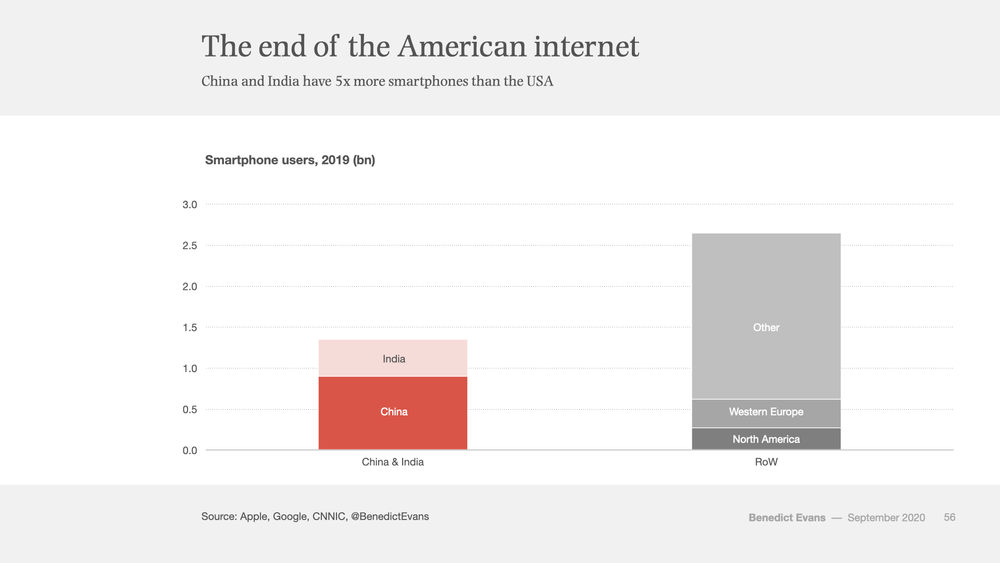
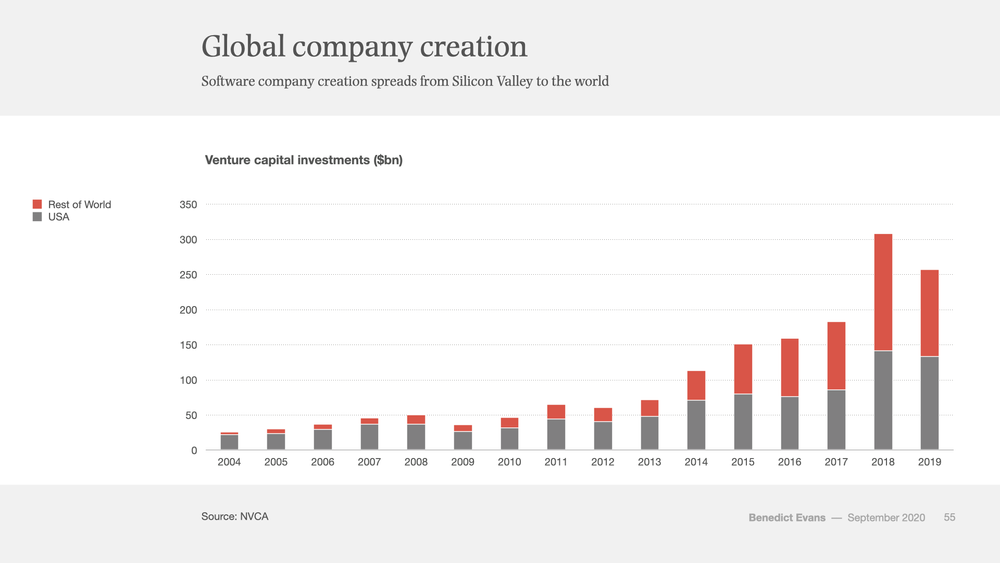
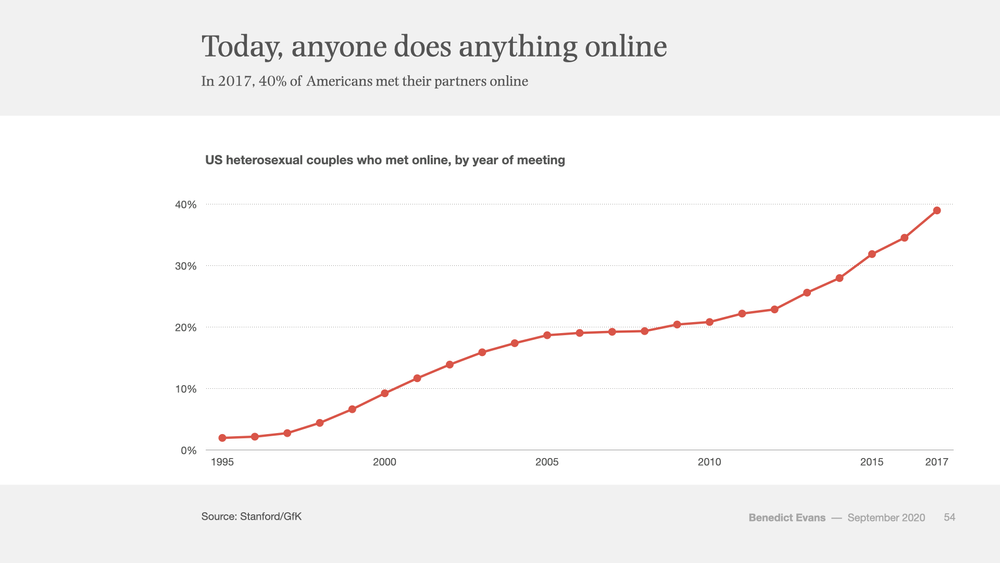
 Image: Google
 Photo by Tom Warren / The Verge
 The new Supreme Court term begins on Monday. | Al Drago/Getty Images
/cdn.vox-cdn.com/uploads/chorus_asset/file/21921749/GettyImages_1228786279.jpg) Erin Schaff-Pool/Getty Images
Erin Schaff-Pool/Getty Images
/cdn.vox-cdn.com/uploads/chorus_asset/file/21918249/James_King_5_1024x683.jpeg) Courtesy of the Institute for Justice
Courtesy of the Institute for Justice
 GIF: Ultimate Ears
 Google

 Photo by Amelia Holowaty Krales / The Verge