With the release of Real-Time Call Quality Analytics (RTA) to public preview September 30th, Microsoft Teams is now able to provide real-time call quality statistics for scheduled meetings in a centralized administrative console, something that has never previously been available in prior iterations of Microsoft meeting platforms.
Situations can arise where immediate analysis of a scheduled meeting is required and waiting until it has concluded is not an option. The Real Time Call Quality Analytics dashboard is able to provide administrators and support teams the following information when immediate (real-time) assistance is required.
Meeting Participants
Join & Leave Time
User & Device Information (Name*, IP Address, Regional Location, Device, OS)
Devices Including
Microsoft Teams Room (Surface Hub, Teams Display, Collaboration Bar)
Microsoft Teams IP Phones
Connectivity Type (Wired, WiFi, WWAN)
Changes in connectivity type (Wired to WiFi or WiFi to WWAN)
Changes in IP addresses pertaining to connectivity change
Audio, Video and Application Sharing (Bitrate, Frame Rate)
*Available only for internal users
Several of customers in the financial services industry have been able to leverage the RTA dashboard to identify and assist with meetings that were experiencing “issues”. While active conferences, the support teams were able to identify specific users experiencing either packet loss or latency that exceeded tolerable thresholds. Once they knew which users were causing or experiencing the poor quality, they were able to chat with those users over Teams to run through remediation activities real time.
Customer quotes:
“This is a HUGE improvement and very useful, nice work!”
“Real-time telemetry is something we’ve been eagerly awaiting in Teams. It’s a leap forward in being able to support our users when they are experiencing issues.”
Here is internal MS Admin quotes: “My team has been anxiously waiting for Real-Time Analytics for years and now we’re honored to have played even a small role in making it a reality! The ability to monitor key calls as they happen has already helped us diagnose and resolve home network issues that were creating a poor experience for some of our priority users. RTA has been amazing at pinpointing the tricky problems when you know someone is having repeated issues but their experience may not be adequately captured in the averages and aggregates available after the call is over. I’m excited for what’s in the pipeline since it’s currently only scratching the surface of the value RTA could bring to the IT Pro!” – @Jonathan Clare, M365 Admin for Microsoft also accountable for Microsoft Teams meetings quality.
Using the RTA Dashboard
No additional steps need to be taken at the tenant level to enable the RTA feature. That said, any account that will be accessing the RTA dashboard will need to be a member of at least one of the following RBAC roles.
M365 Global Admin
M365 Global Reader
Teams Administrator
Teams Communications Support Specialist
Teams Communications Support Engineer
With the proper permissions allocated to the support teams, where do we go from here? To the Teams Admin Center (TAC) of course!
Once logged into the TAC, browse to the Users -> Manage Users section.
Menu options will vary based on the permissions assigned to your account. Two different views are shown above, the left with Global Administrator, the right with a more restrictive role.
Select the user or search for them in the search bar then select the account.
Navigate to the Meetings & Calls section. All meetings from the past 24 hours will be displayed here, including meetings that are in-progress.
From here there, either the Meeting ID can be selected to show metrics for the user currently selected, or the participants can be selected to show high level call telemetry for all parties in the call.
If the problematic user is known, navigating to that users’ view makes sense. Otherwise, some analysis may be required to find the problematic party.
Participants View
When selecting the participants, we are presented with the following information:
Meeting Participants that reside in the tenant
Join and Leave Times
Participation Duration
IP address
Regional Location
Network Type
Connection Type
In the example below, the details outlined in orange show the user has joined the meeting from multiple devices as indicated by the secondary line underneath the name and picture. We can see that the endpoints for this user have disparate IP addresses indicating they are connected to different networks as well. The second user listed also appears to have been joined with multiple devices, though we can see one left the meeting before the other participants.
If users are experiencing high levels of packet loss, it will be shown on this page. This piece of information can be used as a starting point to troubleshoot a meeting when minimal background was provided. The image below shows a user outlined in red that will later be referred to in the User view. The User view can be entered from this page by clicking on the Join Time for the user in question, instead of having to go through the search method.
User View
In the user view we can see Audio (Inbound & Outbound), Application Sharing (Inbound & Outbound), and Outbound Video telemetry for the selected account over the duration the user was in the conference.
Data is collected and displayed for each active modality in the conference as a dot on the respective line graph every 10 seconds. Each data point can be hovered over to provide numeric values for the metric being displayed along with a time stamp.
By default, the graphs will display the last 2 minutes of the conference, whether active or ended. The time period displayed in the graph can be adjusted by using the sliders, outlined in green, below the graph. Video and Application Sharing follow the same layout for their sliders.
Once the problematic period is identified, focus in on 2-3 minutes around the event.
Note: The full meeting duration will be available once the conference has ended. While a conference is active, only the past 20 minutes are available to maneuver through. Conferences exceeding three hours will only have the last three hours available for review in RTA once the conference concludes.
On the inbound stream we are presented with Jitter and packet loss telemetry. The outbound stream presents Round Trip Time and Bitrate. In this conference, we can see that Siunie experienced some inbound packet loss, which is automatically shown as a red line where tolerable thresholds are exceeded.
If we navigate to the person previously identified as experiencing Packet Loss in the Participant view, we can see additional details related to the event. When hovering over the event in question below, we can see that there was a change in IP address and Location. A change in networks will typically cause some level of temporary degradation. This level of Packet Loss can typically be associated with loss of, or a choppy experience for the modality experiencing issues. In this case it wouldn’t be surprising to hear the user state there was an audio issue.
All metrics available for each modality are displayed by default for each graph, though individual metrics can be hidden by clicking on them in legend below each chart. For example, if only Jitter is a concern click on Packet Loss so that only Jitter is displayed.
We are also able to see when a user switches networks while on a call as indicated by the yellow triangle on the timeline. It is expected that users will experience a “blip” or quick reconnect while the network switch occurs.
The image below shows a user that was repeatedly switching between WiFi and WWAN connections. Significant Packet Loss occurred right after the switch, which would have caused audio issues while in the call. We can see an Android device was used to participate in the meeting, so we can make an educated guess that this person was likely “on the go” during the network switching events.
When reviewing video streams, only the Outbound stream details will be displayed. This is expected as Teams inbound video is not a single stream. Network events will be displayed in this chart similar to the other modalities though.
Application Sharing will show inbound or outbound metrics depending on whether the person is receiving the share or is the presenter. This should be the go-to spot when screen sharing is not performing as expected. The images below show what the metrics look like for a viewer and presenter. There can only be one presenter at any given time, so only one of the Application Sharing charts will be displaying data points based whether that user is sharing or viewing.
Viewer
Presenter
What’s Next
Now that RTA has been released to commercial tenants, we have the following enhancements on the roadmap for tentative release in H1 2022.
Government clouds: GCC, GCC-High and DOD Tenants
3-Day data retention, expanding on the current 24 hours
Platform & Scenarios
Support for Web Clients (Chrome and Edge)
Wifi network band and signal strength
Additional Telemetry
Capture and Render Device Info and Mid-call changes
Clippy is back inside Microsoft Teams. | Image: Microsoft
Microsoft is bringing Clippy back to Microsoft Teams, after first resurrecting the annoying paperclip two years ago and then killing it off after a few days. A sticker pack will be available in Microsoft Teams soon that includes lots of different versions of the anthropomorphic paperclip.
“Yes, it’s true – Clippy has agreed to come out of retirement!” explains Microsoft, confirming the return of Clippy to Microsoft Teams. “Whether you loved him or hated him, Clippy is back with a Retro Sticker Pack in Teams.”
Photo by Olly Curtis/MacFormat Magazine/Future via Getty Images
Apple has apparently pulled its 21.5-inch Intel-based iMac from shelves (via MacRumors). Its discontinuation doesn’t come as much of a surprise, now that Apple is transitioning from using Intel processors to its in-house M1 chip.
The 21.5-inch iMac was still available after Apple’s October 18th Unleashed event — it didn’t appear to go missing until sometime this week, according to MacRumors. The $1,099 21.5-inch iMac, which came with a 2.3GHz dual-core 7th-Gen Intel Core i5 and an Intel Iris Plus Graphics 640, is no longer found on the list of available iMacs on Apple’s online store. A “Buy” button also doesn’t appear for the 21.5-inch iMac on Apple’s product comparison page.
We reached out to Apple to confirm the changes, but didn’t...
An inspired musician can use pretty much anything as an instrument, but this just-in-time for Halloween cover of the Ghostbusters theme song goes in an unexpected direction. Device Orchestra is dedicated to posting music videos recorded solely with the sounds of common household devices. It’s the work of a Finnish YouTuber who’s been creating gadget-powered covers since 2014 (via Wikitubia). This time, Device Orchestra busted out 14 gadgets for its composition — including electric toothbrushes adorned with googly eyes.
One electric toothbrush with pipe cleaners for arms stands front and center, belting out the familiar chorus in a tone comparable to a musically-inclined bumblebee. It might be the star of the show, but it has plenty of...
Apple’s App Privacy Report, announced at WWDC 2021, has made its way onto iPhones with the first release of the iOS 15.2 beta, according to MacRumors. The new screen in Settings gives users an overview of what information their apps have access to and what they’re sharing.
According to Apple’s WWDC announcement, the feature will show you what permissions apps have and how often they accessed them over the past week (for example, it could show that your weather app accesses your location every hour). The report will also show you which other web domains the app contacted and let you compare that with the sites you visited directly in the app to give you a better idea of who could be seeing your data.
‘It’s thrilling and exciting to be at the forefront of enabling remote workers and hybrid work with AV (audio visual) and collaboration tools like Teams, Webex and Zoom,’ says Kinly Executive Vice President Eric Martorano. ‘Kinly is at the forefront of using these tools to enable customers to communicate more effectively with their customers, employees and vendors.’
The Second Amendment states explicitly that it exists to protect “a well regulated Militia,” and until fairly recently, the Court took these four words very seriously. As a unanimous Court explained in United States v. Miller(1939), the “obvious purpose” of the Second Amendment was to “render possible the effectiveness” of militias, and the amendment must be “interpreted and applied with that end in view.” Because the kinds of militias that concerned the framers in the 1790s are now an anachronism, Miller’s approach gave states broad authority to regulate guns.
That all changed with the Court’s 5-4 decision in District of Columbia v. Heller (2008), which held for the first time in American history that the Second Amendment protects an individual right to own a gun for personal “self-defense.”
And yet Heller was only a partial victory for the gun lobby. The Court’s opinion is thick with language explaining that “the right secured by the Second Amendment is not unlimited,” and it even enumerates several very important limits on gun rights. As conservative Justice Samuel Alito complained in a 2020 opinion, this has meant that lower courts “have decided numerous cases involving Second Amendment challenges to a variety of federal, state, and local laws,” and that “most have failed.”
In other words, the constitutional right to own a gun is both stronger now than it was at any point in the first 217 years of the Second Amendment’s history, and weak enough that state and local governments can prevent most Americans from carrying a gun on city streets and in other heavily populated areas.
But that’s likely to change soon. Next Wednesday, November 3, the Supreme Court will hear oral arguments in New York State Rifle & Pistol Association, Inc. (NYSRPA) v. Bruen, a challenge to a 108-year-old New York state law requiring anyone who wishes to carry a handgun in public to demonstrate “proper cause” before they can obtain a license allowing them to do so.
It’s relatively easy in New York to get a license to carry a gun for limited purposes — the plaintiffs in NYSRPA include two men who already have a license permitting them to carry a gun for hunting, for target practice, and while in areas not “frequented by the general public.” One is also licensed to carry a gun while commuting to and from work.
But neither plaintiff obtained an unlimited carry license, and New York courts require that someone who seeks such a license must “demonstrate a special need for self-protection distinguishable from that of the general community or of persons engaged in the same profession.” The petitioners sued, along with a New York gun-rights group, claiming that they are entitled to an unrestricted license.
The implications of this case go far beyond these two plaintiffs and New York state. The current Court, with its 6-3 conservative supermajority, may very well dismantle the limits on the Second Amendment articulated in Heller. It could completely rewrite the federal judiciary’s approach to gun-rights litigation. And the Court could potentially force crowded cities to adopt the same permissive gun rules that apply in the most conservative, rural parts of the nation.
NYSRPA could be the Court’s most significant Second Amendment decision since Heller, and it could prove just as revolutionary as that 2008 decision.
Under existing law, the government still has fairly broad authority to restrict gun use
Heller broke with more than two centuries of judicial history when it held that the Second Amendment protects an individual right to self-defense, not just a right to state-run militias. But while this holding was a paradigm-shifting victory for gun-rights advocates, it came with many caveats.
Justice Antonin Scalia’s majority opinion in Heller includes a long list of limits on the Second Amendment. “Nothing in our opinion should be taken to cast doubt on longstanding prohibitions on the possession of firearms by felons and the mentally ill,” Scalia wrote, nor “laws forbidding the carrying of firearms in sensitive places such as schools and government buildings, or laws imposing conditions and qualifications on the commercial sale of arms.’” The government may also ban “dangerous and unusual weapons,” so the regulation of machine guns and similarly destructive weapons is still valid.
This language, retired Justice John Paul Stevens revealed shortly before his death in 2019, was inserted at the insistence of Justice Anthony Kennedy. Because Heller was a 5-4 decision, Scalia needed support from all four of his conservative colleagues, or else he’d lose his majority. And that meant Kennedy could wield a great deal of influence over the final opinion.
But Kennedy retired in 2018 and was replaced by the much more conservative Justice Brett Kavanaugh. Then liberal Justice Ruth Bader Ginsburg, who died in 2020, was replaced by conservative Justice Amy Coney Barrett. As lower court judges, both Kavanaugh and Barrett wrote opinions calling for an expansive approach to the Second Amendment.
It’s far from clear, in other words, whether there are still five justices who will respect the mitigating language in Heller. Many of the “longstanding prohibitions” on gun use that are now perfectly legal could soon be declared illegal.
Kavanaugh, moreover, is one of the judiciary’s most outspoken dissenters from the consensus approach to the Second Amendment that federal appeals courts have come up with since Heller.
At least 10 federal appeals courts — every court to hear a Second Amendment case since Heller, in fact — have applied what federal appellate Judge Stephen Higginson describes as a “two-step analytic framework.” Under this framework, “severe burdens on core Second Amendment rights” are subject to “strict scrutiny,” the most skeptical level of review in most constitutional cases. Meanwhile, “less onerous laws, or laws that govern conduct outside of the Second Amendment’s ‘core,’” are subject to a more permissive test known as “intermediate scrutiny.”
Applying this framework, federal appeals courts determined that restricting “the right of a law-abiding, responsible adult to possess and use a handgun to defend his or her home” burdens the “core” of the Second Amendment. Similarly, the US Court of Appeals for the Seventh Circuit struck down an Illinois law prohibiting nearly anyone from carrying a loaded gun outside their home, reasoning that because no other state had a similar law on the books — and “few states did during the nineteenth century” — the law infringes upon core Second Amendment rights.
Perhaps that explains why a right flank within the lower courts harshly criticized this consensus framework. One of those critics was Kavanaugh, still a lower court judge at the time, who argued in a 2011 dissenting opinion that this framework should be abandoned. “Courts are to assess gun bans and regulations based on text, history, and tradition,” Kavanaugh claimed, “not by a balancing test such as strict or intermediate scrutiny.”
Notably, both the plaintiffs challenging New York’s licensure law and the state attorneys tasked with defending it spend the lion’s share of their briefs applying this “text, history, and tradition” standard to New York’s law. So it seems that, at the very least, the lawyers litigating this case seem to think that it is very likely the Supreme Court will adopt Kavanaugh’s approach.
So how, exactly, does the “text, history, and tradition” test work?
If the merits briefs filed in NYSRPA are any sign of how lawyers should approach this “text, history, and tradition” inquiry, it largely involves citing a lot of laws and court decisions from hundreds of years ago, then arguing about whether those old laws resemble the specific law now before the Court.
The plaintiffs, represented by Republican lawyer Paul Clement, argue that “founding-era cases, commentaries, and laws on both sides of the Atlantic … confirm that the founding generation understood the Second Amendment and its English predecessor to guarantee a right to carry common arms for self-defense.”
Drew Angerer/Getty Images
Paul Clement speaks to the press outside the Supreme Court after oral arguments in a gun-rights case against the City of New York on December 2, 2019.
New York’s lawyers, meanwhile, cite many of the same historical sources but make a more nuanced argument that “any right to bear arms outside the home permits a State to condition handgun carrying in areas ‘frequented by the general public’ on a showing of a non-speculative need for armed self-defense in those areas.” Thus, they argue, states may apply stricter gun-control rules in cities and other population centers than they can in more sparsely populated areas.
Both briefs spend a simply ridiculous amount of time discussing a 1328 English law known as the “Statute of Northampton,” which provided that individuals may not “go nor ride armed by night nor by day, in fairs, markets, nor in the presence of the justices or other ministers, nor in no part elsewhere, upon pain to forfeit their armour to the King, and their bodies to prison at the King’s pleasure.” The state argues that this nearly 700-year-old law did exactly what it says it did, while the plaintiffs point to a pair of 1686 cases which, they argue, narrowed the 1328 law to apply only to people who carry arms in order “to terrify the King’s subjects.”
Similarly, the plaintiffs quote a bevy of old decisions by state supreme courts, mostly in the South, suggesting that early Americans had broad gun rights. We learn about an 1833 decision by the Tennessee Supreme Court, which cited the state constitution, saying that “the freemen of this state have a right to keep and to bear arms for their common defence”; an 1846 case in Georgia, which found that “a prohibition against bearing arms openly, is in conflict with the Constitution, and void”; and an 1840 Alabama Supreme Court decision holding that “the Legislature cannot inhibit the citizen from bearing arms openly, because [the constitution] authorizes him to bear them for the purposes of defending himself and the State.”
Meanwhile, New York musters up its own array of centuries-old laws and court opinions to justify its understanding of the Second Amendment. In its brief, we learn that the Old West settlements of Dodge City, Kansas, and Tombstone, Arizona, required anyone entering them to leave their guns at the city limits — visitors to Tombstone even encountered a sign reading “THE CARRYING OF FIREARMS STRICTLY PROHIBITED.”
New York also cites early 19th-century manuals instructing law enforcement to “arrest all such persons as in your sight shall ride or go armed.” They quote a colonial New Jersey provision making it unlawful to “ride or go armed with sword, pistol, or dagger,” though the law made an exception for “strangers, travelling upon their lawful occasion thro’ this Province, behaving themselves peaceably.” A Virginia law, enacted three years before the Second Amendment was drafted, imprisoned people who go “armed by night []or by day, in fairs or markets.” A Massachusetts law, enacted a few years after the amendment was ratified, incarcerated individuals who enter populated areas “armed offensively, to the fear or terror of the good citizens of this Commonwealth.”
The state’s brief, in other words, paints a more nuanced picture than that of the plaintiffs — arguing that different parts of the US had different gun laws and that city dwellers often had to put away their guns, except when traveling through sparsely populated areas where they had to rely on their own armaments for protection.
As it turns out, much as the devil can cite Scripture for his purpose, so too can lawyers on both sides of the Second Amendment quote “text, history, and tradition” to justify the outcome they prefer.
This confusion over history will come as no surprise to anyone familiar with the Heller decision and Stevens’s dissent in that case. Like the merits briefs in NYSRPA, Scalia’s opinion is replete with citations to early American laws and old English legal treatises. But so is Stevens’s dissent, which quotes at length from both founding-era state constitutions and early drafts and proposals for what became the Second Amendment.
The five conservative justices looked at text, history, and tradition in Heller, concluding that the Second Amendment should be interpreted in the way conservatives prefer. Meanwhile, the four liberal justices — who looked at the exact same text and historical sources —determined that the Second Amendment should be interpreted in the way liberals prefer.
The pre-Heller approach to the Second Amendment, which largely left gun policy up to elected lawmakers, avoided this problem of motivated reasoning. Sure, liberal lawmakers (especially those in cities) were especially likely to pass stricter gun laws, while more conservative lawmakers (especially those in rural areas) were especially likely to support expansive gun rights. But these lawmakers stood for election. If the people didn’t like their state’s gun laws, they could elect a different legislature.
That ship sailed in 2008 with the Court’s decision to make gun policy the domain of an unelected judiciary. And, if the briefs on both sides of NYSRPA are any indication, all parties appear convinced that the current slate of justices will care a whole lot more about what a 14th-century English law had to say about gun rights than they will what the people of New York have to say in 2021.
To gain regulatory approval for its $26 billion merger with Sprint, T-Mobile made numerous promises. One was that the deal would immediately create jobs (there've been 5,000 layoffs so far). Another was that the company would work closely with Dish Network to help them build a fourth wireless network that would replace Sprint, theoretically "fixing" the reduction in competition the deal created. As predicted, that plan isn't working out so well.
T-Mobile was supposed to closely shepherd Dish's own network build over a period of 7 years, but the two companies have proven largely incapable of getting along. Recently, Dish accused T-Mobile of shutting down its 3G (CDMA) network (which Dish is currently using as it builds a 5G network) prematurely. T-Mobile in turn accused Dish of being too cheap to pay for 4G and 5G upgraded phones for its fairly tiny userbase. This week T-Mobile balked, issuing a hilariously passive aggressive press release saying T-Mobile would be leaving its 3G network on for a little bit longer because Dish was, effectively, incompetent:
"Recently it’s become increasingly clear that some of those partners haven’t followed through on their responsibility to help their customers through this shift. So, we’re stepping up on their behalf. We have made the decision to extend our deadline for the CDMA sunset by three months to March 31, 2022."
Salty! T-Mobile goes on to accuse Dish of being generally terrible, and throws in a few references to the "digital divide" for good measure:
"There should be no more room for excuses. We have provided even more time and those partners can follow suit with the effort that is needed to ensure no one is left on the wrong side of the digital divide."
Recall that it's T-Mobile that spent millions of dollars lobbying the Trump administration (including spending more money at Trump's hotel) to approve a $29 billion merger with Sprint that experts warned would reduce competition, ultimately raise consumer prices, and result in thousands of lost jobs. And recall that the Trump DOJ and FCC approved T-Mobile's demands before even seeing the full impact analysis of the deal.
Then, to provide cover for the approval of a deal most folks didn't think should have been approved due to competitive harm, Trumpland and T-Mobile came up with the idea of creating an entirely new wireless carrier out of Dish Network (a company with a long history of empty promises in wireless) and some twine. The deal was crafted by folks who like to wax poetic about how government shouldn't meddle in business, yet now expect the U.S. government to mommy Dish and T-Mobile's attempts to create an entirely new competitor. A plan you wouldn't need if government had just blocked the deal and forced Sprint to find outside investment (Amazon, Google, Comcast, whoever).
But T-Mobile and Dish can't even get along long enough to make it out of the first several years of the plan. And Dish continues to delay the launch of any meaningful wireless network. I still tend to think this ends with Dish stringing the FCC along for a few years on network build obligations until it can cash out of its vast spectrum holdings and head for the exits. Then, over time, investors will pressure the remaining three wireless providers (AT&T, T-Mobile, Verizon) to progressively exploit the dwindling competition and stop competing so intensely on price.
In most countries (Ireland, Canada, many European countries) the reduction of overall wireless competitors from four to three via merger and consolidation always ends badly. I tend to think Trumpland regulators and T-Mobile knew this from the outset, and this entire deal was crafted to help them pretend that wasn't going to happen this time.
On Wednesday, crypto lending service C.R.E.A.M. Finance was the target of a hack that stole over $130 million. It’s not only one of the largest heists ever targeting a so-called “decentralized finance” (DeFi) platform, but also the third such hack targeting C.R.E.A.M., demonstrating the risks inherent in the burgeoning crypto loan industry.
C.R.E.A.M. was targeted by what is known as a flash loan attack. Flash loans are uncollateralized cryptocurrency loans structured so that they must be paid back instantly using smart contracts, making them attractive for things like arbitrage across exchanges. If the loan isn’t paid back, then it never happens, because both occur in the same transaction.
Analysts on social media who pored over the details of the attack suggested that the hacker exploited C.R.E.A.M. in an incredibly complex transaction for a flash loan that ultimately allowed the hacker to drain C.R.E.A.M.’s Ethereum-based lending pools, leading to a gain of around $130 million in different tokens. The attack cost the hacker roughly 9 ETH in network fees, or around $36,000.
The attacker left a bizarre message in the transaction text: "gÃTµ Baave lucky, iron bank lucky, cream not. ydev : incest bad, dont do." Aave is a competing crypto lending platform, while Iron Bank is a protocol-to-protocol lending service founded by C.R.E.A.M., which also refers to it as C.R.E.A.M. v2. According to C.R.E.A.M, its v1 lending service was targeted. In a tweet thread on Wednesday, the platform claimed that the vulnerabilities that allowed the hack to take place have since been patched.
“We apologize to our users and community for this unfortunate incident and thank you for your support,” C.R.E.A.M. tweeted.
The platform has fallen victim to hacks in the past. In August, $18.8 million was stolen from C.R.E.A.M in a flash loan attack, The Block noted, and even earlier, in February, $37.5 million was stolen through C.R.E.A.M. via similar means.
The C.R.E.A.M. hack demonstrates the acute risks that come with crypto lending, which is an emerging industry encompassing billions of dollars in value. The basic idea is similar to a savings account with a bank, where you deposit money that the bank then lends out to clients and gives you interest. Similarly, C.R.E.A.M. and other services allow users to put their crypto into a pool to be lent out by the platform in return for interest, usually much larger than what a bank offers. Importantly, while funds you put into a bank are federally insured, funds you put into a crypto platform are not.
Crypto loan services have come under fire from regulators in the U.S. recently. This year, regulators in three different states ordered BlockFi to shut down because it was offering unregistered securities, officials said. Major U.S.-based crypto exchange Coinbase also planned a loan offering but scrapped it after the Securities and Exchange Commission threatened to sue the company if it introduced the product.
Over the past year, C.R.E.A.M., which stands for “Crypto Rules Everything Around Me” in an homage to Wu-Tang Clan’s classic track, has tried to mainstream its offerings. It even posted a theme song it said featured Method Man, who pops up at the start of the video bellowing "Ayo this is Method Man and this is not financial advice."
C.R.E.A.M Finance did not respond to Motherboard’s request for comment.
A lock icon will appear in the Phone app when a call is end-to-end encrypted. | Image: Google
In the coming weeks, Google is rolling out end-to-end encrypted phone calls on its Google Fi MVNO, the search giant announced today. When enabled, the feature means that no one, not even Google, can listen in on the contents of a call. Although it’s possible to have end-to-end encrypted audio calls through services like FaceTime and WhatsApp, Google Fi’s new feature makes it the default for regular phone calls.
The feature is a little limited in its current form. Google’s end-to-end encryption will only kick in for calls between two Android phones, where both users are Google Fi subscribers. So, for now, at least, iPhone Google Fi subscribers won’t benefit. Google says you’ll know when a call is end-to-end encrypted because it’ll play a...
Dubai, United Arab Emirates – October 28, 2021 – Vonage (Nasdaq: VG), a global leader in cloud communications helping businesses accelerate their digital transformation, has announced a strategic partnership with Etisalat Digital, the business unit of Etisalat, driving digital transformation by enabling organisations to become smarter through the use of technology.
With this partnership, Etisalat Digital will drive a more contextual and personalised experience for its business customers, offering reliable and customisable communications APIs (Application Programming Interface) powered by Vonage, to organisations in the healthcare, retail, e-commerce, logistics and transportation, automotive, education, and government sectors.
The Vonage Communications Platform (VCP) brings both power and flexibility to businesses through the integration of multiple channels, including messaging, voice, and video communications solutions − into their applications, products, and workflows to enhance employee productivity and customer engagement at scale and drive better business outcomes.
“Etisalat Digital has always been in the forefront of bringing the best global practices to the region through advanced solutions and partnering with industry-leading players. We are proud to be a Vonage strategic partner and offer our UAE customers access to the Vonage Communications Platform to enable them to enhance business productivity and customer engagement,” said Salvador Anglada, Group Chief Business Officer, Etisalat.
“The pandemic has led to a significant change in how business is done and accelerated digital transformation for organisations around the globe,” said Guillaume Calot, Global Vice President, API Partners at Vonage. “Businesses must rely on technology to build disruptive solutions that provide virtual connections and remote delivery of services to meet customer expectations and citizen demand, and we’re excited to be working with Etisalat Digital to empower its customers to do just that.”
Vonage APIs make it easy for businesses to build solutions to disrupt their industries, and enable the type of business continuity, remote work, and remote delivery of services that is so essential in today’s environment. Through its partners, Vonage’s platform is at the centre of many notable transformational projects in the Middle East. The Vonage partnership with Etisalat Digital will be instrumental in delivering the best customer experience to businesses looking to revamp their customer engagement journey.
For more information about Vonage, visit www.vonage.com.
About Vonage
Vonage (Nasdaq: VG), a global cloud communications leader, helps businesses accelerate their digital transformation. Vonage’s Communications Platform is fully programmable and allows for the integration of Video, Voice, Chat, Messaging and Verification into existing products, workflows and systems. Vonage’s fully programmable unified communications and contact center applications are built from the Vonage platform and enable companies to transform how they communicate and operate from the office or anywhere, providing enormous flexibility and ensuring business continuity.
About Etisalat Digital
Etisalat Digital is the business unit of Etisalat driving digital transformation by enabling enterprises and governments to become smarter through the use of the latest technologies like Cloud, Cyber Security, Internet of Things (IoT), Omnichannel, Artificial Intelligence, and Big Data & Analytics. Etisalat Digital brings together the best industry digital experts, assets and platforms with a unique service and operating model. From its offices in UAE and KSA, Etisalat Digital provides end-to-end digital vertical propositions to enable smarter developments, education, healthcare, transportation and a smarter economy. It has a successful track-record in delivering large digital projects and solutions by providing comprehensive services in consultancy, business modeling, solutions design, program management, execution, delivery and post-implementation support and operation services.
New Twitter Spaces recording option. | Image: Twitter
Twitter is now allowing hosts of Twitter Spaces chats to record and share their broadcasts. The feature is starting to roll out to a limited number of Twitter Spaces hosts on iOS and should be available to all hosts “within a few weeks.” The feature lets hosts record a Twitter Spaces conversation and share the recording in a tweet.
The new functionality also means that anyone who was late to a Twitter Spaces broadcast will now be able to replay the broadcast once it’s finished if a host has enabled recording. That means tweets that are typically shared to promote Twitter Spaces broadcasts will now include a link to a recording, rather than a note that the Spaces broadcast has ended.
Participants will be notified with a new icon that a...
Zoho recently released a collection of updates to its Zoho One platform, building atop an already strong reputation among SMBs as the “operating system for business.” Improvements include a roster of new apps, services, and major platform enhancements to correlate relevant data and create unified, real-time business insights.
Zoho One’s collection of 45 apps span all primary business functions, including CRM, help desk, sales & analytics, and communications. The bundled value proposition empowers everyday business users to be more productive with Conversational AI and analytics and quickly get snapshots of changing business conditions.
An aspect of Zoho One that is gaining recognition as a key enabler is Zia, Zoho’s AI assistant. It is ever-present in the latest round of product suite enhancements, and enables users to use their own words (natural language) for conversational search across all of the data that informs customer profiles, product literature and transactional databases.
Zia is firmly entrenched in Zoho’s Business Intelligence platform and DataPrep (which helps catalog, cleanse, enrich, prepare and organize data) and leverages AI & machine learning to make business users be more data driven. Over 1,500 pre-built conversational analytics reports and dashboards allow users to call up Zia to understand critical business decisions with greater precision and speed. This offers better visibility into business processes and bottlenecks, drives higher levels of customer satisfaction, and helps streamline operations.
Pay Attention to the Graph
One of the new apps includes Work Graph, a back-end service that understands interactions between people, resources, systems and processes. The result of Work Graph will be realized in day-to-day user productivity improvement across various apps — enabling data mapping between disparate data sources with drag and drop components and graphical mapping features.
Market Appeal
Zoho is allowing businesses of any size to modernize and automate day-to-day operations. Embedding Conversational AI & Analytics into critical business applications translated to improved sales and support processes for a broader range of organizations. Benefits of this approach include:
Bottom Line Impact:
Work Graph alone ensures that Zoho One brings new capabilities for SMBs. In combination with Zia, businesses are finding that they can use their own words to query the systems that accelerate sales and help customers complete their desired tasks.
Twilio Signal 2021 defines Twilio as “API”, “programmable”, “platform” and “customer engagement”. Here’s how it intends to compete in its many markets.
Twilio Signal 2021 is when Twilio officially pivoted from CPaaS to a Customer Engagement Platform. This is the reason Twilio acquired Segment last year, and the explanation of how it intends to leverage that acquisition.
Every year, I put time aside for Twilio Signal. Either in person or remote, going through the sessions and paying extra attention during the keynote. This has developed into a comprehensive view and research resources about Twilio that I’ve put up. It is time now to review what we had at Twilio Signal 2021.
I also conducted this interview with Twilio Co-Founder and CEO Jeff Lawson:
Twilio didn’t put the keynote for Signal 2021 on YouTube (yet), but they did have it as part of their all-day Signal TV session. The video below will get you the keynote, which was around 90 minutes long:
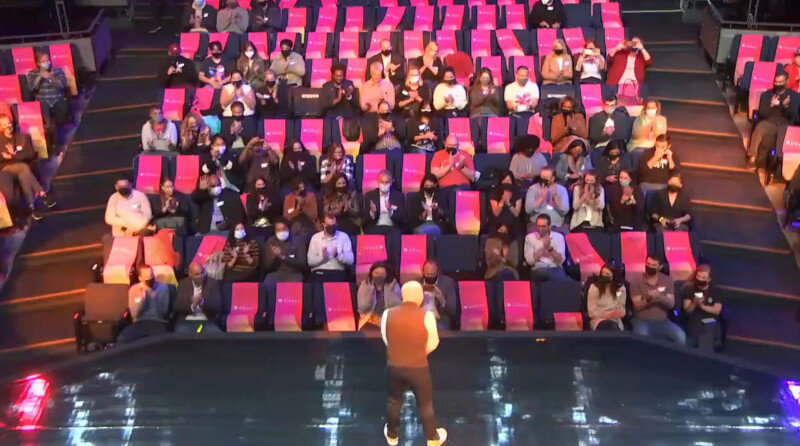
As events go, Twilio Signal 2021 was quite a good experience for a virtual event. It was a bit hybrid, but most of the focus and action took place on the virtual side of it (or at least felt that way for me as a virtual audience).
Defining Twilio in 2021
Twilio never liked or used the term CPaaS. I am not really sure why.
The Twilio pivot
There were 4 words that came time and time again during the keynote, and I think they are the center of what Twilio gravitates around today: “programmable”, “platform” and “customer engagement”.
Everything Twilio does can be found around these words, and I believe also every type of adjacent business they will try to go after will have two or more of these words in them in one way or another.
Twilio tried to show this shift and to move away a bit from APIs. It will take more than a single Signal event to do that.
Jeff Lawson, Co-founder and CEO of Twilio, started by presenting the idea of Customer Engagement and ended the keynote with the Customer Engagement Platform taking us in a complete circle around it.
Why did Twilio pivot now?
Twilio is the leader in CPaaS. It has been so for many years now, defining and redefining what CPaaS is. Twilio is also ahead of all of its competitors. Way ahead. It acts as a best of suite provider, which covers most if not all of what CPaaS is, with depth of functionality in many of its offerings.
As such, it sees and knows the market. It also knows the market’s limits. Which means it understands its estimated growth. It had to pivot and start eating up more adjacencies to continue growing at an accelerated rate. But there probably aren’t enough adjacencies it can go after that can be defined as CPaaS or as communication APIs. So they went up the food chain, marketing customer engagement as their target.
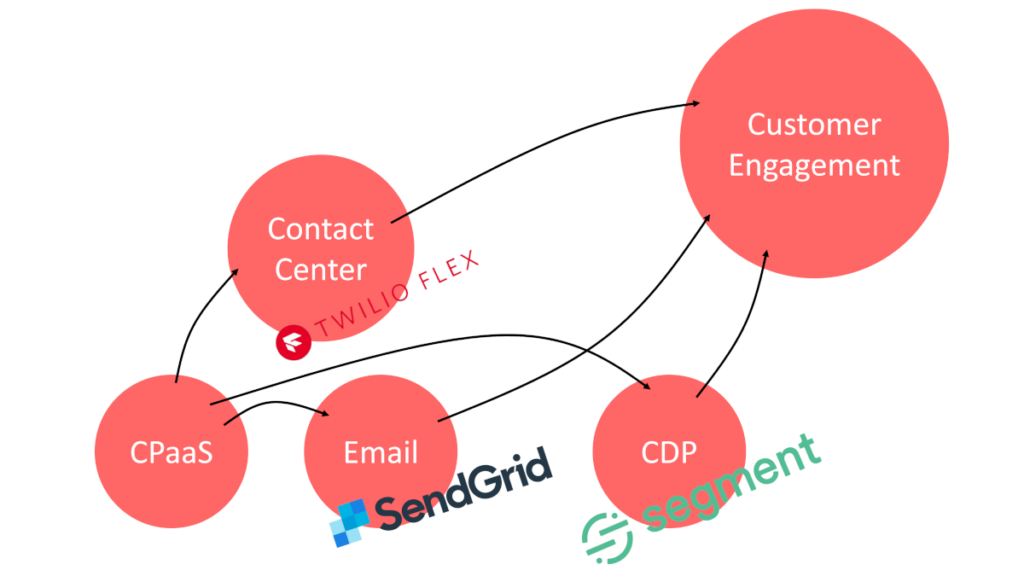
How Twilio’s breakout acquisitions into email and customer data enabled the pivot to Customer Engagement
Twilio’s reasoning for doing it now?
Size of the market. The communication market has been said to be $1T. Twilio believes it is much bigger, due to the slower shift of communications towards the cloud and the fact that communication is now used in new ways, not attributed in the original market sizing made by analysts
Architectural shift. The shift to the cloud. This one is driven by customers who need to do more, faster and more flexibly. Legacy vendors can’t do it, while Twilio as a cloud native vendor can offer such capabilities
A focus on “proactive”. Most use cases in business communication so far have been reactive in nature. Now they are a lot more proactive. That shift requires new capabilities, ones that require access to more data and being smart about it
To be frank, the architectura shift as well as the move from reactive to proactive have been industry themes for over 10 years. The pandemic simply accelerated these changes, and probably accelerated Twilio’s own pivot. It is also a new language that Twilio is now speaking, so we hear it from them as well.
Twilio by the numbers
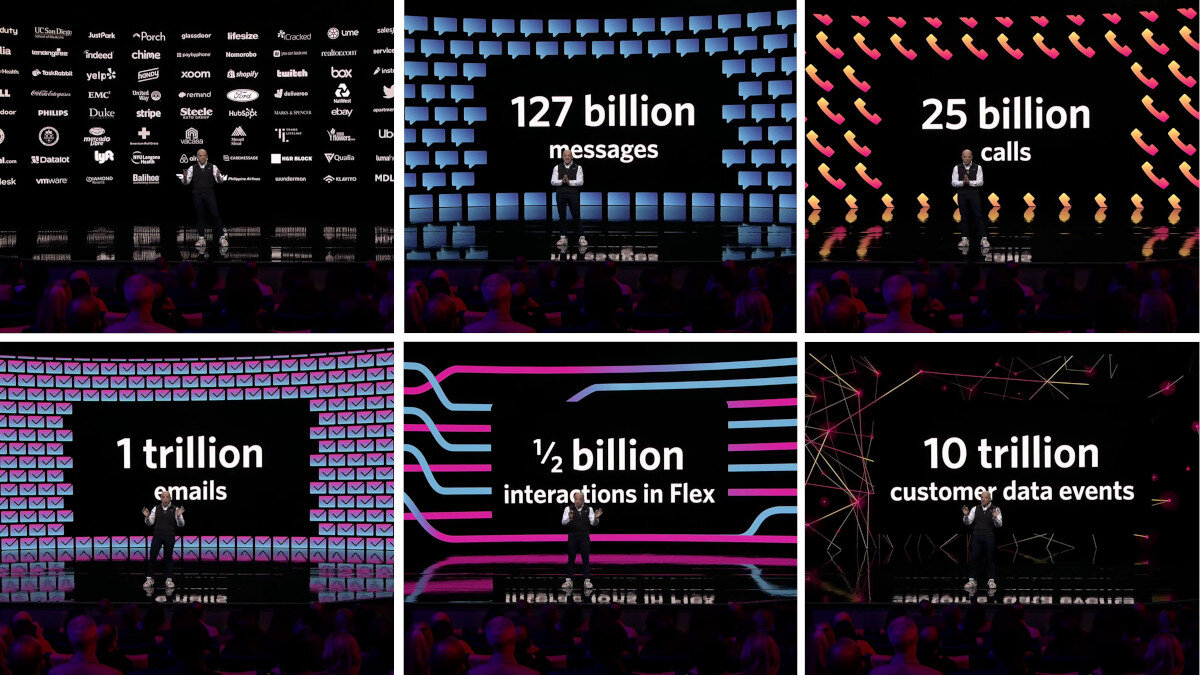
Each time, Jeff starts his keynote with numbers, showing off Twilio’s size. It is interesting each time to see which numbers he shares and highlights at the beginning of the keynote. This year?
Twilio Signal 2021 numbers versus 2019 & 2020
What numbers did Twilio share in the beginning of its keynote this year versus previous years?
2019
2020
2021
Customers
160,000
200,000+
240,000+ in 180+ countries
Text messages
–
–
128B (100% growth)
Emails
–
–
1T (5.8B single day peak)
Calls
–
–
25B
Flex interactions
–
–
0.5B
Segment data events
–
–
10T
Interactions
750B
1T
–
Unique phone numbers
2.8B
3B
–
Calls/minute
32,500
–
–
Peak SMS/second
13,000
–
–
Email addresses
3B/quarter
50%
–
Video minutes
–
3B
–
Developers
6M
–
–
This is in-line with its pivot, as many of the original numbers aren’t even mentioned.
So… Twilio is now even bigger, and it is pivoting.
Customers came first. Not as a number, but as logos, showing how strong and diverse Twilio’s customers are
It was important for Jeff to share that these customers include startups, enterprises and ISVs – Twilio isn’t catering only startups
I think it was the first time Twilio shared the countries of origin for its customers. 180 of them. With anywhere between 195 to 249 (depending who is counting), that’s quite impressive. The reason to share this number? To signal that Twilio isn’t only big, but it is big everywhere (ie, outside the US)
Text is still the most important thing for Twilio. Not as SMS, but as “text” – omnichannel. We will see later that this still means SMS
For calls, Twilio shared the number of calls and not peak, with 25B as that number
Flex interactions. For the life of me, I still can’t understand what interactions are, and probably no one does. Twilio simply wanted to say “Flex is a real and it is big” – to remove the doubt in the business success of Flex in the contact center space
Segment data events are… as bad as Flex interactions as numbers go – I don’t understand what that means. But saying 10T is always good, cementing Twilio’s “dominance” on the CDP (Customer Data Platform) space Segment belongs to
Twilio and social good
I haven’t added the social good related numbers that Twilio shared not because they aren’t important, but because they require a separate mention.
Twilio made the decision years ago to be a company that does good in the world. It also decided to put its money where its mouth is, through its twilio.org operation and its shift to become a diversified company.
Time is spent each year at Signal during the keynotes as well as in specific sessions for social good, and this year was no different.
Twilio and partnerships
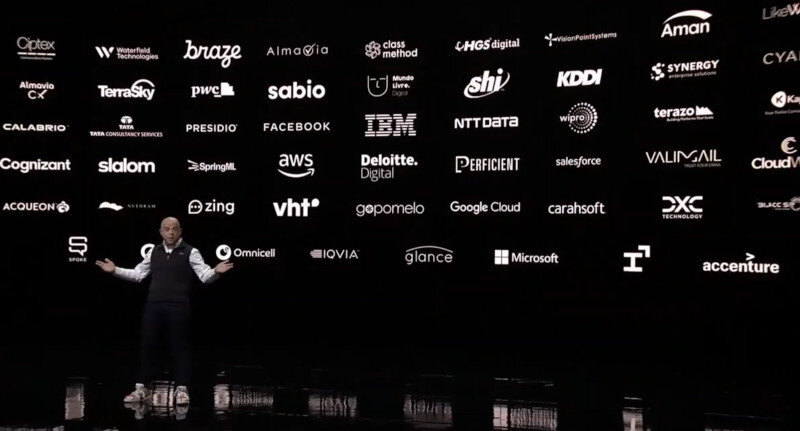
Jeff mentioned the strategic partners of Twilio at the beginning as well. These are getting more important to Twilio as it grows and shifts towards customer engagement.
Twilio dogfooding
Twilio is dogfooding its own products. For Twilio Signal 2020 and 2021 it has been hard at work building its own hybrid events platform. Still at its early stages but quite commendable.
Each year, additional pieces of the Twilio building blocks are being used to create these events. It will be interesting to see if in 2022 they will continue with this trend or go to a live-only event. Another question is if and when will they productize this as a programmable events platform.
The Pivot: Twilio Customer Engagement Platform
After the numbers it was time for the pivot. This is where Twilio moved away a bit from its roots into communications towards custom engagement. And the way this is explained by the fact that Twilio now isn’t only about communications but about all experiences with customers. Customers “drove” Twilio there, which led to the creation of Twilio’s Customer Engagement Platform.
Setting the stage
Two things here:
Twilio isn’t only about CPaaS anymore
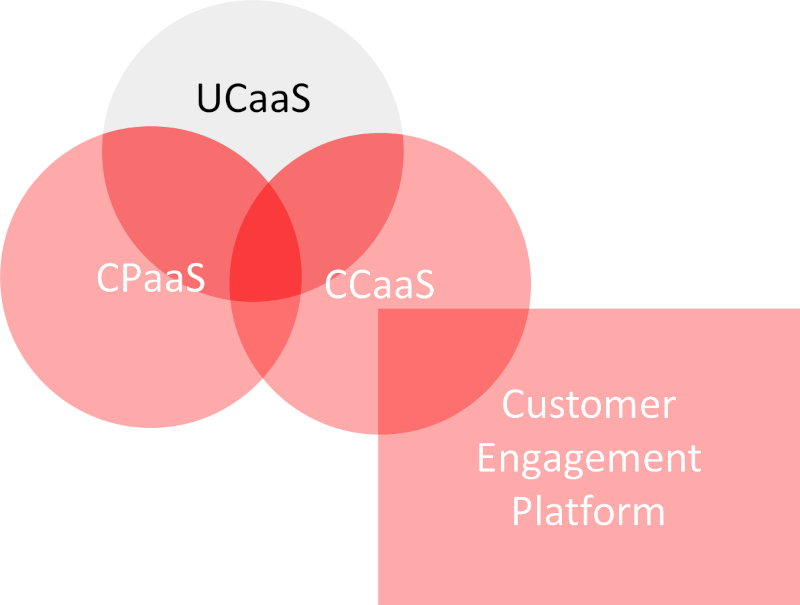
Twilio focuses on communications of business with customers. They aren’t after the UCaaS market in any way
Twilio ignores UC and pivotes to customer engagement
If you look at the communications market diagram above which I like using, then Twilio encompasses two of the three domains. The difference now is that it is vying towards the CRM part with its new story of a customer engagement platform.
The pillars of Twilio’s Customer Engagement Platform?
From here on, the keynote was focused on showcasing everything revolving around customer experience with trust, scale, reliability and compliance as the main themes.
FUDing the enterprise
To hammer the message through, Twilio decided to harness the “digital giants”. In its mind, these are Amazon, Google, Netflix and Facebook. An odd choice, as Apple and Microsoft would be “gianter” than Netflix…
The reason behind this, is that these companies make the best use of customer data to improve its engagement with its customers, providing a singular, cohesive view of them.
Logic states that these digital giants have grown with the pandemic because they understand their customers better, and other vendors need to follow suit or be gobbled up by these digital giants.
Now that we want to be like them, we need to have the technology to do that. Amazon didn’t buy its CRM from anyone, it built it. It fed it with the data needed. And so do you dear vendor – you can’t rely on an existing CRM – you will need to build it. And just accidentally, Twilio Flex is what you need to build it (wink wink ).
Oh, but it isn’t Twilio Flex. It is actually Twilio Flex + Segment + machine learning.
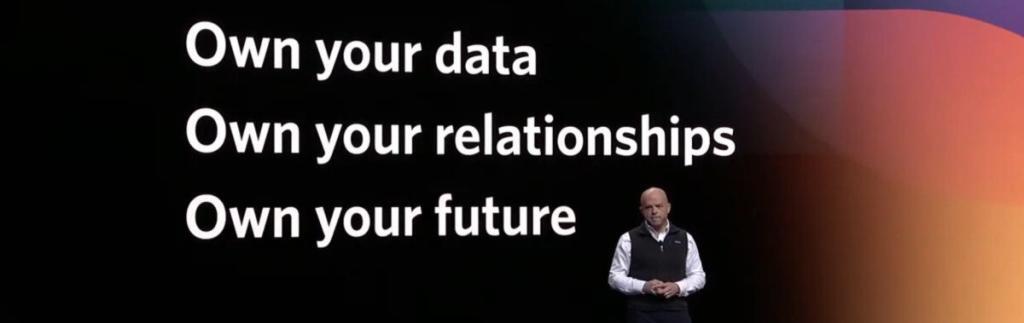
To hammer that in, Jeff made sure you know that you don’t want the digital giants as your partners when it comes to your customers: Amazon taking a cut of each purchase,the Apple tax, Facebook and Google auctioning user attention via ads. You dear vendor, need and want to own your customer relationship – directly:
Now that we’re all warmed up, it was time to share and explain what Twilio Customer Engagement Platform really is.
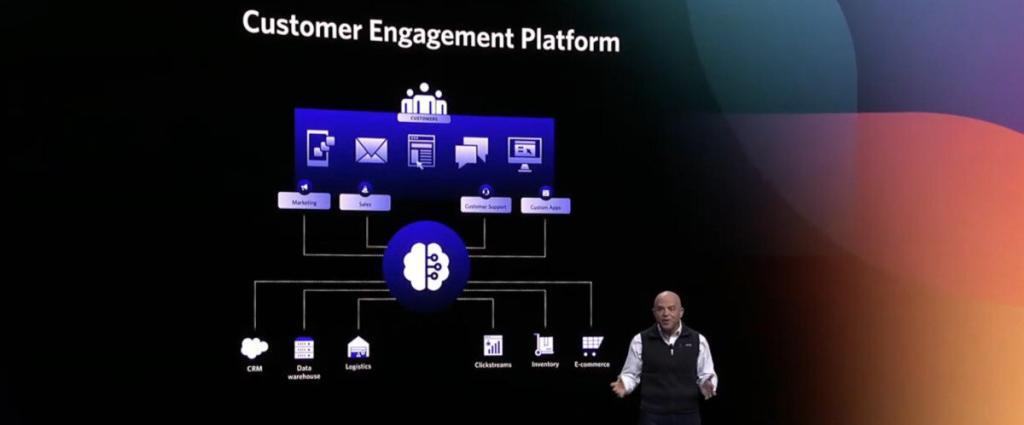
The Twilio Customer Engagement Platform
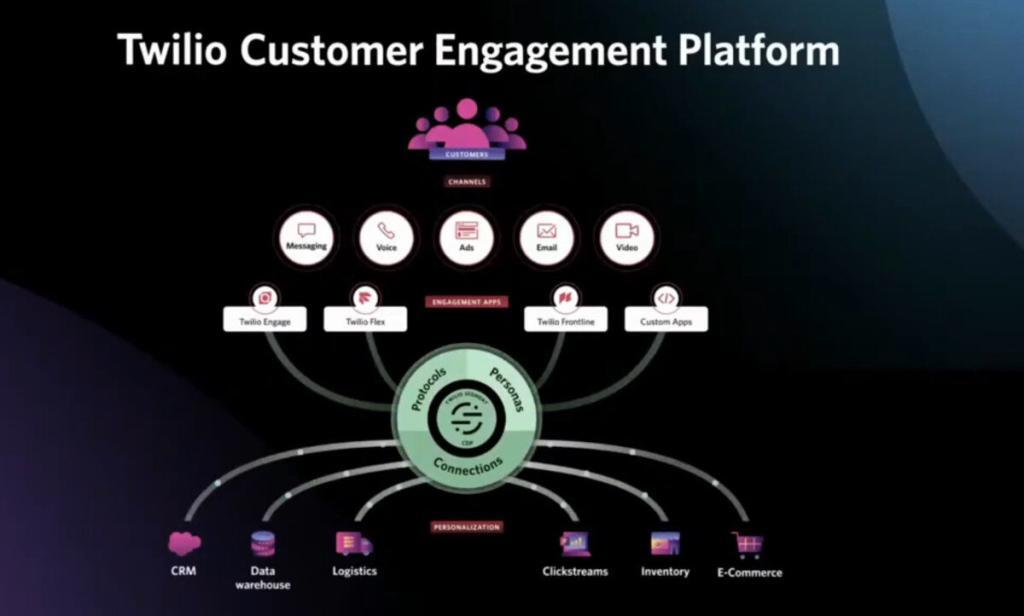
Twilio’s new Marketecture: Twilio Customer Engagement Platform
Twilio’s new Marketecture: Twilio Customer Engagement Platform
Jeff went through the platform’s components, which sits well with its current set of product offerings and acquisitions.
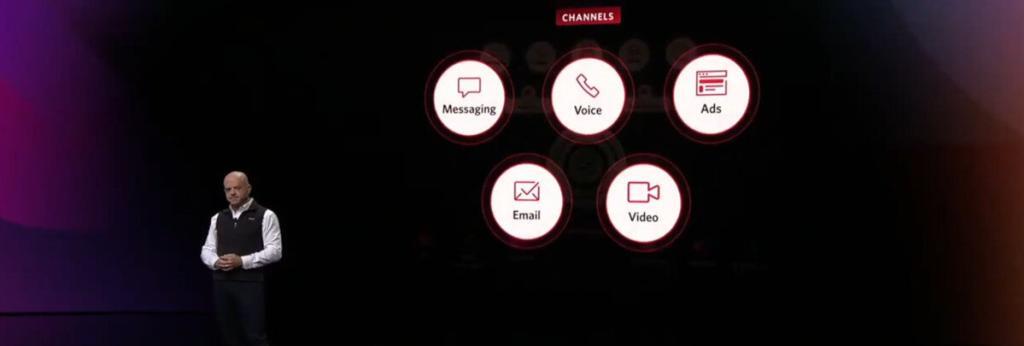
1. Channels
Channels are the basic Twilio building blocks. That’s roughly the CPaaS part of Twilio:
The purpose is to be where the customer is.
Messaging and Voice is what Twilio is focused on. Ads were not mentioned anywhere else. Email is the SendGrid acquisition. And Video… well… that’s almost the only place it appeared during the keynote (more on video later).
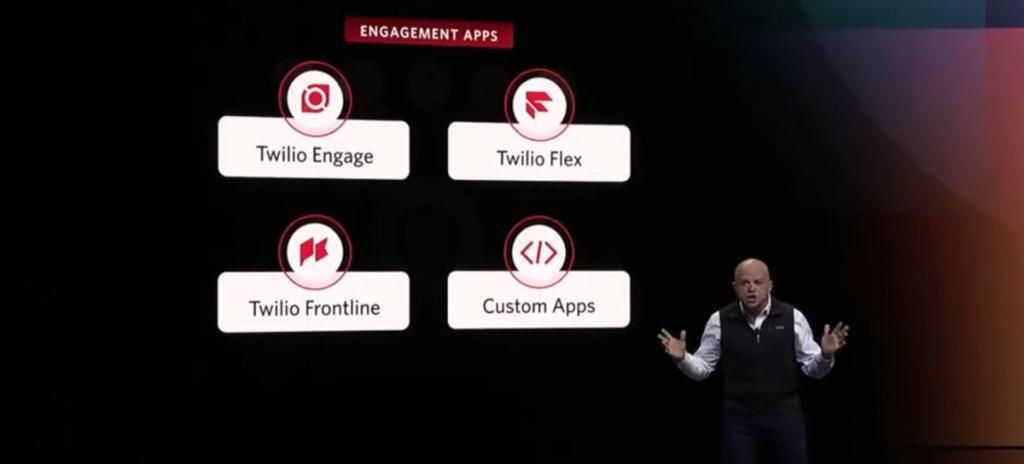
2. Engagement Apps
These are the higher level programmable applications that Twilio is offering:
Twilio Flex for support (announced 3 years ago at Twilio Signal)
Twilio Frontline for sales (announced a year ago at Twilio Signal, no new announcement around it in the keynote)
Twilio Engage for marketers (announced later in the keynote)
Custom apps are the ones you build yourself on top of Twilio’s CPaaS offering (their Channels)
3. Personalization
Segment…
This is why Twilio acquired Segment a year ago, and this is where it is taking Segment next.
The reason behind acquiring Segment was to pivot towards customer engagement and provide a larger offering to larger enterprises.
As Jeff said it, this is about engaging customers in real time at scale – that’s the focus of Segment.
From here, the keynote went to specific product announcements.
Twilio Signal 2021 keynote announcements
During the keynote, several official announcements were made. There were others that didn’t make it into the keynote itself, which goes to show where the main focus is.
Here are the things announced in the keynote:
Regional Twilio – running the Twilio stack and connecting to it over different geographical regions
Twilio MessagingX – a rebranding of its SMS and omni-channel offering
TrustHub – managing compliant phone numbers
Google Business Messaging – support for Google Business Messaging
Content API – new API for managing messages across channels
Twilio IVR Now – helping contact centers migrate from on prem IVRs to the cloud
Twilio Intelligence – a new business process automation platform for the contact center
Twilio Flex
Twilio Flex ONE – single API for multiple channels in Flex
Twilio Flextensions – marketplace for partner extensions and implementations for Flex
Segment
Twilio Engage – marketing cloud engagement app for marketers
Regional Twilio
Jeff introduced this first and explained that this was their biggest architectural change.
Twilio switched from a single US based data center to enabling running the Twilio stack from multiple regions. A customer can potentially choose where he wants to connect to Twilio and where he wants his data to reside.
The main difference is lower latency on API calls if sent to the same region, but mainly the ability to choose where to run and store the data.
The actual deployment of this is going to happen in stages with a growing number of locations as well as products enabled. This will start with two new regions – Australia and Ireland, to cover Europe and Asia by year end for Twilio Voice; while Twilio Segment can store data in Europe.
The main reason for this is the growing need to support regional data storage to meet regulation in different countries and the need to entice larger enterprises to use Twilio.
This was announced before the explanation of the Customer Engagement Platform, but I decided to place it here, as part of the announcements of the keynote.
Twilio MessagingX
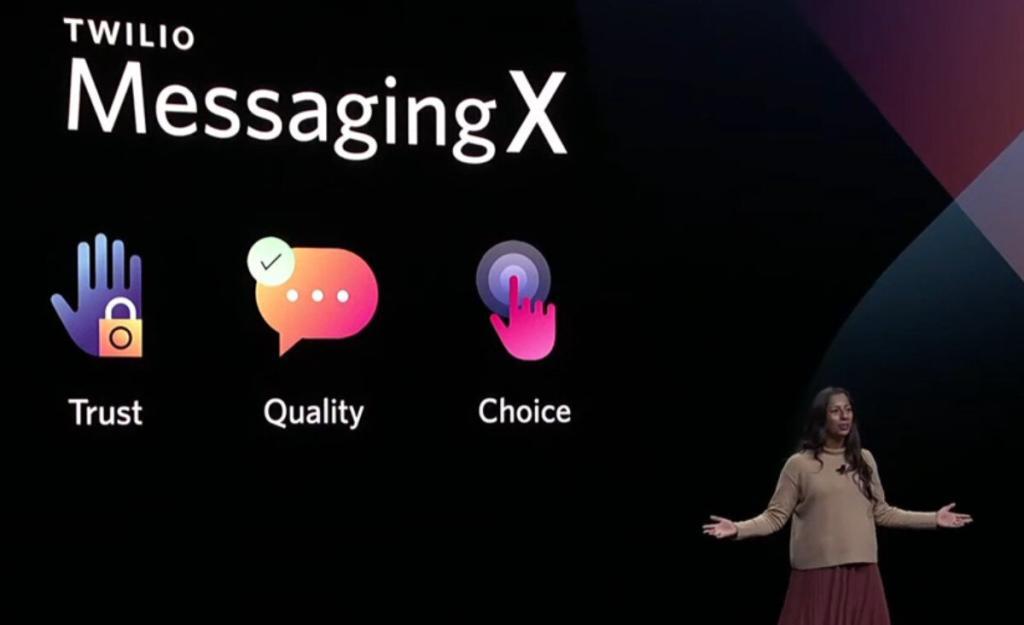
The first announcement after introducing Twilio Customer Engagement Platform was Twilio MessagingX – the Channels layer in the new marketecture. This is also where the heart of the Twilio CPaaS solution lies.
It started nice. Soumya Srinagesh, Twilio’s VP Messaging Exchange, shared her big number:
Somehow, it differed from Jeff’s by 28B. I am sure there’s a good explanation, though either way, 100B is a large enough number.
SMS centered, but evolving
For Twilio, messages are still SMS. It wasn’t said out loud, but it was hinted strongly enough throughout the session based on the announcement and in the analysts briefing for Twilio MessagingX:
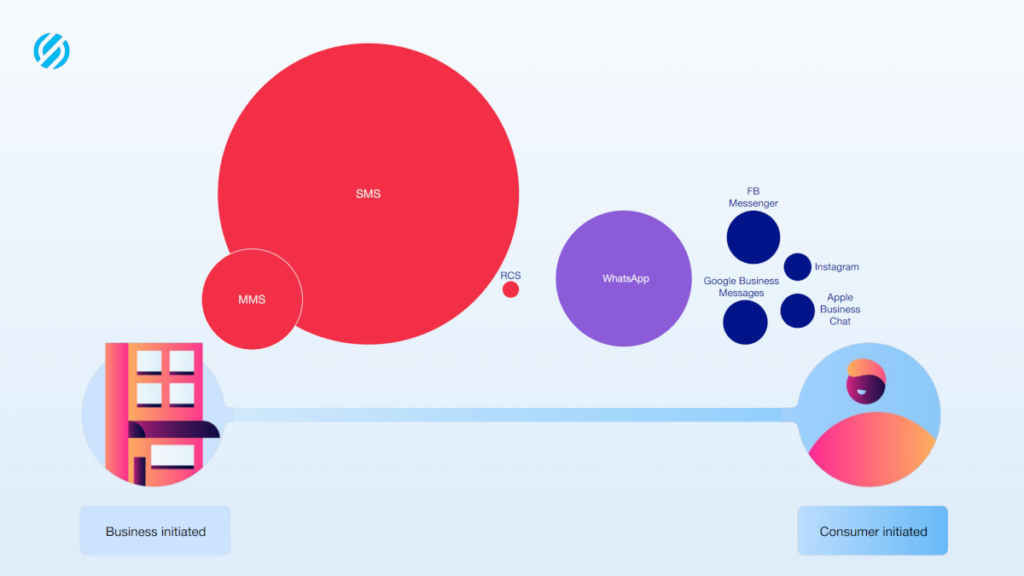
During the analyst briefings of Twilio Signal 2021 the above slide was shared. I like it because it says a lot about how Twilio sees things in the messaging space. I also like it because of the way things are arranged.
Here are my immediate insights from it:
SMS is the biggest channel by far. Everything else is just noise
Whatsapp comes second, and then Facebook Messenger
RCS is puny (it is still dead before arrival)
All of the above is true because Twilio deals with business to consumer communications
Until now it was mostly business to consumer
Whereas the future is in conversations where consumers initiate more of it, where social networks and Apple/Google are more important
It also doesn’t take into account communications that aren’t business to customers. Business to business and just person to person, which may happen in other channels
What is Twilio Messaging X?
So what exactly is Twilio MessagingX?
It looks at messaging not from the API building block level, but rather from 3 different perspectives, each with its own set of focus and investments: Trust, Quality and Choice.
To be clear, all CPaaS vendors strive to do that. Twilio is one of the few that are big enough with economies of scale to really deliver it, and do so with programmability in mind in all of the possible layers.
Trust
To handle trust, mainly deliverability and compliance, Twilio announced TrustHub.
TrustHub is all about compliant phone numbers (did we say SMS?)
It isn’t as if other CPaaS vendors don’t offer compliant phone numbers. TrustHub does that by enabling access to it via APIs as well, making it… programmable? More flexible?
The intent at the end of the day here is to have messages pass unfiltered and not get them to be blocked by carriers. Especially now, when our phone’s spam folders for SMS and voice are full of such numbers and messages.
This initiative is starting with the US market and will expand elsewhere.
Quality
This is about deliverability by selecting which carriers to use to route messages, and figuring out bad connections. Twilio does that proactively (other CPaaS vendors do or say they do as well).
This is a topic for a separate future analysis though.
Choice
Choice is omni-channel. The ability to send messages to users on the channels they prefer.
There were two announcements around choice that were made:
1. Google Business Messages
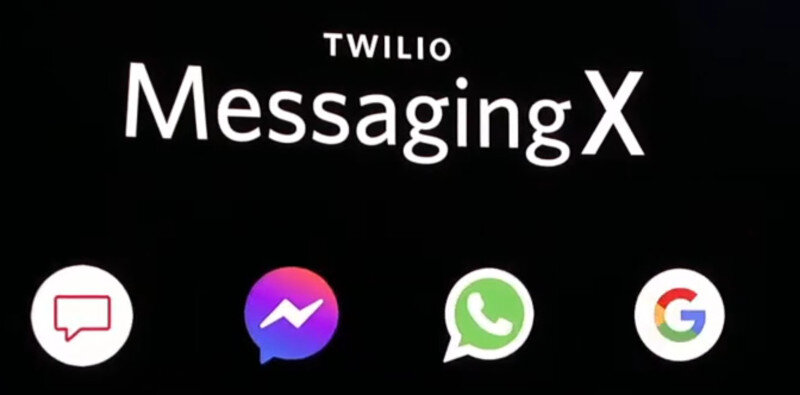
Twilio already had SMS, Facebook Messenger and Whatsapp. Now they added support for Google Business Messages – the ability of customers to start a conversation with a business directly from a Google search result or a map listing.
Interestingly, Twilio still has no Apple Business Chat support. Probably because Apple doesn’t want to deal with generic CPaaS vendors just yet.
2. Content API
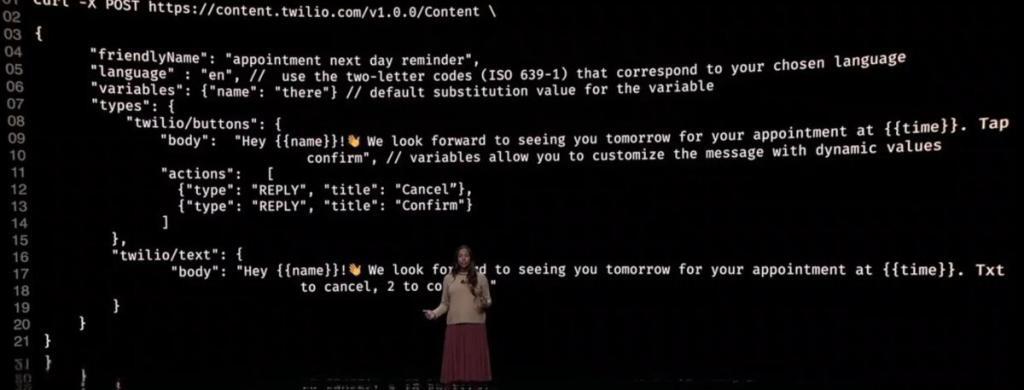
To manage and handle the fact that each messaging channel has slightly different rules you need to deal with, the new Twilio Content API is there to allow writing a message once and delivering it on whatever channel, with Twilio taking the headache of matching the message you want to send to how each channel likes that message.
As messages become more complex, requiring the user to take actions for example, such an API becomes a nice add-on.
For the most part, it feels like a utility that reduces a lot of the headache of a developer.
Twilio Voice and IVR Now
This was the first time voice was discussed. It was preceded by this nice number:
We had 25B calls, now with 36B voice minutes. If both relate to voice, then that’s 1:26 minutes per call on average. Transactional is the main focus of Twilio.
Not much more has been said or announced about Twilio Voice directly. The only thing was IVR Now, with about a minute spent on explaining it:
IVR Now seems to be a program that is designed to assist enterprises to migrate their VoiceXML from on premise IVRs to Twilio’s IVR. If I had to guess, this is about offering professional services either by Twilio directly or via partners.
The reason for sharing this during the keynote was to get enterprises listening in to talk to Twilio about it – there still isn’t anything on Twilio’s website about this program…
Other than that, it felt out of touch with the rest of the keynote.
Twilio Intelligence
Al Cook, VP & GM, Artificial Intelligence was the one introducing Twilio Intelligence. Al was the one leading and announcing Twilio Flex a few years ago, and this in a way is an extension of it.
The premise of Twilio Intelligence is the need to get from voice to data to meaning.
Twilio Autopilot was released to beta in 2018 and GA’d during Twilio Signal 2019. Interestingly, this is a platform and not a product (which means it probably is still Twilio Autopilot).
What is included?
Driven by conversations
Your own switch transcription engine and language understanding capability
The transcription engine itself was built by Twilio, not using third parties
This reduces the price points for Twilio and increases their ability to deliver a specialized solution
The data used to train the engine was labeled with type of data and calls that Twilio sees with its customers
This leads to accuracy higher than 90% (based on Al’s explanation)
The Twilio transcription engine is included in the Intelligence platform but can also be used as a standalone API
Accents were mentioned but not languages, so this is probably English only at this point in time
The intelligence part comes with language operators which can be trained by the vendors themselves
A view of the language operators of Twilio Intelligence as implemented as part of Twilio Flex
A view of the language operators of Twilio Intelligence as implemented as part of Twilio Flex
Here’s what it means that Twilio Intelligence is a platform:
This isn’t a specific product, but a mix of multiple Twilio products and capabilities
Twilio voice recordings will now offer transcriptions, most probably with diarization based on the channels in the call
Segment stores the data
Twilio Studio is used to manage and automate decision trees based on the language operators
Twilio Autopilot or something newer/different is used to sift through that data to get to the understanding part of it
Twilio Flex holds all that glue together with the application level implementation of it all
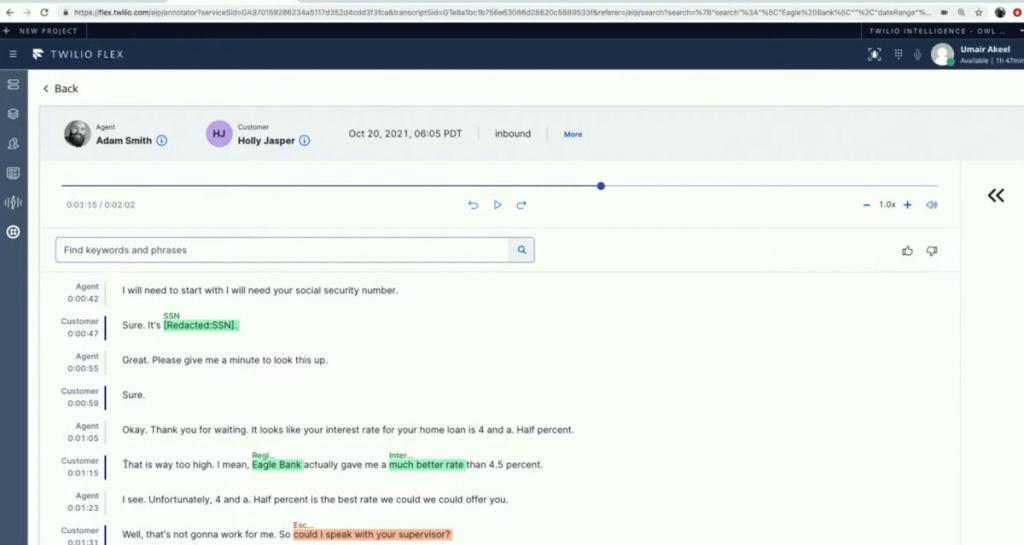
The demo was quite interesting, so I decided to share the direct pointer to it in the keynote here, as that’s easier than explaining it:
What I think:
This is the holy grail of call centers
Being able to understand conversations at scale
Automate proactive actions
Do things intelligently
It is hard work, and it will be interesting to see if Twilio nailed it this time around and what the next iteration of this will look like.
Where and when?
Now in limited private beta. A broader private beta in early 2022.
English only for now. Voice based for now.
Twilio Flex
Twilio Flex launched 3 years ago. At the time, it was questioned if this would be successful or not. To some extent, it still is. The interesting thing is that the same was said about Amazon Connect, which took about 3 years to mature enough to show its size in the market.
Sateja Parulekar, Head of Contact Center Solutions at Twilio made it a point to explain that:
Large contact centers are already using Flex
Flex is the fastest growing product at Twilio (though no specific numbers around size were given, besides the 0.5B interactions at the beginning)
There were new announcements around Flex, mainly Flex ONE and Flextensions.
Flex ONE
Flex ONE is about adding new channels to the Flex contact center with a single API. That includes today voice, messaging (including Whatsapp), chat and email.
The end result is one page holding all conversations across all channels with the customer.
Flextensions
Flextensions are pre-build extensions to Twilio Flex. To me it sounded much like Zoom Apps or application directories of other enterprise tools.
This is geared on top of the partnerships that Twilio has been working hard on and explained in last year’s Signal 2020 when they discussed the Twilio Flex ecosystem. It is the right move for the Flex platform.
From a product perspective, the future of Flex lies in its integration with Segment. This is where Twilio Intelligence is most focused on, as we’ve seen in its introduction and demo.
Segment
Peter Reinhardt, GM of Twilio Segment came to explain two things:
What is Segment and why Twilio acquired it
Announce Twilio Engage
What is Segment and why Twilio acquired it
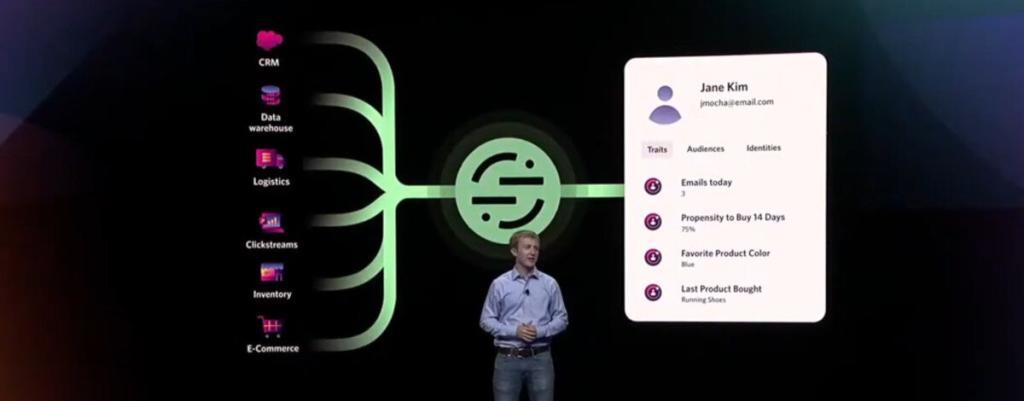
Segment is about collecting customer data from multiple sources and making it available as the single source of truth to wherever the business needs that data – all in real time.
Businesses store data about customers in many different places. With the migration towards cloud and SaaS, the number of these places is growing fast. I know… my own small business to run this website and my courses have their own share of SaaS vendors that I am using, all cobbled up with half-made integration and knit together with this masking tape called Zapier. It works. For my single person small business. Somewhat (I have tons of things I’d love to have better integrated, but don’t have the time or inclination to do – not enough ROI in it).
For real businesses, not like mine, the problem is a lot bigger and a lot more important to solve. Especially if… you want to be like the digital giants Jeff talked about at the beginning of the keynote and Peter made sure you remembered.
But back to the why:
Businesses need a glue for their customer data. And Segment is a nice glue. A super glue
Twilio does communications APIs. And is going after businesses, especially where businesses need to communicate with customers
So the data used to decide if and how to communicate resides in Segment, or gets pushed to Segment from Twilio
A win win if you could integrate these two together
And we’ve already seen glimpses of it with Twilio Intelligence earlier on.
I think Segment was the most interesting acquisition of Twilio so far. It isn’t only closing a gap on something they don’t have or need. It isn’t even going after a close adjacency. It is about being able to double down on customer engagement… and building a platform for it.
Which is exactly where Jeff started and where the keynote ends.
Twilio Engage
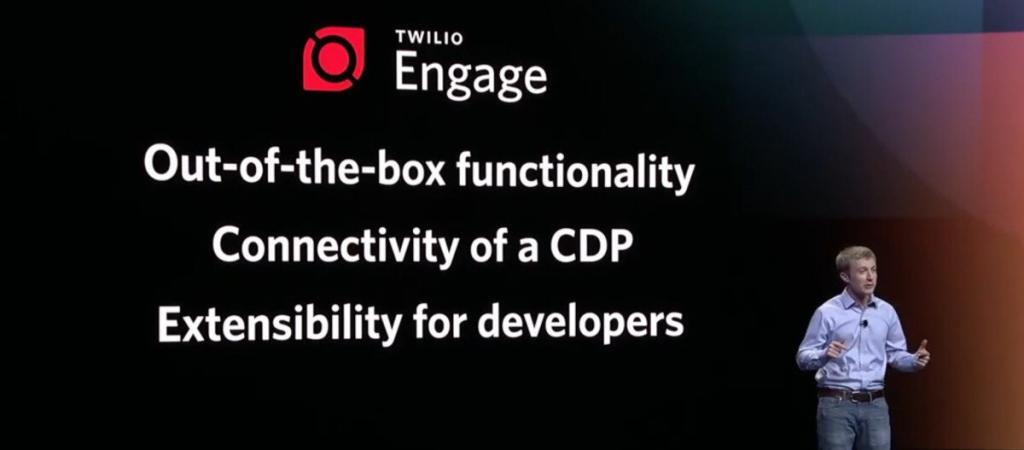
Twilio Engage was the last announcement. This is the new engagement app that Twilio decided to launch. Flex is for support, Frontline is for sales and Engage is for marketers. This is the marketing cloud offering of Twilio, built on top of Segment.
It is available in pilot now and as GA in Q1 next year.
Not much else was explained or shared about this and the demo was mostly a concept of what can be done with it. Next year’s Signal event will probably show the flashy UI Peter said was less important than the data
Announcements that didn’t make it into the keynote
Video. IoT. Frontline. Sendgrid.
Probably a few others that I missed.
I’d like to discuss 2 of these announcements here in brief.
Twilio Video Insights
Video isn’t (and was never) top of mind for Twilio. They have it supported, but somehow it feels like a second class citizen most of the time: Twilio WebRTC Go was announced in Signal 2020 to give a semblance of progress with video. It is a free peer-to-peer video service from Twilio that is limited in scale. It got some increased capacity this year especially for Signal 2021. Nothing to write home about (I already discussed these free WebRTC video APIs at length recently.
What was announced was Twilio Video Insights and Twilio Video, both very different from each other.
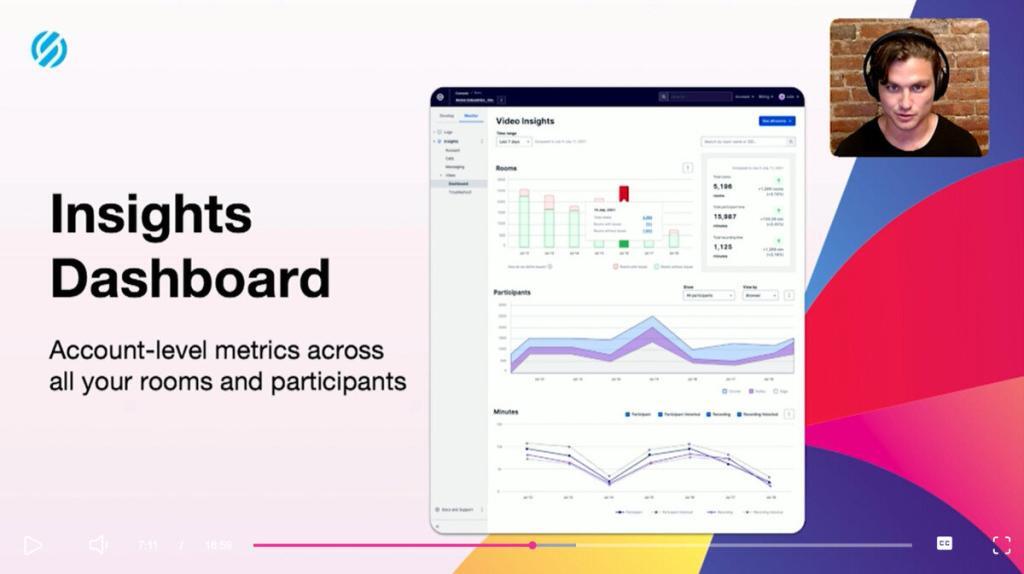
Twilio Video Insights collects WebRTC and other statistics off of your calls done over Twilio Programmable Video, to create a dashboard view of media quality.
This is similar to what we do at testRTC with our watchRTC product.
A demo was shown in one of the sessions of Twilio Signal.
For me this validates our own watchRTC product, as Twilio saw the need to offer that out of the bex as part of its service. That said, if you need something like this (for Twilio, another CPaaS vendor or your own infrastructure), then come check for yourself which tool is most suitable for your needs.
Twilio Live
Twilio Live was announced a bit prior to Signal 2021. Probably in order to give center stage to Twilio Customer Engagement Platform where Live (or video for that matter) play a marginal role if any.
Here’s what I learned about Twilio Live during Signal 2021:
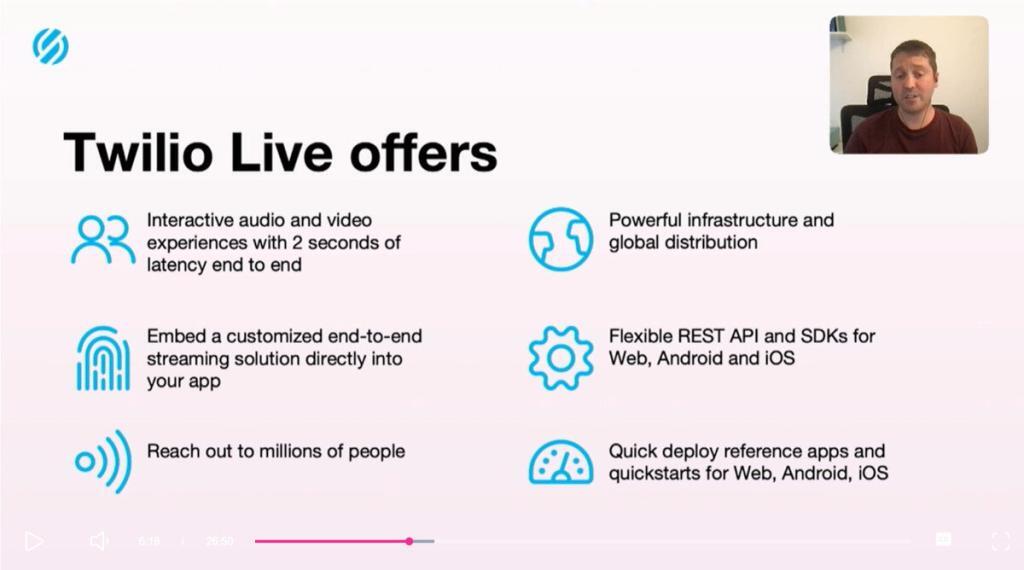
Twilio Live offers “interactive” audio and video
“Interactive” because there’s a 2 seconds latency end-to-end
It isn’t WebRTC on the viewer’s end, which can probably be blamed for that 2 seconds of latency
The problem with this is that today’s CDN streaming solutions that can go down to 5-10 seconds, and with further optimizations of their existing technology stacks down to 2 (using LLHLS for example)
Their competition from WebRTC streaming vendors is that these vendors support subsecond latencies, usually at the 500 milliseconds mark
CDNs are probably cheaper. WebRTC streaming vendors will probably be on par with Twilio’s pricing
Main reason for selecting Twilio here is if you’re using the Twilio stack elsewhere as well, but it might not be enough if what you are looking for is real interactivity
Yes, 2 seconds delay is great for most use cases, but not for all of them
It reaches millions of users on a single stream
I’d estimate that Twilio Live runs like a traditional CDN streaming service
It sends data over TCP (using HTTPS or a secure Websocket), so there’s no packet loss and there’s buffering added to deal with potential retransmissions
It probably also does ABR (adaptive bitrate), to deal with different bandwidth availability of different users
Twilio Programmable Video Group Room is used as the source of the content
Which means the broadcasters are using WebRTC
Since a single outgoing stream is sent towards Twilio Live, this gets mixed and “recorded” and then sent to the audience. All this is probably done by a headless chromium instance in the cloud somewhere
The fact that the content is mixed means that all viewers can only see the exact same layout. Less flexible, especially for the interactive type of use cases with several broadcasters
It is an interesting route that Twilio took for its broadcasting service. I am not sure how well it can compete with other CPaaS vendors who are clocking 100s of users or more per single WebRTC session. And it is hard to see this as an alternative for those using CDN streaming services already.
What will be interesting to see is how vendors accept this product and its position in the market – will this be good enough or even perfect for certain customers that can’t find the right solution for their broadcasting needs elsewhere.
What Twilio isn’t
After writing down this longform article and analysis of Twilio Signal 2021, I think the most important part is what wasn’t said. And that’s what Twilio isn’t.
I long suggested and thought that CPaaS, CCaaS and UCaaS are going to merge as the lines between them are blurring. Vendors in each of these segments are vying towards the others through new product announcements and acquisitions.
Twilio went after CCaaS with Flex. It only made sense it would move into UCaaS at some point, being a comfortable adjacency in communications.
But it didn’t.
It went after customer engagement. Acquired Segment and doubled down in this route – making a splashing announcement of it at this Signal event and keynote.
Twilio is all about businesses communicating with customers.
Twilio is a lot less about people collaborating with each other in a business. Why? Because that’s where the focus of UCaaS is, and a lot of that focus relies on a slightly different set of requirements and roadmap.
This is also why video is getting less attention by Twilio for example.
What’s next for Twilio?
I don’t really know.
This can be seen as a pivot, but also as the next step in Twilio’s evolution.
Twilio is surprising with the way it handles itself in the market, at least for me.
If I had to bet, I’d say that the next 2-3 years are going to be more of the same. Twilio will work on its current set of engagement applications, pouring data from the Segment CDP into it, and fitting its solutions for sales, support and marketing. Obviously, developers are still an important part of all of this.
I wouldn’t expect Twilio to go into additional adjacencies in the API domain or to go after unified communication related use cases either. At least not now. They have their hands full going up market and out of their comfort zone of pure communications.
California startup Future Motion has revealed two new versions of its funky self-balancing electric rideable it calls Onewheel, with more range, power, and better ergonomics.
The most capable of the two is the new $2,200 Onewheel GT, which Future Motion says was “completely redesigned from the ground up.” It employs a higher-voltage control system that pushes more power to the motor — Future Motion says the GT is the “first 3 horsepower Onewheel.” The GT is pulling that power from a battery pack made up of 21700 lithium-ion batteries (the same size cell that powers many of Tesla’s current vehicles), which give it a whopping 32 miles of range on a full charge.
Performance aside, Future Motion says the Onewheel GT now has concave...
Microsoft Fall Ignite is just a few days away, and we want to give you a glimpse into what we have in store for you! Join our sessions to hear about the latest innovations coming to Microsoft Teams, and learn how Microsoft Teams helps organizations connect, collaborate, and work with full context in a new era of flexible and hybrid work.
Featured Sessions
Empower everyone for a new world of hybrid work Jared Spataro, Corporate Vice President, Modern Work. Tuesday, November 2, 8:55 AM - 9:20 AM PT The seismic shift to hybrid marks the biggest change to the way we work in a century. Emerging trends in the labor market have amplified the need for flexibility and a reimagining of how organizations can best position themselves and their people to communicate, collaborate and innovate. Join us to hear the latest insights on the future of work, along with a showcase of product innovations designed to help Microsoft customers adapt and thrive in a new era of flexible work.
Microsoft Teams: Thrive with Hybrid Work - Nicole Herskowitz, General Manager, Teams Marketing, Tuesday, November 2, 12:30 PM - 1:00 PT Many organizations are wondering "What is our path forward?" as we enter the hybrid work era. A big part of that answer is Microsoft Teams. Join us for a session that explores the upcoming landscape for Microsoft Teams, as we outline why Microsoft Teams is the place to be for hybrid work.
Prepare for the future of calling with Microsoft Teams phone - Scott Van Vliet CVP, Intelligent Communications and Daniela Chocron, Senior Product Marketing Manager, November 3, 10:30- 11 PT Out of necessity, most organizations have made investments in their virtual meetings solutions over the past 18 months, yet many still need to modernize their calling solutions. At the same time, the telephony space is experiencing tectonic shifts, including a move to IP-based calling. Come learn how Teams Phone provides both a modern calling experience for users, and an easy-to-manage solution that Admins can equip their organizations with.
Ask the Expert sessions
Be sure to join one of our “Ask the Expert: Microsoft Teams” sessions, where you will be able to engage with our Teams engineers and product experts to ask us your questions. Be sure to add these to your calendar ASAP so you don’t miss out.
Join our experts as we answer your questions about the planning, deploying, managing, securing and adoption of Microsoft Teams and Teams Rooms as well as the latest offerings in the Microsoft 365 App Compliance Program and Certification.
November 2, 1:30-2:00 PM PT with Stephen Rose, Sr PMM- Teams and Platform and Darrell Webster, Principal M365 Adoption and Change Consultant at WM Reply
Want to dive deeper? Be sure to check out our on-demand sessions on variety of topics like enabling inclusive hybrid meetings or being the hero of your frontline workforce. All of our sessions are listed in our digital brochure below for you to explore at any time.
Resources
We’ve included a list of additional resources below so that you can bookmark for later or explore more now:
Bang & Olufsen and Cisco partner to create a luxury business headset for today’s hybrid workers
The Bang & Olufsen Cisco 980 sports a variety of features for convenience and security, including Webex integrations and Adaptive Active Noise Cancellation
SAN JOSE, CA – October 26, 2021 – Hybrid work has increased the need for high-quality multifunctional headsets, as remote workers seek to reduce background noise from remote workspaces, or simply enjoy music while on the go. Today, Bang & Olufsen (CPH: BO) and Cisco (NASDAQ: CSCO) announce the Bang & Olufsen Cisco 980, a luxury business headset that pairs Bang & Olufsen’s unique combination of timeless design, unrivaled craftsmanship and powerful sound with Cisco’s integrated meeting controls, Adaptive Active Noise Cancellation, and frictionless IT management capabilities to ensure long-lasting, secure communications.
“Clear and seamless audio is essential for the hybrid work environment,” said Jeetu Patel, EVP and GM, Cisco Security and Collaboration. “We’re thrilled to work with the leaders in luxury audio solutions, Bang & Olufsen, to bring to market the highest quality audio device for business – combining high-end aesthetic, complete functionality and fantastic quality.”
“We are excited to join forces with Cisco and build on the strengths of both brands,” said Kristian Teär, CEO Bang & Olufsen. “Today, customers want a product they can use at home, at work or in transition – and look and feel good when using it. We’re integrating Cisco’s industry leading technologies with our renowned capabilities within sound, design, and craftsmanship to create the ultimate audio product for the hybrid world.”
Key features of the Bang & Olufsen Cisco 980 include:
Enhanced capabilities for business: With Bluetooth 5.1, Webex integrations, voice prompts and convenient on-ear call controls that allow users to easily mute, answer or end calls, the Bang & Olufsen Cisco 980 offers industry-leading connectivity and functionality.
Crystal clear communication: Elevate and enhance calls, meetings, video and music experiences with premium acoustics and audio, including beamforming microphone arrays that create a Virtual Boom Arm and help to power Adaptive Active Noise Cancellation providing a more immersive listening experience. Rich, immersive audio helps users feel as if they are in person and excellent noise canceling lets users focus on the task at hand.
Lasting comfort and timeless design: The headset is designed to provide unmatched comfort. The Bang & Olufsen Cisco 980 is crafted in a lightweight structure that has been carefully engineered with high-end materials to ensure a stable, enduring fit for all-day use.
Enterprise-grade management and security: IT administrators can easily deploy, manage, and view real-time analytics of the Bang & Olufsen Cisco 980 – all from a single platform. It also provides enterprise-grade hardware and software protection to help calls and conversations stay secure.
Pricing and Availability
The Bang & Olufsen Cisco 980 will be available to order starting early 2022 at the Cisco suggested resale price of $549 USD.
Cisco (NASDAQ: CSCO) is the worldwide leader in technology that powers the Internet. Cisco inspires new possibilities by reimagining your applications, securing your data, transforming your infrastructure, and empowering your teams for a global and inclusive future. Discover more on The Network.
About Webex by Cisco
Webex is a leading provider of cloud-based collaboration solutions which includes video meetings, calling, messaging, events, customer experience solutions like contact center and purpose-built collaboration devices. Webex’s focus on delivering inclusive collaboration experiences fuels our innovation, which leverages AI and Machine Learning, to remove the barriers of geography, language, personality and familiarity with technology. Its solutions are underpinned with security and privacy by design. Webex works with the world’s leading business and productivity apps – delivered through a single application and interface. Learn more at webex.com.
About Bang & Olufsen
Bang & Olufsen is a luxury audio brand founded in 1925 in Struer, Denmark, by Peter Bang and Svend Olufsen whose devotion and vision remain the foundation for the company. For nearly a century, Bang & Olufsen has been pushing the boundaries of audio technology and the company continues to sit at the forefront of acoustic innovation. Today, every Bang & Olufsen product is still characterized by the unique combination of beautiful sound, timeless design, and unrivalled craftsmanship. The company’s innovative and progressive products are sold worldwide in Bang & Olufsen stores, on bang-olufsen.com and in select retailers. The company employs approximately 900 people and operates in more than 70 markets. Bang & Olufsen’s shares are listed on NASDAQ Copenhagen A/S.
‘The case for digital transformation has never been more urgent or more clear,’ Microsoft CEO Satya Nadella said during the call for the company’s first quarter of the fiscal year. ‘Digital technology is a deflationary force in an inflationary economy. Businesses small and large can improve productivity and the affordability of their products and services by building tech intensity.’
‘Russia is trying to gain long-term, systematic access to a variety of points in the technology supply chain and establish a mechanism for surveilling … targets of interest to the Russian government,’ writes Microsoft’s Tom Burt in a blog post.
Microsoft is now allowing Windows 11 testers to try out Android apps. A preview version of the Windows Subsystem for Android will be available to beta testers of Windows 11 today, providing access to apps from the Amazon Appstore. Testers with Intel, AMD, and Qualcomm processors will all be able to try out Android apps on Windows 11.
Apps can be loaded through the Microsoft Store, which will list a variety of apps that then point toward the Amazon Appstore to load and install. Android apps can run side by side with other Windows apps, and they’re also integrated into Alt + Tab and Task view, and you can pin them to the Start menu or the taskbar.
Image: Microsoft
Android apps are available in the Microsoft Store on...
The global supply chain is expected to be a mess this holiday season. Instead of buying less stuff, Americans are just shopping early. | Jens Büttner/picture alliance via Getty Images
The supply chain crisis has made holiday shopping more unpredictable this year — even if you buy early.
Black Friday, the Friday after the Thanksgiving holiday, once marked the start of the holiday shopping season. In recent years, though, the event has begun to feel like something of a bygone tradition. The holiday retail calendar begins a little earlier every year, but 2021 was especially notable: Some retailers started dishing out early-bird sales and reminder emails as early as September. Shoppers were encouraged to order their gifts as soon as possible or risk having packages arrive late, due to rampant supply chain disruptions and mailing delays. Even books (yes, books!) weren’t safe from the impending shortages.
The pandemic briefly curbed consumer spending, but not for very long: As the country opened back up, Americans felt the urge to get out and shop, an impulse that retailers and marketers happily indulged. The early fall holiday shopping schedule was billed to benefit customers by reducing their annual holiday stress, which is likely compounded by supply chain delays. Yet retailers are still banking on shoppers turning out on Black Friday, despite launching monthslong campaigns urging them to shop early.
Early holiday shopping sprees are good news for retail corporations, logistics companies, and the US economy, which all stand to profit from a protracted shopping period. Consumers, in turn, are conditioned to buy without a second thought, a habit that is bad for the millions of workers caught up in manufacturing, distributing, and shipping the tons of junk we order every day. This year on Black Friday, perhaps we should reconsider America’s great shopping addiction.
When the stuff we want is so hard to get ahold of, why go to such great lengths to buy it? Consumers have the option to not order items manufactured overseas, to source things locally from small businesses or artisans. We also have a choice that eliminates the potential for shipping or supply chain mishaps: We can just buy less.
Hear me out, what if instead of panic buying a ton of crap a few months early, we weather the supply chain issue by all chilling on our holiday crap consumption
We know that our collective consumption of consumer goods, from the creation of plastic toys to the fossil fuels that ship them to our homes, isn’t good for the environment. Yes, on a consumer level, our ability to control resource consumption is minimal, but that doesn’t mean there’s no good in a holiday season where gift exchanges don’t require an Amazon Prime account or transit via multiple shipping containers. Mindfulness has its own benefits, especially for affluent consumers, which includes America’s upper-middle class. The higher-income consumers among us use far more resources than the less well-off and are responsible for influencing shopping norms at large.
Americans are now more aware than ever of the global supply chain and its vulnerability to unexpected snarls (like the Suez Canal blockage), raw-material shortages, and shipping delays. Experts predict that these problems, set off by the pandemic, won’t let up until 2022 or 2023. To help reduce supply chain backlogs, the Biden administration has ordered major ports and shipping companies, including Walmart, UPS, and FedEx, to increase their working hours. These domestic efforts, while heartening for consumers, are unlikely to assuage existing supply and demand issues across the world.
Meanwhile, the growing severity of climate disasters threatens to impact how we produce, source, and ship these goods, raw materials, and the food we eat. Product shortages and delays, it seems, are the new normal. At the end of this logistic maze is the shopper, whose buying tendencies are cultivated and incentivized from a young age. The entire consumer enterprise could be summed up in one Ariana Grande lyric: “I see it, I like it, I want it, I got it.”
If these supply chain problems are expected to persist, however, we must be prepared to curb our shopping habits. Conscious or decreased consumption might not move the needle much on climate change or improve the exploitative working conditions faced by those who produce and ship our goods, but that doesn’t mean we have to be trapped in a cycle of thoughtless buying. The alternative isn’t a moral neutral.Must we continue to drown in our unlimited and unfettered need for more stuff, or could we start buying less?
In his book The Uninhabitable Earth, journalist David Wallace-Wells wrote that “there is something of a moral crime in how much you and I and everyone we know consume, given how little is available to consume for so many other people on the planet.”
Shopping, by this logic, is a sin, one that Americans can’t live without. Well-intentioned consumers have tried to do the next-best thing: Shop sustainably. But sustainable shopping is still ... shopping. It’s an oxymoronic act that makes us feel good about the things we buy. True sustainability requires reducing our consumption (and, likely, the country’s economic growth), not through buying “greener” products.
“In an exploitative consumer market, the answer is not buying more. It’s buying less,” argues fashion journalist and activist Aja Barber. “We can’t buy our way to an ethical world.”
Still, most consumers are swayed by the hope of “voting with one’s wallet.” Shopping and boycotting became a means to perform politics in the Trump era and beyond. But consumer activism, or conscious consumerism, does little to impact legislation or corporate policy. The fossil fuel industries, to that end, have weaponized the fallacy of “personal responsibility” to avoid talking about corporate carbon emissions. (An infuriating, oft-repeated statistic from the Carbon Majors Database is that 100 major fossil fuel companies have produced 71 percent of total carbon emissions since 1988.)
“It’s not about renunciation, but choice”
As born consumers, we’re faced with a tricky, paralyzing conundrum: Any collective effort will be futile against the scale of climate change, so why should regular people be tasked with modifying their behaviors when the system that runs global commerce is so ubiquitous?
According to one sustainability researcher, intent matters. Making the active choice to think twice before we buy could improve both our happiness and quality of life. It could help shape social norms and influence others toward more-sustainable choices.
Daniel Fischer, an assistant professor at the School of Sustainability at Arizona State University, wants to reframe the conversation around sustainable living. People, he told me, often assume they’re adopting a lower quality of life by owning and buying less. “We need to flip this narrative around and emphasize how sustainability allows you to have a better quality of life,” Fischer said. “It’s not about renunciation, but choice.”
His sustainability philosophy centers human needs, or how people can meet their needs without compromising the ability of future generations to meet theirs. In a consumer society, Fischer explained, our base impulse is to desire material goods that satisfy our needs. People have fundamental needs — food, shelter, safety — and more advanced, self-actualized wants. Most people aren’t fully aware of how to discern these motivations, Fischer added. They buy simply because they “feel like it,” without thinking deeply about the lasting purpose of the purchase. Americans, on average, buy more than one item of clothing each week.
Fischer believes people can be trained to break out of this cycle of consumption. They can choose to replace certain shopping “satisfiers” with more sustainable options: buying vintage and used goods instead of new; seeking out hearty, plant-based meat substitutes; purchasing an experiential gift for their loved ones instead of something material. Fischer calls this process social innovation.
“Our basic needs have always been the same and will always be the same,” he said. “The idea that we have to own every single thing in our household is a recent phenomenon, historically speaking. With social innovation, people can improve their level of satisfaction by still meeting their basic needs while [also] reducing environmental harms.”
Fischer’s work examines how practices such as mindfulness and intention-setting can help a person reflect on their needs. It allows them to consider whether a purchase will bring long-term satisfaction — or, as Marie Kondo puts it, “spark joy” in their lives.
For some shoppers, the pandemic was an opportunity to reassess their consumption habits and relationship to material goods. Many “buy nothing” groups proliferated in quarantine as people sought to trade or give away things they no longer needed. Reddit communities like r/frugal, r/anticonsumption, and r/nobuy, where thousands of members discussed ways to reduce unnecessary spending while stuck at home and shared tips on how to shop intentionally, similarly thrived.
Steph, a 30-year-old corporate lawyer in New York, has gone an entire year without buying a new item of clothing. It’s a commitment that may seem antithetical to fashion, but Steph cares about clothes and appearing stylish — she has an entire Instagram account dedicated to slow fashion and styling. Her intent isn’t to be anti-fashion; she just thinks it’s possible to make do with less.
“During the pandemic, I started a challenge called Project 33, where I could only wear the same 33 items of clothing for the next three months,” Steph told me. “That made me curious about how I could maximize the number of wears I get out of the clothes I already own. Eventually, I committed to not buying anything for an entire year.”
She said she felt freed by the challenge, not restricted: “I have more space in my mind to think about other parts of my life,” she said, “rather than just the things I want.”
Social norms are shifting, and some people are starting to push back against thoughtless, unlimited consumption. Consumers are not only aware of the forces that influence them to buy things but are also, like Steph, actively working to combat them. “I like to believe that everything we do, no matter how small it is, has some sort of impact,” Steph said. “You can demand corporate responsibility while making better individual choices. I don’t think they’re mutually exclusive.”
Individual choice has had an outsized role in climate change discussions, even when it’s clear that federal regulation is the best and most direct way to curb global carbon emissions. The “personal responsibility” debate has trapped American consumers in a cycle of cynicism. It’s easy to shrug our shoulders and continue to order from Amazon while we mutter under our breath that “there is no ethical consumption under capitalism.”
As citizens of the wealthiest country in the world, Americans’ personal choices do carry some weight. The problem is, it’s hard to quantify the environmental impact of individual actions and lifestyles. Plus, structural systems and social norms make it nearly impossible for people to break shopping habits. About 70 percent of the US economy, after all, stems from consumer spending.
Research has found that a person’s carbon footprint is closely tied to how much wealth they have, even if they’re a supposedly “green” consumer. Wealthy people travel more, buy more stuff, and live in larger, energy-intensive homes. Most “middle class” Americans, according to a 2020 report from Oxfam and the Stockholm Environment Institute, fall in the global top 1 or 10 percent of individuals responsible for blowing through the world’s carbon budget. (For context, anyone earning over $109,000 is categorized in the richest 1 percent of the world, and over $38,000 as within the top 10 percent.) These choices add up over a person’s lifetime, and our tendency to overconsume carries lasting consequences.
On a recent podcast, New York Times opinion writer (and Vox co-founder) Ezra Klein encouraged listeners not to think of their consumption decisions as individual or as only affecting themselves. Rather, they serve as mechanisms for “social, political, and moral contagion.” It’s a mindset that Fischer, the ASU professor and sustainability expert, also champions.
For instance, while Klein admitted his decision to not eat meat is “meaningless” in the context of the global animal trade, it did carry some influence in other people’s choice to go vegetarian or vegan:
It’s in that way that individual attitudes ladder up to social attitudes, and then to social and political change. ... So taking seriously the ideas and morals and views of individuals, that’s not a different sphere than what ends up happening in politics. And it’s not just individual. All of the stuff catches. … I think that a lot of the value of the choices we make is in our willingness to try to use those to change the choices other people see as normal for them to make.
Reducing one’s carbon footprint requires more frugal sacrifices than buying less stuff (such as flying less, eating less meat, using more public transportation), but it’s a good place to start. This holiday season offers a bizarre, supply-chain-induced opportunity to change our shopping habits, to give more thoughtfully, to buy more locally and less overall. Most households are hard-wired to splurge on end-of-year gifts, and it’s unlikely people will ever stop even if the crisis worsens. The supply chain issues can, though, lead us to buy more conscientiously.
The mission to buy less with more intention is achievable for everyone, especially affluent shoppers. It’s incumbent on Americans, the wealthiest people in the world, to cut back on and be critical of their consumption. Plus, if you haven’t ordered that Xbox Series X for the lucky gamer in your life, you might already be out of luck.
Illustration by Alex Castro / The Verge Photo by Justin Sullivan / Getty Images
Facebook is planning to change its company name next week to reflect its focus on building the metaverse, according to a source with direct knowledge of the matter.
The coming name change, which CEO Mark Zuckerberg plans to talk about at the company’s annual Connect conference on October 28th, but could unveil sooner, is meant to signal the tech giant’s ambition to be known for more than social media and all the ills that entail. The rebrand would likely position the blue Facebook app as one of many products under a parent company overseeing groups like Instagram, WhatsApp, Oculus, and more. A spokesperson for Facebook declined to comment for this story.
Facebook intends to transition to “being a metaverse company”
The company’s dealings with the massive GIF-making hub were called out by UK regulators in August, leading the Competition and Markets Authority (CMA) to launch an antitrust probe. As part of the investigation, the CMA issued an initial enforcement order (IEO) that prohibits any further integration between Facebook and Giphy, which is supposed to allow the companies to continue competing as if there was no acquisition at all.
“No decision has yet been reached in relation to the...
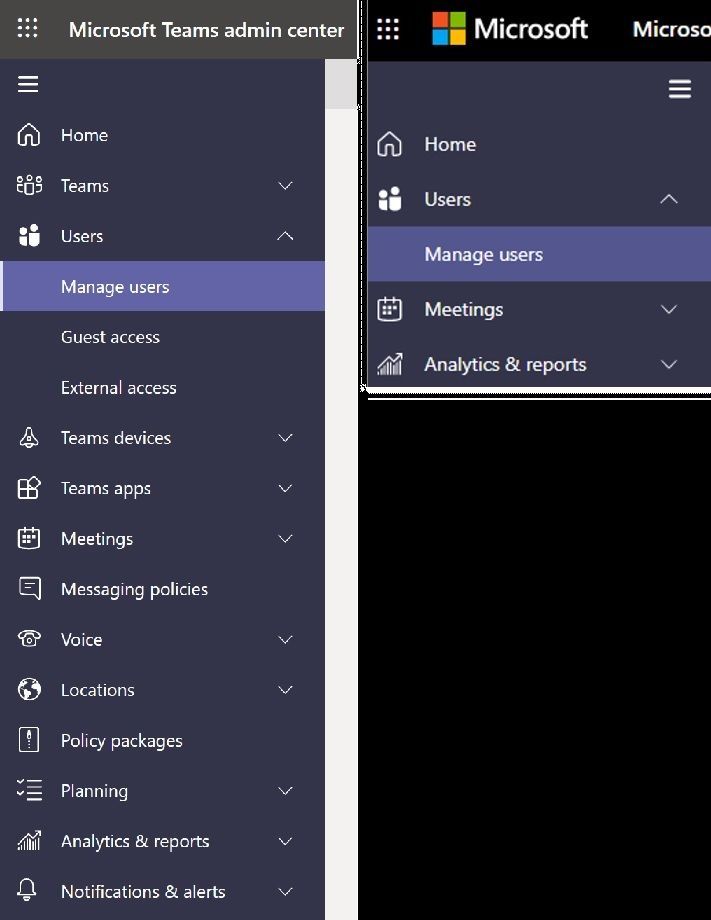
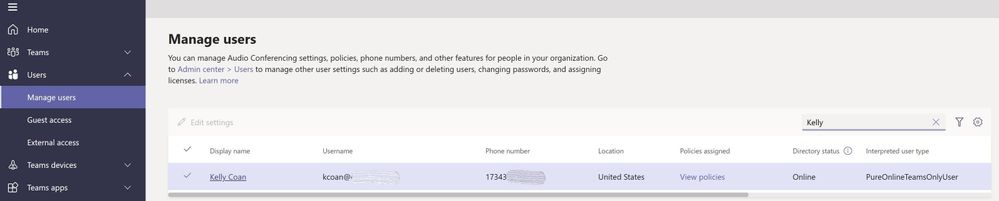

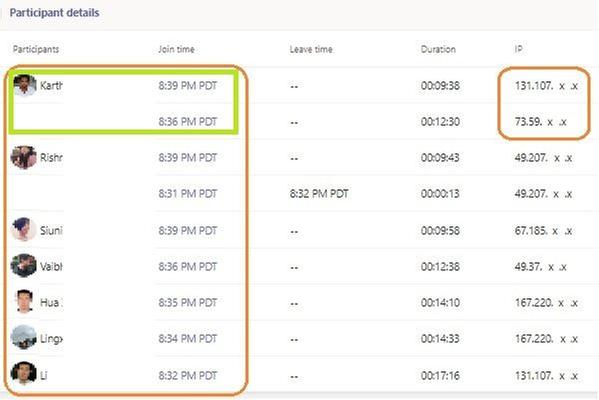


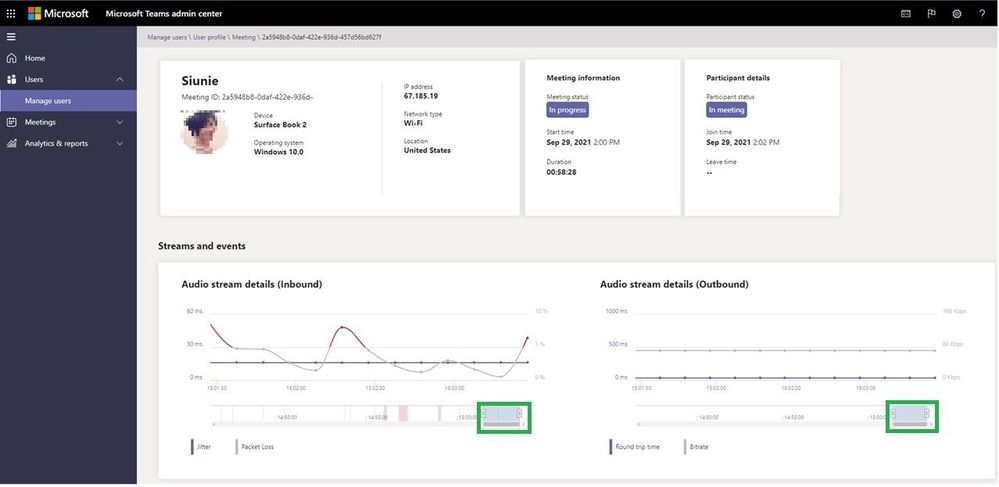

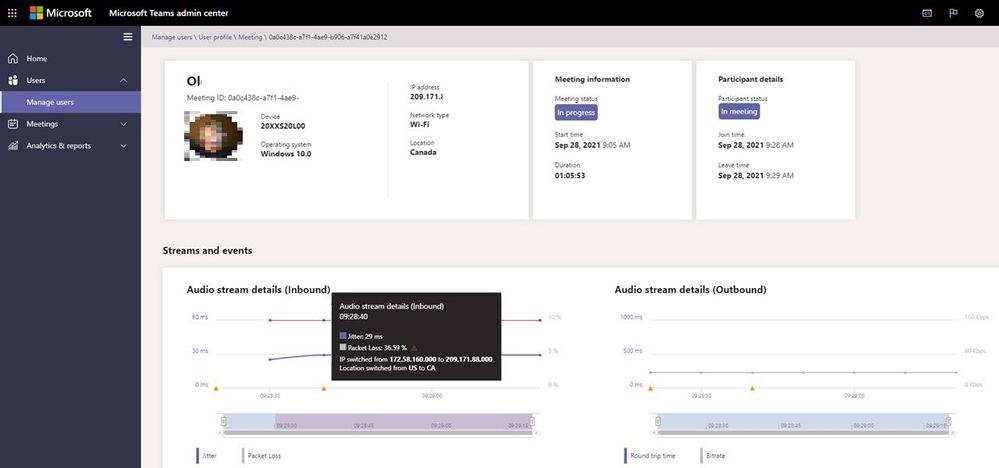

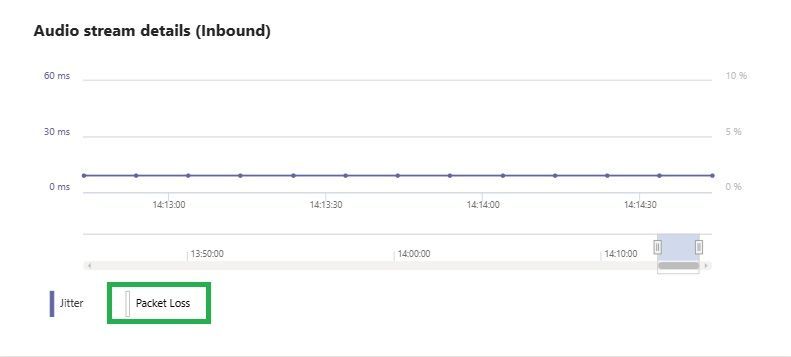
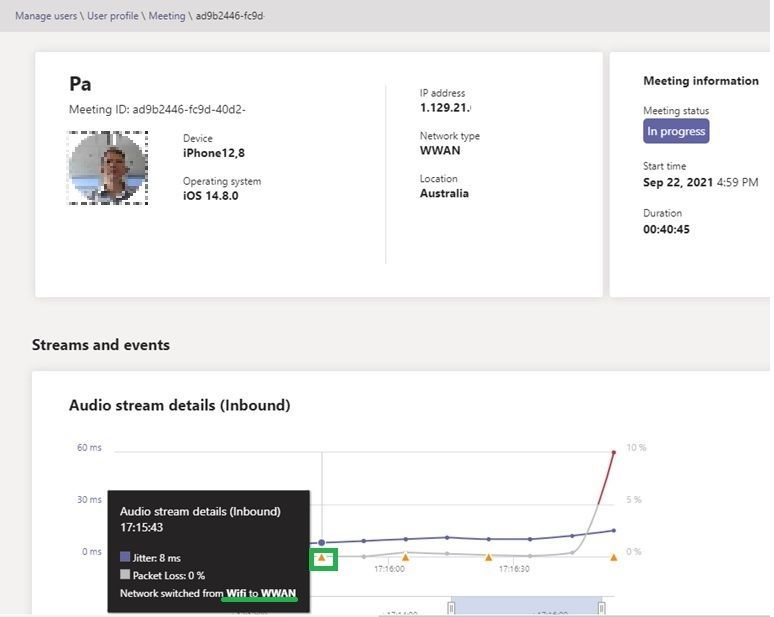
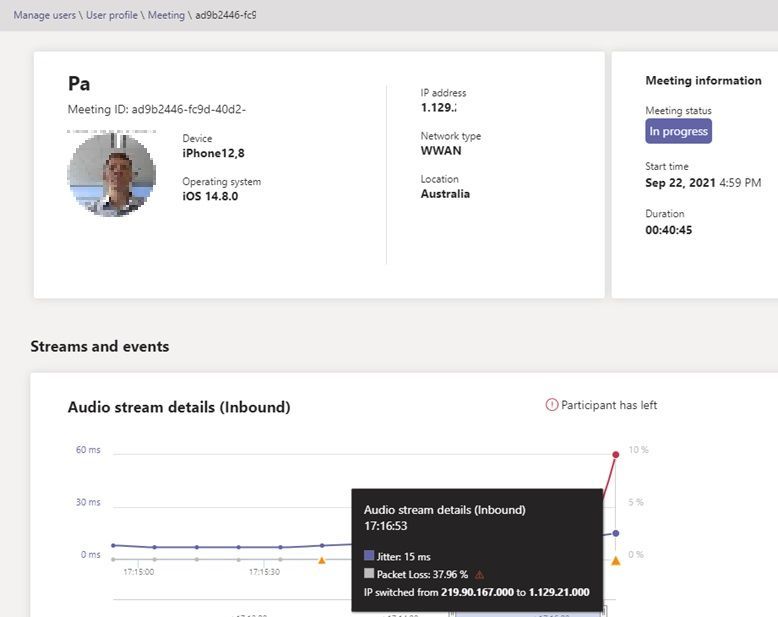


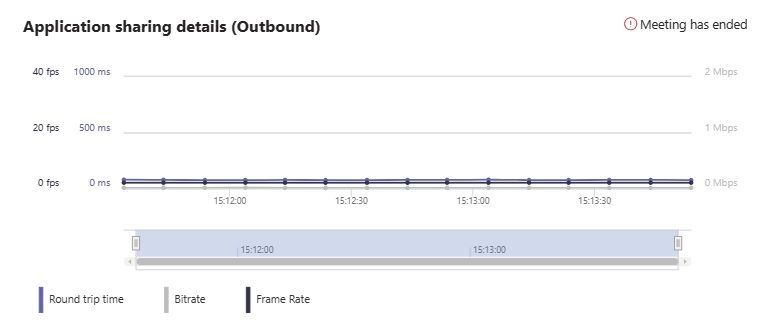



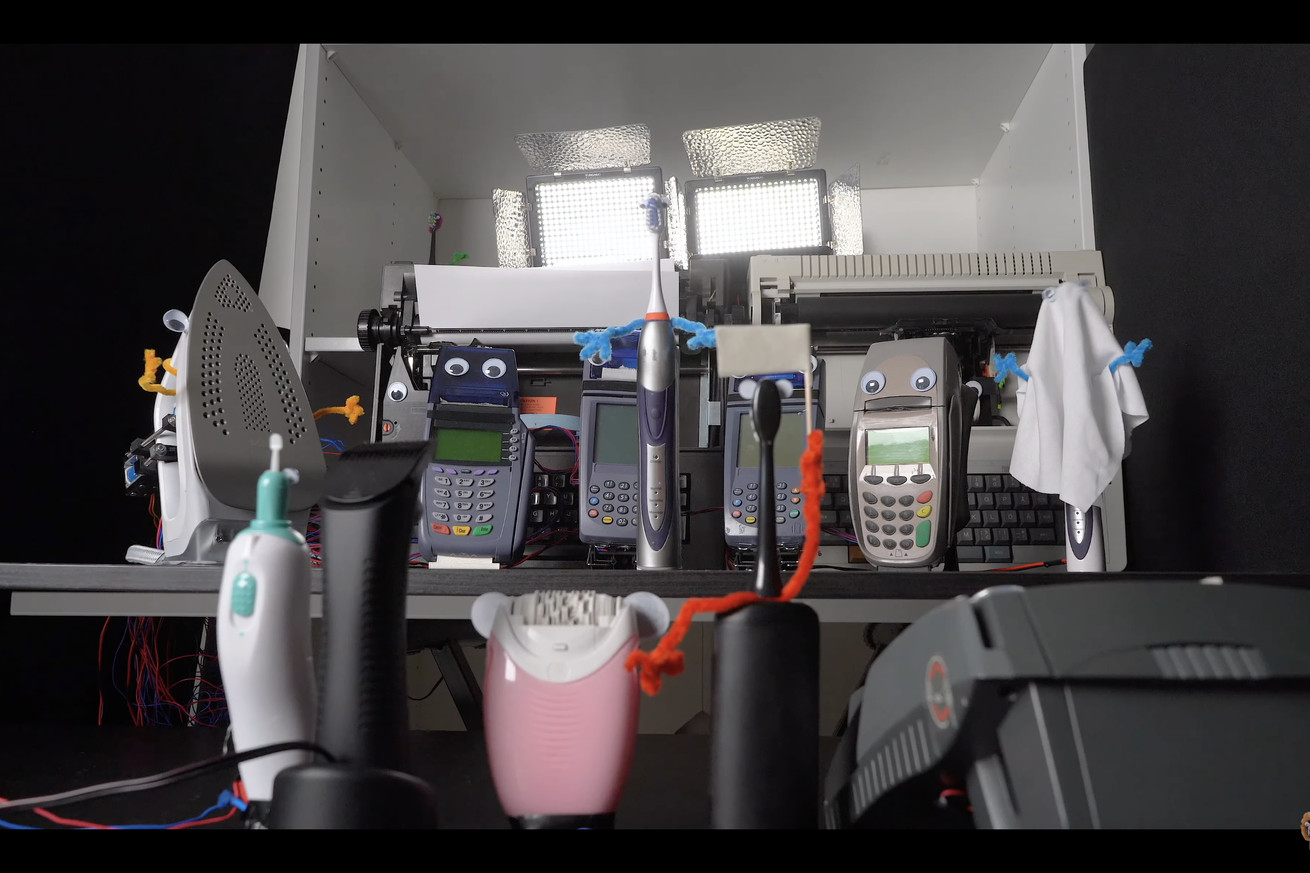
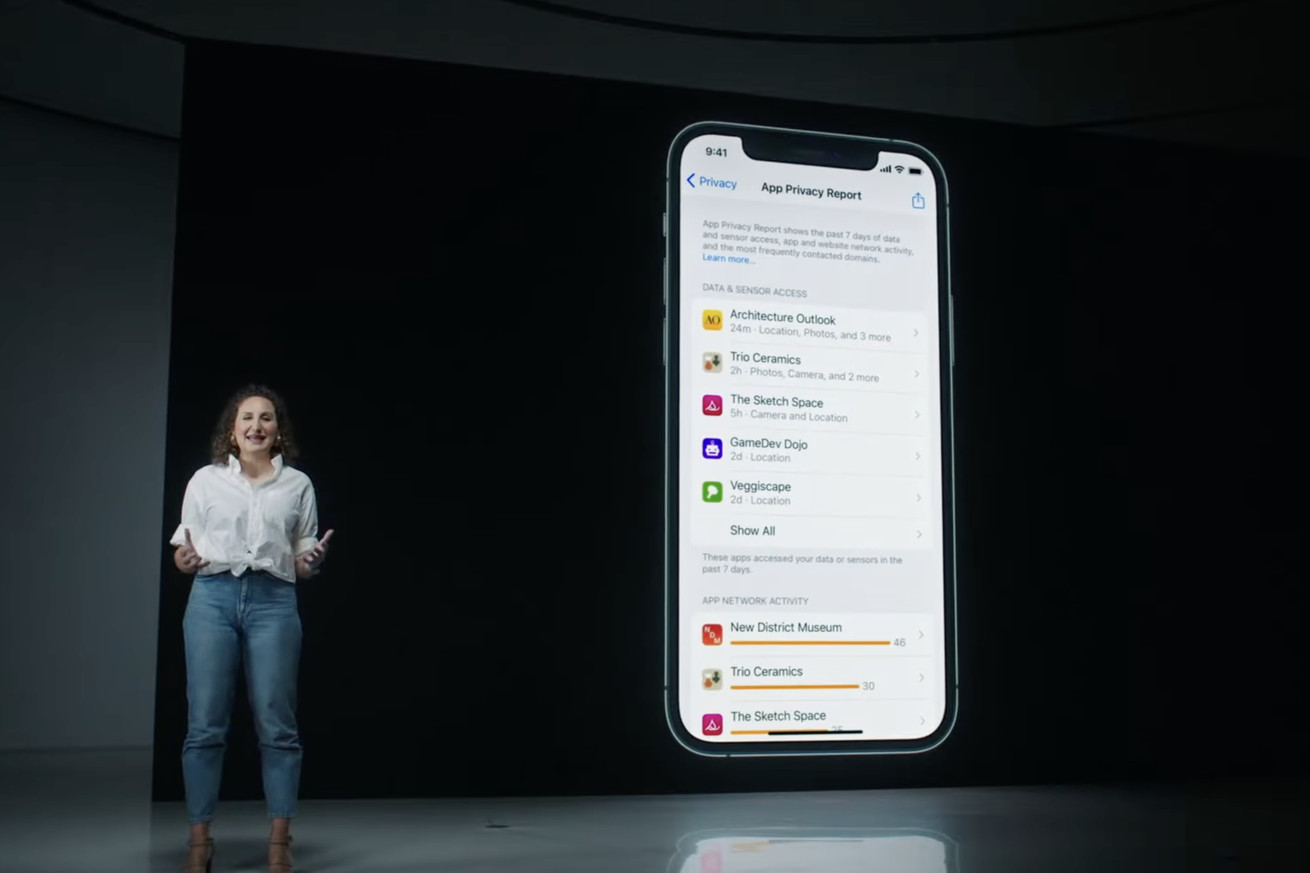


/cdn.vox-cdn.com/uploads/chorus_asset/file/22958095/GettyImages_1186012706.jpg) Drew Angerer/Getty Images
Drew Angerer/Getty Images


 Zoho recently released a collection of updates to its Zoho One platform, building atop an already strong reputation among SMBs as the “operating system for business.” Improvements include a roster of new apps, services, and major platform enhancements to correlate relevant data and create unified, real-time business insights.