“Users will still get at least 3 years of OS updates, after which we’re committing to ensure that Pixels will stay up-to-date and secure,” Google tells The Verge. “The frequency and categories of updates will depend on the capabilities and needs of the...
Google just wrapped up its Pixel 6 Fall Launch event, where it announced two new phones as well as a wealth of features that are supported by its new Tensor processor. Here are the biggest things Google announced during its live stream.
After months of leaks, we got the full details on Google’s Pixel 6 and Pixel 6 Pro phones — the Pixel 6 will sell for $599 and the Pixel 6 Pro for $899. Both will feature Google’s Tensor processor and a 50-megapixel camera (which bins images down to 12.5-megapixels during processing). The phones also feature an ultra-wide camera, and the Pro adds a telephoto camera and gives the selfie camera an upgrade with a wider...
Senate Democrats called on Facebook to end its digital wallet and cryptocurrency project in a letter to chief executive Mark Zuckerberg Tuesday, saying that the company “cannot be trusted to manage cryptocurrency.”
The letter comes hours after Facebook launched Novi, a new digital wallet, as part of a “small” pilot program in the US and Guatemala. Facebook first announced its plans to enter the cryptocurrency industry over two years ago, but the digital currency project, called Libra, was halted after heavy criticism from lawmakers and regulators. The Libra currency was later rebranded as “Diem,” which has yet to be released alongside the new wallet product.
The letter comes hours after Facebook launched Novi
The Company Also Unveiled New Webex Features to Improve the Customer Experience and Make Workers More Productive and Innovative in the Hybrid Work World
News Summary:
Cisco launches Webex Go – a new phone system that connects to any mobile device
Advancements in Webex Customer Experience journey data services to deliver a more personalized customer experience
New Communications Platform as a Service (CPaaS) features to accelerate innovation
SAN JOSE, CA – October 19, 2021 – Cisco is helping businesses reimagine calling experiences for hybrid work from conference rooms and call centers to home offices and on-the-go mobile calling. In advance of WebexOne , Cisco (NASDAQ: CSCO) today announced new Webex Calling features, and new Webex Customer Experience and Communications Platform as a Service (CPaaS) enhancements to help enterprises successfully adapt to the new hybrid work world.
Additionally, following the acquisition of imimobile, Cisco is introducing integration with Webex to build smarter interactions and frictionless experiences on any communications channel.
“The past year has further heightened the need for a maniacal focus on delivering an experience that delights users,” said Jeetu Patel, executive vice president and general manager, Cisco Security and Collaboration. “Our innovations released today enable enterprises to be closer to their customers than ever, helping them deliver the best possible customer experience across all channels in real time.”
New Innovations to Webex Calling:
Webex Go: Users no longer need to manage a business phone and a separate personal device. With the launch of Webex Go, enterprise-grade Webex Calling features can be added as a dedicated business line to a user’s personal mobile phone. For more information go here.
Location-based emergency calls with Nomadic E911: When placing emergency calls from the Webex App, emergency responders will now have accurate location information. If the Webex App determines you have moved to a new location, users will be prompted to update their address.
Cloud Calling on personal room devices: Users can now call colleagues by name or extension directly within a Webex Desk Pro device.
Singlewire InformaCast integration: Users can send emergency announcements live or as recorded audio pages to Cisco phones and speakers, and text alerts to digital signage, desktop computers and mobile devices. For more information go here.
Dedicated Instance: Customers that are not prepared to move their entire calling business to Cloud Calling can now mix Multi-Tenant and Dedicated Instance for hybrid deployments.
Added European Coverage for Cisco Calling Plans: Cisco is announcing Cisco Calling Plans for 10 countries in the European Union: Belgium, Denmark, Finland, France, Germany, Greece, Ireland, Lithuania, Luxembourg and Sweden.
Reimaging shared line experience: New calling widget for the Webex App makes it easier for users to multi-task and answer calls faster.
Other new Webex Customer Experience Capabilities:
Customer journey data service: Webex customers will soon be able to connect the entire customer journey across multiple channels and touchpoints in a single platform.
A business can connect a shopping cart to a chat, to a call, to an email even though those different interactions happened through different departments or vendors.
It can also better anticipate customer behavior and preempt or respond in real time with an AI-powered orchestration engine to keep customers happy. For instance, if a business had a service outage, thus flooding its call center, Webex Customer Experience can recognize the need for proactive customer response.
Communications Platform as a Service (CPaaS): Webex’s video technology will soon be added to imiconnect – Cisco’s CPaaS enterprise solution, enabling rich customer and employee interaction experiences such as telehealth, education, social and augmented reality. Video API and SDKs are expected to be available in early 2022 here. Read more about CPaaS here.
Enterprise Developer Sandbox: At WebexOne next week, developers will have access to a new CPaaS sandbox allowing them to easily build, test, debug, and prototype in one platform. These tools will help businesses and developers save time, reduce complexity and deliver rapid innovation. Enterprise Developers can register here and start using the sandbox from October 27, 2021.
About Cisco
Cisco (NASDAQ: CSCO) is the worldwide leader in technology that powers the Internet. Cisco inspires new possibilities by reimagining your applications, securing your data, transforming your infrastructure, and empowering your teams for a global and inclusive future. Discover more on The Network.
About Webex by Cisco
Webex is a leading provider of cloud-based collaboration solutions which includes video meetings, calling, messaging, events, customer experience solutions like contact center and purpose-built collaboration devices. Webex’s focus on delivering inclusive collaboration experiences fuels our innovation, which leverages AI and Machine Learning, to remove the barriers of geography, language, personality and familiarity with technology. Its solutions are underpinned with security and privacy by design. Webex works with the world’s leading business and productivity apps – delivered through a single application and interface. Learn more at webex.com.
Many of the products and features described herein remain in varying stages of development and will be offered on a when-and-if-available basis. The delivery timeline of these products and features is subject to change at the sole discretion of Cisco, and Cisco will have no liability for delay in the delivery or failure to deliver any of the products or features set forth in this document.
Frontline workers —the associates at the forefront of your customer interactions, the clinicians delivering patient care, and those running your operations on-the-ground—need the right digital tools and purpose-built hardware for the specific ways they work.
We continue to innovate in ways that seek to empower frontline workers with the right tools to give them a sense of purpose, the flexibility to adjust to the new day-to-day realities of a hybrid world, and the knowledge to make on-the-ground decisions to improve business outcomes.
Today, we are excited to announce several new offerings that emphasize our focus on putting the frontline worker on equal footing with the information worker and ensuring Microsoft 365 and Teams supports organizations with the solutions they need as the demands and importance of the frontline worker continue to grow.
Shared Devices
An important component of a strong technology foundation is enabling compliant and efficient shared device scenarios. We support iOS and Android on shared devices to provide a compliant and seamless enablement for any mobile operating system on Teams. With new developments in Microsoft Endpoint Manager, it’s easy to locate a lost device so workers can spend more time on customers and tasks. Endpoint Manager helps organizations protect mission critical devices and easily provision shared mode for single sign-on and device wide sign-out across platforms.
We are also pleased to announce that Endpoint Manager can now manage and protect devices running Android Open Source Project (AOSP) which are frequently used by workers on the frontline. Organizations can now use Endpoint Manager to configure, provision and manage tailor-made devices like RealWear, the first AOSP device available, for either shared or single use and help keep company information more secure. To learn more about our Endpoint Manager news, please check out this blog.
Onboarding wizard
To assist administrators in streamlining frontline worker deployments we are excited to announce a new Onboarding Wizard, found in the Microsoft 365 Admin Center. The Onboarding Wizard guides you in creating the right team structure and applying it to the correct licenses and policy packages to get your frontline workforce up and running quickly. By aligning the right channels, apps, and settings a superior workforce interaction experience is created across the organization. Want to learn more? Be sure to join us next month and hear from our product leaders at Ignite!
Viva connections general availability coming soon
We are excited to share the general availability of Viva Connections mobile, coming next month. Viva Connections mobile delivers a single, company-branded destination for shifts, news, tasks, resources and more – all configurable to your business needs and deployed directly into Microsoft Teams. This brandable employee app is equipped with adaptive cards purpose-built for your frontline workers to access their core applications like Shifts, Approvals and Tasks in one view to easily make decisions without leaving the flow of work.
Enhancements to improve the virtual visit
Scheduled queuing for virtual visits (Private preview) View all your virtual visits in one simplified location—with real-time updates on patient wait times, missed appointments, staffing delays, and more. You can also send SMS and email reminders directly from the queue view to keep patients up to date.
Schedule and launch virtual visits from the Cerner electronic health record system
Now available in private preview, frontline healthcare workers and patients can schedule and launch virtual visits through the Microsoft Teams Electronic Health Record (EHR) connector for Cerner. Patients can launch virtual visits from the patient portal or SMS, with no app download required. Healthcare providers can launch visits from Cerner PowerChart™, and system administrations can easily manage and configure the EHR integration and have access to downloadable consumption reports. In addition to Cerner, the Microsoft Teams EHR connector is also generally available for Epic customers.
Waiting room for virtual visits (Private preview) Ensure every patient feels welcome with virtual waiting rooms designed with your logo, personalized messaging, and real-time visit notifications.
SMS notifications for virtual visits Keep patients and customers connected with SMS notifications automatically linked to virtual visits made through Bookings (now generally available). We’re also excited to announce that SMS notifications for electronic health record systems are now available in preview for the Microsoft Teams EHR connector.
Microsoft Forms integration for virtual visits (Private preview) Streamline virtual visits by securing patient or customer info prior to appointments with Microsoft Forms integrated into Bookings.
Mobile browser join for virtual visits (General availability) When an attendee joins a virtual visit from a mobile device, they aren’t prompted to download Teams. Teams will now open in a mobile browser without the need to install an app.
Want to learn more about our new features and how healthcare organizations can use them to adapt to a dynamic market? Join us at our upcoming, free virtual health and collaboration forum.
Approvals
Quickly getting a valid signature is business as usual across many organizations and we are currently integrated with Adobe Sign and are excited to announce DocuSign as a new Approvals partner for the creation of electronic signature approval requests natively within the Teams Approvals. Approvers can add their signature without leaving Teams, enabling an efficient and faster approval process. Once the approval process is completed, the information is stored in Teams for easy access and viewing.
We are also expanding Approvals to enable a faster and more efficient approvals process. Through the Microsoft Word Add-ins option, you can now add the Approvals app right within your Word document. You can create a request for the entire document or just for a particular section. If the request was created for the entire document, you can choose to have the document locked after it has been approved to avoid any changes, and after the request is completed, you can view all requests that have taken place around that document through the History tab in Microsoft Word.
When we empower frontline workers to not only keep up with the changes of a hybrid world but to stay ahead of them, the whole business performs better. Check out our entire frontline solution available today.
Cisco has launched a new phone system that extends Webex Calling business lines natively to a user’s mobile phone.
Webex Go lets users make and receive business calls using a smartphone’s native dialer, rather than a softphone application.
The functionality was announced with other news ahead of Cisco’s WebexOne event next week.
Jeetu Patel, General manager of Cisco Security and Collaboration, said: “The past year has further heightened the need for a maniacal focus on delivering an experience that delights users.
“Our innovations released today enable enterprises to be closer to their customers than ever, helping them deliver the best possible customer experience across all channels in real-time”
Cisco said that, with Webex Go, users can connect over cellular voice network while keeping their personal number private. International calls use the Webex Calling number that is natively connected to the user’s mobile device.
IT admins will also benefit from easy provisioning, it added, and the ability to stay within compliance boundaries for things such as mandated call recording and analytics.
The vendor added that Webex Go is expected to launch in the US in the first half of 2022, with other geographies planned in the future.
Cisco also announced that Calling Plans have been extended to 10 new EU countries: Belgium, Denmark, Finland, France, Germany, Greece, Ireland, Lithuania, Luxembourg and Sweden.
Meanwhile, the firm revealed that Webex’s video technology will soon be added to its imiconnect CPaaS platform. Video APIs and SDKs are expected to be available early next year.
The day that many have been dreading has finally arrived. Apple has added a notch to its new MacBook Pros. And somehow, Apple — notch pros at this point — managed to utterly botch the notch. Because the new MacBook Pros completely missed out on the most important part of the notch: adding Face ID.
I’ve been on the record of being extremely pro-MacBook notch: back in 2018, I argued that Apple should do exactly what it’s done here: add a notch to its MacBook laptops, taking up the exact width of the persistent menu bar that already permanently lives on the top of its macOS software (barring the occasional dip into a full-screen app).
And to be fair, Apple has actualized most of the benefits of a notch: smaller bezels, particularly at the...
Ongoing disruptions are unsettling business plans and triggering enterprise process review. This, in turn, increases symptoms of fatigue among employees, and the IT organization is not immune.
Toyota, the largest automaker in the world, announced that it will spend $3.4 billion on “automative batteries” in the US through 2030 — a little more than two months after it was revealed that the company was quietly lobbying elected officials in Washington, DC to slow the transition to electric vehicles.
As part of the deal, Toyota will build a new $1.29 billion factory in the US to make batteries for electric and hybrid vehicles, which the company says will generate 1,750 new jobs. The automaker is the latest to announce plans to shore up battery manufacturing in the US, which has been a key goal of the Biden administration’s effort to speed up the switch to EVs.
Of course, Toyota wasn’t always so bullish about electric vehicles
Astropad’s Luna Display is a handy way to turn an iPad or another Mac into a wireless external monitor for Apple’s computers. Now the company has updated its wireless dongles to include support for Windows PCs, a solid step forward for the company after Apple’s Sidecar made its functionality a built-in part of iPadOS and MacOS.
Windows support is included in Luna Display 5.0 and requires “Windows 10 64-bit, Build 1809 or later” and at least iPadOS 12.1, according to Astropad. That means modern Windows devices and iPads can work together in a variety of configurations, including using the Apple Pencil along with an iPad as a very expensive drawing tablet for your Windows machine.
An artificially intelligent robot inspects power lines in Chunzhou, China. | Song Weixing/Visual China Group via Getty Images
A top Pentagon software official recently quit his job, claiming that the US is dragging its heels.
The Pentagon’s first-ever chief software officer abruptly quit earlier this month, and now we know exactly why: Nicolas Chaillan, former CSO of the United States Air Force and Space Force, told the Financial Times that the United States has “no competing fighting chance against China in 15 to 20 years” when it comes to cyberwarfare and artificial intelligence.
Chaillan, a 37-year-old tech entrepreneur, added that cyber defenses at many government agencies are at “kindergarten level,” and that companies like Google were doing the US a disservice by not working with the military more on AI, since Chinese companies were making a “massive investment” in AI without getting all hung up on the ethics of it all. And while quitting your job because America has already lost the AI race is a bit dramatic, Chaillan isn’t the only one who’s concerned about China’s dominance in this arena.
A growing number of leaders in Washington and Silicon Valley are worried about the US falling behind in the race to AI supremacy. Congressional hearings on the future of AI have been going on since 2016, and Chaillan said he plans to testify in some upcoming ones. Earlier this year, the National Security Commission on AI, a project chaired by former Google CEO Eric Schmidt, also boldly declared that China is poised to surpass the US as the world’s “AI superpower.” In a statement signed by Elon Musk, Jack Dorsey, and Stephen Hawking, among thousands of scientists, the commission said, “AI technology has reached a point where the deployment of such systems is — practically if not legally — feasible within years, not decades, and the stakes are high: autonomous weapons have been described as the third revolution in warfare, after gunpowder and nuclear arms.”
We can all agree that nobody wants China to invent a real-world version of Skynet, the all-powerful AI that takes over the planet in the Terminator movies. But we don’t want the US to do that either. And what does the finish line in this AI race actually look like? Does the US really want to win at all costs?
For years, pundits have been comparing the AI race to the space race — and warning that the US is losing it. It’s a handy analogy, since it helps Americans put current conflicts with countries like China and Russia into the familiar context of the Cold War. Many have argued that we’ve found ourselves in a second Cold War and that the country that wins the AI race will take the throne as the dominant superpower. But the AI revolution isn’t just about fighting wars or geopolitical dominance. What we’re racing to build will transform almost every aspect of our lives, from how we run businesses to how we process information to how we get around.
So it’s imperative that the US is thoughtful about quickly charging into a future filled with autonomous cars, boundless data collection, and full-time surveillance. These are the applications that next-generation AI will enable, and if a small group of powerful tech companies and/or the US military pushes for innovation without putting the proper guard rails in place, this world-changing technology could lead to some grim unintended consequences. President Biden called for the US and Europe to work together on developing new technology responsibly in a February speech at the Munich Security Conference.
“We must shape the rules that will govern the advance of technology and the norms of behavior in cyberspace, artificial intelligence, biotechnology so that they are used to lift people up, not used to pin them down,” Biden said. “We must stand up for the democratic values that make it possible for us to accomplish any of this, pushing back against those who would monopolize and normalize repression.
You could also look to present-day China to see what the near future of a more AI-centric society might look like. As Kai-Fu Lee argues in his book AI Superpowers: China, Silicon Valley, and the New World Order, China has been more aggressive at implementing AI breakthroughs, especially in surveillance and data collection applications, thanks in part to government support and a lack of oversight that’s let some tech companies there leapfrog the competition and dominate entire industries. WeChat and its parent company, Tencent, are perfect examples of this. On WeChat, privacy does not seem to be a priority, but the vast quantities of data the app can collect are certainly helpful for training AI.
“Imagine, if you will, that Facebook acquired Visa and Mastercard and integrated everything into the functions, as well as invested money into Amazon and Uber and OpenTable and so on and so forth, and made an ecosystem that once you log into Facebook, all these things are one click away and then you could pay for them with another click,” Lee told New York magazine. “That is the kind of convenience that WeChat brought about, and its true worth is the gigantic data set of all the user data that goes through it.”
The two things aren’t mutually exclusive, by the way. Chaillan, the former military software chief, has certainly earned his right to an opinion about how quickly the US is developing its cyber defenses and artificially intelligent computers. And now that he’s taking his knowledge of how the Pentagon works to the private sector, he’ll probably make good money addressing his concerns. For the rest of us, the rise of AI shouldn’t feel like a race against China. It’s more like a high-stakes poker game.
This story first published in the Recode newsletter. Sign up here so you don’t miss the next one!
Field Trip Health currently offers ketamine-based psychotherapy at its US-based clinics. | Cole Burston/AFP via Getty Images
A startup called Field Trip is opening clinics where they administer ketamine treatments. Other psychedelics, like MDMA and psilocybin, may follow.
For a long time, Chase Chewning had wanted to try a new type of psychotherapy that uses ketamine, a dissociative anesthetic that’s shown promise as a mental health treatment. Chewning, a veteran who has had several recreational experiences with MDMA and psilocybin, hoped the drug could help him with his PTSD, so he made an appointment at a Los Angeles ketamine therapy clinic operated by Field Trip Health. Having now completed two ketamine sessions, Chewning says his experience at Field Trip has indeed helped him make progress.
“In two sessions, I am profoundly closer to my work on my PTSD,” Chewning told Recode. “And [the treatment] left me with a lot of responsibility on some new work, but very, very exciting things, because I know I’m moving in the right direction, towards better mental health.”
Field Trip, a Canadian startup, is betting others could have similar experiences. In fact, the company is so confident in the promise of these drugs that it’s building 75 centers for psychedelic therapy over the next three years.
Although ketamine is legal if prescribed by a doctor, the Drug Enforcement Agency (DEA) lists psychedelics like psilocybin and MDMA in schedule 1 of the Controlled Substance Act, which says they have no medical value and a high potential for abuse. But there’s also growing evidence that psychedelics could lead to game-changing medications and, when combined with conventional therapy, may help people who aren’t seeing results through currently available treatments. Several US cities have already decriminalized psilocybin, the active ingredient in magic mushrooms, and the Food and Drug Administration (FDA) is overseeing clinical trials into using psychedelics to treat PTSD and depression.
This potentially revolutionary approach to mental health also represents a tremendous commercial opportunity for health care and pharmaceutical companies. But despite promising, privately funded studies into psychedelics, current government regulations prevent the wider availability of psychedelic therapy.
Field Trip currently offers ketamine treatments at six clinics in major US cities, including New York and Atlanta. The actual ketamine therapy session — Field Trip calls this a “psychedelic exploration session” — involves a patient receiving one or two shots of ketamine into their arm muscles, initiating a 45- to 90-minute hallucinogenic journey that’s supposed to help people disconnect from their normal selves. As the drug sets in, patients cover their eyes and listen to music as they’re coached by a therapist. The next day, patients return for a follow-up appointment called an “integration session” to reflect on the treatment.
“Whatever comes up in your session — new insights, perspectives — that can be fleeting if you don’t work to integrate that into your life,” Emily Hackenburg, Field Trip’s clinical director, told Recode. “Regardless of what psychedelic you’re using, preparation, journey, integration, that’s going to be the same.”
Field Trip says most patients undergo the ketamine program four to six times. The initial treatment, which includes a medical screening, an exploration session, and an integration session, costs $750. Because ketamine isn’t specifically approved for mental health applications by the FDA, the medication itself isn’t typically covered by insurance, though customers can try to get other aspects of the therapy reimbursed.
Though its treatments are expensive, Field Trip is growing quickly. In July, the company went public through a direct listing on Nasdaq and plans to offer ketamine treatments at 20 clinics in the US by early next year. Along the way, Field Trip is also setting itself up to be a huge player in an industry that largely doesn’t exist yet. While Field Trip’s US locations are currently limited to ketamine, the company hopes to offer more psychedelics, including MDMA, when the government approves their use. Field Trip is even developing its own psychedelic that’s meant to have similar effects as psilocybin, but with a much shorter trip.
The future of psychedelic therapy is also uncertain. While it seems likely that at least some psychedelic drugs will be approved for certain medical conditions in the years to come, it’s also possible that recreational use could be widely decriminalized or legalized. The status quo could also stay in place.
The US government has only recently begun to support and review research into psychedelics’ potential mental health benefits. But that slow approach means that just a few prominent companies and nonprofits are shaping much of the narrative surrounding the emerging psychedelics industry.
“This is really the most promising development in mental health care to come along, literally, in many decades. And that’s one reason why you don’t want a few companies controlling it,” says Mason Marks, a project lead at Harvard Law’s Petrie-Flom Center who focuses on psychedelics regulation.
Of course, not everyone is pleased that these startups could make psychedelics more mainstream. Some think these companies are capitalizing on a medical pathway for psychedelics that could ultimately exclude recreational users and make psychedelics more expensive and inaccessible. Others believe that psychedelics are being marketed as a cure-all that current research doesn’t support.
“Our experience with so-called pain clinics peddling untold amounts of opioids should be a cautionary tale,” Kevin Sabet, a former White House drug policy adviser who opposed legalizing cannabis, told Recode. “The psychedelics fad has reached a fever pitch far above and beyond what science tells us. We cannot forget the harmful potential and opportunity for manipulation by massive corporate interests.”
Nevertheless, it seems clear that the movement to make psychedelic therapy an accepted mental health treatment is gaining momentum.
A psychedelics renaissance could be coming
The origins of the government’s apprehensive approach to psychedelic-based mental health treatment stretch back decades. In the 1950s and ’60s, the federal government invested heavily into researching drugs like LSD and psilocybin. But after the Controlled Substances Act of 1972, federal funding into the possible benefits of psychedelics quickly evaporated.
That stance may be changing. In September, researchers at Johns Hopkins University received funding from the National Institute on Drug Abuse to investigate whether psilocybin could help people quit cigarettes. it appears to be the first federally funded direct study in decades of the mental health benefits ofa traditional psychedelic drug. At the same time, the DEA, which keeps tight caps on how much psychedelics are available to US researchers, recently proposed increasing the nationwide availability of psilocybin from 30 grams to 1,500 grams.
Cole Burston/AFP via Getty Images
Ketamine can be taken in the form of a lozenge, an IV, a nasal spray, or an intramuscular shot.
There is also a growing number of efforts to make psychedelics more widely available not only to researchers but also to patients. In the last few years, Denver, Oakland, and Washington, DC, have decriminalized psilocybin, and in 2023, supervised psilocybin-based therapy will become legal in Oregon. Meanwhile, a psilocybin regimen for depression is in phase 2 trials, and an MDMA-assisted treatment for people with severe PTSD is currently in phase 3 clinical trials. The FDA has also already approved a Johnson & Johnson drug called Spravato, a nasal spray that’s derived from ketamine, to treat depression.
In anticipation of looser regulations, there’s a burgeoning psychedelic health care industry made up of companies that want to offer psychedelic treatments or develop new drugs based on psychedelic compounds. In addition to Field Trip, there are 31 publicly traded firms focused on psychedelics, and at least 18 more that are still private, according to the psychedelics industry tracker Psilocybin Alpha. Inspired by promising but limited research showing that psychedelics can help treat not only treatment-resistant depression but also addiction and end-of-life anxiety, venture capitalists, including Peter Thiel, have poured hundreds of millions of dollars into these companies.
“There’s a lot of enthusiasm. And that makes sense because there are many people who have suffered for many years for whom this has brought relief,” Sharmin Ghaznavi, an associate director of Massachusetts General Hospital’s Center for the Neuroscience of Psychedelics, told Recode. “But we have a lot that we need to learn, and we owe that to our patients.”
The government has been slow to support research into the potential benefits of psychedelics. That means philanthropies and private companies have funded almost all of the recent studies into the medical applications of drugs like MDMA and psilocybin. Many of those studies come with important caveats, including small sample sizes and unrepresentative patient pools. One 2018 analysis of 18 psychedelics studies found that 82 percent of the participants were white.
But even as research into psychedelics continues, companies are already developing everything from apps for guided trips and mushroom-facilitated retreats to psychedelic-assisted virtual reality experiences. After all, as with any big pharmaceutical breakthrough, the future of psychedelics could be extremely profitable.
How Field Trip plans to get ahead
Field Trip is well on its way to being a major player in the psychedelic health care industry. A centerpiece of Field Trip’s plan is the design of its clinics. The idea, the company says, is that psychedelics will need a brand new environment for medical care. Doctors’ offices are too sterile, and therapists’ offices don’t have the medical staff, time, or equipment to monitor patients. After all, trips on more intense psychedelic drugs require several hours and lots of supervision.
That’s why, at Field Trip’s New York location, there are serene rooms with reclining chairs and headphones for patients to use during their exploration sessions. Because ketamine can increase blood pressure, there are blood pressure monitors on-site, too. There are also rooms for post-trip reflection, where there are soft fur rugs, easels for drawing, and a gong. The space also includes a wall covered in live moss, a bubble-blowing machine, and several copies of Michael Pollan’s influential book about psychedelics, How to Change Your Mind.
“There’s lots of shoe companies out there, but Nike has a very prominent voice in that conversation,” Field Trip CEO Ronan Levy told Recode. “I want Field Trip to do that for psychedelics.”
Cole Burston/AFP via Getty Images
Field Trip hopes to open 75 clinics by 2024.
While the company had about $100 million on hand at the end of June, Field Trip is currently making less than $1 million on patient services, according to its most recent quarterly report. One of the biggest challenges for Field Trip is that most people don’t have several thousand dollars lying around to spend on ketamine therapy. But if the FDA were to approve a psychedelic drug for a mental health condition, insurance companies may start to cover moreField Trip treatments, bringing them a huge new customer base.
There are certain conditions, like a history of psychosis or a ketamine allergy, that rule out Field Trip’s offering for some patients. Levy says the safety of ketamine has been well established and that Field Trip hasn’t had any medical issues. But others believe there is a litany of open questions.
Jeffrey Lieberman, a Columbia psychiatry professor, says the enthusiasm about psychedelics is outpacing the science, and he worries that mishaps could lead to backlash and a return to restrictions. If MDMA is approved for PTSD, for example, companies could end up prescribing the drug for other conditions that it hasn’t been approved for. That practice, which is sometimes called off-label prescribing, is already in place for ketamine. Lieberman added that we don’t fully understand the long-term safety of ketamine. There is also evidence ketamine clinics throughout the US are overhyping the drug’s abilities and not properly screening patients, acccording to a 2018 investigation by STAT.
There are other objections. A significant number of people oppose even the monitored use of psychedelics, including the 44 percent of Oregon residents who voted against the state’s recent measure to legalize a supervised psilocybin therapy model much like Field Trip’s. There are also psychedelic advocates who believe that allowing companies like Field Trip to do business will end up medicalizing and driving up the cost of psychedelics, which they think should be freely available.
The companies and people hoping to make psychedelic-based mental health care mainstream say this trend is about far more than just the drugs themselves.
“Taking a gram of mushrooms recreationally with your friends sitting around and giggling at YouTube music videos … it’s harmless,” Sanjay Singhal, a tech entrepreneur who directs the Nikean Foundation, a nonprofit that funds psychedelics research, told Recode. “But it’s completely different from taking five grams, knocking you out in the presence of a therapist for five hours while your brain processes whatever trauma, anxiety, emotional issues you might have.”
We’re bound to hear more about psychedelic therapy in the months to come. But even if psychedelics’ legal status remains the same, it’s clear to some patients that there’s a place for psychedelic therapy — even if it’s just the existing ketamine treatments — in our health care system. To Chewning, the veteran, these startups are addressing the demand for better mental health care and providing a new option for people who haven’t had success with traditional medications and therapy.
“I just look at what they’ve done for me personally, I look at what they have done for people I know,” he said. “We’re being put on a path toward a higher quality of life in the near future.”
Like most laptop manufacturers, Acer has been courting remote workers and students with many of its new releases. I’ve spent some time with an early sample of the Chromebook 515, a new line targeting remote business users.
Perhaps most importantly for many work-from-home customers, the 515 looks to be a solid video-conferencing tool. The speakers, with the help of a built-in smart amplifier, deliver audio that’s surprisingly loud and easily fills a room — it’s louder than the audio of many much more expensive Windows laptops I’ve reviewed recently. The webcam has a physical shutter that’s easy to slide back and forth and did a good job keeping me visible in dim light (though it delivered a somewhat grainy picture). There are two...
‘Software … allows us to move faster, innovate more quickly and allows the customer to actually get to the outcome faster. And if we get it right, it’s better for both our business models because [it provides] more predictability. But we have to get it right because it’s complicated to figure all that out,’ Cisco CEO Chuck Robbins tells an audience of solution providers.
Service providers now have access to Resources, Innovation, System integration, and Experiences (Rise) from RingCentral that offers unique, co-branded unified cloud communications for their customers
Highlights of RingCentral Rise:
Enables service providers to on-board new customers rapidly and accelerates cloud transformation by providing a comprehensive go-to-market solution
Extends RingCentral’s cloud platform to enable service providers to co-innovate
Belmont, CA – October 12, 2021 –RingCentral, Inc. (NYSE:RNG), a leading provider of global enterprise cloud communications, video meetings, collaboration and contact center solutions, today announced RingCentral Rise, a new platform designed exclusively for service providers around the world. By leveraging Resources, Innovation, System integration, and Experiences (Rise) from RingCentral, service providers can now offer their own unique, co-branded unified cloud communications solutions including team messaging, video meetings, cloud phone system, and contact center solutions to businesses in a fast, flexible, and scalable manner.
Organizations across the globe are increasingly anxious to shift from their legacy communications solutions to the cloud. However, the process of this cloud transformation can be slow, costly and time consuming and a frustrating experience for customers. With RingCentral Rise, service providers now have the means to create differentiated cloud communications offers that help customers to rapidly move to the cloud with an integrated end-to-end managed service with the latest joint innovations for UCaaS.
A number of major service providers around the world are already deploying RingCentral Rise including AT&T Business (US), Ecotel (Germany), MCM (Mexico), TELUS (Canada), and Vodafone (UK).
“RingCentral is a leader in developing effective strategic partnerships in the global UCaaS market,” said Elka Popova, Connected Work, Vice President, Frost & Sullivan. “The Rise program from RingCentral marks a new phase in the UCaaS industry’s evolution as it highlights an important shift in operator and vendor strategies. The program meets the needs of businesses and partners that demand greater simplicity in terms of core feature set, packaging and pricing, while offering greater flexibility in terms of integrations with customer-specific workflows.”
RingCentral Rise is unique from other unified communications solutions for service providers. Unlike reseller programs and privately hosted unified communications products, Rise is a platform built on the RingCentral cloud that deeply integrates with service provider technology, provides co-branded applications that are constantly updated with the latest innovation, and unlocks opportunities for co-creation with an open platform. In addition to the technology platform, RingCentral is offering a full go-to-market program built for service providers, including a service provider portal, a channel harmony program, and a dedicated service provider team.
“RingCentral has a vision of bringing the very best cloud communications capabilities to businesses everywhere. Central to that vision is partnering with the world’s leading services providers to provide their customers with the industry’s leading team messaging, video meetings, and enterprise-ready phone system,” said Homanyoun Razavi, executive vice president and head of Global Service Providers at RingCentral. “With Rise, we can accelerate the speed to market and the speed of innovation, with an industry-first open platform for service providers backed by a dedicated business unit. We’re excited to jointly innovate across 5G, Mobile Edge Computing (MEC), Internet of Things (IoT), and Artificial Intelligence (AI) to bring differentiated products to market that humanize cloud communications with blazing speed and new ways of working.”
“AT&T and RingCentral are long-standing strategic partners since 2012 dedicated to bringing the best mobility and transformation solutions to our customers. RingCentral Rise is enabling us to truly differentiate in the market with recent launches of AT&T Office@Hand Wireless and AT&T Phone for Business Advanced.”
Markus Hendrich, Co-CEO, Ecotel
“Ecotel differentiates by innovativeness and the quality of experience for business customers. RingCentral Rise enables us to combine our core strengths with the industry-leading UCaaS cloud platform for a truly unique offering in the market.”
Benito Ohara, CEO, MCM
“The RingCentral partnership came at exactly the right time when we were looking for something fresh, different and out-of-the-box for our customers. RingCentral is aligned with our philosophy to adapt communications around the customer, offering speed, flexibility, and open integrations.”
Marshall Berkin, VP Business Products & Services, TELUS
“TELUS and RingCentral have a long-standing strategic relationship to deliver the most advanced UCaaS capabilities in Canada. We’re excited for the launch of Rise as we continue to expand our relationship with new services such as Contact Center and Business Connect Voice.”
About RingCentral
RingCentral, Inc. (NYSE: RNG) is a leading provider of business cloud communications and contact center solutions based on its powerful Message Video Phone™ (MVP™) global platform. More flexible and cost effective than legacy on-premises PBX and video conferencing systems that it replaces, RingCentral® empowers modern mobile and distributed workforces to communicate, collaborate, and connect via any mode, any device, and any location. RingCentral offers three key products in its portfolio including RingCentral MVP™, a Unified Communications as a Service (UCaaS) platform including team messaging, video meetings, and cloud phone system; RingCentral Video®, the company’s video meetings solution with team messaging that enables Smart Video Meetings™; and RingCentral cloud Contact Center solutions. RingCentral’s open platform integrates with leading third-party business applications and enables customers to easily customize business workflows. RingCentral is headquartered in Belmont, California, and has offices around the world.
Two-factor authentication (2FA) is one of the best and easiest ways to keep your online accounts secure. It works by issuing an authentication code on your phone when somebody tries to access the account; if that person doesn’t have the code, they (or you) don’t get in. By using a 2FA app, such as Google Authenticator or Authy, you can prevent somebody from accessing your data by getting your password. (You can have a code texted to you, but that is considered far less secure due to the rise of so-called SIM hacking.)
Google Authenticator lets you establish 2FA by using your phone to scan a QR code generated by the app on a separate device or by entering a key code. It’s a relatively easy process.
In-Q-Tel, a nonprofit investment firm started by the Central Intelligence Agency (CIA), recently poured more than $1.6 million into encrypted messaging platform Wickr, according to public disclosure records reviewed by Motherboard.
The $1.6 million was transferred before Amazon purchased the company, but highlights Wickr's continuing position as an end-to-end encrypted messaging app for government agencies. Beyond the In-Q-Tel investment, Wickr also has a specific product approved by the Department of Defense, and as Motherboard reported last month, a new $900,000 contract with U.S. Customs and Border Protection (CBP).
The description of services for the funds is listed as "TECH DEVELOP," according to the filing. The Form 990 is for the fiscal year ending in March 2020.
Do you work at Wickr? We'd love to hear from you. Using a non-work phone or computer, you can contact Joseph Cox securely on Signal on +44 20 8133 5190, or email joseph.cox@vice.com.
The form does not explicitly specify whether the $1.6 million paid to Wickr was for an investment into the company or purchasing a Wickr product. But a section of the form reads that "The hallmark of IQT's strategic an agile model is the development effort—aka work program—where the company collaborates with the startup to tailor a company's technology to specific government requirements and invests funds towards that work program."
Wickr did not respond to multiple requests for comment sent to its media email address. Amazon Web Services, which acquired Wickr in June, did not respond to multiple requests for comment.
Carrie Sessine, senior vice president of marketing and communications at In-Q-Tel told Motherboard in an email when asked about the Wickr funding that "In-Q-Tel is a prolific strategic investor, making more than 50 investments each year. Our website features the majority of our portfolio investments. There will always be companies that are not announced publicly, which is common practice in the investment community. In-Q-Tel serves multiple agencies committed to national security including the CIA, FBI, NSA, NGA, NRO, DHS (specifically Customs and Border Protection), DIA, and Air Force." Wickr is not listed on In-Q-Tel's public portfolio page on its website.
Wickr is an encrypted communications platform, with end-to-end encrypted text messaging and calls, and a feature that automatically deletes messages after a certain period of time. The company offers a free app called WickrMe that anyone can download, which, in Motherboard's direct experience, is notably popular in organized crime communities, likely in part because it does not require a phone number to sign up with. General members of the public also use the app; the Android version has been downloaded over 5 million times, according to figures on the Google Play Store.
Wickr makes its money from selling versions of that platform to corporate and government clients, such as Wickr Pro and Wickr Enterprise, which can include additional features for logging communications if necessary for auditing or legal reasons. Wickr RAM is built specifically for military customers and is accredited by the Department of Defense.
In-Q-Tel was established in 1999 as an organization "to help the CIA and broader U.S. Intelligence Community (IC) identify, adapt, and deliver cutting-edge technologies that address national security needs," the Form 990 adds. In-Q-Tel runs almost all investment decisions by the CIA, according to a 2016 Wall Street Journal profile of the organization.
"Do you have a product or technology that can contribute to national security?" a section of In-Q-Tel's website reads. "We want to hear from you. In-Q-Tel scouts the global market for commercially focused technologies with the potential to contribute to national security."
Comms vNext is returning as an in-person event this year.
The Microsoft Teams-focused event will take place in Denver, Colorado from 25 to 26 October.
Attendees off Comms vNext can learn from and mingle with experts in the Microsoft 365 and Teams space. As well as the large expo, attendees can understand more about the Teams platform from Microsoft MVPs and Product Group staff, who will be holding sessions throughout the event.
This year’s event is themed around ‘Reconnect’, highlighting the importance of understanding how companies, employees, and customers can reconnect as they return to offices after the prolonged period of remote – and sometimes isolated – working that many have experienced.
Key speakers at the event include Jamie SStark, Program Manager, Microsoft Teams at Microsoft, Joel Rowland, Visionary/ Executive Director at Heroes of Impact, as well as Microsoft MVPs.
Amazon CEO Andy Jassy sent an email to employees on Monday outlining a shift in work-from-home policies for its office workers. As of August, the plan had been for employees to return to the offices in January 2022, with the expectation being that workers spent three days a week in the office and two days a week remote. However, under the new policy announced Monday, Amazon lets individual teams decide how often their people need to come into the office.
Here’s Jassy’s explanation of the new policies and how they will work:
For our corporate roles, instead of specifying that people work a baseline of three days a week in the office, we’re going to leave this decision up to individual teams. This decision will be made team by team at the...
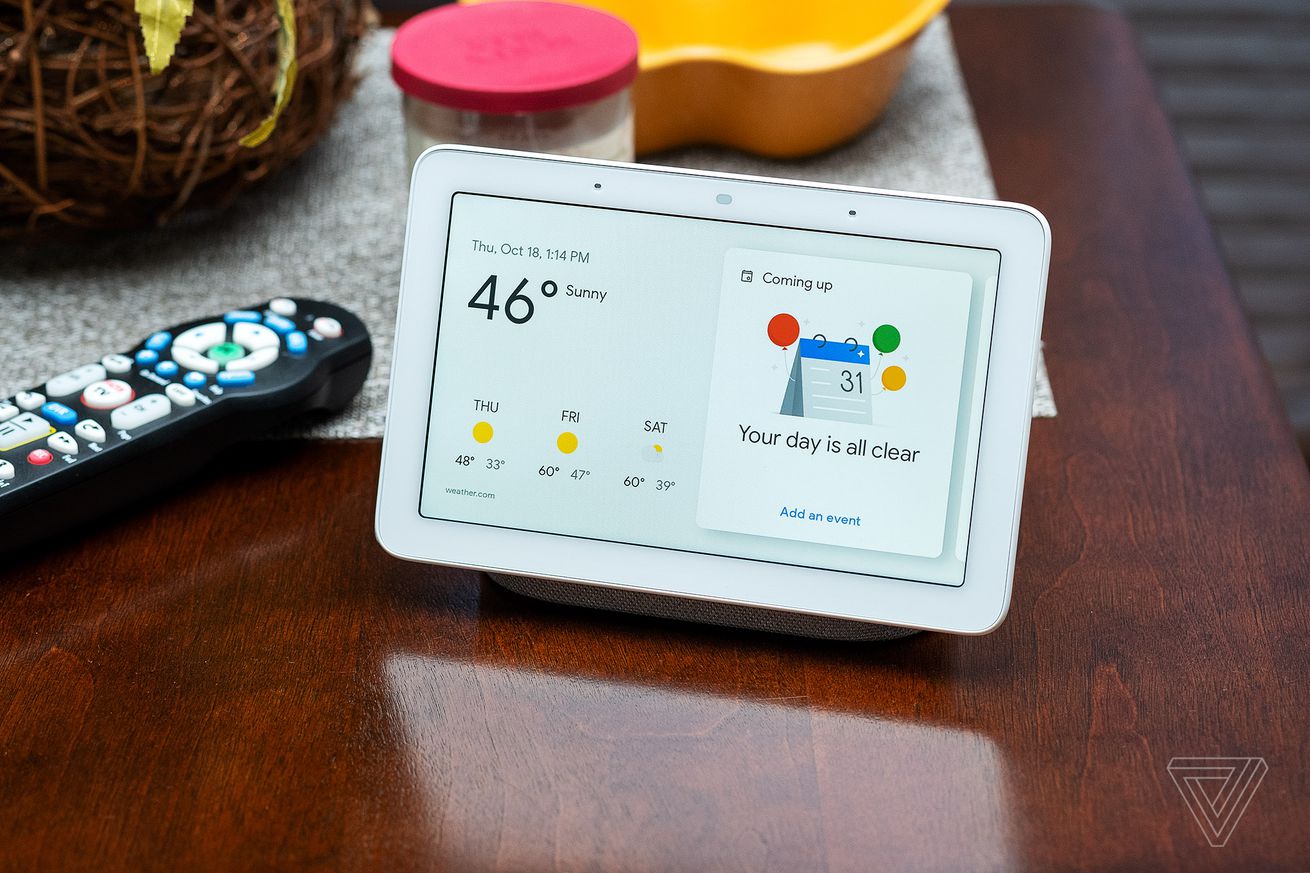
The first generation Nest Hub, which was updated to run Fuchsia earlier this year. | Photo by Dan Seifert / The Verge
Google says “it’s time” to now bring its mysterious Fuchsia operating system to “additional smart devices and other form factors” beyond smart displays, according to a number of job listings first spotted by 9to5Google. Fuchsia is Google’s newest operating system which was released earlier this year for the company’s first-generation Nest Hub.
There’s been a lot of speculation about Google’s plans for Fuchsia, which unlike Android and Chrome OS doesn’t use a Linux kernel (it uses a microkernel called Zircon instead), and whose purpose is still fairly vague despite having been public for over five years. When it arrived on the Nest Hub it was more or less functionally identical to the software that preceded it. The new job listings offer...
Facebook’s Live Audio rooms feature is expanding globally | Facebook
Facebook is expanding the Live Audio rooms feature it launched in the US in June to a global audience. In addition to public figures and creators, Facebook is making the feature — a Clubhouse competitor— available to groups as well.
When it first launched, Live Audio rooms could be created via Facebook’s iOS app; it’s now added the ability to create rooms in its Android app as well. People will now be able to listen to Live Audio Rooms on desktop, but still have to use a mobile app for creation. Within groups, admins can control who enters an audio room, with private and public options available.
The social media giant is also rolling out its Soundbites short-audio feature to more users in the US. Soundbites live in users’ News Feeds;...
As an aging millennial, there are a several images from my late-teens that are burned into my memory: Fedoras that weren't yet universally douchey. "Whale tails." Stick-on vampire fangs from Hot Topic, perfect for a Tumblr post. And, thanks to Chatroulette, strangers' dicks—bathed in the grainy sepia tones of a dorm bunk bed, streamed through a 0.3 megapixel netbook webcam bought at the school's bookstore.
The website, which matched random strangers together over video chat, peaked within months of its launch. It was fairly primitive then: A live video window, a chat box, a "next" button, and if you wanted, total anonymity. You could put on a Guy Fawkes mask, or just point the camera away from you, to deflect from whatever the site might show you next. A lot of the time, it was a dude with his junk out.
When I open the site today, the Chatroulette I used to know looks very different. The changes that have happened in the last 12 years are the work of Chatroulette's founder, Andrey Ternovskiy, and his unending quest to stop people from showing their dick on his website.
"Face detection is used to keep the site clean," a message below my video window says. Once the system finds my face, a message pops up about what would come next: a choice between two people. If my choice and I selected one another, the chat would begin. And then, another warning: "Chatroulette is moderated. Inappropriate behavior is forbidden. See rules." I'm asked to sign in, either with Google or Facebook.
When Ternovskiy launched the site in late 2009, he was 17. The site was an overnight viral sensation, with more than a million users per day at its peak. Much of the media attention it garnered (and it was covered everywhere, from NPR to Tosh.0) focused on the reputation it had gained as a place to flash meat to unsuspecting strangers, from the comfort of your bedroom. In 2010, a now-defunct analytics firm determined through some undisclosed method of nude numbers-crunching that the "overall pervert rate in Chatroulette is 13 percent," meaning about one in every eight sessions contained something explicit.
“I don't want to create some fancy solution that looks at the shape of the penis. It's stupid. It's unbelievable.”
Over the last decade, we've logged on to Chatroulette for the nostalgia of the thing, or as a stunt; usually spurred on by a roommate and some wine, plus boredom, or a search for the meaning of happiness. People keep returning to this 12 year old website whose gimmick we've already seen, so we must be on the hunt for something deeper. Over the last two years of pandemic lockdowns, that hunt has become more vulnerable, if not a little pathetic: a simple connection with another human, a lifeline out of the loneliness of quarantine. Even in the midst of death, destruction, and despair, however, it's still mostly dicks.
All this time, Ternovskiy has been working on what he called the "penis problem." It's not that he's against sex; people flashing on his site not only shaped its reputation forever, but caused it to hemorrhage visitors. If someone logged on once and saw something that offended them, he said, they'd log off and never come back. He would prefer to be hands-off from the site's ecosystem, and let it grow however it will. "My first goal is to make a site which people enjoy, whether that's acceptable in the culture or not," he told me. "Luckily, nobody wants dicks."
Getting men to keep it in their pants is no small task—and Ternovskiy, mostly as a one-person team (although he is currently looking for new advisors), has thrown a variety of fixes at the penis problem.
In 2010, for a brief time a few months after it launched, Chatroulette had themed rooms that users themselves created, with sections including "sex," "gayteen," "girls," and "cybersex-local." Sex, of course, was the most popular. This didn't quarantine the dicks into one section, however, but opened up new problems for bespoke groups.
"You still have people that nobody wants to see, you know. Even if we are united that we are all into, you know, funky times, there's still some people that take more than give," Ternovskiy said.
In 2011, he introduced a face and flesh recognition system, that detected "excessive amounts of exposed skin while simultaneously recognizing faces as appropriate skin," the results of which were analyzed by University of Colorado’s Department of Computer Science and McGill University's School of Computer Science. The study found that it was successful in filtering out nearly 60 percent of "offensive material and ads." Ternovskiy told CBC that he had a team of 100 moderators manually reviewing webcams to mark offensive ones, and ban those users.
The feature that lets users pick from two chat partners was inspired by Tinder's swiping mechanics; the guided randomness gives a little control back to the user, while theoretically letting them avoid seeing something they don't want to. In June 2020, he hired Hive, an AI firm that specializes in moderation, to help with nudity detection efforts.
Even as he's deploying these fixes, Ternovskiy knows they're bandaids. Running a website is like carrying a bucket with tiny, imperceptible holes, he told me. Users are the water; if there's a hole, people will find it. Systemic solutions—facial recognition, machine learning algorithms that detect "too much" skin—are a "plague on our society," he said, distracting developers into false confidence. People are more clever than that. They use magazine covers to bypass the facial recognition, and jerk off just off-screen to avoid showing skin.
"If you create Chatroulette for [adult content], then it's just going to be dicks looking at dicks. It just doesn't work."
"Ideally, I don't want to ban them. I don't want to create some fancy solution that looks at the shape of the penis. It's stupid. It's unbelievable," Ternovskiy said. "It's actually such a scam, this whole industry, because it sounds like a kind of intelligence—'oh, you can have a machine to recognize penis.' But then in reality, it's so stupid, because you have one million ways you could be offensive. You know?"
I do. Anyone who's used the internet for the last decade does.
Today, Ternovskiy employs a small force of Russian women as undercover users (all freelancers, and at the moment there are seven of them, but one person could do it) to act as canaries in Chatroulette's coal mine. For an hour per test session, they're calculating: How many males? How many females? How many groups? Black screens? Spam bots? How much explicitly sexual content? Implicit? They'll provoke other users—like, "show me what you've got," as Ternovskiy paraphrases it—and take notes. They're not there to ban or report anyone.
"I want to see the worst case of the site," he said, particularly from a woman's perspective. "If 20 percent of connections contain penis, that's ridiculous. That's when I have to go back to the drawing board."
I asked Ternovskiy why, if he's not morally against it, he doesn't just lean into the lewdness. While sites like MyFreeCams and LiveJasmin launched years prior, he would have been squarely in the middle of an independent adult creator boom when Chatroulette took off. Some of today's most popular live camming sites, including Chaturbate, Camsoda, and Stripchat, would launch in the six years following Chatroulette.
"I strongly knew that Chatroulette was more than dicks," he said. And a live streaming site full of poorly lit penises probably wouldn't have worked anyway. "If you create Chatroulette for [adult content], then it's just going to be dicks looking at dicks. It just doesn't work."
These days, he's working on an internal currency feature, where users will earn points based on how much time they spend talking to other people. One of the new features, that didn't exist when Chatroulette was at its early-aughts peak, is forcing users to log in to use the site. He plans to set up a reputation-scoring system. In order to meet a new person, you will have to pay points; in order to earn points, you'll have to talk to the people that you meet. There are shades of nuance in the system he's planning—if you're talking to someone with a low score, the interaction costs you nothing, for example—and it's still a work in progress. But he hopes this could incentivize people to use the site for conversations and creativity.
"It's not about penises, it's about giving and taking. It's about how much you contribute and how much you take," he said.
Ultimately, Ternovskiy told me he is grateful for the penis problem. It's forced him to innovate where he otherwise might not have. "For me, it's quite demotivating to just solve penis problems, because if that's the only thing I do in 11 years, that's going to be disappointing…I also want to make this fun," he said. He compared it to human space flight: The goal may have been to get humans to the moon, but from that mission, we have firefighter suits and pacemakers.
"I really hate to see things die," Ternovskiy said. "And I really want to take Chatroulette in the future. You know, it doesn't have to be the same Chatroulette, but I want to continue, for the story to live on."
So for a long time the FCC has made "fighting robocalls" one of their top priorities. Though with Americans still receiving 132 million Robocalls every single day, you may have noticed that these efforts don't usually have the impact they claim. Headlines about "historic" or "record" FCC robocall fines usually overshadow the agency's pathetic failure to collect on those fines, or the fact that thanks to recent Supreme Court rulings, the agency is boxed in as to which kind of annoying calls and spam texts it can actually police.
Which brings us to last week, when the agency announced yet another major action, this time proposed rule updates that would make it harder on the "gateway" companies (which connected overseas callers to U.S. phone networks) and the smaller phone operators that are the origins of so much of the problem. While the FCC's plan made a lot of headlines, experts were quick to note that most of the improvements were still far from being implemented:
"The plan as-is consists of good ideas, but I don't think it's going to make a big difference in the next couple of years,” Brad Reaves, an Assistant Professor of Computer Science at NC State University told Motherboard.
The proposal is just a proposal for now, and “gateway providers” still aren’t covered by existing rules. Neither are smaller providers with less than 100,000 customers, who’ve been exempted from the rules until 2023. “These two types are the providers that most in the industry believe are serving the robocallers,” he said."
In short, the FCC's big plan for robocalls was really just a plan to consider doing something about robocalls, eventually. To be fair, the FCC is doing something relatively good: it's forcing wireless carriers of all sizes to implement SHAKEN/STIR call authentication tech, which helps combat robocall spoofing. It's also requiring companies that haven't implemented this caller verification tech to track their progress in an FCC Robocall Mitigation Database.
But there are two other reasons that the FCC's well-hyped "solution" to robocalls isn't much of one. For one, the agency is boxed in thanks to a recent Supreme Court Facebook ruling (Facebook, Inc. v. Duguid) that left it hamstrung when it comes to policing spam texts or live-person marketing and scam calls made with an autodialier:
"The rules were, until April 1st of this year, that our cellphones were protected not only from pre-recorded calls, but unwanted texts, and unwanted live calls made by an autodialer,” Saunders said, referring to the Telephone Consumer Protection Act (TCPA).
But in April a Supreme Court ruling (Facebook, Inc. v. Duguid) effectively nullified the TCPA’s ban on autodialed calls and texts to cell phones without your consent. So while there are growing but sometimes inconsistent restrictions on pre-recorded robocalls, annoying spam texts and many live calls made with auto dialers remain perfectly legal."
The other major problem is that the existing U.S. rules about robocallers are heavily influenced by the lobbying of numerous industries and telemarketing interests. That has historically resulted in rules and enforcement that fixate exclusively on "scam" callers, while providing big loopholes for "legitimate" telemarketers, spammers, and debt collecting robocalls who can be every bit as unwanted, and who often use the same exact tactics:
"Saunders’ Congressional testimony has highlighted how scammers often comprise the minority of overall robocalls. Many are debt collectors working for banks or telecom providers, who relentlessly harass consumers they know can’t pay their bills. Efforts to rein in those types of calls have often taken a backseat thanks to lobbying pressure."
So yes, some of what the FCC is doing is helping. Authentication tech helped trigger an 8% reduction in overall robocalls in August, though with this kind of cat and mouse game it's not clear if that reduction will last. But the bigger problem remains that the FCC's authority has been boxed in by the Supreme Court, and lobbying has resulted in existing rules often being a little too friendly to equally obnoxious, "legitimate" telemarketers. The reality is that Americans receive 5.5 million robocalls every hour. That's an absolute tidal wave that's not slowing down without significant changes on multiple fronts.
PHOENIX, AZ – October 6, 2021 – Crexendo, Inc. (NASDAQ:CXDO) an award-winning premier provider of Unified Communications as a Service (UCaaS), Call Center as a Service (CCaaS), communication platform software solutions, and collaboration services designed to provide enterprise-class cloud communication solutions to any size business through our business partners, agents, and direct channels today announced that it is releasing v.42, the next major version of the NetSapiens SNAPsolution.
New features include:
Enhanced 911 Integrations
Collaboration/SNAP.HD Enhancements
Call Center integration and improvements increasing utilization
Ubuntu 20 Support- Apple SSO Integration
UI Config User Interface within Portal
HD Audio for Calls and Collaboration
The Crexendo NetSapiens division developed and maintains an award-winning, patented cloud-native communications platform delivered via a high availability, multi-tenant solution that can be consumed however the service providers prefer, in their cloud or the NetSapiens cloud, on a subscription or a purchase model. NetSapiens maintains a portfolio of cloud-native solutions, including its flagship SNAPsolution platform and its award winning SnapHD video collaboration solution. NetSapiens was recently spotlighted in Frost & Sullivan’s UCaaS (Unified Communications as a Service) report as the third-party platform vendor with the fastest growth rate in the North American market and the #4 ranked provider of UCaaS seats in North America.
Steven G. Mihaylo, Chief Executive Officer commented “We are very excited to be able to release this major update making improvements to the best platform on the market. I am very proud of how the Crexendo and NetSapiens teams are working and merging as one unit. This is one of many enhancements we expect from the teams working together. This follows two previous milestones Crexendo being able to release the game changing VIP platform which is an all-in-one cloud business communications solution with a 100% uptime guarantee offering Video Collaboration, Interactions, and Business Phone communications and our announcement of Two Million End Users Utilizing our award-winning platform. I expect continued improvements and milestones for our customers, our community allowing us to increase shareholder value.”
Anand Buch, Chief Strategy Officer stated “We are very excited about the first major release since our combination with Crexendo. These improvements and enhancements make the best platform available even better. The overriding theme of this update is Maintainability, Supportability, Call Center and Mobility. This version addresses the needs of our community and their customers by adding call center and mobility tools while increasing maintainability and supportability of the SNAPsolution as a whole. I am excited that now as one team with Crexendo we can continue to work very closely with our community to determine market needs for today and into the future”
About Crexendo
Crexendo, Inc. is an award-winning premier provider of Unified Communications as a Service (UCaaS), Call Center as a Service (CCaaS), communication platform software solutions, and collaboration services designed to provide enterprise-class cloud communication solutions to any size business through our business partners, agents, and direct channels. Our solutions currently support over 2 Million end users globally and was recently recognized as the fastest growing UCaaS platform in the United States.
Safe Harbor Statement
This press release contains forward-looking statements. The Private Securities Litigation Reform Act of 1995 provides a “safe harbor” for such forward-looking statements. The words “believe,” “expect,” “anticipate,” “estimate,” “will” and other similar statements of expectation identify forward-looking statements including but not limited to Crexendo (i) being excited to be able to release this major update and considering the platform to the best on the market; (ii) being proud of how the Crexendo and NetSapiens teams are working and merging as one unit and having this update be one of many enhancements we expect from the teams working together; (iii) expecting continued improvements and milestones for its customers and its community allowing it to increase shareholder value; (iv) being very excited about the first major release since the combination; (v) believing these improvements and enhancements make the best platform available even better; (vi) believing the overriding theme of this update is Maintainability, Supportability, Call Center and Mobility with the version addressing the needs of its community and their customers by adding call center and mobility tools while increasing maintainability and supportability of the SNAPsolution as a whole and (vii) being excited that now as one team it can continue to work very closely with our community to determine market needs for today and into the future.
For a more detailed discussion of risk factors that may affect Crexendo’s operations and results, please refer to the company’s Form 10-K for the year ended December 31, 2020, quarterly Form 10-Qs as filed with the SEC. These forward-looking statements speak only as of the date on which such statements are made, and the company undertakes no obligation to update such forward-looking statements, except as required by law.
Hybrid workers embrace anytime working and say office culture has ‘changed forever’, but concerns over discrimination, career progression, and noise weigh on employees’ minds
LONDON – October 6, 2021 – Poly (NYSE: POLY), today released a new report outlining the evolution of the workplace and changing employee attitudes to the 9-5. The Poly Evolution of the Workplace report provides analysis on the findings of a survey of 7,261 hybrid workers from the UK, France, Germany, Spain, Sweden, Poland and the United Arab Emirates. It examines how attitudes and behaviours have evolved – looking at everything from working patterns and culture, to frustration and noise, right down to what we wear.
“Almost two third of hybrid workers (64%) believe that office culture has changed forever,” says Dave Shull, president and CEO of Poly. “The uptick in hybrid working is a signal that our professional life is set to transform further. Work equity and equality of employee experiences is now at the forefront of all discussions as both organisations and workers are embracing the new ways of working. This is the change that Poly is helping our customers navigate – enabling them to create balanced and personal experiences for all employees, regardless of location.”
“Our research found that workers (58%) felt that the rise in remote working has meant they are ‘always on’ and always available, leaving them unable to relax or switch off from work,“says Paul Clark, senior vice president of EMEA sales at Poly.“And while many are enjoying the benefits of hybrid working – the work-life balance, lie ins, and family time – others are feeling side-lined and disconnected. For example, 52% think hybrid or home workers could be discriminated against or treated differently to employees in the office full-time. Equally, people are feeling anxious about the return to the office, with 42% admitting they will be prone to ‘noise rage’ if colleagues are too loud. Sadly, the younger generation – many of whom entered the workforce during all the upheaval – are feeling the strain particularly strongly. Of the 62% who reported that they have not been to their new office, 72% say the idea of going in is keeping them up at night. For hybrid working to be a success, these issues must be tackled head on. Companies need to continue to put their employees at the centre of all that they do and provide them with the tools they need to accomplish their jobs in this new environment.”
Always On vs Anytime Working – Why employers need to set clear boundaries to prevent employee burnout
The research suggests hybrid working is here to stay. 82% of respondents intend to spend at least one day a week working from home in the future, with 54% planning to split their time evenly between the office and home. One of the drivers for this shift is the emergence of ‘anytime working’ – whereby employees have greater autonomy over when they do their work – with over two third of employees (69%) saying the 9-5 has been replaced by anytime working. When asked about the benefits of working from home, the top three responses given were: avoiding lengthy commutes, achieving a better work-life balance and feeling less stressed. Similarly, when asked what they would miss about working from home, people highlighted lie ins, time with family and finishing on time.
However, while many workers have reaped the benefits, working from home has not been a smooth transition for everyone. Worryingly the lines between anytime working and being ‘always on’ are blurring: more than half of workers (58%) felt that the rise in remote working has meant they are ‘always on’ and always available, leaving them unable to relax or switch off from work. Added to this, being expected to work outside of their hours was listed as the second biggest drawback of working from home – after having less fun with colleagues. The findings also show:
Difficulty collaborating, lack of IT support and lack of equipment to enable home working are listed within the top five drawbacks of working from home – suggesting many employees have not been provided with the right tools to work effectively.
Nearly half (47%) said they worried about missing out on learning from peers and seniors when working from home.
A further 52% think hybrid or home workers could be discriminated against or treated differently to employees in the office full-time.
“Anytime working should not be confused with being always on,” adds Clark. “The organisations that promote a healthy work environment and empower anytime working will see a much happier and more productive workforce. This is especially important as we are experiencing the ‘Great Resignation’ phenomenon, where people across industries are leaving their jobs due to the pandemic. Businesses cannot afford to lose talent so must offer the best working experience possible to all its employees, no matter where they are located.”
The Future Role of the Office and the Rise of ‘Noise Rage’
The research suggests that there are very mixed feelings about the return to office. While many have missed the camaraderie and connection of seeing colleagues and clients, others are feeing anxious and worry their performance will suffer. What is evident is that for many, the changes of the past year are here to stay – with 64% of workers saying that office culture has ‘changed forever’. As a result, while many intend to return to the office, the role of the office and office etiquette are likely to evolve.
The survey suggests noise will be a particular hot button for returning workers, with the potential to cause friction between workers:
56% expressed concern that noise levels in the office will make them less productive.
42% worrying they will be prone to “noise rage” if their colleagues are too loud.
60% think they’ll get fed up if their noisy co-workers break their concentration.
40% fear that they will be more prone to outbursts in the office now that they’re unable to mute themselves or turn their cameras off.
Comparatively some are looking forward to returning to the office because of the noise at home (34%).
Despite the concerns, workers are looking forward to having more person-to-person interactions. Office banter, going for lunch with clients/ colleagues and office camaraderie are listed as the top three things workers miss about the office. The findings also highlight how the role of the office will evolve. When asked how people would see themselves using the office in the future, results tended to be practical and task oriented. The ‘top three reasons to go back into the office’ were brainstorming / collaborating with colleagues, attending meetings and access to better equipment and technology.
Corporate image has also changed. Even industries such as financial services that have always expected employees to maintain a certain standard of dress are now becoming more relaxed. 61% of workers in finance think that hybrid working has brought about the death of the suit, and that wearing suits might go away for good – eight points higher than the average of 53%.
“The role of the office and what people want to use it for is changing. It’s evident that people have craved human interaction since working from home and are looking forward to getting back to the office,”says Clark. “However, noise is a legitimate concern for many, particularly for those younger workers that are new to the workforce or a new environment. To address the rise of ‘noise rage’, organisations need to provide employees with the right technology, such as noise cancelling products, to reduce distractions, improve productivity and ensure equality of experience. Where possible, organisations should also look to create dedicated quiet spaces (booths, more rooms, spacing out desks) equipped with the right technologies.”
The Impact on Young Workers and their Future Careers
The findings highlight the impact remote working has had on young workers and how their careers could be in jeopardy, with many worrying about the return to office. Two fifths of respondents have been unable to visit their new office – either because the company had moved office, or they joined during the pandemic – a figure that rose to 62% of 18–24-year-olds. Of the young workers who have not yet visited their office, 72% said the thought of visiting the office for the first time, and the potential noise levels, kept them awake at night.
Younger employees also worried about the impact of working remotely on their abilities to form relationships and communicate with their peers, with many worrying that this could hold them back:
52% of workers aged 16-24 were concerned that working remotely would have a negative impact on their development and career progression, compared to the average of 43%.
53% of 18–24-year-olds worry that remote working has made them less confident in their ability to communicate and work with colleagues effectively, compared to the average of 42%.
50% of young workers fear they have lost the art of small talk, compared to the average of 39%.
Poly recommends that businesses think carefully about how they manage any future transition to a more permanent form of hybrid working. Here’s some top recommendations from Poly:
Understand your employees’ personas to truly understand the personality types and working style preferences within your business so everyone can do their best work.
Equip the anywhere workforce with the right tools to conduct business from everywhere. Video has rapidly become the de facto way for teams to connect, however the quality and experience can vary widely.
Modernise centralised meeting spaces, while enabling the ability to connect and collaborate from anywhere.
“To unlock the benefits of hybrid working, organisations need to keep people, technology and spaces front of mind,”comments Clark. “Firstly, businesses need to understand employees’ personas and working styles. Secondly, they need to clearly define their future office – what spaces will be needed? Should we create more areas for quiet working or collaboration? Doing so will allow organisations to better understand their technology requirements to help the workforce become happier, and more productive. Most importantly, this will ensure everyone has an equal experience, no matter where, when or how they work. This will allow everyone to reap the rewards and truly make hybrid ‘work’.”
About the research
The findings are based on an online omnibus survey of hybrid workers conducted by Censuswide in August 2021. This includes a total of 7,261 Hybrid workers in the UK (2,003), France (1,001), Germany (1,002), Poland (1,000) Sweden (1,005), Spain (1,000) and the UAE (250).
About Poly
Poly (NYSE: POLY) creates premium audio and video products so you can have your best meeting — anywhere, anytime, every time. Our headsets, video and audio-conferencing products, desk phones, analytics software and services are beautifully designed and engineered to connect people with incredible clarity. They’re pro-grade, easy to use and work seamlessly with all the best video and audio conferencing services. With Poly (Plantronics, Inc. – formerly Plantronics and Polycom), you’ll do more than just show up, you’ll stand out. For more information visit www.Poly.com.




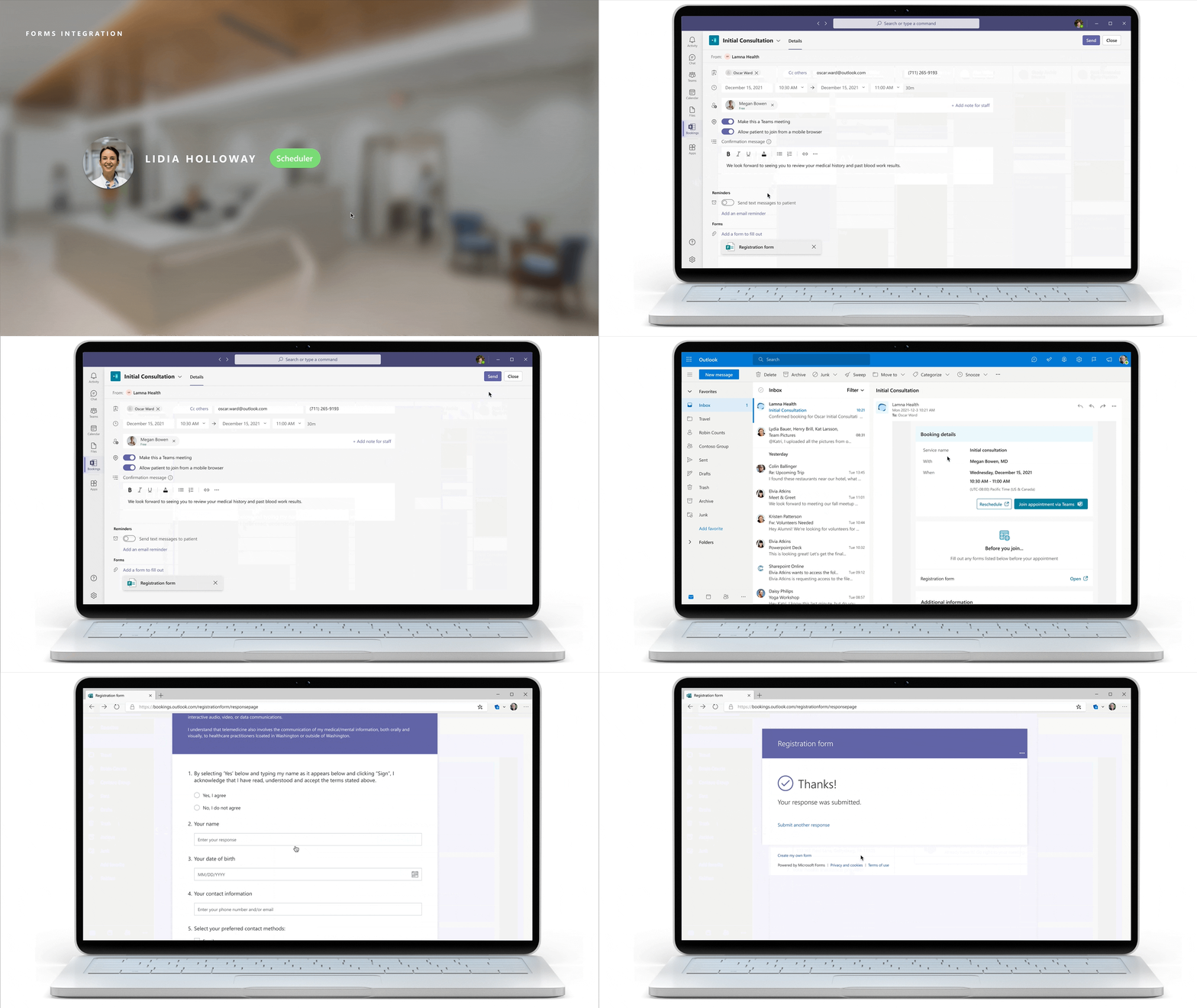





/cdn.vox-cdn.com/uploads/chorus_asset/file/22922238/GettyImages_1230122160.jpg) Cole Burston/AFP via Getty Images
Cole Burston/AFP via Getty Images
/cdn.vox-cdn.com/uploads/chorus_asset/file/22922244/GettyImages_1230122272.jpg) Cole Burston/AFP via Getty Images
Cole Burston/AFP via Getty Images