Shared posts

24 Dec 22:48

Another Report Shows U.S. 5G Isn't Living Up To The Hype

by Karl Bode

Despite the relentless hype leading up to the deployment of 5G, and all the lopsided favors regulators gave wireless carriers on behalf of 5G, and all the lobbying and DC rhetoric about how the U.S. was engaged in a "race with China" over 5G -- U.S. 5G continues to be... largely mediocre.

A number of recent studies have already shown that U.S. wireless isn't just the most expensive in the developed world, U.S. 5G is significantly slower than most overseas deployments. That's thanks in large part to our failure to make so-called middle band spectrum available for public use, resulting in a heavy smattering of lower band spectrum (good signal reach but slow speeds) or high-band and millimeter wave spectrum (great speeds, but poor reach and poor reception indoors). The end result is a far cry from what carriers had spent the last three years promising.

Now another Ookla report has emerged showing that while U.S. 5G availability is going well, the actual speeds users are getting rank among the worst in the developed world:

"Ookla placed median 5G download speeds at 93.73 Mbps in the US, far lower than the UK’s 184.2 Mbps median and far lower still than South Korea, which led the pack at 492.48 Mbps. The U.S. placed around the same relative position for upload speeds as well."

To be clear 93 Mbps being delivered to your pocket is certainly nothing to laugh at. 5G delivers some very real latency and speed improvements for wireless networks. But these improvements were always more evolutionary than revolutionary, and even at their maximum potential were never going to live up to much of the ridiculous hype we've seen over the last few years (carriers have already started hyping 6G before 5G has finished disappointing us). But the U.S. isn't even matching the maximum performance seen in most nations around the world.

Ookla's coverage claims should also be taken with a grain of salt. Other reports on 5G show that even when 5G is purportedly "available," users have a hard time accessing it. This OpenSignal report, for example, found that Verizon's ultra-fast 5G variant was only actually available to consumers with 5G-capable phones around 0.8% of the time. A different OpenSignal report also found that availability wasn't all that great, and that U.S. wireless carriers routinely overstate coverage with their marketing maps.

Granted U.S. 4G networks were middle of the pack as well. And this is all before you get to the fact that U.S. wireless prices are some of the highest in the developed world. You'll routinely see most of these organizations never mention price, for fear of upsetting wireless carriers they generally have tight data-sharing business relationships with. They'll also never actually go beyond the purely technical to explain why the U.S. is consistently so mediocre (regulatory capture, increasingly consolidated carriers, feckless and underfunded consumer protection regulators).

Again, U.S. 5G speeds should slowly improve as the country pushes more middle-band spectrum to market. But even then, you can probably expect the United States to ultimately sit somewhere in the middle of the pack, a place it generally rests in most meaningful fixed-line broadband comparisons as well for reasons we've well explored.

24 Dec 22:22

The best documentaries of 2021 and how to watch them

by Alissa Wilkinson
A four-item panel with images from each film: a black-and-white image of a pig, the head of a lifelike doll, a hand-drawn image of a man, and John Lennon.
Gunda, Ascension, Flee, and The Beatles: Get Back are among the year’s best documentaries. | Neon; Paramount; Neon; Disney

It was a boom year for nonfiction.

Fiction films tend to take up most of the air in the room when it comes to “best movies of the year” lists. But avid movie lovers know that the greatest innovations and most forward-thinking filmmakers are working in nonfiction, turning our shared realities and individual perspectives into absorbing, enlightening films. And in recent years, there’s been a resurgence of interest in the form.

Great documentaries challenge not just what we think about the world but the way in which we look at it, and force us to think about ourselves in new ways. They ask us to reevaluate the very act of watching a movie, or think about the roles we perform in our daily lives.

So it’s no wonder that so many of this year’s best films were nonfiction. Below I’ve collected 16 of the best documentaries, which explored everything from groundbreaking artists and musicians to democracies and surveillance society to the difficult act of healing from trauma, and a lot more.

Ascension

China is undergoing a drastic transformation, and across the country, workers are chasing the “Chinese dream” — upward mobility and affluence. Ascension is a riveting portrait of the ladder they’re climbing. Director Jessica Kingdon captures, in an observational style with an engrossing score, the labor that Chinese workers perform, starting with factory work (jeans, patches for jackets, sex dolls) and moving through everything from bodyguard and butler training courses to aspiring social media influencers. Messages of loyalty and responsibility toward country and company mix with individualistic aspirations for personal branding and wealth accumulation. What emerges is a snapshot of a vast population sorting out what it means to live a good life, and trying to live out that vision one way or another.

How to watch it: Ascension is playing in limited theaters and streaming on Paramount+.

All Light, Everywhere

We undeniably live in a surveillance society. Cameras are ubiquitous, from body cameras on cops to drone-enabled cameras that capture views from above to the phone cameras we hold in our hands every day. But what do cameras miss? Do they really give us a more objective view of reality? Those are the questions Theo Anthony (Rat Film) tackles in All Light, Everywhere, a sprawling essay film about “blind spots” in the technologies we trust (or don’t trust) to keep us safe and the illusions they too often depend upon. Watching All Light, Everywhere is informative, but more importantly, it’s an experience, and a sobering one.

How to watch it: All Light, Everywhere is streaming on Hulu and available to rent or purchase on digital platforms.

The Beatles: Get Back

In January 1969, the Beatles decided to write and rehearse 14 songs, with the intention of performing them on live TV — in less than three weeks. Things did not exactly go as planned, but a film crew was on hand to document the sessions, and 81 minutes of the resulting footage went into their 1970 film Let It Be. But the other 59 ½ hours has been sitting around till now, as Peter Jackson culled it down to an eight-hour, three-episode documentary that culminates in the band’s famous rooftop performance. It’s a fascinating watch for aficionados and casual fans alike — the consummate hangout film that will give you an appreciation for the band’s work and a new perspective on their working dynamic.

How to watch it: The Beatles: Get Back is streaming on Disney+.

Cusp

Cusp is a little staggering and incredibly beautiful. It centers on three teen girls in a Texas military town and one summer in their lives, but it’s not a joyride. Directors Isabel Bethencourt and Parker Hill only gradually reveal their subject: the pervasiveness of sexual assault in not just the girls’ lives, but also in the lives of their entire age cohort. They talk obliquely about the older men — often friends of their parents — who molested them when they were children. They discuss rape with painful familiarity. It’s to Cusp’s credit that there’s still a sense of magic and possibility throughout the film, as if the girls have some hope for their futures. But Cusp makes it clear that sexual assault is a problem of culture, not of individuals — and that the fault lies with generations that don’t take action to change it.

How to watch it: Cusp is streaming on Showtime Anytime.

Flee

It’s rare to see animation as the main medium in a documentary, but Flee uses it to great effect. Director Jonas Poher Rasmussen interviews his friend, Amin, who endured years of horror after fleeing Afghanistan with his family in the 1990s following the Taliban takeover. Flashbacks to Amin’s experiences are mixed in with his current uncertainties surrounding his relationship with his partner, Kasper, who desperately wants to buy a house, get married, and settle down. The effect of his past is a strong one, showing how even after finding safety and relative stability, Amin’s previous experiences will never stop reaching their long fingers into his present. Flee is heartbreaking and moving, and hard to forget.

How to watch it: Flee is playing in limited theaters.

Gunda

You could say filmmaker Viktor Kossakovsky is unconventional. His last film, Aquarela, was a portrait of water set to a soundtrack by the Finnish symphonic metal band Apocalyptica; his new film Gunda swaps out the massive scope and ear-splitting music for an intimate portrait of a pig and her piglets, two cows, and a one-legged chicken. There’s no dialogue; we just watch the animals go about their lives while we experience the quietly dawning recognition that these animals have real lives. Joaquin Phoenix is an animal rights activist — as you may recall, he championed veganism when accepting his Best Actor Oscar for Joker in 2020 — and his interest in Gunda is no surprise. It’s a recognition of animals’ creatureliness and a quiet argument for their dignity.

How to watch it: Gunda is streaming on Hulu and available to rent or purchase on digital platforms.

In the Same Breath

It’s hard to imagine any pandemic documentary being more piercingly insightful than In the Same Breath. The film from director Nanfu Wang — who grew up in China but now lives and works in the US — takes a fearless approach to the often willful misinformation spread by multiple governments as the Covid-19 pandemic began to take hold in early 2020. It’s a daring exploration of how the Chinese government repressed information about what was really happening. But it also exposes how other governments — most notably in the US — contributed to the ongoing misinformation crisis and made the entire situation much worse than it needed to be. The result is a chilling, truly absorbing film with big implications for the future.

How to watch it: In the Same Breath is streaming on HBO Max.

Listening to Kenny G

Listening to Kenny G is a documentary about the smooth-jazz sax crooner that sets out to ask a few barely answerable questions: Why do people love Kenny G? Why do people hate him? And what do their responses to him say about taste, preference, and art? In films like Hail Satan? (about the Satanic Temple) and The Pain of Others (about women who believe they have Morgellons disease), director Penny Lane has consistently refused to take the easy route.

There are no pat answers in her movies, and Listening to Kenny G is no exception. The sax player himself is the film’s main interviewee, but he’s flanked by music critics who point out all his shortcomings. What right do they have to tell someone who walked down the aisle to a Kenny G song that they’re wrong? That’s the question Listening to Kenny G raises and doesn’t try to answer outright. Instead, it focuses on a vital secondary question: Is there a dividing line between “I like this” and “This is good”? And should we care?

How to watch it: Listening to Kenny G is streaming on HBO Max.

Philly D.A.

When Larry Krasner was elected as Philadelphia’s district attorney in 2018, he became very powerful — and took many Philadelphians by surprise. Krasner had been a civil rights lawyer for decades, often finding himself in opposition to the DA’s office, and the new position came with some real challenges. Philly D.A. is an eight-part documentary series about Krasner’s new role, and it’s thrilling and intriguing to watch. The first two episodes, which premiered at Sundance, are engrossing, fast paced, and clear about the stakes of the DA office trying to implement a new agenda while retaining public trust, and the challenges of trying to turn a ship in a new direction.

How to watch it: Philly D.A. is streaming on Topic, which offers a free seven-day trial.

President

President is a truly incredible achievement and an illuminating look into how authoritarians seek to keep people from participating in a “democracy.” Director Camilla Nielsson returned to Zimbabwe, the site of her 2014 film Democrats, to follow the 2018 presidential campaign of Nelson Chamisa, president of the opposition party. The election was a hotly contested one, with layers of history and politics specific to Zimbabwe, but President manages to draw out those layers to create a compelling portrait of what a stolen election really looks like. It is a thrilling, enraging film, and its intimate access to Chamisa and his advisers is extraordinary.

How to watch it: President is playing in limited theaters and will be released on digital platforms on February 18.

Procession

Indelible, gutting, and hopeful, Procession is a documentary unlike any you’ve seen before. The filmmakers, led by director Robert Greene, reached out to six men in the Kansas City, Missouri area who were abused as boys by Catholic priests and clergy. Rather than proceeding as an exposé, Procession is a collaborative project in healing, as each of the six men creates and films traumatic memories in a drama therapy-informed quest to find ... well, what, exactly? That’s what they’re exploring: the meaning of healing, the ways we perform to cope and to crack ourselves open, and the possibilities, such as they are, for redemption. It’s a must-see.

How to watch it: Procession is streaming on Netflix.

Some Kind of Heaven

Lance Oppenheim was 22 when he first visited the Villages, America’s largest retirement community, which sprawls across three counties about 70 miles north of Orlando. He ended up filming there to craft the documentary Some Kind of Heaven, a stunning directorial debut and the kind of work that far more experienced directors would be proud to have made.

Some Kind of Heaven follows several subjects: Reggie, who is experimenting with psychedelics, and his long-suffering wife, Anne; Barbara, who is looking for love after the death of her husband; and Dennis, who is living out of a van and looking for a wealthier woman with whom he might strike up a relationship. The film at times feels like a dreamscape rather than just an observational portrait. It’s clear that the relentless positivity of the Villages takes its toll on residents, but it’s also a glimpse into an idealized version of America, and the fantasy at its core.

How to watch it: Some Kind of Heaven is streaming on Hulu. It’s also available to digitally rent or purchase on Apple TV, Amazon, YouTube, Vudu, and Google Play.

Summer of Soul

Summer of Soul (... Or, When the Revolution Could Not Be Televised) was one of the biggest crowdpleasers of the year at its Sundance debut in January, and that’s no surprise. Ahmir Thompson — better known as Questlove, the drummer and frontman for the Roots — directed the film about the 1969 Harlem Cultural Festival, sometimes dubbed “Black Woodstock.” The staggering concert, held over a series of weekends in Harlem’s Mount Morris Park, featured everyone from Sly and the Family Stone to Nina Simone to Stevie Wonder to Mahalia Jackson. The events were filmed, but the footage sat in a basement for 50 years. Now it’s compiled into a documentary about a pivotal moment in Black cultural history, and the result is absolutely infectious to watch.

How to watch it: Summer of Soul is streaming on Hulu.

The Truffle Hunters

Certainly the year’s most charming movie, The Truffle Hunters unfolds as a series of vignettes documenting the lives of several older men and their dogs. They live in Piedmont, northern Italy, where they spend their days hunting for rare and costly white Alba truffles in the forest. Nearly every frame of The Truffle Hunters is wide and steady, focusing on the men as they discuss business, talk to their beloved canines, root around in the dirt, and take part in a simple way of life that, it’s clear, is slipping away. (We do occasionally get a dog’s-eye view, too.) It’s a sweet and simple movie with a healthy dose of bittersweet wistfulness for a fading world, and it’s beautiful.

How to watch it: The Truffle Hunters is streaming on Starz and available to purchase on digital platforms.

The Velvet Underground

Todd Haynes directs a highly satisfying documentary about the legendary Velvet Underground, the rock band that formed in New York City in 1964 and came to embody an important moment in the history of rock. (Plus, they rock.) Haynes is no conventional director, and while he takes a fairly standard approach to the story — beginning with Lou Reed’s childhood on Long Island and moving forward from there — he weaves together more of a tapestry than a clunky paint-by-numbers documentary.

The Velvet Underground is as much about the culture of 1960s New York City, dominated by Andy Warhol’s in-crowd and the work they made at his Factory, as the band itself. That’s to the film’s benefit. Using the screen as a window and collaging together images and footage with audio from interviews, Haynes evokes a mood and an era; he reminds audiences that some success comes from talent and hard work, and some of it just comes from being in the right place at the right time.

How to watch it: The Velvet Underground is streaming on Apple TV+.

The Viewing Booth

Israeli director Ra’anan Alexandrowicz has focused his past films on questions about Israel’s occupation of Palestinian territories, but in The Viewing Booth, he confronts the act of viewing itself. Alexandrowicz set up a lab-like room in which he invited American students interested in the Israeli-Palestinian conflict to view videos uploaded by activists and verbalize their thoughts. He centers the film on the reactions of one young woman, Maia Levy, whose views of videos originating in the West Bank city of Hebron stand in opposition to Alexandrowicz’s.

Through their conversations, the ways our preconceived ideas shape and dictate the way we view the same images are explored and exposed. The Viewing Booth forces the audience into confrontation with their viewing biases and probes not just how people think about a conflict in the Middle East, but the limits of nonfiction films regarding their ability to persuade and explore reality as it is — and whether such a thing is even possible.

How to watch it: The Viewing Booth is available via a 48-hour digital rental on the film’s website.

24 Dec 22:16

Voice Calling for Microsoft Teams: What You Need to Know

By Ryan Daily
Enterprises are taking a long hard look at their voice requirements, as Microsoft MVP Randy Chapman shared in a two-part No Jitter on Air podcast series.
24 Dec 22:16

An app gave crucial seconds of warning before a major California earthquake

by Nicole Wetsman
California Earthquake Early Warning App
Photo by Yichuan Cao/NurPhoto via Getty Images

An early-alert system designed to give people crucial seconds of warning before earthquakes lived up to its promise on Monday. It buzzed through a half a million phones ahead of a 6.2 magnitude earthquake that hit northwest California — the largest quake since the system, called ShakeAlert, rolled out across the entire state, The Guardian reported.

ShakeAlert pulls information from the United States Geological Survey’s (USGS) sensor network. If data from those sensors says there will be major shaking in an area, people living there get alerts through the MyShake app (if they’ve downloaded it), or through the wireless emergency alerts system on their phones. Alerts also go out to Android users through a partnership between Google, USGS,...

Continue reading…

24 Dec 22:16

The 10 Biggest Data Breaches Of 2021

by Michael Novinson
Nearly 215.4 million individuals were impacted by the 10 biggest data breaches of 2021, with three of the 10 largest breaches occurring at technology companies and four involving the exposure of sensitive records.
24 Dec 00:14

Terra (LUNA) hits record $20B TVL, surpassing Binance Smart Chain

by Ornella Hernández
Terra becomes the second-biggest DeFi chain in terms of total value locked after Ethereum.
23 Dec 00:35

Why Astronomers Are “Crying and Throwing Up Everywhere” Over the Upcoming Telescope Launch

by Jaime Green
A failure here could mean a much more conservative future for space observatories, and no second chance.
23 Dec 00:33

NEC Holds No.1 Position for 7 Years in a Row as Worldwide Leader in SMB Business Phone Systems

by Amy Ralls

Rich Portfolio, Continuous Innovation and Commitment to Market and Business Partners Pay Off

TOKYO & DALLAS & HILVERSUM, Netherlands – December 20, 2021 – NEC, a global leader in communications & IT solutions, today announced that for seven years in a row it has been recognized as the global no.1 in SMB (Small and Medium Business) Business Phone Systems. This success underscores once again the strength of NEC’s portfolio, the company’s commitment to expand its global enterprise footprint and the ability to serve customers to fullest satisfaction.

NEC has a long history and rich legacy in communications and remains committed to the Unified Communications market for SMB and Enterprise with, at the core, its UNIVERGE communications portfolio SL, SV and 3C premise-based communication servers and its new generation UNIVERGE BLUE Cloud offering.

Perfectly fit to the needs of SMBs

MZA’s reporting on the global call control market (excluding multi-tenant UCaaS voice solutions) shows that NEC has led all vendors in global shipments in the SMB segment (less than 100 licences) for the last seven years*. With a present market share of 17% as reported over the first half of 2021, NEC is well ahead of all other companies in that segment.

“MZA’s recent report highlights our success as leader in enterprise communications,” said Ram Menghani, President NEC Enterprise Communication Technology. “It is a clear recognition of the strength of our offering and the ability to serve together with our business partners and customers worldwide with excellent solutions and services.”

“A great thank you and congratulations goes out to our partners, together with whom we have been able to carve out this excellent market position. Along with attractive pricing, unsurpassed reliability and ease of installation and use, our solutions prove a perfect fit for meeting the needs of SMBs,” comments Marc Hebner, Vice President of Enterprise Division of NEC Corporation of America.

NEC offers a broad range of enterprise communications solutions – ranging from small to very large systems – that effectively support Enterprise and SMB customers whose requirements span from traditional to full IP and 100% software-based solutions, and from premises-based to cloud deployments.

Powerful UCaaS and CCaaS cloud offering

Drawing on its global partnership with Intermedia, a dedicated cloud communications company, NEC’s UNIVERGE BLUE is one of the broadest and most powerful UCaaS and CCaaS cloud offerings available on the market, enabling telephony, video conferencing, collaboration, back up, security, file sharing and more within a single solution. Businesses can benefit from monthly billing and only pay for what they use with full flexibility to scale up as and when required.

Dynamic delivery of cloud solutions in a hybrid model

With the traditional office shrinking and working from home fully accepted, hybrid work and flexible deployment models have become preferred for many businesses. While aligning resources with their present business requirements, they take advantage of cloud solutions that are scalable and open opportunities to integrate new applications. As enterprises shift more workloads to the public cloud, there too remains a strong demand to leverage existing infrastructure.

UNIVERGE BLUE CONNECT BRIDGE extends on-premises business phone systems to the cloud via mobile and desktop applications while also adding chat, video conferencing, file sharing and collaboration capabilities. The result is an integrated, all-in-one, UCaaS offering that affords NEC customers the flexibility to communicate and collaborate from anywhere, extends the life and capabilities of their current NEC phone system, and allows them to keep their existing phones, terminals and phone numbers while migrating gradually as required.

Customer has full choice

As a result, NEC customers can now choose from fully on-premises infrastructure to a 100% public cloud, subscription-based solution and anything in between in a hybrid working model. As NEC covers all bases and offering the full range of choice – on-premises, cloud or hybrid – ensures NEC and its partners can provide what’s best and most suitable for each end customer.

“With our strong foothold in the on-premises call control market and the flexibility we provide customers to add newest cloud services to support their increasingly hybrid workforce, I look forward to prolonging our market leadership for many years to come,” Menghani concludes.

* Source MZA Call Control (PBX-IP PBX) Market Reports 2015-2021

About NEC Corporation

NEC Corporation has established itself as a leader in the integration of IT and network technologies while promoting the brand statement of “Orchestrating a brighter world.” NEC enables businesses and communities to adapt to rapid changes taking place in both society and the market as it provides for the social values of safety, security, fairness and efficiency to promote a more sustainable world where everyone has the chance to reach their full potential. For more information, visit NEC at http://www.nec.com.

The post NEC Holds No.1 Position for 7 Years in a Row as Worldwide Leader in SMB Business Phone Systems appeared first on Cloud Communications Alliance.

23 Dec 00:32

Google Voice now lets you set custom rules for phone calls

by Emma Roth
Illustration: Alex Castro / The Verge

Google Voice now lets you create rules that dictate how the service responds to incoming calls from specific contacts. And yes, this includes having Google Voice automatically ignore certain contacts for you.

Even though Google Voice already has a call forwarding feature, the new rules let you customize it even further — you can set up a rule that forwards calls from a contact (or a group of contacts) to any of your linked numbers.

Image by Google
How to create a rule in Google Voice.

And if you don’t want to receive a forwarded call at all, you can create a rule that sends certain callers straight to voicemail. In line with this option, you can also assign contacts different voicemail greetings and screen...

Continue reading…

23 Dec 00:22

Google Voice for Google Workspace: Noteworthy Improvements

By Darin Ward
A year of working with Google’s point-and-click solution showed how easy it is to set up and use.
23 Dec 00:15

You can now take Zoom calls from your Amazon television

by Sean Hollister
Photo by Chris Welch / The Verge

Amazon launched its own branded Fire TV television sets last month with attractively low price tags for a large, if underwhelming, 4K screen — and today, they’re getting the promised Zoom video calling app so you can chat with family and friends this holiday season (and beyond). While we noted that Zoom was missing at launch and merely “coming soon” as of December 7th, Amazon has managed to roll it out in time for Christmas and New Year’s celebrations.

There’s no camera built into these TVs, of course. As Amazon explains in its official blog post, you’ll need a compatible USB webcam to make it work, one with 720p or 1080p resolution, and the company only specifically lists the Logitech C920, C922x, and C310 as examples. And even if you...

Continue reading…

20 Dec 21:35

The Matrix: Refresher

by Aja Romano
Keanu Reeves in The Matrix: Reloaded. | Courtesy of Warner Bros.

No time to rewatch The Matrix trilogy before Resurrections? Here’s the important stuff.

If it’s been a minute since you’ve seen The Matrix, or the other two films in the Matrix trilogy, don’t worry: The new film, The Matrix Resurrections, functions as more of a reboot than a sequel, so you don’t need to have every detail of the original franchise under your belt. Still, the basic storyline of the original trilogy impacts the new film, so if you don’t have time to watch all three original films again, it’s helpful to have a refresher.

Warning: The rest of this article, obviously, contains spoilers from the original Matrix trilogy. If you want to discover them for yourself, now’s your chance to back out.

Here’s the part you probably remember: Over the course of the first film, Keanu Reeves’s character Neo transforms from an isolated tech geek trapped in a virtual reality simulation, aka the “Matrix,” into the savior of all mankind, aka “the One.” He does this by falling in with a group of freedom fighters who show him the truth: The real world is actually a scorched, barren, post-apocalyptic prison now run by machine overlords who’ve created the Matrix to trick humans into thinking the world is normal, meanwhile keeping them docile and enslaved while the machines harvest them for energy. Ultimately, Neo discovers that he has the unique ability to see through the Matrix, which means he can manipulate its code from within and fight back against the machines.

Newly armed with Neo’s special power, the fight for human liberation continues over the course of the next two films, Matrix: Reloaded and Matrix: Revolutions. The new film catches up with Neo — though not as you remember him — and rejoins the original Matrix storyline, but in an all-new context. Here are some of the highlights from the journey so far that you need to know for the upcoming film.

1) The Matrix is kind of a predetermined, Calvinistic choice experiment

The Matrix is just like any other computer system in that someone had to design it. Within the Matrix, the entity who embodies that creator is called the Architect.

Neo meets the Architect (Helmut Bakaitis) halfway through the second film. He tells Neo that the Matrix periodically has to be reset to deal with the difficulty of combating human choice. He also informs Neo that instead of resisting the Matrix, he exists as part of its design, and that, far from being “the One,” he’s really more like “the Sixth.” Five other simulation messiahs before him have had to decide how to handle the impending Matrix reset. Neo’s choice involves a kind of Calvinism: If he works with the machines to reset the Matrix, he can choose which of the residents of Zion (the underground city where the freedom fighters reside) will get to survive and repopulate the Matrix. If he resists, the entirety of the human population will be destroyed. Neo chooses neither of these options.

Still, the idea that the Architect has been allowing all of these simulations to play out before — including the part where the One helps decide how it all ends — casts a major shadow on everything that happens after their initial meeting, including the events of the new film.

2) There are rogue programs that have their own parts to play within the Matrix

In the first film, Neo’s main enemy is Agent Smith (Hugo Weaving), one of the embodiments of the machines that exist in the Matrix. After Neo defeats Smith, he’s scheduled to be, basically, erased — absorbed back into the code. But Smith refuses and escapes the Matrix’s control, becoming a rogue program that can act on his own. Over the course of the films, Smith essentially becomes a virus who can replicate at will by taking over humans who are inside the Matrix. They don’t always look like Hugo Weaving, either, which can leave us with something of a “who is the human and who is the replicant?” situation.

But Smith isn’t the only rogue program. There’s also the Frenchman (Lambert Wilson), a.k.a. the Merovingian, who functions as something of a crime lord over many other rogue programs and who tries to manipulate and control many of the people around Neo. And there’s Rama (Bernard White), a sweet guy who rebelled against the Matrix by marrying another rogue program and creating his own simulated “daughter” named Sati (played by Tanveer K. Atwal in Revolutions).

Sati becomes crucial to the worldbuilding of the Matrix films. She meets Neo when he’s trapped in limbo, and Rama goes to great lengths to keep her safe from being destroyed by the machines. Since he and his wife created her simply to be their daughter, Rama says she doesn’t have a purpose, which makes her an anomaly in the Matrix, where everything is created to be of use. But it’s implied heavily that Sati does have a purpose. The Oracle (first played by Gloria Foster but later by Mary Alice) suggests at one point that she might be the next One, and many fans think that she might be an iteration of the Architect — or even a villain, since at one point she’s assimilated by Agent Smith, and it’s unclear when he relinquished his hold over her.

What is clear is that Sati still has a big part to play; like Neo, her role is very much unfinished.

3) Both Trinity and Neo die at the end

Neo and his freedom-fighter soulmate Trinity (Carrie-Anne Moss) each have brushes with death in all three movies, with each brush getting more and more dire. In the first movie, Trinity barely makes it out of the Matrix before being annihilated, while Neo nearly dies from injuries both inside and outside of the Matrix but survives by becoming the One. In the second film, Trinity is fatally shot while in the Matrix, which would kill her in the real world, except that Neo reaches into her heart and extracts the bullet. (Manipulating the code lets him do stuff like that.) For his pains, Neo ends up comatose and essentially lifeless at the end of the second film, trapped in a weird limbo depicted as a train station until he wakes in the real world in the third film.

The final film sees both Trinity and Neo perish near the climax. Trinity dies while trying to defend Zion against the attacking machines in what might be the most painful death of the series: En route to the machine city, she flies too high above the scorched atmosphere, and while she manages to shake off the machines, she loses control of her spaceship and crashes into a building back on Earth, leaving Neo to exchange a few final words of love with her before she dies.

Trinity’s death arguably leaves Neo with nothing preventing him from fully sacrificing himself for the cause of saving humanity, which he ultimately does: after the machines — embodied in the form of a single entity cheekily called the Deus Ex Machina — learn that Smith is hellbent on destroying the Matrix, and with it, mankind, they strike a peace treaty with Neo and send him into the Matrix to battle Smith once and for all. Neo ultimately defeats Smith with a grander version of what he did in the first film, diving into Smith and exploding him from inside. This time, he allows himself to be fully assimilated by Smith — but he’s also allowing himself to be used as a kind of electric fuse for the machines, who use Neo’s body to send a massive jolt of electricity through Smith, exploding all of the bodies Smith inhabits throughout the Matrix, effectively destroying him completely. (For now.)

Suffice it to say, Neo is pretty dead once that’s over with. But the other people Smith previously assimilated do return, and the Oracle, who’s among them, tells Sati that she believes Neo might be back again one day.

4) Humans and the machines formed a fragile peace

As mentioned, the machines are dead set against Smith destroying everything — so much so that they’re willing to work with Neo to defeat him. This allows the humans and the machines to create an uneasy, but hopefully lasting peace, one that preserves Zion and allows any human to exit the Matrix for the real world if they choose to do so. (Though we have to wonder, given how eager Joe Pantoliano’s character Cypher was to return to the blissful ignorance of the Matrix in the first film, how many humans would be all that quick to jump at the offer.)

The Matrix is rare among cinematic narratives of its kind in that it doesn’t offer revolutionary overthrow as the ultimate victory for its heroes, but rather a tentative way forward, in which both man and the artificial intelligence can work together and build a new world. This ending also goes some way to address the fact that the humans created this problem for themselves — first they created the AIs, and then, once the machines revolted, they torched their own atmosphere in a futile attempt to get rid of the machines. By allowing the resolution to involve a truce instead of an outright victory, the Matrix films acknowledge that the humans haven’t entirely followed a traditional hero’s journey.

5) Jada Pinkett Smith is totally in these movies!

You might not remember her, but as the character of Niobe, Jada Pinkett Smith kicks major ass in the second and third Matrix films. A central leader among the Zion revolutionaries, Niobe pilots the spaceship Logos, uses guerilla tactics to successfully plant bombs in a major power plant, and figures out how to steer a hovercraft. She and Morpheus (Laurence Fishburne) have a romantic history, and it’s implied she still loves him, even though she’s moved on. Niobe also plays a major role in the video game Enter the Matrix, where she battles vampire programs and a whole bunch of Agent Smiths. Not too shabby.

The Matrix Resurrections will be in theaters and streaming on HBO Max on December 22.

20 Dec 21:22

Build Back Better is the latest victim of America’s anti-democratic Senate

by Ian Millhiser
J. Scott Applewhite/AP

Democratic senators represent 43 million more people than their Republican counterparts.

On Sunday, Sen. Joe Manchin (D-WV) appeared ready to kill the Build Back Better Act, a legislative package funding child care, early childhood education, health care, clean energy, and tax credits for parents, which is one of President Joe Biden’s top legislative priorities.

It’s possible, as my colleague Andrew Prokop notes, to read Manchin’s recent denunciation of the bill as merely an effort to force harsh concessions from other Democrats.

Regardless of how Manchin’s comments about Build Back Better should be read (he told Fox News that “this is a no — on this legislation”), the only reason why Manchin’s opinion of the legislation matters at all is that the United States Senate is a malapportioned trainwreck that gives each resident of Wyoming more than 68 times as much representation as each resident of California.

Because smaller states tend to be whiter and more conservative than larger states, the constitutional design of the Senate, which gives each state two senators regardless of its population, offers Republicans an enormous advantage in the fight for control of the Senate. Indeed, if the Senate were anything that could fairly be described as a democratic institution, Democrats would control closer to 56 or 57 seats, rather than only holding 50 seats in the Senate.

The Democratic “half” of the Senate represents 186,902,361 individuals. Meanwhile, the Republican “half” represents only 143,857,375 people — a gap of 43,044,986. That means that Democrats represent nearly 57 percent of the population, but only control half of the Senate’s seats.

I derived this number by using the United States Census Bureau’s population counts from the 2020 census. In each state where both senators belong to the same party, I allocated the state’s entire population to that party. In states with split delegations, I allocated half of the state’s population to each party. (I coded Sens. Bernie Sanders (I-VT) and Angus King (I-ME) as Democrats. Although both identify as independents, they caucus with the Democratic Party.)

You can check my work using this spreadsheet. Notably, the population gap appears to be growing. When I calculated this gap using 2019 census population estimates, I found that Democratic senators represent 41,549,808 more people than Republicans.

It’s worth highlighting just how much of an advantage Republicans derive from Senate malapportionment. In the 25 most populous states, Democratic senators hold a 29-21 seat majority. Republicans, meanwhile, have an identical 29-21 majority in the 25 least populous states.

The 25 most populous states contain nearly 84 percent of the 50 states’ total population. So 16 percent of the country controls half of the seats in the United States Senate (and that’s not accounting for the fact that Washington, DC, Puerto Rico, and several other US territories have no real representation in Congress).

Admittedly, Democrats would have a stronger hand in the current Senate if they hadn’t lost winnable races in places like North Carolina and Maine, but unexpected losses and weaker-than-expected candidates are a normal part of any democratic system. Senate malapportionment forces Democrats to pitch a perfect game over multiple election cycles if they want a chance to enact their legislative agenda. Republicans, meanwhile, can tank elections they were expected to win and still wind up with enough votes to block legislation.

It’s hard to exaggerate just how much damage Senate malapportionment has done to American democracy. For much of the pre-Civil War era, slave states counted on their disproportionate representation in the Senate to frustrate anti-slavery legislation. Beginning in the Lincoln administration, Republicans admitted several underpopulated territories as states in order to maximize their chances of winning the Senate.

Yet, while Lincoln’s support for sparsely populated GOP states might be justifiable as an effort to keep Confederate sympathizers from capturing the Senate, the Republican Party’s statehood policies soon devolved into a purely partisan power grab. The reason there are two Dakotas, for example, is Republicans split Dakota territory in 1888 so that they would receive four senators instead of just two.

Today, if every American’s vote counted equally in Senate elections, the Senate would almost certainly have the votes to pass a Build Back Better bill similar to one that already passed the House. Multiple voting rights bills that have passed the House would also most likely be law. DC would probably be a state.

Meanwhile, the Supreme Court would almost certainly not be controlled by right-wing Republican appointees, and might very well have a Democratic majority. All three of former President Donald Trump’s appointees to the Court, Justices Neil Gorsuch, Brett Kavanaugh, and Amy Coney Barrett were nominated by a president who lost the popular vote and confirmed by a bloc of senators who represent less than half of the country.

The American people elected Biden by a comfortable margin in 2020, and they also voted to give him a Senate majority that is large enough to enact his agenda. That agenda is now on the ropes, not because the American people voted against it, but because the results in Senate elections bear little resemblance to the will of the people.

20 Dec 20:19

 A practical guide to eating less meat

by Allison Rockey
Meat/Less, Vox’s new 5-day e-course, helps readers eat well and do good. | Chris Carfolite/Vox

The American diet is lopsided toward meat. Here’s how to incorporate more plant-based food into your life.

There’s more awareness than ever about the problems associated with industrial meat production, from its contribution to climate change and pollution to the abysmal treatment of animals and workers in meatpacking plants.

Yet many people find the idea of going vegetarian or full-on vegan to be difficult, even unimaginable. Only 5 percent of US adults are vegetarian or vegan, and most don’t stick with it — one study found 84 percent of vegetarians or vegans abandon their diet at some point.

At the same time, nearly a quarter of Americans say they are trying to cut back on meat.

We’re here to help.

Two years ago, Vox launched Meat/Less, a newsletter course to help our readers set achievable goals to reduce meat consumption and have an impact on climate change and animal welfare (and eat healthier, to boot). We got a ton of positive reader feedback, as well as suggestions on how we could improve, so we recently gave it a refresh with more recipes, cooking tips, and stories on how what we eat shapes the world.

Sign up and we’ll send you five newsletter emails one per week — that’ll teach you how to easily incorporate more plant-based foods into your diet, give you evidence-based behavior strategies to make it last, and serve up plenty of food for thought on how our choices impact animals, our health, and the planet.

Want to get started? Sign up for Vox’s free Meat/Less newsletter course now.

The guide is written to help anyone on the less-meat spectrum, from aspiring flexitarians to full-on vegans. We’ll answer some of the most common questions about eating less meat:

  • What impact can one person really make?
  • If I am going to give up one type of meat, should I cut back on chicken or steak?
  • Where do vegetarians get their protein?
  • I’m terrible at making new habits stick … please help?

The newsletter, by Vox Future Perfect staff writer Kenny Torrella, gives readers the practical tools to eat less meat and more plant-based foods, like tips on what to cook, where to shop and eat, and how to be healthy on a plant-based diet. Kenny also answers big questions around the impact of eating less meat, like which types of meat have the biggest impacts on animals and the planet, and whether our individual food choices actually make a difference.

Since 2020, Vox has significantly increased our coverage of industrialized animal farming and its effects on animal welfare, public health, and the environment thanks to generous funders and readers, work that has ranged from a podcast miniseries to a video series to stories on Future Perfect.

We know our audience is looking for practical advice on how to live a better life in accordance with their values. We’re excited to be relaunching Meat/Less and look forward to hearing from readers about this course and what future ones we should offer.

20 Dec 20:18

The Controversial Plan to Vacuum Carbon Out of the Atmosphere

by Lizzie O’Leary
17 Dec 20:21

Omicron is coming and lockdowns aren’t coming back. So what can we do?

by Dylan Scott
A pedestrian walks past cars lined up at a drive-through Covid-19 testing center in Los Angeles, California, on December 6. | Mario Tama/Getty Images

There is no grand plan for stopping omicron — but that doesn’t mean we’re powerless.

As an ongoing wave of delta collides with the new omicron variant just as people are traveling and gathering for the holidays, all signs now point to a massive wave of Covid-19 in the coming months.

The question is what, if anything, we can do to prevent a worst-case scenario.

Just a few months ago, people in America were dying because hospitals had been overwhelmed with Covid-19 patients and couldn’t find a bed for them. This was what more than a year of public health interventions had tried to avoid, and it was happening well after the vaccines had become widely available. Now there is the distinct possibility of a repeat of the same catastrophe.

Meanwhile, the country’s tolerance for public health interventions appears to be shrinking. Most people say they are still planning to travel to see family and friends for the holidays and they consider those activities to be a small or moderate risk. Sporting events, concerts, and other large gatherings are happening every day. Just nine states currently have any kind of mask mandate in place. A return to more drastic lockdown measures appears to be off the table — and some experts think they would be inappropriate now because those policies can have their own negative effects and because vaccines are widely available.

The federal government has limited authority to impose its own mask and vaccine mandates, as President Joe Biden’s winter plan for the pandemic tacitly acknowledges. It can offer carrots — mobile clinics and ride-sharing programs to vaccine sites — but wields few sticks.

Now that the vaccines are available and most US adults are vaccinated, even some Democratic leaders don’t sound interested in any new suite of public health measures that would hit vaccinated and unvaccinated adults alike.

“It’s scary. But I think our relatively lax response to the rise of omicron is not unexpected,” Kumi Smith, a University of Minnesota epidemiologist, told me. “People build up a tolerance to risk over time, and I think as Covid deaths keep climbing we’re also getting numb to the tragedy as well. And the helplessness we all feel from the country’s inability to unite against Covid also probably contributes to the collective apathy.”

So: Nearly two years into the pandemic, a lot of people are simply burnt out. But that doesn’t mean we are powerless. Covid-19 will always be circulating and the world isn’t going to shut down every time cases rise. But that doesn’t mean apathy is the solution. Individual people making individual decisions to take the virus seriously — by wearing masks, getting vaccinated, and being thoughtful about what activities they participate in — can help slow down the virus, at least a little bit, and give the health system a fighting chance.

“Fatalism is not an effective means of infection control or public health,” Bill Hanage, a Harvard University epidemiologist, told me.

It’s time to flatten the curve again

The omicron variant could definitely push the health system into crisis. Even if the variant does tend to cause milder illness on average, as some early indications suggest, a certain percentage of infected people, especially unvaccinated people, is going to end up getting really sick. The bigger the denominator (infected people) gets, the bigger the numerator (hospitalized patients) will too. The more hospitalizations we see, the more deaths will be added to the 800,000 American lives lost so far. It’s a matter of math.

So the goal of a successful pandemic response now is the same it was in early 2020: to “flatten the curve” and prevent hospital systems from becoming so inundated with Covid-19 patients that they can’t give everybody — Covid-19 and other patients alike — the medical care they need.

We know this can happen because it already has. This summer, doctors called facility after facility, looking for beds for patients experiencing a cardiac emergency. Some of these patients died waiting for medical attention. The risk that someone will show up at their local ER with symptoms of a heart attack or appendicitis and be unable to get treatment because of staff shortages, bed shortages, or both will grow as case numbers rise.

In early 2020, the best ideas for flattening the curve were extraordinary measures never seen before in the US: widespread business closures, social distancing requirements, and mask-wearing. Now there are vaccines.

 Samuel Corum/Getty Images
People line up outside of a free Covid-19 vaccination site in Washington, DC, on December 3.

Vaccination remains the best guard against severe outcomes from a Covid-19 infection, and vaccinating more people is the best way to flatten the curve collectively. The vaccines still provide strong protection against hospitalization and, if a vaccinated person does fall sick and needs hospital treatment, they usually have shorter stays. With a booster shot, experts expect that protection to hold up against omicron.

Governments should do everything they can to get more people vaccinated and boosted. The Biden administration has already tried to force large employers to require vaccinations. That did prompt a slew of company mandates and an uptick in new vaccinations, but it has also been blocked in federal court, losing the force of law. The administration is also trying to make vaccines more accessible, encouraging more outreach from Medicare and AARP, and setting up mobile clinics. Some big cities are going even further by requiring people to be vaccinated if they are going to go to a restaurant or another business.

The country has a lot more tools now to track and treat Covid-19. But they come with caveats. At-home tests can sometimes be hard to find, and experts worry the Biden plan to let people submit the cost of tests to their insurer for reimbursement is too cumbersome. New antiviral medications appear promising, but experts worry they won’t be available in large enough quantities to help with the imminent omicron wave.

There are also limits on what Americans will tolerate. Countries in Europe and East Asia are starting to close businesses and putting more restrictions on unvaccinated people as the omicron variant takes hold. US public health experts, meanwhile, generally acknowledge those policies being implemented widely in this country is essentially a fantasy.

There are good reasons not to revive lockdowns and other blanket restrictions, which have their own costs — and in theory, we shouldn’t need them. Vaccines are available; doctors understand the virus much better and have more effective treatments. But there is still a lot the US could do short of locking down to slow the virus and give hospitals and their staff members a better chance to handle any surge in Covid-19 patients without sacrificing care for all of their patients.

Vaccines, testing, and masks work, and they work best if everyone — not just the cautious — employs them. Without collective action, it seems likely the onus will continue to fall on individuals: to get vaccinated and boosted, and to encourage their loved ones to get vaccinated and boosted, and to take tests and isolate themselves if they show symptoms.

“The default now in most places is reliance on individuals taking preventive steps on their own,” Joshua Michaud, associate director of global health policy at the Kaiser Family Foundation, told me. “In the face of the combined delta and omicron threat this winter, we’ll probably end up where we’ve been for much of the pandemic: different jurisdictions approaching the problem in their own way, which will lead to a chaotic patchwork of mostly half-measures or no real measures at all.”

This is a collective reality that requires collective solutions. Where are they?

Other countries are taking more aggressive steps. The UK reinstituted its mask mandate and is requiring vaccine passes for large events. Denmark and France have closed their nightclubs again. Germany and Italy are putting new restrictions on their unvaccinated residents, barring them from indoor dining and other activities. South Korea has limited private gatherings to no more than four people and established a new curfew as its delta-driven wave puts a strain on its hospitals.

These measures represent governments’ attempts to grapple with the pandemic with the tools we have now, in addition to the tools we’ve had all along. But such measures seem unlikely in most of the United States, which is stuck in a public health morass. (The exceptions are big coastal cities like San Francisco and New York, which are getting more aggressive with vaccine mandates and other interventions: San Francisco is requiring people to show proof of vaccinations to enter many businesses, and New York has mandated private businesses to require vaccination and will send tests and masks to many residents.)

 Mario Tama/Getty Images
People wear face coverings while riding a Los Angeles Metro Rail train on December 15. California residents, regardless of Covid-19 vaccination status, are again required to wear face masks in all indoor public settings in response to rising coronavirus case numbers and the omicron threat. The statewide mandate will be in effect through January 15, 2022.

There’s no publicly agreed-upon goal for managing the ongoing pandemic. Experts don’t even agree on how to measure its severity. Even if the federal government established a clear strategy, it would have limited ability to enforce that plan across state borders, and for the most part, there is little political will to impose new restrictions.

Other countries have already experimented with refocusing their Covid-19 strategies and defining a new normal: Singapore, for instance, has begun to use hospitalization numbers, instead of case numbers, to determine when to impose new restrictions. Some experts are calling for the same in the US, including Monica Gandhi, an infectious-disease professor at the University of California San Francisco, who wrote in the New York Times this week that hospitalizations should be the most important metric going forward.

But other scientists disagree and argue that case numbers still matter. This is part of the reason it has been so difficult for the US to come up with a long-term Covid-19 plan: Even experts who want better pandemic management disagree on what the approach should be.

America’s fractured government and polity also contribute to the inertia. States and localities hold a lot of the power to impose meaningful public health measures. Many of the adults who have not gotten vaccinated appear very committed to that position. Vaccine mandates can have a positive effect, and a majority of voters appear to support them, but they also invite backlash and have been blocked in some cases in federal courts.

Polarization has not bent but rather hardened throughout the pandemic. Republican politicians are, generally speaking, opposed to new pandemic interventions. In Wisconsin, where hospitalizations are up 23 percent over the last two weeks and one-third of all ICU units have Covid-19 patients in them, the GOP House leader dismissed the need for any new measures.

Even in blue states, politicians seem to be bowing to pandemic fatigue: Colorado Gov. Jared Polis, a Democrat, drew attention this week for saying that the public health emergency “is over.” He said he doesn’t want to impose new restrictions on vaccinated people who have done their part to try to get the pandemic under control.

If the policy landscape remains relaxed, then each person will be left to assess their own particular situation when deciding what precautions to take, once again weighing familiar questions: What is my personal risk? Am I in regular contact with people who don’t have the full protection conferred by vaccines, like elderly or immunocompromised people as well as unvaccinated children? What is the level of Covid-19 spread right now in my community?

“The reality is that we are all going to be infected at some point with omicron or something else, but we can do things to control how that happens to us and to our communities,” Hanage said. “That includes stuff like getting boosters and thinking about ways to reduce transmission in our communities. They won’t reduce it to nil. They will slow it and give more people the chance to have the benefit of vaccination before they get infected.”

17 Dec 20:19

Meta alerts 50,000 users to targeting by ‘surveillance-for-hire’ companies

by Corin Faife
Illustration by Alex Castro / The Verge

Facebook’s parent company Meta has alerted 50,000 users of Facebook and Instagram that their accounts were spied on by commercial “surveillance-for-hire” schemes around the globe.

The users were targeted by seven entities and located in more than 100 countries, according to an update posted on Meta’s news page today.

Targets included journalists, dissidents, critics of authoritarian regimes, families of opposition, and human rights activists, the post said. The surveillance was uncovered in a monthslong investigation in which Meta identified spying groups and removed them from the platform.

“These companies are part of a sprawling industry that provides intrusive software tools and surveillance services indiscriminately to any customer —...

Continue reading…

17 Dec 20:17

2021 was a game-changing year for trees

by Benji Jones
A view of giant trees shot looking straight up.
Giant sequoias in Sequoia National Park, California. | Marji Lang/LightRocket via Getty Images

Could this be the decade we stop cutting down forests?

It’s not every year that firefighters wrap the world’s largest living tree in an oversized aluminum blanket. But there they were this fall, in California’s Sequoia National Park, covering the 36-foot-wide base of the tree known as General Sherman to protect it from the state’s devastating fires.

Images of the wrapped giant seem to symbolize the world’s race to protect forests in the face of everything from extreme heat to a booming beef industry. Many trees burned this year across the West Coast and Canada, and others were deliberately cut down.

Deforestation in the Amazon rainforest reached its highest level in more than 15 years. And the consequence of losing all of those trees became clearer than ever: A study published in July found that parts of the Amazon now emit more carbon dioxide than they absorb, contributing to rapid global warming.

But there was plenty of hope, too. General Sherman survived, for one. And scientists discovered a handful of new forest-dwelling species, including what’s likely the world’s smallest reptile.

 Gary Kazanjian/AFP via Getty Images
In the fall, firefighters wrapped the giant sequoia tree called General Sherman in sheets of foil to prevent it from burning down. It was among the sequoias threatened by the KNP Complex fire in Northern California.

Meanwhile, President Joe Biden started undoing several Trump-era policies that harm forests, and leaders around the world committed to halting or reversing deforestation by the end of the decade. These sweeping promises have the potential to shape the world’s forests for decades to come.

Here are our biggest takeaways from 2021, a year of trees.

America pivoted from forest enemy to forest advocate

The year started out bleak for some of the nation’s most important forest ecosystems. The outgoing Trump administration slashed federal protection for Alaska’s Tongass National Forest — the world’s largest intact temperate rainforest — and finalized a rule to stop protecting more than 3 million acres of the Pacific Northwest that’s home to the northern spotted owl, a threatened bird.

Biden reversed these policies, and others, after taking office.

“We’ve now had 12 months to get us back to where we were in 2016,” said Aaron Weiss, deputy director at the Center for Western Priorities, a research and advocacy group. “I don’t know if you can call that progress as much as it is stopping the bleeding.”

 Robert Alexander/Getty Images
A northern spotted owl in Muir Woods National Monument north of San Francisco, California.

But in January, Biden also announced that the US would aim for “30 by 30” — a goal of conserving at least 30 percent of the nation’s land and water by 2030, which dozens of other countries have committed to.

“We’ve never seen a president make that kind of big conservation promise right off the top,” Weiss said.

Since then, the goal has faced pushback from across the political spectrum. In the US, some right-wing activists are already campaigning against the target and calling it a federal land grab. Internationally, advocates for Indigenous rights worry that local communities might lose access to their land as governments protect more areas.

Still, the initiative could be a game-changer for US land conservation, Weiss said. Unlike some efforts to protect nature in the past, Biden’s plan, spearheaded by the Interior Department, mentions tribal rights and aims to help low-income communities access nature.

Last summer’s devastating wildfires may also come with a silver lining: much-needed government money for restoring forests. The Biden administration’s Build Back Better Act — which passed in the House but awaits a vote in the Senate — would invest billions of dollars into preventing forest fires and protecting forest habitats for threatened animals. Experts told Vox this fall that, should it pass, the act could be monumental for the nation’s forests.

We’re still discovering what lives in the world’s forests

It may seem like we’ve explored every corner of the Earth, from the tops of the tallest trees to the underground web of fungi that connects them. But there’s still a near-endless opportunity for discovery if you know where to look, said E.O. Wilson, a renowned biologist. Scientists have only described a small fraction of the world’s 9 or so million species, he pointed out.

“It would be enormously productive and useful if we made more of an effort to identify all of the species on Earth,” Wilson, 92, told Vox in December. “We need to have a more complete and productive understanding of how to care for the life that we’ve inherited.”

A thumbnail-sized chameleon resting on top of a finger. Frank Glaw/AP
Scientists described a new species of chameleon in 2021 called Brookesia nana that could be the world’s smallest reptile.

In other words, we need to know what we have to lose. Even today, scientists are discovering new creatures, and not just microbes and small insects. This year alone they described at least two dozen new species, ranging from reptiles and amphibians to insects and flowers. Many of them depend on the very forests that governments are promising to protect, such as Brookesia nana, a thumbnail-sized chameleon native to the rainforests of northern Madagascar. It may be the smallest reptile on Earth; it’s certainly the cutest.

A global pledge to halt deforestation helps more than it hurts

This year also ushered in major pledges and financing for trees. At the UN’s big November climate conference in Glasgow, more than 100 global leaders vowed to end deforestation by 2030 — a commitment that governments and private companies backed with $19 billion. In April, a number of countries, including the US and Norway, also launched a coalition that will pay countries that can show they’re preventing deforestation.

But countries have tried these strategies before, and they haven’t worked. At a UN climate summit in 2014, for example, dozens of governments signed a pact called the New York Declaration on Forests, which similarly aimed to end the destruction of forests by 2030. Yet forest loss worldwide has trended up, not down, ever since. (Some countries like Indonesia and Malaysia, however, seem to be bucking the trend.)

“We have had many declarations before and nothing has changed,” said Kimaren ole Riamit, an Indigenous leader in Kenya and executive director of the nonprofit Indigenous Livelihoods Enhancement Partners. “There’s very little to inspire us,” he said.

 Evaristo Sa/AFP via Getty Images
Government officials inspect a deforested area in the northern Brazilian Amazon on September 22, 2021.

Brazil, which signed the recent pledge, has further eroded trust in these kinds of grand declarations, said Alain Frechette, director of strategic analysis and global engagement at the land-rights group Rights and Resources Initiative. Brazil was once a poster child for slowing deforestation, but now it’s surging once again, under right-wing president Jair Bolsonaro. “How seriously can we take this global agreement if Brazil is going to be part of the solution?” Frechette said. “Is Bolsonaro suddenly going to change?”

But it’s still better to have the pledge than to not have it, said Frances Seymour, a forest researcher at the World Resources Institute, an environmental research organization. The promises that countries and corporations made in Glasgow will also likely do more for forests than the 2014 declaration, she said. Major economies like China are involved this time around. Plus, CEOs of more than 30 financial institutions supported the pledge with a promise to stop investing in activities that destroy forests.

The new pledge could change norms around the world, Seymour says, if it helps make it unacceptable to destroy forests — just as it’s increasingly unacceptable to, say, pollute the atmosphere by burning coal. “That’s a positive sign,” she said.

Indigenous people are finally being recognized in plans to protect forests

Many of the world’s remaining stretches of healthy forests are found on lands owned or occupied by Indigenous people and local communities — groups whose cultures and livelihoods are deeply embedded in the land. These regions can also harbor a greater diversity of animals than formal protected areas. Yet for many decades, Western environmentalists largely ignored the role of Indigenous people in protecting nature, and in some cases removed tribes from their land in the name of conserving wildlife.

 Paul Ellis/AFP via Getty Images
Indigenous activist Tarcila Rivera Zea attends a session at the UN climate conference in Glasgow, Scotland on November 9, 2021.

That may be starting to change, at least on the surface, ole Riamit told Vox. “We have seen movement from resisting Indigenous people to an increasingly positive recognition of them on paper,” he said. For example, the UN’s draft strategy for conserving biodiversity mentions respect for the rights and knowledge of Indigenous people. And for the first time, this fall in Glasgow, “Indigenous knowledge holders” from across the world attended the UN climate summit, ole Riamit said.

But recognition is only a starting point, he added. “The political statement that Indigenous people have something to share is encouraging and welcomed,” he said, “but if we stop there it will just be ink on paper.”

What it would take to get people to stop cutting down forests

Researchers know how forests are destroyed — mainly, to clear land for cattle, soy, palm oil, and other agricultural commodities. So why can’t we save them?

For one, the public resources we put into protecting trees pale in comparison to the flows of money that destroy them, such as investments in new ranches and farms, Seymour said. Even with billions of dollars in funding and new government and corporate commitments, it’s like “swimming upstream in a tide of money,” she said. “What we’re doing to proactively protect forests is just completely incommensurate with the threat” they face.

Countries and companies should be held accountable for their commitments to ending deforestation, and we can’t wait for 2030 to check in on the progress, Seymour added.

 AFP via Getty Images
Forest in Indonesia is burned on March 3, 2018, to make way for an oil palm plantation.

Ultimately, to stop the destruction of forests, we need a new economy and value system that’s not grounded in profit, ole Riamit argued. “We need to rethink how we relate to nature,” he said, and not just treat it like a “supermarket.” That’s of course easier said than done — but we can start by listening to Indigenous people, he added. “While it is difficult to prescribe a value system to a society, could we reflect a little more, possibly, about what Indigenous people can bring to the table?”

Giving Indigenous people ownership over their land is one of the most effective ways to conserve wildlife — and it benefits people and the climate, too, Frechette said. Unless local communities are part of climate solutions that involve forests, he added, they won’t work.

Over the last few weeks, Seymour has been having conversations with experts already looking ahead to the next big climate meeting in Egypt in 2022. She’s heartened that they’re asking what needs to happen in the next 12 months to make these commitments credible.

It’s “harder to get away with not doing anything” nowadays, she said — in part because technologies like satellite imagery reveal the countries where forests are felled or go up in smoke. “You can’t hide,” she said. “It’s at least a risk from a reputational point of view for these countries to make these pledges and then not follow through.”

One piece of good news is that forests can bounce back, if we let them be for a while. Research published this month found that tropical forests can recover many of their important features, such as soil health and other benefits that humans depend on, in as little as 10 or 20 years, without any help from humans. All we have to do is stop cutting them down.

17 Dec 20:16

FedEx receives its first electric delivery vans from GM’s BrightDrop

by Andrew J. Hawkins

FedEx is the first customer to receive electric delivery vans from General Motors’ new EV-focused company BrightDrop. The logistics giant says it will integrate the EVs into its fleet starting in 2022.

BrightDrop, which is GM’s new dedicated electric delivery van spinoff, said it delivered five of its larger-sized EV600 delivery vans to FedEx, the first in a planned 500-vehicle order. The EV600, which went into production last fall, has 600 cubic feet of cargo space, can travel up to 250 miles on a full battery, and has a gross vehicle weight of less than 10,000 pounds.

The vans were delivered to FedEx’s facility in Inglewood, California, where they will be housed and maintained. FedEx plans to begin deploying BrightDrop’s vehicles on...

Continue reading…

17 Dec 20:15

Edible Hemp-Infused Transit Tickets Are the True Face of Innovation

by Aaron Gordon

The word “innovation” gets thrown around a lot these days, often by politicians and investors anxious to hype something that isn’t actually innovative at all. The transportation industry is particularly prone to this, since some of the most efficient and effective ways to get around are still subways, buses with dedicated lanes, bicycles, and other “old” technologies. It is virtually a guarantee that if some transportation thing gets called “innovative” it is almost certainly not, and most truly innovative things, like advanced subway signaling, bus lanes physically separated from traffic, and electric bikes do not get the respect they deserve. 

So I was hardly surprised to see no one recognize the brilliant innovation of Berlin’s new rice paper hemp oil-infused transit tickets, which double as a pass to a world-class transit system and also a nice little thing to nibble on.

The pass, which was reported by Reuters (under its “Commodities” desk), costs about $10 and is valid for 24 hours. According to Reuters, the company that runs Berlin’s transit system, BVG, “says its ticket contains no forbidden substances and is made of edible paper drizzled with hemp oil which comes from the seeds of the cannabis plant, and ‘is said to have a relaxing effect.’” The transit company also warns customers to refrain from nibbling or eating the tickets until after their journeys, as a transit ticket with a bite out of it is no longer valid.

It is easy to dismiss this as a marketing stunt, which BVG itself does, telling Reuters “this is all to be taken with a twinkle in your eye.” But I reject this. BVG has no idea what it’s hit on. With most every transit agency transitioning to digital tickets, BVG was brave enough to do what all great innovators do: Throw conventional wisdom out the window and re-imagine what the future looks like, what a better future looks like. And it hit on a glorious vision, one in which transit passengers lick drugged-soaked paper to calm the nerves of a world tearing itself asunder. We all need some Santa’s Little Helper in these turbulent times, and BVG is giving us that help in the form of a transit pass that makes you feel good.

Only a few thousand of these drug tickets have been made and they are only available for about a week. But I know a big idea when I see one. And I look forward to enjoying many hemp-infused tickets, menus, and receipts in the future. 

17 Dec 19:59

Chipotle hides the assembly line, testing new online-order-only ‘Digital Kitchen’

by Umar Shakir
Chipotle’s Digital Kitchen for Pickup & Delivery kind of looks like a regular Chipotle | Image: Chipotle

Chipotle announced it’s opening a new “Digital Kitchen” restaurant this month in Cuyahoga Falls, Ohio (about 40 miles south of Cleveland) — which will exclusively accept online orders.

Hungry customers should avoid knocking on that pickup window expecting to have their order taken

The prototype location will offer its pickup-only drive-thru “Chipotlane,” some outdoor seats and tables for eating (no dining room), and a walk-up window. Hungry customers should avoid knocking on that pickup window expecting to have their order taken. Instead, order online or on the Chipotle app and then check back at the window or roll up to the drive-thru.

Image: Tabasco
Imagine begging the Chipotle worker at the window to let you...

Continue reading…

17 Dec 05:29

Apple delays full office reopening and is giving every employee a $1,000 bonus

by Jay Peters
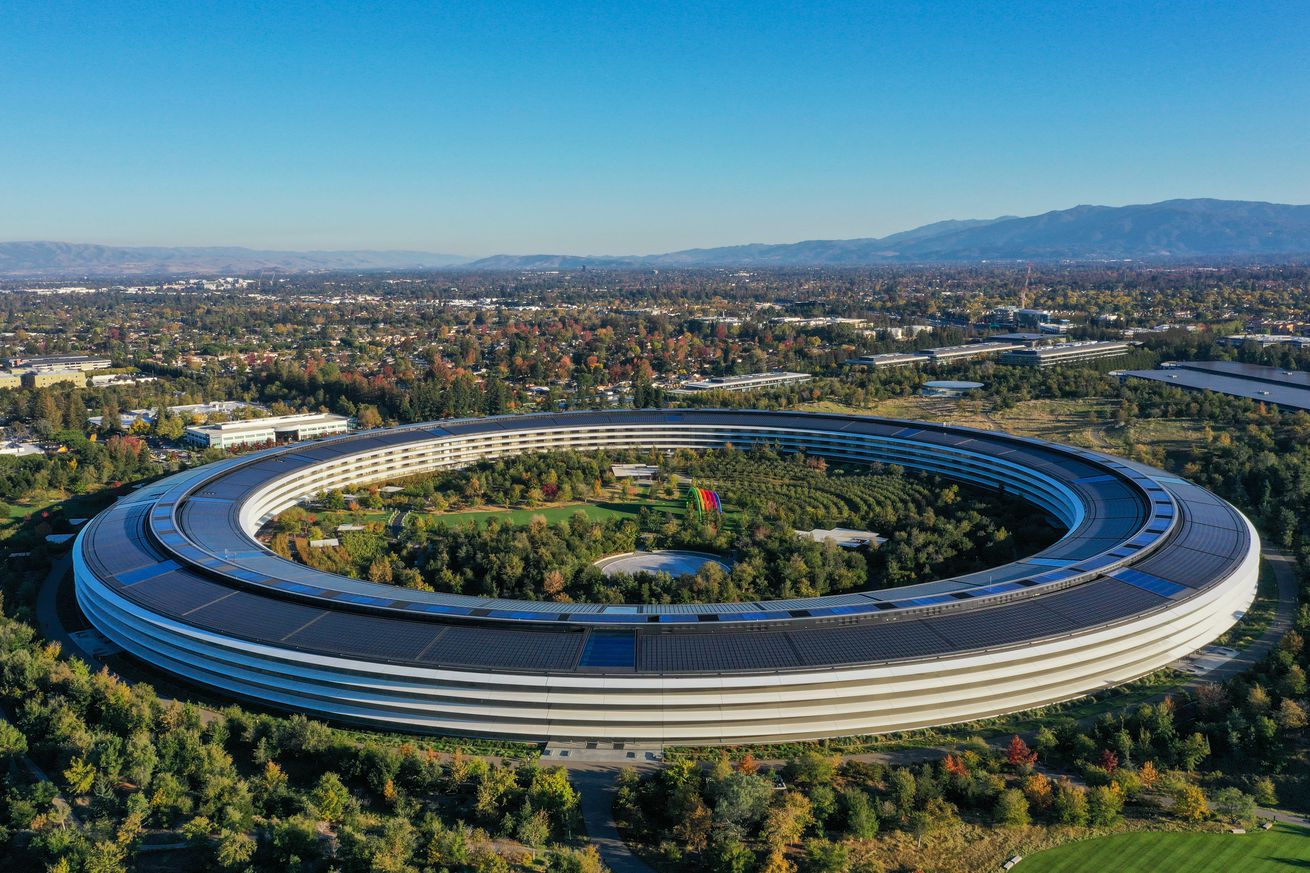
Apple Park in Cupertino
Photo by Tayfun CoÅkun/Anadolu Agency via Getty Images

Apple has indefinitely delayed the date on which corporate employees will have to return to the office, according to a letter that CEO Tim Cook sent to staff on Wednesday. The letter, a copy of which was obtained by The Verge, said the company’s date for returning to work, was “yet to be determined,” and he encouraged all employees to get the coronavirus vaccine and booster.

“Our offices remain open and many of our colleagues are coming in regularly, including our teams in Greater China and elsewhere,” Cook wrote. “As we look forward to more of our teams being together again, we will continue to make decisions based on local conditions and will be sure to notify you at least four weeks before beginning the pilot.”

The news was first...

Continue reading…

17 Dec 05:28

New York becomes largest US city to ban new gas hookups

by Justine Calma
Grand Opening Of Summit One Vanderbilt
The New York City skyline seen from the Summit One Vanderbilt observation deck on Thursday, Oct. 21, 2021. | Jeenah Moon/Bloomberg via Getty Images

The Big Apple just became the biggest city yet to say goodbye to gas hookups in new construction. New York City Council passed a bill today that prohibits the combustion of fossil fuels in new buildings, effectively phasing out the use of gas for cooking and heating.

Addressing building emissions is critical to New York City meeting its climate goals; they’re responsible for 70 percent of the city’s greenhouse gas emissions. The ban will apply to structures under seven stories tall starting in 2024 and to larger buildings in 2027. The measure will drastically cut down on pollution that fuels climate change: according to a recent study by clean energy think tank RMI, it’ll slash 2.1 million tons of CO2 emissions by 2040, which has about...

Continue reading…

17 Dec 05:03

Log4j is patched, but the exploits are just getting started

by Corin Faife
Photo by Amelia Holowaty Krales / The Verge

Peter Membrey, chief architect of ExpressVPN, remembers vividly seeing the news of the Log4j vulnerability break online.

“As soon as I saw how you could exploit it, it was horrifying,” says Membrey. “Like one of those disaster movies where there’s a nuclear power plant, they find it’s going to melt down, but they can’t stop it. You know what’s coming, but there are very limited things you can do.”

Since the vulnerability was uncovered last week, the cybersecurity world has kicked into overdrive to identify vulnerable applications, detect potential attacks, and mitigate against exploits however possible. Nonetheless, serious hacks making use of the exploit are all but certain.

“As soon as I saw how you could exploit it, it was horrifying”
...

Continue reading…

15 Dec 21:23

How to Save People From Drowning in a Sea of Misinformation

by Suzanne Nossel
As with stopping smoking or promoting recycling, containing disinformation will depend upon changing consumer behavior.
14 Dec 13:20

Avaya Experience Builders A ‘Lego Kit’ For Partners In ‘Experience Economy’

by Gina Narcisi
‘Experience Builders is really just an extension of that down to the CPaaS capabilities, where we can take those fundamental components or building blocks and do something interesting with them that just hasn’t been done before,’ one Avaya partner tells CRN.
10 Dec 23:21

Peloton really wants you to know that what happened to Big isn’t because of its bike

by Victoria Song
Pelton Bike Plus in an apartment
A Peloton Bike was at the center of a shocking plot twist in HBO’s Sex and the City reboot. | Photo by Amelia Holowaty Krales / The Verge

The punches keep coming for Peloton. Its treadmills were recalled after a series of injuries and a child’s death, people are returning to gyms, and now — spoiler alert — its stock is down 11 percent overnight after its iconic Bike was a key part of a major character’s death in the inaugural episode of And Just Like That..., HBO Max’s new Sex and the City reboot. However, Peloton is now saying its product isn’t to blame — it’s extravagant living.

Spoiler warning: the following discusses a major plot point from the first episode of And Just Like That...

The brouhaha centers around the death of Mr. Big (Chris Noth) following a 45-minute Peloton class led by fictional instructor Allegra (who is portrayed by actual Peloton instructor Jess...

Continue reading…

10 Dec 23:20

Why movie theaters aren’t dead yet

by Edward Vega

The “theatrical window” has shrunk. But it’s still there.

Covid-19 looked like it could have brought about the end of movie theaters. Theaters couldn’t show movies. Some of the biggest American theater chains were on the brink of bankruptcy. And US movie studios started flirting with an idea: releasing movies digitally and in theaters at the same time.

The “theatrical window,” when a movie plays only in theaters, typically has a minimum length set by deals between movie studios and movie theaters. You might remember a time when the theatrical window was long and you had to wait close to a year before a movie would come out on video or DVD. But over the years, as options for home viewing have proliferated, that window has shrunk. By 2019, many movies were becoming available at home less than three months after their original release.

Behind that shrinking window were decades-long negotiations between theaters and studios over how long that window should be — and it seemed as though movie studios had gradually gotten the upper hand. Then the pandemic gave studios leverage like never before. Now they could bypass movie theaters altogether.

But in the end, they chose not to. Big movies still come out in theaters first. The theatrical window still exists. Why?

You can find this video and all of Vox’s videos on YouTube.

10 Dec 22:43

The Direct-to-Consumer Casket Industry is Dying to Have You

by Anna Merlan

When you die, you won’t be around for what happens immediately after, which is probably for the best. But in all likelihood, other people will soon be there, setting in motion a machinery of death, disposal and, eventually, grieving that will whir to life the moment you breathe your last. One of the strangest parts of the business of dying is the casket—an extraordinarily expensive, excessively sturdy, satin-lined box designed to hold the most impermanent thing that belongs to any of us. Now, a direct-to-consumer casket company is promising to help consumers buy “designer caskets at revolutionary prices,” as its sales materials put it. Funeral industry experts told Motherboard that its business model is both intriguing and potentially plagued with some very, well, earthbound concerns. 

The company is Titan Casket; though it’s been around for several years, in the past few months it’s generated a modest avalanche of press for its promise to be, as co-founder Josh Siegel memorably put it in several interviews, “the Warby Parker of the funeral industry.” In simpler terms, that means that customers buy caskets from Titan’s website and have them delivered to the funeral home of their choosing— or, in rarer cases, to their homes or death doulas. 

At first glance, caskets are a curious place to start a funeral business, given that traditional burials are rapidly declining. That said, “three million people pass away each year in the US and still choose caskets,” Joshua Siegel, one of the company’s three co-founders, told Motherboard. He added that the company plans to fundraise for the first quarter of next year and from there “move into new product categories: urns, vaults, flowers and expanding our eco options. Customers are asking for these things.” 

Titan was founded by Scott Ginsberg, a Boston-based casket entrepreneur who launched the company on Amazon in 2016; he teamed up with Siegel and his wife Elizabeth, the company’s third co-founder, in 2018. Siegel previously worked for a decade for Amazon, in the department that oversees the delivery of heavy and bulky items. The trio has shot to public attention recently through what Siegel calls “the direct-to-consumer playbook,” focusing on SEO and digital marketing, and making sure the company’s caskets can be bought not just on Amazon but on the websites of CostCo, Walmart, and Sam’s Club. The pandemic hasn’t been a boon to their business in the sense that more people are in need of caskets, Ginsberg told Motherboard, but in that more people are shopping online. “It’s changed the way people shop,” he said. 

The comparison to Warby Parker generated a round of hilarity on Twitter, but Siegel says the company is not, for instance, suggesting that people try on multiple caskets and send back the ones that don’t work

“Warby saw an industry where there was one manufacturer who controlled manufacturing across all brands and one distribution channel,” Siegel said, “and because of that industry structure, pricing was very high and selection was limited at the point of sale. That’s the same thing with caskets. There are two large manufacturers. They only sell to funeral homes. There just aren’t options for customers, so they’re marking a distressed purchase that ends up being very expensive.” 

Caitlin Doughty is an author, mortician, and the founder of the Order of the Good Death, a funeral reform society. She’s also a co-owner and funeral director at Clarity Funerals and Cremation in Los Angeles. While she agrees that there are a multitude of problems in the funeral industry, she’s less than impressed with Titan’s model, which she points out is far from new.

“Direct-to-consumer casket companies have been around for years,” she told Motherboard via email. “Notice they don't say they're the ‘Costco of Caskets’ because Costco has been selling caskets in the same way since the early 2000s.”  

“I think Warby Parker is the wrong comparison,” she added. “Beyond the obvious that you can't try the caskets and send the ones you don't like back, the caskets themselves are the same cookie cutter, environmentally detrimental models used by most funeral homes.” (Siegel responded, “We have an entire eco-friendly section of our site,” and that, when it comes to the products they manufacture themselves, “we try to take steps to make them eco-friendly.” Ginsberg said that can, for instance, involve powder-coating caskets, which releases fewer emissions than other kinds of casket-painting.) 

“Fundamentally, you’re not doing things that differently,” agreed Jeff Jorgenson, the managing owner at Elemental Cremation and Funerals, a green funeral home in Seattle, and the co-owner, with Doughty, of the funeral home in LA. Titan, he said, is doing something “really cool” and genuinely needed, but he, too, is politely skeptical about some of the particulars of their business model. 

The appeal of buying a casket at home, Jorgenson told Motherboard, is obvious: It allows for personalization and less pressure than if you’re sitting in a funeral director’s office flipping through a book of caskets under their watchful gaze. “We live in a society where the amount you spend on a gift directly translates to the size of your love,” he said. “And this is the final gift, right? So in the confines of your home and your computer and your spouse and your family you can make choices that are more natural and more comfortable. And for that I love what they’re doing.” 

Doughty added that buying a casket online involves a level of built-in price transparency that the traditional funeral home may not be able to offer, and that it speaks to Gen X and Millennial customers who expect to be able to shop online, read reviews, and compare prices. “Most funeral homes are shrouded in mystery,” she wrote. “Some funeral homes don't post their prices anywhere online–though there is a push for the Federal Trade Commission to require it as we speak.  You can walk in for your appointment and discover mom's casket is going to be $6,000 and other services $7,000 and cemetery costs $10,000. You'd never make a $23,000 purchase of a car by just showing up at a car dealership, having never Googled anything, and learn the Honda Civic mystery price the day-of. Especially if the same Honda Civic is $5,000 less across the street.” 

Conventional funeral homes, Doughty added, will likely object to the Titan model, for the simple reason that it cuts into their bottom line.  

“Most conventional funeral homes would prefer if you don't order caskets online because their markup on caskets is high,” she wrote. “The high markup is a holdover from an extremely old model of selling funerals where the assumption was that every family wants embalming, viewing, fancy casket, hearse, burial, etc.” To cover that high overhead—as well as other expenses, like the mortgage on the funeral home and the staff who run it—there’s often large markup on caskets, she added. 

But both Doughty and Jorgenson say that model is quickly becoming obsolete. “Data shows us that there is steeply declining interest in the ‘full traditional’ funeral with all the bells and whistles,” Doughty wrote. “For families who don't want to pay north of $10k for a funeral, buying a casket online can be a great opportunity to get the same casket for a lower price.” That’s due in part to the so-called Funeral Rule, the FTC regulations that, among other things, allow you to buy a casket somewhere other than the funeral home. 

“Funeral homes aren't allowed to charge you a handling fee (or any fee) for accepting the delivery of your casket purchased online,” Doughty wrote. 

If Titan’s model isn’t exactly groundbreaking, neither is the conclusion that the funeral industry can be avaricious, unscrupulous, and sometimes oriented around  taking advantage of grieving people. That came to the public’s attention in a comprehensive way courtesy of the writer Jessica Mitford, who published The American Way of Death in 1963. Mitford wrote of the genteel scammery of what she called the “Gracious Dying” industry, the agglomeration of hard sells and emotional manipulation tactics that convinced grieving families they needed to spend thousands more than what they could afford to put their loved one to rest. (One of the more grotesque inventions of the funeral industry at the time was the idea of the “memory picture,” the half-baked pop-science notion that families needed to arrange their loved one in the exact right style, and capture them in the most flattering possible way, before sealing the coffin lid forever, to aid their own healing process and avoid long-term psychological problems.) 

Even the term “casket” itself is an invention of the funeral industry, as Mitford wrote, the same group who replaced “undertaker” with “funeral director” and “hearse” with “coach” or “professional car.” (Technically, however, a coffin does differ in shape; it has six sides and narrows at the bottom; but the fact that it’s been largely replaced in common speech by a word that’s viewed as more genteel is a different matter altogether.) 

At trade shows and in industry publications, Mitford reported, funeral professionals strategized about how to get customers to spend more, particularly on caskets. One large company, SCI, rigorously trained its Australian employees in the art of “casket selection,” giving them a script to recite as they guided grieving families through progressively more expensive caskets, ending with a glowing recitation in front of the Hanover, priced at nearly $3,000. (“Allow your family as much time as they need,” the instructions added, “But ensure that you do not leave them in the room. Read their body language.”) 

The casket itself—its improbable sturdiness and deathless durability—is arguably another unnecessary innovation. For many hundreds of years, Jewish communities have buried their dead in simple pine coffins designed to biodegrade quickly, an innovation now taken up by the “green” funerals that have grown in popularity in the last few years. Traditional Muslim burials take the concept one step further: The dead are wrapped in a shroud and deposited directly in the earth, their bodies laid on their right side and their faces towards Mecca. Both practices seem to do the job as well as a casket, which tends to be made of finer materials than a coffin, like mahogany, and features niceties, like a small pillow, that the occupant likely won’t get to enjoy all that much.

At the same time, this is a particularly chaotic moment for the funeral industry, and probably one well-suited for a new business. Funeral homes, Jorgenson says, are already reeling from the pandemic, not because there has been an unhandleable flood of death, but because the supply chain disruptions have impacted funerals. 

“With the way overseas shipping is right now,” Jorgenson said, “the distributors I’ve used that have their production in China, it’s impossible to get caskets from there.” Supply chain bottlenecks are particularly urgent when dealing with death, he added,.“When you’ve got dead people you’ve got a week or less to get it. I can’t wait for you to get it off the boat.” Jorgenson has shifted to all caskets made in the US, though he says he rarely sells them, given that the vast majority of customers opt for cremation. He’s curious about whether Titan would, for instance, be able to replace a casket quickly that shows up damaged: “If it shows up with a huge gash in the side of it, which has nothing to do with Titan, but the delivery company, and you want to order another, how long does it take for someone to replace a sweatshirt in a torn bag? It takes weeks. That’s the question. If this thing shows up damaged you don’t have a turnaround to have a new casket tomorrow.” He’s not trying to dissuade people from ordering a casket online. (“I’m game for it,” he said.) But particularly with the postal system as unreliable as it currently is in the U.S., “This is probably not the best idea on a tight timeline. There’s no wiggle room there.” 

Siegel responds that the company has four warehouses “that we’re scaling to meet most metropolitan areas in one to three days. Our damage rate is less than 2%. I don’t know what it is when funeral homes order themselves. If there is an issue our job is to make sure clients are happy. So we can replace it right away.” Those are “rare cases,” to begin with, he said.

COVID also upended the normal timing of when, during the year, people are more likely to die. In a typical year, Jorgenson said, “Death is very regular and sales are very regular. We don’t have a lot of flux. Covid turned things upside down on the death rate about when and how it happens.” For instance, there was no normal seasonal surge of death during cold and flu season. 

In all, Jorgenson said, “It became very chaotic. We’re still trying to—everyone in this industry is on rubber legs at this point.”

Enter Titan, which had the fortuitous timing of launching its website in January 2020. The experience of scrolling through the site does have an absurdist element to it, so closely does it resemble the experience of shopping for a direct-to-consumer toothbrush or mattress. You can take a quiz to find out what casket is right for you (the quiz answers only small number of questions before getting your email address), design your own casket from a range of hues that include “orchid” or “gunmetal,” or, for the customer who likes an element of continuing education, click over to the “Titan Casket Mourning and Grief Information Hub.” The hub features some types of grief that might be right for you—disenfranchised, anticipatory—and promises to offer articles about the stages and expression of that grief, as well as Bible verses that might be helpful. Each of these action items is, for the moment, accompanied only by the phrase “[Link to learn more].” (The link itself remains missing for the time being; Siegel and Ginsberg say that portion of the site is still being built out, and that they plan to write more content geared towards their customer base.) 

Titan also has extremely good SEO on Amazon, something that its co-founders say is not related to the fact that Joshua Siegel used to work there. Searching for “casket” on the site brings up its products first, and searching for any other casket company by name also brings up many rows of sponsored Titan products first. “There’s no special relationship with Amazon, we’re just using the same seller tools available to any seller,” Siegel said. “In some ways Amazon is a hard place to do business as a  heavy bulky seller, which I'm aware of.”  

But while the process of buying a casket online might feel somehow ridiculous—might seem to render it as meaningless as choosing a toothbrush of the right softness—the fact is that caskets are consumer products, and ones that some of us need and even want to buy. “We want to emphasize that this is a service business,” Siegel told Motherboard. “We’re mission-based. Sometimes it comes across as we’re selling another widget but that’s not the ethos we have as a company or what we’re trying to do. You spend all day talking to families having one of the most vivid and meaningful weeks of their lives and our job is to be there for them.” 

For many people, the chance to bury their dead correctly, in accordance with their spiritual or family traditions, feels like the last thing we can do in this world for those we love. 

It’s also nice to not go broke doing it. From that perspective, Jorgenson said, he’s glad to see Titan helping to make the process slightly more affordable. And the cavalcade of marketing around Titan, he hopes, might encourage younger people to talk to their loved ones—and think for themselves—about how they want their remains to be dispatched when they die, to avoid guessing or having to patch something together at a time of unthinkable stress and grief. 

“Talk to your damn family,” he said, emphatically. 

“The funeral industrial complex has long wildly overcharged the poor and marginalized for death services,” Doughty told Motherboard. “Everything is overpriced in the funeral industry and there is basically no help at the federal or state level.” While the Warby Parker comparison Titan uses might seem, like some, to be an indication of the gentrification of death services, she added, “I would argue the funeral industry can't be gentrified because the industry itself was the ultimate gentrifier.” 

 “Overall I'm pleased to see more online options, especially if they are a cost break for families,” she wrote. “But what I'd like to encourage people to do is eliminate ALL funeral products and then add back only what they really desire. We shouldn't be moving in the direction of more junk to buy and call it progress. You don't need an urn, you don't need a casket, you don't need a memorial tree. Can you desire those things? Absolutely! But make sure you're purchasing what is meaningful to you and your family, not what society or a funeral home is encouraging you to buy.” 

10 Dec 00:03

RingCentral Announces Executive Leadership Changes

by Amy Ralls

BELMONT, CA – December 8, 2021 – RingCentral, Inc. (NYSE: RNG), a leading provider of global enterprise cloud communications, video meetings, collaboration, and contact center solutions, today announced that Anand Eswaran is stepping down from his role as President and Chief Operating Officer, and that Vaibhav Agarwal, the Company’s Chief Accounting Officer, is appointed as the Interim Chief Financial Officer effective Jan. 1, 2022.

“I would like to thank Anand for his contributions to RingCentral over the last two years,” said Vlad Shmunis, RingCentral’s founder, Chairman and CEO. “We are happy for the next chapter in his career and wish him good luck on all fronts.”

“It has been a privilege to serve as President and COO of RingCentral, one of the world’s leading cloud communications providers and an important driver of innovation in our industry,” said Anand Eswaran. “What makes RingCentral so special is the focus, passion and execution mindset from the entire team. I wish continued success for RingCentral and its outstanding team. At the same time, I am excited to start my journey as a CEO for a late-stage private company with over a billion dollars in annual recurring revenue in a category that is not competitive with RingCentral. To ensure smooth transition, I will be available as an advisor through end of December 2021.”

“We have a deep and capable leadership bench across all areas with an enviable track record of strong execution at RingCentral,” added Vlad Shmunis. “On that note, I am pleased to announce that Vaibhav Agarwal, our Chief Accounting Officer and a five-year RingCentral veteran, is promoted to the role of Interim Chief Financial Officer. I look forward to closely working with Vaibhav in the next exciting chapter of RingCentral.”

“I am excited and humbled to be given this opportunity to be the Interim CFO of RingCentral, a global UCaaS leader,” said Vaibhav Agarwal. “Leveraging our well proven strengths of people, technology and partnerships, RingCentral is well positioned for continued success in this unique $100 billion+ digital transformation opportunity.”

Given the momentum in the business, RingCentral remains very confident with its previously issued guidance of $1.580 to $1.581 billion total revenue, representing 33% to 34% annual growth for full year 2021.

Forward-Looking Statements

This press release contains “forward-looking statements,” including but not limited to, statements regarding our future financial results and guidance, our ability to execute and lead in the UCaaS digital transformation market, our expectations around the demand for our products and the growth of the markets in which we compete. Forward-looking statements are subject to known and unknown risks and uncertainties, and are based on assumptions that may prove to be incorrect, which could cause actual results to differ materially from those expected or implied by the forward-looking statements. Among the important factors that could cause actual results to differ materially from those in any forward-looking statements are: the future effects of the COVID-19 pandemic; our ability to realize the anticipated benefits of our strategic relationships; our expectations regarding our strategic acquisitions; our ability to grow at our expected rate of growth; our ability to add and retain larger and enterprise customers and enter new geographies and markets; our ability to continue to release, and gain customer acceptance of, new and improved versions of our services, including RingCentral MVP™, and RingCentral Video®; our ability to compete successfully against existing and new competitors; our ability to enter into and maintain relationships with resellers, carriers, channel partners and strategic partners; our ability to successfully and timely integrate, and realize the benefits of any significant acquisition we may make; our ability to manage our expenses and growth; our ability to successfully manage recent leadership transitions; and general market, political, economic, and business conditions, as well as those risks and uncertainties included under the captions “Risk Factors” and “Management’s Discussion and Analysis of Financial Condition and Results of Operations,” in our Form 10-Q for the quarter ended September 30, 2021, filed with the Securities and Exchange Commission, and in other filings we make with the Securities and Exchange Commission from time to time.

All forward-looking statements in this press release are based on information available to RingCentral as of the date hereof, and we undertake no obligation to update these forward-looking statements, to review or confirm analysts’ expectations, or to provide interim reports or updates on the progress of the current financial quarter.

About RingCentral

RingCentral, Inc. (NYSE: RNG) is a leading provider of business cloud communications and contact center solutions based on its powerful Message Video Phone™  (MVP ®) global platform. More flexible and cost effective than legacy on-premises PBX and video conferencing systems that it replaces, RingCentral empowers modern mobile and distributed workforces to communicate, collaborate, and connect via any mode, any device, and any location. RingCentral offers three key products in its portfolio including RingCentral MVP™, a Unified Communications as a Service (UCaaS) platform including team messaging, video meetings, and cloud phone system; RingCentral Video ®,  the company’s video meetings solution with team messaging that enables Smart Video Meetings™; and RingCentral cloud Contact Center solutions. RingCentral’s open platform integrates with leading third-party business applications and enables customers to easily customize business workflows. RingCentral is headquartered in Belmont, California, and has offices around the world.

The post RingCentral Announces Executive Leadership Changes appeared first on Cloud Communications Alliance.