In its comment, Google says that the bug happens when someone is using Android 10 or later and has Teams installed but isn’t logged into the app. The company says that Microsoft will be releasing an update to Teams “soon” to prevent the issue and that there’s an update to Android coming January 4th.
If you’re running Android 10 or above and aren’t logged into Teams, uninstall...
WhatsApp has launched a new pilot that lets a “limited number” of people in the US send and receive money from within a chat using cryptocurrency. The feature is powered by Novi, Meta’s digital wallet that launched as a pilot six weeks ago, with payments made using Pax Dollars (USDP), a stablecoin pegged to the US dollar issued by Paxos. The news was announced by Novi’s incoming head Stephane Kasriel and WhatsApp’s Will Cathcart.
According to Novi’s website, sending a payment works much like sending any other attachment in WhatsApp. You access the feature via the paper clip icon on Android or the + icon on iOS, and then select “Payment” from the menu that appears. Novi’s site notes there are no fees for sending or receiving money, no...
On one side of the stove wars is the natural gas utility industry, which has tried to thwart cities considering phasing out gas in buildings. One of its PR strategies has been to hire influencers to tout what they love about cooking with gas to generate public opposition to city efforts.
On the other side are climate and public health advocates who point to years of mounting scientific evidence on what combusting methane in a kitchen does to one’s health. Even the relatively small amount of gas burned by the stove has an outsized effect on indoor health because it releases nitrogen dioxide and carbon monoxide, two pollutants known to increase risks of respiratory and cardiovascular disease. Dozens of cities in California have passed stronger building codes that encourage new construction to be powered by electricity instead of natural gas pipelines. New York City and Eugene, Oregon, may be the next cities to adopt these ordinances.
As more cities move to electricity, what will replace gas stoves? Instead of the electric coiled stoves Americans have learned to hate, there is a newer technology that many chefs prefer: induction.
One of the foodie influencers weighing in is the rising TikTok star Jon Kung, a Detroit-based chef who adopted induction years ago because it keeps his kitchen cool and his air cleaner. Kung, who grew up in Toronto and Hong Kong, learned to love induction while training in China, where induction is more common than in the US. He considers the climate benefits of a stove powered by an increasingly clean grid an added bonus.
Kung’s home kitchen has a gas stove. But he almost always uses a portable induction cooktop — for private dinners and pop-up events he’s hosted around Detroit and, more recently, for his short, playful cooking tutorials on TikTok, where he’s amassed 1.5 million followers.
Climate advocates have sought to elevate Kung and other chefs with their own education campaign on induction. In March, the group Mothers Out Front hired Kung for a paid promotion on why he prefers induction to gas.
I called up Kung to learn more about why the health and working conditions of kitchens are less safe than most people realize, and the role chefs can play in advocating for environmental and worker health. The interview has been edited for length and clarity.
Rebecca Leber
Let’s start with the basics. What is induction?
Jon Kung
Essentially, induction stoves use a magnetic field to heat the pan itself from within. [Only certain kinds of pans work with induction.] With gas, the flame heats underneath to get the pan hot. You’ll hear a fan go off to keep the induction burner cool itself, but you’re literally pressing a button and turning it on.
Rebecca Leber
What do you see as the environmental benefits of induction?
Jon Kung
Gas stoves produce a lot of indoor air pollution, there’s a lot of exhaust and fumes. After a certain period of time, your gas stove will burn less and less cleanly.
With induction, the pollution is limited to what you generate to make that electricity. In an electric grid that uses hydroelectric, solar, or wind power, you’re actually using cleaner sources of power to cook with. It just depends what your grid is like. So, for example, I am building a home that is all induction and will be installing solar power on the roof at that home. Most of my energy for home-use cooking will be generated through clean energy.
Rebecca Leber
What was your introduction to induction cooking?
Jon Kung
I’ve had the pleasure of working in both large kitchens that use gas and large kitchens that use induction. [The latter] was over seven years ago, I was working at this 24-hour restaurant in Macau in China. All of the facilities that I was using were all 100 percent induction. There were woks the size of me to boil water for pasta and noodles.
Rebecca Leber
And lately you’ve been using induction for doing pop-up dinners and cooking at home, right?
Jon Kung
In my own home kitchen I’m doing as much induction as I possibly can, just for the sake of my own comfort and issues like indoor air pollution. It’s just a much more efficient way of cooking in the sense that any of the heat you need to do your job is concentrated at what you’re trying to cook, not just displaced into the room and your body.
Rebecca Leber
Interesting you say you used induction out of necessity. What made it a necessity?
Jon Kung
Lack of ventilation was the biggest thing because I lived in a super-old building in Detroit, and even though there was a gas range in there, there was no ventilation that was helpful. It predated any kind of safety and health regulations. Because of that, I started using induction ranges.
I was also doing pop-ups in places like museums where it was really important I didn’t have a lot of exhaust in these rooms. So induction does seem like the natural way to go because it provided me with the power I need, with portability and cleanliness, and lack of fumes that requires me to have a fan.
Whenever I tried to cook at my home [with gas] in the same way that I cook in that restaurant, I set off the fire alarm because there wasn’t enough ventilation. The fans just weren’t strong enough to take in all of the smoke and gas.
Rebecca Leber
You’ve worked in professional kitchens in restaurants, too. What’s it like in a restaurant kitchen that is relying on gas?
Jon Kung
The heat is uncomfortable. It’s almost like disregard for the comfort of workers the way that kitchen life here is just accepted. You’re supposed to suffer for your art and for your craft here, and the open flame cooking is just one of the components of that.
If we ever got a break at all, I would run downstairs just to change a T-shirt because one of them was so soaked that you literally could wring through it. We would get that sweaty depending on how much the restaurant cares to put in the appropriate ventilation. We’d go to the walk-in coolers and freezers and we’d be steaming off of our skin simply because we’re so hot.
Rebecca Leber
What about air quality?
Jon Kung
Because of workplace regulations, the ventilation for professional kitchens has to be so much stronger than what people have at home. It all depends on the [restaurant] owner; how much money the owner is willing to spend could determine what kind of air quality you have. If you did all induction, that just takes that factor completely out of it — all you need is ventilation that will get steam and some heat out of there. But you won’t need to force fumes into one specific direction to prevent it from going into your lungs.
Gas burners, if they ever burn clean in a professional setting, would probably only be that way for the first month. Those things are, by and large, so dirty and get so clogged and become so inefficient over time. Very few kitchens operate at 100 percent efficiency and 100 percent cleanliness, simply because manpower isn’t there to maintain restaurants in that way.
There’s no way that being around any of that is good for you. Especially if that is your job, being there 12 to 14 hours a day. Over time it creates a very unsafe environment for our workers’ long-term health and well-being.
Rebecca Leber
I’m not sure home cooks always think about ventilation either. Most gas stovetops, like your apartment kitchen, aren’t even equipped with a hood that vents to the air outside. At best, they have a fan that recirculates polluted air. What’s ventilation like in a restaurant kitchen versus at home?
Jon Kung
Having working ventilation is part of the health code to make sure your restaurant is approved to run. And it’s usually really powerful to the point that you have these fans going and it’s really hard to hear people right next to you because they’re just so loud. These ventilation systems are not in everyone’s home. Even though the gas burners may not be quite as strong, I don’t see how these little microwave-over-the-range things are doing enough to mitigate the pollution caused by these burners.
Obviously, even when you’re using induction, you’re gonna want ventilation for things like offsetting steam, for when you’re boiling water or when you’re frying food. But ventilation is mainly there to take in the fumes of your gas burner. You don’t really need strong ventilation if you were just using electric burners, but because most people use gas they need one that is stronger.
Rebecca Leber
What would it take for more restaurants to adopt induction burners?
Jon Kung
There are no financial incentives to get people to adopt this new technology. Especially in the restaurant industry where margins are so small people are terrified to try anything new because what is new might be something that doesn’t work.
Certainly high-end restaurants have the budgets to do this. [Dan Barber’s Blue Hill restaurants in New York use both kinds of stoves.] It seems like when you have a lot of money, that’s when you’re able to budget a damn to give for the quality of life for your workers because restaurants at that caliber have a high interest in retaining workers. Therefore, every little bit helps, including maintaining comfort, health, and safety for those workers. But when you’re trying to talk about people on the ground level, people that are operating at a loss in their restaurant and restaurant groups, then that becomes a little less of a priority.
Rebecca Leber
What is your advice for the readers who are mulling over a kitchen renovation or are eyeing a plug-in induction stovetop?
Jon Kung
There are simple plug-in burners that people can use that cost $200. [There are other models for under $100.] The quality will vary based on how much money you’re willing to spend. At the same time, the cost of adopting this just to try is relatively low, and people might appreciate the fact that they can actually use this burner anywhere in their kitchen and can maximize use of counter space or whatnot.
Rebecca Leber
Is there much of a learning curve to induction?
Jon Kung
As with any kind of tactile skill and everything that is different or new, it takes a little bit of time to get used to. Honestly, if people just give it a shot, they’ll realize it’s a lot more like gas cooking than people give it credit for.
The trade-off of adopting induction is learning a new kind of timing for your cooking. Also: Make sure that your pans are compatible. If a magnet will stick to your pan, it should work. Cast iron works beautifully with it as well — if you have a saucepan or dutch oven.
Rebecca Leber
There’s a lot of myth-building around gas cooking and its place in the food and restaurant industry. What do you think is the biggest myth?
Jon Kung
Any argument or reluctance to adopt induction seems to come from a refusal to change and possibly an old toxic masculine perspective, where it’s, “Oh, I want to cook with fire, fire is part of our job.”
I’ve never heard any argument for gas that really makes sense from a professional standpoint except maybe for initial investment and cost. But otherwise, any kind of romance of cooking doesn’t come from a place of logic. It comes from a place of nostalgia, which is not really how to run a business.
Rebecca Leber
What is the role of chefs like you doing this kind of advocacy?
Jon Kung
If we normalize induction in the restaurant it becomes something desirable to people at home because they want to be able to do everything the pros do. And it’s funny because the best of the best have already adopted this technology. I just don’t think anyone’s really vocal about it yet, for whatever reason. But chefs will do it for one of a few reasons. One might be for the environment, one might be workers’ safety and comfort. Either way, both of those things apply to your home.
Arrests from the fallout of Anom, an encrypted chat platform that authorities secretly backdoored, will continue for “years,” according to the Australian Federal Police (AFP).
The announcement came as the AFP said it was entering the second phase of Anom-related arrests. The AFP said this phase has identified up to 160 targets.
“It is just a matter of time before we scoop up those who believed they had gotten away with their crimes—like the alleged criminals who smashed or burned their AN0M devices,” AFP Assistant Commissioner Crime Command Nigel Ryan said in the announcement.
Destroying an Anom device likely wouldn’t help a suspected criminal user because authorities will already have a copy of each users’ messages. In 2018, a former distributor for another encrypted phone company called Phantom Secure was developing Anom as a next-generation encrypted device. They offered Anom to the FBI for use in current and future investigations. The informant, the FBI, and the Australian police then added a master key that could be used to decrypt messages sent by all of Anom’s users essentially in real-time. Later, Anom had 11,800 devices in countries all over the world.
Do you know anything else about Anom? Were you a user? Did you work for the company? Did you work on the investigation? We'd love to hear from you. Using a non-work phone or computer, you can contact Joseph Cox securely on Signal on +44 20 8133 5190, Wickr on josephcox, OTR chat onjfcox@jabber.ccc.de, or emailjoseph.cox@vice.com.
The FBI dubbed this Operation Trojan Shield; the Australian focused part is called Operation Ironside. To date, Australian authorities have charged over 300 people and executed 700 warrants, the announcement adds. Globally, nearly 1,000 people were arrested.
The collected Anom messages gave a rare window into the intimate details of organized crime. Groups used diving teams to attach or retrieve drugs from cargo ships, using underwater scooters to move around more quickly. Some syndicates used waste management services to pick up drugs hidden in bins at ports, and specialist cooks of illicit drugs provided their services to help extract concealed drugs, according to the announcement.
The AFP also provided some information on how it said Anom operated. It said Anom wholesalers were mid to high level criminals, with rights to distribute the devices in certain countries, and that drivers were hired to deliver the devices themselves.
Using internal documents and videos from inside Anom, Motherboard has shown that the company operated as an entity in its own right, including systems for tracking how many phones distributors had in different parts of the world; customer support; and a workflow for flashing devices with Anom’s customized software.
The AFP announcement added that “Criminals have moved to other encrypted devices. It is likely some large syndicates will develop their own dedicated encrypted communication devices and private networks within the next three years.”
Microsoft is testing a redesign of its venerable Notepad app, adding some welcomed modern features like a dark mode, a better search / find and replace interface, better undoing, and more.
While the visual updates like the addition of dark mode, updated right-click menu, and Windows’ new theme-adopting material are nice, the functional updates will probably be the biggest upgrade to anyone who actually writes in Notepad. In the current version of the app that ships with Windows 11, the text search tool and the find and replace tool are two different pop-up windows, accessed by two different keyboard shortcuts. The redesign combines them into one floating bar instead of something that looks like it’s from the XP era.
Verizon and AT&T are hoping new swaths of C-band cellular radio spectrum will help make the 5G hype closer to reality, but the big mid-band 5G rollout may have a side effect. Airplanes rely on radio altimeters to tell how high they are above the ground to safely land when pilots can’t see, and the FAA is now instructing 6,834 of them to notdo that at certain airports because of 5G interference.
The FAA ruled on Tuesday that those thousands of US planes (and some helicopters) won’t be able to use many of the guided and automatic landing systems that are designed to work in poor visibility conditions, if they’re landing at an airport where there’s deemed to be enough interference that their altimeters aren’t reliable. “Landings during...
William Burns said that building knowledge on crypto was “an important priority” for the CIA, and he planned to devote “resources and attention” to it.
Twitter has acquired Slack-like messaging app Quill with an eye toward improving messaging services, including direct messages, the company announced Tuesday. In a tweet thread announcing the deal, Nick Caldwell, general manager for core tech at Twitter, described Quill as a “fresher, more deliberate way to communicate. We’re bringing their experience and creativity to Twitter as we work to make messaging tools like DMs a more useful & expressive way people can have conversations on the service.”
.@ludwig and his talented team built Quill as a fresher, more deliberate way to communicate. We’re bringing their experience and creativity to Twitter as we work to make messaging tools like DMs a more useful & expressive way people can have...
On Tuesday, the Senate voted 68 to 31 to confirm Jessica Rosenworcel’s re-appointment to the Federal Communications Commission, putting her in place to be the first official chair of the agency under President Biden. Rosenworcel will also be the first female chair in the 86-year history of the FCC.
The vote officially confirmed Rosenworcel’s reappointment as FCC commissioner, but with Senate approval in place, it makes her formal ascension to chair all but certain. In a speech announcing the floor vote, Majority Leader Sen. Chuck Schumer (D-NY) called Rosenworcel “a remarkable, highly experienced and historic nominee.”
As chair, Rosenworcel is expected to place a particular emphasis on broadband access, working to expand high-speed...
There's a long-running conspiracy theory among a small number of cryptocurrency enthusiasts that Bitcoin's anonymous inventor, Satoshi Nakamoto, was actually the CIA or another three-lettered agency. That fringe theory is having a fresh day in the sun after CIA Director William Burns said on Monday that the intelligence agency has "a number of different projects focused on cryptocurrency" on the go.
Burns made his comments at the tail end of a talk at the Wall Street Journal's CEO Summit. After discussing everything from the possible Russian invasion of Ukraine to the challenges of space, someone in the audience asked if the agency is on top of cryptocurrencies, which are currently at the center of the ransomware epidemic that U.S. officials are attempting to get a handle on and stamp out. Here's what Burns said:
"This is something I inherited. My predecessor had started this, but had set in motion a number of different projects focused on cryptocurrency and trying to look at second- and third-order consequences as well and helping with our colleagues in other parts of the U.S. government to provide solid intelligence on what we're seeing as well."
This is hardly surprising given the focus ransomware is getting from every corner of government. This year, a ransomware attack targeting a pipeline company led to a shutdown, panic buying, and a gas shortage in several states.
Cryptocurrencies "could have enormous impact on everything from ransomware attacks, as you mentioned, because one of the ways of getting at ransomware attacks and deterring them is to be able to get at the financial networks that so many of those criminal networks use and that gets right at the issue of digital currencies as well," Burns said.
Crypto-Twitter had a field day with Burns' comments, with varying degrees of seriousness, which proliferated via—what else?—a tweet from the frequently apocalyptic, "Tyler Durden"-authored blog ZeroHedge.
"damm the CIA made Bitcoin smh. Pack it up it’s over," said one tweet. Another tweet by crypto influencer Crypto Cobain jokingly ranked crypto projects by their likelihood to be CIA plants. (Most likely memecoin? SafeMoon.)
Some posters even took the opportunity to say that even if Bitcoin was a CIA plant, it wouldn't matter.
"If it came out (and was proven) that Bitcoin was created by the CIA, it wouldn’t significantly diminish my bullishness. The only thing it would change is my view of Satoshi. But, crucially, Satoshi is not Bitcoin. That connection was severed years ago," tweeted Spencer Schiff, who is a Bitcoin promoter and the son of stock broker and anti-crypto advocate Peter Schiff.
Of course, (almost) everyone is just having a bit of fun with the joke that the CIA created Bitcoin. But the CIA itself seems pretty serious about its current activities in the crypto space, which no doubt reflects how troublesome ransomware attacks and the like have become.
American Consumers and Businesses on Track to Top 50 Billion Robocalls This Year
IRVINE, CA – December 7, 2021 – Americans received just under 4.1 billion robocalls in November, essentially the same number of calls as in October. However, in November, robocalls averaged 137.4 million calls/day and 1,590 calls/second, up slightly from October, when robocalls averaged 132.0 million calls/day and 1,528 calls/second.
Americans have received 46.9 billion robocalls so far this year, with the country continuing on a pace to hit roughly 51 billion robocalls for the full year. However, since STIR/SHAKEN and new federal robocall mitigation rules took effect on June 30th, overall robocalls have continued to be down about 8% per month on average.
These latest monthly figures are provided by YouMail, a totally free robocall blocking app and call protection service for mobile phones. These figures are determined by extrapolating from the robocall traffic attempting to get through to YouMail’s millions of active users.
“The good news is that monthly robocalls continue to be on a lower plateau since the STIR/SHAKEN rollout on June 30th,” said YouMail CEO Alex Quilici. “The bad news is that we’re still going to see over 50 billion robocalls this year, despite being meaningfully below our past pre-2020 peaks.”
November 2021 Saw a Decline in Spam Calls In October, the number of scam calls decreased by 8%, but the number of telemarketing calls increased by 7%, so together we are still seeing roughly 2.3 billion likely unwanted calls.
Type of Robocall
Estimated November Robocalls
Percentage November Robocalls
Scams
1.4 billion (-8%)
33% (-4%)
Alerts and Reminders
1.2 billion (flat)
29% (flat)
Payment Reminders
0.72 billion (+7%)
18% (+2%)
Telemarketing
0.85 billion (+7%)
21% (+2%)
“Winners” in November 2021 In November, the cities, states, and area codes that had the highest volumes of robocalls were little changed versus October. The same cities continue to average roughly 1 robocall/day/person or more: Memphis, Baton Rouge, and Washington, DC. And there are six states that are getting more than 20 robocalls/person each month, all in the south: South Carolina, Tennessee, Louisiana, and Arkansas.
In addition, there continue to be three area codes affected with over 50 million robocalls/month: Atlanta, Dallas, and Houston. And there are three states getting over 300 million robocalls/month: Texas, California, and Florida.
Cities with the Most Robocalls:
Atlanta, GA (159.5 million, +1%)
Dallas, TX (147.5 million, +5%)
Chicago, IL (128.1 million, +1%)
Cities with the Most Robocalls/Person:
Baton Rouge, LA (33.4/person +1%)
Memphis, TN (32.0/person, -5%) Washington, DC (29.9/person, -2%)
YouMail blocks unwanted robocallers by making sure the user’s phone doesn’t ring, and then plays an out-of-service message that leads them to think they dialed an invalid number. YouMail identifies problematic numbers and robocalls using a combination of its recently patented audio fingerprinting technology, call patterns, and consumer feedback.
YouMail provides the YouMail Robocall Index to estimate robocall volume across the country and for specific area codes every month. This estimate is formed by extrapolating from the behavior of the billions of calls YouMail has handled for its users, and these statistics are regularly cited by the FCC as a definitive source for national data trends.
For a full ranking of cities, states and area codes, as well as details on the behavior of robocallers in each area code, please see http://robocallindex.com. To listen to actual voice messages left by robocallers, please visit the YouMail Directory. To join the YouMail Robocall Index mailing list, please write to RobocallIndex@YouMail.com.
About YouMail, Inc. YouMail protects consumers, enterprises, and carriers from harmful phone calls. YouMail protects consumers with app-based call protection services. YouMail protects consumer-facing enterprises by detecting and helping to shut down imposter traffic that can lead to financial or brand damage. We protect carriers with robocall mitigation services that detect when bad traffic is originating, traversing, or terminating on their networks. Our direct consumer solutions answer over a billion live calls per year across well over 10 million registered users, powering America’s most robust telephone sensor network in identifying and providing zero-hour protection against illegal calling campaigns and cyberattacks. We also operate the YouMail Robocall Index™, the nation’s definitive source on telephone network activity and attacks. YouMail, Inc. is privately funded and based in Irvine, California.
The My Verizon app might be collecting information about your browsing history, location, apps, and your contacts, all in the name of helping the company “understand your interests,” first spotted by Input. The program, which Verizon appears to automatically opt customers into, is called Verizon Custom Experience and lays buried in the privacy settings on the app.
The program introduces two different options that appear in the app, Custom Experience and Custom Experience Plus, each of which varies in terms of invasiveness. Verizon provides additional information about both settings within the app, as well as on a FAQ page on its website. It appears that the Custom Experience option is a stripped-down version of Custom Experience Plus,...
The report highlights the merits of EIP-1559 as a tool for making ETH a deflationary cryptocurrency and potentially better store of value than Bitcoin.
‘SmileBack is allowing partners to get feedback from their customers on what is going well and where any challenges are. We will provide our partners with more insights to help them increase their customer retention,’ April Taylor, ConnectWise vice president of product management, tells CRN.
‘When we have partners with real experts who show up at our customer sites, we hear all about it. And it‘s just incredibly important for maintaining that trust,’ said AWS CEO Adam Selipsky at AWS’ re:Invent conference.
On Tuesday a Finnish court ruled that chat messages secretly gathered by the FBI from encrypted phone company Anom can’t be used as evidence against two particular suspects, according to a report from Finnish outlet Iltalehti. Although the ruling only directly addresses the prosecution of two people, the ruling could have a knock-on effect on other prosecutions against other alleged criminals who used Anom phones.
Anom was an encrypted phone company whose convicted drug-trafficker owner provided it to the FBI in 2018. As the company grew with customers around the world, the devices surreptitiously sent a copy of every message to the FBI and Australian police. This June, authorities went public with the operation and made hundreds of arrests, including of alleged high volume drug smugglers. At the moment, various courts around the world are handling the prosecutions of these alleged criminals.
Earlier this year Motherboard obtained one of the Anom phones from the secondary market. The Anom communications app itself was hidden inside the phone’s calculator application, and also had a dummy operating system filled with bogus apps that could be used to convince a casual observer the device was an ordinary phone.
Do you know anything else about Anom? Were you a user? Did you work for the company? Did you work on the investigation? We'd love to hear from you. Using a non-work phone or computer, you can contact Joseph Cox securely on Signal on +44 20 8133 5190, Wickr on josephcox, OTR chat onjfcox@jabber.ccc.de, or emailjoseph.cox@vice.com.
This specific ruling centres around Finnish rapper Ville Virtanen, who allegedly planned to give 10,000 euros to a drug leader in Spain, and Kalle Kallonen, charged with money laundering. Virtanen’s defense argued that the Anom messages were acquired via a secret, coercive measure under Finnish law, according to the Iltalehti report. The use of that sort of additional information requires the most severe sentence for the particular offense to be at least three years imprisonment. But the maximum penalty for money laundering in Finland is two years, the report adds. The district court found that the Anom messages had been obtained illegally from the individuals in Finland and Spain, and the correct permits required for the surveillance were not applied for, it reads.
The prosecutor said he will appeal the ruling, the report adds.
Today, at AWS re:Invent in Las Vegas, the company announced the Amazon Lex automated chat bot designer in preview, a new feature that simplifies the chatbot training and design process by bringing a level of automation to it.
“We are excited to announce the Amazon Lex automated chat bot designer, a new capability that reduces bot design from weeks to just hours,” Swami Sivasubramanian, VP of Amazon AI told the audience at the AI and machine learning keynote today.
It does this by taking advantage of advanced natural language understanding powered by deep learning techniques. In fact, he said that developers can now create a foundational chatbot designed using historical call transcripts in just a few clicks.
“[The Amazon Lex] automated chat bot designer can typically analyze 10,000 lines of transcripts within a couple of hours to identify intents such as ‘file a new claim’ or ‘check claim status.’ It makes sure these intents are well separated and there is no overlap between them, eliminating the need for a trial and error approach,” he explained.
He said that without this automation, it’s a highly manual and tedious developer task. “The organizational design of a chatbot is highly complex, manual and prone to errors. It requires understanding the nuances of a spoken language and human interactions, and without this specific expertise, developers spend hundreds of hours combing through all the historic called transcripts to find things like common user requests and the required information to to solve this problem.”
When you think about a common use case for AI, chatbots certainly come to mind. They may be designed for in-house use to answer questions about how to order a new computer or get your newborn child on the company health insurance, or they may act as a customer service front end to collect vital information and answer simple questions, while funneling more complex questions to a human customer service agent.
Many startups have launched to make it easier to create more accurate chatbots, but it’s also low-hanging fruit for a company like Amazon, whose customers may be looking for a solution on the platform to go with their other AI and machine learning projects.
The Amazon Lex automated chat builder is available starting today in preview. Developers can use this feature for free during the preview phase, but will be charged based on the time it takes the tool to analyze a transcript and identify the intents once it is generally available.
Facebook whistleblower Frances Haugen testified for the second time before Congress on Wednesday. But instead of explaining Facebook’s harms, Haugen provided guidance on how to fix the problems the platform created.
Specifically, House lawmakers on the Energy and Commerce Committee requested Haugen’s input on a slew of recently introduced measures to reform tech’s controversial legal liability shield under Section 230 of the Communications Decency Act. Both Republicans and Democrats have a stake in the game, but their deep divides over what kind of online content should stay up or down has stalled any chance of pushing reforms.
But House Democrats are more optimistic now than ever in their abilities to clamp down on hate speech and...
For starters – I am still going to do what I did so far – have fun and help companies with their WebRTC and CPaaS challenges.
I tried to keep testRTC at an arm’s length from BlogGeek.me and what I do here just because… well… not sure why. Probably to stay as impartial as I can with the things that I do. That said, it is probably a good time to explain where we are with testRTC and our support for WebRTC applications.
Where are we with testRTC?
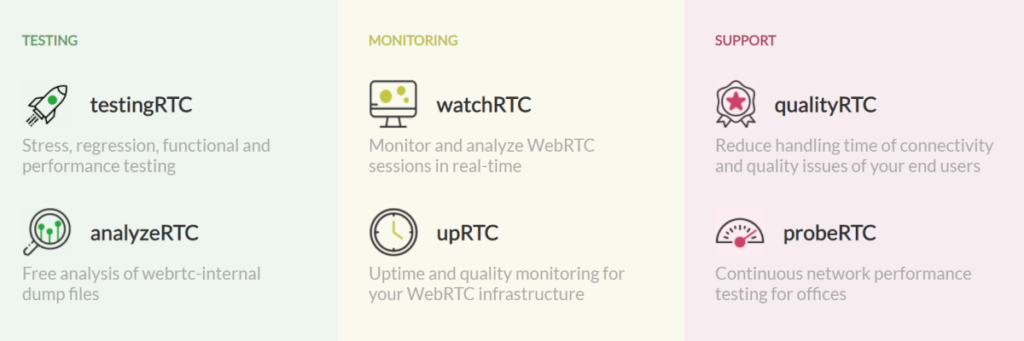
We’ve started testRTC with the intent of providing a self service, cloud hosted testing solution for those developing with WebRTC. Along the way, we’ve expanded our product lines to include 3 separate domains with 5 different products:
Testing
testingRTC – our marquee testing product that can be used today for regression, stress and performance testing
Monitoring
watchRTC – a passive monitoring service that integrates with the WebRTC client application collecting data from real users, gauging quality of service that they get, both in aggregate and on the individual user level
upRTC – an active monitoring service, validating your application’s uptime and quality, able to understand your SLA
Support
qualityRTC – the WFH (Work From Home) support tool focusing on connectivity and quality issues by offering end users a self service route and reducing average handling time for support teams
probeRTC – continuous network monitoring service for office locations to deal with network fluctuations from specific locations to your WebRTC cloud service
Simply put, we are the only vendor today offering support for the full lifecycle of your WebRTC application – from development to deployment and long term maintenance of the service. We do that at scale, in the cloud, with a big smile
And then we met Spearline, and found a common ground.
Who and what is Spearline?
Spearline offers testing and monitoring for your telephony services.
They have a large global deployment with real phone numbers across 70+ countries and carriers worldwide – landline and mobile. If you need your phone numbers tested and validated for their quality and performance (and you do), then you go to Spearline. Why? Because without actually testing a number, your only insight that a number isn’t working (say your sales line) is to get a customer to complain about it – which is way too late.
This all made perfect sense for us at testRTC. When we were approached, it was easy to figure out that this falls into this category:
SYNERGY
Same domain
Similar customer base
Different technologies
We’re completing Spearline in a few ways (WebRTC being an important part of it), and Spearline completing testRTC in other ways (telephony, scale and enterprise sales to give a few of the things we were after).
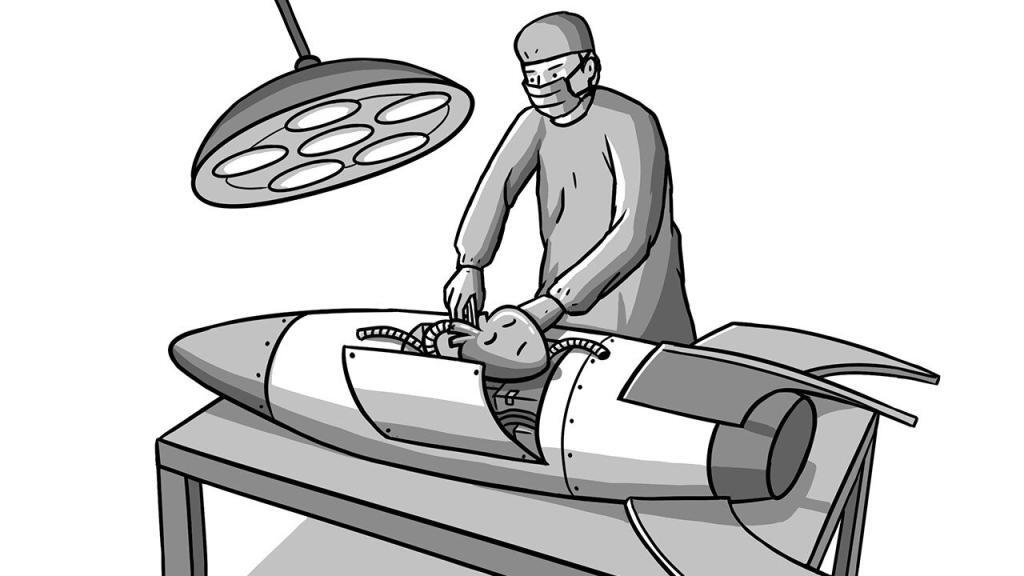
Which leads me to rocket surgery.
Rocket surgery
I had a technical call the other day. Related to BlogGeek.me. Someone at the call said “rocket surgery” at some point. It took me a few seconds to deconstruct that and understand it – he probably meant to say rocket science or brain surgery – just to indicate that they’re doing things that are hard, but not that hard (he said “this isn’t rocket surgery”).
Then it dawned on me. Rocket surgery is the best term I have for what we’re currently doing.
We’re marrying the best of both worlds here at testRTC & Spearline, so we can now offer our customers rocket surgery solutions. Things that no other vendor out there can do for you.
And that excites me – the things we can achieve and the plans we’re making for the future as part of this acquisition.
What changes for BlogGeek.me?
Nothing and everything.
(can you spot the 10 differences between the images above?)
I am continuing my work at testRTC as before. Not as CEO (never liked that role), but as head of products for testRTC (which is kinda like a small CEO). testRTC is my baby. I want to see it grow and flourish.
But then again, I like the diversity and the thrill and fun of doing everything. And Spearline were kind enough to allow me to continue with my extra curricular activities. These include the courses, the weekly, insights, consulting and Kranky Geek.
I’ve been thinking a lot lately about my future. And what else I want to do. I don’t have the answers to it yet. For the foreseeable future though, this is going to be helping you with your WebRTC and CPaaS needs.
Onward and upward
2021 has been a rollercoaster. I enjoyed the ride.
Here’s for a 2022 that is thrilling, exhilarating and fun.
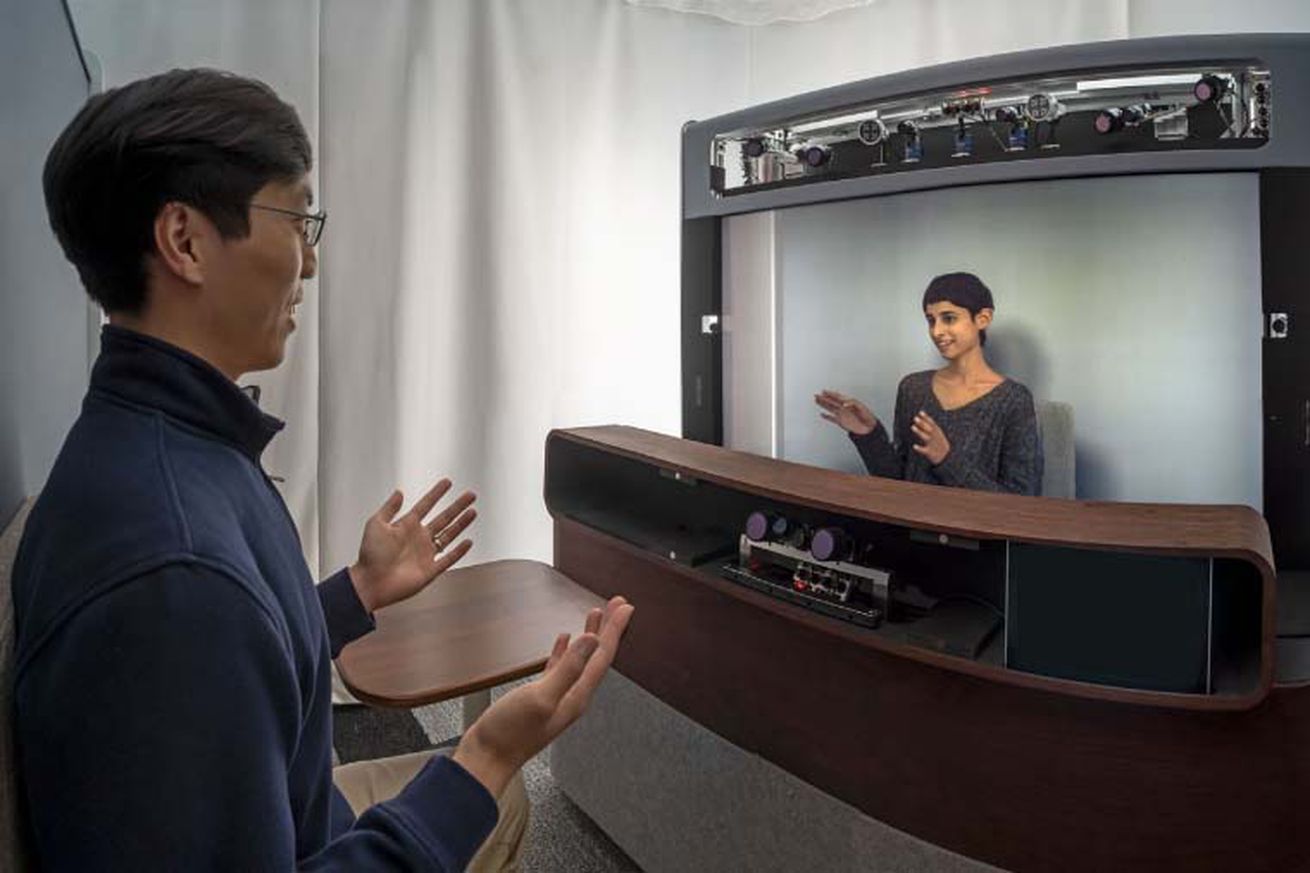
In a new research paper, Google has detailed the tech behind its impressive Project Starline demo from this year’s I/O conference. Project Starline is essentially a 3D video chat booth that aims to replace a one-on-one 2D video conference call with an experience that feels like you’re actually sitting in front of a real human being.
It sounds simple, but Google’s research paper highlights just how many challenges there are in tricking your brain into thinking there’s a real human being sitting just a few feet away from you. Obviously the image needs to be high resolution and free of distracting artifacts, but it also needs to look correct from your relative position in the booth. Audio is another challenge, as the system needs to make...
Industry veteran and next-gen communications expert Scott Wharton has joined Alianza’s Board of Directors. Wharton, who serves as Vice President and General Manager of Logitech’s Video Collaboration Group, brings more than two decades of leadership experience driving and managing rapid and substantial growth at leading-edge communications technology companies. Scott’s rare combination of communications market expertise and real-world experience, combined with his successful development and growth of next-gen communications technologies, make him an ideal match for Alianza’s Board of Directors.
In this podcast, hear from Scott and Alianza CEO, Brian Beutler, on the evolution of cloud communication platforms, Alianza’s contribution to the market, and how Scott’s role will contribute to the next chapter of Alianza.
The House Oversight Committee recently launched an investigation into the giant consulting firm McKinsey, and its role in inflating drug prices as well as pushing opioids at every opportunity.
“Over the last decade, McKinsey & Company—one of the largest consulting companies in the world and a major U.S. government contractor—has engaged in a pattern of conduct that raises serious concerns about its business practices, conflicts of interest, and management standards,” wrote Chairwoman Maloney. “The company’s support for drug companies pushing addictive opioid painkillers and raising prices for life-saving medications, even as McKinsey also advised the federal agency regulating their conduct, may have had a significant negative impact on Americans’ health. McKinsey’s investments through an internal hedge fund—including in companies benefiting from opioid sales—also raise significant concerns about conflicts of interest.”
The opioid stuff is certainly scary, but more interesting to us at Techdirt is that the Committee also released a set of incredibly damning documents, of PowerPoint slides from McKinsey, presented to AbbVie execs about ways to jack up the prices on drugs, especially by bending over backwards to re-patent the same drug over and over again. Going through the slides is an exercise in observing pure evil. For all the talk of internet companies "putting profit over societal benefit" or whatever, these documents show deliberate planning by McKinsey to make sure that AbbVie drugs more or less bankrupt those who take them -- often by blatantly abusing the patent system.
Some of the slides go back about a decade, at a time when the entire pharmaceutical industry was freaking out over its own failures to discover new and useful drugs that it could get monopoly rents over. Rather than building a nice sustainable business with nice sustainable margins, the pharma industry, over the last few decades, has focused on squeezing ridiculous monopoly rents out of the public by abusing patent laws. And, of course, you'll hear that they need to do this to pay for all the research and development, and all the costs of trials and whatnot. Except nearly all those claims are bullshit.
Stories abound about the billions of dollars that it costs to develop a new drug -- except studies have shown those numbers are massively inflated (a drug that the pharma firm claimed cost $1.3 billion to develop actually cost the firm only $55 million). Much of the actual costs (and research and work) are done by universities or through public funding from NIH and NSF. But all of the profits go to the big pharma companies.
But what McKinsey and AbbVie did with Humira is truly nefarious. As the presentations show, AbbVie (and its predecessor, Abbott) was terrified of facing any competition for Humira, a biologic drug that is used by many to treat arthritis, Crohn's disease, and other diseases. Apparently it costs around $84,000 a year, though that link claims that if you're lucky, perhaps insurance will lower that cost to just $60k. That same page claims the reason it costs so much is:
One of the reasons that Humira is so expensive is because it’s a complex medication to make. DNA technology must be used to create proteins for the drug—a process that can’t be replicated, unlike with synthetically manufactured medications.
Except, these internal documents from McKinsey tell a very, very, very different story. McKinsey and Abbott knew that other competitors entering the market would cut the price of Humira significantly:
The project was pitched as a way to assess this competitive threat and to look for ways to limit it, but throughout the report you see winks and nods towards abusing patent law to stop the competition, as well as pretending that biosimilar competition was somehow unsafe:
Note that the two items that actually might benefit the public: lowering prices and competing... are at the bottom of the list.
But what McKinsey really seems to love is this idea of "formulation change" to both extend the effective patent life of a drug... and to boost the cost, claiming that these "innovations" allow them to jack up the cost:
And, if you think maybe that doesn't matter because the earlier version will go off patent, the way the scam works is that you get the pharma company to phase out entirely the older formulation a few years before the patent runs out, forcing patients to move onto the newer formulation. Thus, when the patent runs out on the earlier version, Pharma tells everyone that it would be a "step backwards" to go with a generic or biosimilar of the "earlier" formulation.
From there, the slides shift to a year later, when McKinsey is really all in on trying to find ways to reformulate Humira and extend the patent life (and the ability of Abbott to jack up prices). The slides make little attempt to hide the fact that this is all about protecting Abbott's profits, not making anyone's lives better. The presentation shows that McKinsey set up an internal incentive program to try to get various Abbott scientists to suggest any kind of ideas for how to patent new formulations of Humira to extend the patents covering it:
They don't even hide the fact that this is entirely an effort to "broaden our Humira patent estate in response to Biosimilars." It's got nothing to do with improving things for customers. It's about keeping drug prices high way beyond the expiration of the original Humira patents.
And what do Abbott/AbbVie scientists get for selling their soul and deliberately keeping prices of life-saving drugs way too high for most people? Apple devices. This is why they pay McKinsey the big bucks. They set up a program in which Abbott scientists would get an iPhone if they had an idea on how to extend Humira's patents, an iPad if those ideas turned into an actual patent applications, and (yup) you'd get a Mac computer if the patent was actually granted:
There's much more in the presentation, and Tahir Amin from I-MAK Global has an even more in-depth Twitter thread about this nonsense.
And... in an interesting bit of timing... just a week or so after the House Oversight Committee released these incredibly eye-opening documents, the Institute for Clinical and Economic Review released a big report detailing how recent US drug price increases are not supported by new clinical evidence. And guess which drug tops their list of the drug price changes having (by an order of magnitude) the most impact on how much people had to spend? Humira.
The report shows that because of unsubstantiated price increases on Humira, Americans spent an unnecessary extra $1.4 billion on Humira, thanks to a 10% increase in net price on a drug that a decade ago everyone (including Abbott and McKinsey) knew was facing the expiration of its patents, as well as expected competition from biosimilars.
As ICER noted in its release, in other countries, where Humira is actually facing biosimilar competition, prices are falling:
“While prescription drugs continue to arrive in the US with increasingly high launch prices — often not aligned with those therapies’ ability to improve patients’ lives — year-over-year price increases have slowed considerably since ICER began issuing these UPI reports,” said David Rind, MD, ICER’s Chief Medical Officer. “However, there remain many high-cost brand drugs that continue to experience annual price hikes, even after accounting for their rebates. The most extreme of these is Humira, with an ever-escalating US price that contrasts starkly to its falling price in every country where Humira currently faces biosimilar competition. Even more concerning, several of these treatments have been on the market for many years, with scant evidence that they are any more effective than we understood them to be years ago when they cost far less."
To McKinsey consultants and AbbVie scientists: were those iPhones worth it?
A Sunbeam Radiant Toaster. | Photo by Sean Hollister / The Verge
My colleague Tom once introduced you to a modern toaster with two seemingly ingenious buttons: one to briefly lift your bread to check its progress, and another to toast it “a bit more.” I respectfully submit you shouldn’t need a button at all.
That’s because in 1948, Sunbeam engineer Ludvik J. Koci invented the perfect toaster, one where the simple act of placing a slice into one of its two slots would result in a delicious piece of toasted bread. No button, no lever, no other input required. Drop bread, get toast.
Some of you are no doubt already connoisseurs who know what I’m referring to: the Sunbeam Radiant Control Toaster, sold from 1949 all the way through the late ‘80s. (It goes by many names, including the T-20A, T-20-B,...
‘We grew full-year revenue by $100 million, which is a first. I think equally as important is how we’ve been able to reshape the company; really becoming a cloud first company,’ Avaya CEO Jim Chirico tells CRN.
On Monday, the Federal Communications Commission voted to approve Verizon Wireless’ purchase of Tracfone in a deal worth more than $6 billion, positioning Verizon to become one of the largest prepaid service providers in the US.
Tracfone is the largest reseller of wireless devices in the US and maintains over 20 million subscribers with more than 90,000 retail locations. Verizon’s Tracfone acquisition combines the largest mobile virtual network operator (MVNO) with the largest wireless provider in the country. When Verizon first proposed the deal last September, the company said that the acquisition would bolster Tracfone’s networks while making low-income wireless services more competitive.
Astra’s rocket prepares for takeoff from the Pacific Spaceport Complex in Alaska. | NASASpaceflight
Astra is now on the list of privately-owned space companies that have successfully reached orbit. Its Launch Vehicle 0007 (LV0007), which was carrying a test payload for the US military, took off from the Pacific Spaceport Complex in Kodiak Island, Alaska on Saturday at 1:16AM ET. Following a smooth liftoff, the 43-foot rocket achieved orbit around nine minutes later at 500km above Earth.
Astra just reached orbit! 7.61km/sec at our targeted 86.0 degree inclination at an altitude of 500km. The team worked hard for this. We’re just getting started, folks. #AdAstrapic.twitter.com/NiMhCEsuCI