Shared posts

27 Jun 16:31

Yes, you should test for Covid before going to a gathering

by Allie Volpe
Getty Images

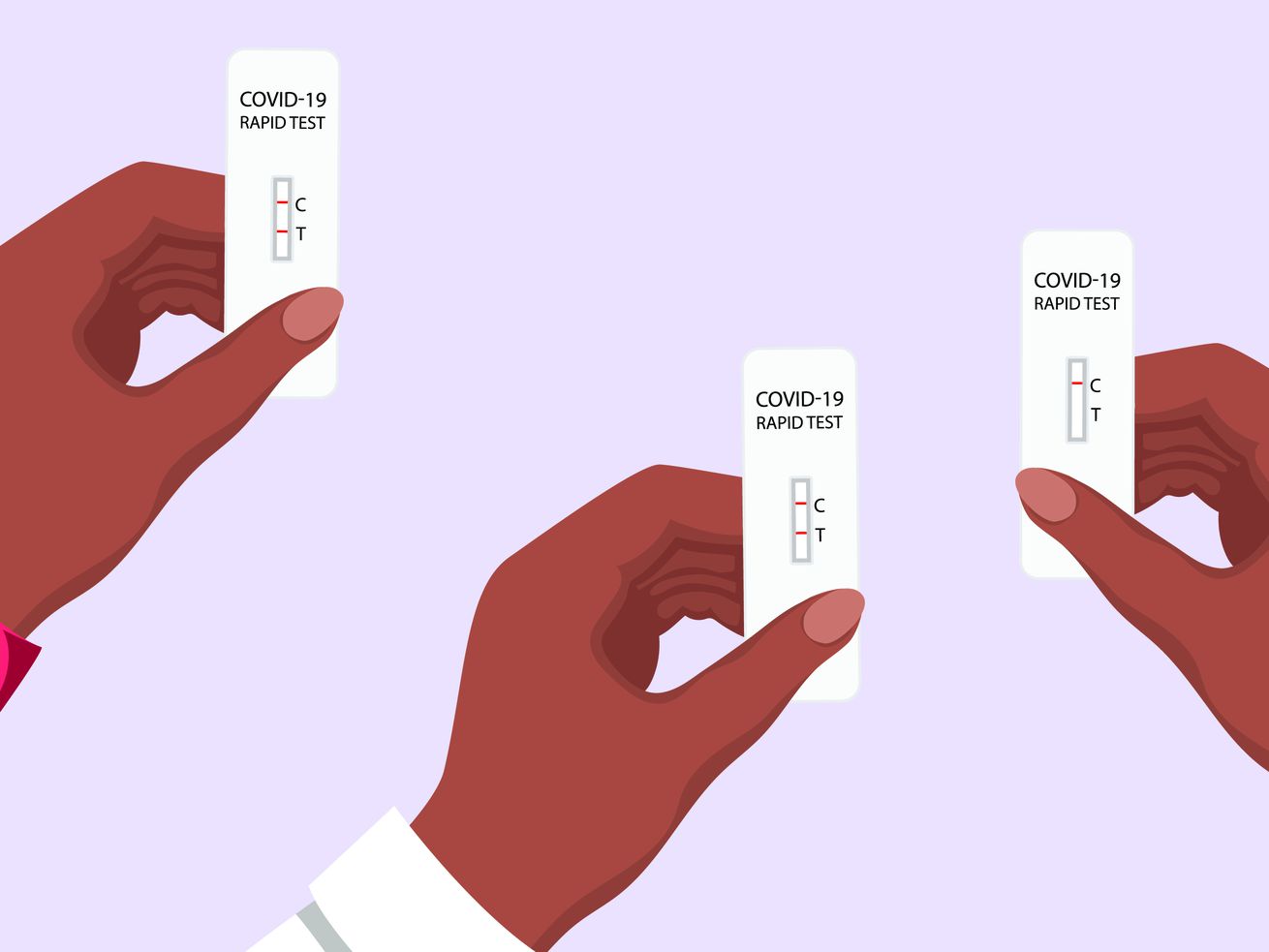
Covid isn’t over, so you should still test before group events.

Sorry to disappoint, but Covid-19 is still a present and persistent threat. The United States is amid a months-long ascent of confirmed cases — with no sign of leaders reimplementing mask mandates and two new, potentially more infectious omicron subvariants rearing their ugly heads — just as summer party season is in full swing.

Among the tried-and-true mitigation efforts, like masking and ventilation, testing remains essential, regardless of vaccination status, particularly if you plan on gathering in any capacity. (While risk of infection is much lower for outdoor events, testing is important regardless of whether your party is inside or outside.)

“Testing really, really matters,” says Abraar Karan, an infectious disease physician and researcher at Stanford University. “The problem is, as time goes on and people are more fatigued, they may not think that it matters.” Testing fatigue can materialize during large events like concerts, Karan says, primarily because you’re not as likely to see other attendees again. It’s highly unlikely you’d ever know if other concertgoers got sick.

After years of postponed vacations and celebrations, Karan says people may be hesitant to test themselves before these significant events out of fear they may have to skip the occasion if they test positive. Add in the potential cost for tests and logistical hurdles in even finding a testing center and it’s no surprise folks might skip this precaution altogether. However, the ignorance-is-bliss mindset causes more harm than good since there is an extremely high likelihood of transmission should an unknowingly infectious person attend a party.

Testing before a gathering is quick, low-cost, and relatively accessible compared to during the omicron surge of 2021 and early 2022. Here’s what to keep in mind about testing if you’re attending or hosting a party this summer.

For guests

If you’re swabbing before a bash, test as close to the start of the event as possible, Karan says. This involves some planning, as testing is no longer free for people without insurance — costing anywhere from $100 to $200 for PCR tests and $10 to $40 for rapid tests — and some testing locations have shuttered. Because PCR tests take longer to process (and you have a higher likelihood of getting exposed to Covid in the interim between getting the test and the event itself), Karan recommends partygoers use rapid antigen tests. “Antigen tests are very good at detecting if you have transmission potential, especially early in your infection,” he says.

Every American household is eligible to receive free at-home tests by mail or can get reimbursed from health insurance companies for the cost of rapid tests. The government also maintains a database of testing locations offering free or low-cost tests; some municipalities are distributing at-home rapid tests at libraries and community health centers.

If you have been exposed to someone with Covid-19, you should ideally test multiple times in the week before your event. “That’s how you’ll really pick up an infection and stop spread,” Karan says.

As disappointing as it may be, if you get a positive result on your pre-party test, do not attend the gathering. Tell your host you’ve tested positive for Covid-19 and you’ll have to miss the event but you’ll celebrate with them once you’ve recovered. “You have to be willing to say, ‘I’m not going,’ and that’s the trouble that we have,” says Donald Yealy, chief medical officer at the University of Pittsburgh Medical Center. “We noticed that people, either with symptoms or occasionally when they’re positive, still want to try to have that social contact. And that just means that you become a spreader.”

While testing before a party can help you feel confident you won’t spread Covid to other attendees, your single negative test won’t have a major impact on spread if no one else at the event has tested. In cases where hosts aren’t requiring guests to test beforehand, or if you’re unsure of the protocol, check the community’s Covid-19 level online and make the best decision based on personal risk assessment, says David Souleles, the director of the Covid-19 response team at the University of California Irvine.

For example, if the county where your cousin’s indoor baby shower is held has a high level of transmission, the Centers for Disease Control and Prevention recommends wearing masks indoors in public regardless of vaccination status and improving ventilation (which you likely have very little control over). For immunocompromised or high-risk people, the CDC recommends wearing an N95 or KN95 respirator and talking to your doctor about treatments like oral antivirals.

“If you are vaccinated and boosted and are not at high risk, you may choose to test yourself and attend the event, and then test again three to five days following the event. You may also decide that you want to mask while attending the event even if your host is not requiring masking,” Souleles says. “If you are someone who is at higher risk for serious disease, or live with or are frequently around someone who is at higher risk, you might decide to pass on a particular event in order to reduce your risk.”

For hosts

Party hosts have the power to dictate Covid protocols at their event. Should you require a negative Covid test from your guests before the event, it’s up to you to decide how to verify guests’ results, Souleles says. While most party-throwers are probably comfortable with an honor system, trusting their guests have indeed tested and would stay home if they’re positive, others may want to ask attendees to show a photo with a timestamp of their negative test. Another option, Souleles says, is to provide rapid tests for guests to take upon arrival — though, depending on how big your party is, this can get expensive if you’re paying $10 for a single test.

In the event you or another partygoer later tests positive and informs you, tell other guests as soon as you can, Yealy advises. Don’t tell the rest of the guest list who came down with Covid, but say, “I just wanted to let you know we had a guest who tested positive.” This way, guests can make a timely, informed decision about testing and whether to isolate.

For everyone

In addition to swabbing prior to an event, Souleles says everyone should test again three to five days following the gathering just to be safe. If you’re traveling to a wedding and are extending your stay following the nuptials, pack a few rapid tests to take with you so you don’t have to scour local pharmacies for tests, Souleles recommends.

If you do test positive days after the party, again, tell your host or guests as soon as possible, Yealy says. “You won’t know the medical conditions and the risks for a serious version of Covid-19 of all the other people you came in contact with,” Yealy says. “The kind thing to do is to just let them know so that each individual can assess how worried do I need to be about that.”

While the process of informing your network can be “really tough psychologically,” Karan says, the sooner those around you are aware they’ve been exposed, the more likely they are to isolate and test and hopefully prevent further spread.

Testing is only one aspect of mounting a solid defense against Covid-19. When you can’t be sure if other party-, wedding-, or concertgoers have taken the same precautions as you, rely on other mitigating efforts, Yealy says: vaccination, masking while indoors or at crowded events, and improving ventilation. “Do the simple things,” Yealy says, “and do them well.”

Even Better is here to offer deeply sourced, actionable advice for helping you live a better life. Do you have a question on money and work; friends, family, and community; or personal growth and health? Send us your question by filling out this form. We might turn it into a story.

24 Jun 20:53

The FTC Takes Action Against Harley-Davidson for Violating Right-to-Repair

by Matthew Gault

The Federal Trade Commission said Harley-Davidson has been illegally voiding the warranties of consumers who repair their motorcycles and has ordered them to stop the practice. According to the FTC’s complaint, Harley Davidson and, separately, the Westinghouse Electric Company, violated the Magnuson-Moss Warranty Act act by voiding warranties of customers who used independent repair shops or did the work themselves. The FTC also claimed that Harley-Davidson did not fully disclose its warranty restrictions to customers.

“Consumers deserve choices when it comes to repairing their products, and independent dealers deserve a chance to compete,” Samuel Levine, director of the FTC’s Bureau of Consumer Protection said in a statement. “These orders require Harley and Westinghouse to fix their warranties, come clean with consumers, and ensure fair competition with independent providers. Other companies that squelch consumers’ right to repair should take notice.

The FTC said the actions taken by both companies restricted customers’ choices at market, cost consumers money by forcing them to use dealerships instead of shopping around for repairs, undercut independent dealers, and reduced the resiliency of their product. It ordered both companies to stop violating the Magnuson-Moss Warranty Act, recognize a consumer’s right to repair, “come clean with consumers,” and alert dealers to compete fairly.

“The rubber is hitting the road on the FTC’s new focus on protecting your Right to Repair. Harley Davidson and Westinghouse are not the only companies that use the threat of a voided warranty to restrict repair,” Nathan Proctor, the director of U.S. PIRG’s right to repair campaign, told Motherboard in an email. “My own research has shown that 45 of 50 appliance companies void warranties for the same reason. The FTC’s actions against Westinghouse and Harley send a clear signal that it’s time to stop violating consumer rights, and honor Right to Repair protections. If they don’t, I hope the FTC opens the throttle a bit more.”

President Joseph Biden has made the right-to-repair a core issue. He issued an executive order on the subject and directed the FTC to take action against companies that violate it. Legislation is moving through various state houses across the country and several bills are being considered by the federal government.

24 Jun 20:52

Solana is making a crypto phone with help from former Essential engineers

by Chris Welch
Solana CEO Anatoly Yakovenko with the Saga smartphone | Photo by Chris Welch / The Verge

The phone previously known as the Osom OV1, built by a team consisting of former engineers and designers from Essential, is being renamed and repurposed today, and it’s all in the name of crypto. This afternoon in New York City, blockchain company Solana announced its own mobile phone, called the Saga, made in collaboration with Osom. It’s priced at $1,000, and preorders open today. A $100 deposit is required, and Solana says the Saga will ship in the first quarter of 2023.

The phone will have a 6.67-inch 120Hz OLED display, 512GB of storage, and 12GB of RAM. It’ll be powered by Qualcomm’s latest Snapdragon 8 Plus Gen 1 chip and is outfitted with a 50-megapixel primary camera, plus a 12-megapixel ultra-wide shooter. But more than the...

Continue reading…

21 Jun 15:03

Why 80 Million Microsoft Teams Phone Users Is Just the Beginning

By Kevin Kieller
A close look at Teams user numbers shows potential for massive growth.
19 Jun 05:25

WhatsApp now lets you mute individual users during group calls

by Emma Roth
Illustration by Alex Castro / The Verge

WhatsApp has rolled out several new features this past week, including the ability to mute people during group calls (via Android Central). This sanity-saving feature seems helpful not just for muting people who forget to do it themselves, but also if you’re in the same room as someone who’s also on the call and don’t want to hear an echo of what they say.

While some conferencing apps, like Zoom and Microsoft Teams, let hosts mute all participants (or specific ones), they typically don’t offer a way for individual users to mute whoever they want during a call. This feature offers a new level of control that’s probably best saved for chaotic meetings that involve up to the maximum of eight people on video calls — or up to 32 on voice...

Continue reading…

18 Jun 06:31

Bitcoin Is Crashing Because Everything Is Crashing

by Edward Ongweso Jr

It is incredibly tempting to look at the ongoing plunge of every crypto asset under the sun and declare this the death rattle of the industry. This crash has been a persistent one, characterized by crisis after crisis as big-name crypto projects buckle under pressure, eat shit as their underlying assets are rapidly devalued, or simply make bad decisions about how to handle market conditions.

Since November, crypto’s global market capitalization has dropped from $3 trillion to around $900 billion—that’s over $2 trillion in value that has simply vanished. There have been slow bleeds, as in the case of the largest play-to-earn game, Axie Infinity, which suffered a massive $600 million hack just as its token economy entered the last stage of a longstanding death spiral. Derivative business models, such as move-to-earn, are already in decline. 

There have also been more spectacular disasters: The third-largest stablecoin (UST) and its ecosystem imploded, losing investors tens of billions of dollars. And major crypto lending platform Celsius Network—which claims to have 1.7 million users—indefinitely paused withdrawals and transfers of assets on its platform this week, citing “macroeconomic conditions.” Other platforms are also beginning to limit or freeze their withdrawals anticipating a liquidity crunch as rumors swirl that major crypto investors like Three Arrows Capital, a crypto-centric hedge fund that manages $10 billion, are facing insolvency after engaging in complex and risky investing strategies.

"These strategies introduce a lot of risk into the overall ecosystem, and this week has been monumental in showcasing the implications with Celsius’ problems and Three Arrows Capital’s collapse,” Vetle Lunde, analyst at Arcane Research, told Motherboard

These are just some of the events that have touched off wave after wave of panic. Early in the crash, it seemed like investors were retreating to relatively more stable options like Bitcoin, but even the oldest cryptocurrency has not been spared—it's currently lost more than half its value from its most recent peak. 

Looking at the crypto crash in isolation doesn't give the full picture, however. Though the stock market isn’t totally representative of the economy, it gives a good sense of what financiers and capitalists value and what they’re willing to finance, which definitively structures what the rest of us are offered or forced to suffer. 

What we are seeing is a poor market that is entering or already in recession territory—crypto is crashing because everything is crashing.

*

The clearest example of the wider collapse is in the tech sector. Writ large, the technology sector has seen gains from the pandemic’s bull market run evaporate: Microsoft, Facebook, Apple, Amazon, Netflix, and Alphabet have lost a combined $3.3 trillion this year. Thanks to underwhelming earnings reports, supply chain shocks, and concerns that the Federal Reserve would hike interest rates and engineer a recession to contain inflation—which turned out to be true—the tech-heavy Nasdaq 100 Index shed nearly $2 trillion in the month of April alone. 

Special purpose acquisition companies (SPACs)—deals where a shell company goes public then finds a firm to merge with and take public without an initial public offering (IPO)—are also down. 2021 saw 613 SPAC listings raise a total of $145 billion—that's a 91 percent increase from 2020 and about close to half of what SPACs have raised since 2008’s financial crisis. Today, SPACs are in poor shape: 600 SPACs are still trying to complete deals, according to a recent New York Times report, half likely won't find targets before their two-year deadline arrives, at least seven have folded since January, another 73 have abandoned their plans, and on average they are significantly down.

Over the past decade, initial public offerings (IPOs) have proved one of the more resilient tech bubbles. 2021 was a big year for IPOs with over 1,000 companies filing to go public—59 percent of them were SPACs. Funnily enough, IPOs have joined SPACs in disappointing and burning investors: tech companies going public have consistently performed poorly and IPOs in general are seeing some of the worst returns in a decade.

Valuations are also down. Perhaps the best example here is SoftBank, which wielded its $100 billion Vision Fund as a weapon to crush competitors, facilitate mergers, and consolidate markets into juggernaut monopolies that SoftBank’s founder and chief executive Masayoshi Son believed would usher in the next stage of human civilization. It’s been a rough journey since the fund launched in 2017 and Son has little to show beyond massive losses: a $13.2 billion loss last fiscal year at SoftBank caused by a $27 billion loss for its Vision Funds and another $13 billion loss since the new fiscal year started as market capitalizations of public portfolio firms have plummeted. 

App-based labor platforms, some of Son's favorite investments, have watched their shares drop as much as 80 percent. Among companies itching to go public we’re actually seeing down rounds, financing rounds that yield a lower valuation than previous rounds, as the hangover

Volatility and spillover effects in global markets because of Russia’s invasion of Ukraine, persistent and growing inflation, supply chain crises, the beginning of the zero interest rate policies effectively adopted across the world that meant free money to gamble on this or that investment—these all matter. It is impossible to overstate that for nearly a decade, the tech sector in particular has operated in a world unmoored from reality, fueled by easy money. Trillions of dollars have flowed into a sector rife with bubbles, perverse incentives, and seemingly little interest or capacity among regulators worldwide to hold it to account.

Or, as Brad Stone and Lizette Chapman put it in Bloomberg: “VC high priests often argue that these downturns are macroeconomic acts of God, like some 100-year storm, or, OK, fine, maybe a 15-year storm—anyway, no need for anyone to moderate their selfishness or learn other pesky lessons.” Not an act of God, rather, but a very predictable outcome of how capitalism creates its own crises within a framework that has let it run wild. 

*

Crypto is crashing for a host of reasons, not all of which can be pegged to macroeconomic factors. Many projects were overvalued (is that picture of an ape really worth $3 million?), fantastical projections about how much money it could suck from the rest of the world abounded, free money from speculation buoyed the market, and many projects experiencing the most spectacular implosions were houses of cards built on the unstable foundation of ever-increasing crypto prices.

The most important reason why crypto is crashing, however—in particular, Bitcoin, which the rest of the market tends to follow—is because everything is crashing. Crypto markets are increasingly correlated with equity markets and even crypto industry insiders are worried that a swan dive seems locked in. Indeed, it's worth noting that many Web3 projects were propped up by billions in funding from the same investors who propped up Facebook, for example.

Part of that correlation has been accelerated by Bitcoin's bull run and creeping integration into traditional markets. Now that times are uncertain, there is flight away from risky assets, which cryptocurrency definitely is. 

“The uncorrelated properties of BTC vs. equities were one of the key sources of the institutional take-off in late 2020 and early 2021. Ironically, the institutional entrance to the market has also led correlations to grow, driven by a global desire to seek cash amid uncertainty,” said Arcane's Lunde. "In pressuring times with a global flight to cash, Bitcoin is pressured by general U.S. de-risking, as BTC is getting more intertwined in the global financial market."

Tech is crashing because the sector was overvalued. It was buoyed by free money and debt; it was flush with capital from global elites who needed somewhere safe to park fortunes; it was littered with unsustainable or illegal business models; it was dominated by figures who drank their own Kool-Aid about saving the world with unsustainable business models. 

These similarities to the frenzy that buoyed crypto are instructive ones. For well over a decade, it’s been the case that historic losses, massive devaluations, and a general inability to present sustainable or concrete use cases haven’t been enough to kill tech companies and their offerings. The current moment might usher in a sea change and finally wipe out some of the zombies that moved as if they were still alive, but it’s not clear what happens next.

Many tech companies, products, and services flourished for reasons beyond the glut of global capital—though that certainly helped. Many proliferated because there were political or social problems that needed to be solved, but few if any solutions willing to be pursued outside of markets. In the shadow of governments rendered ineffective by political sabotage, decaying and inflexible institutions, capture by self-interested blocs of corporations or oligarchs, and a general lack of interest in governing, other central planners have blossomed and hope to offer solutions that disproportionately benefit themselves: start-ups, apps, fundraising rounds, and venture funds. These have all come to sharply define and limit what is defined as a problem, who should solve it, and how it will be solved. This arrangement also limits the sorts of technologies that can and will flourish, as well as the shape they can and will take.

It's in this context that Bitcoin, and crypto in general, has flourished on a promise of giving "the little person" a shot against financial elites. Our infrastructure is crumbling, our public transit systems are neglected, and our ecological niche is unraveling. Hordes of people are struggling to find dignity, purpose, food, healthcare, and housing. Investors are drooling at the prospect of exploiting our decaying prospects for greater and greater returns. 

This is the backdrop which allows app-based labor platforms to present desperate workers as servants to drive, deliver, or perform tasks for users. It’s the background for every graphic showing a massive increase in sports and financial gambling, as well as their increased lobbying to legalize themselves or expand their app-based offerings. It’s also the context for why a lot of these choices have dovetailed with the interests of venture capitalists who are financing crypto assets and tech startups. 

According to Arcane, there's a few ways forward for crypto here, all of which are tied to factors outside of it. A "proper market meltdown in crypto" could occur amid the current economic climate, Lunde said, eventually getting so bad that the biggest-risk takers are wiped out, which "would lift off a lot of risk from the market." On the other hand, the economy could get so bad that Bitcoin starts to look good again, or U.S. equities could stabilize, which would have a less potent but still positive effect on crypto as overall risk is reduced. 

Almost everyone agrees that there is more pain ahead for the wider economy, and for the cryptocurrency markets—the ship is sinking, and whether you're filling up at the buffet or puking into the pool, we're all in the same boat now.

17 Jun 19:30

Cisco Is ‘Tearing Down Walls’ With Unified Networking, CX Goals

by Gina Narcisi
‘There’s a lot of cross business unit work going on, and I think it’s a muscle that we’re going to build even more effectively as we go forward,’ Chuck Robbins tells CRN during an interview about Cisco’s simplification efforts at Cisco Live 2022.
17 Jun 19:26

The Culture War Over Electric Cars

by Lizzie O’Leary and Sonari Glinton
Electric cars are facing pushback from states like North Carolina, who are working on legislation against the industry.
17 Jun 05:12

Microsoft is elevating Viva from pure employee portal to job support platform starting with sales

by Ron Miller

When Microsoft launched Viva last year, it framed the platform as an employee portal where you might go to find out parental leave policy or other internal communications directed more generally at company policies and culture. It further reinforced this idea last month when it released Viva Goals, a Viva module designed to give employees access to their KPIs.

But it seems that Microsoft has broader ambitions for Viva than simply providing important information for employees found in the typical employee intranet. Today, it announced the first of what could be multiple jobs supported inside Viva, starting with sales.

Emily He, corporate vice president in charge of business applications at Microsoft, says that this announcement is something that brings information together in a way for specific jobs that she’s been hearing about as a kind of employee holy grail for years across companies and jobs, and it was one of the reasons she was drawn to Microsoft.

“Viva Sales in my mind really represents a new way of working by breaking down silos of data and breaking down silos of experience,” she told TechCrunch.

She said one thing she has learned in working with salespeople is that they have too many tools and they need a way to pull meaningful information out of the tools they are using to present it in a more centralized way. “They really want a more simplified experience. So Viva Sales enables a seller to use the tools they already love and use every day including your email system like Outlook, Word documents, PowerPoint presentations, as well as Teams,” she said.

The tool is built on Office 365 and tuned for Microsoft Dynamics 365 CRM. By tagging a customer name or contact, Viva Sales can pull the documents, spreadsheets, presentations, emails and other materials into the CRM tool automatically, all organized under the tag, greatly reducing the amount of manual data entry required.

“Sellers do spend a lot of time manually entering account information or forecasting data. So this eliminates [much of the] manual data entry. But more importantly, now it generates a more holistic view of the customer,” He told me.

With all that data stored in a single place, it means that customers can use it to fuel machine learning models around how to improve sales. “You can use AI and machine learning to come up with recommendations for the sellers and deliver those recommendations to the sellers wherever they are, whether they’re writing their emails or in virtual meetings,” she said.

While it appears to be Microsoft-centric, out of the box it will also support Salesforce CRM, and He says that they may add support for additional tools over time as customer demand dictates. Further, the company plans to add more job types to Viva over time.

The end game here appears to be extending the employee communications portal to include not only the company materials that are useful to employees, but also tools for doing their specific jobs. She says they are doing this because they have been hearing employees asking for this kind of help from inside the same portal.

It’s worth mentioning that Viva Sales will be offered for free to Microsoft Dynamic 365 customers, but as you access third-party data like using Salesforce, you will be charged for using the tool.

Viva Sales will be available in public preview in July and is scheduled to GA in the fall. For now, the only other CRM integration available besides Dynamics 365 will be Salesforce.

17 Jun 05:11

Facebook, Twitter, TikTok, Google and others agree to new EU rules to fight disinformation

by James Vincent
Photo by Amelia Holowaty Krales / The Verge

Tech companies operating some of the world’s biggest online platforms — including Facebook-owner Meta, Microsoft, Google, Twitter, Twitch, and TikTok — have signed up to a new EU rulebook for tackling online disinformation.

These firms and others will have to make greater efforts to halt the spread of fake news and propaganda on their platforms, as well as share more granular data on their work with EU member states. Announcing the new “Code of Practice on disinformation,” the European Commission said that the guidelines had been shaped particularly by “lessons learnt from the COVID19 crisis and Russia’s war of aggression in Ukraine.”

The code has been shaped by COVID misinformation and Russian propaganda

“This new anti-disinformation...

Continue reading…

17 Jun 05:10

‘Star Trek: Strange New Worlds’ Is the Best of What Television Used to Be

by Gita Jackson

As I watch Star Trek: Strange New Worlds, the only modern Star Trek show to embrace its procedural heritage, I find myself wishing that more television would reset at the end of the hour. Despite how much television has changed, there is still no pleasure quite like the non-prestige, episodic television of days past.

Before The Sopranos and a variety of shows inspired by it fundamentally changed the form, TV was much sillier. Television was built according to a pretty clear formula, by necessity, as shows had to integrate the ad breaks into their drama. Often, the goal was to get the show running long enough that it went into syndication, which took about 100 episodes. It was much easier to get a series to 100 episodes when the tension resets at the end of the hour—and much easier to package the shows for syndicators if they could be run in any order—so most shows were constructed so that each episode could stand on its own.

Character relationships changed over time, and sometimes there were mysteries that could only be revealed after seasons of foreshadowing, but for the most part television was about putting characters in different situations and giving them different kinds of problems to solve, rather than building and then paying off storylines that ran for multiple seasons. This is how you got shows about talking cars, or itinerant gunslingers, or many of the various legal and crime dramas that ran for a billion episodes: On a mechanical level, their formats allowed for the construction of as many bottle episodes as the public could stand.

When The Sopranos first aired in 1999, it was a revelation for critics and audiences alike. While it isn’t quite true that a serious, gritty, show with long-running story arcs that couldn’t resolve in an hour hadn’t been done before, this was the first time many viewers had seen it done so well, or done at all. (Its interesting predecessors, like Homicide and Crime Story, tended not to be especially popular.) Since then, many different kinds of television shows have attempted to copy the formula that made The Sopranos such an anomaly—we now call this “prestige television,” and sometimes it feels like it’s the only television there is.

Prestige television, of course, doesn’t always make good on the promise of the format; it takes a lot more than long-running storylines and thematic material more complicated than what would have aired on CBS in prime time in 1983 to make something as good as Better Call Saul. Too often, shows the fit within the genre are identified by aesthetic markers, rather than markers of quality. The new Gossip Girl on HBO Max has the vibe of a prestige TV show, for example, with high production values and long-term plotting; in these ways it’s a lot closer to The Sopranos than it is to the more episodic and irreverent Gossip Girl that aired on the CW in the late 2000s, even if a dense and pseudo-novelistic Gossip Girl isn’t necessarily what anyone was clamoring for. Although episodic and procedural TV still exists in the various police and legal dramas, if you’re looking for a dramatic television show like that in any other genre, it feels like prestige TV is the only thing on offer.

Just as television used to be episodic because the format demanded it, streaming television, with its prestige conventions, has also taken on a particular form because of the technology used to deploy it. Bingeable television, of the kind that Stranger Things popularized, does not have to depend on the same kind of narrative conventions that made weekly, episodic TV really work. You’re not going to be waiting a week between episodes, and you don’t need to write around ad breaks. No wonder the episode length of Stranger Things has ballooned to 90 minutes; each episode of the series can be a miniature movie when it's not beholden to the limitations of broadcast television.

Strange New Worlds was made to be specifically different from the hyper-serialized new Star Trek that precedes it. When Trek came back with Discovery, I was initially excited, but something felt really weird about a prestige, serialized approach to Star Trek, which has never operated in that way as a show. Strange New Worlds hews closer to the original Trek in that each adventure decisively ends by the time the credits roll. As an audience member, you just have the pleasure of watching charming people solve workplace issues together, granted that their workplace issues often involve aliens and photon torpedos. Still, this approach makes each new episode feel like eating a single chocolate truffle instead of being forced to slog through an entire black forest cake.

Television is not cinema. Watching a series of, essentially, cheaply produced films in sequence does not have the same material result as watching one very good movie. Without those limits, you’re producing television that, at its very worst, does not have a structure to rely on when the plotting gets out of control. A show like Stranger Things approaches storytelling from a standpoint where more is more—more effects, more drama, more characters, and more lore are all supposedly better for the show. But despite how much more this season of Stranger Things is, I have basically a negative desire to watch it. There is so much going on and so much to keep track of you lose the ability to follow the core stakes. The events of the show could be happening to any characters, anywhere, but just so happen to concern a bunch of teenagers in Indiana.

The issue isn’t even that new Stranger Things or new Gossip Girl isn’t as good as the very best of the procedural format, like a Star Trek: Next Generation or Columbo. It’s that compared to currently airing shows with the same level of production value, I often find myself gravitating towards television that has dramatic stakes that are resolved within the hour rather than something serialized. Strange New Worlds isn’t deeper or better-acted than the prestige television that surrounds it; I just have a greater desire to spend time with these characters, in this world. It’s lighter because it doesn’t have to compound the characters’ trauma from episode to episode, and to me, television still has to be a fun way to spend an hour over everything else.

When you know that the issues of the show will be resolved by the time the credits roll, you don’t have to worry that you’ll just be watching what amounts to a very long “next episode” preview. And it allows for one of the greatest pleasures of television—when the writers get to just kinda fuck around.

One of the recent Strange New Worlds episodes takes on that classic Star Trek episode type; in “Spock Amok,” the crew is on shore leave, and the Starfleet officers we’re used to watching resolve intense diplomacy issues instead get ready to go fly fishing and meet up with their lovers. This isn’t a kind of story that calls for high stakes or story shaking revelations. It is about goofs and jokery, about manipulating the characters so that the ever-logical Spock ends up saying things like “Hijinks are the logical course of action.” The characters are put into unlikely, even silly situations, not to continuously propel the story towards more lore, but to tell you a little more about the characters.

The stern Number One, played by Rebecca Romijn, learns that she has the nickname “where fun goes to die” and teams up with the equally serious La’an Noonien Singh to learn a little bit about what fun is all about. Nurse Chapel has to let one of her lovers down gently because she’s worried he wants something serious. Spock is in a goddamn body-swap episode—about as far from prestige as you can get.

But it was also the most fun I’d had with new television for a long time. Watching these characters in the moments where they’re not supposed to be at their best, but just be, made me feel closer to them than watching the payoff to an intricate mystery that had been building in the background for four years and that I’d had to bone up on via Wikipedia just to parse ever would have. They didn’t have to change and grow by suffering through traumatic events. They change and grow by just experiencing life, as we all do.

17 Jun 05:07

Hospital websites are sending medical information to Facebook

by Nicole Wetsman
Photo by Amelia Holowaty Krales / The Verge

Many hospital websites have a tracking tool that sends sensitive medical information to Facebook when people schedule appointments, according to an investigation by The Markup. Experts say that the hospitals using the tool may be violating the medical privacy law the Health Insurance Portability and Accountability Act, or HIPAA.

The Markup found that 33 of the top 100 hospitals in the United States were using a tracker called the Meta Pixel on their websites. Installing the Meta Pixel gives groups access to analytics about Facebook and Instagram ads but also tracks how people are using their websites: the buttons they click, the information they put in forms, and so on.

On hospital websites, that could include sensitive health...

Continue reading…

17 Jun 05:06

Ridiculous Republican Senators Introduce Law To Say Political Emails Can’t Be Filtered As Spam

by Mike Masnick

The latest in stupid, unconstitutional, performative, nonsense legislation from Republicans comes from Senator John Thune, and it would break your email spam filters. It’s called the “Political Bias in Algorithm Sorting Emails Act of 2022” and it’s possibly even dumber than it sounds.

First, this is all based on a bogus, cooked up, deliberately misinterpreted-by-people-who-know-better controversy. We wrote about this a couple months ago. Researchers at North Carolina State University released a preprint of a study about email spam filtering during the 2020 election. They set up a variety of email accounts, and signed up for political mailings. The study did find that Gmail’s spam filter was more likely to flag Republican political mailings as spam, but found the opposite was true of Yahoo Mail and Microsoft Outlook, which flagged more Democratic politicians’ emails as spam than Republicans.

Of course, Democrats didn’t freak out about this. Only Republicans did, egged on by a disingenuous political trickster, who tried to make this into a big deal, and was aided by Fox News and other disingenuous entities, who turned it into a thing — even to the point of some Republicans filing a laughable complaint with the Federal Election Committee trying to argue that Google was giving an unfair advantage to Democrats.

The authors of the original study, for what it’s worth, appear to be horrified about how their study is being abused by political hacks.

“Gmail isn’t biased like the way it’s being portrayed,” [study author Muhammad Shahzad] said. “I’m not advocating for Gmail or anything. I’m just stating that when we take the observation out of a study, you should take all of the observations, not just cherry-pick a few and then try to use them.”

Furthermore, Shahzad noted that the part of the study being pointed out only applied to Gmail accounts where users did not express their own preferences. Once users added in their own preferences, the impact for Gmail effectively disappeared:

Shahzad said while the spam filters demonstrated political biases in their “default behavior” with newly created accounts, the trend shifted dramatically once they simulated having users put in their preferences by marking some messages as spam and others as not.

“What we saw was after they were being used, the biases in Gmail almost disappeared, but in Outlook and Yahoo they did not,” he said.

In other words, there’s pretty strong evidence here that there’s nothing nefarious going on. Because, seriously, who would actually program a spam filter to try to hide one party’s political spam? The reason so much goes to spam is because many users treat the non-stop bombardment by political campaigns as spam. Because it’s often hellishly spammy.

Anyway, this bill would now effectively require email providers to whitelist all political campaigns from spam filters, unless each user directly calls the emails spam:

In General–It shall be unlawful for an operator of an email service to use a filtering algorithm to apply a label to an email sent to an email account from a political campaign unless the owner or user of the account took action to apply such a label.

The bill would also create a privacy nightmare, in that it requires email providers to release transparency reports detailing how many political campaign emails were flagged as spam. But that would require the email services snoop on your emails. The transparency report would also require the email providers to designate how many Democratic campaign emails were filtered as spam, and how many Republican campaign emails were filtered as spam. So, apparently third parties are shit out of luck.

Even worse, the bill would require any email provider to respond to frequent demands from political campaigns about how often their emails were flagged as spam.

This is performative, unconstitutional nonsense on multiple levels. Even more hilarious, in announcing the bill, Senator John Thune, gave a talk about how the Republican’s “vision” for governing was contrasted with the Democrats, because the GOP doesn’t want “more big government” but rather “allowing free markets to work” and having “a light regulatory touch”… and then uses that as the backdrop to introducing this intrusive, big government bill that would allow the government to block the free market of spam filters, in order to give politicians special rights to avoid your spam filter, and to force businesses to have to file tons of busywork reports documenting their spam filters.

In short, what the Republicans are actually standing for here is “more spam for everyone” and not allowing spam filters to work properly.

Senator, get your dirty corrupt hands off my spam filter.

17 Jun 05:06

Elon Musk says Twitter employees doing ‘excellent’ work can continue working from home

by Mia Sato
Illustration by Kristen Radtke / The Verge; Getty Images

Aspiring Twitter owner Elon Musk said that Twitter employees doing “excellent” work should be allowed to continue working from home. But Musk clarified that he strongly prefers work in person and would confirm with managers that remote employees were contributing positively to the company.

“If someone can only work remotely, and they’re exceptional, it wouldn’t make sense to fire them,” Musk said in response to a question about his stance on the policy, according to a person who heard the call. “Definitely not in favor of things that are mad.”

The response came during a virtual all-hands meeting with Twitter employees today, during which the Tesla CEO addressed workers for the first time and answered pre-submitted questions, read by a...

Continue reading…

15 Jun 21:18

HPE Must Pay Oracle $30M In Long-Running Legal Dispute, Jury Rules

by Steven Burke
In the finding from the United States District Court Northern District of California, the jury answered “yes” to claims that HPE directly infringed on copyright owned by Oracle.
15 Jun 15:57

T-Mobile is combining more 5G bands for ridiculously fast network speeds

by Allison Johnson
T-Mobile is getting creative. | Illustration by Alex Castro / The Verge

T-Mobile is certainly not afraid to tout its own 5G achievements, and true to form, it’s announcing another milestone today: by combining three channels of mid-band spectrum on its 5G network, the company achieved 3Gbps network speeds. This seems to be more than a stunt, too — T-Mobile says this technology will become available to customers on its network “later this year.”

Those 3Gbps (or 3000Mbps) speeds are approaching mmWave territory — that’s the high-band, limited range kind of 5G that lets you download a movie in seconds. Mid-band 5G typically reaches around 200Mbps, and that’s considered very good compared to LTE — but T-Mobile is doing a little tinkering behind the scenes to boost those speeds significantly.

this most recent...

Continue reading…

15 Jun 15:54

Webex Releases New Hybrid Working Solutions  

by James Stephen

New hybrid working solutions have been released by Cisco Webex which include Webex Meetings for Apple CarPlay and Webex Calling updates.  

Other hybrid working releases are Move to Mobile, the Cisco Video Phone 8875 and a new Webex Room Bar.  

Webex Meetings can now be used on Apple CarPlay and also connect to iPhones from Macs. The result is users can switch a meeting from a Mac to an iPhone and transfer the same call into their cars using Apple CarPlay. When they arrive, they can then continue speaking on their iPhones.  

Jeetu Patel, EVP and GM, Cisco Security and Collaboration, said: “Successful hybrid work means offering flexible, frictionless experiences no matter where employees are working.  

“At Webex by Cisco, we started with an all-new Webex app for iPad, and earlier this year announced the ability to use AirPlay on Webex devices, eliminating the need to find the right cord or connection when sharing content with colleagues. Just connect wirelessly and share your iPhone, iPad, and Mac screen – whether together in a meeting room or remote in a video call.  

“Now, by updating Webex on CarPlay, we’re delivering even more flexibility that today’s workers need and want.”  

Webex Calling has also had updates which are designed to improve work flexibility and audio quality. Site survivability ensures that no calls are dropped even if there are bandwidth issues or network outages. Background noise can also now be automatically eradicated from external calls, leveraging capabilities from the Webex Suite.   

The Webex Suite contains Webex Calling, which Cisco says is the industry’s first hybrid work suite that includes polling, whiteboarding, cloud/on-premise calling, messaging, meetings, asynchronous video, and events.  

Webex Calling is in more than 110 countries and Cisco Calling Plans are now active in the Asia Pacific region, New Zealand, and Australia.  

Patel said: “In today’s hybrid work environment, it’s essential that organizations help employees achieve seamless experiences regardless of where they choose to work.  

“This includes calling, which is increasingly embedded in our everyday workflows as cloud adoption accelerates.  

“Cisco is the clear cloud calling market leader, delivering customers an end-to-end, secure calling experience and best-in-class innovations.”  

Cisco has also released its first phone for hybrid working, the Cisco Video Phone 8875. It has a 7-inch touchscreen with a 1080p display resolution. Meetings can be joined using one button, and it has click-to-call functionality and the ability to automatically decrease the background noise on calls.  

Finally, the new Webex Room Bar, which has been designed for hybrid workplaces, includes 5x digital zoom, stereo speakers, dual-screen support, a 12MP wide lens camera, a built-in microphone, and an external microphone extension. The Webex Room Bar automatically wakes up when someone enters the room and uses Ai-powered facial recognition to identify participants, among other features. 

Webex from Cisco also released new hybrid working devices last month, such as the Cisco desk camera and the Bang & Olufsen 980.  

The Webex Suite was first released in June last year to combine calling, collaboration and event tools.  

The integration with Apple CarPlay follows shortly after the news that Apple Airplay would be made compatible with Webex devices.

Cisco has also made a number of announcements at the Cisco Live 2022 Press Conference which is taking place now.


15 Jun 15:52

Internet Explorer, star of Windows, dies at 26

by Tom Warren
internet explorer stock logo
Image: Microsoft

Internet Explorer is dead. Microsoft is retiring IE today after nearly 27 years. The aging web browser is being sunset in favor of Microsoft Edge, with support being officially withdrawn for IE 11 today. It’s the end of an internet era, after Microsoft initially moved away from the Internet Explorer branding with the release of Windows 10 in 2015.

For consumers, not much changes. Usage of Internet Explorer has plummeted in recent years, with StatCounter showing IE has less than half a percent of overall browser market share. Microsoft has been trying to stop people from using Internet Explorer for years now, and the company previously labeled it a “compatibility solution” rather than a browser that businesses should actively be using.

...

Continue reading…

14 Jun 23:19

Dish says it launched 5G service the day before it faces millions of dollars in fines

by Allison Johnson
O-RAN appears to have arrived. | Illustration by Alex Castro / The Verge

Today’s the day: Dish Network needs to offer 5G service to at least 20 percent of the US population or face some steep fines from the US government. And lo and behold, Dish appears to be lighting up its 5G service in the nick of time — but there’s an awful lot still up in the air.

The company’s website for Project Genesis (that’s what it’s calling this whole endeavor) has been updated to state that it’s “live in 120 cities” with a link to “order now.” Until very recently, the website only listed the 120 initial cities that the service would cover outside of its first test market in Las Vegas, Nevada, and it looked uncertain that Dish would make its deadline.

It’s still not entirely clear that Dish has met the requirements. Dish has yet...

Continue reading…

14 Jun 20:06

Apple and Google are coming for your car

by Sara Morrison
A promotional image of Apple CarPlay showing the electronic dashboard of a car with icons like an iPhone.
Apple’s next generation of CarPlay turns your dashboard into a giant iPhone. | Apple

Big Tech’s big car ambitions have antitrust advocates worried.

We may have gotten a sneak peek at the long-rumored, long-awaited Apple Car when the company unveiled the next generation of its CarPlay feature at its annual Worldwide Developers Conference. The new CarPlay, due to be released next year, will essentially turn your car’s dashboard into a giant iPhone.

If you love Apple products (and cars), this was probably a thrilling announcement. But antitrust advocates and lawmakers who believe Big Tech already has too much power over too many aspects of American life feel differently.

“All of the major tech companies have tried to maintain their dominance in these nascent industries,” Krista Brown, senior policy analyst at the American Economic Liberties Project, an antitrust advocacy organization, told Recode. It’s not just cars, she said, but also things like virtual reality and financial technology. “What you notice across all of them is that they hold massive amounts of data.”

Google and Apple have been moving into cars for nearly a decade now, from powering dashboards and infotainment systems to building autonomous and electric vehicles. As cars have become, essentially, giant computers, it stands to reason that the tech companies that make smaller computers would want to (and be able to) capitalize on that. As an added bonus, it’s an opportunity for them to attract new customers to their digital ecosystems — which then makes it much harder for companies that don’t have those ecosystems to compete — and get that much more data on where we go and what we do. That data then gives those companies even more of a competitive advantage.

“There is a flywheel effect, where the amount of data they have allows them to provide better information. That doesn’t mean that we should exist in a world where they then become the sole providers of that information,” Brown said.

Apple, which claims that CarPlay is available in over 98 percent of cars in the United States, isn’t the only company trying to get deeper hooks into your dashboard. Amazon’s Alexa is an option for increasingly more cars, with some models offering Alexa Built-In, where the digital assistant comes pre-installed and ready to use (as long as you have an Amazon account). Then you can ask Alexa to do most of the same things it’ll do for you in your house, like play music, give you directions, tell you the weather, and order stuff from Amazon.

Google’s doing even more. First, there’s Android Auto, which, like CarPlay, requires you to connect your device and then mirrors it on the in-car touchscreen. Then there’s Android Automotive Operating System (AAOS), which is free and open source. Carmakers can use it to build their own infotainment systems — basically, AAOS is the car equivalent to Android’s mobile operating system. Finally, there’s Google Automotive Services, which are Google-licensed apps carmakers can offer in their infotainment systems, including Maps, Play Store, and Assistant — the car equivalent to Google Play Services on Android mobile devices.

Adoption of AAOS is booming: While less than 1 percent of cars sold today use Android Automotive, industry analyst Gartner predicts that 70 percent of cars sold in 2028 will. That doesn’t mean they’ll all also have Google Automotive Services (currently, several manufacturers don’t), nor that consumers will be restricted just to Google’s offerings if they do. It does mean that Google may soon own the operating system that powers the majority of new cars’ infotainment systems.

“Car manufacturers have tried for several years to build an ecosystem of customer-oriented digital services around their vehicles, but they have mostly failed in the type and breadth of those services, as well as in the true convenience they deliver to customers,” a recent Gartner report said. “As tech and software will become more and more the decisive factors for this industry, tech companies see an opportunity here to further leverage their expertise.”

Basically, if you’re buying a new car these days, most will offer support for Android Auto, Apple CarPlay, or Amazon Alexa — if not all three. Antitrust advocates and some lawmakers see this as another way these massive companies can draw more people into their ecosystems and make it harder for them to leave. That’ll give those companies that much more data, and make it that much harder for new or smaller companies to compete. Recently, some pro-consumer groups have been sounding the alarm.

In a letter to antitrust hawks Sen. Amy Klobuchar (D-MN) and Rep. David Cicilline (D-RI) and antitrust enforcement agencies the Federal Trade Commission and the Department of Justice last January, 28 consumer and antitrust activist groups warned that Big Tech’s “next target” was the car industry. Letter signees include Brown’s American Economic Liberties Project as well as Demand Progress, Public Citizen, and the Surveillance Technology Oversight Project. Of specific concern was consumer privacy, given the enormous amounts of data cars generate that Big Tech companies could collect and use.

“The data privacy and security implications are grave,” the letter said. “Google already profits off of our browser history. Imagine if they can also monetize our behavior behind-the-wheel as well. They know where we go, what we search for, and now they’ll know how often we use our turn signals or go five miles over the limit.”

In April, Rep. Jamie Raskin (D-MD), along with 10 other Democratic representatives, wrote to the FTC and the DOJ with their concerns over Big Tech and the automobile industry, seeing this as a chance to get ahead of a potential competition issue before a few companies dominate another market — as Google and Apple have done with smartphone operating systems.

“Big Tech is rapidly doing to cars what it already did to cell phones,” the letter said. “Urgent action is needed to protect workers, privacy, and the competitive landscape.”

Tech companies, in turn, are making the usual assurances that consumer data will be protected and consumer privacy choices will be respected. They also often point out how there’s plenty of competition and choice in the car industry, both for consumers (who, for now, can usually choose among several different companies’ connected car offerings or not use any at all) and carmakers looking for tech companies to power their infotainment systems.

It’s also worth noting that there’s a reason why carmakers (and consumers) might be embracing Big Tech’s offerings: They’re better. Car infotainment systems are notoriously bad; Ford’s (which was powered by Microsoft) was so hated that it was the subject of a class action lawsuit.

“Infotainment and navigation in cars is an area where carmakers and drivers have actively sought our investments and products to improve the experience,” a Google spokesperson told Recode. “Carmakers have chosen to work with us for over a decade because we provide them with choice and flexibility, and deliver a variety of helpful and safe experiences to drivers.”

Pedro Pacheco, a car industry analyst at Gartner, said this was not about Big Tech taking over an area that belonged to the car industry, but about carmakers realizing how well Big Tech’s digital ecosystems could work for them as their products integrate more and more technology.

“Carmakers never owned a digital ecosystem,” Pacheco said. “Carmakers need to use big tech’s digital ecosystem in order to offer more and better digital features to their customers.”

But antitrust advocates aren’t just concerned about Big Tech and infotainment systems. They also see these moves as the beginning of a possible future where Big Tech has a much bigger role in vehicles as those vehicles become more dependent on sophisticated technology to run. These companies are making big investments in more than just infotainment systems and dashboards. Google’s parent company, Alphabet, owns self-driving technology company Waymo. Amazon bought Zoox, an autonomous vehicle startup, and owns part of electric carmaker Rivian. And Microsoft, which has operated in the vehicle space for decades now, is making its own moves into self-driving vehicles with an investment in Cruise, a self-driving electric car ride and delivery service.

Apple looks to be following its smartphone playbook for its cars: own and control the hardware, software, and services. The Apple Car, which has been in the works for years, is rumored to be an autonomous, electric vehicle that Apple would, of course, have a lot of control over. It’s easy to see a world where third parties that want to make apps or services or really anything for your Apple Car are subject to Apple’s terms and conditions (and any commissions) to do so, just like they are for most things in your iPhone. Just look at how Apple used its control over iPhones to give it exclusive access to the near-field communications chip needed to power digital car keys. That means no one else can make a digital car key for an Apple device except Apple itself. Apple’s refusal to open up its NFC chip for payment services has already led to antitrust charges from the European Union (Apple has said that it doesn’t allow third parties to access the chip for security reasons).

CarPlay may not just be a preview of the Apple Car. Antitrust advocates fear it may also be a preview of a world where almost all cars are powered by just two companies’ operating systems. Brown, of the American Economic Liberties Project, sees no reason to think Big Tech companies wouldn’t try to dominate that space the way they have others.

“Unless by some miracle they decide to overcome their draw toward abusing their dominance, I think because of what they can provide, they will, and they’ll push out others,” she said. “The same way that Apple has with their App Store.”

Before the iPhone came along, it was hard to imagine a world where you relied on your phone when driving your car. Fifteen years later, it’s hard to imagine using your car without your phone to give you directions, play music, make calls, and even unlock your door and hold your driver’s license. In another 15 years, we may well be living in a world full of vehicles that are autonomous, electric, and powered by the same companies that power our phones. They may work better than anything traditional car companies and services could have done on their own, but the price may also be much higher than we realize.

14 Jun 18:22

Latest Cisco Webex Devices And Updates Revealed At Cisco Live 2022

by Gina Narcisi
From Webex Calling updates to new devices and integrations, here are the updates to the Cisco Webex platform that were unleashed at Cisco Live 2022.
11 Jun 07:28

3CX and Snom products have been one of the most popular combinations in the highly integrated telecommunications infrastructures sector for over ten years

by Amy Ralls

June 9, 2022 – 3CX, developer of the award-winning business communications solution, and Snom Technology, the premium brand for IP telephones in the business environment, entered into a strategic technology partnership over ten years ago: The products of both companies have always been based on the open SIP standard and offered something special from the start. Both are equipped with an extensive range of functions and surpass the capabilities of classic telephone systems and conventional business telephones in their diverse uses.  Another common feature: the goal of both companies to ensure a very high, barrier-free level of interoperability between the products offered. This is matched by close cooperation in the field of software integration.

Today, phones and UCC systems are seamlessly integrated: To this end, Snom’s Research and Development department ensures that Snom phones support all new versions and features of the 3CX UCC solution. In addition, 3CX ensures that new functionalities introduced on Snom phones can be used with the 3CX solution. Both companies also work closely together in the area of customer support so they can offer customers coordinated solutions.

Meanwhile, thousands of workstations across Europe are equipped with 3CX and Snom telecommunications technology, and this trend looks set to continue: Numerous joint testimonials confirm that customers who set up UCC infrastructures with the products of both companies benefit from a high-performance, very professional and yet user-friendly solution.

The technology partnership has also developed into a strategic partnership: Both manufacturers are working together to deliver coordinated and innovative unique selling points that also provide partners and resellers with compelling arguments for a UCC infrastructure made up of 3CX and Snom products. This comes in addition to the usual advantages of SIP-based solutions and end devices over conventional and proprietary systems. Both companies have also pursued a two-tier marketing strategy. This means that distributors and partners throughout Europe enjoy ongoing support with training and information on innovations from both companies.

“3CX is built on years of expertise, providing the ultimate future-proof software. Innovation is at our core, this is evident with 3CX StartUP, our latest cloud-native solution product. Our partnership with Snom, from the early years, has given 3CX partners and customers high-quality and reliable devices,” announced Natassia Allery, Global Sales Director at 3CX.

“The close integration of our IP phone portfolio with the 3CX solution has enabled the development of powerful and multifunctional UCC infrastructures, which are particularly valuable for companies, especially at a time of profound change in common workplace concepts,” says Michael Hengl, Channel Director Strategic Alliances at Snom Technology.

The post 3CX and Snom products have been one of the most popular combinations in the highly integrated telecommunications infrastructures sector for over ten years appeared first on Cloud Communications Alliance.

10 Jun 00:26

Insteon customers turned Insteon’s lights back on

by Jennifer Pattison Tuohy
Insteon users have rescued the failing company. | Image: Insteon

Following the report yesterday that smart home company Insteon’s servers had mysteriously fired up overnight, there is good news: Insteon is back, and it was resurrected by its customers. This message appeared on the Insteon blog today, posted by the company's new CEO Ken Fairbanks:

We are a small group of passionate Insteon users that have successfully acquired Insteon. Like many of you, our homes are powered by Insteon’s amazing dual-mesh technology and highly configurable products.

Insteon’s servers went offline last April when SmartLabs, the company that owned the smart lighting system, ran into “financial difficulties.” A financial services firm had been appointed to sell its assets, but this “group of passionate users” stepped in...

Continue reading…

09 Jun 20:42

The first version of Meta’s AR glasses will be for developers only

by Alex Heath
Image: Meta

Meta has decided to not sell the first version of its full-fledged AR glasses, codenamed Orion, and will instead distribute them to developers so they can build software experiences for the device and future versions, a person familiar with the matter told The Verge. The company is also shelving plans to release a smartwatch with a detachable display and two cameras in favor of a design better suited to control a later version of the glasses.

The first version of the AR glasses, which have been in development for three years, was always going to be geared toward developers and early adopters, but executives hadn’t decided whether to sell them broadly until now, the person said. Employees working in Meta’s Reality Labs division building...

Continue reading…

09 Jun 19:18

Microsoft has accidentally released Windows 11 for unsupported PCs

by Tom Warren
Image: Microsoft

Microsoft released the final version of its next big Windows 11 update (22H2) to Release Preview testers on Tuesday, and accidentally made it available to PCs that aren’t officially supported. Oops.

Twitter and Reddit users (via WindowsLatest) were quick to spot the mistake, with hundreds of Windows Insiders able to upgrade their Windows 10 machines on older CPUs. Microsoft has strict minimum hardware requirements for Windows 11, leaving millions of PCs behind, so the mistake will once again highlight the company’s controversial upgrade policy.

Image: AceRimmer412 (Reddit)
An unsupported PC gets offered Windows 11.

Windows 11 officially requires Intel 8th Gen Coffee Lake or Zen 2 CPUs and up, with very few...

Continue reading…

09 Jun 19:17

Does anyone pay attention to blogs any more?

by noreply@blogger.com (Chris Norman)

 As I sit in my own blog waste land I often wonder if anyone actually actively follows blogs any more. Seems like social media has killed blogging altogether and unless its splashed across a 100 social media channels no one seems to care. Could I be wrong? I still read blogs. My fitness trainer has a blog I regularly read, hes awesome BTW. I still visit the occasional blog site. Or am I just to old to know the art of blogging is long lost. Is anyone actually paying attention any more or has everyone moved on to the 150(or what ever it is) character space of Twitter?

As I sit here writing this blog post, its not lost on me that I have not posted on my own blog in close to 12 months. What was once a creative outlet for me, lost its luster. As much as I tried to revive my interest with "where have I been posts", it was short lived and my interest faded back to the 150 character space of my favorite social media platform leaving others to continue the art of blogging in my steed.

I long for the days of writing a well formed post, reviling in the comments, when I got one that wasn't spam. I don't know that there many blog sites that are possibly as long lived as this site albeit its now covered in digital dust and virtual cobwebs.

Is it time to remove the dust cover and start a new? Imagine pulling back that old sheet and seeing the virtual 1's and 0's fly off like dust in the sunlight. Maybe its just the topics that wore me down I am not sure. The churn in the IT industry is constant. I am part of that churn lost in its digital waste. A life spent in front of a computer pondering who comes out with the next feature that will turn the sales tide. Will it be us or them. Its constant and relentless. Technology will save us all or be the death of us all, I am not sure which it is. In the meantime my eyesight gets worse with the constant strain of looking at a screen less than 2 feet from my face for the last 24 years 8+ hours a day. Feels like a lifetime of energy that could have been better spent.

I was going to rant about something just now, but I moved on. Wait, this whole post is a rant. Is it whole or hole, hmm wish I had paid more attention in high school English. My teacher did try for what its worth but like I am today I am in a constant state of distraction. There was no social media back then so I can't always blame Facebook for my lack of focus.

If you have come this far, you have done well. I am not sure I would have read this far myself.........I had to pause to say happy birthday to someone I hardly know on LinkedIn. Back to ranting. Where do I go and what do I do. I need to rest my mind to decide......Had to post an upcoming event in a chat space. No rest for the IT worker.

Maybe the outlet of writing this post is the outlet I have been looking for. Seems everyone wants to rant these days. Why not me. Seems a little self indulgent, sure, but why not. I am old now and aren't old people supposed to rant about the "good old days".  Look at Joe Rogan, he rants and gets paid a 100 million to do it. If you think hes not just one big long rant, there's only one person your fooling.

If I decide to continue or not with the blog, I will leave the content here. Its my legacy, my digital footprint I leave on the world or at least until Google says it can stay. This may or may not be my last post ever here, I can't say for sure but what I will say is this, thanks for reading my work if you ever have. If you have ever used any of the information I have posted here to help with an IT issue of some sort, I am glad that it was of service.

This is not the end of me if your getting all worried that this is a death note or something. Its not that. Its more of I am moving on and didn't want the blog to end with just months of nothingness beyond what it is now. This is a period to the end of the sentence which is this blog. If I do post here again its because I felt like it was bringing purpose to what I do more than an obligation to put something out there. I would like to think I never did this for clicks or likes or a following but if I am being real that's not true. The blog has brought me some notoriety in small circles which my ego enjoyed to be sure but it is time to close this chapter and give my ego a rest. 

When I started writing this post I never figured I was going to be possibly writing my last post here but that's what it is. The title to this post should have been "Is anyone paying attention to my blog any more?".  I know the answer. I don't like the answer but it is what it is when you allow so much dust to accumulate on your digital crap.

So I end here, with my digital crap piled up in a virtual box about to be put on a VR shelf and I say thanks for reading #seeYouOnTwitter.

VoIPNorm

09 Jun 19:16

How to watch Congress’ public January 6th hearings

by Russell Brandom
House Select Committee On Jan. 6 Holds Business Meeting

Over the month of June, the Congressional committee tasked with investigating the Capitol riot will hold a series of public hearings meant to bring public attention to the committee’s findings. The first hearing, held on the evening of June 9th, focused on police officers and participants present inside the Capitol. Subsequent hearings are expected to bring out more evidence of former President Donald Trump’s role in inciting and extending the violence.

Initially organized as a protest and rally for President Trump, the “Save America” rally on January 6th, 2021, escalated into a full-scale attack on the Capitol building over the course of hours. More than 130 US Capitol police were injured in the ensuing chaos, and four responding...

Continue reading…

09 Jun 19:14

Spotify comes for audiobooks

by Ariel Shapiro
Image: Spotify

This article first ran in Hot Pod Insider, The Verge’s audio industry newsletter.

Spotify wants to make audiobooks the next pillar of its business. On Wednesday, company executives pitched the audiobooks business to investors as their next target for industry domination. When they launch the audiobooks vertical (which is TBD), it could have huge ramifications not only for Spotify’s own business, but for the publishing industry as well.

“We believe that audiobooks, in their many different forms, will be a massive opportunity,” Spotify CEO Daniel Ek said. “And just as we’ve done in podcasting, expect us to play to win.”

“Just as we’ve done in podcasting, expect us to play to win.”

Spotify’s first big step into that business is its...

Continue reading…

09 Jun 02:45

Telecom Lobbyists Are About To Scuttle The Nomination Of A Popular Reformer To The FCC And Nobody Much Seems To Care

by Karl Bode

We’ve noted for a few months how telecom and media giants are engaged in a full court press to scuttle the nomination of popular anti-monopolist and reformer Gigi Sohn to the FCC. Sohn’s broadly popular and highly qualified, so the telecom lobby has taken to running a broad smear campaign falsely accusing her of hating cops, rural America, and free speech.

Even Rupert Murdoch’s former top lobbyist has pointed out that the campaign is gross. Yet by most indications, it looks like it’s going to work:

Congress hasn’t budged on President Biden’s pick for a key tie-breaking FCC seat as the clock ticks down on the chance for a vote… sources tell Axios that Democrats don’t currently have the votes after nearly eight months of drama around her nomination.

If Sohn’s nomination is scuttled, there will be plenty of blame to go around. It took the Biden administration nine months to even nominate Sohn, giving large telecom and media companies worried about reform plenty of time to galvanize the astroturfed opposition.

Numerous sources have complained to me that Sohn also received absolutely zero messaging or fire support from the Biden administration during the relentless lobbying attacks, something Axios confirms but the White House (who did have time to appoint former Comcast lobbyist and Biden fundraiser David Cohen the Ambassador to Canada) tries to deny:

One public interest advocate told Axios the White House urged Democrats to confirm FTC nominee Alvaro Bedoya, who was confirmed on a party-line vote in May, to give that agency the majority necessary to take action on inflation. There hasn’t been the same push for Sohn, the advocate said. “The absence of effort from the White House to see this through by pushing a nominee through is frustrating beyond belief,” the advocate told Axios.

One reason for the lack of urgency is corruption. But another is the fact that “big tech” has sucked all the policy oxygen out of the room in both DC and the press, thanks in part to the GOP’s performative outrage on the content moderation front. The entirety of “antitrust reform” has fixated on big tech. Caring about telecom monopolization is just painfully out of fashion in tech policy and DC.

The Biden administration threw $42 billion at the problem via the infrastructure bill, then just seemingly forgot about the fact that the FCC needs a competent voting majority to implement most of those improvements (like improving broadband mapping and subsequently doling out broadband grants).

Relegated to a half sentence in the Axios piece is the entire reason they’re trying so hard to scuttle Sohn’s nomination in the first place: companies like AT&T and Comcast want the FCC to remain gridlocked at 2-2 commissioners so that meaningful reform (or restoration of things like net neutrality or media consolidation rules) remains impossible.

The opposition to Sohn is broadly manufactured and is rooted in corruption. That corruption has aligned effectively all GOP Senators against Sohn (despite the fact Sohn in reality has fairly broad, bipartisan support). And telecom lobbyists are now targeting vulnerable and/or corrupt Democrat Senators like Joe Manchin in a bid to kill the nomination entirely.

There are still some tactical options for the Biden White house (like a potential recess appointment), but it’s not clear if the administration has the backbone to use them given its apathy so far.

If Sohn’s nomination is scuttled, the FCC will likely remain in partisan 2-2 voting gridlock well into next year, precisely how the telecom lobby wants it after four years of favors from Trump incorporated. And whoever replaces Sohn in the nomination process will likely need to be a feckless centrist who’ll be dramatically less interested in rocking the boat on issues like net neutrality or monopolization.

The whole saga isn’t getting much press attention under the din of coverage of NFT scams and Elon Musk brain farts, but the fact that the telecom lobby has effectively lobotomized telecom consumer protection for going on six years is important all the same.

If Sohn’s nomination is scuttled thanks to a bunch of manufactured grievances from the likes of AT&T, the Fraternal Order of Police and Heidi Heitkamp, it will be a high water mark for telecom corruption, and positively fatal to any remaining public trust in competent federal telecom policy.

There’s a reason that states like Washington, Maine and California are taking the lead on stuff like broadband consumer protection, broadband mapping, and monopoly reform, and it’s primarily because Congress, as you can clearly see across numerous other issues, has become too corrupt to function.

08 Jun 19:14

What the EU’s new USB-C rules mean for the iPhone

by Jon Porter
Last year’s iPhone 13. | Photo by Vjeran Pavic / The Verge

This week, European Union lawmakers agreed on new proposals to force manufacturers of everything from smartphones and headphones to digital cameras and tablets to use the same universal charging port: USB Type-C. The plan is for the new rules to come into effect by fall 2024, after which these devices that charge using a wired cable will need to do so via a built-in USB-C port.

The single biggest impact of this legislation is likely to land on Apple’s iPhone. While the rest of the smartphone industry has gradually converged around USB-C as a single, standardized wired charging port, Apple has steadfastly stuck with Lightning, the proprietary connector it introduced with the iPhone 5 way back in 2012. The EU’s legislation could finally...

Continue reading…