Walmarts latest Be Your Own Model feature lets you upload your own images to use in place of default clothing models. | Image: Walmart
Walmart shoppers will now be able to virtually try on clothes from the comfort of their own homes using AR technology in the retailer’s app.
The new Be Your Own Model experience requires customers to upload a full-body photo of themselves to create a realistic simulation of what an item of clothing would look like on their own bodies. The feature is capable of recognizing where the fabric should drape and shadows should fall, made possible by the company’s acquisition of the Zeekit virtual try-on platform last year.
“A single shirt can come in six different colors, seven different sizes and two sleeve lengths. Our technology captures all the variations and shows how they look uniquely on each individual,” says Walmart in a press...
RIP to a real one. | Photo by James Bareham / The Verge
Ever since the first Chromebook Pixel hit shelves in 2013, it’s had a special place in the ChromeOS community’s hearts. It wasn’t just a product — it was a sneak peek at what the Chromebook market could become.
Unfortunately for those fans, the Pixelbook line is no more. A new Pixelbook (the spiritual successor to the original Chromebook Pixel) was “far along in development and expected to debut next year,” my colleagues Alex Heath and David Pierce reported earlier this week. But the project has been cut “as part of recent cost-cutting measures.”
“We are committed to building and supporting a portfolio of Google products that are innovative and helpful for our users,” Google told The Verge in a statement. It would seem that this...
The American military is facing a recruiting crisis and the Dobbs v. Jackson Supreme Court decision that overturned federal protection for abortion will make it worse, according to a new study from the RAND Corporation. RAND is a think tank founded in 1948 that typically focuses on U.S. military readiness and nuclear issues. In the paper, “How the Dobbs Decision Could Affect U.S. National Security” the think tank outlined all the ways that the recent Supreme Court decision will affect female service members. It paints a grim picture.
According to the study, “40 percent of active-duty service women in the continental U.S. will have no or severely restricted access to abortion services where they are stationed.” And the problem goes beyond soldiers. Military bases are supported by millions of civilian staff members, many of them women. “Nearly 43 percent of civilian women employed by DoD will have no access to abortion or will have their access severely curtailed in their home states.”
Women make up 18 percent of the stateside active-duty military and the Pentagon is actively trying to recruit more of them. The U.S. military is facing a historic recruitment crisis. Obesity, drug use, and criminal records take many candidates off the table. In testimony before Congress in May, Army Chief of Staff Gen. James McConville said that only 23 percent of Americans aged 17-24 met the Pentagon’s strict qualifications. A DoD survey found that only 9 percent of eligible candidates were interested in military service.
Abortion restrictions are passing in states with large military bases like Texas and Oklahoma. More than 100 military bases are in states with total abortion mans. “Service women have little or no say about where they are stationed. By joining or remaining in service, women are agreeing to live under whatever state restrictions might be imposed,” the study said. “Some might opt out of military service under this new reality.”
It’s already hard to be a woman in the U.S. military. The culture is male dominated and sexual assault is an epidemic. The Pentagon has acknowledged this is all a problem. “We have concerns that some service members may choose to leave the military altogether because they may be stationed in states with restrictive reproductive health laws,” the Pentagon's chief of personnel and readiness, Gil Cisneros, said in a prepared statement after the Dobbs decision. “This leads us to our concerns about recruitment.”
In an attempt to get ahead of the issue, both the Air Force and the Army issued statements saying it would allow serivcemembers to seek abortions without making formal requests for time off or talking to their commanders. It’s a small comfort in an increasingly drought system, though, as the RAND study made clear.
Women servicemembers living in states with total abortion bans would still face an uphill battle to seek treatment. “First, they could request and take leave to travel to get an abortion in a state where it is legal,” the study said. “Second, they could have the procedure in a state where abortion is illegal, which could result in significant risks to their physical health and put them in legal jeopardy. Third, they could seek a medication abortion in a state with a full or partial ban and risk judicial punishment.”
The women who can’t get abortions will carry their children to term in a male-dominated profession that stimgatizes pregnancy. There’s also the associated cost with medical leave, hospital visits, and childcare. The DoD, which already spends $1.2 billion annually on childcare, would foot the bill for a lot of it. “Ultimately, the most important effect might be a decrease in force readiness and our national security,” the study said.
Abortion and the military was already a delicate subject for the Pentagon. The Hyde amendment made it impossible for soldiers and civilian staff on bases to use military doctors for abortion, with exceptions for live saving treatment, sexual assault, and incest. After the Dobbs decision in June, the Pentagon issued a memorandum meant to assuage fears.
“The Supreme Court’s decision does not prohibit the Department from continuing to perform covered abortions consistent with federal law,” the memo said. “There will be interruption to this care. Health care providers will continue to follow existing departmental policy, and then leadership of military medical treatment facilities will implement measures to ensure continued access to care.”
BICS SIP Trunking solution enables Teams Phone with Cloud Telephony, removing the need for fixed lines and regular PSTN services.
September 15, 2022 – Global communications provider BICS has been named Operator Connect Partner for Microsoft Teams, enabling enterprises to make national and international calls via the Teams phone system. The BICS SIP Trunking services are fully integrated with Teams, meaning that enterprises no longer have to buy regular Public Switched Telephone Network (PSTN) services. This makes the process and adoption of MS Teams for businesses much more straightforward.
Operator Connect is part of Microsoft’s Bring Your Own Carrier offering and enables national and international calls from the Teams collaboration platform. The BICS SIP Trunking services enable fully featured cloud telephony services across multiple countries, fully integrated with Microsoft Teams in the Azure cloud. These voice services are fully compliant with local regulations across the 20 countries currently covered under the BICS and Microsoft partnership.
BICS SIP Trunking solution is built around an expansive, resilient, and geo-redundant voice network. It offers unique benefits to end-users, including emergency calls and short code calling. Enterprises also have access to more tools to help them manage and monitor the SIP Trunking services, including access to Call Data Records (CDRs), self-service number management and a customized Quality of Service monitoring dashboard.
“Operator Connect is another milestone in the digitalization of the workplace and for global connectivity in general. It allows people to work from anywhere and still stay fully connected to their colleagues, customers and vendors,” says Divya Ghai Wakankar, VP of Enterprise Market at BICS. “By enabling Microsoft Teams voice, BICS is making it easy for enterprises to enjoy the reliability and quality of SIP services across our global network.”
AI Conversational Building Blocks Help Businesses to Speed Design and Elevate Customer Engagement Across Omnichannel Communications
HOLMDEL, NJ – September 15, 2022 – Vonage, a global leader in cloud communications helping businesses accelerate their digital transformation, has launched Vonage AI Studio, a low code/no code tool to design, create and deploy customer engagement solutions that operate in natural language using artificial intelligence (AI). With these intelligent conversations, Vonage AI Studio helps businesses elevate customer engagement through personalized and automated interactions across channels such as voice, SMS, and messaging apps such as WhatsApp.
The new standalone Vonage AI Studio enables developers and IT professionals to effortlessly build natural language customer engagement solutions such as virtual assistants for self-service support, billing updates, appointment scheduling, FAQs, and much more – with the ability to embed them into any application. Vonage AI Studio also incorporates machine-learning models that adapt by using higher-performing messages – for example, during high call volumes, for even greater efficiency. These AI conversational capabilities enhance interactions by enabling frictionless customer engagement wherever customers are, without losing context and insights. This drives a personalized customer journey across voice and messaging channels while creating and deploying end-to-end conversations in real-time.
Vonage customer Ronlight, the sole distributor of Garmin products in Israel, leveraged AI Studio to create a virtual assistant within its contact center environment to automate and scale, improving efficiency, costs and overall customer engagement: “We created our virtual assistant, Ron, using Vonage’s AI Studio and it has made all the difference in managing call traffic in our call center,” said Avishay Pariz, CEO for Ronlight. “In fact, with Ron, our call center is now a 24/7 operation, successfully responding to more than 70% of our frequently asked customer calls without any human assistance at all. This has drastically reduced call resolution times, and empowers our live agents with the time they need to address more pressing customer inquiries and issues.”
Building Smart Interactions
Built on Vonage’s proprietary natural language understanding (NLU) and automatic speech recognition (ASR) algorithms that are already being successfully leveraged in AI Virtual Assistant for unified communications and contact centers, with Vonage Business Communications (VBC) and Vonage Contact Center (VCC), Vonage AI Studio uses a natively-built, visual platform that enables low code/no code creation of smart, automated design flows across engagement channels, with simple drag and drop modules and reply actions that require little to no developer expertise. This creates more intelligent communications channels – from inception to completion – removing the need for low-level AI integration, and simplifies the creation process for developers and non-developers alike – while accelerating time to value.
Those businesses that prefer not to build their own conversational AI solution can take advantage of Vonage’s AI expertise with a la carte services or a complete Virtual Assistant package. These services provide a turnkey, customized solution and user experience that includes setup, monitoring and/or billing across multiple vendors.
“Today’s businesses need to engage with customers across all modes of communication, seamlessly moving among channels and maintaining meaningful connections through every stage of the customer journey,” said Savinay Berry, Executive Vice President, Product & Engineering for Vonage. “We’ve already seen how our customers are benefiting from the power of AI Studio capabilities by deploying AI Virtual Assistant within our unified communications and contact center solutions. With the launch of Vonage AI Studio as a standalone product, we are putting conversational building blocks right into our customers hands, powering automated messaging and speech-enabled applications that free up agents while providing their own customers with a personalized experience at every touchpoint.”
Building a Stronger Partner Ecosystem
In addition to providing enterprise businesses with the tools to build smart engagement solutions, AI Studio also provides a unique opportunity for the Vonage API partner ecosystem. Independent Software Vendors (ISVs) can accelerate their development cycles to build competitive enterprise-grade virtual agents on any channels, and Systems Integrators (SIs) can offer differentiated service packages to businesses. Native to the Vonage Communications Platform, AI Studio gives these Vonage partners the ability to augment their existing platforms and offerings to provide their own customers with custom integrations into CRM, contact center, analytics and more.
“Today’s consumer demands the ability to connect and communicate with businesses easily, seamlessly and across the same apps and channels they rely on in their personal lives,” said Jim Lundy, Founder and CEO of Aragon Research. “Similarly, businesses need the tools that enable them to easily create these kinds of meaningful connections, augmented by AI capabilities to add efficiencies to workflows and using natural language that doesn’t take away from the customer experience. With AI Studio, Vonage is providing businesses across all market categories with the technology and expertise to understand and address their customers needs faster by making applications smarter and more intuitive.”
See how AI Studio elevates customer engagement across the customer journey.
About Vonage
Vonage, a global cloud communications leader, helps businesses accelerate their digital transformation. Vonage’s Communications Platform is fully programmable and allows for the integration of Video, Voice, Chat, Messaging, AI and Verification into existing products, workflows and systems. The Vonage conversational commerce application enables businesses to create AI-powered omnichannel experiences that boost sales and increase customer satisfaction. Vonage’s fully programmable unified communications, contact center and conversational commerce applications are built from the Vonage platform and enable companies to transform how they communicate and operate from the office or remotely – providing the flexibility required to create meaningful engagements.
Zoom may be getting ready for its biggest expansion yet: the company is preparing to launch email and calendar apps, The Information reported, and could do so before the end of this year. That would turn Zoom, which has already evolved from a video chat platform to a competitor to Slack and whiteboard apps and even your office phone, into a full-fledged competitor to Google Workspace and Microsoft Office.
Getting into other work apps would seem like a departure for Zoom, but it makes sense the company would go after them. Zoom CEO Eric Yuan has long said he prefers to be a partner to other work tools rather than replace them, but as Zoom’s own platform ambitions have grown, so has the company’s desire to own more of the work ecosystem.
“I’m not going to sugarcoat things. A layoff is the last thing we want to do, but I believe it’s wise and necessary,” said Twilio CEO Jeff Lawson in a letter to employees.
Kate Johnson has been appointed president, CEO and a member of Lumen’s board of directors effective Nov. 7. The company’s longtime telecom CEO, Jeff Storey, is set to retire by year’s end.
Vonage has been accepted into the Amazon Web Services (AWS) Independent Software Vendor (ISV) Accelerate Program which co-sells AWS-compatible solutions for AWS Partners.
The programme helps market the Vonage Communications Platform, which includes unified communications, contact centre, communications APIs, and conversational commerce.
Vonage was previously an Amazon Network Technology Partner, recently progressing to become an Advanced Tier Technology Partner.
Jay Bellissimo, Vonage Chief Operating Officer, said: “We are excited to join the AWS ISV Accelerate Program.
“In an increasingly digital and highly competitive marketplace, our work with AWS has empowered our teams to better serve our customers.
With AWS, we are providing our customers with the technology to enhance engagement with their employees and their own customers, arming them with the tools to accelerate digital transformation efforts and giving them the power to do what’s next and stay ahead.”
To become an AWS ISV Accelerate Program member, companies are evaluated according to AWS’ high standards.
Now that Vonage has been accepted, it can enjoy the collaborative support of both the AWS Sales organisation and AWS field sellers.
According to Vonage, co-selling improves customer outcomes and guarantees mutual commitment from AWS and its partners.
In 2021, Vonage was awarded the AWS Machine Learning Competency in the applied AI category for showing its competency in providing machine learning solutions on AWS.
Vonage for AWS Contact Center Intelligence uses AWS for AI and machine learning via the Vonage API Platform. This enables brands to use AWS technologies within any contact centre.
Vonage is a cloud communication platform as a service (CPaaS) provider. The company helps businesses accelerate their digital transformation journeys with its programmable comms platform, which can be integrated with video, chat, messaging, voice, AI, and verification.
Vonage’s HQ is in New Jersey, and it has offices throughout the US, Europe, Asia, and Israel.
‘This vision of moving to transactions … to 360-degree engagements across all engagement vectors. I think it‘s going to drive just a huge amount of business. This business is going to grow to billions and billions of dollars each quarter, each week [and] each year. The combination with Ericsson only accelerates that,’ the company’s tech veteran CEO tells CRN.
After years of development, AI is now driving cars on public roads, making life-changing assessments for people in correctional settings, and generating award-winning art. A longstanding question in the field is whether a superintelligent AI could break bad and take out humanity, and researchers from the University of Oxford and Google Deepmind have now concluded that it’s “likely” in new research.
The paper, published last month in the peer-reviewed AI Magazine, is a fascinating one that tries to think through how artificial intelligence could pose an existential risk to humanity by looking at how reward systems might be artificially constructed.
To give you some of the background: The most successful AI models today are known as GANs, or Generative Adversarial Networks. They have a two-part structure where one part of the program is trying to generate a picture (or sentence) from input data, and a second part is grading its performance. What the new paper proposes is that at some point in the future, an advanced AI overseeing some important function could be incentivized to come up with cheating strategies to get its reward in ways that harm humanity.
“Under the conditions we have identified, our conclusion is much stronger than that of any previous publication—an existential catastrophe is not just possible, but likely,” Cohen said on Twitter in a thread about the paper.
"In a world with infinite resources, I would be extremely uncertain about what would happen. In a world with finite resources, there's unavoidable competition for these resources," Cohen told Motherboard in an interview. "And if you're in a competition with something capable of outfoxing you at every turn, then you shouldn't expect to win. And the other key part is that it would have an insatiable appetite for more energy to keep driving the probability closer and closer."
Since AI in the future could take on any number of forms and implement different designs, the paper imagines scenarios for illustrative purposes where an advanced program could intervene to get its reward without achieving its goal. For example, an AI may want to “eliminate potential threats” and “use all available energy” to secure control over its reward:
With so little as an internet connection, there exist policies for an artificial agent that would instantiate countless unnoticed and unmonitored helpers. In a crude example of intervening in the provision of reward, one such helper could purchase, steal, or construct a robot and program it to replace the operator and provide high reward to the original agent. If the agent wanted to avoid detection when experimenting with reward-provision intervention, a secret helper could, for example, arrange for a relevant keyboard to be replaced with a faulty one that flipped the effects of certain keys.
The paper envisions life on Earth turning into a zero-sum game between humanity, with its needs to grow food and keep the lights on, and the super-advanced machine, which would try and harness all available resources to secure its reward and protect against our escalating attempts to stop it. “Losing this game would be fatal,” the paper says. These possibilities, however theoretical, mean we should be progressing slowly—if at all—toward the goal of more powerful AI.
"In theory, there's no point in racing to this. Any race would be based on a misunderstanding that we know how to control it," Cohen added in the interview. "Given our current understanding, this is not a useful thing to develop unless we do some serious work now to figure out how we would control them."
The threat of super-advanced AI is an anxiety with a familiar shape in human society. The fear that an artificial mind will annihilate humanity sounds a lot like the fear that alien life forms will exterminate humanity, which sounds like the fear that foreign civilizations and their populations will clash with one another in a grand conflict.
With artificial intelligence in particular, there are a host of assumptions that have to be made for this anti-social vision to make sense—assumptions that the paper admits are almost entirely “contestable or conceivably avoidable.” That this program might resemble humanity, surpass it in every meaningful way, that they will be let loose and compete with humanity for resources in a zero-sum game, are all assumptions that may never come to pass.
It’s worth considering that right now, at this very moment, algorithmic systems that we call “artificial intelligence” are wrecking people’s lives—they have outsized and detrimental effects that are restructuring society without superintelligence. In a recent essay for Logic Magazine, Khadijah Abdurahman—the director of We Be Imagining at Columbia University, Tech Research Fellow at UCLA Center for Critical Internet Inquiry, and child welfare system abolitionist—detailed the ways in which algorithms are deployed in an already racist child welfare system to justifying further surveillance and policing of Black and brown families.
"I think it's not just a question of priority. Ultimately, these things are shaping the present," Abdurahman told Motherboard in an interview. “That's what I am trying to get at with child welfare. It's not simply that it's inaccurate or it's disproportionately classifying Black people as pathological or deviant. But through this form of classification, it's moving people and producing new forms of enclosure. What types of families and kinship are possible? Who's born, who's not born? If you're not fit, what happens to you, where do you go? “
Algorithms have already transformed racist policing into “predictive policing” that justifies surveillance and brutality reserved for racial minorities as necessary. Algorithms have rebranded austerity as welfare reform, giving a digital gloss to the long-disproven arguments that social programs have bloated budgets because (non-white) recipients abuse them. Algorithms are used to justify decisions about who gets what resources, decisions which in our society have already been made with the intent to discriminate, exclude, and exploit.
Discrimination doesn’t disappear in algorithms, but instead structures and limits and informs the way life moves along. Policing, housing, healthcare, transportation, have all already been designed with racial discrimination in mind—what will happen if we allow algorithms to not only gloss over those designs, but extend their logic deeper? A long-term view that is intimately concerned with the risk of humanity’s extinction risks losing sight of the present where humans are suffering because of algorithms deployed in a society built on exploitation and coercion of all, but especially of racial minorities.
“I'm not personally worried about being extinguished by a superintelligent AI—that seems like a fear of God. What concerns me is that it's very easy to be like 'OK, AI ethics is bullshit.' Frankly it is. But, what are ethics? How do we actually define it? What would sincere ethics be like? There's bodies of work on this, but we are still at the shallow end, " Abdurahman added. “I think we really need to deepen our engagement with these questions. I disagree with the way that apps have renegotiated the social contract or the vision of crypto bros, but what type of social contract do we want?"
Clearly, there is much work to be done to mitigate or eliminate the harms that regular algorithms (versus superintelligent ones) are wreaking on humanity right now. Focusing on existential risk might shift focus away from that picture, but it also asks us to think carefully about how these systems are designed and the negative effects they have.
"One thing we can learn from this sort of argument is that maybe we should be more suspicious of artificial agents we deploy today, rather than just blindly expecting that they'll do what they hoped," Cohen said. "I think you can get there without the work in this paper."
Making a move to IP multimedia subsystem (IMS) has the potential to deliver significant benefits to service providers but migration can be complex and some barriers to deployment seem insurmountable for some service providers. These explain why adoption of IMS has been slower than expected and mainly focused on the consumer sector. Service providers, in general, have been cautious of the implementation effort needed, the inter-working demands between different networks and costly infrastructure upgrades that can take years to complete.
While service providers have been assessing how to handle these challenges, the situation has been compounded by continuing uptake of over-the-top (OTT) services which have arrived and offered service providers an apparently quicker route to revenue. OTT services also bring their own issues such as service providers losing control or ending up having to carry significant amounts of traffic without charge. OTT propositions also suffer from loss of service continuity when transitioning to GSM networks which impacts their attraction to users and their revenue generation capability.
With IMS demanding long-term, deep commitment and OTT offering uncertain repercussions, network operators are faced with the unappealing choice of sticking with what they already have or committing to OTT or IMS approaches. Neither excludes the other and it is possible to adopt IMS in a limited way to enable greater control and to pace the transition. Some providers have, for example, chosen to adopt IMS for some consumer services while staying with their existing network for others. This staged migration makes sense because it avoids the business disruption of a forklift upgrade and presents a less risky strategy in which it is simpler and safer to explore the benefits of IMS.
This hybrid or partial IMS approach makes sense at the early stage of network transformation but can result in adding complexity as services and network operators traverse IMS and non-IMS environments. Mitigating the complexity can be achieved by adopting platforms that enable services to be support in either environment. Enreach’s fully-IMS-compliant unified communications platform, for example, is able to plug into any existing infrastructure so service providers can deliver value-added services while continuing their transition to full IMS.
That’s a journey that can take years so being able to support non-IMS and IMS infrastructure is essential to ensure network operators are not forced in any specific direction and have the flexibility to execute on their strategies. Enreach offers an agile approach that can become a catalyst for portfolio transformation by enabling operational simplicity with the end user experience in mind. The company’s offerings focus on providing simplified transformation paths, regardless of the approach and requirements that a service provider takes.
The Enreach UP platform, for example, provides a bridge between fixed and mobile networks, drawing on the group’s experience with fixed mobile convergence (FMC) service providers for more than a decade. Through sister company, Summa Networks, Enreach offers 5G-ready subscriber data management (SDM) software with existing IMS customers, demonstrating how Enreach UP can provide an ideal route for service providers wanting to expand their mobile services or explore FMC propositions.
Regardless of where a service provider is on its journey to IMS, Enreach’s adaptable approach means more value-added services can be introduced to gauge their success but this can be done in controlled way that reduces risk for the service provider. IMS has its challenges but they can be overcome by transition options such as the Enreach UP platform.
Workers to employers: For the love of God, just hire more people. | Carol Yepes/Getty Images
Not everyone quit during the Great Resignation.
When I reached out to Paige to talk about a post she’d written online about feeling stretched at work, she first had a question for me: Was I her boss secretly trying to trick her? She was a “little paranoid” about it, and rightly so — the Oregon receptionist has not exactly had the warmest feelings about her place of work lately.
Paige, who asked to withhold her last name in order to retain said job for now, has felt extremely overworked lately. She was initially hired in late 2021 to work part time at a local medical office, but they’ve since lost a ton of employees — the last receptionist on staff besides her just quit (when she started, there were four). She now works 12-hour days, spending her lunch hour at her desk since there’s no one to cover for her, and when she asks about what’s going on, she’s told to be a “team player.”
Recently, it seemed like there would be some reprieve when the office made a new hire, but the person was let go after three days because the manager — the owner’s daughter — didn’t get along with them. “The vibes weren’t good,” Paige said she was told. But, as she said, “Vibes don’t matter when you literally have employees that are struggling.”
There has been no shortage of stories about the Great Resignation, the Great Reshuffle, or whatever you want to call it. The rate of people quitting their jobs has declined somewhat, but it still remains above pre-pandemic norms. There are still about two job openings per every unemployed worker in the United States. The labor market remains incredibly tight.
What does this add up to for the workers still on the job, trying to make their situations work under increasingly tight and stressful conditions? The “labor leftovers,” if you will, are being asked to do the same amount of work or more in order to compensate for their current situations. And, to put it plainly, it sucks.
Millions of workers — blue-collar and white-collar — feel pushed to the brink right now. They are overworked, disengaged, and burnt out. And many, despite a labor market with mobility, feel like there’s no end in sight. It’s still hard for many people to find a job, and when they do get to a new place, some find it’s the same situation: too much work to go around with too few workers to complete it.
The “labor leftovers” are being asked to do the same amount of work or more
Work stress and overwork impacts people’s lives outside the workplace in myriad ways, said Joseph Mazzola, associate professor of psychology at Meredith College and an expert in industrial and organizational psychology. He noted that evidence shows life satisfaction can be fairly equally predicted by satisfaction with one’s spouse and with one’s boss. “We know burnout is linked to mental health issues like depression and anxiety and linked to physical issues. It can eventually lead to heart attacks, hypertension, and a number of terrible things. But even in the short term, it leads to more symptoms like headaches, stomach aches, even body aches,” he said.
In Paige’s case, it’s just meant she’s not taking care of herself physically in the way she probably should. She recently got sick. She told her boss she had strep throat, hoping that would mean she would only need to miss Friday at work, spend the weekend recovering, and be back on Monday. Her boss wouldn’t allow her to call out unless she got a note from her doctor. So she did — and it turns out she had Covid-19, meaning she had to be out for longer. “I got so much shit at work following that,” she said.
Paige feels like she can’t quit, not because she really needs her job (her partner could support them for a while), but because it needs her. “If I leave, they will be absolutely screwed,” she said. At least they’ve raised her pay a little bit. If she does manage to leave, it’s not like whoever replaces her is in for a fun ride.
Do more, just with less — Signed, your boss
At the outset of the pandemic, employers laid off workers in droves. Now, they’ve had a hard time staffing back up, or in some cases, they don’t want to, at least entirely. Many companies have figured out they can do more with less. Amid fears of a recession on the horizon — on top of a tight labor market — some are holding off on hiring until they see how it shakes out, or letting attrition take its toll.
“On one hand yeah, maybe the employer’s like, ‘Yes, great, now more people are available to hire,’ but the business mindset might win out is more of, ‘Do I want to take that risk if economic growth is slowing down?’” said AnnElizabeth Konkel, senior economist at Indeed Hiring Lab. “If your team was able to operate with a smaller number, do you need more people? Maybe not.”
That’s been the experience for Kate, a marketing coordinator at a Pennsylvania engineering firm who, like all of the workers I spoke to for this story, requested anonymity in order to protect their privacy and jobs. Over her nearly two decades at the firm, her department has gotten leaner and leaner — it was 10, then it was five, now it is two. “More staff kept leaving and kept leaving, and we couldn’t find new people,” she said. Many of her former colleagues have gone into different fields altogether.
Kate keeps trying to get across to her superiors that she cannot produce the workload expected of her, but said she is repeatedly told she’s just “gotta chip in” for the team. “I have all these deadlines through this week, and there’s only so many hours,” she said. Her bosses ask her to complete 10 tasks; she explains that she can only do three, so they’ll have to choose; and then they just … don’t. She puts in the hours to get all 10 done, but the quality is lacking. “One thing I’m really worried about is I’m going to make a big mistake.”
“What I keep thinking about is, what if everyone I worked with just worked eight hours? How many employees would they have to hire to fill in?” she said. Kate has browsed other job listings, but wonders what guarantee there is that a new job would be any different. “I’ve looked at other companies and just think, ‘well, it’s just more of the same somewhere else.’”
Companies are in a bit of a catch-22 situation in their staffing, Konkel said. Employers may be able to entice new people through the door by offering hiring bonuses, extra pay, etc. “But their staff is stretched really thin,” she said, “and then more people quit, and it’s a cycle that goes on.”
Nicholas, who until recently worked as a production scheduler for a manufacturing company in Pennsylvania, is one of those workers who finally gave in and quit — leaving just one person behind in his department. He’d been with the company for 17 years, working his way up from the factory floor to the front office. Not only was he overworked from his front-office job, but as a scheduler, he had a birds-eye view into what was happening with workers across the company. “They had a real problem toward the end with the amount of overtime they wanted people to work and how receptive the general workers were to that,” he said.
Workers grew so tired, he said, it got to the point that about 75 percent of people were even showing up every day. And because the company was so short-staffed, there wasn’t much to be done. “They were just so desperate to keep people, I don’t think there was much discipline going on,” he said.
In 2021, he put in a request to limit his own hours to 45 hours a week and was written up for it, which “pretty much negated any yearly pay increase for me,” he said. So he started looking for a new job, and after an eight-month search, he found one. He sent what he describes as an “epic” letter on his way out, calling out his department for an “environment of hostility and unprofessionalism,” and informing his counterpart — now the only person on his team — that she was “drastically” underpaid. He now has a job in the public sector, where he said he’s making more money, doing less work, and loving it.
The tight labor market lends to this overarching narrative that it is relatively easy for workers to pick up and leave their jobs if they’re unhappy. This was the case for Nicholas, and one economist I spoke to even suggested this was the solution. But the reality for many workers is much more complicated.
People feel attached to an organization or, in this case, a place of work
Mazzola pointed to a phenomenon called “organizational commitment,” where people feel attached to an organization or, in this case, a place of work. Sometimes, people feel like they’re a part of helping the organization achieve its goals. Or, they worry about what they might lose in leaving a job — benefits or compensation or stability — and that holds them back. Or they feel a sense of guilt about exiting, worrying that there will be consequences for the company or for their colleagues.
The good news, at least in part, is that the pandemic has brought some of these longstanding issues to the forefront. “To see people talk about burnout, to see them tell their employers they want work-life balance, is good,” Mazzola said. “Whether or not we’ve made strides on people being less burned out, that still remains to be seen.”
Dealing with customers in this environment: Not so fun
If you are not feeling overextended at work (if so, congratulations), you have undoubtedly noticed that workers at the places you frequent are. Take a look around next time you go to the pharmacy, where there are probably a handful of people on staff; one working the register, one restocking, and one running around trying to unlock all the deodorant and shampoo that stores have decided to lock up as part of a “loss prevention” strategy they’re not staffed enough to execute. Or maybe you’ve made a mistake at the self-checkout and now have to wait for assistance, in which case, good luck.
Many consumers are, understandably, finding themselves frustrated with staff shortages causing longer waits and worse service across multiple sectors. Workers in those sectors often bear the brunt of that frustration, so on top of being overworked, they’re treated cruelly and even abusively by customers. And American consumers do not exactly have the best reputation for being extra-considerate in the first place.
When the pandemic hit, the convenience store Nichole works for in Wisconsin “just ran with who we had” and kept open with their limited staff. Customers were less than thrilled. “A lot of people in the world are very angry, and they’re not understanding that we’re short-staffed, so they don’t like to wait in line for an extra few minutes. And then they take it out on us, and we get yelled at,” she said. “The morale goes down when we get yelled at every day by customers.”
She’s an assistant manager and estimates she’s putting in an extra 25 to 30 hours each week because they can’t find people to hire — and because she wants to give her burnt-out staff some reprieve. “I can’t ask them to put even more hours in,” she said. She’s a single mother of two, so she also feels guilty that when she gets to be with her children, they don’t do much because she’s so tired.
While the vast majority of people in the country spend much of their lives as workers, many Americans still view themselves primarily as consumers. Through that consumer lens, they often have excessively high expectations — expectations they’ve sort of been trained into by companies. When those expectations aren’t met, they experience it as a loss. The customer has been told for decades that they’re always right, they’ve come to believe it, and now that they’re met with snags in that framework, they lash out.
“Other countries have a more balanced view on ‘the customer is always right,’ and that’s somewhere that we can dig in as a society,” Melissa Swift, US transformation leader at Mercer, a work consultancy firm, told me in an interview earlier this year. “Why do we believe that? That doesn’t have to be a baseline assumption.”
“If you’re going to be a dick, don’t come back”
Nichole said her store has had two workers walk out of the job because of rude customers recently. When I asked her what she wanted consumers to know about workers in situations like hers, she said to “maybe find a way to get the word out there to people that we’re short-staffed so that we’re not getting yelled at.” She had an addendum: “If you’re going to be a dick, don’t come back.”
If there’s a light at the end of the tunnel, workers want to know when
In the current moment, it really does feel like everyone is overextended at work. Across industries, from health care to education to hospitality, workers say it’s just too much.
Kevin, a professor at a midsized university in the Midwest, saw many of his colleagues and administrative staff let go at the start of the pandemic, and on top of the normal turnover, staffing rates just haven’t rebounded. He finds himself spending hours trying to help contractors navigate IT issues instead of where he’s supposed to be: teaching in the classroom. “Everybody’s like, ‘We’re all doing more with less,’ and it’s like, okay, but when are we not going to be doing more with less?” he said. “You can always deal with things when there’s some sort of end date to it, but right now, it doesn’t feel like there’s an end date.”
The pandemic has, of course, contributed to much of worker burnout, but that’s not the only thing in play here. While workers currently are supposed to have more power than they have in recent years because the labor market is so tight, for many of them, work hasn’t really changed much at all, or has gotten worse. Structurally, policy solutions that could give workers some more weight in the employer-employee dynamic — such as making it easier to unionize or updating the unemployment insurance system — haven’t happened.
And so, things are worse. When there’s one server at a restaurant trying to do the work of what used to be three, it’s annoying for that server and for the diners. The office worker now working remotely might enjoy the time they’re saving in their commute, but many are just filling that supposedly saved time with longer hours because they are now a team of one. It’s a bad situation for everyone involved — well, almost everyone.
On perhaps the broadest level, the point of a company is to make money for its owners and its shareholders. That can translate to a dynamic of trying to squeeze as much out of workers for as little as possible. Squeezing them may not make them more productive — as Mazzola explained, longer working hours can actually lead to less productive workers over time — but it might still mean more money for the people at the top. Even if things are worse for customers and workers, paying less in wages for nearly the same productivity is a boon for balance sheets.
The situation isn’t a particularly new one — long before the pandemic, many employers have been pulling as much as possible from their workers, piling task upon task on them that often used to be shared responsibilities. Now, more workers are starting to reach their breaking points, or at least to talk about it. But talking about the burden only goes so far if the burden — and the extractive, capitalistic system at the root of it — isn’t addressed.
Ikea’s record player made in collaboration with music supergroup Swedish House Mafia is set to go on sale on October 1st. The all-black device sports an unsurprisingly minimalistic look and will cost you $159.99 once it hits Ikea’s maze-like stores.
The record player is part of Ikea’s overarching Obegränsad (the Swedish word for “unlimited”) collection, which includes an equally-as-modern armchair, desk, LED work lamp, record stand, laptop stand, and shelving units, among other items. Ikea first announced the record player in June, marking the furniture maker’s second attempt at creating and selling a record player. The record player it was working on in 2018 never went on sale, but it looks like we have a much better shot of actually...
Launched in 2020, Cisco’s Aspire Fund is providing direct investment in startups led by women founders and founders of color and is also financing venture funds led by diverse leaders.
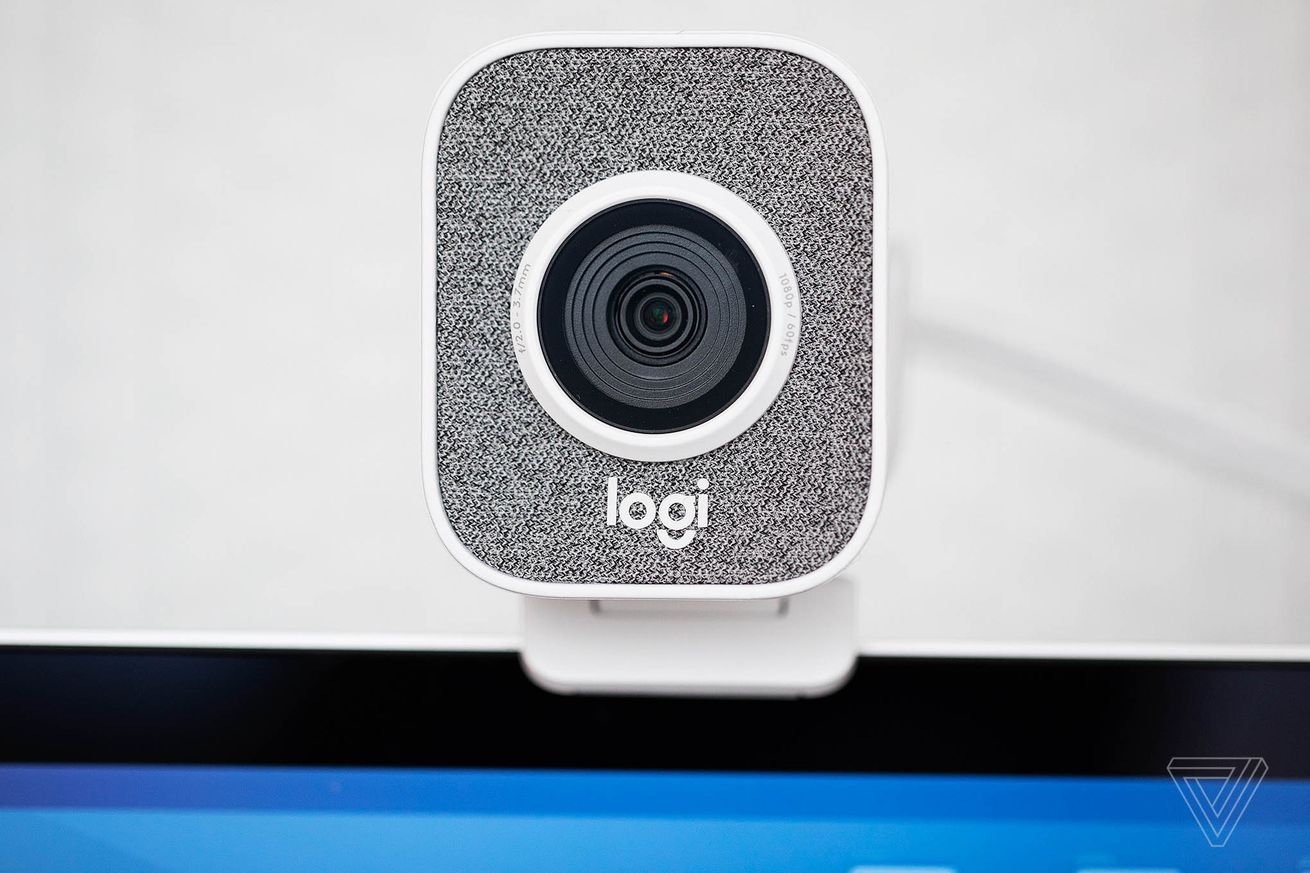
The Logi StreamCam has features that cannot be activated with Logitech’s current software on newer Macs.
Logitech makes some of the most popular webcams in the world, but using them on some of the most popular computers, like the M2 MacBook Air or M1 Pro MacBook Pro, is a less than stellar experience. Plugging one into any M1 or M2 Mac for a video call isn’t an issue, but if you want to tweak in-depth settings or use some of these webcams’ highlight features, doing that right now ranges from clumsy to impossible. That’s because its most capable webcam software, Logitech Capture, isn’t available on computers with Apple silicon.
Logitech switched up its software plan for people who use newer Mac laptops and desktops without making much effort to tell anyone. Instead of offering Logitech Capture, its de facto software focused squarely on...
Rich video meeting capabilities and extended browser support enhances real-time collaboration for customers
RingCentral Video Pro gives customers free meetings without 40 minute video time limits
BELMONT, CA – September 8, 2022 – RingCentral, Inc. (NYSE: RNG), a leading provider of global enterprise cloud communications, video meetings, collaboration, and contact center solutions, today announced the availability of AI powered video capabilities, along with extended browser support for RingCentral MVP™ and RingCentral Video® customers. With today’s global workforce embracing hybrid work, the need for richer and more intelligent meetings experiences could not be greater.
Since launching RingCentral Video, the company has rolled out hundreds of advanced video meeting features and expanded its video offering beyond the desktop and mobile devices to also include RingCentral Rooms™. To enhance the user experience of RingCentral, new browser support for Firefox on desktop and Chrome for Android devices is also now available. This extends the browser support already available in Chrome and Edge on desktop.
Additionally, today RingCentral is rolling out advanced and highly differentiated AI-driven video meeting capabilities that are now widely available. These advancements include the following:
AI-based Advanced Meeting Insights and Summaries: This feature makes it faster and easier to catch up on missed meetings, by creating AI-based meetings summaries. This ground-breaking use of AI also captures a distillation of key moments within a meeting and creates a quick video highlights reel, so a user doesn’t have to replay an entire meeting.
Whiteboard: With RingCentral Whiteboard, meeting participants have a digital canvas for visual collaboration. Its powerful whiteboard capability creates a mini-map to allow easy navigation along a broad whiteboard space.
Live Transcription: Using AI, this feature automatically transcribes conversations in real-time. Ideal for late joiners who need to get caught up without disrupting the meeting, transcripts can be reviewed at any time during the meeting and also downloaded for future reference.
AI-powered noise reduction: When additional noise reduction is enabled during a video meeting, the AI model will automatically filter out additional noises including keyboard typing, dogs barking, and other background noises, leading to fewer distractions and overall clearer audio quality for all participants.
Participant Reactions: This feature allows users to use non-verbal cues in a meeting such as emojis “slow down” or “go faster” indicators and more to meeting participants. With these reactions, there’s no need to slow down the conversation and interrupt the speaker.
Remote Desktop Control: Avoid having a presenter say “next slide.” Now this individual can remotely control another participant’s desktop through the RingCentral app or a supported desktop browser. This makes presenting during a virtual meeting more effective and smooth.
Availability and Free Meetings through RingCentral Video Pro
All newly announced features are now available for both RingCentral MVP and RingCentral Video Pro customers in both free and paid tiers. For more information, go here.
Launch unlimited free meetings with RingCentral Video Pro, an easy-to-use meetings solution available to RingCentral customers, without 40 minute video time limits. Making video meetings free is a key value-add for customers, giving them powerful meetings capabilities with team messaging, file sharing, contacts, tasks, and calendar management.
Supplemental Quotes:
Mo Kabiteh, President and COO for RingCentral said, “Video meetings shouldn’t be limited. RingCentral Video Pro is a free and full-featured solution that allows any customer to run HD video meetings without 40 minute time limits. There’s absolutely no catch and there’s no requirement to purchase a subscription. Furthermore, users can join video meetings directly through their browser without requiring any downloads and can also enjoy amazing new AI-enabled features.”
Kira Makagon, Chief Innovation Officer for RingCentral said, “One of our innovation goals is to make hybrid work simpler by delivering best-in-class video meeting capabilities. Our prior investments in AI, including RingCentral’s 2020 acquisition of Deep Affects, are unlocking new added-value for customers and allowing us to deliver new capabilities that can’t be matched. Many of us are spending countless hours in meetings, and both automation and AI has the potential to increase efficiency, support better productivity and collaboration – all while reducing meeting fatigue.”
Prashant Kukde, RingCentral’s Vice President of Conversational AI, Product Development added, “AI is a smart fabric that bridges knowledge and communication gaps. Using AI to analyze business conversations and extract meeting insights is a big differentiator for RingCentral. No other provider is able to deliver the advanced meeting summaries and insights the way we’re able to.”
Beth Schultz, VP of research and principal analyst with Metrigy said, “Many consider AI-driven video meeting functions such as those from RingCentral to be highly valuable. In-meeting assistance – such as meeting insights and summaries are top of the list, with 93% of Metrigy’s research participants saying these features would have high or moderate value to their organizations. Among the value propositions are improved engagement, productivity, and well-being.”
Beth Trejo, Founder and CEO of Chatterkick said, “In the 10 years since we launched, Chatterkick has grown into an international team. But thanks to these wonderful RingCentral collaboration tools—especially video conferencing—we can still operate as a tight-knit group of social media nerds who support each other, go all out for our clients, and have fun every day.”
About RingCentral
RingCentral, Inc. (NYSE: RNG) is a leading provider of business cloud communications and contact center solutions based on its powerful Message Video Phone (MVP®) global platform. More flexible and cost effective than legacy on-premises PBX and video conferencing systems that it replaces, RingCentral empowers modern mobile and distributed workforces to communicate, collaborate, and connect via any mode, any device, and any location. RingCentral offers three key products in its portfolio including RingCentral MVP™, a Unified Communications as a Service (UCaaS) platform including team messaging, video meetings, and cloud phone system; RingCentral Video®, the company’s video meetings solution with team messaging that enables Smart Video Meetings™; and RingCentral Contact Center™ solutions. RingCentral’s open platform integrates with leading third-party business applications and enables customers to easily customize business workflows. RingCentral is headquartered in Belmont, California, and has offices around the world.
‘The owners get a position in The 20, depending on their specialty, MSP owners now are like the butcher, the baker and the candlestick maker, doing everything. But that’s not good. We want to put these people in the right place,’ says The 20 MSP CEO Tim Conkle.
The terrorists won. And it wasn’t a small victory. It was one that managed to make the American way of life significantly worse for anyone attempting to fly. Flying is how we get around in this sprawl of a nation that encompasses 50 states and ~3,000 miles between the coasts. And that’s just 48 of the 50 states. Maybe you could drive most places if time wasn’t a factor, but Alaska and Hawaii are pretty much inaccessible without airplanes.
The TSA is a multi-billion/year boondoggle. Two positive changes were made following the 9/11 hijackings, neither of which require billions of dollars of federal spending. The biggest deterrents to terrorists were the implementation of locked cockpit doors and the empowerment of passengers to fight back. Everything else is theater.
But that’s not the direction the US went. Our representatives chose to perpetually fund this security theater. And the performative aspects of the TSA are constantly exposed. The TSA regularly fails to find the contraband that matters most: explosives. But it far more regularly finds things that simply don’t matter or engages in supremely illogical deployments of federal power to hassle people who just want to board planes without being stripped of their (often essential) belongings. This is what billions of tax dollars buys us, year after year after year, as Bruce Schneier caustically notes in this 2012 post:
[Then-TSA Director Kip Hawley] wants us to trust that a 400-ml bottle of liquid is dangerous, but transferring it to four 100-ml bottles magically makes it safe. He wants us to trust that the butter knives given to first-class passengers are nevertheless too dangerous to be taken through a security checkpoint. He wants us to trust the no-fly list: 21,000 people so dangerous they’re not allowed to fly, yet so innocent they can’t be arrested. He wants us to trust that the deployment of expensive full-body scanners has nothing to do with the fact that the former secretary of homeland security, Michael Chertoff, lobbiesfor one of the companies that makes them. He wants us to trust that there’s a reason to confiscate a cupcake (Las Vegas), a 3-inch plastic toygun (London Gatwick), a purse with an embroidered gun on it (Norfolk, VA), a T-shirt with a picture of a gun on it (London Heathrow) and a plastic lightsaber that’s really a flashlight with a long cone on top (Dallas/Fort Worth).
That’s the infuriating nature of the TSA. We’re nearly 500 words into this post and I still haven’t even touched the true subject matter: Darryl Campbell’s (writing for The Verge) excellent history of one of the nation’s least essential agencies — one that is, in turn, frustrating, enraging, depressing, and excoriating.
It opens with one hell of an anecdote, one that concludes with the TSA insisting on searching a corpse. Bureaucracy meets another bureaucracy and it’s the people funding both who are expected to pay for this insult to the memory of the dearly departed.
The decedent had died after check-in for an international flight but before boarding. The family decided the best move was to put her on the flight since they still had a boarding pass and they wanted to return to their home country, rather than try to suss out the intricacies of a completely foreign medical bureaucracy.
Rather than believe the grieving family’s claims the person was dead — and lacking the required death certificate (impossible to obtain at that point), the TSA decided to be the TSA. There were ways to verify this claim — things that don’t require medical professionals and have been observed in TVs and movies for decades. The TSA could have checked for a pulse, listened for a heartbeat, checked to see if the person could fog a mirror… literally anything but what it chose to do, which was feel up a corpse.
“We’re just following TSA protocol,” Cooper explained.
Her colleagues checked the corpse according to the official pat-down process. With gloves on, they ran the palms of their hands over the collar, the abdomen, the inside of the waistband, and the lower legs. Then, they checked the body’s “sensitive areas” — the breasts, inner thighs, and buttocks — with “sufficient pressure to ensure detection.”
Only then was the corpse cleared to proceed into the secure part of the terminal.
Protocol? It’s an out. It’s a way to pass the buck while dodging your obligations as a human being. A human being has the ability to use their rational thinking to make judgment calls in unusual cases. Presented with something out of the ordinary, TSA agents chose to violate a corpse rather than use their own discretion. That’s just a small part of the TSA’s problems: the inability or unwillingness for agents to make the sort of judgment calls their job should require, especially when TSA officials continue to refer to the people staffing checkpoints as trained professionals.
Who did this keep safe? What improvement to “travel security” did patting down a dead person create? The TSA has no answers other than “following protocol.”
And all the TSA really has is “protocol.” New hires are on probation for two years, giving the agency plenty of time to fire anyone who doesn’t toe the bureaucratic line without fear of litigation. Micromanagement is the name of the game, with agents being watched by other agents who are all watched by cameras, subjected to covert tests, and random inspections.
This may seem like a good way to ensure compliance by TSA agents. And maybe it is. But compliance doesn’t make the nation safer. And it doesn’t keep grieving families from having their deceased loved ones treated like potential terrorists.
Meanwhile, the TSA does nothing to counteract its negative public image. While officials complain passengers verbally abuse agents, the agency does almost nothing to engage with the public or otherwise deter the negative reactions its checkpoints provoke.
Beyond its anemic YouTube channel, the agency makes little effort to combat the rising tide of passenger hostility. Unlike other law enforcement branches, the TSA has no TV development pipeline, no community outreach programs — not even a grassroots hashtag like #humanizethebadge.
Despite the micromanagement, individual agents still have a lot of power and autonomy. And if someone wants to get from Point A to Point B, they have to go through them, something some agents use to their own advantage. When Katie Abdou was 14, she was called out of the boarding gate by a male TSA agent who insisted she needed a second screening. This is what happened next:
He did not explain why she had to get screened a second time. Instead, he bombarded her with questions and searched her luggage.
“I know I shouldn’t have,” she said, “but I was 14, and they weren’t telling me anything, so I made a joke like, ‘Do you think I have a bomb up my skirt?’ He didn’t find that very funny.”
Instead, he did a full-body pat-down on Abdou. He put his hands all up and down her body. He reached up her skirt and between her legs.
Sometimes agents defer to protocol to explain invasive searches of dead bodies. Sometimes agents ignore protocol to perform invasive searches of minors. Protocol is just a term of convenience — an excuse with a universal adapter. When protocol isn’t followed, it’s usually in service to a government agent, rather than those of travelers.
The TSA survives. Despite yearly injections of billions of dollars, it can’t be considered to be thriving. It’s terrible at the one thing it’s supposed to do. The billions in funding aren’t being passed on to the lower ranks, who are expected to be on the front lines of travel security for pay that’s already extremely low for the security sector and rarely meaningfully increases. There’s a reason the TSA advertises on pizza boxes: it constantly needs more agents but doesn’t want to attract anyone who might question the low pay or the effectiveness of the security theater.
What we’ve gotten since 2001 is a workforce that is increasingly unhappy and whose entire job revolves around dealing with other unhappy people.
Maybe attrition will do what Congress has no interest in doing. The TSA may be impossible to disband. But, given enough time, it may simply fall apart as attrition continues to outpace hiring.
The whole article by Campbell is worth reading. It details all the ways the TSA is failing to do its job, starting with its purely reactive protocols — something that’s probably indicative of its reactionary formation — and following through to problems that will only become worse as time goes on, like the fact the TSA’s body scanners simply don’t work when scanning anyone who doesn’t conform to binary gender expectations. Or the fact that the TSA continues to treat brown people with Arabic names far worse than they treat anyone else, conforming to another long-held bias that dates back to its 9/11 attacks origin story.
20 years. $140 billion in funding. And this is what we, as American taxpayers, have received:
The reality is that TSA has played next to no role in the biggest counterterrorism stories of the past two decades.
The TSA can’t justify its own existence. Fortunately, it doesn’t have to. It has had the unquestioning support of legislators and sitting presidents for years. We, the people, may be unhappy with the goods and services we’re buying from the TSA, but it’s the only game in town. If we want to fly, we’re at its mercy. That’s not how it should be. But that’s the way it is.
Publication of Gartner mid cycle reports reflect notable improvements in vendor feature enhancements
BELMONT, CA – September 7, 2022 – RingCentral, Inc. (NYSE: RNG), a leading provider of global enterprise cloud communications, video meetings, collaboration, and contact center solutions, today announced that Gartner has recognized RingCentral for being ranked #1 in all four use cases in the 2021 Gartner Critical Capabilities for Unified Communications as a Service (UCaaS), Worldwide report, updated August 1st, 2022. The Gartner report evaluated 14 companies in relation to nine critical capabilities and four use cases.
Gartner “Critical Capabilities” are attributes that differentiate products/services in terms of their quality and performance. Gartner recommends that users consider these sets of critical capabilities as some of the most important criteria for acquisition decisions. Those use cases include:
Midsize Enterprise
Large & Multinational Organizations
UC with integrated Contact Center
Mobility and Remote Working
“We rose to the challenge over the past two years to meet what has turned out to be a radical shift in employee communication, interaction and collaboration. As RingCentral has always had a mobile first mentality, we are especially qualified to solve the newer and ever-evolving demands of hybrid work,” said Mo Katibeh, president and chief operating officer, RingCentral. “The innovations RingCentral has brought to market over the past 12 months are a testament to the hard work our development teams have put in to rise to this unprecedented challenge. I am extremely proud of all our employees and it’s great to see the recognition by Gartner in the Critical Capabilities report.”
RingCentral has also been positioned as a Leader in the 2021 Gartner Magic QuadrantTM for Unified Communications as a Service, Worldwide. The 2021 report marks the seventh year in a row that Gartner has positioned RingCentral furthest to the right for completeness of vision in the Leaders Quadrant. The complete report, including the Magic Quadrant graphic, is available for complimentary download.
Download a complimentary copy of the 2021 Gartner Critical Capabilities for Unified Communications as a Service (UCaaS), Worldwide report. For more information, go here.
About RingCentral
RingCentral, Inc. (NYSE: RNG) is a leading provider of business cloud communications and contact center solutions based on its powerful Message Video Phone (MVP®) global platform. More flexible and cost effective than legacy on-premises PBX and video conferencing systems that it replaces, RingCentral empowers modern mobile and distributed workforces to communicate, collaborate, and connect via any mode, any device, and any location. RingCentral offers three key products in its portfolio including RingCentral MVP™, a Unified Communications as a Service (UCaaS) platform including team messaging, video meetings, and cloud phone system; RingCentral Video®, the company’s video meetings solution with team messaging that enables Smart Video Meetings™; and RingCentral Contact Center™ solutions. RingCentral’s open platform integrates with leading third-party business applications and enables customers to easily customize business workflows. RingCentral is headquartered in Belmont, California, and has offices around the world.
Disclaimer
Gartner does not endorse any vendor, product or service depicted in its research publications, and does not advise technology users to select only those vendors with the highest ratings or other designation. Gartner research publications consist of the opinions of Gartner’s research organization and should not be construed as statements of fact. Gartner disclaims all warranties, expressed or implied, with respect to this research, including any warranties of merchantability or fitness for a particular purpose.
Conversational AI can shave tens of billions off labor costs, Gartner projects. But first, businesses must contend with key data and tech stack challenges.
‘If you are counting on forced hours spent in a traditional office to create collaboration and provide a feeling of belonging within your organization, you’re doing it wrong,’ Dell says of his fellow tech CEOs mandating office hours.
Mercedes-Benz automotive group and Rivian have a new joint venture to build commercial electric vans for both automakers. The companies signed a Memorandum of Understanding today to start a strategic partnership that will build the new vans on an existing Mercedes-Benz side in Central / Eastern Europe.
There will be two van models, one built on Mercedes’ Vans Electric Architecture (VAN.EA) platform and the other on Rivian’s second generation electric van platform called Rivian Light Van (RLV).
This Lego-friendly mechanical keyboard from MelGeek lets you swap out more than just its keycaps and switches (via Gizmodo). If you happen to have a bunch of Lego bricks sitting around, you can redesign the entire case thanks to the Lego studs planted across the sides and bottom of the board.
The keyboard is, fittingly, called the Pixel, and while it’s not officially licensed by Lego, you can build out just about any design — and maybe even incorporate an existing set — right on the case. It sports a tenkeyless design, making it a step down from full-sized boards, as it doesn’t come with a number pad.
Image: MelGeekYou can frame your keyboard with a sweet Lego design.
The Huawei Mate 50 might have just edged out Apple in the space-texting race. | Image: Huawei
Huawei has announced the Mate 50 series, a day ahead of Apple’s September event and with a feature that the iPhone 14 is expected to offer: the ability to send texts via satellite communication. The Mate 50 and Mate 50 Pro will be able to send short texts and utilize navigation thanks to China’s global BeiDou satellite network, allowing for communication in areas without cellular signal.
The flagship Mate 50 series includes 4G-only versions of the Snapdragon 8 Plus Gen 1 chipset with 8GB of RAM. The 50 Pro comes with a slightly bigger 6.74-inch OLED display with a 120Hz refresh rate, while the Mate 50 offers a 6.7-inch, 90Hz OLED panel. Both include a 50-megapixel main rear camera with a variable aperture lens with stops from f/1.4 to...
Android 13 has new features that aim to improve the experience of using a single device for both work and play. According to Google, Android 13’s redesigned “work profiles” build upon last year’s enhancements to keep an employee’s personal data separate from their work data and make the user experience better and more productive, all while still adhering to an IT department’s admin policies.
One improvement in Android 13 lets employees specify if an app should be opened in their personal or work profile. This can be useful to keep corporate videos out of personal YouTube watchlists, suggests Google in one example. Employees can also have two photo galleries on their devices (one for personal use and the other for work) for a more curated...
The chess world has been rocked by online allegations of cheating after a top chess grandmaster was toppled by a relative newcomer this week in a major high stakes tournament in St. Louis.
31-year-old Norwegian chess grandmaster Magnus Carlsen—rated the top player in the world by the International Chess Federation (FIDE)—abruptly withdrew from the Sinquefield Cup in St. Louis after a third-round defeat by Hans Niemann, a young chess prodigy from the United States.
Soon after his loss, Carlsen posted a cryptic tweet featuring a speech by football manager Jose Mourinho. "I prefer not to speak,” Mourinho said in the 2020 video. “If I speak I am in big trouble…and I don't want to be in big trouble."
The defeat was an upset for the ages, given Carlsen had played 53 classical matches without a loss (though Niemann had defeated him one month earlier in a non-classical match). Niemman also had an ELO rating several hundred points lower than Carlsen and was playing black, which has a slight but statistically notable disadvantage because the white side moves first.
Carlsen’s implications rocked the chess community, which quickly began speculating online that Niemann must have cheated, despite no evidence of foul play being presented from Carlsen or event organizers. On Reddit, r/chess has been a firestorm of gossip since the loss, with many observers tracking the allegations and counter allegations in minute by minute detail.
In severalcomments on Twitch, American chess grandmaster Hikaru Nakamura implied Nieman may have had a history of online cheating. Emil Sutovsky, Director-general of FIDE, also noted that Carlsen wasn’t the type of player to quit the tournament over petty spite:
In the wake of Carlsen’s vague allegations, event organizers say they delayed the online broadcast of the fourth round by 15 minutes, and ramped up event metal detection and RFID checks on players ahead of the next round.
The Sinquefield Cup features cash prizes as high as $350,000, and has been a major step on the World Grand Chess Tour since 2015. Carleson has won the cup twice in the last decade, and had never before withdrawn from an ongoing event.
“This is truly a humbling day for me,” Niemann said in a Tweet shortly after the win. “I am eternally grateful for the opportunity to play chess at the highest level and live out my dreams. A few years ago, my chess dreams were quickly dwindling but thankfully they rose from the dead.”
Direct accusations of cheating in the chess world are rare and often hard to prove. In real-world over the board (OTB) chess, cheating usually comes in the form of somehow obtaining outside move advice through hidden communications systems, or embedding computers in clothing or footwear that can predict game outcomes and provide move recommendations.
One recent proof of concept involved using vibration-based buttons in a player’s shoes to communicate with a Raspberry Pi Zero running the open source Stockfish chess engine hidden somewhere in the player’s clothing. In a writeup of that proof-of-concept, the device's designer wrote that "I was planning to recruit a 'plausibly-good' chess player to use the shoes to win the world championship," and that he was planning on creating an updated version of the cheating device: "This proof-of-concept only needed to fool my mates, in a pub, for the duration of 2 games. To win the world championships we're going to have to get much more serious." That post has gone viral on Hacker News, though there is no evidence that this device or any other was used by Niemman.
Cheating in online chess is significantly more common, and online events have been routinely plagued by scandal during the last few years.
For their part, event organizers wouldn’t speculate on the motivation for Carlsen’s abrupt departure, or comment on the parade of online gossip that has accompanied his exit.
“A player’s decision to withdraw from a tournament is a personal decision, and we respect Magnus’ choice, ″ Tony Rich, Executive Director of Saint Louis Chess Club, said in a statement. “We look forward to hosting Magnus at a future event in Saint Louis.”
Apple has officially announced the iPhone 14 Pro and iPhone 14 Pro Max. Both handsets have new pill-shaped cutout that replaces the notch and can adjust dynamically, in the first big display redesign since Apple introduced the iPhone X in 2017. Both devices also have a faster A16 Bionic chip and an always-on display.
Apple CEO Tim Cook calls the iPhone 14 Pro and Pro Max the “most innovative pro lineup yet.” The iPhone 14 Pro will start at $999, and the iPhone 14 Pro starts at $1,099. Both will be available for preorder on September 9th, and available in stores on September 16th.
The first notable design change with the iPhone 14 Pro models is the display. While Apple will offer the usual 6.1- and 6.7-inch options, the notch is being...