Davemichels
Shared posts
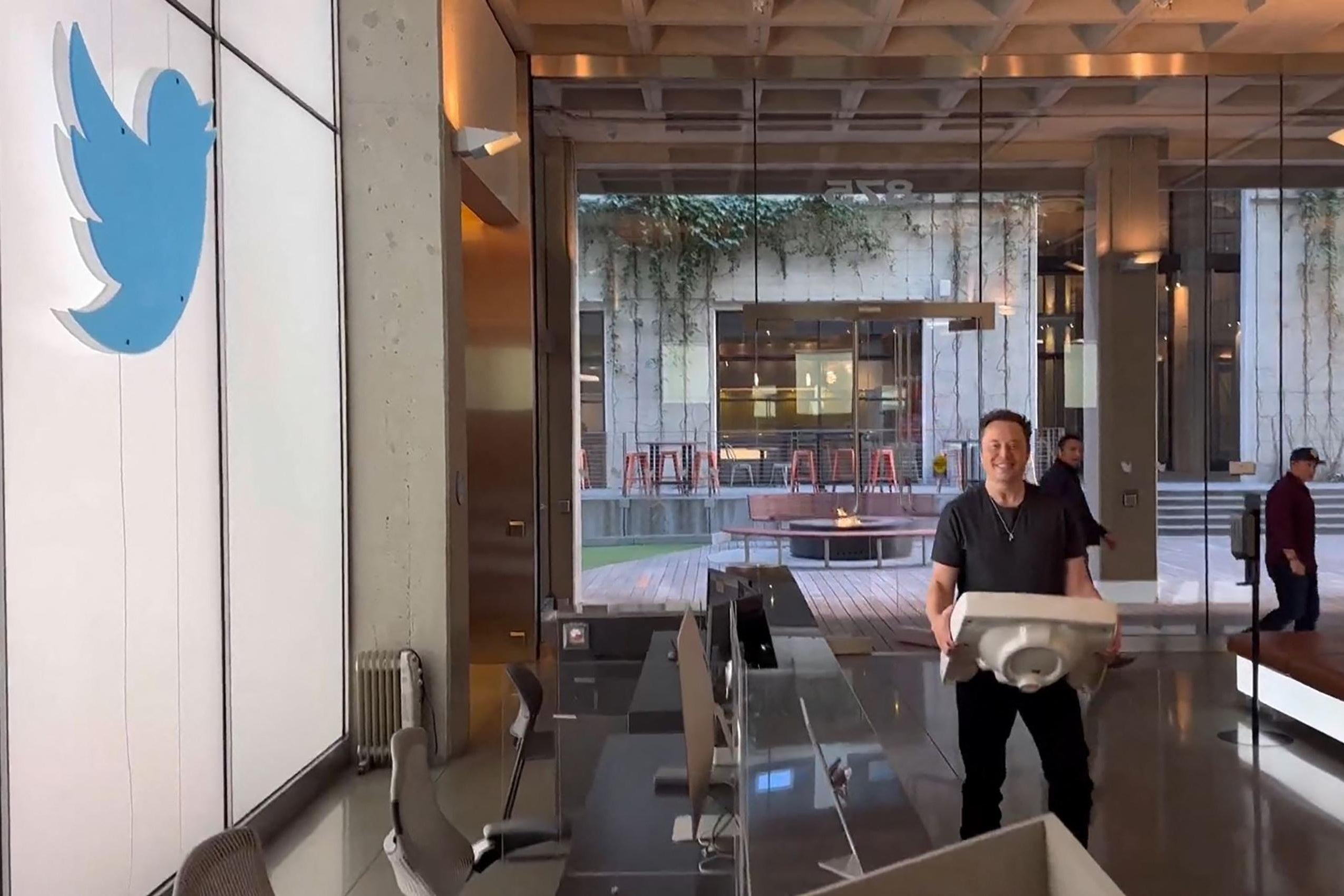
The Places Where Twitter Is Already Breaking

TechCrunch staff on what we lose if we lose Twitter
I spied a tweet the other day that journalists would suffer if Twitter ever shut down because they would lose a driver of traffic. While there is some truth to that — Twitter does help expose your writing to a larger audience — it’s also true that Twitter has value beyond that for journalists and other users.
It’s safe to say that Twitter is in disarray as Elon Musk fecklessly tries to grasp the business, instituting mass layoffs as the remaining essential employees flee the general chaos, spurred on by midnight email ultimatums.
That most recent missive, it seems, triggered a mass resignation, according to reports. When you add that to the people who were let go in the layoffs, it’s fair to ask how many people are left to run the site.
Even before all this happened, the TechCrunch team had a conversation on Slack about what we would miss if Twitter went away tomorrow. At the time (three days ago), it felt more like a whimsical game than a real possibility.
For all its warts, Twitter has a way of connecting people who otherwise might never connect. It gives us a place to share our passions, our random thoughts, and yes, our shitposts, all while keeping us up on what’s happening in the world in real time.
“It’s hard to imagine anything could replace Black Twitter. But if history has taught us anything, it’s that we’ll always find our way.” Dominic-Madori Davis
While there are surely many negatives to the platform — it’s way too easy to spread misinformation and hate speech and attack people you disagree with — there are also loads of positives, and many things we would miss if Twitter perishes.
It now feels like it very well could.
So several TechCrunch staffers contributed what they would miss most if Twitter went away (while hoping it’ll still be up tomorrow):
Dominic-Madori Davis: Black Twitter, obviously
I’m not even sure where to begin to describe the immense impact Black Twitter has had on, well, the world, really. From when I was a teenager, watching so many Black people mobilize to bring awareness to the fatal shooting of Trayvon Martin, to that time we all shared experiences and made jokes as to what it was like having Thanksgiving with a Black family. “When it’s time to leave and the plate you hid is missing, *insert Kermit screaming meme here.*”
The memes are endless, as is the support — and the heat — we give and place onto people and topics. It was a place to find community in a world so unkind to us. It really does feel like its own universe sometimes. I remember a few years ago going to Clubhouse to hear the talks and then running to Twitter to watch everyone live-tweet the conversations.
This thread from a few days ago really brought back memories, in which author Kira J hosted a little “Black Jeopardy.” Famous dates for 500, please. “On December 21st, 2020, what were Black people waiting around to get?” Superpowers. And they’re coming still, don’t worry. They’re just running on CP time.
The community always felt quite insular; what happened there rarely burst out of our bubble. When it does hit the mainstream, everything shifts, everything changes. Like someone walking in on you mid-shower. Non-Black people often don’t understand the humor, the sarcasm, the “wait, did we all have the same childhood?” I’m always reminded of some tweet awhile ago asking, “How does one get into Black Twitter?” It’s not quite the same or as easy as people just giving invites to the cookout (stop just giving those out, please!!!).
“I really want a place to post sentence-long shitposts with no punctuation, and I don’t know where I would go if I couldn’t do that on Twitter anymore.” Amanda Silberling
I often wonder what it is like to not be in Black Twitter.
What do people think when they come across a photo of Chris Evans wearing long neon yellow acrylics with a honey mustard-colored satin bonnet? Where do other people get their news, if not from Philip Lewis? I’ll miss seeing something trending and saying yep, that’s Black Twitter, it has to be. I would miss the solidarity, the camaraderie often not easily made or reciprocated out in the physical world. Yes, I think I would even miss Roc Nation Brunch Twitter, also known as LLC Twitter, also known as the people who tell everyone to start a business and become entrepreneurs. “Would you rather take $500,000 or dinner with Jay-Z?” Seriously, just take the money and run.
Last week, Brooklyn White-Grier, the features editor at Essence, asked everyone what we were going to wear to Twitter’s homegoing service. Someone made programs, started planning gospel music performances, and, of course, we started picking out our hats. I tweeted that I was excited to get an extra low vibrational plate at the repast and would probably show up with slicked-back baby edges and in Valentino couture, as Zendaya did to the Emmys.
It’s hard to imagine anything could replace Black Twitter. But if history has taught us anything, it’s that we’ll always find our way.
TechCrunch staff on what we lose if we lose Twitter by Ron Miller originally published on TechCrunch
UNIVERGE BLUE: Talks Like a Cloud, Sells Like a Box
The new offering from NEC offers channel partners the favorable economics of selling hardware while providing customers the benefits of UCaaS and CCaaS.
Cisco Delivers Largest Ever Quarterly Revenue in Q1
Cisco’s Q1 2023 results have seen the company deliver its largest quarterly revenue in history.
During an investor call on November 16, Cisco reported revenue of $13.6bn for the first quarter, which is up six per cent year over year.
Chuck Robbins, CEO of Cisco, also addressed reports that the company is “restructuring”, which could impact roughly 5% of its workforce, according to Reuters.
The company confirmed that the restructuring plan will begin in the second quarter of the fiscal year 2023 and will see some job losses.
Robbins commented:
“I would say that what we’re doing is rightsizing certain businesses.
“We’re really focused on resource moving into like in the enterprise networking space, accelerating our platform strategy.
“We will be making significant investments in security and beefing up our team there and the capacity to continue to innovate there.
“Those are important areas. And so, if you would understand, I’d prefer to wait and talk to our employees tomorrow about it.”
Cisco’s product revenue is up by 8 per cent; however, the company did see revenue fall on the collaboration side, which includes Webex by Cisco, of the organisation.
Scott Herren, Chief Financial Officer, Cisco, put the fall of two per cent down to a decline in meetings which has been partially offset by a growth in calling.
Collaboration revenue has been up and down for Cisco, with the company recently seeing its income fall for four consecutive quarters before it saw a slight growth in Q4 FY 2022.
Despite the slight fall in revenue during Q1, Robbins has committed to driving Webex forward and highlighted new partnerships with other companies as a way of doing so.
He added: “In collaboration, we announced more than 40 new innovations to power hybrid work and delivered exceptional customer experiences.
“We’re also committed to giving our customers more choice. An example of this is our partnership with Microsoft to bring Microsoft teams to Cisco meeting room devices.
“By doing this, we are driving interoperability and demonstrating our openness to meet our customer’s needs and provide greater flexibility.
“I actually am optimistic over the next 12 months about our collaboration portfolio. The team has done an amazing job. I truly believe that they built the best platform in the business.
“When you look at our devices and the interoperability that the team has been driving with the Microsoft interoperability, that is a huge thing from a customer perspective for us to give them that flexibility.”
Cisco’s partnership with Microsoft was announced during Microsoft’s Ignite event in October.
The companies revealed that Teams meetings would be available natively across Cisco meeting devices, allowing customers to make Teams their default meeting platform.
The first devices will be certified by early 2023, which include devices designed for small-to-large meeting room spaces: Cisco Room Kit Pro, Cisco Room Bar, and Cisco Board Pro 55-inch and 75-inch.
At its WebexOne 2022 event, Cisco announced updates to the Webex Suite, along with a new collaboration device and partnerships to help expand its collaboration footprint.
According to Cisco, the innovations have been designed to help customers navigate any challenges they face as offices reopen and give people flexibility over their working patterns.
The company has recently expanded its portfolio of specialisations which are available through the company’s partner program.
The solution specialisations are designed to showcase partner value to customers and highlight the different types of solutions that partners are selling in today’s market.
Cisco has put hybrid work at the forefront of its new specialisations, with four of the six new categories relating directly to hybrid work.
The Arc browser is the Chrome replacement I’ve been waiting for

Arc isn’t perfect, and it takes some getting used to. But it’s full of big new ideas about how we should interact with the web — and it’s right about most of them.
NEC Introduces Revolutionary CLOUD CASH Program That Pays Channel Partners Upfront on NEC UNIVERGE BLUE® Cloud Communications Deals
NEC’s flexible, industry-first program replaces cloud software recurring revenue model with lump sum, upfront payments
IRVING, TX – November 15, 2022 – NEC Corporation of America (NEC), a leading provider and integrator of advanced IT, communications, networking, and biometric solutions, today launched NEC UNIVERGE BLUE® CLOUD CASH, a program that offers NEC UNIVERGE BLUE® cloud communications channel partners the option to get paid upfront on the full-term of the agreement. Unlike traditional cloud service sales models that pay channel partners a monthly recurring revenue, for each new sale, CLOUD CASH pays channel partners a lump sum upfront payment – based on the amount that would be realized from recurring revenue through the length of the agreement, plus any qualifying incentives. This flexible industry-first program bridges the premises to cloud revenue gap and makes it easier for channel partners to move their customer base to cloud communications.
“With CLOUD CASH, channel partners can deliver cloud-based communication and collaboration solutions for their customers without worrying about the financial impacts on their businesses,” said Al Kelley, Vice President, Channel Sales, Americas at NEC. “By offering this alternative revenue structure backed by NEC Financial Services, channel partners once leery of offering cloud solutions can now help their clients modernize their communications infrastructure with the comprehensive suite of tightly integrated unified communications and contact center solutions that is UNIVERGE BLUE.”
Businesses are rapidly adopting remote and hybrid work models, and the migration to cloud communications continues to accelerate. However, for channel partners selling on-premises business phone systems, their move to selling cloud communications could be impeded by a business model that is based on upfront hardware sales. As a channel partner-first company, NEC introduced CLOUD CASH to alleviate this concern and now allows channel partners to sell UNIVERGE BLUE CLOUD SERVICES and get paid upfront like hardware. CLOUD CASH also offers channel partners the flexibility to decide which deals they want to get paid upfront, or via monthly recurring revenue, enabling them to better control their financials.
As part of the program, NEC created a calculator that enables the channel partner to simulate an average sale to see how much they can expect to earn upfront on a deal. For more information on UNIVERGE BLUE® CLOUD CASH, please visit https://www.univergeblue.com/cloud-cash-program.
“Introducing an alternative to the traditional way channel partners are compensated will allow many more of them to benefit from the growth of UCaaS and CCaaS,” said Dave Michels, Principal Analyst and Founder of TalkingPointz. “UNIVERGE BLUE CLOUD CASH not only demonstrates the financial strength of NEC but is also the mark of an organization that truly puts channel partners first. Motivated sellers mean we should see a harder push to move traditional on-prem hardware users to cloud communications, which is a win for both channel partners and the industry.”
About NEC Corporation of America
NEC Corporation of America (NEC) is a leading technology integrator providing solutions that improve the way people work and communicate. NEC delivers integrated Solutions for Society that are aligned with our customers’ priorities to create new value for people, businesses, and society, with a special focus on safety, security, and efficiency. We deliver one of the industry’s strongest and most innovative portfolios of communications, analytics, security, biometrics, and technology solutions that unleash customers’ productivity potential. Through these solutions, NEC combines its best-in-class solutions and technology and leverages a robust partner ecosystem to solve today’s most complex business problems. NEC Corporation of America is a wholly-owned subsidiary of NEC Corporation, a global technology leader with a presence in 140 countries and $27 billion in revenues. For more information, please visit www.necam.com.
The post NEC Introduces Revolutionary CLOUD CASH Program That Pays Channel Partners Upfront on NEC UNIVERGE BLUE® Cloud Communications Deals appeared first on Cloud Communications Alliance.
Amazon Clinic launches as a message-based virtual care service

Amazon has launched Amazon Clinic, a message-based online healthcare service that offers treatments for over 20 “common health conditions” such as allergies, dandruff, hair loss, birth control, erectile dysfunction, and acne.
Amazon Clinic requires customers to select the condition they require treatment for and then choose a preferred provider from an available list of licensed telehealth providers. After completing an intake questionnaire, customers can connect with clinicians for a consultation via a secure message-based portal. A personalized treatment plan will then be provided via the portal alongside any necessary prescriptions, which can be filled at any pharmacy of the customer’s choosing — including Amazon Pharmacy.
Apple Sued After Another Study Finds Its Well-Hyped Privacy Standards Are Often Theatrical
Last week yet another study indicated that Apple’s heavily hyped new dedication to privacy was somewhat hollow, with the company’s apps often extensively tracking user behavior despite claims that doesn’t happen. It was the latest in a series of studies showcasing how Apple’s pivot to a privacy-dedicated company is often a bit performative once you dig a centimeter or two beneath the surface.
Not too surprisingly, Apple has now been sued (pdf) under claims that the company is violating the California Invasion of Privacy Act:
“Through its pervasive and unlawful data tracking and collection business, Apple knows even the most intimate and potentially embarrassing aspects of the user’s app usage—regardless of whether the user accepts Apple’s illusory offer to keep such activities private,” the lawsuit said.
The most recent revelations came courtesy of two researchers at the software company Mysk, who discovered the Apple App Store sends Apple detailed information about user behavior and hardware despite a privacy setting, iPhone Analytics, which specifically claims to “disable the sharing of Device Analytics altogether” when flipped.
This isn’t the first time Apple’s new privacy features have been found to be a bit lacking. Several studies have also indicated that numerous app makers have been able to simply tap dancing around Apple’s heavily hyped do not track restrictions for some time, often without any penalty by Apple months after being contacted by reporters.
That’s a notably different story than the one Apple has gotten many press outlets to tell. Apple desperately wants to differentiate its brand by a dedication to privacy (as you might have noticed from the endless billboards that simply say: “Privacy. That’s iPhone.”). And while the company may certainly be better on privacy than many other large tech giants, that’s simply not saying much.
Charter Communications Partners with RingCentral on New Offerings
Charter Communications has formed a strategic partnership on two new offerings with RingCentral to provide SME and enterprise customer access to communications platforms.
The new offerings, Spectrum Business Connect with RingCentral and Spectrum Enterprise Unified Communications with RingCentral, will combine RingCentral MVP with Spectrum’s high-speed internet and network solutions to offer a “reliable, secure, and simple” communications platform.
Charter Communications is a broadband connectivity company serving more than 32 million customers in the USA. In 2014, the company rebranded its products under the name “Spectrum”.
Homayoun Razavi, Chief Business Development Officer, RingCentral, said: “Combining Charter Communications’ high-speed broadband services with RingCentral’s cloud communications platform provides Charter’s millions of customers a fully optimized end-to-end solution to easily, securely, and reliably manage their businesses communications.
“We are very excited about our new relationship with Charter Communications. Together, we can provide a variety of businesses across a number of sectors–including healthcare, hospitality and education–a truly hassle-free solution with one stop for implementation and onboarding, billing, and support.”
The offerings will allow businesses to meet their customers, employees, partners, and suppliers on any device across various locations and channels.
RingCentral has an open platform ecosystem with over 500 APIs, which have collectively been used by customers to create more than 8,500 integrations and over 330 applications in its applications gallery.
Over the past year, RingCentral has introduced hundreds of new features across phone, video, and messaging, which include advanced meeting insights, advanced meeting summaries and other AI video features launched in September.
These capabilities can now be utilised by Charter’s customers to modernise and streamline their communications systems while also facilitating operations and growth.
Spectrum Business Connect with RingCentral is currently available in over 90% of Spectrum markets, and it will become fully available in the coming months.
Spectrum Enterprise Unified Communications with RingCentral will be made available within the USA in early December.
Danny Bowman, Charter’s Chief Mobile Officer, said: “Workplace expectations have transformed dramatically in recent years, and we are meeting our customers’ needs as they shift and grow.
“Spectrum’s new RingCentral solutions will enable our business clients of all sizes to adapt to today’s rapidly changing work environment, giving them the flexibility and remote capabilities they require.”
RingCentral recently announced that roughly 10% of its workforce is being laid off. It joins a slew of technology companies which have made layoffs recently, including Microsoft, Twitter, Meta, Salesforce, Lyft, Stripe, Netflix, and more.
Despite the need for layoffs, RingCentral had a strong Q3 2022. The total revenue for RingCentral’s third quarter was $509 million, which is an increase of $94 million compared to Q3 2021. Subscriptions revenue also increased 25% year-over-year to $483 million.
Other financial highlights include its GAAP operating margin of 35.9%, up from 20.1% the year before. There was also a record non-GAAP operating margin of 13.5%, which is an increase of 300 basis points year-over-year.
RingCentral also took part in UC Today’s round table this month, discussing UCaaS security strategies.
Google agrees to pay $392 million to settle location tracking lawsuit

Google has agreed to pay a $391.5 million settlement to 40 states over allegations that the company tracked users’ locations without their knowledge (via The New York Times). As part of the settlement, Google’s required to alert users when location tracking’s enabled, as well as provide information on how to turn off the feature starting in 2023.
A coalition of attorneys general from Oregon, New York, Florida, Nebraska, and other states filed the lawsuit in response to a 2018 report from the Associated Press that reveals how Google silently tracked users’ locations across its various services on iPhone and Android. The lawsuit alleges that from 2014 to 2019, Google misled users into thinking their location had been switched off and would...
The tech industry’s layoffs and hiring freezes: all of the news

Companies across the tech industry have been laying off staff and reducing hiring after explosive growth during the pandemic.
Long Live Email
Email remains a crucial tool for asynchronous communications and collaboration.
Cloud or on-prem? Companies flip-flop on workload decisions
Shifting data back and forth between cloud and on-prem, a common practice, complicates cybersecurity efforts.
KFC blames its bot for promoting its cheese-covered chicken on Kristallnacht

Fast food chain KFC sent customers in Germany a message encouraging them to “treat [themselves]” to the restaurant’s food to mark the anniversary of Kristallnacht, the coordinated anti-Jewish attacks by the Nazi Party many consider to be the beginning of the Holocaust.
BITTE WAS SOLL ICH MIR GÖNNEN? @KFCDeutschland pic.twitter.com/jNVPmbawH8
— Björn (@BjrnHfer) November 9, 2022
Customers in Germany were horrified to receive the push notification from the fast food restaurant yesterday, on the anniversary of the 1938 attacks when Nazis orchestrated and carried out the destruction of thousands of Jewish homes, businesses, and schools, killed dozens, and sent 30,000 people to concentration camps.
The KFC promotion read, “It’s memorial...
Silicon Valley layoffs are a reminder that your job won’t love you back
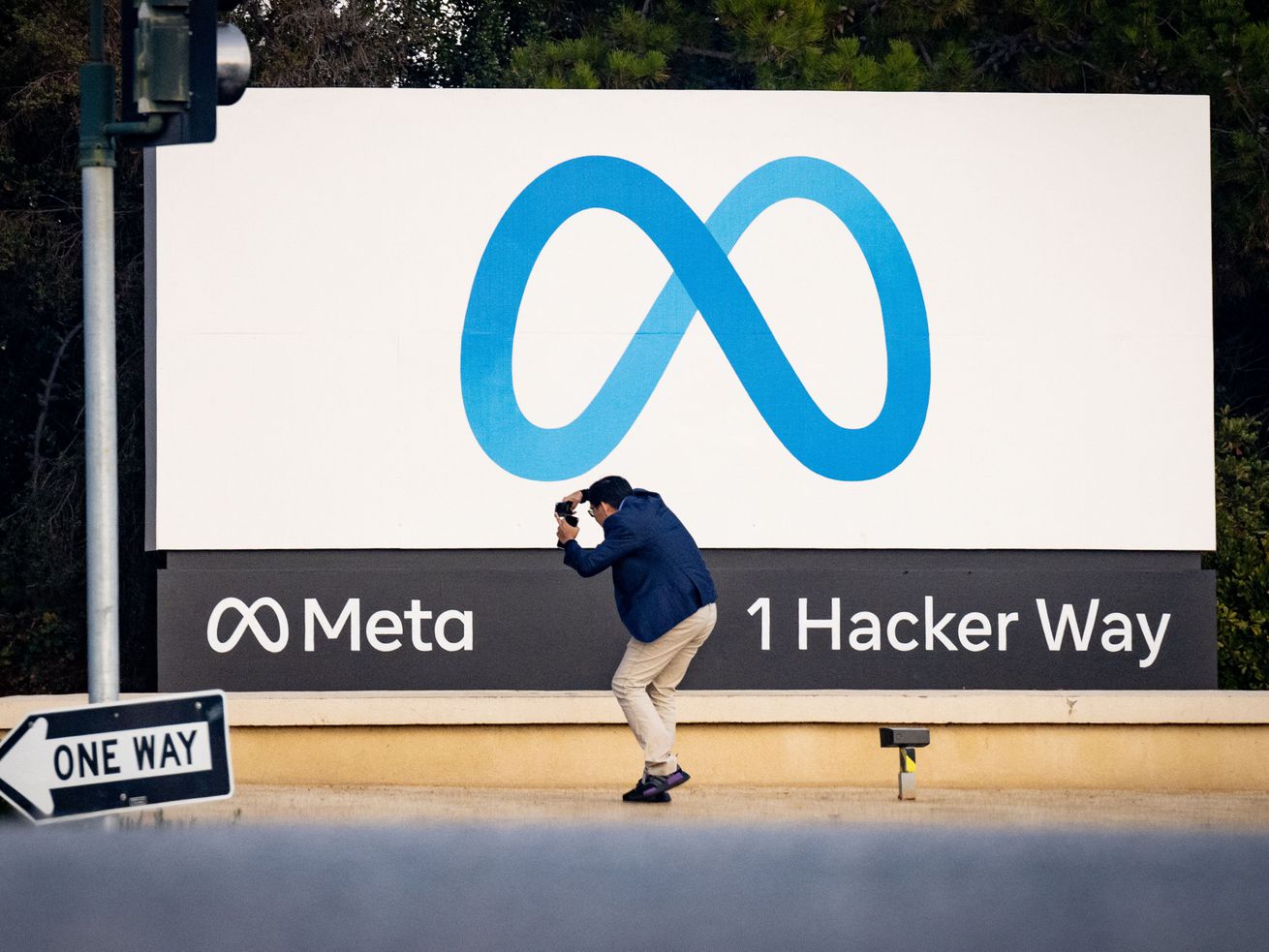
After more than a decade of living their work, tech workers are being let go.
In a call with workers at Meta on Wednesday, founder and CEO Mark Zuckerberg told employees, “You’ve really put your heart and soul into this place,” before laying off roughly 11,000 people. Meta is joined by a number of other tech companies doing massive layoffs this year, and the trend serves as a stark reminder that your company, no matter how much you give, won’t always love you back.
The layoffs in Silicon Valley come after a decades-long trend at tech companies to “live and breathe” your job and make it part of your identity. A decade ago, Uber gloated that its workers “Always be hustling,” while WeWork espoused “Rise and grind.” These companies touted their rock walls, laundry services, and exclusive chefs to show management’s largesse. But really, many of these perks could also be interpreted as just ways to keep people in the building past their normal working hours.
Tech companies in some ways have filled other voids in some workers’ lives that once might have been filled by community or church, according to Simone Stolzoff, author of the upcoming book The Good Enough Job: Reclaiming Life From Work.
“There’s this rhetoric around work where companies are telling employees that they can come here and do the best work of their lives, that they can change the world,” Stolzoff said. “There is this sort of religion that’s created around these different companies and their mission.”
With the Great Resignation and the more widespread acceptance of concepts like work-life balance, such corporateering has become passé, but that doesn’t mean the sentiment has died. Although people can get a lot of satisfaction out of their job, it can also be like a bad one-sided relationship — one that hurts employees who put their heart in the wrong place.
“We need to stop building and putting so much trust in companies,” Brooks E. Scott, executive coach and CEO of Merging Path, told Recode. He encourages employees to keep their resumes updated and continue to develop professional relationships in and outside their jobs, even when they’re not looking for a new one. Losing a job can be crushing, but it shouldn’t be a surprise.
“At the end of the day, a company is a business, as much as they say that people are first,” Scott said.
There have been about 118,000 tech layoffs this year, as economic headwinds like high interest rates and low ad spending jar the industry, according to company downsizing tracker Layoffs.fyi. While that’s not enough to seriously dent the millions of US tech jobs out there, it’s an unwelcome occurrence to tech workers who have gotten used to more than a decade of relative stability.
The Meta layoffs, which affect about 13 percent of the company’s 87,000 employees, will be concentrated in recruiting and business (the company wasn’t more specific), Zuckerberg said in a memo accompanying the layoffs. Large-scale downsizing in Silicon Valley actually started earlier this year with layoffs at companies like Snap, Netflix, and Microsoft. Business software giant Salesforce laid off hundreds of workers this week, and payment processor Stripe laid off more than 1,000 last week.
Then, of course, there were the massive layoffs at Twitter last week, where the platform’s new owner, Elon Musk, gave a master class in how not to lay people off. In the dead of night, Musk fired about half the company, many of whom found out they were getting let go after not being able to access their email. The layoffs were so haphazard, some people were apparently fired by mistake and have since received offers to return to the jobs they so recently had. As of the beginning of this week, those who remain still don’t know who’s left at the company or who they report to.
From an HR perspective, the execution of Meta’s layoffs were nothing like Twitter’s. Zuckerberg said all the right things. Like a number of other executives recently, he took accountability for the layoffs, saying he mistakenly thought the move of people and commerce online would be more permanent, and he grew headcount too fast. Zuckerberg listed the other cost-cutting measures the company had tried (the company got rid of its free laundry service and some other perks this spring) and the larger economic context in which the layoffs are happening. He was clear about what outgoing employees would receive, including a generous severance package with at least 16 weeks of pay and six months of health insurance.
However, it’s important to remember that Meta didn’t have to hire as many people as it did, nor did Zuckerberg have to pour so many billions into bets like the metaverse, which he’s claiming is the future of the internet but so far seems a lot like the present. In other words, Meta didn’t have to lay people off. The company is still wildly profitable and, as Recode’s Shirin Ghaffary wrote in September, can afford to make payroll even in an economic downturn. Instead, Meta is choosing not to.
Meta and other Silicon Valley companies are using the economic circumstances to trim fat and make remaining staff work harder. Meta wants to get back to a leaner startup mindset to appease shareholders and raise its dwindling stock price. It’s working, too: The stock is up 20 percent from last week, according to data from financial platform Sentieo.
That’s little consolation to those who just lost their livelihoods, which can be an especially difficult blow. Having a transactional mindset about work — that it is something you do in exchange for pay — can help put things into perspective, and so can finding meaning outside of work, said Stolzoff.
“Try and see this as an opportunity, while you’re searching for other jobs, to also invest in other sources of identity and self-worth that no employer or job market has the power to take away from you,” he said.
The Implosion of FTX Is Reaching Untold Depths of Stupid
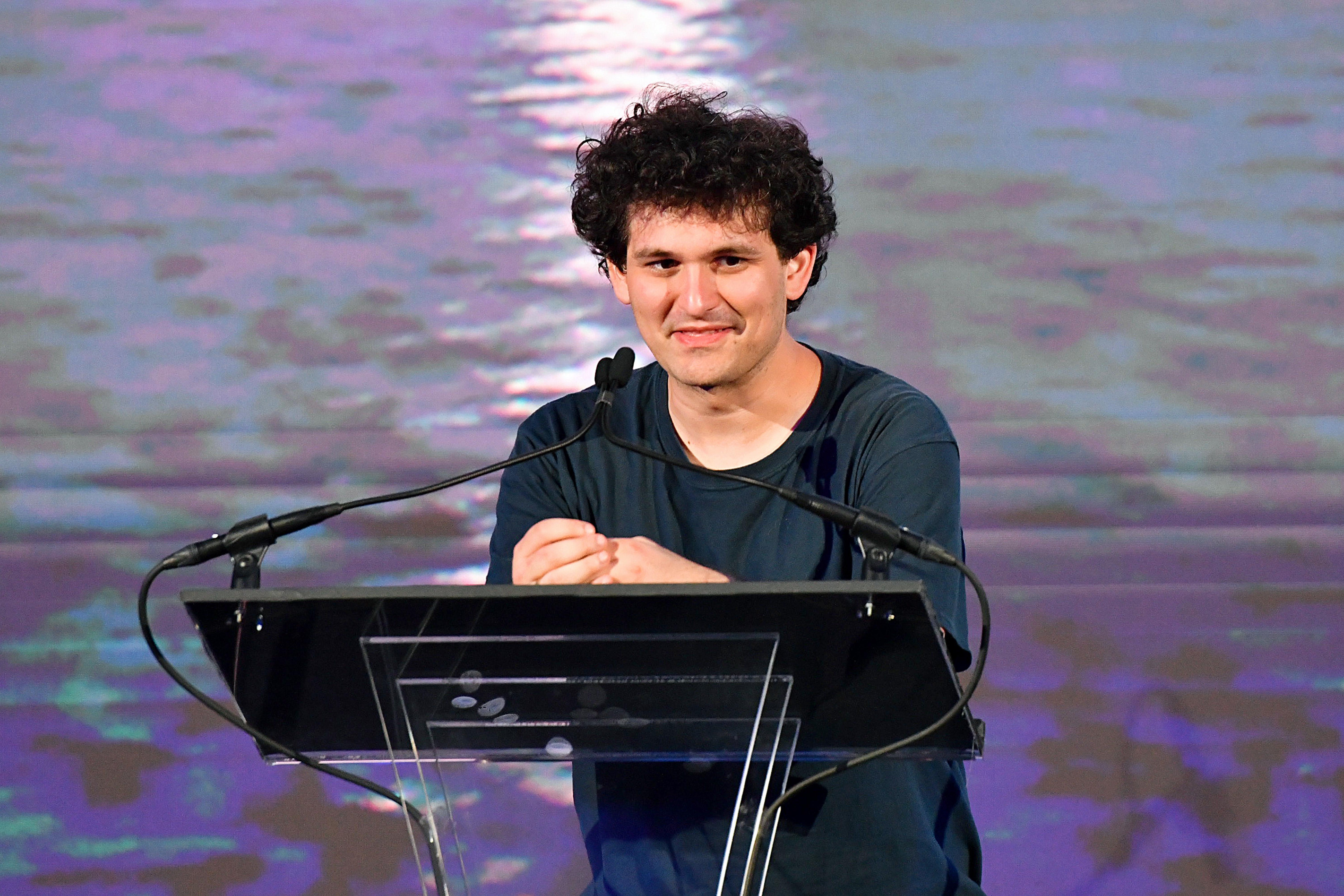
The spectacular implosion of crypto’s biggest star, explained

FTX and Sam Bankman-Fried just experienced a shocking downfall.
Sam Bankman-Fried, one of the crypto industry’s biggest stars, has said a lot of things over the years, most recently that he’s “sorry” and he “fucked up.”
Before that, he said he might spend as much as $1 billion on politics in 2024. He said he had a lot of ideas for policing the crypto industry and using his crypto-fueled fortune for good. He said he’d be fine bailing out some crypto companies in trouble as crypto winter hit over the summer. All of these claims are now in limbo thanks to another thing he said on November 7: that his crypto exchange, FTX, was “fine.” It was not. Instead, the next day, the exchange imploded. By Friday, November 11, the company had filed for bankruptcy, and Bankman-Fried resigned as CEO.
“It’s incredible how quickly these things can spiral out of control,” Molly White, a software engineer and prominent crypto critic behind the website Web3 is Going Just Great, told me.
Whether or not you’re a crypto person, chances are you’ve come into some sort of contact with FTX and its founder, Sam Bankman-Fried — better known as SBF — in some fashion. He’s partnered with big names, such as soon-to-be-divorced couple Tom Brady and Gisele Bündchen, to spread the crypto gospel. He co-hosted Crypto Bahamas with medium name Anthony Scaramucci; figures such as Bill Clinton and Tony Blair attended. (Disclosure: Future Perfect, Vox’s effective altruism-inspired vertical, received a grant from Bankman-Fried’s Building a Stronger Future foundation in 2022.)
FTX ran a memorable ad featuring Larry David during the Super Bowl encouraging people to jump into crypto, even if they didn’t really get it. He bought the naming rights to the Miami Heat’s arena; whether that name will soon have to change is uncertain. Bankman-Fried was a major donor to Joe Biden’s presidential campaign and again in the 2022 midterms, largely in primaries. He slowed political spending down in the election cycle’s final weeks. He had positioned himself as the “acceptable” face of crypto to Washington, DC, policymakers, and the public.
In a matter of days, his empire has exploded in a rather spectacular fashion. Thanks to a leak about the financial health of a trading firm he founded, Alameda Research, and some savvy maneuvers from a competing exchange, Binance, investors began to pull their money out of FTX en masse. FTT, a token the company issues, plunged in value. FTX was forced to seek a bailout.
The competitor that helped orchestrate FTX’s demise said it would buy it and then backed out after briefly kicking FTX’s tires. Billions of dollars have been wiped from Bankman-Fried’s net worth. It’s still not entirely clear what happened, why it happened so quickly, or what will happen to FTX or its customers. Regulatory probes are certainly on the horizon. It appears that FTX is facing an $8 billion shortfall and has commenced bankruptcy proceedings in the US.
John J. Ray III, who has been tapped as FTX’s new CEO, said in a statement on Friday that Chapter 11 is “appropriate to provide FTX Group the opportunity to assess its situation and develop a process to maximize recoveries for stakeholders.” Bankman-Fried, who in recent days has said he’s intent on finding ways to help customers who can’t get their money out of the exchange, will remain on to assist in the transition. It’s hard to see this ending well. As Bloomberg notes, Chapter 11 bankruptcy means the company can keep operations going as it figures out how to pay creditors. Some 130 entities, including FTX, FTX, and Alameda Research, are involved in the proceedings.
In a series of tweets on Friday, Bankman-Fried reiterated that he was sorry. “I’m piecing together all of the details, but I was shocked to see things unravel the way they did earlier this week,” he wrote.
“Sam went from being the darling of the regulators to suddenly being a pariah, and it happened in a matter of what? Three days?”
Crypto has seen a series of blowups over the past decade, and this is among the biggest — the industry’s Bear Stearns moment, in a way.
“Sam went from being the darling of the regulators to suddenly being a pariah, and it happened in a matter of what? Three days?” said Douglas Borthwick, chief business officer at INX, a crypto trading platform. “Astounding.”
FTX’s shocking implosion, explained-ish
In some ways, the story of what happened here is a bit of a classic one — one competitor (Binance) saw the opportunity to try to kill off another (FTX), so it did.
“This is two crypto exchange founders doing economic warfare, and one clearly won and one clearly lost,” said David Hoffman, the co-owner of Bankless, a podcast and newsletter in the crypto space.
How it was able to do so is a little complicated, and there’s still a lot that’s unknown.
Changpeng Zhao, a Chinese-born entrepreneur with Canadian citizenship who is more commonly referred to as CZ, launched Binance in 2017 and has since grown it to be the biggest crypto exchange in the world. Bankman-Fried launched Alameda Research, a quantitative trading firm focused on digital assets, in 2017, and then FTX, an exchange, in 2019. Bankman-Fried stepped away from running the day-to-day at Alameda, but the two entities remained very much connected.
Up until very recently, the story was that FTX and Alameda were in decent shape. FTX had a $32 billion valuation, its smaller FTX US division (that’s in line with US regulations and doesn’t allow nearly as much risky behavior as regular FTX does) was pegged at $8 billion, and Alameda had brought in a $1 billion profit in a single year. Things have since fallen apart very fast.
On November 2, Ian Allison at CoinDesk published a leak revealing that much of Alameda’s $14.6 billion in assets were parked in a digital token created by FTX, called FTT. (In crypto, tokens are digital assets built on a blockchain.) Among other perks, FTT tokens give holders a discount on FTX trading fees. But the tokens were, like a lot of crypto tokens, kind of a made-up thing where their value was derived in believing there was value. “They printed this token out of thin air, endowed it with some valuation, and then Alameda used it as collateral,” said Nic Carter, partner at venture capital firm Castle Island Ventures.
Bloomberg’s Tracy Alloway used the example of a Beanie Baby you buy for $5 and then sell for $20 because you make a price guide saying that’s what he’s worth. In this case, FTX was making the Beanie Baby itself — as in issuing the FTT token for free — then buying some of the tokens back for whatever amount. It was then able to say the token was worth that amount and do business with it, by, for example, using it as collateral for a loan.
The CoinDesk leak and revelations that it had so much money in FTT prompted questions about Alameda’s financial health and concerns that a fall in the token’s value could cause real problems for both the trading firm and FTX.
Days later, on November 6, Zhao said on Twitter that Binance would be liquidating its FTT holdings, which it received after exiting its stake in FTX last year. (Binance was an investor in FTX, with Zhao buying a 20 percent stake in the exchange soon after its launch, according to Reuters.) He said Binance received $2 billion in tokens, including some in the FTX token, at the time, but due to “recent revelations that have come to light,” they were offloading the FTT.
The whole thing sort of spiraled from there. Alameda’s CEO, Caroline Ellison, insisted Alameda was fine and offered to buy Binance’s FTT at $22 a token, around where it was at the time. Bankman-Fried claimed FTX’s assets were fine. Investors didn’t believe them.
FTT’s value plunged to under $5 as holders made a mad dash to sell, and customers started trying to pull their money out of FTX altogether. The exchange suffered from a liquidity crunch, meaning it ran out of money. By Tuesday, November 8, it became clear that this was all sort of the “this is fine” meme but the fire had engulfed the building and everyone in it. Bankman-Fried announced that FTX had reached a “strategic transaction” to hand FTX over to Binance (but not FTX US). Zhao said Binance had signed a non-binding letter of intent to buy FTX, pending due diligence. The non-binding part wound up being important as reports soon began to emerge that Binance might back out, which it eventually did.
“As a result of corporate due diligence, as well as the latest news reports regarding mishandled customer funds and alleged US agency investigations, we have decided that we will not pursue the potential acquisition of FTX.com,” Binance said in a series of tweets. “In the beginning, our hope was to be able to support FTX’s customers to provide liquidity, but the issues are beyond our control or ability to help.”
On Tuesday in a letter to investors, which include SoftBank, Tiger Global, and the Ontario Teachers’ Pension Plan, Bankman-Fried said he was “sorry” he’d been hard to contact amid all the drama and that the “details are still being hashed out” in the Binance deal — a deal that he noted was non-binding and, ultimately, would soon be defunct. “Our first priority is to protect customers and the industry; that’s been guiding what we do,” he wrote. Bankman-Fried did not respond to a request for comment from Vox.
On the morning of November 9, Zhao tweeted out a note he’d sent to the Binance team saying he “did not master plan this or anything related to it” and that he had “very little knowledge of the internal state of things at FTX” before Bankman-Fried called asking for help. (To be sure, his tweet earlier in the week indicated he had a hunch otherwise.) Semafor reported on November 8 that FTX had tried to get a bailout from Silicon Valley and Wall Street investors before resorting to Binance; many of FTX’s investors reportedly say they were blindsided by the deal.
“Clearly something was very awry”
“Binance saw something at FTX, they realized there was a vulnerability — we don’t know what it was yet — and realized they could take them out, which they did. It was really an incredible strategic move,” Carter said. “For Sam to sell to his literally biggest competitor, it definitely is a tough pill to swallow, so clearly something was very awry.”
This wasn’t the beginning of Zhao’s and Bankman-Fried’s simmering rivalry — the former didn’t love the latter’s policy outreach in the US — but it was the first time it had boiled over in such a big way. The potential deal signaled a detente, but now, it appears the hostilities remain. “At some point I might have more to say about a particular sparring partner, so to speak,” Bankman-Fried tweeted on Thursday in an apparent reference to Zhao. “But you know, glass houses. So for now, all I’ll say is: well played; you won.”
There are still a lot of unknowns here
Exactly why FTX and Alameda were so vulnerable is not entirely clear, and there’s more to be learned in the days, weeks, and months to come.
In a call with investors on Wednesday first reported by the Wall Street Journal, Bankman-Fried told investors he needed $8 billion to cover all of the requests customers were making to withdraw their money. Sequoia Capital has written down its investment in FTX to $0, meaning it thinks it’s worthless.
Since things began to fall apart in early November, there’s been quite a bit of speculation as to what happened. Some theories observers floated to me in conversation were that FTX wasn’t completely solvent, or they weren’t adequately backing customer deposits, or FTX was trading with customer deposits. Reuters reported that Bankman-Fried had transferred at least $4 billion in funds to Alameda to prop the firm up after it had suffered losses, a portion of which were customer deposits. He reportedly didn’t tell other FTX executives about it because he was nervous it would leak.
The long and short of it is that when you give your money to a crypto exchange, you are supposed to be able to get it back when you want to. That means “a client fund needs to be segregated, whether that’s dollars or whether that’s crypto,” Borthwick said. And if the exchange isn’t holding onto the client funds but is instead lending them or trading them (as Matt Levine at Bloomberg points out, banks, for example, lend customer deposits), then it runs the risk of not having the money to hand back to clients, especially when the clients come asking for the money all at once. In a tweet on Thursday, Bankman-Fried insisted that FTX has a “total market value of assets/collateral higher than client deposits,” but that’s not the same as liquidity — he’s saying FTX still has that customer money, they just can’t get it out of the things it’s in.
“In a very real way, SBF did this to himself, and its impacts will be felt across the ecosystem even by those trying to make a real difference,” said Scott Moore, the co-founder of Gitcoin, a project for building and funding Web3 open source infrastructure, referring to other projects in the space around areas like decentralized finance and public works.
Bankman-Fried offered up some explanations on Thursday, though he acknowledged he is still “fleshing out every detail” of what happened and that he believes he “fucked up twice,” including “poor internal labeling of bank-related accounts.”
Many people I spoke with also wondered where the original leak to CoinDesk came from.
Alex Svanevik, CEO of blockchain analytics platform Nansen, said that whatever the case, it’s clear FTX was not as transparent as it should have been about what it was doing with assets and deposits. “At some point, because of the situation with the FTT price [falling] and the information that Alameda had these positions that were collateralized with the FTT token and all of these things, it translated to a bank run on FTX,” Svanevik said, referring to the colloquial term for when a critical mass of customers removes their money from a financial institution over solvency fears. “The great irony is that of course SBF was the guy who was in Washington trying to engage with regulators, and it looks like he didn’t have his own house in order.”
What happened is not entirely different from what transpired when crypto lender Celsius filed for bankruptcy earlier this year or when crypto broker Voyager or another crypto lender, BlockFi, went under.
“People park money with these different entities and then trust these entities with having control over the funds, and on the back end, these entities are doing frankly irresponsible things with customers’ deposits,” Svanevik said. It causes problems because crypto’s very volatile, so valuations can fluctuate quickly and make it riskier than more traditional assets.
Compounding everything is that when some crypto entities fell apart earlier this year, Bankman-Fried offered to step in to try to save some of them. Now, he’s the one that needs help, and it’s not clear what will happen with any of the deals he made to help out others when things were still supposedly good at FTX. “I think it’s actually possible that none of those deals are consummated,” Carter said. FTX’s downfall has triggered concerns about a sort of crypto contagion, where one failure leads to another leads to another. BlockFi, which FTX had inked a bailout agreement with over the summer, said it would pause client withdrawals on Thursday and asked that no one make deposits into their wallets or accounts “given the lack of clarity” on the FTX, FTX US, and Alameda situation.
“The last several months, FTX was coming out as the savior of the industry and trying to help others,” said Reena Aggarwal, a professor of finance at Georgetown. “Could there be another white knight that shows up to help FTX? Who knows.” It appears no new white knight is in sight.
“Could there be another white knight that shows up to help FTX? Who knows.”
Semafor — in which, ironically, Bankman-Fried was an initial investor — reported on Wednesday that all of FTX’s legal and compliance staff have quit. Alameda Research’s website is now private, and Bankman-Fried said on Thursday that the fund was winding down trading. According to Bloomberg, regulators in the US are looking into whether FTX mishandled customer funds and the relationships among FTX, FTX US, and Alameda.
“FTX could have been squeaky clean for all we know, but when the largest player in the space turns and says, ‘I don’t like this company and I’m dumping everything I own in it,’ then the whole market starts to get worried and says, ‘It doesn’t matter if everything’s great there, I’m getting my money out,’” Borthwick, whose own exchange runs entirely within the lines of US securities laws, said. “If it was a regulated bank, the Fed would have stepped in, but it’s not.”
Whether this was a Bear Stearns situation, a Bernie Madoff scenario, or something else entirely, for customers holding money on the exchange, it doesn’t really make a difference if they don’t get that money back, which it’s unclear they will. Not to mention the investors who backed FTX and will very likely not be seeing a return on that investment and will lose most or all of their capital.
“It doesn’t matter what the scheme was on the back-end if you can’t get your money out,” Svanevik said. “They exercised poor risk management and they jeopardized customers’ deposits, which they shouldn’t do.”
Crypto is still a roller coaster you might want to stay off of
FTX’s implosion has been nothing short of spectacular. While many people I spoke with noted they’d had some hesitation about FTX and Alameda intermingling in the past and potential conflicts of interest, most acknowledged they really did not expect this to happen this fast and in this way.
“[FTX] was so intent on legitimizing themselves and getting in the DC policy orbit,” Carter said.
Bankman-Fried’s power is diminished. He’s really positioned himself as the face of crypto and certainly of FTX (the company literally runs ads featuring him), and there’s some real reputational damage here. His regulatory and political investments, at least for the time being, are quite worthless, as is his weight in the crypto policy arena.
“The bill that Sam was working on is dead in the water, crypto loses some of its luster among these politicians that FTX was cozying up to,” Carter said. “There’s a renewed sense that this industry is just totally unregulated and run by crooks and fraudsters.”
“A situation like this becomes, frankly, quite embarrassing”
“A key pillar of FTX’s marketing strategy has been to elevate the personal brand of SBF, and that’s where a situation like this becomes, frankly, quite embarrassing,” Svanevik said. “It just makes it look like a charade or something, like he was fooling people.”
Bloomberg estimates that Bankman-Fried’s personal wealth has been wiped out; his net worth had been pegged at nearly $16 billion at the start of the week, and is believed to have peaked at $26 billion in March. He is a major player in philanthropy and, specifically, the effective altruism movement, where adherents — including some like Bankman-Fried who are or aim to become ultra-wealthy — give away money to try to do the most good for the most people. His plunging net worth means significantly fewer funds for the causes he cares about — including pandemic prevention — and the effective altruism community has acknowledged the potential impact. The team behind Future Fund, his philanthropic collective, has resigned. In a letter announcing their resignation, the team said it “looks likely that there are many committed grants” that the fund will not be able to honor, leaving many organizations that thought they were getting money from the fund in the lurch.
Whatever happens with FTX, Bankman-Fried, and this specific situation, the entire episode draws attention to a consistent theme in crypto: It remains very much the Wild West. Even the best-known billionaire (who may be a billionaire no longer) advancing this new technological and financial paradigm can wind up in a house-of-cards, smoke-and-mirrors scenario. Bankman-Fried’s “FTX is fine” declaration is reminiscent of a message another prominent crypto figure, Do Kwon, sent over the summer when his operation collapsed, telling his customers, “steady lads.”
“It’s remarkable, again and again, how crypto personalities like SBF will claim that everything is fine up until the very second they have to admit it isn’t,” White said. Much of crypto hinges on the belief that everything is fine and that coins and tokens have value ... unless and until that belief dissipates.
The prices of many cryptocurrencies have declined in the wake of the FTX revelations. Binance, which has previously come under regulatory scrutiny of its own, has highlighted its own “commitment to transparency” in an effort to shore up confidence it won’t wind up like FTX. The share prices of Coinbase and Robinhood have fallen. Even people in the crypto space who don’t particularly love Bankman-Fried — including Zhao — acknowledge FTX’s troubles are bad for the industry. “Do not view it as a ‘win for us,’” Zhao wrote. “User confidence is severely shaken. Regulators will scrutinize exchanges even more.”
The regulatory waters around crypto remain murky, and it’s not clear what consequences there will be for FTX or for the broader crypto industry. Every time there’s a blow-up like this, there are calls for greater scrutiny on the arena overall, but many regulators and policymakers remain behind the curve. It’s worth noting that up to now, a lot of them were listening to Bankman-Fried, too. (I interviewed Bankman-Fried about meme investing and regulations in 2021, when he told me, “Some things are clearly legitimate and some things are clearly bullshit, and there’s also this long tail of things that are a little bit confusing.”)
“SBF was just spending a lot of time in DC schmoozing with lawmakers and giving recommendations on possible crypto regulation, acting as the ‘adult in the room’ and the liaison from the crypto industry,” White said. “If I was those legislators, I would be questioning a lot of his suggestions.”
“Everyone wants to go bankless until they get punched in the face, and after they get punched in the face they say, ‘Hold on, where are the regulators?’” Borthwick said. But, he noted, this saga is very much still unfolding. “This isn’t the end of it.”
Update, November 11, 10:45 am: This story was originally published on November 10 and has been updated to reflect FTX’s bankruptcy filing, Bankman-Fried’s resignation as CEO, and developments at his Future Fund.
Sam Bankman-Fried Was Supposed to Be Different. He Wasn't.
Thirty-year-old Sam Bankman-Fried is crypto’s wunderkind. A flurry of well-placed puff pieces laid the ground for a reputation as a genius—a slightly awkward space cadet, but a genius nonetheless—who seemed to have his hands in everything, everywhere, all at once. He was, according to various articles and magazine covers published shockingly recently, "the next Warren Buffett," and would soon be "the world's first trillionaire."
Bankman-Fried has not just been described as a "savior" of crypto by his financial backers but canonized as a man who would somehow save the world as the face of the "effective altruism" movement favored by Silicon Valley's elite, which posits that the most ethical thing a person can do is amass as much power and wealth as is possible so that they can then donate it "effectively" to create greater social change than can be done with, say, taxes, political change, or standard charitable giving. He was a top political donor—he gave millions to support the Biden campaign, although he says he's donated on both sides of the aisle—and his supposed benevolence became core to his public image. One viral YouTube video with 1.5 million views is called "The Most Generous Billionaire" and features Bankman-Fried handing out money on the street.
Have you worked for or know Sam Bankman-Fried? We want to hear from you. From a non-work device, contact our reporter at maxwell.strachan@vice.com or via Signal at 310-614-3752 for extra security.
"I think he had a certain mystique about him. People thought he was sort of the responsible, brilliant crypto billionaire," Hilary Allen, a law professor at the American University, Washington College of Law, told Motherboard. "That mystique, I think, gave him a lot of credibility to argue for special regulatory treatment for crypto."
Now, Bankman-Fried and his cryptocurrency exchange FTX have imploded spectacularly, his vast $16 billion net worth all but written off completely due to his admitted financial mismanagement. Instead of the chosen one, he has been revealed as just the latest in a long line of poster children for how the tech industry hypes up individuals who can talk a good game but who invariably leave destruction in their wake.
Despite his stature in the public eye, Bankman-Fried burst onto the scene fairly recently.
He traded securities before quitting in 2017 and started working at a charity called the Center for Effective Altruism. Soon after, at the age of 25, he founded Alameda Research, his crypto trading firm, to exploit arbitrage opportunities in the price of Bitcoin in different countries. In 2019, he founded FTX, an initially Hong Kong-based crypto exchange for international investors, and soon secured backing from investors including Sequoia Capital and Binance, the largest crypto exchange in the world that would become FTX's chief competition. FTX later moved to the Bahamas, launched FTX.US for American investors, and in 2022 kicked off a $2 billion venture fund called FTX Ventures.
FTX's backers were eager to promote the image of Bankman-Fried as a world-historical business and financial genius—a schlubby Zuckerberg-type freshly emerged from his dorm, but for cryptocurrencies. The most absurd Bankman-Fried hagiography came from an article published by Sequoia Capital, which led a $400 million fundraising round for FTX and valued it at $32 billion—the firm's second investment in FTX. In September (September!), the fund’s magazine ran a breathless profile of Bankman-Fried titled "FTX's SBF Has a Savior Complex, And Maybe You Should Too.” In the article, author Adam Fisher fawns for thousands of words and describes Bankman-Fried's absurd risk-taking as a gambit designed to literally save the world.
“He had to find a risk-neutral career path—which, if we strip away the trader-jargon, actually means he felt he needed to take on a lot more risk in the hopes of becoming part of the global elite. The math couldn’t be clearer,” Fisher wrote. “Very high risk multiplied by dynastic wealth trumps low risk multiplied by mere rich-guy wealth. To do the most good for the world, SBF needed to find a path on which he’d be a coin toss away from going totally bust.”
When Fisher begins interviewing Bankman-Fried—he spent a week with him in the Bahamas—the first question is, "Am I talking to the world's first trillionaire?" It's an opener Fisher admits is "a stupid question," but insists is actually smart because "he's only gotten started" and was already wealthier than 80 percent of the world's billionaires. In his response, Bankman-Fried quickly drifts to discussion of wealth and charity's diminishing returns. Fisher is enraptured.
"This interview has morphed into my own personal economics seminar, and Professor Bankman-Fried is my tutor," Fisher wrote. "He’s as good at explaining the principles of macroeconomics as anyone out there in the world today—and I know this for a fact because I’ve subsequently watched YouTube’s best on the same subject. But SBF teaches me Macro while simultaneously playing round after round of [the video game] Storybook Brawl.”
At one point, Fisher gets ahead of himself and posits that FTX could soon be a financial juggernaut on the level of major banks: "Nothing is a sure bet, but just the possibility that FTX could join—or even eclipse—the big four of American banking (JPMorgan Chase, Bank of America, Wells Fargo and Citibank) means it's already valued at $32 billion.”
In one meeting recounted in the profile, Bankman-Fried pitches FTX to Sequoia partners as a place where "you can do anything you want with your next dollar" whether that's buy other crypto or "a banana." Partners eat it up, drooling over the delusion that FTX would realize "a total addressable market of every person on the entire planet" but when one partner walked over to him in a trance over the presentation, they realized "the fucker was playing League of Legends through the entire meeting."
Fisher’s week-long adventure with Bankman-Fried and the people around him is probably the most intimate portrait of the FTX founder, and it suffers for it: It tries to convince us Bankman-Fried is a enigmatic figure possessed by a desire to do good in this world and occupied with concerns that sit somewhere above our mortal coil. He’s playing video games during meetings and interviews because he doesn’t care about convention, he cares about helping people.
Sequoia’s adventure with Bankman-Fried seems to have ended on Thursday, however, when it scrubbed Fisher's story from its website and replaced it with a much more somber disclosure:
“A liquidity crunch has created solvency risk for FTX and its future is uncertain. Many have been affected by this unexpected turn of events. For Sequoia, our fiduciary responsibility is to our [liquidity providers]. To that end, we shared this letter with them today regarding our investment in FTX. For FTX, we believe its fiduciary responsibility is first to its customers, and second to its shareholders. As such, FTX is exploring all opportunities to ensure its customers are able to recover their funds as quickly as possible.”
In a letter to its limited partners, Sequoia revealed its $150 million investment in FTX was now worthless. "In recent days, a liquidity crunch has created solvency risk for FTX. The full nature and extent of this risk is not known at this time," Sequoia's team wrote. "Based on our current understanding, we are marking our investment down to $0."
Wednesday, after FTX's disaster came to light and his fawning article became one of the more dunked on pieces of written content in recent memory, Fisher tweeted, "A bad day for #SBF but even worse for [effective altruism]. Is this #utilitarianism as psychological cover to run a bad #Ponzi scheme?"
Of his article, Fisher tweeted: "It's cringe-y in retrospect."
"You have somebody who looks like a wunderkind, where you’ve got Sequoia writing these articles like, 'Oh my God, am I sitting next to the first trillionaire?" Zoe Barry, founder of a crypto trading platform called Zingeroo, told Motherboard. "As opposed to saying, like, 'Hey, that’s weird. How did you become a billionaire in like 18 months?'”
*
Part of Bankman-Fried's reputation as a "good guy" in the industry came from his efforts to save the cryptocurrency ecosystem from a cascading wave of liquidity crunches this year. Using his wealth, he bailed out multiple collapsing crypto firms and is credited with staving off an even deeper rout in crypto prices more generally.
Ironically, Bankman-Fried is in the middle of his own liquidity crunch right now, seemingly caused in whole or in part by these decisions. Over the course of the past two days, more than 90 percent of his wealth has evaporated as it was reported that FTX was effectively gambling with money customers deposited in the exchange; the man who would be the world's first trillionaire is now no longer even a billionaire, and, like with so many other crypto-geniuses, investors who trusted him are paying the price.
All this was sparked by reporting from Coindesk which revealed Alameda Research had over half of its $15 billion portfolio in FTT—FTX’s crypto token that it prints itself. Both firms were thus essentially intertwined, and were involved in complex financial schemes that left both the fund and FTX severely exposed. Reuters reported, for example, that Bankman-Fried's crypto bailouts proved disastrous, and that FTX injected billions of dollars worth of crypto—including customer funds—into the fund to cover the losses. He reportedly kept this a secret even from other FTX executives.
"If these things are true, that he took customer's money and moved it over to Alameda and used it for all these pet projects, it's just gonna get worse and worse," John Reed Stark, who spent nearly two decades at the SEC rooting out online fraud, including 11 years as the founding chief of the agency’s Office of Internet Enforcement, told Motherboard. "And I can't imagine the criminal authorities aren't sitting around, drawing up a plan, getting their cooperators, getting informants, finding their whistleblowers, and executing search warrants. I just can't imagine that not being the case."
"Let's just say, Warren Buffett owned the NASDAQ or the NYSE," Bruce Mizrach, an economics professor at Rutgers University who studies cryptocurrencies, said. "And at the same time that Warren Buffett owns the NYSE or NASDAQ, he also owns a proprietary trading firm, which actually trades in the same space."
Things worsened over the weekend when the price of FTT cratered after Binance CEO Changpeng Zhao announced his intent to sell a hoard of tokens it got from exiting its equity position in FTX in 2021. On Sunday, as Bankman-Fried explained in a Twitter thread for the ages, customers attempted to withdraw their money from FTX and the exchange did not have enough liquidity in US Dollars to cover it.
He claimed in this thread that he "fucked up" because of "poor internal labeling of bank-related accounts" and underestimated the amount of leverage—trading using borrowed funds with more upside, but also more room to fall—on the exchange. In effect, Bankman-Fried claimed that he simply did not have a handle on how his exchange was operating.
After it became clear that FTX was in financial trouble and could not honor withdrawals, Binance offered to acquire FTX in a non-binding agreement to rescue the exchange. Binance took one look at FTX’s books—although it's not clear what could have substantially changed the clear picture of an illiquid exchange—and backed out from a deal the very next day.
In response to all this, there’s been a lot of incredulous outrage and shock that Bankman-Fried was doing what the cryptocurrency companies he bailed out were also doing—that is, making risky bets and putting customers at risk. The lion’s share comes from crypto enthusiasts who seem to be experiencing amnesia: How, they ask, could FTX betray them and do what Celsius did, what Voyager did, what Three Arrows did, and what BlockFi did?
What is more illuminating and productive is to look back at Bankman-Fried’s various media tours to see if there was something, anything, that might’ve warned us about this earlier. It's hard not to come to the conclusion that the fawning hagiography of the young entrepreneur even as his industry collapsed around him was itself the warning klaxon blaring.
He’s been on the cover of Forbes and Fortune, with the latter's cover asking: "THE NEXT WARREN BUFFETT?" The Wall Street Journal reported on how he was spending $1 billion to save crypto, Vox interviewed him about why he became a political megadonor last year, Bloomberg profiled him about his stated desire to give away his money and described a person who apparently used to forget to shower, continues to work at a desk littered with trash and old food and yet, came away with the ideas that "he’s a kind of crypto Robin Hood, beating the rich at their own game to win money for capitalism’s losers," and "he's kind of like a strange sort of capitalist monk."
He figures prominently in the New Yorker’s profile of the effective altruism movement and its main prophet William MacAskill—who founded the charity Bankman-Fried briefly worked at before founding Alameda. There it’s noted Bankman-Fried “had longtermist views before they held sway over MacAskill, and has always been, MacAskill remembers, ‘particularly excited by pandemics.’” In the same profile, Bankman-Fried dismisses “neartermist causes—global health and poverty—to be more emotionally driven” and emphasizes that focus must be put on longtermism.
“The majority of donations should go to places with a longtermist mind-set,” Bankman-Fried told the New Yorker. “I want to be careful about being too dictatorial about it, or too prescriptive about how other people should feel. But I did feel like the longtermist argument was very compelling. I couldn’t refute it. It was clearly the right thing."
Bankman-Fried appeared in a Vox profile of effective altruism, made an appearance in Elon Musk’s published text messages, and somehow got an investment from Masayoshi Son’s SoftBank Vision Fund. He cultivated relationships with politicians, regulators, financiers, leveraging his money into influence he hoped would secure more crypto-friendly regulations for the industry. Even Bankman-Fried seems to have believed the hype, telling the Financial Times that he would buy Goldman Sachs one day.
Even his firm's marketing nominally had a charitable angle. Miami-Dade County agreed to rename the American Airlines Arena the FTX Arena. The $90 million deal included carve outs to reduce gun violence and to benefit the local community; now, Miami-Dade is currently unclear about whether it is going to get paid.
In April, Bankman-Fried's FTX threw the glitzy CryptoBahamas conference, where he spoke with Bill Clinton and Tony Blair onstage, and got Tom Brady, Gisele Bündchen, various executives from major sports leagues, crypto companies, and VC firms to attend. In addition to his political donations, FTX stepped up its lobbying game in D.C.—in 2022, the firm spent over $600,000 on lobbying.
"It all seemed very chummy," Allen, the American University law professor, told Motherboard. "I don't want to cast aspersions on the people he was meeting with, but he had a lot of access.. And so when you have a lot of access, you have opportunities to describe your version of events."
"I have been concerned about FTX’s influence in Washington for a long time," she added. "It has been probably one of the most effective lobbying voices for crypto light-touch regulation."
At the same time, details began to trickle out that suggested Bankman-Fried might not entirely be the benevolent hero that he appeared. In April, the FTX founder proudly described a core part of his industry as a scheme that sounds a lot like a Ponzi to a shocked audience on Bloomberg’s Odd Lots podcast. Although some in the industry were perturbed by this, what mattered was that FTX and its founder continued to help maintain confidence in the industry via lobbying and bailouts.
"He was definitely seen as like a white knight for crypto, you know, boy genius-type situation," Adam Struck, founder of the Struck Crypto venture capital fund, told Motherboard.
*
In hindsight, it's a wonder that more people didn’t step back and think about the implications of a self-declared utilitarian regularly engaging in glowing PR spin of his actions in an industry rife with fraud.
Part of that may be down to his long-espoused personal philosophy. Bankman-Fried prides himself on being an effective altruist, but specifically the more recently developed "longtermism" variant that basically posits preventing human extinction as the most important cause to spend money on. It's an idea that other elites, such as Elon Musk, subscribe to.
The argument boils down to the idea that it is more important to save a potentially infinite number of future human lives than to, say, reduce or end human suffering today. To that end, Bankman-Fried decided to go all-in on an industry that he promises will over the long-term transform humanity. That appeared to hold even if, in the short-term, it resulted in speculative bubbles, bank runs, rug pulls, pump and dumps, and other fraudulent events that hurt a lot of people.
As far back as 2013, Stanford Social Innovation Review called effective altruism “elitist philanthropy” and "an approach that not only unjustifiably claims the moral high ground in giving decisions, but also implements this bold claim by weighing causes and beneficiaries against one another. In this, it is not moral, but rather, moralistic in the worst sense of the word… its approach amounts to little more than charitable imperialism, whereby 'my cause' is just, and yours is—to one degree or another—a waste of precious resources."
Sometimes that means convincing college students to become investment bankers so they can maximize their charitable contributions. Other times that might mean dismissing the need to prioritize addressing climate change because that it won’t be as destructive as an asteroid one day hitting Earth.
For Bankman-Fried, that may have meant creating a cryptocurrency exchange that could make as much money as is humanly possible, even if it meant intertwining it with another trading firm in a precarious symbiotic union that has now resulted in disaster.
When you get down to it, there was little reason to believe Bankman-Fried when he said he wanted to save the world—much like there was little reason to believe Facebook, Google, or any other tech companies when they said they wanted to make the world better, or to not be evil.
When tech companies made this claim, they were trying to buy time to build unassailable monopolies that would deliver hundreds of billions of dollars of profit and unprecedented power over how workplaces, cities, governments, and digital spaces were operated. When crypto executives like Bankman-Fried made these same pronouncements—even if he, in particular, really believed it—it bought more time to keep trading magic beans while amassing power, wealth, and legitimacy while lobbying for light-touch regulations.
There are no excuses for anyone in this entire debacle, and on top of this it’s also unlikely that we will learn anything from this. Crypto has shown an astounding resilience when it comes to surviving (albeit in diminished forms) scandal after scandal. Its zealots are never-ending, and regulators have so far seemed uninterested in mounting easy trophies on the wall even as reporting piles up suggesting rampant fraud has continued unabated throughout the industry despite the ongoing market downturn.
Already, Bankman-Fried is tweeting about how he will "continue fighting" and how he has engaged "step one" of a recovery process that will return liquidity to his customers.
More people are going to get hurt by Bankman-Fried as the FTX fallout continues, and by people like him. But that’s the point: When they say they are going to save the world, it’s not the world me or you live in, it’s the world where they get to do whatever they want with few consequences.
"There’s gonna be a VC that backs Sam in six months, 18 months, two years," Barry said. "The chances of him founding another company again is very high.”

Twitter Is in Grave Security Danger Right Now
Garmin’s Instinct Crossover is a rugged smartwatch with analog hands

Garmin has added yet another rugged fitness smartwatch to its lineup. This time, it’s the $499.99 Garmin Instinct Crossover. As the name suggests, it’s a mash-up of a hybrid analog and multisport GPS watch. It’s a baffling combo, but hey, it’s got analog hands.
Hybrid analogs look like traditional watches but have basic smart features like push notifications and alarms. They’re aimed at folks who want a discreet yet sleek wearable that’s good enough for casual fitness tracking. As for the Instinct Crossover — which really sounds like it should be a Suburu — it seems like it’s for folks who want a slightly less “ugly” Garmin without sacrificing rugged capabilities.
Design-wise, it looks like a Garmin. You’ll either love the Casio vibe or...
I Still Hope Twitter Succeeds
The last few weeks of Elon craziness regarding Twitter has been kind of shocking in all sorts of ways. We knew, going in, that he didn’t appear to understand the challenges of running a social media website. His statements regarding free speech suggested that he really didn’t understand that concept either. But, every time I point this stuff out, people (often on Twitter) start yelling at me that I’m being unfair to him, not giving him a chance, or they say I’m “jealous” (of what?!?) and that we just needed to let him do his thing.
Well.
We’re seeing that now. And… it’s been a mess. Casey Newton’s latest Platformer is almost shocking in how dysfunctional Twitter currently is under Musk. Lots of people are focusing on the headline of the article, in which Musk and his trusty (but equally clueless) team of close advisors tossed around the idea of putting Twitter behind a paywall (you could use it for free for a certain amount of time, and would then need to pay). That idea would destroy the site even more, but whatever. The more interesting bits are just the crazy chaos.
The layoff process has been a disaster to the point that Twitter is now begging some of the people they laid off to come back (from what I’ve heard, it’s not working very well):
Some teams were cut more than others; several were wiped out entirely. As it turned out, though, the company went too far. As I was the first to report on Saturday, within hours of the layoffs, some managers were already being told to ask select laid-off employees if they wanted their old jobs back.
It began as a rumor on Blind, the app where employees of various companies can chat anonymously with their coworkers. But within a day it was being posted in public Slack channels.
“Sorry to @- everybody on the weekend but I wanted to pass along that we have the opportunity to ask folks that were left off if they will come back. I need to put together names and rationales by 4 PM PST on Sunday,” one such message from a manager to employees read. “I’ll do some research but if any of you have been in contact with folks who might come back and who we think will help us, please nominate before 4.”
Then, they screwed up the rollout of the key feature that Musk insisted was necessary to pay the bills. A new version of the Twitter Blue subscription plan, that he’s confusingly merged with the verification system, but without the verification (whatever, the details don’t seem to matter much to him, so I’m not going to explain them much better than that). Apparently, so far, that’s going just great as well.
The company rolled out a new version of the app on Saturday with release notes that said the new Blue was now available. (The copy, written by Calacanis, was widely derided for sounding like a phishing email.) The problem is that Blue was not available, and so those who did subscribe found that they had merely gotten access to the current version of Blue.
Then, after a debate about the potential effects of unleashing thousands of new verified accounts onto the platforms in the middle of the US midterm elections, the company postponed the launch.
And, even then, it turns out that the economics of the new Twitter Blue, which, again, is Elon’s baby, don’t… actually add up.
But the new Blue likely faces larger problems. The existing version only had a little more than 100,000 active subscribers, Platformer has learned. The new version will be 37.5 percent more expensive, and its value seems murky for most regular users of the platform. It’s unclear how the company will persuade enough people to subscribe to justify the effort.
[….]
Other employees have warned about a secondary feature of the new Blue that Musk added at the last minute: reducing ad load in the Twitter app by half. Estimates showed that Twitter will lose about $6 in ad revenue per user in the United States by making that change, sources said. Factoring in Apple and Google’s share of the $8 monthly subscription, Twitter would likely lose money on Blue if the ad-light plan is enacted.
For what it’s worth, I’ve got fairly decent information suggesting that the loss is actually more than $6. Of course, what that likely means is that Musk’s promise that Twitter Blue subscribers will get “half the ads” is bullshit. He’s going to need to keep the ad rate up higher.
And, yes, Elon is now trying to claim that users are up under his leadership, but (1) it’s funny that he’s using the same mDAU stat that his own lawsuit mocked as fake and made up and (2) it’s extremely unclear if that matters if all the advertisers bail on the site (and given the initial users Elon attracted, it seems like advertisers might stay away).
Anyway, there certainly are many people who are looking at all of this and laughing. There’s a certain schadenfreude in watching the world’s richest man, who insisted he knew better, show that… maybe he doesn’t (though he can’t seem to admit that).
And this is leading some to accuse anyone who is pointing all this out of “wanting Elon to fail.” Again, I know that’s true of some people. But I doubt it’s the view of most. In my case, I really, really want him to succeed. I’ve written multiple posts explaining how Elon could actually be good for Twitter. Twitter, historically, has had trouble adapting with the times, rolling out new and useful features, and getting pulled in all sorts of short-term focused directions by a board that was upset that the company wasn’t making as much money as others in the space. A singular focus and no Wall St. pressure could do wonders. If that focus were based in reality. And, right now it looks like Elon traded the pressure of quarterly reporting… for the pressure of having to pay off the interest on $13 billion in loans. Not great.
But, Twitter still strikes me (as Elon claimed it did to him) as an extremely important platform regarding the public discourse. I’d like to see the site survive, certainly, but thrive would be even better. I don’t care if I’m proven wrong in my predictions, because predictions are there to be proven wrong. Having the site thrive would be even better.
The problem is that Musk seems to be driving the thing off a cliff with surprising speed. His freak-outs over impersonation (which just demonstrate his hypocrisy on the speech issues) are not helping. His similar freak-outs over advertisers bailing (rapidly) are equally distracting and problematic. I wrote the post about Elon speedrunning the content moderation learning curve in hopes that, you know, he might actually do the speedrun and realize that he inherited a system that was actually working quite well already, and the drastic changes he’s discussed and keeps threatening (but not implementing yet) are going to create more problems than they solve.
No one is arguing that he can’t do whatever he wants with the site. He bought it. He can break it. But all of the chaos and nonsense and the simple refusal to understand what makes Twitter work for people who are not billionaires with a deep-seeded need to be adored, is a problem. I don’t want him to fail. I want him to stop messing things up and to make Twitter better, not worse.
So far, he’s done the opposite, and it’s not… looking good.
Salesforce To Lay Off Hundreds

Meta announces huge job cuts affecting 11,000 employees

Meta has announced it will lay off 11,000 employees or around 13 percent of the company’s total staff. CEO Mark Zuckerberg announced the news in a blog post, saying he was at fault for being overoptimistic about the company’s future growth based on a pandemic surge.
“At the start of Covid, the world rapidly moved online and the surge of e-commerce led to outsized revenue growth,” said Zuckerberg. “Many people predicted this would be a permanent acceleration that would continue even after the pandemic ended. I did too, so I made the decision to significantly increase our investments. Unfortunately, this did not play out the way I expected.”
The layoffs are the first broad job cuts since Meta’s founding in 2004
Zuckerberg said the company...
Zoom is coming to Tesla for in-car conference calls

Zoom will soon be added to Tesla vehicles according to an official announcement from the maker of the popular video conferencing app, allowing drivers to participate in video and audio calls without using a mobile device (via Drive Tesla Canada).
The announcement was made by Zoom’s Group Product Manager Natasha Walia during the Zoomtopia 2022 Event on Tuesday, alongside a brief video demonstration of it working in a Tesla Model Y. The Zoom app would likely use Tesla’s in-cabin camera located above the rear-view mirror, allowing Tesla owners to see exactly what that camera monitors and use it as a live feed.
Zoom is coming to all new Tesla models in the near future
The cabin camera’s main function is to monitor driver attentiveness while...
This button decides what you’re making for dinner and orders the ingredients

Kavall, a Swedish grocery delivery company, is trying something new: it’s giving some of its users a physical button that, when pressed, randomly selects a recipe and has the ingredients delivered by bike in around 10 minutes. The company says that the feature is meant to help people who have decision fatigue, but honestly, the idea of pressing a button and getting a surprise bag of groceries just seems too fun to not exist in the world.
In its press release, a translated version of which was sent to The Verge, Kavall says that “a limited number of users” have the actual button, which is stamped with the word “unplan,” if the company’s images are to be believed. People in Stockholm, Gothenburg, Malmö, and Norway who don’t have a button...
Starlink is getting daytime data caps

Starlink is about to feel a little more like other ISPs, with a new data policy that mimics Anytime Minutes from the bad old days of highly restricted cellphone service. The satellite internet division of SpaceX will start throttling home internet for customers who use more than 1TB of Priority Access data per month during peak hours beginning in December. The change is being rolled out as part of a new “Fair Use policy” in the US and Canada.
Residential customers will now start each monthly billing cycle with an allocation of “Priority Access” data that tracks what you’re using from 7AM in the morning until 11PM at night. If you surpass that 1TB cap, which Starlink says less than 10 percent of users currently do, you’ll be moved to...
Telegram rolls out video transcription, blames Apple for delaying latest update

Telegram has updated its app with new features and visual updates, including the addition of voice-to-text transcription for videos, separate topics in large group chats, and “Collectible Usernames.”
Video messaging transcription can be accessed by tapping the “→A” button on the bottom-right of a video, but won’t be available for everyone — much like Telegram’s existing voice message transcription, the feature is restricted to Telegram Premium users. A Telegram Premium subscription costs $4.99 a month and comes with additional benefits such as faster downloads, no ads, and a larger file upload limit of 4GB.
WhatsApp gets better for big groups with new Communities and 32-person video chats

Meta is rolling out a few changes to WhatsApp that will make the app better to use for large circles of people, including the wide rollout of Communities.
Communities are designed to house multiple related groups within bigger organizations of people, such as a neighborhood or a workplace. Think something like Slack or Discord, but with a WhatsApp spin (including end-to-end encrypted messages), and admins can share updates with an entire community through an announcements channel. The company first began testing Communities out in April, and now they’re rolling out to everyone.
Meta is also introducing some new features that could improve day-to-day...