Davemichels
Shared posts
13% of Americans have now held crypto: JPMorgan research
The Alarming Deceptions at the Heart of an Astounding New Chatbot

Matter finally arrives on devices you can actually use

Christmas has come a little early for the smart home: the first Matter-compatible devices are finally here. Starting today, December 12th, Eve Systems is beginning the roll-out of a firmware update to its Thread-enabled Eve Energy smart plug, Eve Door & Window contact sensor, and Eve Motion motion sensor to upgrade them to Matter.
Matter is a new smart home standard that will allow devices such as smart plugs, light bulbs, and door locks to work with any platform you choose. Up until now, Eve’s devices have only been compatible with Apple Home. With this update, they’ll work with the Samsung SmartThings ecosystem, as well as Google Home and Amazon Alexa (once those platforms roll out their Matter updates).
In 2022, nothing horrified us as much as old age

A year in horror movies about the nightmare of aging, from X to Pearl, Barbarian to Old People.
For as long as horror has existed, it’s served as both a window into our cultural fears and anxieties and an outlet for them. By weaving stories of things that terrify us, we give ourselves permission to be terrified, and perhaps even to confront the things and people that terrify us.
That permission to confront our fears head-on is crucial when it comes to narratives about aging, because they’re often among the most harrowing stories we have to tell. The deterioration of our bodies and brains, the dismissal of the elderly by society as a whole — these things are truly terrifying. There’s something else unsettling here though: the sins of the past, made manifest in human form. We’re anxious about what we’ll do to the old, but also upset about what they’ve already done to us.
In an age when we’re constantly reexamining the past, what do we think of the people who helped create it?
Perhaps that explains why so much 2022 horror was abruptly fixated upon fear of aging, fear of becoming old, and fear of how age might transform us into something ugly and unrecognizable.
This idea certainly isn’t new to horror; certainly “old people are scary” is a tried and true horror trope. In 2014’s It Follows, the shapeshifting “it” that followed took the resting form of a haggard old woman, perpetually stalking closer and closer; in 2009’s Drag Me to Hell, it’s an elderly lady who curses the protagonist to the titular location. And on and on, think: the upstairs neighbors in Rosemary’s Baby, the witchy figure emerging from the bath in The Shining; the suspicious grandparents of 2015’s The Visit. Just last year, there was nothing scarier than a beach that could make you Old.
But in 2022, not only is death gaining on us, but for the first time in recent human memory, we face, collectively, an experience of aging that’s relatively unknown: Not only do we have no idea what Covid will do to us as individuals in the far term, but various factors — climate change, the ongoing economic crisis, ideological extremification and the waning of democracy around the globe — render society itself equally uncertain.
The 2022 German-Romanian movie Old People, one of Netflix’s surprise hit fall films, upfronts all of this directly in its opening moments, listing off a number of dystopian but very real societal possibilities. “Our society is aging drastically,” a voice-over informs us. “Our social system will collapse in the coming years. Intergenerational conflicts will escalate.”
In the film, the promised societal conflict manifests abruptly and directly through a sudden inexplicable virus-like wave of violent rage afflicting only the elderly, who suddenly begin to massacre everyone around them. Simultaneously, they devolve into humanoids who can no longer speak; instead, they communicate in feral grunts, moans, and brays. As a metaphor, it’s brazen: The most fundamental horror trope is that of a marginalized member of society, outcast and treated as though they are subhuman, finally embracing their villainy and becoming the thing everyone feared they might be.
In Old People, the marginalized are the elderly, cast aside by their superficial children and left to rot in retirement homes; it’s here, among residents of a nursing home in a remote village, that the strange affliction breaks out. There’s no love lost among them; after a 90-minute killing spree in which the senior citizens indiscriminately attack everyone else, only one man, an elderly grandfather, retains enough humanity to protect his grandkids.
The old people in Old People might be beyond family bonds, but they’re not alone: while other genres in 2022 were exploring the need for parents to apologize to their children, horror’s elder generation were unapologetic and frequently out for blood.
Our greatest 2022 fear was becoming our parents. (To be fair, our parents were awful.)
Just before Ti West’s lush 2022 horror melodrama Pearl goes off the rails, the titular character’s repressive mother (Tandi Wright) laments her own thwarted life spent caring for her paralytic husband, stuck on their picturesque but isolated farm. “I was supposed to be his wife, not his mother!” she screams, before declaring she’s done “suffering” for her increasingly sociopathic child and asking Pearl what she wants.
“I just don’t wanna end up like you, is all,” Mia Goth’s Pearl replies, and then the scene turns gothic, a candlelit Whatever Happened to Baby Jane by way of Texas Chainsaw Massacre.
“I will not let you flaunt your arrogance in my face!” screams mom. “You are not better than me!”
“YES I AM!” Pearl shrieks, deranged. “I’m gonna be a star!”
But we, the audience, already know the aspiring actress is kidding herself, because Pearl is a prequel to West’s earlier 2022 film X, in which Pearl — also played by Mia Goth — is still trapped on the farm, this time as an aged, decrepit failure who’s stuck caring for her own husband, still eking out her rage one violent act at a time. In her old age, Pearl is creepily obsessed with the waifish would-be stars who visit her farm, especially the young Maxine (again, also played by Goth), who, like Pearl, dreams of becoming a star.
Instead, Maxine narrowly escapes being murdered by Pearl and her husband, whose resentment and jealousy at Maxine and her porn star troupe for their youth, sexuality, and bright futures spills over into bloodshed. Pearl has not only failed to escape becoming her mother, but become exactly what her mother feared: a monster. And thanks to the brilliant double-casting, we know Maxine is also now a part of that endless cycle of would-be starlets in danger of becoming failed, jaded wives and mothers. (A third film in the series, Maxine, promises to follow Maxine after the events of X, and perhaps double down on the prior films’ suggestion that if we live long enough we inevitably do see ourselves become the villains.)
/cdn.vox-cdn.com/uploads/chorus_asset/file/24277093/barb_trl1_shot20_df37fc08.jpg) Courtesy of Disney
Courtesy of Disney
The horror of women becoming their mothers also runs throughout Umma, Iris Shim’s film about another mother-daughter pair whose life on an idyllic farm is abruptly shattered. This time, daughter Chris (Fivel Stewart) has no idea her mother Amanda (Sandra Oh) has constructed a flimsy web of lies around them both — a result of a life spent fleeing from the memory and trauma of her own mother’s abuse.
Chris’s naive trust in her own mother evaporates when Amanda’s brother scornfully brings their mother’s ashes from Korea with him to Amanda’s California farm, so that Amanda can give her mother a proper send-off into the afterlife according to Korean tradition. Instead, all of Amanda’s fears of her mother are reignited, and her mother’s ghost is soon possessing her, leading to a confrontation in which Chris has to reassure her that, no, she hasn’t become the thing she fears most.
In Umma (the title is Korean for “mother”) isn’t just about mother-child bonds or the lack of them; the terrifying mother figure may be a source of generational trauma, but she’s also a catalyst for confronting that trauma. In Zach Cregger’s hit Barbarian, it at first seems to the viewer as though the titular barbarian is a terrifying deformed creature referred to as “Mother” who kidnaps and attacks visitors who’ve been lured to a creepy Airbnb in an abandoned corner of Detroit. The woman, like the elderly in Old People, is humanoid and nonverbal, but she tries to be gentle to her captives, wanting to nurse them and care for them, only to fly into a rage when their fear and repulsion overwhelms them.
In one of the film’s several twists, however, we realize that the actual barbarian is the house’s original owner, a now-elderly serial predator who built a byzantine underground bunker where he abducted and assaulted women over generations. This torture eventually results in the birth of “Mother,” who ultimately enacts a form of revenge against her father by murdering another predator, played by a smarmy Justin Long. In Umma, cycles of generational trauma can be healed and overcome by embracing family and accepting one’s origin story; in Barbarian, you have to shove the source of your pain off a building — and possibly even die yourself — in order to break the chain.
But if part of our fears about aging involves confronting our parents, then inevitably, we must also confront ourselves — and finally, ultimately, Death itself.
Even Halloween ends
Much of the fear surrounding the aging process is purely physical. Even the year’s horror-adjacent offerings gave us scenes in which younger characters are abruptly confronted with the horror of age and infirmity — like the scene in Todd Field’s Tár when Cate Blanchett’s unraveling conductor must pause in the middle of her spiraling life and help her neighbor’s aging mother, an encounter that leaves her more shaken than nearly anything else in the film.
Or consider the moment, eight episodes into HBO’s fantasy drama House of the Dragon, when the dying king Viserys (Paddy Considine) forces his bickering family to confront the sight of his disease-eaten face, rendered partially skeletal on one side. Instead of a shocking, Lon Cheney-esque reveal, his dinner guests, and us along with them, must squirm uncomfortably while he asks us to see him, not as a figurehead, but as a dying old man. It’s hard to look and hard to look away.
But perhaps an even more primal fear, as evinced in many 2022 films, is of an aging process that turns us into something unrecognizable to ourselves. We need not even be monsters — at least not of the subhuman variety. In the spare horror-thriller Old Man, the mind of Stephen Lang’s senile title character has trapped itself within a recurring limbo in which he repeatedly encounters a younger man, only to gradually realize the younger man is himself, holding memories he’s distorted and forgotten.
The Old Man’s confusion renders him an unreliable narrator; but unlike most other onscreen depictions of senility or dementia, Lang’s character is a willing participant in his own forgetfulness. When he finally fully confronts himself, he pushes the revelation away, further retreating into the cocoon of memory loss, only to be disturbed out of it by restless unease once again.
/cdn.vox-cdn.com/uploads/chorus_asset/file/24277075/Screen_Shot_2022_12_08_at_3.04.23_PM.png) Courtesy of RLJE Films
Courtesy of RLJE Films
Perhaps the most unexpected entry into 2022’s terrifying elderly catalog came from one long-lived specter of death himself: Michael Myers. While finally, even gently, slicing his wrist toward the end of Halloween Ends, Jamie Lee Curtis’s Laurie unmasks her lifelong nemesis (played here by James Jude Courtney) and reveals that he is not an immortal supervillain. Rather, he’s now an old, faded man whose brief attempt at bequeathing his malevolence to a younger would-be copycat has been unsuccessful.
The entire sequence, after 13 whole movies of rampaging violence, is quietly anticlimactic; Michael squirms and fights a little, but perhaps his heart’s not in it — or perhaps he’s finally just tired. The film, and for now the whole franchise, ends just as the first film did: with a sequence of shots of empty rooms in the house where we last saw Michael. Now, however, instead of those shots being dark and dramatic, filling us with dread, they are light, calm, safe: Death has finally had its fill of Haddonfield and moved on.
This conclusion arguably would not have worked as well as it did (though to be fair, the film deeply divided fans) had we not spent over four decades with these characters, watching Michael do his thing time after time, endlessly reviving and apparently never growing older. In a film that offers few twists, the ultimate one may be the audience’s realization that old age comes even for one such as this: subsequently Laurie, who has confronted death again and again, is finally the victor.
This, if anything, may be the key to understanding what the litany of horror films about aging suggest: that confronting aging, in all its grotesquerie and mystery, is a form of overcoming it, at least psychologically. It’s significant that most of the horror works mentioned here take place in some far-flung corner of the world, removed from the epicenters of modern civilization. Their remoteness provides a form of clarity, a liminal space for the past, present, and future to converge and reconcile. Perhaps this is why West, in the middle of X, devotes two full minutes to a guitar cover by actress Brittany Snow of Fleetwood Mac’s “Landslide,” a song that’s famously all about aging and reflecting upon aging. Interspliced are lingering pans over the desiccated cosmetics of Pearl’s ancient beauty routine, and over Pearl herself, equally moribund.
Shortly, she’ll push Snow’s character into a pond and leave her to be eaten by alligators. After all, if you can’t reconcile with your past trauma on the way to your morbid future, you might as well leave a blood trail along the way.
How Google Got Smoked by ChatGPT

NASA successfully completes its Artemis I mission

NASA’s Orion spacecraft has returned to Earth. The uncrewed capsule safely splashed down into the Pacific Ocean off of Mexico’s Baja California around 12:40PM ET on Sunday, marking the end of the landmark Artemis I mission.
The capsule reached speeds of about 24,500mph as it returned to Earth, while its heat shield sustained scorching temperatures of around 5,000 degrees Fahrenheit. Orion traveled a total of 1.4 million miles through space over the span of 25.5 days.
As it reentered Earth’s atmosphere, the Orion capsule successfully performed a skip entry maneuver, in which Orion dipped into Earth’s upper atmosphere and lifted out before reentering again. The move is supposed to help the spacecraft land in the designated splashdown...
Chevy accidentally leaked the hybrid Corvette on its site

Chevy has accidentally leaked a few details about its upcoming electrified Corvette, with a virtual model of the sports car appearing via the company’s online virtualizer, according to Corvette Blogger. This has revealed some new details about the car, known as the 2024 Corvette E-Ray, such as what colors it’ll come in and what packages will be available, as well as hints about exactly how it’ll make use of electric motors.
When Chevy announced that it was making an electrified Corvette earlier this year, it wasn’t clear whether it’d be a plug-in hybrid or just a regular hybrid, which would rely solely on regenerative breaking to fill its batteries. The model in the visualizer (which you can see some pictures of below — it’s since been...
IntelePeer Enhances Platform Security, Achieving SOC 2 Type 2 Certification
Continued certification affirms IntelePeer’s commitment to policies, procedures and operations that meet SOC 2 Type 2 standards for security
San Mateo, CA – December 7, 2022 – IntelePeer, a leading Communications Platform as a Service (CPaaS) and Communications Automation Platform provider, has achieved System and Organization Controls (SOC) 2 Type 2 certification in compliance with the standards established by the American Institute of Certified Public Accountants (AICPA) and the Chartered Institute of Management Accountants (CIMA). This certification affirms IntelePeer’s commitment to policies, procedures and operations that meet SOC 2 standards for security.
“At IntelePeer, we’re committed to making our platform as secure as possible and we’re pleased to have obtained Type 2 certification in record time,” says IntelePeer Chief Executive Officer Frank Fawzi. “Data privacy and security compliance have always been among our top priorities, particularly as more companies move to the cloud. Our customers can be confident that IntelePeer is invested in ensuring the highest security controls as reflected in our ongoing SOC certification.”
SOC 2 compliance powers opportunity, trust and prosperity for businesses, people and economies worldwide. Recognized globally for its rigor, it involves an independent audit of a company’s systems and organizational controls, with an assessment including a careful review of employee controls and training, IT and risk management mechanisms, product discipline and vendor selection. The certification informs a range of users regarding an organization’s competencies relevant to the availability, security and integrity of the systems it uses to process end-users’ data, its level of confidentiality and the privacy of the information.
IntelePeer’s platform provides communications automation solutions that are rapidly customizable with advanced voice, messaging, and self-service technologies that create tailored customer engagements supported by AI and in-depth analytics. IntelePeer’s robust network and intelligent solutions are built to meet the demanding regulatory requirements of most enterprises, including including CDPA, GDPR, HIPPA, and PCI-DSS.
IntelePeer helps customers communicate better, faster and smarter, through its omnichannel communications platform. Our low code, no code and co-creation options provide customers with simple, easy-to-use tools that can be utilized by anyone and are also accessible through developer APIs. Powering automation through AI and analytics, IntelePeer provides industry-leading time-to-value and rapid time to improved customer experiences with solutions that work seamlessly with existing business software and infrastructure. For more information visit: IntelePeer.com.
The post IntelePeer Enhances Platform Security, Achieving SOC 2 Type 2 Certification appeared first on Cloud Communications Alliance.
Vonage Launches Salesforce Shield Security for Vonage Contact Center
Solution Adds Additional Compliance and Security features for Businesses, Optimising Customer Engagement from a Single Platform
LONDON, UK – December 8, 2022 – Vonage, a global leader in cloud communications helping businesses accelerate their digital transformation, today announced the availability of Salesforce Shield for Vonage Contact Center (VCC) and Vonage for Service Cloud Voice (SCV). This provides additional compliance with corporate and industry requirements and added security features for agents using Vonage Contact Center integrated with Salesforce that enhances customer engagement while protecting customer privacy.
Salesforce Shield enables businesses to protect their most sensitive customer data with tools that enhance trust, transparency, and governance for agents while making it easy for them to access the right information to create positive customer experiences. Both the Vonage Contact Center for Salesforce and Vonage for Service Cloud Voice solutions, which integrate all communications channels and plug into an organisation’s Salesforce instance, support Salesforce Shield encryption. This allows users to benefit from the security Salesforce Shield provides, alongside Vonage’s cloud contact centre solution to help businesses perform better, connect easier and enhance engagement with their employees and customers. For example, a healthcare company can manage personally identifiable information (PII) and protected health information (PHI) for its patients, without compromising the ability of customer service agents to search or run workflows and other key functions using that data in order to ensure patients continue to receive the best medical care.
“With the addition of Salesforce Shield, Vonage is ensuring that organisations worldwide can better serve their customers while meeting compliance or governance requirements – all from a single, secure platform,” Sanjay Macwan, CIO & Chief Information Security Officer at Vonage, commented.
“With a long history of success in the contact centre space and a well-established relationship with Salesforce, it is not surprising that Vonage is one of the first providers to deliver Salesforce Shield to its customers, addressing the increasingly urgent need for additional privacy measures in the modern workplace,” said Sheila McGee-Smith of McGee-Smith Analytics. “As more organisations embrace a work-from-anywhere business model, today’s contact centre has become more decentralised. Vonage Contact Center with Salesforce Shield enables a cloud-based contact centre that empowers agents to work remotely, with access to everything they need to meet customers’ needs while maintaining the integrity of their data.”
Added Macwan, “Offering our customers the benefits of Salesforce Shield is a testament to our longstanding collaboration with Salesforce and commitment to enabling our customers’ success. We expect this innovation to drive significant growth over the coming years, particularly with businesses in regulated industries.”
Salesforce Shield uses full AES 256-bit encryption to protect the most sensitive data across all Salesforce apps. This is supplemented by the ability to bring existing encryption keys and manage key lifecycles, protect sensitive data from all Salesforce users including admins, and meet regulatory compliance mandates.
Salesforce, Service Cloud and others are among the trademarks of salesforce.com, inc.
Find out more about Vonage Contact Center for Salesforce.
About Vonage
Vonage, a global cloud communications leader, helps businesses accelerate their digital transformation. Vonage’s Communications Platform is fully programmable and allows for the integration of Video, Voice, Chat, Messaging, AI and Verification into existing products, workflows and systems. The Vonage conversational commerce application enables businesses to create AI-powered omnichannel experiences that boost sales and increase customer satisfaction. Vonage’s fully programmable unified communications, contact center and conversational commerce applications are built from the Vonage platform and enable companies to transform how they communicate and operate from the office or remotely – providing the flexibility required to create meaningful engagements.
The post Vonage Launches Salesforce Shield Security for Vonage Contact Center appeared first on Cloud Communications Alliance.
Pixel Fold renders arrive with detailed size and spec rumors for Google’s foldable phone

New leaks appear to reveal what to expect from Google’s long-rumored foldable phone. Leaker OnLeaks has teamed up with the website HowToiSolve to share renders, a 360-degree video, and measurements of the foldable Pixel device.
According to OnLeaks and HowToiSolve, the phone will apparently have a 5.79-inch cover screen and a larger 7.69-inch inner screen, meaning it will function more like Samsung’s Galaxy Z Fold 4, which has a cover screen, than Microsoft’s Surface Duo phones, which do not. Unfolded, the Google’s device will be “roughly” 158.7 x 139.7 x 5.7mm. For comparison, the Z Fold 4 is 155.1 x 130.1 x 6.3mm, so the Pixel foldable could be a bit bigger than Samsung’s.
As for the camera, Google’s foldable will apparently keep the...
Dish’s $25-a-month Boost Infinite plan is now out in beta

Dish has launched the beta for its Boost Infinite postpaid cell plan, which promises “Unlimited data, talk, and text” for $25 a month. When Boost Infinite was announced in May, Boost Mobile CEO Stephen Stokols pitched the plan as a way to embrace “web 3.0 trends” that would pay its users back and let them convert unused data into “a real digital currency.” Its website currently doesn’t mention any of that, instead mainly focusing on the appealing price.
For the $25 a month, a price point that isn’t dependent on having multiple lines, you’ll get 30GB a month of unthrottled data, as well as mobile hotspotting, calling and texting to 80 and 200 countries, respectively, and 1GB of data while traveling in Canada or Mexico. To sign up, you...
RingCentral Announces Comprehensive End-to-End-Encryption Solution for Message, Video, and Phone
Enterprise-grade E2EE solution designed to ensure large-scale and on-demand private and secure communications
BELMONT, CA – December 6, 2022 – RingCentral, Inc. (NYSE: RNG), a leading provider of global enterprise cloud communications, video meetings, collaboration, and contact center solutions, today announced it is expanding its End-to-End Encryption (E2EE) beyond support for video to include both phone and messaging within its flagship RingCentral MVP® product. E2EE technology prevents any unauthorized third party from accessing users’ communication content. For security minded organizations, this provides privacy for privileged conversations–as well as protection against third party intrusion and attacks.
Spending on GDPR fines related to communication security and compliance risks rose 570% from $179M in 2020 to $1.2B in 2021, according to DLA Piper’s GDPR fines and data breach survey. Corporate data breaches alone topped $151M in 2021, according to the 2021 FBI Internet Crime Report. Before RingCentral’s E2EE, companies that wanted private, end-to-end encrypted calls and chat messages would use multiple third-party tools, many of which lacked critical business-grade compliance oversight.
“With RingCentral’s E2EE for video, and soon, phone calls and messaging, organizations can leverage RingCentral’s native capabilities to simplify their technology stack with one offering. We believe our approach to end-to-end encryption across message, video, and phone is truly differentiated, and represents the most complete deployment of E2EE for enterprise communications, to date,” said Michael Armer, chief information security officer at RingCentral. “People exchange millions of calls and messages a day on RingCentral’s platform. With our new E2EE, we’re extending enterprise-grade privacy and security controls for our customers, giving them the freedom to have confidential conversations across any mode.”
Key Highlights and Differentiators of RingCentral’s End-to-End Encryption:
RingCentral E2EE extends enterprise-grade confidentiality across chats, calls, and meetings and extends more privacy and security controls in the hands of enterprises. Other benefits include:
- Expanded support beyond 1:1 calls or messages–supports large groups. RingCentral takes a comprehensive approach across message, video, and phone. Using Messaging Layer Security (MLS), the technology is scalable and supports all RingCentral users–whether they are inside a company communicating with each other or if they are interacting with external guests–as long as they are signed into a RingCentral account. To date, this represents the most complete deployment of E2EE for enterprise communications.
- Multi-modal and available on desktop, mobile, or Web browser. E2EE is accessible across various devices and web browsers, to ensure that people working from anywhere–or guests who have not downloaded the app–can still have access to E2EE.
- E2EE can be turned on in the middle of a call or meeting. E2EE is available whether the conversation is ongoing, scheduled, or spontaneous and lets participants easily and securely switch devices mid-conversation.
- Privacy by design. For compliance minded organizations, IT administrators can turn E2EE on/off at any time. Additionally, IT administrators have cryptographic access to messaging data and can export messaging data if needed. RingCentral also plans to empower customers to enable content capture and supervision with select partners for E2EE voice, chat, and video next year.
“As businesses shift more of their communications to team messaging services, it has become more critical to secure these conversations. The newly expanded E2EE is a significant offering from RingCentral that aims to keep content private comprehensively across messaging, video, and phone,” said Dave Michels, principal analyst and founder of TalkingPointz, an industry analyst research firm. “Additionally, its end-to-end encryption works with one-on-one and group conversations, and it is designed to enable high standards of security without sacrificing user experience.”
Availability
RingCentral E2EE for phone and message is planned to be available in a closed beta globally for select customers later at the end of this year. RingCentral E2EE for video is available now. For more information, visit here.
About RingCentral
RingCentral, Inc. (NYSE: RNG) is a leading provider of business cloud communications and contact center solutions based on its powerful Message Video Phone™ (MVP®) global platform. More flexible and cost-effective than legacy on-premises PBX and video conferencing systems, RingCentral® empowers modern mobile and distributed workforces to communicate, collaborate, and connect via any mode, device, and device location. RingCentral offers three essential products in its portfolio, including RingCentral MVP®, a Unified Communications as a Service (UCaaS) platform including team messaging, video meetings, and cloud phone system; RingCentral Video®, the company’s video meetings solution with team messaging that enables Smart Video Meetings™; and RingCentral Contact Center™ solutions. RingCentral’s open platform integrates with leading third-party business applications and allows customers to customize business workflows easily. RingCentral is headquartered in Belmont, California, and has offices worldwide.
The post RingCentral Announces Comprehensive End-to-End-Encryption Solution for Message, Video, and Phone appeared first on Cloud Communications Alliance.
Twitter advertisers aren’t happy with ads appearing on pages of white nationalists
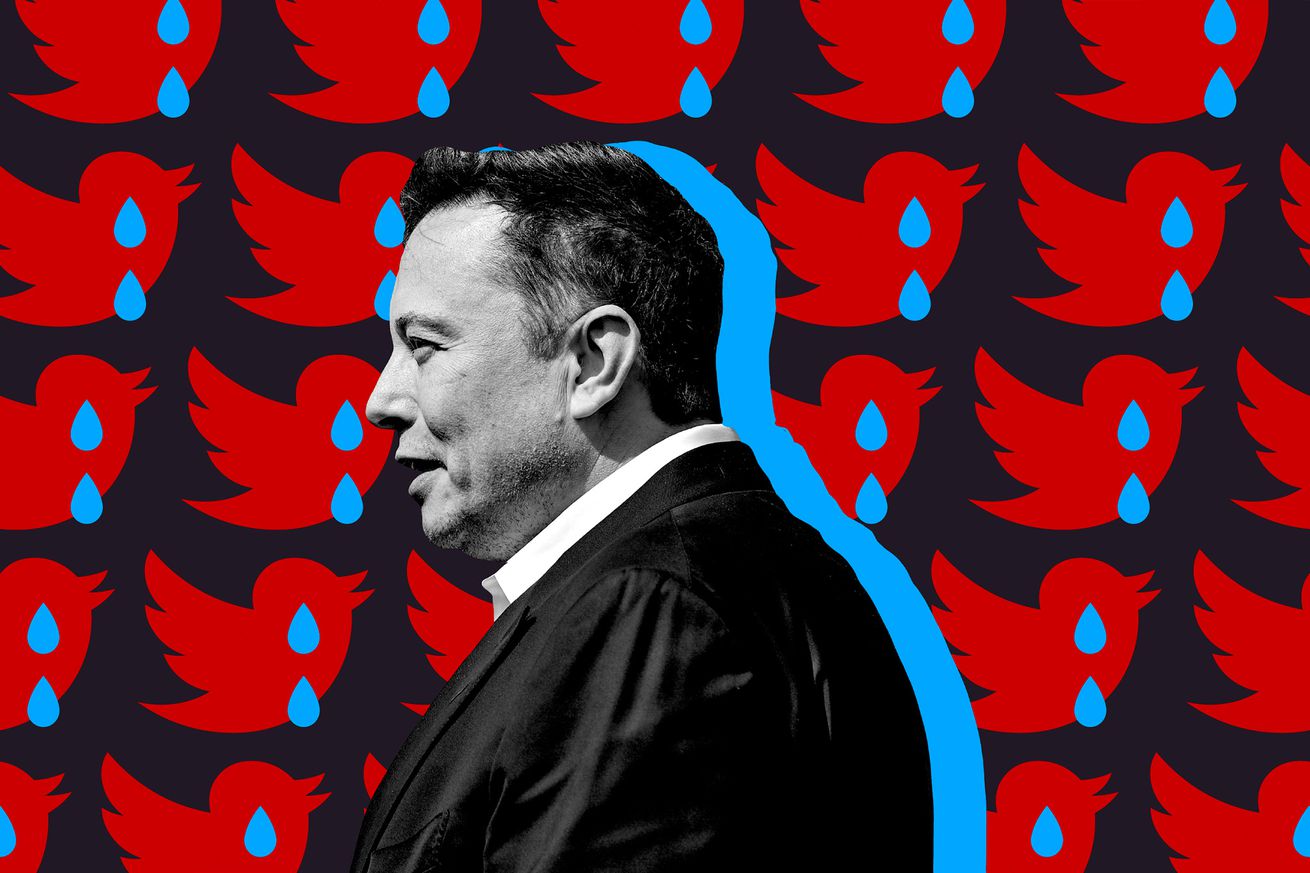
Ads for around 40 high-profile brands and organizations have been spotted on the Twitter pages of white nationalists, according to a report from The Washington Post. Ads from brands including Amazon, Uber, Snap, and GoDaddy, media companies like USA Today and Morning Brew, and even one government organization, the US Department of Health and Human Services, were seen on the offending Twitter pages.
The ads were spotted on the profiles of Andrew Anglin and Patrick Casey. Anglin is the editor of neo-Nazi website The Daily Stormer, while Casey previously led white nationalist group Identity Evropa (later rebranded as the American Identity Movement). The two were banned from Twitter in 2013 and 2019 respectively. After Elon Musk’s takeover...
San Francisco Decides Killer Police Robots Are Not a Great Idea, Actually
In an abrupt reversal amid public outcry, San Francisco’s Board of Supervisors has temporarily changed its decision to permit the city’s police department to kill people with robots, various news outlets reported.
“There have been more killings at the hands of police than any other year on record nationwide,” said District Supervisor Dean Preston in a statement. “We should be working on ways to decrease the use of force by local law enforcement, not giving them new tools to kill people.”
Last week, the Board voted 8-3 to approve a slate of policies regarding SFPD’s use of military-grade equipment, including using bomb-disposal robots to kill people like the Dallas police did in 2016 with a cornered shooting suspect. Initially, the Board did not want to include language allowing the police to kill people with robots, but the SFPD amended the language to explicitly allow it.
It is not clear precisely why the Board changed its vote over the course of a week, but public outcry on the local, national, and international level seems to have played a major part. The Board’s vote was highly criticized by news outlets from around the world and from local privacy and civil rights groups that had already organized around another Board of Supervisors vote to permit the SFPD to access live video surveillance of private cameras. On Monday, the Electronic Frontier Foundation and 44 community groups signed a letter opposing the policy which argued “There is no basis to believe that robots toting explosives might be an exception to police overuse of deadly force. Using robots that are designed to disarm bombs to instead deliver them is a perfect example of this pattern of escalation, and of the militarization of the police force that concerns so many across the city.” The coalition also held a protest at City Hall on Monday.
However, the vote reversal is not permanent. According to the San Francisco Chronicle, the issue is being sent back to the Rules committee which will debate the topic further.
Matthew Guariglia, Policy Analyst for the Electronic Frontier Foundation, said in a statement the fight is not over. “Should the Rules Committee revisit the issue, the community must come together to stop this dangerous use of technology.”
Correction: This article previously stated Preston changed his vote. He voted against the proposal both times.

As Butterfield exits stage left, it’s fair to wonder what’s happening at Salesforce
It’s been a pretty rough week for Salesforce co-founder and CEO Marc Benioff and the folks at his company: Three talented executives — co-CEO Bret Taylor, Tableau CEO Mark Nelson and Slack CEO and co-founder Stewart Butterfield — announced their resignations in quick succession.
It’s fair to ask what exactly is going on at Salesforce to lose three accomplished people so quickly, but it’s also important to parse each exit to determine whether they are part of a political battle or just some odd confluence of unconnected events.
The news seems to have spooked investors, with the company’s stock down nearly 17% over the last five days. But what do these departures mean to Salesforce and to the companies it spent so much money to acquire over the last several years? Further, how does it impact the executive depth that Benioff has worked so hard to build up? Finally, does he look for another co-CEO to help him run the company, or does he continue running it alone for the foreseeable future?
And another one gone, another one gone…
Let’s start with Nelson. He’s the least well-known of the three. Salesforce bought his company, Tableau, in 2019 for almost $16 billion. At the time, the company was run by Adam Selipsky, who left last year to become CEO at AWS when Andy Jassy was promoted to Amazon CEO after Jeff Bezos stepped back from that role.
For every action, there is an equal and opposite reaction in the C-suite, apparently.
As Butterfield exits stage left, it’s fair to wonder what’s happening at Salesforce by Ron Miller originally published on TechCrunch
Balls Are Talking in This Year’s World Cup. Who’s Listening?

Tech employment grew in November even as layoffs tick up
The monthly jobs report shows reassuring signs for the technology workforce, according to CompTIA.
Vonage Appoints Tracey Leahy Chief People Officer
HOLMDEL, NJ – November 28, 2022 – Vonage, a global leader in cloud communications helping businesses accelerate their digital transformation, today announced it has appointed Tracey Leahy as Chief People Officer and a member of the Company’s Executive Leadership Team, effective November 28, 2022. Leahy will report to Rory Read, Vonage Chief Executive Officer.
Leahy is responsible for leading all aspects of Vonage Human Resources, including compensation and benefits, talent acquisition, learning and development, HR operations, and organizational development and effectiveness. She will lead a team that supports the Company’s growing global workforce.
“I am excited to welcome Tracey, who brings deep expertise in human resources and organizational development to Vonage. This, combined with her passion for creating a culture of high performing teams through strategies and programs that create an environment of empowerment and innovation, will be an asset to Vonage as we continue to execute on our strategy of powering our customers’ communications, conversations and engagements,” Read commented.
Leahy has more than 25 years of human resources and organizational development experience. She joins Vonage from Rocket Software, a Bain Capital portfolio company, where she was Chief People Officer. At Rocket Software, she focused on developing and executing a people strategy centered around employee experience, talent and leadership development, diversity, equity and inclusion, and M&A integration and harmonization of teams.
Prior to Rocket Software, Leahy was the Global Senior Director of Human Resources at PAREXEL International. Before that, she was Associate Director of HR and Organizational Development for the UK’s National Health Service. Earlier, she held HR leadership positions across a breadth of industries for several companies. Leahy is a Fellow of the Chartered Institute of Personnel and Development (CIPD), a member of the Society for Human Resource Management (SHRM), and a member of the European Mentoring and Coaching Council (EMCC). She is an alumna of both the Dearne Valley Business School and the University of Bedfordshire in the UK.
“I am thrilled to be joining Vonage at such an exciting time. Vonage is already delivering cloud communications solutions that help customers to achieve their business objectives by changing the way they work, connect and engage. Now, as part of Ericsson, Vonage will be able to accelerate the execution of its strategy,” Leahy said. “I look forward to partnering with Vonage’s talented leadership team as we work together to attract, inspire, engage and develop talent as the company continues to realize its vision of accelerating the world’s ability to connect.”
Vonage , a global cloud communications leader, helps businesses accelerate their digital transformation. Vonage’s Communications Platform is fully programmable and allows for the integration of Video, Voice, Chat, Messaging, AI and Verification into existing products, workflows and systems. The Vonage conversational commerce application enables businesses to create AI-powered omnichannel experiences that boost sales and increase customer satisfaction. Vonage’s fully programmable unified communications, contact center and conversational commerce applications are built from the Vonage platform and enable companies to transform how they communicate and operate from the office or remotely – providing the flexibility required to create meaningful engagements.
The post Vonage Appoints Tracey Leahy Chief People Officer appeared first on Cloud Communications Alliance.
The economy just doesn’t make sense anymore

How’s the economy doing? Depends where you look. Seriously.
There’s no consistent story to tell about the economy right now. If you look at housing, everything’s a disaster. If you look at consumer spending, everything’s plugging along. If you look at the labor market, things are looking pretty phenomenal.
“There seem to be three different economies out there,” said Ethan Harris, global economist at Bank of America, in an interview. “You’ve got a housing market in recession, you’ve got a consumer who’s hanging in, and then you’ve got a hot labor market.”
The economy has been a bit of a conundrum to unpack for a while now, after the pandemic tossed multiple segments into disarray across the globe. In the United States, there was a quick but deep recession as millions of workers were laid off, businesses were shuttered, and the economy ground to a halt. The subsequent rebound has been unpredictable, to say the least. (Remember the lumber shortage? What about when nobody could find dumbbells?)
The stock market soared throughout much of 2020 and 2021, only to sputter in 2022. Supply chain disruptions have eased, though the system remains far from perfect. Plenty of parts of the economy are quite robust, but everyone feels terrible about it anyway. Even so, many consumers are spending through it.
High inflation, which many policymakers hoped would be temporary, has stuck. The housing market that was booming until recently is now slowing due to the Federal Reserve’s interest rate hikes meant to curb inflation. There are now real fears that those efforts will lead to a recession, as they have in the past. Still, a major economic contraction doesn’t appear to be here — yet.
“I’m going to courageously go out on a limb and say we’re 50/50 on a recession,” joked Jason Furman, an economist and former chair of the Council of Economic Advisers under the Obama administration, in an interview.
It’s the type of prediction that sounds like a cop-out but is probably an honest reflection of the times: Multiple parts of the economy have gone a little haywire, and it’s not clear which of the normal rules apply and to what extent. Endless kinks — induced by the pandemic, Russia’s war in Ukraine, and continuing Covid shutdowns in China, among other factors — are still appearing and being worked out. It’s uncertain as of yet what might be a permanent dent.
Consumers and workers, policymakers and economists are all trying to put together the same economic puzzle with some pieces that just don’t fit. In the background lurks a sneaking sensation that everything in the economy that is going well could soon turn negative, especially if the Fed gets its way. It has indicated it might lighten up somewhat soon, but nothing’s for sure. That feeling of precarity is impossible to shake.
“It’s kind of like we’re in a china shop,” Claudia Sahm, founder of Sahm Consulting and former Fed economist, told me in a recent interview. One false move and the whole thing comes crashing down.
Nothing in the economy makes sense anymore because nothing has made sense for a while.
The economic arrows are pointing kind of everywhere
Generally, multiple parts of the economy move together. Different indicators, such as GDP (gross domestic product), income, employment, and industrial production, weaken at the same time ahead of a recession, or they strengthen when a recovery is underway. In this moment, that’s not the case, and distinct data points send a total picture of mixed signals.
Manufacturing output and industrial production are relatively flat, and factory activity has declined somewhat. Labor productivity during the first part of the year inexplicably plummeted, though it’s started to pick up some. Employment, on the other hand, has consistently continued to rise, with the US economy adding 263,000 jobs in November and wages continuing to rise. The number of job openings remains high. Inflation is cutting into wage growth, but wages are still rising, especially for people at the lower end of the income spectrum. New vehicle sales appear to be slowing as higher interest rates take their toll, but it’s nowhere near the toll those same higher interest rates have taken on the housing market.
“The labor market is lagging the broader slowdown due to record job openings coming into the year. The consumer is hanging in due to the still hot job market and massive excess savings. Service spending is solid in part due to pent-up demand left over from the shutdowns. The legacies of the Covid shock and record fiscal stimulus continue to be felt,” Harris wrote in a mid-November research note at Bank of America. “Put it all together and the lags from Fed policy tightening to the economy are even longer and more variable than normal.”
Different economists have different explanations for — or at least theories on — what is going on, but most acknowledge there’s no succinct, obvious explanation.
“Normally, you’d have everything going down together, but we don’t,” said Jim Paulsen, chief investment strategist at the Leuthold Group. “The pandemic separated supply and demand in a manner that I’ve never seen before.”
Just take a look at the auto industry: more people wanted cars, new and used, during much of the pandemic. Those cars were nowhere to be found thanks to supply chain issues and other abnormalities. Something similar happened in the lumber industry. People took up home improvement projects and started building more housing in 2020. But the supply side at the start of the pandemic assumed the opposite would happen and slowed down production, and once they realized the pandemic-induced pickup in demand was happening, they were slow to ramp up.
“I would have assumed a lot of crazy things would have happened for that to be true, and a lot of crazy things did happen”
Paulsen said that, now, the economy has, in a way, been “scared into conservative behaviors” because business and consumer confidence is so low and everyone’s worried about a slowdown on the horizon. “There’s been a lot of fear in this thing,” he said.
Furman acknowledged there’s “more of a sense that anything can happen than would normally be the case,” though he still tries to use standard economic relationships to figure out what’s most probable, even if he’s not at all certain they’re correct. “The biggest mystery of the past year has been how output’s been flat and employment rose, so there’s this disconnect between what employers are doing and how much companies are producing,” he said, noting that another disconnect is that “inflation is just a lot higher than what you’d think just from the unemployment rate alone.”
Not to be cliché here, but it really is the case that so much that’s happened over the past three years has been completely unprecedented. If we’d known a global pandemic was on the horizon in 2020, we’d all have probably had a lot more fun in 2019. That irregularity is what’s making it so hard to understand what’s going on now; there are so many new factors in the equation that the previous rules of the economic math might not entirely add up or apply.
“If you’d told me the price of cars had skyrocketed the way it did, or the fact that we had significant inflation of goods that basically reversed several decades of deflation in 2019, if you told me that was coming in the next couple of years, I would not believe you,” said Mike Konczal, director of macroeconomic analysis at progressive think tank the Roosevelt Institute. “I would have assumed a lot of crazy things would have happened for that to be true, and a lot of crazy things did happen.”
Everybody’s got a case of the economic icks
Plenty of parts of the economy are quite robust, but everyone feels terrible about it anyway. The University of Michigan’s consumer sentiment index has rebounded somewhat from its lows earlier this year, but it’s still well below where it was in the depths of the pandemic.
Even so, many consumers are still spending through inflation and even their own negativity. The mix of spending has changed — shifting more away from goods and back toward services — but it’s still happening.
Heading into the holiday season, it appears sales on Cyber Monday, which follows Thanksgiving, have hit a new record. Online sales on Black Friday hit a new record, too.
“It’s been amazing that consumer sentiment is just incredibly low, it’s like depths-of-the-financial-crisis low, it’s way worse than it was when the economy shut down due to Covid, and that’s not being reflected in people’s spending, which remains quite healthy,” Furman said. “There’s this disconnect between people saying negative things and not acting in a very negative manner.”
“People can’t eat job openings if their food budget has gotten a lot smaller”
Furman also pointed to the results of the 2022 midterm elections as evidence that the way people are feeling about the economy and the way they’re acting is a little off. As a general rule, the party in power tends to do poorly in midterm elections, and especially given the state of inflation and gas prices (which have been very high but are now coming down some) heading into Election Day, many pollsters and pundits assumed the Democrats were doomed. But the “red wave” many anticipated did not appear. Republicans took the House of Representatives, while Democrats maintained control of the Senate.
As Vox’s Christian Paz noted, early exit poll data showed that most voters said they felt the economy was “not so good” or “poor” but also said that inflation was a moderate hardship on their families or not a hardship at all. “That suggests that even with near-record high inflation, voters were willing to consider other factors in their voting decisions — and not everyone cared to connect the economy to their vote for a Democrat or against a Republican,” Paz wrote.
Still, there’s no denying people feel quite bad about the economy, even if many segments of it are quite good. Ultimately, inflation has “canceled out” the good labor market, Konczal said — you can’t tell people the economy is good and to appreciate how many jobs there are. “People can’t eat job openings if their food budget has gotten a lot smaller,” he said.
Where the economy is headed, nobody knows
To be clear, the economy isn’t some impossible black box; there are plenty of things that are known.
The global economy, overall, is slowing. Inflation remains higher than it’s been in decades. In the US, monthly job growth has averaged hundreds of jobs a month. The Fed is trying to bring down inflation by raising interest rates multiple times this year. The expectation is this will lead to a slowing in the labor market that, thus far, hasn’t happened.
Harris told me he thinks the “three economies” he identified moving in different directions “are all going to turn weak because it’s just a matter of time with what the Fed is doing.”
The hope is the Fed’s efforts lead to a soft landing, meaning it’s able to cool the economy off without pushing it into a full-blown recession, but a recession risk isn’t off the table by any means. The Fed has indicated it’s taking into account the cumulative effects of its actions and that it’s aware there will be lags to those effects. Still, Fed Chair Jerome Powell has been clear he is focused on bringing inflation down.
“Without price stability, the economy does not work for anyone,” Powell said in a speech in August. “In particular, without price stability, we will not achieve a sustained period of strong labor market conditions that benefit all.”
Konczal said it’s “incredibly unclear” where the Fed goes next after it again raises interest rates in December. Its target for inflation is 2 percent, which is well below the 7.7 percent annual rate it was in October. But what if it comes down to, say, 3 percent or 4 percent? “There’s a question of whether you really want to hurt a lot of people to get inflation back down to 2 percent, which is a fake number, it is an arbitrary number,” he said.
In late November, Powell acknowledged he and his colleagues did not want to “overtighten” and that they might slow the pace of interest rate hikes as soon as December, comments that heartened markets. But he also said the fight to get inflation under control isn’t over: “Despite some promising developments, we have a long way to go in restoring price stability.”
There’s also much that’s out of the Fed’s hands, in terms of what impacts the economy. Russia’s ongoing war on Ukraine and China’s approach to Covid continue to weigh as well. And if the last three years have taught us anything, it’s that we have no idea what else could be around the corner.
Moreover, it’s not clear how many of the changes the economy has seen over the past year are temporary or what’s permanent. The push under the Trump and Biden administrations to build more in America marks a shift against globalization and toward more domestic sourcing and production. “The era of globalization is definitely over,” Konczal said. “It looks like our trade policy is going to be much more focused on building core industrial capacity in the United States, notably on things like green energy.”
Employers also remember how hard it has been to hire people and keep them on over the past few years, which may make them more hesitant to let them go now — though, as we’ve seen with the massive tech layoffs, that’s not true across all industries. With the Fed raising interest rates and otherwise tightening monetary policy, the era of easy money is over, at least for now. That has contributed to what looks like the end of the big tech boom and a slowdown in the still volatile crypto market, and it is clearly weighing on the overall markets.
I’ve said it before and I’ll say it again: Anyone who says they know exactly what is going on in the economy is lying. The same goes for anyone who says they know for sure where the economy is headed. Under all of the old rules, some things don’t make sense right now, and it’s not clear if it will all ever make sense again.
Vodafone Selects Dubber for UK & Europe Mobile Networks
- Comprehensive agreement framework with Vodafone Group
- Dubber released on Vodafone mobile networks targeting business customers of Vodafone initially in the UK and Germany
- Transition of existing Mobile Recording subscribers to the Dubber Platform commenced
- All of Dubber’s existing Unified Recording feeds will be available to Vodafone business customers (including Cisco Webex, Microsoft Teams and RingCentral)
Melbourne, Australia and London, UK – December 1, 2022 – Dubber Corporation Limited (ASX: DUB), the leading conversational intelligence and unified recording platform for service providers and their customers globally, has reached an agreement with Vodafone Group Plc to offer recording and AI services directly from Vodafone mobile networks, targeting Vodafone business customers initially in the UK and Germany.
Vodafone will capitalise on Dubber’s platform and alignment to a Service Provider’s method to market, to enable Vodafone to seamlessly deliver recording and conversational AI capabilities across Mobile and Unified Communication services (including Cisco Webex, Microsoft Teams and RingCentral) across multiple European markets. A single view of conversations with end users across fixed and mobile networks will also deliver new personalised services and provide better customer experience.
Work has commenced to migrate Vodafone’s existing mobile recording customer base to an improved service on the Dubber platform and the companies will jointly explore new commercial opportunities to deliver additional Dubber services to Vodafone customers.
Barry McSorley, Head of Unified Communications and Platforms, Vodafone, said: “We are drawing on the strength of our geographical presence coupled with Dubber’s market-leading platform to help our business customers transform their interactions with end-users. Greater data insights and enhanced compliance across multiple markets with a common, advanced hosted recording service, enables our business customers to expand and improve customer trust and loyalty with their own customers.”
Steve McGovern, CEO, Dubber, said: “Vodafone is a very important relationship for Dubber and we are pleased to partner with them in Europe to support the needs of their business customers with unified recording and conversational AI directly from the Vodafone mobile network.”
“Dubber is about cost benefits, technology advantage and speed of provisioning and this will enable Vodafone to expand its existing recording subscriber base to a broader range of businesses. The calls across the Vodafone network contain an enormous amount of content, and deployment of the Dubber platform will enable an expansive range of differentiated products and services.”
“Dubber and Vodafone have developed a strong co-engineering relationship with cross-company teams working together to plan, design, and develop the next generation of recording supported by a shared vision for a fully automated and self-service cloud solution.”
“Our initiative with Vodafone will deliver accretive revenue for Dubber and a larger addressable market. We look forward to extending our relationship with Vodafone into the future with a platform that will evolve and deliver greater value into the Vodafone network.”
About Dubber:
Dubber enables Service Providers to unlock the potential of the network – turning every conversation into an exponential source of value for differentiated innovation, retention, and revenue. Listed on the ASX, Dubber is the clear market leader in conversational intelligence and unified recording – embedded at the heart of over 175 service provider networks.
For more information, please visit Dubber on www.dubber.net.
About Vodafone:
Unique in its scale as the largest pan-European and African technology communications company, Vodafone transforms the way we live and work through its innovation, technology, connectivity, platforms, products and services.
Vodafone operates mobile and fixed networks in 21 countries, and partners with mobile networks in 48 more. As of 30 June 2022, we had over 300m mobile customers, more than 28m fixed broadband customers and 22m TV customers. Vodafone is a world leader in the Internet of Things (IoT), connecting around 160m devices and platforms.
We have revolutionised fintech in Africa through M-Pesa, which celebrates its 15th anniversary in 2022. It is the region’s largest fintech platform, providing access to financial services for more than 50m people in a secure, affordable and convenient way.
Our purpose is to connect for a better future by using technology to improve lives, digitalise critical sectors and enable inclusive and sustainable digital societies.
We are committed to reducing our environmental impact to reach net zero emissions across our full value chain by 2040, while helping our customers reduce their own carbon emissions by 350m tonnes by 2030. We are driving action to reduce device waste and achieve our target to reuse, resell or recycle 100% of our network waste.
We believe in the power of connectivity and digital services to improve society and economies, partnering with governments to digitalise healthcare, education and agriculture and create cleaner, safer cities. Our products and services support the digitalisation of businesses, particularly small and medium enterprises (SMEs).
Our inclusion for all strategy seeks to ensure no-one is left behind through access to connectivity, digital skills and creating relevant products and services such as access to education, healthcare and finance. We are also committed to developing a diverse and inclusive workforce that reflects the customers and societies we serve.
For more information, please visit www.vodafone.com.
The post Vodafone Selects Dubber for UK & Europe Mobile Networks appeared first on Cloud Communications Alliance.
Mercedes Puts Faster Acceleration Behind A Subscription Paywall
Back in July, BMW raised a bit of a ruckus when the company announced that it would be making heated seats a luxury option for an additional $18 per month. Now, Mercedes aims to take the concept one step further by announcing that buyers of the company’s new Mercedes EQ electric models will need to pay a $1,200 (plus taxes and fees) yearly subscription to unlock the vehicles’ full performance.
The Drive points to Mercedes’ online store, where they note that buyers of the vehicle will need pay a monthly subscription to unlock an “acceleration increase”:
According to Mercedes, the yearly fee increases the maximum horsepower and torque of the car, while also increasing overall performance. Acceleration from 0-60 mph is said to improve by 0.8-1.0 seconds and the overall characteristics of the electric motors are supposed to change as well. The extra performance is unlocked by selecting the Dynamic drive mode.
As with BMW’s vision, you’ll likely see a lot of folks with more disposable income than common sense lauding this sort of stuff as pricing and technological innovation, largely because they want to justify their desire to pay a giant company extra for what they perceive as additional status.
The problem: you’re buying a vehicle with this technology (whether it’s faster acceleration or heated seats) already in the car. The cost of that technology is always going to be wound into the existing car’s price one way or another, as no manufacturer is going to take a bath on the retail price.
So you’re effectively paying for technology you already own to be turned on. Then, over time as subscription costs add up over the life of the vehicle you (and other later owners) own, you’re are paying significantly more money for that technology than what it’s worth (see: paying Comcast thousands of dollars in rental fees for a modem that costs them $50).
The need for quarter over quarter returns at any cost opens the door to rampant nickel-and-diming in the future, putting customers on an endless treadmill where paying to turn on technology you already own is constantly getting more expensive in a way that’s just completely untethered to real-world costs.
These subscription services also create an arms race with hackers and modders, with the right to repair (something you already own) debate waiting in the periphery. And the FTC is watching companies like a hawk, waiting to see if auto makers make simply enabling something you already own a warranty violation.
Adam Selipsky: Why Partners Should Pick AWS Vs. Cloud Rivals

ALE’s Rainbow Solutions Eligible for US Schools
Alcatel-Lucent Enterprise can now offer Rainbow communications solutions to US schools by meeting FERPA (Family Educational Rights and Privacy Act) data protection requirements.
- Talking Security with Alcatel-Lucent Enterprise
- RingCentral, Vonage, and Alcatel-Lucent Enterprise on UCaaS Security Strategies
- ALE Continuously Enhances Rainbow Office
FERPA is a federal law requiring schools and their service providers to ensure the privacy of students’ education records. To achieve this, relevant companies must establish and maintain physical, technical, and administrative safeguards that can provide confidentiality, availability, and integrity of educational records.
Becoming FERPA compliant allows ALE to provide its Rainbow communications solutions in US schools, including Rainbow Classroom, which offers a “virtual learning experience” with real-time collaboration and communication capabilities.
Mike Mullarkey, Senior Vice President, Sales and Marketing, Americas at ALE USA Inc, said: “Achieving this milestone allows us to extend the benefits of our Rainbow communications platform, through its licensing model, to educational institutions at all levels, which is a priority vertical for ALE.
“We are committed to our education customers and will continue to propose the solutions they need while ensuring all the necessary protection for them to offer services in optimal conditions.”
Rainbow Classroom by ALE utilises existing Learning Management systems or ALE’s online learning platform to provide an online virtual classroom via a web browser and internet connection to meet the needs of educators and students.
According to ALE, virtual classrooms are now mandatory for schools, enabling them to provide in-person, remote, or HyFlex study for everyday learning and times of crisis.
The key features of Rainbow Classroom include an easy-to-use interface with instructor controls of audio, video, chat, screenshare, file share, and more.
It has classroom controls for students to chat, control audio and video, create study groups, screenshare, and file share.
Rainbow Classroom also provides whiteboarding capabilities for study groups and classrooms, secure E2E encryption, and an intuitive interface with easy onboarding.
Salvatore Zoida, Senior Attorney and FERPA Compliance Officer at ALE USA Inc, said:
“ALE has been proactive in taking on the critical role of protecting students’ education records and providing educational agencies or institutions with the technology they need to ensure student success.
“We take great pride in offering peace of mind to education professionals, parents, and students alike.”
ALE supplies unified communications solutions to organisations of all sizes across various industries.
The company also offers cloud-based solutions to help customers meet their clients’ needs as they transition to the cloud.
Alcatel-Lucent Enterprise offers digital networking, communications and cloud solutions with tailored services for cloud, on-premises, and hybrid business models.
The company has been operating for more than 100 years, and it is now the “trusted advisor” to over one million customers worldwide.
Last week, ALE launched Purple on Demand to provide a new subscription-based business communication offering for enterprise customers.
ALE created purple on Demand to help businesses achieve flexibility, simplicity, security, and digital sovereignty as part of digital transformation efforts.
Belgium says BTC, ETH and other decentralized coins are not securities
Google Messages has started letting some users react with any emoji

Google has started letting some users of its Messages app react to text messages with any emoji, instead of limiting them to the standard set of seven that have been available in the app for a while now (via 9to5Google). The feature’s similar to what other messaging platforms like Slack, WhatsApp, and paid versions of Telegram have — pressing and holding on a message gives you the standard emoji reactions, but you can then access the picker to react with whatever you want.
The expanded emoji reactions appear to be a limited test at this point — 9to5Google says it’s heard two reports of it being rolled out, and while one person on The Verge’s staff has access to it, two other people who checked do not. Google didn’t immediately respond to...
San Francisco police consider letting robots use ‘deadly force’

The San Francisco Police Department is proposing a new policy that would give robots the license to kill, as reported earlier by Mission Local (via Engadget). The draft policy, which outlines how the SFPD can use military-style weapons, states robots can be “used as a deadly force option when risk of loss of life to members of the public or officers is imminent and outweighs any other force option.”
As reported by Mission Local, members of the city’s Board of Supervisors Rules Committee have been reviewing the new equipment policy for several weeks. The original version of the draft didn’t include any language surrounding robots’ use of deadly force until Aaron Peskin, the Dean of the city’s Board of Supervisors, initially added that...
Mavenir Launches CPaaS Integrated Offering for CSPs
Richardson, TX – November 22, 2022 – Mavenir, the Network Software Provider building the future of networks with cloud-native software that runs on any cloud, today announced the launch of its Communications Platform as a Service (CPaaS), an integrated Software as a Service (SaaS) offering.
Mavenir’s CPaaS combines Application Programming Interface (API) enablers and turnkey applications to deliver a complete customer engagement and business messaging monetization solution for Communications Service Providers (CSPs).
CPaaS enables digital transformation, helping businesses improve customer engagement and increase efficiency, and represents a growing business opportunity for CSPs.
Mavenir CPaaS allows CSPs to:
- Increase the monetization of their network assets — by enabling new business use cases and applications. CSPs looking for new revenue streams can directly offer businesses a way to integrate communications capabilities within existing business applications and processes, leveraging their existing network assets to provide reliable traffic termination.
- Capitalize on business transformation trends like conversational commerce — CSPs can also expand their offering with Mavenir’s CPaaS business messaging and customer engagement capabilities, delivering multi-channel mobile-native messaging experiences like RCS on Google Business Messages, Apple Messages for Business, SMS, and MMS.
- Create rich messaging experiences — Mavenir CPaaS includes turnkey applications like Smart 2FA, Campaign and Chatbot Studios, Visual Flow Builder, SMS Message Exchange for Webex and Microsoft Teams, Number Masking, as well as a set of programmable APIs for voice, video, omnichannel messaging, and WebRTC capabilities.
- Accelerate innovation and differentiation — using the Mavenir CPaaS APIs and SDKs, CSPs can use their internal innovation teams or work with third-party partners to combine their network capabilities into new, unique, and differentiated service offerings that address specific industry verticals (e.g., healthcare, financial services, travel & hospitality, etc.).
“Consumer mobile messaging continues to accelerate and requires businesses to learn to engage customers on their preferred channels, on a global scale and at any time,” said Jorgen Nilsson, President of Enterprise Connect Solutions at Mavenir. ” The combination of immersive features and mobile business communication enablers into an integrated solution empowers CSPs with an even broader set of services to solidify their customer engagement initiatives, while expanding their share of revenue in the business communications value chain.”
Mavenir CPaaS is available as a SaaS offering, managed and operated by Mavenir in the public cloud and offered in a pay-as-you-grow model that minimizes upfront investments and risks, accelerating time to market.
About Mavenir:
Mavenir is building the future of networks and pioneering advanced technology, focusing on the vision of a single, software-based automated network that runs on any cloud. As the industry’s only end-to-end, cloud-native network software provider, Mavenir is focused on transforming the way the world connects, accelerating software network transformation for 250+ Communications Service Providers and Enterprises in over 120 countries, which serve more than 50% of the world’s subscribers. www.mavenir.com
The post Mavenir Launches CPaaS Integrated Offering for CSPs appeared first on Cloud Communications Alliance.
The White House’s plan to colonize the moon, briefly explained

Putting humans on the moon is more political than you might think.
The first mission in NASA’s Artemis program finally took the Orion spacecraft on a trip around the moon, a huge step forward for the ambitious plan to bring humans to the lunar surface as soon as 2025. It’s also the beginning of the White House’s far-reaching ambitions for a permanent outpost on the moon.
The White House’s national science and technology council last week released its new “National Cislunar Science and Technology Strategy,” a wide-ranging document that explains the Biden administration’s objectives for cislunar space, which is the area under the gravitational influence of the Earth and the moon. The strategy outlines four primary goals that, broadly, seem to make a lot of sense. They include investing in research and development, cooperating with other countries, building communications networks in space, and boosting humanity’s overall situational awareness near and on the moon.
What this plan also hints at, however, is a range of open legal, political, and environmental questions about how life on the lunar surface should work.
“The test missions, like Artemis 1 going on now, and the next crewed mission and then the first landing, are fairly well laid out,” Scott Pace, the director of George Washington University’s Space Policy Institute, told Recode. “The question is, ‘Well, what comes next?’”
Part of the answer to that question is “advancing science.” The United States, for example, is interested in how to use the far side of the moon, a shielded zone of the moon that doesn’t experience radio frequencies coming from Earth, to make new types of astronomical observations. Developing resources and technology on the lunar surface could eventually make it easier to launch future missions to Mars.
But the government is interested in the moon for reasons that go far beyond expanding humanity’s knowledge of the universe. The White House’s new strategy emphasizes the “economic development activities” and “economic growth” available in cislunar space and on the moon, and also outlines the government’s political goals, including “realizing US leadership.”
“It’s very clear that this is not just about the research and the science, but it’s also going to be about the economic prospects from the moon,” explained Namrata Goswami, an independent space policy analyst. “Until now, the US has been very reticent to so clearly engage in a manufacturing use of lunar resources.”
Should the US succeed in its goals, the moon could eventually look quite different, Pace argues. Lunar orbit would be filled with many more satellites, including a lunar GPS network and a human space station capable of housing human astronauts that serves as a rest stop before they land on the moon’s surface. While there are no plans for a lunar city, there are proposals for a permanent outpost on the south pole of the moon, where crews might one day spend six-month rotations (China and Russia have announced plans for a lunar outpost, too). If NASA has its way, the lunar surface might eventually include a series of nuclear power plants, a resource extraction operation, and even something akin to moon internet. Given these plans, the US government estimates that the level of human activity in cislunar space over the next decade could exceed everything that’s happened there between 1957 and today, combined.
/cdn.vox-cdn.com/uploads/chorus_asset/file/24221045/spacex_1.jpg) SpaceX
SpaceX
But the White House’s plans face several hurdles. Political tensions alone could be a major source of conflict, according to Michelle Hanlon, the co-director of the Air and Space Law Center at the University of Mississippi law school.
For one, there still isn’t a globally shared vision for what the future of the moon should entail. Just over 20 countries have signed the US-led Artemis Accords, a set of principles for, among other things, exploring and using the lunar surface. The former head of Russia’s space agency, unsurprisingly, said that the country would not support the Artemis program in its current form, and Congress has barred NASA from working with China since 2011. And while the White House continues to emphasize international collaboration and the moon itself is pretty large — it’s just under 15 million square miles — multiple countries could end up sparring over the same resources, like one particular landing location or a certain trove of materials.
These tensions could even impact an effort to create a common understanding of what’s going on in cislunar space, which is one of the government’s major goals. The White House has said it wants to expand access to data about space weather and satellite tracking in order to help with the emerging problem of satellite traffic management, and also create a catalog of all the objects on the moon. But it’s not clear how that will happen.
“I think the US is very far from achieving this,” Moriba Jah, the co-founder and chief scientist of Privateer Space, said in an email. “When it comes to space object catalogs in the US right now, this is pretty much developed and maintained uniquely by the US military/Department of Defense, which cannot be a fully transparent organization for obvious reasons.”
At the same time, there’s a more immediate problem that humanity has begun exporting to the moon: junk. The lunar surface is already littered with items that astronauts have left behind, including golf balls and nearly 100 bags of poop. Humans have also figured out ways to trash the moon without actually visiting. NASA purposely smashed a robotic spacecraft into the lunar surface in 2009 in a bid to study potential sources of water on the moon, and this past March, space junk believed to be from a Chinese rocket mission in 2014 crashed into the lunar surface. Space environmentalists are worried that some of the same environmental destruction that humans have created on Earth could become a problem on the moon and in its lunar orbit.
Ideally, the emerging space economy would focus on preventing pollution in space and avoiding single-use machinery, such as satellites, rovers, and rockets, as much as possible.
“We need to make those things reusable and recyclable,” explained Jah, who is also an aerospace engineering professor at UT Austin. “For the ones that can’t be, how do we dispose of them properly so that they’re not causing a detrimental environmental impact, versus just abandoning stuff?”
Of course, the White House’s recently released strategy is just a first draft of what the government’s plans for the moon might ultimately resemble, and there’s no guarantee the US vision will be the one that plays out. It’s increasingly clear, however, that the Artemis-era space age will come with major challenges. As humanity ventures deeper into space — and onto the moon — humans risk introducing the same issues that we still haven’t worked through here on Earth, including conflict between countries, damaging the environment, and even the challenge of preserving our history.
“It would be tragic for Neil Armstrong’s blueprint to be erased, either inadvertently or maliciously, because of all these activities on the moon,” said Hanlon. “It’s gonna get very crowded very soon.”
NYC’s New 5G LinkNYC Towers Don’t Actually Fix The Digital Divide. And They’re Ugly As Hell.
Back in 2014, New York City officials decided they would replace the city’s dated pay phones with “information kiosks” providing free public Wi-Fi, phone calls, device charging, and a tablet for access to city services, maps and directions. The kiosks were to be funded by “context-aware” ads based on a variety of data collected from kiosk users and NYC residents just passing by.
It… didn’t go well.
Within a few years, reports began to emerge that the company hired to deploy the kiosks (CityBridge) had only deployed 1900 of an originally promised 7,000 kiosks. And the kiosks they had deployed were being used to watch porn. The program has also been long criticized for over-collecting user data and being completely non-transparent about what data was being collected.
By 2020 CityBridge still owed the city $75 million. Last year, an audit by New York State’s Comptroller found LinkNYC failed completely to meet its deployment goals, failed to adequately maintain existing kiosks, failed to turn on many already deployed kiosks, and had fallen well short of projected ad revenues.
What did the city do? It doubled down.
New York Mayor Eric Adams not only killed off a more promising plan to build a city open access fiber network to boost competition, he decided to expand the LinkNYC project. That’s involved deploying entirely new, ugly, and even larger kiosks embedded with 5G small cells. City residents, so far, aren’t particularly enthused about the eyesores:
Some residents are calling them eyesores. Others are worried about safety due to their placement. “No one asked us about the design or where they should go. We have notes,” said a Brooklyn neighborhood group on Facebook.
While the kiosks still provide free and useful services to those unafraid of sticky surfaces, they’re a particular boon to wireless carriers looking to expand their 5G network reach using small cells, something they would have likely done anyway (usually using existing buildings and city light fixtures). Users can still access free Wi-Fi at the kiosks, but you’ll obviously need a paid 5G subscription to actually access the 5G component of the towers.
The problem, again, is that the kiosks don’t actually address the problem at the heart of the digital divide: duopoly/monopoly telecom power that has constrained city competition, resulting in high prices for home access. Two-in-five New York City households lack either a home broadband connection or cell service. More than 1.5 million New Yorkers lack both. Usually, high service costs are the biggest obstacle.
The kiosks are a nice perk, but they’re not actually addressing the regional monopoly problem. And guys like Adams don’t want to upset monopoly power because it means upsetting companies that aren’t just politically powerful, but are bone-grafted to our intelligence gathering and first responder networks, effectively making them a part of government and beyond meaningful accountability.
It’s the same story that plays out nationwide. There’s just an unlimited number of half-measures professing to “bridge the digital divide” that are, in reality, just band-aids. Band-aids that usually involve throwing additional subsidies at the very same monopolies responsible for driving meaningful competition out of your town, city, or state over the last thirty-five years.
Truly fixing the U.S. digital divide means policies that drive open access fiber networks and new, local competitors into the backyards of entrenched monopolies (see our recent report on this very subject).
New York City had a real opportunity to do this with the open access network component included in its original NYC Internet Master plan, but instead took the familiar path of half-cooked efforts that give politicians something to crow about, but don’t actually solve (or usually even acknowledge!) the underlying problem of monopoly control.
Wickr’s free encrypted messaging app is shutting down next year

Wickr Me, the free encrypted messaging app owned by Amazon Web Services, is shutting down on December 31st, 2023. In a post on its website, Wickr says the app will stop accepting new user registrations on December 31st, 2022 before going away completely next year.
AWS acquired Wickr last year and started packaging the paid version of the secure messaging app within its offerings for businesses. This version of the app, Wickr AWS, isn’t going away, and neither is Wickr Enterprise. The shutdown only affects the consumer-facing Wickr Me, which is often used by journalists, whistleblowers, and anyone looking to keep their messages away from prying eyes.
However, recent reports suggest the app has become an outlet for criminals, with NBC...