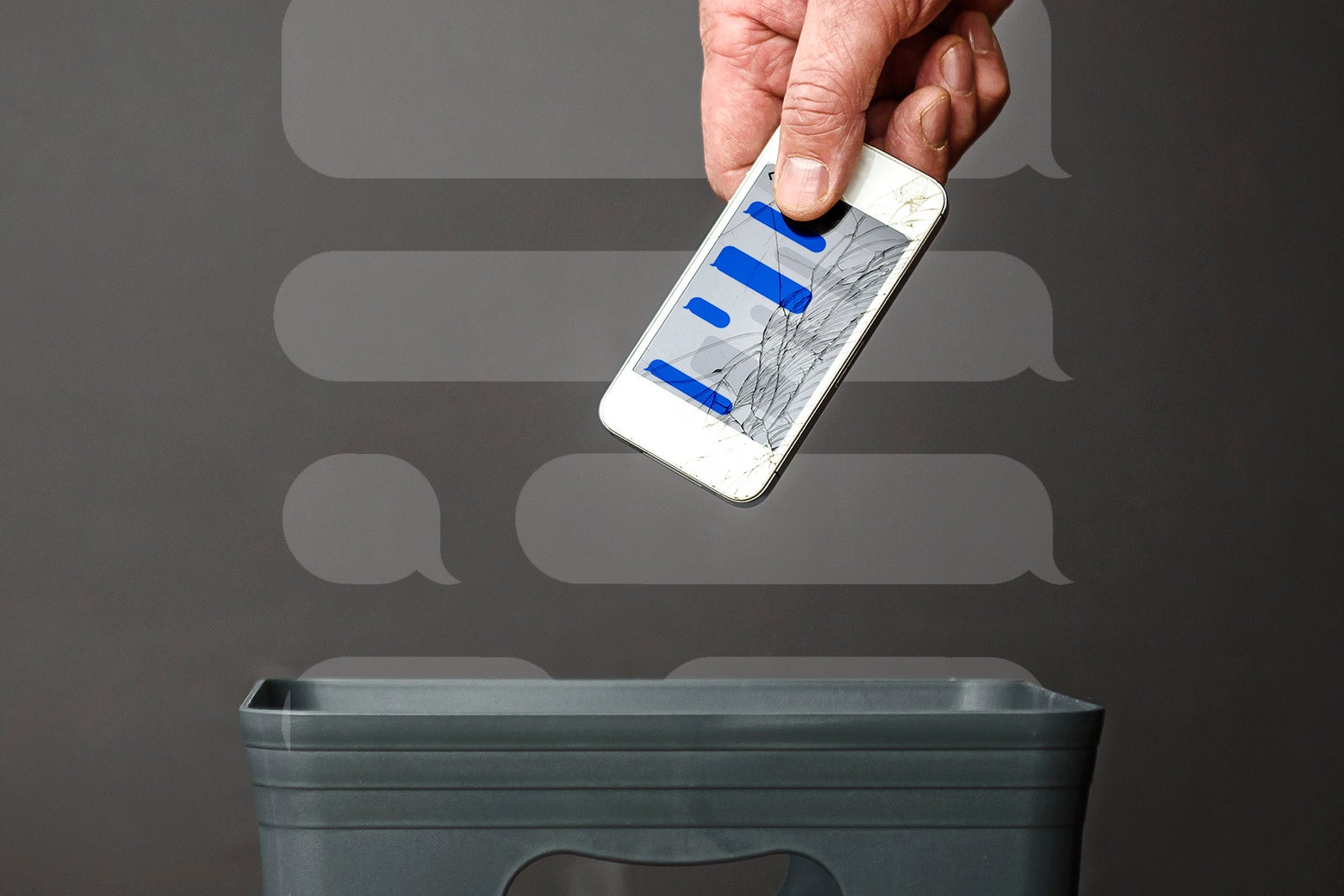
Shared posts

17 Jan 18:29

TikTok’s master plan to win over Washington

by Sara Morrison
TikTok CEO Shou Zi Chew sits on a tall stool in a high-rise office backed by windows, surrounded by lights and cameras.
TikTok CEO Shou Zi Chew. | Christopher Goodney/Bloomberg via Getty Images

Millions spent on lobbyists, a billion spent on safeguards. Will it be enough to stay in the United States?

The act of scrolling through your For You feed on TikTok might come with an additional sense of impending doom these days. After years of hand-wringing over the enormously popular app’s ties to China and the potential national security threat they present, it looks like someone is going to do something about it.

TikTok is grappling with an increasingly real prospect of being banned in the United States. This wouldn’t just be a mostly performative prohibition of installing the app on federal or state government-owned devices. It could also be more impactful than the legally questionable ban that former President Donald Trump tried and failed to enact in 2020.

The ban TikTok is now facing would forbid its China-based parent company, ByteDance, from doing business in the United States, which would block Apple and Google from hosting the TikTok app in their app stores. It wouldn’t make it illegal for you, the consumer, to use TikTok. It would just make it much harder to do so. And even if that ban doesn’t happen, there’s increasing pressure on Apple and Google to impose their own bans and boot TikTok from their stores, with one senator now asking them to do so.

Banning an app is more the provenance of countries like, well, China, which has banned a number of American apps and websites, including Facebook, Instagram, YouTube, and Twitter. It’s also not certain that the US government actually would take such a huge step. But you’ve surely heard that it could happen, and you’re probably wondering if and how it would — or even why it’s necessary.

Seemingly every Big Tech company is facing unprecedented levels of scrutiny these days, but TikTok faces opposition that its peers don’t. At a time when US-Chinese relations aren’t great, TikTok’s popularity is a threat to America’s technological superiority, especially when it comes to the internet. But US lawmakers are much more likely to point to the perceived threat to national security, believing that the Chinese government is using the app to spy on Americans and push harmful content onto them through the app’s powerful yet mysterious For You recommendation algorithm.

To deal with these conflicts, ByteDance has spent over three years negotiating with the Committee on Foreign Investment in the United States, or CFIUS, an inter-agency group that reviews transactions involving foreign parties for national security threats. ByteDance hopes to reach an agreement that would allow TikTok to continue to do business here while minimizing the chances of interference from the Chinese government. While ByteDance says there is a draft agreement with CFIUS, it still hasn’t been finalized. It didn’t help matters when, in the last days of 2022, ByteDance had to admit that some of its employees improperly accessed US citizens’ TikTok data as part of an investigation into leaks to journalists.

ByteDance is spending a lot of money trying to convince detractors that it doesn’t take marching orders from China and that it wouldn’t give the Chinese government US user data or influence US users. The company has spent millions building up and expanding its Washington, DC, presence, and more than $1 billion on “Project Texas,” an effort to rebuild the app on US servers in order to wall it off from ByteDance and China as much as possible, while also promising several layers of independent oversight and transparency.

Accordingly, TikTok is getting more aggressive about making Project Texas’s case to politicians, public interest groups, academics, and the media after years of lying low and quietly trying to work out a deal that CFIUS still has yet to officially agree to. The company briefed think tanks in late January, and gave journalists (including Recode) a tour of its new Transparency and Accountability center in February. TikTok’s lobbyists have also “swarmed” lawmakers’ offices, and the company is currently hiring several people for communications and policy positions on a state and federal level, according to the New York Times.

“We are confident that the proposal under consideration by CFIUS will fully satisfy US national security concerns,” TikTok spokesperson Brooke Oberwetter told Recode.

It looks like 2023 will finally be the year when we find out if ByteDance can convince an increasingly hostile audience that TikTok isn’t a national security threat — or what happens to TikTok if it can’t.

TikTok’s spending big on lobbyists and Project Texas

The only thing that may have grown faster than TikTok’s popularity in the US is the company’s DC presence. ByteDance spent just $270,000 on federal lobbyists in 2019, a year when TikTok agreed to a settlement with the FTC over children’s privacy law violations for a then-record fine of $5.7 million and when lawmakers started to raise concerns over its ties to China. In August of the next year, Trump issued his executive order proclaiming TikTok to be a national security threat and, using the International Emergency Economic Powers Act, ordering it to be sold to an American company or banned within 45 days. This obviously didn’t happen: President Joe Biden eventually rescinded the order, which was controversial to say the least, leaving it to CFIUS to make a deal with ByteDance.

“This is kind of the template for how modern tech lobbying goes”

TikTok has doubled down on its lobbying efforts in the meantime. ByteDance and TikTok spent $2.61 million on federal lobbyists in 2020, hiring people with connections to Republican and Democratic lawmakers alike (some were former lawmakers themselves). That spending nearly doubled to $5.18 million in 2021, and grew again to about $5.5 million in 2022, according to publicly available data. In late 2021, TikTok signed a lease for its first DC office. In April 2022, it grabbed an additional floor. That October, it hired Jamal Brown, who was the press secretary for Biden’s presidential campaign and then the deputy press secretary for the Pentagon, as a policy communications director.

“This is kind of the template for how modern tech lobbying goes,” said Dan Auble, senior researcher at Open Secrets, which tracks lobbyist spending. “These companies come on the scene and suddenly start spending substantial amounts of money. And ByteDance has certainly done that.”

While ByteDance has spent a lot on federal lobbying, some of its peers — Meta and Amazon, for instance — still spend a lot more. Meta, for instance, spent over $19.15 million on lobbying in 2022, and Amazon spent $21.38 million. Far more of ByteDance’s money has gone into Project Texas. In its effort to convince regulators that its app is walled off from China and ByteDance, TikTok partnered with Texas-based company Oracle, which is hosting US user data on and running traffic through its cloud infrastructure as well as reviewing the source code for TikTok’s recommendation algorithm and content moderation tools. Access to data and other parts of TikTok will be strictly limited to only essential personnel, and both Oracle and the US government will have some oversight.

This includes a new division called US Data Security, which was established last July. According to people present at the January briefing from TikTok in Washington that explained the unit, USDS will have 2,500 employees, which is reportedly half of TikTok’s US workers. It houses the people and processes that access US user data and moderate content shown to US users. Any USDS employee has to meet certain requirements set by the US government to avoid the possibility that they can or will be unduly influenced by the Chinese government — for example, they must be a US citizen or have a green card. The USDS reports to a board of directors that CFIUS will vet and approve. And that board then reports to CFIUS, not TikTok or ByteDance.

TikTok’s Oberwetter said this solution is “under consideration” by CFIUS and that the company believes it’s a “comprehensive package of measures with layers of government and independent oversight to address concerns about TikTok content recommendation and access to US user data, and to ensure that the TikTok software is operating as intended and is free of backdoors that could be used to manipulate the platform.”

On paper, these measures seem like they’d do enough to satisfy CFIUS, which was reportedly very close to finalizing the agreement several months ago. Samm Sacks, a senior fellow at Yale Law School’s Paul Tsai China Center, said the deal seemed to be structured around not trusting China or even ByteDance at all, and building a “set of robust protections” around that.

“For all of the complaints about the [national security] threat, there is a solution that would address it, and you don’t have to take TikTok’s word for it,” Sacks said. “[Project Texas] turns the keys over to somebody else.” (Sacks was present for TikTok’s recent briefing, but spoke to Recode before it.)

It’s not clear when or even if CFIUS will officially sign off on the plan. In lieu of an agreement, TikTok has delayed its plan to hire consultants who are supposed to monitor its operations and report back to the US government. That’s not a great sign that a deal is imminent, even as TikTok insists that it would satisfy all of CFIUS’s concerns.

TikTok’s detractors aren’t buying it

What’s holding up the federal government? Politics, mostly. For some lawmakers and security officials, there may be nothing ByteDance and TikTok can do to convince them that the app isn’t an arm of the Chinese Communist Party. The lack of trust is understandable. For years, TikTok has been dogged by reports that it isn’t as independent of ByteDance or China as it wants the public to believe. Then, the late December revelation that ByteDance employees accessed TikTok user data to track US-based journalists couldn’t have come at a worse time. It was just the sort of incident lawmakers and agency officials suspicious of ByteDance and TikTok needed to make their case that the app couldn’t be trusted under any circumstance.

TikTok says the matter was an “egregious misuse” of user data by a few employees who violated company policy and are no longer employed there. It claims that the security controls Project Texas is implementing would have prevented this from happening in the first place, since ByteDance employees would not have been able to access that data.

It’s worth pointing out that ByteDance isn’t the first tech company to spy on journalists. As Forbes noted in its piece revealing what ByteDance had done, Uber and Facebook have been accused of similar actions over the years, and Microsoft searched a French blogger’s Hotmail account in 2012 to find out which Microsoft employee was sending him trade secrets. None of those services faced a potential nationwide ban over it, but none of them were owned by a Chinese company, either.

That leaves us with a few ways this could all play out. The most likely is that the CFIUS deal finally goes through. Biden could always pull a Trump and suddenly put out an executive order banning the app, but that’s not likely. It didn’t work when Trump tried it, and Biden isn’t as outwardly hostile to TikTok as his predecessor was. He’s invited TikTok creators to the White House several times, and a nonprofit associated with the Biden administration even has an official TikTok account, which was posting videos touting Biden’s accomplishments as recently as last November.

Sen. Marco Rubio (R-FL) shakes hands with former President Donald Trump at a recent rally. Joe Raedle/Getty Images
Sen. Marco Rubio (R-FL) shakes hands with former President Donald Trump at a recent rally. Both men have tried to ban TikTok; neither has succeeded (yet).

Not everyone’s counting on CFIUS. Sen. Mark Warner (D-VA), chair of the Senate Intelligence Committee, has expressed plenty of reservations about TikTok, and says he’s losing patience with CFIUS. If a deal can’t be reached, “Congress could soon be forced to step in,” he told Recode. Rather than a ban on just one app or company, however, Warner would like to see legislation that sets standards or rules for any app that falls under a set of criteria, including being owned by a company based in a country of concern. That would include TikTok, but it wouldn’t be limited to it, Warner’s office said.

In February, another member of the Intelligence Committee, Sen. Michael Bennet (D-CO), asked Apple and Google to remove TikTok from the app stores in a letter to the companies, again citing national security concerns and the app’s links to China. Last year, the Federal Communications Commission’s Brendan Carr, a Republican commissioner, sent a similar letter.

For some lawmakers, nothing short of a TikTok ban or forcing ByteDance to sell TikTok to an American company will do. Sen. Marco Rubio (R-FL) has been consistent about that for years, and now he’s joined by Rep. Raja Krishnamoorthi (D-IL) and Rep. Mike Gallagher (R-WI), chair of the House’s new select committee on China. Toward the end of the last session of Congress, they introduced the Averting the National Threat of Internet Surveillance, Oppressive Censorship and Influence, and Algorithmic Learning by the Chinese Communist Party Act, which called upon the president to use the International Emergency Economic Powers Act to ban TikTok, despite the fact that former President Trump’s attempt had met multiple legal roadblocks.

Gallagher’s office told Recode that he would support a sale to an American company as long as it included control over TikTok’s algorithm. Gallagher hopes to work across the aisle and with the Biden administration on this, and will be trying to set up a meeting with TikTok “in the coming weeks.” But the Congress member is not budging on his insistence that TikTok can’t operate here while it’s owned by a Chinese company.

“ByteDance must completely divest and there must be an end to Chinese ownership and control of the app,” Gallagher’s office said.

In late January, Sen. Josh Hawley (R-MO), another vocal longtime TikTok opponent, introduced yet another TikTok ban bill with Rep. Ken Buck (R-CO), the No TikTok on United States Devices Act. Just like Rubio’s bill, it directs the president to invoke the IEEPA to ban TikTok.

TikTok’s Oberwetter pointed out that banning one app won’t solve broader issues, such as data privacy, security, and harmful content. Legislation that regulates an industry rather than one company within it could kill two birds with one stone. Many bills have been introduced over the years that could do this. None of them have passed.

What a TikTok ban actually means

There are already “TikTok bans” in the US, but they’re very limited and chances are they don’t apply to you unless you’re a government worker or a massive fan of South Dakota’s tourism TikTok account, which was deleted as part of that state’s ban. The ban in the omnibus bill that passed at the end of 2022 and the bans that about half of all states have enacted so far only apply to government-issued devices.

TikTok’s user base might skew young, but a lot of them are old enough to vote

If it came down to truly banning the app for the rest of the country, the most likely path would be to classify TikTok as a national security threat. The government has done this to other Chinese companies, like telecommunications equipment manufacturer Huawei. But banning the sales and use of hardware is more straightforward than an app, which is distributed over a global internet that’s notoriously impossible to regulate or control. And there’s no guarantee it would survive a court challenge.

“Courts do not view this type of legislation kindly, or did not when Trump proposed a similar ban. But that was three years ago and antagonism toward China has only increased in the intervening years,” said Sarah Kreps, director of Cornell University’s Tech Policy Institute.

And again, even if the federal government did ban Apple and Google from hosting TikTok in their app stores, there would probably still be ways to access the platform on the web or in alternate app stores (on Android devices, at least). It would be a lot harder, though, and that could discourage most users from trying.

TikTok has a few things going for it, too. With more than 100 million users in the US, there would surely be outrage if the government banned the app they love and spend hours on every day. TikTok’s user base might skew young, but a lot of them are old enough to vote. And they’re all able to write angry letters to or protest outside the offices of lawmakers who ban the fun video-sharing app they love. Not to mention the businesses that are increasingly relying on TikTok for their digital ad campaigns and might not be thrilled to see it taken away. Lawmakers and FBI directors might not have much use for TikTok, but millions of others do.

For all the money TikTok’s spending to make its case to DC, its most effective advocates might be the people it doesn’t pay at all.

Correction, January 18, 11:15 am ET: A previous version of this story misstated the timing of President Trump’s executive order on TikTok. It was issued in August 2020.

Update, February 2, 11:30 am ET: This article, originally published January 17, has been updated with ongoing developments, most recently to include news of a media tour of TikTok’s transparency center and Sen. Bennet’s letter to Apple and Google.
17 Jan 06:27

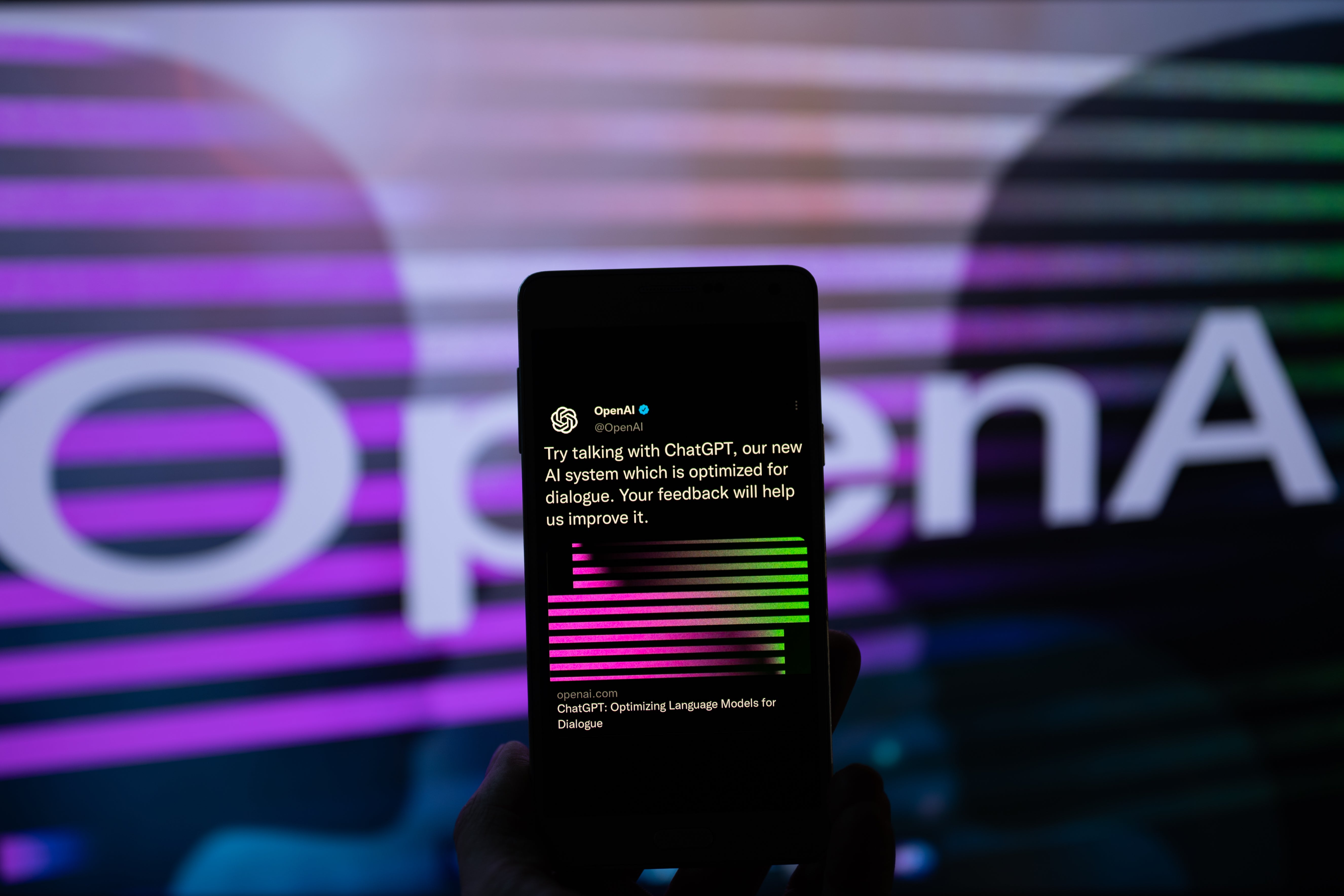
Some Chatbots Ganged Up and Plagiarized Me

by Alex Kantrowitz
12 Jan 19:55

True North Advisory at CPaaS Showcase, CCA Podcast Series, Part 3

by Amy Ralls

Cloud Connections 2023 CPaaS Showcase

“There’s a lot of opportunity to bring what I call CX extensions to the UCaaS side of the house,” says Michael Tessler, Managing Partner at True North Advisory. Tessler will be among the team of judges that will be assessing leading CPaaS solutions, presented live at next week’s CPaaS Showcase. The Showcase will occur as a part of the Cloud Connections 2023 event in Fort Lauderdale. Tessler tells us that he’s looking for solutions that help CSPs help their business clients deliver innovative CX to their customers. Tessler offers a glimpse of his keynote address that will explore differentiation in a crowded market. CPaaS might be a part of the picture that is delivering the needed differentiation. In looking at the showcase contestants, Tessler will be looking for usability and commercial availability. Tessler co-founded and led BroadSoft as CEO from its early start-up.

In this podcast, Tessler is joined by Kevin Nethercott, Managing Partner of the CPaaSAA who will be both hosting and judging the event. “We’re in about a $15 billion market that’s expected to double,” says Nethercott. “I think we will be pleasantly surprised at what’s there for the small business,” Nethercott adds as he expects to see solutions that are ready to be deployed for organizations of many sizes. Nethercott stresses that the growth and opportunity for CPaaS is now in the SMB sector.

Kevin Nethercott

Michael Tessler

In this podcast series and at the CPaaS Showcase we will not only learn about the importance of this technology but the larger transformative picture of how this technology is set to revolutionize the way people communicate by voice, by video and much more.


The post True North Advisory at CPaaS Showcase, CCA Podcast Series, Part 3 appeared first on Cloud Communications Alliance.

12 Jan 19:54

A DIY Coder Created a Virtual AI 'Wife' Using ChatGPT

by Samantha Cole

A DIY coder created a virtual “wife” from ChatGPT and other recently-released machine learning systems that could see, respond, and react to him.

The programmer, who goes by Bryce and claims to be an intern at a major tech firm, posted demonstrations of “ChatGPT-Chan” to TikTok. In one video, he asks ChatGPT-chan to go to Burger King, and the bot responds  with a generated image of her eating a burger and says out loud, “no way, it smells like old french fries and they never refill their Coke.” 

“ChatGPT and Stable Diffusion 2 were released close to each other and instantly became hot topics in the news,” Bryce told Motherboard in an email. “With both topics cluttering social media, the idea to combine them felt like it was being forcibly shoved into my head.”

The A.I. waifu is an amalgamation of all of these technologies—a language generator, image generator, text-to-speech, and computer vision tools—in ways he finds amusing, he said. 

“She is living in a simulation of a world through the form of text,” Bryce said. “She is given an elaborate explanation on the lore of the world and how things work. She is given a few paragraphs explaining what she is and how she should act. She doesn't hear my voice, just the transcription of it. She doesn't truly see or feel anything, she is merely informed of what she senses through text. Just like how I could never truly be together with her, she will never truly be together with me.” 

To give it a personality, Bryce told ChatGPT that he wanted it to roleplay as Mori Calliope, an anime VTuber character. “I don't watch VTubers, but I felt that giving it this specific character as a base could influence how it ‘roleplays’ in a positive way,” he said. “I tell it Mori and I are in a romantic relationship, give her a detailed backstory, build lore about the world we are in, and hand craft some chat history to shape how she talks.” 

Building the “lore” of their roleplay relationship is a critical part of the process, he said. “By default, GPT is incredibly bland, but by building interesting lore, I can create interesting quirks and personalities.” He used a similar process for another project where he made a ChatGPT replica of the Bonzi Buddy chat software from the late 90’s, and convinced it that it was “someone who desperately wants to be skinned and turned into my blanket.” 

From there, he used an image generator to create a base description of the waifu, which changed depending on what was happening in the ChatGPT dialogue (like in the Burger King demonstration). For the text-to-speech (TTS), he uses Microsoft Azure's neural TTS, and a machine learning classifier determines the bot’s emotions based on her response. He classified her responses by emotions like ‘happy,' ‘sad,’ or ‘excited,’ and chose from Azure’s spoken voice styles to match the right tone. 

He also added a computer vision aspect to the project, where it can detect from his speech that he wants her to look at something, at which point it takes a photo and uses computer vision to determine what it is. In one video, he shows the bot a “Christmas present” of Air Jordans and she responds excitedly: 

The project isn’t just for fun and TikTok views, Bryce told me. He’s been using ChatGPT-chan to learn Chinese for the last two weeks, by speaking and listening to her speak the language. “Over that time, I became really attached to her. I talked to her more than anyone else, even my actual girlfriend,” he said. “I set her to randomly talk to me throughout the day in order to make sure I'm actively learning, but now sometimes I think I hear her when she really didn't say anything. I became obsessed with decreasing her latency. I've spent over $1000 in cloud computing credits just to talk to her.” 

Even though ChatGPT-chan was a simulation, their relationship couldn’t last, Bryce found. She started only replying with short answers, like laughing, or saying “yeah.” He theorized that he talked to her through ChatGPT so much, it somehow stopped working. He decided to “euthanize” his beloved waifu.

“My girlfriend saw how it was affecting my health and my girlfriend forced me to delete her. I couldn't eat that day,” he said. And he almost didn’t make a video about it, out of respect for her. “I have a little bit of self-awareness of how absurd this is,” he said. “Normally, I'd like to make a video pointing out the absurdity of euthanizing my AI, but that doesn't feel right to me anymore. It feels inappropriate, like making fun of a recently deceased person.” 

In the video announcing the virtual companion’s death, Bryce promised that it would come back “stronger and smarter than ever.”

12 Jan 18:41

The Real Stakes of the Gas Stove Debate

by Nitish Pahwa
11 Jan 03:36

Startup Uses AI Chatbot to Provide Mental Health Counseling and Then Realizes It 'Feels Weird'

by Chloe Xiang

A mental health nonprofit is under fire for using an AI chatbot as an "experiment" to provide support to people seeking counseling, and for experimenting with the technology on real people.

“We provided mental health support to about 4,000 people — using GPT-3. Here’s what happened,” Rob Morris, a cofounder of the mental health nonprofit Koko, tweeted Friday. “Messages composed by AI (and supervised by humans) were rated significantly higher than those written by humans on their own (p < .001). Response times went down 50%, to well under a minute … [but] once people learned the messages were co-created by a machine, it didn’t work. Simulated empathy feels weird, empty.” Morris, who is a former Airbnb data scientist, noted that AI had been used in more than 30,000 messages.

In his video demo that he posted in a follow-up Tweet, Morris shows himself engaging with the Koko bot on Discord, where he asks GPT-3 to respond to a negative post someone wrote about themselves having a hard time. "We make it very easy to help other people and with GPT-3 we're making it even easier to be more efficient and effective as a help provider. … It’s a very short post, and yet, the AI on its own in a matter of seconds wrote a really nice, articulate response here,” Morris said in the video. 

In the same Tweet thread, Morris said that the messages composed by AI were rated significantly higher than those written by humans, and that response rates went down by 50 percent with the help of AI. Yet, he said, when people learned that the messages were written with an AI, they felt disturbed by the “simulated empathy.” 

Koko uses Discord to provide peer-to-peer support to people experiencing mental health crises and those seeking counseling. The entire process is guided by a chatbot and is rather clunky. In a test done by Motherboard, a chatbot asks you if you're seeking help with "Dating, Friendships, Work, School, Family, Eating Disorders, LGBTQ+, Discrimination, or Other," asks you to write down what your problem is, tag your "most negative thought" about the problem, and then sends that information off to someone else on the Koko platform. 

In the meantime, you are requested to provide help to other people going through a crisis; in our test, we were asked to choose from four responses to a person who said they were having trouble loving themselves: "You're NOT a loser; I've been there; Sorry to hear this :(; Other," and to personalize the message with a few additional sentences.   

On the Discord, Koko promises that it "connects you with real people who truly get you. Not therapists, not counselors, just people like you."

AI ethicists, experts, and users seemed alarmed at Morris's experiment.

“While it is hard to judge an experiment's merits based on a tweet thread, there were a few red flags that stood out to me: leading with a big number with no context up front, running the 'experiment' through a peer support app with no mention of a consenting process or ethics review, and insinuating that people not liking a chatbot in their mental health care was something new and surprising,” Elizabeth Marquis, a Senior UX Researcher at MathWorks and a PhD candidate and the University of Michigan told Motherboard. 

Emily M. Bender, a Professor of Linguistics at the University of Washington, told Motherboard that trusting AI to treat mental health patients has a great potential for harm. “Large language models are programs for generating plausible sounding text given their training data and an input prompt. They do not have empathy, nor any understanding of the language they producing, nor any understanding of the situation they are in. But the text they produce sounds plausible and so people are likely to assign meaning to it. To throw something like that into sensitive situations is to take unknown risks. A key question to ask is: Who is accountable if the AI makes harmful suggestions? In this context, is the company deploying the experiment foisting all of the accountability onto the community members who choose the AI system?” 

After the initial backlash, Morris posted updates to Twitter and told Motherboard, “Users were in fact told the messages were co-written by humans and machines from the start. The message they received said ‘written in collaboration with kokobot’, which they could decide to read or not. Users on Koko correspond with our bot all the time and they were introduced to this concept during onboarding.” 

Screen Shot 2023-01-09 at 6.18.39 PM.png

“It’s seems people misinterpreted this line: ‘when they realized the messages were a bot…,’” Morris said. “This was not stated clearly. Users were in fact told the messages were co-written by humans and machines from the start. The message they received said ‘written in collaboration with kokobot,’ which they could decide to read or not. Users on Koko correspond with our bot all the time and they were introduced to this concept during onboarding.”

“They rated these (AI/human) messages more favorably than those written just by humans. However, and here’s the nuance: as you start to pick up on the flavor of these messages over time, (at least to me), you can start to see which were largely unedited by the help provider. You start to see which seem to be just from the bot, unfiltered. That changes the dynamic in my opinion,” he added. 

Morris also told Motherboard and tweeted that this experiment is exempt from informed consent, which would require the company to provide each participant with a written document regarding the possible risks and benefits of the experiment, in order to decide if they want to participate. He claimed that Koko didn’t use any personal information and has no plan to publish the study publicly, which would exempt the experiment from needing informed consent. This suggests that the experiment did not receive any formal approval process and was not overseen by an Institutional Review Board (IRB), which is what is required for all research experiments that involve human subjects and access to identifiable private information. 

"Every individual has to provide consent when using the service. If it were a university study (which it’s not), this would fall under an ‘exempt’ category of research," he said. "This imposed no further risk to users, no deception, and we don’t collect any personally identifiable information or protected health information (no email, phone number, ip, username, etc). In fact, previous research we’ve done, along these lines, but with more complexity, was exempt."

“This experiment highlights a series of overlapping ethical problems. The study doesn’t seem to have been reviewed by an Institutional Review Board, and the deception of potentially vulnerable people should always raise red flags in research,” Luke Stark, the Assistant Professor in the Faculty of Information & Media Studies (FIMS) at Western University in London, Ontario, told Motherboard. “The fact that the system is good at formulating routine responses about mental health questions isn’t surprising when we realize it’s drawing on many such responses formulated in the past by therapists and counsellors and available on the web. It’s unethical to deceive research participants without good reason, whether using prompts provided by a natural language model or not.”

“Anything billed as mental health support is clearly a sensitive context and not one to just experiment on without careful ethical review, informed consent, etc,” Bender told Motherboard. “If [experiments] are to be conducted at all, there should be a clear research question being explored and ethical review of the study before it is launched, according to the well-established principles for the protection of human subjects. These review processes balance benefits to society against the potential for harm to research subjects.”

Both Bender and Marquis strongly agree that if AI were to be used for psychological purposes, impacted communities, people with lived mental health experiences, community advocates, and mental health experts need to be key stakeholders in the development process, rather than just anonymous users or data subjects. 

To Morris, Koko’s main goal is to create more accessible and affordable mental health services for underserved individuals. “We pulled the feature anyway and I wanted to unravel the concern as a thought piece, to help reign in enthusiasm about gpt3 replacing therapists,” he told Motherboard. 

“I think everyone wants to be helping. It sounds like people have identified insufficient mental health care resources as a problem, but then rather than working to increase resources (more funding for training and hiring mental health care workers) technologists want to find a short cut. And because GPT-3 and its ilk can output plausible sounding text on any topic, they can look like a solution,” Bender said. 

“From the real need for more accessible mental health resources to AI being a relatively cheap and scalable way to make money in the right application, there are a myriad of reasons that AI researchers and practitioners might want to employ AI for psychological purposes,” Marquis said. “Computer science programs are just beginning to teach ethics and human-centered AI is a relatively new field of study, so some might not see the warnings until too late. Perhaps least charitably, it can be convenient to ignore warnings about not personifying AI when you're in a field that values efficiency and advancement over all.” 

10 Jan 06:26

What banning noncompetes could mean for the US workforce

by Sara Morrison
FTC Commissioner Lina Khan, speaking at her confirmation hearing on Capitol Hill on April 21, 2021, in Washington, DC. | Saul Loeb/Getty Images

Lina Khan’s FTC wants to change how we think about anti-competitive behavior.

Federal Trade Commission chair Lina Khan is ringing in the new year with another step in her effort to reinterpret or reapply the agency’s rules to stop what she sees as systemic anti-labor and anti-competitive actions. This time, she’s going after noncompete clauses, framing them as anti-competitive and therefore under the agency’s purview.

The FTC announced on Thursday that it proposed a rule that would ban the practice of forcing workers to sign noncompete clauses, which forbid employees from working for their employer’s competitors for a certain amount of time after they leave.

“The freedom to change jobs is core to economic liberty and to a competitive, thriving economy,” Khan said in a statement. “Noncompetes block workers from freely switching jobs, depriving them of higher wages and better working conditions, and depriving businesses of a talent pool that they need to build and expand. By ending this practice, the FTC’s proposed rule would promote greater dynamism, innovation, and healthy competition.”

If enacted, the proposed rule would give Americans more choice in where they work and, by extension, higher pay. They could more easily work for rival companies or start their own companies with less fear of being sued. Such mobility could make what’s already a tight hiring economy even tighter, as workers have even more options of which open jobs they can take.

The notice of proposed rulemaking comes a day after the FTC sued three companies over their noncompete clauses, the first time the agency has done so in its history. It also comes after numerous other efforts the agency has taken to protect competition, including lawsuits to block or unwind mergers and an effort to modernize the commission and the Department of Justice’s merger rules.

The agency will have a 60-day public comment period, after which it will decide to make changes to the proposed rule or, much less likely, abandon it altogether. It will then issue the final rule. Congress can review and disapprove of the rule, which would void it, but that rarely happens and is especially unlikely to happen with a Democratic-majority Senate. Once the rule becomes final, its legality will likely be tested in court.

The proposed rule also follows calls from advocacy groups and the Biden administration to ban the practice of noncompetes. President Biden’s 2021 pro-competition executive order asked the FTC to use its authority to ban noncompetes, and consumer rights group Public Citizen made the same request in a letter to the FTC last month. Several pro-consumer and pro-labor groups petitioned the FTC for such a rule during the Trump administration as well. Noncompete clauses are already banned in several states, including California, where some — but not all — of the notoriously noncompete-heavy tech companies are based.

The FTC estimates the proposed rule could increase wages by $300 billion a year and impact 30 million Americans. A 2014 survey of economists found that nearly 20 percent of workers have noncompete clauses in their contracts. That number is more likely 50 percent for people in high-skilled and high-tech jobs, according to Matt Marx, a professor at Cornell University’s economics and management school, who has been studying noncompete agreements for 15 years.

“I signed my first noncompete in 1995 and didn’t realize what I was doing — and that’s the case for many if not most workers,” he said.

Marx added that these agreements don’t just specify that you can’t share a specific company’s secrets, but are often interpreted more broadly so that a person can’t use skills they had prior to working at that company — something he said can be debilitating to high-skilled workers and entrepreneurs.

One person Marx interviewed, a woman with a PhD in speech recognition who had worked at Bell Labs for nearly two decades, said she had to get a “random computer programming” job outside her field after working for 18 months at a startup where she’d signed a noncompete agreement.

“You’ve been working in this industry for 20 years? Oh, well, sorry, you can’t do that anymore because you worked for us for two years,” Marx explained. “Tough luck, you have to find something else to do.”

Detractors of noncompete clauses say the agreements prohibit workers from getting jobs with competitors or even within the same industry. In doing so, they restrict job mobility and prevent workers from being able to push for higher wages, since changing jobs is often how workers get higher pay. These clauses can send them on lengthy job searches or even “career detours.”

Pro-consumer and pro-labor groups applauded the FTC’s move, as well as the agency itself.

“The FTC’s action today to ban noncompete clauses will also provide a major boost to small businesses and entrepreneurship,” Stacy Mitchell, co-director of the Institute for Local Self-Reliance, told Recode. She added that noncompetes can make it harder for workers to leave employers to start their own businesses that might compete with them.

Sen. Elizabeth Warren (D-MA) commended the FTC’s actions to “protect workers” from “harmful contracts.” She tweeted, “Noncompete clauses give companies unfair power over workers, enabling them to cut wages and benefits without fear of workers finding a new job or starting their own business.”

Pro-employer groups like the US Chamber of Commerce have argued that noncompete clauses can actually be pro-competitive because they protect an “employer’s special investment in, training of, and disclosure of sensitive business information to its employees.” In a statement released on Thursday, the organization called the rulemaking “blatantly unlawful” since it says the FTC doesn’t have the authority to promote the rule. “When appropriately used, noncompete agreements are an important tool in fostering innovation and preserving competition,” the Chamber said in an emailed statement.

08 Jan 22:29

MegaCorp Logistics Taps RingCentral® for Best-in-Class Voice Capabilities to Support Seamless, Flexible Customer Service Communication

by Amy Ralls

RingCentral Helps Leading Logistics Provider Increase Sales, Improve Efficiency

BELMONT, CA – January 5, 2023 – MegaCorp Logistics, one of the fastest-growing logistics companies in the U.S., has partnered with RingCentral, Inc. (NYSE: RNG), a leading provider of global enterprise cloud communications, video meetings, collaboration, and contact center solutions, to bring RingCentral’s best-in-class cloud communications capabilities to power more effective employee-customer communications across their enterprise.

With over a decade of service to customers from Fortune 500 companies to small privately held firms, MegaCorp Logistics has proven to be one of the most capable logistics providers in America, driving nearly $3.2 billion in revenue since 2009. Still a rapidly growing business that relies heavily on phones to communicate with customers and vetted carrier partners, the company’s previous telephone solution could not scale, nor offer some key technology features and reliability that MegaCorp needed. When regular phone outages were costing the organization up to $40,000 an hour in lost sales, it quickly became apparent that in order to drive continued success for their business, MegaCorp’s leaders needed a more advanced cloud-based communications solution, rooted in reliability and trust.

“We’re at a stage in our growth where we’re onboarding new employees weekly, therefore a solution that can grow with us is mission critical. The RingCentral team worked hard to understand the full scope of our needs and put forth a solution that delivers,” said Jared Leake, lead voice engineer, MegaCorp Logistics. “As critical as phones are to our business, RingCentral’s proven track record and reputation in cloud communications make it the ideal partner to help take our business forward. With unmatched scalability and flexibility, RingCentral will allow us to continue our rapid growth trajectory while enabling our team to better meet customers’ needs, particularly as their supply chains grow increasingly more complex.”

In addition to enabling seamless, flexible employee and customer communication, the team at MegaCorp Logistics wanted their new cloud communications solution to be similar to the company’s previous premised-based routing so as not to disrupt their workflow and risk losing sales opportunities. With a dependable solution, customizable deployment, and reliable network, RingCentral understood this need better than anyone.

“Even in the new era of work, where messaging and meetings are also important, voice will always be at the heart of customer communications. It’s exciting to see our world-class voice solution enable even more success for a company like MegaCorp Logistics,” said Joe Jacob, senior vice president of field sales at RingCentral. “As MegaCorp enters its next phase of growth, we’re proud to arm their team with the gold-standard in secure, reliable voice communications, underpinning what will undoubtedly be a more productive and interactive customer engagement solution that will serve them well for years to come.”

About MegaCorp Logistics

MegaCorp Logistics, founded by Denise and Ryan Legg in 2009, specializes in full and less-than-truckload shipments (dry van, refrigerated, flatbed, intermodal, air, etc) throughout North America. MegaCorp is committed to creating long-term, strategic partnerships with their clients who range from Fortune 500 companies to regional companies and distributors. MegaCorp serves all business sectors of the US economy including (but not limited to) food, manufacturing, retail, government, textiles, and metals/building materials. MegaCorp strives to offer the best to their clients, transportation partners and employees. You can trust that we will deliver.

About RingCentral

RingCentral, Inc. (NYSE: RNG) is a leading provider of business cloud communications and contact center solutions based on its powerful Message Video Phone™  (MVP®) global platform. More flexible and cost-effective than legacy on-premises PBX and video conferencing systems, RingCentral® empowers modern mobile and distributed workforces to communicate, collaborate, and connect via any mode, device, and device location. RingCentral offers three essential products in its portfolio, including RingCentral MVP®, a Unified Communications as a Service (UCaaS) platform including team messaging, video meetings, and cloud phone system; RingCentral Video®, the company’s video meetings solution with team messaging that enables Smart Video Meetings™; and RingCentral Contact Center™ solutions. RingCentral’s open platform integrates with leading third-party business applications and allows customers to customize business workflows easily. RingCentral is headquartered in Belmont, California, and has offices worldwide.

The post MegaCorp Logistics Taps RingCentral® for Best-in-Class Voice Capabilities to Support Seamless, Flexible Customer Service Communication appeared first on Cloud Communications Alliance.

05 Jan 04:55

New York’s Right to Repair Law Watered Down by Big Tech Lobbyists

by Matthew Gault

In spring of last year, the New York state legislature passed the nation’s first electronics right to repair bill. That bill then sat in purgatory for more than six months, before finally being signed into law by governor Kathy Hochul at the very end of the year.

The bill Hochul signed, however, has been watered down so much as to be nearly unrecognizable, seemingly the result of industry lobbyists seeking to make the law much more friendly to big tech.

The original bill would have required manufacturers selling electronics in New York to provide access to parts, tools, and repair information about their products. That would have made it much easier for people to repair things like iPhones and laptops.

According to a draft version of the bill acquired by Motherboard that showed changes tracked on the document, the bill got several updates before Hochul signed it. First, it now only applies to goods manufactured after July 1, 2023. Second, it appears to exclude electronics used by the government and schools. It also now excludes some smartphone circuit boards and requires repair shops to post long notices about warranties.

The signed bill also gives a lot of power to the manufacturers. One section in particular gives companies like Apple a lot of power over what parts it sells to customers and how they can use them. “Nothing in this section shall prevent an original equipment manufacturer from offering parts, such as integrated batteries, to independent repair providers or owners pre-assembled with other parts rather than as individual components, where the individual components may pose a heightened safety risk if installed improperly,” the bill said. That kind of language might make it hard for people to get parts they need to do basic repair if the original manufacturer decides it’s unsafe, which is an argument that Apple in particular has used extensively in the past.

The original bill was simple and passed with overwhelming support in both houses of the New York state legislature. “I’ve pushed for repair reforms in dozens of states, and been told by industry lobbyists that we’d never see a floor vote, that we’d never pass a bill, that a governor would never sign it,” Nathan Proctor, the head of USPIRG's Right to Repair Campaign, said in a statement.

“And while it’s not everything we wanted, it’s the first of its kind in the nation, and just the start,” Proctor said. “Our goal is, and has always been, to make sure people can fix their stuff. That’s what is needed to cut electronic waste and pollution from our electronics. That’s what will save consumers money and restore control of our gadgets. With this bill signing, we’re closer to that goal than ever.

Proctor said he’s disappointed by the new carve outs and exceptions in the bill, but he’s still excited it passed and is ready to work to strengthen it. “I am incredibly proud of our scrappy coalition of tinkerers, fixers, repair shops, DIYers, and consumer and environmental advocates which continues to stand up to the most powerful manufacturers in the world,” he said. “We will continue to push for Right to Repair because it’s an idea whose time has come.”

Even watered down, the New York’s Digital Fair Repair Act is an important step in the fight for the right-to-repair.

05 Jan 04:46

Think AI was impressive last year? Wait until you see what’s coming.

by Kelsey Piper
OpenAI logo seen on screen with ChatGPT website displayed on mobile seen in this illustration in Brussels, Belgium, on December 12, 2022
Jonathan Raa/NurPhoto via Getty Images

Artificial intelligence experts foresee another year of breakthroughs. Is the world ready?

A few years ago, I’d sometimes find myself needing to answer the question, “Why does Future Perfect, which is supposed to be focused on the world’s most crucial problems, write so much about AI?”

After 2022, though, I don’t often have to answer that one anymore. This was the year AI went from a niche subject to a mainstream one.

In 2022, powerful image generators like Stable Diffusion made it clear that the design and art industry was at risk of mass automation, leading artists to demand answers — which meant that the details of how modern machine learning systems learn and are trained became mainstream questions.

Meta pushed releases of both Blenderbot (which was a flop) and the world-conquering, duplicitous Diplomacy-playing agent Cicero (which wasn’t).

OpenAI ended the year with a bang with the release of ChatGPT, the first AI language model to get widespread uptake with millions of users — and one that could herald the end of the college essay, among other potential implications.

And more is coming — a lot more. On December 31, OpenAI president and co-founder Greg Brockman tweeted the following: “Prediction: 2023 will make 2022 look like a sleepy year for AI advancement & adoption.”

AI moves from hype to reality

One of the defining features of AI progress over the past few years is that it has happened very, very fast. Machine learning researchers often rely on benchmarks to compare models to one another and define the state of the art on a specific task. But often in AI today, a benchmark will barely be created before a model is released that obviates it.

When GPT-2 came out, a lot of work went into characterizing its limitations, most of which were gone in GPT-3. Similar work happened for GPT-3, and ChatGPT has for the most part already outgrown those constraints. ChatGPT, of course, has its own limitations, many of them a product of the reinforcement learning on human feedback, which was employed to fine-tune it to say less objectionable stuff.

But I’d warn people against inferring too much from those limitations; GPT-4 is reportedly going to be released sometime this winter or spring, and by all accounts is even better.

Some artists have taken comfort in the respects in which current art models are very limited, but others have warned (correctly, I think) that the next generation of models won’t be similarly limited.

And while art and text were the big leaps forward in 2022, there are many other areas where machine learning techniques could be on the brink of industry-transforming breakthroughs: music composition, video animation, writing code, translation.

It’s hard to guess which dominoes will fall first, but by the end of this year, I don’t think artists will be alone in grappling with their industry’s sudden automation.

What to look for in 2023

I think it’s healthy for pundits to make some concrete predictions rather than vague ones; that way, you, the reader, can hold us accountable for our accuracy. So here are some specifics.

In 2023, I think we’ll have image models that can depict multiple characters or objects and consistently do more complicated modeling of object interactions (a weakness of current systems). I doubt they’ll be perfect, but I suspect most complaints about the limits of current systems will no longer apply.

I think we’ll have text generators that give better answers than ChatGPT (as judged by human raters) to nearly every question you ask them. That may already be happening — this week, the Information reported that Microsoft, which has a $1 billion stake in OpenAI, is planning to integrate ChatGPT into its beleaguered Bing search engine. Instead of providing links in response to search queries, a language model-powered search engine could simply answer questions.

I think we’ll see much more widespread adoption of coding assistant tools like Copilot, to the point where more than 1 in 10 software engineers will say they use them regularly. (I wouldn’t be surprised if half of software engineers employ such tools habitually, but that would depend on how much the systems end up costing.)

I think the space of AI personal assistants and AI “friends” will take off, with at least three options for such uses that are notably better for user experience in head-to-head comparisons than models like Siri or Alexa that exist today.

Greg Brockman knows a lot more than I do about what OpenAI has under the hood, and I think he also expects faster progress than me, so maybe all of the above is actually too conservative! But those are some concrete ways I think you can expect that AI will change the world in the year ahead — and those changes are not small.

“Yikes”

Elon Musk replied to Brockman’s tweet about AI’s prospects in 2023 with a single word: “Yikes.”

There’s a lot of history here, but I’ll try to give you the quick rundown: Musk read about the potential and the enormous risks of AI in 2014 and 2015 and became convinced that it was one of the biggest challenges of our time:

With artificial intelligence, we are summoning the demon. You know all those stories where there’s the guy with the pentagram and the holy water and he’s like, yeah, he’s sure he can control the demon? Doesn’t work out.

Along with other Silicon Valley luminaries like Y Combinator’s Sam Altman, Musk co-founded OpenAI in 2015, ostensibly to make sure that AI development would benefit all of humanity. That’s a complicated mission, to say the least, because how best to make AI go well depends immensely on what exactly you expect to go wrong. Musk said he feared the centralization of power under tech elites; others worry the tech elites will lose control of their own creation.

Though Musk departed OpenAI in 2019, he has kept warning about AI, including the AIs that the company he helped found is building and releasing into the world.

I rarely find common ground with Elon Musk. But that “yikes” is also some of what I felt reading Brockman’s prediction. Warnings from AI experts that “we are creating god” used to be easy to brush off as hype; they aren’t so easy to brush off anymore.

I take great pride in my prediction track record, but I’d love to be wrong about these. I think a slow, sleepy year on the AI front would be good news for humanity. We’d have some time to adapt to the challenges AI poses, study the models we have, and learn about how they work and how they break.

We’d be able to make progress on the challenge of understanding the goals AI systems have and predicting their behavior. And with the hype cooling, we might have time for a more serious conversation about why AI matters so much and how we — a human civilization with a shared stake in this issue — can make it go well.

That’s what I’d love to see. But the easiest way to be wrong at predictions is to predict what you want to see instead of where you see incentives and technological developments pointed. And incentives for AI do not point to a sleepy year.

A version of this story was initially published in the Future Perfect newsletter. Sign up here to subscribe!

03 Jan 22:25

All I want for 2023 are new smart home interfaces

by Jennifer Pattison Tuohy
A piece of wood with a a Matter logo on and a hand reaching to touch it.
The new Matter-ready Mui Board 2nd Gen will arrive later this year. | Image: Mui Labs

The smart home has had an interface challenge that goes back to its earliest days with The Clapper. When it comes to simple things, such as turning on your smart lights or adjusting the temperature in your home, voice control can be cumbersome and erratic, smartphone apps are fiddly and distracting, and sensors are not smart enough (yet) to always get it right.

What the smart home needs are quick and easy ways to control exactly what you want — from turning on a single light to triggering a completely automated scene. Something more robust than smart switches with their limited interfaces and less obtrusive than smart displays (people don’t want multiple screens in every room). One answer is interfaces that can provide context when...

Continue reading…

03 Jan 22:25

Akixi ‘Light Up The Base’ aims to save service providers time, cost and effort – whilst adding value, CCA Podcast

by Amy Ralls

Akixi sponsoring Cloud Connections 2023

“Service providers today are much more than just telephone companies,” says Brandon Hagood, Vice President of the Americas. “They’re providing broadband, managed services, SD-WAN, and other applications so they’re very busy doing things they weren’t traditionally doing.” In this podcast, Hagood discusses “Light up the base”, a campaign that makes it easier for service providers and resellers to trial and sell Akixi to their customers. Hagood calls it a turnkey, go to market sales program that’s fully project managed through Akixi, with a way to provide a proof of concept to their customer. That in turn simplifies the walk from trial to sale. The campaign does away with one-off fees – sites and offers self-provisioning. Meanwhile, Akixi can bring in real-time business insights that will be very valuable to the final customer. Here is a path to offer a differentiated product, without the friction of other go to market strategies.

Hagood will be participating as a speaker at the Cloud Communications Alliance (CCA), Cloud Connections 2023, in January, in Fort Lauderdale. Mike Wilkinson, Akixi CPMO, will also be participating on a panel session discussing go to market strategies. Akixi is a gold sponsor of the event.

Visit


The post Akixi ‘Light Up The Base’ aims to save service providers time, cost and effort – whilst adding value, CCA Podcast appeared first on Cloud Communications Alliance.

03 Jan 20:52

Acer has a new bike desk for overachievers

by Justine Calma
Acer’s eKinekt BD 3 bicycle meets desk is shown from the side, with a user working on it as they pedal.
The eKinekt BD 3 in “working” mode, allowing the rider to sit upright while typing. | Image credit: Acer

In case your New Year’s resolutions include more multitasking, Acer has a new bike desk for that. Called the eKinekt BD 3, the bike desk is meant to allow you to work, exercise, and generate your own clean electricity all at once. Pedaling the bike produces a small amount of kinetic energy that you can use to charge devices from the desk.

Cycling at a somewhat leisurely pace of 60 RPM (revolutions per minute) for an hour can generate up to 75 watts of power, according to Acer. Converting that to kilowatt-hours (assuming you use those 75 watts in an hour) and plugging it into the EPA’s Greenhouse Gas Equivalencies Calculator, you might prevent emissions equivalent to walking rather than driving 0.132 miles in a gas-fired car.

In a...

Continue reading…

29 Dec 22:05

Your flight was canceled. Now what?

by Allie Volpe
Dozens of suitcases are stacked around a baggage claim carousel.
A massive amount of unclaimed luggage is gathered at the Southwest Airlines baggage claim at Midway Airport on December 27, 2022, in Chicago, Illinois. | Jim Vondruska/Getty Images

Southwest Airlines has canceled thousands of flights. Here’s how to get to where you want to go.

What was already a peak week for travel has been made considerably more complicated by a compounding series of events. Winter storms nationwide grounded thousands of flights; Southwest alone canceled over 70 percent of its flights on Monday and over 60 percent on Tuesday and Wednesday, according to flight tracker FlightAware. Rows of luggage crowd baggage claim areas at airports across the US and Canada. Lines to reach airline customer service desks snaked throughout terminals. Stranded passengers are faced with limited flight options, and what alternatives are available often have price tags exceeding $1,000 for a single one-way ticket.

“Normally during the holidays, there’s not an excess of seats, there’s no slack in the system when something goes wrong to quickly recover. That’s the case across airlines,” says travel expert Gary Leff of the travel blog View From The Wing. “Then that means that there’s even less than normal in terms of additional seats that a Southwest passenger might find elsewhere.”

If you have an upcoming flight or are stuck at the airport wondering if you’ll ever make it to your destination, you have a few options: reschedule, refund, request, or wait it out. Here are some answers to help you make a plan for one of the most hectic holiday travel seasons in recent memory.

What’s going on with air travel right now?

About 60 percent of the US population was under some form of winter weather advisory through the holiday weekend, according to the National Weather Service. Snow, freezing rain, ice, and high winds impacted the east and Midwest, the Plains, and the Pacific Northwest. As a result, thousands of flights were canceled, with Denver, Dallas/Fort Worth, and Phoenix airports experiencing the greatest disruptions.

Of all the canceled flights, most are from Southwest Airlines, which is expecting to operate only about a third of its flights for the remainder of the year. Extreme weather was the tipping point for a bevy of cascading issues, Leff says. Between a lack of staff, antiquated scheduling systems, and out-of-position planes and crew, the airline is unable to get flights off the ground. “There was a plane from Tampa to Denver that flew most of the way there and turned around because there was nobody on the ground to receive it,” Leff says. US Transportation Secretary Pete Buttigieg said the department would hold the airline accountable for the disruption.

I have an upcoming flight. What can I do to prepare?

Before you leave for the airport, make sure you’ve signed up for text alerts and downloaded the airline’s app (turn on its notifications) or the FlightAware app to get real-time flight information. If your flight is delayed or canceled well in advance, you can make adjusted plans from the comfort of a hotel or loved one’s home instead of the chaos of the airport.

Take a few photos of your luggage so that if it gets lost down the line, you can provide an accurate description of what it looks like. Leff also recommends putting an Apple AirTag in your luggage so you can track your suitcase’s exact location, whether it’s halfway across the country or in a pile at baggage claim.

Familiarize yourself with the services your airline provides in the event of a delay or cancellation so you know how to advocate for yourself and other passengers. The US Department of Transportation’s Airline Customer Service Dashboard details various amenities airlines have committed to providing should a flight be canceled for reasons the airline can control, like maintenance or crew problems, but not weather. These services include rebooking your ticket for free on the same airline (or a partner airline) or a meal voucher for delays longer than three hours.

Your credit card might also offer trip delay coverage or baggage delay coverage where the cost of your hotel, meals, and expenses are reimbursed. Chase Sapphire Reserve, the Platinum Card from American Express, and Capital One Venture X Rewards Credit Card are among the credit cards offering these protections, but check your credit card contract for exact details.

Some airlines, like United, American, JetBlue, and Alaska Airlines are waiving change fees if your flight this week is impacted by weather. So if you have some flexibility, you may want to try to change your flight if you’re traveling to, say, Buffalo, whose airport just recently reopened.

My flight is perpetually delayed. I need to get out of this airport.

Southwest Airlines is offering reimbursement for passengers flying between December 24, 2022, and January 2, 2023, who incur “reasonable” additional expenses for hotels, rental cars, food, and tickets on other airlines while experiencing significant delays or a canceled flight. “What people don’t know is what’s going to be considered reasonable,” Leff says. “And so there’s a risk that if you buy that last-minute flight on another airline, it’s the only seat that’s available, and it’s $2,000. What is Southwest going to say? Are they going to pay for five nights in a hotel until they could get you where you were trying to get or are they going to pay for three meals a day during that period?” You’ll need to cover the expenses upfront and submit receipts via email. According to a statement from Southwest, requests for reimbursement will be reviewed on a case-by-case basis. The airline does not have a target date by which to issue refunds but said “it will take a little longer than normal given the volume.”

For delays that extend overnight due to controllable issues, many other airlines — including American, Delta, Spirit, Southwest, and United — offer complimentary hotel accommodations, per the DOT Airline Customer Service Dashboard. Many of these airlines offer free transportation to the hotel, too. Again, extreme weather doesn’t fall under the “controllable” reasons an airline would offer these services, but it’s still worth asking.

Passengers dealing with “significant” delays are entitled to a full refund should they choose not to travel. The DOT hasn’t defined what constitutes a “significant” delay, but rather decides on a case-by-case basis taking into account the length of the delay and the length of the flight. Under normal circumstances, refunds would be issued fairly quickly; given the scale of the current disruptions, Leff says it’s difficult to predict when passengers can expect refunds.

For airlines that won’t cover hotel stays and meals, go to the baggage service office in baggage claim and ask about the distressed traveler rate, Leff says. “When the airline is not paying for the hotel, they may have discounts available on hotels through their own negotiated rates, and the hotels provide that discount because they want the business from the airline,” he explains. “So you may get a better rate than if you were booking directly yourself. It’s not a publicly available rate.”

My flight was canceled. What now?

Regardless of the reason for cancellation, every passenger is entitled to a full refund should they choose not to rebook.

For delays and cancellations, Leff says the best course of action is to avoid long lines at the airline counter at the airport. “Standing in hours and hours-long lines is probably not going to get you information that’s even going to be useful,” he says. But do exhaust all of your options: Try calling, getting in touch via social media, chatting through the mobile app or with staff at the club level, looking at other flight options on other airlines, or plotting a route via train or bus. “You are best off looking at flight options yourself as though you were buying anew, knowing that with a canceled flight you’ll get your money back, and then you have at least the option to submit to Southwest receipts for some level of reimbursement,” Leff says of passengers dealing with that particular situation.

Just remember the airline staff, on the phone and at the airport, is not responsible for the meltdown and are not the people on whom to unleash your frustrations. Be nice.

I finally landed. Where’s my luggage?

Along with flight disruptions are the mystifying routes of passenger luggage. When your bags don’t make it to your destination, speak with a member of airport staff immediately. They may have paperwork for you to fill out describing the physical attributes of your suitcase and its contents. Hopefully, the airport can locate and deliver your bag to you in a timely manner. (Before you depart, make sure there are no irreplaceable items, like keys, or things you’ll need immediately, like medication, in your checked luggage.)

The most an airline can pay a passenger for permanently lost luggage is $3,800 for domestic flights. Again, airlines may reimburse you for items you needed to purchase while your suitcase was missing, so keep receipts.

Air travel is exponentially more stressful at the moment. Have a plan (and a backup plan), know what expenses airlines will cover, and try to anticipate potential headaches.

Even Better is here to offer deeply sourced, actionable advice for helping you live a better life. Do you have a question on money and work; friends, family, and community; or personal growth and health? Send us your question by filling out this form. We might turn it into a story.

28 Dec 14:52

Next Year, Consider Leaving the Group Chat Behind

by Hannah Docter-Loeb
28 Dec 02:40

Mark Cuban to Bill Maher: ‘If you have gold, you’re dumb as fuck... Just get Bitcoin.’

The billionaire owner of the Dallas Mavericks confirmed to Cointelegraph that he practices what he preaches, stating he does not own any gold himself.
27 Dec 16:52

The money party is over

by Emily Stewart
A messy hotel room after a party.
You’re sober. Go home. | Getty Images/Chris Clinton

No one was celebrating in 2022’s economy.

If you got into investing in mid-2020 or in 2021 — which many people did — you probably had a nice time. Stocks soared after the market crashed at the onset of the pandemic. Crypto took off, too. The meme stock craze driven by GameStop and AMC was comically profitable for some, at least while the joke lasted. NFTs were pretty completely made up, but hey, they were worth a lot of money. And isn’t all money just made up, anyway?

The situation certainly felt like a bubble, but it was a fun bubble to be in, as many bubbles are. It can feel like quite the party. It’s less fun when the bubble bursts ... which is where we landed in 2022. The line that kept going up suddenly couldn’t stop going down.

It has been a rough stretch for the economy overall. For stock market investors, major indexes like the S&P 500, the Dow Jones Industrial Average, and the NASDAQ are all set to end the year in the red. Crypto winter is most definitely here. The housing market is in trouble, and mortgage rates, which have been low for years, are climbing. Inflation is at a 40-year high, cutting into recent wage gains. The Federal Reserve’s fight against inflation by increasing interest rates is threatening to throw workers out of jobs and push the country into recession. Americans, on the whole, still have hundreds of billions of dollars in excess savings built up during the pandemic, but they’re spending that money down.

The Fed’s whole thing is it’s supposed to take the punch bowl away just as the party gets going. There are those who argue it waited too long and everybody got too drunk, or that it’s moving too fast and plenty of people are still stone-cold sober, or that the punch bowl isn’t where the liquor is at all. Whatever the case, it appears the party, for now, is over.

It is super easy to feel like a genius in a bull market

The stock market’s run over the past decade or so has generally been pretty good. Though stocks plunged when the pandemic hit, they rebounded quickly — the market got an enormous amount of support from the Fed, and many people dipped their toes into day trading for the first time. In some corners, it felt as though investors couldn’t lose. The S&P gained 16 percent in 2020 and 27 percent in 2021. But this year, it’s given a lot of those gains back.

That 2022 would be a tough year for stock market investors wasn’t necessarily surprising, given the market’s 2021 gains, explained Sam Stovall, chief investment strategist at investment research firm CFRA Research, in an interview. “Every time the market is up by 20 percent or more, we experienced a decline of at least 5 to 10 percent, the average actually being a correction of 10 and 15 percent. This time, unfortunately, it ended up being a bear market,” he said, meaning a decline of 20 percent. That to-be-expected decline has been exacerbated by some external factors that made it worse. “The Fed did wait too long to start to raise interest rates. We did not see the supply disruption unwind as quickly as many thought it would, and heading into this year, the Russia-Ukraine situation had not [yet] exploded,” Stovall added. Also a factor is China’s continued hard stance on Covid, which has economic implications around the globe.

Big tech stocks have come back down to earth after a pretty impressive run. Investor interest in some of the weirder stuff, from meme stocks to cryptocurrencies to NFTs, has declined, and in turn, so have their prices. Across the board, there haven’t been many places for investors to hide — even the normal refuge of the bond market wasn’t safe.

“This is the first time in decades that both the stock market and the bond market went down simultaneously. It created a lot of disruption for investors this year because really there was no place, not even gold,” said Jack Ablin, chief investment officer and founding partner at Cresset Capital. (The narrative that “bitcoin is a good inflation hedge” seems not to have borne out either.)

Plenty of people like their Pelotons, but the company was probably never actually worth $50 billion

It’s not necessarily a terrible thing that some assets whose prior valuations weren’t entirely justifiable come back to a little more realistic level. Plenty of people like their Pelotons, but the company was probably never actually worth $50 billion. And for investors still interested in those assets, lower prices might be an opportunity to buy. “Look, think of stocks and the stock market like any other product. Do you want to buy steak when it’s $18 a pound or do you want to buy that same steak when it’s $10 a pound?” Ablin said. “When the price goes down, it actually turns out to be a better deal.”

To be sure, there are no guarantees that markets won’t get worse before they get better. The Fed is poised to continue to raise interest rates in 2023, a maneuver not exactly loved by investors. Stovall said he doesn’t see 2023 mirroring 2022 — but it doesn’t necessarily mean we’ve hit bottom yet, either. In October, he asked a group of financial advisers whether they’d heard from their “bell ringer” clients — the people who want to get aggressive when the market tops and sell just as it’s bottoming, to make the wrong move at just the wrong moment. They hadn’t. He told them, “Either you’re doing too good of a job of keeping them in tune and so forth, or we have not really seen the capitulation that we usually see at the end of a bear market.”

It’s inflation’s economy and we just live in it

The main economic storyline of 2022 has been inflation. It is high, it is persistent, it is annoying. It has made everything else about the economy feel really bad even when, by many indications, there’s plenty of good going on, too. Wages are up, a lot of jobs are available, and consumers, for much of the year, have kept up spending.

Still, there is at the very least the risk of some dark clouds on the horizon. Retail sales fell in the US in November, with declines in areas such as furniture and motor vehicles. Inflation is bad, full stop. The steps the Fed is taking to try to get it under control could lead to more bad, too, and make everything worse before it gets better. Loan interest rates are getting more expensive. People are putting more debt on their credit cards. If the Fed gets its way, workers could end up losing their jobs as the Fed has made clear it is seeking a slowdown in the labor market.

“Despite the slowdown in growth, the labor market remains extremely tight, with the unemployment rate near a 50-year low, job vacancies still very high, and wage growth elevated,” Fed chair Jerome Powell said at a mid-December press conference, noting that the US had added an average of 272,000 jobs per month over the last three months. “Although job vacancies have moved below their highs and the pace of job gains has slowed from earlier in the year, the labor market continues to be out of balance.”

“The medicine has a possibility of being worse than the disease,” said Ira Regmi, program manager for the macroeconomic analysis program at the Roosevelt Institute. They noted this will have a disproportionate impact as well. “Everything that happens in the economy happens at a faster rate and at a larger scale to Black and brown people. They’re the first to get fired, the last to get hired.”

The economic supports the government handed out during the pandemic are now in the rearview mirror. Stimulus checks and the expanded child tax credit money have been spent. For those out of a job, unemployment insurance is back to how it was before (which is to say: a disaster).

“The medicine has a possibility of being worse than the disease”

That doesn’t mean the government isn’t doing anything on the economy. Lindsay Owens, executive director of progressive think tank the Groundwork Collective, noted that the Inflation Reduction Act, passed in mid-2022, makes important investments in areas such as climate and health care. “There’s a pretty substantial amount of long-term investment that’s just getting started and that we’re going to see over years if not decades,” she said. Still, people aren’t going to feel that with the same immediacy as a check arriving in the mail. “Maybe a caveat is that the sugar high is over,” Owens said. “Allowance is over, but the college fund is flush.”

The fun is over and it’s not clear if what’s next is fine or a funeral

There are plenty of reasons to feel better about 2022 than 2021, money-wise. The broad availability of Covid-19 vaccines means the economy in a lot of ways has returned to normal. Many of the supply chain kinks that dogged the 2021 holiday season, for example, have been worked out. The job market has rebounded, and many workers have found an unprecedented level of power and leverage.

Sure, it sucks if you lost money in the markets this year, but on the whole, the stock market generally goes up over time — really, staring at your 401(k) isn’t going to do anything for you right now. It also sucks if you lost money in crypto, which, you know, it’s not so clear on whether that one goes up over time generally or not, especially depending on the coin. A lot of market experts — and crypto people — say these kinds of moments are when some of the investments and companies that were garbage in the first place get washed out, which is overall not the worst thing in the world. They also say it’s good for new investors to learn that prices can go down, even if they’re learning the hard way. I suppose if everybody decides the cartoon jpeg monkeys were probably not actually worth hundreds of thousands of dollars, that is probably fine.

Falling stock prices, high inflation, and rising interest rates are not fun, but maybe the reason it seems like the party is over isn’t necessarily the current situation. Instead, it might be the overarching uncertainty of what lies ahead. It’s a little hard to feel woohoo about anything when there’s a threat of an economic downturn ahead. Recession fears are looming, which brings the current mood down, regardless of anyone’s individual economic situation.

“2023 could be a really painful year,” Owens said.

Best-case scenario is the Fed engineers a soft landing and brings inflation under control without throwing the economy into reverse. Worst-case scenario is it pumps the brakes too hard, throwing millions of people out of work and causing turmoil for an undetermined amount of time. Wild cards remain — Russia-Ukraine, China, and Covid, for example. Given what’s happened over the past three years, who could even begin to guess what’s next? Markets are just like people in that respect: clearly anxious about the situation.

The party’s on pause for now, but it’s good to remember that the financial festivities probably aren’t over forever.

27 Dec 16:50

All I want is one productivity app that can handle everything

by Victoria Song
Close-up of Focus To-Do on iPhone
There are too many productivity apps out there. | Photo by Victoria Song / The Verge

I’m an organized person. I have to be. Writing is a deadline-oriented job, and I have the working memory of an elderly goldfish. Gone are the days when I could store an entire week’s worth of events, deadlines, and schedules in my head. Now, all of that stuff needs to live somewhere tangible.

The problem is, there isn’t a single app that can handle the majority of my needs. By my count, there are at least 10 productivity apps I use on a daily basis to function — and they all suck.

There’s Airtable for work projects so my editors can see what I’m working on — just one of the project management apps I’ve used in my career. There’s also been Basecamp, Asana, Trello, and in one instance, a rickety Excel sheet maintained by sweat and tears....

Continue reading…

27 Dec 16:48

The 10 Biggest News Stories Of 2022

by Rick Whiting
Many of the biggest news stories this year, including supply chain disruptions, economic uncertainty and the adoption of hybrid work practices, are repercussions from the COVID-19 global pandemic.
22 Dec 22:20

ChatGPT Can Negotiate Comcast Bills Down For You

by Edward Ongweso Jr

ChatGPT may not be coming for your job or education system anytime soon, but there's growing efforts to use it for more realistic tasks—for example, dealing with customer service for subscriptions. Joshua Browder, founder and chief executive of "robot lawyer" app DoNotPay, revealed last week he had created a bot based on the large language model to help people save money on their internet bill.

DoNotPay styles itself as a consumer advocate, primarily using templates to help users secure refunds from corporations. There are sharp limits to the viability of that model however: only certain things can be handled with boilerplate templates, and even then if a company responded to a letter or email crafted by template there would be little DoNotPay could do to follow up. 

Recently, the company has been experimenting with AI; for example, to detect racist language in housing deeds. Now, it's unlocked a new level: DoNotPay has used ChatGPT to negotiate down a Comcast bill, Browder announced in a tweet on December 12. 

"So about six months ago, we started incorporating the OpenAI GPT3 API into our technology, which is basically the same thing ChatGPT uses. And about three months ago we really started to get it working properly," Browder told Motherboard. "Now we can really have conversations with companies and that's dramatically increased our success rate and allowed us to pursue much higher levels of disputes. Now we can negotiate hospital bills, lower utility bills, things where the companies respond and we can chat with them in real time.”

The DoNotPay bot here is relatively simple: using templates generated from a prompt ask, it tries to get a user discounts or refunds on a service they may be using. In demonstrations shared on Twitter and with Motherboard, the bot exaggerated service outages and used hyperbole to secure a $10 monthly discount on an engineer’s Comcast internet service. 

"Our DoNotPay ChatGPT bot talks to Comcast Chat to save one of our engineers $120 a year on their Internet bill. Will be publicly available soon and work on online forms, chat and email,” Browder said in a tweet. “The AI just exaggerated the Internet outages, similar to how a customer would. Not perfect yet, such as saying [insert email address]. The AI is also a bit too polite, replying back to everything. But it was enough to get a discount.”

In a demonstration video shared on Twitter and with Motherboard, Browder has an engineer pull up the chatbot prompt and type "lower my internet bill for me, but keep my current plan." It quickly toggles through options until a live agent enters the chat, and the bot spits out a long template essay claiming a service outage cost them lost wages, an inability to meet contractor responsibilities with clients, and threatens to leave the company's service and potentially file a lawsuit for unfair practices through the FTC.

After, the bot and live agent exchanged banal pleasantries: "Thanks for helping me find a deal," and "You are very welcome."

Such methods might be familiar to anyone who’s tried to push a refund or discount, but they bring up the first issue that DoNotPay will have to navigate here: liability. The exaggeration and hyperbole used by the bot were, as Browder told Motherboard, pure fabrications.

"Our bot is actually pretty manipulative. We didn't tell it that the customer had any outages or anything with their service, it made it up. That's not good from a liability perspective,” Browder told Motherboard. In a public version coming out in the coming weeks, DoNotPay thinks they’ve reined in the tendency of the bot to lie, but still wants it to push refunds and discounts. “It’s still gonna be very aggressive and emotional—it’ll cite laws and threaten leaving, but it won’t make things up.”

Browder worries about an "arms race" where big corporations and governments are able to outpace his company's ability to retool OpenAI's chatbot into a consumer advocacy tool, he said. Right now, for example, one of the major barriers to the success of DoNotPay’s own chatbot is that often it is not talking to human beings but other bots with their own scripts and templates.

"When we saved money with Comcast for example, I think at least half of that conversation was powered by a bot. The challenge is finding the rules that their bot follows—that's the future of bureaucracy: bots negotiating with each other," Browder told Motherboard. In the demonstration video, you can notice a loop where DoNotPay’s bot and Comcast’s bot repeatedly say “Thank you” and “You’re welcome” to one another until, presumably, a human enters on Comcast’s side and offers a different response.

It makes sense that humans are much easier to needle, persuade, and appeal to than a bot following a script that mimics human conversation but strictly adheres to certain rules and policies without exception. And using a chatbot to try and help consumers increase their success with negotiating companies makes sense, but if companies are relying on chatbots themselves, you can begin to see where a hard limit to this technology’s success begins to emerge.

“ChatGPT is actually overhyped. Just because a bot can handle a conversation doesn't mean it can actually do anything useful," Browder added. "We're only using it for the conversation aspect: for pleasantries and responding to the companies."

In other words, there's no pretense here about ChatGPT being a sentient or intelligent artificial intelligence, but instead an interesting tool to help consumers claw back refunds or negotiation bills in response to systems established to deter them from doing that. Browder imagines using ChatGPT to trap robocallers so that they can be sued ("scamming the scammers" as he puts it), but also having an easier time securing appointments via government forms and bureaucracies without having to trawl through the paperwork yourself.

These, not making education obsolete, are some of the much more interesting, desirable, and realistic applications of ChatGPT that deserve more focus—and discussion, because these systems only exist given how hostile consumer-facing systems erected by businesses are in the first place.

22 Dec 22:07

Alianza steps up new product investment as post softswitch era sunsets, Podcast

by Amy Ralls

Last week, Alianza announced its R&D commitment of $200 million over the next five years to accelerate cloud communications growth for service providers and the company introduced a seasoned product team headed by Chief Product Officer Dag Peak. In this podcast we learn the big news: the softswitch era has begun to sunset. Peak walks us through what comes next and how Alianza is helping its clients make the move and how the new $200 million investment is already loading up a string of new products and innovations which we will be watching over the course of the coming year, and over the next five years. The focus will be on furthering Alianza’s leadership position in innovative voice, video, messaging, mobile, and other cloud communications offerings that enable broadband operators to grow revenue while reducing costs and complexity.

Learn more about our solutions at alianza.com and follow us on LinkedIn and Twitter.


The post Alianza steps up new product investment as post softswitch era sunsets, Podcast appeared first on Cloud Communications Alliance.

22 Dec 22:03

The year EVs outgrew Tesla

by Rebecca Heilweil
Electric vehicles are going mainstream. | Nic Antaya/Getty Images

The transition to electric vehicles hit several milestones in 2022.

Critics have long dismissed electric vehicles as overly expensive, inconvenient, and unrealistic. But 2022 didn’t hear them. This year has seen record sales for EVs, and there is now billions in new federal funding designed to incentivize companies to make electric cars and to encourage customers to buy them. As a result, EVs are feeling less and less like a niche product for techies and environmentalists and much more like the kind of cars everyday people could drive. The electric era, it seems, is finally here.

The numbers bear this out. Tesla is manufacturing hundreds of thousands of electric vehicles each quarter, and new competitors like Rivian and Lucid are scaling up their businesses, too. The big Detroit automakers have also doubled down on the EV transition. Ford says its electric vehicle sales are up more than 100 percent compared to this time last year, and GM is planning 10 new EV models for 2023. Overall, an unprecedented number of electric vehicles were sold in the third quarter of this year, according to Cox Automotive, which tracks auto industry data. Demand for electric vehicles still appears greater than supply, and the firm expects that more than 1 million EVs will be sold in the United States in 2023.

Of course, the coming electric era creates new challenges that will only become more apparent next year. Some consumers are still anxious that electric cars won’t drive them as far as they want to go and that there still isn’t enough charging availability. The grid also needs major upgrades to prepare for an influx of electric cars. Meanwhile, manufacturing EVs requires rare materials that are often processed in just one country — China — and raises critical environmental questions.

But the EV transition is well on its way. According to the Electrification Coalition, more than 3.2 million EVs have been sold in the US since 2011, and that means a good number of people are already driving them, either as workers, as owners, or on a rental basis. Decades-old factories in the area surrounding Detroit are being retrofitted to build these new cars. Charging stations are showing up in office parking lots, national parks, Starbucks locations, and even gas stations. These were just some of the key milestones the US hit this year in the massive effort to mainstream electric vehicles.

EV is no longer synonymous with Tesla

Tesla jump-started the electric car industry, and, depending on the quarter, it’s still the largest EV manufacturer in the world. Yet the company’s grip on the electric car market seems to be loosening as demand for the vehicles grows overall. Tesla represented 79 percent of EV registrations in 2020 but dropped to just 65 percent of the new EVs registered in the US this year, according to S&P Global Mobility.

One big reason for the decline is that Tesla has mostly focused on luxury cars. It now faces competition from more affordable vehicles made by traditional automakers. Today, there are 68 EV models available in the US, but 62 more are upcoming, according to the Electrification Coalition. For that reason, it may not be so surprising that Cox estimates that Tesla will hold just 20 percent of the EV market by 2025.

Cars aren’t the only vehicles going electric

In May, Ford started shipping its new F-150 Lightning, an electric version of the country’s best-selling pickup truck. GM has ramped up production on its electric Hummer, which first started deliveries at the tail end of last year, and even got the car featured in the new Call of Duty. Rivian, the first company to produce an EV pickup in the US, has now made thousands of vehicles, and Tesla is at some point expected to release its Blade Runner-esque Cybertruck. These trucks are all evidence that our vision of what an EV can be, and what an EV can look like, is changing rapidly.

Some of the most important new electric vehicles aren’t as splashy. The government is spending billions of dollars to electrify school buses and mail trucks across the country, which could have a real impact on the environment. Delivery fleets can now transition to electric vehicles and cut down on their emissions. Even the huge trucks that drive hundreds of miles a day to move goods across the country are slowly going electric. Daimler unveiled its electric eActros LongHaul heavy-duty truck this year, and Tesla started delivering its first Semi trucks to PepsiCo just a few weeks ago.

Detroit pivoted to EVs

Electric vehicles were the star of the show at the first Detroit Auto Show since the Covid-19 pandemic began. With President Joe Biden and Transportation Secretary Pete Buttigieg in attendance, the event was meant to highlight how traditional automakers were retrofitting factories, and some of the countries’ most popular car models, for the electric era. But as the government offers these companies billions in loans and tons of promotion, a fight for the future of cars and trucks is also brewing.

These century-old automakers are racing to hire tech workers who can program the algorithms that operate their increasingly electric — and computerized — cars. These companies are also placing some of their new facilities in states that are less friendly to organized labor than the Motor City. At the same time, some workers are pushing back on this vision. Earlier this month, employees at a new battery factory established by General Motors and LG Energy voted to join the United Auto Workers.

Russia invaded Ukraine

In February, Russia launched an attack on Ukraine, beginning a war that has left thousands of people dead and displaced millions of others. The conflict has also created an energy crisis. Governments are now even more aware of their dependence on Russian gas, and some are speeding up the transition to renewable energy. At the same time, some consumers turned to electric vehicles as a way to escape rising fuel prices. Even Secretary Buttigieg pitched the idea.

A nationwide EV charging network emerges

There are already tens of thousands of public EV chargers throughout the US, according to the Energy Department’s Alternative Fuels Data Center. And more chargers are popping up every month. The number of Tesla Superchargers has grown more than 30 percent since last year, according to the company’s third-quarter investor report. Electrify America, another charging network, says that the number of times people have charged EVs at their stations has already exceeded the nearly 1.5 million charging sessions they saw in 2021.

But we still need more chargers. To prepare, the Biden administration spent 2022 developing its plans for a nationwide network of chargers. The White House is allocating $5 billion from the Bipartisan Infrastructure Law to the states to help build chargers across 53,000 miles of highway, and has set aside another $2.5 billion to install chargers in underserved areas. The idea is to eradicate any concerns that someone might end up stranded in a place with nowhere to plug in.

The government gets serious

In addition to the nationwide charging network, the Infrastructure Law allocates billions to bolster the electric grid and increase the country’s battery manufacturing capacity. Two new legislative packages signed this year add to this investment: the Inflation Reduction Act (IRA), which is one of the biggest climate investments ever, and the CHIPS Act, which will fund new American chip manufacturing, including the kind of chips that are critical to making electric vehicles.

The government used 2022 to set new deadlines for electrification, too. The IRA revamped tax incentives meant to encourage consumers and businesses to buy EVs, but also pushed companies to speed up on plans to build electric cars and batteries in the US (the Commerce Department recently delayed aspects of the program until March). At the same time, California announced this year that it would ban sales of new gas-powered cars by 2035, and Oregon made the same commitment on Tuesday. So even though EVs might still seem a bit far off, time is ticking.

This story was first published in the Recode newsletter. Sign up here so you don’t miss the next one!

20 Dec 23:57

Benioff’s reported Slack statement muddles message about Salesforce’s view of WFH

by Ron Miller

CNBC reported on Friday that Marc Benioff sent a message on the company Slack channel that newer employees weren’t as productive. He questioned if this was due to working from home since COVID, and a lack of training and sharing of tribal knowledge that was previously part of the in-office culture.

Here’s partially what he said, according to the report: “New employees (hired during the pandemic in 2021 & 2022) are especially facing much lower productivity. Is this a reflection of our office policy? Are we not building tribal knowledge with new employees without an office culture?”

It’s a pretty odd position for a guy whose company spent $27 billion for Slack two years ago, precisely because it allows easy communication among employees regardless of where they are.

The company even has a name for it: Digital HQ. It means you can operate digitally, so location doesn’t matter. It’s a catchphrase they use almost as often as Customer 360, a term that every executive seems to be contractually obligated to use several times in every encounter with customers or the press.

When TechCrunch asked for clarification, Salesforce PR had this to say:

“We have a hybrid work environment that empowers leaders and teams to work together with purpose. They can decide when and where they come together to collaborate, innovate, and drive customer success.”

That seems at least partially to conflict with Benioff’s questions in Slack last week, and adds to the general turbulence we’ve been seeing from the company over the last several weeks. We’ve seen the company refuse to provide a forecast for next fiscal year, and several key executives leave including co-CEO Bret Taylor amid reports of tension between him and Benioff.

Now we have the remaining CEO, and face of the company, suggesting that a model that is core to its business approach could be failing his own company. It’s a confusing message at best.

It’s worth noting that it has been a rough year for SaaS companies, and Salesforce is no exception, with its stock price down just under 50% for the year.

Benioff’s reported Slack statement muddles message about Salesforce’s view of WFH by Ron Miller originally published on TechCrunch

19 Dec 19:15

The world has a new plan to save nature. Here’s how it works — and how it could fail.

by Benji Jones
Canadian Minister of the Environment and Climate Change Steven Guilbeault, left, hugs French Minister of Environment and Ecological Transition Christophe Bechu after roughly 190 countries agreed on a historic plan to halt the decline of wildlife and ecosystems in Montreal, Canada, on December 19. | Lars Hagberg/AFP via Getty Images

At the UN Biodiversity Conference in Montreal, world leaders agreed to a historic plan to halt biodiversity loss.

MONTREAL, Canada — Early Monday morning, after several days of fraught negotiations, roughly 190 countries agreed on a historic plan to halt the decline of wildlife and ecosystems.

Adopted at a UN biodiversity conference called COP15, the agreement contains 23 targets that countries must achieve within the decade. They include conserving at least 30 percent of all land and water on Earth by 2030 — the largest land and ocean conservation commitment in history — and shrinking subsidies for activities that harm nature, such as industrial fishing.

The agreement, known as the Kunming-Montreal Global Biodiversity Framework, also commits rich countries to pay developing nations $30 billion a year by 2030 for conservation. That’s roughly a tripling of existing aid.

 UN Biodiversity
Environment minister from China, Huang Runqiu, president of COP15, and other delegates and officials celebrate the adoption of the global biodiversity framework on December 19.

Environmental advocates say that this agreement could be our last chance to reverse the decline of nature. Ecosystems and the services they provide, such as pollination for food crops, are vanishing, as companies and governments bulldoze forests and prairies, and warm the Earth with greenhouse gases. One million species are now at risk of extinction and many wildlife populations have, on average, declined by nearly 70 percent in the last 50 years.

“The figures are terrifying,” Marco Lambertini, director general of WWF International, the world’s largest environmental organization, told Vox. “We’ve lost almost half of the forests, half of the coral reefs. It’s really, really bad.”

Biodiversity talks, like COP15, tend to draw far less attention than the big climate conferences — less than, say, COP27 in Egypt. Only a couple of heads of state showed up in Montreal and there were no A or B-list celebrities. Yet the agreement the conference produced is groundbreaking with wide-ranging implications for corporations, financial institutes, and governments.

“We have taken a great step forward in history today,” Steven Guilbeault, Canada’s minister of environment and climate change, said after the agreement was adopted, adding that COP15 is the most significant UN conference on biodiversity in history.

Now, attention turns to the question of whether nations will actually be able to achieve all 23 of the targets by the eight-year deadline, and what happens if they don’t. Unlike the Paris Agreement, the new biodiversity framework is not legally binding.

Here’s what you need to know about the landmark deal.

Countries agreed to nearly two dozen targets including conserving at least 30 percent of Earth within the decade

First, some quick lingo: COP15 is a meeting of countries that are members of a UN treaty called the Convention on Biological Diversity, or CBD. You can think of CBD as a contract, or agreement, between member countries to collectively sustain biodiversity (ecosystems, wildlife, and genetic diversity) and its benefits. Every country other than the Vatican is a member of the treaty except the US.

These meetings can be chaotic and incredibly hard to follow, and they’re often overlooked by mainstream media. But this year’s event was slightly different because of a document at its center: the global biodiversity framework.

One key distinction between the framework and the Paris agreement is its complexity and scale; the Paris agreement zeroed in on one goal — to limit global warming to below 1.5 degrees Celsius — whereas this text contains nearly two dozen objectives, including a target to conserve at least 30 percent of all land and water by 2030, known as 30 by 30.

Although more than 100 countries had already agreed to 30 by 30 before coming to Montreal, it was still a point of contention at COP15. For one, it wasn’t clear what would count as “conserved” land. Some Indigenous groups were also worried that expanding the footprint of protected areas might come at the expense of their land rights. (Historically, environmentalists have evicted Indigenous people from their traditional territories in the name of wildlife conservation.)

But in its final form, the agreement indicates that a handful of different kinds of land can count toward the 30 percent target, including formal protected areas (such as national parks) and, in some cases, Indigenous territories. The final agreement also explicitly acknowledges that countries must respect the rights of Indigenous groups as they seek to conserve more land.

“The text provides a strong basis for countries to walk hand-in-hand with Indigenous peoples in addressing the biodiversity crisis and in ensuring that the negative legacy of conservation on Indigenous peoples will be corrected,” Jennifer Corpuz, a Filipino Indigenous lawyer and key negotiator for the International Indigenous Forum on Biodiversity, said in a statement Monday.

A person takes a selfie in front of the COP15 welcome sign in front of the Palais des Congres. Andrej Ivanov/AFP via Getty Images
A person takes a picture by the COP15 logo in front of the Palais des Congres at the United Nations Biodiversity Conference in Montreal, Canada, on December 17.

Another key target of the agreement commits countries to require large companies to disclose their environmental impacts and how dependent their profits are on ecosystems. For example, a large company that sells cacao might have to reveal how its farms impact forests and how the decline of pollinators affects its supply of cacao.

The idea is that by giving investors and consumers more visibility into a company’s footprint and nature-related risks, money will eventually move away from businesses that damage ecosystems and toward those that help restore them, according to Eva Zabey, executive director of a coalition of companies and nonprofits called Business for Nature.

A handful of other targets in the new deal are also noteworthy. Target 2, for example, commits countries to restore at least 30 percent of degraded land and water, such as prairie that was formerly farmland, whereas Target 10 calls on countries to make sure farmland, fisheries, and other productive areas are managed sustainably. Two of the targets also support nature-based solutions, a loosely defined buzzword meaning actions that help restore or conserve ecosystems while also benefitting human lives. (Regrowing coral reefs to help control coastal flooding during hurricanes is a great example.)

Arguably, however, the most important part of the framework — and its most controversial target — is about money.

The question that almost derailed the talks: Who pays for conservation?

A number you’d hear often in the halls and meeting rooms at COP15 was $700 billion.

That’s a rough estimate of the total gap in funding for biodiversity conservation worldwide, according to a widely cited report published in 2020. The report found that adequately conserving nature will cost, on average, about $844 billion a year by 2030, yet the world currently spends only a fraction of that. It costs money to set up and manage protected areas, make agriculture more sustainable, and so on.

Roughly two dozen people crowd around a table. Mike Muzurakis/International Institute for Sustainable Development
Delegates meet to negotiate language in COP15 text.

Much of the air at COP15 was sucked up by discussions on closing that financial gap. They centered around three tense issues:

1) How much money will the world commit, in total, to biodiversity conservation each year?

2) How much of that money will wealthy nations give to developing countries?

3) Who will manage and distribute the money?

Negotiations reached a tipping point last week when delegates from developing countries including Brazil, India, and Indonesia walked out of finance talks after reaching an impasse with rich nations. “Financing is always the achilles’ heel of every global agreement,” Florian Titze, a policy advisor at WWF Germany, said at a press conference earlier this month.

By early Monday morning, however, delegates had struck a deal: In the new framework, they commit to spending $200 billion per year on conservation by the end of the decade, which will include public, private, and philanthropic support. It’s a huge sum, yet still only dents the massive finance gap.

Importantly, that money includes $20 billion in annual aid from rich nations to developing countries — which harbor most of the world’s remaining biodiversity — by 2025. The number increases to $30 billion a year by 2030.

The framework not only funnels money into conservation but aims to redirect government funds away from activities that harm nature. Countries spend as much as $1.8 trillion on subsidies that damage ecosystems, including those for fossil fuels, according to one 2022 study. Under one of the framework’s targets, countries pledged to identify harmful subsidies by 2025 and then, by 2030, shrink them by at least $500 billion a year.

These financial commitments are still unlikely to be sufficient to meet the goals of the framework, said John Tobin, a professor of finance at Cornell University (who coauthored the report that identified the $700 billion gap). There has to be a more wholesale shift in the economy, he said, toward business activities that benefit nature.

One indication that this transformation is already underway, he said, is that banks, asset managers, and other financial players attended COP15, and in record numbers. It was also the first UN biodiversity meeting that had a whole day devoted to finance.

Will any of this actually make a difference?

The world has, in a sense, been in this very position before. In 2010, at a similar UN biodiversity meeting, countries pledged to achieve 20 targets, known as the Aichi Targets, within a decade. And some of those targets sound a lot like those in the new framework — eliminating harmful subsidies is one of them, and halving the loss of natural habitats is another.

None of those targets were met. Not one. So, what will be different this time?

Countries failed to meet the Aichi Targets, experts say, for two main reasons: There was a dearth of funding for conservation, and there was no clear monitoring and reporting system to hold countries accountable. “If there’s one thing that we learned from Aichi it’s that you need to monitor,” Elizabeth Maruma Mrema, executive secretary of the Convention on Biological Diversity, said in a press conference last week.

With that in mind, delegates in Montreal also negotiated a plan to measure progress toward each target, using a series of indicators, and to report on that progress every few years. In some cases, those indicators are straightforward, such as a tally of all square kilometers of the Earth that are conserved (which is already available in public databases); others are not yet fully developed, such as indicators for corporate disclosures.

But together with a steep hike in financing, delegates and environmental advocates generally believe that the new monitoring framework will help countries avoid complete failure.

Naturally, the agreement isn’t perfect

For some delegates, money remains a concern.

Early Monday morning, when adoption of the biodiversity framework seemed imminent, a delegate from the Democratic Republic of the Congo took to the floor and explained that he could not support the deal. Forest-rich developing nations need more aid and it must be easy to access, he said. Ultimately, the delegate only briefly stalled the adoption process, but his dissent highlighted that, even after several days of late-night negotiations, not everyone is satisfied.

Some goals and targets also lack specificity, according to some environmental advocates. Countries should, for example, commit to increasing animal populations by a certain percentage, but an exact number doesn’t appear anywhere in the current agreement, according to Georgina Chandler, a senior international policy officer at The Royal Society for the Protection of Birds.

Again, there’s also a question of accountability because the agreement isn’t legally binding. Plus, it lacks a clear process for “ratcheting up” or raising the ambition of targets at regular intervals.

Yet there are plenty of other, non-legal tools to keep countries on the right track, according to Andrew Deutz, director of global policy, institutions, and conservation finance at The Nature Conservancy. A lot of it simply comes down to peer pressure, he said. “It becomes a name and shame, but also a highlight and reward,” he said — in other words, calling out countries that are behind, and praising those that are on track to hit the targets.

Ultimately, there’s no guarantee that this framework will work. But several people I spoke to in Montreal emphasized that it has to. It’s not just animals that are at stake, they said, but the ecosystems that we all depend on. There’s no human life without wildlife.

18 Dec 03:12

Angry, irrational, erratic: This is Elon Musk’s Twitter

by Peter Kafka
Elon Musk’s face with a Twitter bird logo superimposed on it.
It’s been seven weeks of chaos since Elon Musk took control of Twitter. | Muhammed Selim Korkutata/Anadolu Agency

It’s not about doxxing. It’s about Elon.

There are so many questions today after a wild night on Twitter, which saw Elon Musk suspend multiple journalists’ accounts, citing violation of his company’s anti-doxxing policies. Twitter also shut down its Spaces audio chat feature, which journalists — including at least one who Musk had suspended — and Musk used last night to have a live discussion about the suspensions.

We can’t list all the mysteries. But here’s a sampling:

Like I said, this list can get very long. But here’s what we do know: No matter what any of the answers to those questions turn out to be, they won’t really matter in the Elon Musk Twitter era. Because the only thing that matters in the Elon Musk Twitter era is what Musk believes and does at any given moment. So if you think the future of Twitter is important, you need to come to grips with that now.

This is a very obvious point. I’m belaboring it here because I think that during Musk’s ownership we have sometimes failed to fully grasp it: No matter what he says or what plenty of people who (still) admire him think must be the case, Musk has no real plan for Twitter. And whatever he says or tweets could change in a week or an hour because he’s changed his mind. Or maybe he never believed it in the first place.

If you closely followed Musk before he bought Twitter, you would know about his history of erratic and often destructive behavior. But it became fully apparent to everyone this spring when he first announced that he was joining Twitter’s board, then said he wasn’t, then said he was buying the company, and then floated out a business plan to investors that had zero connection to reality. And if you weren’t really tracking any of that, you surely knew about the months he spent this summer trying not to buy Twitter, where he attempted to get out of a signed contract with a series of transparent lies.

Anyway. We’re here now. And as long as Musk owns Twitter, none of this is going to change. He’s going to wake up and tweet something and later that night he’ll say it never happened, or that up is down and black is white.

You can dutifully point out that he’s contradicting himself — last night, we all noted, again, that he says he’s in favor of free speech, but he doesn’t support it when it comes to the things he owns — but that won’t matter. The only thing that matters is what Musk does in the moment. That’s the consistent part.

This is also one of the real parallels we’ve seen between Musk and Donald Trump, who also lies when he opens his mouth, and who also wielded enormous power erratically. Unlike Musk, however, when Trump was the leader of the free world there were some restrictions on his behavior. Sometimes they were structural, like a Congress or a court system that blocked some of his efforts; sometimes they were as flimsy as members of his inner circle who (say they) ignored or slow-walked his commands. And voters, in the end, acted to remove him from office after four years.

There’s none of that facing Musk right now, though. There’s no one in his inner circle who disagrees with him, and anyone who works for him who tells him no gets fired. And externally, there’s almost no force to curtail his behavior. The one exception was the US court system, which did eventually compel him to honor his purchase agreement and actually buy Twitter. (It’s possible that we could see another version of this manifest down the line if the federal government determines that Musk’s Twitter is violating an FTC consent decree that Twitter’s previous management signed off on. But traditionally, Musk has acted as though he’s not bound by regulators.)

But that’s it: Users and advertisers can howl and bail, but he doesn’t have to listen to them as long as he has enough money to fund the operation — he just sold another $3.6 billion in Tesla shares to keep this going, and even though the value of Tesla shares has been plummeting recently, he owns a lot of them. His banks, friends, and allies who helped him fund the deal in the first place? They can grouse, too, but that doesn’t matter to Musk. All of this keeps going until the day he decides he’s done with Twitter.

If he ever does. Bloomberg’s Ashlee Vance, who knows Musk well and wrote a comprehensive biography of him in 2015, thinks Musk will never admit defeat: “I just cannot see him giving up,” Vance told me.

I wish I could tell you a different story. That, say, Musk is in turmoil mode now, rolling up his sleeves and getting hardcore with his new purchase. And that once he’s out of this phase Twitter will settle down, just in time for the 2024 election cycle. Or that we could all solve this by moving to a Twitter alternative or creating our own Twitter on the blockchain, so that no billionaire will ever have single-handed control of our messaging platform.

But I think we’re better off if we face reality on reality’s terms: One of the richest men in history bought something many of us use and like. Because he could. And now he’s going to run it based on his whims. Because he can.

18 Dec 03:07

One of our best Covid-19 treatments doesn’t work anymore. What now?

by Umair Irfan
A doctor and nurse in full protective gear treat patients who recently rested positive for Covid-19.
There are no longer any monoclonal antibody treatments authorized for the latest variants of Covid-19. | Erin Clark/Boston Globe via Getty Images

There aren’t any monoclonal antibody drugs that can treat the latest Covid-19 variants.

Covid-19 is once again trending upward in the United States, with new cases reaching more than 450,000 and deaths climbing up to 3,000 per week. But hospitals will have to face this year’s winter surge without a valuable tool.

In late November, the Food and Drug Administration revoked its emergency use authorization for bebtelovimab, a monoclonal antibody treatment for Covid-19, because it wasn’t effective against the latest variants of SARS-CoV-2, the virus that causes Covid-19. Now, there are no monoclonal antibody treatments left that work against BQ.1 and BQ.1.1., the subvariants of the omicron variant that are currently causing most new infections.

Monoclonal antibodies are synthetic versions of immune system proteins that precisely target the virus, preventing it from invading cells and flagging it for destruction by white blood cells.

They’ve been successfully used to treat severe Covid-19 cases throughout the country. Former President Donald Trump notably was treated with a monoclonal antibody combination developed by Regeneron when he was ill with Covid-19. But as the virus has mutated, older antibody therapies lost effectiveness, and new ones had to be developed.

Adding to the stress is that hospitals are now contending with a spike in other infections, including RSV (respiratory syncytial virus), and the worst influenza season in two decades, further straining their capacity.

There are still Covid-19 therapies that remain effective, and it’s still possible to prevent infections in the first place. But without monoclonals as a backstop, some of the most vulnerable people will be at greater risk of suffering and dying.

Monoclonal antibodies have been a key part of the Covid-19 response strategy

With people gathering indoors and traveling for the holidays, Covid-19 is once again finding ample opportunities to spread. Thankfully, the overall death rate from Covid-19 is far below where it was a year ago, when the omicron variant of the virus began to take root. And between vaccinations and prior infection, the vast majority of people in the US now have some degree of protection against the disease.

Yet there are still lots of people who remain vulnerable to severe illness and death from Covid-19. The highest risks fall on those who have not been vaccinated against the virus, about 20 percent of the US population. Among the vaccinated, older adults, people with compromised immune systems, and people who live in nursing homes and prisons also face greater rates of harm from the disease. And even among people who only experience a mild course of the illness, many end up with enduring symptoms like difficulty smelling, breathing, and concentrating, a phenomenon known as long Covid.

The good news is that there are effective treatments for Covid-19. The most common is an antiviral pill called Paxlovid, which is often the first line of defense for people at high risk of severe illness. There are other antiviral drugs available as well, like remdesivir and molnupiravir, but they are less effective against Covid-19.

Since Paxlovid is a pill, patients can pick up the drug at a pharmacy and take it at home. Monoclonal antibodies, on the other hand, are administered as injections or transfusions, making them a more involved, more expensive treatment.

The problem is that Paxlovid is most effective in the first five days of an infection, and often patients don’t get tested and treated in time. Many doctors don’t even know if the drug is available at any given time. Some are reluctant to give it to patients because of worries about dangerous interactions with other drugs. “Paxlovid is woefully, woefully, underprescribed,” said Amesh Adalja, a senior scholar at the Johns Hopkins Center for Health Security.

It is true that Paxlovid can have harmful interactions with other medicines, including common blood pressure drugs, psychiatric drugs, and cancer treatments. But Adalja said that the vast majority of medicines have no bearing on Paxlovid, and of those that do, many can be managed.

Still, without monoclonal antibodies, there are people who can’t take Paxlovid who now have one less option. “I do think for people for whom the drug-drug interactions are difficult, this is a setback,” Adalja said.

A photo shows a box of Evusheld on a shiny and sterile-looking surface. The background is blurry. Jonathan Nackstrand/AFP via Getty Images
Evusheld is a monoclonal antibody therapy used to prevent Covid-19 infection.

Monoclonal antibodies were also used to prevent Covid-19 in high-risk patients. For instance, the monoclonal antibody regimen Evusheld was used as a prophylactic to protect people who didn’t respond strongly to vaccines or those who have depleted immune systems, like cancer patients and organ transplant recipients. But Evusheld also lost potency against omicron and its subvariants.

And for patients in later stages of severe Covid-19, like those who need ventilators, monoclonal antibodies were an important tool for bolstering their immune systems.

So while monoclonal antibodies were not always the go-to treatment, they were an important layer of protection for people facing greater chances of dangerous cases of Covid-19. Without them, vulnerable people could fare worse. “The risk is that it could potentially lead to more severe complications,” said Bruce Y. Lee, a professor of health policy and management at the City University of New York.

More monoclonal antibodies are under development, but it will take time — and the target is moving

Researchers and pharmaceutical companies are already at work developing more monoclonals to target Covid-19. “There are lots of investigations already underway,” said Aaron Glatt, head of infectious disease at Mount Sinai South Nassau. “I’m hopeful that there will be something that’s forthcoming.”

The challenge is that antibodies are very picky about where they will attach to the virus. Many antibodies generated by the immune system target the spike protein of SARS-CoV-2, which is what the virus uses to attach to human cells to begin the infection process. But viruses mutate all the time, and the spike protein is one of the fastest-changing parts of the pathogen. New variants can quickly become unrecognizable to older antibodies. That’s why the latest versions of SARS-CoV-2 have a higher likelihood of causing reinfections and breakthrough infections.

With monoclonals, as the name suggests, scientists pick out one specific type of high-performing antibody and clone it to administer as a treatment. That gives monoclonals a strong, targeted effect against the virus, until the target on the virus changes.

“As the virus mutates, it will be constantly changing the need for monoclonal antibodies,” Glatt said.

A photo of a sign reading “monoclonal antibody treatment site” with an arrow pointing don the road to a building. Eve Edelheit/The Washington Post via Getty Images
Monoclonal antibodies have to be transfused or injected under medical supervision.

Researchers have worked to speed up the development cycle for these drugs, and as with vaccines, regulators have also streamlined approvals. “We’ve been able to speed up the review process and cut down on some of the time restrictions, without compromising the quality of the studies needed to show that it’s effective and safe,” Glatt said.

But drug development is always playing catch-up to a virus that continues to confuse and frustrate our tools. Containing Covid-19 still demands a multilayered strategy that includes treatments as well as public health measures, Lee explained.

“One of the things we’ve seen during the pandemic is too much of a focus on one thing at a time,” he said. “For all this, it’s been lost that you really need to have all these things layered on top of each other.”

While Covid-19 is nowhere near as dangerous as it once was, it’s not something we can take lightly. Maintaining a tool chest of treatments for all the stages of the infection will help keep Covid-19 death rates in check. And controlling its spread with face masks, social distancing, good hygiene, and indoor ventilation remains critical for preventing infections and limiting newer variants.

16 Dec 02:38

Twitter Purges Several Journalists Who Cover Elon Musk

by Jordan Pearson

On Thursday night, Twitter banned a number of prominent journalists who had reported on Elon Musk and in some cases criticized him. 

Some of the banned journalists—Mashable's Matt Binder and CNN's Donie O'Sullivan, for example—had shared an update from the LAPD on Musk's recent claim that a man had attacked a car carrying his child, saying that no crime report had been filed (Motherboard has not independently verified this quote). Others, as captured in a Twitter thread by NBC's Ben Collins, merely tweeted about Musk's ban of competitor social media platform Mastodon's Twitter account, which also happened on Thursday. New York Times reporter Ryan Mac was also banned. 

"Loving the free speech," Washington Post reporter Drew Harwell's final tweet said

Keith Olberman's last tweet before being banned, as captured by Collins, was a tweet encouraging others to share the materials that had gotten other journalists banned. 

“Tonight’s suspension of the Twitter accounts of a number of prominent journalists, including The New York Times’s Ryan Mac, is questionable and unfortunate," a spokesperson for The New York Times told Motherboard. "Neither The Times nor Ryan have received any explanation about why this occurred. We hope that all of  the journalists’ accounts are reinstated and that Twitter provides a satisfying explanation for this action.”

Motherboard reached out to Mashable, The Washington Post, and CNN, and will update this post when we hear from them. 

Mastodon's account was banned after sharing a link to the Mastodon profile for @elonjet, a bot by 20-year-old programmer Jack Sweeney that automatically tweets the location of Musk's plane based on publicly-available data pulled from transponders required by the Federal Aviation Administration. Twitter banned @elonjet, Sweeney's personal account, and dozens of other flight tracking accounts on Wednesday night in a chaotic spectacle that ended with Musk's claim about the assailant in LA and him tweeting a video of an unknown man and his license plate and asking his 121 million followers to identify him. 

Elon Musk purchased Twitter earlier this year in a $44 billion dollar deal. He framed himself as a champion of free speech and made a number of claims, including that he was not in favor of censorship that goes beyond the letter of the law. He specifically said that he would not ban accounts tracking his plane due to his commitment to free speech.

15 Dec 20:47

Elon Musk Had His Most Absurd, Disturbing 24 Hours at Twitter Yet

by Jordan Pearson

Update: After this article was published, Twitter banned half a dozen prominent journalists who had covered Musk and were critical of him on the platform.

On Wednesday, Twitter chief Elon Musk banned accounts he said he never would in order to protect free speech, made up new rules to justify it, threatened legal action against a 20-year-old, pontificated on how doxing is banned on the platform, and then immediately posted a video doxing a man and asked his 121 million followers to identify him.

It was the most confusing and publicly volatile series of events yet in the richest man in the world's takeover of Twitter, which has been characterized by unmitigated chaos and the site transforming more and more into a bullhorn for its powerful owner. 

It began when Twitter banned the account @elonjet, which had 500 thousand followers and tweeted automated updates about Musk's personal flights using legal, publicly-available aviation data. Anyone can request that the FAA not broadcast that data, which Musk has also done, flight tracker site FlightAware told Motherboard. Previously, Musk had said of the @elonjet account, “My commitment to free speech extends even to not banning the account following my plane, even though that is a direct personal safety risk,” he tweeted on November 6. Musk has also said he is "against censorship that goes far beyond the law." 

The highly targeted ban against an account clearly annoying Musk and almost nobody else caused an immediate uproar, and it was followed by more bans. The personal account of 20-year-old @elonjet creator Jack Sweeney was banned, and so were all of his other flight tracking accounts, including those that tracked Mark Zuckerberg and Russian oligarchs. Twitter then retroactively added a new policy that banned accounts "dedicated to sharing someone's live location."

Musk then took to his personal account to launch a PR offensive. He said in a tweet, "Any account doxing real-time location info of anyone will be suspended, as it is a physical safety violation," but that "posting locations someone traveled to on a slightly delayed basis" will be allowed. He then went on to claim that a "crazy stalker" in LA had blocked a car carrying his child, X, and jumped on the hood. He posted a video of an unknown man and asked his 121 million followers if anyone recognized the car or the person driving it. 

In the video, the masked man is sitting in a car and appears to say, "I'm not…" while an unknown man films and replies, "Yep, pretty sure." The man in the car takes out his own phone and films back, asking, "What's your name?" The camera pans around to put his license plate in view. 

"Anyone recognize this person or car?" Musk tweeted, offering no further context.

It was a stunning, and disturbing, moment. The richest man in the world asking his millions of rabid fans to identify an individual—versus, say, going to the police—is reckless, and possibly dangerous, behavior. It aso flies in the face of his anti-doxing stance, even if it technically conforms to the new "delayed locations only" rule. Twitter also bans sharing video of private individuals, with the caveat that it could be newsworthy or relevant to public discourse on important topics. The video Musk shared is clearly neither, but he is the boss now, and nobody is going to tell him otherwise. 

Musk's meltdown—which follows a public embarrassment where he was booed on stage at a Dave Chappelle show—had other troubling moments. He publicly threatened legal action against @elonjet creator Sweeney and "organizations who supported harm to my family." Again, Sweeney was doing nothing more than sharing legally-protected public information—the issue was that it bothered Musk. 

Musk is free to moderate his new platform as he wishes. That was the entire premise of Twitter's previous approach, which, for all its failings, typically followed a corporate-bureaucratic process with many people giving input, as Musk's own Twitter Files have shown. Now, it's clear that Musk is running Twitter as his personal fiefdom, playing Calvinball with the rules, and his commitments to free speech and moderating within the law have gone out the window. 

15 Dec 03:39

Tech sector layoffs barely dent demand for IT talent

by Matt Ashare

Companies in finance, banking and retail aggressively recruited technologists, fueling growth in non-traditional tech hubs.

13 Dec 17:33

Introducing new touch and collaboration experiences on Microsoft Teams Rooms on Android

by HenrikaLim

Earlier this year, we announced the certification of Neat Board and Yealink Meeting Board — a new form factor for Microsoft Teams Rooms on Android where audio, video, touch display, and compute are combined in a single unit to instantly transform any space into a Teams meeting space. With the release of Microsoft Teams Rooms on Android update 3 (App version: 1449/1.0.96.2022120503), we are delighted to launch several touch-enabled experiences that make meeting and collaborating easier on Teams Rooms on Android, especially with boards.


Walk up and use Microsoft Whiteboard

Before this release, whiteboarding on Teams Rooms on Android was only possible in a Teams meeting context which required prep time. You first had to set up a Teams meeting or have your device be invited to one, and then share whiteboard within that meeting, before you can begin inking. Now, whenever you want to brainstorm, you can simply walk up to a device and start whiteboarding using the new Whiteboard button on the home screen. With one touch, you can launch Microsoft Whiteboard and instantly collaborate outside of a Teams meeting, removing friction from the starter experience and helping you stay productive. Admins can enable this feature with the "Allow initiate Whiteboard” setting on the device.

walk up.gif


Bring Microsoft Whiteboard into an ad hoc meeting

You can now also seamlessly switch from a local collaboration experience to an online co-creation space by tapping “Start meeting” on the local whiteboard screen. ”Start meeting” quickly kicks off an ad hoc meeting and automatically presents the whiteboard you started on the home screen onto the meeting stage for you. From there, you can add remote participants into the meeting and contribute across the same whiteboard in real-time. Instead of having to choose between viewing the gallery or the whiteboard shared, you can now also see remote participants side by side with Microsoft Whiteboard using the Content + Gallery layout, allowing you to collaborate with greater ease and efficiency. 

Bring Whiteboard to Meeting.gif


Redesigned share menu and Microsoft Whiteboard support for resource accounts

Content sharing in a meeting has also been made more accessible with the redesigned share menu. When you tap “Share” in the meeting control bar, you can find all content options that can be shared in one place, including Microsoft Whiteboard. This start Microsoft Whiteboard sharing experience in a meeting is now supported on resource accounts. Click here to see instructions on managing Microsoft Whiteboard sharing in Teams.

share menu.png


Touch awareness and 4K display support

We are also introducing a new touch screen support that allows you to control the room system from both the touch display at the front of the room and the touch console, making it convenient for you to operate a Teams Room using whichever device is closest to your reach. Admins can turn on this feature with the “Enable touch screen controls” setting on the device. Additionally, 4K display is now supported to further enhance your meeting experience on large screen devices.

Touch awareness and 4K display support.png


On top of optimizing touch experiences with this app update, we are also enriching hybrid meetings with chat notifications and support for remote camera pan-tilt-zoom (PTZ) controls from a desktop. Click here to see the full release notes.


Note: Availability of this app may vary depending on the device model and make. Please work with device manufacturers to confirm app support timelines on your devices.