Microsoft is allegedly set for an EU antitrust probe into its Teams and Office bundling after its remedies to avoid the investigation were considered inadequate, as first reported by Reuters.
EU regulators had been in discussions with Microsoft after its rivals Slack lodged an official complaint in 2020, claiming that Microsoft’s bundling of Office and Teams was uncompetitive.
In April, Microsoft offered to decouple Teams from Office to avoid the formal EU investigation, meaning that when prospective customers bought Office in the future, they would have the choice of whether also to purchase Teams or not. Microsoft recently offered to reduce the price of its Office product without Teams.
However, discussions around concessions have reportedly reached a roadblock. The European Commission had sought a price point which provided a more fairly competitive product for consumers and Microsoft’s rivals. Reuters’ sources said that the European Commission and Microsoft were some distance apart in agreeing on a price reduction between Office without Teams and Office with the UC and collaboration platform, resulting in a breakdown in negotiations.
A Microsoft spokesperson told Reuters:
We continue to engage cooperatively with the Commission in its investigation and are open to pragmatic solutions that address its concerns and serve customers well.”
If found in breach of EU antitrust rules, Microsoft could be fined up to 10 percent of its annual turnover.
Microsoft could still improve its remedy to avoid the Commission’s probe before it formally begins.
How did we get Here?
Microsoft added Teams to Office 365 in 2017 to replace Skype for Business, while Microsoft has been in discussions with EU regulators about their Teams and Office bundling since the start of the pandemic in 2020.
As remote and hybrid working became the new normal, the UC and collaboration industry boomed, with Teams and Slack as two of the most prominent platforms.
Acquired by Salesforce later in 2020, Slack filed an official complaint about the market dominance of Teams’ bundling with Office. David Schellhase, general counsel at Slack, said, “We’re asking the EU to be a neutral referee, examine the facts and enforce the law.”
Following Slack’s complaint, EU watchdogs began investigating Microsoft’s dominance of the collaboration space in October 2021. The pressure on Microsoft grew when, a month later, 30 European software firms united to take on Microsoft, describing the tech giant’s business practices as anti-competitive for integrated OneDrive and Teams with Windows.
Microsoft has had regulatory issues with the EU Commission in the past. In 2008, Microsoft was accused of using its dominant market position in web browsers to bundle Internet Explorer with Windows. It settled in 2009, promising to provide users with a selection of rival browsers. However, in 2013 Microsoft was fined €561 million for failing to abide by that promise.
Microsoft has also been seeking regulatory approval for its $69 billion acquisition of videogame publisher Activision Blizzard, a move which rival Sony has complained about as being uncompetitive. The acquisition is currently under scrutiny from the United States Federal Trade Commission (FTC) and the United Kingdom Competition and Markets Authority (CMA).
Possibly its most famous legal battle took place around the turn of the millennium in the U.S.A. when the business was initially broken up into two separate companies. However, the ruling was overturned. Microsoft and the U.S. Department of Justice settled in 2001, agreeing that Microsoft would share APIs with third parties and allow PC manufacturers to install non-Microsoft software on their hardware.
Illustration by Kristen Radtke / The Verge; Getty Images
Twitter’s power-user focused TweetDeck interface is experiencing major issues after owner Elon Musk announced limits on the number of tweets users can view daily. The Verge has experienced these issues first hand with our publication’s Twitter accounts, and multipleusersacrosstheplatform (including at least one Twitter Blue subscriber, spotted by TechCrunch) are reporting seeing an empty interface that would normally be filled with tweets. Users are reporting varying aspects of the interface being broken, with notifications, mentions, likes, and lists failing to load.
While users have been reporting issues with Twitter throughout the weekend, problems with TweetDeck are likely to create issues for professional and power users of...
President Joe Biden’s internet access plan will hand $41.6 billion to internet service providers. In many places, that money will get funneled into private hands.
Avaya is putting its bankruptcy behind it as the UC giant uses its strengthened balance sheet and capital structure to ‘go on offense,’ CEO Alan Maserek tells CRN ahead of Avaya ENGAGE 2023.
Rivian announced it would adopt Tesla’s electric vehicle charging standard for its future lineup of vehicles. The deal grants Rivian owners access to thousands of Tesla Supercharger stations across the country and puts Tesla one step closer to becoming the de facto EV charging standard in the US.
Starting in 2024, Rivian will offer adapters to its customers so they can access Tesla Supercharger stations, which use the company’s North American Charging Standard (NACS) plug and outlet. And in 2025, Rivian will begin to manufacture its R1T trucks and R1S SUVs with Tesla’s charging port, obviating the need for an adapter.
“This agreement makes electric vehicle ownership simpler by offering more ways to fast charge your Rivian vehicle and...
Data science and machine learning technologies are in big demand as businesses look for ways to analyze big data and automate data-focused processes. Here are 10 startups with leading-edge data science and machine learning technology that have caught our attention (so far) this year.
Unite for Teams integrates contact-orientated business systems and CRM applications, offering a standard set of integration features with over 200 popular cross-vertical and vertical-specific applications
SALT LAKE CITY, UT and ROCHESTER, NY – June 15, 2023 – CallTower, an international leader in delivering cloud-based enterprise-class unified communications, contact center and collaboration solutions, is proud to announce the launch of its new CRM integration for Microsoft Teams, Unite for Teams. This integration will provide customers with a seamless experience to enrich their conversations and streamline their workflows within Microsoft Teams.
CallTower’s Unite CRM Integration for Microsoft Teams is designed to help businesses stay connected with their customers, increase productivity, and improve customer service. With this integration, teams can easily access the information, allowing them to make informed decisions quickly and act on opportunities without delay.
Unite for Teams integrates contact-orientated business systems and CRM applications, offering a standard set of integration features with over 200 popular cross-vertical and vertical-specific applications. This provides significant productivity gains with contact searching, contact popping, caller preview, click-to-dial, activity logging, and more. With real-time updates on customer information within conversations. It also enables users to easily search for customers in the CRM database and create new records as needed. As a result, teams can more effectively collaborate and manage customer relationships without switching between applications.
According to Chief Technology Officer, Jeff Schroeder, “CallTower’s Unite CRM Integration for Microsoft Teams empowers teams to collaborate more effectively, reduce manual data entry, and provide better customer experiences. With this integration, users canget the information they need while communicating within Microsoft Teams, eliminating the need to open multiple applications or switch between them. This integration is a great way to ensure customer data remains secure and up to date, while teams can work smarter, faster, and more efficiently.”
“We are thrilled to launch this new Teams integration as we implement our new Global initiatives,” says CallTower’s Chief Revenue Officer, William Rubio, “It provides customers with the ability to access customer records, extract relevant information from those records, and share it with other team members in a secure environment easily and quickly. By streamlining conversations and improving collaboration within Microsoft Teams, CallTower’s Unite CRM Integration helps teams become more productive and successful.”
CallTower’s provisionary portal, Connect enables more than 25 key business integrations, including Unite for Teams into their global communication solutions. Connect enables customers to manage rapidly changing technologies through a user-friendly portal, created and developed in-house. This proprietary system ensures customers can administer services without expertise in any one technology or hiring outside consultants to manage their UCaaS platforms.
Since its inception in 2002, CallTower has evolved into a global cloud-based, enterprise-class Unified Communications, Contact Center and Collaboration solutions provider for growing organizations worldwide. CallTower provides, integrates and supports industry-leading solutions, including Microsoft® Operator Connect Teams Direct Routing, Office 365, GCC High Teams Direct Routing, Cisco® Webex Calling / UCM, Cisco® CCPP, Zoom (BYOC), Zoom Phone, CT Cloud UCaaS, including Five9 for business customers.
Apple has spent years slowly making green bubbles feel like a worse kind of message — no typing indicators, tiny photos, no end-to-end encryption — but those constraints have always been limited to conversations in Messages; use any other app on your iPhone, and there’s generally parity with Android. But with iOS 17 later this year, Apple will expand those platform differences to phone calls, adding a big, splashy sign that your friend or family member bought the wrong phone.
The biggest change is thanks to Apple’s new Contact Poster feature for phone calls, one of Apple’s banner improvements for iOS 17. When you set a Contact Poster, you choose a photo of yourself that fills an iPhone’s entire screen along with the font that displays...
With Zoom IQ — the app’s AI-powered assistant — hosts can now generate summaries of meetings and send them to users through Zoom Team Chat or email, all without actually recording the meetings. It’s hard to tell how accurate (or detailed) the meeting summaries are without trying them out for ourselves, but it still seems like a much quicker way to get a recap on anything you’ve missed, as opposed to watching an entire prerecorded meeting.
In addition to AI-generated meeting summaries, Zoom is launching the ability to compose messages...
Countries are negotiating a new global treaty to drastically reduce the plastic waste that has been poisoning the world.
Plastic recycling doesn’t work, no matter how diligently you wash out your peanut butter container. Only about 15 percent of plastic waste is collected for recycling worldwide, and of that, about half ends up discarded. That means just 9 percent of plastic waste is recycled.
The rest — some 91 percent of all plastic waste — ends up in landfills, incinerators, or as trash in the environment. One report estimated that 11 million metric tons of plastic trash leaked into the ocean in 2016, and that number could triple by 2040 as the global population rises and lower-income countries develop. Plastic is now simply everywhere: at the deepest depths of the ocean, on the tallest mountains, in hundreds of species of wildlife, and even in human placentas.
Bhushan Koyande/Hindustan Times via Getty Images
A man walks on a plastic-covered shore in Mumbai, India, on May 31.
It’s hard to imagine meaningful solutions to a problem of such epic proportions. Campaigns to ban things like plastic straws almost seem like a joke when compared to the staggering amounts of waste produced by everything else we use — including the plastic cups those straws go in.
Now, however, there might actually be a reason to feel hopeful. Late last year, world leaders, scientists, and advocates started working on a global, legally binding treaty under the United Nations to end plastic waste. The second round of negotiations concluded last week in Paris with a plan to produce an initial draft of the deal.
This treaty could be huge. Although it will take months of negotiating for any of the details to become clear, the agreement — set to be finalized by the end of 2024 — will require countries to do far more than just fix their recycling systems. Negotiators will discuss a menu of options including a cap on overall plastic production, bans on certain materials and products including many single-use plastics, and incentives to grow an industry around reusable items. This treaty could literally transform entire chunks of the global economy.
As with any global deal, an ambitious agreement will face several roadblocks, some of which have already appeared. Certain countries, such as Saudi Arabia and the US, for example, are pushing for voluntary terms that would allow them to continue investing in their petrochemical industries (plastic is a petrochemical).
Then again, the fact that global talks are happening at all is in itself a big deal and reveals a shift in the politics around waste. “There’s a true willingness to tackle this problem,” said Erin Simon, vice president and head of plastic waste at the World Wildlife Fund, a large environmental group. “We’ve never seen so much progress.”
Here’s what a global plastic treaty could do, and why anti-waste advocates are so hopeful.
Lan Zitao/VCG via Getty Images
A worker at a PVC pipe factory in China’s Sichuan Province on November 30, 2022.
The plastic treaty will target the root of the problem
Even if recycling weren't such a failure, it wouldn’t put an end to plastic waste. Many items can’t be — or are not meant to be — recycled.
There’s no real way to fix the plastic problem without simply producing less of it, said Nicky Davies, executive director of the Plastic Solutions Fund, a group that funds projects to end plastic pollution. “The first thing we need to do is turn off the tap,” Davies said.
That’s why this treaty is so significant: By conception, the agreement is meant to focus on the design and production of plastics, not just on what happens to plastic items after we use them. In other words, the treaty targets the full life cycle of plastics.
What does that mean in practice? The agreement could, for example, include an overall cap on plastic. This would be a global target for reducing the production of new, virgin plastic (which has no recycled content).
Such a target could mandate that, by a certain year, total annual plastic production cannot exceed the amount of plastic produced in some baseline year. It’d be kind of like targets to slash fossil fuel production in order to curb climate change — but for plastic polymers.
Bye-bye plastic takeout containers, probably
Regardless of whether or not the treaty includes an explicit limit on plastic production, it will almost certainly contain bans or restrictions on some materials.
Certain chemicals used in plastics are especially problematic and could be targeted by bans. Some flame retardants, for example, are linked to cancers and endocrine disruption; they can also make plastics hard to recycle. A number of other additives and materials are similarly dangerous to humans or ecosystems, or they make recycling difficult, such as polyvinyl chloride (PVC) and various kinds of PFAS (the so-called forever chemicals).
The treaty may also ban or restrict a whole bunch of common, problematic products — namely, packaging and other single-use items, such as cups and cutlery.
These are an enormous part of the plastic problem, said Carroll Muffett, president and CEO of the Center for International Environmental Law, an environmental advocacy group. Roughly 40 percent of all plastic waste comes from packaging alone, and nearly two-thirds of it is from plastics that have a lifespan of fewer than five years, according to the Organisation for Economic Co-operation and Development.
“These are materials that come into people’s lives that are often unnoticed, and they have useful lives measured in minutes or moments or at best months,” Muffett told Vox.
Getty Images
A biker in Neihuang, China, carries balloons to sell during a bout of heavy smog.
The most immediate bans or restrictions on single-use plastics, researchers say, should apply to products that are most likely to leak into the environment and cause harm and yet are relatively unnecessary. These include takeaway containers, chip bags, balloons, cotton swabs, disposable e-cigarettes, and tea bags. (A number of environmental organizations including WWF have lists of products that the treaty should prioritize.)
Speaking of unnecessary: The treaty may also restrict the use of certain microplastics. These are plastic pieces that are under 5 millimeters in length, which are either deliberately put in some products like face wash or are emitted unintentionally by things like car tires and clothing. Scientists have found them everywhere they look including in our blood and lungs, water bottles, and Antarctic snow.
Restricting these sorts of plastics isn’t a far-fetched idea. Several US states already ban some plastic bags, including New York and California. The US, Canada, the UK, and other countries, meanwhile, prohibit companies from selling shower gels and many other personal care products with plastic “microbeads” in them. And the EU — home to some of the world’s strictest plastic regulations — prohibits a wide number of single-use items from entering the market, including plastic cutlery and straws.
Yet these bans are not global, they’re not always enforced, and they don’t go far enough, experts say. That’s where the treaty could help.
Building out the “reuse economy”
Plastic is widespread for a few obvious reasons. It’s lightweight, durable, and easily shaped, making it useful for a large number of applications. Plastic is also incredibly cheap (even if government subsidies help offset some of the costs).
Should countries try to phase out single-use plastics, whether by a treaty or not, a key question is: What will replace it? In some cases, other materials like paper might be appropriate, although, of course, they can produce waste as well.
A more sustainable solution, Davies said, is to build out what she calls the reuse economy: a system in which many single-use items, like plastic cups, are replaced by containers that are used over and over again.
This model offers clear value where consumers buy and eat food in the same place, such as food courts, movie theaters, or music festivals. In a reuse economy, vendors would give customers a reusable cup, which they would then place in a bin before leaving the venue, not unlike how you return trays at some food courts. There’d be central facilities on site to clean the cups and make them available to the next customer. (That means dishwashing would have to become more widespread.)
Jeffrey Greenberg/Universal Images Group via Getty Images
A drain in Miami Beach, Florida, clogged with plastic waste.
Transforming some other parts of the economy is more challenging, including the food delivery industry. Consider, however, that restaurants often use the same kinds of plastic food containers across large cities like New York. Imagine if those containers were meant to be truly reusable; instead of throwing them out or recycling them, consumers could return them (via some kind of bin, for example) to a central system that cleans the containers and restocks them at restaurants.
Obviously, this would require major investments in infrastructure by governments, private funders, and companies — not to mention some changes in behavior among consumers — but there are plenty of examples of these sorts of reuse systems already working successfully. They’ve been around for decades. In Europe and parts of Africa, Asia, and Latin America, restaurants and other retailers commonly sell beer and soda in refillable glass containers. Customers will typically get a small deposit back when they return those items.(An organization called Upstream maintains a list of reuse policies in the US and abroad.)
The treaty could help fuel this approach by mandating global targets related to reusing containers, some of which already exist at a country level (in France and elsewhere). For example, it could set a minimum percentage of drinks that must be sold in reusable containers. The treaty could also help set standards for what a good reusable system looks like and define what “reuse” actually means — considering that many plastic bags and other disposable items say they’re “reusable” even though most of us throw them out.
Davies says the reuse economy is essential to fixing the plastic problem — as essential as renewable energy is for curbing climate change. “We actually need to build the reuse economy in the same way as we have built the renewable energy economy,” Davies said.
Better recycling will help, but it’s only a small part of the solution
The treaty won’t spell the end of recycling. Plenty of plastics aren’t easily cleaned or reused by other people, such as toothbrushes or plastics used in hospitals, so countries will still need recycling — but it requires major improvements.
Some cities and countries lack sufficient, conveniently located recycling bins or facilities to process plastic. Even where that infrastructure does exist, recycling runs into all kinds of problems. Plastics in a bin of recyclables typically contain a slew of polymers, dyes, and other chemicals that don’t necessarily mix well together or, when combined, form low-quality plastic, according to a report by the Pew Charitable Trusts, a research organization. Some of those chemicals can also make the recycling process itself unsafe for waste workers, Davies said.
“Today’s plastic recycling system is failing us,” authors of the Pew report wrote.
Beyond eliminating harmful chemicals in plastics, a key solution is to encourage or mandate that companies design for recycling from the beginning. That means phasing out dyes and other additives that make recycled plastic worth less, using fewer types of polymers that can contaminate recycling streams, and so on. Better labeling is important, too: You shouldn’t have to spend time Googling to figure out how to recycle something.
To encourage recycling, cities, and countries can also build out what are called “deposit return systems,” or DRS. In these schemes, customers pay a deposit when they buy a drink in a to-go bottle and get it back if they return the container (you may have seen these return machines by the entrance of some grocery stores). The treaty could mandate that countries require DRS for certain kinds of plastic containers.
Getty Images
A customer places bottles in a recycling machine to receive her deposit in a grocery story in Slovakia.
The treaty could also set a minimum percentage for the amount of recycled plastic in a given product. That would make recycled plastic more valuable and, in turn, encourage more recycling. Again, such targets are not unprecedented: The EU requires that, by 2025, PET plastic drink bottles are made with at least 25 percent recycled plastic.
(Treaty negotiators will consider a wide range of other ideas, such as eliminating subsidies for fossil fuels, setting standards for landfilling plastic, including those pertaining to the health of workers, and weeding out misleading claims about compostable or biodegradable plastics.)
What countries will fight about
Treaty negotiations have only just begun, yet some issues are already a source of tension. Perhaps the biggest one is whether targets under the treaty should be globally mandated — and apply to all countries — or voluntary and set by each nation individually.
A group of countries including all members of the EU, Japan, and Chile, known as the high ambition coalition, is pushing for global targets, whereas the US, Saudi Arabia, and other big plastic-producing nations are advocating for national voluntary targets. (Those voluntary targets would be similar to those under the 2015 Paris climate agreement, which set the goal of limiting global warming to 1.5 degrees Celsius to combat climate change.)
“The number one thing I want is global rules,” saidSimon of WWF. “Plastic pollution is so integrated into all of our lives, and through these massive world markets. If we continue to address it in a fragmented way, we will never be successful.”
Mohd Samsul Mohd Said/Getty Images
A blue plastic polymer inside a factory near Kuala Lumpur, Malaysia.
A number of other core issues will likely divide countries along similar lines, such as whether the treaty should cap virgin plastic production and what specific materials it should ban. Generally, major oil-producing nations and other petrochemical interests, such as chemical companies, like to talk up the benefits of recycling instead of taking steps to curb plastic production.
Funding will almost certainly be a divisive issue, as well. There’s a common tension during negotiations for global environmental treaties between wealthy and poor nations. In this case, lower-income countries are likely to argue that they should pay less — or be paid — to implement the treaty because they’ve contributed relatively little to the problem of plastic waste (and in some cases suffer most from it).
Could this treaty really work?
Delegates from 175 countries finished up the last round of negotiations in Paris with a clear objective: To develop a draft of the plastic treaty before November, when they’ll meet again, in Nairobi, Kenya, for round three. The idea is to discuss the terms of the treaty in detail then, using the text (which they call a “zero draft”) as a starting point.
While UN treaty processes are often confusing and bogged down by bureaucracy, they’re one of our best defenses against global crises. And plastic pollution is indeed a global crisis. It’s everywhere — in our forests, our mountains, our oceans, our wildlife, our bodies, our children’s bodies. At least 85 percent of all marine waste is plastic. Hundreds of chemicals in plastics pose potential risks to human health.
It remains unclear whether negotiators will be able to craft an ambitious treaty. Then there will be questions about implementation. But the good news is that something similar has been done before, albeit on a smaller scale.
In 1987, nearly 200 countries agreed to a global deal called the Montreal Protocol designed to phase out chemicals called CFCs that were found in all sorts of products, from aerosol cans to refrigerators, which had put a hole in Earth’s ozone layer. The treaty worked. Today, 99 percent of ozone-destroying chemicals have been phased out and the ozone hole is almost fully repaired.
While the plastic problem is much bigger, global rules to phase out harmful materials can work. “This has been done before,” Muffett said. If world leaders take the problem of plastic pollution seriously, he said, “fundamental transformation is very, very possible.”
Logitech bought gaming headset maker Astro for $85 million in 2017 and purchased mic manufacturer Blue Microphones for $177 million one year later. Now, it’s merging both into its Logitech G brand for gamers and streamers — but while Astro will largely continue, the Blue brand is getting axed.
“Will the Blue Microphones brand go away?” reads a question in Logitech’s brand merger FAQ. “We will be keeping the Yeti brand and moving it under Logitech G. The Blue name will be used to describe our technologies,” the answer begins.
Where do you get support? How will ASTRO, Blue and LFC integrate into Logitech G? Will there be new ASTRO products? Get your questions answered with our official FAQ >> https://t.co/gXzl6j03Fcp...
iOS 17 might alleviate a little bit of the pain of cross-platform group chats. | Photo by Amelia Holowaty Krales / The Verge
A change to messaging in iOS 17 might be on the way to alleviate some of the pain involved in group chats between iPhone and Android owners. The folks at XDA Developers spotted some new messaging behaviors in the iOS 17 developer beta released yesterday that means iOS users will retain some of the benefits of iMessage chats even in mixed company. If the new features make it to the full iOS 17 release, it would be a win for iPhone owners — and a bit of a mixed bag for those on Android.
Right now, a group chat with both Android and iOS users reverts everyone to green bubbles and the ancient SMS / MMS protocol that limits the quality of shared images and videos and strips away iMessage features like the ability to edit sent messages. iPhone...
Google Meet’s new picture-in-picture mode in action. | Image: Google
Google’s latest update for its Meet video conferencing software is designed to make its picture-in-picture mode more useful, allowing you to work (or, perhaps, slack off) in other windows on your desktop without giving up crucial Meet controls. According to Google’s announcement, the features will be available when using Google Meet via its Chrome browser, and will be rolling out to everyone over the next couple of weeks.
Specifically, you’ll now be able to raise your hand, contribute to text chat, and turn captions on or off from the picture-in-picture view, which is designed to sit above your other desktop windows while you use them. There’s also better support for resizing the window, and more flexible layouts. In a GIF, Google shows...
Hundreds of Canadian wildfires have blanketed the northeast with apocalyptic and dangerous smoke. For a period this week, New York City had the most polluted air of any major city in the world. But as of 5 p.m. on Wednesday, after the city had been enveloped in a hellscape of fire smoke so thick residents had to turn on lights indoors at 2 p.m. and air quality readings dropped well into the hazardous zone, the official response from the city had been limited to canceling parks department and outdoor school events while also, for some reason, suspending alternate side parking, a ritual for city car owners that involves them sitting in their cars to avoid getting a parking ticket.
At a press conference Wednesday morning, New York City mayor Eric Adams, when challenged on the administration’s slow and generally absentee response to the public health crisis, defended his administration’s response by saying, “There is no blueprint or playbook for these types of issues…You want to be as prepared as possible but there is no planning for an incident like this.”
It is not clear what would be worse: If Adams is correct and the city truly has no plan or playbook for something scientists have beenwarning us about for years, or if the playbook exists and Adams is simply unaware of it.
Such playbooks certainly do exist. After devastating wildfires in 2018, California passed a law requiring cities and counties to make a wildfire smoke air pollution emergency plan. These plans are readily available online. For example, here is Sacramento’s. It has handy charts color-coded to coordinate with air quality levels providing clear instructions on what steps to take once certain levels are reached. For example, all landscaping activities are discontinued when AQI reaches 200 or above and distribution of N95 masks at 300 and above. There are also plans for how to assist vulnerable populations such as homeless people.
There is also a New York City office specifically tasked with this kind of planning. It is called the Office of Emergency Management. Here are their publicly available plans for events that range from occurring every few years to never occurring in NYC before: building collapses and explosions, carbon monoxide poisoning, hurricanes, disease outbreaks and “biological emergencies,” earthquakes, extreme heat, fire, flooding, chemical spills and radiation poisoning, high winds, “terrorism,” thunderstorms, tornadoes, utility disruptions, and blizzards. However, notably absent from this list is hazardous air quality or wildfire smoke.
When asked by Motherboard if Adams is correct and the city truly has no plan for this, New York City Office of Emergency Management spokesperson Ashleigh Holmes told Motherboard, “NYCEM creates and updates the City’s emergency plans for a range of natural and man-made hazards, including the current hazardous air quality event.” Motherboard asked to see this plan but did not receive a reply.
Wildfire smoke of this magnitude is a new phenomenon to New York City, but hazardous air quality is not. Smog used to be a major public health crisis in cities before industry and car pollutants were more tightly regulated. And wildfire smoke has drifted over New York City in recent years, most recently in 2021. And while the magnitude of the current crisis may have crept up on everyone, the eventuality that extreme wildfire smoke would permeate the country’s most populous city was extremely predictable in the long run. Either there is truly no plan for this extremely predictable event or there is a plan and it is not being enacted.
Mercedes-Benz is the first company to receive approval from the California Department of Motor Vehicles to sell or lease vehicles with an automated driving system to the public, according to the agency.
The DMV issued an autonomous vehicle permit to the company, authorizing Mercedes-Benz to sell vehicles with its Drive Pilot highway driving feature for use on public roads. Drive Pilot is described as a Level 3 system, in which the car does all the driving but the human driver needs to stand by to take control at a moment’s notice.
Drive Pilot is similar to “hands-free” highway driving systems like GM’s Super Cruise, Ford’s BlueCruise, and Tesla’s Autopilot, in so far as it allows drivers to take their hands off the steering wheel and...
Apple CEO Tim Cook faces the tough task of getting people interested in the metaverse again.
Stephen Lam/Reuters
Apple is on the cusp of revealing its future post-iPhone with a big bet on the metaverse.
Tim Cook is expected to unveil a new mixed reality headset at WWDC in his riskiest move yet.
Apple has the tough task of convincing the world the metaverse is still the future as interest dips.
Apple is finally ready to introduce the world to a post-iPhone future. But its vaunted status as Silicon Valley's king of product hangs in the balance as it prepares to do what no tech firm has managed yet: make the metaverse cool.
On Monday, Apple is set to begin its annual Worldwide Developers Conference (WWDC) at its Cupertino headquarters, where it is expected to unveil its mixed-reality headset, which has been years in the making. The stakes couldn't be higher.
The headset, which could be named Reality One and resemble a set of ski goggles, represents Apple's first major step towards a post-iPhone world – one that seeks to offer a more immersive experience of the web by giving people a gateway tool to a virtual and augmented reality.
But at a time when just about everyone else is pausing their metaverse plans to catch the AI hype train, questions remain about why Apple CEO Tim Cook is pushing ahead with technology that's already having obituaries written for it.
The metaverse needs buy-in
Betting against Apple is a tough gig. The company has started new epochs in tech, its leaders have gained cult-like status, and its exacting design standards have turned the iPhone into a sales juggernaut.
Last year, iPhone sales hit $205 billion, per filings. Apple already raked in $51.3 billion in iPhone sales in the first three months of this year. Those are staggering numbers.
But emerging signs suggest Apple would have a seriously tough time shipping units for its metaverse bet. An investigation published by Bloomberg in April revealed that the firm initially forecast sales of about 3 million units a year, but revised that down to 900,000.
That revision seems inevitable given the tough time other metaverse proponents have had in getting buy-in for their headsets. Microsoft's attempt to make inroads via its HoloLens has struggled to gain traction, with plans for a new model reportedly being scrapped.
Mark Zuckerberg's Meta is another obvious example. Although it's sold about 20 million Quest units, according to The Verge, the company is already in price-cutting mode to make the headset more appealing. In March, the price of its top-end headset was reduced by $500.
On June 1, Zuckerberg announced Meta Quest 3, its latest stab at a headset, which will be 40% thinner than the previous model while doubling the graphics performance.
Apple could feasibly see a sales boom if positive comments from the likes of Palmer Luckey, cofounder of Meta-owned VR platform Oculus, are to be believed. Although — in stark contrast to Luckey's comments — a former Apple marketing exec thinks the headset could be "one of the great tech flops of all time."
In any event, the scale of buy-in that Apple needs to justify costs — which Bloomberg reported to have exceeded $1 billion annually — is enormous.
If the technology offers only small improvements in services like messaging, video calls, and entertainment, which people already get from their iPhones, prying them away from their screens would be a tall order.
Since the release of OpenAI's ChatGPT in November, the eyes of tech leaders and industry watchers have been squarely focused on generative AI, as companies race to figure out how they can best use the technology.
Gene Munster, managing partner at Deepwater Asset Management and longtime Apple bull, told Insider he's been disappointed by the lack of noise Apple had been making about AI.
That's particularly the case as Apple presses ahead with its mixed-reality headset instead. Munster believes Apple is "not going to sell very many units" of the device in the coming months as the company attempts to win over developers before consumers.
That said, Munster thinks "it's more of a risk if they don't do it." In other words, Apple has more to lose by not making a wager on a mixed-reality headset than if it did.
"If you believe there's something beyond a smartphone then it's probably the metaverse," Munster said. "If they miss out on this, it's as big as if they had missed mobile."
Missing mobile was Microsoft's fatal error, which was later lamented by cofounder Bill Gates because it left the company out in the cold during the smartphone boom.
For Apple's Cook, the consequences of missing out on this generation's next big thing could be even worse than they were for Microsoft. Apple has no choice but to try and make the metaverse a hit.
Facebook CEO Mark Zuckerberg on stage at an Oculus developers conference in 2016.
Glenn Chapmann/AFP via Getty Images
Apple finally released its new headset Monday.
It sure seems a lot better than Meta's headset, if the marketing is to be believed.
But does anybody really want to put something like this on their face?
A couple of years ago, Meta (formerly known as Facebook) sent me a pair of Oculus VR goggles and handsets to try out and then to use to meet with executive Chris Cox.
The setup looked like this:
Meta's headset doesn't look quite as sleek as Apple's new Vision Pro.
Justin Sullivan/Getty Images
Lots of people have tried VR by now, and if you're one of them, you know it's a super novel, immersive experience that mostly gets real old real quick.
That's what happened to me.
Speaking to Cox that day was neat, but too strange to want to do again. He looked like a cartoon. He had no legs. I felt kind of dumb wearing the big plastic headset. The headset was heavy, and my neck started to hurt.
Breakout rooms in Meta's metaverse.
Meta
I felt claustrophobic and vulnerable to my surroundings because, wearing the goggles, I had no idea what was happening in the real world around me.
(I was also sitting in a windowed conference room at work, and knew that people were walking by and probably thought I looked like an idiot.)
And wow, does it seem like it's a lot better than what Meta has been offering.
Before we get into why, I need to offer two caveats:
Apple says it's not selling this thing till next year. Tech companies have a long history of putting out really spectacular product demonstrations for software or hardware coming sometime in the future, that when it arrives, isn't quite as good as promised. That's not something Apple is known for doing a lot – but they've been guilty of it before.
Apple's gadget costs about four times as much as Meta's. So it needs to be a lot better.
But it really does seem like it will be a LOT better.
It's lighter. You can see through it when you want to. People can see your eyes while you use it. When you're in a video conference, you look like yourself, not a cartoon. It looks less like a giant plastic PC strapped to your face and more like the nicest ski goggles at a resort.
They're obviously marketing images, but check out how good this thing looks in comparison to the Meta one.
Here's Apple's Vision Pro…
Apple Vision Pro
Apple
Apple Vision Pro
Apple
Here's Meta's headset…
The Meta Quest 3 is expected this fall.
Meta
For me, the "you can see the person's eyes" thing makes a big difference.
Some other cool stuff the product will have, again, very much according to Apple and not based on any real-life testing of a real-life product…
It lets you see and interact with computer programs and digital content as if they're right in front of you, in the real world. This is instead of having to look at a traditional flat screen.
The glasses have really high-quality screens that make everything look super clear and crisp.
It has a 3D camera that can take pictures or videos that have a sense of depth, much like how we see the world with our own eyes.
You control the device using your eye movements, hand gestures, and voice commands.
If someone approaches you while you're using the device, it can show them what you're looking at, sort of like sharing your screen.
It has a security feature that identifies you by looking at your iris, the colored part of your eye.
You can use Apple's Magic Keyboard and Magic Trackpad with it if you prefer those for input.
The device creates an immersive sound experience that makes it feel like the sound is coming from all around you.
It's designed to be good for working, watching movies, playing games, and making video calls, with capabilities like making it feel like you have an infinite amount of screens to work on, turning any space into a personal movie theater, and making video calls feel more like being in the same room.
The glasses are made to be comfortable to wear and are made with high-quality materials.
In short, watching Apple's product reveal reminded me of watching Steve Jobs announce a product that would erase Blackberry and the PalmPilot from Planet Earth.
An image from Apple’s Vision Pro promotional video. | Apple
We know what the Vision Pro does, but we’re still wondering why you would buy it. Apple seems confused, too.
Goggles. They’re goggles.
Apple CEO Tim Cook debuted the $3,500 Vision Pro headset on Monday. And we’ll have to take his word for it that these goggles use amazing tech to show you really cool things when you wear them. As we previewed last week, they can either show you a completely digital reality, or they can show you digital images superimposed on the real world around you.
Also, let’s imagine that over time we’ll see advances that will make the goggles smaller and cheaper. And that maybe one day they’ll just become glasses.
But for now, Apple’s biggest product launch in more than a decade — maybe its biggest launch since the iPhone — is a pair of goggles. If they didn’t have a power cord attached to them, you might mistake them for something you’d see on a ski slope.
For the record: Apple says Vision Pro is its entry into “spatial computing.” In practical terms that means it’s a computer you wear on your face, and that instead of staring into a phone screen or monitor, you look into the headset — and sometimes, through it to see digital images overlaid on the world around you. You can plug it into the wall or use a battery pack to power it.
Apple
Apple promises that Vision Pro can do many of the things you can do on an iPhone or MacBook: run apps, use FaceTime, watch movies. But instead of manipulating the software with a mouse or a keyboard or a touch screen, you’ll use your eye movements and hand movements, because it has cameras trained on your face as well as the outside world. We’ve seen versions of this tech before, namely Meta’s Oculus line of VR headsets. But Apple, as it often does, says its version is better, more sophisticated, and more intuitive.
So we can talk about what Vision Pro does now — or, more accurately, “early next year,” when Apple says they’ll go on sale — and what it might do down the road. But my main takeaway from Apple’s debut demo is that these things are goggles. And I have to wonder how many people want to wear goggles of any size, weight, or cost, for any amount of time.
The question was implicit throughout the demo, and Apple seemed to labor to answer it. Maybe they’ll be cool when you’re sitting at home — alone — and watching a movie: You could make the screen fill your entire living room. Maybe they’ll be cool when you’re sitting at home — alone — and want to see your kids: You could look at videos of your kids, or even talk to them on FaceTime. Maybe they’ll be cool when you’re at work — not quite alone, but not really interacting with your coworkers, either — and you want to look at multiple screens at a time: You could do that, too.
The question is also implicit in the design of the goggles themselves. Apple knows that wearing goggles cuts you off from the world, so it has created a way for people to see your eyes. Technically, it’s a video display on the front of your goggles that shows a representation of your eyes, filmed by cameras inside the goggles that are trained on your eyes, all so people won’t feel so cut off from you.
It was one of the first things the company showed off in its demo: A woman is happily browsing something online in a giant urban apartment. A younger person, maybe her daughter, wants to come interact with her.
Apple
If we stopped the movie there, it might be standard sci-fi dystopia, straight from Black Mirror. But Apple’s contention is that because the person wearing the goggles can see the person who’s not wearing the goggles — and because the person who’s not wearing the goggles can see a video screen of the goggle-wearer’s eyes — it’s actually super cool. Something you’d pay $3,500 for.
Apple
Maybe?
In that scene from Apple’s demo video, by the way, likely-Mom is using her Vision Pro to ... look at a website for designer furniture. She seems totally into it! But it’s hard to see that her experience is much different from looking at the same site on her iPad, and Apple doesn’t explain it themselves. It wants the user to do that work, on their own.
So who is that user?
One thing Apple was uncharacteristically frank about in its demo video is that Vision Pro is a starting point for the “mixed reality” tech it has been working on for years. Good enough to sell, eventually. Good enough for Disney CEO Bob Iger to endorse via an onstage appearance. It was explicitly rolling this out now, more than half a year before it will start shipping them, at Apple’s annual developers conference so that developers can make stuff for the goggles.
And some developers most certainly will. Even if you don’t believe Vision Pro or subsequent models are going to be mass market devices in the near future, the promise of being a star app in Apple’s prized new platform-to-be will be an exceptionally powerful lure.
But, again, Apple doesn’t imagine that the stuff it showed off today is where it’s going to stop. The expectation is that it will get cheaper, better, lighter, with longer-lasting batteries, etc. Go find the original 2007 model of the iPhone and compare it to the one you have today.
But the Catch-22 is that until someone does create something truly remarkable and compelling and useful — and, crucially, something you can’t do with the phones and computers Apple sells today — it’s going to be very hard to convince people to wear these things. Which means there’s less incentive for the brightest minds to make that killer app, and no incentive to strap these things on.
Caveat! All of this takes time. Developers didn’t make apps for the iPhone for a year following its debut. And once they did, they made a lot of crap. Apple still has an admonition in its developer guidelines, written in 2010, telling programmers that it has all the fart apps it needs, thank you very much.
The bigger caveat is that people may end up loving the idea of putting on goggles, tuning out the world, and retreating to their own digital worlds. They’re pretty much doing that already with phones and earbuds (or, as I increasingly see on the subway or in the park, just blasting the audio out to everyone around them, whether they want to hear it or not). So what’s an additional piece of hardware to strap to their face?
But I don’t think Apple truly believes that’s what people want. If they did, why didn’t Cook and Iger wear the goggles themselves in their demo? The trick will be figuring out what they do want.
ScanSource tells CRN that after “tireless work,” the company has now resumed regular business operations after being hit by a ransomware attack more than two weeks ago.
The original Chromecast plugged into an HDMI port. | Image: The Verge
Google has ended support for the original Chromecast, around a decade after the $35 streaming stick launched in 2013. A message announcing the end of support has appeared on severalGooglesupportpages. “Support for Chromecast (1st gen) has ended,” the notice brought to our attention by 9to5Google reads. “These devices no longer receive software or security updates, and Google does not provide technical support for them. Users may notice a degradation in performance.”
The end of support appears to have arrived at the end of April, when a support page listing firmware versions for each Chromecast model was last updated. It doesn’t sound like remaining first-generation Chromecasts will stop working immediately, but their functionality is...
A district judge in Texas released an order on Tuesday that banned the usage of generative artificial intelligence to write court filings without a human fact-check as the technology becomes more common in legal settings despite its well-documented shortcomings, such as making things up.
“All attorneys appearing before the Court must file on the docket a certificate attesting either that no portion of the filing was drafted by generative artificial intelligence (such as ChatGPT, Harvey.AI, or Google Bard) or that any language drafted by generative artificial intelligence was checked for accuracy, using print reporters or traditional legal databases, by a human being,” the order by Judge Brantley Starr stated.
This decision follows an incident where a Manhattan lawyer named Steven A. Schwartz used ChatGPT to write a 10-page brief that cited multiple cases that were made up by the chatbot, such as “Martinez v. Delta Air Lines,” and “Varghese v. China Southern Airlines.” After Schwartz submitted the brief to a Manhattan federal judge, no one could find the decisions or quotations included, and Schwartz later admitted in an affidavit that he had used ChatGPT to do legal research.
Even Sam Altman, the CEO of ChatGPT maker OpenAI, has warned against using the chatbot for more serious and high-stakes purposes. In an interview with Intelligencer’s Kara Swisher, Altman admitted the bot will sometimes make things up and present users with misinformation.
The ability of Large Language Models (LLMs) like ChatGPT to make things up, which is also known as hallucination, is a problem that AI researchers have been vocal about. In a study by Microsoft researchers to accompany the release of GPT-4, they wrote that the chatbot has trouble knowing when it is confident or just guessing, makes up facts that aren’t in its training data, has no way to verify if its output is consistent with its training data, and inherits biases and prejudices in the training data.
“These platforms in their current states are prone to hallucinations and bias. On hallucinations, they make stuff up—even quotes and citations,” Starr wrote in his order. “Another issue is reliability or bias. While attorneys swear an oath to set aside their personal prejudices, biases, and beliefs to faithfully uphold the law and represent their clients, generative artificial intelligence is the product of programming devised by humans who did not have to swear such an oath. As such, these systems hold no allegiance to any client, the rule of law, or the laws and Constitution of the United States (or, as addressed above, the truth).”
Starr attached a “Mandatory Certificate Regarding Generative Artificial Intelligence” that attorneys need to sign when appearing in his court. “I further certify that no portion of any filing in this case will be drafted by generative artificial intelligence or that any language drafted by generative artificial intelligence—including quotations, citations, paraphrased assertions, and legal analysis—will be checked for accuracy, using print reporters or traditional legal databases, by a human being before it is submitted to the Court,” the contract states.
Outside of court, AI has already been proven to spread misinformation. Last week, dozens of verified accounts on Twitter posted about an explosion near the Pentagon alongside an AI-generated image. There was also a Reddit trend in March where people would create fake historical events using AI, such as “The 2001 Great Cascadia 9.1 Earthquake & Tsunami.”
Edited messages contain a small note to let chat participants know they’ve been changed. | Image: Meta
It’s official. Meta is rolling out editable messages on WhatsApp. The messaging service announced the new feature via its blog today, although the feature has been spotted in beta versions of its apps for a few months now. WhatsApp’s blog notes that the feature has already started rolling out globally and will be available to all users “in the coming weeks.”
You access the feature by long-pressing the message you want to edit and selecting “edit.” Messages are editable for up to 15 minutes, so you’re not going to be able to amend any older mistakes. Edited messages will display a small “edited” notice next to their timestamp to let chat participants know they’ve been changed. It’s a very similar approach to the one Apple used for...
Cars will pull up beside an “Instant Pickup portal.” | Image: The Wendy’s Company
After announcing plans to use an AI chatbot at its drive-thrus, now Wendy’s is piloting a robot-powered “underground delivery system” for online order pickups. The system, which will be built through a partnership with the autonomous logistics company Pipedream, will have robots travel through tunnels to transport online food orders from Wendy’s kitchens to the “Instant Pickup portals” that sit beside parking spaces.
When a customer arrives at a space, they talk to the restaurant crew through the Instant Pickup portal’s speaker to confirm their order. From there, an autonomous robot will traverse a set of tunnels to deliver the food to the customer’s parking space. Wendy’s says Pipedream’s system uses “temperature-controlled delivery...
Both Justice Clarence Thomas’s unanimous opinion in Twitter v. Taamneh and the Court’s brief, unanimous, and unsigned opinion in Gonzalez v. Google show admirable restraint. The justices add clarity to a 2016 anti-terrorism law that, if read broadly, could have made tech companies whose products form the backbone of modern-day communications liable for every violent act committed by the terrorist group ISIS.
Instead, the Court’s Twitter and Google decisions largely ensure that the internet will continue to function as normal, provided that websites like Twitter or YouTube do not actively provide assistance to terrorism.
The cases involve similar facts. Google concerns a wave of murders ISIS committed in Paris — one of the victims of those attacks was Nohemi Gonzalez, a 23-year-old American student who died after ISIS assailants opened fire on the café where she and her friends were eating dinner. Twitter, meanwhile, involves an ISIS attack on a nightclub in Istanbul, in which 39 people were killed including Nawras Alassaf, a Jordanian man with American relatives.
At this point, you’re probably wondering what these horrific acts have to do with tech companies like Google or Twitter. The answer arises from the US Justice Against Sponsors of Terrorism Act (JASTA), which permits lawsuits against anyone “who aids and abets, by knowingly providing substantial assistance” to certain acts of “international terrorism.”
The plaintiffs in both cases, relatives of Gonzalez and Alassaf, essentially allege that Twitter, Facebook, and YouTube (which is owned by Google) provided substantial assistance to ISIS by allowing it to use the companies’ social media websites to post videos and other content that promoted ISIS’s ideology and sought to recruit individuals to their cause. In effect, the plaintiffs argued that these tech platforms had an affirmative duty to stop ISIS from using their websites, and that the tech companies could be held liable if ISIS terrorists use a service that is freely available to billions of people across the globe.
It’s a breathtaking legal argument. As Thomas writes in the Twitter opinion, “under plaintiffs’ theory, any U.S. national victimized by an ISIS attack could bring the same claim based on the same services allegedly provided to ISIS.” The three tech companies, in other words, would potentially be liable for any American or relative of an American who is killed by ISIS.
The JASTA statute, moreover, authorizes a successful plaintiff to recover three times the loss inflicted upon them by a terrorist, which in a case similar to Twitter or Google could mean three times the cost of a mass murder. So even a corporate behemoth like Google could potentially be brought to its knees by the amount of money they would have to pay out in future cases if these lawsuits had prevailed.
The Court’s unanimous opinion, however, rejects that outcome. Though the plaintiffs’ theory rests on a plausible reading of the vaguely worded JASTA statute, the Court’s decision establishes that, at the very least, a company has to do more than provide its product to any customer in the world — including customers who may use that product for evil purposes — in order to be held liable for a terrorist act.
The Court holds that the “mere creation” of a platform that can be used by bad actors is not a “culpable” act
The idea that someone who does not commit an illegal act may nonetheless be responsible for “aiding and abetting” that act is well established in US law and the English legal concepts that much of US law still relies upon. Thomas quotes a 1795 English treatise for the proposition that someone who was “present, aiding and abetting the fact to be done” could be deemed responsible for the criminal act of another.
But, as Thomas also acknowledges, this concept “has never been boundless.” If it were, then “ordinary merchants could become liable for any misuse of their goods and services, no matter how attenuated their relationship with the wrongdoer.” Suppose, for example, that Ford sells a truck to a man who then uses that truck to run over and kill another person. Does Ford really deserve to be held liable for this act of homicide?
The thrust of Thomas’s opinion is that, to be held responsible for aiding and abetting another’s actions, a defendant must have provided “knowing and substantial assistance” to that individual. He also writes that these two requirements — the assistance must be both “knowing” and “substantial” — operate on a kind of sliding scale. Someone with greater “knowledge” that they are assisting an illegal act might be held liable for providing less “substantial” aid to that act, and vice versa.
There is some evidence that the tech platforms were aware that ISIS sometimes used their products to distribute content. The companies often tried to remove ISIS content from their websites — though Thomas’s opinion suggests that removing all of it might be an impossible task. As he writes, “it appears that for every minute of the day, approximately 500 hours of video are uploaded to YouTube, 510,000 comments are posted on Facebook, and 347,000 tweets are sent on Twitter.” The social media giants would have needed to cull through all of this almost-entirely benign content to find the relative handful of videos and writings posted by ISIS members.
In any event, the tech companies won’t have to do that because the Court deemed the amount of assistance they provided to ISIS to be too insubstantial to justify holding them liable. Thomas essentially argues that providing a product to a general public that includes malicious actors does not constitute “substantial” enough assistance to justify holding the tech platforms liable for terrorism.
As he writes, there’s no evidence that the tech companies endorsed ISIS’s Paris and Istanbul attacks, participated in them as if they wanted them to happen, or “sought ‘by [their] action to make it succeed.’” All they did was create platforms that are used by hundreds of millions or even billions of people, the overwhelming majority of whom use those platforms for lawful ends.
Worse, if Twitter or YouTube could be held liable because a bad actor used its platform, that could potentially open up any communications platform to such extraordinary liability that it would destroy the company. As Thomas warns, a cellphone company could be held liable for “illegal drug deals brokered over cell phones.”
Thomas does write that a company might be liable if it provided assistance to a terrorist organization that went above and beyond the services it offers to the general public, or if it “provides such dangerous wares that selling those goods to a terrorist group could constitute aiding and abetting a foreseeable terror attack.”
But Twitter is not an arms dealer. And all nine justices agreed that it and similar companies should not be held liable for creating a platform that can be used by everyone in the world.
The Court dodged an important question about whether tech platforms can be held liable for their algorithms
As mentioned above, the Twitter and Google cases are factually similar, and the Court’s brief opinion in Google quite reasonably suggests that Gonzalez’s relatives should not prevail for the same reason that Alassaf’s relatives cannot succeed in their lawsuit. Again, a tech platform is not liable because terrorists use that platform on the same terms as any other user.
Without this statute, websites such as YouTube or Twitter simply could not exist. Among other things, Section 230 prevents social media websites from being sued every time someone sends a defamatory tweet or video.
The Gonzalez plaintiffs, however, claimed to have found a massive loophole in Section 230. They argued that websites can be liable if they employ algorithms that recommend content to users and these algorithms surface content that is defamatory or otherwise illegal. (If you want to learn more about this legal argument and its potentially world-changing consequences, I’ve written about it at length here and here.)
For now, the Court decided not to decide this issue. The question of whether Section 230 contains an algorithm loophole remains unresolved. Technically, the Google opinion sends that case back down to an appeals court to consider whether any of the case survives after the Twitter decision. But the answer to that question is likely to be a firm “no.” As the Court says in its unsigned Google opinion, the plaintiff’s legal complaint “appears to state little, if any, plausible claim for relief.”
Nevertheless, the Court’s Twitter decision is a massive victory for the status quo, and it suggests that the justices will be cautious in future cases that could fundamentally transform the internet.
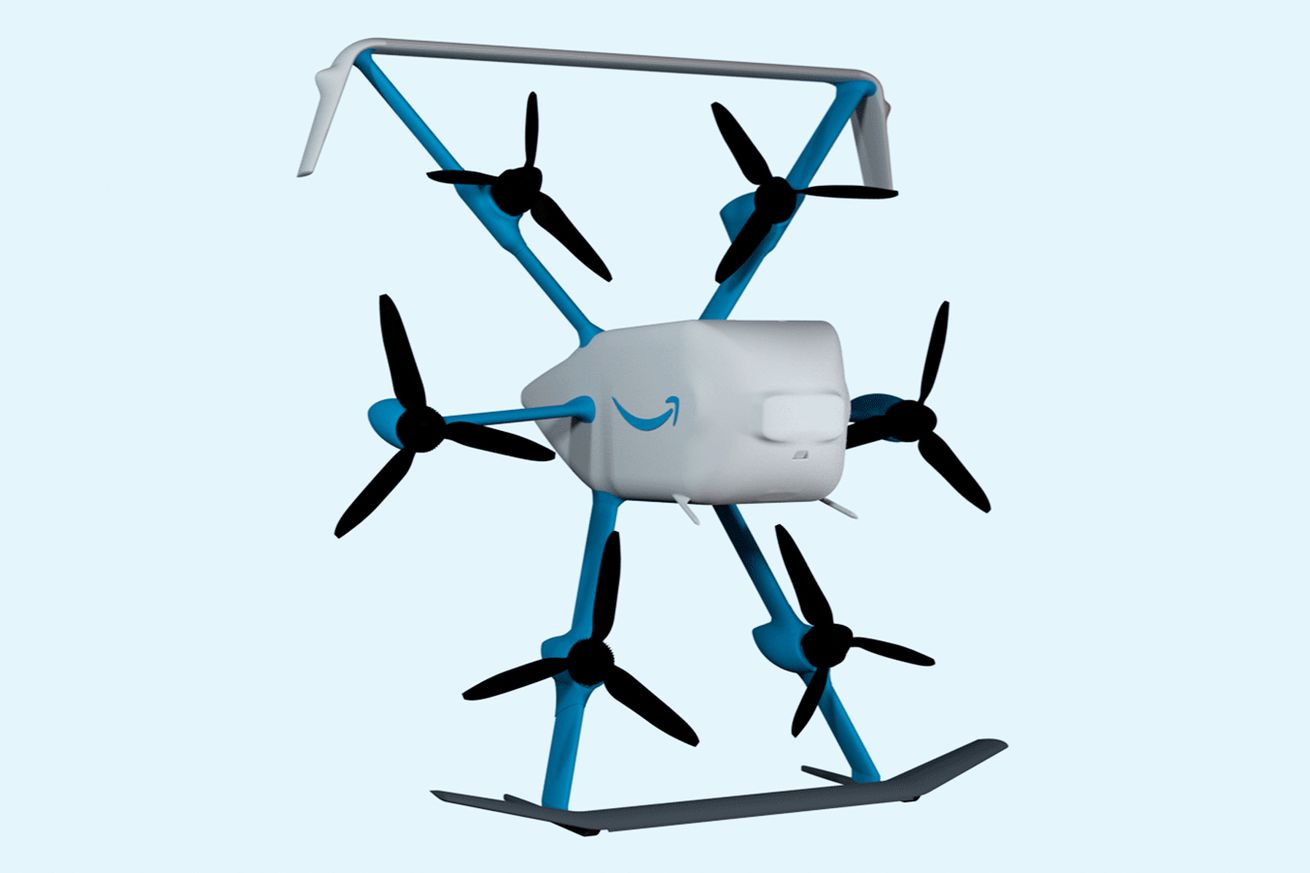
Amazon’s drone deliveries are stuck in regulatory mud. | Image: Amazon
Amazon is having a tough time with Prime Air, its drone delivery program. CNBC is reporting that it’s learned Amazon’s drones have made just 100 deliveries in the two locations in California and Texas the company is operating Prime Air.
The company had projected in January it would send 10,000 deliveries to customers via its fleet of flying robots by the end of 2023. It started off slow, with a report in February saying that Amazon had served fewer than 10 households. But the pace doesn’t seem to have picked up.
In light of its flagging progress, Amazon has now admitted to CNBC it has adjusted its delivery goal. The program has been in the works for close to a decade, with Prime Air was then Amazon CEO Jeff Bezos announcing plans for...
Disney World is shutting down the Galactic Starcruiser, the immersive Star Wars-themed hotel that costs around $5,000 for a two-night stay. In an update on Disney’s website, the company says the Starcruiser will host its final guests from September 28th to the 30th.
“We are so proud of all of the Cast Members and Imagineers who brought Star Wars: Galactic Starcruiser to life and look forward to delivering an excellent experience for Guests during the remaining voyages over the coming months,” Disney’s update says. “Thank you to our Guests and fans for making this experience so special.”





/cdn.vox-cdn.com/uploads/chorus_asset/file/24705139/GettyImages_1258348665.jpg) Bhushan Koyande/Hindustan Times via Getty Images
Bhushan Koyande/Hindustan Times via Getty Images
/cdn.vox-cdn.com/uploads/chorus_asset/file/24705162/GettyImages_1445742586.jpg) Lan Zitao/VCG via Getty Images
Lan Zitao/VCG via Getty Images
/cdn.vox-cdn.com/uploads/chorus_asset/file/24705167/GettyImages_459352807.jpg) Getty Images
Getty Images
/cdn.vox-cdn.com/uploads/chorus_asset/file/24705166/GettyImages_1492374558.jpg) Jeffrey Greenberg/Universal Images Group via Getty Images
Jeffrey Greenberg/Universal Images Group via Getty Images
/cdn.vox-cdn.com/uploads/chorus_asset/file/24705168/GettyImages_1437961414.jpg) Getty Images
Getty Images
/cdn.vox-cdn.com/uploads/chorus_asset/file/24705169/GettyImages_1082167576.jpg) Mohd Samsul Mohd Said/Getty Images
Mohd Samsul Mohd Said/Getty Images



/cdn.vox-cdn.com/uploads/chorus_asset/file/24704942/Apple_WWCD23_Vision_Pro_with_battery_230605.jpg) Apple
Apple
/cdn.vox-cdn.com/uploads/chorus_asset/file/24704939/Screen_Shot_2023_06_05_at_2.28.55_PM.png) Apple
Apple
/cdn.vox-cdn.com/uploads/chorus_asset/file/24704940/Screen_Shot_2023_06_05_at_2.52.02_PM.png) Apple
Apple